ICYMI: Burkini would not likely pass the CAQ’s citizenship test, says Legault e

Not totally surprising that the CAQ would play identity politics but still disturbing given its predecessor, the ADQ, did so:

It was Legault who opened himself up to the attacks when, arriving for a two-day meeting of his caucus, raised the issue when asked if he still has confidence in his caucus chairperson, Nathalie Roy.

Roy said last week she wanted the burkini — a piece of clothing which covers the entire body and head leaving only the face, hands and feet visible — banned. It is the same clothing which sparked a furor on the beaches of France this summer.

Photos of police officers who intervened on the beaches because of Muslim women wearing burkinis were seen around the world.

After saying he has the same “malaise,” as Roy when it comes to the burkini, Legault said it explains why the CAQ — should it form a government — is proposing to create a values test for newcomers.

It would be CAQ policy to require new immigrants to pass a test on Quebec’s language, and cultural values, after a three-year probationary period. If they don’t pass after two tries, they would be asked to return to their country of origin or to another province in Canada.

Legault ventured that immigrants in favour of the burkini would likely fail those tests and could be refused citizenship because a burkini runs against the principle of equality between men and women.

“There are big questions to be asked on such a piece of clothing,” Legault said. “Does it respect the fundamental values we have in Quebec on the equality of men and women?”

Asked by a reporter what would happen to a person who had moved to Quebec and insisted that the burkini was part of their faith, Legault was clear:

“They don’t get citizenship, that’s all.”

Source: Burkini would not likely pass the CAQ’s citizenship test, says Legault | Montreal Gazette

ICYMI – Saudis and Extremism: ‘Both the Arsonists and the Firefighters’ – The New York Times

Good long read:

The idea has become a commonplace: that Saudi Arabia’s export of the rigid, bigoted, patriarchal, fundamentalist strain of Islam known as Wahhabism has fueled global extremism and contributed to terrorism. As the Islamic State projects its menacing calls for violence into the West, directing or inspiring terrorist attacks in country after country, an old debate over Saudi influence on Islam has taken on new relevance.

Is the world today a more divided, dangerous and violent place because of the cumulative effect of five decades of oil-financed proselytizing from the historical heart of the Muslim world? Or is Saudi Arabia, which has often supported Western-friendly autocrats over Islamists, merely a convenient scapegoat for extremism and terrorism with many complex causes — the United States’s own actions among them?

Those questions are deeply contentious, partly because of the contradictory impulses of the Saudi state.

In the realm of extremist Islam, the Saudis are “both the arsonists and the firefighters,” said William McCants, a Brookings Institution scholar. “They promote a very toxic form of Islam that draws sharp lines between a small number of true believers and everyone else, Muslim and non-Muslim,” he said, providing ideological fodder for violent jihadists.

Yet at the same time, “they’re our partners in counterterrorism,” said Mr. McCants, one of three dozen academics, government officials and experts on Islam from multiple countries interviewed for this article.

Conflicting Goals

Saudi leaders seek good relations with the West and see jihadist violence as a menace that could endanger their rule, especially now that the Islamic State is staging attacks in the kingdom — 25 in the last eight months, by the government’s count. But they are also driven by their rivalry with Iran, and they depend for legitimacy on a clerical establishment dedicated to a reactionary set of beliefs. Those conflicting goals can play out in a bafflingly inconsistent manner.

Thomas Hegghammer, a Norwegian terrorism expert who has advised the United States government, said the most important effect of Saudi proselytizing might have been to slow the evolution of Islam, blocking its natural accommodation to a diverse and globalized world. “If there was going to be an Islamic reformation in the 20th century, the Saudis probably prevented it by pumping out literalism,” he said.

Photo

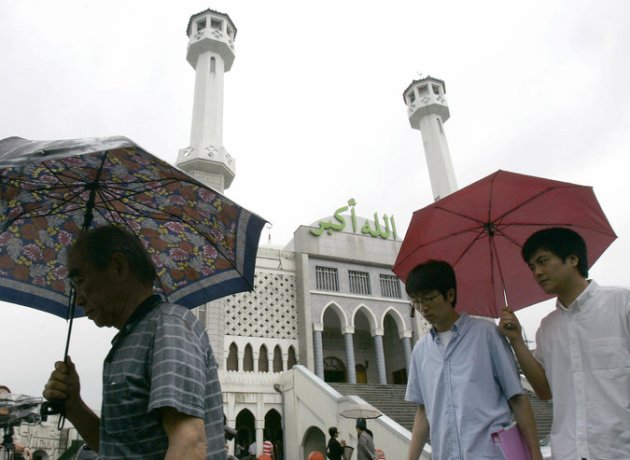
The Seoul Central Mosque in South Korea, one of hundreds of mosques around the world built using Saudi donations. CreditChoi Won-Suk/Agence France-Presse — Getty Images 

The reach of the Saudis has been stunning, touching nearly every country with a Muslim population, from the Gothenburg Mosque in Sweden to the King Faisal Mosque in Chad, from the King Fahad Mosque in Los Angeles to the Seoul Central Mosque in South Korea. Support has come from the Saudi government; the royal family; Saudi charities; and Saudi-sponsored organizations including the World Muslim League, the World Assembly of Muslim Youth and the International Islamic Relief Organization, providing the hardware of impressive edifices and the software of preaching and teaching.

There is a broad consensus that the Saudi ideological juggernaut has disrupted local Islamic traditions in dozens of countries — the result of lavish spending on religious outreach for half a century, estimated in the tens of billions of dollars. The result has been amplified by guest workers, many from South Asia, who spend years in Saudi Arabia and bring Saudi ways home with them. In many countries, Wahhabist preaching has encouraged a harshly judgmental religion, contributing to majority supportin some polls in Egypt, Pakistan and other countries for stoning for adultery and execution for anyone trying to leave Islam.

Limits of Influence

But exactly how Saudi influence plays out seems to depend greatly on local conditions. In parts of Africa and Southeast Asia, for instance, Saudi teachings have shifted the religious culture in a markedly conservative direction, most visibly in the decision of more women to cover their hair or of men to grow beards. Among Muslim immigrant communities in Europe, the Saudi influence seems to be just one factor driving radicalization, and not the most significant. In divided countries like Pakistan and Nigeria, the flood of Saudi money, and the ideology it promotes, have exacerbated divisions over religion that regularly prove lethal.

And for a small minority in many countries, the exclusionary Saudi version of Sunni Islam, with its denigration of Jews and Christians, as well as of Muslims of Shiite, Sufi and other traditions, may have made some people vulnerable to the lure of Al Qaeda, the Islamic State and other violent jihadist groups. “There’s only so much dehumanizing of the other that you can be exposed to — and exposed to as the word of God — without becoming susceptible to recruitment,” said David Andrew Weinberg, a senior fellow at the Foundation for Defense of Democracies in Washington who tracks Saudi influence.

Exhibit A may be Saudi Arabia itself, which produced not only Osama bin Laden, but also 15 of the 19 hijackers of Sept. 11, 2001; sent more suicide bombers than any other country to Iraq after the 2003 invasion; and has supplied more foreign fighters to the Islamic State, 2,500, than any country other than Tunisia.

Mehmet Gormez, the senior Islamic cleric in Turkey, said that while he was meeting with Saudi clerics in Riyadh in January, the Saudi authorities had executed 47 people in a single day on terrorism charges, 45 of them Saudi citizens. “I said: ‘These people studied Islam for 10 or 15 years in your country. Is there a problem with the educational system?’ ” Mr. Gormez said in an interview. He argued that Wahhabi teaching was undermining the pluralism, tolerance and openness to science and learning that had long characterized Islam. “Sadly,” he said, the changes have taken place “in almost all of the Islamic world.”

In a huge embarrassment to the Saudi authorities, the Islamic State adopted official Saudi textbooks for its schools until the extremist group could publish its own books in 2015. Out of 12 works by Muslim scholars republished by the Islamic State, seven are by Muhammad ibn Abd al-Wahhab, the 18th-century founder of the Saudi school of Islam, said Jacob Olidort, a scholar at the Washington Institute for Near East Policy. A former imam of the Grand Mosque in Mecca, Sheikh Adil al-Kalbani declared with regret in a television interview in January that the Islamic State leaders “draw their ideas from what is written in our own books, our own principles.”

Small details of Saudi practice can cause outsize trouble. For at least two decades, the kingdom has distributed an English translation of the Quran that in the first surah, or chapter, adds parenthetical references to Jews and Christians in addressing Allah: “those who earned Your Anger (such as the Jews), nor of those who went astray (such as the Christians).” Seyyed Hossein Nasr, a professor of Islamic studies at George Washington University and the editor in chief of the new Study Quran, an annotated English version, said the additions were “a complete heresy, with no basis in Islamic tradition.”

Accordingly, many American officials who have worked to counter extremism and terrorism have formed a dark view of the Saudi effect — even if, given the sensitivity of the relationship, they are often loath to discuss it publicly. The United States’ reliance on Saudi counterterrorism cooperation in recent years — for instance, the Saudi tip that foiled a 2010 Qaeda plot to blow up two American cargo planes — has often taken precedence over concerns about radical influence. And generous Saudi funding for professorships and research centers at American universities, including the most elite institutions, has deterred criticism and discouraged research on the effects of Wahhabi proselytizing, according to Mr. McCants — who is working on a book about the Saudi impact on global Islam — and other scholars.

One American former official who has begun to speak out is Ms. Pandith, the State Department’s first special representative to Muslim communities worldwide. From 2009 to 2014, she visited Muslims in 80 countries and concluded that Saudi influence was pernicious and universal. “In each place I visited, the Wahhabi influence was an insidious presence,” she wrote in The New York Times last year. She said the United States should “disrupt the training of extremist imams,” “reject free Saudi textbooks and translations that are filled with hate,” and “prevent the Saudis from demolishing local Muslim religious and cultural sites that are evidence of the diversity of Islam.”

Source: Saudis and Extremism: ‘Both the Arsonists and the Firefighters’ – The New York Times

Nawaz: Both Sides Are Wrong in the Burkini Wars – The Daily Beast

Maajid Nawaz on the burkini controversy:

The burkini is, in fact, a sad symbol of Islam today going backward on gender issues. France’s ban on it is a sad symbol of liberalism today going backward in reply.

Classical liberals of any religion or none would do well to remember that this does not have to be a zero-sum game. It is possible to oppose the French ban on burkinis while also challenging the mindset of those who support burkas and burkinis.

As a reforming secular liberal Muslim, I do not endorse the gender-discriminatory body-shaming and moralizing of burkas. I recoil, too, at the silly idea of a burkini. But I also believe that France’s ban on them is ridiculous, illiberal, and incredibly petty. It is also cynical.

As for liberalism going backward, when Mohamed Lahouaiej-Bouhlel drove a truck through the crowd in Nice on July 14, he sought to deepen division, and to further the ISIS aim of a global civil war. Strategically, he chose the right location.

The French Riviera is a traditional stronghold of French reactionaries. The area sees consistently high poll results for the far right. Last year, National Front leader Marine Le Pen’s niece, Marion Maréchal-Le Pen, ran a high-profile campaign there and succeeded in making huge gains. The region is now rapidly turning into a polarized hotbed of tension, pitching far-right sympathizers against Islamist extremists.

In this respect, the burkini ban is nothing but a product of political opportunism. With the proximity of elections looming, shortsighted politicking is the only consideration that matters. Local petty political chieftains would rather provoke national turbulence merely to win a local council seat than do what is in their country’s national interest.

As the 2017 French presidential and legislative elections approach, the country’s politicians are desperate to prove who can do the most—or anything at all—against the pernicious effect of jihadist terrorism. They have only a few months left. Sadly, grand gestures such as bans on symbolic pieces of cloth carry political currency in this game of mass-hysteria identity politics.

This is how our most valued asset, source of strength and global envy—liberalism—is capitulating to identity-based communalism, short-term electoral gain, populist appeasement, and a clamor to just do something.

This capitulation is exactly what jihadist terrorists were hoping to achievewith their sustained random attacks.

Perpetual identity-based civil war, rather than war between countries, suits those who wish to build a new world order—a caliphate—carved out of existing states. Equal treatment on a citizenship basis means nothing to jihadists.

There is no better way to kickstart dividing people along exclusively religious lines than by committing atrocities in the name of Islam. Their hope is that everyone else also begins to identify Sunni Muslims primarily by their religious identities, in reaction to the atrocities. In this way, religious identity has won and citizenship becomes redundant.

But the backward trajectory of contemporary liberalism is matched by a backward trajectory within Islam today.

In modern Muslim-majority contexts and up until the 1970s, the female body was not shamed out of public view. As one Egyptian feminist asserts, this was mainly due to the social dominance of the relatively liberal, middle-class elite in urban centers.

But throughout the ’80s, theocratic Islamism began replacing Arab socialism as the ideology of resistance against “the West.” As is always the case with misogynist dogma, the war against the “other” necessitated defining what is “ours” and what is “theirs”—and our women, of course, were deemed “ours.”

Suddenly, women’s bodies became the red line in a cultural war against the West started by theocratic Islamism. A Not Muslim Enough charade was used to identity “true” Muslims against “Western” stooges. Religious dress codes became a crucial marker in these cultural purity stakes. Only the fanatic can ever win in this Not Muslim Enough game. Any uncovered woman was now deemed loose, decadent, and attention seeking.

In short, too Western.

Many Islamists advocate total segregation between the sexes, and in fact they would reject the burkini. The full-body swimwear would certainly not be allowed in today’s Saudi Arabia: still too revelaing!

In that sense, it is actually a step forward from Islamism’s peak in the ’90s. But it is still a step backward from before theocratic Islamism took hold among Muslims. The more women succumb to this Not Muslim Enough charade, the more theocrats demand of them. Is it any wonder, then, that some of the most abusive, oppressive societies for women happen also to be the most religiously conservative?

When writing recently in defense of her burkini invention, Aheda Zanetti equated concealing the female form with “modesty” no less than three times.

She confessed to not participating in sports when young “because we chose to be modest.”

But the assumption that “modesty” equates to covering up is a subtle form of bigotry against the female form. It goes without saying that harassment on Western beaches, where the female form is more normalized, occurs less than in conservative societies, even though it is still present. But in too many instances across Muslim-majority contexts this “modesty theology” has led to slut-shaming of women who do not cover.

In the worst of cases, misogyny disguised as modesty has led to mass sexual harassment on the streets, most recently by gangs of Muslim migrants in Cologne. In Egypt, it has even given rise to a mass public rape phenomenon. As Muslim feminists note, violating Muslim cultural “honor codes” (‘irdh) and modesty theology (hayaa’) can lead to heinous legal and societal reprimand and the gross fetishization of a woman’s body.

Just like any other practice rooted in religiously inspired misogyny, the burkini cannot be detached from the body-shaming tied to its origins. Aheda Zanetti continued to insist that her product is “about not being judged” as a Muslim woman, yet she is wedded to a practice that inextricably judges the female form as being “immodest,” as she, too, did in her own piece.

“I don’t think any man should worry about how women are dressing,” she argued.

OK. But it has only ever been conservative-religious Muslim men telling Muslim women how to dress.

Over the course of my years immersed in Islamic theology and Arabic, I remain unaware of any medieval female Muslim exegete used as authority by Muslim women for the “duty” of wearing a hijab. It is only ever male exegetes of the Quran who are cited preaching for the duty of female “modesty.”

And it is simply an undeniable fact that most Muslim women judged and attacked around the world for how they dress are attacked by other Islamist and fundamentalist Muslims, not by non-Muslims. These are religious fanatics playing the Not Muslim Enough game.

I am a liberal. The headscarf is a choice. Let Muslim women wear bikinis or burkinis. Liberal societies have no business in legally interfering with the dress choices women make. I have consistently opposed the ban on face veils in France, just as I oppose their enforced use in Iran and Saudi Arabia.

Outside of this legal debate, though, and as a reforming secular liberal Muslim, I reserve the right to question my own communities’ cultural traditions and taboos.

As a liberal, I reserve the right to question religious-conservative dogma generally, just as most Western progressives already do with Christianity. Yet with Muslims, Western liberals seem perennially confused between possessing a right to do something, and being right when doing it.

Of course American Christian fundamentalists of the Bible Belt have a right to speak, but liberals routinely—and rightly—challenge their views on abortion, sexuality, and marriage. To do so is not to question their right to speak, but to challenge their belief that they are right when they speak. I ask only that secular liberal Muslims are also supported in challenging our very own “Quran Belt” emerging in Europe.

This is the real struggle. It is intellectual and it is cultural, more than it is legal.

ICYMI: Pollsters starting to see uptick in government work

Back to “committing sociology:”

The Trudeau government is reinvesting in public opinion research after it was virtually abandoned in the final years of the last Conservative government, though spending remains far below historical averages, according to veteran pollster Frank Graves.

“They’ve committed to doing more and more work…but it’s certainly nowhere near the levels it was historically both with the early stages of the Conservative government, certainly the Liberal government before that, and the Mulroney government before that,” he told The Hill Times.

Mr. Graves, founder and president of Ekos Research, said in an interview that the federal government has contracted more public opinion research work from his company since the election last fall. He linked this to the Liberals’ push to what they see as a return to evidence-based decision-making.

It pales in comparison, however, to what was seen in even the early stages of the Conservative government, he said.

The Harper government spent $31.2 million polling Canadians in the 2006-07 fiscal year before cutting back to $4.9-million in 2013-14, The Hill Times reported.

This stretch of scarce funding represented a “very unusual period,” Mr. Graves said, with the government conducting “virtually no research” of any significance during this span.

A 2003 auditor general’s report clocks in federal spending on public opinion research in 2002-03, under a previous Liberal government, at $23.7 million and $26.2 million the year before.

Mr. Graves partly attributed lagging “rust” in the bureaucratic channels in preventing the Liberals from revving up polling efforts back to previous levels.

“[It’s] going to take awhile for the bureaucracy to catch up and for the resource envelope [to expand] to do this in levels which would be more commensurate with the need and demand and express priority provided to this approach,” Mr. Graves said, noting that civil servants would also need to catch up with technological advancements in the field.

When reached, the Treasury Board Secretariat said it did not have up-to-date figures on spending on public opinion research or consultations specifically.

….Pollsters optimistic after lean decade

Stephen Kiar, CEO and founder of Ottawa-based public opinion and market research firm Phoenix SPI, said his company has also started to see an increase in public opinion research work in the last month or so.

After the election, the Liberals proceeded “cautiously and deliberately,” as new ministers learned their departments, relevant issues, mandates, and staff, among other considerations, he said.

As a result, Phoenix didn’t see any increase in work before the government’s fiscal year ended on March 31, though things picked up afterwards, Mr. Kiar said, as departments began putting together their research plans for the coming year, and seeking the necessary approvals.

“It appears that many departments have finished that planning process and are starting to engage research firms like ours for their projects,” he explained.

Mr. Kiar said it’s too early to compare spending to the previous Conservative government, which he argued “savaged” the public opinion research budget, while dramatically increasing the media monitoring budget.

Under the Trudeau Liberals, mandate letters to cabinet ministers noted a need for Canadians to see the government’s “willingness to listen” and for the government’s work to “be informed by performance measurement, evidence, and feedback from Canadians.”

Mr. Graves framed the period under the Conservatives that saw a “real paucity” of public opinion research as an “anomaly,” and partly blamed the scarcity of polling on what he saw as the government’s indifferent, sometimes “hostile” approach to empirical research.

Critics accused the Harper government of gutting funding for research and muzzling federal scientists. The Conservatives axed the mandatory long-form census in 2011, drawing strong criticism from a wide range of groups worried about the consequences the decision would have on the reliability on the vital data gleaned from the sweeping survey of Canadians.

The Liberals reinstated the long-form census as mandatory shortly after assuming office last November.

Kara Mitchelmore, CEO of the Marketing Research and Intelligence Association, an industry advocacy group, says numbers on polling activity for 2016 won’t be known until the end of the year, though she cited the re-establishment of the mandatory long-form census as leading to an increase in work.

“I can say anecdotally that with the re-instalment of the long form census, which MRIA strongly supports, there is an obvious noticeable increase in data collection roles,” she said in an emailed statement, noting that this will “trickle down” into more analyst roles, which is “great news” for the industry.

Mr. Graves said he expects funding for polling to eventually be restored to previous heights, though predicted it would only reach a quarter of the historic average this year.

That’s still “a lot better” than what we saw in the late stages of the previous government, he noted.

Source: The Hill Times

Les immigrantes victimes de violence conjugale sont mal protégées par l’État, selon les maisons d’hébergement

One of the harder issues to address given the difficulties for many immigrant women to report abuse or leave their spouse, and the resulting risk of deportation:

Souvent brimées par leur conjoint les parrainant et menacées de déportation, les immigrantes victimes de violence conjugale sont mal protégées par l’État québécois, déplore la Fédération des maisons d’hébergement pour femmes (FMHF).

Lors de la commission parlementaire qui porte sur la planification de l’immigration au Québec pour la période 2017-2019, la directrice de la fédération, Manon Monastesse, et sa coordonnatrice Marie-Hélène Senay ont décrit la situation d’immigrantes qui ne connaissent ni le français ni l’anglais et qui se réfugient dans une maison d’hébergement pour échapper à un conjoint violent ou encore à leur proxénète. Ces femmes risquent la déportation si elles quittent avant une période de deux ans leur conjoint les parrainant. Les immigrantes qui sont dans une situation jugée irrégulière par Immigration Canada — le visa que leur a procuré leur conjoint étant expiré, par exemple — risquent d’être dénoncées par ce dernier.

En novembre dernier, la FMHF a produit une étude financée par le ministère de l’Immigration, de la Diversité et de l’Inclusion (MIDI) sur l’adaptation de l’intervention et des services fournis aux immigrantes par les maisons d’hébergement. « Certains statuts d’immigration ou, pire, l’absence de titre de séjour confinent les femmes dans des situations de grande vulnérabilité. C’est le cas des femmes parrainées, qui sont, dès lors, complètement dépendantes du conjoint. […] Cette situation laisse libre cours au contrôle du conjoint violent, qui détient l’ultime menace de la dénonciation menant à la déportation si la femme ne se conforme pas à ses exigences », peut-on lire dans le rapport de 86 pages.

Manon Monastesse a cité entre autres le cas de cette immigrante déportée qui a dû laisser derrière elle son enfant, qu’elle allaitait encore et que la Cour a confié au conjoint québécois qui l’avait dénoncée. « Les cas qu’on vous présente, ce ne sont pas des cas anecdotiques. C’est le quotidien qu’on voit », a-t-elle dit aux parlementaires.

Pas d’engagement de la ministre Weil

Elle a plaidé pour que l’État mette en place un mécanisme de suivi des immigrantes parrainées et de leur conjoint. « C’est inacceptable, ici au Québec, que des femmes soient enfermées pendant des années sans aucun contact avec la société », a-t-elle dénoncé. Dans certains cas, le parrain — un bon citoyen québécois — prend à sa charge plus d’une immigrante. « On voit de plus en plus d’hommes québécois se chercher des femmes soumises, a-t-elle révélé. Nous, on les voit : la numéro un, la numéro deux, la numéro trois. On s’aperçoit que c’est le même conjoint. »

La directrice du FMHF a aussi proposé que l’État suspende les procédures d’expulsion des immigrantes victimes de violence. « Il n’y a pas de mécanisme pour les protéger pendant qu’elles s’affranchissent d’un contexte de violence », a-t-elle fait observer.

Source: Les immigrantes victimes de violence conjugale sont mal protégées par l’État, selon les maisons d’hébergement | Le Devoir

Fighting Islamophobia: Groups join forces to help Muslim children, Syrian refugees

While I see the need for this educator’s guide, disappointed that there is minimal language in the Guide (Helping Students Deal with Trauma – Eng) on the linkage to other forms of racism and discrimination and the need to promote an overall message of acceptance and inclusion, including among Canadian Muslim youth.

A missed opportunity:

Newly welcomed Syrian refugees and Muslim children are on the receiving end of Islamophobia in Canadian schools across the country, say the human rights groups that want to put and end to it.

The National Council of Canadian Muslims (NCCM), The Islamic Social Services Association (ISSA) and the Canadian Human Rights Commission (CHRC), launched a new educator’s guide at a press conference on Parliament Hill Thursday morning, which is intended for teachers to help students deal with trauma related to Islamaphobia.

Currently, the guide is available for free online, and the groups hope that eventually a hard copy will make its way into elementary, high school and university classrooms across the country.

NCCM’s executive director, Ihsaan Gardee, said Canadian Muslims along with newly arrived refugee and immigrant youth are suffering in different ways.

“Whether it’s being afraid to speak about their Muslim identity or whether it’s the shame of being a refugee or dealing with post-war trauma many young people are hurting,” said Gardee.

Families have told NCCM that they hope and expect their childrens’ classrooms to be safe and teachers have told NCCM they need tools to provide support to Muslims in their classrooms. Many have said they feel let down.

“We have heard too many stories of Islamophobia in our schools. We’ve heard about school teachers making hurtful comments in the classroom or on social media about refugees and about Muslims and Islamic practices. We’ve heard about children being afraid to raise their voice to explain their beliefs to their peers,” Gardee continued.

Chief commissioner of the CHRC, Marie-Claude Landry, referencing the Liberal government’s generosity in accepting nearly 30,000 Syrian refugees, said that as the message from our country’s leaders continues to be positive and optimistic, “there is a natural tendency among many Canadians to take for granted that we live in a society guided by inclusion, respect and equality.”

“But the reality is that now more than ever, we must be extra careful not to take our Canadian values for granted,” said Landry.

Landry said this isn’t a Muslim issue – it’s a Canadian issue.

When a Muslim woman is verbally assaulted while shopping with her child, we are all diminished by it, she said.

And when an 8 year-old-child is accused of carrying a knife because of a head covering, we are all the lesser for it, she continued.

Landry believes this guide will help teachers create more inclusive spaces for Canadian Muslim students, and said that at the heart of the guide is the powerful idea that “all children deserve a classroom where they feel safe and understood.”

Source: Fighting Islamophobia: Groups join forces to help Muslim children, Syrian refugees

Stephen Harper leaves divisive legacy at home as he eyes global business – The Globe and Mail

Good comments on new Canadian voters:

They can blame him [Harper] for other things, too. His scorched earth election strategy drove suburban immigrant voters out of the Conservative coalition, leaving the party weakened in the all-important ridings of Greater Toronto and Greater Vancouver. The niqab debate. Barbaric cultural practices. Worst of all, according to senior Conservatives, the law to strip dual citizens who commit certain crimes of their citizenship. That one killed them at the door in the 905.

Whoever Mr. Harper was trying to win over with these toxic policies during the 2015 election campaign, the price he paid in immigrant votes and the votes of those who welcome immigrants was high. The new leader will have a long row to hoe to win them back.

Source: Stephen Harper leaves divisive legacy at home as he eyes global business – The Globe and Mail

Liberal, Moderate or Conservative? See How Facebook Labels You – The New York Times

Not surprising that Facebook is doing this kind of analysis. Does not appear to work for Canadian political leanings when I checked my profile (no “Canadian politics” tab):

You may think you are discreet about your political views. But Facebook, the world’s largest social media network, has come up with its own determination of your political leanings, based on your activity on the site.

And now, it is easy to find out how Facebook has categorized you — as very liberal or very conservative, or somewhere in between.

Try this (it works best on your desktop computer):

Go to facebook.com/ads/preferences on your browser. (You may have to log in to Facebook first.)

That will bring you to a page with your ad preferences. Under the “Interests” header, click the “Lifestyle and Culture” tab.

Then look for a box titled “US Politics.” In parentheses, it will describe how Facebook has categorized you, such as liberal, moderate or conservative.

(If the “US Politics” box does not show up, click the “See more” button under the grid of boxes.)

Facebook makes a deduction about your political views based on the pages that you like — or on your political preference, if you stated one, on your profile page. If you like the page for Hillary Clinton, Facebook might categorize you as a liberal.

Even if you do not like any candidates’ pages, if most of the people who like the same pages that you do — such as Ben and Jerry’s ice cream — identify as liberal, then Facebook might classify you as one, too.

Facebook has long been collecting information on its users, but it recently revamped the ad preferences page, making it easier to view.

The information is valuable. Advertisers, including many political campaigns, pay Facebook to show their ads to specific demographic groups. The labels Facebook assigns to its users help campaigns more precisely target a particular audience.

For instance, Donald J. Trump’s presidential campaign has paid for its ads to be shown to those who Facebook has labeled politically moderate.

Campaigns can also use the groupings to show different messages to different supporters. They may want to show an ad to their hard-core supporters, for example, that is unlike an ad targeted at people just tuning in to the election.

It is not clear how aggressively Facebook is gathering political information on users outside the United States. The social network has 1.7 billion active users, including about 204 million in the United States.

Political outlook is just one of the attributes Facebook compiles on its users. Many of the others are directly commercial: whether you like television comedy shows, video games or Nascar.

To learn more about how political campaigns are targeting voters on social media, The New York Times is collecting Facebook ads from our readers with a project called AdTrack. You can take part by visiting nytimes.comand searching for “Send us the political ads.”

Source: Liberal, Moderate or Conservative? See How Facebook Labels You – The New York Times

Vacation break

Will be on an internet-free break next week with only some pre-scheduled posts.

All Mixed Up: What Do We Call People Of Multiple Backgrounds? : NPR

Good long read by Leah Donnella on what to call those with mixed ethnic and racial origins (I still like Lawrence Hill’s remark at the end of Blood: Who among us is not mixed up?):

So what makes one term fall out of favor, and another take off? In a country where the share of multiracial children has multiplied tenfold in the past 50 years, it may be a good time to take stock of our shared vocabulary when it comes to describing Americans like me.

A diversity of terms

I start digging into the history of that vocabulary, over time and around the world. It turns out we’ve had a dizzying multitude of monikers, many of which are offensive. Skip ahead if you want to avoid some of the worst — otherwise, here we go: muwalladeen, mulattos, mestizos, mestiҫos, blended, biracial, interracial, multiracial, multiethnic, gray, high yellow, half-breed, mixed-breed, cross-breed, mutt, mongrel, mixed blood, mixed race, mixed heritage, quadroon, octoroon, hapa, pardo, sambo, half-cracker but a nigger, too.

In early Rome, we were di colore, “of color.” In Japan, we are mostly called hāfu (half) but sometimes we get to be daburu (double). We were half-castes in the U.K. until 2001 (2001!), when the census officially deemed us “mixed.”

In South Africa, we are coloured, officially, and unofficial “bushies,” a slang term that comes from the idea that multiracial children are conceived in the bush.

In Brazil, where multiraciality is assumed, the options are colorful: cor de canela, cor de rosa, cor de crema, cor de burro quando foge (the color of a donkey as it runs away).

In the United States, when it comes to describing — or even acknowledging — people who identify with more than one race or ethnicity, the official track record is spotty.

In 1790, the first-ever decennial U.S. Census survey asked each head of household to enumerate the free white males, free white females, “other free persons,” and slaves living on his property. The “other” category was murky. Some people who weren’t considered monoracial may have been marked under “other free persons,” but there’s no way of knowing how many, or what their makeup was.

In 1850, things got a little more explicit. The U.S. Census Bureau rolled out two new racial categories: “B” for black and “M” for mulatto, a term for someone with one black and one white parent that became sort of a catch-all for anyone perceived as racially ambiguous, including many Native Americans.

As for white folks, they didn’t have to answer the race question at all; they were considered the default.

Enlarge this image

An 1860s pamphlet published, supposedly, by abolitionists encouraging black and white people to get together and procreate.

U.S. Archives

At the start of the American Civil War in 1861, “amalgamation” was the word of choice for describing cross-racial canoodling. Then, in 1863, the word “miscegenation” came along. It was first used in a pamphlet published, supposedly, by abolitionists encouraging black and white people to get together and get procreating.

The pamphlet praised diversity as one of America’s greatest strengths, and it suggested that the country’s triumphs were achieved not only by its “Anglo-Saxon progenitors, but from all the different nationalities.”

If that sounds unbelievably progressive, it was. The pamphlet was a hoax, put out by anti-war Democrats hoping to trick the public into believing that President Lincoln, who was running for re-election, had a secret plan to “solve America’s ‘race problem’ with a campaign of interracial sexual relations that would create a new ‘American race,'” as race studies scholar Philip Kadish puts it.

In some ways, the “miscegenation” hoax didn’t work; Lincoln was re-elected, and slavery officially ended in 1865. But the term lived on as states passed anti-miscegenation laws barring interracial marriage, and “became the foundational justification for the Jim Crow segregation that followed,” writes Kadish. “With its hoax origin forgotten, ‘miscegenation’s’ scientific connotation — and the fact that it has the same prefix as ‘mistake’ or ‘misbegotten’ — planted the notion that races represented different species that should be separated.”

As this perverse origin story makes clear, when it comes to the words we use to describe race, it’s important to know the history. While miscegenation is by no means considered a neutral word today, very few people know just how laden it is. Unpacking the history of these terms can help us better understand how Americans felt about racial mixing in the past — and to identify any lingering skittishness we may have inherited.

As demographics change, language falls behind

Today, I have the option of selecting more than one race on my Census form, if I want. But that choice is still very new: until the 2000 survey, Americans had to pick just one.

In the past, Census surveys introduced — and later dropped — terms like “quadroon” (someone with one black and three white grandparents) and “octoroon” (someone with one black great-grandparent), but that did nothing for someone with, say, a Chinese mother and Latino father.

These surveys offer a window into how government officials thought about race in the U.S. over the years, but the language that normal people use in their daily lives, and the identities they embody, have always been far more complex.

So the next time you find yourself rolling your eyes at people who insist on shouting from the mountaintops that they’re a quarter this, half that, a dash of the other, keep in mind that for decades, they had very limited options.

That started to change in the mid-20th century, in the wake of Loving v. Virginia, the 1967 Supreme Court case that officially legalized interracial marriage. The Loving decision overturned a trial judge’s opinion, written in 1958, that “Almighty God created the races white, black, yellow, malay and red, and he placed them on separate continents. And, but for the interference with his arrangement, there would be no cause for such marriage. The fact that he separated the races shows that he did not intend for the races to mix.”

Enlarge this image

Mildred Loving and her husband, Richard P. Loving, are shown on Jan. 26, 1965. In 1967, the ruling in the Lovings’ Supreme Court case officially legalized interracial marriage.

A surge of scholarship, personal writing, activism and community organizing around these issues was bubbling up alongside Loving. These writers, activists and scholars had to choose how to describe themselves and their communities. For some, existing words felt unsatisfying, so they invented new ones. For example, a 1979 graduate dissertation by Christine Iijima Hall, then a researcher at University of California, Los Angeles, appears to be the first influential usage of the word “multiracial” for describing people with blended ancestries.

“This dissertation explored the lives of a particular multiracial/multicultural group,” she wrote in the abstract, defining “multiracial” as “being of two or more races.”

By most accounts, little scholarly research had been done about these identities before Hall’s paper, in which she profiled 30 people with black American fathers and Japanese mothers. (Hall’s own parents are black and Japanese.) There was even less scholarship about people whose backgrounds didn’t involve whiteness.

What little did exist, Hall says, tended to cast people like her in a negative light. She points to Everett Stonequist, a sociologist who in 1935 referred to mixed-race people as “marginal men … poised in psychological uncertainty between two or more social worlds,” their souls reflecting “the discords and harmonies, repulsions and attractions of these worlds.”

(That sort of characterization wasn’t exactly shocking — the “tragic mulatto” trope was almost a hundred years old by the time Stonequist wrote about it.)

Hall’s subjects didn’t seem to suffer such internal discord. They didn’t necessarily agree about what to call themselves — they variously identified as “Afro-American,” “Japanese,” “Black-Japanese” and “other” — but overall, Hall found, “all felt happy and lucky” to be who they were.

Hall’s use of “multiracial” as an umbrella term for describing individuals started leaking into popular culture. G. Reginald Daniel, a leading scholar on issues of multicultural identity and a sociology professor at the University of California in Santa Barbara, says Hall’s dissertation was one of the first instances in which the word “multiracial” was used to describe an individual, rather than a larger group or a society as a whole. He first heard it used that way in public by a panelist on The Phil Donahue Show in the early ’80s, and thought: “Wow, that’s interesting. I like the sound of it.” Later, Daniel and his colleagues began to incorporate “multiracial” into their own work.

‘Multiracial’ or ‘mixed’?

In light of Hall’s paper, “multiracial” was adopted by several advocacy groups springing up around the country, some of which felt the term neutralized the uncomfortable connotations of a competing term in use at that point: “mixed.”

In English, people have been using the word “mixed” to describe racial identity for at least 200 years, like this 1864 British study claiming that “no mixed races can subsist in humanity,” or this 1812 “Monthly Retrospect of Politics” that tallies the number of slaves — “either Africans or of a mixed race” — in a particular neighborhood.

Steven Riley, the curator of a multiracial research website, cites the year 1661 as the first “mixed-race milestone” in North America, when the Maryland colony forbade “racial admixture” between English women and Negro slaves.

But while “mixed” had an established pedigree by the mid-20th century, it wasn’t uncontroversial. To many, “mixed” invited associations like “mixed up,” “mixed company” and “mixed signals,” all of which reinforced existing stereotypes of “mixed” people as confused, untrustworthy or defective. It also had ties to animal breeding — “mixed” dogs and horses were the foil to pure-breeds and thoroughbreds.

Mixed “evokes identity crisis” to some, says Teresa Willams-León, author of The Sum of Our Parts: Mixed Heritage Asian Americans and a professor of Asian American Studies at California State University. “It becomes the antithesis to pure.”

By the 1980s, some of those made uneasy by “mixed” had a welcome alternative in Hall’s “multiracial.” But others felt “multiracial” was still better for describing groups, not individuals. “Sometimes, when people hear multiracial, they think of a multiracial society,” says Williams-León, one in which “there are blacks, there are Latinos, there are Asian-Americans, and we all live together.” Mixed, in this line of thinking, avoided that confusion.

Biracial is, of course, another widely used term. It began showing up regularly in scientific papers in the 1970s, often referring to communities with both black and white members. But because of the specificity of “bi,” meaning two, some argued that “biracial” was too limited a term.

 Consensus remained elusive, and competing terms existed side-by-side. In Chicago, the Biracial Family Network (BFN) was founded in 1980. In 1986, a similar group founded halfway across the country called itself Multiracial Americans of Southern California. Influential books on the subject include Paul Spickard’s Mixed Blood, published in 1989, and Maria Root’s The Multiracial Experience and Naomi Zack’s American Mixed Race, both of which came out in 1995. (As did Barack Obama’s Dreams from My Father, ushering in what one researcher called a “multiracial memoir boom.”)

Then there’s the Journal of Critical Mixed Race Studies, which debuted in 2011, and is the first major academic publication to focus on mixed-race identity. Lest you think naming the publication was easy, editor G. Reginald Daniel, the U.C. Santa Barbara professor, included a lengthy note in the first volume explaining the many factors that went into calling it the Journal of Mixed Race Studies, rather than Journal of Multiracial Studies, or Journal of Mixed-Race Studies or Journal of ‘Mixed’ Race Studies.

Ultimately, the publishers went with “Mixed Race” in the title, but it’s not the only term you’ll see in any given volume. “We accommodate the terms mixed race and multiracial interchangeably in the journal,” Daniel wrote, “since both are widely used in the field of mixed race/multiracial studies and consciousness, as well as in the public imagination.”

Embracing fluidity

Today, “mixed race” seems to have won out in academic writing. A Google Scholar search for that term results in 2.5 million results. Results for “biracial” and “multiracial” combined offer up about half that. But the debate continues, inside and outside the ivory tower.

Some resist any terminology for multiracial people, period. “All this talk is disturbing,” says Rainier Spencer, director of the Afro-American Studies Program at University of Nevada, Las Vegas and self-professed racial skeptic. “What drives my antagonism is that people are coming in and saying, ‘We’re new, we’re different, we are the answer to race problems in America,'” says Spencer. “Population mixture has been going on for hundreds of years. Calling people ‘mixed’ erases the history of race in the U.S.”

The history of race and the weight of science, some might say. According to the American Association of Physical Anthropologists, “Pure races, in the sense of genetically homogenous populations, do not exist in the human species today, nor is there any evidence that they have ever existed in the past.” So discussions of “mixedness” are even trickier, because they inherently rely on cultural, not scientific, understandings of race.

Sharon H. Chang is an activist and author of the new book Raising Mixed Race: Multiracial Asian Children in a Post-Racial World. She also runs social media for the Critical Mixed Race Studies team, which was founded through DePaul University. In her writing, Chang tends to use “mixed race” and “multiracial” interchangeably, but in regular conversation, when someone asks her about her background, she says “I’m mixed.” She used both in the title of her book to convey that there are ongoing conversations about terminology and what it means at any given time.

That sort of linguistic fluidity is common, says Andrew Jolivette, an activist and chair of the American Indian Studies Department at San Francisco State University. Jolivette says there are no hard and fast rules when it comes to describing someone’s racial identity. He recommends simply asking someone what they prefer, “because we all have different experiences,” he says. “I don’t think we should create universal truths for everybody. Everybody’s experience is different, even if we’re the same mix.”

But let’s be real: When it comes to how people describe themselves, most of us are more likely to take cues from celebrities and public figures than from painstakingly titled scholarly journals. Rihanna, Drake, Key and Peele and Shemar Moore have all used the term “biracial” to self-identify. Barack Obama, ever tongue-in-cheek, likes to throw around mongrel and mutt. Slash, Nicole Richie and Trevor Noah have used “mixed.” Author Mat Johnson, whose 2015 novel Loving Day centers heavily on mixed race identity, has reclaimed “mulatto” as his identifier of choice.

Some don’t use any of those words, choosing instead to describe their specific ethnic makeup, like Olivia Munn, who has spoken about being connected to multiple parts of East Asia, or Yawna Allen, a tennis player who’s Quapaw, Cherokee, Euchee, white and black.
Others just choose one identity and stick with it, like Melissa Harris-Perry, who acknowledges her white mother but identifies as straight-up African-American. In fact, according to Pew Social Trends, 61 percent of adults with a mixed racial background don’t consider themselves multiracial.

Source: All Mixed Up: What Do We Call People Of Multiple Backgrounds? : Code Switch : NPR