Rahim Mohamed: National Muslim group demands MPs denounce Israel or face wrath

We shall see the extent the relevant priority that this issue has in 2025 in relation to other issues, and what percentage of Muslim voters decline to vote or vote NDP (CPC harder pro-Israel line). Seen some analysis of the Michigan results that the absolute number of uncommitted not out of line with traditional numbers.

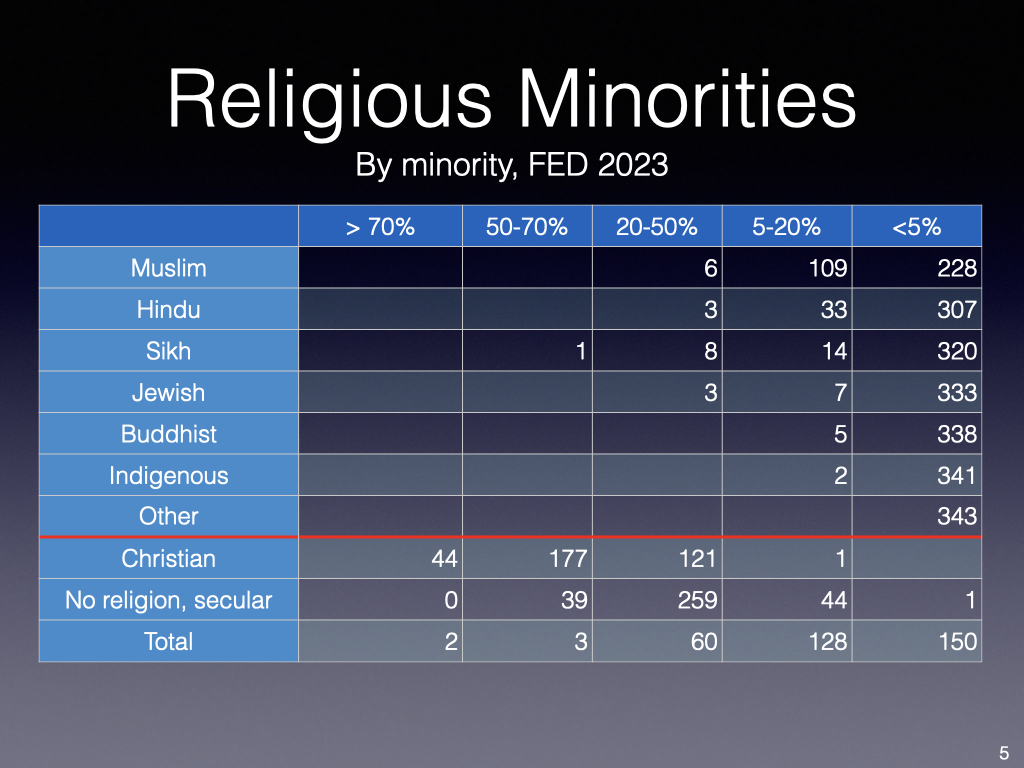
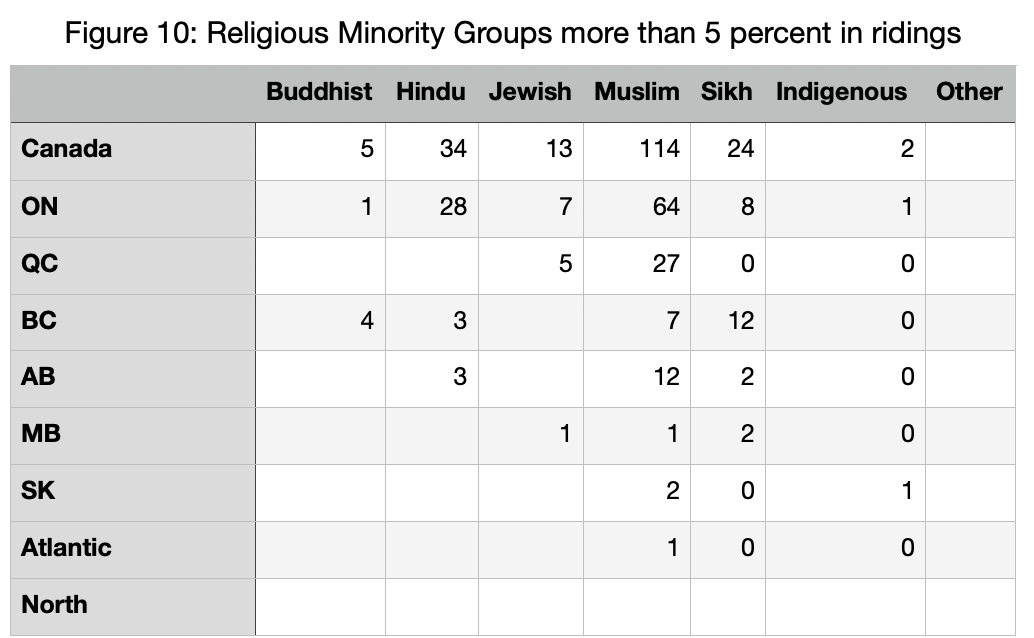
That being said, there are 114 ridings where Muslims form more than 5 percent of the electorate.

… Liberal party insiders were no doubt looking at the Michigan primary results with trepidation. The backlash among Muslim voters to the Stephen Harper government’s niqab ban for citizenship ceremonies and “barbaric cultural practices” hotline likely played a role in helping the Justin Trudeau-led Liberals secure a surprise majority in 2015. Since then, the party has made relations with the community a priority. Trudeau himself stages regular photo-ops at mosques, no doubt savouring every chance he gets to flex his sock game in a setting where shoes are prohibited.

But Trudeau, who appeared to be losing his touch with Muslim Canadians even before Oct. 7, now looks to be in freefall with the community. His multiple calls for a “sustainable ceasefire” in Gaza haven’t been enough to placate intransigent pro-Palestinian activists, who’ve even mobbed the prime minister in public settings. Trudeau has likewise found mosques to be less receptive to him than normal in recent months.

For now, Trudeau doesn’t appear to be too worried about the prospect of a Ramadan mosque ban. When asked on Thursday about the open letter, Trudeau said he’d visit any mosque that would extend him the invitation and gave no indication that he’d publicly commit to the terms enumerated in the statement. Yet Trudeau can’t be overjoyed about the prospect of having to keep his socks firmly in shoe during Islam’s holiest month, especially after seeing Biden’s humiliation in Michigan.

The results of Michigan’s just-held Democratic primary hint that the war in Gaza has triggered a rising tide among Muslim voters in the U.S. Whether electorally vulnerable members of Parliament cede to the demands of the NCCM and its affiliates or risk being shut out of mosques during a critical month for Muslim outreach could be an indication of just how strong the pull of this tide is in Canada.

Source: Rahim Mohamed: National Muslim group demands MPs denounce Israel or face wrath

Idées | L’exception religieuse du Code criminel canadien

Increased focus of debate in Quebec, with Bloc reintroducing a bill to remove this exception (Le Bloc québécois redépose son «projet de loi Charkaoui»). One of my more awkward moments in government occurred while visiting a mosque as part of outreach and finding Charkaoui present.

That being said, making such a change, and implementing it consistently across all religions, would likely be close to impossible:

Ottawa doit impérativement agir pour contrer les propos haineux qui sont à la hausse depuis le début de la guerre au Moyen-Orient. Or, le Code criminel canadien protège les personnes qui fomentent volontairement la haine ou l’antisémitisme, lorsque leurs propos sont exprimés de bonne foi et fondés sur un texte religieux auquel ils croient. 

L’abrogation de cette exception religieuse du Code criminel, qui met d’ailleurs aussi à mal la neutralité religieuse de l’État canadien, semble donc une étape indispensable pour la sécurité et le bien-être des Canadiens.

C’est dans cette optique que le Bloc Québécois a déposé, en novembre dernier, le projet de loi C-367 visant à « colmater » une « brèche complaisante » du Code criminel qui autorise les discours haineux ou antisémites lorsqu’ils sont fondés sur la religion. Malheureusement, ce projet de loi est resté lettre morte, n’ayant même pas été considéré dans l’ordre des priorités du gouvernement fédéral.

Le Bloc québécois vient de relancer le débat en déposant, en ce début de session parlementaire, un deuxième projet de loi pour éliminer l’exception religieuse du Code criminel. Les députés fédéraux seront donc de nouveau appelés à se prononcer sur le sujet.

Rappelons que ce n’est pas la première fois qu’Ottawa fait la sourde d’oreille sur ce sujet. En effet, en 2017-2018, plus de 1500 personnes avaient signé une pétition demandant l’abrogation de cette exception religieuse. La réponse du gouvernement était alors inadéquate puisque la jurisprudence R. c. Keegstra (1990) évoquée pour justifier son refus d’abrogation datait d’avant l’introduction de cette exception religieuse dans le Code criminel en 2004.

L’association des Libres penseurs athées, à l’origine de la pétition de 2017-2028, avait pourtant fait valoir que :

1. Les textes de plusieurs des principales religions du monde comportent des propos qui dénigrent et prônent la haine contre les incroyants, les femmes, les homosexuels ou certains groupes ethniques ou raciaux, des propos qui parfois appellent à la violence, voire à la violence mortelle.  

2. Les religions constituent donc une importante cause de propagande haineuse contre plusieurs groupes.  

3. La liberté de religion des uns ne doit pas avoir préséance sur les droits fondamentaux des autres et ne doit jamais, en aucun cas, menacer ni l’intégrité physique ni la vie des membres des groupes visés par les propos haineux dans ces textes religieux.

Plus récemment, c’est le discours de l’imam Adil Charkaoui, prononcé le 28 octobre 2023 lors d’une manifestation pro-palestinienne près de la Place des Arts, à Montréal, qui a sensibilisé les politiciens à l’égard de l’existence de l’exception religieuse du Code criminel. Ce dernier avait proclamé, en arabe : « Allah, charge-toi de ces agresseurs sionistes. Allah, charge-toi des ennemis du peuple de Gaza. Allah, recense-les tous, puis extermine-les. Et n’épargne aucun d’entre eux ! »

À l’époque, même le premier ministre Justin Trudeau avait condamné les propos de l’imam Charkaoui tout en affirmant, cependant, que le Canada « a déjà des règles très sévères contre l’incitation à la haine, au génocide et à la violence ». 

Qu’attend le gouvernement fédéral pour éliminer cette exception religieuse qui semble protéger de tels discours haineux ? Son inaction à cet égard est d’autant plus étonnante que la lutte contre le discours haineux est une priorité du gouvernement actuel.

Espérons que le deuxième projet de loi du Bloc québécois demandant l’abrogation de l’exception religieuse sera mieux accueilli et fasse partie des priorités du gouvernement pour la session d’hiver 2024.

L’autrice est retraitée de la Commission canadienne des droits de la personne. Elle signe ce texte à titre personnel.

Source: Idées | L’exception religieuse du Code criminel canadien

Buruma: The growing threat of messianic politics

Leave it to others with more expertise to assess the validity of the reasons but agree with the threat as we see in so many places:

…The reason why so many democracies are now threatened by messianic politics is not because organized religion has gained in strength. In fact, I think the opposite is true. In most Western democracies, at least, church authority has almost entirely collapsed. This is true even in the U.S.: while most people still consider themselves to be believers in one faith or another, many American Christians, especially those who are drawn to Trump as a saviour, follow freelance preachers or spiritual entrepreneurs.

In many parts of Europe, where right-wing populism is on the rise, the erosion of church authority starting in the 1960s cast adrift people who used to go to church regularly and looked to their priests and pastors to tell them how to vote. Today, they are anxious and bewildered by demographic, political, social, sexual, and economic changes, and are seeking a saviour to lead them to a simpler, more certain, and more secure world. There are plenty of power-hungry demagogues more than willing to cater to this desire.

Source: The growing threat of messianic politics

Conford: Israelis and Palestinians are both trapped by the dangerous fantasies of history

One of the best commentaries I have seen, thoughtful and balanced:

… For years, the right-wing in Israel – and Hamas in their way – have promulgated the notion that the peace process was an illusion, a mirage. But what events have shown is that the delusion, the Fata Morgana, was that there could ever be normality without finding a peaceful, negotiated settlement to the issue. Polls back in 1993 – before a cruel wave of Hamas suicide bombings and the assassination of Israeli prime minister Yitzhak Rabin undermined belief in the possibility – had support for a peace treaty among both Palestinians and Israelis running above 65 per cent.

Since then, the far right in Israel and Hamas have shared the same goal: to put a halt to any possibility of the peaceful division of the land into mutually recognized stable states of Israel and Palestine. Even in the past few weeks, Mr. Netanyahu has boasted how he has stopped a Palestinian state from coming into existence in the past and how he will also in the future, arguing that the Hamas attack shows why he is right to do so.

It is exactly this thinking which has brought us to where we are now.

The sole way to escape the cycle of violence is to clearheadedly renounce all the maximalist and eliminationist fantasies and the dehumanizing caricatures that have led, and will continue to lead, to the horrifying shedding of the blood of thousands of men, women and children….

M.G. Conford is the writer and director of the documentaries Through The Eyes Of EnemiesNot On Any Map, and Fragments of Jerusalem. He is an associate professor of film at Toronto Metropolitan University

Source: Israelis and Palestinians are both trapped by the dangerous fantasies of history

Rioux: La sainte alliance

French debates, but parallels here with some more religiously conservative communities:

Diane a toujours été un sujet de prédilection des peintres. On retrouve la déesse de l’Aventin sous les couleurs de Rembrandt, du Titien ou de Vermeer. L’une des scènes les plus courantes est celle où le jeune chasseur Actéon, perdu dans les bois, surprend par hasard la vierge sortant de son bain en compagnie de ses nymphes. Toutes sont évidemment dans le plus simple appareil.

Ce jour-là, c’est une toile du peintre italien Guiseppe Cesari illustrant un passage des Métamorphoses d’Ovide que les élèves étudiaient. Nous sommes au collège Jacques-Cartier, à 50 kilomètres de Paris. En première année du secondaire, les mythes de l’Antiquité sont au programme. Rien de plus normal, donc, que l’enseignante soumette cette toile à ses élèves. Jusqu’à ce que certains s’offusquent et détournent les yeux ! Comme les ligues de vertu d’une autre époque.

À leur professeur principal, ils diront avoir été heurtés dans leurs convictions religieuses. Certains iront jusqu’à accuser l’enseignante de provocation raciste. Une accusation fausse sur laquelle ils reviendront rapidement. L’affaire aurait pu en rester là. Mais nous sommes en France, où 83 % des musulmans de moins de 25 ans adhèrent à une conception rigoriste selon laquelle l’islam est « la seule vraie religion », nous révélait un sondage récent.

La panique s’est aussitôt répandue chez les enseignants. Comment ne pas songer à Samuel Paty, égorgé à 25 kilomètres à peine pour avoir montré à ses élèves deux caricatures du prophète ? Ou à Dominique Bernard, exécuté par un islamiste le 13 octobre dernier. Un attentat dont 31 % des jeunes scolarisés disent ne « pas condamner totalement » l’auteur ou « partager certaines de ses motivations ».

Heureusement, le ministre Gabriel Attal s’est rendu sur place. Il s’est donc trouvé une voix pour affirmer qu’« à l’école française, on ne détourne pas le regard devant un tableau, on ne se bouche pas les oreilles en cours de musique, on ne porte pas de tenue religieuse, bref, à l’école française on ne négocie ni l’autorité de l’enseignant ni l’autorité de nos règles et de nos valeurs » !

Habitués d’être lâchés par leur administration, les 860 000 enseignants de France ont poussé un soupir de soulagement. Mais pour combien de temps ? Car ce régime de la peur fait dorénavant partie de la vie quotidienne des professeurs. Tous se demandent qui sera le prochain. Il suffit d’évoquer Israël, la Shoah, la guerre d’Algérie, l’apostasie, les droits des femmes, l’homosexualité ou même l’ombre d’un sein sur une toile de maître.

Ce n’est pas un hasard si le dernier livre de l’ancien inspecteur général de l’Éducation nationale Jean-Pierre Obin s’intitule Les profs ont peur (L’Observatoire). Il s’ouvre sur l’histoire de ce professeur qui donnait un cours sur le nazisme… sans parler des Juifs ! « Je n’ai pas envie de retrouver ma voiture vandalisée comme la dernière fois, disait-il. […] J’ai une femme et des enfants. » Au début des années 2000, ces cas ne concernaient qu’une petite soixantaine d’établissements. On n’en est plus là. Quatre enseignants sur cinq disent avoir eu maille à partir avec des élèves concernant leurs convictions religieuses. Plus de la moitié reconnaissent s’être autocensurés.

Car, si nos gouvernements se préoccupent trop souvent de l’éducation comme d’une guigne, ce n’est pas le cas des islamistes, qui ont depuis longtemps ciblé l’école publique, considérée comme un lieu de perdition.

Aussi étrange que cela puisse paraître, les meilleurs alliés de cette autocensure ne vivent pas dans les banlieues. Ils vivent dans ces quartiers boboïsés des grandes villes. Comme cette Marie G. qui a lancé une pétition pour qu’on retire le nom de Serge Gainsbourg à une nouvelle station de la ligne de métro des Lilas. L’auteur du génial Poinçonneur des Lilas aurait, dit-elle, fait l’éloge des « féminicides » et des « viols incestueux ». À l’appui, des paroles de chansons légèrement provocantes. Dans Titicaca, un homme veut noyer une princesse inca dans le lac du même nom. Lemon Incest, plus suggestive et interprétée avec sa fille, évoque l’inceste dans des mots pourtant sans ambiguïté : « L’amour que nous ne ferons jamais ensemble est le plus beau le plus violent le plus pur le plus enivrant ». Bref, pas de quoi fouetter un chat.

De Diane chasseresse à Gainsbarre, ces féministes comme les islamistes ne peuvent concevoir l’art qu’à travers le petit bout de lorgnette de leur morale obtuse. L’art n’est plus cette vaste entreprise d’exploration touchant aux confins de l’âme humaine. Il n’est plus que la vertueuse confirmation de nos passions tristes. On découvre ici la sainte alliance de l’islamisme et du wokisme contre un ennemi commun : l’art et la culture.

L’histoire de Diane, cette féministe avant l’heure, est terriblement actuelle. Pour l’avoir surprise dans son intimité, Actéon fut transformé en cerf. Cela lui fut fatal puisqu’il fut dévoré par ses chiens incapables de le reconnaître. Ainsi en va-t-il des libertés scolaires et artistiques qui, à force d’être grignotées toujours un peu plus par nos nouveaux mormons, pourraient nous manquer cruellement. Nous serons bientôt semblables à cette meute qui, devenue orpheline, dit-on, après avoir sacrifié son maître, le chercha ensuite éperdument.

Source: La sainte alliance

Australia cannot strip citizenship from man over his terrorism convictions, top court says

Of note:

Australia’s highest court on Wednesday overturned a government decision to strip citizenship from a man convicted of terrorism.

The ruling is a second blow in the High Court to the law introduced almost a decade ago that allows a government minister to strip dual nationals of their Australian citizenship on extremism-related grounds.

The ruling also prevents the government from deporting Algerian-born cleric Abdul Benbrika when he is released from prison, which is expected within weeks.

Source: Australia cannot strip citizenship from man over his terrorism convictions, top court says – The Associated Press

Lisée: Bonne semaine pour la haine

On “useful idiots” and fanaticism:

Au moment où ces lignes étaient écrites, les missiles israéliens avaient déjà quintuplé la mise. En riposte aux actes barbares du Hamas contre 1000 civils et militaires israéliens, les bombes de l’État hébreu ont fait plus de 5000 victimes civiles, hommes, femmes et enfants agonisant sous les gravats. À ce point du récit, et alors que se réunissent les conditions du débordement du conflit du Liban au Yémen à l’Iran, l’exigence d’un cessez-le-feu immédiat, suivi d’une mise sous tutelle de Gaza par l’ONU, semble à mon humble avis la seule posture prudente et humaine possible.

Il n’est pas étonnant que, sur le globe, les passions s’enflamment. Que, parmi les pro-israéliens, on entende des appels à éradiquer le Hamas, quoi qu’il en coûte en victimes civiles. Que, chez les propalestiniens, on mette en cause l’existence même de l’État d’Israël.

Dans le tumulte, les idiots utiles s’expriment. Telle la lettre où 74 étudiants en droit (en droit !) de l’Université métropolitaine de Toronto affirment « être solidaires de la Palestine et de toutes les formes de résistance palestinienne », ce qui, par définition, n’exclut pas les techniques infanticides du Hamas. Deux associations étudiantes de l’Université York, à Toronto, ont diffusé un communiqué similaire, comme l’ont fait plusieurs groupes étudiants d’universités américaines.

L’outrance épistolaire juvénile est certes condamnable, mais ces exagérations tendent à s’estomper avec l’âge. Plus graves sont les paroles et les gestes des foules multigénérationnelles ces derniers jours. À Toronto, toujours, une manifestation propalestinienne d’un millier de personnes se tenait la semaine dernière devant un immeuble où avait lieu une assemblée pro-israélienne. Dans la vidéo de l’événement, on entend clairement quelqu’un crier au micro : « Que fait-on avec les Juifs ? » Et des manifestants répondre : « On leur coupe la tête. » À répétition.

En Australie, sur les marches du magnifique opéra de Sydney, autant de manifestants ont scandé un slogan qui optait pour une autre abjecte solution : « Gazez les Juifs. » Samedi dernier, à Montréal, des manifestants propalestiniens ont lancé crachats, roches et briques en direction de manifestants pro-israéliens. La police a procédé à 15 arrestations. À Amsterdam, tous tabous tombés, quelques manifestants ont fièrement brandi d’énormes drapeaux noirs du groupe État islamique.

Le plus étonnant est de ne pas voir des images de pacifistes, égarés dans ces manifs, fuyant à toutes jambes lorsqu’ils entendent des appels à l’éradication d’un peuple et d’une religion. Il est vrai qu’une autre religion est présente, puisque parmi les slogans on entend aussi régulièrement « Dieu est grand », la divinité en question étant, toujours, Allah. Dans plusieurs villes européennes, et à Toronto, certaines manifestations se transforment en prières musulmanes collectives, dans la rue, devant un poste diplomatique israélien. C’est l’utilisation politique de la prière.

Je n’ignore pas que des actes antimusulmans abjects ont été commis, ici comme ailleurs. Mais on ne voit pas, dans nos villes, de foules réclamer l’annihilation de tous les Arabes ou de tous les musulmans.

L’appel par le Hamas à une journée de « djihad mondial » s’est soldé par une poignée d’attentats en Europe. On peut penser que le nombre de djihadistes prêts à passer à l’acte fut faible. Mais on doit constater qu’ils disposent d’un écho favorable plus important qu’on ne pouvait l’espérer. Après que l’un d’eux a assassiné un enseignant français à Arras, une minute de silence fut organisée dans les écoles de l’Hexagone. Le ministère de l’Éducation a relevé 500 cas de perturbations, par des élèves, au moment du recueillement. Parmi eux, 183 élèves ont été suspendus pour « menaces à l’encontre d’enseignants » ou « apologie du terrorisme ».

Au lendemain de l’assassinat par un djihadiste de deux touristes suédois en Belgique, des élèves musulmans d’une école voisine ont demandé à leur professeur de faire une prière… pour le tueur. L’enseignant d’une autre école belge rapporte : « J’ai été choqué de voir que les élèves s’échangeaient entre eux des photos des personnes tuées […] Ils rigolaient. »

L’école doit être le lieu premier de socialisation, mais des élèves musulmans sont en contact permanent avec un autre univers, explique ce prof. « C’est via TikTok et d’autres sites qu’ils fabriquent leur islam, leur religion. Ils écoutent des prêcheurs sur Internet. La mosquée, elle est sur leur téléphone ! » Manifestement, ajoute-t-il, « certains élèves sont fanatisés par les réseaux sociaux ».

À la télé française, l’entrevue d’un ami du tueur d’Arras a levé le voile sur le type de discussion qui se tient dans ces milieux. « On avait les mêmes idéologies, dit-il, sauf pour aller tuer les gens, ça ne m’a jamais intéressé. Et puis, ce n’est pas normal, sauf dans une guerre sainte. » Sauf dans une guerre sainte. Bon à savoir.

J’insiste sur la distinction entre l’opinion outrancière, qui peut évoluer, et la conviction religieuse, qui est par nature fixée une fois pour toutes — sauf si on en sort —, car dite d’inspiration divine.

L’écrivain roumain Emil Cioran le résumait ainsi il y a un demi-siècle : « Le fanatisme est la mort de la conversation. On ne bavarde pas avec un candidat au martyre. Que dire à quelqu’un qui refuse de pénétrer vos raisons et qui, du moment que l’on ne s’incline pas devant les siennes, aimerait mieux périr que céder ? »

Source: Bonne semaine pour la haine

Coren: Peace is possible in Israel and Palestine — if enough genuinely want it

Money quote:

If I had the ability I would silence the Islamists, the Jew-haters and the predictable Marxists who know nothing of humanity; as well as the fundamentalist Israeli settlers, the extreme Zionists, who care for nobody other than their cause, those diaspora Jewish people who are more extreme than most Israelis and their right-wing Christian friends who want to fight the end times war to every last Jew and Arab.

Well said:

I’m a Christian priest with three Jewish grandparents. So, to an antisemite I’m a Jew. Even worse, I’m an infiltrator, trying to destroy the church from within. Believe me, when I’m attacked on social media that abuse becomes abundantly and repeatedly clear.

My family fled Russian pogroms in 1900, then lived in the east-end of London during the threat of pre-war fascism. They had direct, physical confrontations with Nazis.

I’ve also visited Israel and Palestine numerous times for 40 years and have dear friends on all sides of the debate. I studied there, lived there, and unlike so many sudden and instant experts, genuinely understand the region, its history and complexities.

Because of this I refuse to play the sordid game of triumphalism and exclusive truth, will not stand with Israel or with Palestine and won’t utter platitudes and simplistic slogans about a situation that demands so much more than that. If I stand with anything, it’s justice and peace. Let the extremists roar but I will not be moved.

There are simultaneous truths that have to be made clear and they really aren’t so difficult. First, the Hamas slaughter of the innocents was barbaric and grotesque. To refuse to condemn it, let alone condone it, is a moral outrage. No relativism, no excuses, no infantile radicalism. Just explicitly reject rape, infanticide and the murder of blameless people.

Second, the open wound of injustice toward Palestine and Palestinians remains and until that is addressed there can be no lasting solution. Of course, there are lies and distortions, of course the local as well as the super powers are hypocritical and exploitative and of course the Palestinian leadership has often been disastrous. But none of that changes the reality of the Palestinians losing their homes and homeland.

Third, while Israel’s campaign in Gaza may well destroy Hamas as a threat, it will come at the cost of countless innocent lives and will also achieve little if anything in the long run. Revenge is not policy, and an Israeli child killed by a blood-lusting terrorist is little different from a Palestinian baby pulled from the rubble after an Israeli missile attack. It will create another generation of young people eager to martyr themselves to attack Israel, it will alienate world opinion, but most of all it will bring further agony to a people already living in appalling conditions.

If I had the ability I would silence the Islamists, the Jew-haters and the predictable Marxists who know nothing of humanity; as well as the fundamentalist Israeli settlers, the extreme Zionists, who care for nobody other than their cause, those diaspora Jewish people who are more extreme than most Israelis and their right-wing Christian friends who want to fight the end times war to every last Jew and Arab.

They hold the edges of a great net and caught in it are the mass of ordinary Israelis and Palestinians. I’m not naïve, not inexperienced in the ways of conflict and tribal bitterness, but I also know that most on both sides want to live in dignity and safety and are willing to make the compromises that are vital if anything of value is to be achieved. I’ve seen it repeatedly and know it can happen. My God, it won’t be easy, but then little that is worth achieving ever is.

Just a few weeks ago I sat in a small house in Belfast with a man whose father had been shot dead by a paramilitary gang. The murdered man wasn’t involved in politics, just of a different religion to those who killed him.

For many years my host had wanted revenge, then he gave up, then he devoted his life to peace and reconciliation. Now he lives in a country where there is a peace nobody ever thought remotely possible. Actually, it always is. Even in Israel and Palestine. If enough genuinely want it.

Rev. Michael Coren is a Toronto-based writer. @michaelcoren

Source: Coren: Peace is possible in Israel and Palestine — if enough genuinely want it

‘It’s a new party’: How Conservatives try to rebuild trust among Muslim communities

Of note. Repeat of the Bricker-Ibbitson and Jason Kenney arguments, but targeted towards a group traditionally less inclined to vote Conservative. But opportunistic given the controversies among some members of religious groups regarding LGBTQ+ and gender issues in the school system:

When Pierre Poilievre pitches the Conservative party to Muslim Canadians, he talks about “faith, family and freedom.”

For months he has been pointing out what he sees as their overlapping values during visits to mosques, at community celebrations, with businesses and in conversations with ethnic media outlets.

It’s part of an effort to grow the party’s presence, particularly in larger cities that are home to many racialized Canadians whose support for the Conservatives plummeted during the final months of Stephen Harper’s government and his divisive 2015 campaign.

Poilievre has also fine-tuned his message to appeal to growing concerns from some parents, echoed by several prominent Muslim organizations, about what their children are learning about LGBTQ+ issues in schools.

He is gaining some traction with his acknowledgment of such worries, but whether he will take action through party policy remains unclear, given his firm view that education is a provincial matter.

Some also wonder what he would do to address the Islamophobia that many feel his party exacerbated the last time it was in power. “This is where we have that sort of cautious optimism,” said Nawaz Tahir, a lawyer who chairs Hikma, an advocacy group for Muslims in southwestern Ontario. Tahir met Poilievre with other community leaders this summer.

“While it might be resonating in the short term, there are long-term questions about whether or not people will continue to listen, or latch on, in the absence of some concrete policy proposals.”

Poilievre has chosen to walk a careful path on the issue of “parental rights.” The term, which speaks to the desire by parents to make decisions regarding their children, has been popularized by people with wide-ranging concerns about efforts to make schools more inclusive for LGBTQ+ students, such as by raising Pride flags or including discussion of sexual orientation and gender identity in the curriculum.

New Brunswick and Saskatchewan now require parental permission for transgender and nonbinary students to use different names or pronouns at school. Court challenges have ensued, with teachers’ unions and provincial child advocates saying the policies put vulnerable students at risk.

The Conservative leader has said that Prime Minister Justin Trudeau should “butt out” of the issue and “let parents raise kids,” but otherwise Poilievre has stayed mum on how he might respond.

At last month’s policy convention in Quebec City, Conservative party members voted overwhelmingly in favour of a policy change to prohibit minors experiencing gender dysphoria from receiving “life-altering” pharmaceutical or surgical treatment.

A video posted online shows that Poilievre said during a Punjabi media event in Surrey, B.C., several days later that he was “taking some time to study that policy to come to the right solution.”

He said the party would have to consider “jurisdictions,” in the sense of “which level of government is responsible for it” — but ultimately, “I will be making my position clear.”

Poilievre’s office did not respond to a question about whether he has come to any conclusions.

His office was also silent in July when a photo circulated online that showed Conservative finance critic and Calgary MP Jasraj Singh Hallan with two men who wore T-shirts that read “leave our kids alone.” The shirts featured an image of stylized figures beneath an umbrella shielding them from the rainbow of colours associated with LGBTQ+ Pride flags.

One of the men in the photo, Mahmoud Mourra, a Muslim father of five, has for months been protesting school policies and activities that acknowledge students’ sexual orientation and gender identity.

As he and thousands of others took to the streets in recent countrywide demonstrations against “gender ideology” in schools on Sept. 20, Trudeau posted on X, the platform previously known as Twitter, that “transphobia, homophobia, and biphobia have no place in this country.”

Poilievre’s office, meanwhile, instructed MPs to keep quiet.

Two days later, Poilievre also posted on X, accusing Trudeau of “demonizing concerned parents” with his statement about the protests.

The Muslim Association of Canada also condemned Trudeau’s remarks, saying Muslim parents who participated in protests showed up “to be heard, not to sow division.” The organization said it feared Muslim kids would face “increased bullying and harassment” at school —a statement Poilievre and many of his MPs shared online.

Dalia Mohamed, who leads public affairs at the Canadian chapter of the Islamic Society of North America, said her organization has heard from parents who worry their children face pushback when opting out of certain lessons or activities related to LGBTQ+ issues.

“What they’re seeing more and more is that their kids are facing repercussions,” she said.

An audio recording surfaced online in June alleged to be an Edmonton school teacher chastising a Muslim student about missing class to avoid Pride events. The unidentified teacher says respect for differences “goes two ways,” adding that if the student thinks same-sex marriage should not be legal, then he “can’t be Canadian” and does not “belong here.”

The National Council of Canadian Muslims called it “deeply Islamophobic, inappropriate and harassing behaviour.” The school board said it was dealing with the issue.

Tahir, with Hikma, said it comes down to respecting religious freedom, adding that it is “not part of our faith teaching” to hate the LGBTQ+ community. “We condemn that,” he said.

Tahir said he and other community leaders told Poilievre the Conservatives have an opportunity to regain the support of Muslim Canadians.

He argued that the “vast majority” of Muslims voted for Brian Mulroney’s Progressive Conservatives in the 1980s and early ’90s.

“There was a lot of alignment on a number of issues. And that seems to have gone by the wayside,” he said.

Still, while there is frustration that the governing Liberals have failed to take enough action against Islamophobia,including within its own government agencies, Poilievre faces an uphill battle against long memories.

“He was around the table during the Harper years when there were some things that happened that were not well received by the Muslim community,” said Tahir.

In 2011, then-immigration minister Jason Kenney brought in a rule requiring Muslim women to remove face coverings, such as niqabs, when swearing the oath during citizenship ceremonies. During the 2015 federal election campaign, the Conservatives asked the Supreme Court to hear a request to appeal a court decision to overturn that policy, and Harper mused about extending it to all public servants. The Conservatives also promised to create a tip line to enforce a law against “barbaric cultural practices,” which they said at the time included forced marriages.

Eight years later, Conservatives are still apologizing.

“Mistakes were made. No doubt about that,” Conservative MP Garnett Genuis said in August of the 2015 campaign at a Greater Toronto Area breakfast meeting with members of the Pakistani community.

“There’s rebuilding of trust,” he said in a video shared online. “And I understand people saying, ‘Well, we’re not sure yet because of some of the things that happened in the past.'”

He described a “deep fundamental connection” between the Conservative party and the wider Muslim community. He said a “renaissance” of that relationship is underway.

“We’re trying to reach out to the community and tell them, ‘It’s a new party, that was eight years ago,'” Conservative Sen. Salma Ataullahjan said at the same event. Her office did not respond to a request for comment.

In a written statement, Genuis said the party’s message around lower prices, affordable housing and safer communities is “resonating with Canadians of all walks of life.

So is its defence of “faith, family and freedom,” he added.

Poilievre addressed the criticism of the Conservatives’ unsuccessful 2015 campaign during last year’s leadership race. Rival candidate Patrick Brown, who at the time was counting on heavy support from Muslim communities, accused Poilievre of having never “publicly stood against” the divisive policies, such as a “niqab ban.” Poilievre pushed back by noting the policy was limited to swearing the citizenship oath.

Since winning the leadership, Poilievre has travelled extensively to meet with immigrant and racialized communities that Conservatives had long ago credited with delivering them a majority victory in 2011.

Historically, the party has believed that many in these groups tend to be more religiously conservative, that they will prioritize public safety and that they are looking for policies, such as lower taxes, that can help them gain an economic foothold in Canada.

Tahir said Poilievre was told during his meeting this summer that if he comes back with concrete plans to address Islamophobia, there would be “a strong willingness” from the community to vote Conservative.

In 2017, Poilievre voted alongside other Conservative MPs against a motion from a Liberal MP to condemn Islamophobia, citing concerns it could infringe on free speech.

During Ramadan this spring, Poilievre said in an interview with Canada One TV that he believes the country must “combat bad speech with good speech, not with censorship, but with good speech.”

He also spoke of bolstering a security fund for mosques and talked about combating Islamophobia through a stronger criminal justice response, part of a broader push by the Conservatives for tough-on-crime policies.

Earlier this year, Poilievre addressed long-standing allegations that the Canada Revenue Agency is discriminating against Muslim charities.

The agency “has been abusing our Muslim charities and the immigration system has been discriminating against our Muslim immigrants,” he said in a video shared by the Muslim Association of Canada.

The National Security and Intelligence Review Agency announced in March it would be investigating allegations of bias and Islamophobia at the CRA.

Saleha Khan said she believes Poilievre is using the debate around LGBTQ+ issues in schools to his advantage. She also worries the surrounding rhetoric could ultimately bring more harm to the community.

The London, Ont., woman and nearly 700 other people, many of whom are members of the Muslim Canadian community,have asked in an open letter that their leaders “help separate fact from fiction” by speaking out about misinformation they see fuelling a lot of the discourse, placing both Muslim and LGBTQ+ students at risk, as well as those who identify as both.

She said the debate is “gut-wrenching” and risks making life even more dangerous for average Muslim families and their children, who already experience Islamophobia and live their life under high alert.

“We will become the poster children for transphobia and homophobia when we are not the poster children for homophobia and transphobia.”

In the Ramadan interview with Canada One TV, Poilievre acknowledged that his party has done a lousy job of fostering better ties.

He pledged to be different.

“I’m coming here with my hand extended in a spirit of friendship,” he said. “It’s not the duty of the Muslim community to come to us. It’s our duty to come to you.”

Source: ‘It’s a new party’: How Conservatives try to rebuild trust among Muslim communities

Siddiqui: Despite decades of adversity, Muslims have become an integral part of the West

Interesting and relevant reflections:

Last week marked the 22nd anniversary of the Sept. 11 attacks when nearly 3,000 innocent people were killed by 19 Muslim terrorists. In the ensuing American-led war on terror waged overtly and covertly in more than 80 countries, nearly 900,000 Muslims have been killed and at least 37 million have been displaced, according to Brown University’s Cost of War Project.

We also know about the parallel cultural warfare on Muslims. The Green Scare turned out to be worse than the Red Scare of the 1950s – it has had a bigger footprint, lasted longer and affected, besides the Muslim world, Muslim minorities across the West, estimated at more than 30 million.

What we know little or nothing about is this:

Muslims in the West are emerging as an integral part of the mainstream, despite or because of the heavy odds they’ve encountered.

This is particularly true of Canada’s 1.8 million Muslims and the estimated 3.5 million Muslims in the United States, that hotbed of Islamophobia.

Muslims are assuming prominent roles in a range of fields, from politics to business to culture to sports

Not only is this good news for this beleaguered minority but also our democracies, which, despite bouts of abominable bigotry, do provide the legal and political mechanisms for victims to reassert their rights, eventually.

Post-9/11, Muslims became defensive: “I am a Muslim but not a bin Laden Muslim,” “ … not a fundamentalist Muslim,” “ … not a Wahhabi Muslim,” but rather, “a moderate Muslim,” or “a Sufi Muslim.” Not that many knew who or what a Sufi was, only that the designation signalled you were Muslim Lite and unlikely to blow up planes and buildings.

But as Islamophobia intensified, many Muslims gravitated to their faith. Their ethnic, linguistic, racial, cultural, nationalist and doctrinal affiliations began to take a back seat to their pan-Islamic identity. Or, pan-Muslim identity, in the case of the non-observant.

While 48 per cent of Canadian Muslims consider their ethnic or cultural identity as important, more than 80 per cent cite being Muslim and being Canadian as markers of their identity.

Muslim and Canadian. Muslim and American. Muslim and British.

It used to be that demonized minorities in North America kept their heads down and played down their identities. During and after the Second World War, for example, Mennonites in southern Ontario nearly disappeared from the census. But Muslims announced themselves in the 2011 and 2021 censuses when the decennial religion question was asked.

Mosques are overflowing, in part due to increased immigration but not just because of it. Politicians were the first to sniff this out and troll for votes there. On the Friday sabbath, most mosques are holding two or three services. In Ramadan, the late-evening prayers when the entire Quran is recited in the month, congregations are spilling into corridors, classrooms, gyms – in an orderly Canadian manner.

An unprecedented number of women in Canada – and the United States, Britain and parts of Europe – are wearing the hijab. Most were born or bred in the West, and the first in their families to do so, often defying parents. They’ve marched proudly and fearlessly into the front lines of battling both religious and gender discrimination. They are also carving out new paths: Playing hockey and basketball, acing postsecondary education, and being professors, doctors, lawyers, engineers, entrepreneurs, business partners, authors, TV producers, news anchors and stand-up comedians. In my books, they are the real Muslim heroes of the post-9/11 period.

Even the Halal industry is booming, said to be worth around $1.5-billion in Canada alone.

Ismaili Muslims, followers of the Aga Khan, are beginning to fast in Ramadan, and perform the annual hajj pilgrimage in Saudi Arabia. Given that such obligations had long been left to individual choices among the Ismailis, the new trend by their young denotes strong ecumenical solidarity.

This increase in faith activity may spook those who consider religion incompatible with secularism. On the contrary, freedom of religion, including the right to public assertion of it, is a bedrock principle of liberal democracy. So long as a faith practice is within the law, we have little or no reason to panic. Indeed, it can lead to ethical behaviour and a more humane society. Sikh gurdwaras, for example, serve Sikhs and non-Sikhs alike at their langar, free mass feeding, as they did during the COVID-19 pandemic. Churches routinely house refugee claimants.

Mosque-based food banks are feeding people of all faiths and no faith, and mosques are raising funds for neighbourhood public schools and hospitals. The Toronto-based International Development and Relief Foundation – founded in 1984 by a pious Niagara Falls physician, Fuad Sahin – provides humanitarian aid and development programs without discrimination in Canada and abroad. The Aga Khan Foundation Canada is partnering with the federal government to deliver development programs abroad.

All this represents a remarkably swift evolution for a relatively recent immigrant group, especially the Ismailis. Refugees from East Africa in the 1970s, they’ve shown themselves to be highly organized, self-reliant and successful – a model minority within a minority. Former prime minister Jean Chrétien told me during the 1990s recession that what his hometown of Shawinigan, Que., needed was “a dozen Ismaili entrepreneurs.”

Muslim advocacy groups helped turn the politically docile Muslims into a formidable voting bloc. In the 2015 election, nearly 80 per cent of Canadians Muslims voted, according to the group The Canadian Muslim Vote. Nationally, they voted 65 per cent for the Liberals, 10 per cent for the NDP and just 2 per cent for the Conservatives. In the 2021 election, 28 Muslim candidates ran and 12 won. Four have been ministers: Maryam Monsef (a refugee from Afghanistan), Ahmed Hussen (a refugee from Somalia), Omar Alghabra (an immigrant of Syrian descent), and my Toronto area MP Arif Virani (a refugee from Uganda), now Canada’s first Muslim minister of justice. Naheed Nenshi of Calgary was the first Muslim mayor of a large North American city, and Ausma Malik is the first hijab-wearing councillor in Toronto, indeed Canada.

In the United States, 57 Muslims were elected in the 2020 national and state elections. Keith Ellison, the first Muslim elected to the House of Representatives, took his oath of office in 2007 on a copy of the Quran owned by president Thomas Jefferson who, unlike contemporary American politicians, wanted to better understand Muslims. Mr. Ellison has been followed by three others: representatives Andre Carson, Rashida Tlaib and the hijab wearing Ilhan Omar.

In Britain, which has been slower in integrating minorities, there were 55 Muslim candidates in the 2019 general election and 19 were elected. Two were named Conservative ministers – Sajid Javid and Nadhim Zahawi. In Scotland, Humza Yousaf became First Minister earlier this year, the first Muslim to lead a major U.K. party, and the first Muslim to lead a democratic Western European nation. His wife, Nadia El-Nakla, is a councillor in the City of Dundee, the first member of any minority elected there.

The mayor of London since 2016 has been Sadiq Khan. Earlier as a Labour MP, he voted against his own government’s draconian anti-terrorism legislation in 2006, fearing it might snare innocent Muslims. In 2009, he was sworn in as a member of the Privy Council at Buckingham Palace on the Quran. Upon discovering that the palace had none, he left his copy there.

It’s not just politics.

Goldy Hyder is the first Muslim chief executive of the Business Council of Canada, which represents the heads of Canada’s 150 leading businesses. Toronto lawyer Walied Soliman, Canadian chair of Norton Rose Fulbright, has also served as its global chair.

Authors include M.G. Vassanji, Canada’s first two-time winner of the Giller Prize for fiction; Uzma Jalaluddin; Kamal Al-Solaylee; and Omar Mouallem. Rappers K’naan and Belly. TV anchors Omar Sachedina, Farah Nasser and Ginella Massa; broadcaster Adnan Virk. There’s hockey star Nazem Kadri and the wrestler Sami Zayn. Comedian Ali Hassan and Zarqa Nawaz, producer of the CBC sitcom Little Mosque on the Prairie, which drew a record audience of 2.1 million when it premiered in 2007.

We are familiar with American entertainers Hasan Minhaj, Mahershala Ali, and Aziz Ansari; the writers Fareed Zakaria, Reza Aslan, and Ayad Akhtar, who is also the president of PEN America; the painter Salman Toor and his partner, singer Ali Sethi, whose song Pasoori, Punjabi for conflict, has exceeded 500 million views and was the most searched song in 2022, according to Google Trends.

Muslims have traditionally divided the world into Dar al-Islamand Dar al-Harb, the dominion of Islam and the dominion that barred the free practise of Islam. Canadian Muslims speak of Canada as Dar al-Amn, an abode of peace – sans Quebec.

The province has been aping France and certain European jurisdictions in banning the hijab and the niqab (and the turban and the kippa) in public service, on pain of the wearers losing their jobs. France recently also banned the abaya in state schools, the long dress worn by some Arab women. The discrimination is rationalized in the rubric of laïcité, secularism – oblivious to the irony that while the Taliban and the ayatollahs tell women what to wear, these guardians of secularism order women what not to. The urge to control women is the same. Quebec recently banned religious activity (i.e. prayers) in schools, which disproportionally affects Muslim students. China has banned beards in Muslim Xinjiang in the name of curbing “extremism.” We are left to argue only about the degree of the control and the punishments for disobedience.

Quebec also shares another unfortunate trait with France and other parts of Europe. The only Muslims it grants prominent roles in government and the public sector are those who attack fellow Muslims, especially the observant. No dissident voices are allowed to disturb the certitudes of anti-religious secularism.

Happily, in English Canada, Muslim-baiting no longer pays political dividends. Stephen Harper found that out in the 2015 election when Canadians decided that his Barbaric Cultural Practices Act was one dog whistle too many.

Today, no Islamophobic party can win a national election, nor a xenophobic one.

Yet, as we know, Canada has not been immune from Islamophobia.

Six worshippers were massacred in Quebec City in 2017. A caretaker at a Toronto mosque was murdered in 2020. A family of four was mowed down in London in 2021; the trial of the accused is taking place as I write this.

Muslims face hostility – including, shamefully, by the right-wing mainstream media. They suffer high unemployment and underemployment. Hijab-wearing women are still harassed, spat upon, pushed, shoved and kicked in public spaces, pointing to yet another irony: The West thinks that Islam and Muslims mistreat women, yet it is Muslim women in the West who are the biggest victims of discrimination by liberals and louts alike.

Ottawa has appointed a Special Representative on Combatting Islamophobia, Amira Elghawaby, a hijab-wearing human-rights activist. Her role is akin to that of the Special Envoy on Preserving Holocaust Remembrance and Combatting Anti-Semitism. This is appropriate, given that Islamophobia is the new antisemitism.

Through these tough times, as during others through the ages, Muslims have been sustained by a resiliency born of sabr, patience/perseverance, enjoined by the Quran and the Prophet Muhammad. Even the non-observant have it in their DNA. One common refrain among Muslims is that as bad as they’ve had it here, they are blessed, compared with the plight of many Muslims and non-Muslims around the world.

Overcoming adversity, succeeding as a minority, and integrating into the larger society have had two significant beneficial side effects for Muslims:

1) Going or gone is the notion that Muslim states “back home,” or at least the influential ones, would come to the rescue of Muslims here. Or that the Organization of Islamic Co-operation, the Jeddah-based, 56-member umbrella organization of the world’s 1.8 billion Muslims, would.

2) Old-world interdenominational rivalries are dissipating. All strands of Islam co-exist here: There are no Orange Day-like parades, with one set of Muslims needling the other.

All these transformational changes speak to a greater truth: Democracy is the best polity for Muslims, as it is for peoples of other faiths and no faith, so long as it treats all groups fairly.

This is not an exclusively secular idea. It was enunciated with stunning clarity by Islamic clerics back in the 1930s in colonial British India. Its strongest proponent was Husain Ahmed Madani, rector of a highly regarded orthodox madrassah in Deoband, north of Delhi. I’ve been reading about him while tracing my family history in those precincts.

He was a steadfast supporter of Mahatma Gandhi’s joint Hindu-Muslim struggle for independence from the British. He opposed dividing India into a majority-Muslim Pakistan and Hindu-majority India, and would ask: Whose Islam would prevail in Pakistan? Given the range of theological diversity among Muslims, only an authoritarian government could impose the kind of Islam it opted for. He was making the case for Muslims to stay in the democratic framework of postcolonial India. His prescience is being proven over and over in the West, especially Canada.

Haroon Siddiqui is editorial page editor emeritus of the Toronto Star and a senior fellow at Massey College. His latest book is My Name is Not Harry: A Memoir.

Source: Despite decades of adversity, Muslims have become an integral part of the West