Ashley Csanady: Indigenous prayers in the classroom and all-Muslim suburbs are equally dangerous attacks on our secular society

Good column by Csanady although I do think there is a place, in a secular system, for comparative religion courses to help students understand the diversity of cultures and beliefs (as in Quebec):

Teaching kids about smudging ceremonies, and giving them the chance to participate in one, is a fine idea. As a fence-sitting agnostic, I have and it was great and calming and I really appreciated the openness of the First Nations community that offered it. But I also have friends who grew up in much more dogmatic households than mine, who would have broken into tears at being asked — nay forced — to do something against their religion. I considered the ceremony more spiritual than religious, but not everyone feels this way, and to suggest it’s not religious is actually an insult to its indigenous culture.

 The most infuriating thing about this debate in B.C. isn’t the details of the challenge itself, however, but the maddening knee-jerk left-wing reaction. The argument is less about religious freedom and secularism, but about a mother supposedly trying to “ban indigenous ceremonies in schools,” as a Guardian headline screamed.

Just as kids shouldn’t be required to all sing religious Christmas carols, nor should they be forced to recite another religions prayer or be anointed under its practices.

The mother isn’t trying to ban the ceremonies. Again, the issue is choice. Creating a prayer room for Muslim students, or ensuring Jewish students can miss class on Yom Kippur, or letting Hindu kids bring in treats on Diwali, are reasonable measures. But just as kids shouldn’t be required to sing religious Christmas carols, nor should they be forced to recite another religion’s prayer or be anointed under its practices. A multicultural society means freedom of religion and balancing competing rights.

Which brings us to the other troubling story in the news this week: a proposal to build a Muslim-based community in Quebec.

The organizer, Nabil Warda, has said his intent was to give Muslim families a chance at homeownership without paying interest, something that’s forbidden under certain interpretations of the Quran. And he has admitted maybe he should have called it “humanistic” instead of “Muslim,” to avoid the backlash.

Given there are many Orthodox Jewish communities in the U.S. and other predominantly Muslim suburbs in Ontario and Alberta, this should end the debate. Cultural communities have always taken space for their religion and people. Ethnic, religious and cultural communities that evolve over time are part of a diverse country.

What makes the Muslim community proposal offensive is the strictures that would be in place. As my colleague Graeme Hamilton notes, Warda has been explicit that Muslim cultural norms would be imposed, even in the public spaces in the community: “You don’t drive drunk on the street. If you want to drink alcohol, you drink it in your house,” Warda said.

“Women could choose whether to wear the headscarf but they could not walk around in a halter-top and shorts,” Hamilton reports.

There are already public intoxication and anti-drunk driving laws in Canada. And last time I checked, indecency under the criminal code only requires the teensiest bikini to pass muster. Since when does “humanism” not include women?

Imagine if this were an orthodox Christian community, like the ones in B.C. and Utah where women are forced to cover up and daughters are traded like chattel. For some reason, I think there’d be more outrage from the left. But the second it’s a Muslim community, it’s immune to criticism from the far-left, lest a rational secular argument be deemed Islamophobic.

Women in Canada should be able to wear whatever they want in public. I support a woman wearing a burqa on a public beach just as much as I do a bikini. If a temple or a church requires them to cover up or undress upon entry, that’s their right. But it’s also women’s right not to have religious requirements imposed on them in public spaces — including the municipal roads and sidewalks in a proposed suburb.

So too do children have a right to be free from religion during their public education. A religion is a religion is a religion. It doesn’t matter if it’s indigenous or Abrahamic in origin— it has no place in the public sphere or in the public classroom.
Source: Ashley Csanady: Indigenous prayers in the classroom and all-Muslim suburbs are equally dangerous attacks on our secular society | National Post

Women’s Rights Become A Battleground For Israel’s Ultra-Orthodox Jews : NPR

Continuing religious radicalization in Israel:

Four years ago, a lawsuit was filed by an Orthodox feminist group called Kolech, which means “Your Voice” in the Hebrew feminine. It was one of the biggest class-action lawsuits in Israeli history, and it targeted what was then an all-male, ultra-Orthodox radio station called Kol Barama, founded in 2009.

“There were no women interviewing. You wouldn’t be able to hear a woman on this radio channel,” says Kolech’s executive director, Yael Rockman. “Not only that. This radio channel is not private. They get money from the government. ”

The discrimination lawsuit went all the way to Israel’s highest court, and in late 2014, the women won.

With a birth rate double that of the national average, Israel’s ultra-Orthodox community is growing — and so is its political power. Feminists are girding for more legal battles over women’s rights.

In recent years, Israel’s ultra-Orthodox have lobbied to omit women’s faces from advertisements on the side of Jerusalem buses that circulate in religious areas. During recent Jewish holidays, signs appeared in a religious neighborhood of Jerusalem, Mea Sharim, instructing women to keep off the main road and use side streets for the sake of modesty.

“Radicalization is getting worse, for sure. At the same time, the vision of equal rights, equal participation and women’s power — all of that is getting stronger around the world,” says gender sociologist Elana Sztokman, author of a book called The War on Women in Israel.

Despite the feminists’ legal victory against Kol Barama, Sztokman believes not enough is being done to protect women. She says that because the ultra-Orthodox tend to vote as a homogeneous bloc, they have achieved disproportionate political power and the Israeli government caters to them in an unprecedented way.

Until now, “Jews have never gone to the government authority and said, ‘Let’s make sure that the public spaces fit the needs of our most radical views on women, because it offends our most extreme strict men,'” Sztokman says. “That has never happened until Israel [in the] 21st century.”

Source: Women’s Rights Become A Battleground For Israel’s Ultra-Orthodox Jews : Parallels : NPR

Developer behind ‘Muslim housing project’ in Montreal says anyone with shared values welcome

The latest political debate over integration in Quebec, where PM Couillard has appropriately rejected such separate housing developments:

At a time when restricting religious attire is a recurring theme in Quebec political debate and when some municipalities have blocked proposals for new mosques, the proposed housing project could be seen as a defensive gesture.

But Warda said that is not the case.

“I didn’t hear people say, ‘OK, we have to go and defend ourselves against these nasty Québécois by going and living alone.’ That is not at all my motivation,” he said in an interview.

What he has heard are people who have been renting for 30 years and wish they had something to show for all the money. Although views differ about what Shariah law dictates for Muslims living in a society where mortgages are the norm, many refuse to take out loans that charge interest.

“A lot of Muslims have problems with the idea of interest, which in Arabic is called riba,” Warda said. “That means if you pay more than you were loaned, you are doing something that is very, very, very, very bad from the Muslim point of view.”

He said interest can be circumvented thorough an arrangement in which a house is bought by the bank and then the resident buys it back over time, paying a premium that is considered the bank’s profit, and not interest.

“Let us call it a technicality, for me as an accountant, but for the believers it is not a technicality,” Warda said. Similar arrangements have been used at Muslim housing developments in Ontario and Alberta.

We are here in Canada. We came of our own will. Our intention was not to come to isolate ourselves from society

He said non-Muslims would be welcome to move into his project of prefabricated homes, but they would have to share the values of their Muslim neighbours.

“You don’t drive drunk on the street. If you want to drink alcohol, you drink it in your house,” he said. Women could choose whether to wear the headscarf but they could not walk around in a halter-top and shorts.

“There must be some modesty in the way you dress. We don’t want women living there going half-naked down the streets. We don’t like that,” he said. “If they want to do that, let them go and live in downtown Montreal.”

He has scheduled a meeting Friday evening at the Brossard mosque, the Islamic Community Centre of South Shore, to see if there are enough takers. He said he needs a critical mass of 50 potential buyers before the land can be purchased.

But he has heard opposition closer to home, including from the imam of the Brossard mosque, Foudil Selmoune.

“We are here in Canada. We came of our own will,” Selmoune said in an interview. “Our intention was not to come to isolate ourselves from society or from the community.” He said it would be more constructive for Warda to use his financing proposal to help Muslims buy existing homes rather than creating a Muslim neighbourhood.

The social climate in Quebec can be difficult for Muslims, Selmoune acknowledged.

“It doesn’t mean we have to hide ourselves and get away from the challenges we are going through,” he said. “We have to face them.”

Jordan Tones Down Textbooks’ Islamic Content, and Tempers Rise – The New York Times

Interesting article on one of the challenges facing Jordan:

When Jordan’s school year began last month, educators began noticing tweaks in the curriculum.

Along with the images of women wearing head scarves were a few who went without them. Cleanshaven men appeared alongside drawings of devout, bearded ones. And references to Islam, once sprinkled liberally throughout textbooks and other class materials, were scaled back.

The 70 or so tweaks to Jordan’s textbooks for first through 12th grades are small. The books are still laden with Islamic references: The 10th-grade science text, for example, encourages students to marvel over God’s creation as it discusses evolution.

But they are one of the Middle East’s first noticeable efforts to moderate the school curriculum in hopes of preventing youths from drifting to extreme ideologies.

“It could be a test case for the region,” said Musa Shteiwi, a sociologist who sat on an Education Ministry committee for six months last year to change the textbooks. “All of us in the Arab world have the same problems. We are all entering this battle.”

So far, this modest effort has not gone well. Islamists see it as a threat to their traditional domination of the education system. And among Jordan’s mostly conservative Muslim population, many view the changes as a declaration of war on Islamic values.

“Obama and Clinton’s schools are not for us!” shouted Mahmoud Abu Rakhiya, an Islamist in Maan, a desert town in southern Jordan, at a rally on a recent Friday in late September. In the capital, Amman, around the same time, teachers set a pile of textbooks on fire. A woman in a white face veil shouted: “We don’t need these textbooks anyway! We will teach them what we want!”

Even those who support changes to the curriculum say the government bungled the effort. Jumana Ghunaimat, the editor in chief of Al Ghad, a liberal newspaper that campaigned for a new curriculum, said the changes, introduced without public debate, had antagonized conservative Jordanians.

“I fear that this will not bring positive change,” Ms. Ghunaimat said.

She added, “And today we are in a hard place,” referring to growing fears of extremist violence in Jordan.

The curriculum changes are part of the balancing act that Jordan’s monarchy has long attempted to appease its conservative citizens; the United States, a loyal ally that provides crucial aid; its noisy secular elite; and its influential Christian minority. (Even as the government issued the new textbooks, it arrested a Jordanian writer, Nahed Hattar, for sharing a cartoon on Facebook that many saw as mocking God. Mr. Hattar, 56, a prominent writer from a Christian family, was fatally shot when he showed up at a courthouse on Sept. 25 to face criminal charges of insulting Islam.)

The problem with the previous Jordanian curriculum, advocates for change said, was that Islam dominated every subject, without teaching children about the shared humanity of non-Muslims, including other Jordanian citizens. For instance, Jordanians are taught, “You are a Muslim, and therefore you are moral,” said Oraib al-Rantawi, director general of Al Quds Center for Political Studies, which argued for revisions. “So the question is, what of others? Non-Muslims? Are they moral?”

Source: Jordan Tones Down Textbooks’ Islamic Content, and Tempers Rise – The New York Times

Muslim Women’s Clothing: Alia Hogben

Good piece by Alia Hogben of the Canadian Council of Muslim Women:

We would agree that clothes are a form of non-verbal communication as they can transmit social signals and identify a person’s class, income, beliefs and employment.

In addition to this kind of cultural norm, they may also communicate religious beliefs. For example, the Amish, the Mennonites, Hasidic Jews and many Muslims express their ideas of modesty by the attire they wear. The rules affect both genders but more emphasis is on women’s dress. For all these women, modesty includes covering their head and their hair, and being physically segregated at certain times or places.

We don’t have to like or agree with the different ways women choose to dress, but surely we can accommodate these choices about clothing as long as they don’t impinge on others, or require onerous accommodation, or become obligatory for all of us.

For example, there is no consensus among Muslims about whether women’s head coverings are mandatory. So any state or country which mandates women’s dress, especially Muslim women’s, is wrong. In the same way, no state should decree that these women should be uncovered.

The burkini is a bathing suit that covers all of the female body except the face. Some communities in France, the land of liberte, egalite et fraternite, have decided that the burkini is incompatible with the values of France. The bikini is now considered more consistent with French values. The burkini apparently threatens French secularism.

However, the bikini has not always illustrated French values. There is a 1957 photograph of a woman in a bikini who is being given a ticket by a policeman for her indecent attire.

A point of interest is that the woman who dons the burkini may still displease the more traditional Muslim males. This is because they would tell her that the profile of her body can be seen and thus her burkini is still not acceptable. She is caught between the “secularists” and the “religious.” Best that she dress as she wishes!

I would plead with the French to pay less attention to women’s clothing and instead deal with the far more serious issues that they have, including immigration, integration, discrimination and identity.

In Canada we are relatively tolerant and accepting of diversity, so that the hijab under the RCMP hat has now become part of the uniform. It became official policy this year. I think the reasoning is that if it does not impede safety or security and does no harm to the wearer or those around, then we can make these accommodations.

However, in Canada, there are some demands for accommodations that I think are unreasonable and to which we should not acquiesce.

The majority of Canadians are willing to accommodate issues around modesty of dress. but related to the attire of women is the demand for gender segregation. Enforced gender segregation as an extension of modesty should not be condoned by any of us, Muslims or non-Muslims. It can be damaging to both men and women.

In my view, that’s accommodation too far.

Why?  Gender segregation can also mean gender stereotyping. For example, women are seen as emotional, men as rational and also more highly sexed. Women, therefore – so goes the rationale – must hide their own sexuality and cover up so as not to “tempt” men. This is patriarchy at its worst, laying the blame and responsibility on women and girls.

There is a false assumption that gender segregation will protect men and women from licentiousness. I don’t think so!

How wise is Einstein: “If most of us are ashamed of shabby clothes and shoddy furniture let us be more ashamed of shabby ideas and shoddy philosophies.”

Denying Quebec woman day in court because she was wearing of hijab went against Canadian law principles: judge

Surprised that the judge, while making the correct ruling in the particular case, refused to make a general ruling that wearing a hijab (or kippa, or turban) is permissible in court. Hard to understand what hypothetical situation he was thinking of:

Seventeen months after a Quebec Court judge told her to remove her hijab in court, Rania El-Alloul has received partial vindication from the justice system, but no guarantee it will not happen again.

In a ruling released this week, Superior Court Justice Wilbrod Décarie writes, “The court has a lot of sympathy for (El-Alloul) and deeply regrets how she was treated.”

Judge Eliana Marengo’s February 2015 refusal to hear El-Alloul in the “secular space” of a courtroom unless she removed her Muslim head scarf flew in the face of a 2012 Supreme Court of Canada decision that a witness was entitled to testify in a face-covering niqab, Décarie found.

But he did not issue the judgment sought by El-Alloul — declaring that her rights under the Charter of Rights and Freedoms had been breached and affirming her right to appear in court wearing her hijab.

“Each case is a specific case that has to be evaluated in the context of the witness’s court appearance,” Décarie wrote. “It cannot be declared in advance, absolutely and out of context, that El-Alloul will have the right to wear the hijab during her future appearances before the Court of Quebec. Nobody can predict the future.”

What happens next, I don’t know. I hope no one ever feels what I felt in the past

Julius Grey, one of El-Alloul’s lawyers, called Décarie’s finding “wrong in law and very dangerous.” It opens the door to litigants trying to destabilize a witness by filing motions asking she remove her hijab.

“A person will feel insecure before the courts,” Grey said, adding he favours an appeal.

The lawyer said the issue is important as restrictions on religious dress become more common.

“It’s not a particularly Quebec matter. All over the West there is an unhealthy irritation, I would say, with religious garb, with religious practice, with other customs,” Grey said.

Source: Denying Quebec woman day in court because she was wearing of hijab went against Canadian law principles: judge | National Post

Playboy and the False Normalization of the Hijab: Maajid Nawaz

Nawaz provides historical perspective to wearing of the hijab, contrasting liberal and conservative perspectives, which will provoke discussion and debate:

As a reforming secular liberal Muslim, I do not endorse the gender-discriminatory body-shaming and moralizing of the hijab. I will fight fiercely to protect anyone’s right to wear this medieval flag of female “chastity,” but that doesn’t mean I think the wearer is right to do so. Let us not ban the hijab, but let us not glamorize it either. I prefer leaving that to religious conservatives who are fixated on nudity, “modesty,” and female “honor.” This is a conservative, not liberal, view of the human body. Such illiberal, regressive-left promotion of religious conservativism—only for Muslims mind you—is nothing short of exoticized Orientalism rehashed.

 The assumption made by some liberals is that the “authentic” Muslim woman is the hijab-wearing one, while non-hijabis are seen as Westernized, inauthentic Muslims. Likewise, the religious-conservative Muslim assumption equates concealing the female form to “modesty,” as if a woman who shows her hair or reveals her figure is somehow immodest.

This is a not-so-subtle form of bigotry against the female form, and it has real consequences, including rising social-conservative attitudes across Muslim communities around gender and sexual freedom. In too many instances across Muslim-majority societies, including those embedded in Europe, this “modesty theology” has led to slut-shaming of women who do not cover. Worse yet, it can lead to so-called honor killings.

Many non-Muslims simply assume there is only one—conservative—way of being Muslim. But we Muslims are no longer this distant and native “other” that liberals and conservatives can visit once a year to share a bit of falafel.

We are born and raised among you, and Islam is therefore now firmly native to our societies. So judge us by the same progressive standards you reserve for everyone else. We Muslim reformers have to be able to demand the same progressive rights within our communities that are enjoyed by everyone else. Your intervention and interaction with Muslims’ intra-religious debate around these issues is not neutral. A civil war is raging within our communities about the future of Islam for Muslims.

Liberal Muslim theologians such as Britain’s Shaykh Salah al-Ansari, Dr. Usama Hasan, and Pakistan’s Javaid Ghamidi, argue that the hijab is not a religious duty (fard) at all. And that is how it used to be.

Up until the 1980s, the female body was not shamed out of public view in Muslim-majority societies. But from the ’80s onward, theocratic Islamism began replacing Arab socialism as the ideology of resistance against “the West.” This struggle against the “other” necessitated defining what is “ours” and what is “theirs”—and women, of course, were deemed “ours.”

Suddenly, women’s bodies became the red line in a cultural war against the West started by theocratic Islamism. A Not Muslim Enough charade was used to identify “true” Muslims against “Western” stooges. Religious dress codes became a crucial marker in these cultural purity stakes. Any uncovered woman was now deemed loose, decadent, and attention seeking. In short, aligned to the “Western enemy.”

Back to the Playboy shoot: The admirably entrepreneurial Noor Taguri advises younger girls who look up to her to “stay fearless and remember that everything you want is just outside your comfort zone.”

My advice to Noor is: I hope you do the same, sister. Do look up the late great Egyptian feminist Huda Sharawi who truly stepped out of her “comfort zone” when, in 1923, she shocked Muslims everywhere by removing her hijab publicly for the first time.

Within months Muslim women the world over were encouraged to shed this gender-discriminatory medieval throwback to “modesty.” Those were the days when genuine Western progressives supported genuine Muslim feminists.

Douglas Todd: Niqabs: The paradoxical world of Zunera Ishaq

Interesting interview with Zunera Ishaq, the woman at the heart of the niqab citizenship controversy:

How did it come to pass that the so-called “liberal” media, and prominent Canadian feminists, championed the 29-year-old suburban Toronto woman who insisted on wearing in a civil ceremony one of the world’s most provoking symbols of patriarchy?

What background was missing from the debate over the niqab?

I was able to obtain Ishaq’s responses to some of these questions this week.

Ishaq told me she respects Mulcair and Trudeau for defending her niqab, and for standing for multicultural “choice” and tolerance.

She went out of her way to say she also respects Harper, “who created all the mess. He was following his conscience.”

Our telephone conversation revealed a woman who inhabits a world of paradoxes, which the Oxford Dictionary defines as “seemingly absurd or self-contradictory propositions.”

On one hand, the famous 29-year-old Sunni Muslim sounded libertarian and morally relativistic, emphasizing “every person is free to live in a way in which he or she feels is right.”

On the other hand she also seems the opposite. She is ultraconservative on segregation of the sexes, homosexuality, abortion, obeying Islamic commands and women being “unclean” during menstruation.

As niqabs become more common in Canada — a regular sight on campuses, including the University of B.C. — it’s worth understanding the apparent contradictions associated with defending this stark symbol of gender inequality.

Since Ishaq was often portrayed as standing up for all Muslim women, it’s important to note hundreds of millions of Muslims around the world, and the majority of the 1.1 million Muslims in Canada, disapprove of the niqab.

Ishaq said she respects the many Muslims who disagree with her. That includes the imam at another Metro Toronto mosque who, not knowing she was present, criticized her for insisting on wearing the niqab.

Women rarely wear the niqab in most Muslim-majority countries, where scarves covering the hair or no headdress are more common. Niqabs have been banned in some Muslim countries, because they were used in crimes and terrorist attacks.

Ishaq’s religiously torn homeland of Pakistan, which she and her family were preparing this week to visit, is one of the few countries where Pew Research found support for the niqab, with 32 per cent saying women should cover their faces.

Only a few hardline Muslim leaders, including in Saudi Arabia, require women to wear long black abayas and press for them to cover their faces.

“Saudi Arabia has chosen that law,” Ishaq said, in one of repeated references to the supreme value she places on “choice,” including at the political level.

“I would not say that it’s wrong. I would not say it’s exactly right in Islam. So I would not like to comment.”

She agreed Islamic tradition advocates only personal “modesty.” And she acknowledged nothing in the Qur’an mandates women covering their faces.

“I do not feel that Muslim women who do not wear the niqab are lesser than me. What I’ve done is my choice, another opinion.”

Ishaq also called homosexualitya “choice,” which goes against the predominant understanding among gays and lesbians.

“Being a Muslim, it’s my view that homosexuality is not the right thing. But I have to tolerate it, without discrimination and without hatred. I have no issues with people who are homosexual. That’s their choice. But I definitely do not think it’s right.”

Source: Douglas Todd: Niqabs: The paradoxical world of Zunera Ishaq | Vancouver Sun

ICYMI: In the Attic of Early Islam by Robert F. Worth | The New York Review of Books

A reminder of an era where Islamic interpretation was not drowned out by fundamentalists:

Sometime around the year 1314, a retired Egyptian bureaucrat named Shihab al-Din al-Nuwayri began writing a compendium of all knowledge, under the appealingly reckless title The Ultimate Ambition in the Arts of Erudition. It would eventually total more than 9,000 pages in thirty volumes, covering all of human history from Adam onward, all known plants and animals, geography, law, the arts of government and war, poetry, recipes, jokes, and of course, the revelations of Islam.

At one point, Nuwayri tackles a subject that may seem familiar to the modern audience: the Islamic punishments for adultery, sodomy, and fornication. He cites authorities who declare that such sinners must be stoned to death or severely flogged, in language that conjures up the gruesomely “medieval” execution videotapes posted seven hundred years later by ISIS: “Whosoever engages in the act of the people of Lot—both the active and passive participant—must be put to death.”

Yet this authentically medieval author then continues unblinkingly with a long, celebratory chapter about erotic poetry, much of it homosexual and wine-fueled. A sample:

That sly and brilliant one
Who grows girlish in his impudence
He appears manly at first
But after a drink is suddenly a woman
When you tell him: “Baby, say Moses,”
He lisps moistly: “Motheth”
He embraces me until morning
Trading stories with me in the dark.

The juxtaposition is one of many in this bizarre, fascinating book that illustrate the sprawlingly heterodox reality of the early centuries of Islam, so different from the crude puritanical myths purveyed by modern-day jihadis. The Ultimate Ambition, a canonical work for scholars in the Islamic world for centuries, has been translated into English for the first time and radically condensed (to about three hundred pages) by Elias Muhanna, a professor of comparative literature at Brown University. Reading it is like stumbling into a cavernous attic full of unimaginably strange artifacts, some of them unforgettable, some merely dross. From the alleged self-fellation of monkeys to the many lovely Bedouin words for the night sky (“the Encrusted, because of its abundance of stars, and the Forehead, because of its smoothness”) to the court rituals of Egypt’s then-overlords, the Mamluks, nothing seems to escape Nuwayri’s taxonomic ambitions.

Nuwayri draws heavily on earlier Islamic sources, and his respect for tradition usually prevents him from passing judgment, even when the claims he is citing are hilariously implausible. In one section, for instance, he passes on a story about a sexually voracious she-bear who captures a man so that she can slake her lust on him again and again, licking his feet raw to prevent him from leaving the cave. Yet at a few points Nuwayri permits himself a brief editorial comment, as in one section about happiness: “Imru’ al-Qays was asked, ‘What is happiness?’ and he replied: ‘A delicate maiden burning with fragrance, burdened by her ample curves.’ He was infatuated by women.” At another point Nuwayri relays a story from “a trustworthy person among the Abyssinians” about how to escape the charge of a wild rhino: “If the man urinates on the rhinoceros’s ear, it will run away and not return to him. That way, the man will escape from it. God knows best.” One has to wonder if the pious addendum is slightly tongue-in-cheek—a rhetorical shrug of the shoulders.

At times Nuwayri allows his sources to compete with each other, citing different juristic opinions on wine-drinking, music, and the punishments for illicit sex. At least once, he even dramatizes such a disagreement:

The caliph al-Ma’mūn asked (the judge) Yaḥyā ibn Aktham about the meaning of desire, and he replied: “It is the auspicious thoughts that a man’s heart falls in love with and his soul esteems.” Then (the theologian) Thumāma spoke up and said: “Shut up, Yaḥyā! You should stick to answering questions about divorce or whether a pilgrim violates his ritual purity by hunting a gazelle or killing an ant.”

Mostly, the heterodoxy creeps in sideways, in the book’s unapologetic references to supposedly illicit pleasures. The section on the human body includes the sub-heading “On Poetic Descriptions of the Down on the Young Male Cheek.” The section titled “On the Buttocks” includes this poetic snippet:

The eyes of his onlookers gathered around
His haunches, like a second belt  

But Nuwayri is not deliberately sabotaging Muslim orthodoxy. He is merely reflecting a world in which moral prescriptions existed alongside a much messier reality, and some degree of dissonance between the two was accepted and forgiven. This loose fit between life and text applied throughout the pre-modern Middle East, but perhaps especially in the turbulent, plague-ridden years of the fourteenth century. Egypt’s rulers, the Mamluks, were a caste of military slave-soldiers who had seized power from their owners in 1250, three decades before Nuwayri’s birth, and remained in power until the Ottomans conquered them in 1517. They were mostly Turkic people from the Eurasian steppe whose forefathers had been kidnapped and trained (too well) in the arts of war. Culturally, it was a time when Sufi mysticism was gaining adherents, and rowdy religious festivals packed Cairo’s streets, encouraging promiscuous minglings of sect and ritual.

This kind of dissonance is still visible in much of the Middle East, despite the dramatic encroachment in recent decades of more literalistic and intolerant strains of religion. I was always struck, while living in Iraq and Lebanon, by the way Muslims could claim they accepted brutally categorical edicts on hellfire, Jews, and unbelief while living in a far more elastic and accepting way. This, I think, is what the late scholar Shahab Ahmed meant when he wrote in his posthumous book What Is Islam? that a true understanding of Islam must “come to terms with—indeed, be coherent with—the capaciousness, complexity, and, often, outright contradiction that obtains within” the religion’s lived history.

Religion aside, the book is full of strange myths and nostrums that hint at what mattered to people in the fourteenth century: sex, money, power, perfume. Nuwayri retails directions for incense and fragrance that are so elaborate it is hard to believe anyone really followed them. (One begins, “Take one hundred mithqāls of rare Tibetan musk and pound it after cleaning it of organ matter and hair.”) Then again, people and cities must have smelled awful, and olfactory relief made a difference. There are also many formulae for enlarging the penis, tightening the vagina, enemas, suppositories, contraceptives, and other sexual aids, with titles like “A Recipe for Another Medicine that Produces Indescribable Pleasure.”

Source: In the Attic of Early Islam by Robert F. Worth | NYR Daily | The New York Review of Books

ICYMI – Saudis and Extremism: ‘Both the Arsonists and the Firefighters’ – The New York Times

Good long read:

The idea has become a commonplace: that Saudi Arabia’s export of the rigid, bigoted, patriarchal, fundamentalist strain of Islam known as Wahhabism has fueled global extremism and contributed to terrorism. As the Islamic State projects its menacing calls for violence into the West, directing or inspiring terrorist attacks in country after country, an old debate over Saudi influence on Islam has taken on new relevance.

Is the world today a more divided, dangerous and violent place because of the cumulative effect of five decades of oil-financed proselytizing from the historical heart of the Muslim world? Or is Saudi Arabia, which has often supported Western-friendly autocrats over Islamists, merely a convenient scapegoat for extremism and terrorism with many complex causes — the United States’s own actions among them?

Those questions are deeply contentious, partly because of the contradictory impulses of the Saudi state.

In the realm of extremist Islam, the Saudis are “both the arsonists and the firefighters,” said William McCants, a Brookings Institution scholar. “They promote a very toxic form of Islam that draws sharp lines between a small number of true believers and everyone else, Muslim and non-Muslim,” he said, providing ideological fodder for violent jihadists.

Yet at the same time, “they’re our partners in counterterrorism,” said Mr. McCants, one of three dozen academics, government officials and experts on Islam from multiple countries interviewed for this article.

Conflicting Goals

Saudi leaders seek good relations with the West and see jihadist violence as a menace that could endanger their rule, especially now that the Islamic State is staging attacks in the kingdom — 25 in the last eight months, by the government’s count. But they are also driven by their rivalry with Iran, and they depend for legitimacy on a clerical establishment dedicated to a reactionary set of beliefs. Those conflicting goals can play out in a bafflingly inconsistent manner.

Thomas Hegghammer, a Norwegian terrorism expert who has advised the United States government, said the most important effect of Saudi proselytizing might have been to slow the evolution of Islam, blocking its natural accommodation to a diverse and globalized world. “If there was going to be an Islamic reformation in the 20th century, the Saudis probably prevented it by pumping out literalism,” he said.

Photo

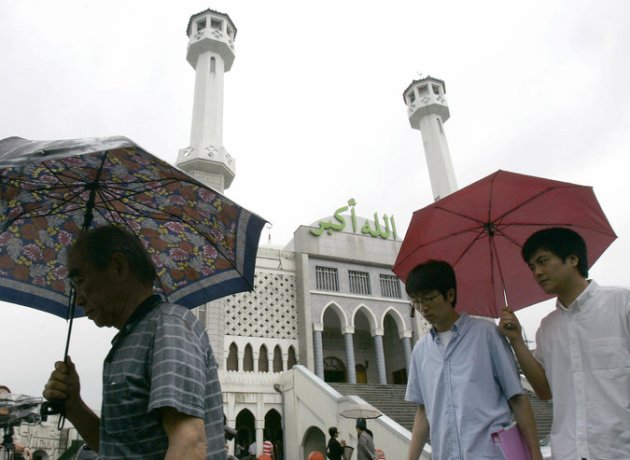
The Seoul Central Mosque in South Korea, one of hundreds of mosques around the world built using Saudi donations. CreditChoi Won-Suk/Agence France-Presse — Getty Images 

The reach of the Saudis has been stunning, touching nearly every country with a Muslim population, from the Gothenburg Mosque in Sweden to the King Faisal Mosque in Chad, from the King Fahad Mosque in Los Angeles to the Seoul Central Mosque in South Korea. Support has come from the Saudi government; the royal family; Saudi charities; and Saudi-sponsored organizations including the World Muslim League, the World Assembly of Muslim Youth and the International Islamic Relief Organization, providing the hardware of impressive edifices and the software of preaching and teaching.

There is a broad consensus that the Saudi ideological juggernaut has disrupted local Islamic traditions in dozens of countries — the result of lavish spending on religious outreach for half a century, estimated in the tens of billions of dollars. The result has been amplified by guest workers, many from South Asia, who spend years in Saudi Arabia and bring Saudi ways home with them. In many countries, Wahhabist preaching has encouraged a harshly judgmental religion, contributing to majority supportin some polls in Egypt, Pakistan and other countries for stoning for adultery and execution for anyone trying to leave Islam.

Limits of Influence

But exactly how Saudi influence plays out seems to depend greatly on local conditions. In parts of Africa and Southeast Asia, for instance, Saudi teachings have shifted the religious culture in a markedly conservative direction, most visibly in the decision of more women to cover their hair or of men to grow beards. Among Muslim immigrant communities in Europe, the Saudi influence seems to be just one factor driving radicalization, and not the most significant. In divided countries like Pakistan and Nigeria, the flood of Saudi money, and the ideology it promotes, have exacerbated divisions over religion that regularly prove lethal.

And for a small minority in many countries, the exclusionary Saudi version of Sunni Islam, with its denigration of Jews and Christians, as well as of Muslims of Shiite, Sufi and other traditions, may have made some people vulnerable to the lure of Al Qaeda, the Islamic State and other violent jihadist groups. “There’s only so much dehumanizing of the other that you can be exposed to — and exposed to as the word of God — without becoming susceptible to recruitment,” said David Andrew Weinberg, a senior fellow at the Foundation for Defense of Democracies in Washington who tracks Saudi influence.

Exhibit A may be Saudi Arabia itself, which produced not only Osama bin Laden, but also 15 of the 19 hijackers of Sept. 11, 2001; sent more suicide bombers than any other country to Iraq after the 2003 invasion; and has supplied more foreign fighters to the Islamic State, 2,500, than any country other than Tunisia.

Mehmet Gormez, the senior Islamic cleric in Turkey, said that while he was meeting with Saudi clerics in Riyadh in January, the Saudi authorities had executed 47 people in a single day on terrorism charges, 45 of them Saudi citizens. “I said: ‘These people studied Islam for 10 or 15 years in your country. Is there a problem with the educational system?’ ” Mr. Gormez said in an interview. He argued that Wahhabi teaching was undermining the pluralism, tolerance and openness to science and learning that had long characterized Islam. “Sadly,” he said, the changes have taken place “in almost all of the Islamic world.”

In a huge embarrassment to the Saudi authorities, the Islamic State adopted official Saudi textbooks for its schools until the extremist group could publish its own books in 2015. Out of 12 works by Muslim scholars republished by the Islamic State, seven are by Muhammad ibn Abd al-Wahhab, the 18th-century founder of the Saudi school of Islam, said Jacob Olidort, a scholar at the Washington Institute for Near East Policy. A former imam of the Grand Mosque in Mecca, Sheikh Adil al-Kalbani declared with regret in a television interview in January that the Islamic State leaders “draw their ideas from what is written in our own books, our own principles.”

Small details of Saudi practice can cause outsize trouble. For at least two decades, the kingdom has distributed an English translation of the Quran that in the first surah, or chapter, adds parenthetical references to Jews and Christians in addressing Allah: “those who earned Your Anger (such as the Jews), nor of those who went astray (such as the Christians).” Seyyed Hossein Nasr, a professor of Islamic studies at George Washington University and the editor in chief of the new Study Quran, an annotated English version, said the additions were “a complete heresy, with no basis in Islamic tradition.”

Accordingly, many American officials who have worked to counter extremism and terrorism have formed a dark view of the Saudi effect — even if, given the sensitivity of the relationship, they are often loath to discuss it publicly. The United States’ reliance on Saudi counterterrorism cooperation in recent years — for instance, the Saudi tip that foiled a 2010 Qaeda plot to blow up two American cargo planes — has often taken precedence over concerns about radical influence. And generous Saudi funding for professorships and research centers at American universities, including the most elite institutions, has deterred criticism and discouraged research on the effects of Wahhabi proselytizing, according to Mr. McCants — who is working on a book about the Saudi impact on global Islam — and other scholars.

One American former official who has begun to speak out is Ms. Pandith, the State Department’s first special representative to Muslim communities worldwide. From 2009 to 2014, she visited Muslims in 80 countries and concluded that Saudi influence was pernicious and universal. “In each place I visited, the Wahhabi influence was an insidious presence,” she wrote in The New York Times last year. She said the United States should “disrupt the training of extremist imams,” “reject free Saudi textbooks and translations that are filled with hate,” and “prevent the Saudis from demolishing local Muslim religious and cultural sites that are evidence of the diversity of Islam.”

Source: Saudis and Extremism: ‘Both the Arsonists and the Firefighters’ – The New York Times