Douglas Todd: Secularism surges in Cascadia, for good and ill

Interesting study cited:

It was not long ago the logo for British Columbia was “The Best Place on Earth,” emblazoned across an idyllic image of mountain peaks.

The “Best Place” slogan outdid even “Beautiful British Columbia” and “Super, Natural British Columbia” for boasting, for linking the evergreen-covered West Coast to a sense of sacred specialness.

Now a highly researched book delves into just how much residents of B.C., Washington, Oregon — a bio-region known as Cascadia — lean toward “reverential naturalism,” in large part because they live in what could also be called “the most secular place on Earth” (or at least in North America.)

Religion at the Edge: Nature, Spirituality and Secularity in the Pacific Northwest (UBC Press) explains that Cascadia is at the forefront of cultural shifts across the continent. The book details how non-religion is more embedded here than anywhere else in North America — and how that powerful secularism comes with sharp political inclinations, to the liberal-left.

The scholarly papers in Religion at the Edge probe the kind of theories that an eclectic team of Canadian and U.S. writers dug into in the book I edited in 2008, titled Cascadia: The Elusive Utopia: Exploring the Spirit of the Pacific Northwest (Ronsdale Press). The upshot is secularism has grown even more intense in Cascadia in the past decade, especially in B.C.

A public-opinion survey done for Religion at the Edge shows half of B.C. residents (49 per cent) now have no religious affiliation, while 44 per cent of the people in Washington and Oregon make the same claim. That contrasts with other polls showing, across North America, only about one in five say they have “no religion.”

Religion at the Edge is edited by professor Paul Bramadat, director of the Centre for the Study of Religion and Society at the University of Victoria (who muses about “The Best Place on Earth” marketing); Pacific Lutheran University religion professor emerita Patricia O’Connell Killen (who contributed to Cascadia: The Elusive Utopia) and University of Waterloo sociologist Sarah Wilkins-Laflamme.

The book’s focus groups show how Cascadia’s non-religious come in many guises — from those who are increasingly hostile to church, mosque and synagogue, to those who still harbour some private spiritual sentiments toward things like yoga and nature reverence.

Religion at the Edge spells out the political implications of a population that is half secular. The non-religious, for instance, are more likely to support access to abortion, same-sex marriage and fervently protecting the natural realm.

However, there can be a darker side to intense secularism, including loneliness, excessive libertarianism and a tendency to “homophily,” which is a technical word for being attracted only to those who are similar to oneself.

Why are Cascadians so non-religious?

I was struck by the insight that the white working-classes of the Pacific Northwest have since the 19th century been passing on: a tradition of irreligiosity, as described by Tina Block of Thompson Rivers University and the University of Victoria’s Lynn Marks.

That captures my upbringing, in which my resolutely atheist Metro Vancouver family taught that religion was for kooks. I like to think I’ve outgrown that world view, with more understanding of philosophy, religion and spirituality.

Even though immigrants are generally more religious than North America’s native born, Trinity College, Hartford, professor Mark Silk (who also contributed to Cascadia: The Elusive Utopia) makes the important point the Pacific Northwest is more secular because certain ethnic subgroups have different attitudes to faith.

Black people are much more religious than the overall U.S. population. But Silk points out that, compared to the rest of the continent, there are far fewer Black people in Cascadia, especially in B.C. (only one per cent).

B.C., compared to the rest of North America, also has far more people of Asian origin (28 per cent versus 15 per cent across Canada and 2.8 per cent in the U.S.). And Pew Research polls show Asian people, particularly East Asians, are more likely to reject formal religion.

When it comes to politics, Wilkins-Laflamme’s confirms Cascadians who are non-religious are far less inclined to support the Canadian Conservative Party or the American Republican party. That helps explain why the Liberals and NDP tend to do well in B.C. and Democrats mostly hold sway in Washington and Oregon, especially in cities.

Along with a fervent libertarianism that sees little use for traditions or institutions, residents of Cascadia have been leading supporters of assisted suicide and many, because they find sacredness in the natural world, have turned into fiery activists against climate change.

Despite Cascadians’ many similarities across the Canada-U.S. border, one stark difference lies in Canadian and American attitudes to Indigenous affairs. First Nations and Metis issues have been near-ubiquitous in Canada for two decades, including in many churches, while in Washington and Oregon interest continues to be negligible.

Key findings of Religion on the Edge are summarized in five points by Bramadat and O’Connell Killen, who observe that in Cascadia:

• A “powerful story” is emerging “that frames the region not just as the best but as the most secular place on Earth”

• Certain forms of Christianity have been “relegated to the periphery”

• Some kinds of spirituality (Indigenous, Buddhist, Hindu) are romanticized

• Practitioners of yoga, evangelicalism and mindfulness are evolving creatively

• There is a “pervasive, distinctive and reverential approach to the natural world”

A lot of this may sound good to many North Americans, particularly those on the liberal-left.

But as the book points out, visitors to the “Best Place on Earth” have been known to remark, “It’s hard to see the sky in the summer because of all the smug.” And Cascadians’ openness to the spiritual, but not religious, could harden into a flat secularism “without any reference to the metaphysical.”

The contributors also found many residents of Cascadia, especially the increasingly non-religious young, feel burdened by consumer culture, high degrees of loneliness, tenuous social bonds, weak institutions, a reluctance to commit and a restless state of “searching.”

Even Cascadians’ emphasis on the sacred wonders of nature may come with ethical blind spots. As some authors ask, “Can the population care as much for people as it cares for orcas, trees and pets?”

Finally, while a highly secular, low-cohesion culture has rapidly become the status quo in the Pacific Northwest, contributors to Religion on the Edge suggest convincingly (as did the writers in Cascadia: The Elusive Utopia) that we are a bellwether for what will happen to the rest of the continent.

Source: Douglas Todd: Secularism surges in Cascadia, for good and ill
National security agencies’ relationship with racialized communities marred by a ‘trust gap:’ report

Not surprising and not one easy to reduce. And yes, my experience while in government with respect to the Cross-Cultural Roundtable on Security was that the information flow tended to be more one-way than a conversation:

The relationship between “racialized” groups and Canada’s national security and intelligence institutions —  like the Canadian Security Intelligence Service, the Royal Canadian Mounted Police and the Canada Border Services Agency  — continues to be bogged down by mistrust, says a new external report prepared for the federal government.

“We frequently heard about the trust gap between the country’s national security institutions and Canadians, and in particular with racialized Canadians,” says the report drafted by the National Security Transparency Advisory Group (NS-TAG) — an independent and external body first set up in 2019 to advise the deputy minister of Public Safety and the national security and intelligence community.

“At times, these relations have been marred by mistrust and suspicion, and by errors of judgment by these institutions, which impacted communities have perceived as discriminatory.”

The NS-TAG group, made up of 10 members from legal, civil society and national security backgrounds, warns that the emergence of artificial intelligence and data-driven intelligence poses a threat to racialized communities.

“Systemic biases in Artificial Intelligence (AI) design can have perverse impacts on vulnerable individuals or groups of individuals, notably racialized communities,” they found.

“These biases reflect not only specific flaws in AI programs and organizations using them, but also underlying societal cleavages and inequalities which are then reinforced and potentially deepened.”

CSIS responds

The report, published earlier this week, also calls on national security agencies to have better two-way conversations with communities.

“Too often engagement involves, in practice, government officials offloading a prepared message and failing to listen to the concerns of stakeholders,” says the report.

“Constructive engagement should instead be based on dialogue; government officials should be attuned to the questions and concerns of stakeholders, listen to them, and be prepared and willing to respond.”

The report also calls on agencies like CSIS to engage with communities on an ongoing basis — and not just when there’s a crisis.

The authors pointed to CSIS’s contact with the Iranian-Canadian community after the destruction of Flight PS752 in January 2020 and with the Muslim community following an attack on a mosque in Mississauga, Ont.

“Such engagement was important, but it was prompted by specific incidents. In our view, CSIS will not succeed in building long-term trust with racialized communities as long as its engagement is primarily reactive,” says the report.

CSIS responded to the report’s findings Friday by acknowledging the problem.

“We know that the voices of racialized communities and Indigenous peoples have not been heard as clearly as they should in conversations around policy, legislative and operational deliberations on national security matters,” CSIS wrote in a response published Friday.

“We are committed to changing this.”

Source: National security agencies’ relationship with racialized communities marred by a ‘trust gap:’ report

Osborne: How a neo-conservative think tank defined British Muslims

Interesting account. Remember from my days in multiculturalism following the UK’s PREVENT inititiatives to counter radicalization and extremism, and this article highlights one of the think tanks involved. Others with more experience in countering violent extremism may have some comments on this account:

In the wake of the calamity of the Iraq invasion of 2003, one might have supposed that the ideology which lay behind Tony Blair and George W Bush’s bloody misadventure would have been discredited. This has not happened. Neo-conservatism has continued to set the parameters for a great deal of policy discourse, and its supporters have continued to occupy many of the most prominent positions in British (and American) public life.

There are a number of reasons for this resilience. In the UK, Policy Exchange, a London-based think tank, is one organisation which kept the neo-conservative flame burning. Though its public profile is small, it has exerted prodigious influence in political circles. In conventional politics, Policy Exchange was at first associated in particular with ‘marketisation’, an ugly word which describes how the disciplines of the private sector have been introduced into the education system and the wider civil service. The think tank’s most enduring achievement, however, has probably been the reshaping of government policy towards British Muslims.

To simplify a rather complicated story, the British government, police and intelligence services originally saw their job as enforcing the law rather than policing ideology or personal beliefs. Abu Hamza, the notorious one-eyed cleric who made no secret of his sympathies with al-Qaeda, provides a fascinating illustration of this approach. Hamza, who used his position as imam of the Finsbury Park mosque to preach violent jihad, was skilful at ensuring that his public pronouncements stayed just within the law. There was general amazement and surprise when his eviction was suddenly brought about not apparently by the British state, but by his own congregation, who locked the doors of the mosque against him. The Metropolitan Police were, however, involved in Abu Hamza’s downfall. Its policemen built up close relations with the mosque’s faithful and were unobtrusively stationed nearby on the day of the imam’s eviction in case of trouble. This sensitive operation was a model of old-fashioned intelligence work and community policing.

However, the Muslim congregation who threw out Abu Hamza themselves held views which many sections of British society would find offensive. The congregation included sympathisers with Hamas, the Palestinian resistance group. Probably without exception, they were hostile to the invasions of Afghanistan and Iraq, and were dismayed by the Israeli occupation of the West Bank and Gaza. Many worshippers at the mosque held socially conservative views about homosexuality and women which, while by no means unknown among the Conservative Party membership, are no longer mainstream opinions in the modern UK. None of these views bothered the Metropolitan Police. They were happy to work with the Muslim community for the removal of a figure who they rightly saw as a menace.

This kind of ‘multicultural’ approach lay at the heart of what was then the British way. As long as they obeyed the law, immigrants were allowed to bring with them the traditions and customs of the countries they had left behind. This approach fitted in naturally with the national tradition of letting in dissidents and exiles from abroad, from the Huguenots expelled from France in the seventeenth century to the Jews who made their way to the UK as refugees from the Russian pogroms before the First World War, or later as refugees from National Socialism.

Policy Exchange dismantled the British approach of tolerance. Its analysts naturally agreed that the police should counter violence. But they disagreed profoundly with any tolerance of the ideas which (so they maintained) might become gateways to this violence. Policy Exchange’s connections were second to none. It was set up in 2002, in the wake of heavy Conservative Party defeats in the 1997 and 2001 general elections, by a group of Conservatives who feared their party was destined to perpetual opposition. These were the self-proclaimed Tory ‘modernisers’. They greatly admired Blair and had supported the Iraq War. These modernisers believed that their mission was to help the Conservatives copy Blair’s achievements in making the Labour Party electorally successful. Michael Gove, at the time of writing a senior member of the Boris Johnson government, was the first chairman of Policy Exchange.

When David Cameron ran for the Tory leadership after the 2005 general election defeat, he looked to Policy Exchange for ideas. The organisation – defined by the Evening Standard as “the intellectual boot camp of the Tory modernisers” – helped shape his thinking. At its heart, Policy Exchange spoke of a political philosophy which appeals almost as deeply to the Blairite or Starmer wing of the Labour Party as it does to David Cameron or Boris Johnson’s Conservatives. Better than any comparable organisation, it has come to articulate what was rapidly becoming the philosophy of the British governing class in the 21st century.

Policy Exchange and British Muslims

When the think tank was founded, it contained a ‘Foreign Policy and Security Unit’. As far as can be ascertained, its publications focused on foreign policy, but displayed no interest in domestic ‘extremism’. This changed with the arrival of Dean Godson with the title of research director of international affairs in 2005. Godson, who had worked as chief leader writer for the Daily Telegraph, appeared to interpret his international brief as a mandate to generate domestic policy towards British Muslims. This should never cause surprise: the political right in the UK has a habit of discussing British Muslims as if they were a foreign policy issue.

Godson came from a family with a tradition of interest in Cold War intelligence work, propaganda and covert action. His father Joseph Godson was Labour attache at the United States embassy in London in the 1950s and used his influence to promote the interest of the pro-US wing of the Labour Party.

From 2005 onwards, Godson seems to have been on a mission to rip up the counter-terrorism strategy adopted by successive British governments. He promoted the new approach to Muslims through research papers, seminars and, not least, media muscle. In particular, he argued that methods used by the British state against terrorism – above all against the IRA during the Troubles – were no longer relevant. In Ireland, British ministers were happy to work with Catholic communities in order to isolate the gunmen and bring about reconciliation.

Confronted with the threat of terrorism in the aftermath of the 9/11 attack on the Twin Towers, the first instinct of the British state was to copy the Irish experience. The police identified leaders who they felt they could trust with links into local communities. They sought to draw these figures into British politics, inviting them on to public platforms and making public funds available. In this way, they hoped to single out and segregate those individuals with an inclination to violence while gaining intelligence about their activities.

Policy Exchange argued that this strategy was wrong because, so it claimed, the British government was not merely confronting terrorists. Something much bigger was afoot: a confrontation of ideologies. For Policy Exchange, the UK was one of a band of free states, led by the US, that were engaged in a mortal battle against a set of deadly foes dedicated to a project to destroy Western civilisation. These foes were called ‘Islamists’ and they subscribed to a murderous ideology called Islamism. Policy Exchange acknowledged that not every Islamist was violent. However, over the long term that was irrelevant: Islamism had to be fought and ultimately it had to be defeated.

Islamism, said Policy Exchange, is a worldview which teaches its adherents that Islam is a comprehensive political ideology and must be treated as such. According to Policy Exchange, the Islamist outlook is one that essentially divides the world into two distinct spheres: ‘Muslim’ and ‘the rest’.

There could therefore be no negotiation. Islamists could never accept democracy, the rule of law, political institutions or the nation state. There was therefore no point in bringing Muslims into politics unless they renounced Islamism, in which case they could be welcomed.

According to Policy Exchange’s analysis, the core aim of counter-terrorism policy was no longer just protecting British citizens against violence. It was also the assertion of what Policy Exchange claimed to be Western values against so-called Muslim ‘extremism’. This grand battle of ideas demanded a return to the strategy of counter-subversion employed against the Soviet Union during the Cold War. My close reading of Policy Exchange publications has led me to conclude that Godson was, in essence, arguing that British Islamists should be isolated, never embraced and treated as suspect.

Twenty years ago I would attend the Telegraph leader conference. Godson, as chief leader writer, held court. He was a good mimic, an art he used to mock or denigrate political opponents or, if feeling cheerful, merely to entertain. He welcomed acolytes, but I took the liberty of challenging Godson. That evening I received a message through a mutual friend, who had arranged a dinner so that we could get to know each other better, that Godson was offended and no longer wanted to come across me socially. He was as good as his word.

A survey of his work at Policy Exchange suggests Godson had three objectives. First, he sought to weaken – or, better still, wreck – the alliance between the British left and British Muslim organisations. This he did by portraying Islamism as an outlandish far-right movement, with features in common with fascism. Secondly, Policy Exchange sought to challenge multiculturalism both as an idea and, more especially, as a basis for government policy. Above all, Godson was determined to break the link between so-called Islamist movements and the British state.

Godson was successful in all these objectives. His excellent Whitehall and Westminster connections may well have helped. These connections endure. Policy Exchange can whistle up a Cabinet minister for an event, an op-ed in a newspaper or access to Downing Street, while its authors are sought as experts on Islam on radio and television. The organisation’s reports tell the Conservative Party exactly what its leaders want to hear. At least six special advisers in the Boris Johnson government previously worked for Policy Exchange.

Godson’s first publication for Policy Exchange targeted British government collaboration with what was coming to be termed ‘radical Islam’. The author, Martin Bright, was a left-leaning journalist and then political editor of the New Statesman. This in itself sent out the important message that Policy Exchange worked with both political persuasions. Bright’s analysis was based on leaked material, courtesy of a Foreign Office source alarmed at the government’s relationship with Muslim organisations both in the UK and overseas. “It depresses me deeply,” wrote Bright, “that a Labour government has been prepared to rush so easily into the arms of the representatives of a reactionary, authoritarian brand of Islam, rather than look to real grassroots moderates as allies.”

Bright’s document took aim at two targets: the Muslim Brotherhood and the Muslim Council of Britain. Policy Exchange (and Bright) present the Muslim Brotherhood as an Islamist movement guilty of propagating a dangerous ideology at odds with the West. As for the Muslim Council of Britain, that was condemned as guilty of being Islamist too. Bright’s document was an important blow in a campaign which would eventually lead to the severing of relations between the British government and the MCB. Policy Exchange can claim a large part of the credit.

Godson was an acute talent-spotter. Munira Mirza wrote his second publication and later worked with Boris Johnson when he was mayor of London, before moving to the crucial role of head of the Downing Street policy unit. Mirza demanded an end to “institutional attacks on Britain and its culture”, arguing that “the preoccupation with Muslim vulnerability and Islamophobia has skewered our understanding of why such problems exist, and in many ways, has made things worse for Muslims.” Mirza asserted that this reflected a “victim mentality” which was “given social credence by institutions, politicians, the media and lobby groups”. Her report also claimed Islamophobia has been ‘exaggerated’ by some British Muslims. Policy Exchange has a long history of questioning the idea of Islamophobia and has a record of recruiting members of minority groups to do the questioning.

The invention of non-violent extremism

In 2009, Policy Exchange published a report which explicitly presented the demand for the British state to apply to British Muslims the same counter-subversion regime used against trade unionists, socialists and others during the Cold War. This well-written and powerful polemic probably represents – more explicitly than any other Policy Exchange publication – the full Godson agenda. It was written by two Cambridge scholars. Martyn Frampton was a fellow of Peterhouse, the high Tory Cambridge college. His co-author Shiraz Maher was a former member of Hizb ut- Tahrir, having worked for the organisation as a regional officer in the north- east of England.

Frampton and Maher’s report called for the government to reinstate the 1989 Security Service Act, which would give MI5 the power to investigate subversion. As far as the British government was concerned, this involved a giant conceptual leap. The ‘Preventing Violent Extremism’ initiative was rebranded as, simply, ‘Preventing Extremism’.

This was also a profound change of policy because it implied that the state should target not just violence but opinion as well. It criticised the government for “stressing law enforcement and strict security concerns over and above everything else’” Instead, it should deal with “non- violent radicals” who were “indoctrinating young people with an ideology of hostility to Western values”.

In other words, Policy Exchange wanted to create a new relationship between the British state and Muslims. This project meant creating a different kind of British citizenship. It led to a new concept in British public discourse: non-violent extremism. Policy Exchange was urging that Muslims should be obliged to sign up to a set of beliefs that fell within a state prescribed remit. In order to become British, Muslims were being asked to deny, or at least modify, their own identity and heritage. Until that moment, British citizens had generally been allowed to think and conduct themselves as they wanted, as long as they stayed within the law. The invention of the concept of non- violent extremism meant citizens could now be harassed, put on secret lists or barred from public life for offences which they often did not even know they had committed. It lies at the heart of the Prevent doctrine.

Prevent was used to fund organisations that would promote the government line on terrorism and extremism. But there was another component to the programme, which the Cameron government adapted to target “non-violent extremism” rather than just violent extremism. In 2015, Prevent became a legal duty for public sector institutions – including hospitals, schools, and universities. Under Prevent, public sector workers were and are (at the time of writing) expected to report anyone they suspect of extremism to the programme.

Extremism, according to the government, constitutes “vocal or active opposition to British values”. This means that people whose views may be mainstream or illiberal, but certainly not illegal, can be targeted as a threat to British society.

In a school context, Prevent demands that any teacher who suspects a pupil of having been radicalised must report them to the programme. The policy has failed at the crucial test of effectiveness. From April 2020 to March 2021, 86 per cent of referrals to the programme were false positives – representing people who were wrongly referred. Prevent only occasionally catches the people that it wants to. Even these individuals, however, have never committed a crime. There is, moreover, no evidence that they will ever commit a crime in the future, or that they would have committed a crime were it not for being identified by Prevent. Government statistics, meanwhile, do not illuminate the full picture: there are thousands of cases within schools, universities and hospitals where innocent people, often children, are needlessly interrogated and harassed over suspected extremism. Their cases are dismissed before being officially referred to Prevent and are left out of the official statistics.

"

Muslims are disproportionately affected by the policy, which relies on profiling. Over 70 per cent of Muslims in England and Wales live in ‘Prevent Priority Areas’ (PPAs), compared with just over 30 per cent of the general population. By requiring public sector workers to report people they find suspicious, moreover, Prevent effectively compels them to act on their prejudices and makes Muslims subject to majoritarian biases.

The development of the concept of extremism, pushed by think tanks like Policy Exchange, has had a material impact on the lives of ordinary British Muslims, pressuring them to assimilate by downplaying their distinctiveness from other Britons.

The idea of non-violent extremism thus brought with it a particular conception of national belonging: if foreigners wanted to become British, why shouldn’t they be like Britons? But this wasn’t a British logic. This country has always had a generous and capacious identity. You can be British at the same time as being Welsh, Jamaican, Cornish, Black, Jewish, Hindu, Muslim or Scottish. The biggest problem is that nobody can be certain who is – or who is not  –  a non- violent extremist. That is why all attempts to establish a legally secure definition have so far failed.

Policy Exchange’s proposals have shifted the UK towards an American model of citizenship where new arrivals are expected to abandon old identities and join a common melting pot. Policy Exchange’s project to save Britishness was therefore also an attempt to destroy it. But Policy Exchange could not have won its argument without powerful allies, and the most important of these was the Conservative Party.

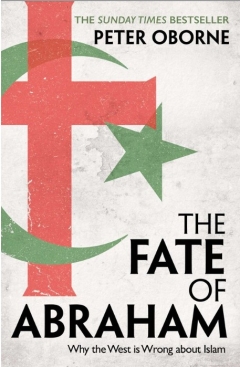
The Fate of Abraham: Why the West is Wrong about Islam is published on 12 May by Simon & Schuster. Peter Oborne won best commentary/blogging at the Drum Online Media Awards in both 2022 and 2017 for articles he wrote for Middle East Eye. He was also named as British Press Awards Columnist of the Year in 2013. He resigned as chief political columnist of the Daily Telegraph in 2015. His latest book, The Assault on Truth: Boris Johnson, Donald Trump and the Emergence of a New Moral Barbarism, was published in February 2021 and was a Sunday Times Top Ten Bestseller. His previous books include The Triumph of the Political Class, The Rise of Political Lying, and Why the West is Wrong about Nuclear Iran.

Source: How a neo-conservative think tank defined British Muslims

Organization of Islamic Cooperation Accused of Ignoring Uyghur Muslims in China

Indeed. Much easier to other countries than China despite the ongoing oppression and indeed genocide of Uyghur Muslims:

A U.S. declaration that China has committed genocide and crimes against humanity against its mainly Muslim minority in western Xinjiang province appears to have had little impact on the 57-nation Organization of Islamic Cooperation, which this week honored Chinese Foreign Minister Wang Yi at a high-level forum.

Invited by host Pakistan, Wang attended the 48th session of the OIC Council of Foreign Ministers in Islamabad as a special guest and spoke at the summit opening. He followed up Thursday with a surprise visit to Afghanistan, whose Taliban-led interim government is eager for Chinese investment and support.

The confluence of events was distressing to the Campaign for Uyghurs, a Washington-based rights group, which condemned both Wang’s attendance at the summit and OIC’s silence on China’s treatment of its Uyghur minority, including mass incarceration in so-called reeducation camps.

“It was appalling to see that Pakistan invited Wang Yi as a ‘guest of honor,’ while Uyghur Muslims do not have the right to identify as Muslims or practice Islam,” Campaign for Uyghurs said on its website.

According to Hasan Askari, an international affairs analyst, Pakistan’s invitation to the Chinese foreign minister at the OIC summit as an observer is part of an OIC tradition that allows the host country to invite high level diplomats from non-member OIC countries.

The U.S. accused China of genocide and crimes against humanity in the Muslim majority Xinjiang region in western China, including forced labor, sterilization of Muslim women and arbitrary detention of more than 1 million Uyghur Muslims in internment camps.

Beijing denies the allegations and says people of all ethnic groups live happily in Xinjiang.

The OIC summit addressed the plight of Rohingya Muslims as well as Muslims in Afghanistan, the Palestinian territories, Jammu and Kashmir and elsewhere, but mostly ignored the Uyghur genocide in China, the Campaign for Uyghurs said.

Only Turkish Foreign Minister Mevlut Cavusoglu brought it up.

“In China, Uyghurs and other Muslims have difficulties protecting their religious rights and cultural identity,” Cavusoglu said at the OIC meeting. “Is it right to ignore the situation of the Uyghurs?”

Turkish politicians are usually the most outspoken defenders of Uyghur rights among Muslim politicians, said Robert Bianchi, professor of international law at the University of Chicago, because of their ethnic and cultural ties throughout Central Asia.

Turkish President Recep Tayyip Erdogan’s party “is particularly sensitive to demands from right-wing nationalists who are junior partners in his governing coalition,” Bianchi said. “He can’t survive without their support, so he often agrees to accept more Uyghur refugees and to speak out against Chinese repression.”

At the summit, Wang said that his country pledged to provide 300 million COVID-19 vaccine doses to Islamic countries.

According to Abdulhakim Idris, executive director of the Washington-based Center for Uyghur Studies, many Muslim-majority countries receive billions of dollars from China in the name of financial investment.

“By receiving billions of dollars from China, these countries are not only forced to remain quiet on the genocidal atrocities against Uyghur Muslims in East Turkistan but also commanded from Beijing to do whatever the PRC wants,” Idris told VOA, calling Xinjiang by the Uyghurs’ preferred name of East Turkistan.

Source: Organization of Islamic Cooperation Accused of Ignoring Uyghur Muslims in China

Will India hijab ruling be used for wider curbs on Islamic expression?

More on India’s hijab debates:

On Tuesday, a high court in the southern Indian state of Karnataka upheld a government orderthat had banned headscarves in classrooms, ruling that wearing them is not an integral part of religious practice in Islam.

The court’s decision and the hijab controversy are part of a volatile cultural debate in India over the place of Islam in a political environment that is becoming more and more dominated by Hindu nationalism.

The controversy over headscarves in Karnataka began in January after six female Muslim students at a college in the city of Udupi said they had been barred from attending classes because they were wearing hijabs.

On February 5, the Karnataka government issued an order banning clothes that “disturb equality, integrity and public order” in educational institutions. Several schools and colleges used this order to deny entry to Muslim girls wearing the hijab.

Karnataka then became the stage for a series of protests by Muslim students and counterprotests by Hindu students and activists. As demonstrations intensified and spread to other colleges and districts, schools were forced to temporarily close.

A group of female Muslim students eventually took the case to the state’s high court, seeking to overturn the government’s ruling.

‘Reasonable restriction’ on freedom of expression

After the high court rejected their appeal, the young women spearheading the hijab protests vowed to continue fighting their case in India’s Supreme Court.

Some of them have said they will not attend classes if they are not allowed to wear a hijab, even if it jeopardizes their education.

“The court has let us down and disappointed so many of us. The court is wrong in stating that the hijab isn’t essential to Islam,” a student from the city of Shimoga told DW.

In explaining its decision, the Karnataka high court said that the freedom of religion under India’s constitution is subject to certain limitations.

“We are of the considered opinion that wearing of the hijab by Muslim women does not make up an essential religious practice in Islamic faith,” the court ruled.

It added that the state has the right to require school uniforms, which amounts to a “reasonable restriction” on constitutional rights.

Legal scholars say the case has now taken on a larger dimension with the high court ruling over freedom of expression in India, where wearing religious symbols is widespread.

Although there is no central law regulating school uniforms in India, the Karnataka court ruling has raised fears over a precedent being set to prompt more states to issue similar restrictive dress codes for students.

What’s behind communal tensions in India’s Karnataka state?

Mihira Sood, a professor at Delhi’s National Law University, said the court’s decision did not provide guidelines for how the law can equally uphold principles of secularism enshrined in India’s constitution, which would apply to any religion.

“Students of other religions wear symbols that are not part of the uniform like turbans and tilaks [the mark worn by Hindus on the forehead],” Sood told DW.

She added the situation in Karnataka was linked to the Hindu-nationalist agenda of the ruling Bharatiya Janata Party (BJP), which has a governing majority in the state.

“We have already seen reports of similar restrictions in Uttar Pradesh and elsewhere, and this will likely have an effect in several states. This is just the beginning,” Sood added.

BJP spokesperson Shazia Ilmi said the hijab was not part of religion, and that the party was doing a lot for empowerment of the Muslim women.

“The court verdict is in sync with the constitution. The Quran does not mandate wearing of hijab or headgear for Muslim women,” Ilmi told DW.

Is Indian law singling out Muslims?

Some activists say tensions over headscarves are part of a wider trend in India cracking down on its minority Muslim population since the Hindu-nationalist BJP came to power nearly eight years ago.

“This is a clear case of interference with the girls’ religious and fundamental rights. Issues like the hijab ban are very easy to polarize the entire community,” lawyer Mohammed Tahir, who is representing one group of petitioners in court, told DW.

Author and activist Farah Naqvi told DW that the hijab ruling is part of a wider agenda to drive away our Muslim culture.

“This is not a gender debate or about headscarves and veils … so many fundamental rights are at stake. All this could have been easily resolved if the schools had made a simple adjustment,” she said.

Muslim women say India’s secular constitution protects their right to wear a hijab

Mehbooba Mufti, the former chief minister of Jammu & Kashmir, said the court decision upholding the hijab ban is deeply disappointing.

“On one hand we talk about empowering women, yet we are denying them the right to a simple choice. It isn’t just about religion but the freedom to choose,” she said on Twitter.

In 1986, India’s Supreme Court upheld the right of three school children to remain silent while the Indian national anthem was sung. The children belonged to the Jehovah’s Witness, a Christian sect, and said singing the anthem was against their faith.

Their school expelled them, and the family filed an appeal, saying the expulsion was in violation of freedom of expression and freedom of religion.

India’s Supreme Court famously ruled that the school must readmit the children, arguing that their choice not to sing did not affect anyone else.

The girls affected by the hijab ruling now have said they will take their case to the Supreme Court and asked for an early hearing so a decision can be made in time for their exams.

Source: Will India hijab ruling be used for wider curbs on Islamic expression?

India concerned over elevating phobia against one religion to level of international day

Official speech reveals more than it tries to hide and ignore the background of anti-Muslim bias and hate in India that has increased under the Modi government. Theoretically, the case for pan religion and pan group anti-racism and discrimination is strong. But context matters, and the Indian Permanent Representative is not the one to make the case:

As the U.N. General Assembly adopted a resolution on Tuesday to proclaim March 15 as International Day to Combat Islamophobia, India expressed concern over phobia against one religion being elevated to the level of an international day, saying there are growing contemporary forms of religiophobia, especially anti–Hindu, anti–Buddhist and anti–Sikh phobias.

The 193-member General Assembly adopted a resolution, introduced by Pakistan’s Ambassador Munir Akram under agenda item Culture of peace, to proclaim March 15 as the International Day to Combat Islamophobia.

The resolution, introduced by the Organisation of Islamic Cooperation (OIC), was co–sponsored by Afghanistan, Bangladesh, China, Egypt, Indonesia, Iran, Iraq, Jordan, Kazakhstan, Kuwait, Kyrgyzstan, Lebanon, Libya, Malaysia, the Maldives, Mali, Pakistan, Qatar, Saudi Arabia, Turkey, Turkmenistan, Uganda, the United Arab Emirates, Uzbekistan and Yemen.

Reacting to the adoption of the resolution, India’s Permanent Representative to the U.N. Ambassador T.S. Tirumurti said in the General Assembly that India hopes the resolution adopted “does not set a precedent” which will lead to multiple resolutions on phobias based on selective religions and divide the United Nations into religious camps.

“Hinduism has more than 1.2 billion followers, Buddhism more than 535 million and Sikhism more than 30 million spread out around the world. It is time that we acknowledged the prevalence of religiophobia, rather than single out just one,” he said.

“It is important that the United Nations remains above such religious matters which may seek to divide us rather than bring us together on one platform of peace and harmony and treat the World as One Family,” he said.

Following the adoption of the draft resolution, Mr. Tirumurti said while India condemns all acts motivated by anti–semitism, Christianophobia or Islamophobia, such phobias are not restricted to Abrahamic religions only.

“In fact, there is clear evidence that over decades such religiophobias have, in fact, affected the followers of non–Abrahamic religions as well. These have contributed to the emergence of contemporary forms of religiophobia, especially anti–Hindu, anti–Buddhist and anti–Sikh phobias,” he said.

He noted that the Member States should not forget that in 2019, August 22 has already been proclaimed as the International Day commemorating the victims of acts of violence based on religion or belief, which is fully inclusive in nature.

“We even have an International Day of Tolerance observed on 16 November. We are not convinced that we need to elevate phobia against one religion to the level of an international day,” he said.

Mr. Tirumurti asserted that these contemporary forms of religiophobia can be witnessed in the increase in attacks on religious places of worship like gurudwaras, monasteries and temples or in the spreading of hatred and disinformation against non–Abrahamic religions in many countries.

He cited that several examples of these abound, including the destruction of the Bamyan Buddhas in Afghanistan by the Taliban, violation of gurudwara premises, massacre of Sikh pilgrims in gurudwara, attack on temples, glorification of breaking of idols in temples.

He said these contribute to the rise of contemporary forms of religiophobia against non–Abrahamic religions.

“It is in this context that we are concerned about elevating the phobia against one religion to the level of an international day, to the exclusion of all the others.

Celebration of a religion is one thing but to commemorate the combatting of hatred against one religion is quite another. In fact, this resolution may well end up downplaying the seriousness of phobias against all other religions,” Mr. Tirumurti said in his statement after the adoption of the resolution.

He said India is proud that pluralism is at the core of its existence.

“We firmly believe in equal protection and promotion of all religions and faith. It is, therefore, unfortunate that the word ‘pluralism’ finds no mention in the resolution and the sponsors have not found it fit to take on board our amendments to include the word “pluralism in the text for reasons best known to them”.

Mr. Tirumurti said as a pluralistic and democratic country that is home to almost all religions of the world, India has always welcomed, over the centuries, those persecuted around the world for their faith or belief.

“They have always found in India a safe haven shorn of persecution or discrimination. This is true whether they were Zoroastrians or Buddhists or Jews or people of any other faith,” he said.

Mr. Tirumurti expressed deep concern over the rise in instances of discrimination, intolerance and violence directed against members of many religious communities in various parts of the world.

He emphasised that it is with deep concern that India views the growing manifestation of intolerance, discrimination or violence against followers of religions, including rising sectarian violence in some countries.

France’s Permanent Representative to the U.N. Ambassador Nicolas de Riviere, speaking after Mr. Tirumurti, said that by creating an international day to combat Islamophobia, the resolution does not respond to the concern that “we all share to fight against all forms of discrimination”.

“Because they create division within the fight against religious intolerance by only selecting one religion to the exclusion of others without reference to the freedom to believe or to not believe,” he said.

He said society is made up of diversity, with individuals practising a variety of religions or not practising any at all.

“Must we expect the creation of days dedicated to each religion, to each degree of belief or non–belief. There may not be enough days in the year to satisfy all these demands,” Mr. de Riviere said.

He said the text of the resolution submitted on Tuesday did raise a number of difficulties with regard to the determination to fight against discrimination based on religion or belief.

“The term Islamophobia does not have any agreed definition in international law, contrary to the freedom of religion or belief,” he said, adding that the resolution is very ‘unsatisfactory’ as it stands and none of the proposals mooted by France were taken into consideration.

Source: India concerned over elevating phobia against one religion to level of international day

Quebec students feel there’s ‘no future’ for them due to religious symbols law, study suggests

Of note. Interviews, not a poll, selection bias likely at play, but nevertheless of note (article in Le Devoir below):

A new study looking into how university students feel about Quebec’s religious symbols law is painting a bleak picture, with many saying they’ve lost faith in the province and plan to leave.

The study, completed by researchers from two Montreal-based universities, asked post-secondary students, recent graduates and prospective students about their feelings on Bill 21.

The bill, also known as Quebec’s Laicity Act, became law in June 2019. It banned some civil servants, including teachers, police officers and government prosecutors, from wearing religious symbols at work within the province.

The study acknowledged the sample size is “relatively small” — 629 respondents, polled from Oct. 2020 through to Nov. 2021 — and has a “strong possibility of selection bias,” as those who feel more strongly about Bill 21 are more likely to have responded to the survey.

However, the authors noted that respondents were “relatively diverse” and attended both French and English institutions from across the province.

Only about 28 per cent of respondents said they wore some form of religious symbol.

“We were expecting a more balanced diversity of responses. We thought we would get more people in favour of the law,” said Elizabeth Elbourne, an associate professor of history at McGill and one of the researchers behind the study.

“There’s a really interesting generational gap. We were quite struck.”‘I have no future in Quebec’

Respondents in Elbourne’s study were invited to write-in additional comments. Many said they experienced increased racism since the law was introduced.

“I think that the bill — despite the fact that many people don’t mean it this way — in practice, can give permission to discriminate,” she said.

Over 34 per cent of respondents — including those who did not wear a religious symbol — reported experiencing increased discrimination since the law was passed. That number jumps to 56.5 per cent for those who do wear religious symbols.

“It used to happen to me occasionally. Now it happens almost every time I go out,” said one Université de Montréal student who wears a hijab.

One McGill education student described seeing Bill 21 invoked in the classroom while on a work placement during their studies.

“[I] watched students and the teacher ridicule a Muslim girl for wearing a hijab. The teacher said with Bill 21, you can’t dress like that,” the respondent wrote. “The girl was mortified and silent and just 11 years old.”

Even those outside of law and education, the fields most impacted by the law, reported feeling its effects.

“I have had some job interviews where I could immediately tell that the person lost interest in my application as soon as they saw me with my headscarf,” said a Concordia engineering student.

Moving provinces seen as ‘only solution’

As a result, 69.5 per cent of the students polled who wear a religious symbol said they were likely to leave the province for work.

“I didn’t even get a chance to start my career properly,” lamented one McGill education student who wears a hijab.

“The only solution I am strongly considering is to move to another province.”

Weeam Ben Rejeb is one of those considering the move. The McGill law student hoped to become a prosecutor, but would be banned due to her hijab.

“Even though I could practice in the private sector, it’s more about what this law is saying about me,” she said.

Ben Rejeb described Bill 21 as an “insult,” saying it suggested that she wouldn’t be able to do her job because of what she chose to wear.

“It’s extremely offensive,” she said. “We are essentially saying we’re not intelligent enough or impartial enough to be able to be neutral judges or teachers.”

Can’t work with ‘clean conscience’

They’re not the only ones considering leaving.

Forty-six per cent of the students who don’t wear religious symbols said they were also planning to leave Quebec due to Bill 21, saying they don’t want to participate in a system that discriminates against their colleagues.

“I refuse to work in a place where my peers cannot or will be punished for expressing themselves,” said one education student.

“I don’t feel that I can be a teacher here in Quebec and have a clean conscience while doing so,” wrote another.

“I chose Canada because I believed their laws aligned with my liberal beliefs,” wrote a Concordia law student who does not wear a religious symbol. “Now I am very disappointed and rethinking everything.”

Elbourne, the researcher who worked on the study, said she sees the potential exodus of students having a “serious impact” on the province’s education system.

“I think it’s going to make it harder to recruit teachers. And I also think, if we’re looking at the people leaving — are people from the outside going to want to come to Quebec?” Elbourne said.

As for how they feel about Quebec, 70.3 per cent of all respondents said they had a worse perception of the province since the law passed.

“I despise Quebec now,” wrote one McGill education student who wears a hijab. “A province which has absolutely no respect for me or my people to the point that they’d like to take my livelihood away deserves no love.”

“We’re racist af (as f–k),” wrote another.

Some support for Bill 21, survey shows

Not everyone was against the law, however. While the study notes that the “vast majority of people … were critical or divided” on Bill 21, there were also those who supported the measure.

One McGill education student hoped the bill would “encourage all faiths to embrace secular civic life” in Quebec.

“Hopefully we will see a new era in which students are able to attend school without being subjected to symbols of patriarchal religious oppression on their teachers,” they wrote.

One McGill law student said their family “escaped” a country that forced women to wear the hjiab. “We are free here,” they wrote.

A PhD student in education at McGill said they came from a conservative and religious part of the United States and would like to see something similar there.

“[Bill 21] is a wonderful step towards women’s liberation and freedom,” they wrote. “I wish my state would pass a similar bill.”

Ben Rejeb, the law student, acknowledged that Bill 21 does have widespread support in the province — especially in more rural regions — but questioned why that was.

“If all that you know about Muslims is what you see on TV … then it makes sense why you might have these fears,” she said.

Ben Rejeb said that with more education, she believes that most Quebecers would change their minds about supporting the law, though she fears many have already moved on.

“I feel like most of my peers, and Quebec society in general, has kind of forgotten about this and is going on with their lives and not really thinking about it because it doesn’t affect them personally,” she said.

“All of us who are living in Quebec right now are complicit in allowing this bill to continue to exist.”

Source: Quebec students feel there’s ‘no future’ for them due to religious symbols law, study suggests

Un grand nombre d’étudiants en enseignement et en droit projettent de faire leur vie hors de portée de la Loi sur la laïcité de l’État québécois — en commençant par ceux portant un signe religieux, mais pas seulement eux.

Près de trois ans après l’adoption de la loi 21, 73,9 % des futurs, actuels ou anciens étudiants en enseignement qui portent un signe religieux et 54 % des futurs, actuels ou anciens étudiants en droit qui portent un signe religieux réfléchissent à l’idée de quitter le Québec, peut-on lire dans un rapport de recherche signée par les professeures Elizabeth Elbourne (Université McGill) et Kimberley Manning (Université Concordia).

Celles-ci se sont employées à mesurer l’incidence de la loi 21 sur les projets de vie d’étudiants et de diplômés en enseignement et en droit. Pour y arriver, elles ont notamment distribué un questionnaire sur les campus des collèges et des universités, que 629 personnes ont rempli entre le 13 octobre 2020 et le 9 novembre 2021. « L’échantillonnage est relativement petit et pas nécessairement représentatif de l’ensemble des étudiants du Québec en droit et en éducation », précisent-elles.

L’idée de tourner le dos au Québec trotte aussi dans la tête de plusieurs étudiants et diplômés qui ne portent pas de signe religieux. En effet, 46 % des personnes interrogées se disent être « très ou assez susceptibles de chercher du travail ailleurs qu’au Québec à cause de la loi 21 ».

« Ce ne sont pas seulement les gens qui portent un symbole religieux, mais ce sont les membres de leur famille, ce sont leurs amis, ce sont leurs camarades de classe qui repensent leur carrière, se demandent s’ils vont rester au Québec, et cela se répercute sur leur impression générale du Québec », soutient Kimberley Manning.

D’autres, moins nombreux, se résigneraient plutôt à revoir leurs plans de carrière, croyant — parfois à tort — ne pas pouvoir aller au bout de leurs ambitions professionnelles en raison de la loi 21.

« Au lieu d’aller en droit, je vais essayer de rentrer en psychologie. Je voulais être enseignante de droit au niveau universitaire », a souligné une collégienne portant le hidjab.

« Je comptais terminer mes études en droit ou enseigner à l’université, mais j’ai changé mes plans parce que je n’ai pas d’avenir au Québec dans ces domaines », a affirmé une étudiante inscrite au programme Droit et société de l’Université Concordia. La femme, qui porte aussi le voile islamique couvrant les cheveux, les oreilles et le cou, dit ne pas pouvoir se résoudre à demander à son mari de renoncer à son emploi et à déraciner leurs trois enfants de Montréal, « une ville que nous aimons et dans laquelle nous avons vécu la majeure partie de notre vie ».

La loi 21 interdit à certains employés de l’État québécois, dont les policiers, les procureurs, les gardiens de prison, les enseignants et les directeurs d’école primaire ou secondaire publique de porter un signe religieux dans l’exercice de leurs fonctions. Les avocats de pratique privée et les professeurs de cégep ou d’université ne sont pas assujettis à l’interdiction du port de signe religieux.

Épisodes de discrimination

Par ailleurs, les chercheuses notent une montée de l’islamophobie et de l’antisémitisme depuis l’adoption de la Loi sur la laïcité de l’État par l’Assemblée nationale, en juin 2019.

Pas moins de 76,2 % des femmes portant le hidjab ou un foulard interrogées dans le cadre du projet de recherche ont rapporté avoir subi de la discrimination. Elizabeth Elbourne dit avoir été « surprise par les expériences de discrimination vécue — harcèlement dans la rue, etc. » relatées par les étudiants au fil de ses travaux.

Les autrices prennent soin de signaler « une forte possibilité [de] biais de sélection en faveur de ceux opposés à la Loi » dans les résultats du sondage, qui serait causé par le « haut taux de réponse dans la région de Montréal, où se concentrent les minorités religieuses plus que partout ailleurs au Québec, et des personnes portant des signes religieux visibles ».

Cela dit, « le fait que peu de personnes aient répondu afin d’exprimer un fort soutien à la Loi est un élément significatif en lui-même », estiment-elles.

Source: La loi 21, source de craintes pour des étudiants en droit et en enseignement

India court upholds a ban on hijab in schools and colleges

Of note:

An Indian court Tuesday upheld a ban on wearing hijab in class in the southern state of Karnataka, saying the Muslim headscarf is not an essential religious practice of Islam.

The high court in Karnataka state delivered the verdict after considering petitions filed by Muslim students challenging a government ban on hijabs that some schools and colleges have implemented in the last two months.

The dispute began in January when a government-run school in Karnataka’s Udupi district barred students wearing hijabs from entering classrooms, triggering protests by Muslims who said they were being deprived of their fundamental rights to education and religion. That led to counterprotests by Hindu students wearing saffron shawls, a color closely associated with that religion and favored by Hindu nationalists.

More schools in the state followed with similar bans and the state’s top court disallowed students from wearing hijab and any religious clothing pending a verdict.

Ahead of the verdict, the Karnataka government banned large gatherings for a week in state capital Bengaluru “to maintain public peace and order” and declared a holiday Tuesday in schools and colleges in Udupi.

The hijab is worn by many Muslim women to maintain modesty or as a religious symbol, often seen as not just a bit of clothing but something mandated by their faith.

Hijab restrictions have surfaced elsewhere, including France, which in 2004 banned them in schools. But in India, where Muslims make up 14% of the country’s 1.4 billion people, the hijab has historically been neither prohibited nor limited in public spheres. Women donning the headscarf is common across the country, which has religious freedom enshrined in its national charter with the secular state as a cornerstone.

Some rights activists have voiced concerns that the ban could increase Islamophobia. Violence and hate speech against Muslims have increased under Prime Minister Narendra Modi’s governing Hindu nationalist party, which also governs Karnataka state.

Source: India court upholds a ban on hijab in schools and colleges

Poilievre pitches to new immigrants, as Brown attacks him over 2015 niqab ban bill

Of note:

Brampton Mayor Patrick Brown and high-profile Conservative Pierre Poilievre spent Monday battling over a seven-year-old election promise to prohibit face coverings during citizenship ceremonies — a sign of what could be the makings of a tense rivalry between candidates in the Tory leadership race.

Brown, who launched his bid on Sunday, blasted longtimeOttawa-area MP Poilievre over his actions back in 2015 when the party promised to create a “barbaric cultural practices” tip line and require people’s faces to be visible during citizenship oaths.

The attack came as Poilievre spent the past few days meeting with cultural community leaders in the Greater Toronto Area and promising to cut red tape for immigrants wanting to access the necessary licences they need to work in regulated industries.Among those he met with were members of the Armenian, Muslim and Pakistani communities as well some of the party’s candidates from the area.

Regardless of who is chosen as leader Sept. 10, Conservatives know they must make inroads with immigrants and racialized Canadians if theyhope to pick up seats in the region as well as other major cities and suburbs, considered key to defeating three-term Liberal Prime Minister Justin Trudeau.

Poilievre pledged Monday to revive similar programs that were in place under the last Conservative leader who did well in communities of visible minorities: former prime minister Stephen Harper, at least prior to 2015.

He promised toincentivize provinces to require occupational licensing bodies to decide on an immigrant’s application within 60 days of receiving their paperwork, rather than forcing them to wait for months.

As well, Poilievre pitched offering small loans to immigrants who might need to take extra courses to gain a professional or trade licence to work in their respective field.

As Poilievre made these pledges, Brown, who is positioning himself as the candidate who stands for religious freedoms, released a statement saying the MP lacks credibility on any policy that impacts minority communities given his role in the Conservatives’ 2015 election campaign.

It was during that race when the party, then led by Harper, promised to create a tip line for so-called “barbaric cultural practices.” Conservatives at the time said it was meant to report things like forced marriage.

During that election, Poilievre was running for re-election as a candidate. He was also a member of Harper’s government when it introduced a bill banning people from wearing face coverings during citizenship ceremonies. That was ultimately struck down in court. The promise was also included in the party’s election campaign, when Harper also mused about possibly extending it to federal public servants.

Brown said Monday that Poilievre has never spoken out against these measures. The MP also has Jenni Byrne on his team, who was the party’s national campaign manager in 2015.

“This is the same campaign which platformed those two abhorrent policies, and lost the Conservatives the 2015 general election,” Brown’s statement read.

“Even if he attempts to distance himself from his silence today, it would be a hollow gesture in an insincere bid to gain votes.”

Poilievre responded Monday by calling Brown a “liar,” accusing him of mischaracterizing what Harper was doing.

“There was no niqab ban,” he said in a statement released on social media.

“I would never support that, nor did Mr. Harper. What Mr. Harper proposed was that a person’s face be visible while giving oaths at citizenship ceremonies.”

Poilievre, whose statement didn’t address the past proposal of a “barbaric cultural practices” tip line, added he would continue to support immigration and equality.

In response, National Council of Canadians CEO Mustafa Farooq tweeted that “leadership requires accountability” and pointed out some of Poilievre’s fellow MPs have apologized for what happened in 2015.

Among those is Edmonton MP Tim Uppal, a co-chair on Poilievre’s campaign, who has apologized for his role as a minister in promoting the ban on niqabs during citizenship ceremonies.Before the leadership race, Uppal said the party was still dealing with the fallout from racialized communities because of the 2015 campaign.

A post-mortem from the Conservatives’ 2021 election loss submitted in January came to a similar finding, according to three sources who spoke to The Canadian Press on the condition of anonymity.

Melissa Lantsman, a newly elected Ontario MP who is also supporting Poilievre in the race, shared on social media last fall that while she was stood in favour of banning the niqab during citizenship ceremonies in 2015, her “view has since evolved.”

Michael Diamond, a campaign strategist who, among other campaigns, worked on Peter MacKay’s 2020 Conservative leadership bid, said Brown’s attack over the issue and targeting of Byrne is a “proxy” attack on Harper, who is highly respected among the membership.

“It seems like folly to me to attack the last campaign of the man who remains the most popular figure in this party.”

He added it’s still early days in the race and cautioned that the debates playing out between the campaigns and on social media were occurring in an “echo chamber.”

Source: Poilievre pitches to new immigrants, as Brown attacks him over 2015 niqab ban bill

Lewis calls Bill 21 ‘religious discrimination,’ Poilievre hopes Quebec repeals law

A bit more forthcoming criticism of Bill 21 from all contenders, to various degrees:

Conservative leadership contender and rookie MP Leslyn Lewis on Monday called a Quebec law restricting public servants in positions of authority from wearing religious symbols at work “explicit religious discrimination.”

Lewis, who is running for the leadership a second time after placing third in the party’s 2020 race, says Conservatives must make decisions “based on principle” and not how it will be viewed by a particular demographic.

“Even making the right decision for purely political purposes is wrong. While I respect provincial jurisdiction, Bill 21 is explicit religious discrimination and as leader of our party, I will always defend religious freedom,” reads a statement made Monday.

Her stance on Quebec’s controversial secularism law, known by its legislative title of Bill 21, comes as other candidates have staked out their positions on the matter.

Some in the party expect the issue to become a policy debate during the race, which will run until a new leader is picked Sep. 10. So far, there are five candidates running and others have until April 19 to declare and June 3 to sell new memberships.

Different Tory MPs have said they believe the Conservatives must take a stronger stance against Bill 21 and criticized former leader Erin O’Toole for saying that while he personally opposes the law, it’s an issue best left up to Quebecers to decide. By contrast, Liberal Prime Minister Justin Trudeau has left the door open on federal court intervention.

Lewis vowed Monday that if elected as party leader, she would condemn religious discrimination regardless of “who it is against or where it is happening.”

As a candidate in the 2020 race, Lewis enjoyed strong backing from the party’s social conservative wing, which, among other things, cares about religious freedoms.

Fellow leadership candidate Pierre Poilievre, a longtime Ottawa-area MP who is running as a candidate that champions all forms of freedoms, also came out opposing the law on Monday.

“It is wrong,” he said in a statement.

“If anyone proposed it federally, my government would not allow it to pass. I respect Quebec’s right to make its own laws, but hope the province repeals the bill.”

Brampton Mayor Patrick Brown, who officially entered the race Sunday, made a point of sayingin the speech he made to announce his candidacy that he forcefully stood against the law and believes the party can win while doing so.

During his time as a municipal leader, he also led the charge on big cities from across the countries pledging money to assist groups that are challenging Bill 21 in court.

Former Quebec premier and leadership candidate Jean Charest has also said he doesn’t support the law.

Source: Lewis calls Bill 21 ‘religious discrimination,’ Poilievre hopes Quebec repeals law