‘We’re Not Racist’: French Police Say They’re Being Unfairly Criticized

Generally, people and organizations are reluctant to state they are racist or that systemic racism exists, France being no exception:

French police say they are being stigmatized during protests in France against police violence in the wake of George Floyd’s death.

On Thursday, police gathered in front of precincts across the country and threw down their handcuffs in a symbolic gesture against what they say is unfair criticism.

“The police in France have nothing to do with the police in the U.S., and we’re not racist,” said Fabien Vanhemelryck, the head of the main police union in France, as he joined dozens of police officers demonstrating Friday morning along the Champs-Élysées.

Just days after Floyd was killed while in police custody in Minneapolis, more than 20,000 Parisians defied a ban on gatherings during the pandemic to demand the truth about the death of a black Frenchman named Adama Traoré while in police custody in 2016.

The protesters said the French police, like their American counterparts, are endemically racist, a charge denied by many top officials in a country that likes to consider itself colorblind.

Mathieu Zagrodzki is a specialist on law enforcement and a lecturer at the University of Versailles. He says police violence in France cannot really be compared to the levels of violence in the U.S.

“French police kill from 10 to 15 people a year,” he says. “American police kill more than 1000.”

But Zagrodzki says both forces disproportionately target minorities.

A 2017 report by the French state civil liberties guardian, the Défenseur des Droits, says people perceived as black or Arab are 20 times more likely to be stopped by police than the general population.

“The difference with the U.S. and France is that in France I don’t fear for my life,” says Thierry Picaut, a black actor who participated in a rally this week.

Earlier this week, Interior Minister Christophe Castaner announced a ban on police use of chokeholds and said there would be zero tolerance for racism in law enforcement.

The police say they need the chokehold to restrain violent individuals and keep dangerous situations from escalating. Officers say Castaner has betrayed them.

Zagrodzki says strong police unions makes reform difficult to achieve – and he say French law-enforcement is in a state of crisis.

“The police paid a high toll in the terrorist attacks,” he says, referring to a series of bloody incidents in 2015. That was followed by the long and frequently violent “yellow vest” protests that all but paralyzed France for much of last year.

The strain on officers has been intense “They have worked more than 25 million hours of overtime in the past few years,” Zagrodzki says, “and the the number of suicides is very high.”

Source: ‘We’re Not Racist’: French Police Say They’re Being Unfairly Criticized

Five years on, Trudeau’s vow to build a diverse public service still unfulfilled

I find this report unbalanced and does not reflect that the government largely met its commitment to increase diversity in appointments as I wrote in 2019 (Taking stock of Ottawa’s diversity promises) while public service diversity continues to increase for women and visible minorities for both employees and executives albeit at a slow but steady pace.

The main issue is with respect to Black Canadians at senior levels and I will be looking at data to take this concern from the anecdotal and symbolic (only one Black DM) to quantify the occupational groups and levels where this is most prevalent, as well as looking at other relatively under-represented particular visible minority groups.

I agree with Michael Wernick that while the employment equity act is ripe for a review, opening it up would indeed be a hornet’s nest. And looking back over the over 30 years of EE data, hard to argue that it has not been a success in improving representation given its focus on representation:

When they took power in 2015, the Trudeau Liberals promised to “build a government that looks like Canada.”

But their government, now in its second mandate, still hasn’t hired enough minority senior staff members to truly reflect the country’s diverse makeup.

Only four chiefs of staff to 37 ministers are people of colour — roughly 11 per cent of the total — while they constitute more than 22 per cent of the national population, according to the last census in 2016.

As protests against anti-black racism — triggered by George Floyd’s police custody killing in Minneapolis — have grown in size and spread around the globe, Prime Minister Justin Trudeau has been talking more about “systemic” racism in Canadian institutions. The prime minister also kneeled in a crowd of anti-racism protesters in Ottawa last Friday as a symbolic gesture of support for their calls for change.

“Systemic racism is an issue right across the country, in all our institutions, including in all our police forces, including in the RCMP. That’s what systemic racism is,” Trudeau said Thursday morning.

“Here are the facts in Canada. Anti-black racism is real, unconscious bias is real, systemic discrimination is real,” the prime minister said in a speech in the House of Commons last week, vowing that his government is committed to breaking down barriers and providing opportunities for marginalized communities.

The lack of diversity among Liberal staffers was keenly felt by Omer Aziz, who worked briefly as an adviser to Chrystia Freeland when she was foreign affairs minister.

“I would go into meetings and I’m the only non-white person there. I felt that when I would raise my voice and give my advice, that it wasn’t taken seriously,” Aziz told CBC.

“That is eventually why I left what was my dream job.”

Getting better … slowly

Other senior staffers told CBC that while being one of just a few people of colour around the table may not be an ideal job situation, diversity in the higher ranks of the federal public service has come a long way in the past decade.

The government is also responsible for appointing people to hundreds of bodies outside the core public service, such as agency boards, foreign missions and Crown corporations.

The Trudeau Liberals reformed that hiring process early in its first mandate to serve its goal of attracting diverse applicants. The result: a dramatically improved ratio of people of colour to other hires, from 4.3 per cent when the Liberals were elected in 2015 to 8.2 per cent as of June 2020.

As for the most senior civil servants (deputy and associate deputy ministers), the number coming from diverse backgrounds is still less than 10 per cent of the total — so low that the Privy Council Office won’t release the figure, arguing it would compromise privacy rights because it would be easy to work out who these senior civil servants are.

‘You have to represent’

“We are in 2020. How come it took so long? It shouldn’t have,” said Caroline Xavier, the only Black person serving as an associate deputy minister in the federal government. She was appointed to the post at Immigration, Refugees and Citizenship Canada back in February.

“Sometimes the burden is heavy because you have to represent. It’s a burden I’m prepared to take on because it’s my job to open more doors for others.”

Xavier said there’s no easy solution, but conversations about breaking down barriers “are happening” within government.”There is a recognition at the most senior levels that this has got to be rectified.”The federal government fares far better when it comes to appointing women; the ranks of deputy ministers and other high-level positions are close to gender parity now.

The Trudeau government isn’t the first to pursue greater diversity in the upper ranks of the public service.

In 2000, a task force struck to look into the participation of people of colour in the federal public service cited an “urgent imperative to shape a federal public service that is representative of its citizenry.”

Seven years later, the Senate published a report on employment equity in the public service with the title: “Not There Yet.” Ten years after that, in 2017, a Treasury Board of Canada Secretariat task force reported that “many gaps in representation persist in the executive category … the very leaders who shape and influence the culture of federal organizations are not sufficiently diverse.”

‘People don’t want to admit that’s going on’

Since 2000, there has been a slow but steady increase in the number of Canadians of colour in the public service — from just under six per cent of the total then, to more than 16 per cent today.

But annual employment equity reports and the census show that Black civil servants, along with Filipinos and Latinos, are still grouped at the lower end of the salary ladder.

Liberal MP Greg Fergus, chair of the parliamentary Black caucus, told CBC News this week that he wants to see the government address that disparity.

“It doesn’t make sense that there’s been no Black deputy ministers — you can’t convince me that there aren’t Black people who are competent,” he said. “But there’s something that went into the calculation over time, that that person didn’t make the right fit, or didn’t get that promotion. We can justify any individual decision, but when you aggregate all these decisions, you end up with a biased result.

“Those are the things that we’ve got to take a look at. But it’s hard to do the things which are hard to do. And it’s hard to see bias. People don’t want to admit that’s going on.”

Trudeau has tasked his parliamentary secretary, Ontario MP Omar Alghabra, with looking at public service renewal. While the Black Lives Matter protests have given the file more urgency, the government has no clear plan yet.

Sharon DeSousa has suggestions. A regional executive vice president with the Public Service Alliance of Canada, she served on the 2017 task force on diversity in the public service. She points out that only one recommendation out of 43 was implemented.”We keep having committees and reports and, to be honest, we’re coming up with the same data,” DeSousa said.”We’ve got systemic barriers and we need to address them,” she said, adding that if the Liberals were serious about going after unconscious bias, they would take a hard look at how data on hiring are being collected, and the problems baked into legislation like the Employment Equity Act.

A ‘hornet’s nest’

The Employment Equity Act hasn’t been updated in nearly two decades and still uses the broad term “visible minorities” — a phrase the United Nations has called discriminatory because it lacks nuance and assumes the experience of a Black employee is the same as that of a South Asian one.

Former head of the privy council Michael Wernick said he believes now is the time to look at changing legislation.

“I think to get at issues in the 2020s, you’re going to want to dig down into each of those communities and have more precise strategies for them,” Wernick said, adding that employment equity laws are still an important tool for promoting diversity.

Still, he said, opening the act up for debate could be like turning over a “hornet’s nest” and coming to a consensus won’t be easy.The Liberals also have flirted with the concept of “name blind” recruitment for the public service — the practice of concealing a candidate’s name to protect those with more ethnic-sounding names from conscious or unconscious bias in the hiring process.A pilot project in 2017 produced a report suggesting name blind recruitment made no difference to outcomes, which prompted former Treasury Board president Scott Brison to declare that “the project did not uncover bias.”

But it turned out the methodology was flawed. Departments had volunteered to take part in the pilot and knew their hiring decisions would be evaluated.

The Public Service Commission is still examining other random recruitment processes.

Some factors that serve to prevent people of colour from being hired by the federal government — the country’s largest single employer — are harder to work around, said Andrew Griffith, a former director-general with Citizenship and Immigration Canada who has written extensively about the issue.

“There’s a preference in the public service to hire Canadian citizens and not all visible minorities have become citizens yet,” Griffith said. He said he believes that factor narrows the gap between the diversity of the general population and that of the federal public service.

Other factors that could be frustrating the push for a more diverse public service, he said, are language requirements and a need for regional representation in parts of Canada that are not so diverse.

That second factor could be less of a problem in the longer term, with a pandemic crisis forcing many civil servants to work from home. But Griffith said getting into government work is “just a long convoluted process.”

Source: Five years on, Trudeau’s vow to build a diverse public service still unfulfilled

Economics, Dominated by White Men, Is Roiled by Black Lives Matter

Tone deaf and blindness about socioeconomic realities:

The national protests seeking an end to systemic discrimination against black Americans have given new fuel to a racial reckoning in economics, a discipline dominated by white men despite decades of efforts to open greater opportunity for women and nonwhite men.

A growing chorus of economists is seeking to dislodge the editor of a top academic publication, the University of Chicago economist Harald Uhlig, after he criticized the Black Lives Matter organization on Twitter and equated its members with “flat earthers” over their embrace of calls to defund police departments.

Days earlier, the profession’s de facto governing body, the American Economic Association, sent a letter to its members supporting protesters and saying that “we have only begun to understand racism and its impact on our profession and our discipline.” A group of economists, mostly from outside academia, last week hosted an online fund-raising effort for the Sadie Collective, an organization that aims to bring more black women into the field.

Black economists say the events have brought some progress to a field that has long struggled with discrimination in its ranks — and with a refusal by many of its leaders to acknowledge discrimination in the country at large. But the profession remains nowhere close to a full-scale shift on racial issues: On Wednesday, the director of the White House National Economic Council, Larry Kudlow, told reporters, “I don’t believe there is systemic racism in the U.S.”

Black Americans are vastly underrepresented among economics students and professors, a wide range of data have shown. There are no black editors of the most prestigious economics journals. There are no black professors in the main economics department at Chicago, Mr. Uhlig’s employer, which is one of the most storied departments in the country.

In a survey of economists released by the American Economic Association last year, only 14 percent of black economists agreed with the statement that “people of my race/ethnicity are respected within the field.”

As protests against discrimination have grown in recent days, a conversation has erupted — often led by black economists — over how the lack of diversity has left the profession ill equipped for a moment where policymakers are seeking ideas on how to combat racial inequality in policing, employment and other areas.

“Hopefully, this moment will cause economists to reflect and rethink how we study racial disparities,” the Howard University economist William Spriggs wrote to colleagues in an open letterthat was posted this week on the website of the Federal Reserve Bank of Minneapolis.

“Trapped in the dominant conversation, far too often African American economists find themselves having to prove that African Americans are equal,” he continued. “We find ourselves, as so often happens in these ugly police cases, having to prove that acts of discrimination are exactly that — discrimination.”

Walmart to change policy that saw ‘multicultural’ beauty products in locked display cases

Of note and overdue:

Walmart Inc will stop keeping personal care products designed for people of colour in locked display cases, the retailer said, after the practice drew flak online with many saying it suggested customers for these products cannot be trusted.

“We have made the decision to discontinue placing multicultural hair care and beauty products in locked cases,” the company said in an e-mail statement on Wednesday.

Walmart said the practice was in place in about a dozen of its 4,700 stores in the United States and the cases were in place to deter shoplifters from products such as electronics, automotive, cosmetics and other personal care products.

The criticism of the retailer comes at a time when the United States has been rocked by protests against racial discrimination, following the killing of an unarmed black man, George Floyd, on May 25.

The change in Walmart’s policy was prompted by a June 8 CBS News report that a Walmart customer had complained of the practice being discriminatory against people of colour, while visiting a store in the city of Denver.

“The multicultural hair care is all locked behind the glass. That’s so ridiculous,” Lauren Epps, a Black woman was quoted as saying in the report.

Many companies have issued statements in support of the Black community, in addition to setting up funds to fight systematic racism.

Walmart Chief Executive Doug McMillon has said the company, along with Walmart Foundation, will commit $100-million to create a new centre on racial equity.

Source: Walmart to change policy that saw ‘multicultural’ beauty products in locked display cases

@KonradYakabuski François Legault’s denial of systemic racism reveals Quebec’s great divide

Good commentary on the new “two solitudes” of Quebec::

When Dominique Anglade became the Leader of the Quebec Liberal Party last month, a historic step forward for equality was buried under an avalanche of sad statistics as the province grappled with Canada’s worst COVID-19 outbreak.

Ms. Anglade, who won the job by acclamation after the only other candidate in the race dropped out, is the first woman to lead the party in its 153-year history. She is also Black and the daughter of Haitian immigrants in a province whose top institutions are still dominated by white men descended from 17th-century French colonists.

Still, Ms. Anglade’s odds of winning next election remain low. The QLP holds no ridings outside of non-francophone Quebec. Recent polls place support for Premier François Legault’s Coalition Avenir Québec at more than 60 per cent among francophone voters. The QLP barely cracks double digits. Although all but two of her 15 predecessors as leader went on to serve as premier, Ms. Anglade faces a steep challenge if she is to avoid becoming the third.

Such is the extent to which Mr. Legault has come to dominate Quebec politics since the party he founded in 2011 won power 20 months ago. His approval rating was slightly dented as the coronavirus death toll mounted in long-term care homes, but it remains through the roof. Not since René Lévesque have Quebeckers seemed to like their premier this much.

This explains why Mr. Legault was in no hurry last week to concede that systemic racism exists within Quebec society. Unlike Ontario Premier Doug Ford, who quickly changed his tune after initially denying the existence of systemic racism in Canada, Mr. Legault has continued to insist there is no “system of discrimination” against visible minorities in Quebec.

Although thousands of people marched in Montreal on Sunday to argue otherwise, Mr. Legault’s own political base is with him on this one. While his refusal to state the obvious drew guffaws among many Montreal-based media commentators, others defended the Premier.

“This murky concept [of systemic racism] has no scientific value. Its principal function is to associate all forms of resistance toward multiculturalism with racism,” prominent Quebecor Media columnist Mathieu Bock-Côté wrote last week. “When you search pseudo-scientific literature on systemic racism, you find that the main proof [offered for] its existence lies in the fact of [others] not recognizing it.”

Quebec nationalists have always dismissed Ottawa’s official policy of multiculturalism as a political strategy aimed at winning votes among ethnic Canadians. So, it should hardly come as a surprise that the concept of systemic racism so eagerly embraced by Prime Minster Justin Trudeau would be a harder sell in Quebec than the rest of Canada.

This was clear in debate over Bill 21, the law Mr. Legault’s government passed last year to ban public-sector employees in positions of authority from wearing religious symbols. The law might easily be held up as an example of systemic discrimination, since it institutionalizes barriers faced by certain Muslim women. But it remains extremely popular among francophone Quebeckers, most of whom live outside Montreal.

The political divide between Montreal, long the home of the province’s anglophone elite, and the rest of Quebec has always been a large one. But it has grown in recent years as the city became the destination for thousands of immigrants from North Africa and Haiti. White francophones who live in Montreal’s hip Plateau Mont-Royal or Rosemont neighbourhoods tend to be far more progressive in their politics than their relatives in the suburbs.

This clash in values between Montrealers and other Quebeckers risks putting the province on a path toward the extreme political polarization that has destabilized the United States and many European countries. Mr. Legault may not need to win over voters in Montreal to keep his job in 2022. But unless he wants his province to descend into civil war, he will need to make greater efforts to bridge the political gap between Montreal and the rest of Quebec.

He took a tentative step in that direction this week by promising to soon release an action plan for combating racism that could include police reforms. But in calling for “quiet evolution” of Quebec society, in contrast to the province’s Quiet Revolution of the 1960s, Mr. Legault appeared to minimize the importance of the issue. He will need to do much better than that.

Source: François Legault’s denial of systemic racism reveals Quebec’s great divide

As Protests Grow, Belgium Faces Its Racist Colonial Past

Of note:

When it comes to ruthless colonialism and racism, few historical figures are more notorious than Leopold II, the king of the Belgians who held Congo as his personal property and may have been responsible for the deaths of millions of Congolese more than a century ago.

Yet across Belgium, the monarch’s name is still found on streets and tunnels. Cities are dotted with his statues and busts, even as evidence of his misdeeds has piled up over the decades.

Now a reckoning seems to be at hand.

The protests sweeping the world after George Floyd’s death in the U.S. have added fuel to a movement to confront Europe’s role in the slave trade and its colonial past. Leopold is increasingly seen as a stain on the nation where he reigned from 1865 to 1909. Demonstrators want him removed from public view.

In just the last week, a long-running trickle of dissent that resulted in little more than occasional vandalism has turned into a torrent, with statues of Leopold defaced in a half-dozen cities. In the port town of Antwerp, where much of the Congolese rubber, minerals and other natural riches entered the nation, one statue was burned and had to be removed for repairs. It is unclear whether it will ever come back.

“When you erect a statue, it lauds the actions of who is represented. The Germans would not get it into their head to erect statues of Hitler and cheer them,” said Mireille-Tsheusi Robert, president of the Congolese action group Bamko-Cran, which wants all Leopold statues removed from Belgian cities. “For us, Leopold has committed a genocide.”

On Wednesday, an internet petition to rid the capital, Brussels, of any Leopold statue swept past 70,000 signatures. Also this week, regional education authorities promised history course reforms to better explain the true character of colonialism. And at the University of Mons in southern Belgium, academic authorities removed a bust of the king, saying they wanted to make sure “nobody could be offended by its presence.”

Similar efforts are unfolding in Britain, where at least two statues of prominent figures connected to the slave trade have been taken down by protesters or city officials. London’s mayor has promised a review of all monuments.

Leopold ruled Congo as a fiefdom, forcing many of its people into slavery to extract resources for his personal profit. His early rule, starting in 1885, was famous for its brutality, which some experts say left as many as 10 million dead.

After his ownership of Congo ended in 1908, he handed the central African country over to the Belgian state, which continued to hold sway over an area 75 times its size until the nation became independent in 1960.

Leopold has come to symbolize the racism and inequality citizens of Congolese descent have had to endure. Next to the royal palace stands an equestrian statue with Leopold gazing solemnly toward the horizon. On Wednesday, his hands and eyes were covered with red paint, and expletives were spray-painted on the side of the monument.

Maximilian Christiaens, an architect with a Congolese mother and Belgian father, who came to see the statue after the defacing, realizes the issue is part of his identity. Since Congo achieved independence, Belgium’s Congolese population has swelled to about 230,000 in a nation of 11 million.

“You know, we feel at home here, but seeing symbols like this in the city and all over the country gives us the opposite signal,” Christiaens said. He would like to see them torn down.

A similar struggle is playing out in the majestic woods east of Brussels in Tervuren, where the palatial Royal Museum for Central Africa stands. It was built over a century ago to glorify Leopold’s colonial exploits and to convince Belgium citizens that their country was delivering civilization to the heart of wild Africa.

Museum Director Guido Gryseels fully understands the challenges and the sensitivities, especially after a Leopold statue was defaced in the gardens outside the museum last week. He has sought to shift the museum’s views on colonialism into a contemporary reassessment of a flawed past. This week, the Black Lives Matter logo was displayed on digital screens at the museum entrance.

As part of a major renovation he oversaw, Gryseels consigned the racist statues of Congolese and the glorifying busts of the Belgian military to the “depot” of outdated sculptures in the museum’s cellars.

“We wanted to keep them somewhere so that the visitors could still see, so that we could explain: ‘This is how we looked at Africa before,’” Gryseels said.

Upstairs, in the grand rooms, the only bust of Leopold on display is made of ivory and aims to explain how the plunder of the country extended to the wholesale slaughter of elephants.

As a listed architectural treasure, Leopold’s royal double L monogram is still plastered all over the building. But Congolese artists have been asked to make a counterpoint, and in the main hall now stands a sculpture of a skull of a Congolese chief who was beheaded by a Belgian. In front of statues that could not be moved because they were protected, there are now transparent drapes with images criticizing Belgian actions in Congo.

“It would have been impossible 30 years ago, but there is a step forward,” Robert said. Still, she said the changes do not go far enough and the museum needs to better embrace Congolese in its management structure.

Just about everybody acknowledges that Belgian society needs to take a hard look at its past. The Catholic church, the dominant force in education during much of Belgium’s existence, was at worst an active participant in colonialism, at best a passive bystander. And since many Belgians had family members who went to Congo to seek their fortunes, there is a sense of unease in confronting the history of racism and exploitation.

“The amnesia is linked to the money the Belgians made in Congo,” Robert said.

For many years, Belgian colonial authorities peddled the idea that the king went to Congo to stop the slave trade, Gryseels said, when it was really “a pretext to make big economic gains.”

Source: As Protests Grow, Belgium Faces Its Racist Colonial Past

Black Lives Matter Is Winning Activists set out to show that police brutality was pervasive. The police have now made that clear.

Good piece by Farhad Manjoo:

It’s wondrous, isn’t it, how the people just keep coming out? Day after day, night after night, in dozens of cities, braving a deadly virus and brutal retaliation, they continue to pack the streets in uncountable numbers, demanding equality and justice — and, finally, prompting what feels like real change.

How did this happen? How did Black Lives Matter, a hashtag-powered movement that has been building for years, bring America to what looks like a turning point?

I have a theory: The protests exploded in scale and intensity because the police seemed to go out of their way to illustrate exactly the arguments that Black Lives Matter has been raising online since 2013.

For the last two weeks, the police reaction to the movement has been so unhinged, and so well documented, that it couldn’t help but feed support for the protests. American public opinion may have tipped in favor of Black Lives Matter for good.

By “the police,” I mean not just state and municipal police across the country, but also the federal officers from various agencies that cracked down on protesters in front of the White House, as well as their supporters and political patrons, from police chiefs to mayors to the attorney general and the president himself.

Black Lives Matter aims to highlight the depth of brutality, injustice and unaccountability that American society, especially law enforcement, harbors toward black people. Many protesters set out to call attention to the unchecked power of the police, their military weaponry and their capricious use of it. They wanted to show that the problem of policing in America is more than that of individual bad officers; the problem is a culture that protects wrongdoers, tolerates mendacity, rewards blind loyalty and is fiercely resistant to change. More deeply, it is a law enforcement culture that does not regard black lives as worthy of protection.

And what did the cops do? They responded with a display of organized, unchecked power — on camera, in a way that many Americans might never be able to unsee.

To understand why this moment may prompt structural change, it is worth putting the latest protests into a larger context. To me, the past two weeks have felt like an echo of that heady moment late in 2017, after The New York Times and The New Yorker exposed Harvey Weinstein’s history of sexual assault. At the time, #MeToo, as an online rallying cry against sexual abuse and harassment, was more than a decade old. The Weinstein story didn’t create that movement, just as the videos of George Floyd’s death at the hands of the Minneapolis police didn’t create Black Lives Matter.

Inside Statistics Canada’s efforts to improve diversity data

Good account. Some of the data on breakdowns between different Black groups can be found and analysed through of mix of ethnic ancestry, place of birth and generation status (approach used I believe in the StatsCan overview of the Canadian Black community.

The issue is less with respect to basic demographic and socioeconomic data and more with respect to specialized data sets that can identify, highlight and quantify inequities in areas such as health, education, policing etc:

When the Liberals announced the Centre for Gender, Diversity, and Inclusion Statistics in 2018, the government said it would have a “particular” focus on Black Canadians, recognizing a gap in data collection that academics and organizers say is so large it renders promises to address anti-racism “meaningless.”

For the centre to effectively offer information on Canada’s diverse Black population, understand how it’s doing and create policy to address inequality, both it and Statistics Canada need much more funding than the Liberals have allocated, according to one of its academic advisors on Statistics Canada’s Expert Working Group on Black Communities in Canada, and on immigration and ethnocultural statistics.

For months now, as COVID-19 swept across Canada, advocates and researchers have been calling for race-based data on the pandemic’s disproportionate impact on vulnerable communities. In the wake of Black Lives Matter protests across the world and Canada, advocates have redoubled that call.

With its “very poor” disaggregated data Canada can’t properly address systemic experiences around racism, including disparities of income and health, said Malinda Smith, a University of Alberta professor.

“You can’t address them without good data. It doesn’t get measured, it doesn’t get done,” she said. “My view is any politician, policy maker, university president making a statement about a commitment to address anti-racism and yet are not collecting data, are not consulting the Black population, I think those commitments, those statements become meaningless.”

Over the last week Prime Minister Justin Trudeau (Papineau, Que.) spoke of systemic racism in Canada, promising to change “the systems that do not do right by too many Indigenous people and racialized Canadians.”

In the 2018 budget, the Liberals announced $6.7-million over five years to launch the centre. That funding is applied to both the centre and across various units at the agency to fulfill the mandate, said Statistics Canada spokesperson Peter Frayne by email. It has 10 people whose salaries are at least 50-per-cent funded by the centre, but who also have other duties, he said. In 2019, the Liberals’ anti-racism strategy set aside another $4.2-million, he added, so it could expand data collection in four areas: the general social survey, potential changes to the uniform crime reporting survey, supporting a new advisory committee on ethnocultural and immigration statistics, and added analysis of existing data to include racialized communities.

That funding is “peanuts,” said Prof. Smith who said these gestures give the ”appearance of addressing the problem.”

For the Nova Scotia-based Delmore “Buddy” Daye Learning Institute, it can be difficult to get important details about Black Nova Scotians, said its executive director Sylvia Parris-Drummond.

It’s evident Black Canadians face systemic racism across the board, she said, given they are disproportionately low income, have poorer health outcomes, and lower wages. Black people represent 8.6 per cent of the federal prison population, despite accounting for 3.5 per cent of Canada’s population.

“We know all those things exist, we would know them more deeply if we could get the disaggregation of data more strongly done,” she said, and the gap necessarily means policy making is coming from “a less informed place.”

Centre’s work on Black Canadians ‘key,’ says centre specialist

Since 2018, the centre and Statistics Canada have undertaken “major work” on the Black community, said Jean-Pierre Corbeil, the centre’s assistant director and chief specialist.

“Clearly the work on Black Canadians is key,” he said in an interview with The Hill Times about the centre’s work over the past two years, including four projects focused on the population.

After the 2018 budget announcement, Statistics Canada struck an ethnocultural advisory committee, which met that summer and into the fall. During Black History month in February 2019, it published an infographic demonstrating the growing diversity in Canada’s Black population and a 20-page overview of how it had changed over the decades. It showed that Canada’s Black population doubled in size between 1996 and 2016.

It was important to showcase the diversity of Black population, Mr. Corbeil said, and it was the first of its kind at that level of detail and “very well received.” In the early 2000s, the agency offered a few portraits of ethnocultural groups, but not to that level.

Using census data, he said it presented statistics in an accessible way, including portraits of differences between provinces, like Nova Scotia, where the Black community is for the most part third generation, compared to recent immigrants in Toronto and Montreal.

It also showed that cities like Edmonton and Calgary have more than 50,000 Black residents, noted Ms. Smith, which is consistent with the fact that the Prairies have a fast-growing Black population in Canada. Lethbridge, Alta., and Moncton, N. B., were two of the fastest growing populations.

“Diversity has escaped much attention and analysis,Prof. Smith said, adding it may be surprising for people to know that before 1981, more than 80 per cent of the Black population immigrated from the Caribbean, but since 2001, it’s shifted to more than 62 per cent from Africa.

“There’s a tendency to treat it as a homogenous group,” she said, and Canada’s lack of data has helped make that so.

In February 2020, the centre released another report called “Canada’s Black population education, labour, and resilience.” In this study, the centre integrated the 2006 census with the 2016 census for the same person, making it possible to look at education attainment and the educational characteristics of Black youth in Canada and look at labour market integration 10 years later.

It showed that Canada’s Black population is younger than average, and though more Black youth aged 15-25 (94 per cent) reported wanting to get a university degree, only 60 per cent thought it would happen, compared to 79 per cent of the rest of that age range in Canada.

Labour force ‘pilot’ survey to include visible minorities

In July, the labour force survey will include a question about visible minority status for the first time. These mandatory monthly surveys have a 56,000-household sample, so there will still be limitations in the technical analysis, but Mr. Corbeil said it’ll be a first for tracking employment.

Mr. Frayne said the pilot to expand the survey makes up part of Statistics Canada’s response to the data needs stemming from the pandemic. The agency has “enhanced crowdsourcing survey instruments to enable reporting for key vulnerable populations,” including immigrants, Indigenous people, and visible minority groups.

“Statistics Canada recognizes that the social, economic and labour market impacts of COVID-19 have not been equally felt by all Canadians,” he said, adding the agency is also developing techniques to add information by race and visible minority status to previously released data.

Also, in the coming months, the centre plans to release a comprehensive report on changes to the socioeconomic situation of Canada’s Black population, from 2001 to 2016, Mr. Corbeil said, noting there’s a “very, very big appetite” for this analysis.

And, through Canada’s anti-racism strategy, announced in 2019, the centre received an additional $3-million to expand the sample size for the next social identity cycle of the General Social Survey—a smaller, annual themed survey. The survey typically has about 25,000 respondents, while the 2020 survey will be expanded to 80,000 respondents and will allow StatsCan to track perception of discrimination and belonging.

Mr. Frayne added by email that an advisory committee on immigration and ethnocultural statistics has been formed and met once, with another meeting this week.  There is also work underway to improve information on hate crimes by linking police data to courts data, he said.

Canada is long overdue in developing better data on its Black and broader visible minority populations, said Prof. Smith, far behind the United States and United Kingdom. In Britain, researchers can break down racialized students attending post-secondary institutions, but Canada is unable to do that.

“Frankly, we need a Royal Commission on visible minorities in order to examine more systematically and thoroughly the different experiences of the nine groups within that category,” she said, saying it remains shocking to her that the Black population is considered one category despite remarkably different immigration routes and experiences. There are more than 170 different places of birth for the Black immigrants in Canada.

Over the next three years, the centre is also planning to release new indicators, consulting with the agency’s expert advisory committee on ethnocultural and immigration statistics to develop a conceptual framework on ethnocultural diversity and inclusion to better track relevant “inclusion” indicators over time.

“This is a great opportunity to identify data gaps,” Mr. Corbeil said, and when some surveys do not have a large enough sample, it’s an opportunity “to send the message” if more information is needed. Asked if the centre had enough resources, including staffing and funding, he said following the 2018 budget it was “clearly” a key initiative from the government to assign resources to address gaps.

“This is where the emphasis right now is put, trying to get the funding to have the oversampling and all the efforts to integrate the information with different data sources,” he said.

Source: Inside Statistics Canada’s efforts to improve diversity data

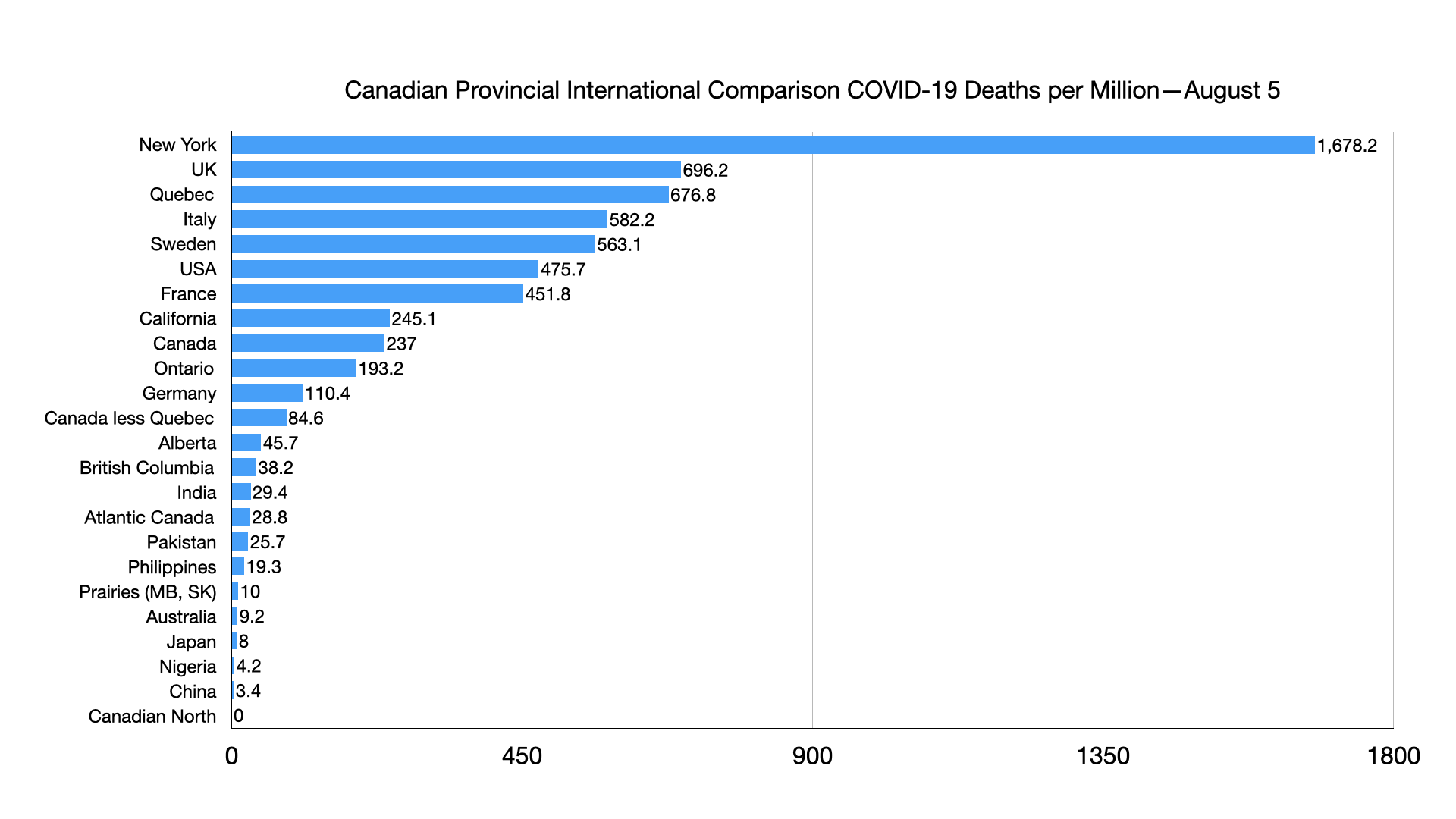
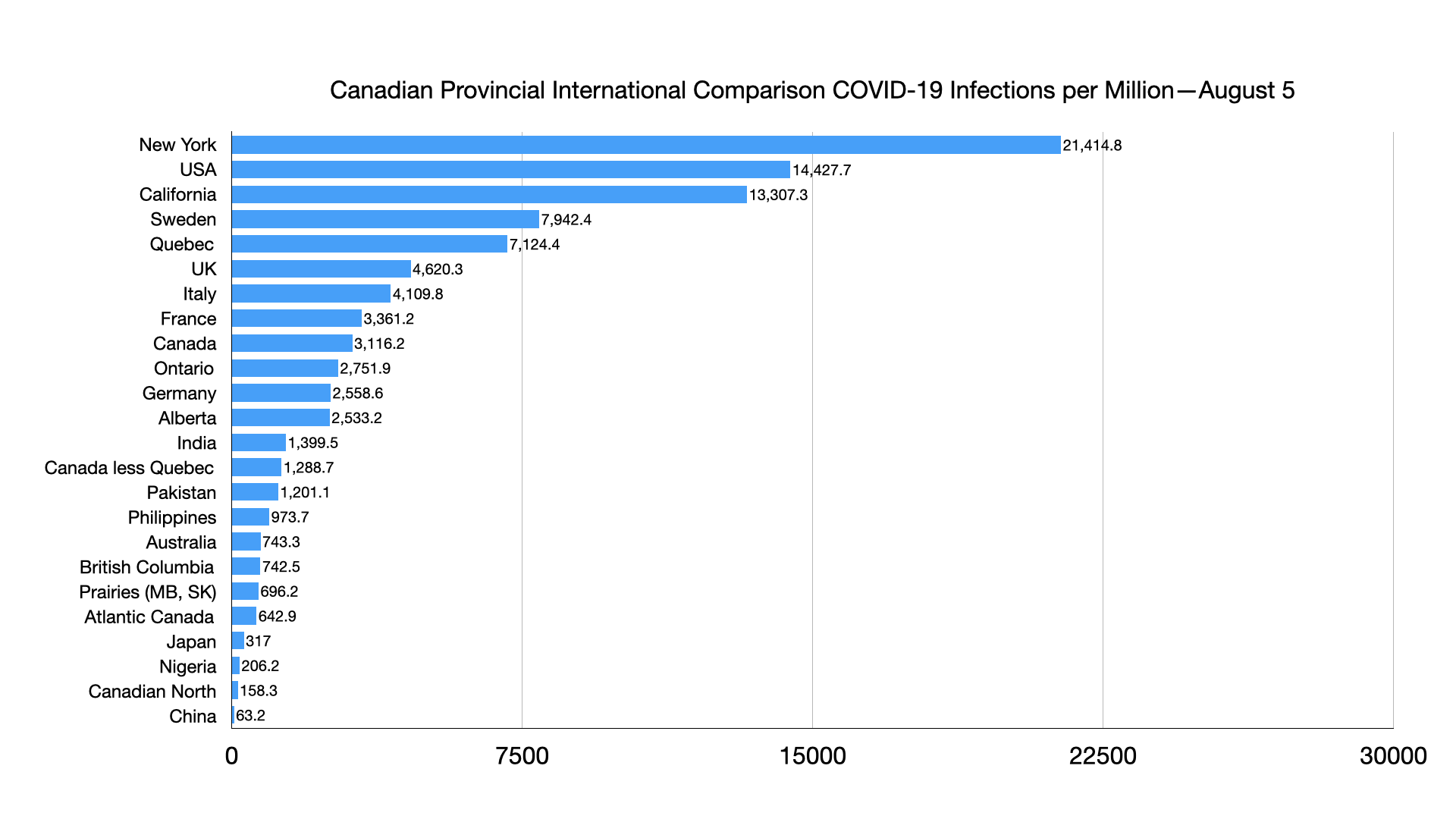
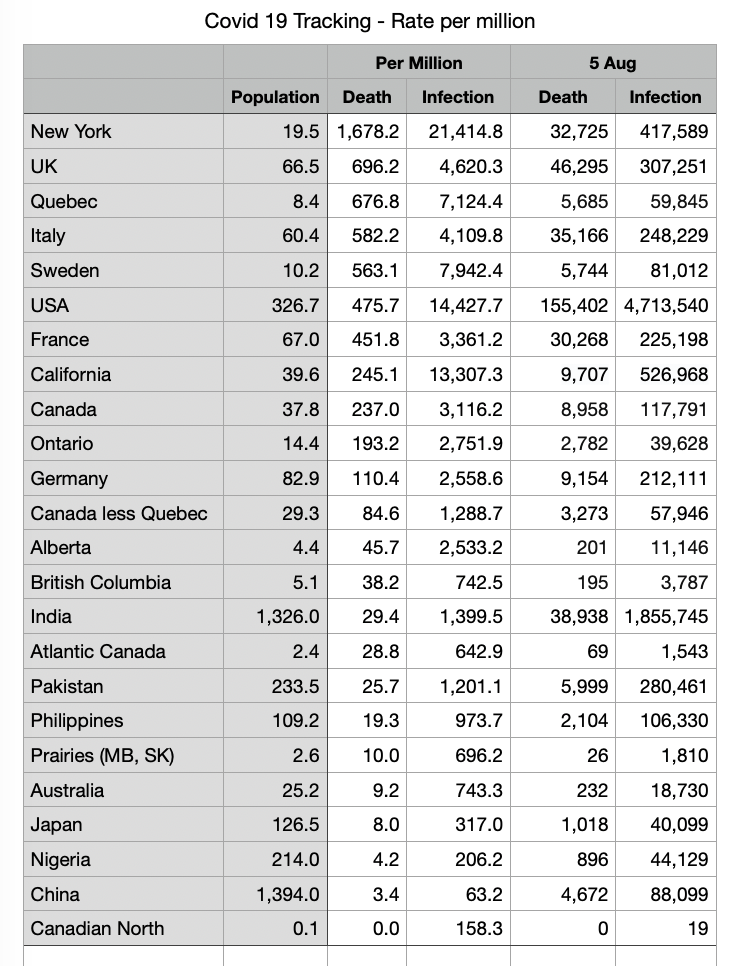
#COVID-19: Comparing provinces with other countries, Quebec death rate per million now greater than Italy: June 10 Update

Latest update:

Screen Shot 2020-06-10 at 13.29.08

Screen Shot 2020-06-10 at 13.28.38

A GBA+ case for understanding the impact of COVID-19

Agree. Starts, of course, with better and more comprehensive data:

In the COVID-19 era, Canada needs to better understand the relationship between identity and health. To do that, we need to use intersectional analysis, the study of the way identity categories such as gender, race and ability interconnect to create discriminatory systems that impact individuals in different ways. Fortunately, we have a policy tool in our policy toolbox for precisely this purpose, and it can and should be deployed by provincial ministries of health across this country: Gender-Based Analysis plus (or GBA+). Our federal government has been using GBA+ for years across many departments, though it is not mandatory for all federal departments. But it is in use at the Privy Council Office, Finance, the Department of National Defence and Health Canada. There is therefore a wealth of Canadian policy experience with this tool, and we need GBA+ now more than ever. 

The GBA+ tool was developed by the federal Department of Women and Gender Equality (WAGE), formerly Status of Women Canada. It is an approach to understanding sex and gender alongside other identity factors such as race, ability and age, to assess how various groups experience policies, programs and initiatives. The aim of GBA+ is the creation of equitable policies, programs and initiatives — equitable from inception to execution. Awareness of the differential impacts that government policies and actions have on different identity groups is central to that goal.

There are no hard and fast rules on how GBA+ should be done; in fact, it is perhaps best thought of as a competency rather than a methodology. In other words, there is no set formula to achieve equity in all situations; rather, progressing toward equitable change requires the continued cultivation of knowledge about various groups, the challenges they face and potential avenues for change. Nevertheless, GBA+ consistently relies on the use of disaggregated data, in addition to other forms of research, to gain insights into policy. Reliable data are essential to effect change, especially with identity-based issues. Showing patterns of discrimination is more compelling than anecdotal accounts in documenting a need for policy change. GBA+ also requires the monitoring and evaluation of the effects of policies on Canadians. It is not enough to enact change; change must be equitable.

Properly applied to the government’s COVID-19 response, GBA+ would have directed policy-makers to draw on fine-grained differentiated data to evaluate equity considerations. In asking whether policies are equitable, GBA+ analysts ask whether policy outcomes track a range of identity factors, including race, ethnicity and socio-economic background. Thus, if GBA+ had been applied to provinces’ public health response to COVID-19 from the start, requisite data would have been collected from the outset. These data, as the trickle of international evidence is making increasingly apparent, are key to targeting necessary medical supplies, policies and programs to those most affected, and hence helping to curb the spread of the virus.

GBA+ directs policy-makers to include identity-based considerations in the formulation, deployment and evaluation of their policies. Of course, GBA+ is not perfect: critics sometimes charge that it is too abstract, offering little actionable guidance to policy-makers. While its goals may be commendable, it is not always readily apparent how GBA+ should influence decisions within a specific portfolio or policy. This is why proponents of GBA+ argue it is a competency rather than a methodology. Policy-makers need to develop the ability and experience needed to make equitable decisions. Whether or not this response satisfies critics, it is true that GBA+ has clear implications in the context of COVID-19. If it had been employed in the appropriate offices before the pandemic, it would have helped policy-makers see and act upon considerations of identity in the making of health policy, including in their collection of data. Even at this later stage, the deployment of GBA+ would significantly improve our understanding of the virus and our response to it.

Several Western countries have discovered that factors linked to social determinants of health, most notably race, ethnicity and socio-economic status, are closely related to infection, hospitalization and death rates In Canada, however, we are flying blind, as COVID-19 data collection has been limited so far to age and sex.

Our obliviousness to the potential relationship between race, ethnicity and socio-economic status and infection, hospitalization and death rates will negatively impact our ability to control the spread of the virus in the short term and impair our understanding of how this virus impacts societies’ well-being in the long term. In response to criticism about this gap in data collection, Ontario’s chief medical officer of health, Dr. David Williams, for example, has said that statistics based on race aren’t collected in Canada unless certain groups are found to have risk factors.

Frankly, this position just does not align with mounting international evidence that race, ethnicity and socio-economic status have an impact on health outcomes related to COVID-19. A recent study released by a United Kingdom think tank, the Institute for Fiscal Studies, finds that minority groups are overrepresented in hospitalizations and deaths from the virus, with Black Britons nearly twice as likely to die from COVID-19 as the white British majority. Similar patterns have emerged in the United States, where the Centers for Disease Control confirmed that current data suggest a disproportionate burden of illness and death among racial and ethnic minority groups. New York City, for example, has recorded a disproportionate death rate among African-Americans (33.2 percent) and Hispanics (28.2 percent), and a Washington Post analysis shows that American counties that are majority-black have three times the rate of infections and almost six times the rate of deaths as counties where white residents are in the majority

There is further reason to apply a GBA+ lens to race, ethnicity and socio-economic data of those infected, hospitalized or succumbing to COVID-19. Academic studies have noted that racial discrimination, specifically when directed against Canada’s Black and Indigenous people, may itself be a determinant of chronic diseases and their underlying risk factors. Clearly, racial and ethnic inequalities in health outcomes are found throughout Canada, but the severity of these inequalities varies across racial and ethnic groups, further illustrating the importance of intersectional analysis. Moreover, academic evidence notes that a failure to distinguish between Canadian-born visible minorities and visible minorities who are immigrants to Canada is a key gap in Canadian health data of racialized individuals. This further indicates the importance of taking intersectionality into account when collecting health data.

When policy-makers truly embrace GBA+ as a lens for equitable policy-making, we can then better assess the toll of the pandemic. Only with an intersectional lens on the impact of COVID-19 on society will we see the differentiated impact of this virus on individuals and communities. Thus far, we have been flying blind, but it may not be too late to make a course correction in our COVID-19 policies.

Source: A GBA+ case for understanding the impact of COVID-19