Scrapping Safe Third Country deal may not lead to huge influx of asylum seekers

Contrasting views by two experts: Peter Showler, former head of the IRB, and Benn Proctor of the Canada Institute of the Wilson Centre, but more a difference in degree:

The Trump administration’s crackdown on asylum seekers has renewed calls by critics to scrap or suspend the Canada-U.S. Safe Third Country Agreement (STCA); arguing that the U.S. is no longer a hospitable destination for refugee claimants.

But that raises the question about whether more asylum seekers would then come into Canada.

“The answer is that it’s speculative and no one knows,” said Peter Showler, former chair of the Immigration and Refugee Board (IRB) of Canada.

But, he adds: “I don’t think there’s a reasonable assumption that there would be a significant increase.”

Under the STCA, a person must make their refugee claim in the first, so-called “safe country” they reach. The premise of the deal was that since Canada and the U.S. share similar values, both are safe countries for those seeking refugee status.

It means those who first arrive in the U.S. and then seek entry to Canada to make a refugee claim will likely be turned back. (There are a few exceptions, for example, if the claimant has a family member in Canada.)

Legal loophole

Yet thousands of asylum seekers have recently crossed into Canada thanks to a loophole in the STCA, which applies only to those who try to enter by train, at airports or at official land border crossings. It doesn’t apply if — as so many people have in Quebec, Manitoba and elsewhere — one just walks across the border at some unofficial, unguarded spot.

Some suggest that scrapping the STCA would lead to more asylum seekers coming to Canada, because, that way, they could go to any official port of entry without the risk of being sent back to the U.S. or facing, what can be at times, a dangerous journey to cross the border, depending on the season and terrain.

Last year, more than 20,000 asylum seekers crossed illegally into Canada, according to the Canada Border Services Agency. (CBSA)

Trump has taken a hard stand against illegal immigrants, referring to them as “invaders.” His administration was slammed for the controversial policy of separating children from parents arrested for crossing illegally from Mexico. And on Monday, he said those caught crossing illegally should be immediately sent back without appearing before a judge.

His stance has sparked calls from human rights activists, refugee lawyers and Canadian politicians to scrap the STCA.

But Showler says there are approximately 11 million to 12 million illegal residents in the U.S. Many are fully aware of the relatively easy irregular or illegal ways to enter Canada, he said.

Yet despite Trump’s crackdown, there have not been huge increases of people crossing the border illegally, he said.

“That could have triggered a large movement toward Canada and it didn’t,” Showler said.

Many have established roots in the U.S., have been there for decades, have families, driver’s licences and Social Security cards and aren’t likely to come into Canada just because it would be easy, he said.

‘Moderate noticeable uptick’

In a report released last year, Fleeing to Canada on Foot: Reviewing the Canada-U.S. Safe Third Country Agreement, program associate Benn Proctor of the Canada Institute of the Wilson Centre, a global affairs think tank, ​noted that the agreement has “significantly reduced” the costs to Canada from processing claimants by dissuading applicants to come to Canada.

For example, in 2005, the year after STCA took effect, the CBSA reported that the number of claims made at the border dropped 54 per cent, from 8,904 to 4,041.

Proctor found that during the 11 years after STCA was implemented, Canada has processed an annual average of 22,839 asylum claims, 23 per cent fewer than the annual average of 29,682 claims processed between 1989 and
2004.

The OECD estimates a cost of $14,000 per asylum seeker, meaning the STCA may have reduced Canadian spending on asylum seekers by $2 billion over a 10-year period, he wrote.

(Those are first-year, or start-up costs only, he noted, and very quickly drop to near zero once refugees develop language skills and job placements.)

Since his report, however, Proctor said he has revised his thinking that there would be a huge influx of asylum seekers coming to Canada if the STCA was scrapped.

He said he now takes into account that — with the spread of information about safer places to cross the border illegally — it has become much easier to cross at these unofficial spots.

He expects a “moderate noticeable uptick” in the number of asylum claims if the STCA were scrapped.

“I would still say you expect to see more asylum claims coming from the U.S. if the Safe Third Country Agreement was disbanded or suspended. But originally I thought you would expect to see a lot more.”The increase of asylum claims would put more pressure on resources and exacerbate the problems with backlogs, he said.

Anna Pape, a spokeswoman for the IRB, said in an email that changes to the global environment have led to a “steady and significant increase in refugee claim referrals over the last few years” and resulted in a “growing backlog.”

As of April 30, 2018, there were more than 55,000 pending cases, and the projected wait time for claims for refugee protection before the board has increased to approximately 20 months, Pape said.

However, she said the IRB has improved its efficiency and that the number of refugee claims finalized has increased by approximately 40 per cent over the past year. She said the IRB projects to be able to finalize up to 2,500 refugee claims per month.

Source: Scrapping Safe Third Country deal may not lead to huge influx of asylum seekers

Tim Cook speaks out at Fortune’s CEO Initiative on hot-button issues like immigration | TechCrunch

Immigration excerpt and their policy framework for intervening in public debates:

At Fortune’s CEO Initiative event today, Tim Cook shared his opinion on a number of contentious issues, including immigration, political news and smartphone addiction. Here are some highlights from his conversation with Fortune executive editor Adam Lashinsky.

On companies taking a stance on public policy and other politically charged issues, including the Trump administration’s separations of migrant families at United States-Mexico border, which Cook recently condemned as “inhumane”:

“Apple is about changing the world. It became clear to me some number of years ago that you don’t do that by staying quiet on things that matter. For us, that’s the driving issue,” he said.

Although there’s “no formula” dictating what Apple addresses publicly, Cook said the company considers “do we have a standing, do we have a right to talk about this issue?” For Apple, he said this means they “typically speak about education, privacy, about human rights, about immigration and the environment.”

When asked by Lashinsky why Apple has standing to speak about immigration and human rights, Cook replied that many immigrants work at Apple, including more than 300 people protected by Deferred Action for Childhood Arrivals (DACA) and “several thousand” employees on H1B visas.

“To me, too often in the case of immigration, people quickly get to numbers, but there are real people behind this, who have real feelings and they’re a core part of the United States, so we have significant standing there,” he added.

Cook also claimed that Apple doesn’t address politics directly as a company. “We stick to policy, how people are treated, what is immigration policy. We work with people from both parties or no party. Sometimes one party doesn’t like what we do, or the other one doesn’t, or both don’t.”

via Tim Cook speaks out at Fortune’s CEO Initiative on hot-button issues like immigration | TechCrunch

Fact check: Trump strays from the truth again and again on immigration

No surprises but good summary:

President Trump is distorting the truth when it comes to the impact of his administration’s policy regarding separating children from their parents at the U.S. border.

He falsely suggests that a newly signed executive order will permanently solve the problem of separations by keeping families together when they are detained for illegally crossing the border and exaggerates the number of immigration judges available to process their claims while they’re held in custody. A growing backlog of claims could mean that people will be held longer in detention until their cases are heard.

Here’s a look at some of his statements and the reality behind them:

TRUMP: “And ultimately, we have to have a real border — not judges. Thousands and thousands of judges they want to hire. Who are these people? When we vet a single federal judge, it goes through a big process. Now we’re hiring thousands and thousands.… And it got so crazy that all of these thousands — we now have thousands of judges — border judges — thousands and thousands.” — remarks Tuesday to the National Federation of Independent Business.

TRUMP: “We shouldn’t be hiring judges by the thousands, as our ridiculous immigration laws demand, we should be changing our laws, building the Wall, hire Border Agents and Ice and not let people come into our country based on the legal phrase they are told to say as their password.” — tweet Thursday.

THE FACTS: He’s incorrect about the U.S. having “thousands and thousands” of immigration judges and about thousands of additional judges being hired. The Justice Department’s immigration courts division has about 335 judges currently on staff nationwide, with the budget for 150 additional judges.

Dana Leigh Marks, past president of the National Association of Immigration Judges who also works in the Justice Department’s executive office for immigration review, said funding for immigration courts has increased modestly amid a growing backlog of cases. With a backlog of 700,000, each judge would have to take on more than 2,000 cases apiece to clear the docket.

The figures also don’t take into account a wave of expected retirements that would shrink the ranks of judges. A June 2017 Government Accountability Office report determined that 39% of the immigration judges are now eligible for retirement. Congressional investigators blamed the mounting caseload in part on the slow hiring of immigration judges and said the federal government needed to do a better job to address staffing needs.

TRUMP: “We’re keeping families together, and this will solve that problem.” — remarks Wednesday at signing of order to halt his administration’s policy of separating children from their parents when they are detained illegally crossing the U.S. border.

THE FACTS: It doesn’t solve the problem.

Trump’s executive order will continue his “zero tolerance” policy of criminally prosecuting all adults caught crossing the border illegally, and will now seek to keep families together in detention instead of separating them while their legal cases are heard by the courts.

But a 1997 landmark settlement known as the Flores agreement that generally bars the government from keeping children in immigration detention for more than 20 days remains in place. Trump is seeking to have the settlement overturned, but his Justice Department says the 20-day policy remains in effect until Congress or the courts take action to change that.

That means without further action from Congress or the courts, the Trump administration could be forced to again separate the immigrant children from their parents in three weeks.

TRUMP: “So here are just a few statistics on the human toll of illegal immigration. According to a 2011 government report, the arrests attached to the criminal alien population included an estimated 25,000 people for homicide, 42,000 for robbery, nearly 70,000 for sex offenses, and nearly 15,000 for kidnapping. In Texas alone, within the last seven years, more than a quarter-million criminal aliens have been arrested and charged with over 600,000 criminal offenses. You don’t hear that.”

THE FACTS: Trump is probably working from a 2011 U.S. Government Accountability Office report that looked at arrests, costs and incarcerations of immigrants who were in the U.S. illegally. The statistics he cites are accurate. He doesn’t note that about half of all of the 3 million arrests of the “criminal alien population” in the study were for immigration (529,859), drugs (504,043) or traffic (404,488). And some of the immigration arrests were related to civil violations, not criminal charges. The report didn’t distinguish between the two.

TRUMP: “I always hear that, ‘Oh, no, the population’s safer than the people that live in the country.’ You’ve heard that, fellas, right? You’ve heard that. I hear it so much, and I say, ‘Is that possible?’ The answer is it’s not true. You hear it’s like they’re better people than what we have, than our citizens. It’s not true.”

THE FACTS: Trump is questioning reports that those living in the country illegally commit fewer crimes than people in the population overall. He shouldn’t.

Several studies from social scientists and the libertarian think tank Cato Institute have shown that people here illegally are less likely to commit crime than U.S. citizens, and legal immigrants are even less likely to do so.

A March study by the journal Criminology found “undocumented immigration does not increase violence.”

The study, which looked at the years 1990 through 2014, argues that states with bigger shares of such people have lower crime rates.

A study last year by Robert Adelman, a sociology professor at University of Buffalo, analyzed 40 years of crime data in 200 metropolitan areas and found that immigrants helped lower crime. New York City, for example, has the nation’s largest population of immigrants living in the country illegally — about 500,000 — and last year had only 292 murders among a total population of 8.5 million people. A city murder rate is often used as a benchmark for overall crime because it’s difficult to fudge murder statistics.

And Ruben Rumbaut, a UC Irvine sociology professor, co-authored a recent study that noted crime rates fell sharply from 1990 to 2015 at a time when illegal immigration spiked.

Source: Fact check: Trump strays from the truth again and again on immigration

Douglas Todd: Canadian officials battle dozens of migration scams

Good overview of the major scams. Thanks again to Richard Kurland for making the ATIP request:

Canadian immigration officials around the world face a wave of immigration scams.

Many of the schemes feature people claiming to be in marriages that turn out to be phoney. Others involve fraudulent letters about escorting Saudi Arabian princesses, counterfeit passports and forged job offers, or people pretending to be journalists.

An internal Global Affairs Department document shows Canadian consular and customs officials invited anti-fraud experts from European countries to a meeting to learn about the wide range of inventive scams that people are using to try to emigrate to Canada and other Western nations.

The federal email correspondence came to light in the same month that the federal NDP immigration critic, Jenny Kwan, criticized Canadian immigration officials for asking a couple “offensive and insulting” questions, which were aimed at determining if a Pakistani woman was in a bona fide marriage with her male sponsor, who had been in Canada for 13 years.

It was “completely inappropriate” for immigration officials to note the female applicant for Canadian permanent resident status is three years older than her spouse, said Kwan, the MP for Vancouver East. She called on Immigration Minister Ahmed Hussen to look into what she calls a “systemic” problem with the way staff handle the popular spousal-sponsorship program.

However, a detailed email from a senior official at Global Affairs, which was obtained through an access to information request, indicates that fake marriages are among the most common fraudulent methods used to obtain permanent resident status in Canada.

The email, sent last year to about 50 Canadian officials after a meeting in Cairo, describes a common deception in which Arabic couples enter into so-called “Urfi marriages,” which are customary under Islamic law but not recognized by the Egyptian government. Urfi marriages are often for convenience, including to travel or migrate. In Sudan, meanwhile, many officials are giving out suspicious marriage documents to citizens of other African nations.

The widespread problem posed by fake marriages was confronted in 2013 by then-immigration minister Jason Kenney, who began a crackdown on “marriages of convenience,” which included a public video featuring real victims of marriage-migration scams. The federal Liberals continue to use videos to warn people against being abused by a marriage scheme, but the government has eased some rules for Canadian spouses sponsoring foreign nationals.

With Gallup pollsters finding that roughly 45 million people around the globe want to move to Canada, another growing scam has been emerging in India, where people are posting newspaper ads that seek “marriage” with a young person who has been accepted as one of this nation’s 500,000 international students.

The Global Affairs email shows that Canadian officials uncovered other creative schemes, one of which they called “the prince or princess scam.”

At their meeting in Cairo, they found seven cases of married Egyptian or Sudanese males “applying for a visitor visa to accompany a prince or princess of the Kingdom of Saudi Arabia on their visit to Canada. The applicants were to serve as personal maids, cooks, drivers or waiters.” The university-educated applicants provided fake letters, purportedly written on the letterhead of Saudi royal families.

A different ruse, says the Global Affairs email, is to apply to enter other countries as journalists. Another is for an applicant to buy a rundown house in a Western country, then claim they require a visa to work on it. In addition, corrupt officials in Africa, including clergy,  are issuing fake birth certificates. Forged passports and bank statements are also common. So is buying fake jobs. And a new approach is to present immigration officials with fraudulent invitation letters to pilot-training schools in Canada.

In response to Postmedia questions, Kwan acknowledged that marriage and other migration frauds exist, adding that “the overwhelming majority of interactions” that Canada’s immigration and border officials “have with people are done with a commendable level of expertise and professionalism.”

However, Kwan said an “inappropriate line of questioning can have serious impacts for genuine families.” The border official’s initial suggestion that the Pakistani couple did not appear “well matched,” in part because she was older, would not have been asked, Kwan said, of Prince Harry, 33, and his new wife, the Duchess of Sussex, 36.

Even though the Pakistani-Canadian husband’s sponsorship of a wife in Pakistan was approved, Kwan emphasized that border officials should never deal in “outdated stereotypes” about traditional foreign cultures. She wants immigration officials to take “cultural sensitivity training.”

Vancouver immigration lawyer Richard Kurland, who obtained the internal Global Affairs email under an access to information request for his newsletter, Lexbase, said it’s legitimate for the NDP’s immigration critic to “push back” as a check on the power of Canada’s visa officers.

But Kurland also recommends Kwan take what he called “the cure.” That is, Kurland suggested it would be beneficial if she learned more about the many kinds of “real cases” that Canadian anti-fraud units are dealing with in places such as Delhi or Beijing.

“While the overwhelming majority of cases are genuine, we must be vigilant to prevent that small number of bad cases becoming a big number of bad cases. It is a difficult challenge that seasoned visa officers lose sleep over. The stakes are high (for would-be immigrants}. And for Canada.”

Source: Douglas Todd: Canadian officials battle dozens of migration scams

Douglas Todd: Progressives wrestle with dilemma on migration

Good nuanced summary of the various research:

It’s called the “progressive’s dilemma,” a term popularized by two Canadian scholars of multiculturalism. It describes the way people with left-of-centre views often find themselves in a fix on the issue of migration.

They become ensnared by a 21st-century debate over whether a higher immigration rate weakens domestic support for social-welfare programs. Most scholars conclude it generally does: The main questions they’re now trying to answer are to what extent and why.

Since “progressives” tend to support both strong immigration and a generous social-safety net, they are put in a bind, say Canadian scholars Keith Banting and Will Kymlicka. It’s why Canadians are often in some denial about the correlation between in-migration and support for a welfare society.

Most Americans and Europeans do not shy away from the problem, however, even if they sometimes exaggerate it. The influential Harvard economists Alberto Alesina and Edward Glaeser maintain Western European countries have more generous welfare societies than the U.S. (and to some extent Canada) because their populations are more ethnically “homogeneous,” which makes it harder for European taxpayers to “demonize” the poor.

With the ratio of foreign-born residents expanding in many Western countries, a small army of researchers continue to test the theories of Alesina and Glaeser, to pin down where and when immigration might hurt popular support for such things as universal health care, unemployment insurance, social housing, maternity benefits and welfare.

It’s a distinctly First World problem, but not in a trivial sense.

The “progressive’s dilemma” only applies to advanced, democratic countries that welcome immigrants. Since most large or developing countries either don’t seek immigrants or don’t have significant social programs, there are relatively few nations in which progressives have to struggle with the trade-off.

It’s telling that one of the most important studies into whether immigration undermines support for a liberal safety net focuses on just 17 countries (including Canada), which University of California sociologist David Brady and Ryan Finnigan, of Berlin, chose because they are affluent, long-standing democracies.

Some First World progressives believe it’s best this topic, in the name of tolerance and diversity, not be publicly aired. But Finnigan and Brady (the latter is the author of Rich Democracies, Poor People), say that “of course it is reasonable to ask” whether immigration undermines public support for social programs.

“Immigration is changing labour markets, reconfiguring ethnic composition and altering the politics of affluent democracies,” Finnigan and Brady write. “In the past few decades, there has been rapid growth in immigration to affluent democracies. In recent years, there has seemingly been an even more rapid growth in concern for the political consequences of immigration to the welfare state.”

They see weaknesses in the theories of the Harvard economists, who basically maintain the U.S. has more stingy welfare policies because the country is more ethnically diverse than Western Europe and more prone to racial rivalry (partly because of a history of black slavery and undocumented migration from Hispanic countries).

Yet they maintain their findings “do not actually contradict” Alesina and Glaeser. Even though Finnigan and Brady found through their comprehensive study that rising immigration rates do not necessarily erode support for unemployment insurance and pensions, they did discover a conflict over job programs.

When a sample of residents of affluent nations were asked if they supported government programs that would “provide jobs for everyone who wants one,” there was significant resistance.

The authors believe that domestically born people often see immigrants as a “threat” and “competition” for limited jobs (and, to a lesser extent, for social housing and universal health care).

“Individuals with low education, those with low income, and the unemployed tend to be both anti-immigrant and pro-welfare,” say Finnigan and Brady, referring to the way policies that increase migration make some members of the host society feel more “instability, vulnerability and insecurity.”

The authors also point out a common fallacy: That North Americans often mis-label European political parties that want to lower immigration rates as “far-right.” The reality, they say, is many of Europe’s so-called extreme-right parties actually champion the left-wing values of a welfare society.

How foreign-born populations are growing in 17 affluent countries. (Source: David Brady, Ryan Finnigan)

What are the consequences of all this for Canada?

There is cause for concern, since the federal Liberals are increasing immigration rates at the same time immigrants are relying in greater numbers on social assistance than native-born Canadians, according to UBC economists Craig Riddell and David Green and Carleton University’s Christopher Worswick.

“Before 2000, social assistance receipt among immigrants was generally below that of the native-born (in Canada), but recently it has consistently been higher,” Riddell et al say in Policy Options.

“These trends imply that newly arrived immigrants are a net drag on government budgets: they pay less in taxes on average and make average or slightly above average use of government services and benefits. Second-generation immigrants do well, which may offset this net drag to some extent, but the initial impact of a large increase in immigration should be expected to be an increase in taxes, a decrease in services, an increase in deficits, or some combination of the three.”

The “progressive’s dilemma” is also exacerbated in places like Metro Vancouver, in part because the region is a popular destination for wealthy trans-national migrants, who some real-estate analysts, such as Richard Wozny, say are not paying their fair share of taxes. It’s led to the rise of domestic housing-affordability organizations, such as Housing Action for Local Taxpayers (HALT).

For his part, Banting acknowledges there is increasing danger the “progressive’s dilemma” could develop into a bigger predicament in Canada.

Canadians’ over-riding commitment to a “multicultural identity” has served as a kind of “cultural glue,” Banting said, thus forestalling broad antagonism to immigration based on fears it will reduce support for the country’s welfare policies (which, in terms of generosity, lie somewhere in between those in the U.S. and northern Europe).

“But past successes can never be taken for granted,” Banting says. “The slowing economic integration of newcomers has increased their need for support, and their average benefits now exceed those of the native-born. … As a result, we seem to be heading toward territory that has proven politically combustible elsewhere.”

Source: Douglas Todd: Progressives wrestle with dilemma on migration

Conservative Media Failed To Redefine Debate On Trump’s Immigration Policy – NPR

Some possible lessons here, or perhaps it is simply the power of children as victims to change the narrative (as Alan Kurdi’s did during the 2015 Canadian election):

As President Trump faced growing outrage over his child detention policy on the U.S.-Mexico border, conservative outlets like Fox News and Breitbart scrambled to his defense. They urged Trump to stand firm, describing the forced separation of migrant children from their families as part of a strategy to keep America’s borders safe.

But by Wednesday afternoon, that narrative began to unravel as national outrage grew and it became clear the president would reverse course. On Rush Limbaugh’s conservative talk radio program, one caller said that this time the fight might not be winnable.

“They’ve got Trump, they’ve blown Trump up,” Limbaugh said, voice rising in disappointment. “He’s got to reunite families or it’s over?”

“It’s these photographs [of children],” the caller said. “They finally got something that they can stick to him I think.”

During past scandals and debates over controversial policies, Trump and right-leaning media appeared to work closely together, pummeling the president’s critics while echoing arguments and developing themes. At the same time, the White House has aggressively dismissed mainstream media coverage as “fake news” designed to harm Trump.

This time, however, the administration and its media allies faced a different kind of pressure. Powerful audio and images of crying children held in federal detention facilities went viral. The country’s more liberal-leaning media amplified the indignation, with Rachel Maddow appearing to choke up during her show on MSNBC while attempting to read about “tender age shelters.”

“Trump administration officials have been sending babies and other young children,” Maddow said, shaking her head with emotion before deciding she could read no more. “I think I’m going to have to hand this off.”

In conservative media favored by Trump and many of his supporters, the story often looked and sounded starkly different: websites like Breitbart, The Daily Caller and Drudge Report worked to redefine the debate, describing the border crisis as a manufactured media event, concocted by Democrats and advocates of liberal immigration policies.

Conservative commentator Ann Coulter said in an appearance on Fox News, “These child actors weeping and crying on all the other networks right now,” adding, “Do not fall for it, Mr. President.”

Trump seemed committed to holding the line. He tweeted defiantly that critics of his tough border policies want undocumented immigrants to “infest” the United States. On Fox News, hosts echoed the argument, claiming Trump was defending the border from waves of impoverished and dangerous refugees.

“Their goal is to change your country forever,” argued Fox host Tucker Carlson Tuesday, referring to those who favor liberal immigration policies. “They’re succeeding by the way.”

Another Fox host, Laura Ingraham, said Tuesday, “The American people are footing a really big bill for what is tantamount to a slow-rolling invasion of the United States.” Ingraham also suggested that detention facilities being built for children resemble “summer camps.”

But this time, conservative media failed to shift the conversation. National anger grew as more images of children being detained emerged. Influential Republicans broke ranks with Trump. “We don’t think families should be separated, period,” House Speaker Paul Ryan told reporters Wednesday. “We’ve seen the videos, heard the audio.”

Meanwhile, White House arguments defending the child detention policy continued to shift and conservative media struggled to keep up. But their narrative began to splinter. In an emotional appearance on Sean Hannity’s popular program on Fox News Tuesday night, commentator Geraldo Rivera described the administration’s border policy as “child abuse.”

It’s unclear how much this back and forth in the media influenced Trump. As he prepared to sign his executive order on Wednesday, some conservative outlets pivoted and began voicing dismay at what they described as a major capitulation. Breitbart News ran a headline on its homepage claiming Trump had “buckled.” The influential website that often cheerleads Trump argued bluntly that he had caved to “left-wing hate.”

Limbaugh, meanwhile, warned that any retreat from tough immigration policies might divide Trump from his base. “The only person who can blow up this relationship [with conservative voters] is Trump himself,” the radio host told his audience Wednesday. “The media is attempting to force Trump to do things to make you start doubting, to make you start questioning.”

Source: Conservative Media Failed To Redefine Debate On Trump’s Immigration Policy

What the Bible Really Says About Trump’s Zero-Tolerance Immigration Policy

On scapegoating:

Attorney General Jeff Sessions invokes the Bible to justify the heinous zero-tolerance immigration policy, which incarcerates children. Sarah Huckabee Sanders calls the policy “very Biblical.” Pushback from religious figures comes quickly: from Catholic bishops and the Pope, “immoral”; from rabbis and Jewish groups, “unconscionable”; from nuns, “travesty”; and, from Jesuits, “close to obscene.” A Protestant leader cites Jesus: “Let the little children come to me” (Matthew 19:14). Then Stephen Colbert, as usual, nails it: “Hey, don’t bring God into this.”

Yet, by bringing the Bible’s God into it, Sessions has actually done the country a service. It seems obvious that separating thousands of children, including babies, from their parents, secretly scattering them across the nation, and caging them in camps and pens offends against the compassion and the love that are hallmarks of Biblical exhortation. As of yesterday, President Trump has apparently retreated on the policy, with a new executive order that ends the separating of families but doesn’t release from limbo the thousands of children already taken. This traumatizing of legions of the very young stands as an epiphany—a climactic American moment of truth.

When Sessions invited the world to measure the government’s approach to immigration against the Bible, he exposed the deeper meaning of the “illegal-aliens” trashing that has defined Donald Trump’s politics from the start. The President’s endless demagoguery about the border with Mexico, and those who flee there, is a classic instance of scapegoating, a deeply human malevolence that is rarely recognized for what it is. Groups at the mercy of free-floating negative energy—resentment, greed, fear, or, say, racial anxiety—find relief by projecting their hateful passions onto powerless figures who are blamed for discord they had nothing to do with. The marginalized victims are made to suffer, which perversely frees members of the dominant, victimizing group from its negative energy, sparking a “collective effervescence,” which in turn convinces them that the victims were deserving of the punishment they got. This is the “scapegoat mechanism” identified by the anthropologist René Girard.

Sessions accidentally invoked this analysis when he brought up the Bible, because the word “scapegoat” originates there. The scapegoat is the animal that is driven out into the wilderness (“escaped”), carrying the people’s sins, in Leviticus 16. Sessions’s mistake was less in his blatant misuse of a verse from St. Paul than in his failure to understand that the whole point of the Bible is to reverse the usual way of telling the story of abusive power.

The foundational myth of Rome relates the murder of Remus by his brother Romulus, whom the gods then valorize as the namesake of the city. The foundational myth of the Bible, by contrast, tells, in Genesis, of the murder of Abel by his brother Cain, who is forever marked with shame, and rebuked by God. (“The voice of your brother’s blood cries to me from the ground.”) From the get-go, the Bible’s God, as I have written before, stands with the victims, not the victimizers.

Instead of seeing events from the point of view of those who do the scapegoating, the Bible insists on seeing everything from the point of view of the ones driven out. This is literally what happens in Exodus, which tells the story of a people expelled into the wilderness, but does so from the side of the beleaguered Hebrews rather than from that of the all-powerful Pharaoh. It is not incidental to the American moment that the originating mythology of scapegoating is all about borders. As demarcations of contempt, the Bible is against them. This radical shift in point of view means that the Biblical critique of Trump’s policy, and his minions’ defense of it, is far more consequential than a failure of warm feelings like empathy and compassion. God does not just “feel” for victims; God sides with them, period. This is the whole point of Biblical faith.

The fact that self-affirming Christians such as Sessions and Sanders are apparently unaware of this meaning suggests how deeply into the human psyche the scapegoating impulse goes. After all, Christianity was born in a cauldron of scapegoating, when the wickedness of the impulse was fully exposed in the story of Jesus, the paradigmatic innocent victim. But what should have been the ultimate takedown of scapegoating was itself reversed when some of his traumatized supporters again, very humanly, told his anti-scapegoating story in a way that immediately scapegoated “the Jews,” who were falsely blamed for his death, and became labelled as “Christ-killers.” This scapegoating mistake sanctified the positive-negative bipolarity of the Western imagination, a holy hatred that inflamed anti-Semitism, and has shown up lately in white supremacy.

Donald Trump’s description of undocumented immigrants as people, he tweeted, who would “pour into and infest our Country,” and his rally-energizing claims that “They’re not sending their finest. We’re sending them the hell back,” are a classic display of the power of the “collective effervescence” of the victimizer, seemingly providing the most fervent of his supporters with relief from their own anguish, whatever its source. That Trump’s organizing symbol is the Wall, however impossibly impractical, perfectly expresses the depth of this malign impulse. A fantasy enemy requires an imagined boundary behind which to hide. The way to resist Trump’s exploitation of the marginal and the powerless—including, now, children—is to call it by its proper name. Immigrants, undocumented or not, are not America’s problem. They are America’s scapegoat.

Source: What the Bible Really Says About Trump’s Zero-Tolerance Immigration Policy

Andrew Coyne: Without the Safe Third Country Agreement, we’d soon see how liberal on refugees we really are

Good assessment of some of the implications of the Trump administration and possible suspension of the Safe Third Country Agreement:

You must understand, there is never going to be a turning point. People keep expecting, even predicting one: the dramatic “have you no decency, sir” moment when Donald Trump at long last goes too far, even for his supporters, and begins his inevitable decline and fall. But life is not a movie, and resists our attempts to impose a narrative on it.

So yes, Trump has been forced to backtrack, a little, on the most indecent of his many indecencies, the forcible separation from their mothers and fathers of migrant children — some still babies, some kept in cages, some never to see their parents again. Henceforth, by the terms of Trump’s executive order, children and parents will be detained together, indefinitely, while their cases are heard: the “zero tolerance” policy that gave rise to the crisis, mandating that all asylum-seekers who arrive by other than the usual ports of entry be imprisoned, remains in place.

But there will be no agonized reappraisal among his supporters, just because a couple of thousand kids were traumatized, any more than there was after each previous episode when people said “this time he’s gone too far.” We have seen, instead, how it works. They simply lower their standards to meet him, invent more outlandish reasons to believe what they believe — the bawling infants, Ann Coulter suggested, were “child actors,” while the cages in which they were kept, according to Laura Ingraham, were like “boarding schools” — and move on.

If he is not going to change for all the outrage he has stirred up in his own country, he is certainly not going to change because of anything we in this country might say or do. It is probably to the good that the prime minister was shamed, belatedly, into publicly criticizing the Trump administration’s approach — it was “wrong,” he said — after days of dodging, but only for our own sense of self-respect. His failure to do so until now does not make him, or us, “complicit” in Trump’s policy, since whatever he said would have had no impact on it.

Where we are potentially complicit, rather, is in the matter of those thousands of asylum seekers arriving at the Canada-U.S. border every year whom, notwithstanding our obligations under the 1951 UN Refugee Convention, we turn back without a hearing. We are permitted to do so, or have permitted ourselves to do so, by the terms of the 2002 Safe Third Country Agreement, on the premise that, as each country regards the other as a safe haven for refugee claimants, so they should be required to have their case heard in whichever of the two they first arrive in. If the United States under Trump can no longer be regarded as “safe,” many argue, we are obliged, morally and perhaps legally, to suspend the agreement, at least until circumstances change.

The criticism is not new: it has been said since before the deal was even signed. Indeed, the agreement is rooted, not in the similarity of the two countries’ systems, but their differences: Canada’s more liberal, America’s markedly less so. It was we who asked for it, not they, and it was because we feared being unable to handle the tide of asylum seekers flowing north, in the unwelcoming aftermath of the Sept. 11 attacks, from the United States.

Still, it is one thing to return claimants to the United States of Barack Obama or even George Bush, quite another to submit them to the mercies of the Trump administration. So there may well be a case for suspending the agreement. The courts may force the government to do so in any event, whatever it might prefer.

We should understand, however, what this means. There is one reason why Canada’s treatment of those who arrive at our border unannounced tends to be more liberal than America’s: because we get relatively fewer of them. They have Mexico on their southern border; we have the United States.

But another reason we have so few is because of the Safe Third Country Agreement. In other words, our more liberal system depends in part on being able to offload so many claimants on the less liberal American system. Were we unable to do so — because we suspended the agreement, or because the Americans pulled out of it altogether — we should soon see how liberal we really were.

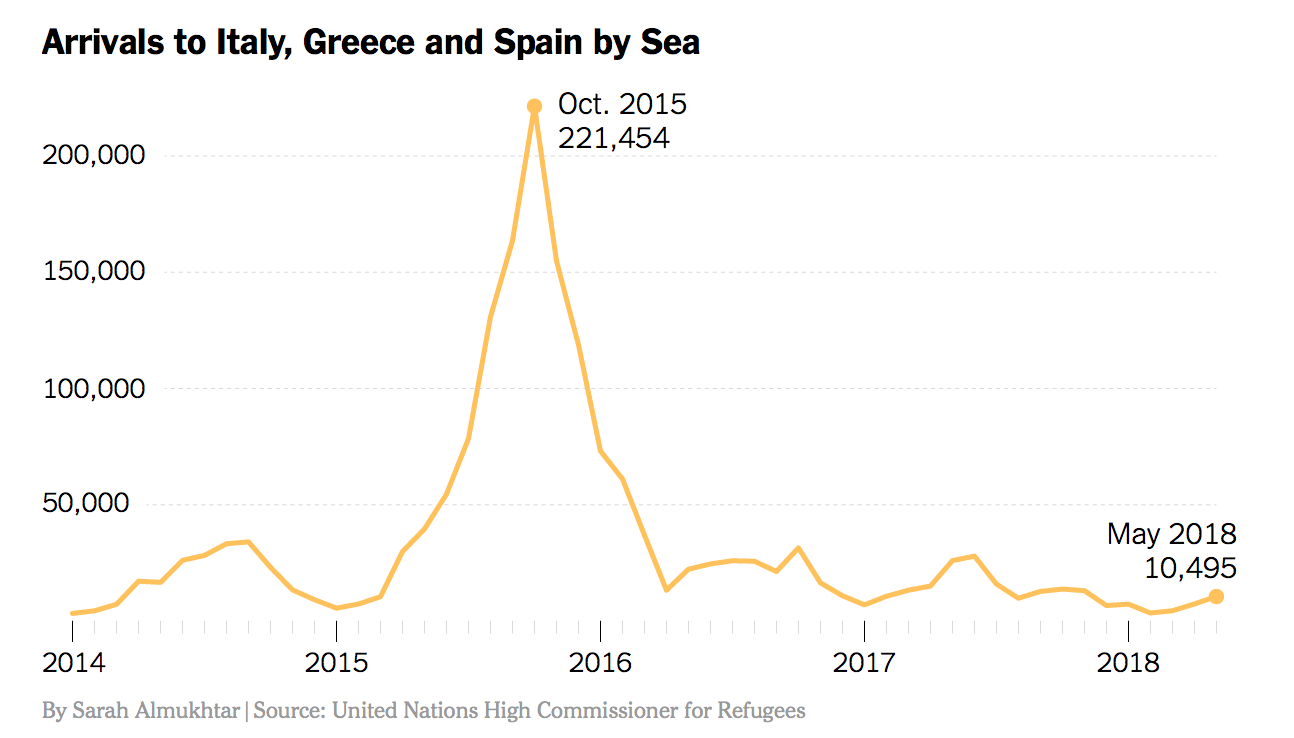
Even with the agreement in place, we have been dealing with an unprecedented inflow of asylum seekers, driven in part by fear of what Trump had in store for them. Indeed, until now the debate has been over whether to expand the agreement, from a handful of official ports of entry to the whole border, in a (probably futile) bid to prevent asylum seekers from crossing at irregular points.

Suspending the agreement would relieve them of that obligation — but at the cost, most probably, of greatly increasing the number of applicants arriving at the official points. For we would not only have signalled they would not be turned back. We would have publicly declared they were not safe in the United States.

The longer the resulting backlog of cases, the greater the incentive for more to apply: guaranteed a hearing, they would also be permitted to stay in Canada while they waited. Of course, they’d need to first get past the lengthening lineups at the official border crossings — meaning a good many would end up crossing illegally again.

We may still wish to suspend the agreement. But if so, we had better be prepared to spend the money needed to process the increased numbers, or we might soon find our own record for detaining claimants rivalled that of the Americans.

Source: Andrew Coyne: Without the Safe Third Country Agreement, we’d soon see how liberal on refugees we really are

If Moderate Muslims Are Asked to Condemn Extremists, Where Are Moderate Christians on Jeff Sessions?

Valid points – and has happened but mainly in the context of child separations:

“Dear moderate Christian Republicans, as a Muslim always asked to defend my alleged moderation for the past 16 years, here’s a sincere opportunity for you to step up and reclaim the Bible, Jesus and your religion from men and women using it to separate kids from their parents.”

I tweeted this invitation and request upon hearing Attorney General Jeff Sessions cite the Bible, Romans 13, to defend the administration’s zero tolerance, deterrence policy that detains and separates undocumented minors from their parents at the U.S. border. White House Press Secretary Sarah Huckabee Sanders supported his biblical justification by saying: “I can say that it is very biblical to enforce the law…It’s a moral policy to follow and enforce the law.”

On an ordinary day in America, it would be a great scandal when the nation’s top lawyer and the president’s liaison to the press both seem to be blissfully unaware that the United States is a pluralistic democracy that advocates separation of church and state and is bound by the Constitution which features the Establishment Clause of the First Amendment that prohibits the establishment of religion by the government. But in the ever decaying, deepening, moral abyss that is the Trump administration, this is just another forgettable warm up act before the new horror show of the week.

In defense of Jeff Sessions, Romans 13 has been used in the past, but often to justify slaveryand apartheid. That it was used to defend a policy of detaining 2,500 children, some of them living in cages and detention centers, shouldn’t surprise anyone. People of self-professed faith often find their way to molding religion around their political objectives.

Fox News host Laura Ingraham, who is moved by the Christian Holy Spirit, insisted that these children were merely experiencing a “summer camp.” Ann Coulter, another conservative Christian, said we should give these kids Oscars because they’re “child actors.” Not to be outdone, Corey Lewandowski, Trump’s former campaign manager, asked America to hold his beer while he mocked an undocumented minor with Down Syndrome who was separated from her mother. This is the same man who once said that Christian “faith played a big part in the [Trump] campaign.”

Trump himself never directly cited the bible to justify his policy. Instead, he blamed Democrats for wanting illegal immigrants to “infest” the United States and claimed his hands were tied to do anything else. On Wednesday afternoon, he finally reversed course and said he would sign an Executive Order ending family separation at the border.

But his new order only shifts the cruelty of his previous policy by seeking to detain undocumented minors and their parents indefinitely in “facilities” which are essentially modern day internment camps.  He seeks to undo the Flores settlement, which prohibits minors from being detained more than 20 days. He’s deliberately manufacturing a crisis and conflict with the courts —just to detain and punish migrants and their children.

In Isaiah 61:1, Jesus says God sent him “to bring good to the oppressed, to bind up the broken-hearted, to proclaim liberty to the captives, and release to the prisoners.”

I ask: Will the moderate Christian Republicans please stand up?

I ask because, as a Muslim, I don’t recognize Trump’s Jesus or Christianity. I first encountered the Christian version of Jesus while reading the Bible at my all boys, Catholic high school. To the anguish of Father Allender, my religious studies teacher, I had the highest grade every semester, followed by Kalyan, a Hindu, and Naveed, a non practicing Muslim. I was attracted to the stories and the Jesuit motto of service: “men for others.” To me, the heart of the New Testament is Agape, which refers to God’s unconditional love. This is the love that fueled Jesus’s entire mission and is clearly articulated in Matthew 25:40, where he preached, “Truly I tell you, whatever you did for one of the least of these brothers of mine, you did for me.”

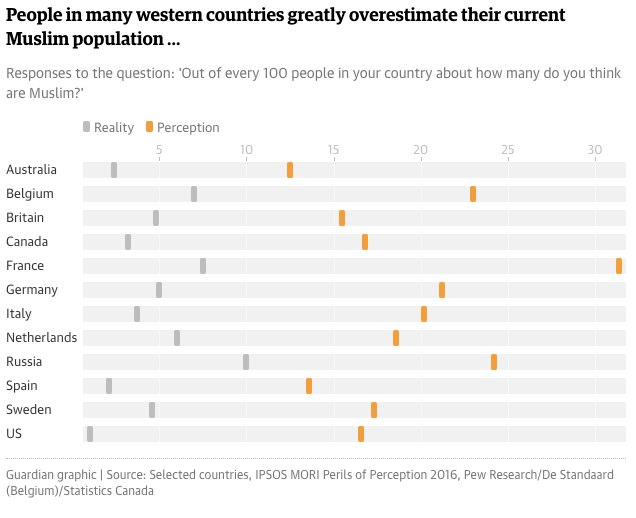
I empathize with the frustration of millions of Christians horrified that their religious values and Holy Book have been hijacked by an extremist minority in power to rationalize bigotry and hateful policies. Ever since the 9-11 terror attacks, I’ve been asked to be a walking Wikipedia entry on all things Islam and Muslim-y and engage in an endless “condemnathon,”apologizing for criminal acts done by radicalized men and women I’ve never met in countries I’ve never visited. All robust condemnations, eloquent refutations, and sincere attempts at education fall on deaf ears to those who keep asking me to prove my alleged moderation. For many Republican politicians, conservative pundits, Christian leaders and their “Values Voters,” the fear persists that somehow Muslims, one percent of America’s population, will take over America, replace the Constitution and put a burqa on the Statue of Liberty.

But what if it’s the Trump administration and its supporters that represent extremism that moderate Christians and Republicans should be pressed to condemn? Perhaps it’s their absolutism that will subvert democratic norms, freedoms and institutions, which to them are merely tools for their divisive and hateful agendas?

We know that the religious minded have flocked to Trump.  Nearly 81% of white evangelical christians voted for him in 2016 , along with 60% of white Catholics. This also is the group most likely to be dogmatic about immigration policy. In a January Washington Post-ABC poll, 75% of white evangelical Christians rated the “federal crackdown on undocumented immigrants” as a positive.

What’s the appeal of Donald Trump, a racist, lying adulterer who said he should be awarded the Congressional Medal of Honor for avoiding STDs and never attends church? Well, he promised these “values voters” that under his administration “our Christian heritage will be cherished, protected, defended, like you’ve never seen before.”

But religion under the Trump administration has not been protected and defended. Instead, it has been invoked and unsheathed as a malicious sword against innocent, undocumented children, who have been used as pawns to enact a cruel immigration policy and a border wall. A sword is a fitting weapon for Trump considering he said his favorite Bible verse is “eye for an eye,” featured in Exodus 21. The irony is that Jesus singled out and rejected that old Mosaic law in his Sermon on the Mount. Jesus never said the Kingdom of Heaven would include a border wall paid for by the Romans and enforced by beefed up Praetorian Guardsmen who would keep out refugees, immigrants fleeing persecution, children and foreigners.

And yet, everything Trump corrupts is forgiven, because he is a “modern-day Cyrus” according to Evangelical pastors. Cyrus was the ancient, pagan, Persian King who welcomed exiled Jews back to Israel. Like Cyrus, Trump is apparently a flawed instrument with divine legitimacy chosen by God to “navigate in chaos” and fulfill a greater plan. But unlike Cyrus, Trump can’t welcome foreigners — undocumented immigrants and refugees — to America. Alas, nobody’s perfect, especially a flawed king.

Other prominent Christian personalities, such as Growing Pains star Kirk Cameron, absolve Trump by comparing his sexual discretions to King David, who impregnated another man’s wife and then sent him to die in battle. Although King David atoned for his sins and asked forgiveness, Trump has publicly said he doesn’t need to ask God forgiveness.

To his credit, Evangelical pastor Franklin Graham, who according to Trump was “instrumental” in helping him win over evangelical Christians, condemned Trump’s border separation policy as “disgraceful.” But, Graham still believes that God put Trump in the White House. Listening to these religious leaders, I’m reminded of a verse from the Bible, 2 Corinthians 11:13: “For such men are false apostles, deceitful workmen, disguising themselves as apostles of Christ.”

Will the moderate Christian Republicans please stand up?

Thankfully, several Christian leaders did stand up, and spoke out loudly against Trump’s “zero tolerance policy.” Earlier this week in Washington D.C., ahead of the President’s meeting with House Republicans on immigration, many evangelical leaders asked Congress and the administration to immediately end his policy of family separation. Citing the Bible, Kent Annan, Senior Fellow at the Humanitarian Disaster Institute at Wheaton College, said, “As evangelical Christians, we’re committed to the Bible as our top authority, and the Scriptures speak clearly and repeatedly about God’s concern for vulnerable foreigners, including refugees…as Christians who believe that all people bear God’s image, as well as people committed to religious liberty for all, this is very troubling.”

I pray leaders in Trump’s administration listen to their fellow Christians who are invoking Jesus, the Bible and Christian morality to denounce their hateful immigration policy. I pray Attorney General Jeff Sessions listens to over 640 members of his own United Methodist church, who condemned his defense of the border policy and are seeking church law charges against him for alleged “child abuse.”

I pray that Vice President Mike Pence, perhaps the most devout member of Trump’s administration, is listening as well. Allegedly, Pence believes Jesus talks to him. I pray Jesus does. I pray he asks him to read Matthew 18: 4-5, where Jesus tells his disciples: “Therefore, whoever takes the lowly position of this child is the greatest in the kingdom of heaven. And whoever welcomes one such child in my name welcomes me.” I pray Mike Pence understands the words and the spirit behind them and then counsels President Trump to act accordingly, like a proper Christian.

Mostly, I hope and pray for the moderate Christian Republicans to please stand up and finally denounce this administration and its cruelty.

Source: If Moderate Muslims Are Asked to Condemn Extremists, Where Are Moderate Christians on Jeff Sessions?

They Think They’re Winning

Good analysis. With the announcement of a Trump Executive Order no longer separating out children, appears all the pressure had an impact but we will need to see how the EO is implemented to know for sure (count me as sceptical):

In the last 48 hours, the portrait of a White House in crisis has been unmistakably clear.

Whether or not the Trump administration has a policy of separating the children of illegal border crossers from their parents to deter prospective migrants in the future depends on whom you ask. Over the last 18 months, administration officials have flitted back and forth from contemplating a policy of separation to openly pursuing it, to denying they’ve pursued it, to blaming Democrats for pursuing it, to claiming that the Bible demands they pursue it, to saying Congress can make them stoppursuing it, and finally to opposing Congressional efforts to make them stop pursuing it. Today, the White House’s immigration hardliners proudly tout their uncompromising new policy while its more conventional Republicans feign great effrontery over the mere suggestion that it exists.

The embarrassment in the West Wing is palpable, but the insecurity displayed by people like Homeland Security Sec. Kristjen Nielsen is prudent. They’re right to be concerned that their position is crumbling. The dam broke on Monday as Congressional Republicans parted en masse from the White House and condemned the new means of deterrence while offering short-term fixes for the problem. As of this writing, the White House’s new and surely untenable position is to oppose a narrow solution to the issue of family separation authored by Senator Ted Cruz—no immigration squish. Another reversal is forthcoming.

The West Wing’s simultaneously tone-deaf and flat-footed attempt to mitigate the damage from the crisis it created is not without basis in some kind of political logic: Trump’s immigration hardliners think they’re winning.

The Trump whisperers in the president’s orbit seem to have fully internalized the origin myth of this administration: that it is the manifestation of the populist backlash against a permissive, liberal immigration regime, and there is no policy they can adopt that will be too aggressive for their voters. “[I]f we’re having an argument on immigration,” an unnamed administration official boasted to the Washington Post, “we always win because that’s our ground, no matter what the nuances of the argument are.” Donald Trump’s former campaign manager, Corey Lewandowski, was only slightly more explicitly cynical. “If you want to get people motivated, you’ve got to give them a reason to vote,” he told the New York Times. “Saying ‘build the wall and stop illegals from coming in and killing American citizens’ gives them an important issue.” Another Trump aide added that mobilizing Republicans by agitating on immigration issues “upsets some people in the donor class, but it’s the reality of where the party is.” This is a flawed assumption and, if it is the course on which the Trump administration is determined to embark, the journey will be perilously fraught.

That this “is where the party is” is debatable. Three polls on the administration’s efforts to deter migrants with a policy of family separation were released yesterday, and all showed that the vast majority of voters disapprove. But since the White House only seems to care about voters who identify as Republicans, let’s focus on them. Quinnipiac found that 55 percent of Republicans favor separation for “families seeking asylum” while a CNN survey found 58 percent approve of the Trump administration’s policy. But a CBS News poll showed that a slight plurality of Republicans, 39 percent, said a policy of “separating parents from children at the border” was “unacceptable.”

The number of Republicans who support this policy varies, but whether it is 36 or 58 percent doesn’t really matter. The headline from these polls is that the Republican president is losing anywhere between 4 and 6 in 10 of his own party’s voters. Those are disastrous numbers no matter how you slice it, and that explains the cascade of Republicans racing to distance themselves from the president on this issue in the last few hours.

The more revealing thread that deserves tugging here is the animosity toward the GOP that the Trump administration’s hardliners are stoking. The fact that the president has not secured his signature campaign-trail promise despite having multiple opportunities to take “yes” for an answer suggests the immigration fanatics in Trump’s orbit still believe they win by running against their own party. But it’s not the 2016 primaries anymore; it’s the president’s first midterm. With the GOP’s majorities on the ballot and Democrats more energized to vote than Republicans, Trump needs to unify his party, not tear it apart. Stoking a sense of betrayal over immigration rather than a desire to preserve achievements like the GOP’s tax code reform law is a recipe for disaster in November.

That is the conventional view, at least. After all, staving off a GOP wipeout in November would preserve the ideologically and geographically diverse coalition of Republicans in Congress. A sweeping defeat would purge the House of its immigration dovesfirst, leaving an ideologically purer minority in its wake. And with the House gone, so, too, would the legislative phase of the Trump presidency end and take with it the responsibilities associated with governance. Thus, the party’s border hawks get the best of both worlds. They can stoke a galvanizing grievance and a persecution complex among their base supporters, and they can occupy the White House at the same time. The martyring of the wall, the outcry over family separation, and a blue wave in November can seem like a rare species of victory.

That’s a cynical way to look at things, but the alternative—the idea that the GOP base is united rather than torn asunder by the administration’s policies—is simply deluded. So which is it?

Source: They Think They’re Winning