The safe-third-country amendment paves a balanced road to refugee protection, The deaths in the St. Lawrence River show that border ‘control’ is a fallacy

Two contrasting perspectives, Michael Barutciski of York University, praising the agreement as being balanced, Christina arguing that it will result in significant hardship, human smuggling and deaths.

I find Barutciski more realistic and his arguments more convincing.

Starting with Barutciski:

After years of controversy, the Trudeau government is putting an end to the unofficial crossings at Roxham Road, which were undermining public confidence in border integrity. While all migrants must be treated with dignity, we should also recognize that effective protection is about balancing the rights of asylum seekers with legitimate state concerns. Prime Minister Justin Trudeau appears aware, at last, that asylum is a two-way street and that the situation was leading to a backlash. He announced last week with U.S. President Joe Biden that the Safe Third Country Agreement (STCA) will extend across the entire Canada-U.S. border. This can lead to a balanced overall policy if there is a genuine commitment to a comprehensive regional approach.

Although commentators insisted the U.S. would never agree to remove the loophole in the STCA that allowed the Roxham Road situation, the timing was right for a renegotiation. The Biden administration is leading a collaborative strategy to establish orderly migration in the Americas, and the recent scandalous revelations that U.S. officials were encouraging irregular migrants to cross at Roxham Road provided Ottawa with the additional impetus to take a broader, hemispheric approach to migration.

Even before these revelations, the application of the STCA was undermining public trust. It left the impression that the government was unable to control the border; illegal entry at Roxham Road became so easy that it was almost an invitation for undocumented migrants to try their chances at obtaining asylum in Canada. It also gave the appearance of an incoherent system favouring irregular migrants over those who present themselves at official crossings. The latter were generally turned back to the U.S. in accordance with the STCA, which stipulates that they should seek protection in the first “safe” country they enter. No protection principle could justify such a double standard, one that treated asylum seekers differently based on which part of the land border they used to enter.

The additional protocol announced recently follows the most rational option: By extending the STCA to the entire border, it guarantees that collaboration between the U.S. and Canada is not limited to official crossings. Neither country is obliged to return migrants, although they now have the formal structures to proceed this way if they so choose. The dissuasion element will make irregular migration more complicated, so the logic is that fewer migrants will choose this path. Refugee advocates and their academic allies have countered by claiming that migrants will now start to cross at more remote places, implying border control is futile. This is essentially an argument for open borders.

By amending the STCA, Ottawa has backtracked from its previous position that the 1951 Refugee Convention automatically grants every asylum seeker at Roxham Road the right to a hearing. Indeed, the word “asylum” was deliberately omitted from the convention’s 46 articles, and following a failed endeavour to adopt an asylum treaty in 1977, no further attempts have been made to codify a legally binding right to seek asylum. Just as international treaty law does not stipulate such a right, the Supreme Court’s landmark Singhdecision never determined that every asylum seeker automatically has the right to a hearing once they set foot in Canada.

Yet the government’s previous position played well to activists and academics who continue to prefer the status quo, which has an understandable appeal if the issue is simply about handling irregular migration at the border in a somewhat predictable and semi-orderly manner. However, this view remains tone-deaf to the symbolic impact of the RCMP’s credibility-sapping participation in border theatre: Until recently, border agents tried to dissuade migrants from entering illegally by yelling out that they will be arrested, even though everyone knew they would be immediately released to pursue their asylum claims in Canada.

Last month’s diplomatic development should stop this situation from continuing. It appears to be a simple version of a quid pro quo arrangement previously suggested to advance negotiations: Washington has agreed to amend the STCA, while Ottawa has committed to resettling at least 15,000 asylum seekers from Latin America. But as migration flows stabilize, the Canadian contribution should expand well beyond 15,000 resettled refugees. By tending to humanitarian needs, Canada’s labour shortages could also be addressed by new legal pathways for migrants, who have much to contribute to the economy.

Instead of the current undignified status quo that forces migrants to enter illegally at Roxham Road, ambitious collaboration could bring us closer to a humane model for orderly migration not just between Canada and the U.S., but around the world. The crucial question is whether there will be a long-term commitment.

Michael Barutciski is co-ordinator of Canadian Studies at York University’s Glendon College. He was previously director of the diplomacy program at the University of Canterbury Law School and fellow in law at Oxford University’s Refugee Studies Centre.

Source: The safe-third-country amendment paves a balanced road to refugee protection

Following with Clark-Kazak:

The recent deaths of eight people at the Canada-U.S. border are the tragic but predictable consequences of policies that fail to account for the realities of global migration.

Last week, police reported that eight bodies – including an infant and two-year-old child – were found in the St. Lawrence River near the Kanien’kehá:ka community of Akwesasne. Six adults holding Indian and Romanian citizenship, along with two Canadian children of the Romanian couple, were reportedlytrying to cross irregularly into the United States. Casey Oakes, an Akwesasne resident, is still missing.

What may surprise Canadians is that the victims appeared to be heading from Canada into the United States. But the issue of irregular migration has long cut both ways – and recently changes by both parties only make matters worse.

This tragedy occurred less than a week after U.S. President Joe Biden and Canadian Prime Minister Justin Trudeau announced changes to the Safe Third Country Agreement. While most of the media and political attention has focused primarily on the resulting closure of the irregular border crossing at Roxham Road in Quebec, the deal also requires, with limited exceptions, anyone claiming asylum after arriving by land to make their refugee claim in the first country they reach, either the U.S. or Canada.

The Canadian government’s primary objective appears to be to limit the overall number of refugee claims in Canada. The deal allows Canada to turn back refugee claimants at official land ports of entry, and to deport people who cross irregularly from the U.S. and subsequently make an asylum claim.

While they are small in number compared with the 2.4 million encounters by U.S. Customs and Border Protection on the country’s southern border with Mexico in 2022, Mr. Biden faced domestic political pressure to address the increasing numbers of people crossing irregularly into the U.S. from Canada. These irregular crossings, typically motivated by family and community networks and employment opportunities in the U.S., required the Americans and Canadians to publicly co-operate on the issue.

Many migrant fatalities over the past year have involved people crossing north to south. In January, 2022, the Patel family from India died while attempting to enter from Manitoba. Fritznel Richard, a Haitian man, died trying to reach his family in the U.S. from Quebec in December, 2022. In February, 2023, Jose Leos Cervantes, from Mexico, died shortly after crossing into New York State in sub-zero temperatures. These deaths occurred because there was no option like Roxham Road to allow for relatively safe, irregular passage from Canada to the U.S.

However, the resulting STCA amendment actually reduces overall immigrationpathways, thereby increasing the chances of irregular crossings and death.

Research shows that the securitization and militarization of borders has only driven up human smuggling and risky journeys on the land and sea borders of the European Union and at the U.S.-Mexico border, which the International Organization for Migration deemed “the deadliest land crossing in the world.”

While rich countries in Europe and North America benefit from globalization and the free movement of capital, many also attempt to close their borders – administratively and physically – to people seeking safety, security and a better life. These are not evidence-based policies. They are political measures to try to reassure domestic constituencies that they are “in control.”

But controlling borders – especially one as long and geographically complex as the Canada-U.S. border – is an impossible proposition. For as long as desperation remains the driver, irregular border crossings will continue, in both directions, no matter the risk.

Last month, in keeping with its decades-long patterns, Washington budgeted US$25-billion for border control, immigration detention and deportation. But despite such spending, the U.S. is estimated to have the largest undocumented population in the world, at more than 10 million. These people are often then driven into precarious employment that can lead to exploitation.

These resources would be better invested in clearing massive immigration backlogs – another problem Canada shares with the U.S. – and in creating more legal pathways to residency and citizenship. Funding could also be redirected to supporting communities along the border that are negatively affected by increased securitization and surveillance, but are otherwise neglected and marginalized. The Kanien’kehá:ka community of Akwesasne, for instance, has to contend with colonially imposed complications associated with its territory straddling Ontario, Quebec and New York State, which makes access to services (including health care) a challenge.

By following the U.S.’s lead on migration and border policies, Canada is making a costly mistake – in terms of how it is failing to invest in solutions that address the root causes of irregular migration, but also in terms of the impact their short-sighted policy making will have on human lives.

Christina Clark-Kazak is an associate professor at the University of Ottawa.

Source: The safe-third-country amendment paves a balanced road to refugee protection, The deaths in the St. Lawrence River show that border ‘control’ is a fallacy

Trudeau says orderly immigration system is needed, after deaths of eight migrants

Confidence might also be increased if the government could demonstrate a more prudent and realistic approach to immigration levels. Arguably, the rapid increase in temporary workers and students, significantly more than Permanent Residents, uncapped and not in the annual levels plan, is by itself another manifestation of less than orderly immigration:

Prime Minister Justin Trudeau is reiterating the importance of an orderly immigration system as police investigate the deaths of eight migrants, including two toddlers, in the Mohawk territory of Akwesasne last week.

Last month, Canada negotiated a deal with the United States to turn away asylum seekers at unofficial border crossings like Roxham Road, closing a long-standing loophole in the Safe Third Country Agreement.

The deal means people will be turned away from the border no matter where they try to cross. The aim is for people to make their asylum claim in the first country they land in, whether it be Canada or the United States.

Migrant advocates warned the new rules would push people to take even greater risks in their efforts to cross the border, like using smugglers and moving to even more remote crossings.

A week later, the bodies of eight people were pulled from the St. Lawrence River after they tried to make it into the U.S. from Canada by boat.

The prime minister called the deaths a tragedy, but said Canada needs to maintain public confidence in the immigration system.

“When people take risks to cross our borders in an irregular fashion or if they pay criminals to get them across the border, this isn’t a system we can have confidence in,” Trudeau said in French at a press conference in Val-d’Or, Que.

Canada is prepared to welcome more immigrants than ever, he said, “but we’re going to make sure that it’s done in the right ways, appropriately.”

The government’s immigration plan says between 410,000 and 505,000 people will become permanent residents this year, which would be the highest number in recent history.

But since COVID-19 border restrictions lifted in 2021, the number of asylum claims has significantly surpassed pre-pandemic levels. Cities and provinces, particularly Quebec, have said the number of families claiming asylum have put pressure on local services.

Despite the recent clampdown at the border, the federal government set aside $1 billion for temporary shelter and health-care coverage for asylum seekers.

NDP immigration critic Jenny Kwan called on the government to suspend the Safe Third Country Agreement Monday, saying it was negotiated in secret and without consultation.

“I do fear that people will die,” said Kwan at a press conference at the irregular border crossing near Emerson, Man.

She was joined by Seidu Mohammed, a bisexual man from Ghana, whose asylum claim was rejected in America. He spent a year in immigration detention before he crossed into Canada through an irregular border crossing.

If he didn’t, he fears he would have been deported to Ghana where sexual acts between consenting people of the same gender is against the law and people who identify as LGBTQ face discrimination and violence.

Mohammed said he was terrified when he heard about the new policy.

“It’s going to put a lot of immigrants and refugees in danger, and they’re going to lose their lives from this,” he said.

Immigration Minister Sean Fraser called the deaths of the migrants in Akwesasne horrific, and said they have caused him to think about changes.

“I don’t have an announcement on a policy change today, but I can reassure you that I’m thinking very deeply about what shifts we ought to be making in Canada,” he said, reflecting specifically on the fact that the two children who died had Canadian passports.

The children were one and two years old.

Fraser said the government is looking at putting money toward some of the root causes that push people to make perilous journeys through irregular border crossings in the first place, but repeated the prime minister’s message about the importance of an orderly system.

“We want to do what we can to promote opportunities for people to come through regular pathways so they know that they’re going to be able to arrive in Canada safely, whether that’s through our refugee programs, whether that’s through our economic programs to be reunited with their families,” Fraser said at a press conference in Calgary.

Source: Trudeau says orderly immigration system is needed, after deaths of eight migrants

Eight key takeaways from landmark French immigration study [2021 data]

Most notable finding for me was the social mobility of the second generation:

A major new demographic study has explored immigration into France for the first time in a decade.

The dossier, by the French statistics bureau Insee, was published on Thursday (March 30).

It mainly used data from 2021, the most recent available.

Here we look at its main findings.

1. One-in-ten people in France is an immigrant

The study found that there were an estimated seven million immigrants living in France in 2021, equivalent to 10.3% of the population.

The study defined ‘immigrant’ as someone who was “born with a foreign nationality in a foreign country”.

2. More than a third of immigrants acquired French nationality

The study found that many immigrants become significantly integrated into France, especially those who have children (second-generation) and grandchildren (third-generation), in the country.
It also found more than a third (36%) of people who arrived in France as immigrants acquired French nationality.

3. Nearly half of immigrants in France come from Africa

The study found that 50 years ago, most immigrants in France had come from southern Europe. This has now changed.

In 2021, they were more likely to come from north Africa (the Maghreb region), Africa, or Asia.

  • In 2011, there were 882,000 immigrants to France from Spain and Italy
  • In 2021, this had dropped to 543,000
  • In 2011, there were 1.63 million immigrants from the Maghreb
  • In 2021, there were more than 2 million immigrants from the Maghreb

Overall, almost half of the immigrants in France come from Africa (3.31 million of a total of 6.96 million).

4. More than half of the immigrants living in France are women

Challenging the stereotype that most immigrants are single men, the study revealed that 52% of immigrants living in France are women.

This has risen from 44% in 1968.

As with the immigrant population in general (see below), women are particularly likely to be “estranged” from the world of work, even though they are likely to have similar, if not higher, levels of education than immigrant men.

Insee said: “{Women are] nine times’ more likely to be inactive and three times less likely to be in full-time employment than men.”

The bureau said that while this could be partly because many immigrants make their journeys for family reasons, “including, often, the goal of raising a family,” this alone did not explain the gap.

“The probability of being inactive rises with the number of children, and whether they live with a partner,” Insee said.

5. Immigrants are more likely to be affected by unemployment

In 2021, 13% of immigrants were unemployed, compared to 7% of the general population in France.

Immigrants are over-represented in certain jobs, such as at-home carers and maternelle assistants for women, and the construction sector for men.

They are more likely to be in interim and temporary contracts compared to the rest of the population, and “often are in less-skilled jobs, associated with lower pay and more difficult working conditions”.

Insee said that 39% of immigrant men in employment are unskilled workers, compared to 29% of men who are neither immigrants themselves nor descendants of immigrants.

Insee suggested that lower employment levels among immigrants could partly be due to “hiring discrimination”. It said that it had tested the difference between immigrant job applications and non-immigrant applications.

“Similar candidates with a suspected Maghreb origin receive 32% fewer callbacks than those without the suspected origin, even though both say that they have done all of their education, diploma, and work, exclusively in France,” it wrote.

The lower employment levels could also be due to employers not recognising foreign qualifications, and also due to immigrants tending to have lower levels of French language skills.

This is especially the case for refugees, who are less likely to be from French-speaking countries (30%) compared to other immigrants to France (67%).

6. Immigrants are more likely to be poor

Immigrants are twice as likely as the rest of the population to suffer from financial poverty, especially those from Africa and Asia.

In 2019, at least half of immigrants earned less than €1,417 per month; 15% less on average than immigrant descendants, and 26% less on average than people without any recent immigrant background.

Insee said: “19% of immigrants born in Africa cannot have a personal car for financial reasons, versus only 3% of immigrants born in Europe. 47% of those from Africa cannot have a week of holiday away from home, compared to 22% of immigrants from Europe.”

Immigrants are also more likely to be in poor health. Insee found that 10% of immigrant men are likely to be in “bad or very bad health”, compared to 7% of the non-immigrant population, and 5% of descendants of immigrants.

7. Descendants of immigrants have high social mobility

Despite these challenges, the study shows that descendants of immigrants tend to have upward social mobility in terms of education and work.

Insee said: “The level of diplomas among immigrant descendants is very close to the non-immigrant and non-descendant-of-immigrants population.” This shows a strong rise in education levels and social mobility from one generation to another.

“A third (33%) of descendants of immigrants, whose father was an unskilled worker, go on to become managers or have a semi-skilled profession,” the study states.

This is higher than the figure (27%) for those who are not descendants of immigrants.

Around 32% of immigrants have higher-education qualifications, which rises to 38% among the descendants of immigrants, compared to 41% of the non-immigrant population.

8. Immigrants are more likely to be religious

Immigrants in France are more likely to be religious than the wider non-immigrant population.

In 2019-2020, 51% of the general population aged 18-59 in metropolitan France said they did not have a religion.

This rises to 59% among people with no recent (within three generations) immigration background.

In contrast, only 19% of immigrants who arrived in France after age 16 say the same, rising to 26% among descendants of immigrants.

  • 29% of the immigrant population said they were Catholic
  • 10% said they were Muslim
  • 9% said they were another form of Christianity

Among descendants of religious families:

  • 91% of people raised in a Muslim home follow their parents’ religion
  • 84% of people raised in a Jewish home do the same
  • As do 67% of people raised in a Catholic home
  • And 60% among other forms of Christianity

Insee said: “The fact of having grown up in a family of mixed religious or Catholic background is decisive when it comes to the secularisation of immigrant descendants.”

Source: Eight key takeaways from landmark French immigration study

Temporary Foreign Worker program sees 68% jump in approvals 

The absence of temporary residents from the annual departmental immigration plan becomes more and more untenable given how temporary workers and students form a larger number than new Permanent Residents, particularly given the impact on housing availability and affordability, healthcare and infrastructure:

Employers in Canada were approved to fill more than 220,000 positions through the Temporary Foreign Worker program last year, taking advantage of government decisions that broadened access to migrant labour.

TFW approvals jumped 68 per cent from 2021, according to a Globe and Mail analysis of figures recently published by Employment and Social Development Canada. Over the final three months of 2022, companies were authorized to hire nearly 69,000 positions through the TFW program – the most in a quarter since at least 2017.

The numbers reflect part of the hiring process: Foreign workers still need to get the appropriate permits to fill those positions.

Even so, the ESDC figures show that employer demand for temporary foreign labour is soaring at a time of near-record-low unemployment rates and elevated job vacancies.

Companies also benefited from an overhaul of the TFW program last spring, when the federal government increased employers’ access to low-wage labour, among other changes.

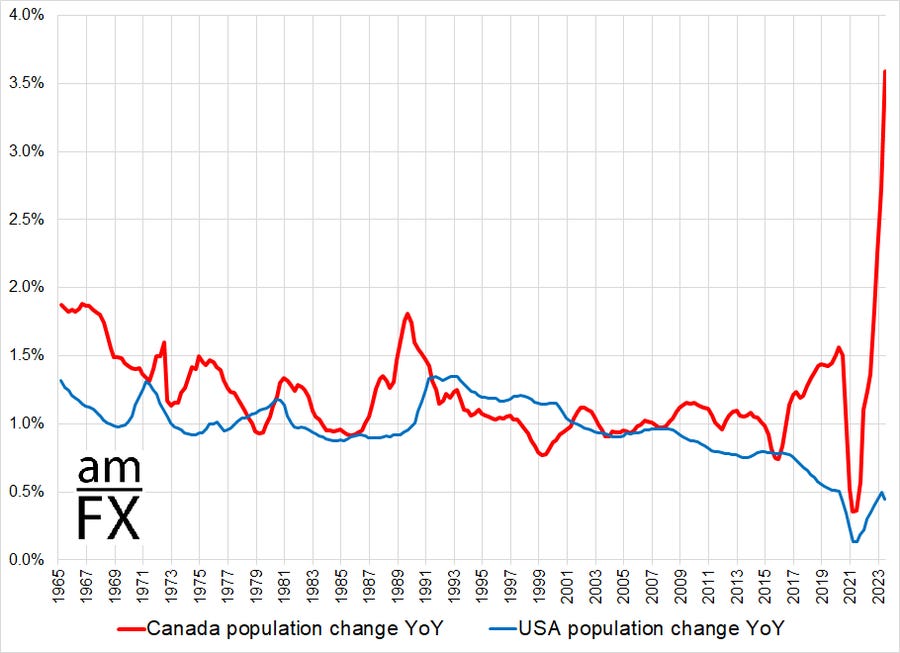
As businesses rush to use the TFW program, Canada is experiencing the largest population gains in decades. The country grew by slightly more than one million people in 2022, a 2.7-per-cent increase that was the most since 1957, according to a recent Statistics Canada report.

Temporary immigration was the primary driver of growth. In 2022, the number of non-permanent residents jumped by around 600,000 on a net basis, a record increase. This group includes international students, along with those temporary workers whose permits are issued outside of the TFW program.

In its report, Statscan said the federal government is deliberately courting more immigrants to boost the supply of labour as the country ages. However, the agency also noted: “A rise in the number of permanent and temporary immigrants could also represent additional challenges for some regions of the country related to housing, infrastructure and transportation, and service delivery to the population.”

In the fourth quarter, farms and food-processing plants were the largest sources of TFW approvals, which is usually the case. Over all, nearly 25,000 roles as general farm workers were authorized to be filled. Procyk Farms Ltd., of Wilsonville, Ont., received 599 approvals in the quarter, the most of any company.

Collectively, the restaurant industry was approved to hire thousands of people, including more than 3,100 cooks. Those employers included franchisees of Tim Hortons and McDonald’s Corp.

Other high-demand roles included truck drivers, construction workers and nurse aides.

The federal government said the expansion of the TFW program was meant to address a shortage of workers, something that companies have openly complained about for years.

In one of last year’s changes, companies are now able to employ 20 per cent of their staff through the low-wage stream of the TFW program, up from a previous 10-per-cent cap for most employers. In seven sectors with “demonstrated labour shortages,” such as restaurants and construction, the limit was temporarily set to 30 per cent. Earlier this week, Ottawa extended the 30-per-cent cap until late October.

However, many economists have criticized those moves, saying it helps companies avoid paying higher wages, and that it could lead to the exploitation of migrant workers, whose immigration status is tied to their employer.

“Unfortunately, we increasingly have a system where our temporary and permanent immigration systems are focused on the same objective – satisfying employers’ current labour needs,” economists Parisa Mahboubi and Mikal Skuterud wrote in a recent memo for the C.D. Howe Institute. “The risk is that the overall immigration system fails to do anything well.”

To hire a TFW, a company must submit a Labour Market Impact Assessment to the federal government, showing that they can’t find local workers to fill their open jobs. The ESDC figures refer to the number of roles that received positive assessments.

Most temporary foreign workers in Canada are not employed through the TFW program. At the end of 2022, there were more than one million active work permits in the International Mobility Program. This group includes a range of workers, such as company transfers from abroad. IMP permits have jumped by 193 per cent over the previous decade.

International students, who mostly don’t need work permits to secure employment in Canada, are a rapidly growing part of the labour force. At the end of last year, there were slightly more than 800,000 active study permits – nearly triple the volume from 10 years earlier.

Source: Temporary Foreign Worker program sees 68% jump in approvals

Vaughn Palmer: B.C. wants federal housing dollars tied to immigration patterns

Good to see the discussion happening at the political level and that Don Wright’s assessment getting attention (https://www.theorca.ca/commentary/don-wright-will-trudeau-make-it-impossible-for-eby-to-succeed-6762001):

Finance Minister Katrine Conroy expressed disappointment this week that the federal budget did not respond to B.C.’s calls for more funding for housing.

“There doesn’t seem to be funding for the housing that we have been asking for,” she told reporters Tuesday.

Ottawa did allocate new money to an Indigenous housing plan, valued at $4 billion.

Conroy was “really happy to see more funding for that,” though she noted B.C. already funds Indigenous housing.

Based on what she didn’t see in the budget, it appeared to her that B.C. would be left on its own to fund other types of social housing as well as develop housing for middle income levels.

“We need to be in a partnership with the federal government, municipal governments and our provincial government to ensure that we have enough housing for people,” said Conroy.

However, federal Finance Minister Chrystia Freeland had a ready explanation for the apparent shortfall when she visited B.C. on Thursday.

There was no new money for the housing crisis in this year’s budget, because Ottawa is still rolling out the $10 billion commitment in last year’s budget.

“This was a multi-year plan,” Freeland told a news conference in Surrey. “You don’t deploy $10 billion in one month or in one year.”

The plan includes the $4 billion “housing accelerator program” that Prime Minister Justin Trudeau launched in mid-March.

The goal is to accelerate construction of 100,000 homes over 10 years.

To tap the fund, municipalities must submit plans for fast-tracking housing units, with an emphasis on affordability.

“Tell us what your plan is to get more homes built,” said Freeland. “Tell us how some of that money can help you build those homes, and we will write a cheque. And $4 billion will mean we can write a lot of cheques.”

Premier David Eby, who shared the platform with Freeland, took a more conciliatory tone than his finance minister had done earlier in the week.

“There are very significant parcels of federal housing funding from the last budget that have yet to be deployed in a significant way in British Columbia,” he acknowledged. “B.C. needs to see our fair share of that funding. We have partnered with the federal government on many projects and many more to come.”

By way of a hint, the premier added: “If they have surplus from other provinces that is unspent, bring it to British Columbia, because we’re going to put it to work right here. We’re an excellent partner for that.”

On the fairness question, Eby was referring to his government’s argument that B.C. is entitled to a disproportionate share of housing funding because the province receives a disproportionate share of immigrants to Canada.

B.C. Housing Minister Ravi Kahlon made the case at the beginning of the year, and he’s reinforced it at every opportunity since.

“I’ve spoken to the federal ministers multiple times, urging them to consider tying their immigration numbers to both housing starts and affordable housing,” he said recently.

“We know it is going to be critical to build that stock for the amount of people that are coming, not only the new immigrants but also the temporary residents that are being approved to come to Canada.”

Kahlon’s concern was reinforced this week in an opinion piece from Don Wright, who headed the provincial public service in the first term of the John Horgan NDP government.

“B.C.’s success in addressing the public’s concerns here will be largely hostage to the federal government’s immigration policy,” Wright wrote in an article Monday in the online Orca publication that asked, “Will Trudeau make it impossible for Eby to succeed?”

His point was that the federal government’s ambitious immigration targets will add to existing pressures on the supply of doctors and housing, two challenges Eby is pledged to address.

Wright challenged the conventional wisdom that housing affordability is best addressed by the supply side of the housing equation.

“Demand matters too,” he wrote. “And as quickly as we have built new homes, the population in our major urban centres rises as well.”

“The federal government’s prescription for this? Ramp up immigration numbers!” said Wight.

“A story is spun that this will actually increase housing supply because we are going to bring in more trades workers to build the houses we need,” notes Wright, before knocking down the “heroic assumptions” in that statement.

“It is not going to work,” he wrote. “Of the 160,000 new British Columbians last year, more than 95% settled in the Lower Mainland, Southern Vancouver Island, and the Okanagan — where affordable housing was already acutely unavailable.”

Net result, concludes Wright: “Premier Eby is going to have even more difficulty in delivering more affordable housing.”

Wright did not conclude his piece with a call for Ottawa to slam the brakes on immigration.

In less judicious hands, it might come to that. But the New Democrats don’t want it to come to that.

Hence their argument that B.C. should get a greater share of federal housing dollars in recognition that the province also welcomes a greater share of Canada’s newcomers.

Source: Vaughn Palmer: B.C. wants federal housing dollars tied to immigration patterns

Germany to change immigration laws to attract skilled labor

Legislation moving through the system:

Germany’s dearth of skilled laborers has forced Berlin to look hard at existing immigration policies, and the government’s new plan designed to attract more with greater easek put forth jointly by the Interior and Labor Ministries cleared the Cabinet on Wednesday. It will still need to go through both houses of parliament.

The new bill is part of a comprehensive migration package the ruling coalition says will modernize the country’s immigration, residency and citizenship laws. Existing skilled labor immigration rules were established in March 2020, when Germany was governed by the so-called grand coalition headed by Angela Merkel.

The draft law estimates that it could increase skilled labor migration from non-EU countries by around 60,000 per year, roughly doubling the pre-COVID pandemic figures of 2019.

The policy would be based on a new points system that considers attributes in five categories.

These are qualifications, German language skills, career experience, connections to Germany (for instance relatives already living in the country), and age.

Labor Minister Hubertus Heil said in December when first unveiling the plans that people deemed to meet three or more of these criteria would be eligible for closer consideration.

Changes include a lowering of various hurdles that have made it difficult for the country to attract workers from abroad, something Germany must do if it is to fill the historically high number of job openings in its labor market. Berlin said the number of vacant jobs reached 1.98 million in the fourth quarter of 2022, the highest ever recorded.

What are the most important changes?

The bill was presented to the Cabinet by Labor Minister Hubertus Heil and Interior Minister Nancy Faeser.

Asked to describe the nature of the changes to the immigration rules, Heil said there were “three pillars” to the new system.

The first was to ensure “that people with a qualification and a job offfer — including those who qualified on the job [not at university] — can come to Germany more easily,” he told DW.

The next, he said, was that “qualifications are important, but a qualification that applies in your native country plus a job offer should be enough” to come to Germany, and then to square any issues with paper qualifications later. Famously, Germany is often reticent to recognize international qualifications, for instance university degrees, as comparable to its own.

“And the third pillar is, we also want to give people the chance to seek work in Germany,” Heil said.

This third option would operate on a points-based system, with people scoring well in categories like work experience, qualifications, German language skills, age and ties to Germany being more likely to qualify for consideration.

As before, those individuals who have a recognized diploma and a job contract will be given an EU Blue Card that will allow them to remain in the European Union for up to four years. The annual income required to qualify for this will also be lowered from its current levels.

Immigration: Can Germany’s new ‘green card’ deliver?

New rules aim to make it easier for workers to bring their families to Germany as well as attaining permanent residency status.

IT specialists with pertinent job experience will receive EU Blue Cards even if they do not possess an university degree.

Those specialists possessing recognized academic diplomas or trade certification will also be allowed to work in sectors other than those for which they have degrees.

Foreigners with adequate job experience and qualifications from their country of origin will be allowed to work in Germany even if those vocational degrees are not recognized in Germany. However, those individuals will be required to show proof of proper salary levels as a means to combat wage dumping.

Moreover, individuals will be allowed to work up to 20 hours a week while looking for long term employment.

Lastly, it will now be possible for individuals in possession of academic degrees or vocational certificates to remain in Germany for up to one year while looking for employment.

Source: Germany to change immigration laws to attract skilled labor

Moffat on disconnect between immigration policy and housing:

Captures the contradiction and policies working at cross-purposes:

Source: https://twitter.com/MikePMoffatt/status/1641130382425833632?s=20

Don Wright: Will Trudeau make it impossible for Eby to succeed?

Another “pointing out” the contradictions between immigration policy, levels set by the federal government, and housing, healthcare, infrastructure etc, largely under provincial jurisdictions:

It is three-and-a-half months since David Eby took the reins of power in B.C. There is no denying the energy and ambition he has brought to the role. Announcement after announcement has rolled out of the Premier’s Office since December 8 across a broad spectrum of initiatives in health care, housing, energy, infrastructure, increases in affordability tax credits and family benefits, and many, many more.

This column isn’t going to analyze the pluses and minuses of this ambition. Instead, I will argue that Premier Eby’s success on the big questions that will ultimately determine his political success may well be largely out of his control.

The most recent polling in B.C. shows that the most important issues are housing affordability, inflation/rising interest rates, and health care. Inflation and rising interest rates are overwhelmingly determined by federal monetary and fiscal policy, so largely outside the control of Premier Eby.  What about the other two big issues – health care and housing affordability?  While these two areas look to be within the domain of the provincial government, B.C.’s success in addressing the public’s concerns here will be largely hostage to the federal government’s immigration policy.  Let me explain.

Since it came to office, the current federal government has increased the level of immigration into Canada significantly.  Most of the attention has been focused on the increase in new permanent residents.  Last year, 438,000 people were granted permanent resident status, a 60% increase over 2015.  The federal government plans to raise this to 500,000 by 2025.

What receives less attention is another category of people coming to Canada – “non-permanent residents.”  This category includes Temporary Foreign Workers, International Students, and the International Mobility Program, which provides multi-year permits to live and work in Canada.  This category has been growing as well.  In fact, this category has been growing at a faster rate than permanent residents.  Last year there was a net increase of 608,000 in non-permanent residents. 

So, in total, the federal immigration policy resulted in an additional 1.045 million people coming to Canada – far and away the largest number of newcomers to Canada in one year ever.  Last year 160,000 of the 1.045 million came to B.C.

The rationale for these unprecedented numbers is that Canada has a “worker shortage.”  This rationale is almost entirely fallacious, but that is a subject for another column.  Let’s focus here on what this means to Premier Eby.

What is the basic problem in health care?  An inability to meet the public’s demands for medical services.  One million British Columbians don’t have a family doctor.  Waiting lists to get to see specialists and to get necessary surgery continue to get longer.  No doubt part of the problem is a result of the Covid pandemic.  But that rationalization is buying less and less forbearance by the public as we get further and further away from those dire days in 2020 and 2021.

The federal government’s prescription for this?  A rapid increase in the number of people who will need services from our health care system!

A story is spun is that the government will use the higher immigration numbers to bring in more health care professionals.  But this would only work if the proportion of qualified doctors, nurses and allied health workers in the more than one million new Canadians is significantly larger than the existing proportion of those professionals in the current Canadian population, and that they could get licenced immediately to practice in Canada.  Neither of these conditions will be met. 

The net result of this?  Premier Eby is going to have even more difficulty in delivering improved health care accessibility to British Columbians.

And then there is housing.  Almost all of the narrative around the shortage of affordable housing focuses on the supply side.  If only we could force municipalities to make permitting easier and faster, and to zone more density, our housing affordability would be solved.  The fact is, we build a lot of homes in B.C.  In Greater Vancouver – ground zero in our housing affordability problem – 365,000 homes were built in the 20 years between 2001 and 2021.  And there has been ample densification, as a walk through any of the redeveloped neighbourhoods in Vancouver shows. 

But supply is only half of the equation. Demand matters too.  And as quickly as we have built new homes, the population in our major urban centres rises as well. 

The Federal Government’s prescription for this?  Ramp up immigration numbers!

Again, a story is spun that this will actually increase housing supply because we are going to bring in more trades workers to build the houses we need.  Suffice it to say there are some pretty heroic assumptions here.  It is not going to work.

Of the 160,000 new British Columbians last year, more than 95% settled in the Lower Mainland, Southern Vancouver Island, and the Okanagan – where affordable housing was already acutely unavailable.

The net result?  Premier Eby is going to have even more difficulty in delivering more affordable housing.

This is all good for one group of British Columbians – those that are fortunate enough to already own a home.  So, thank you, Mr. Trudeau for making me wealthier and my fellow boomers wealthier. 

But if I were Premier Eby, I don’t think I would be quite as grateful.

Don Wright was the former deputy minister to the B.C. Premier, Cabinet Secretary and former head of the B.C. Public Service until late 2020. He now is senior counsel at Global Public Affairs.

Source: Don Wright: Will Trudeau make it impossible for Eby to succeed?

Manley: Canada’s empathy for refugees isn’t limitless, so securing our border is key

Sensible and realistic, and useful reminder of the reasons behind the STCA. The right-leaning Liberal in contrast to the op-ed Here’s a better fix for Roxham Road by his left-leaning former Cabinet colleagues Lloyd Axworthy and Allan Rock:

Twenty-one years after I negotiated the Safe Third Country Agreement in 2002 as part of the post-9/11 Smart Border Declaration, I applaud the changes made to that agreement this past week by Prime Minister Justin Trudeau and President Joe Biden.

The 2002 agreement enabled Canada to return to the United States individuals claiming refugee status who entered Canada from that country at designated, regular border crossings.

The new agreement simply extends that policy to individuals attempting to enter Canada through so-called “informal” border crossings like Roxham Road.

Canada sought the agreement in 2002 for reasons that seem all too familiar today. Refugee claimants found their way in huge numbers to legal border crossing areas such as Windsor, Ont., Fort Erie, Ont., and Niagara Falls, Ont.

In those days, the available support systems were overwhelmed by the large number of claimants. The refugee determination process became backlogged, often taking two years or more to reach a decision on the validity of a claim of refugee status. The number of refugee claimants were inflated by efforts of profiteers in the U.S. who collected and delivered these people to the Canadian border, often by bus from Buffalo or other central points.

In more recent years, the situation at Roxham Road developed because of a loophole in the agreement: It became a magnet simply because it, and other areas at which illegal crossings could be attempted, were not specifically included in the original agreement.

Canada’s position was, and remains, that refugee claimants, having somehow made their way to the U.S., should make their claim there. Those who choose to attempt to enter at “informal” crossings are in effect displacing or queue-jumping other claimants.

For context, it is important to remember that, in the aftermath of 9/11, many Americans falsely tried to portray Canada as a safe haven for terrorists intent on attacking the U.S. At the time, both then-senator Hillary Clinton and former House speaker Newt Gingrich, who agreed on very little else, were reported to have falsely claimed that the 9/11 terrorists had entered the U.S. from Canada. Our openness as a society was being turned against us, putting at risk our commercial interests. As Ms. Clinton once said to me: “Security trumps trade.”

Since then, the world’s refugee problem has only worsened: The United Nations Refugee Agency (UNHCR) estimates that, in 2022, there were 103 million forcibly displaced persons worldwide. The enormous scale of this human tragedy is difficult to comprehend: If all these people were situated in one country, it would be the 14th most populous in the world. Most of those 103 million are in much greater danger of harm than those who have already found their way into the U.S., some of whom seek to enter Canada.

There is no question that Canada should continue to help house this burden of displaced humanity. But Canada also has a duty to its own citizens to enforce its laws and manage its territorial borders as part of its system of rule of law, both national and international, for the safety and well-being of its citizens.

Canada, in recent years, has taken in more refugees in absolute numbers than some Western countries our size or bigger. Refugees all around the world wait, often for years, in camps from which there is no escape. Canada has historically been a lifeline for many of these individuals. We can more than meet our global responsibility without taking in persons fleeing the United States.

Canadians have proven themselves to be open to immigration, demonstrating a willingness to pitch in to assist refugees, be they from African countries, Ukraine, Syria, Vietnam, or any other of the many venues of war, famine and persecution.

But Canadian goodwill is not bottomless and could be put at risk if some newcomers are perceived to be queue-jumpers, attempting to gain unfair advantage.

Past prime ministers and, no doubt, our current Prime Minister, feel and understand the burden of Canadian responsibility to the world’s victims of hunger, conflict and persecution, while also recognizing that Canadians’ generosity and sense of fair play must not be stretched beyond their limits.

John Manley is the former deputy prime minister and a current senior adviser with Bennett Jones LLP.

Source: Manley: Canada’s empathy for refugees isn’t limitless, so securing our border is key

Axworthy and Rock: Here’s a better fix for Roxham Road

Predictable, and only workable in the context of the excessively high and increasing immigration levels. But not necessarily in the context of an immigration policy that takes into the account of the impact on housing, healthcare and infrastructure:

Ottawa pundits say that Prime Minister Justin Trudeau scored a political win by securing President Joe Biden’s agreement to renegotiate the Safe Third Country Agreement (STCA). Henceforth, it will apply across the entire Canada-U.S. border, and asylum seekers can be turned away at any crossing point. Ottawa has thereby responded adroitly to Quebec Premier François Legault’s complaints about the flow of migrants entering Quebec at the infamous Roxham Road border crossing.

But there is something that neither the Prime Minister nor the President mentioned in their announcement: the impact of their decision on the men, women and children fleeing violence and persecution who had hoped to cross the Canadian border after feeling anything but safe in the United States. The vast majority are not in any way a threat to our security. They are ordinary people searching for sanctuary by putting themselves and their families at grave risk on a perilous journey, one they’d hoped would end with a Canadian border crossing.

We are left to imagine the bitter disappointment they will feel when instead of a portal to Canada they are met with a locked gate, a warning sign and no choice but to face the notoriously hostile American border security officials. As we have learned by watching the Mediterranean, some, in their desperation, will look for other points of entry to Canada by taking greater risks and putting their lives in danger. One “loophole” may have been closed, but others will no doubt appear.

“It’s what they deserve,” some will say. “Play by the rules! Don’t jump the queue!” But almost all of them are vulnerable survivors who escaped persecution and oppression simply to assert an ancient right – the right to asylum.

The right to seek asylum is codified in the United Nations’ 1951 Refugee Convention. Before the STCA came into effect in 2002, under international law the convention obligated Canada to allow refugees to enter and remain here until the validity of their claim for asylum could be determined by a tribunal. Under the STCA, Canada effectively subcontracted this obligation to the United States.

There was another matter that neither our Prime Minister nor the President mentioned last week: the constitutional validity of the STCA is to be considered by the Supreme Court of Canada in the coming months. Depending on what the court decides, our government could end up not with a political win, but instead a major loss of credibility. The court could send Parliament back to the drawing board to legislate a new migration policy based on the paramountcy of human rights, instead of expediency.

It is fitting that the issue will hinge on the Charter of Rights and Freedoms, which has had a major influence on Canadian attitudes toward migration. Polls have consistently shown that Canadians have a strong attachment to an open system of immigration. While Mr. Biden and Mr. Trudeau spoke of shared values, there is one major exception: Canadians differ from Americans in our commitment to pluralism and welcoming newcomers. Why, then, are we doubling down on a policy so inconsistent with that distinctive characteristic?

There is a better way. As Minister of Immigration, Sean Fraser demonstrated Canada’s openness by setting a target to welcome half a million newcomers to Canada in 2025. However, he also announced that the number of refugees admitted would be reduced from 76,000 in 2023, to 73,000 in 2025. It is not clear whether the 73,000-person figure will now include the 15,000 Central American migrants Canada promised it would assist the U.S. in resettling during President Biden’s visit last week. In any case, we should strive to dedicate 20 per cent of our 2025 immigration goal to the resettlement of forcibly displaced people, taking in at least 100,000 in 2025. We can work to build up the capacity of our U.S. diplomatic posts, and our U.S.-Canada border crossing points, to receive, process and settle those with legitimate asylum claims.

Let’s take on the diplomatic task of building a collaborative, hemispheric migration network and devote the necessary resources to make it work. We can draw on our ability to convene, and our talent for negotiation, by inviting a group of like-minded governments, civil society groups, and international organizations to a summit aimed at reviving and strengthening the imperilled right to asylum. Migration is increasing, driven by climate change and conflict. We have to get things right at our border – politically and morally.

A border that assures security while respecting asylum seekers and welcoming migrants? Now that would be a real win for Canada.

Lloyd Axworthy is a former foreign minister and current chair of the World Refugee and Migration Council. Allan Rock is a former attorney-general and minister of justice, and a member of the World Refugee and Migration Council.

Source: Here’s a better fix for Roxham Road