Globe editorial: How Ottawa ignored its own warning and made Canada’s refugee crisis even worse

Good policy advice, not listened to.

And it appears from a variety of public opinion research that this ill-advised policy change is likely one of the changes contributing to declining public support for immigration:

There is a thicket of bureaucratic language in the eight-page briefing document from Immigration, Refugees and Citizenship Canada on the upside and downside of waiving temporary visitor visa requirements to get rid of a massive backlog of applications.

Source: How Ottawa ignored its own warning and made Canada’s refugee crisis even worse

Miller to provinces: If you can’t fix international student rackets then feds will

Some stronger messaging from the feds:

The federal government is prepared to crack down on dubious post-secondary institutions that recruit international students if provinces aren’t up to the task, Immigration Minister Marc Miller warned Friday.

Miller made the comments as he announced new rules to curb fraud and “bad actors” in the international student program, following an investigation this summer into more than 100 cases involving fake admission letters.

Provinces are responsible for accrediting schools that can accept international students, which include both public universities and colleges as well as private institutions.

In his final months in the role former immigration minister Sean Fraser raised concerns about the number of private colleges in strip malls and other venues that rely on international student tuition, but in some cases offer a meagre education in return.

Several advocacy groups, including the Migrant Workers Alliance for Change have highlighted cases of student exploitation by some of those intuitions.

Miller said Friday the international school program has created an ecosystem that is “rife with perverse incentives,” and that is very lucrative for the institutions and for provinces that have underfunded their post-secondary schools,

“The federal government is coming forward and opening its arms to our provincial partners, territorial partners, to make sure we all do our jobs properly,” Miller said at a press conference at Sheraton College in Brampton, Ont. Friday.

“If that job can’t be done, the federal government is prepared to do it.”

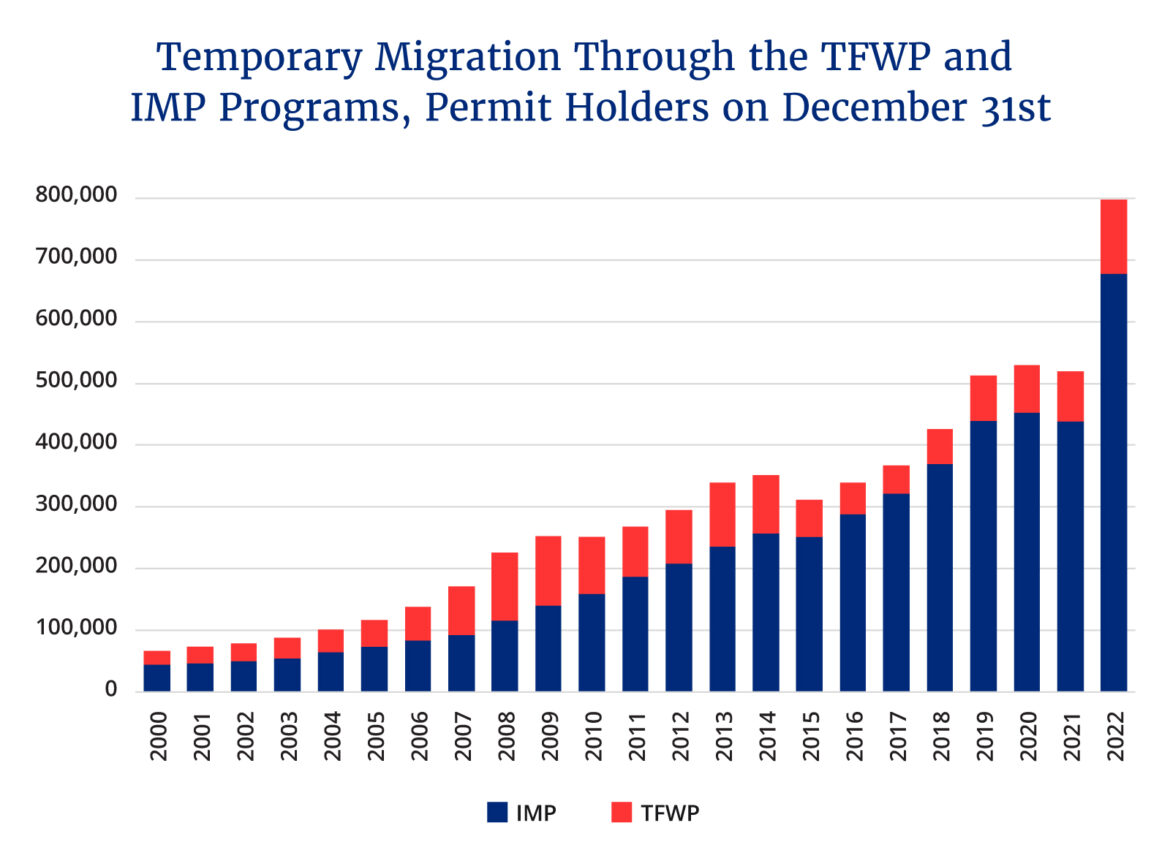
The immigration department counted 800,000 active study permits at the end of 2022, a 170 per cent increase over the last decade.

“What we are seeing in the ecosystem is one that has been chasing after short term gain, without looking at the long term pain. And we need to reverse that trend. But it will take time,” he said.

Ontario in particular has “challenges” when it comes to the accreditation of post-secondary intuitions, but it is not the only one. Miller did not elaborate on what those specific challenges are.

The Ontario Ministry of Colleges and Universities did not answer specific questions, but said in a statement the provincial government will “again ask for a meeting with the new federal minister to discuss the planned changes once they’ve been communicated with ministry.”

Sarom Rho, an organizer with the Migrant Workers Alliance for Change, said the “fly-by-night colleges” are sometimes partnered with public institutions. But even those can be exploitative, she said.

She said she is working with a group of students who paid tuition up front to one of those intuitions, but were asked for more money just weeks before class enrolment began.

“The school said, ‘Well, if you don’t have the money, you can go back home, earn some and come back,'” Rho said Friday.

She said the federal government must take up the accreditation of colleges and universities that accept international students.

“They are aware of the substandard nature of these institutions, these fly-by-night private colleges,” she said.

Also on Friday Miller announced new rules in the federal government’s jurisdiction to address fraud and “bad actors” in the international student program.

Miller’s department plans to set up a system to recognize post-secondary schools that have higher standards for services, supports and outcomes for international students in time for the next fall semester.

The standards could include adequate access to housing, mental health services, and a lower ratio of international to Canadian students, Miller said, though the criteria hasn’t been finalized.

Details about how exactly recognized schools and institutions would benefit under the new system will be released later, the minister said. As an example, he said applicants for those schools would be prioritized when it comes to processing their study permits.

“Our goal here is to punish the bad actors to make sure that they are held accountable, and reward the good actors who provide adequate outcomes for the success of international students,” the minister said.

The details of that system will be important, Rho said, especially since students often fear speaking out because of their precarious status in Canada.

“Migrant student workers should not be caught in this … carrot and stick system,” she said.

“What will happen to those who do go to the schools that are ‘bad actors?’ They will also be punished. So instead, what they need is protections and equal rights.”

The department is also looking to combat fraud by verifying international students’ acceptance letters from Colleges and Universities.

The extra verification is a reaction to a scheme that dates back to 2017, which saw immigration agents issue fake acceptance letters to get international students into Canada.

The department launched a task force in June to investigate cases associated with the racket. Of the 103 cases reviewed so far, roughly 40 per cent of students appeared to be in on the scheme, while the rest were victims of it.

The task force is still investigating another 182 cases.

“The use of fraudulent admissions letters has been a major concern for my department this year and continues to pose a serious threat to the integrity of our student program,” Miller said, adding that international students are not to blame.

The new rules come as a welcome development to the National Association of Career Colleges, the group’s CEO said in a statement Friday.

“We welcome the opportunity to work with the federal government to improve our international student system by building greater trust and security, supporting Canadian communities, and ensuring that Canada’s immigration programs are student-centred,” the CEO, Michael Sangster said in a statement.

Source: Miller to provinces: If you can’t fix international student rackets then feds will

Le Bloc compte forcer un débat sur les cibles d’immigration à Ottawa

Long overdue, but Parliament likely not the best place for a meaningful discussion and debate:

Le Bloc québécois va utiliser sa journée d’opposition de mardi prochain pour forcer la tenue d’un débat, en Chambre, sur la nécessité ou non d’Ottawa de consulter le Québec et les autres provinces avant de fixer ses cibles d’immigration.

La formation politique entend mettre de l’avant une motion afin que les Communes « demande[nt] au gouvernement de revoir ses cibles d’immigration dès 2024 après consultation du Québec, des provinces et des territoires en fonction de leur capacité d’accueil, notamment en matière de logement, de soins de santé, d’éducation, de francisation et d’infrastructures de transports, le tout dans l’objectif d’une immigration réussie », selon le libellé qu’a lu aux journalistes le chef bloquiste, Yves-François Blanchet, jeudi.

Il a affirmé en mêlée de presse qu’il estime que la motion, « sur le principe », « devrait pouvoir rallier un peu tout le monde ».

« On n’a pas voulu être trop contraignants », a-t-il déclaré, disant vouloir « forcer une réflexion de bonne foi ».

Geler les cibles d’immigration ?

Le Canada a pour cible d’accueillir 500 000 nouveaux résidents permanents par an partout au pays d’ici 2025. Selon un reportage publié par Radio-Canada, le Conseil des ministres du gouvernement Trudeau a des discussions sur la possibilité de stabiliser, voire de revoir à la baisse cet objectif.

Si l’option du plafonnement en venait à être préconisée, cela signifierait qu’une pause surviendrait quant à la hausse des cibles d’immigration qui s’est maintenue au courant des dernières années.

La Presse canadienne n’a pas été en mesure de corroborer les informations rapportées par le diffuseur public, qui a précisé s’être entretenu avec une demi-douzaine d’élus libéraux.

Appelé à commenter ce reportage, M. Blanchet a dit vouloir se garder une certaine réserve considérant qu’aucune décision n’a été prise par le Conseil des ministres.

Il a néanmoins soutenu que l’idée de stabiliser ou réduire, si elle se concrétise, n’équivaudrait « pas [à] un recul au sens politique ».

« C’est un recul au sens mathématique […] et juste arrêter de monter est probablement une politique intéressante. Geler, ce serait une amélioration. Réduire serait probablement une amélioration en attendant que le Québec soit capable d’avoir mis en place des mesures et des choix en termes de nombres et de manières qui soient propres au Québec », a dit le chef du Bloc québécois.

« Pro-immigration » et Québécois

Habituellement, le débat sur la motion d’opposition commence le jour même de son dépôt, prévu mardi prochain. Le vote, toutefois, a en temps normal lieu à une date ultérieure.

Le Bloc québécois n’a pas attendu pour questionner le gouvernement sur sa réceptivité quant à l’idée de sa motion à être déposée. Dès jeudi, il a utilisé plusieurs de ses interventions à la période des questions pour interpeller les libéraux.

Le ministre de l’Immigration, Marc Miller, a soutenu qu’il est « pro-immigration » en plus d’être Québécois. « On a besoin d’immigrants au pays, on a besoin de construire des maisons. Ça nous prend 100 000 emplois dans la construction. Ça ne va pas nécessairement venir d’ici. Ça va prendre de l’immigration », a-t-il répondu.

Il a, du même souffle, invité le Bloc québécois, « s’ils sont contre l’immigration », à le dire « high and clear » (haut et fort).

Source: Le Bloc compte forcer un débat sur les cibles d’immigration à Ottawa

Immigration Minister set to combat international student fraud 

Overdue baby steps:

Immigration Minister Marc Miller is set to unveil on Friday a package of reforms designed to combat fraud in international student admissions and stop bad actors from preying on those students for financial gain, and to fast-track study-permit applications at colleges and universities that meet high standards.

Among the new measures will be a multilayered authentication system for ensuring letters of acceptance from universities and colleges are genuine. A foreign student needs such a letter to apply for a study permit, an immigration document that allows them to enter the country. Fake letters have been used to obtain permits fraudulently.

Source: Immigration Minister set to combat international student fraud

USCIS Changes H-1B Visa Lottery, Extends Cap-Gap For Students

Interesting proposed shift from multiple registrations per applicant to unique identifiers, among other proposed changes:

Employers, international students and H-1B professionals will like some elements of a proposed H-1B visa rule, although other measures will generate opposition and invite litigation. The most significant change for many individuals will be how U.S. Citizenship and Immigration Services conducts the H-1B lottery. USCIS published the notice of proposed rulemaking on October 23, 2023, and it is subject to a 60-day comment period that could result in revisions. A proposed narrowing of the degrees that would allow a position to qualify as an H-1B specialty occupation might be the rule’s most controversial measure. (See article here.)

Changing The H-1B Lottery

USCIS uses a lottery when companies file more H-1B applications (or registrations) than the annual limit of 85,000 (65,000 plus a 20,000 exemption for advanced degree holders from U.S. universities). According to USCIS, registrations for FY 2024 increased largely due to multiple registrations submitted for the same individuals. Still, due to the low annual H-1B limit, USCIS would have rejected over 75% of H-1B registrations for FY 2024, even if beneficiaries with multiple registrations were excluded from the lottery.

USCIS proposes a solution—selecting H-1B registrations by unique beneficiaries—recommended in a May 1, 2023, Forbesarticle. Many employers will likely approve of the change.

“Under the proposed update to the random selection process, registrants would continue to submit registrations on behalf of beneficiaries and beneficiaries would continue to be able to have more than one registration submitted on their behalf,” according to USCIS. “Selection would be based on each unique beneficiary identified in the registration pool, rather than each registration. Each unique beneficiary would be entered in the selection process once, regardless of how many registrations were submitted on their behalf. If a beneficiary were selected, each registrant that submitted a registration on that beneficiary’s behalf would be notified of selection and would be eligible to file a petition on that beneficiary’s behalf.”

USCIS will use “valid passport information” to identify unique beneficiaries, and individuals would select among the employers that submitted H-1B registrations on their behalf. “DHS [Department of Homeland Security] proposes to require the submission of valid passport information, including the passport number, country of issuance, and expiration date, in addition to the currently required information. Registrants would no longer be allowed to select an option indicating that the beneficiary does not have a passport.”

USCIS anticipates a beneficiary could have more than one potential employer. “If multiple unrelated companies submitted registrations for a beneficiary and the beneficiary were selected, then the beneficiary could have greater bargaining power or flexibility to determine which company or companies could submit an H-1B petition for the beneficiary, because all of the companies that submitted a registration for that unique beneficiary would be notified that their registration was selected and they are eligible to file a petition on behalf of that beneficiary.”

USCIS will “extend the existing prohibition on related entities filing multiple petitions by also prohibiting related entities from submitting multiple registrations for the same individual.”

USCIS states, “The proposed change may also potentially benefit companies that submit legitimate registrations for unique beneficiaries by increasing their chances to employ a specific beneficiary in H-1B status.”

The controversy over multiple registrations obscures a stark reality for employers: H-1B registrations with only one employer increased by 66% between FY 2022 and FY 2024, illustrating the increasing demand for talent in the U.S. economy.

Extended Cap-Gap Protection For International Students

F-1 students, often working on Optional Practical Training, now receive “cap-gap” protection when changing to H-1B status. In a move students, employers and universities will welcome, the proposed rule provides automatic “cap-gap” protection until April 1 rather than the current October 1 (i.e., an additional six months). USCIS states this “would avoid disruptions in employment authorization that some F-1 nonimmigrants seeking cap-gap extensions have experienced over the past several years.”

Nonprofit Research Institutions

The proposed rule would allow more organizations to qualify as nonprofit research institutions. That would make them eligible to file H-1B petitions exempt from the H-1B annual limit. USCIS would change the definition of a nonprofit research organization from one “primarily engaged in basic research and/or applied research” to an organization with “a fundamental activity of” basic research and/or applied research. “This would likely increase the population of petitioners who are now eligible for the cap exemption and, by extension, would likely increase the number of petitions that may be cap-exempt,” according to USCIS.

H-1B Petitions For Entrepreneurs 

Due to the regulatory definition of an employee-employer relationship, USCIS rules make it difficult for entrepreneurs to qualify for H-1B petitions. USCIS recognizes this causes many high-skilled foreign nationals to not found a company or wait until they acquire permanent residence. “Nearly two-thirds (64%) of U.S. billion-dollar companies (unicorns) were founded or cofounded by immigrants or the children of immigrants,” according to research by the National Foundation for American Policy, indicating what the U.S. economy loses when restricting foreign-born entrepreneurship.

“DHS is proposing to add provisions to specifically address situations where a potential H-1B beneficiary owns a controlling interest in the petitioning entity,” according to the proposed rule. “One of the proposed conditions is that the beneficiary may perform duties that are directly related to owning and directing the petitioner’s business as long as the beneficiary will perform specialty occupation duties authorized under the petition a majority of the time.”

Initial approvals for H-1B petitions when the H-1B beneficiary “possesses a controlling ownership interest in the petitioning” business “will be limited to a validity period of up to 18 months.”

Codifying H-1B Petition Amendments

Beginning July 2015, USCIS required amended H-1B petitions when employers received a new labor condition application (LCA) from the Department of Labor. This followed the agency labeling the Simeio Solutions case an Administrative Appeals Office (AAO) precedent decision binding on adjudicators. The decision raised costs for many employers.

“Any change in the place of employment to a geographical area that requires a corresponding labor condition application to be certified to USCIS is considered a material change and requires an amended or new petition to be filed with USCIS before the H-1B worker may begin work at the new place of employment,” under the proposed regulatory language. An employer does not need to file an amended petition if the H-1B visa holder moves “to a new job location within the same area of intended employment as listed on the labor condition application.”

Requiring Compliance With Site Visit Requests

For many years, USCIS has conducted site visits at the employers of H-1B visa holders. However, attorneys argue the authority to conduct such site visits is suspect. USCIS seeks to change that with the proposed rule by mandating compliance with the agency’s visits.

“The proposals must be viewed in the context of how much the government will charge for access to H-1B visas,” said Lynden Melmed, a partner with Berry Appleman & Leiden (BAL) and a former chief counsel of USCIS. “The fee rule, which is expected to be released at any time, could be more impactful than any of the changes proposed this past week.”

Source: USCIS Changes H-1B Visa Lottery, Extends Cap-Gap For Students

Le recrutement du Québec à l’étranger est vu d’un œil critique par des pays sources

No better nor worse than others, but with real implications for source countries:

Le Québec pige dans les forces vives des pays étrangers, y compris dans des secteurs névralgiques comme la santé, et le plus souvent sans invitation officielle. Les ambassadeurs du Maroc et du Bénin ainsi qu’un recruteur à l’étranger souhaitent envoyer un signal au gouvernement québécois.

Tous reconnaissent que l’exode des cerveaux, un phénomène aussi connu sous le terme de brain drain en anglais, existe depuis longtemps. À une différence près : ce sont aujourd’hui des gouvernements qui font directement du recrutement, comme celui du Québec, sans toujours en demander l’autorisation ou offrir une contrepartie.

« Du côté des gouvernements qui recherchent cette main-d’oeuvre, ces compétences, il devrait y avoir une certaine retenue et une réflexion », affirme l’ambassadrice du Maroc au Canada, Souriya Otmani.

Après le terrible tremblement de terre qui a frappé le Maroc en septembre dernier, les médias locaux ont rapporté que les hôpitaux manquaient de personnel, une pénurie déjà aiguë et aggravée par une saignée des professionnels encouragée par des pays recruteurs.

Trois jours plus tard, une page officielle du gouvernement du Québec annonçait sans gêne une séance d’information pour ceux souhaitant immigrer dans la province, avec à la clé des emplois dans le secteur de la santé.

Le peu de ressources humaines « dont nous avons un besoin impérieux » est « pompé de manière un peu cynique par des partenaires qui sont déjà beaucoup plus développés », indique quant à lui l’ambassadeur de la République du Bénin au Canada et aux États-Unis, Jean-Claude do Rego.

La santé et l’éducation sont des domaines de préoccupation pour les deux officiels, alors que d’autres professions techniques les inquiètent moins. « Oui, il y a certaines catégories professionnelles où il y a un surplus, et le Maroc cherche à assurer des débouchés, y compris à l’étranger », explique la diplomate marocaine.

Il existe pour ces domaines des canaux officiels de recrutement « tout à fait légaux », comme l’Agence nationale de promotion de l’emploi et des compétences (ANAPEC) au Maroc. Cette agence nationale prend cependant garde de ne pas promouvoir l’exode dans « des secteurs très sensibles », comme la santé, avance Mme Otmani. Elle tient à préciser qu’elle ne donne que son point de vue, tout en admettant que le sujet est régulièrement abordé dans plusieurs arènes politiques et économiques au pays.

L’exode des infirmières, des aides-soignantes, des médecins ou des préposés est une « perte sèche pour un pays en plein développement comme le nôtre, qui a besoin de toutes ses ressources humaines qualifiées », ajoute-t-elle.

Des pays en situation critique

L’Organisation mondiale de la santé (OMS) publie depuis 2020 une liste rouge des pays dont les systèmes de santé sont les plus vulnérables, afin d’alerter les pays recruteurs.

Québec recrute directement des personnes au Bénin, au Cameroun, en Côte d’Ivoire, au Togo et au Sénégal, des pays qui figurent sur la Liste de soutien et de sauvegarde du personnel de la santé. À défaut de pouvoir l’interdire, l’OMS demande aux gouvernements recruteurs d’adhérer à un certain code de conduite et de passer des ententes avec les bassins de travailleurs.

L’ambassadeur do Rego ne vise pas expressément les efforts du Québec dans son pays d’origine, mais il croit que la province est bien positionnée pour « trouver de meilleures modalités » afin que ce type d’échange « puisse rester compatible avec les besoins de développement de la société qui laisse partir ses talents », expose-t-il.

Ce pays d’Afrique de l’Ouest finance l’éducation publique, y compris des formations postsecondaires. Or, comme l’indignation autour des médecins québécois qui vont pratiquer ailleurs, cette « équation économique nationale est négative », indique quant à lui Yves Legault, vice-président exécutif ISA Immigration et Recrutement.

« Le discours politique est : “Pas de problème, on va aller chercher des infirmières à l’étranger.” Mais on n’a pas payé pour leur éducation et il n’y a aucun mécanisme de retour. Il y a une iniquité flagrante dans ce modèle migratoire », martèle M. Legault, qui est également consul honoraire du Bénin à Toronto.

Solutions

Bien sûr, pas question d’empêcher la mobilité internationale, disent-ils tous. « Mais comment peut-on rendre moins pénibles les tensions » sur un système déjà fragilisé ? demande M. do Rego.

Les gens formulent eux-mêmes le désir d’aller vivre à l’étranger, reconnaît Yves Legault, dans la « recherche d’une vie meilleure pour eux, mais surtout pour leurs enfants ». Si toutefois les conditions étaient réunies dans leur pays d’origine, « ils n’auraient pas à s’expatrier ». Le défi est donc d’aider à « construire des opportunités » dans leur pays d’origine, à l’heure où les pays occidentaux montrent un certain désintérêt pour la coopération internationale.

« Je ne suis pas manichéen. Je comprends les raisons fondamentales pour lesquelles certains pays trouvent cette solution à leurs problèmes », affirme l’ambassadeur du Bénin, qui invite à « trouver une solution de compromis ».

Il évoque notamment la volonté de son gouvernement depuis plusieurs années d’obtenir un plus grand nombre de places à coût réduit dans le système éducatif au Québec. Les étrangers paient en effet des droits de scolarité beaucoup plus élevés que les citoyens ou les résidents permanents, mais des bourses pour en être exonérés existent. « Nous ne bénéficions que d’un quota de dix bourses, alors que nous avons 50 fois plus de demandes », illustre-t-il.

La réflexion est aussi déjà lancée au Maroc et au Bénin pour trouver des incitatifs à rester là-bas, en améliorant les conditions salariales.

Elle donne l’exemple d’une entente avec l’Allemagne, qui prévoit une formation pour les travailleurs marocains et un retour éventuel dans leur pays d’origine. « Personne ne va les obliger [à rentrer dans leur pays], mais on insiste dès le recrutement sur le fait que c’est une condition de départ, de manière que le Maroc bénéficie de cette formation aussi. »

Source: Le recrutement du Québec à l’étranger est vu d’un œil critique par des pays sources

Amid growing dissent, will Canada change its immigration plans?

Good overview, largely from the more pro-current approach side, as we await the levels plan release:

Canada is set to unveil the latest targets for how many new residents it hopes to welcome in the coming years.

The annual announcement of permanent resident levels, something Immigration Minister Marc Miller must do in Parliament on or before Nov. 1, is the kind of dry fare that has traditionally drawn little attention, serving largely as a governmental formality amid high levels of public support for immigration.

But this year’s numbers are expected to face more scrutiny given a surging discussion of whether Canada has the capacity and the infrastructure it needs to accommodate the hundreds of thousands of newcomers it is bringing in.

{{tncms-inline displaytitle=”Immigration drives Canada’s population to 40M” embedid=”ba479a79-f163-4cc5-97a2-74273de44cbb” linktodownloadthumbnail=”https://oovvuu-thumbnails-prod.imgix.net/48/80128685-73f5-4883-bd94-3b3795f23f29.jpg?h=200&w=300″ playerscripturl=”https://playback.oovvuu.media/player/v2/index.js” type=”oovvuu”}}

And, as the government seeks to maintain public support for immigration, some say how Prime Minister Justin Trudeau’s Liberals approach immigration — and the messaging around it — will be key.

The government’s current immigration plan, unveiled in 2022, aimed to bring in 465,000 new permanent residents this year, 485,000 in 2024 and 500,000 in 2025. The immigration ministry is on track to meet the 2023 target.

The upcoming plan, however, will look at the numbers for the next three years.

Recent polls suggest that Canadians’ appetite for more immigration may be waning. A Nanos report in September showed 53 per cent of Canadians wanted Ottawa to accept fewer immigrants, up from 34 per cent in a similar poll in March. Then, an online survey by Research Co. in October found 38 per cent of Canadians said they believe immigration is having a mostly negative effect, up 12 percentage points from research conducted a year ago.

“Some people are feeling there’s too much immigration, when it comes to the fact that it’s driving up the housing cost, exacerbating the housing shortage, making the connection between immigration and health care and education,” says Toronto Metropolitan University professor Rupa Banerjee, whose research focuses on immigrant employment integration.

“Immigration is on people’s radar more and the plan will be scrutinized a lot more closely.”

So far, the government has seemed inclined to stay the course.

“I don’t see a world in which we lower it, the need is too great,” Miller told Bloomberg in August. “Whether we revise them upwards or not is something that I have to look at.”

Magdalene Cooman of the Conference Board of Canada said Canadians need to understand the immigration plan’s long-term objectives are to address the country’s aging population and boost economic growth.

While immigrants do need housing, health care and other government services, she said, people shouldn’t lose sight of the fact that newcomers are also part of the solutions to those challenges, and contribute to the workforce, whether it’s by building new homes or caring for those in hospitals.

“There is a reason why the federal government has moved in this direction,” said Cooman, the board’s interim associate director in charge of immigration research.

“Immigration is really the only way to increase population, to support population growth and to support the future of Canada.”

A recent report by Desjardins said the country’s working-age population (those 15 to 64) would need to grow by just over two per cent annually in order to offset the impacts of aging. That growth relies largely on immigration.

“What’s the optimal level of immigration to Canada? This can be a tough question to answer, as ‘optimal’ is in the eye of the beholder,” said the report. “It depends on the policy objective that immigration is meant to achieve.”

While the short-term strains of the population growth are already showing, the report suggested the federal government could restrict the admission of non-permanent residents such as international students and temporary foreign workers.

Despite the lagging infrastructure, the conference board’s Cooman warned that any pause to the long-term immigration strategy could create other unintended problems.

“I’m not opposed to increasing the levels because I understand the long-term growth strategy,” said Cooman. “But I am opposed to increasing the levels without a strategy to show us how all the infrastructure can be built to accommodate more people in the country. You can’t have one without the other.”

Whom Canada brings in matters, observers say.

Permanent residents come to Canada under the economic, family or humanitarian classes. In 2023, about 58 per cent of them will have been selected based on their education backgrounds and skills; 23 per cent through sponsorships by spouses or children and grandchildren; and the rest as resettled refugees and protected persons.

Using real wages as a proxy for relative productivity of different groups, the Desjardins report said economic immigrants in particular are outperforming the typical Canadian.

Several observers credit the immigration ministry with fine-tuning the way it selects economic immigrants by better matching the skills of candidates with the labour market needs, and targeting those with backgrounds in health care, transportation, trades, agriculture and STEM occupations. Officials, for instance, have relaxed some rules for immigrant physicians and created a special immigrant class to attract workers in construction-related trades.

To immigration lawyer Betsy Kane, the bigger challenge for Miller is to overcome the public backlash and explain his immigration strategy.

“Between the home construction effort and the easing of the doctor efforts, you’re potentially reducing the lag in public opinion,” said Kane, vice-president of the Canadian Immigration Lawyers Association.

Banerjee of TMU said the government has to be more specific in explaining the immigration plan than just floating the big numbers around.

“We are bringing in trades and transport workers and there’s a number of pilots now that are working to try and bring people into underserviced smaller and rural communities. Many of them are very small (scaled), but there’s been efforts,” said Banerjee.

“A lot of that is lost, because all we see in the headlines is ‘500,000 newcomers being admitted.’”

In August, a CIBC study found there were about one million more people living in Canada than official government estimates, including international students, foreign workers, asylum seekers and undocumented migrants. (Unlike permanent residents, temporary residents are uncapped and not included in the immigration plan.)

“We need to make sure these immigration targets also include temporary migration numbers. We cannot have uncapped temporary migration and then pretend that is all of the immigration,” said Banerjee.

In a letter to Miller this month, the Business Council of Canada urged the government to prioritize highly skilled economic-class immigrants to fill high-paying jobs, and raise the ratio of the economic immigrants in the mix from 60 per cent to 65 per cent by 2025.

While the number of job vacancies requiring lower levels of skill and education has declined significantly, the council said unfilled job openings for highly trained and educated professionals remain stubbornly high.

“Enhanced economic immigration is essential,” wrote Goldy Hyder, president and CEO of the council, whose member companies support more than six million jobs across Canada. “If we do not seek this skilled labour, our economic rivals will.”

But employers aren’t the only group that would like to get a bigger piece of the permanent-resident pie.

Advocates for refugees are urging Ottawa to raise the levels of resettled refugees up from about 10 per cent to 15 per cent to accommodate the growing number of displaced migrants around the world, which now stands at 108 million.

“If we are able to increase Canada’s resettlement targets, it would support the reduction of the backlog,” said Gauri Sreenivasan of the Canadian Council for Refugees, adding that a recent government audit showed 99,000 refugees were waiting in the queue by December 2022.

NDP immigration critic Jenny Kwan said she’s concerned about the backlash against the immigrant community.

“No good will come out of that because we have already lived through racism and discrimination in Canada’s history,” she said. “The government has to have a housing plan and an infrastructure plan for our community.”

Tom Kmiec, the Conservative immigration critic, did not respond to the Star’s requests for comment. This summer, his party leader, Pierre Poilievre, did say the immigration system is broken, but sidestepped reporters’ questions about whether he would change the current targets.

Source: Amid growing dissent, will Canada change its immigration plans?

Newcomer women often struggle to pursue their careers in Canada. These programs are helping them succeed

Of note:

When Rikhita Nair moved from India to Victoria, B.C., she had nearly a decade of experience as a PR and communications specialist working with startups in tech, e-commerce and higher education. Eager for a job, Ms. Nair says she applied “like crazy to just about anything that remotely matched my abilities,” focusing on marketing and communications roles. But her efforts didn’t result in any opportunities.

“I quickly realized that this approach wasn’t working out so well,” she says.

Ms. Nair says she was “mentally prepared” for a long job search, taking into account the state of the economy and layoffs in the tech industry. “But it became particularly challenging after eight months. The constant rejections in job interviews began to take a toll on my confidence. Sometimes, I believed I had performed well having reached the final stage of the interview, only to be turned down, which was demoralizing.”

While browsing LinkedIn for job postings, Ms. Nair came across a program that piqued her interest. Called Lumen, this skills training program helps folks from Indigenous populations, visible minorities and newcomers find their first jobs in Canada, at no cost to the participants.

Anahita Thukral, founder of Lumen and media organization Hear Her Stories, says that skilled professional newcomers, like Ms. Nair, face “structural inequalities” when it comes to securing employment after arriving in Canada. For example, their international credentials may not be recognized, employers may pass them over due to a lack of “Canadian experience” and there may be language barriers.

“Networking, as a valuable mechanism to build connections and seek opportunities, is not prevalent in countries where most people are coming to Canada from, and is another skill that people need to acquire and be comfortable with,” Ms. Thukral says. “Lastly, juggling family responsibilities with a new career can be a complex task, especially due to the shortage of affordable and accessible child care options.”

These barriers can result in diminished opportunity for newcomer women. A 2022 Statistics Canada report showed that 62 per cent of recent immigrant women with a bachelor’s degree or higher were employed full-time in 2021, compared with 80 per cent of Canadian-born women with equivalent education.

Restoring confidence

Ms. Thukral says she started Lumen as a way to provide support for visible minority immigrant women in tech and tech-adjacent fields. “It enhances employability and prepares them to succeed.”

The first Lumen cohort (which included Ms. Nair) launched in May 2023 with 12 women, mostly from China, India and Latin America, with backgrounds in tech-adjacent fields like project management and communications. Ms. Thukral and a team of advisers conducted training sessions and analyzed digital media and communications job postings to help program participants get hired. The next cohort, which launched in September 2023, focuses on women in robotics and AI.

Lumen participants attend virtual bi-weekly group sessions to share their progress, gain tips on skills like interviewing and brainstorm ideas for job hunting, in addition to one-on-one sessions with Ms. Thukral and her team of advisers.

Ms. Nair says these sessions were invaluable in her job search.

“The resumé reviews, interview prep and mentoring sessions helped me throughout my job search. [My] mentor offered suggestions to enhance my resumé, [such as] considering the context of each job role,” she says. “With a few tweaks, I noticed an increase in interview callbacks.” One of those callbacks led to Ms. Nair securing a position in June 2023 as the marketing and communications coordinator for the Victoria Film Festival.

“I’m part of an amazing team, and it has played a vital role in restoring the confidence I had started to lose,” she says.

Ms. Thukral notes that Lumen addresses both the hard and soft skills that are required to succeed. For Lumen’s first cohort of digital media professionals, the team identified top skills required in media and communications roles, such as creating social media posts, writing articles and proficiency in Adobe Photoshop 5. Then, participants indicated which skills they already had and which skills they were interested in gaining for a personalized experience.

While Lumen has received and will continue to seek government funding, Ms. Thukral says that they are also in the process of partnering with employers to train participants and equip them with in-demand skills.

“We’ll provide them with hands-on, employer-led training projects to enhance their skills and bridge the gap between education and employment,” she says. For example, experiential learning platform Riipen has joined Lumen as a project partner to provide internship opportunities to program participants.

Longer outlooks for more impact

Rahila Ansari is well familiar with the challenges faced by newcomer women in finding employment in Canada. She has been working as a case manager and employment counsellor for the Immigrant Services Society of B.C. (ISSofBC) for over a decade. She says that settlement agencies like the ISSofBC can help professional women navigate their local job landscapes.

“We have a career paths program for skilled immigrants where a career practitioner sits with them and goes through their resumé,” Ms. Ansari says. The practitioner helps the newcomer identify what skills they’re lacking and recommend institutions that provide the courses or qualifications they need. ISSofBC also hosts skills-specific training, such as the Gateway to Tourism and Hospitality program, she adds.

Ms. Ansari hopes that governments at all levels will continue to fund skills training programs for newcomers with longer outlooks to create more impact, not just short-term solutions.

“Ensure [that] program funding spans between two to three years,” Ms. Ansari says. “You cannot see results right away.” She also encourages governments to provide newcomer women with pre-arrival information like labour market conditions, costs of living in each city and province and access to career planning programs.

With the right connections and assistance, career experts like Ms. Ansari and Ms. Thukral are hopeful that every newcomer woman can find a job that suits their interests and experience. Ms. Thukral says her goal with Lumen is to help participants find employment within six months of starting the program. So far, results have been promising.

“We’ve been able to help women secure mid- to senior-level positions at technology, finance, consulting and telecommunications companies in Canada,” she says.

Employment aside, Ms. Thukral also says it’s rewarding to foster connections between newcomer women. “They can see they’re not alone in this journey,” she says.

Source: Newcomer women often struggle to pursue their careers in Canada. These programs are helping them succeed

As NH expands surveillance along the Canadian border, immigration and civil liberties activists push back

Of note. Would be helpful to have some numbers but a reminder of two way traffic across the border. Interesting no mention of expansion of the STCA to the entire border. As the article notes, seems more political than substantive:

New Hampshire’s plan to increase patrols and surveillance along its border with Canada is drawing praise from Republican politicians. But civil liberties and immigrants rights activists are raising alarm that an expansion of police powers comes despite a lack of data supporting claims there are migrants flowing across the state’s international boundary.

Gov. Chris Sununu and Attorney General John Formella released details of the Northern Border Alliance Task Force last week. The $1.4 million effort includes the purchase of unspecified equipment and increased police patrols within 25 miles of the border. State officials are also granting new powers to local and state police to temporarily detain suspected migrants who crossed the border without proper paperwork.

The move comes as U.S. Customs and Border Protection officials say they’ve seen a surge in crossings in the region, though neither federal nor state officials have shared hard numbers about the rate of crossings along New Hampshire’s portion of the international border.

Sebastian Fuentes, with the advocacy group Rights and Democracy, called the new initiative little more than “performative politics” in advance of next year’s election.

“Nobody has been able to show any numbers, or any kind of data, to validate those comments,” said Fuentes, who lives in Thornton.

The ACLU of New Hampshire is in an ongoing legal battle with Border Patrol over the release of state-level statistics on illegal crossings. On Friday, the civil liberties group also criticized the governor’s office and the New Hampshire Department of Safety for leaning into this new enforcement effort without showing hard evidence for why it’s needed.

Frank Knaack, the group’s policy director, characterized it as part of an effort to “to expand police power and surveillance within the Granite State under the guise of a ‘crisis’ on our border.”

The new task force was funded in the latest two-year state budget. The money, according to Formella, will cover the cost of an additional 10,000 hours of patrols by local and state police near the international border.

The Department of Justice is also laying out new rules to allow those officers to “cooperate with federal law enforcement officers in preventing and detecting crime and apprehending criminals, including those who have committed federal immigration-related crimes.” In practice, this could allow officers to temporarily detain suspected migrants who entered the country illegally and hand those people over to Border Patrol officials.

While state and federal officials haven’t specified how many border crossings are happening in New Hampshire, the Border Patrol has released statistics documenting a surge in interactions with suspected migrants across the region encompassing New York, Vermont and New Hampshire. Border agents have reported nearly 7,000 interactions in the region in the past 12 months, up from 1,095 encounters with suspected migrants during the 12 months prior, according to data from U.S. Customs and Border Protection.

Federal authorities have announced two suspected cases of human smuggling along the New Hampshire border in 2023. In one instance this July,10 people were detained in Pittsburg — nine people who allegedly entered the country illegally, and one man accused of facilitating their crossing. In September, four more people accused of illegal entry were arrested in Stewartstown, inside a vehicle that was first spotted in Vermont, according to court paperwork.

At a press conference announcing the new task force, Sununu criticized the Biden Administration and the state’s congressional delegation — all Democrats — for a lack of action on border security.

“We can’t stand by, and we won’t,” Sununu said. “We’re going to do whatever we can to make sure that we’re providing the necessary resources and security for our citizens.”

The northern border has become a regular stop for Republican politicians seeking elected office in recent months, including presidential and gubernatorial hopefuls. Earlier this summer, Sen. Jeanne Shaheen also met with local law enforcement during a trip to Pittsburg.

In a statement, Shaheen’s spokesperson rejected Sununu’s claims of inaction by Democrats, noting that she has been advocating for the issue dating back to her time as governor and has backed more funding for border patrol as a U.S. Senator.

Source: As NH expands surveillance along the Canadian border … – Maine Public

Federal court rules Canadian study permit refusal based on prior poor academic performance is unreasonable

Correct in terms of the academic assessment more the role of the education institution than immigration officers. Blind of course to the reality that many institutions like Niagara grant acceptance more on the basis of financial interests than academic performance. More “visa mills” than anything else:

The Federal Court of Canada has found that an applicant’s study permitrefusal based on past poor academic performance and “inconsistent” academic goals was unjustified, and therefore the application was entitled to judicial review.

In 2021, the applicant, a citizen of India, received a letter of acceptance to enter a full-time graduate program studying International Business Management at Niagara College in Toronto. With his letter of acceptance, the applicant submitted a study permit and temporary residence permit application to Immigration, Refugees and Citizenship Canada (IRCC).

A few months later, the applicant received a letter notifying him that his study permit was refused. The officer stated that the two grounds for refusal were low previous academic performance and inconsistent educational goals.

In particular, the officer found that the applicant had low average grades in his core subjects of 40% to 59% from his transcripts from the University of Mumbai. Based on this information, the officer was not satisfied that the applicant had demonstrated the academic proficiency required to successfully complete the study program in Canada.

With respect to the “inconsistency” of the applicants’ educational goals, the officer noted that the applicant initially applied to Data Analytics for Business and was refused, and now applied to an International Business Management. The officer claimed that these educational goals in Canada were not consistent from one application to another and the applicant provided no explanation for this inconsistency.

The court held that the officer’s findings with respect to his previous academic performance lacked justification and transparency. In particular, the officer failed to connect the dots between the applicant’s previous academic history and the likelihood of success in his intended program of study. The court is not in the position to assume that low grades in one area of study means that the applicant cannot excel in or complete a program in another area of study.

The court cited a similar case, Patel v Canada (Citizenship and Immigration), in which the judge remarked: “one can complete a program successfully without necessarily excelling in it. And many of the factors that can determine academic success are dynamic, not static”.

Further, Niagara College was clearly satisfied that the applicant had the necessary qualification to complete the program and to make “an important contribution” to the college.

Regarding the consistency of the applicant’s educational goals, the immigration officer failed to provide sufficient details concerning how a previous application to study Data Analytics for Business, meant that the Applicant’s educational goals were “inconsistent”. The applicant provided a letter explaining his rationale for choosing the International Business program. In this context, especially without further justification from the officer, it is unclear how the officer decided that the two applications demonstrated “inconsistent” educational goals.

The implication of this case is that poor academic performance in a prior academic program does not dictate an applicant’s ability to successfully complete another program, nor should it preclude an applicant from obtaining a study permit. In addition, an applicant may seek to pursue different study programs in Canada, as long as they provide rationale or an explanation for their choice.

Source: Federal court rules Canadian study permit refusal based on prior poor academic performance is unreasonable