How fear became the politician’s weapon of choice

Ian Buruma on the politics of fear:

As long as France’s state of emergency lasts, police may arrest people without warrants, break down the doors of private residences in the middle of the night, take over restaurants and other public places with armed force, and generally behave like agents in a police state. Most French citizens are now so frightened of Islamist attacks that such measures are widely supported. But they are almost certainly counterproductive.

A national leader can declare war on a state, not on a network of revolutionaries. Islamic State, despite its claims, is not a state, and Mr. Hollande should not treat it as one. Besides, even if bombing IS strongholds in Iraq or Syria makes military sense, it won’t break the spell of Islamist revolution for frustrated, bored and marginalized young people in French slums.

On the contrary: The canny leaders of IS also rely on an apocalyptic “us or them” view of the world. Most Muslims are not violent revolutionaries who condone, let alone admire, mass violence. IS seeks to broaden its support, especially among young Muslims, by convincing them that true Muslims are in an existential war with the West – that the infidels are their mortal enemies. For them no less than for Mr. Trump, fear is the most powerful weapon.

So the more a Western government allows its policemen to humiliate and bully Muslims in the name of security, the more IS is likely to win European recruits. The only way to combat revolutionary Islamist violence is to gain the trust of law-abiding Muslims in the West. This will not be easy, but arbitrary arrests are surely the wrong way to go about it.

Likewise, when it comes to civil wars in the Middle East, Western restraint is usually a better strategy than hasty military intervention driven by domestic fear. Republican candidates in the United States are already using the recent murder spree in Paris to blame President Barack Obama, and by extension any future Democratic candidate, for being weak. Mr. Trump has promised to “bomb the shit out of ISIS.”

This bellicosity has had the effect of pushing Hillary Clinton, the front-runner for the Democratic presidential nomination, into distancing herself from Mr. Obama. As with Mr. Hollande, she has to assuage public fear by talking tough and promising more military action.

Mr. Obama has consistently resisted the temptation to unleash more wars. His policies have sometimes been inconsistent and irresolute. But in his refusal to give in to panic and act rashly, he has been far braver than all the big talkers who accuse him of being a wimp.

Source: How fear became the politician’s weapon of choice – The Globe and Mail

Trudeau Cabinet takes diversity, inclusiveness to an unparalleled extent | hilltimes.com

My piece in The Hill Times:

The Liberal government has emphasized its diversity and inclusive language in speeches, in Cabinet, in Cabinet committees, and in Cabinet ministers’ mandate letters. This emphasis has been reinforced by the return of the multiculturalism program to Canadian Heritage. All together, these initiatives represent the mainstreaming of diversity, inclusiveness and multiculturalism to an unparalleled extent.

It starts with the language of Prime Minister Justin Trudeau who regularly emphasizes that: “Canadians understand that diversity is our strength. We know that Canada has succeeded—culturally, politically, economically—because of our diversity, not in spite of it.”

It continues with the creation of the Cabinet Committee on Diversity and Inclusion, with a strong inclusion mandate for indigenous and new Canadians: “Considers issues concerning the social fabric of Canada and the promotion of Canadian pluralism. Examines initiatives designed to strengthen the relationship with indigenous Canadians, improve the economic performance of immigrants, and promote Canadian diversity, multiculturalism, and linguistic duality.”

It is reflected in his choice of ministers: 50 per cent women, 17 per cent visible minority. And is further reinforced in the shared mandate letter commitments for all ministers with two strong multiculturalism-related commitments: “Canadians expect us, in our work, to reflect the values we all embrace: inclusion, honesty, hard work, fiscal prudence, and generosity of spirit. We will be a government that governs for all Canadians, and I expect you, in your work, to bring Canadians together.

“You are expected to do your part to fulfill our government’s commitment to transparent, merit-based appointments, to help ensure gender parity and that indigenous Canadians and minority groups are better reflected in positions of leadership.”

Holding all ministers to account, with PMO tracking of these and other shared commitments (in addition to minister-specific commitments), should ensure greater progress on the two objectives of multiculturalism:  recognition and equality.

It will take some time to see how well these commitments are implemented.

Equally important, the previous government’s weak record on the diversity of judicial appointments (less than two per cent visible minority) will start to be addressed.

Overall, the new government made few changes to how government is formally organized (machinery changes). This was wise given the disruption and turmoil that such changes can entail (e.g., the Martin government’s splitting apart Human Resources and Skills Development and the Department of Foreign Affairs and International Trade in 2004, reversed by the Harper government in 2006).

This makes the return of the multiculturalism program to Canadian Heritage all the more striking, after some eight years at Citizenship and Immigration (now Immigration, Refugees and Citizenship or IRCC).

The original transfer to CIC was largely driven by political reasons given then Immigration minister Jason Kenney’s political outreach role with ethnic groups. However, there was also a policy rationale. Multiculturalism deals with longer-term multi-generational issues (along with ‘mainstream’ visible minority relations) in contrast to the newcomer focus of the immigration, integration and citizenship programs, and multiculturalism could be seen as a logical extension of CIC’s mandate, and was portrayed as such in one of CIC’s strategic objectives, ‘building an integrated society.’

In practice, however, the multiculturalism program withered away at CIC.

When the program moved to CIC in 2008, it had a $13-million budget: $12-million for grants and contributions and 73 full-time positions. The last departmental performance report (2013-14) showed 29 full-time positions (a decline of 60 per cent) with a $9.8-million budget. Money for grants and contributions fell to $7.9-million.

Negotiations over the resources to be returned to Canadian Heritage will be challenging, given the impact may be felt in other program areas in IRCC that benefited from the redistribution of Multiculturalism funds. Moreover, the weakened capacity will require a major rebuilding and restaffing effort.

From a policy perspective, the return of multiculturalism to Canadian Heritage reinforces the overall government diversity and inclusion agenda, as well as the Canadian identity agenda, which fits nicely with Canadian Heritage’s overall mandate.

However, Canadian Heritage Minister Mélanie Joly’s specific mandate letter commitments make no mention of multiculturalism. This apparent oversight may just be to provide the public service time to manage the return of multiculturalism and reintegrate within Canadian Heritage. Furthermore, the lack of a junior minister may make it harder for the multiculturalism program to define its new role within Canadian Heritage and, more broadly, across government.

Joly’s public statements to date have not included any significant references to multiculturalism. Her general orientation, however, has been clear: to promote the “symbols of progressiveness. That was (sic) the soul of our platform.”

Overall, the commitment to a diversity and inclusion agenda, supported by a Cabinet committee and shared ministerial mandate letter commitments, and the rebuilding of multiculturalism back at Canadian Heritage bode well for a more effective inclusion, diversity, and multiculturalism strategy across government.

Source: Trudeau Cabinet takes diversity, inclusiveness to an unparalleled extent | hilltimes.com
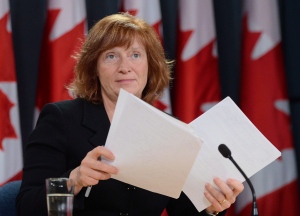
A modern public service has great expectations to meet: Lynch

Kevin Lynch’s (former PCO Clerk) prescriptions for rebuilding the public service:

First, a strong analytic policy capacity that is both broad and deep is a basic necessity of effective governing in an increasingly interconnected, complex and uncertain world….

Second, a risk-management orientation. In a world experiencing a sharp spike in risk and volatility, the smart response by government is proactive  not reactive – risk management….

Third, an innovation focus. In a world where technological innovation is at an inflexion point, disrupting how business is done in sector after sector, government should be at the leading edge of innovation adaptation. It is not.  …

A re-empowered public service can be a magnet for talent and contribute significantly to Canada’s long-term success as a strong economy and vibrant society. It now has great expectations to meet.

Source: A modern public service has great expectations to meet – The Globe and Mail

Immigrants in Parliament, including cabinet ministers and just announced parliamentary secretaries | Canadian Immigrant

For those interested, and impatiently awaiting the updated Parliamentary MP listing with birthplace and birthdate info, Diana Manole went through google and other tools to piece together this list: 41 foreign-born MPs, 35 of which are visible minority.

Source: Immigrants in Parliament, including cabinet ministers and just announced parliamentary secretaries | Canadian Immigrant

Report calls for a ‘humanized’ public service

A good initiative of the previous government:

The report, which recommends implementing the Mental Health Commission’s national psychological standard across government, concludes that the way the public service is managed must shift from an “output-focused environment to one that is more people-focused.”

The recommendations revolve around fixes in key areas: leadership, engagement, education on mental health, training and workplace practices, communication, and promotion and accountability.

“We must humanize the workplace … A more people-focused environment contributes to a high-quality federal public service (and) compassion is fundamental to this shift,” said the report.

Treasury Board President Scott Brison said the report shows the government and unions have “common ground” where they can work together.

“Humanizing is consistent with our government agenda to create a culture of respect for the public service,” said Brison.

“Mental health is part of that, ensuring public servants have a healthy workplace,” he said. “It is the right thing and healthy workplaces are more productive.”

The task force grew out of the bargaining demand PSAC tabled nearly a year ago. It asked the government to adopt the Mental Health Commission’s national psychological standard across government and enshrine it in all collective agreements.

Clement took the extraordinary step of taking the proposal off the table, and setting up a task force to examine the standard and identify the toxic factors in the workplace that are making workers sick.

“The unions deserve credit … and I give full marks to Tony Clement for having helped to initiate this,” said Brison. “I told the unions that it this is just the beginning.”

Brison stressed the committee’s work won’t be used as a bargaining chip in “any way, shape or form” when Treasury Board negotiators and the 18 unions resume collective bargaining on sick leave in January.

The cost of mental illness, from absenteeism to productivity, has been on the government’s radar for the past decade, with mental health claims accounting for 47 per cent of all disability claims.

The 2014 public service survey found employees’ engagement was falling and one in five said they were harassed, mostly by co-workers or bosses.  Studies of executives and their health showed similar trends.

Last year, 40 per cent of all calls to the hotline for the Employee Assistance Program were about mental health.

Source: Report calls for a ‘humanized’ public service | Ottawa Citizen

Restoration of the Court Challenges Program

Another one of the mandate letter commitments of interest, noted by Jeff Sallot writing on the challenges the Liberal government has in reversing the previous government’s approach to the courts (it used to be administered by the Human Rights program at Canadian Heritage, part of the then Multiculturalism and Human Rights Directorate when I was there):

Trudeau’s mandate letter to Wilson-Raybould suggests that shameful foot-dragging by government lawyers will no longer be part of the federal government’s litigation strategy.

The minister’s mandate goes even further. She’s been told to work with Heritage Minister Mélanie Joly on restoring a “modern Court Challenges Program.” The last version of this program was killed by the Harper government in 2006. It provided financial assistance to people and groups who had what looked like legitimate beefs with the government involving equality rights.

Program officials were independent and worked at arms’-length from the government. They looked for cases that raised important questions about rights and public policies so that the courts could render judgment and provide guidance on how the Charter should be interpreted in similar circumstances down the road.

Many of the earliest rights cases, including gender equality cases, might never have made it through the courts without the financial assistance of the Court Challenges Program. And we would all be the poorer for it.

How Harper tied the courts in knots — and what Trudeau should do about it

Clinton e-mails reveal Canadian foreign service enmity towards Harper Tories – The Globe and Mail

Not unique to the newly-renamed Global Affairs but nevertheless particularly striking and reinforces the Conservative government’s suspicion of public servants, particularly the foreign affairs and aid public servants.

And this strikes me as disloyalty to the former government, not in keeping with the public service ‘loyal implementation’ obligation:

The U.S. special co-ordinator for Haiti said Canadians were worried about budget cuts that would have slashed down an operation from 11 employees to four, for a country that was ostensibly a major Canadian foreign policy priority.

“I was a little astonished at how openly the career folks at the foreign and assistance ministries disliked their new political masters and wanted us to convince them not to cut Haiti,” said Tom Adams, in a May 2012 e-mail forwarded to Clinton and released Monday.

“In my many years here I have never seen such open disloyalty with a change of administrations. Although the political appointees told me there was no need to have the Secretary talk to Baird about Haiti, the senior career folks, on the margins, implored me to have this done.”

The dynamic described in that e-mail was on public display recently after the federal election, when employees at the foreign ministry cheered during a visit from their new Liberal bosses.

Clinton replied that she was happy to call her counterpart John Baird, if necessary. The presidential contender’s e-mails are now being released in instalments, after an uproar over her use of a private home-based server that couldn’t be searched for freedom of information requests.

Source: Clinton e-mails reveal Canadian foreign service enmity towards Harper Tories – The Globe and Mail

New code of conduct introduced for political aides: Kathryn May

Good synopsis of the new code:

With the new code, ministerial staff must act with integrity and honesty, support the minister’s duties, be diligent and loyal to the minister, and work with the public service to support the minister.  When working with bureaucrats, they must:

  • be aware of the ethical standards, guidelines and codes of conduct that public servants must comply with;
  • stay out of departmental operations, including how money should be spent;
  • not engage public servants in activity that breaches their ethical and legal obligations as non-partisan public servants;
  • not direct or issue orders to public servants;
  • not undermine or circumvent the authority of deputy ministers; and
  • not suppress or alter advice that public servants prepare for ministers.

The code also calls for a separation between ministers’ social media accounts and those of the government. That’s long been the policy but the Conservatives were repeatedly called out for using the government’s communications machinery to promote partisan interests.

They made public servants refer to the Government of Canada as the Harper Government on all news releases and backgrounders.

In another case, departments were asked to send retweets promoting a family-tax measure not yet passed by Parliament, including a hashtag with the Conservative slogan #StrongFamilies. Employment Minister Pierre Poilievre had public servants work overtime to create promotional videos about child benefits, which featured him.

The government has two types of social media accounts – departmental and thematic accounts — which are targeted at specific topics or audiences. They are used to promote or advertise federal programs but can’t have identifying “party symbols” or partisan content.

The code allows ministers and parliamentary secretaries to have their own social media accounts, but won’t allow government resources to manage or create content for them.

Departments can’t tweet, retweet or link to the personal or political accounts of ministers. Ministers, however, can link or tweet content from Government of Canada websites.

Source: New code of conduct introduced for political aides | Ottawa Citizen

Liberals say overhaul of patronage appointments to include gender-parity goal

No surprise – was clearly implied in the common language in the mandate letters.

The first test, of course, will be the appointment this week (I expect) of parliamentary secretaries:

The federal Liberals say they plan to extend a promise of gender parity in cabinet to ensure the same outcome in the hundreds of appointments the government makes to boards, agencies and Crown corporations.

Just how the process will work is unclear: The Liberals vowed in the election to overhaul an appointment process that now is conducted behind closed doors and was sometimes mired in accusations of political patronage for government donors or failed candidates.

The party has vowed to create an outside body to recommend new senators, a model similar to one used in Britain for government-wide appointments to boards and agencies made by cabinet and ministers.

The Liberals didn’t provide details of how the appointments process, which they now oversee, will work.

“Appointments will be open, transparent and merit-based and we will ensure gender parity and that more indigenous peoples and minority groups are reflected in positions of leadership,” said Olivier Duchesneau, deputy director of communications to Prime Minister Justin Trudeau.

“This will apply government-wide to everything from the cabinet to the Supreme Court to boards of Crown corporations.”

Duchesneau said the opaque nature of the appointment process has fuelled cynicism about backroom politics.

Source: Liberals say overhaul of patronage appointments to include gender-parity goal | CTV News

Liberal transparency reforms subject to ‘review’ next year

Not surprising, these kinds of changes take time to develop and require considerable consultation and preparation.

In the meantime, however, it would be nice if public servants could take a cue from the government’s signal change and implement a less restrictive redaction policy (it was funny for me to have my ATIP requests on documents that I had worked on overly redacted):

Delivery of a key Liberal promise on transparency is likely months away, as an election commitment to reform the Access to Information Act has morphed into a “review” of the legislation starting next year.

During the election campaign, Leader Justin Trudeau said a Liberal government would end fees for processing information requests; give the information commissioner the power to order release of documents; and make ministers’ offices subject to the act, among other changes.

But Trudeau’s mandate letter to the minister responsible for shepherding the reform, Treasury Board President Scott Brison, backs off from those categorical commitments, most of which the Liberals have been touting since at least June 2014.

Firearms RCMP

The office of Suzanne Legault, information commissioner of Canada, says it is not aware of any immediate changes to the access-to-information system since the Liberals came to power. (Sean Kilpatrick/Canadian Press)

The promise to cut fees disappears altogether from the mandate letter. It says other promises are to be part of a “review” that will include input from Information Commissioner Suzanne Legault and other stakeholders.

And the platform commitment to ensure the act “applies” to ministers’ offices, including the Prime Minister’s Office, has changed in the mandate letter to “appropriately applies.”

A spokesperson for Brison’s office says details of the “review” will be announced in the new year, and will include an examination of fees.

“Given the importance of these changes and their complexity, further consideration is required,” said Lisa Murphy. “The government will take the time necessary to fully examine all the options.”

Source: Liberal transparency reforms subject to ‘review’ next year – Politics – CBC News