As always, the general diagnostique is easier than concrete implementation, a common failing of these high level commentaries:
The non-partisan Public Service of Canada is an essential national institution, responsible for delivering government services to Canadians and providing policy advice to the government. It has played an outsized role in helping build this country.
But these days it seems to be constantly under the spotlight in the media and in Parliament, as a steady stream of intelligence leaks, contracting fiascos, procurement bottlenecks, workplace harassment incidents and service delivery snafus grab public attention.
This drip-drip of shortcomings is not good for public trust in a vital national institution, nor is it good for morale among public servants themselves.
We can do better. A high-performing public service is what taxpayers deserve and the country needs, and no one wants this more than today’s public servants. They are as troubled by these shortcomings as anyone else. But they are equally aware that they work in an institution burdened with serious impediments to nimble decision-making, innovative ideas, clarity on priorities and meaningful accountability. Indeed, responding to recent problems with yet more rules and regulations rather than solutions would only exacerbate things. So, what can be done?
What is needed is not a years-long Royal Commission but rather a common-sense approach to fixing how government operates. Here are six key problem areas, solutions to which would yield a more engaged public service and improve services to Canadians.
• The starting point is realizing that government has become too complex to manage effectively. Today, the federal government is composed of 22 regular departments and more than 80 departmental agencies and corporations. This is in addition to 34 Crown corporations, the RCMP and the military.
No private sector firm, no matter how large, would ever set up such a byzantine organizational structure and expect to operate efficiently. The proliferation of entities makes alignment and cohesion of programs across government difficult, creates overlap and duplication, and increases administrative overhead costs.
• Second, and related, the public service is too large to operate effectively. Today it numbers almost 360,000 employees — an increase of 95,000, or 36 per cent, over the last decade. But why?
The Canadian population has expanded by 14 per cent over the same period and the Canadian economy grew just shy of 20 per cent, suggesting public sector productivity has deteriorated. A smaller public service, with less duplication of functions and leaner management structures, would be more efficient and less costly.
• Third, oversight is too diffuse to be effective. Responsibility for oversight spans the Treasury Board, the Privy Council Office, the Public Service Commission, the Auditor General, departmental audit and evaluation committees, and a host of parliamentary agents as well as Parliament itself.
These oversight bodies attempt to enforce a bewildering morass of rules, regulations and red tape that stifle healthy risk-taking but perversely create incentives to work around the rules, as we have seen recently in procurement. Fewer and clearer rules, and clarity about who is responsible for oversight, makes a lot of operational sense.
• Fourth, accountability is too opaque. No organization functions well with fuzzy accountabilities. Clear accountability is not just about who is responsible when things go wrong, but also about who is responsible for making sure they go right.
The accountability problem is exacerbated today by the increasing involvement of political staff in both controlling advice to ministers and implementing policy decisions. Restoring clarity on the respective roles of PMO, political staff and public servants is essential to a responsible, accountable and high-functioning public service.
• Fifth, scant attention is paid to measuring or managing public sector productivity. Rather, governments typically report on inputs and activities, not outcomes and results. The broken procurement system is a logical place to start a focus on productivity and results, after the horror shows of the Phoenix pay system, innumerable military procurement failures and the incomparable contracting fiasco around the CBSA ArriveCAN app.
Another productivity destroyer is long lists of policy priorities set out in mandate letters, with public servants expected to deliver on all of them. Yet the sheer number and lack of prioritization means lots of activity but few priorities actually delivered.
• The sixth is a hesitant management culture. The public service needs to rethink the required skills for working effectively in a 21st-century, data-driven and uber-connected economy and society. Like the private sector, government should be bulking up on data scientists, AI experts, IT specialists and project managers rather than relying on consultants.
High-performing organizations deal promptly with ineffective managers, because they hurt productivity and morale, and with bad apples who undermine the credibility and culture of institutions. More proactive management would yield better service delivery to the public and better morale and engagement by public servants.
Thoughtful people inside and outside government have been writing about these concerns for some time. Now is the time to do something, and that will take leadership and courage. The best way to deal with these issues is not to talk endlessly about them, but to act, to take the tough decisions that will make the public service a more productive organization, geared for success in the 21st century.
It’s only common sense.
Kevin Lynch was the Clerk of the Privy Council and is former Vice Chair of BMO. Jim Mitchell is an Adjunct Professor at Carleton University and a former Assistant Secretary to the Cabinet in the Privy Council Office.
Wernick: The pay-as-you-go proposal on cutting federal spending not as simple as advocates say
Michael continues to provide interesting commentary based up his experience in government:
There are two interpretations of what pay-go legislation could mean in Canada. One is that the proponents know it is just for show – a form of fiscal virtue signalling – and they have no intention of applying it with any rigour. The future would be full of exemptions, waivers and extensions. It makes the base happy and looks like decisiveness. But it isn’t serious.
The other possibility is that it is serious and would at regular intervals create a hot mess for future governments and for future fiscal choices. It isn’t going to deliver more effective government to let an algorithm stack the deck, distort the options, create unnecessary and artificial crises, and stealthily erode those parts of government that don’t have political and media champions.
So, which is it – empty virtue signalling or a hot mess of fiscal distortion? We can do better, either way.
Any political party that wants to take real action on restraining spending should do it in a serious way: Let Canadians know before the election what it considers cuttable and what it considers a priority. Once in office set up a deliberative process. The 1990s program review would be my starting point for designing the next one.
What is essential and what is discretionary in government spending is a political judgment informed by ideologies and values – a judgment that must be responsive over time to new facts and realities.
There are many better ways for democratically elected politicians to approach spending restraint and to achieve it. Pay-go legislation isn’t a good one and should be discarded before the platforms for the next election are written – after which it will be difficult to turn back.
Buruma: Geert Wilders may have shock value, but he harbours an ‘outsider’ rage we’ve seen before
Of note:
Mr. Wilders may not be a fascist, but his obsession with sovereignty, national belonging, and cultural and religious purity has a long lineage among outsiders. Ultra-nationalists often emerge from the periphery – Napoleon from Corsica, Joseph Stalin from Georgia, Hitler from Austria. Those who long to be insiders frequently become implacable enemies of people who are farther away from the centre than they are.
Kurl: Pierre Poilievre needs to choose his words much more carefully
Yes, the risks are there:
The last six weeks have brought out the worst in us. Bomb threats and shootings at Jewish schools. Calls for doxxing, censure and harassment of students and faculty who sympathize with Palestinians and ceasefire calls. In Toronto alone, police are reporting 17 incidents of Islamophobic or anti-Palestinian hate crimes since Oct. 7 (compared to just one in the same period in 2022). Antisemitic hate crimes numbered 38 (last year it was 13 in the same period) and now comprise half of all hate crimes reported to Toronto police since Oct. 7.
At such a fraught time, leadership from Poilievre would see his words about these highly sensitive issues focused on appealing to Canadians’ better natures, not further driving them into suspicion and division.
But will the opposition leader and his strategists do this? We are not so far removed from the failed Conservative campaign of 2015, notorious for its “barbaric cultural practices” tip line. The director of that disastrous campaign is reportedly tipped to direct the upcoming one.
Poilievre and the Conservatives for now, anyway, have the support of a plurality of Canadians. They need to start acting like it means something to them.
Shachi Kurl is President of the Angus Reid Institute, a national, not-for-profit, non-partisan public opinion research foundation.
May: Chief information officer Catherine Luelo resigns from job revamping federal tech
Doesn’t bode well:
Private sector executives, unfamiliar with the culture and complexity of operations, have historically had rough time making the adjustment, said Michael Wernick, a former clerk of the privy council and now the Jarislowsky chair of public sector management at the University of Ottawa.
He said the government has never resolved how technology should be managed. Is it a single service with common standards, interoperability and cybersecurity? Or is it a loose federation of 300 departments and agencies where deputy heads and managers have autonomy? It now operates with both philosophies, depending on the agency.
With the Conservatives leading the polls, it is worth speculating what changes a Conservative government might bring to immigration, citizenship, multiculturalism, and employment equity policies, and the degree to which Tories would be constrained in their policy and program ambitions. Despite talking about change and “common sense,” they will still be constrained by provincial responsibilities and interests, the needs and lobbying of the business community, and an overall limitation of not wanting to appear to be anti-immigration.
Constraints
One fundamental political constraint is that elections are won and lost in ridings with large numbers of visible minorities and immigrants, like in the Greater Toronto and Hamilton Area, British Columbia’s Lower Mainland, and other urban areas as shown in Figure 1. Arguably, the Conservatives learned this lesson in the 2015 election, where citizenship revocation provisions and the Barbaric Cultural Practices Act signalled to many new Canadians they were not welcome.
The demographic of immigrants and minorities across Canadian electoral ridings. Graph courtesy of Andrew Griffith
Given that immigration is a shared jurisdiction with the provinces, any move to restrict the numbers of permanent residents, temporary workers, and foreign students will likely be met with provincial opposition. All provinces—save Quebec—largely buy into the “more is merrier” demographic arguments. Provincial governments and education institutions rely on large numbers of international students to fund higher education, and thus have already signalled concerns with the current government’s trial balloon about capping students from abroad.
Stakeholder pressures are a further constraint. Business groups, large and small, want a larger population to address labour market needs, and that includes international students for low-value-added service jobs. A larger population also means more consumers. Immigration lawyers and consultants, both in Canada and abroad, benefit from more clients. Settlement and refugee groups can continue to press for increased resources even if evaluations question their effectiveness with respect to economic immigrants. Most academics focus on barriers to immigrants and visible minorities rather than questioning their assumptions. Lobby groups like the Century Initiative and others continue to push the narrative that a larger population is needed to address an aging population, a narrative that is supported by all these stakeholders, and federal and provincial governments (except for Quebec).
Few of these stakeholders seriously address the impact of immigration on housing availability and affordability, health care, and infrastructure, despite all the recent attention to the links between housing and immigration. Most stakeholders are either in denial, claim that ramping up housing can be done quickly as many recent op-eds indicate, or argue that raising these issues is inherently xenophobic if not racist.
Global trends that also could shape a possible Conservative government include increased refugee and economic migrant flows, greater global competition for the same highly skilled talent pool and, over time, expanded use of AI and automation as a growing component of the labour market.
Immigration
Given these constraints and the fear of being labelled xenophobic, Conservatives have focused more on service delivery failures than questioning immigration levels, whether it’s permanent resident targets or the rapid increase in uncapped temporary workers and international students. Poilievre has stated that the Conservative focus will be on the “needs of private-sector employers, the degree to which charities plan to support refugees, and the desire for family reunification,” suggesting greater priority on economic and family immigration categories, as was largely the case for the Harper government. The Conservatives’ recent policy convention was largely silent on immigration. They are engaging in considerable outreach to visible minority and immigrant communities, adopting the approach of former Conservative minister Jason Kenney, “the minister for curry in a hurry.”
That being said, it is likely that a Conservative government would likely freeze or decrease slightly the number of permanent residents rather than continuing with the planned increases (the Liberal government recently indicated that it is not “ruling out changes to its ambitious immigration targets.)”
Figure two highlights the growth in permanent and temporary residents since 2015. The extent of public debate on the impact of immigration on housing provides latitude for a freeze at 2023 levels, or a small decrease given that immigrants and non-immigrants alike are affected. Graph courtesy of Andrew Griffith
It is less clear whether a Conservative government would have the courage to impose caps on temporary workers given pressure from employers, including small businesses. However, the previous Conservative government did have the political courage to impose restrictions following considerable abuse of the temporary work program, ironically exposed by the Liberals and NDP. Similarly, imposing caps on international students would run into strong resistance from provincial governments given their dependence on students from abroad to support higher education. Even placing caps on public colleges that subcontract to private colleges—which are more for low-skilled employment than education—would be challenging given employer interest in lower-wage employees. They may, however, reverse the Liberal government’s elimination of working-hour caps for foreign students.
Whether a Conservative government would go beyond the usual federal-provincial-territorial process and provide financial support for foreign credential recognition, or be more ambitious and transfer immigrant selection of public sector regulated professions (e.g., health care) to the provinces is unclear. However, given that regulatory bodies are provincial and, for health care, provinces set the budgets, they may explore this option.
While the simplification and streamlining of over 100 immigration pathways is long overdue, given the complexity for applicants to navigate the system, and for governments to manage and automate it, such longer-term “fixing the plumbing” initiatives are less politically rewarding than addressing various stakeholder pressures.
Given the increased number of asylum claimants, a Conservative government would be likely to restore requirements for claimants to have sufficient funds and an intent to leave, and may consider reimposing a visa requirement on Mexican nationals.
Citizenship is arguably the end point of the immigration journey as it represents full integration into society with all the political rights and responsibilities that entails. This assumption is being challenged by a combination of Canadian economic opportunities being relatively less attractive for source countries such as China and India, along with greater mobility of highly educated and skilled immigrants. As a result, the naturalization rate is declining as shown in figure three.
Figure three depicting naturalization rates between 1996 and 2021. Graph courtesy of Andrew Griffith
The previous Conservative government was more active on citizenship than other recent governments. In 2009, it released a new citizenship study guide, Discover Canada, with a greater focus on history, values and the military. It also required a higher passing score on the citizenship test—up to 75 per cent compared to 60 per cent—and different versions were circulated to reduce cheating. Language requirements were administered more strongly, and adult fees were increased from $100 to $530. A first generation cut-off for transmission of citizenship was implemented as part of addressing “lost Canadians” due to earlier Citizenship Act gaps. C-24 amended the Citizenship Act to increase residency requirements from three to four years, increased testing and language assessment to 18-64 years from 18-54 years, and a revocation provision for citizens convicted of treason or terror.
It is unclear the degree to which the Conservatives will consider citizenship a priority in relation to other immigration-related issues. From an administrative perspective, changing residency requirements again would simply complicate program management, make it harder to reduce processing times, and would not provide any substantive benefit. Re-opening citizenship revocation would simply draw attention to the risks that countries would offload their responsibilities, as the example of former U.K. citizen and Canadian citizen by descent Jack Letts illustrates.
Given that the Liberal government to date has not issued a revised citizenship guide, the Conservatives would likely stick with Discover Canada, issued in 2009. Similar, the existing citizenship test and pass rates, and proof of meeting language requirements would not need to be changed. As the Liberal government never implemented 2019 and 2021 campaign commitments to eliminate citizenship fees, one should not expect any change from the fee increase of 2014.
The Conservatives may wish to revisit the issue of birth tourism. In 2012, they pushed hard, but ultimately the small numbers known at the time and provincial opposition to operational and cost considerations made them drop their proposal. Since then, however, health-care data indicated pre-pandemic numbers of birth tourists to be around 2,000, although these dropped dramatically during the pandemic given visa and travel restrictions.
In contrast to immigration and citizenship, a Conservative government would face fewer constraints with respect to multiculturalism and employment equity. Their public criticism of wokeism, their policy resolutions stressing merit over “personal immutable characteristics“, their criticism of diversity, equity and inclusion training, and their criticism of Liberal government judicial, Governor in Council, and Senate appointments all point to a likely shift in substance and tone.
It is highly likely that resources would be cut sharply under a Conservative government given their overall approach to government expenditures, their general approach to limit government intervention and their scepticism regarding critical race theory, systemic racism, and diversity, equity, and inclusion training. There would likely also be a return to a more general integration focus between and among all groups. They would, of course, be unlikely to curb any of the recognition months or days, given the importance to communities (and their political outreach).
A Conservative government might reduce the amount and quality of data available regarding visible minority, Indigenous Peoples, persons with disabilities represented in public service, and other government appointments.
The Liberal government expanded public service data to include disaggregated data by sub-group, allowing for more detailed understanding and analysis of differences within each of the employment equity groups since 2017, along with data on LGBTQ+ people. Previous government reports only covered the overall categories of women, visible minorities, Indigenous Peoples and persons with disabilities. It is uncertain whether these reports under a future Conservative government would revert back to only reporting on overall group representation, hirings, promotions and separations. Given that this concerns public service management, it may well decide to continue current practice or the more sceptical elements may press for change.
On the other hand, political appointments—judges, Governor-in-Council, Senate—are another matter. Appointment processes are likely to be revised given concerns that the processes introduced by the Liberal government unduly favoured candidates more on the centre-left than centre-right. Figure 4 highlights the increased representation of women, visible minorities and Indigenous Peoples in political appointments.
Figure four highlights the increased representation of women, visible minorities and Indigenous Peoples in political appointments. Graph courtesy of Andrew Griffith
Similarly, at the end of the last Conservative government, Governor-in-Council appointments to commissions, boards, Crown corporations, agencies, and tribunals were 34.2 per cent women, 6.1 per cent visible minorities, and 2.9 per cent Indigenous. Under the Liberal government, the number of women increased to 51.4 per cent, visible minorities to 11.6 per cent, and 4.2 per cent Indigenous by January 2023.
Senate appointments present a more nuanced picture. Conservative appointment of visible minorities was at 15.8 per cent, representing a conscious effort to address under-represented groups, but women, at 31.6 per cent of appointments, and Indigenous Peoples at 1.8 per cent, were significantly under-represented. The Liberal introduction of a formally independent and non-partisan advisory board resulted in a sharp increase in diversity: 58.8 per cent women, 20.6 per cent visible minorities, and 16.2 per cent Indigenous Peoples.
Along with these process changes, the Liberal government expanded annual reporting to include visible minorities, Indigenous Peoples, persons with disabilities, and judicial appointment reporting also included LGBTQ and ethnic/cultural groups. Should a Conservative government decide to stop these annual breakdowns, it will be harder to track any shifts in representation.
The current review of the Employment Equity Act, launched in 2021, has not yet resulted in any public report on consultations and recommendations from the Task Force. Given limited parliamentary time and higher priorities during the current mandate, it is unlikely that any revisions to the Act will be approved. However, should any legislation come to pass, it is likely that a future Conservative government might wish to revisit some of the provisions.
Concluding observations
To date, two overarching themes have driven Conservative discourse: Canada is broken, and the need to “remove the gatekeepers.” The Yeates report confirms that the immigration department is broken, reflecting long neglect of organization weaknesses, a lack of client focus, and, I would argue, an excessive multiplicity of programs that make it harder for clients to navigate, and more difficult for IRCC to manage.
One of the ironies of assessing likely Conservative policies is immigration, citizenship, and related areas all pertain to government being “gatekeepers.” It’s easier to shrink the gate for some policies and programs than others (e.g., government political appointments). Others, such as reducing levels of permanent and temporary residents, are much more challenging given the strength of provincial, business, and other stakeholders opposition. The degree to which a Conservative government is prepared to expend political capital will obviously reflect whether or not it has a majority in Parliament.
The sharp decrease in public support for immigration, given the impact on housing, health care, and infrastructure, likely provides greater flexibility for any future Conservative government. While there is greater flexibility with respect to multiculturalism and employment equity, a Conservative government could also be ambitious with needed immigration reforms for permanent and temporary immigration.
While some have argued that immigration and related issues have become a third rail in Canadian politics, this need not be the case. The concerns being raised are regarding the impact of large and increasing numbers of permanent and temporary migration on housing, health care, and infrastructure, not the racial, religious or ethnic composition of immigrants. These issues affect immigrants and non-immigrants alike and focus on commonalities, not differences.
Calling for DMs to be replaced may feel good but is unrealistic, and she clearly has little understanding about how government and the public service work and that change, albeit too slow for some, occurs within a bureaucratic context.
As for the call for action, I also tend to be somewhat cynical as it appears to be adding yet another reporting requirement and it is too early to assess whether it has moved the needle beyond process:
In the months following the murder of George Floyd in 2020, and the global protests against police brutality and anti-Black racism that lasted the summer of that year, every corporation and government agency vowed to improve the economic lot of Black people by introducing watered-down diversity, equity, and inclusion (DEI) practices. Naturally, I was skeptical, considering my own experiences in the public service with anti-Black racism. I knew that nothing but transformative change led by Black and Indigenous people would suffice. As I wrote in this paper in February 2021, the Privy Council Office clerk’s effort was “a diversity and inclusion endeavour, dressed up as anti-racism. Devoid of an accountability framework, it makes no tangible effort to interrogate the systems that perpetuate racism.”
Two-and-a-half years later, the anti-Black racism measures the Liberals introduced for the public service are as good as six feet under. In the 2021 mandate letter to then-Treasury Board president Mona Fortier, the prime minister directed her to establish “a mental health fund for Black public servants and supporting career advancement, training, sponsorship and educational opportunities.” A year later, Black public servants involved in the fund blew the whistle on the racism they experienced while working on an anti-racism measure. As the Canadian Press reported last December, “The Federal Black Employee Caucus [FBEC] sent a letter to the Treasury Board’s chief human resources officer this month saying the workers supported efforts to address racism within the public service, only to be ‘continuously faced with the crushing weight of it.’”
I feel for those who worked so hard to make these initiatives happen. Countless hours and emotional labour have been added to the workload of many racialized employees for free, only for them to experience more racism. The CBC reported on the treatment of Black employees as outlined in FBEC’s letter to the Treasury Board Secretariat: “The email alleges that senior Treasury Board Secretariat officials created a toxic workplace culture. When the Federal Employee Black Caucus members pushed back, the email states, they were met with micro-aggressions and ‘character assassinations.’”
And those experiences bear out in evidence provided by the auditor general.
On Oct. 19, Auditor General Karen Hogan tabled the semi-annual report on performance audits of the public service—and government writ large—to the House of Commons in a series of nine parts. Report 5 looked at Inclusion in the Workplace of Racialized Employees, and it is not kind. It determined that “Canada’s efforts to combat racism and discrimination in major departments and agencies are falling short,” as reported by the Canadian Press. The AG selected a sample of six organizations“responsible in whole or in part for providing safety, the administration of justice, or policing services in Canada. Together, they employ about 21 per cent of workers in the federal core public administration.” Note that 20 per cent of the public service is racialized.
Let’s look at the highlights from the report:
Racialized employees reported rates of discrimination at least 30 per cent higher than non‑racialized respondents;
The organizations all established DEI plans to correct the conditions of disadvantage experienced by racialized employees, but failed to develop and institute accountability measures (I called this: “A system without accountability is a corrupt one, and in this system there is no justice”);
They failed to collect or use data to assess progress on their plans, and failed to create, assess and implement key performance indicators; and
No specific initiatives in action plans to address concerns and complaints related to barriers to raising instances of racism.
So basically, the public service wasted everyone’s time with this theatrical performance of DEI icing on a white cake, as I said they would. But it’s no surprise considering that we’re led by a performative government.
Furthermore, if the public service has discriminated against you, the institutions set up to “help” you only double down on that discrimination. As the Canadian Press reported in March, “The Treasury Board Secretariat found last week that the Canadian Human Rights Commission [CHRC], whose mandate is to protect the core principle of equal opportunity, discriminated against Black and racialized employees.”
Remember the Black Class Action lawsuit? The Trudeau government is still trying to ignore the problem by refusing to negotiate while attempting to get the case dismissed. In response to the CHRC discriminating against Black employees, the Class Action Secretariat said, “It also raises concerns about the CHRC’s capacity to offer justice to the broader experiences of Black workers across the entirety of the federal public service who share similar stories and experiences for over 50 years.”
This is how racism is systemic, systematic, and institutional. I have written about how racism within institutions carries over into public policy. Remember the three words: “the dirty 30.”
There is no reason to trust these corrupt systems that are intended to keep Black and racialized employees in subservient positions to white, male, heterosexual power. Deputy ministers have shown us, through action, that they are unserious “leaders” who are comfortable with overseeing abusive, toxic environments that increase the burden of performance on their employees, according to race. Seems discriminatory in itself.
Those who do not follow the directives from mandate letters and budget direction are committing insubordination, and are undermining political decisions. They should be removed from their positions. Deputy ministers are only supposed to oversee the implementation of policy; they are unelected administrators, not representatives elected by the people. Therefore, their decisions cannot supersede those political directives. Do we really want deputy ministers quietly subverting democracy just because they don’t like particular groups of people?
Given the state of the world these days, the recent announcement by Clerk of the Privy Council John Hannaford creating a “task team” of deputy ministers on the values and ethics of public service may seem frivolous.
But we believe the clerk’s initiative is significant with the potential to influence the quality of our democracy for a generation.
Canada’s public service is an important national institution, one of the key pillars of our parliamentary democracy. As we watch the erosion of democratic institutions elsewhere, the condition of our federal public service, and the quality of its democratic vocation, should concern all of us.
The clerk’s initiative recognizes that recent events show the federal public service faces some major performance challenges that call for a new effort of renewal. To make wise choices for renewal, you must know who you are, what a public service is for, and what it should be. Without this conscious awareness, a public service can easily fall short of its distinct standards of professionalism and service
The clerk’s initiative recognizes that recent events show the federal public service faces some major performance challenges that call for a new effort of renewal. To make wise choices for renewal, you must know who you are, what a public service is for, and what it should be. Without this conscious awareness, a public service can easily fall short of its distinct standards of professionalism and service.
Hannaford’s announcement comes exactly 30 years after the creation of a celebrated task force on public service and ethics under the leadership of John Tait, the former federal deputy minister of justice. The “Tait Report” set the agenda for public service values and ethics for a generation.
But times change. Every decade brings its own issues which challenge a public service to rediscover its distinctive identity as a “compass” (the clerk’s word) to guide direction for the future. He has asked the new task team to lead a “broad conversation” on how to bring the public service’s values and ethics “to life within a dynamic and increasingly complex environment.”
We think there are three conditions for the team’s success.
First, the “conversations” with public servants and others must take the form of what the Tait Report called “honest dialogue” about problems like these, among other things:
Performance: the federal public service has recently lost its reputation for providing timely, citizen-centred service to Canadians;
Trust: the civil service no longer enjoys the automatic trust and legitimacy that is essential to our democracy;
Boundaries: the public service has not yet acquired or sought the tools for drawing a line between the values and accountability of elected and non-elected officials, as recommended by the Gomery Report and others;
Accountability: public service leaders do not appear to take accountability for their own shortcomings, including the enormous expansion of the public service over the last decade and declining efficiency, and;
Technology: the civil service has notoriously mismanaged implementation of digital technology, and has not yet brought public service values seriously to bear on public servants’ use of social media and artificial intelligence.
These are the kinds of real problems the task team’s “conversations” with public servants and others should openly confront if its work is to have legitimacy.
Second, this dialogue should not be rushed. Nothing will be accomplished by simply repeating the public service’s stated core values. To recover their motivating power and urgency, public service values must reemerge from honest dialogue, modelled by the task team itself, about the problems at hand.
Third, the “conversation” must go beyond the public service to include parliamentarians. This is the unfinished business from the Tait Report. Tait recommended a dialogue about public service values should engage ministers and MPs, leading to a new “moral contract between the public service, government and Parliament of Canada.” The state of the federal public service is not just a concern for the government of the day. The quality and honesty of its advice and its ability to deliver programs and service efficiently and effectively are important to us all.
The current federal political context makes this kind of dialogue—about the kind of public service we need to support our parliamentary democracy—more urgent than ever. Now is the time. And the Clerk of the Privy Council has just set the table.
Ralph Heintzman and Catherine MacQuarrie are former senior public servants, and both served as head of the federal government’s Office of Public Service Values and Ethics.
In September, Clerk of the Privy Council John Hannaford announced the creation of a five-member task force of deputy ministers to lead a “broad conversation” on the values and ethics of the federal public service. A “milestone” report is expected by year’s end.
Upon hearing of this initiative, I could not help but think of the famous line by Capt. Renault in the classic film Casablanca: “Round up the usual suspects!”
I have no doubt about the clerk’s good intentions. That the public service is in serious need of thorough examination and renewal is beyond debate. What is in question is how a committee of busy senior bureaucratic “insiders,” working off the side of their desks, and with a very tight deadline in the latter months of the government’s mandate, can possibly address the many and substantial issues that require serious review.
As others have argued in these pages, including former clerk of the Privy Council Kevin Lynch, the issues are many, from service delivery to recruitment and renewal; from institutional timidity to the public service-political relationship; from the degradation of ministerial responsibility to the weakening of departmental autonomy as a source of policy advice and innovation versus the all-powerful Prime Minister’s Office.
It is hardly surprising that, in the face of these formidable challenges, the clerk’s announcement was greeted with puzzlement by some observers. How and why did public servants’ “values and ethics” become the central issue? Why does the clerk believe that a strictly “in-house” study is the answer? A “conversation” with public servants does not scream action.
Whatever the rationale, this review is a far cry from the kind of root-and-branch overhaul that critics have been demanding for some time.
The federal public service has historically been the subject of royal commissions, which have injected the kind of fresh thinking that only an outside perspective can bring. The last such commission — the Royal Commission on Financial Management and Accountability — was established more than 40 years ago (1976) and reported in 1979. Known as the Lambert Commission, after its chair, TD bank executive Allan Lambert, this commission came about as a result of fears of a breakdown in financial management and accountability.
Prof. Donald Savoie, the dean of Canadian public administration, and others have acknowledged that nothing less than a Royal Commission on the Future of the Public Service, independent of senior public service managers, is required if there is to be genuine change. An independent and wide-ranging examination of the federal public service is long overdue.
Such a commission must be led by an outsider and so provide for sweeping inquiries into key public service reform issues that cannot be done by those within the system.
It is true that initiating a royal commission comes with its own risks. Such commissions can be expensive as well as unpredictable, sometimes delving into matters beyond their mandate, and so put their efforts in danger of being shelved and ignored by unreceptive governments.
A royal commission, of course, cannot be initiated by the clerk of the Privy Council. Only the prime minister can make that happen.
It took a shot across the bow by then-auditor general of Canada J.J. Macdonell to kickstart the Lambert Commission when he warned that “Parliament — and indeed the government — has lost or is close to losing effective control of the public purse.” Crisis can be the spur of creative thinking and innovation, but only if decision-makers are willing to concede that the crisis is real.
To do so, however, requires bold thinking and decision-making at the political level, as well as a willingness to take a “beau risque.” To expect that from any government in the twilight of its mandate may be too much to ask. But that does not make the need any less urgent.
Ottawa resident Michael Kaczorowski is a retired senior policy adviser with the federal government.
Count me among the sceptics despite the need and I share the concerns and questions raised by others. The Tait report was written by one deputy working full time on the report rather than having a committee of deputies, likely accounting in part for its clarity and sense of purpose:
Canada’s top bureaucrat is making values and ethics a top priority, striking a task force of deputy ministers to lead a “broad conversation” on reaffirming the core values of a non-partisan public service in a changing world where crises never stop.
John Hannaford, named clerk of the Privy Council Office three months ago, put together the five-member task force with marching orders to “bring our collective values and ethics to life within a dynamic and increasingly complex environment.” He sent notice of the new task force to all departments last week and outlined the plan in a keynote speech at recent conference that was closed to the media.
“As head of the public service, fostering a renewed conversation on values and ethics will serve as one of my priority areas of focus over the next year and will support the effective management and renewal of our public service,” he wrote in a letter to public servants.
Hannaford said the task force will spend the next several months conducting outreach with public servants, networks and communities — both inside and outside the public service. He expects a “milestone report” by the end of the year.
Meanwhile, he wants every department, branch and division to come up with activities and ways to discuss public service values and ethics and what they mean in today’s world.
The task force will be chaired by Catherine Blewett, a former top bureaucrat in Nova Scotia who is now deputy minister of Economic Development and president of the Atlantic Canada Opportunities Agency.
Other members include: Stephen Lucas, deputy minister at Health Canada, Christiane Fox at Immigration, Refugees and Citizenship Canada, and Caroline Xavier, the chief of the electronic spy agency Communications Security Establishment (CSE). Donnalyn McClymont, PCO deputy secretary for senior personnel and public-service renewal, will support the task force as an ex-officio member.
A first in 30 years
This marks the first major values and ethics review since the groundbreaking report A Strong Foundation, by former deputy minister John Tait nearly 30 years ago.
That report was also built on a conversation with public servants. It laid the groundwork for values-and-ethics code that came into effect in 2003 to govern how public servants work, behave and their relationship with Parliament, ministers and Canadians.
Tait’s report also grew out of a task force of deputy ministers appointed by then-PCO clerk Jocelyne Bourgon at a time of huge flux. She created nine task forces to study the big challenges for public servants in the aftermath of the Chrétien government’s historic program review. That review completely rethought the role of government and wiped out more than 50,000 federal jobs to beat a crushing deficit.
Times have changed, but Hannaford said the core values outlined in Tait’s report — respect for democracy, respect for people, integrity, stewardship and excellence — are enduring and are still the compass to guide public servants’ behaviour.
“Our world is increasingly dynamic, complex, and ever-changing,” Hannaford wrote in a letter to departments.
“As public servants, we play an important role in the Canadian democratic system. We continue to rise to the occasion to serve Canada and Canadians. Our public-service values and ethics serve as an important compass to guide our actions and behaviours, particularly as we adapt and evolve in times of change.”
He said the task force’s work will complement other ongoing priorities to improve workplace wellness, accessibility, anti-racism, equity and inclusion and reconciliation.
Public servants work in much different circumstances today, but like 30 years ago they face challenging questions about what they do and how they do it.
Public servants feel besieged these days by everything from workload to hyper-partisan politics. Federal executives report high levels of stress and burnout with rising levels of cynicism and mental-health problems. A Top of Mind report found public servants at all levels of government worry they can’t speak truth to power and have to toe the party line in giving advice
They’ve come through a pandemic, the convoy protest, service-delivery fiascos, the biggest strike in 30 years, working remotely and are now in the throes of a $15.4-billion spending review. The public service, at 350,000 people, has never been so big, so diverse, and millennials now dominate the workforce with very different attitudes than their baby-boomer predecessors.
Then there’s climate and geopolitical crises after crises. There is war and floods and fires, soaring inflation and housing shortages compounded by the day-to-day distractions of social media, hyper-partisan politics, and the 24-hour news cycle.
Questioning “moral fibre”
Stephen Van Dine, who led the Top of Mind study, asks why the clerk is focusing on values and ethics when public servants are worried about basics like giving fearless advice, eroding policy capacity and the impact on governance. He said this is sure to raise alarms among public servants who will be asking, “What did we do wrong?”
“Why in heaven’s name would you start with values and ethics unless you believe the root problem is the moral fibre of the public service at this stage,” he said. “Why not examine what public-service leadership looks like in the 21st century?”
Senior officials say Hannaford isn’t re-opening the code or picking between new and traditional values. Hannaford also isn’t sounding the alarm about the public servants’ integrity. They say it is about adaptability: he wants public servants to better understand how to apply long-held values in a rapidly changing world.
Alasdair Roberts, a professor of public policy at the University of Massachusetts Amherst and former visiting scholar at the Canada School of Public Service, studies how countries can adapt and thrive in this turbulent century.
Roberts point to a number of threats to Canada’s adaptability, but the health of the public service and its ability to execute quickly is a key one.
The mountain of controls, rules and new parliamentary watchdogs built up over the decades – all in the name of accountability – stifles innovation and makes publics servants risk averse, he said. On top of that, they face a new layer of political control – which he calls the “political service” of ministerial staffers.
And then there’s the shift to remote work, which raises big questions for leaders on how to build common purpose and values when people are rarely working together in-person.
Although Hannaford is tying the exercise to a renewal of the public service, the preliminary plan falls short of the kind of major reform critics have called for over the years.
Donald Savoie, considered the éminence grise of public administration in Canada, argues the public service has so lost its way that only an independent body like a royal commission could fix it.
Roberts, who supports the call for a royal commission, called Hannaford’s task force worthwhile and well-timed, but five busy deputy ministers, under-the-gun in their day-jobs, will be constrained in what they can do.
They can’t really tackle legislative barriers, the morass of controls, rules and structures and outdated processes that need to be fixed. They also can’t grapple with the vexing question about the role of the public service, especially its strained relationship with ministers, Parliament and political staff.
Many argue the clerk simply doesn’t have time for the kind of review needed. With an election two years away, if not sooner, he has to be deep in transition planning. And if polls hold out, a Conservative government could come to power with a very different view of the public service and the role of the state.
Others, like Alasdair Roberts, question whether values and ethics can be discussed without sorting out the role of the public service: “I don’t want to diminish the significance of doing this, but it can’t be a substitute for a broader, bigger and independent review about the role and structure of the public service.”
Implications for governments are immense, given the large number of clerical and administrative jobs. However, given government inertia, bureaucracy, unions and other interests, will likely lag private sector significantly, to the likely detriment of citizen service:
The American workers who have had their careers upended by automation in recent decades have largely been less educated, especially men working in manufacturing.
But the new kind of automation — artificial intelligence systems called large language models, like ChatGPT and Google’s Bard — is changing that. These tools can rapidly process and synthesize information and generate new content. The jobs most exposed to automation now are office jobs, those that require more cognitive skills, creativity and high levels of education. The workers affected are likelier to be highly paid, and slightly likelier to be women, a variety of research has found.
“It’s surprised most people, including me,” said Erik Brynjolfsson, a professor at the Stanford Institute for Human-Centered A.I., who had predicted that creativity and tech skills would insulate people from the effects of automation. “To be brutally honest, we had a hierarchy of things that technology could do, and we felt comfortable saying things like creative work, professional work, emotional intelligence would be hard for machines to ever do. Now that’s all been upended.”
A range of new research has analyzed the tasks of American workers, using the Labor Department’s O*Net database, and hypothesized which of them large language models could do. It has found these models could significantly help with tasks in one-fifth to one-quarter of occupations. In a majority of jobs, the models could do some of the tasks, found the analyses, including from Pew Research Center and Goldman Sachs.
For now, the models still sometimes produce incorrect information, and are more likely to assist workers than replace them, said Pamela Mishkin and Tyna Eloundou, researchers at OpenAI, the company and research lab behind ChatGPT. They did a similar study, analyzing the 19,265 tasks done in 923 occupations, and found that large language models could do some of the tasks that 80 percent of American workers do.
Yet they also found reason for some workers to fear that large language models could displace them, in line with what Sam Altman, OpenAI’s chief executive, told The Atlantic last month: “Jobs are definitely going to go away, full stop.”
The researchers asked an advanced model of ChatGPT to analyze the O*Net data and determine which tasks large language models could do. It found that 86 jobs were entirely exposed (meaning every task could be assisted by the tool). The human researchers said 15 jobs were. The job that both the humans and the A.I. agreed was most exposed was mathematician.
Just 4 percent of jobs had zero tasks that could be assisted by the technology, the analysis found. They included athletes, dishwashers and those assisting carpenters, roofers or painters. Yet even tradespeople could use A.I. for parts of their jobs like scheduling, customer service and route optimization, said Mike Bidwell, chief executive of Neighborly, a home services company.
While OpenAI has a business interest in promoting its technology as a boon to workers, other researchers said there were still uniquely human capabilities that were not (yet) able to be automated — like social skills, teamwork, care work and the skills of tradespeople. “We’re not going to run out of things for humans to do anytime soon,” Mr. Brynjolfsson said. “But the things are different: learning how to ask the right questions, really interacting with people, physical work requiring dexterity.”
For now, large language models will probably help many workers be more productive in their existing jobs, researchers say, akin to giving office workers, even entry-level ones, a chief of staff or a research assistant (though that could signal trouble for human assistants).
Take writing code: A study of Github’s Copilot, an A.I. program that helps programmers by suggesting code and functions, found that those using it were 56 percent faster than those doing the same task without it.
“There’s a misconception that exposure is necessarily a bad thing,” Ms. Mishkin said. After reading descriptions of every occupation for the study, she and her colleagues learned “an important lesson,” she said: “There’s no way a model is ever going to do all of this.”
Large language models could help write legislation, for instance, but could not pass laws. They could act as therapists — people could share their thoughts, and the models could respond with ideas based on proven regimens — but they do not have human empathy or the ability to read nuanced situations.
The version of ChatGPT open to the public has risks for workers — it often gets things wrong, can reflect human biases, and is not secure enough for businesses to trust with confidential information. Companies that use it get around these obstacles with tools that tap its technology in a so-called closed domain — meaning they train the model only on certain content and keep any inputs private.
Morgan Stanley uses a version of OpenAI’s model made for its business that was fed about 100,000 internal documents, more than a million pages. Financial advisers use it to help them find information to answer client questions quickly, like whether to invest in a certain company. (Previously, this required finding and reading multiple reports.)
It leaves advisers more time to talk with clients, said Jeff McMillan, who leads data analytics and wealth management at the firm. The tool does not know about individual clients and any human touch that might be needed, like if they are going through a divorce or illness.
Aquent Talent, a staffing firm, is using a business version of Bard. Usually, humans read through workers’ résumés and portfolios to find a match for a job opening; the tool can do it much more efficiently. Its work still requires a human audit, though, especially in hiring, because human biases are built in, said Rohshann Pilla, president of Aquent Talent.
Harvey, which is funded by OpenAI, is a start-up selling a tool like this to law firms. Senior partners use it for strategy, like coming up with 10 questions to ask in a deposition or summarizing how the firm has negotiated similar agreements.
“It’s not, ‘Here’s the advice I’d give a client,’” said Winston Weinberg, a co-founder of Harvey. “It’s, ‘How can I filter this information quickly so I can reach the advice level?’ You still need the decision maker.”
He says it’s especially helpful for paralegals or associates. They use it to learn — asking questions like: What is this type of contract for, and why was it written like this? — or to write first drafts, like summarizing a financial statement.
“Now all of a sudden they have an assistant,” he said. “People will be able to do work that’s at a higher level faster in their career.”
Other people studying how workplaces use large language models have found a similar pattern: They help junior employees most. A study of customer support agents by Professor Brynjolfsson and colleagues found that using A.I. increased productivity 14 percent overall, and 35 percent for the lowest-skilled workers, who moved up the learning curve faster with its assistance.
“It closes gaps between entry-level workers and superstars,” said Robert Seamans of N.Y.U.’s Stern School of Business, who co-wrote a paper finding that the occupations most exposed to large language models were telemarketers and certain teachers.
Some scholars say large language models could do the opposite — decreasing inequality between the highest-paid workers and everyone else.
“My hope is it will actually allow people with less formal education to do more things,” said David Autor, a labor economist at M.I.T., “by lowering barriers to entry for more elite jobs that are well paid.”
Count me among the sceptics on this one. My experience with Service Canada 2004-7 and efforts to implement a citizen-centred approach ran into resistance from the policy hierarchy and its original vision of being a one stop shop shrunk into remaining service delivery of ESDC services. The one non ESDC service, passports, was poorly managed by the policy centre, IRCC, and ESDC service delivery, with the large backlogs when predicted travel resumes.
Given the complex nature of government responsibilities and accountabilities, not to mention the concrete challenges in any modernization effort, I wouldn’t expect any significant results before the election:
Terry Beech claims his new job as Canada’s first ever minister of citizens’ services shows the government means it this time. Delivering services to Canadians is a longstanding weakness of government, and he says a big problem is that politicians have had little interest in it.
“I think first and foremost, we just haven’t focused enough of our attention and time on it,” Beech said in an interview.
“This is an opportunity for us to better understand all the systemic challenges that exist, but also to say our government and prime minister is committed to high-quality service delivery. We are so committed, in fact, that we are setting up a new ministry.”
Service delivery has been an Achilles heel of government for 30 years. It’s why Service Canada – which Beech is now responsible for – was created as a one-stop shop for all government services to focus on delivery and citizen satisfaction.
Service has always taken a back seat to policy. Prime ministers, ministers and even deputy ministers pay little attention until a crisis hits. That approach was on full display as Canadians eased out of the pandemic and faced shambolic lineups for passports, immigration and air travel.
Beech acknowledges cabinet ministers haven’t kept a close enough eye on the “end-to-end customer experience.” Cabinet puts all its effort into making policy decisions and assumes they will be implemented and delivered the best way possible.
As minister, he will make sure delivery will be part of policy discussions from the start. That way, ministers will have a better handle on what government does well and what it doesn’t, which will reduce snags or setbacks when services are rolled out.
“Without cabinet ministers having an eye to potential constraints or opportunities to provide exceptional levels of service, those opportunities get missed. Now those opportunities will be front and centre in the discussion.”
Beech founded the company HiretheWorld.com. He understands tech and is customer-oriented, and sees his new job as a natural fit. “This is really an entrepreneurial opportunity.”
He said Canadians’ user experience is his priority, making sure their needs are first and at the centre of all services. (Critics have long argued departments tend to design services around what government does rather than what Canadian want.)
And what do citizens want?
Canadians live digitally when they shop and work and expect the same when dealing with their governments. They want single IDs, digitally issued permits, applications, approvals and information. And they want it fast on their personal devices, 24/7.
They roil when they can’t get the same service ordering a passport as they do when buying from Amazon. Why can’t government track Canadians’ interactions with departments and use that information to improve or customize services?
Beech wants to do all that and more.
“My number one priority probably goes back to my vision for this role, which is waking up every day thinking about how I can improve customer service and the customer service experience for every Canadian,” he said. “That’s literally what’s going to be on the piece of paper that I pull out of my desk every morning and think about as I go into every meeting,” he said.
Waiting to see
All this should be music to the ears of critics who have long pressed for government to put the customer back into service and bring it into the digital age.
So far, reaction is mixed. Public servants are waiting to see what levers and authority Beech will have. The pieces of this new portfolio have started to come together, but there are more to come, including ministers’ mandate letters.
Service Canada opened in 2005 with the vision of a one-stop shop for all government services. It is housed at Employment and Social Development Canada (ESDC) and most of the services it offers are bundled around the benefits ESDC provides – EI, OAS, CPP and disability benefits.
A chief service czar with access to the government’s digital swat team, “could be a pretty big deal,” according to Aaron Snow, the former CEO at the digital service.
“I think even the most well-intentioned person is being set up to fail if they don’t actually have the authority to make change across that entire service spectrum,” he said in an interview.
It’s unclear whether Beech will have authority to direct departments, such as Canada Revenue Agency, Parks Canada or the Canada Border Services Agency, which also provides services. As services improve, Beech hopes other departments will want Service Canada to deliver its services.
The growing fear among digital-government advocates is that CDS, created to help all departments improve their services, will move to ESDC and die.
The big question is whether CDS will remain independent and report to Beech or be folded into ESDC’s IT branch – which one IT expert called the most risk-averse and “slowest moving IT division of any department I know.” (Beech says ESDC is a department that jokes its archaic computer system is nearly old enough to collect old-age benefits and uses so much paper it has to be stored in the basement because it’s too heavy to be stored on the floors above.)
Looks like 1998
Ralph Heintzman, a former senior bureaucrat, said many of the problems with service delivery are the same as in 1998, when he first presented Treasury Board ministers with a plan for Service Canada.
On top of disinterest among politicians and senior bureaucrats, there are all the systemic reasons – chronic underfunding, old technology systems that need replacing; outdated procurement, poor trained and disengaged staff, lack of planning and little accountability for poor service.
The Service Canada rollout was billed as the single biggest operational reform in federal history. It was the first agency to cut across the government, creating much debate over how traditional ministerial accountability squares with the way government works – a conundrum that continues today.
The Trudeau government took several stabs at fixing service delivery, including a ministerial task force to deal with fallout over passport delays. But the government is now in its third term with trust falling like a stone and Conservative leader Pierre Poilievre jumping on any botched service as another sign that government is broken.
Former Treasury Board president Scott Brison took a big step to fix things when he pressed to have digital minister in his title and to have departments use technology to change the way government does business and serves Canadians.
He pitched it as central to making government relevant and restoring Canadians’ confidence. He set up the Canadian Digital Service, modelled after a service in the U.S. The American service recruited top Silicon Valley talent and embedded its own start-up in government, known as 18F, to help improve services.
Beech’s appointment also comes at a time when some Liberals feel the public service dropped the ball on service and let them down in executing their policies. Former top bureaucrat Janice Charette said in her annual report that the public service is focused on upping its game.
“I know there were moments when the public service fell short of Canadians’ expectations on service. In these instances, we faced the situation humbly and adjusted how we did things to improve results. We remain steadfast in our commitment to learn from these experiences and continually improve how we deliver,” she wrote.
Ambition exceeded capacity
Sahir Khan, executive vice-president at the University of Ottawa’s Institute of Fiscal Studies and Democracy, said the Liberals’ activist agenda was simply too ambitious for the capacity and capability of the public service.
“The Liberals count on the state being able to deliver. The Harper government did not. It was trying to shrink the state, but a progressive ideology that enlarges the state depends on that state being able to deliver, and it is difficult to do.”
Michael Wernick, a former clerk of the Privy Council Office and now Jarislowsky Chair in Public Sector Management at University of Ottawa, said the Liberals “lost their focus and traction on public service capability” and “if you don’t invest in capability, you can’t deliver.”
But Androsoff worries the cultural and organizational changes needed to improve services, from the way it hires, recruits, manages and procures, are getting lost.
The service conundrum is wound up in the way the government is organized, its structures and rules. It’s built on a Westminster principle of ministerial accountability, in which ministers are responsible for their departments, but policies and services straddle all departments.
Some argue the heart of the passport fiasco is that the program is run by three departments with no one ultimately responsible.
“You’ve got a bunch of very complex governance arrangements shared between a variety of actors across boundaries,” said Androsoff. “That situation makes it almost impossible to drive change. That’s the core structural piece that has to change if we really expect government to make dramatic progress on service delivery.”
Many argue that Beech’s success could hinge on what kind of role Treasury Board takes under its new president, Anita Anand.
Anand holds many of the cards. She oversees spending, has the chief information officer reporting to her and has all the policies governing digital and service, people management and information. Beech didn’t land a seat as a member or an alternate on the powerful Treasury Board cabinet committeethat Anand chairs.
“She can be the gigantic rubber stamp of a cabinet committee or be air traffic control that keeps a third-term government out of trouble,” said Khan. “You’ve got to figure out which one you want to be. (Treasury Board) has all the tools, legislative and otherwise, to do it. It’s a matter of capacity and will.”
Civil service renewal is ‘fairly low down on the political radar screen,’ says bureaucracy expert Andrew Griffith.
Begs the question, if nobody in Parliament is paying attention, what is the value of the report? Part of the problem, as in many (most?) such reports, is the lack of frank language on failures and challenges and general bureaucratic tone (been responsible for comparable reports).
My comments on the relative success of government in increasing representation among the equity groups part of the article:
Michael Wernick, the former clerk of the Privy Council Office, says the annual report on the public service of Canada, released on July 19, should serve as a “jumping-off point” for a “serious, more grown-up conversation about the state of the public service going forward,” especially since the government has lost traction and focus on public-sector capability, but he says the report is usually ignored by Parliament.
“You want to tell a positive story. It’s a rare opportunity to push back against the usual negative feedback loops where people only pay attention to things that go wrong, and highlight some of the hidden stories and what’s going on and tell us the bigger picture,” Wernick explained to The Hill Times after last week’s massive cabinet shuffle. “The risk is always getting it right—you want it to also be candid about where there were issues, and you want it to sort of set up a conversation about the state of the pubic service ideally.”
Anita Anand (Oakville, Ont.), who most recently served as defence minister, was appointed as Treasury Board president in Prime Minister Justin Trudeau’s (Papineau, Que.) cabinet shuffle on July 26. Her arrival into the role comes not long after John Hannaford’s appointment as Clerk of the Privy Council following Janice Charette’s retirement.
Charette officially ended her time in the role and in the public service on June 24, telling The Hill Timesthat “anything that’s on the prime minister’s desk is on my desk; anything that he’s dealing with, I’m dealing with.”
Wernick told The Hill Times that, during his time in the top job, he signed off on annual reports four times between 2016 and 2019.
Wernick said his point was not to be critical of the report, given that “it’s a difficult balancing point.”
The former top bureaucrat called it “frustrating” that Parliament passed a law requiring an annual report on the state of the public service “and then has never shown any interest in it.”
The government first introduced the annual report in 1992, a requirement under section 127 of the Public Service Employment Act, according to the Prime Minister’s Office.
“I tabled four of them, and was never, ever asked to go to a parliamentary committee and discuss the report or the state of the public service,” said Wernick.
Wernick also said that there was nothing in the report about the service review which was alluded to a few years ago, and that digital government projects are “waiting in a queue.”
“And that’s where finance comes in—if you were going to be serious about public-sector capability, you’d have to spend money,” said Wernick. “You’d have to invest in training and leadership development, you’d have to put some money into it and buildings and equipment … it won’t come for free. And so far, this government has lost any sort of focus and traction on public-sector capability.”
“The idea of having a serious discussion at parliamentary committees about the public service would be a good start,” said Wernick, alluding to a Globe and Mailopinion article he penned earlier this year where he argued that the government “should work with Parliament to create a new Joint Committee of the House of Commons and Senate on the Public Service” as well as create a “permanent Better Government Fund in the care of the Treasury Board.”
“I’m not sure that the timing is great, which goes back to the cabinet shuffle, where we’re in this phase of the government where the hourglass sands are running out, there’s less than two years left, two budgets, maybe about 200 days of parliamentary time,” said Wernick. “The last two years of a mandate of a government that’s 10 points behind in the polls is probably not where you’re going to see bold ideas on the public sector.”
The disruptions caused by the pandemic were “enormous,” said Wernick, and the opportunities for some parts of the public service that hybrid work creates “are interesting.”
“Their promise in the strike settlement to add seniority to the algorithm for laying people off could be very relevant two years from now,” said Wernick. “If I was a younger public servant I’d be quite worried.”
Any return to the size of the public service when the Liberals took power in 2015 would involve tens of thousands of job losses, said Wernick.
“Is this government going to try to tap the brakes in its last two years? I don’t know,” he said.
But Wernick also noted that this government, at this point in its mandate, “wants to deliver stuff.”
“Climate change, green transition, hugely ambitious immigration numbers, housing, reconciliation, the defense policy review and implementing something out of that, the review of the foreign service—they’re going to run out of time in June of 2025, which is not so far away,” said Wernick.
Data shows growth in public service, progress in diversity and inclusion
In terms of the diversity goals, Andrew Griffith, a former director general for Citizenship and Multiculturalism who keeps a close eye on public service survey results and reports, said that “virtually, for all visible minority groups, their relative share in promotions has increased.”
There has been significant growth in the size of the federal public service recently, with the report noting that the number of employees grew from 319,601 in March 2021 to 335,957 in March 2022.
The number of executives grew from 7,972 to 8,506 during that time period, with the number of deputy ministers increasing from 37 to 41. The number of associate deputy ministers fell slightly, from 39 in March 2021 to 36 a year later.
In the report’s “year ahead” section, Charette notes that the government’s agenda on diversity and inclusion “must be inclusive” and must advance commitments around reconciliation, accessibility, combating transphobia and better support for 2SLGBTQIA+ communities.
Charette also writes that the government must continue to prioritize the recruitment and retention of persons with disabilities, and “ensure employees in religious minority communities feel safe and supported in their workplaces.”
Griffith told The Hill Times that “the overall pattern of the public service becoming more diverse with better representation is there, at both the executive level and non-executive level.”
Griffith also said that based on the data he sees and analyzes surrounding the bureaucracy, the visible minority category as a whole is doing better in the last six years than the non-visible minority community—which applies to both men and women.
According to the report, which outlines disaggregated employment equity representation and workforce availability, the number of women in the public service increased from 127,043 at the end of March 2021, to 132,299 one year later.
The number of Indigenous Peoples in the public service increased from 11,977 to 12,336 over the same time period, with the number of persons with disabilities increasing from 12,893 in March 2021 to 14,573 in March 2022.
In terms of visible minorities, the total increased from 43,122 to 47,728, with Black employees increasing from 8,754 to 9,809. Non-White Latin Americans and persons of mixed origin both saw increases of 0.1 per cent in the public service population.
Chinese, Japanese, Korean, Filipino, and South Asian/East Indian employees also saw increases within the bureaucracy’s ranks, as well as Non-White West Asians, North Africans or Arabs, Southeast Asians, or other visible minority groups, according to the report.
At the executive level, the percentage of women increased from 52.3 per cent to 53.2 per cent, persons with disabilities increased 5.6 per cent to 6.5 per cent, and members of visible minorities increased from 12.4 per cent to 13 per cent.
Public service renewal ‘fairly low down on the political radar’
When asked about recent changes both at the top level of the public service with a new clerk, as well as a new Treasury Board president in Anand, Griffith said he thought “sometimes one reads a bit too much into these changes.”
“Public service renewal isn’t [something] that directly affects [most] Canadians,” said Griffith. “It’s fairly low down on the political radar screen—this is largely managed through the bureaucracy—there are checks and balances as there always are, but I don’t really think that any of these changes will drastically modify the path that the current clerk was on, and that likely the new clerk will have more important issues that take up his time.”
Wernick noted that the Liberals left Innovation Minister François-Philippe Champagne (Saint-Maurice-Champlain, Que.), Finance Minister Chrystia Freeland (University—Rosedale, Ont.) and Environment Minister Steven Guilbeault (Laurier-Sainte-Marie, Que.) where they already were in cabinet, but “it doesn’t explain moving Anand out of defence, frankly, because now you’ve got to bring a new person in in the middle of a defence policy review.”
Wernick also said going through the disruption of the pandemic and now trying to adapt in some places to hybrid work possibilities, there’s now a government “in the late stages, pedal to the metal, trying to deliver stuff.”
“So it’s going to be hard to pay attention to its actual capabilities,” said Wernick, who added that he agreed with what is flagged in the report in terms of organizational health, burnout, mental health, and diversity.
“But there’s not a lot in there about the basic capabilities of the public service,” said Wernick.
‘I know getting here has not always been easy,’ writes Charette on hybrid work
The report also highlights the shift in the past year towards a hybrid work model, a change that made headlines for months and raised the ire of many public servants both in mainstream media and on social media.
“Once we were able to safely welcome more employees back into the workplace, I outlined my expectations for deputies, including that they encourage employees to test new hybrid work models, wrote Charette in the report. “The shift to a hybrid model was about putting our effectiveness first and making a change that would best enable us to support government and serve Canadians, while giving employees flexibility to support their well-being.”
Direction on the common hybrid work model was released in December 2022, which set out guidelines requiring that employees work on-site at least two to three days per week.
“I know getting here has not always been easy,” wrote Charette, noting that the public service is the largest employer in the country and is made up of hundreds of thousands of public servants in a wide range of roles across Canada and abroad.
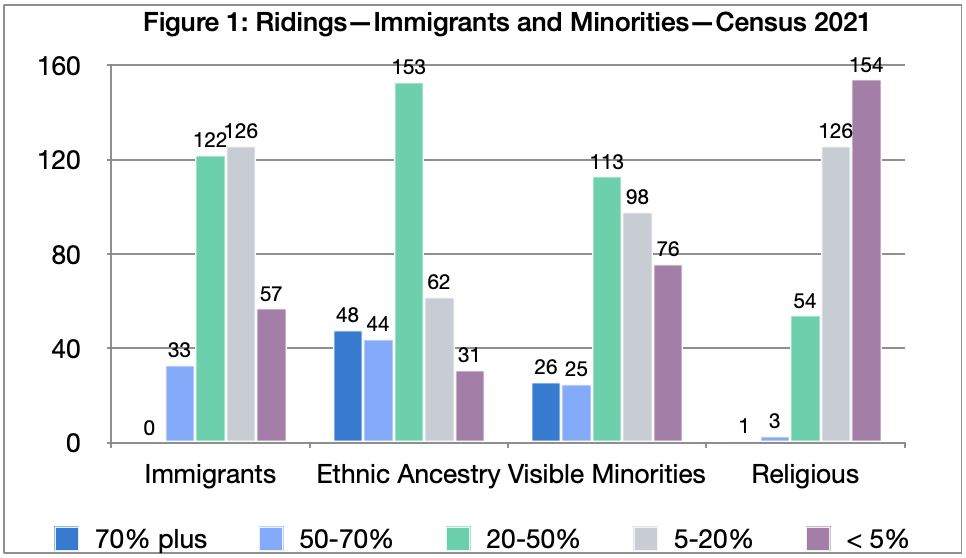
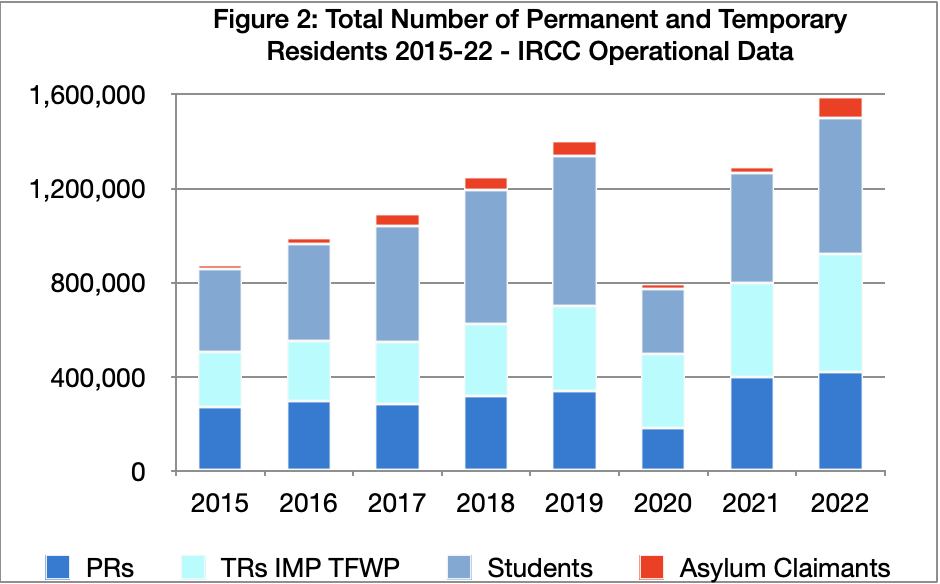
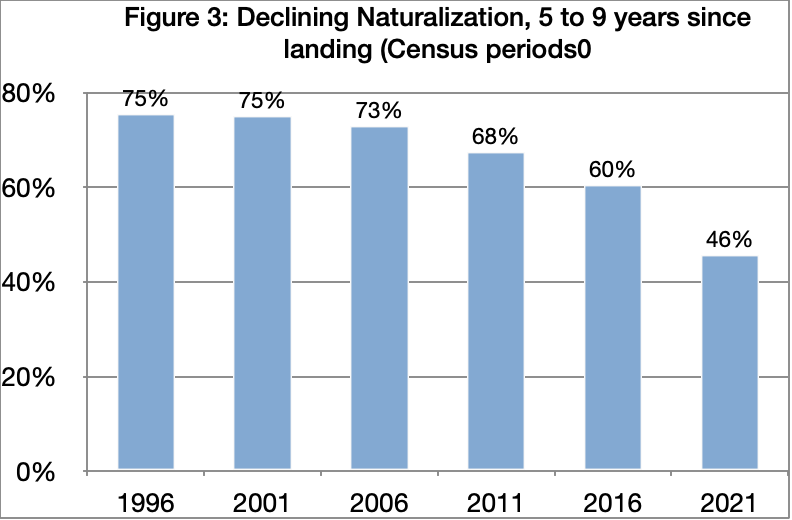
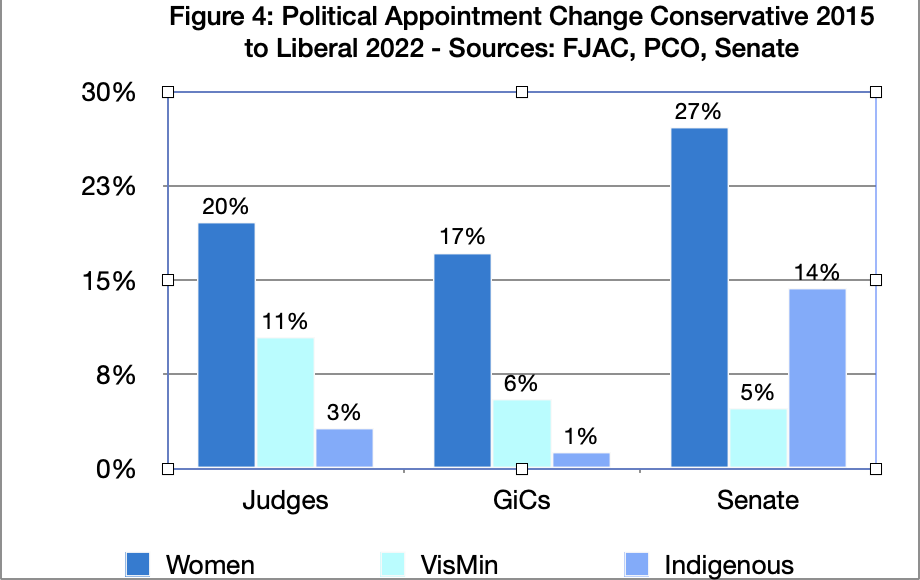

 Multicultural Meanderings