ICYMI. While David Mulroney is the more “hardline” of the two, the fundamental message from Guy Saint-Jacques is the same:
Two former diplomats are warning that the Liberal government’s recent silence on China could reinforce the country’s increasingly belligerent actions on the world stage, amid concerns Chinese officials actively misled the World Health Organization during the early stages of the COVID-19 pandemic.
David Mulroney, who served as Canadian ambassador to China in Beijing between 2009 and 2012, said Ottawa’s “almost humiliating” posture toward China in recent weeks was a missed opportunity to acknowledge the country’s shortcomings during the viral outbreak.
China has drawn criticism for providing potentially faulty information to the WHO, particularly in the first weeks of the spread of COVID-19, which in turn left world leaders largely ill-prepared for the virus.
Guy Saint-Jacques, who served as Canada’s envoy to China from 2012 to 2016, said leaders in Canada and elsewhere need to call for a full investigation of the WHO after it uncritically relayed information from Beijing observers claim could be inaccurate.
He also denounced recent “reprehensible” comments by Health Minister Patty Hajdu, who dismissed claims about faulty Chinese reporting as “conspiracy theories” that originated “on the Internet.”
Mulroney said the recent silence by Ottawa is part of a long-standing instinct to gloss over Chinese aggressions, largely due to its tendency to retaliate and its growing economic heft. But an unwillingness to acknowledge even the possibility of Chinese misdeeds could sow public distrust.
“Ottawa can’t seem to shake this tendency to flatter,” he said in an interview with the National Post.
“I’m not suggesting that we need to insult China or provoke a quarrel. We should simply be guided by the facts. And right now the facts argue for the case that China was delinquent, that it wasn’t transparent enough. That’s not a conspiracy theory.”
“When you start acknowledging the truth, then positive and corrective action is possible. As long as you’re in denial, there’s no hope of action that will ameliorate the situation. This is a tremendous missed opportunity and it’s not too late for the government to slowly turn the ship around,” Mulroney said.
Prime Minister Justin Trudeau has batted away repeated questions about the WHO this week, after U.S. President Donald Trump said he would withdraw funding from the organization.
Then on Thursday, Trudeau came closer to acknowledging some of the criticisms of China and the WHO, saying “there have been questions asked” about the organization, “but at the same time it is really important that we stay coordinated as we move through this.”
Both former ambassadors said Trump’s threat to immediately pull funding from the WHO would needlessly and dangerously cripple the organization at a critical time.
Saint-Jacques, who acknowledged that Ottawa is in a “delicate” position with regards to China, said world leaders should call for a thorough review of the WHO’s handling of the pandemic once it is under control.
“You have to draw a line,” Saint-Jacques said. “You have to stop such behaviour. You have to acknowledge that if you dealt with this issue with a lot more transparency we would have avoided an international crisis that has led to one of the greatest recessions of our times.”
The Trudeau government has repeatedly been forced to navigate tense relations with China, particularly after Canadian authorities arrested the chief financial officer of Chinese telecom giant Huawei Technologies in 2018, at the request of the U.S.
An attempt by Trudeau early in his leadership to forge a free trade deal with the country quickly evaporated, after Chinese officials made it clear that they were disinterested in certain “progressive” elements put forward by Canada, including proposals around environmental policy and gender-based analysis.
“Cabinet did not fully realize what I call the dark side of China,” Saint-Jacques said of the trade mission.
Criticism of the WHO began in earnest on Jan. 14, when Tedros Adhanom Ghebreyesus, the director-general of the organization, tweeted a message nearly identical to that of the Chinese government, saying researchers “have found no clear evidence of human-to-human transmission” of the coronavirus.
By Jan. 20 Chinese officials finally confirmed that the virus could indeed spread through human contact, and shut down the city of Wuhan, where the virus originated. Another week passed before the WHO declared a public health emergency.
On Feb. 6, weeks after the body had designated a public health emergency, the organization issued a press release calling on countries to avoid imposing travel bans or “medically unnecessary restrictions” against China, saying such moves could “fuel racism” against the country.
Those directives were absorbed by national governments around the world, who were in turn caught off guard by the scope and nature of COVID-19.
The WHO’s director-general has dismissed much of the criticism of his organization as unnecessary “politicization” of the issue, but he has said the virus exposed some shortcomings at the United Nations group.
“No doubt, areas for improvement will be identified and there will be lessons for all of us to learn. But for now, our focus — my focus — is on stopping this virus and saving lives.”
The pattern surrounding the World Health Organization (WHO) and the Beijing party-state’s ongoing influence over it continues. Taiwan, a nation that has shown impressive success in combatting the COVID-19 virus despite its exclusion from WHO, is now accused of racism by the organization’s director general.
WHO Director General Tedros A. Ghebreyesus—an Ethiopian microbiologist and the first African to hold the position—asserted that Taiwan’s government not only launched a cyber campaign against him, but is also the instigator of the racism directed at Africans in general.
In a press briefing on April 6, the director general claimed he had been the victim of racially abusive attacks emanating from Taiwan, and that the country’s foreign ministry had actually stepped up its criticism of him.
Taiwan’s President Tsai Ing-Wen and the ministry of foreign affairs have denied the charges.
Given the fraught situation between Taiwan and the Chinese Communist Party (CCP) generally, including the latter’s manipulation of WHO policies of Taiwan exclusion over the years—combined with the Beijing government’s serious mismanagement of the COVID-19 pandemic, the evidence appears clearly stacked against Tedros’ claims.
President Tsai and her government provided warnings to the WHO as early as last December, which, if not ignored, as they were, might have saved thousands of lives.
For nearly half a century, the People’s Republic of China has effectively blocked Taiwan from joining the WHO. Despite never having exercised authority over the island, the CCP deems Taiwan part of its territory, and forces international organizations—including the United Nations and its agencies like the WHO—to accept its view.
Dr. Bruce Aylward, one of WHO’s top advisers recently evaded and then abruptly cut off Hong Kong journalist Yvonne Tong’s question on whether WHO would reconsider Taiwan’s status in light of the country’s exemplary performance in curbing the spread of COVID-19.
According to the reputable Foreign Policy Magazine, Beijing succeeded from the first outbreak of the coronavirus in misdirecting the World Health Organization (WHO), which receives comparatively modest funding from it but has somehow become obedient to it on many levels.
WHO’s international experts could not gain access to China until Tedros visited President Xi Jinping in Beijing at the end of January. Before then, WHO uncritically repeated information from party-state authorities, ignoring warnings from Taiwanese doctors. Reluctant to declare a “public health emergency of international concern,” WHO denied as late as Jan. 22 that there was any need to do so.
After China’s pandemic had levelled off, notes the Foreign Policy article, Tedros then praised Beijing’s “success.”
In sharp contrast, Taiwan has been treated as an outcast by the WHO, despite its exemplary performance in the current world crisis.
Almost 100 anti-COVID-19 initiatives from Taiwan’s national government included: screening Wuhan flights as early as Dec. 31; banning Wuhan residents on Jan. 23; suspending Taiwanese visits to Hubei province on Jan. 25; and barring all Chinese arrivals on Feb. 6. These and other measures resulted in only 388 confirmed cases and six deaths as of April 12 in a population of almost 24 million.
The WHO not only ignores Taiwan’s medical expertise, but also its status vis-à-vis China.
During the current pandemic, the organization keeps changing how it refers to Taiwan, going from “Taiwan, China,” to “Taipei” to the newer “Taipei and its environs”. It permitted Beijing to report Taiwan’s coronavirus numbers as part of its own total, instead of reporting Taiwan’s numbers alone—a conflation that created headaches for the smaller nation. Some countries imposed travel restrictions on Taiwan along with China, despite the former’s small infection rate.
“Taiwan’s selfless medical workers and volunteers can be found around the world. The Taiwanese people do not differentiate by skin colour or language; all of us are brothers and sisters,” Tsai said in response to Tedros’ accusations. “We have never let our inability to join international organizations lessen our support for the international community.” She added that the WHO head was welcome to visit Taiwan and see for himself.
The internationally acknowledged success of Taiwan with the scourge of COVID-19 might lead to a diplomatic opening. Its government has already concluded a bilateral agreement with the United States to send masks, which could lead to drugs and vaccines going to America for clinical trials. Other governments seem likely to follow.
Susan Korah is an Ottawa-based journalist and David Kilgour was secretary of state, Asia-Pacific, 2002-2003, and Africa/Latin America, 1997-2002, in the Chrétien government.
Two articles in French language media on relatively under-covered aspects of COVID-19:
Starting with the reduced staffing of Canadian missions abroad and the impact on consular service. Less concerned about political reporting given the amount of information publicly available:
Radio-Canada a appris qu’une soixantaine de missions diplomatiques ne peuvent désormais qu’assurer le strict minimum en matière d’aide consulaire, puisque le personnel jugé non essentiel à la réponse à la COVID-19 a été ramené d’urgence au Canada depuis quelques semaines, du jamais-vu.
Environ 1000 personnes, diplomates et membres de leur famille, ont ainsi quitté ambassades, hauts-commissariats et autres missions diplomatiques un peu partout sur la planète. Selon nos sources, le personnel diplomatique travaillant dans des pays où le système de santé est jugé peu fiable a été rapatrié en priorité.
L’opération a commencé en janvier par le retour au Canada du personnel non essentiel en Chine, premier foyer d’infection par le coronavirus, avant de se poursuivre dans une soixantaine de pays.
Le ministère [des Affaires étrangères] a un devoir d’assurer la santé et la sécurité de ses employés, indique une source gouvernementale qui a requis l’anonymat pour s’exprimer librement.
Les chefs de mission, comme les ambassadeurs, restent toutefois en poste. Si Affaires mondiales Canada demeure en mesure d’assurer les services consulaires d’urgence, le rapatriement massif du personnel force la mise en veilleuse de nombreux programmes.
Dans ces pays, ce sont surtout les programmes d’aide au développement et les missions commerciales qui sont touchés, confie un employé d’Affaires mondiales Canada bien au fait du dossier.
On fait ce qu’on peut à distance, mais c’est sûr que notre capacité à livrer des programmes et faire des suivis est réduite, ajoute cette même source.
Les opérations régulières sur le terrain avaient toutefois déjà été lourdement perturbées avant que ces diplomates ne reviennent au Canada, alors que le ministère consacrait tous ses efforts au rapatriement des ressortissants canadiens.
Une « perte de contact » avec le monde
Si le Canada n’avait d’autres choix que de rapatrier un maximum de ses représentants, Gilles Rivard, l’ancien ambassadeur du Canada en Haïti, croit que cette vaste opération nuira en premier lieu à la collecte de renseignements dans les pays où les missions auront réduit leurs ressources au maximum.
On ne produira plus de rapports politiques sur ce qui se passe dans ces pays, c’est une perte de contact que le Canada va vivre, dit-il en entrevue.
Gilles Rivard ajoute qu’il ne faut pas négliger les conséquences de la réduction du personnel canadien à l’étranger.
Ça va avoir un impact extrêmement important. Pas juste sur les programmes culturels, mais également sur les programmes d’aide au développement. Il n’y aura plus personne pour suivre les projets sur place qui sont gérés par le Canada, il n’y aura pas de suivi pendant un certain temps, souligne le diplomate de carrière.
M. Rivard rappelle cependant que le Canada peut se fier davantage à ses partenaires internationaux, comme la Croix-Rouge, pour gérer les programmes financés par le gouvernement canadien.
Dans ces moments difficiles, l’ancien chef de mission pense aussi beaucoup aux diplomates, autant les rapatriés que ceux restés à l’étranger, et à leur famille.
L’impact sur les proches est immense, dit-il. Dans des cas comme ça, des familles doivent partir en premier et certains diplomates restent derrière, c’est très difficile humainement. Ceux qui doivent partir se sentent coupables de laisser la mission derrière, ce sont des gens qui ont à cœur ce qu’ils font.
And Foreign Minister Champagne on the repatriation flights. Despite the various frustrations and complaints by many Canadians stuck abroad, the scale of the effort given the many countries involved, is impressive:
Le ministre des Affaires étrangères, François-Philippe Champagne, a indiqué que ce dossier a été abordé durant les discussions qu’il a eues avec ses homologues d’une douzaine de pays lors d’une récente conférence téléphonique.
Ce dossier devrait être de nouveau à l’ordre du jour lors de la sixième conférence téléphonique que M. Champagne doit organiser ce vendredi avec ses vis-à-vis de l’Allemagne, de la France, de l’Angleterre, de la Turquie, de la Corée du Sud, du Brésil, du Mexique, de l’Indonésie, de l’Australie, de l’Afrique du Sud, de Singapour, du Pérou, du Maroc et de l’Union européenne.
Depuis plus d’un moins et demi, et à l’instigation de M. Champagne, les ministres des Affaires étrangères de ces pays se donnent un rendez-vous quasi hebdomadaire afin de discuter des enjeux liés à la COVID-19 qu’ils ont en commun. À la prochaine conférence téléphonique, l’Inde a fait part de son intérêt à y participer.
Au cours des dernières semaines, les responsables de la diplomatie étrangère de ces pays ont pu coordonner leurs efforts pour rapatrier leurs ressortissants respectifs dans un contexte des plus difficiles, discuter des mesures à prendre pour protéger la chaîne d’approvisionnement mondiale en biens essentiels, faciliter l’établissement de ponts aériens et protéger les routes maritimes.
La prolongation des permis de séjour pour les ressortissants qui n’ont pas été en mesure de rentrer dans leur pays fait maintenant partie de dossiers prioritaires.
« L’objectif, c’est de s’assurer que nos ressortissants ne se trouvent pas en violation technique de leur visa ou de leur permis de séjour. Il n’y a pas que des Canadiens qui pourraient se retrouver dans cette situation. Il y a aussi des Australiens, des Britanniques, des Français, etc. Cela fait partie des enjeux que l’on aborde ensemble », a indiqué M. Champagne dans une entrevue accordée à La Presse.
Le ministre a indiqué que les opérations visant à rapatrier les voyageurs canadiens qui se trouvent toujours à l’étranger sont à « 75 % à 80 % » terminées. En date de mardi, les autorités canadiennes ont pu rapatrier 16 606 Canadiens en provenance de 65 pays à partir de 119 vols. Il a répété que malgré tous les efforts qui ont été déployés jusqu’ici, « on ne pourra pas ramener tout le monde ».
Quant au nombre de ressortissants canadiens qui pourraient avoir besoin d’une prolongation de permis de séjour ou de visa, il est difficile d’en dresser un portrait précis. Tout dépendra du succès des opérations de rapatriement qui auront lieu au cours des prochains jours et du nombre de Canadiens qui se seront inscrits auprès des services consulaires.
« S’il y a un moment dans l’histoire où on doit plus collaborer, c’est bien maintenant. Chaque jour, j’ai toujours l’impression que l’on fait un pas de plus », a affirmé le chef de la diplomatie canadienne.
« Dans le cas des opérations de rapatriement, c’est durant ces discussions que plusieurs pays ont décidé de mettre leurs ressources en commun pour faciliter les opérations. On devrait avoir une déclaration commune sur d’autres mesures que l’on veut prendre ensemble après notre rencontre du 17 avril », a-t-il aussi avancé.
Au départ, M. Champagne avait comme objectif de créer un sous-groupe de pays membres du G20 pour discuter des enjeux liés à la pandémie de la COVID-19. Alors que certains de ses collègues évoquaient les problèmes qu’ils éprouvaient dans les efforts de rapatrier leurs ressortissants au Pérou et au Maroc, M. Champagne a décidé d’inviter les ministres des Affaires étrangères de ces deux pays à participer à la conférence téléphonique pour les sensibiliser.
« Je voyais bien que nous avions tous les mêmes enjeux au Pérou et au Maroc. J’ai alors demandé au ministre des Affaires étrangères du Pérou de se joindre à l’appel, comme celui du Maroc. Et ils participent toujours aux appels aujourd’hui, même s’ils ne font pas partie du G20 », a-t-il raconté au bout du fil.
« Ce que j’aime dans la composition régionale, c’est d’abord l’importance des joueurs autour de la table. Ce n’est pas un groupe fermé. Ceux qui veulent s’y joindre – c’est au niveau ministériel – peuvent le faire. Cela nous a permis de développer des liens, de raffermir des liens. Aux dires des collègues, c’est le seul appel régulier qui se tient dans le monde sur la COVID-19 aujourd’hui », a-t-il pris soin de relever.
L’esprit de collaboration qui règne durant ces appels donne espoir à François-Philippe Champagne. Cela pourrait renforcer le multilatéralisme, mis à rude épreuve en ce moment par les États-Unis depuis l’arrivée au pouvoir de Donald Trump à Washington.
« Il y aura peut-être un renforcement du multilatéralisme dans le sens où les gens auront vu la nécessité de coordonner, de coopérer et de collaborer face à des enjeux qui dépassent les frontières. On le voit au niveau des changements climatiques, on le voit au niveau du nouveau coronavirus. On est en train de se donner des exemples très concrets où le multilatéralisme prend tout son sens », a-t-il affirmé.
As China in March became the first major country to recover from the coronavirus outbreak that spread from the central city of Wuhan, its officials kicked off another campaign: to heal its tattered international image.
President Xi Jinping held a flurry of phone calls with world leaders to promise aid. More than 170 Chinese medical experts were dispatched to Europe, Southeast Asia and Africa. State media outlets flooded the Internet with photos of Chinese masks arriving in 100 countries and stories questioning the epidemic’s origins. Ambassadors flooded international newspapers with op-eds hailing the sacrifices Beijing made to buy time for other countries without acknowledging how the outbreak erupted in the first place.
One month later, that campaign has yielded mixed results. In many cases, it has outright backfired.
In Britain, a parliamentary committee on foreign relations urged the government to fight a surge in Chinese disinformation. Officials in Germany and at least one state – Wisconsin – exposed quiet outreach attempts from Chinese officials hoping to persuade them to publicly praise China.
In Spain, the Czech Republic and the Netherlands, governments announced recalls of Chinese masks and testing kits after large batches were found to be defective, undercutting what China sought to portray as goodwill gestures. In Nigeria, the country’s professional medical association slammed a government decision to invite a team of Chinese doctors, going as far as claiming that they might carry the disease with them.
And on Twitter, Chinese diplomats have not only spread China’s message but gone on the counterattack. They publicly feuded with the Brazilian president’s son and his education minister, who accused Beijing of seeking “world domination” by controlling protective-equipment supplies. They tangled with Iran’s Health Ministry spokesman, who questioned the accuracy of Chinese epidemic data, and lashed out at a Sri Lankan businessman who criticized China’s epidemic response.
The wave of skepticism, sometimes from nations friendly toward China, underscores the size of the challenge facing foreign policymakers in Beijing as they look toward the post-pandemic global landscape. While governments from Washington to Brussels have been faulted for mismanaging the crisis or failing to galvanize an international response, China’s standing has taken a hit precisely at a moment when the country was positioning itself as an up-and-coming leader in world affairs.
“They know when the dust settles and people turn their eye toward whether Beijing was responsible, it’s going to be a very difficult situation,” said Nadège Rolland, a senior fellow at the National Bureau of Asian Research, who described China’s globe-spanning, hard-sell campaign in recent weeks as public relations “on steroids.”
“They’re trying to get ahead of that narrative” of blame, Rolland added. “It’s as much out of fear as it is confidence.”
Chinese officials have appeared frustrated by the emerging backlash to what they say is simply altruism. Foreign Ministry spokeswoman Hua Chunying said this month that China was not using coronavirus diplomacy to burnish its image or extend its influence over countries. Chinese officials have also pledged to immediately crack down on shoddy medical equipment.
“We would like to share China’s good practices and experience with other countries, but we will not turn it into any kind of geopolitical weapon or tool,” Hua said. “Leadership is not gained by boasting or jostling.”
To be certain, many countries with growing investment ties with China, particularly across Southeast Asia, have responded positively. In Serbia, a billboard reading “Thank You, Big Brother Xi” went up in the streets of Belgrade. Italian Foreign Minister Luigi Di Maio, a member of the Euroskeptic Five Star Movement, uploaded a Facebook video showing him receiving shipments of Chinese medical equipment.
He said the Chinese aid validated his party’s decision to distance itself from the European Union.
“Joining China’s Belt and Road Initiative saved Italian lives,” Di Maio declared, referring to Xi’s signature policy to expand Beijing’s influence through infrastructure and loan programs, in comments widely reported in Chinese state media.
In several African countries, China’s reputation was bolstered by speedy donations made by Jack Ma, the billionaire co-founder of Chinese tech behemoth Alibaba.
“China led a master class in modern public diplomacy with its medical donations, leveraging a vast propaganda network that it built in Africa over the past 10 to 15 years,” said Eric Olander, co-founder of the China Africa Project.
China started to lose momentum in the “donation diplomacy” narrative after reports emerged that the quality of the masks may have been suspect, Olander added. But in the early weeks, the Chinese aid was “warmly received by the governing elites,” he said. “People were impressed.”
In many Western countries, it has not been so much China’s medical assistance that has drawn consternation, but rather Beijing’s departure from its traditional diplomacy into the realm of disinformation that had rarely been seen from China before the coronavirus emerged in Wuhan in late 2019.
Last month, when Foreign Ministry spokesman Zhao Lijian and other diplomats questioned whether the virus was brought to China by U.S. military personnel, it provoked a furious response from Washington. A disinformation watchdog agency of the European Union rejected the Chinese officials’ conspiracy theory.
After Chinese state media widely reported that a renowned Italian researcher had said the coronavirus may have originated in Italy, not Wuhan, the nephrologist Giuseppe Remuzzi spoke to Italian daily il Foglio to correct the record, saying his words had been distorted for propaganda purposes.
Zhiqun Zhu, chair of international relations at Bucknell University and author of the book “China’s New Diplomacy,” said the coronavirus has sharpened a long-standing debate within Chinese diplomatic circles: Should China wage an all-out “discourse” war to beat back critics like Trump administration officials and assert its prerogatives as a world power? Or should it present a more humble, less confrontational face?
“There is no consensus in diplomatic establishment circles,” Zhu said. “Surely some diplomats know that outside, the world blames China, that the propaganda projecting China as its savior is counterproductive. But right now, the leadership also wants to boost nationalism at home.”
Zhu said more traditional-minded Chinese diplomats, including the long-serving ambassador to Washington, Cui Tiankai, have sought to tamp down the spread of fringe theories and the bureaucracy’s most combative impulses. In a couched essay in the Communist Party’s flagship newspaper this month, another senior official, former vice foreign minister Fu Ying, said Chinese diplomats should uphold “the spirit of humility and tolerance, and adhere to communication, learning, and openness.”
Chinese intellectuals have also worried about their country’s deteriorating image under the current diplomatic tack. A drumbeat has grown from conservative politicians in both the United States and Britain to demand economic reparations from China, although it’s not clear whether such an effort would succeed in international court.
In widely distributed essays, leading economist Hua Sheng warned China against spreading conspiracy theories about the origins of the virus or “gloating” when other countries were still struggling to overcome the pandemic. He urged China to have the courage to conduct an accounting of what went wrong in Wuhan.
“Some people say if we investigate our country’s culpability, we would be giving evidence to outsiders and give them a tool to hurt our national interests,” Hua wrote. “I must say, it’s precisely the opposite.”
Lucrezia Poggetti, a researcher at the Mercator Institute for China Studies in Berlin, said China’s internal dynamics and the emphasis on saving face for the domestic population meant it was highly unlikely that the government would thoroughly admit fault or show weakness on the international stage.
But even if Chinese diplomats successfully manage the near-term public relations crisis, they might struggle to counter the longer-term trends already set in motion by the pandemic. As an example, Poggetti said, European countries – including France, Germany and Britain – and the United States and Japan are reassessing their dependence on China for critical health and national security-related supplies.
“There will be a reckoning after the pandemic ends,” she said.
For months the Chinese government’s propaganda machine had been fending off criticism of Beijing’s handling of the coronavirus outbreak, and finally, it seemed to be finding an audience. Voices from the World Health Organization to the Serbian government to the rapper Cardi B hailed China’s approach as decisive and responsible.
But China could not savor the praise for long. In recent days, foreign leaders, even in friendly nations like Iran, have questioned China’s reported infections and deaths. A top European diplomat warned that China’s aid to the continent was a mask for its geopolitical ambitions, while a Brazilian official suggested the pandemic was part of China’s plan to “dominate the world.”
As the pandemic unleashes the worst global crisis in decades, China has been locked in a public relations tug-of-war on the international stage.
China’s critics, including the Trump administration, have blamed the Communist Party’s authoritarian leadership for exacerbating the outbreak by initially trying to conceal it. But China is trying to rewrite its role, leveraging its increasingly sophisticated global propaganda machine to cast itself as the munificent, responsible leader that triumphed where others have stumbled.
What narrative prevails has implications far beyond an international blame game. When the outbreak subsides, governments worldwide will confront crippled economies, unknown death tolls and a profound loss of trust among many of their people. Whether Beijing can step into that void, or is pilloried for it, may determine the fate of its ambitions for global leadership.
“I think that the Chinese remain very fearful about what will happen when we finally all get on top of this virus, and there is going to be an investigation of how it started,” said Bonnie Glaser, the director of the China Power Project at the Center for Strategic and International Studies in Washington. “They’re just trying to repair the damage that was done very early on to China’s reputation.”
The crux of China’s narrative is its numbers. Since late March, the country has consistently reported zero or single-digit new local infections, and on Wednesday, it lifted its lockdown in Wuhan, where the outbreak began. In all, the country has reported nearly 84,000 infections and about 3,300 deaths — a stark contrast to the United States, which has reported more than 399,000 infections, and Spain and Italy, each with more than 135,000.
The numbers prove, China insists, that its response was quick and responsible, and its tactics a model for the rest of the world. During a visit last month to Wuhan, China’s top leader, Xi Jinping, said that “daring to fight and daring to win is the Chinese Communist Party’s distinct political character, and our distinct political advantage.”
In the early afternoon of Jan. 31, the lead World Health Organization representative in Beijing held a video briefing to update diplomats on the spread of a deadly new virus – and to laud China for everything it was doing.
Only a day before, the WHO had declared a “public-health emergency of international concern” over the deadly new coronavirus that causes COVID-19, after an initial outbreak in China’s Hubei province began to spread around the world. The WHO also said no restrictions on travel or trade were necessary.
On the video briefing, the WHO’s top man in China, Gauden Galea, praised the Chinese virus response. Then he went a step further, calling on other countries not to step out of line with the WHO recommendations, a key concern for Beijing, which was furious that countries were beginning to close their borders to Chinese travellers.
Any United Nations member country “will have to scientifically justify” any measure that “goes beyond UN recommendation. This justification will be made public,” Mr. Galea said, according to notes of the meeting made by one of the participants and seen by The Globe and Mail.
It amounted to a warning from the WHO, said the person, whose identity The Globe is not disclosing because the source is not authorized to speak publicly. And it was directly in line with messages from Beijing, which in subsequent days said it “deplored” countries that ignored WHO recommendations and enacted travel bans that, according to Foreign Ministry spokeswoman Hua Chunying, “sowed panic among the public” and “gravely disrupted” trade.
Now, with the virus rapidly spreading across Canada, new questions are being asked about the WHO’s relationship with China and whether the organization has sought to curry favour with Beijing – for access or money – in ways that have undermined the reliability of its advice.
In 2003, the WHO vocally criticized Chinese leadership for covering up the initial spread of the virus that caused SARS. Amid the COVID-19 pandemic, however, the organization has pointedly refused to denounce China’s concealment of information, even after it became clear that authorities in China had muzzled doctors.
In mid-January, the WHO said it had no evidence of person-to-person transmission of a virus that has subsequently shown a remarkable ability to spread through communities. And the WHO has relied on Chinese official data even when their veracity have been called into doubt – most recently by the U.S. intelligence community, which believes China deliberately manipulated numbers to mask the severity of its COVID-19 toll.
The trustworthiness of the WHO is a particular concern for countries like Canada, where public-health leaders have sought to follow WHO recommendations despite internal warnings about the reliability of information coming from China. On Thursday, Ms. Hua sought to deflect concern, saying, “China has been giving open, transparent and timely updates to the world.” Rather than listen to those accusing China of a cover-up, she said, “we should listen to the WHO.“
But concern about the relationship between the WHO and China has grown more intense as the virus pandemic claims tens of thousands of lives, bringing new attention to early failures in detection and containment. The WHO cannot work in China without Beijing’s support, and the organization has won praise for its more recent advocacy of strong measures to counter COVID-19.
Still, Mr. Galea’s admonition in late January only added to worry that the WHO was prioritizing the interests of China over those of other countries.
The WHO, in a statement, said Mr. Galea in the January briefing “referred to the sovereign right of all countries to take the measures they see fit.” But to some in attendance, his admonition only added to worry that the WHO was prioritizing the interests of China over those of other countries.
“National governments didn’t get warned as urgently as perhaps they could have by World Health officials about the severity and potential for non-containment of the virus,” said Andrew Lakoff, an anthropologist of science and medicine at University of Southern California Dornsife. A key question now is: ”What did the WHO know and why didn’t they earlier and more urgently warn other member states?” he said.
Andrew Cooper, a professor at the Balsillie School of International Affairs in Waterloo, Ont., who studies global health governance, is blunt: For WHO director-general Tedros Adhanom Ghebreyesus, “his priority is to maintain good relations with China.” Beijing has provided more cash than Washington to the WHO COVID-19 response. But China remains far from the largest contributor to the WHO, giving less than 10 per cent of what the United States provided last year.
Beijing, however, has made concerted efforts to increase its influence at key international organizations, and the WHO missteps on COVID-19 have brought that into striking relief.
The “evident bias” in favour of China at the WHO “matches the weakness of other UN organizations in the face of China’s powerful campaigning,” François Godement, senior adviser for Asia at the Institut Montaigne, wrote in a recent internet post. Once China itself began to act decisively against the virus, the WHO became a valuable clearinghouse for information, he wrote. But a key question for the WHO remains “how to lessen the impact of a relentless authoritarian regime.”
Canada has publicly expressed confidence in the WHO. Canadian Health Minister Patty Hajdu initially said Canada would follow WHO advice to avoid travel bans, saying “there isn’t evidence” for their effectiveness. It was not until March 18 that Canada closed its borders to most foreigners.
On Thursday, Ms. Hajdu said “there is no indication” that China has falsified data about virus infection and death rates, and accused a reporter of “feeding into conspiracy theories” for questioning the accuracy of Chinese data – and the WHO information that relies upon China.
Chinese authorities have themselves admitted that, until recently, their numbers of confirmed cases did not include people without obvious symptoms. Even in China’s tightly controlled media, numerous questions have been raised about the accuracy of China’s numbers, particularly after photos from coronavirus epicentre Wuhan showed large numbers of boxes containing cremated remains.
It’s a question that has been raised at the highest levels in Canada, too.
Beginning in late January, the Prime Minister’s Office received internal warnings questioning the reliability of China’s reporting on the spread of the virus epidemic, according to a person with knowledge of the information shared internally. The Globe is not identifying the person because they are not authorized to make public comments.
Canada had long since lost some of its own ability to independently scrutinize information coming from China. Under David Butler-Jones, Canada’s Chief Public Health Officer between 2004 and 2014, the Public Health Agency of Canada stationed a representative in Beijing – a medical doctor with a specialization in public health.
“It’s a way of getting an earlier heads up … so that if something is developing, we can get good intelligence on it early and get ahead of it,” Mr. Butler-Jones said in an interview. But the doctor who occupied that post left Beijing in 2015 and has not been replaced, leaving Canada with no one in such a position in China during the spread of COVID-19.
“For me, it’s frustrating,” Mr. Butler-Jones said. The position was in China “for good reason.”
Still, other sources of information underscored the threat. One was Taiwan, a region still plagued by memories of the Chinese cover-up of the SARS epidemic nearly two decades earlier. Taiwan, shut out of the WHO at the insistence of China, was ill-disposed to believe Beijing’s early assurances on the new coronavirus.
“We don’t trust anything related to new outbreaks from China,” said Chang-Chuan Chan, dean of the college of public health at National Taiwan University.
Taiwan began inspecting passengers arriving from Wuhan on Dec. 31, and sent a technical team to the virus-stricken city on Jan. 13 to 14. The delegation, which also included experts from Hong Kong and Macau, was controlled in what it could see, and denied access to the seafood market that is believed to be at the epicentre of the COVID-19 outbreak. But the Taiwanese experts came away convinced that “there is already person-to-person transmission,” Prof. Chan said.
This was out of step with the WHO, which issued a tweet on the night the Taiwanese left Wuhan saying “preliminary investigations conducted by the Chinese authorities have found no clear evidence of human-to-human transmission” of COVID-19.
The WHO acted “on the basis of available information,” said spokesperson Tarik Jasarevic, citing a statement from Chinese authorities on Jan. 14 that “there is no evidence to date of a highly contagious virus.”
The close partnership between Beijing and the WHO has continued, with some of the organization’s key leaders showing a striking deference to Chinese priorities, including Bruce Aylward, the Canadian doctor who led a WHO mission to China in February.
He attracted global attention last week when he disconnected a video interview with a Hong Kong journalist after being asked about Taiwan, which Beijing considers its territory. (“The question of Taiwanese membership in WHO is up to WHO member states, not WHO staff,” the organization said in a statement this week. On Thursday, the Hong Kong government said broadcaster RTHK “breached the One-China Principle” with the interview.)
Mr. Aylward’s mission provided another opportunity for co-operation between the WHO and China, which provided 12 of the 25 people on the delegation. Chinese involvement extended to the final edits of the subsequent report, including over which specific language was used.
“There was a bit of wording manipulation, but not the sentiment,” said Dale Fisher, a professor of medicine at the National University of Singapore, and one of the delegates. For example, “we wanted to call it a ‘dangerous’ pathogen, and they felt the word ‘dangerous’ could be linked to bio-terrorism.”
The final report calls COVID-19 “a new pathogen that is highly contagious, can spread quickly, and must be considered capable of causing enormous health, economic and societal impacts.”
The report is effusive toward China, whose virus response it calls “exceptional” and whose people it praises for a deep commitment to “collective action in the face of this common threat.”
All members of the delegation “contributed to the writing, intense discussions and finalization of the report and fully concurred with the final content and language,” said Mr. Jasarevic, the WHO spokesperson. “No major or even minor finding of the mission was not included in the final report.”
Dr. Fisher dismissed criticism that the WHO was too sunny in its report from the mission. ”Everything we saw and everything we learned has completely been replicated elsewhere,” he said, pointing to findings about the ratio of mild, severe and critical cases that have been similar in other countries. “If you’re asking me could it have been any better, my answer is no,” he said.
And it’s not fair to fault the WHO for the failures of other governments to respond, particularly after the severity of the virus became clear in Wuhan, said Bilahari Kausikan, an international affairs specialist who previously served as ambassador-at-large for Singapore.
The United States “wasted time denying that this was a serious issue,” he said. “You can’t blame the WHO for that. You can’t blame the WHO for the Europeans having a terrible, nonchalant attitude toward the whole thing.”
More on Chinese government disinformation efforts:
It’s safe to say China’s foreign ministry does not often pay much attention to obscure Canadian research organizations run by conspiracy theorists.
But earlier this month the ministry’s spokesman tweeted in English not once but three times about two surprising articles from the Montreal-based Centre for Research on Globalisation.
“This is so astonishing that it changed many things I used to believe in,” Lijian Zhao wrote to 500,000 followers on a social-media platform his fellow Chinese are banned from using. “Please retweet to let more people know about it.”
The “astonishing” piece suggested that COVID-19 did not originate in Wuhan, China, as Chinese and other scientists have reported, but was brought to Wuhan by American soldiers last November.
This is so astonishing
Despite the dubious source, Zhao tweeted about another article on the institute’s website — a hotbed of 911-deniers and champions of Vladimir Putin’s worldview — and then tweeted “it might be US army who brought the epidemic to Wuhan. Be transparent!”.
Beijing and its media outlets did not stop there. They’ve also suggested recently the virus might have originated in Italy, and that a Wuhan doctor arrested after raising the alarm about the new virus — only to later die from it — was a Communist Party hero, not an inconvenient whistleblower silenced by the state.
Only a couple of months ago, China was pilloried for initially covering up and then underplaying the newly emerging coronavirus.
But as it emerges from a strict lockdown and claims to have snuffed out local transmission of COVID-19, the regime is casting the pandemic in a dramatically new light. It’s one that reflects brightly on the government of President Xi Jinping — and raises worrisome questions about the likelihood of China making changes that might prevent the next pandemic.
“The Chinese Communist Party sees itself as engaged in a global competition over the narrative surrounding COVID-19, its origins and government responses,” says Julian Gewirtz, Harvard-affiliated author of Unlikely Partners: Chinese Reformers, Western Economists and the Making of Global China.
“The disinformation, the conspiracy theory peddling and the wild and unsubstantiated accusations are prime examples.”
China’s role in the beginnings of the pandemic has, of course, become political fodder in the United States, where President Donald Trump insists on ignoring the medical name of the new disease, calling it the “Chinese virus” instead.
Increased reports of anti-Asian racism and xenophobia in the U.S. have followed. China is a convenient scapegoat now that the U.S. actually has more COVID-19 cases, a soaring death toll and overwhelmed hospitals in some places.
Meanwhile, China has received widespread praise for its eventual, aggressive response to the new virus, imposing a massive quarantine around the epicenter in Wuhan that helped at least slow the virus’s spread elsewhere. Chinese scientists have also been key in isolating the pathogen and mapping out its unique qualities.
The origins of the pandemic are a complex question best left to scientists, said China’s embassy to Canada in an email response to National Post questions.
“People of the world have all witnessed that it is under the leadership of the CPC (Communist Party of China) that the Chinese people achieved independence, freedom and liberation and made enormous progress in national development,” said the mission’s statement. “It is also under the leadership of the CPC that the Chinese nation united as one and speedily fought against COVID-19, buying precious time for the global response.”
The Chinese Communist Party sees itself as engaged in a global competition over the narrative surrounding COVID-19, its origins and government responses
But beyond name-calling by the U.S. and chest-thumping by China, there are clear reasons to look toward Beijing and its part in the expanding crisis, reasons that could determine if the world faces a similar calamity in the near future.
While the precise genesis of the disease is still something of a question mark, the current consensus reflects the conclusions of a group of 34 Chinese researchers, and one Australian, in the journal Lancet late last month.
The coronavirus, like others of its type, seems to have originated in bats, then jumped to live animals sold at a market in Wuhan, the specific culprit likely being an odd beast called a pangolin, and from there to humans, their paper concluded. Microbiologist David Kelvin of Dalhousie University, who has had a longstanding collaboration with researchers in Shantou, China, agrees.
It’s not totally implausible that it might have been circulating in humans earlier somewhere else — like Italy, he said. A “sero-prevalance” study that tested banked blood samples from well before the start of the pandemic might determine if there’s anything to the theory.
But, he said, “the data right now suggest that the origins are Chinese.”
In that regard, COVID-19 has obvious parallels.
The 2003 SARS virus, to which the new virus is closely related, is thought to have originated in bats, then leapt to animals sold at live markets in China’s Guangdong province — probably the civet cat — and on to people.
The H7N9 influenza virus, which has caused a string of relatively small but deadly epidemics in China, likewise moved from bats to wild fowl and then domestic poultry bought live by consumers, Kelvin said.
Wild animal sales were ordered stopped after SARS, then re-emerged. Beijing has now banned trade in live wild animals like the pangolin for food, though apparently not for use in traditional medicine.
Live wild game sales in China and other countries must be ended completely, otherwise “we predict with confidence that COVID-19 will not be the last viral pandemic,” virologist Nathan Wolf and “Guns, Germs and Steel” author Jared Diamond wrote in a recent op-ed article.
Some want a crackdown to go further. Wet markets, generally, even if just selling domestic animals, should be closed, says Kelvin.
Meanwhile, another human factor also seemed key to the spread of COVID-19. As doctors in Wuhan first became aware in December of patients suffering a mystery pneumonia — and infecting health-care workers — some put out the word to colleagues. But then eight of them, including ophthalmologist Li Wenliang, were brought in by police and accused of spreading false rumours. Li died from COVID-19 in February.
When officials publicly acknowledged the emergence of a novel pathogen, they at first played down its seriousness, questioning whether it could be transmitted between humans. A holiday banquet of 40,000 people went ahead in Wuhan on Jan. 13.
The Citizen Lab, a University of Toronto Internet watchdog, later reported that a Chinese live-streaming platform started blocking key words related to the outbreak in late December, with broader censorship following that.
Wuhan was eventually sealed off from the world on Jan. 23, inside a cordon sanitaire of unprecedented scale. Amid the initial suppression, virus carriers had already left the transportation hub in droves. The first Canadian case, a traveller who had visited the city, surfaced Jan. 26.
The emergence of COVID-19 was at first a public-relations disaster for China, an emerging superpower keen to bolster its international influence and prestige.
Then it began trying to change the conversation, and the pandemic’s core facts.
Among the first, startling examples was Foreign Ministry spokesman Zhao’s posts earlier this month.
One of the Montreal centre’s articles he tweeted about suggested that American soldiers who visited the World Military Games in Wuhan in December might have brought over the virus. Another suggested they caught the bug from a shuttered U.S. disease lab.
The centre’s website, globalresearch.ca, is replete with such conspiracy theories, including claims that Al Qaeda and the 911 attacks were an American invention, that the U.S. manipulates the weather as a potential weapon of mass destruction and vaccines are “genetic poisons.”
The website earlier came to the attention of the Latvia-based Strategic Communications Centre (StratCom), a NATO-affiliated thinktank, because of its consistent dissemination of articles reflecting Kremlin propaganda. A recent piece suggested NATO was preparing to attack Russia.
Those articles tend to reflect disinformation that was originally spread by Russian operatives. Then, to bolster the legitimacy of the dubious reports in a sort of “information laundering,” the Canadian items are quoted back by Kremlin-controlled media, Janis Sarts, StratCom’s director, said in an interview Friday.
“When Russia needs to refer to a Western source, this is typically the site that is quoted,” he said.
In a similar vein, the site’s articles on COVID-19 quote extensively from the Chinese Communist party’s Global Times, only to be later cited by a Beijing official.
For those not convinced the pandemic originated in the U.S., state-controlled media like the Global Times and CGTN have proffered another suggestion: that it began last November in Italy.
We have not seen the last Li Wenliang
But when Italian newspaper Il Foglio reached the supposed Italian source for one such report, the pharmacology professor told the outlet “it’s propaganda. The virus is from Wuhan. Science has no doubt about that.”
Then there is the reinvention of Li Wenliang’s tragic story. His death triggered an outpouring of public grief and anger at authorities “unlike anything else I can remember,” said Gerwitz.
That was before the regime claimed him as one of its own. Local police were punished for unfairly persecuting him and official organs described him as a loyal party member.
So how does all this bode for the future? If another new virus emerges within its borders, will China be more transparent, allowing public health to quickly and definitively stop the germ before it spreads? Will traditional food commerce be changed for good?
Gerwitz says all countries, and particularly his own, need to be held accountable for how they handled the pandemic, which has killed over 1,000 Americans under a president who also once downplayed its gravity.
As for China, though, he’s not overly optimistic.
Rather than make the necessary changes, Beijing may see the crisis as a reason to intensify even further its surveillance and control of the population.
“We have not seen the last Li Wenliang,” Gerwitz said of the doctor whistleblower. “The question his case raises is whether the next Li Wenliang will even have the opportunity to send that first message.”
On the lack of checks and balances regarding Chinese government propaganda:
It’s a terribly imperfect metaphor, and it’s already something of a cliché, but fair enough, too. The global struggle with the disaster of the coronavirus that first emerged last December in the Chinese city of Wuhan is, without question, something very much like war. And almost everybody who’s saying so is relying on pretty well the same formulation.
U.S. President Donald Trump has lately fashioned himself as a ‘wartime president,” determined to defeat a “horrible, invisible enemy.” French President Emmanuel Macron: “We are at war. The enemy is invisible and it requires our general mobilization.” Greek Prime Minister Kyriakos Mitsotakis: “We are at war with an enemy that is invisible, but not invincible.” Israeli Prime Minister Benjamin Netanyahu: “This is a battle for public health … We are at war with an invisible enemy.”
So yes, fair enough. But we should be very careful that we don’t allow the confines of approved terminology and the banalities of official diction to leave us unmoored from the objective realities of the crisis we’ve all found ourselves stumbling through. Because that’s how colossally stupid public policy mistakes get made. It’s also how the powerful get away with occluding the truth and telling outright lies.
It’s how the powerful get away with occluding the truth
The official exertions dozens of nation states are taking to deal with the calamity of the virus are of the kind that are ordinarily made only in wartime. After all, in Canada’s case the statutory antecedent of the Emergencies Act, which Justin Trudeau’s cabinet is quite sensibly considering as a “last resort,” is the War Measures Act, which was invoked only once after the Second World War, during the October Crisis of 1970.
Naming the enemy precisely would help. And this is where things have already got off to a shabby and slightly sinister start.
Strictly speaking, the enemy is not COVID-19, as the disease has come to be named by the World Health Organization’s International Classification of Diseases group, “covi” being the short form of coronavirus, and ‘d” for disease, and 19 for 2019. It’s true enough that the herculean medical research efforts required to find effective treatments for the disease, and of course to develop a vaccine — an undertaking which is expected to take at least a year to complete — should put us all on a war footing. And that effort deserves the rapid marshalling of public resources and whatever measures are necessary to keep our hospitals from crashing and ensuring the safety and security of public health workers.
But the “invisible enemy” that’s showing up in the speeches of presidents and prime ministers, the thing that has forced wartime-type lockdowns and curfews and social mobilization, is the virus that causes the disease. The virus was named SARS-CoV-2 by the International Committee on the Taxonomy of Viruses. The SARS bit in the name comes from the virus’s genetic relation to the virus associated with the SARS outbreak of 2003.
It was perfectly sensible that “Wuhan virus” immediately and quite innocently emerged in the language of common speech, in China and elsewhere, But nobody wants their hometown named after a killer virus, and WHO guidelines are averse to the association of viruses with specific countries. So SARS-CoV-2 it was, and not “China virus.” For naming purposes it didn’t and shouldn’t have mattered that 99 per cent of all the eruptions from the virus at the time were occurring in China.
But then the Chinese Communist Party’s propaganda machinery kicked in. Faced with a population disaffected to a degree without precedent since the time of the nationwide pro-democracy insurrections that were crushed in the Tiananmen massacre of 1989, the CCP’s braintrust began to circulate lurid fictions to the effect that the virus didn’t originate in China at all, but was rather somehow smuggled into Wuhan by the U.S military.
The CCP’s braintrust began to circulate lurid fictions to the effect that the virus didn’t originate in China at all
The CCP was also keen on following Xi Jinping’s Feb. 3 instruction to recast China’s police-state efficiencies as the solution to the world’s hardships, and to recast Xi himself as a global medical-supply benefactor rather than the cold-blooded villain sensible people understand him to be. Because of all this, the regime’s state media and several senior propaganda ministry officials and diplomats were particularly determined to lay in an ambuscade for Trump over his use of the provocatively vulgar term “China virus.”
This all may seem trivial and petty, but it’s worth taking a moment here to notice a couple of things about the way wartime propaganda works.
The first thing is the classic strategy of exploiting divisions and anxieties in an enemy population in order to weaken public resolve and undermine the enemy’s leadership. If you don’t think the CCP sees the U.S.-led global order and the institutions of liberal democracy as the enemy, you simply haven’t been paying attention. And if you don’t think the Chinese Communist Party intends to exploit the coronavirus disaster as an opportunity to advance its interests against its enemies around the world, you’re not taking the CCP at its own word.
It’s the democratic world’s ill luck that the inflammation of domestic divisions and anxieties just happens to be both the cause and the purpose of Trumpism itself, and a significant body of American opinion will not grant Trump the time of day. Neither does it help matters that the Americans are in the bitter throes of an election year, when they all tend to give the impression of being at one another’s throats at the best of times.
The second thing is that controlling the terminology of the conflict and the subversion of vocabulary are crude wartime propaganda methodologies, and Beijing is taking matters to absurd extremes, with its ambassadors around the world instructing everyone in what we are allowed to say and how we are allowed to say it.
China’s embassy in Peru, for instance, has initiated a thuggish attack on the celebrated Peruvian novelist and Nobel laureate Mario Vargas Llosa, a former president of PEN International, owing to a March 14 essay Llosa wrote in the Spanish national newspaper El Pais. Llosa merely noted that the coronavirus originated in Wuhan, and that the Chinese authorities had suppressed early efforts to alert the public about the disease — a catastrophic error that a free society would not so readily make.
The embassy went so far as to deny that the virus even originated in China, and admonished Llosa for having the cheek to criticize the Chinese government. Immediately, Llosa’s novels started getting pulled from China’s e-book platforms.
Every reasonable person understands that Donald Trump is a buffoon, but his torrents of false claims and imbecilities are routinely fact-checked and corrected by a robust American news media, and sometimes even by Trump’s own officials. The Chinese people enjoy no such liberties and China’s brutal state-capitalist system allows no such corrections. With the world divided more or less into two camps, with Xi Jinping on one side and Donald Trump on the other, any retreat into a facile “both-sidesism” would be a mistake the democratic world can’t afford to make.
We’ve had quite enough of that already, to disastrous result, and it would be the height of folly to try to salvage the relics of a broken global order that treated China like a normal country. That world is gone. Besides, it would be a peacetime activity, and as crude as the metaphor is, the predicament we face at the moment, in this time of plague, is very much like war.
And one wonders why conspiracy theories take hold:
British government propaganda unit ran covert campaigns across the Middle East for several years at the height of the Cold War, distributing Islamic messages in a bid to counter the appeal of communism.
Recently declassified official papers show that the Information Research Department (IRD), a then-secret division of the UK Foreign Office, commissioned a series of sermons that were reproduced and distributed throughout the Arabic-speaking world.
The papers show that the unit also arranged for articles to be inserted in magazines published by Al-Azhar University in Cairo, “to ensure that every student leaves the University a resolute opponent of Communism”.
In an attempt to reach as wide an audience as possible, the IRD also published and distributed across the region a series of Arabic-language romantic and detective novels, within which anti-communist messages were embedded.
These stressed that Soviet communism was essentially atheistic in philosophy and practice, and claimed that Moscow aimed to sow political disorder and economic chaos in the Middle East.
The papers also shed new light on the way in which the British government covertly controlled or influenced many of the radio stations and news agencies in the Middle East from the 1940s to the late 1960s. Some details of these operations became public after the IRD was shut down in 1977.
However, the latest tranche of declassified papers appear to show the IRD to have been particularly sensitive about what its officials termed “religious operations”, in which they attempted to utilise Islam as a bulwark against communism.
Marked Secret or Top Secret, many of the papers are being declassified after 50 or 60 years; nevertheless, some passages were blacked out by government censors before they were made public at the UK National Archives.
Subterfuge, bribery and sermons
The IRD was set up in 1948 in order to continue the work of a wartime body called the Political Warfare Executive. For the next 29 years it ran a number of newspapers, magazines, news agencies, radio stations and publishing houses, in order to spread unattributed anti-communist propaganda across much of the world.
Its favoured method, however, was to place stories in established newspapers and to covertly brief opinion formers. This was achieved on occasion by subterfuge or bribery, although early on, a senior IRD official, John Peck, warned that bribery might not always work.
“I have serious doubts about the value of bribery as a means of getting anti-communist articles in the press,” he wrote.
“I am told that except in Jordan and possibly in Syria the circulation of those Middle East newspapers which are open to bribery is small and their individual influence negligible.”
In the same memorandum, he summed up the reason for IRD material being distributed without attribution: “However valid our arguments may be, the fact that they are our arguments makes them suspect to the Arabs. We can only overcome this difficulty by presenting the same arguments through an Arab intermediary.”
Despite Peck’s wariness, bribery continued to be used as a means of distributing propaganda material across the region.
Although financed through the same unpublished budget as Britain’s intelligence services, the newly-released papers show that the IRD also received funding from the oil industry.
“It is true that in the last year we have been receiving clandestine financial assistance from oil companies,” a memo to IRD director Ralph Murray, marked Top Secret, noted in 1954.
But the Middle East was seeing “the emergence of a state of total ideological warfare”, the author claimed. “And while such help is appreciated, the amount is completely inadequate to our vital needs.”
The newly declassified papers contain a number of references to “religious operations”. Frequently these references are concerned with the financing of such propaganda campaigns, rather than the means of delivery. “You will note that we are including new budgetary provision for £1,000 to cover ‘Religious Operations’” is one typical entry.
Some details of the campaigns do emerge, however. In February 1950, for example, two years after the IRD was set up, its representative at the British embassy in Cairo informed London: “The Friday sermon has always been recognised as one of the most important way [sic] of spreading propaganda in the Moslem world.
“We have now devised a scheme for ensuring that anti-Communist themes are adequately dealt with. A series of sermons has been written here.”
This was still happening 10 years later, as a top-secret memo from Beirut from August 1960 makes clear: “We hope to produce two short pamphlets or sermons a month on religious subjects. They will be written by Sheikh Saad al Din Trabulsi, formerly of the Beirut Moslem Tribunal (sharia) and now of Zahle Moslem Tribunal, who is well-known as a pious Moslem.
“Two thousand copies of each would be distributed unattributably … throughout the Arabic-speaking world (less Iraq). Recipients will be Sheikhs, other leading Moslem personalities, Mosques and Muslim education establishments.”
The intermediary between the IRD and Trabulsi is named in the files as a man called Rivera, although this is possibly a codename.
Another intermediary between the IRD and individuals described as “religious operators” is named in the files as Talaat Dajani, a Palestinian refugee living in Beirut. Dajani later moved to London, where he received a medal of honour from the Queen in 1979, and died in 1992.
The whole Trabulsi operation, the IRD representative explained to London, would cost around 8,800 Lebanese pounds, or around £1,000 sterling, a year.
Although Iraq was excluded from that campaign, the country was on occasion the subject of IRD religious operations. In 1953, for example, IRD headquarters wrote to its man in Baghdad, saying: “We would like to know more about your ‘pilot’ scheme for the covert dissemination of propaganda in the Shia holy places since it may suggest ideas which could be used outside Iraq.
“Is the scheme connected with the working party’s proposal to make Friday sermons prepared in Beirut available to certain Shia divines?”
IRD officials saw another chance to make use of “religious operations” in Iraq following the attempted assassination of the country’s prime minister, Abd al-Karim Qasim, as he was being driven through Baghdad in October 1959.
There had been a “remarkable religious revival” following the attempt, the unit noted. “Workmen engaged in demolition work near the site of the attempted assassination had discovered the tomb of a Moslem holy man; this story had been widely publicized and had given substance to the popular belief that the Premier had been miraculously preserved. It was agreed that there would be an advantage in giving wider circulation to the story.
“Religious stickers have been appearing in Baghdad and the possibility of augmenting them is to be considered.”
Disruption and influence operations
The following April, a conference of Middle East-based IRD officers was held in Beirut. The minutes of what was described as a “restricted session on covert propaganda” show that Ralph Murray “listed the targets at which we should aim to disrupt or influence”.
Those to be disrupted included communist parties and hostile propaganda agencies. This was at a time when printing presses inside Soviet embassies were thought to be producing 10,000 copies of a newspaper entitled Akhbar every day.
Those to be influenced, on the other hand, included young people, women, trades unions, teachers’ organisations, the armed forces and religious leaders.
The representative from the British embassy in Baghdad explained that Iraq “was now an important target for religious material”, at which point, the minutes say, IRD officers based in Amman and Khartoum “also pressed strongly for supplies of sermons and religious articles, which they said they could easily place”.
The files make clear that several governments in the region connived with the IRD and would assist in the distribution of sermons and the placement of newspaper and magazine articles.
The IRD’s man in Baghdad also “emphasised that the Iraqi army was an important target” and suggested that arrangements might be made for selected officers to visit the UK, with the trip appearing to be arranged by bodies with no clear connection to the British government.
He also noted that in Basra, the same press was being used to print both communist and non-communist newspapers, and said that “the judicious use of some financial inducement would probably make it possible to put the Communist paper out of business if that were thought to be desirable”.
Delegates were briefed on the propaganda efforts of other members of the Baghdad Pact: the Cold War alliance of Iran, Iraq, Turkey, Pakistan and the UK that was dissolved in 1979. The IRD enjoyed extensive contacts with Baghdad Pact governments, offering both propaganda materials and technical support.
“In practice,” the delegates were told, “only the Turks are really active, having achieved the publication in the Turkish press of 25-30 articles a month prepared by a writers’ panel.”
Finally, the secret conference was informed that HMG [Her Majesty’s Government] was running two newspapers published in Bahrain: al Khalij and its English-language sister paper, the Gulf Times.
One paragraph in the minutes of the session notes that delegates were told that these newspapers were “exceptional”, in that IRD “preferred to work through staff of established newspapers”.
These minutes are among the papers that have been declassified and handed to the UK National Archives. But, 60 years after the conference, the subsequent paragraph remains blacked out.
Nasser and the Suez crisis
From the end of the Second World War to the late 1960s, successive British governments appear to have used intelligence and propaganda in an attempt to preserve strategic and economic interests in the Middle East at a time when they were struggling to retain influence.
Earlier disclosures about the IRD’s activities have shown that while some senior British diplomats in the region were highly enthusiastic, others were sceptical, fearing that exposure would exacerbate anti-British sentiment.
This is exactly what did happen, at a time and place where the British were about to take their last fling of the imperial dice: in 1956, in Egypt.
The IRD had been highly active in Egypt from the organisation’s inception. As an IRD paper written in Cairo in 1950 noted: “Conditions in Egypt are such as to make it eminently suitable breeding ground for Communism.”
The author went on to highlight “acute maldistribution between rich and poor” and the concentration of land in the hands of a small proportion of the population.
Nevertheless, he wrote: “This paper deals with the use of British-inspired propaganda. It does not deal with the more important problem of positive action to remedy the social and economic conditions likely to assist the spread of Communism.”
Instead, the author explained, the IRD was targeting the students at Al-Azhar University on the grounds that “from among them come the Imams who preach the Friday sermon in every Egyptian Mosque; the teachers of Arabic in the secondary schools and all teachers in the village schools; and the lawyers specializing in Moslem law”.
The organisation was also arranging for “the production in drafts in English of short love or detective novels, or thrillers, embodying anti-Communist propaganda but following their local counterparts as closely as possible in presentation etc.
“The Information Department, Cairo, would arrange for the drafts to be rewritten in Arabic by local hacks, and for them to be published locally.”
The unit would also “investigate the feasibility of producing short love or thriller magazine stories (of about 2,000 words) with an anti-Communist twist”.
The jewel in the IRD’s crown in Cairo was the Arab News Agency (ANA), one of several media organisations that British intelligence had set up during the Second World War.
Like other news agencies and radio stations that had been established in Beirut, Tripoli, Sharjah, Bahrain and Aden, ANA came under the control of the IRD after that organisation was founded in 1948.
To those on the outside, ANA appeared to be part of Hulton Press, a large company owned by Edward Hulton, a Fleet Street media baron. In fact, Hulton had allowed his company to give cover to the IRD and Britain’s overseas intelligence agency, MI6.
As well as distributing genuine news stories, gathered by Egyptian and British journalists, the agency disseminated propaganda produced by IRD, and became a base for MI6 officers masquerading as journalists.
In March 1956, with relations between the UK and Egypt deteriorating sharply, the UK Foreign Office instructed the IRD to switch its focus away from communism and towards the government led by Gamal Abdel Nasser – who had been engaged in propaganda operations against the British for some years.
The following July, after Nasser nationalised the Suez Canal Company – taking control of the waterway that the British considered to be the jugular vein of their empire – the UK’s propaganda and espionage efforts under the cover of ANA rapidly picked up pace.
Anthony Eden, the British prime minister, had long been convinced that Nasser was under the influence of the Kremlin – although the British ambassador in Cairo, Humphrey Trevelyan, disagreed – and MI6 began considering whether the Egyptian president could be assassinated.
Poison gas was one favoured option; an exploding electric razor was another.
Instead, as the Suez Crisis began to unfold, Eden vetoed the murder plot and the British decided to engage in several months of psychological warfare in Cairo, followed by military intervention.
A powerful new radio transmitter was erected in Iraq, broadcasting programmes from Arabic stations around the region that were covertly under British control, an operation that was for a while given the codename Transmission X.
As the British, French and Israelis plotted to invade Egypt and occupy the area around the canal, a steady stream of IRD and MI6 propaganda specialists began to appear at the ANA’s offices in Cairo.
This had not gone unnoticed by the Egyptian government, however, and in August, just weeks before the invasions, all of the agency’s operations – news reporting, spreading propaganda and gathering intelligence – were brought to an abrupt halt.
Egyptian secret police raided its offices and the homes of several of its staff. Eleven Egyptians were accused of being spies working for MI6 officers based at the agency; one, Sayed Amin Mahmoud, a teacher, was executed, and his son, a naval officer, was jailed for life.
Two MI6 agents who helped to manage the agency were subjected to lengthy interrogation and jailed. Others were tried in their absence, and two British diplomats and four journalists were expelled.
However, the British head of the agency – who was also a correspondent for the Economist and the London-based Times newspapers, escaped arrest: it appears that the Egyptian government may have been feeding him disinformation, and wished to continue.
In the event, IRD simply set up a new Arab News Agency, from offices in Beirut, with staff in London, Cairo, Amman and Damascus.
By 1960, according to one of the recently-declassified files, few people working at the agency’s Beirut headquarters were aware that it was controlled by the British government; IRD staff were warned “therefore to be cautious in their dealings” with them.
In March that year the senior IRD officer at the British embassy in Beirut wrote to London to say: “Of our secret information operations, I … attach the greatest importance to the Arab News Agency. There is no doubt they are doing the most useful work throughout the area and they run a good office here.”
Reuters and the BBC
The recently declassified documents also shed new light on the way in which in the 1960s the British government persuaded Reuters, the international news agency, to take over the operations run by two IRD fronts, Regional News Service (Middle East) and Regional News Service (Latin America). The relationship between Reuters and the IRD was first exposed in the 1980s.
The government funded these Reuters operations through the BBC. It began paying the BBC enhanced fees for its World Service operations, and the BBC in turn paid Reuters extra sums for receiving its news feed.
While the IRD accepted that it could not exercise editorial control over Reuters, the declassified papers show it did believe that it would gain “a measure of political influence”.
Some of the IRD’s Cold War activities in the Middle East and North Africa remain secret, however, with many of its old files remaining classified on national security grounds.
Not all of the papers on Reuters and the Arab News Agency have been transferred to the UK National Archive, for example. One dating from 1960, with the catalogue description “renegotiation of contract between Reuters and the Arab News Agency”, is among the IRD files that remain classified.
Another that has been withheld by the UK Foreign Office is known to contain papers from 1960 and is entitled “Information Research Department: Jordanian television”.
Other withheld files concern efforts to distribute IRD material through the Maghreb Arab Press news agency after it was set up in 1959, or have titles like “Information Research Department: Arab trade unions”.
Many of the titles of the classified IRD files are themselves classified: the UK National Archives catalogue simply lists them as “Title withheld”.
Reputational damage?
The United States was also an enthusiastic purveyor of propaganda in the Middle East throughout the Cold War. Material created and distributed by the US Information Service tended to promote the idea of common western and Islamic values rather than attack Communism.
The recently declassified files are all concerned with British campaigns, however.
With the IRD being shut down in 1977 – in part, because too many people had become aware of its existence and activities – two questions remain.
The first is: did their campaigns have an impact on people’s attitudes and behaviour?
Throughout the Cold War, many British diplomats in the Middle East were sceptical about the IRD’s efforts. Some argued repeatedly that communism had only limited appeal in the region, and that Arab nationalism posed a greater threat to the UK’s interests than Moscow.
‘In our experience, it is barely possible to interest the politically conscious Iraqi in the Communist system at all’
– British diplomat, Baghdad, 1955
Even in Iraq – which the IRD appears to have believed to be more susceptible to communist influence than Egypt – some of Britain’s envoys had their doubts.
One diplomat wrote from Baghdad to the IRD in 1955 to explain: “The Arabs have no means of checking the accuracy of our allegations about the iniquities of the Communist system … but they have the means, as they believe, of checking Russian propaganda about French and British wickedness in the Persian Gulf and North Africa.
“In our experience, it is barely possible to interest the politically conscious Iraqi in the Communist system at all.”
Looking back, a number of historians remain equally sceptical.
Vyvyan Kinross, author of Information Warriors, a forthcoming book about the battles for hearts and minds in the Middle East, believes that Eden’s attempts to demonise Nasser in 1956 left him looking hopelessly out of touch, and propelled Britain into disastrous military action.
The failed propaganda war contributed to “a general collapse of Britain’s reputation for honesty and fair dealing in the region”, Kinross says.
James Vaughan, lecturer in international history at Aberystwyth University in Wales, who has extensively studied western Cold War propaganda in the Middle East, concludes: “The history of British propaganda in Egypt demonstrates how the decline of British influence was a well-advanced phenomenon, several years before Nasser’s decision to nationalise the Suez Canal Company.”
The second question is: what happened after the IRD was closed in 1977?
An intriguing answer to this question was provided by Adnan Abu-Odeh, who served as information minister in the government of King Hussein of Jordan.
Abu-Odeh would have been on MI6’s radar at the time. He was Palestinian who had risen through the ranks of the Jordanian secret police and been handpicked for the job by the king.
At the time the kingdom was going through a major crisis, which became known as Black September, when the Jordanian Armed Forces attacked and expelled the PLO under the leadership of Yasser Arafat from the refugee camps in Jordan.
The crisis was resolved when Palestinian fighters known as the fedayeen were escorted to Syria.
In an interview with Middle East Eye in 2018, Abu-Odeh explained how he was sent to England in the early 1970s, to be trained by the IRD.
‘The king was preparing me to become minister of information, on the advice of MI6. The IRD taught me their tactics and methods’
– Adnan Abu-Odeh
While working as an intelligence officer, Abu-Odeh said, he was approached by the country’s newly-appointed director of intelligence. “He said to me: ‘His Majesty wants you to go on a course in London at the IRD.’
“I said to him: ‘What is the IRD? I didn’t know.”
Later, he was sent back to England to study psychological warfare at a military academy.
“The king was preparing me to become minister of information, on the advice of MI6. The IRD taught me their tactics and methods.
“When I became minister of information, I trained one or two people how to do it.”
Although there is no confirmation in the recently declassified IRD files, it seems entirely possible that before it was disbanded, the organisation trained other government officials across the region.
On Jan. 30, the World Health Organization declared the 2019 novel coronavirus (2019-nCoV) outbreak a public health emergency of international concern. But two days later, an even more surprising statement: Chinese Premier Li Keqiang asked the European Union to provide medical supplies to fight the epidemic unfolding in China.
This was highly unusual – top Chinese officials are not particularly known for their willingness to ask for international aid. But it points to the gravity and severity of the situation.
China is grappling with a severe public health challenge that is now outpacing the deadly SARS outbreak in 2003. As of today, more than 31,000 people in 28 countries and territories have been diagnosed with the new virus. The vast majority of those cases have emerged in China, where more than 600 people have died.
After 2019-nCoV was identified as originating in the city of Wuhan, the Chinese government took extraordinary measures to contain the outbreak. Wuhan and 13 surrounding cities have been locked down since Jan. 23 in a quarantine that affects more than 40 million people. It might be hard for Canadians to imagine this feat, but consider that Canada’s entire population is about 37 million.
However, the biggest challenge China faces is on the front lines. Doctors and nurses are racing against the clock and struggling to treat thousands of patients with dwindling supplies. Somehow, they are standing firm despite a shortage of hospital beds, staff, medicine and protective gear – even for themselves. Many doctors have worked throughout the day without drinking, eating or going to the bathroom simply to avoid replacing their protective suits. One doctor we know wore his son’s goggles to work for protection.
That the Chinese medical community is in mourning only heightens the anxiety. Dr. Li Wenliang, the Wuhan Central Hospital ophthalmologist who was among the first to identify the disease, passed away Friday.
Canada has confirmed five cases of its own – three in Ontario, two in British Columbia – but it has been acting vigorously and vigilantly, monitoring the situation, providing travel advice and evacuating Canadians in China. It’s remarkably brave of Ottawa to follow the WHO’s recommendation not to ban Chinese and other international travellers from China from entering the country. Furthermore, as acts of racism against the Chinese-Canadian community increase, Prime Minister Justin Trudeau has made statements criticizing anti-Chinese sentiments and misinformation about the coronavirus. “This,” he said, “is not something Canadians will ever stand for.”
These are admirable steps. But it is our belief that Canadians will only be truly safe when China wins its battle. And history may offer a good example of what Canada can still do to achieve this goal.
In the late 1930s, Canadian physician Norman Bethune brought modern medicine to rural China. He was credited with saving thousands of Chinese civilians and soldiers during the Second Sino-Japanese War, and for this he is revered even today in China. His story confirms the most effective way to save lives: supplying Canadian medical treatment to China.
Doing so will require three courses of action. First, we would urge Ottawa to continue demonstrating respectful concern and vigorous support as China combats this virus during this critical period. Secondly, we would recommend the Canadian government play a vital role in facilitating the procurement of medical supplies for hospitals in affected regions. Trade-promotion agencies can help by adding a medical-supplies section to their information portals to connect qualified Canadian suppliers with Chinese buyers. Thirdly, we would encourage Canadian health-care professionals and specialists to work with Chinese and international experts in developing treatments and a vaccine.
Ottawa and Beijing have had their differences. A prominent Chinese executive is facing extradition to the U.S., while two Canadian citizens remain in jail in China and a crippling import ban hurts Canadian canola farmers. But Canadians remain highly respected and liked in China – in no small part because of the legacy of people like Dr. Bethune.
There is a Chinese saying: “Friends show their love in times of trouble, not in happiness.” We hope we can focus on our shared humanity and give Chinese medical workers and citizens a hand during this extremely difficult time – for their sake, in the name of selflessness, in the spirit of Dr. Bethune.
Kenny Zhang is a Fudan University alumnus, Jenny Li is a graduate of Hubei University, ChiChi Wang is an alumnus of the University of British Columbia and Zhenyu Cheng is a Wuhan University alumnus. All are residents of Canada.

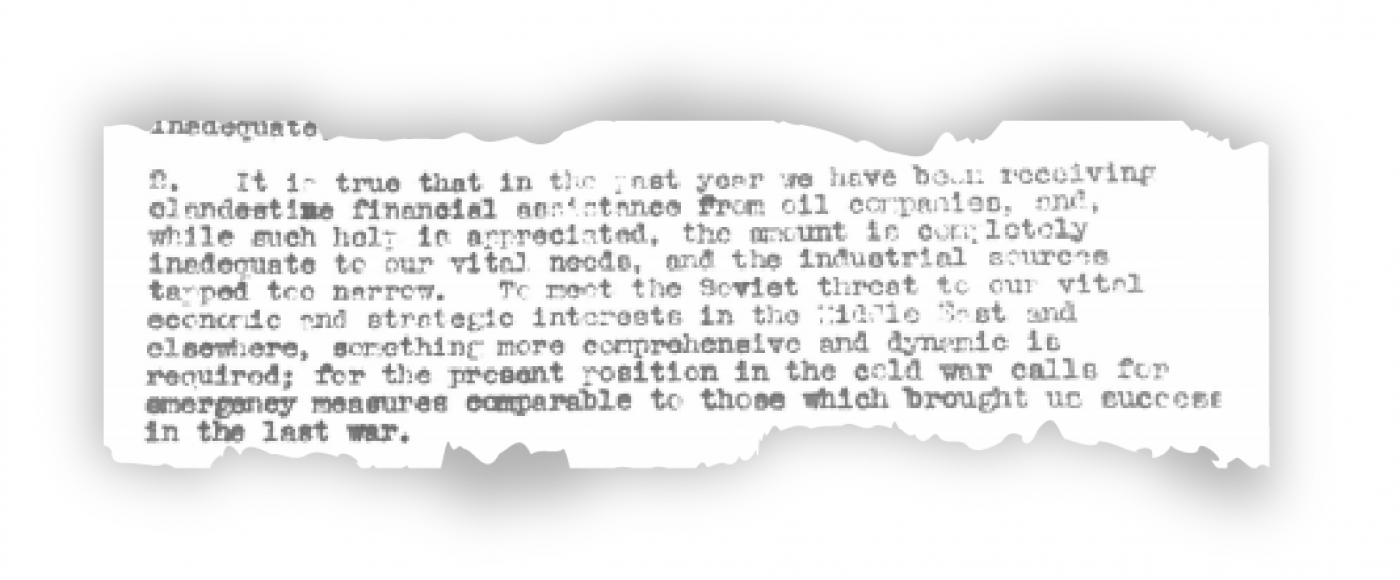


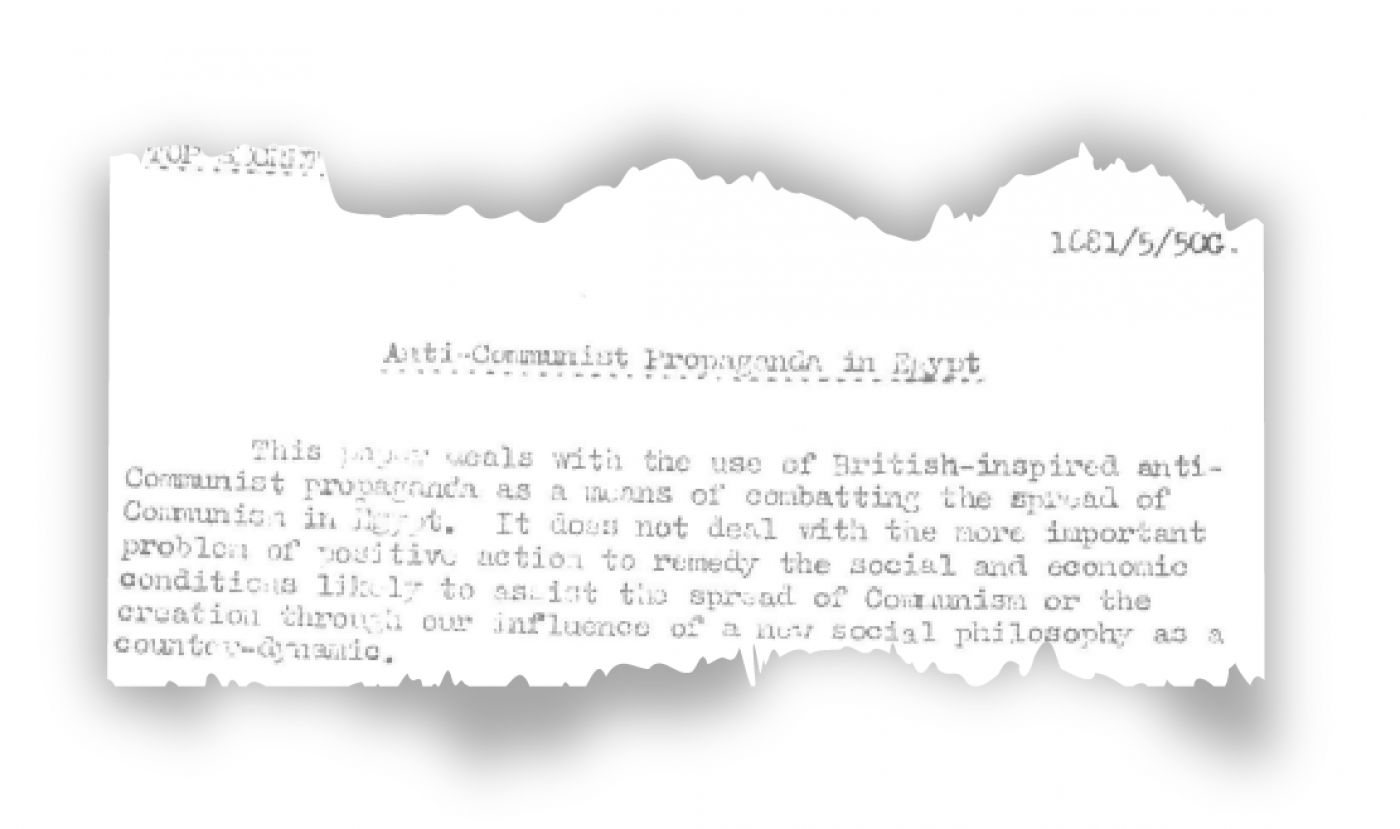


 Multicultural Meanderings