Virtual citizenship ceremonies coming for new Canadians whose dreams were crushed by COVID-19

Needed albeit imperfect compared to in-person ceremonies:

Citizenship tests and ceremonies have been cancelled for more than two months because of the global pandemic — but newcomers could soon be taking their oaths online through virtual citizenship events.

On March 14, Immigration, Refugees and Citizenship Canada said it would cancel the ceremonies “until further notice.”

Dhiti Nanavati has been working hard for years to reach her “life goal” of becoming a Canadian citizen. The Toronto-based software company marketing manager said she was deeply disappointed when her scheduled March 27 ceremony was called off.

“I was really looking forward to becoming a Canadian citizen and not knowing when the oath ceremony will take place is naturally very distressing,” she said.”A lot of personal sacrifices have gone into making this a reality and the uncertainty about the ceremony is unsettling. It’s like you’re almost at the finish line of a race, only to be told you have stop because the race is cancelled.”

She said she would welcome an online option. She may soon get one.

In a statement to CBC, the department said the citizenship ceremony represents “the culmination of years of hard work for new Canadians and their families.” It said it will begin scheduling virtual ceremonies, starting with those who already had ceremonies scheduled and have a pressing need for Canadian citizenship.

“IRCC will then work to implement virtual citizenship ceremonies for other cases as quickly as possible,” it said.

Since the pandemic hit, IRCC has considered granting citizenship only in exceptional cases, to people who need it for employment or essential travel.

Last month, University of Manitoba researcher Adolf Ng, who is working on a study related to supply chain management issues during the pandemic, became the first person to be awarded Canadian citizenship through a virtual ceremony.The government says it’s working out a way to administer the ceremonies that protects the integrity of the legal process and also reflects the significance of the occasion. No firm timeframe has been established.

Andrew Griffith — author, fellow of the Canadian Global Affairs Institute and a former senior immigration official — said that in a pandemic climate, virtual ceremonies are probably the most efficient and practical way to avoid a growing backlog of citizenship cases. No one who has paid the fees and passed the tests should be forced to wait, he said.

But Griffith said something will be lost in the translation from an in-person ceremony to an online one.

“I think there’s something particularly special about when the group of 30 or 40, or however many there are, actually sit down together, look around the room and see the diversity of the people who are applying for Canadian citizenship and take the oath as a group,” he said.

Typically, a person takes the solemn oath before a citizenship judge or official, usually in a group setting. Taking the oath of citizenship is the final legal requirement that applicants older than 14 years old must meet to become Canadian citizens.

A sense of security

“It gives you that security,” Griffith said, adding that a sense of security “is pretty valuable, given the state of the world right now.”

Vancouver-based immigration lawyer Zool Suleman said those who have “gone through all the hoops” to become a Canadian should be granted citizenship, even during a pandemic.

Despite global travel restrictions, some people may still need to obtain passports quickly for essential work or other types of travel, he said. Others, he said, might have other reasons for not wanting to wait to obtain their citizenship — tax reasons, for example, or a wish to relinquish citizenship in another country.

“There could be financial reasons, or purely political or social reasons,” he said.

Suleman agrees that the communal experience of becoming a Canadian is precious, but he predicts people will find their own ways to mark the special day.

“Legally, it will all be the same,” he said.

Once people get to the point of taking the oath at a citizenship ceremony, they’ve already checked off a number of other requirements regarding residency and language. They’ve also passed a test on Canadian history and values and paid fees of $630 each.

Stuck in limbo

Citizenship comes with the right to vote and apply for a Canadian passport. Some jobs, including employment with the Canadian Armed Forces, require citizenship.

Last year, nearly 250,000 people became Canadian citizens.

Yasir Naqvi, chief executive officer of the Institute for Canadian Citizenship, said that final step of taking the oath provides a profound sense of belonging. It’s also a way for people to express affection for their adopted home, he said.

“They understand why the process is halted at the moment, but at the moment the delay is a source of anxiety because they want to become Canadian citizens and move on with the next chapter of their life as a Canadian,” Naqvi said.

Soran Kareem of Hamilton, Ont. arrived as a refugee from the Kurdistan region of Iraq five years ago.

He said 2020 was shaping up to be a joyous year: his college studies were wrapping up, his son was learning to walk and he and his wife were on their way to becoming Canadian citizens.They filed their applications in October 2019 but are now in limbo due to delays caused by the pandemic.

“We have been living in stress and uncertainty because we do not know when we can do the test and the ceremony,” he said.

“My wife and I have a lot of stress and worry about this situation because we have many plans (for) when we get the citizenship, especially for studying and moving to another city. We cannot do anything because we do not want to change our address. That could make the citizenship process longer.”

Kareem said allowing people go through the citizenship process online could put to rest many of those concerns.

Parvinder Singh of Toronto took his test on March 10 and hasn’t heard anything since. He said he understands the unprecedented situation officials are dealing with but hopes the government will act fast to help those waiting for citizenship.

“It’s a long process and just coming on to the last point and finding yourself stuck is frustrating,” he said.

Source: Virtual citizenship ceremonies coming for new Canadians whose dreams were crushed by COVID-19

China could keep dual citizenship Canadians from leaving Hong Kong amid protests: lawyer

Legitimate worry:

A Canadian legal activist is warning the federal government to grant asylum to democracy activists in Hong Kong and expanded settlement to those with links to Canada before China prevents them from leaving.

The warning came Monday from Avvy Go, the director of the Chinese and Southeast Asian Legal Clinic, which has already helped bring Hong Kong pro-democracy activists to Canada.

There are 300,000 Canadians of Hong Kong descent in China, and Go says if Ottawa doesn’t act now to accommodate those who want to leave, Beijing will prevent them from leaving in the future.

“The time to act is now. As China continues to crack down on the democracy movement in Hong Kong, it may soon find ways to prohibit Hong Kong activists from leaving that city, period,” Go said Monday at a joint video press conference hosted by Amnesty International.

“Even with those who are Canadian citizens, China may refuse to recognize their dual citizenship status and deny their exit from Hong Kong.”

MPs from the four major Canadian political parties and one independent senator stood in solidarity with the proposals Go put forward at a virtual press conference convened by Amnesty International.

Canada, along with the United States, Britain and Australia, have condemned Beijing’s imposition of a new national security law that they say violates Hong Kong’s freedom from Chinese communist interference.

“This is the Beijing government’s most breathtaking, threatening and callous attack yet … discarding any pretence of fulfilling China’s international promises made when Hong Kong was handed over in 1997,” said Alex Neve, the secretary general of Amnesty’s Canadian branch.

Go called on the federal government to implement several immigration and asylum measures, to help people get out of Hong Kong before it is too late. They are:

— Expediting family sponsorship applications by Canadians with spouses and parents in Hong Kong.

— Expanding family-reunification sponsorship programs beyond parents and spouses.

— Issuing more temporary-resident permits, work visas and student visas.

— Granting refugee status to democracy advocates, and offering them stepped-up resettlement options.

Last year, Hong Kong residents took to the streets in mass protests against a proposed extradition law from Beijing that was eventually abandoned.

During that unrest, Go’s clinic received requests from Canadians of Hong Kong descent whose relatives participated in pro-democracy protests, she said.

Since Beijing announced the new security law, the clinic is getting calls from Canadians who are worried about their families even though they may not have been involved with the democracy movement, said Go.

“These are our people. And as parliamentarians dedicated to promoting and protecting democracy, we cannot stand by silently. I endorse all of the actions,” said Independent Sen. Marilou McPhedran.

McPhedran said she has travelled across Africa and seen the effect of China’s massive development spending, an influence-buying effort that many analysts say is a power play by Beijing’s ruling communist party.

“The weaponization of economic support is something that we need to understand better as we look at what is happening in Hong Kong,” said McPhedran.

“The violation of the Hong Kong Basic Law, which is the essence of what China is saying it is going to do, is in fact a precursor to threats to democracies in many other countries as well.”

Conservative MP Kenny Chiu, who was born in Hong Kong, said the people of his homeland respect human rights and the rule of law, and they are prepared to commemorate Thursday’s anniversary of the Tiananmen Square massacre that saw the Chinese army kill scores of pro-democracy student protesters in 1989.

“We’re witnessing in Hong Kong basic dictatorship in disguise, exerting its power out of fear for these values,” said Chiu.

Source: China could keep dual citizenship Canadians from leaving Hong Kong amid protests: lawyer

Anger as wait times for Australian #citizenship blow out during coronavirus pandemic

Looks like Australia has been able to ramp up virtual citizenship ceremonies dramatically to about 750 per day, showing it can be done although less meaningful than in person:

More than 16,800 people have received Australian citizenship via virtual ceremonies during the pandemic but many more are still waiting.

The migration sector has voiced concern as the processing times for Australian citizenship applications have blown out amid the COVID-19 pandemic.

Figures from the Department of Home Affairs show 75 per cent of applications for citizenship by conferral now take 23 months – up from 16 months last June.

Ninety per cent of these applications are completed in 25 months compared to 20 months a year ago.

“Due to the COVID-19 pandemic, all face-to-face citizenship appointments, such as interviews and citizenship tests, have been placed on hold. This has meant an increase in overall processing times,” the spokesperson said.

“The department will recommence in-person interviews and citizenship tests when it is safe to do so,” they said, adding that new applications are still being accepted.

How long it is currently taking to process Australian citizenship by conferral.

How long it is currently taking to process Australian citizenship by conferral.
The Department of Home Affairs

But Carla Wilshire, CEO of the Migration Council Australia, said these numbers needed to be addressed.

“Once people go down the pathway of citizenship, a lot of decisions are put on hold until that citizenship comes through … It’s important we give them certainty as quickly as possible,” she said.

“Getting those waiting times down is critical in terms of really managing people’s sense that their lives are progressing and they are able to make decisions going forward around their commitment towards Australia.”

“Particularly during COVID, where people have a lot of generalised anxiety and feel a sense of insecurity, I think it’s really important that we take measures to … ensure resources are put to use to give citizenship as quickly as possible.”

It is a point echoed by Melbourne-based migration agent Kirk Yan.

“I haven’t seen the government offer a reasonable or acceptable explanation for the long processing times … They can’t explain why it takes two years,” he said.

“For citizenship, as long as you meet the requirements of a permanent resident, you are supposed to get it granted if you pass the citizenship test and the character or identity checks … I don’t know why it takes such a long time for the department.”

He said the latest rise in wait times left many of his clients anxious.

“The current situation has meant lots of people are waiting, just to get information or a response,” he said.

The sector has also pointed to climbing wait times as one reason why the demand for Australian citizenship is dropping.

Clearing the backlog

But even as wait times have gone up, the government has managed to address the backlog of citizenship applications this financial year.

The department spokesperson said during the year 2019-20, up to 22 May this year, 175,304 people were granted Australian citizenship – up 56 per cent on the same period last year.

Over recent months, it has been done via virtual citizenship ceremonies.

More than 750 people have received citizenship through online ceremonies each day since they began, and up to 22 May, more than 16,800 people received citizenship this way.

The latest backlog figure is now 123,727 applications, compared to 221,695 a year ago.

But Migration Council Australia’s Ms Wilshire said this number was “still significant by historical standards”.

“During COVID, there is so much insecurity as people are losing that sense of being able to visit their country of origin and connect with family as global movement is decreasing,” she said.

“I think that affirmation of being part of the Australian community is psychologically quite important for our migrant communities.”

Source: Anger as wait times for Australian citizenship blow out during coronavirus pandemic

COVID-19: Thousands of Canadians getting US$1,200 cheques simply because they’re still U.S. citizens

Including, presumably Conservative leader Andrew Scheer and Green leader Elizabeth May:

Thousands of people in Canada can expect a letter shortly from the U.S. Treasury Department.

However, you’re (probably) not in trouble. In fact, you’re most likely receiving a US$1,200 cheque thanks to America’s stimulus package.

One of the responses to the COVID-19 pandemic put in place by the U.S. government was Economic Impact Payments. Through it, most current American citizens who filed taxes in 2018 or 2019 will automatically be sent US$1,200 ($1,680) as long they make less than US$75,000 if they are single or US$150,000 if married.

And that includes U.S. citizens in Canada. Unlike Canadian benefit programs put in place during the pandemic, the U.S. program doesn’t require beneficiaries to live in their own country.

“The reason being that the U.S. is one of only two countries in the world that tax based on citizenship. So a U.S. citizen, wherever they live in the world, is always subject to U.S. tax, which is different than Canada,” said Mark Feigenbaum, an Ontario-based attorney and accountant specialized in cross-border taxes.

But that doesn’t mean his Canadian clients aren’t surprised when the money suddenly arrives in their mailboxes.

“I get a couple of pictures of cheques every day from clients,” he said. “First of all, they weren’t maybe even aware that they were supposed to get a cheque, and secondly, that they were even qualified for a cheque. And then they got a bunch of money.”

According to Statistics Canada 2016 census data, 284,870 people in Canada declared having U.S. citizenship.

One of them is Charles Lewis, a dual U.S. and Canadian citizen who received a cheque in the mail last week.

“I read three weeks ago that the payment was coming to those who file so when it did come I was not surprised at all. It came in an envelope from the U.S. Treasury Department. Soon as I looked at the envelope I knew what it was. I had to laugh that Trump’s name was on the cheque, given it’s not his money,” Lewis told the National Post.

“I think those who get it and were not really in need should donate it to charity, which is what I’m going to do. It’s really found money. I did nothing to earn it. Though filling out all those tax forms every year was a pain in the ass.”

According to the Internal Revenue Service, the agency that administers the Economic Impact Payment program, nearly 750,000 stimulus cheques have gone out to “foreign addresses,” totalling $1.2 billion.

But the IRS can’t say how many of those went to people in Canada.

“Foreign addresses doesn’t necessarily imply non-Americans. Members of the military and U.S. citizens who live or work abroad would be in that category, along with non-citizens who may have, for tax purposes, U.S. resident alien status,” spokesman Eric Smith said via email.

“The domestic numbers likely also include resident aliens, and Canadians are likely in both the domestic and foreign categories,” Smith said.

A large number of U.S. citizens living in Canada are also interested in finding out how they can get their hands on an American stimulus cheque.

According to Steve Nardi, chair of Democrats Abroad Canada, a workshop his group hosted a few weeks ago about the American stimulus package attracted 600 people, 80 per cent of whom were from Canada.

“In the last two weeks, I’ve had another thousand people on tax filing webinars, and most of them are interested in at least accessing the information about the stimulus cheques,” Nardi said in an interview.

He said he’s mainly encountered two groups of recipients: those who knew from the very start that they’d receive a cheque, and those who were stunned (and sometimes concerned) when the money arrived at their door.

“I had emails from members asking if they were eligible, and the only thing that happened at that point was the Senate approved the (stimulus) bill late the night before. It hadn’t even gotten across the building to the House yet,” he recounted.

“And then we’ve had others who were completely shocked that they would be eligible with no expectation.”

But be warned, if you’re an American in Canada who’s eligible to apply for the Canada Emergency Response Benefit (CERB) because you lost your job due to COVID-19, you may want to think twice before cashing that US$1,200 cheque.

To be eligible to receive CERB payments, you have to have made less than $1,000 in the period during which you’re applying. Depending on if the Canada Revenue Agency determines that stimulus money from the American government is revenue or not, depositing that cheque from the U.S. may make you ineligible for CERB.

Employment and Social Development Canada was not able to provide a comment.

Source: COVID-19: Thousands of Canadians getting US$1,200 cheques simply because they’re still U.S. citizens

Integration, Diversity and Inclusion: My Overview Deck, updated for 2019

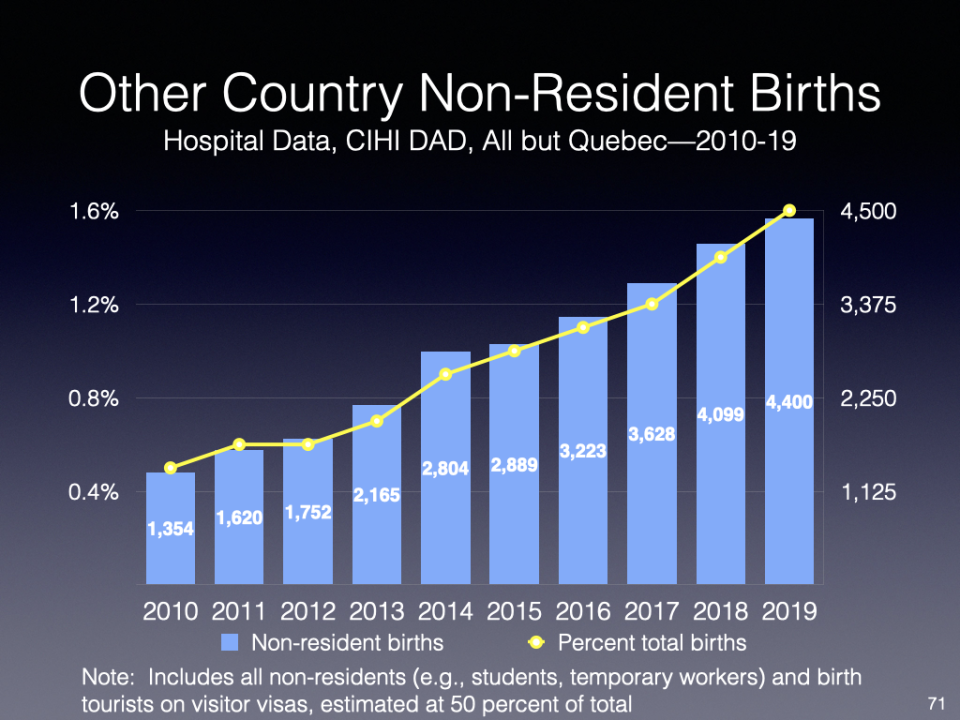
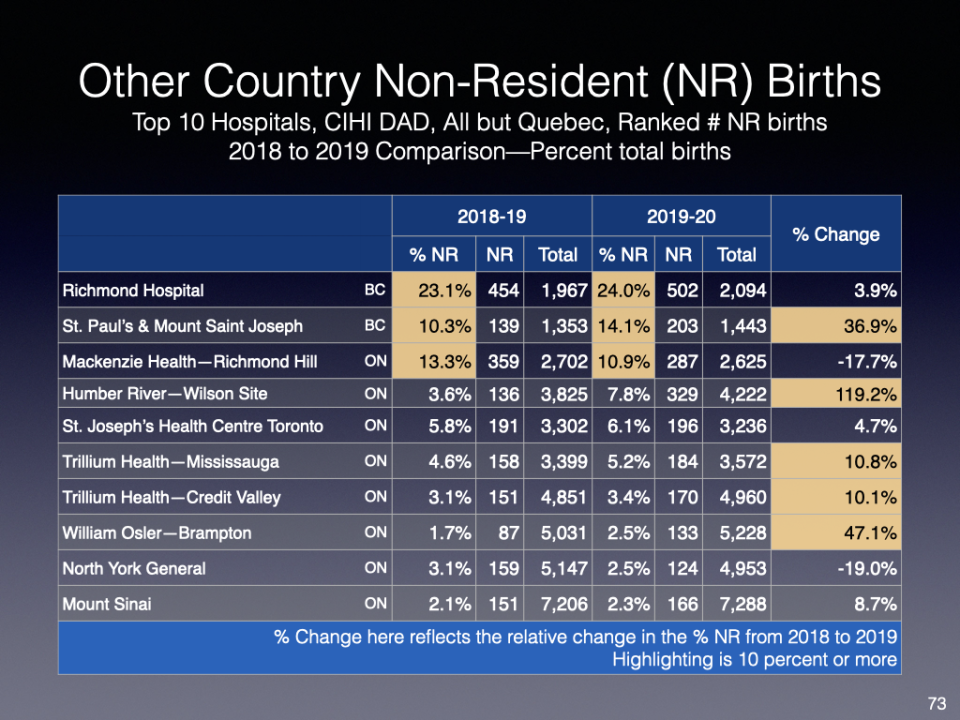
This overview deck on immigration, integration, citizenship and multiculturalism has been updated with 2019 data.

A few sample slides, full deck via link below:

Integration – General Deck 2020

Australian #citizenship approvals up by 56 per cent but waiting period shoots up

More on Australian citizenship numbers and processing delays:

Highlights:

  • 170,819 people have been conferred Australian citizenship in 2019-20
  • 15,000 people have received citizenship online during the pandemic
  • 117,958 applicants still in the queue for citizenship

“The Government has moved to online citizenship ceremonies during the COVID-19 pandemic. More than 750 online ceremonies are being conducted each day, and to 20 May 2020, more than 15,000 people have received citizenship this way during the pandemic,” a spokesperson from the Department of Home Affairs told SBS Hindi.

“In 2019-20 to 15 May 2020, 170,819 people have been conferred Australian citizenship. This is up 56 per cent on the same period last year,” the spokesperson said.

However, those who have applied for citizenship and are awaiting the outcome of their Australian citizenship application will have to wait longer.

The latest processing times released by the Department of Home Affairs indicates the waiting period for Australian citizenship has shot up.

Compared to waiting period of 16 months, from date of application to ceremony, in June 2019, the average waiting period for 75 per cent of applicants has shot up to 23 months from date of application to ceremony in April 2020.

Australian Citizenship PRocessing times April 2020

The latest processing times released by the Department of Home Affairs indicates the waiting period for Australian citizenship has shot up.
Department of Home Affairs

“Due to the health risks, all face-to-face citizenship appointments, such as interviews and citizenship tests, have been placed on hold. This has meant an increase in overall processing times,” the spokesperson said.

“The Department will recommence in-person interviews and citizenship tests when it is safe to do so.

“New applications for Australian citizenship are still able to be accepted during this period.

“Processing continues for applications that do not require a face-to-face appointment. Processing also continues for lodged applications up to the point where an appointment is required so that the applicant will be able to undertake an appointment when it is safe to do so.”

Last month, as COVID-19 pandemic forced citizenship ceremonies to move online, Acting Minister for Immigration, Citizenship, Migrant Services and Multicultural Affairs, Alan Tudge said additional resources will be deployed once it is possible to resume tests and interviews.

‘Additional resources will be deployed to conduct testing and interviews as soon as social distancing measures to prevent the spread of COVID-19 ease,’ he said.

As of April 30, 2020, 117,958* applicants were still awaiting the outcome of their citizenship application.

India top source of Australian citizenship

India has been the top source of Australian citizenship for the last two years, with over 28,000 Indian nationals becoming Australian citizens in 2018-19.

Source of Australian Citizenship 2018-19

Source of Australian Citizenship 2018-19
Department of Home Affairs

Indian-born applicants also top the list of visa recipients by country under Australia’s annual permanent immigration program.

Source: Australian citizenship approvals up by 56 per cent but waiting period shoots up

With No Citizenship Question, Trump Officials Turn To Records

And so it continues, driven by political and partisan considerations:

You will not find a citizenship question on the 2020 census forms.

But in the months since federal courts permanently blocked the Trump administration from asking the hotly-contested question for this year’s national head count, the administration has been pushing ahead with a backup plan — amassing government records to try to determine the U.S. citizenship status of every adult living in the country.

Information from the U.S. Army, federal prisons and the Department of the Interior’s law enforcement system are among the newly disclosed batch of records the Census Bureau says it is using to comply with President Trump’s executive order for citizenship data, according to a memo the bureau quietly posted on its website earlier this month.

Previously released government documents have confirmed the bureau is also compiling IRS tax forms and data from Medicare and Medicaid, as well as records from the Department of Homeland Security, Social Security Administration, and State Department. The bureau has also asked states to share their driver’s license records, and in November, Nebraska’s Department of Motor Vehicles signed an agreement to turn over monthly data about license and ID card holders’ citizenship status, names, addresses, dates of birth, sex, race and eye color.

Put together, these records could be used to yield data that could radically change political mapmaking and shift the balance of political power across the U.S. over the next decade.

Instead of drawing voting districts based on the number of overall residents in an area, the citizenship data the Trump administration wants created — detailed down to the level of a census block — may allow mapmakers to redistrict using the number of citizens old enough to vote. A GOP strategist concluded that excluding U.S. citizens under the age of 18 and noncitizens, both those lawfully and unlawfully in the country, from the numbers used to remake political maps would be “advantageous to Republicans & Non-Hispanic Whites.”

That method of redistricting was one of the main uses of the data outlined in Trump’s executive order, which also noted that the information could help the government “generate a more reliable count of the unauthorized alien population in the country.”

Last year, U.S. Attorney General William Barr announced in the White House Rose Garden that the citizenship data “may be relevant” in an ongoing federal lawsuit the state of Alabama and Rep. Mo Brooks, a Republican from that state, has filed against the Census Bureau to get unauthorized immigrants excluded from the 2020 census numbers used to redistribute congressional seats and Electoral College votes among the states.

The coronavirus outbreak and the changes it’s forced upon the bureau’s 2020 census plans have interrupted the agency’s work on the citizenship data. Last month, the bureau said in a regulatory document that it plans to announce its final plans for citizenship data by Oct. 31.

The pandemic-related delays have led the bureau to ask Congress to push back by four months the legal deadlines for delivering the results of the 2020 census, including redistricting data the bureau now would like to provide to the states by the end of July 2021.

If a new law is passed that allows for that extension, the bureau is also expecting to release the citizenship data as ordered by Trump by July 31, 2021, James Whitehorne, the head of the Census Bureau’s redistricting and voting rights data office, told redistricting officials last month during a webinar organized by the National Conference of State Legislatures.

The House Democrats’ new coronavirus relief bill does allow for a deadline extension for redistricting data from the 2020 census. But the bill — which is not expected to get support from the Republican-controlled Senate — also includes a provision that would stop the efforts to create the citizenship data requested by the Trump administration.

Asked how the more recently disclosed sources of records are helping the Census Bureau’s researchers develop citizenship data, the bureau’s public information office directed NPR to slides the agency’s officials presented last year that said they help researchers link records about the same individual and determine whether that person is a U.S. citizen.

The Census Bureau is obtaining these records through sharing agreements negotiated with the other agencies, and the bureau has said the records are “stripped of any personal identifiable information and are used for statistical purposes only.”

“They cannot be shared in identifiable form with any other government agency or the public,” the bureau emphasized in a technical document on its webpage about the citizenship data.

Still, Latinx community groups in Arizona and Texas represented by the Mexican American Legal Defense and Educational Fund and Asian Americans Advancing Justice – AAJC are trying to stop the release of the citizenship data with a federal lawsuit against the administration. The challengers contend the production of the data is part of a conspiracy to prevent Latinos, noncitizens and other immigrants from receiving fair political representation.

In response to the Census Bureau’s announcement last month about delaying its field operations for the 2020 census, Thomas Saenz, MALDEF’s president and general counsel, called continued work on citizenship data a “dangerous diversion from the necessity of concentrating on Census 2020 in the Bureau and from accomplishing pandemic recovery efforts in other federal and state agencies.”

Amy O’Hara, who previously led the Census Bureau’s Center for Administrative Records Research and Applications, has also warned about the dangers of directing limited resources during the pandemic to creating more detailed citizen voting age population data, also known as CVAP.

“The sources for CVAP are mostly new to the Census Bureau, requiring more effort to understand the files and how to appropriately link it with other data,” O’Hara, who is now a research professor at Georgetown University’s Massive Data Institute, says in an email. “This competes with staff time for planned uses of administrative data, and with emerging needs during the pandemic, like correctly counting college students.”

Still, the citizenship data could be useful to at least one state.

Missouri state lawmakers approved a resolution last week that includes a ballot initiative that would require the state’s house and senate districts to be drawn “on the basis of one person, one vote.”

Critics of the proposed constitutional amendment worry that it could lead to redistricting based on the number of citizens old enough to vote rather than of all residents, including children.

“The Supreme Court held in 2016 that it is constitutional to draw districts on the basis of total population, so that every district has the same number of people,” explains Michael Li, a redistricting expert who is a senior counsel for the Brennan Center for Justice’s Democracy Program, in an email. “But the court left open the question of whether it might also be constitutional to use another population basis, such as eligible voters. That open question could be one of the big fights of this decade.”

Source: With No Citizenship Question, Trump Officials Turn To Records

Federal government appeals court ruling recognising man born in pre-independence PNG as Australian

Hard to understand the rationale for appealing the particular case unless there is a general point they wishy to make:

The federal government has lodged an appeal to overturn a Federal Court decision recognising the Australian citizenship of a man born in pre-independence Papua New Guinea (PNG).

Troyrone Zen Lee won a four-year battle with the federal government last month after being told in 2016 he was not an Australian citizen.

Mr Lee, who has lived in Brisbane since the early 1980s, was born in May 1975 in Port Moresby in the Australian external territory of Papua – four months before PNG became an independent country.

In his April judgment, Federal Court judge Darryl Rangiah ruled that at the time PNG became independent, Mr Lee fell within s65(4)(a) of the PNG Constitution “as a person who had the right to permanent residence in Australia and that therefore did not make him a PNG citizen”.

“I make the declaration that the applicant is an ‘Australian citizen’.”

Court documents filed on Friday show the Department of Home Affairs is appealing on the grounds that Justice Rangiah erred in finding Mr Lee was not an “immigrant” under the then Australian Migration Act after PNG independence in September 1975.

The appeal rejects the Federal Court ruling that Mr Lee had the right to Australian permanent residence, did not become a PNG citizen, and had never ceased to be an Australian citizen after independence, and remains an Australian citizen.

Both Mr Lee’s parents are Australian citizens, as are his father’s parents and his younger siblings, who were born in post-independence PNG and obtained Australian citizenship by descent.

“I am indeed deeply disappointed that Home Affairs has decided to make an appeal, but we will keep motoring on until this is finished,” Mr Lee told SBS News.

“Having done nothing wrong and confirmed in the Federal Court that I am an Australia citizen, it would seem there is no error with my status under the Australian Citizenship Act, yet Home Affairs continue to be unfair in dragging out this issue.”

Many PNG-born Australians have been caught out by Australian legislative changes that have resulted in the cancellation of their passports and citizenship certificates, rendering some technically stateless.

The federal government has argued the documents had been incorrectly issued for up to four decades and told those affected to apply for Australian citizenship.

Mr Lee travelled with his mother repeatedly to Australia after PNG independence on her passport and was issued with an Australian passport in 1979 before the family settled permanently in Brisbane in 1982.

Four years ago when he tried to renew his passport, his application was refused.

In the Federal Court hearing, a submission by the acting immigration minister Alan Tudge argued Mr Lee lost his Australian citizenship when PNG became independent in 1975.

“As the matter is before the court it would be inappropriate to comment,” the Department of Home Affairs said in a statement to SBS News on Tuesday.

Scheer didn’t follow through on renouncing U.S. citizenship

Further embarrassment, with a number of prominent Conservatives understandably calling for a new interim leader:

Outgoing Conservative Leader Andrew Scheer still holds his U.S. citizenship, after stating during the 2019 federal election campaign that he was in the process of renouncing it.

In an interview on CTV’s Question Period with Evan Solomon, Scheer said that after deciding to step down as leader, he halted the process.

“Knowing that I won’t be prime minister, I discontinued that process,” Scheer said.

During the fall federal election campaign, Scheer confirmed that he had dual Canadian-U.S. citizenship after it was first reported by The Globe and Mail, saying he was in the process of renouncing his American citizenship.

When the story of his dual citizenship first broke in October, Scheer said he met with embassy representatives in August to renounce his citizenship and had submitted his paperwork to formalize it.

However, that paperwork was never formalized, and so Scheer continues to hold dual citizenship status. Asked why the change of heart, Scheer cited “personal reasons.”

He could not say when exactly he stopped the process of dropping his American citizenship.

“I’d have to go back and check,” he said.

In December, Scheer announced his intention to step down as leader, as soon as a replacement was picked. At the time he said it was “one of the most difficult decisions” he has ever made.

The controversy surrounding his citizenship amid the campaign was cited as one of the issues Scheer faced during his attempt to win over voters and defeat Prime Minister Justin Trudeau and the federal Liberal Party in the last federal election.

At the time, Scheer was questioned as to why it took him two years from when he took the helm of the federal Conservative party to begin the process of renouncing his U.S. citizenship, which he received from his father who was born there.

Scheer said the delay was because he was focused on rebuilding the party and preparing for the campaign, and said the reason he hadn’t spoken about it was that: “No one’s ever asked me before.”

Scheer has filed taxes in the U.S., but has never voted in a U.S. election, his campaign said in the fall.

Scheer’s office later told CTVNews.ca that while he remains an American citizen, Scheer has not received the one-time direct aid payment the U.S. government sent to adult citizens amid the ongoing COVID-19 crisis.

Under federal elections law there aren’t any rules prohibiting dual citizens from running to become an MP or campaigning to be the prime minister, though in the past the Conservatives and Scheer specifically have been critical of other leaders’ citizenship status.

Back in 2005 Scheer sought input from his constituents, asking whether they were bothered by former Gov. Gen. Michaelle Jean’s French citizenship in a blog post about her appointment.

During the 2008 federal election campaign, Stephane Dion also faced questions from Conservatives about his French citizenship.

The race to replace him is underway with four candidates in the running. Party members have a deadline of August 21 to submit their mail-in ballot.

Once the new leader is named, Scheer said he intends to stay on as the MP for Regina-Qu’Appelle, Sask., and that he plans to run again in the next federal election.

“I hope to be able to earn their trust again in the next election. I love my riding in Saskatchewan, and I’m looking forward to spending more time there,” he said.

Source: Scheer didn’t follow through on renouncing U.S. citizenship

Revive Canada’s immigrant investor program, IIAC says

Favourite line: “a formal immigrant investor program, building on the strengths of the previous federal program.”

Reality: the evaluation that showed minimal to no benefits (Evaluation of the Federal Business Immigration Programwww.canada.ca › english › pdf › pub › e2-2013_fbip – the backlog was not the issue) and census data showing lower incomes than refugees.

The Harper government correctly ended the program.

IIAC’s citing the Quebec program as a model is risable as most end up elsewhere in Canada with the same minimal impact or contribution to the economy (Douglas Todd: Time to end ‘honour system’ in Quebec’s immigrant-investor scheme).

Government should not go there as main benefits accrue to the consultants that push for such programs:

The Investment Industry Association of Canada (IIAC) has suggested that increasing foreign direct investment (FDI) in Canada could help rebuild the economy in the wake of Covid-19.

In a May 5 letter to federal Finance Minister Bill Morneau, IIAC president and CEO Ian Russell wrote that there are “tens of thousands” of foreign investors looking for permanent residence in Canada, and other countries will benefit from their wealth if Canada doesn’t.

Russell suggested the federal government could increase FDI by re-introducing “a formal immigrant investor program, building on the strengths of the previous federal program.”

The previous program, the Federal Immigrant Investor Program (FIIP), was closed in 2014 as a result of the Economic Action Plan 2014 Act, which found that large backlogs of applications tied to economic immigration programs were a major hurdle for the immigration system.

IIAC conceded that the FIIP had issues, but suggested a new program could be temporary and tied to the economic recovery from Covid-19.

“To speed up [the program’s] implementation, its structure could be similar to what exists in Quebec but with the addition of a non-refundable contribution to boost its impact,” Russell wrote. “Unlike regular investors or entrepreneurs, immigrant investors are more interested in obtaining permanent residence for themselves and their families, and having the return of their portion of capital guaranteed after a reasonable time period (5-7 years).”

The implementation of such a program would require collaboration between multiple ministries, and “the government could decide where the FDI would be best invested as per its needs for post-Covid-19 recovery,” Russell said.

Dealer firms regulated by the Investment Industry Regulatory Organization of Canada (IIROC) could “help design, promote and support this new [FIIP] program,” Russell suggested, adding that many IIROC members were “involved in the FIIP process” and some have acted as consultants to other countries.

In data released in late February, Statistics Canada said foreign direct investment in Canada was positive in Q4 2019, but lower than what was recorded a year earlier.

Read the full IIAC letter.

Source: Revive Canada’s immigrant investor program, IIAC says