Bahamas: How to prove paternity is next as govt to grapple with citizenship questions

CHILDREN born out of wedlock to Bahamian men and foreign women won’t be recognised as citizens of The Bahamas until they prove that their biological father is a Bahamian through a process mandated by the government or determined by the courts.

How to prove paternity is a question the Davis administration will grapple with as it seeks to satisfy the expectation of people who now see themselves as Bahamian citizens following the Privy Council’s landmark ruling. The administration can address the matter through legislation.

Attorney General Ryan Pinder told The Tribune: “Needless to say, you have to prove that your biological father is Bahamian, which means you have to prove paternity. A framework needs to be put in place for that.”

When Chief Justice Ian Winder ruled in favour of Shannon Rolle in 2020, he deliberately left the question of how to establish paternity unanswered.

Former Attorney General Sean McSweeney, the co-chair of the 2016 Constitutional Commission, said yesterday that requiring scientific tests is the ideal approach to establishing paternity.

“You always have to prove that the man is the father if it doesn’t happen in the context of marriage,” he said. “There are some who are saying they should just use an affidavit, but given the historical laxity with which Bahamians used affidavits, I think it would be dangerous to rely on that. There really should be scientific proof of paternity; at the moment DNA testing.”

“There will have to be steps taken to guard against abuse of the system. You certainly don’t want an industry being created out of this where people feel they could just get an affidavit of paternity and just get citizenship on that basis.”

Mr McWenney said in cases where a person’s father is dead, DNA tests could be performed “on anything the deceased person may have used”.

“You have to ask a scientist about that: how do you go about extracting the materials used for DNA testing?” he said.

National Security Minister Wayne Munroe, who tried the landmark case before Chief Justice Ian Winder and the Court of Appeal, said people who will benefit from the Privy Council’s ruling must now be patient so the government can address the paternity issue.

“The matter isn’t fully resolved as far as this is concerned,” he said. “There were two issues. The first issue was a matter of principle, the construction of Article 6, and that’s what’s been settled, that Article 6 means that a child of an unwed Bahamian father born in The Bahamas is a citizen.

“The part that isn’t resolved that the Chief Justice has to determine because it was referred back to him by the Privy Council, is how do you prove that your father is a Bahamian? Is it enough for your father to come up and say it? Does he have to do an affidavit? Does he have to sign your birth certificate or do you have to have DNA evidence? That hasn’t been decided. In the Supreme Court case that I did, it expressly said that issue is not being decided and it will await this outcome.

“If you go and dash to the Passport Office, they’re gonna consult the OAG and OAG will no doubt take a position. It would be irresponsible not to take a policy position which can apply to everyone, and so as the lawyer who did the initial case and the initial appeal, now as a member of the government, I would advise caution and a degree of patience while the government puts in place the policy to address that issue of paternity, because in reality, there’s no value in saying you’re going to rush and pressure the government because if you don’t get a passport, what can you do? Bring an action. Then you have to wait for a court date and the rest of that. It’s just as easy for you to wait and see how the government will bring about the matter.”

It is unclear what the DNA testing capacity is in The Bahamas.

“I think the Immigration Department and the Office of the Attorney General is going to have to treat with that to bring forward a solution,” Mr Munroe said. “There are a number of things that no doubt the government of which I am a member will be considering going forward and once it’s considered, then, of course, if it’s by virtue of legislation, we’d have to table a bill and the public would be able to see it and give their views.”

Source: How to prove paternity is next as govt to grapple with citizenship …

Russia forces occupied Ukrainians to change citizenship

Citizenship warfare and erasing identity:

A convoy of empty buses sweeps into a town, alongside members of Russia’s domestic intelligence agency FSB. They cite a decree issued by the Russian president regarding the deportation of anyone without Russian citizenship from the occupied territories. “They radically demand that people either give up their Ukrainian passport in favor of a Russian one, or their property will be confiscated immediately and they will be resettled,” according to the Ukrainian military.

Russian President Vladimir Putin has signed a decree according to which citizens of Ukraine living in the Russian-occupied parts of Kherson, Zaporizhzhia, Luhansk and Donetsk who wish to keep their Ukrainian citizenship can only stay there until July 1, 2024. After that, they can be deported from those occupied regions.

“Constant threats”

DW spoke to people from the occupied parts of the Kherson and Zaporizhzhia regions who confirmed that Ukrainians are being forced to take Russian passports. For security reasons, none of the people want to be named.

“Russian soldiers searched everything in our house. When I showed my Ukrainian passport, they shouted that I should change it for a Russian one, and that otherwise my car would be taken away, and I would be deported,” an elderly man from near Kherson said.

A woman from the Zaporizhzhia region was in tears as she recounted how Russian occupiers threatened to deport her young children to Russia if she didn’t immediately apply for a Russian passport.

Another woman was threatened by Russian soldiers who “put a bag over her head” because she refused to change citizenship. “We held out until the end, we didn’t want to accept a Russian passport. But it’s just unbearable and scary,” the woman from near the Azov Sea told DW.

Why the rush?

The first deputy chairman of the Kherson regional council, Yuriy Sobolevsky, said the pressure on the people living in the occupied territories has recently increased significantly. “Access to medical care and freedom of movement between cities will be restricted for those who refuse to accept Russian passports,” he said. He thinks the Russians are now resorting to terror because not as many people in those territories want to become Russian citizens as Moscow had hoped.

According to the British Ministry of Defense, Moscow apparently wants to speed up the integration of the occupied territories into Russia to sell the invasion of Ukraine as a success to its own people, particularly in the run-up to the 2024 presidential election.

But people are afraid of ending up in Russian databases, a young man from Khrustalnyi in the Luhansk region told DW. He’s from an area which has been occupied since as early as 2014. Many don’t know what to do. “More and more employers are demanding a Russian passport,” the young man explained. But anyone who applies for a Russian “residence permit” is handing themselves over to the occupying forces. Then there is also the risk of being drafted into the war.

Conflicting signals from Kyiv

Should people have a Russian passport forced on them or not? There are conflicting takes on this among Ukrainian politicians. Dmytro Lubinets, human rights commissioner in the Ukrainian parliament, said on TV that Ukrainians in the occupied territories should accept Russian passports if they fear for their lives. He stressed that Ukraine does not recognize such forced passports and that it would not mean that they lose their Ukrainian citizenship.

However, the Minister for Reintegration of the Temporarily Occupied Territories, Mychajlo Podoljak, said Ukrainians should not accept Russian passports. “Do not cooperate with the occupiers, do not accept Russian passports, flee if possible or wait for our army,” she said on TV.

Life under occupation not a crime

“I’m ashamed and afraid to accept a Russian passport, but I’m also afraid of being deported,” said one desperate woman from the occupied part of the Kherson region. “We can’t leave, as the Ukrainian authorities advise us, because we have an old, sick mother.”

According to Alyona Lunyova from Ukraine’s ZMNINA Human Rights Center, the contradictory advice from Ukrainian officials is confusing people. She stressed that living under occupation is not a crime. “On the contrary, not everyone should leave the occupied territories, it shouldn’t become an empty country and we cannot take in four to five million people from there.” She added that it is not a crime to accept a Russian passport under duress.

Meanwhile, an adviser to Ukraine’s presidential office, Mykhailo Podolyak, said Lubinets’ and Vereshchuk’s advice was not contradictory. He tweeted this advice for Ukrainians in the occupied territories: “If it is possible not to take a Russian passport, then try not to take one. But if you have to take a Russian passport to avoid oppression and torture, then take one.”

Podolyak stressed that Ukraine would not persecute citizens who “passively obtained Russian citizenship.”

Source: Russia forces occupied Ukrainians to change citizenship

Federal government strips religious symbols from crown adorning Royal Coat of Arms

Another relatively easy measure although agree better to have public consultation:

The Trudeau government is set to use the Coronation of King Charles III on Saturday as an opportunity to reveal a new design for the Canadian crown that sits on the Royal Coat of Arms.

Sources say the St. Edward’s Cross that has been part of the Coat of Arms since 1957 — and on a myriad of police and military badges across the country — will be replaced by what critics are calling “the Trudeau Crown,” a new design created by the Canadian Heraldic Authority, the body responsible for granting coats of arms in this country.

People who have seen the design say it replaces all Christian and religious symbols (crosses and fleur-de-lis) with maple leafs, snowflakes and stars, leading to claims that the Liberal government has politicized the symbol of the Crown and the Royal Coat of Arms.

“It means the proposed Canadian crown is totally unconnected to the King or the coronation, and it means the unity of the symbol of the Royal Crown that represents the sovereign throughout the realms will be broken, further distancing the King and the monarchy as an institution,” said Christopher McCreery, an author and historian with expertise on Canada’s relationship with the Crown.

“In essence, it is akin to a new national flag being raised on Canada Day, with no consultation or debate, developed in secret by those who wish to advance their personal vision of the country.”

Sovereigns have the right to choose which style of Royal Cross will represent their reign on coats of arms, coins, medals and other symbols of authority.

On Sept. 26 last year, Buckingham Palace announced that the new King would be represented by a Tudor Crown, instead of the St. Edward’s Crown used by his late mother, Queen Elizabeth.

Officials in Ottawa saw the announcement as an opportunity to introduce a new “Canadian Crown” and, over time, reinvent the supreme symbol of Canada, the Royal Coat of Arms.

The move is likely to provoke traditionalists, just as a similarly unilateral change upset conservatives in the mid-1990s. Then, Jean Chrétien’s Liberal government added a Latin inscription taken from the outer ring of the Order of Canada medal to the Coat of Arms: “Desiderantes Meliorem Patriam” (Desiring a better country).

Lack of consultation resulted in blowback in the House of Commons, where then Reform Party Leader Preston Manning asked then Heritage Minister Michel Dupuy who Canadian symbols belonged to: “To the sovereign, to the government, to some Liberal backbencher or to the people of Canada? Why were the people of Canada not consulted and involved in changes to the Canadian Coat of Arms?”

Such changes require the approval of the monarch but King Charles would have had little option but to say yes, if the new design was promoted on the advice of the Canadian government.

McCreery said there is a case to be made for adding some Indigenous symbols to Canada’s Coat of Arms “but this should be done cautiously and consultatively.”

The government could not provide comment on any consultations with Buckingham Palace by time of publication.

The Royal Coat of Arms was adopted by proclamation of King George V in 1921 and initially used the Tudor-style crown. In 1952, Queen Elizabeth adopted the St. Edward’s Crown, but it was not until 1957 that the government of Canada added it to the Canadian Royal Coat of Arms.

Aside from the addition of the Latin inscription in 1995, it has remained unchanged ever since.

Source: Federal government strips religious symbols from crown adorning Royal Coat of Arms

Time is right to scrap requirement to swear oath to the King, MPs and Senators say

Easy to agree, virtually impossible to implement and a distraction from more fundamental issues. However, the citizenship oath could be changed as former immigration minister Marchi tried to do in the 90s:

As King Charles prepares for his coronation at Westminster Abbey on Saturday, some senators and Liberal, NDP and Bloc Quebecois MPs want to abolish the federal requirement that parliamentarians pledge loyalty to the monarch. Instead, they say, office-holders should have the option of swearing an oath to Canada, or the Canadian people.

MPs and senators have to swear or affirm an oath to “be faithful and bear true allegiance” to the British monarch before taking their seats in Parliament after an election. They can’t sit if they refuse. The obligation dates back to the Constitution Act of 1867.

The oath is also taken by people with official positions across Canada, including judges, RCMP officers and members of the armed forces. New Canadians likewise pledge loyalty to the Crown at their citizenship ceremonies. The oath used to be sworn to Queen Elizabeth, until her death last year. It is now sworn to the new King.

Quebec Liberal MP Joel Lightbound said he has sworn an oath to the monarch three times since first being elected. “Having an alternative to swearing allegiance to the British Crown would have made me very happy,” he said.

“In my opinion federal elected officials should have the choice to swear or not swear allegiance to the Crown in future.”

Ontario NDP MP Charlie Angus said he was “personally astounded” when he first found out he had to swear allegiance to the British monarch as a requirement of taking his seat in Parliament. He said he imagined his late Scottish grandmother, an avowed republican, striking him with lightning for doing so.

He said it is “simply not credible” that the only obligation in the oath is to the Crown, not Canadians.

Reviewing the oath is a “very legitimate conversation” to have as the new King is crowned, he said.

Ontario NDP MP Matthew Green agreed. “An oath to an overseas monarch in perpetuity is increasingly outdated,” he said.

He added that he and many other Canadians “would be more comfortable with an oath that reflects the allegiance to the Constitution and the people of Canada.”

“While tradition is an important part of our culture and identity, from time to time it’s healthy to review these traditions and determine whether or not they still reflect our current values,” he said.

Senator Tony Dean, a former head of the Ontario Public Service, also said an oath to the monarch “seems dated” today.

“Of course the oath could be refreshed or replaced,” he said. But he noted that, because the oath is entrenched in the Constitution, changing it could require a constitutional amendment.

Michael Wernick, a former head of the federal public service and a former a senior official in constitutional affairs, said revisiting the oath with 220 parliamentary sitting days left until the next election would be “a huge waste of energy.”

“There’s more important things to focus on,” he said.

But New Brunswick Liberal MP René Arseneault, who is of Acadian heritage, said creating an alternative to the oath for MPs and senators who don’t want to swear allegiance to the Crown is “doable.”

Mr. Arseneault successfully challenged a requirement to swear an oath to the Queen when he joined the bar in New Brunswick. He was the first lawyer in the province not to do so.

“In 2023, there must be a way to modify this,” he said. “For me the best solution is a choice.”

Bloc Quebecois MPs want Parliament to follow the lead of the Quebec National Assembly, which in December unanimously passed a law scrapping the oath requirement for its elected members. Three members of the Parti Quebecois had refused to swear the oath after the October provincial election, and had been barred from sitting as a result.

Bloc House Leader Alain Therrien said Canada is “becoming more and more anti-monarchist,” in part because Canadians don’t feel the same attachment to the King as they did to the Queen. He said there should be a debate about Canada’s ties to the monarchy, including the oath.

“We are against having to swear this oath,” he said. “The monarchy is an institution that is out of date.”

Quebec Senator Julie Miville-Dechêne also questioned the need for the oath. “The time has come to at least have a choice … to swear to the monarch or to Canada,” she said.

“I would prefer to swear to the people of Canada.”

Source: Time is right to scrap requirement to swear oath to the King, MPs and Senators say

Australia/New Zealand agreement: Citizenship celebration turns sour in record time

Always interesting to see the reactions when a long-standing irritant is resolved, provoking in the smaller country:

For 22 years, media stories regularly bemoaned Kiwis treated as second class citizens across the ditch. This week, the problem finally got resolved, only for coverage to turn to fears of a ‘Great Exodus’ within hours.​

In November last year 1News correspondent Andrew MacFarlane asked Australian home affairs minister Clare O’Neill why her government was treating New Zealanders as “second-class citizens”.

“That’s a really good question and that’s something that’s been bothering me for a long time,” she said.

Her frank concession came after years of reports about the perilous legal status of New Zealanders living long-term across the ditch.

They have been denied disability payments, jobseeker support and student loan services in Australia since the introduction of a 2001 law limiting their pathways to citizenship.

That has resulted in hardship and complaints about unequal treatment.

Back in 2011, Kiwis living in Australia were denied government assistance after being caught up in the Queensland floods.

Stuff story at the time picked up on the plight of Jayde Fuli, who was facing financial ruin due to a lack of assistance from the Australian government.

In 2014, Stuff reported on a sick toddler who was denied healthcare in Australia because his parents were Kiwis, despite him having never set foot in New Zealand.

It also published an investigation on what it called discrimination across the ditch in 2018, highlighting the case of a woman who fell into depression and drug addiction after being unable to access support following the death of her child.

This coverage has been matched in other media, which have consistently called out the Australian government for collecting New Zealanders’ taxes but failing to offer them the same rights as other citizens.

Given that, prime minister Chris Hipkins was probably expecting a glowing reception and a run of good press when he stepped up to a media scrum last weekend to announce a new citizenship pathway for Kiwis living in the lucky country.

“It is a very significant day for the trans-Tasman relationship, a very positive day for the relationship between New Zealand and Australia,” he said.

There was some positive coverage for the move on the front pages of the Weekend Herald, The Press and The Dominion Post.

But as it turns out, putting an end to a 22-year problem only wins you about six hours of good headlines.

By early Saturday afternoon, a less celebratory angle was starting to cut through on the websites of our major news organisations.

Both the Herald and Stuff ran stories about a potential “exodus” of New Zealand workers to Australia following the citizenship change.

Those worries amped up the following day.

The Sunday Star-Times carried two profiles of New Zealanders packing their bags and moving across the ditch.

Its editor Tracy Watkins accompanied those with a stinging editorial about the “big fish hook” in the Australia citizenship deal, which ended: “Will the last one to leave please turn off the lights?”.

On Wednesday TVNZ’s Seven Sharp joined the chorus warning that Australia is stealing our workers, just like they did with our best horse and our sweet treats.

“We’re used to Australia taking things from us: Phar Lapp, pav, Crowded House, and don’t forget lamingtons,” said presenter Jeremy Wells.

“Well it turns out they’re at it again: this time it’s Aussie employers trying to poach hard-working Kiwis,” added Hilary Barry.

That may have been a bit tongue in cheek, and Seven Sharp’s story delivered a useful comparison of the wages and conditions workers can expect in New Zealand and Australia.

In The New Zealand Herald commentator Richard Prebble was less constrained by facts, figures, or indeed reality, writing that New Zealand is “becoming a third-world country”, and Australia is only changing its citizenship rules to “strip this country of our best”.

The overarching theme of the coverage was that getting a better deal in Australia might leave some New Zealanders with little reason to stay here, and the rest of us worse off as a result.

There’s one small problem with that assertion: it doesn’t appear to have much – if any – real data underpinning it.

The economist Shamubeel Eaqub noted emigration to Australia peaked in 2013, and has since dropped off.

Infometrics chief executive Brad Olsen told AM a pathway to citizenship probably won’t be the biggest draw for New Zealanders thinking of heading across the Tasman.

“I don’t know if it moves the dial considerably on Kiwis wanting to move over to Australia. There are already a lot of reasons why people have been considering doing so.” he said.

At the least it’s too early to say whether there is – in Stuff’s words – a Great Exodus underway.

Other commentators criticised the negativity of the coverage.

The media isn’t a behemoth with a unified perspective, but politicians and news audiences could be tempted to feel like they’ve been the victim of a bait and switch after seeing 20 years of stories highlighting a pressing human rights issue, only to immediately see lines like about the government being “played like a didgeridoo” when it gets resolved.

At Newstalk ZB, afternoon host Heather du Plessis said she couldn’t get behind the backlash.

“There are a bunch of commentators who are seeing negative in Australia’s immigration announcement. I totally disagree with them. This is one of the most positive and significant changes for New Zealand in the ANZAC relationship. I don’t believe it’s going to lead to a significant brain drain. That brain drain’s already happening,” she said.

In The Guardian, commentator and former Stuff political reporter Henry Cooke took aim at those trying to paint the deal as a bad thing, saying their arguments “do New Zealand a disservice”.

He said people should focus on making New Zealand better for workers, rather than making sure Australia is worse.

“The answer to this challenge shouldn’t be just trying to build the walls up higher or guilt Kiwis into staying. It should be making New Zealand as good a place to live as Australia with comparable (or better) incomes and working conditions,” he wrote.

Cooke noted that Australia consistently pays out a higher proportion of its GDP in wages.

Figures produced by AUT's 2023 survey on trust in media.

Figures produced by AUT’s 2023 survey on trust in media. Photo: AUT

But analysis of why that is – and how to put New Zealand on par – has been limited, and the media bemoaning the trans-Tasman wage discrepancy might have done more to look at what’s actually behind it.

For instance, Australia has better productivity than New Zealand’s, lower taxes on low and middle income workers, a higher minimum wage, and a longstanding Modern Awards System similar to the Fair Pay Agreements legislation recently introduced here.

A deep dive into those topics might have been more useful than articles on whether we got played by making sure sick and otherwise out-of-luck New Zealanders can access support from the Australian government.

Maybe the quick turn toward pessimism was predictable.

Negativity bias in the news is an extensively studied phenomenon.

It’s pervasive, and not only in stories on Australian citizenship. For instance, this story isn’t focusing on the hundreds of worthy and informative stories published by the New Zealand media this week, and is instead honing in on a criticism of some coverage.

Even if – in the words of one 2001 review paper – “bad is stronger than good”, that bias comes at a cost.

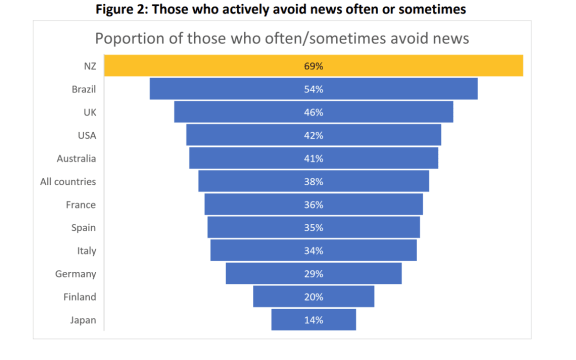
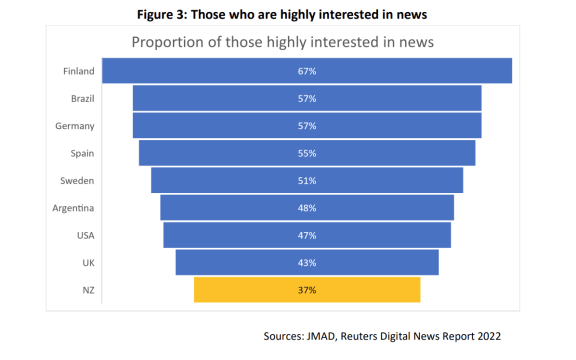
A recent trust in media survey by AUT produced a startling finding: New Zealanders are world-leaders in tuning out the news, with 69 percent of respondents saying they actively avoid it at least some of the time, and just 37 percent of us taking high interest in what’s being reported.

When asked why they were switching off, a common response was that the coverage is depressing and divisive.

The potential for an increase in people moving to Australia is a worthy topic to cover.

New Zealand does have a skills shortage, and workers leaving for greener pastures is a genuine concern.

But this week’s coverage could feel like a little bit of a slap in the face to the New Zealanders who’ve spent more than 20 years living as – in the media’s own words – second class citizens.

Perhaps our news organisations could do a little better at reporting and contextualising how their lives have improved in real terms, rather than just fretting over as-yet unrealised scenarios where their gain might be our loss.

Source: Citizenship celebration turns sour in record time

In a growing India, some struggle to prove they are Indians

Of note:

Krishna Biswas is scared. Unable to prove his Indian citizenship, he is at risk of being sent to a detention center, far away from his modest hut built of bamboo wood that looks down on fields lush with corn.

Biswas says he was born in India’s northeastern Assam state. So was his father, almost 65 years ago. But the government says that to prove he is an Indian, he should furnish documents that date back to 1971.

For the 37-year-old vegetable seller, that means searching for a decades-old property deed or a birth certificate with an ancestor’s name on it.

Biswas has none, and he is not alone. There are nearly 2 million people like him — over 5% of Assam’s population — staring at a future where they could be stripped of their citizenship if they are unable to prove they are Indian.

Questions over who is an Indian have long lingered over Assam, which many believe is overrun with immigrants from neighboring Bangladesh.

At a time when India is about to overtake China as the most populous country, these concerns are expected to heighten as Prime Minister Narendra Modi’s government seeks to use illegal immigration and fears of demographic shift for electoral gains in a nation where nationalist sentiments run deep.

The ruling Bharatiya Janata Party has promised to roll out a similar citizenship verification program nationwide even though the process in Assam has been put on hold after a federal audit found it flawed and full of errors.

Nonetheless, hundreds of suspected immigrants with voting rights in Assam have been arrested and sent to detention centers the government calls “transit camps.” Fearing arrest, thousands have fled to other Indian states. Some have died of suicide.

Millions of people like Biswas, whose citizenship status is unclear, were born in India to parents who immigrated many decades ago. Many of them have voting cards and other identification, but the state’s citizenship registry counts only those who can prove, with documentary evidence, that they or their ancestors were Indian citizens before 1971, the year Bangladesh was born.

Modi’s party, which also rules Assam, argues the registry is essential to identify people who entered the country illegally in a state where ethnic passions run deep and anti-immigrant protests in the 1980s culminated in the massacre of more than 2,000 immigrant Muslims.

“My father and his brother were born here. We were born here. Our kids were also born here. We will die here but not leave this place,” Biswas, said on a recent afternoon at his home in Assam’s Murkata village, near the banks of the Brahmaputra River.

The Biswas family has 11 members, of whom the citizenship of nine is in dispute. His wife and mother have been declared Indian by a foreigners’ tribunal that decides on citizenship claims. Others, including his three children, his father and his brother’s family, have been declared “foreigners.”

It makes no sense to Biswas, who wonders why would some be considered to have settled in the country illegally and others not, even though they all were born in the same place.

The family, like many others, has not pleaded their case before the tribunal or higher courts due to a lack of money and the arduous paperwork required in the process.

“If we cannot be Indian then just kill us. Let them (the government) kill my whole family,” he said.

Source: In a growing India, some struggle to prove they are Indians

New Zealand shouldn’t be afraid of ‘brain drain’ after Australian citizenship deal

Of interest, some similar but different dynamics between USA and Canada although restrictive immigration policies in USA are shifting somewhat the patterns in tech:

For a very long time, the concept of New Zealand and Australia as meaningfully different nations did not make much sense. The Tasman Sea was awash with two-way traffic in the 19th century, when we were outposts of the same empire, with ideas and people floating between the two countries freely. Australia’s 1900/01 constitution famously retains an option for New Zealand to join its federation of states. The two countries did not send proper diplomatic missions to each other’s capitals until 1943, and did not create separate “citizenships” until 1948.

In the decades since we have established ourselves as properly different countries, albeit ones that are extremely closely linked, with over half a million New Zealand citizens living in Australia. Over the weekend those links got even closer, as prime ministers Chris Hipkins and Anthony Albanese announced a huge change to the way New Zealanders can get citizenship, which has been far more difficult since 2001.

Kiwis living in Australia will soon be eligible to apply for citizenship after four years of living in the country, with all their children born since mid-2022 in the country automatically made citizens. This replaces a cumbersome and expensive system by which New Zealanders who had lived in Australia for years had to apply to become permanent residents of Australia first, despite already being de facto permanent residents anyway.

This is a major win for Hipkins and New Zealand. It brings Australia’s system into line with New Zealand’s and will make many New Zealanders lives measurably better, as they are able to access social services for themselves and their children in the country they have moved to. Even NZ First leader Winston Peters, who publicly decries the Labour government as “dishonest” separatists, acknowledged that the deal was a victory.

But before long an old obsession was trotted out to attack the deal: the “brain drain”. Australia is not just a richer country than New Zealand, it is one that distributes those riches differently, consistently paying workers a higher proportion of GDP. Would this not, asked several prominent economists, just send more Kiwis over the ditch for higher wages, contributing to existing skills shortages? One editor even suggested the government may have been “played” by those cunning Australians.

These arguments do New Zealand a disservice.

For one, there is scant evidence that this will meaningfully contribute to more people crossing the ditch. Between late-2003 and late-2022, 778,000 Kiwis migrated to Australia from New Zealand, suggesting that the tougher path to citizenship John Howard introduced in 2001 didn’t really stop many. If you’re the kind of young person who typically did make that move, the prospect of citizenship after four years is hard to see as much of a pull factor – over and above more immediate benefits like higher pay, better working conditions, and that half of your friends are doing the same. It could keep some Kiwis in Australia longer, sure, but anyone who is happy to become a citizen of Australia is likely a lost cause for us anyway.

Source: New Zealand shouldn’t be afraid of ‘brain drain’ after Australian citizenship deal

Australia unveils direct pathway to citizenship for New Zealanders

Of note (longstanding issue):

Australia announced on Saturday a direct pathway to citizenship for New Zealanders living in the country, reversing controversial visa rules a day before a visit by New Zealand Prime Minister Chris Hipkins.

Hipkins, set to visit Queensland state’s capital Brisbane on Sunday, hailed the move as “the biggest improvement in the rights of New Zealanders living in Australia in a generation”.

The changes, effective from July, meant New Zealand citizens living in Australia for four years or more could apply for citizenship without having to become permanent residents first, Australian Prime Minister Anthony Albanese said in a statement.

“We know that many New Zealanders are here on a Special Category Visa while raising families, working and building their lives in Australia. So I am proud to offer the benefits that citizenship provides,” Albanese added.

New Zealand has long campaigned for changes since visa rules were altered in 2001, making it tougher for Kiwis in Australia to get citizenship.

The reform would bring New Zealanders’ rights more into line with those of Australian expats living in New Zealand, Australia’s Labor government said.

“Kiwis taking up Australian citizenship will still retain their New Zealand citizenship. These dual citizens are not lost to New Zealand – but draw us closer together,” Hipkins said in a statement.

The changes also meant children born in Australia since July to an Australia-based New Zealand parent would be automatically entitled to Australian citizenship, he said.

“This will make critical services available to them,” he said, adding the changes delivered on an Albanese promise that no New Zealander be left “permanently temporary” in Australia.

Around 670,000 New Zealand citizens live in Australia, while there are around 70,000 Australians in New Zealand, according to Australia’s Department of Foreign Affairs and Trade.

Australia’s Home Affairs Minister Clare O’Neil ruled out the changes being extended to other migrant groups, saying it was a “special arrangement with New Zealand”.

The reform was about ensuring the “strong friendship we have is reflected properly in law”, she told ABC television.

Source: Australia unveils direct pathway to citizenship for New Zealanders

Only path to citizenship for ‘lost’ Canadians can take years and may involve mistakes, court hears

Useful account of the court proceedings and Justice Akbarali comments and questions. The definition of “lost Canadians” keeps on getting stretched. Agree, of course, on the need for better data, not just relying on personal stories and individual cases:

Government lawyers were challenged in court to justify the options for “lost Canadians” to be granted citizenship and the undue hardship endured by families affected by a rule that limits the passage of citizenship rights by descent for those born abroad.

At a hearing in Toronto on Thursday, federal government counsel argued there’s no charter right to citizenship and alternative pathways are available for children born overseas to foreign-born Canadians who can’t inherit citizenship under the second-generation cut-off rule.

“There’s simply one rule for passing on citizenship for the first generation born abroad, and that’s having a child born in Canada to continue the connection to Canada,” Hillary Adams, one of three lawyers for the government, told the Ontario Superior Court of Justice.

“Or they can have their children born outside of Canada and confirm the connection to Canada by establishing permanent residence here and apply for citizenship, like most immigrants to Canada … The end result is the same. Your child gets Canadian citizenship.”

The lawsuit was brought by 23 individuals from seven families that have been negatively affected by the cut-off rule, arguing the law discriminates against them based on their place of birth, violates their mobility and liberty rights, and disproportionately puts women at a disadvantage when they have to give birth outside of Canada due to circumstances beyond their control.

Government co-counsel David Tyndale said people make personal choices as to where to look for jobs, where to start a family or whether to pursue a career abroad, and the choices have “intersecting effects” on one another.

“They may be difficult. They may involve serious consequences in some area or others of the person’s life. But the fact that life imposes choices on people as to where they live and where they have children isn’t necessarily a breach of the charter,” Tyndale argued.

The government contended that there’s no “blanket prohibition” for the second-generation born abroad to restore their Canadian citizenship through a discretionary grant by the immigration minister or indirectly first as a permanent resident through a family sponsorship before they turn 22 years old. Refused applicants can appeal to the Federal Court.

Source: Only path to citizenship for ‘lost’ Canadians can take years and may involve mistakes, court hears

Standing committee votes to reconnect ‘lost Canadians’ with their #citizenship

In parallel with the court case.

The previous retention provisions (age 28) were complicated and difficult to administer consistently and many did not avail themselves of these provisions, whether due to not being aware or not important to them at the time.

Degree of connection tests, while possible, would likely prompt debate over the particular conditions.

And when I last did an analysis of Canadian expatriates using a variety of connection tests – paying non-resident taxes, maintaining a Canadian passport, etc – the number was significantly less than estimates of their overall numbers.

As always, practically impossible to reach all Canadians living abroad with messages regarding citizenship and other policies that may affect them.

When Emma Kenyon tried to file for her child’s Canadian citizenship after moving abroad for work, she was told to travel back to Canada to give birth in a hospital here.

Speaking at a press conference on Monday, Kenyon said this advice was offered at the height of Canada’s pandemic travel lockdown in 2020, and would have resulted in a significant salary loss and posed a health risk to her pregnancy.

Both Kenyon and her husband grew up in Canada, and wanted to pass down their Canadian citizenship to their expected child and the rest of their growing family. Their efforts have been met with lingering bureaucracy.

On Monday, April 17, the Standing Committee on Citizenship and Immigration voted to widen the scope of a new policy change to the Citizenship Act that aims to reconnect Canadians who were born abroad with their lost citizenship.

As it stands, Bill S-245 — which was introduced by Conservative Senator Yonah Martin in May 2022 — only gives some people their citizenship back, but not others.

The NDP’s amendments tabled on Monday will also include people like Kenyon, who fall outside of the bill’s scope — as it stood, the bill only allowed people born abroad between Feb. 15, 1977 and April 16, 1981 to reclaim citizenship.

The amendments were passed with 64 per cent of the committee in favour, while all votes against it came from CPC members.

CPC members opposed to Kwan’s amendment said they would use it as a bargaining chip for the party to push for their own agenda items like the reinstatement of in-person citizenship ceremonies.

“The NDP wants to seize this opportunity to fix ‘lost Canadian’ issues once and for all,” Kwan said in an announcement before the committee meeting.

She spoke alongside subject expert and author Don Chapman, Canadian Citizens Rights Councilexecutive director Randall Emery, immigration lawyer Sujit Choudhry, and people who would be affected by the policy change.

A history of the lost Canadians

In 2009, the then-Conservative government repealed parts of a 32-year-old section of the Citizenship Act that automatically revoked the citizenship of some Canadians when they turned 28, unless they re-applied for it.

But the arcane age 28 rule had not been clearly communicated to Canadians when it took effect in 1977. As a result second-generation kids awoke on their 28th birthday years later without their citizenship and the threat of deportation.

Last year, Opposition Deputy Leader, Conservative Senator Yonah Martin, expedited Bill S-245 through the Senate, to address “a small group of Canadians who have lost their Canadian citizenship or became stateless because of [these] changes to policy.”

It encompasses a specific cohort of lost Canadians that had already turned 28 before the rule was revoked, including only those born within a 50-month window.

On Monday, Kwan and those who spoke with her said the scope of the bill is still too narrow. The NDP’s amendments would include people, like Kenyon, who are currently told not to give birth abroad if they want to pass their Canadian citizenship on to their children.

At Monday’s announcement, Chapman noted the previous changes in citizenship policy reflected a UK-based model of identity laws that used to be popular in British colonies.

“Canada is the last country defending these laws,” he said.

Source: Standing committee votes to reconnect ‘lost Canadians’ with their …