Douglas Todd: Canadian aboriginals joining Christian clergy despite residential-school legacy

Interesting piece by Douglas Todd on indigenous peoples and spirituality. When I was looking at religious affiliation in my book, Multiculturalism in Canada: Evidence and Anecdote, one of the bigger surprises was the low number following traditional Aboriginal spirituality:

The biggest group of Canadian aboriginals, 506,000, affiliate with Roman Catholicism. The National Household Survey found another 134,000 associate with the Anglican Church, 59,000 with the United Church and 36,000 are Pentecostal.

Almost one in five aboriginals say they have “no religion.” And 63,000 say they follow traditional aboriginal spirituality.

Dozens of aboriginal clergy in the Anglican, United Church, Lutheran and Presbyterian churches have trained through the Native Ministries Consortium at Vancouver School of Theology on the UBC campus. Every summer, 40 to 60 aboriginal theology students take programs at The Native Ministries Consortium, says director Ray Aldred, who is Cree.

The students are often from the West Coast — Salish, Haida, Tsimshian, etc. Other indigenous students hail from Ontario, the Arctic and the Prairies. That’s not to mention Lakota, Navajo or Nez Perce from the U.S.

Contrary to most media reports about Canada’s Truth and Reconciliation Commission, Aldred believes “aboriginal anger about white Christianity” and the legacy of residential schools abated more than a decade ago.

“I think in the 1950s the churches began realizing they had made a mistake with residential schools. But it took another 50 years to get out of them,” said Aldred, 56.

The churches closed almost all residential schools by the 1970s, but the federal government’s billion-dollar compensation and healing program is continuing.

“Now we can do Christian faith on our own terms,” said Aldred, who was baptized in the United Church but is now a minister in the Alliance Church. “That’s the cool thing about Canada. We seem to find ways to get along.”

Both Aldred and Nahanee feel they have integrated Christianity into their aboriginal traditions.

“I believe Christianity is everyone’s religion. It’s not just white man’s religion,” said Nahanee, 63, who also chairs the Canadian Catholic Aboriginal Council.

Nahanee often holds a talking stick or eagle feather when he’s in the pulpit at St. Paul’s Church, which is decorated with aboriginal designs and where he co-ministers with his Filipina wife, Emma, 53.

The Catholic Church allows deacons, unlike its priests, to be married. However, Nahanee and Emma joked about how the church would not permit him to remarry if she died.

Even though Nahanee would like to see Pope Francis repeat earlier Vatican apologies for Canada’s residential-school system, including one that operated a few hundred metres from St. Paul’s Church, he regrets how some good things that happened in the schools are being ignored.

“People are now afraid to say positive things about the schools,” said Nahanee. He noted, for instance, that in the late 1800s the Catholic priest for St. Paul’s Church and its related residential school stopped an attempt by the legendary Vancouver saloon owner, “Gassy Jack” Deighton, to seize Squamish Nation land.

Nahanee is convinced Christianity, at its best, adds to aboriginal culture. He knows it might not be for everyone, but he urges aboriginals and others who are angry about the past to find ways to transcend it.

“I think forgiveness is a way of healing and getting on with our lives. We’ve had so many problems because of anger and alcoholism. It has to end.”

Source: Douglas Todd: Canadian aboriginals joining Christian clergy despite residential-school legacy
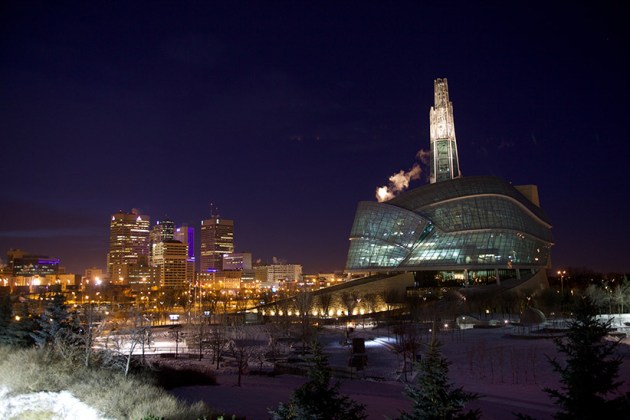
Winnipeg a leader in fixing Canada’s racism problem

Appears to be a concerted, community-wide effort. Encouraging:

Declaring 2016 the “Year of Reconciliation” for Winnipeg, he announced a host of new initiatives aimed at combatting racism, including mandatory training for all city staff on the impact of residential schools, a promise to visit every Winnipeg high school to address diversity, and a program to foster public engagement in reconciliation. It is a kind of commitment to the issue of racism never before seen by a civic leader in Winnipeg, and one that civic leaders say has propelled Winnipeg to the forefront of the issue in Canada, as other cities begin the tough work of reconciliation.

“On that day [a year ago], this community chose to come together to recognize the existence of racism, and that we needed to work together to better address it,” Bowman said. “On that day, we chose unity over division. We responded to the Maclean’s article with honesty and humility. We knew we could not, and cannot, mend the profound wrongs and injustices of generations and centuries in one year, with a single summit or press conference. But I remain committed to the journey.”

Photograph by John Woods

Photograph by John Woods

Numerous Indigenous speakers and community leaders at the press conference announced forthcoming projects, like St. John’s High School student Sylas Parenteau, who talked about an upcoming march for diversity by 3,000 Winnipeg School Division students, continuing the anti-racism work the division undertook in the last year. Far from a top-down effort, “we’ve been able to drive this conversation down to the individual level, where it really needs to occur,” Bowman said.

Bowman addressed a packed, second-floor foyer at City Hall. Seated with him were many of the same people who stood shoulder-to-shoulder with him last year. Michael Champagne, of Aboriginal Youth Opportunities, and founder of Meet Me at the Belltower, led a smudge; a local imam led a prayer. Proceedings were briefly interrupted by a Somali mother who told media she hasn’t seen her children in the six years since they were allegedly taken by Winnipeg Child and Family Services (CFS). Rather than being promptly frogmarched out by security, she was embraced by Ojibwe elder Randi Gage, and promised an audience with Bowman; Clunis, the police chief, wrapped an arm around her husband’s shoulder. Justice Murray Sinclair, head of the Truth and Reconciliation

Commission, addressed the controversy, acknowledging the “validity” of her concerns, which mirror those many Indigenous people feel toward CFS. “They are an example of what this day is all about—the sense of injustice so many feel about the way that they are treated by society, and their inability to be able to express themselves in a full way, to be able to achieve their ambitions in being part of this nation.”

There were critics of last year’s article in the room at City Hall, too; it remains deeply controversial in the city. But some, like radio host Charles Adler, who found the thrust of it “incredibly insulting,” admitted it ultimately “forced all of us to look into our souls,” and see the problem for what it was: “a human dignity issue,” threatening the future of the city. Instead of racism, Adler, who hosted Bowman’s press conference last week, believes Winnipeg will one day become known as “the capital of reconciliation.”

“At the very foundation of attacking racism there are two things we need to think about,” said Sinclair, a member of Bowman’s new Indigenous advisory circle: “What is it that our leaders are saying? And what is it that our leaders are doing? And to that, I say: Look around. Look at what our mayor has done. Look at the fact that our mayor has stood up, has embraced the ambition of trying to address it in a way that all people of this city are comfortable with who they are, are comfortable with a sense of their future, of who they can be in this society.”

Source: Winnipeg a leader in fixing Canada’s racism problem

First Nations student deaths in Thunder Bay inquest raise questions about racism: Minister Hajdu

Change in language and acknowledge of issues:

A “swirling storm” of racism and discrimination is killing indigenous people in Thunder Bay, Ont., says Patty Hajdu, an MP for the northwestern Ontario city and minister for the status of women.

Hajdu said her experience running a homeless shelter in Thunder Bay, before becoming a Liberal cabinet minister last year, showed her the deadly consequences of racism.

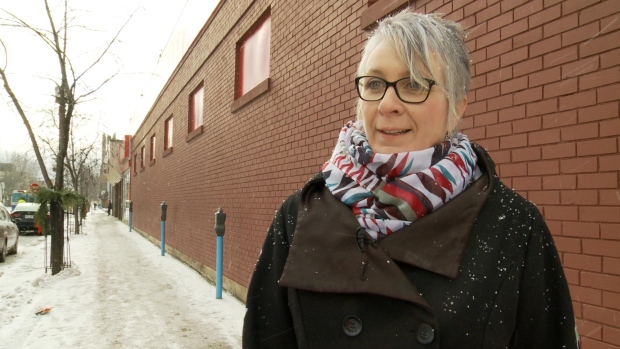
Patty Hajdu

Thunder Bay Superior-North MP Patty Hajdu says ‘institutional racism’ sends the message to citizens that it’s OK to be racist. (Martine Laberge/Radio-Canada)

Speaking outside the inquest into the deaths of seven First Nations students in the city, Hajdu said racism is a sad reality of life, and death, for indigenous people in the city.

“There’s a swirling storm of racism and discrimination against people who use substances and people who are in poverty, and it all comes together in a perfect storm where people are actually dying, because they can’t access the services they need,” she said.

Several friends and classmates of the students who died have testified at the inquest about experiences of racism in Thunder Bay after they moved from their remote First Nations to attend high school in the city.

Source: First Nations student deaths in Thunder Bay inquest raise questions about racism – Thunder Bay – CBC News

Nova Scotia premier to discuss statue Mi’kmaq community says is racist

Another example of significant historical figures and their mixed legacy viewed through contemporary eyes (e.g., the Princeton Woodrow Wilson controversy).

In general, rather than moving the statue ‘out of sight,’ it might be better to have an interpretative plaque that provides a more complete picture of his role and actions.

A learning opportunity for all that recognizes the Mi’kmaq’s valid concerns:

Nova Scotia’s premier says he will discuss options for a statue of Halifax city founder Edward Cornwallis that the Mi’kmaq community has long argued is racist.

A spokeswoman for Stephen McNeil says the premier plans to meet with Halifax Mayor Mike Savage to discuss the statue, which has stood in a downtown park for more than 80 years.

Mi’kmaq elder Daniel Paul says although Cornwallis is the city’s founder, he also issued a scalping proclamation in 1749 that offered a cash bounty for anyone who killed Mi’kmaq men, women and children.

Paul says his goal is not to erase Cornwallis from history books, but to strike a compromise that recognizes the atrocities he committed.

He says he would like to see the statue removed from the park and placed in the depths of the Citadel Hill fortress.

About four years ago, a local junior high school stripped Cornwallis from their name amid concerns from the Mi’kmaq community.

Source: Nova Scotia premier to discuss statue Mi’kmaq community says is racist – Macleans.ca

There will be some hard things said: Muslim group hears about Truth and Reconciliation

Another good initiative in building bridges and understanding by the Canadian Council for Muslim Women:

It’s a been a time of soul-searching for Muslims trying to find their place in Canada. That’s why it’s the right time to hear about Truth and Reconciliation right from the source, says the organizer of a panel that brought Muslim and Aboriginal people together.

“I thought we should take a step back and put our own problems into perspective,” said Ferrukh Faruqui, who moderated the event on Saturday.

Faruqui grew up in Winnipeg and went to medical school there, but admits she knew little of the historic struggles of Canada’s First Nations. “We want to listen to truths long buried and offer our support.”

The panel organized by the Ottawa chapter of the Canadian Council for Muslim Women consisted of Faruqui as moderator and three guests: Minwaashin Lodge co-founder Irene Compton;  Victoria Tenasco-Commanda, the culture co-ordinator at the Wabano Centre for Aboriginal Health, and Shady Hafez, a Carleton University student whose mother is Algonquin and father is Syrian.

The panel spent much of its time talking about echoes of the residential school system, which operated for more than 150 years. Some 150,000 aboriginal children went through the system, and thousands never returned home. The last school closed only about 20 years ago. The Truth and Reconciliation Commission, which probed the history of that school system and its lasting repercussions were released last June in a summary report. A final report is to be released Dec. 15.

“I am going to warn you that there will be some hard things said,” warned Compton before she started to speak.

Source: There will be some hard things said: Muslim group hears about Truth and Reconciliation | Ottawa Citizen

Tory MP sees ‘wiggle room’ in site for victims of communism memorial

Trial balloon by Galipeau? Pre-election local candidate positioning? But Minister Polievre is the lead minister and responsible for Ottawa and has, typically, showed no flexibility.

I’m with Jen Gerson of the National Post: use this site for a memorial to the victims of the residential schools given that this is a fully Canadian historical tragedy, that haunts us still:

Throughout the ongoing controversy over the proposed Memorial to the Victims of Communism, opponents have focused on its prominent location on Wellington Street and its destructive impact on the Long Term Vision and Plan for the parliamentary and judicial precincts.

But according to Conservative MP Royal Galipeau, who has represented Ottawa-Orléans since 2006, the site for the memorial has yet to be finalized.

“It’s nowhere right now,” Galipeau said in an interview. “It’s planned to be on Wellington Street between the Library and Archives and the justice building. There’s a lot of wiggle room there.”

Galipeau confirmed that he has privately urged the government to locate the memorial a bit further west on Wellington, on a site closer to Library and Archives Canada — an idea he had not previously shared publicly.

“Since I don’t sit on the opposition side of the house,” he explained, “I generally don’t make my recommendations to the government by way of the media. I work in a way to bring results.”

Galipeau wouldn’t comment on the current status of his suggestion, saying only: “I think that after the monument is built, the people who oppose the monument no longer will. That much I can say.

“I suspect that everyone is getting their knickers in a snit for nothing. The monument will be of the right scale and will be located in a manner that it will not impede the architecture of the Supreme Court.”

Galipeau’s comments followed a call to the Citizen from Ludwik Klimkowski, the chair of Tribute to Liberty, the charity that proposed the monument and is raising money for it.

Stressing that he was not speaking for the government, Klimkowski floated the “purely hypothetical” idea of leaving the memorial where it is and designating the more westerly site eyed by Galipeau for a future Federal Court building.

The current Long Term Vision and Plan calls for the Federal Court building to be built on the 5,000-square-metre site on Wellington Street the government has publicly earmarked for the memorial.

Tory MP sees ‘wiggle room’ in site for victims of communism memorial | Ottawa Citizen.

Justice Murray Sinclair’s challenge for Canada as it seeks reconciliation

Good interview with Justice Sinclair. My two highlights:

“We didn’t write this report for this government,” he said. “We wrote this report for all governments including this government. We expect there will be other opportunities to talk with people when governments change, and governments always change.”

….Many of the people who come to Canada today are from developing nations that were themselves at one time oppressed by colonial powers. “They will be able to say, if we let them, ‘I had nothing to do with that, so therefore I don’t need to worry about it,’” he said. “But on the other hand, everyone coming here has a responsibility to the future.”

That is one reason why the commission wants the residential school experience to be incorporated into school curricula, into citizenship guides, into law and journalism programs, into the very fabric of national life.

And Mr. Sinclair points out that Canada’s robust immigration policies may mean that visible minorities could be a majority in 50 years’ time. Those who see Canada as a nation founded by French and English settlers and inhabited by their descendants may one day know what it’s like to struggle to preserve one’s culture and heritage.

“You are going to be the aboriginal people of the future,” he predicted. “So let’s talk about how you are treating aboriginal people today.”

Justice Murray Sinclair’s challenge for Canada as it seeks reconciliation – The Globe and Mail.

Doug Saunders’ take:

The period of what we now call cultural genocide lasted just a century, though its consequences could continue much longer if we do not intervene to reverse the toll of this period.

In many ways, the artifacts of this system continue to function. We still have the forced collectivization of reserves, and large-scale non-ownership of aboriginal land. We are still perhaps the only country in the world with federal government offices whose function it is – under the “status Indian” policy – to determine racial purity. We still have terrible schools, staffed with ill-equipped teachers and given pathetic levels of funding, on reserves.

Compared with other “cultural genocide” events, the number of people affected is small: Aboriginal peoples are 4.3 per cent of the Canadian population: 1.5 million people, only half of whom live on reserves. To strike a new settlement with these populations as recommended in the commission’s report (we have already done so, to a large extent, with the Inuit) would not, then, be an overwhelming challenge.

This newly named crime may be a source of national shame, but it does not have to define Canada: Another century of progress and co-operative relations could transform it from a current event into a piece of history. We have a chance, in the aftermath of this report, to begin a less shameful era of Canadian and indigenous history.

Residential schools, reserves and Canada’s crime against humanity – The Globe and Mail.

Lastly, John Ralston Saul:

The Commission’s report is very clear about how reconciliation works – respectful relationships, restoring trust, reparations, concrete actions leading to societal change. To put it bluntly, reconciliation without restitution would be meaningless. It is not so difficult to work out what restitution means. Part of it is laid out in this report. Above all, it is not about winners or losers. If indigenous peoples have more and do better, we will all do better.

In 1996, Georges Erasmus and his fellow commissioners wrote, “Canada is a test case for a grand notion – the notion that dissimilar peoples can share lands, resources, power and dreams while respecting and sustaining their differences. The story of Canada is the story of many such peoples, trying and failing and trying again, to live together in peace and harmony. But there cannot be peace or harmony unless there is justice.”

Since then, indigenous peoples have more than played their part – leading the way with constructive arguments, developing an ever larger new leadership, re-establishing their cultures, winning repeatedly at the Supreme Court. The rest of us have done very little.

And the Canadian people – you and I – have not taken the stand we need to take. We have not given that fundamental instruction – the instruction of the ethical, purposeful voting citizen. Justice Sinclair and his colleagues have shown us what to do. We are the only barrier to action being taken.

Truth and Reconciliation is Canada’s last chance to get it right

Why Reconciliation for Aboriginal Peoples Should Matter to New Canadians – New Canadian Media

Ranjit Bhaskar commentary on the TRC recommendations regarding new Canadians:

The broader hope is if Canadians have more knowledge of indigenous history, they will have a better understanding of the current policy disputes between governments and Aboriginal Peoples over natural resources, education and child welfare.

Of significant importance for new Canadians is the last two of the TRC’s 94 Calls to Action. The penultimate recommendation, “call[s] upon the federal government to revise the information kit for newcomers to Canada and its citizenship test to reflect a more inclusive history of the diverse Aboriginal [P]eoples of Canada, including information about the Treaties and the history of residential schools.”

Perhaps it is time for new Canadians themselves to insist on being better informed of an inconvenient truth to better appreciate the travails of indigenous people – essential because we cannot cherry-pick the history we inherit.

The last recommendation urges Ottawa to replace the current Oath of Citizenship with one in which new citizens swear to faithfully observe the laws of Canada, “including Treaties with Indigenous Peoples.”

A timely reminder of not just building a nation-to-nation relationship between Aboriginal Peoples and the Crown that respects the promises of historical treaties, but also for resetting relationships between the First Nations and the “latest nations.”

The two recommendations are a call to remember the injustices inflicted on one of the founding peoples of Canada now that we are slowly, but surely, coming to know about the other history. The part of our collective past not taught in schools, not part of the citizenship test and not part of the “Welcome to Canada” package.

Time to remember the more than 6,000 aboriginal children who never returned to their homes after being sent to residential schools by the Canadian government.

And perhaps it is time for new Canadians themselves to insist on being better informed of an inconvenient truth to better appreciate the travails of indigenous people – essential because we cannot cherry-pick the history we inherit.

…. Far too many Canadians, including many peoples of colour and First Nations themselves, are unaware of the Canadian history of colonization of the indigenous peoples and the exclusion of communities of colour. Instead, we need to invest in our collective understanding and put a halt to an enforced mass ignorance to change the way we look at each other, talk to each other and talk about each other.

Dialogue can hopefully foster positive relationships among indigenous peoples and newcomers to help bring about justice and equality for all. Reconciliation for indigenous people is an important first step towards that goal.

Why Reconciliation for Aboriginal Peoples Should Matter to New Canadians – New Canadian Media.

Know the truth, make amends – Erna Paris

Erna Paris on the need to face our history of residential schools and ‘cultural genocide,’ with some interesting contrasts with other countries who have (e.g., Germany, France), or have not (e.g., Japan, USA) faced up to their past:

A new challenge for Canadians will be to acknowledge the endemic disconnect between our myths and our reality. We view ourselves as a tolerant society that values diversity, but what the Truth and Reconciliation Commission has made clear is that we could believe this only because we excluded native peoples from the picture.

One key to reconciliation will be the rejection of all forms of coercive assimilation. For example, the Quebec Charter of Values, with its discriminatory rules about religious dress codes, was a throwback to attitudes that have historically produced ideas of lesser peoples.

The TRC has shown us where that leads.

The past can never be overcome. It can only be managed. With accountability on the part of lawmakers. With memorials to the victims. And with a major effort to pursue justice – however difficult that may be.

Know the truth, make amends – The Globe and Mail.

TRC Recommendation for a Residential Schools Monument

Jen Gerson of the National Post makes a constructive suggestion: situate the Monument for Residential School Victims in the location planned for the Monument for Victims of Communism.

Hard to argue with the logic. Will be interesting to see if anyone picks up on it:

The report calls on provincial and federal governments to install highly visible monuments in Ottawa and each provincial capital. The logistics of this are, inevitably, going to be fraught. However, in the grander scheme of things, at least one monument seems appropriate. In the meantime, there’s still space between the Supreme Court of Canada and the National Library in Ottawa. Catch it before it’s used to commemorate the victims of a political ideology that has never been enacted in this country.

Five of the best recommendations from the Truth & Reconciliation Commission, and five that will be problematic