Big rise in Irish citizenship decisions this year after streamlining

Small numbers but recovery from COVID impact of note:

The Department of Justice is “on track” to make 11,000 citizenship decisions this year, despite the administrative difficulties created by the Covid-19 pandemic, Minister for Justice Helen McEntee has said.

The department made only 5,159 decisions last year, down significantly on 2019 (9,332) and 2018 (11,139). However, new temporary processes were introduced in January.

A number of changes to streamline the application process, and to facilitate immigration movements over the Christmas period, have been announced by Ms McEntee.

From January 1st, new applicants for citizenship will not be required to submit their original passport with their initial application. Instead they can submit a full colour copy of their entire passport, including the front and back covers, witnessed by a solicitor.

“I know that this change in practice will be very much welcomed,” Ms McEntee said. “They may need their passport to travel to see family or friends abroad, something many of us have not have been able to do for a long time due to Covid-19.”

The department is to introduce measures to streamline the system in January, including measures aimed at helping doctors working in the HSE or the voluntary hospitals in relation to proof of residence.

People who are entitled to receive a new Irish Residence Permit card may use their current expired card to enable them to depart from and return to Ireland over Christmas and until January 15th, 2022, the Minister said. The re-entry visa requirements for children under the age of 16 are also being suspended during this period.

“This will benefit up to 6,000 children and their families,” she said.

A residence permit card that was in date at the beginning of the pandemic in March of last year now has its validity period extended to January 15th.

Anyone travelling during this time will be able to print a copy of the travel confirmation notice provided by the department and display it with their existing card to show proof of residence when returning to Ireland.

The department is engaging with airline carriers to notify them of this new arrangement and to ensure that the process runs smoothly, the Minister said.

Source: Big rise in Irish citizenship decisions this year after streamlining

Boswell: The dark flip side of Canada’s oldest English coin

Good reminder to be more inclusive in reporting such discoveries and include the historical context:

The discovery in Newfoundland of what appears to be the oldest English coin ever found in Canada certainly does “spark the imagination,” as a provincial government press release noted this week.

But there’s also been a failure of imagination in communicating the significance of this 525-year-old artifact dug up at Cupids Cove Plantation Provincial Historic Site, settled in 1610 after a series of English expeditions to the region over the previous century.

Yes, it’s true: As those heralding the find have noted, this silver relic — a two-penny piece believed to have been minted in Canterbury between 1493 and 1499 — symbolizes a landmark moment in the history of European colonization in Canada.

It features the likeness of King Henry VII, who championed English exploration of the “new founde land” and paid sailors to “serche and fynde” the fabled territory across the Atlantic, bring it under his control and spread Christianity to the New World.

However, there’s a flip side to every coin. And in this era of long-overdue reckoning with the Indigenous history of North America and the often-violent dispossession of First Peoples, the province shouldn’t trumpet the unearthing of such an archeological prize without at least acknowledging the dark side of history that’s also associated with it.

Specifically, in this case, that’s the forced retreat of the Beothuk inhabitants of Newfoundland from coastal sites in the face of the 17th-century English settlement of the island, and their eventual extinction.

The vanishing of the Beothuk is one of the great tragedies of Canadian history. Does recognition of this sorrowful outcome of East Coast colonization complicate an otherwise super-cool, time-machine tale about archeologists digging up a coin at Cupids Cove stamped with the visage of the first Tudor king?

Yes, it’s now a more complicated story. Much more. Or we could say the narrative has just become more layered, more comprehensive, more balanced — and more true.

Along with a sense of awe about the efforts of early English colonizers to gain a toehold in Canada centuries ago, we now also need to consider what the coin represented to the millennia-old Beothuk civilization, and what news of the coin’s discovery this year might mean to present-day Indigenous people.

I was a national reporter for many years with a history buff’s fascination for archeological discoveries shedding light on Canada’s past. I wrote many stories in a voice of breathless enthusiasm that, in hindsight, should have been told with a more reflective tone, a deeper awareness of what milestone moments in the European “discovery” and settlement of the Americas would have meant to the people who had already been living here for countless generations.

Granted, that’s not how such discoveries were typically framed by scholars, museums and governments in past decades. But in 2021, just weeks after Canada’s first National Day for Truth and Reconciliation, we are in the midst of an ongoing transformation in the way historians shape stories, curators construct exhibitions, and governments manage controversies over street names, memorials and other landmarks of historical commemoration.

In short, across the country in recent years, there’s been an ever-strengthening push to bring other, overlooked, often-obliterated sides of Canada’s history into official depictions of the past.

In recent weeks, the government of Newfoundland and Labrador has taken important steps to rename “Red Indian Lake” – henceforth to be called Beothuk Lake – and erect a statue honouring the disappeared nation outside the provincial legislature.

But genuine reconciliation means going beyond symbolic gestures and reframing many of our historical narratives – at least enough to acknowledge the ultimate impact of contact-era settlements on the Indigenous peoples encountered during the European colonization of the lands that became modern Canada.

In other words, why rename a lake and build a statue to pay tribute to the Beothuk if other historical narratives perpetuate their erasure?

The old coin, to be sure, is an amazing find that tangibly, evocatively recalls “the story of the early European exploration in the province and the start of English settlement,” as Newfoundland and Labrador Tourism Minister Steve Crocker put it in Wednesday’s formal announcement.

But that’s not the only tale it tells. Celebrating the discovery of the coin and extolling its value as a long-lost, newly-found symbol of European exploration and English settlement leaves a glaring gap in the storytelling.

The province’s press release on the find — and, predictably, the subsequent news coverage — makes no mention of the fallout for the Beothuk of England’s colonization of Newfoundland. It’s like all those local history books filling the shelves of Canadian libraries that begin the biography of this county or that township with an account of the day the first white settler arrived in the place, chopped some trees and pitched a tent circa 1820 — as if First Peoples hadn’t already been there for many thousands of years.

There is a lesson here for all governments and all politicians across Canada. If they’re serious about healing relationships with the country’s Indigenous peoples, high-profile gestures of reconciliation must be matched by routine, sincere adjustments in the way they understand, frame and talk about history — especially in the context of the European age of exploration and so-called discovery.

Historians and archeologists, heritage officials and Indigenous leaders, teachers and multiculturalism advocates, municipalities and historical societies — these and many other individuals and groups in Canada are already engaged in difficult discussions about how to rewrite and rejuvenate the nation’s history, to rediscover the many voices and experiences that have traditionally been pushed into the shadows of the country’s past.

The last known Beothuk, a young woman named Shawnadithit, died in 1829. Her aunt, Demasduwit, survived an 1819 kidnapping attempt that left her husband and newborn child dead. But she died in 1820 after helping to create a record of the Beothuk language, and a painted portrait of her held by Library and Archives Canada remains an iconic image of a lost people.

The Newfoundland discovery of the coin stamped with a 15th-century king’s face is exciting and important. But it also illuminates a largely forgotten face of Canada’s history.

Randy Boswell is a Carleton University journalism professor and a former national reporter with Postmedia News.

Source: The dark flip side of Canada’s oldest English coin

Switzerland – Voting rights: ‘The foreign community is too big to be ignored’

One of the most restrictive approaches:

One in three Swiss residents is not allowed to take part in national elections and votes. In most cases that’s because they don’t have Swiss citizenship. How does it feel to live in the country that holds the most referendums in the world without being able to vote?

 “I’ve lived in several countries, but my experience in Switzerland is the first time I’ve been directly confronted with a situation where other inhabitants make decisions about my life and my welfare,” says Estefania Cuero, who has an Ecuadorian and a German passport and has lived in Switzerland for four years. “This is very new to me – and sometimes, very unpleasant.”Cuero, a diversity consultant and doctoral candidate at the University of Lucerne, says specific issues are behind that feeling. “The vote on the burqa ban [passed in March by 51.2% of voters] really affected me. I felt unwelcome – even though I don’t wear a niqab and I’m not Muslim. But for me the message behind it was: ‘We don’t want to see anyone here who looks foreign’.

The purpose of direct democracy is to involve the population in political decision-making. But regular referendums and people’s initiatives repeatedly reveal who does not belong to the electorate.

Of Switzerland’s resident population of about 8.7 million, around 35% are not allowed to vote at a national level.

“You often hear ‘Switzerland has voted’ or ‘Switzerland has decided’,” Cuero says. “But if 35% aren’t allowed to vote, then a statement like that is problematic, maybe even wrong. It’s not Switzerland but very specific individuals or a group that can decide for others and therefore exercises power over other groups that belong to Switzerland.”

The biggest group of people excluded from decisions on national issues is foreigners. Switzerland takes the same approach as almost all other countries on this. Only four countries in the world allow non-citizens to vote at a national level: Chile, Uruguay, New Zealand and Malawi. But in Switzerland the question of participation for foreign residents is more pressing than in other countries because the proportion of foreigners is high: roughly a quarter of permanent residents are not Swiss.

This can lead to strange situations. At the 2019 federal elections the municipality of Spreitenbach in northern Switzerland was home to as many adult foreigners as people with voting rights. The electorate accounted for only 39% of the population. What’s more, the turnout in Spreitenbach was very low, so only 10% of all residents took part in the elections.

For a very long time another huge segment of society was excluded from democratic representation: women. “The share of foreign residents has reached dimensions that can no longer be ignored,” says Sanija Ameti, co-president of the pro-European Operation Libero movement.

Ameti was three when her parents fled from Bosnia to Switzerland. When she was young, a number of people’s initiatives, usually launched by the right-wing Swiss People’s Party, concerned migration policy and often stirred up sentiment against the Balkan diaspora.

“My parents and I had no voice in these votes even though we were directly affected by them. It was extremely frustrating, because we had no choice but to put up with the xenophobic and anti-Muslim politics,” Ameti says, adding that this was one of the reasons she entered politics.

“The mass immigration initiative politicised me,” says Hendrik Jansen, who was born, raised and educated in Switzerland. Today he works in public administration and can’t voice his opinion in public, so we have changed his name.

In 2014 Swiss voters narrowly approved a proposal to curb immigration, imposing limits on the number of foreigners allowed into the country.

Jansen emphasises that as a Dutchman he has an easier time than other migrants. “People rarely have issues with northern Europeans,” he says. “When I say where I come from, the response is often: ‘You’re one of the good ones!’ But the law doesn’t care about that: a tighter law on deportation, for example, affects everyone without a passport equally.

Voting rights as a means of integration?

Jansen, who is active in clubs and does voluntary work, could vote if he adopted Swiss citizenship. So why doesn’t he? “On the municipal level, at the very least, citizenship shouldn’t be a prerequisite,” he says. “If I’m engaged in society, I should be able to vote.”

He thus addresses one of the key arguments put forward by advocates for foreigners’ voting rights: residents without a Swiss passport take part in community life and pay taxes in Switzerland – why shouldn’t they be able to vote on what happens with that money?

They are directly affected by Swiss laws, so why should one section of the population be denied a say in rules it must obey? At the same time, Switzerland guarantees the right to vote to one group of people who neither pay taxes in Switzerland nor are directly affected by most of the laws: Swiss expatriates.

Even if Jansen wanted to become Swiss, it would take a while. He recently moved – only a few kilometres away, but into a new municipality. That means any application for citizenship would have to wait several years.

Ameti, on the other hand, did gain Swiss citizenship and is an active politician in the Liberal Green Party. “I was lucky to be able to apply for citizenship in the city of Zurich,” she says. “The citizenship process is not as fair everywhere – in some municipalities people are subjected to real harassment.”

Ameti thinks the idea of integration via political participation should be revived. The example of Jens Weber shows that this can work.

Weber lives in the northeastern municipality of Trogen, one of the few villages in German-speaking Switzerland that recognises foreigners’ right to vote (see box). As an American, he was elected to the local council in 2006. “It was one of the best days of my life, when I went to Trogen in 2006 and could say ‘right, now I can join in!’” he said in an SWI swissinfo.ch panel discussion. “This experience had a major impact on me and convinced me that I wanted to become a Swiss citizen,” he says.

Diversity taken for granted

However, a possible reform of the voting or naturalisation laws is not the only decisive factor in the fair treatment of the many Swiss residents without citizenship.

“What’s needed is an honest discussion about what and who Switzerland is,” Cuero says. “We need Switzerland’s self-image to mirror the diversity of this society.”

“Anyone who insists there is a single defining Swiss culture should explain the Rösti ditch to me,” says Jansen, referring to the linguistic divide between the French- and German-speaking parts of the country. “The Swiss are not all the same. There are differences between them that are not necessarily smaller than the differences between a Swiss person and a foreigner.”

Source: Voting rights: ‘The foreign community is too big to be ignored’

Bouchard: L’interculturalisme, indifférent au social?

More Quebec diversity debates with the unfortunate mischaracterization of multiculturalism in opposition to interculturalism whereas in reality, the practical differences are nuanced (multiculturalism allows one to integrate into either French or English, interculturalism into French):

C’est un plaisir d’échanger avec un interlocuteur comme Marco Micone. Son engagement en faveur du Québec est bien connu, ses analyses sont toujours pertinentes et ses avis méritent attention. Dans son texte paru dans l’édition du Devoir des 23 et 24 octobre, il soulève à propos de l’interculturalisme une critique que d’autres ont déjà formulée, mais il le fait d’une façon particulièrement bien articulée.

Sa critique principale, c’est que l’interculturalisme québécois, tel que proposé, donnerait dans le culturalisme. Il accorderait donc une nette préséance aux facteurs culturels (et ethniques) aux dépens et même dans l’ignorance d’autres facteurs, principalement tout ce qui se rattache au social. C’est la première objection. Selon la deuxième, l’interculturalisme en viendrait ainsi à masquer la réalité concrète des hommes et des femmes dans leur vie quotidienne. Selon une troisième objection, il faudrait centrer l’attention non pas sur les différences, mais sur « l’humanité » que partagent ces hommes et ces femmes — « on ne peut pas parler de culture italienne, algérienne, haïtienne ou autre au Québec ».

En quatrième lieu, l’interculturalisme est accusé de proposer une conception abstraite et statique des cultures et de « ne pas tenir compte du contexte qui les détermine et les nourrit ». Enfin, les propositions et explications soumises par le modèle ne déborderaient pas la sphère culturelle.

Voici comment je réponds à ces cinq objections, à la lumière de la définition que j’ai déjà donnée de l’interculturalisme (notamment dans mon ouvrage de 2012).

En ce qui concerne la première critique, nous savons que depuis quelques décennies, au Québec comme dans plusieurs sociétés, le racisme se nourrit moins de traits physiques que de caractéristiques culturelles (les Noirs sont paresseux, les musulmans, fondamentalistes, les Mexicains, violents, etc.). On reconnaît là un fondement de diverses pratiques discriminatoires bien connues. Voilà un exemple où le culturel est intimement lié au social. Un autre exemple a trait au rapport majorité-minorité. Encore là, l’analyse culturelle révèle des systèmes de perceptions favorisant la domination et l’exclusion. Dans ce cas, l’interculturalisme invite à examiner une configuration démographique et le rapport de pouvoir inégal qui lui est associé.

Des modèles préétablis

À propos du deuxième argument, ce sont bien sûr les comportements des hommes et des femmes qui sont en définitive déterminants, ceux des membres de la société d’accueil comme ceux des immigrants. Mais les premiers seront incités à reproduire (souvent inconsciemment) les préconceptions que je viens d’évoquer alors que les seconds devront les confronter pour s’en défendre. La sociologie a bien établi que les individus inventent rarement leurs conduites. Ils obéissent ou réagissent le plus souvent à des modèles préétablis, des modèles relativement stables que les acteurs perpétuent par leurs comportements.

La troisième objection appelle une nuance importante. Encore une fois sur la base de nombreuses études, il paraît peu contestable que, parmi les populations immigrantes, il subsiste pendant longtemps assez d’éléments de la culture d’origine pour parler de différences ethnoculturelles. C’est justement parmi ces différences que se trouvent les traits servant de prétextes au racisme. Il importe donc d’y porter attention. En même temps, bien évidemment, on doit se garder de figer ces traits dans des carcans culturels dont l’immigrant n’arrive plus à se défaire — c’est l’une des principales critiques adressées au multiculturalisme. Ainsi, au gré des contacts, des échanges et des choix de chacun dans la vie quotidienne, une culture commune prend forme — une culture québécoise (c’est aussi ce que pense Marco Micone).

Quatrièmement, affirmer que l’interculturalisme propose une vision abstraite et statique des cultures, hors de leur contexte, c’est lui faire un faux procès. Je dirais même que ce type de préoccupation est au cœur du modèle. Sur ce point, j’aurais apprécié que l’auteur produise quelques références.

Cinquièmement, Marco Micone affirme que l’interculturalisme ne rend pas compte des disparités économiques et des affinités de classes. Il a raison, mais ce ne sont pas là ses objectifs propres. Il est par contre inexact d’affirmer qu’il s’en désintéresse. Certes, il ne prétend pas les expliquer, mais il en tient compte assurément, dans la mesure où ces réalités pèsent sur les possibilités et modalités de l’intégration et ses aléas.

Enfin, on aura compris que, dans mon esprit, l’interculturalisme ne prétend nullement « expliquer le sort et le comportement des individus par la culture, au mépris des déterminants sociaux ». Je soutiens cependant qu’il existe une composante culturelle inhérente aux performances scolaires, à la déviance et à la pauvreté (je reprends ici le texte de l’auteur), ce qui a été bien établi par une longue tradition de recherche. Il va de soi, par ailleurs, que la culture n’est qu’une composante parmi d’autres.

Pour toutes ces raisons, j’affirme que, si on veut comprendre le culturel, on ne peut éviter de porter attention au social. Et vice-versa.

Je remercie Marco Micone de m’avoir donné l’occasion d’apporter ces clarifications.

Source: L’interculturalisme, indifférent au social?

Document suggesting students learn positive aspects of Nazi Germany deleted by Alberta education officials

Striking that the document dates from 1984 with multiple revisions without anyone noticing or taking action:

A document that suggested Alberta students learn about the positive aspects of Nazi Germany has been deleted from the Ministry of Education’s website, following criticism from multiple groups.

The document, a set of guidelines for “recognizing diversity and promoting respect,” suggested considering whether a given educational resource addressed “both the positive and negative behaviours” of various groups.

“For instance,” it read, “if a video details war atrocities committed by the Nazis, does it also point out that before World War II, German government’s policies substantially strengthened the country’s economy?”

Source: Document suggesting students learn positive aspects of Nazi Germany deleted by Alberta education officials

Pakistan: When Databases Get to Define Family

Good long and interesting read:

“ERROR: UNMARRIED MOTHER” flashed across the computer screen as 30-year-old Riz began the process of renewing his Pakistani Computerized National ID Card (CNIC), a compulsory identification document that functions like a social security number, driver’s license, and passport all rolled into one. Riz’s parents have been married for 31 years, but the database did not agree; there was no way to proceed without this validation check. Every visit to the registration office ended with an officer saying, “Sorry, sir, the computer doesn’t allow it.”

Without a renewed CNIC, Riz could not even buy a bus ticket. In Pakistan, access to sectors and services as diverse as telecom, banking, health records, social welfare, voting, and employment have all been made contingent on having a verified record with the National Database and Registration Authority (NADRA).

Riz’s identity validation problem was not caused by a glitch in the system. The requirement of having two married parents is, instead, an example of the social judgments encoded within Pakistan’s digital ID database design. It turned out that, to avoid taking on her husband’s family name, Riz’s mother had never updated her marital status with NADRA. In the analog Pakistan of the early 1990s, she had gotten by without issue. Thirty years later, social expectations had become embedded into databases, and Riz would be unable to access basic services unless a query on his mother’s marital status returned “TRUE.”

Riz’s experience tells the larger story of how Pakistan chose to structure its digital ID system. The system places each individual within a comprehensive digital family tree. Digital households are built up of pre-encoded, socially and legally approved relationships, and can be connected to other households through similar socially and legally approved relationships. Each registered individual is required to prove ties of blood or marriage to another verified Pakistani citizen. Marriages (state-approved) create a link between two households, and children (only through marriage) create a continuing link with both households’ genealogies.

Pakistan’s experience with creating databases that encode kinship reveals important lessons about the complexities of building digital ID systems. Database design is not just computational. At every step, social, political, and technical decisions coalesce.

Source: When Databases Get to Define Family

US Black Farmworkers Say They Lost Jobs to Foreigners Who Were Paid More

Seems like a clear case of displacement of long-term farmworkers by temporary foreign workers, ironically and disgracefully African Americans replaced by white South Africans:

For more than a quarter-century, Richard Strong worked the fertile farmland of the Mississippi Delta, just as his father and his grandfather did, a family lineage of punishing labor and meager earnings that stretched back to his enslaved ancestors brought from Africa.

He tilled the soil, fertilized crops and irrigated the fields, nurturing an annual bounty of cotton, soybeans and corn for a prominent farming family. “I’ve been around farming all my life,” Mr. Strong said. “It’s all we knew.”

Black families with deep connections to the Delta have historically been the ones to perform fieldwork. That began to change about a decade ago, when the first of dozens of young, white workers flew in from South Africa on special guest worker visas. Mr. Strong and his co-workers trained the men, who by last year were being lured across the globe with wages of more than $11 an hour, compared with the $7.25 an hour that Mr. Strong and other Black local workers were paid.

Growers brought in more South Africans with each passing year, and they are now employed at more than 100 farms across the Delta. Mr. Strong, 50, and several other longtime workers said they were told their services were no longer needed.

“I never did imagine that it would come to the point where they would be hiring foreigners, instead of people like me,” Mr. Strong said.

From the wheat farms in the Midwest to the citrus groves in California’s Central Valley, growers have increasingly turned to foreign workers as aging farmworkers exit the fields and low-skilled workers opt for jobs in construction, hospitality and warehouses, which offer higher pay, year-round work and, sometimes, benefits.

The agricultural guest worker program, known by the shorthand H-2A, was once shunned by farmers here and elsewhere as expensive and bureaucratic. But the continuing farm labor shortages across the country pushed H-2A visas up to 213,394 in the 2020 fiscal year, from 55,384 in 2011.

“Our choice is between importing our food or importing the work force necessary to produce domestically,” said Craig Regelbrugge, a veteran agricultural industry advocate who is an expert on the program. “That’s never been truer than it is today. Virtually all new workers entering into the agriculture work force these days are H-2A workers.”

In the Mississippi Delta, a region of high unemployment and entrenched poverty, the labor mobility that is widening the pool of fieldworkers is having a devastating effect on local workers who are often ill-equipped to compete with the new hires, frequently younger and willing to work longer hours.

The new competition is upending what for many has been a way of life in the rich farmlands of Mississippi. “It’s like being robbed of your heritage,” Mr. Strong said.

In Mississippi, where the legacy of slavery and racism has long pervaded work in the cotton fields, a federal lawsuit filed by Mr. Strong and five other displaced Black farmworkers claims that the new foreign workers were illegally paid at higher rates than local Black workers, who it said had for years been subjected to racial slurs and other demeaning treatment from a white supervisor.

Two additional plaintiffs are preparing to join the suit, which says farmers violated civil rights law by hiring only white workers from South Africa, a country with its own history of racial injustice.

“Black workers have been doing this work for generations,” said Ty Pinkins, a lawyer at the Mississippi Center for Justice, which is representing the Black farmworkers in the lawsuit. “They know the land, they know the seasons, they know the equipment.”

A vast flood plain, the Mississippi Delta boasts some of the country’s richest soil. It also is the poorest pocket of the poorest state. In Indianola, a town of almost 10,000 about 95 miles north of Jackson, the median household income is $28,941.

The hometown of the blues legend B.B. King, Indianola is the seat of Sunflower County, where empty storefronts line forlorn downtowns and children play outside crumbling shacks.

The region, which is more than 70 percent Black, remains rigidly segregated. Black children attend underfunded public schools while white students go to private academies. Black and white families bury their dead in different cemeteries.

The Delta is only one of a number of places where South Africans have been hired for agricultural work in recent years. While Mexicans accounted for the largest share of last year’s H-2A visas, or 197,908 of them, the second-largest number, 5,508, went to South Africans. Their numbers soared 441 percent between 2011 and 2020.

Garold Dungy, who until two years ago ran an agency that recruited foreign farmworkers, including for Pitt Farms, the operation that employed Mr. Strong and the other plaintiffs, said South Africans represented the bulk of his business. They are “the preferred group,” he said, because of their strong work ethic and fluency in English.

Under the program, growers can hire foreign workers for up to 10 months. They must pay them an hourly wage that is set by the Labor Department and varies from state to state, as well as their transportation and housing.

Farmers must also show that they have tried, and failed, to find Americans to perform the work and they must pay domestic workers the same rate they are paying the imported laborers.

According to the Black workers’ lawsuit, Pitt Farms paid the South Africans $9.87 an hour in 2014, a rate that reached $11.83 in 2020. The plaintiffs who worked in the fields were paid the federal minimum wage of $7.25 an hour or $8.25 on weekends, plus occasional bonuses.

Both Walter Pitts, a co-owner of Pitts Farms, and the farm’s lawyer, Timothy Threadgill, declined to discuss the farm’s hiring strategy because of the pending litigation.

The reliance on South Africans may reflect the nature of agriculture and the demographics in the Mississippi Delta, compared with places like California.

“In the Mississippi Delta, row-crop production requires fewer workers but workers who have skills to use machinery and equipment,” said Elizabeth Canales, an agricultural extension economist at Mississippi State University. “We hardly have any Latinos in this remote region. Naturally, it’s easier to hire South Africans where language will not be a barrier, especially because in this area, you have a very small Spanish-speaking population.”

The South Africans arrived in the region willing to work weeks that sometimes stretched to 75 hours or more, grueling schedules that might have been difficult for older local workers to maintain, industry analysts said.

There was initially no public controversy over the program in Indianola. Growers in the region described the South Africans as “good workers,” said Steve Rosenthal, a three-term mayor of Indianola who lost his bid for re-election in October. Until the lawsuit was filed, he did not realize that some Black workers had been let go.

“If you have a man that you’ve trained and worked with for years and he knows how to get stuff done,” he said, “how in good conscience can you bring somebody over and pay him more than a man that’s been with you five, eight, 10 years?”

The Strong family has worked for generations for the Pitts family, which has farmed in the Mississippi Delta for six decades. Richard Strong’s grandfather Henry and grandmother Isadora worked their land. So did his father and his uncle.

Mr. Strong and his brother got hired in the 1990s; he eventually operated not only tractors, but big equipment like combines and cotton pickers. He mixed chemicals to control weeds and pests. He ran irrigation pivots in 19 fields, covering some 3,000 acres. He rose to manager, driving across the farm to verify that everything was in working order.

When he first heard that Africans were coming to work on the farm, about eight years ago, “I didn’t question it. I just went along doing my job,” he said.

But when four white men showed up, they were not the Africans he had expected. Even so, Mr. Strong said, the men, a good 20 years younger than him, were “cool guys.”

He taught the men how to properly plow, how to input GPS settings into the tractors’ navigation systems, how to operate the irrigation system so just the right amount of water was sprinkled on the crops.

Over the next few years, more South Africans came, until more than half the farm’s work force was there on foreign visas.

One of them was Innes Singleton, now 28, who learned about the opportunity to work in Mississippi from a friend in 2012.

He had recently finished secondary school and did not know what to do next.

He arrived in Indianola in early 2013, and is now earning $12 an hour, making in one week what would take a month for him to earn in South Africa, where the unemployment rate now exceeds 30 percent.

“I learned a lot here,” he said, adding that he sometimes had to work up to 110 hours a week. South Africans now do the main work on the farm, he said, and four locals “help us out.”

After the 2019 season, Mr. Strong traveled to Texas to visit his ailing father-in-law. When he returned, the Pitts Farm truck that he drove had disappeared from outside the house he had rented from the grower for about a year. He was told to vacate and was not offered work for the 2020 season.

A year later, others were let go, including his brother, Gregory, who said he had devoted much of his life to Pitt Farms.

“I gave them half my life and ended up with nothing,” he said. “I know everything on that place. I even know the dirt.”

Andrew Johnson, another plaintiff in the lawsuit, is 66 and said he had worked 20 years at the farm.

“I used to work rain or shine or anything,” he said.

But before the 2021 season began, he said, one of the Pitts owners told him “he didn’t need me no more.”

Since the lawsuit was filed, other Black workers have come forward, saying they had labored in the fields and catfish farms of the Delta before unfairly losing their jobs, Mr. Pinkins, the lawyer, said.

In late October, as the harvesting season came to a close, eighteen-wheelers in Indianola rumbled down the highway, loaded with bales of cotton. Driving alongside the farm where he spent 24 years, Mr. Strong scanned the rows of neatly carved earth as far as the eye could see. “I put in all that,” he said, with a certain pride.

Then a tractor passed by, a young South African man at the wheel, and Mr. Strong looked away. “I miss working the land,” he said.

Source: https://www.nytimes.com/2021/11/12/us/black-farmworkers-mississippi-lawsuit.html
Saudi Arabia Gives Citizenship to ‘Outstanding’ Expats in Shift

Will be interesting to see who qualifies:

Saudi Arabia granted citizenship to an unspecified number of foreigners whose expertise could help the country as it diversifies away from oil, a major shift that follows a similar decision by the neighboring UAE earlier this year.

The program targets people with “outstanding capabilities” and backgrounds in “rare specialties,” the official Saudi Press Agency reported. The kingdom will focus on naturalizing foreigners in fields including Shariah, medicine, science, culture, sports and technology, “in order to strengthen the pace of development” and boost its attractiveness for investment and human capital, the agency said.

Saudi Arabia becomes the second Gulf country to formalize a process aimed at giving expatriates a bigger stake in the economy after the UAE announced its own naturalization program for exceptional foreigners in January.

It also underlines the kingdom’s growing competition with its neighbors for business and talent as Crown Prince Mohammed bin Salman tries to expand non-oil sectors such as tourism and manufacturing.

Immigrants make up a third of the population in Saudi Arabia, but with extremely limited mechanisms for granting permanent residency or nationality, they have little long-term stability.

Even as officials work to attract more highly-educated foreigners, the government has been reserving for Saudis many jobs once occupied by lower-income immigrants from other Arab, Asian and African countries — part of an effort to tackle citizen unemployment of over 11%.

Source: Saudi Arabia Gives Citizenship to ‘Outstanding’ Expats in Shift

Canada forced these Japanese Canadians into internment camps. Now they’re at the same nursing home

Good reminder of our history and the lasting memories:

Leaning forward in her wheelchair to look over a massive photo album, Sue Kai delves into memories from decades ago. Kai, 96, and her son, Brian, pore over snapshots of her past, some dating back to the moment her life was irrevocably changed.

Kai was 16 years old, and living with her family in the downtown Vancouver home her father built with his own two hands, when it happened.

“One Sunday everybody is going crazy: ‘Bomb bomb bomb bomb,'” said Kai. “I said, what’s a ‘bomb bomb bomb bomb?’ Then they said ‘Pearl Harbor.'”

Source: Canada forced these Japanese Canadians into internment camps. Now they’re at the same nursing home

Australian comms agencies perceive diversity as not urgent

Of note. Any views on how this compares with Canada?:

A new study by the Framework for Agency Inclusion and Representation (FAIR) and comms agency Think HQ showed that Australian comms agencies are falling behind on diversity practices. While awareness appeared to be high, qualitative findings showed that there were inconsistencies on knowledge and implementation in the workplace as well as in client work and advisory.

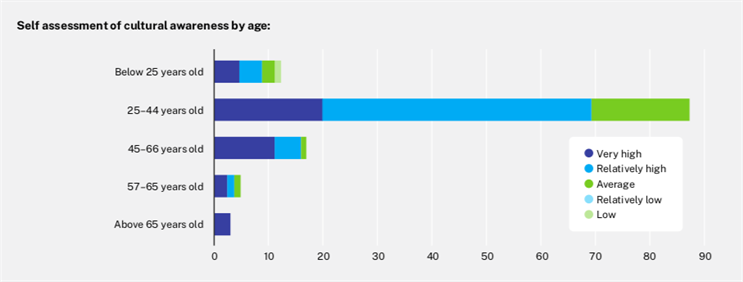
The survey, which used 131 responses from the country’s comms industry, found that while all respondents are quite aware of broader diversity and inclusion principles that initially focused on gender, many have limited understanding, much less a focus on cultural diversity. Most of them were aware of the cultural diversity of the Australian population, but do not see the urgency or importance of integrating it in their business operations enough to equate it with business success.

For example, one respondent suggested that they do not see integrating cultural diversity matters in their business as essential because “people are succeeding without it”. The respondent added: “We still seem to be progressing well adapting and being so people don’t see the urgency of the need.”

Another respondent said that diversity in the workplace is not a priority for them because it isn’t tied to their KPIs. Yet another respondent said that multiculturalism in comms work is ‘niche’ whether communicating to Australian-born audiences or residents with migrant backgrounds. “I don’t think it is so much about making your communication sharper for… culturally diverse audiences because they are too niche,” this person said.

In terms of hiring, the interviewees acknowledged the lack of communication practitioners with culturally diverse backgrounds. A few of them who recruited from England had the propensity to count those hires as part of the ‘culturally diverse’ cohort. A majority of respondents quoted that some 20% of their staff have a culturally diverse background but when further probed, they indicated that the number could have included British, who are not considered culturally and linguistically diverse.

One respondent said: “If I think about my career today, it’s predominantly been in agencies with privileged white people, private school-educated, tertiary education.”

While ‘positive discrimination’ was quoted as a way to recruit more culturally diverse talent, many respondents also mentioned that second- and third-generation Australians do not necessarily want to be identified based on their ethnicity or ancestry. This appears to be a conundrum that many recruiters or leaders still face in Australia.

Here are a few charts that reflect findings from the study:

Source: Australian comms agencies perceive diversity as not urgent