Having access to the Vatican archives was a long-term objective for many Holocaust researchers and good that these are being opened up with not surprising evidence of antisemitism and arguably wilful blindness and rejection of evidence:
German researchers working in the Apostolic Archive have found that the Vatican was handed reports about the extent of the Holocaust in 1942, but dismissed some of the information they contained.
The seven-person team from the University on Münster found that the Vatican had minimised information on the massacres of Jews, considering that Jewish and Ukrainian sources could not be trusted.
The conclusions hinge on a 1942 American démarche to the Holy See.
The team found that on September 27, 1942, the Holy See was passed a report by the American envoy to the Vatican, detailing the murder of Jews in occupied Poland and asking if the Catholic Church could independently confirm the crimes it outlined.
The report outlined how Jews were being taken out of the Warsaw Ghetto, and murdered outside of the city in camps.
The report, read by Pius XII on the day that it was received in Rome, said that 100,000 Jews had been murdered and that 50,000 had been murdered in Lviv, in what was then eastern Poland, and is now western Ukraine.
The report added that there were no Jews remaining in eastern Poland, and that Jews from Germany, Slovakia and the Low Countries had been transported to Eastern Europe where they were murdered.
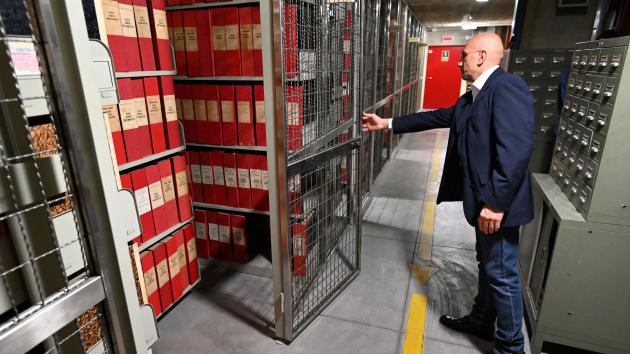
The Vatican Apostolic Archives, which until October were known as the “Secret Archives”, contain up to 2 million pages of documents from Pius XII’s papacy. The Vatican threw open their doors, which were due to remain closed until 2028, on 1 March.
The researchers, led by priest and professor Hubert Wolf, a historian of the Catholic Church, spent a week working in the Apostolic Archive from March 2 before it was closed due to coronavirus restrictions.
Mr Wolf’s team found documents showing that the Holy See had received two letters independently confirming reports of massacres of Jews from Warsaw and Lviv.
In August 1942, it had received a letter from the Ukrainian Greek Catholic Archbishop of Lviv, Andrey Sheptysky, who wrote of 200,000 murdered. The following month, an Italian businessman spoke of “butchery” of Jews in Warsaw.
Despite these reports, the Vatican informed the American envoy that it was unable to confirm the reports.
Internally, a rationale justified that the information remained “to be verified”, in the words of a Papal adviser, as Jews “exaggerate” and that “Orientals” – referring to the Ukrainian Uniates – “are really not an example of honesty”.
Pius XII’s papacy ran from 1939 until 1958, and he never publically condemned the Holocaust, despite historians agreeing that the Vatican was aware of the murder of Jews across Europe.
Debate hinges on whether the Vatican remained too silent during the Holocaust and newly uncovered documents in the Apostolic Archive will contribute to peeling back a curtain of uncertainty on the role and knowledge of the wider Catholic Church during the Holocaust.
Documents from Pope Pius XII’s pontificate have been opened to historians since March 1 (Photo: Getty)
Professor Wolf suggested that documents such as those his team had uncovered had been left out of the official Vatican compendium of Pius XII’s wartime role in a bid to preserve his legacy.
“This is a key document that has been kept hidden from us because it is clearly antisemitic and shows why Pius XII did not speak out against the Holocaust,” Wolf told Münster’s Catholic Kirche + Leben.
Mr Wolf noted in an interview with German Catholic newswire KNA that there was also potentially embarrassing information on the Church’s participation in the ‘Rat Lines’, networks that spirited high-ranking Nazis to Italy and on to Latin America.
Mr Wolf suggested, based on reports from the Papal Nuncio in Argentina, that the “the Vatican might have been able to get them passports,” and wondered whether “the nuncio was the middle man?”
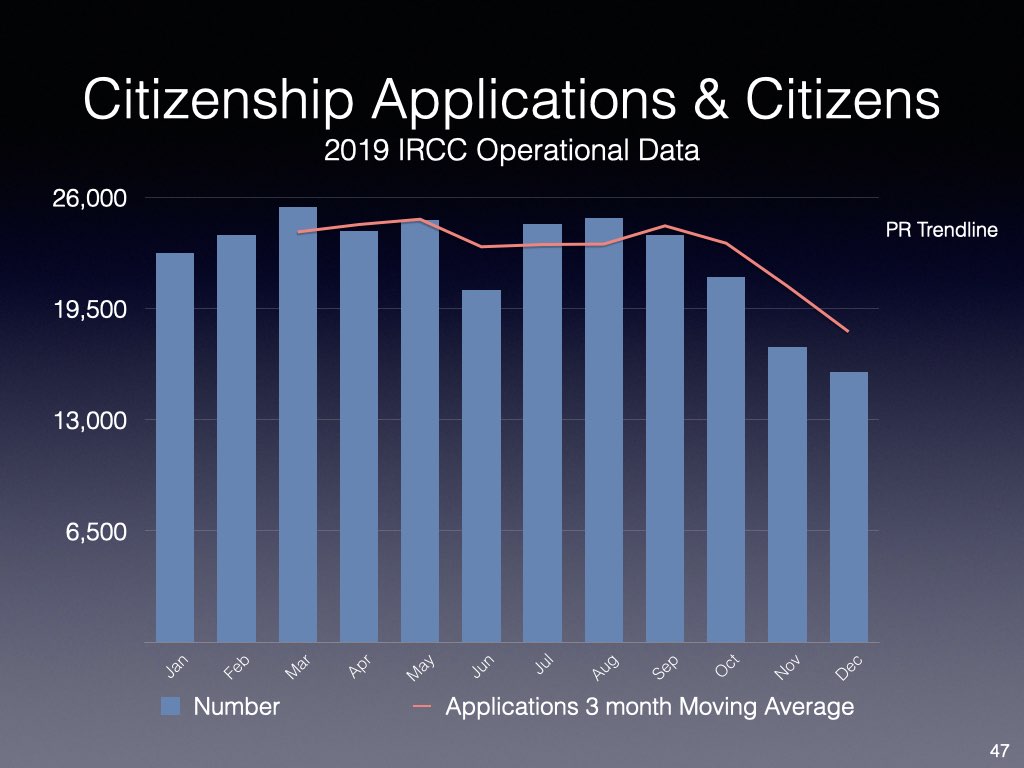
With the full 2019 numbers available, I have updated by standard chart comparing the number of applications, new citizens and permanent residents:
The following chart shows the number of citizenship applications per month for 2019, with the drop off in the fall likely reflecting the Liberal election commitment to waive citizenship fees (a smaller drop than I would have expected). It will be interesting to see if that trend continues in 2020 until the COVID-19 disruption mid-March (applications still being accepted, however):
Of note. One of the ironies is that Canada modelled a similar provision in the 2014 C-24 citizenship legislation after the US approach (not repealed in C-6):
When Baron Friedrich von Steuben, a Prussian officer helping the Continental Army, asked for a translator at Valley Forge to address some troops during America’s revolutionary war, the story goes that he was told there was no need. This particular group were immigrants and spoke German. Colonial militias offered state citizenship to soldiers. The Continental Congress granted citizenship even to enemy soldiers who switched sides. The baron was later given American citizenship for helping to see off the Brits.
Since 1952, immigrants have been able to apply for citizenship after one year of honourable service during peacetime. In wartime they have been able to become Americans almost as soon as they join up. Since the September 11th attacks in 2001, more than 100,000 service members have become citizens. But this avenue to citizenship is no longer assured.
In order for the naturalisation process to begin, the Department of Defence has to sign an honourable-service certification form. Without it, the Citizenship and Immigration Services (uscis) will not consider the applicant. In October 2017 the department adopted stricter vetting; as a result, claims a new lawsuit, it is very difficult for service members to be naturalised speedily. This policy change is “a departure from pretty close to 200 years of us history”, says Muzaffar Chishti of the Migration Policy Institute, a think-tank.
Ange Samma, along with five other active-duty service members, and the American Civil Liberties Union (aclu), an advocacy group, filed a class-action lawsuit against the Department of Defence on April 24th. Private Samma enlisted in 2018 and is serving in South Korea. Originally from Burkina Faso, he came to America as a teenager. According to the suit, it took multiple requests for him to receive the honourable-service certification form. When he finally did, uscis rejected it as his officers had not filled it out properly. Without citizenship, he cannot get security clearance for some army work. He is not alone. Scarlet Kim, an aclulawyer, says that thousands of service members are having similar difficulties.
In 2018 there was a 70% drop in naturalisation applicants from the armed forces after the extra vetting was put in place. The lawsuit says the servicemen would have been naturalised faster if they had taken the lengthy civilian route. Their applications are being rejected at a higher rate than civilian ones. Margaret Stock, a retired lieutenant-colonel and now an immigration lawyer, says some serving soldiers are placed in deportation proceedings by the same government that they volunteered to fight for, before the application process has been completed.
Some countries are loosening citizen-enlistment rules because of military-recruitment problems, but only a few make service a path to citizenship as America does. This distinction helps with recruiting. Without immigrants the army would have failed to meet its goals nearly every year between 2002 and 2013. A Department of Defence report in 2016 found that non-citizens perform better, have lower attrition rates and are more likely to have medical and it expertise than their citizen counterparts. Not only do they make useful recruits to the armed forces; they would make good citizens, too.■
Canada will face a similar test with respect to its multi-immigration plan that planned on 340,000 new permanent residents in 2020 and further annual increases in subsequent years, with immigration being responsible for virtually all population growth and thus a major contributor to economic growth:
Australia’s dependence on immigration to grow the economy is about to be sorely tested.
One of the secret ingredients to Australia’s unparalleled run of economic growth since the country’s last recession has been strong population growth.
While local mums have played their part in swelling the number of locals, the heavy lifting has been done by people from nations such as China, India, Britain, New Zealand and the Philippines who have decided to call Australia home.
Over the past decade, the nation’s permanent population has grown by 3.7 million to more than 25 million. Of that increase, 60 per cent was due to net migration.
That extra 2.2 million people have been an economic powerhouse, requiring homes, cars, food and every day goods and services while also contributing fresh skills to the jobs market.
But it has come at a price, particularly in Sydney and Melbourne. Be it via higher house prices or over-crowded schools, all levels of government have struggled to keep up with the demands of a growing population while reaping the economic benefits of that population.
The Morrison government made much of its decision in last year’s budget to cap permanent migration at 160,000 for four consecutive years as dealing with the congestion pressures on our big cities.
That cap didn’t include the hundreds of thousands of temporary migrants – be it students or workers – who help run the economy and add to demand.
But with the borders shut, international students stuck in their home countries and immigration all-but impossible, the issues around migration and Australia’s dependence on it cannot be ignored.
The government is now expecting net overseas migration – which was forecast to reach 271,000 in 2019-20 – to be 30 per cent lower. Next year, the drop is tipped to be 85 per cent.
Combined, that’s close to 300,000 missing shoppers, students, family members and skilled workers from the economy.
With temporary workers leaving the country and others unable to get in, population growth is likely to stall. Sydney could shrink while Melbourne’s stellar growth of recent years will be muted, with serious economic repercussions.
Australia will, post-virus, remain a desirable destination for permanent migrants, temporary ones and international students.
The Morrison government’s economic rebuilding plan will have to include a discussion around the nation’s dependence of immigration.
Kristina Keneally’s call to give Australians “first go” at jobs by cutting temporary migration has won cautious support from unions but divided Labor MPs who are worried the home affairs spokeswoman was freelancing with policy aimed at more conservative voters.
Several of Senator Keneally’s colleagues privately voiced frustrations on Sunday about her decision to write an opinion piece arguing against the “lazy approach” used by governments to prop up economic growth through immigration and suggested that the overall migrant intake could be less under Labor. Other MPs publicly defended Senator Keneally, arguing that Australia’s use of temporary migrants was a debate that needed to happen as the nation recovered from the coronavirus crisis.
In an opinion piece for The Sun-Herald and The Sunday Age on Sunday, Senator Keneally said Australian workers must “get a fair go and a first go at jobs”, and the country had an unprecedented chance to overhaul the immigration system, particularly the temporary worker intake which was not capped. It was not the first time Senator Keneally has called for the government to look at temporary migration, but it was her strongest suggestion yet that the overall number of migrants would be lower under Labor.
“The post-COVID-19 question we must ask now is this: when we restart our migration program, do we want migrants to return to Australia in the same numbers and in the same composition as before the crisis? Our answer should be no,” she wrote.
Australian Council of Trade Unions secretary Sally McManus said on Twitter that too many employers had used the temporary visa system to avoid hiring local workers and were exploiting people whose visa status and security depended on their employer. Ms McManus argued this had led to systematic wage theft. Victorian Labor MP Ged Kearney, former president of the ACTU, told The Sydney Morning Herald and The Age she welcomed the debate on whether to overhaul the immigration system.
“I think we really do need to have the conversation and get the balance right – and it may need to be a lower overall intake, but the focus should be on temporary migration and increasing permanent migration,” she said.
Immigration is a vexed issue for Labor with the party occasionally being accused of over-compensating in response to Coalition attack campaigns over border security. Bill Shorten, when he was leader in 2016, caused controversy with an “Australia First” television advertisement which featured almost all white people and pledged that Labor would “build Australian first, buy Australian first and employ Australians first”.
Multiple senior Labor sources confirmed the issue of whether to restart a debate on the size and composition of Australia’s immigration program had been discussed at shadow cabinet level but no decision had been made on a change of policy. Opposition Leader Anthony Albanese did not respond to a request for comment.
“This is still just Kristina’s view at this stage, not the party’s,” one shadow cabinet source said.
Senator Keneally, who emigrated to Australia from the US, also caused frustration among senior Labor MPs because they were blindsided by her opinion piece. It wasn’t featured in the original talking points circulated by Mr Albanese’s office to MPs on Sunday morning. A second round of talking points – the party’s message on the topical issues of the day – was sent out later in the day which included Labor’s position on immigration.
One Labor MP from the Left faction, which tends to support a more-open approach to migrants and refugees, said they were concerned about being accused of “dog-whistling”.
“We don’t have a problem with the call to look at temporary migration, but we don’t have to sound like Peter Dutton while doing it,” he said.
Another Labor MP said: “This is a very sensitive issue. The ALP has torn itself apart over this issue in the past. This is an issue that needs to be handled very sensitively.”
Labor’s education spokeswoman, Tanya Plibersek, said immigration was an important part of Australia’s multicultural make-up, but Labor’s view had always been that the number and composition of the intake should be in the national interest.
“Immigration is a really important part of our economic success story. One of the reasons the Australian economy has been growing at all, frankly, in recent times is because of strong immigration numbers,” she said.
Victorian Labor MP Julian Hill said the COVID-19 crisis had exposed the Morrison government’s failure in migration policy, “and in particular the massive explosion in temporary migration”.
“Morrison has tried an enormous con job trumpeting a fake cut to migration, which is really just sleight of hand cutting valuable permanent migration while lower skilled permanent migration explodes,” he said.
Acting Immigration Minister Alan Tudge accused Senator Keneally of not having a consistent position on temporary migrants.
“She wants to give temporary migrants welfare payments so they can stay in Australia, but now says she doesn’t want temporary migrants,” he said.
Senator Keneally said in her piece that although migration would be a key element to the way the Australian economy recovered from the pandemic, changes had to be made to the current system which had resulted in an over-reliance on temporary workers.
The setting of limits on the migrant intake may be moot point for years with Australia’s immigration to take a serious hit coming out of the coronavirus pandemic.
Prime Minister Scott Morrison last week revealed Australia’s net overseas migration numbers would drop by 85 per cent in the 2020-21 financial year, compared to 2018-19 numbers.
Seems like more virtue signalling here rather than seriously arguing what the provincial government could do from a regulatory perspective (but non a high priority during COVID-19):
There’s not much that can be done when it comes to businesses linked to birth tourism, according to Richmond-Queensborough MLA Jas Johal – particularly if those companies have all their paperwork in place.
“The fact that they have a business licence means they’re not breaking the law,” said Johal. “I don’t think the city can do much about that. And even the provincial government couldn’t do much about that beyond discouraging this practice.”
A maternity and baby store, located at 8171 Ackroyd Road, is listed as the Canadian address for a China-based company, which is dedicated to helping pregnant women give birth overseas.
The store also operates a confinement centre, according to the website of parent company Mei Ya Jia Bao – translated by the Richmond News – established in Richmond in 2015.
That parent company, which lists its headquarters in Beijing, also operates Canada World Overseas Investment Consulting Inc., and Colombian International Travel Ltd., which provide travel and visa application services.
Incorporation certificates for all three companies, issued by the provincial government, are posted on Mei Ya Jia Bao’s website. Meanwhile, the website and service agreements are only in Chinese.
The website states the company has successfully helped more than 6,000 families in China travel to Canada to give birth, and offers service packages that include visa applications and confinement centre care.
After the families arrive in Canada, the website states they will make appointments with Chinese-Canadian doctors in Richmond.
Costs for giving birth are listed to be, at minimum, $60,000 to $70,000, and the website also states that living expenses in Canada will run into hundreds of thousands of dollars for a three month stay.
In a video posted by Mei Ja Jia Bao to Youku, a Chinese website similar to YouTube, a man introduces Richmond Hospital. The video also shows BC Womens Hospital and landmarks from around Vancouver.
Mei Ya Jia Bao is far from the only company to set up shop in Richmond – for example, Beijing-based Leading Baby states its Canadian branch is on Westminster Highway.
“My office did find advertising on websites in China promoting birth tourism in Richmond,” said Johal. “The fact that they set up businesses, an office here, is concerning enough.
“But the advertising and promotion of birth tourism is continuing here, so the federal government has to, at the end of the day, deal with this loophole.”
A video produced by Mei Ja Bao Er, another company, gives a short tour of Richmond Hospital’s maternity ward, while in a third company’s video a couple recounts their experience giving birth in Canada. Both videos, advertising to families in China, were also posted on Youku.
The fact that there are companies promoting their business on the web shows that nothing has been done to slow down, and ultimately stop, the practice, said Johal.
The loophole in the tourist visa system, he said, needs to be tackled at the federal level – and can be done via an administrative, rather than constitutional, change.
“It can be an administrative change, which basically states that if you come to this country on a tourist visa – which these people do – to have your child here, the child should not automatically be granted Canadian citizenship,” said Johal.
Once the message gets out that the practice is not accepted by the Canadian government, Johal said he guarantees it will slow down.
During the 2018-19 fiscal year, 23.1 per cent all babies born at Richmond Hospital had non-resident parents, or 458 out of a total 1,980 newborns, according to Vancouver Coastal Health (VCH) data. In the 2014-15 year, babies born to non-resident parents accounted for 15.3 per cent of all babies born at the hospital.
And while the businesses, such as the one on Ackroyd Road, are legal, the provincial government could help discourage the practice by increasing the costs to have a child in B.C., said Johal.
It’s not known whether foreign nationals are giving birth at Richmond Hospital during the COVID-19 pandemic or how many have given birth so far this fiscal year, as VCH doesn’t have interim data or data on homebirths outside of its acute settings, according to a spokesperson.
It’s also not known how many families may have arrived in Canada before borders around the world were closed.
For Johal, that lack of information is a “challenge,” coupled with the lack of information on how the companies operate, how many mothers they help bring to Canada at any one time, or their health and safety standards.
“The fact that we have this business, and many businesses like this set up here, and it’s just a black hole when it comes to information is concerning,” said Johal, “and even more so during this period of COVID-19.”
Another example of denial of the links between minority status and socioeconomic factors as a way to minimize the influence of systemic and other issues affecting socioeconomic outcomes and thus health. Not an either/or but an and:
COVID-19 is a disease that can strike anyone. A recent study of 5,700 sequentially hospitalized COVID-19 patients in a New York City health network, for instance, found that patients’ ages ranged from single digits to 90-plus. Roughly 60 percent were male. About 40 percent were white. Nine percent were Asian. And 23 percent were black.
As Coleman Hughes recently noted in Quillette, black people are overrepresented among American COVID-19 fatalities overall. In Chicago, for example, black people account for more than 70 percent of COVID-19 deaths, despite comprising just 30 percent of the local population. But this doesn’t necessarily tell us much about the disease itself, because “black people are more likely than white people to die of many diseases—not just this one. In other cases, the reverse is true. According to CDC mortality data, white people are more likely than black people to die of chronic lower respiratory disease, Alzheimer’s, Parkinson’s, liver disease, and eight different types of cancer.”
In the UK, too, COVID-19 has had a disproportionate effect on communities that get lumped in under the (somewhat dated) term “BAME”—black, Asian, and minority ethnic. The Intensive Care National Audit and Research Centre has reported that 34 percent of a studied group of 6,720 critically ill COVID-19 patients self-identified as black, Asian or minority ethnic. By way of comparison, the comparable figure for a group of 5,782 patients with non-COVID-19 viral pneumonia tracked between 2017 and 2019 was about 12 percent. Moreover, as the Telegraph reports, “despite only accounting for 13% of the population in England and Wales, 44% of all [National Health Service] doctors and 24% of nurses are from a BAME background. Of the 82 front-line health and social care workers in England and Wales [who] have died because of COVID-19, 61% of them were black or from an ethnic minority.”
The release of these numbers prompted an official inquiry. And last week, the Labour Party appointed civil-rights campaigner Doreen Lawrence to head up its own review of the issue. A BBC article entitled “Coronavirus: Why some racial groups are more vulnerable” informs readers that the issue might be rooted in the “physiological burden from the stresses caused by racism and race-related disadvantage, such as the frequent secretion of stress hormones.” London Mayor Sadiq Khan recently wrote an article in the Guardian, demanding that more data be collected. However, he didn’t wait for such data before suggesting that the issue is rooted in “the barriers of discrimination and structural racism that exist in our society.”
I’m a refugee from Afghanistan who came to England as a child in the back of a refrigerated truck. So I know a little bit about these issues. I also know that the above-described statistical disparities may well be related to factors that have nothing to do with racism. Firstly, as everyone in the country knows, BAME communities are disproportionately urban. Specifically, they tend to live in Britain’s larger cities, such as London, Birmingham, and Manchester—often within populous urban wards. Contagion rates are high in these areas, in part because it’s easier for an epidemic to spread in a big city than in the country’s sparsely populated (and disproportionately white) countryside.
Secondly, BAME groups in the UK tend to have more aggravating health conditions, known as comorbidities. Given the epidemiological data, this is of enormous importance. In the aforementioned study of 5,700 COVID-19 patients in New York City, for instance, the leading comorbidities were found to be hypertension (57 percent of all patients), obesity (42 percent), and diabetes (34 percent). Overall, a stunning 94 percent of patients in the study had at least one comorbidity. And 88 percent had more than one.
According to 2006 data, South Asians in the UK are up to six times more likely to develop type-2 diabetes as compared to white people, and black people were up to five times more likely. Similarly, as the BMJ has reported, people of South Asian and Black ethnicity “are known to have worse cardiovascular outcomes than those from the white British group”—in large part because of the “significant” effect of differences in average hypertension levels.
Thirdly, immigrant households are far more likely to contain more than two generations living under one roof. (The authors of a 2017 report found that 70 percent of surveyed white households in the UK containing people aged 70-plus didn’t contain younger individuals. The comparable figure for black households was about 50 percent. For South Asians, it was 20 percent.) In such circumstances, social isolation is more difficult, and grandparents are put at risk of catching infectious diseases from (possibly asymptomatic) younger relatives. From the beginning of this pandemic, intra-household contagion has been a leading form of COVID-19 transmission. The bigger the household, the more people get infected in each cluster.
Fourthly, the problem of getting public-health information to citizens is compounded in the case of those immigrants who have limited English abilities. There is much less official information in Somali, Hindi, Farsi, or Pashto, for instance. There is lots of “fake news” circulating on WhatsApp groups, which is especially problematic in the case of those who don’t understand information coming from official channels in English. Much of this fake-news information flow flies under the radar of public officials.
Finally, as noted above, BAME workers make up a disproportionate share of National Health Service medical staff. A fifth of nurses and midwives, and a third of doctors, are from BME backgrounds. In many cases, these actually represent employment success stories. But as one would expect, these cohorts also tend to be younger, and so are disproportionately employed in entry-level roles and front-line care, as opposed to working in specialized clinics or managerial positions.
An objective assessment of such issues is welcome. But the government’s fact-finding project should take into account the underlying factors, as opposed to simply echoing some of the unhelpful generalizations that now have become common currency in the media.
The public-health policies that are put in place in coming years will affect our ability to withstand the next pandemic. And we should be mindful of the manner by which they impact different communities in different ways. Such a discussion would not only help save lives, but also help spark a larger discussion about why such differences continue to exist, and, more generally, what factors have prevented BAME communities from sharing in the benefits that come with social integration.
Kamrul Islam doesn’t dare visit his local supermarket. Over the last few weeks, he said three of his closest friends fell ill with the coronavirus shortly after shopping there. One friend’s mother became seriously unwell after contracting the virus and died.
The 40-year-old former cab driver says a day doesn’t go by when he isn’t aware of a death or infection of someone he knows. While the coronavirus has spread widely across the UK, the pandemic has taken a huge toll on the area where Islam lives, the east London borough of Newham, which has recorded the worst mortality rate in England and Wales.
The borough’s rate – 144.3 deaths per 100,000 people – is closely followed by Brent in north London (141.5), and Newham’s neighbour Hackney (127.4), according to figures published by the Office for National Statistics. The data confirms what Islam has suspected all along: people living in the poorest parts of the country are dying from Covid-19 at a much higher rate than those in the richest.
On Islam’s road and neighbouring street, 22 people have died after contracting coronavirus. “Every day I get a message from someone in my community telling me of people who have died. They are young and old. It’s been really tough,” Islam said. His wife, who wished to remain anonymous, said: “You hear sad stories of people dying and no one was with them. It does affect people mentally.”
The deaths from the coronavirus include Betty and Ken Hill, who were together for more than 40 years and died hours apart; Dr Yusuf Patel, who was the fifth GP to succumb to the virus in the UK; “exceptional” secondary school English teacher Dr Louisa Rajakumari; and Abdul Karim Sheikh, the former ceremonial mayor who founded one of the first mosques in the area.
The pandemic comes nearly a decade after the area hosted the 2012 Olympic Games, and has become a stark reminder that the better jobs, housing and quality of life that were promised have failed to materialise. Though parts of the borough have undergone regeneration and housing prices have rocketed, the legacy of the games wasn’t felt by all.
Rokhsana Fiaz, who was elected mayor of Newham nearly two years ago, said: “I’ve grown up in the borough and lived here all my life. Like many of my friends, the opportunities that were promised with regards to the Olympics weren’t necessarily felt by me or my peer group. There’s a real sense of haves and have nots in the community. My promise has been we’re going to reverse that because everyone in Newham needs to have a stake.”
The borough’s deprivation and diversity makes it particularly vulnerable to the coronavirus. More than half of children live in poverty, while the rate of households in temporary accommodation is one of the highest in England. A study commissioned by the council found that up to 36,000 people are not paid the legally required national minimum wage.
Newham has the most diverse population profile of any local authority in the country. Some 78% of residents are from ethnic minority communities, which has been reported as a risk factor for the coronavirus. Many live in intergenerational households and there are longstanding health inequalities.
Tahir Mirza, Newham resident and chair of the local Labour party in East Ham, described the deaths in his area as “truly shocking” and called for more efforts for people in the community to get guidelines on social distancing in their own language. He said many didn’t speak English and were simply unaware of the dangers they faced. The consequences of failing to reach these people will be dire, he said: “People will continue to die otherwise.”
Dr Zubaida Haque, deputy director of the Runnymede Trust, said areas like Newham show the discussion about PPE and testing needs to go much further than just the NHS. Key workers, from taxi drivers and care workers to grocery shop owners, who are disproportionately from a BAME background, also require protective equipment. “BAME key workers aren’t just NHS staff. We need to start asking whether they are getting proper PPE equipment. Are they being protected? Are they being tested? Is that infrastructure there?”
Peter Raison, a 58-year-old train driver for Transport for London who lives across the road from Islam, is also not surprised by the high level of mortality. Many like him on their street have to go to work and even he isn’t being provided with PPE. He is upset that there are people still failing to socially distance as the death tolls increase. “People are just assuming it’s not going to happen to me.”
Good decision IMO. Also, never understood beyond the political why many provinces allow Canadian Sikhs to drive motorcycles without a helmet. Wearing a turban is a right but that should not include driving a motorcycle wearing one:
La Cour suprême du Canada a refusé d’entendre leur cause.
Le plus haut tribunal du pays a fait connaître sa décision jeudi matin, et, comme c’est toujours le cas, n’a pas donné de motifs.
Ce refus fait en sorte que le jugement de la Cour d’appel du Québec reste intact.
Celle-ci avait décidé que dans le cas de ces camionneurs, la sécurité au travail doit primer sur les effets préjudiciables causés à leur liberté de religion.
Ces hommes avaient contesté — pour des motifs religieux — l’obligation de porter un casque protecteur lorsqu’ils doivent se déplacer à l’extérieur de leurs camions.
Ces camionneurs étaient alors à l’emploi d’entreprises privées. Il leur arrivait, plus ou moins fréquemment, de se rendre aux terminaux du port de Montréal pour y livrer ou y récupérer des conteneurs.
La politique sur le port du casque ne les obligeait toutefois pas à retirer leur turban, écrit la Cour dans son jugement.
Les entreprises exploitant les terminaux soutenaient avoir adopté cette politique afin de protéger la santé et la sécurité des travailleurs. D’ailleurs, la loi les y oblige et ils peuvent même être reconnus coupables criminellement de ne pas les avoir protégés.
L’une des entreprises visées avait tenté un accommodement raisonnable : le camionneur sans casque devait rester à l’intérieur du camion, alors que les tâches sur le site étaient effectuées par d’autres employés dûment protégés. Mais de cette façon, un chargement de 10 à 20 minutes prenait de 30 minutes à deux heures. Elle l’a donc abandonné, puisqu’il n’était pas économiquement viable et était un casse-tête organisationnel, est-il relaté dans la décision.
En 2006, les trois travailleurs en question ont déposé une requête devant les tribunaux afin d’obtenir un jugement déclaratoire qui les aurait exemptés du port du casque.
La Cour supérieure a rejeté leur demande, tout comme la Cour d’appel.
Cette dernière a noté que personne ne conteste que cette politique brime la liberté de religion des trois travailleurs.
Mais la Cour supérieure avait retenu de la preuve certaines choses cruciales : d’abord, ces travailleurs sont dans un environnement industriel. Les dangers y sont nombreux : recevoir un objet sur la tête, se faire frapper la tête par des objets en mouvement ou se heurter la tête contre un objet dur. « Les statistiques démontrent que ce risque n’est pas purement théorique », écrit la Cour d’appel.
Elle estime aussi que la politique a cherché à porter atteinte le moins possible à la liberté religieuse des travailleurs de confession sikhe. Le casque est seulement exigé lorsqu’ils sortent de leur camion, et la durée de ces déplacements est brève, selon la preuve : de 5 à 10 minutes. D’autres travailleurs portent d’ailleurs leur turban sous le casque, notent les trois magistrats de la Cour d’appel en se basant sur la preuve.
Bref, selon la Cour d’appel, l’effet global de la politique est proportionnel au but recherché et l’atteinte à la liberté de religion est justifiée.
Will be interesting to watch Canadian numbers and plans over the coming few years, although Canada, unlike Australia, had been planning annual increases:
Australia’s migration intake this year is expected to plummet due to coronavirus-induced travel restrictions and shutdowns, creating a raft of economic and social headaches set to prolong its recovery from the pandemic.
Australia’s immigration program has played a key role in nearly three decades of essentially uninterrupted economic growth.
Due to border closures around the world, the total number of migrants who will make Australia home this financial year, both temporary and permanent, will be far lower than it has been in a long time.
Nearly 300,000 temporary visa holders have left Australia since the start of the year according to the federal government and there are predictions the country will miss out on another 240,000 would-be migrants by the end of the year.
Researchers say that could cause a “demographic ripple effect” to last for some time because Australia will be relying heavily on migrants to rebuild once the pandemic has passed.
“We need immigration to survive this next stage of our future,” Australian National University demographer Liz Allen told SBS News.
“We have an ageing population with more people retiring from the workforce than people entering the workforce. That means we have fewer people contributing to our tax base, which pays for our vital services: our roads, our infrastructure, our hospitals, our schools – everything.
“Our migrant intake will help fill the gaps.”
Intake ‘lower than envisaged’
Australia’s 2019-20 permanent migration program will now fall well short of the cap of 160,000 places set by the federal government.
A spokesperson for acting immigration minister Alan Tudge said while COVID-19 will clearly have an impact on the 2019-20 program, it was still too early to say what the final outcome would be.
“It will be lower than we envisaged given our borders are closed to all but Australian citizens and permanent residents,” the spokesperson said.
Just 50 invitations for skilled independent subclass 189 visas – which allow holders to live anywhere in Australia – were issued in April, compared to 1,750 in March.
Invitations for the subclass 491 visa, which requires migrants to live in regional Australia, fell from 300 to 50.
There were 2.43 million temporary migrants in Australia in December 2019, a number which according to the federal government fell to 2.17 million – a drop of 260,000 – in early April.
That number is expected to fall even further, with many temporary visa holders excluded from the JobKeeper wage subsidy scheme.
Prime Minister Scott Morrison told them to instead return to their home countries if they were not able to support themselves in Australia.
With chief medical officer Brendan Murphy flagging last week that restrictions on international travel would not be lifted for at least three to four months, it could be at least that long until Australia starts welcoming migrants again.
University of Sydney migration expert Anna Boucher said the coronavirus crisis has laid bare how reliant Australia is on migrants, noting the 2019 federal budget papers showed the government’s much-touted surplus was predicated upon higher levels of net overseas migration.
“Without very high net overseas migration we would not have had a budget surplus,” associate professor Boucher said.
“There’s no way achieve that sort of net overseas migration this year with border closures and COVID-19.”
Associate professor Boucher said the pandemic could trigger a rethink of how heavily Australia relies on its migrants to fill gaps in the workforce.
“We have caps on permanent migration, and they’ve become more stringent in recent years, but we don’t have caps on temporary migration. It’s possible in future years the government will look at that. A lot of it depends on how we redeploy Australians.”
“We are in competition with other countries for migration, so if other countries have closures for as long as we do and we are still seen as providing opportunities, we might be able to bounce back to pre-COVID-19 levels.”
Economy to bounce back slower
Economists say the drop in migration will have significant economic consequences for Australia’s coronavirus recovery.
Migrants are workers, taxpayers, consumers and big players in the housing market. Many economists believe they also play a role in driving long-term innovation and productivity.
Population growth and economic growth exist side-by-side and migrants have “historically played quite a big role” in both, Grattan Institute CEO John Daley said.
“Real economic growth in Australia over the last couple of years has been around 2 to 2.5 per cent. Of that, almost one per cent has simply been the effect of migration,” he said.
“Every year on average there’s one per cent more people born overseas living in Australia than there were last year, [causing] a one per cent increase in the total Australian population. When you have a one per cent increase in the population, you get a one per cent increase in GDP, more or less.
“In many quarters over the past couple of years Australia has had almost no economic growth apart from the growth in population, and of that growth, about two-thirds have been migrants.”
Mr Daley said economic recoveries were always slow and a shock “of this kind” means it’s likely to take the economy “several years” to completely bounce back.
“Absolutely that will be accentuated in Australia by the fact there will be fewer migrants,” he said.
Commsec senior economist Ryan Felsman said even just a 10 per cent reduction in overall migration numbers would remove a “significant tailwind” from the Australian economy.
“The longer our borders are closed, the more likely it is Australia will have a slower economic rebound than other countries,” Mr Felsman said.
Interesting part of the history of the slave trade that I was unaware of:
The three skulls were unlike hundreds of others in the 16th-century mass grave uncovered at the San José de los Naturales Royal Hospital in Mexico City. Their front teeth were filed decoratively, perhaps as a ritual custom, unlike those of “los naturales,” the Indigenous people who made up the majority of bodies at the colonial burial site. Archaeologists concluded the three individuals were most likely enslaved Africans, but they needed more evidence to be certain.
“We studied their whole skeletons, and we wanted to know what they were suffering from, not only the diseases but the physical abuse too so we could tell their stories,” said Rodrigo Barquera, a graduate student at the Max-Planck Institute for the Science of Human History in Germany. “It has implications in the whole story of the colonial period of Mexico.”
The findings, published Thursday in Current Biology, offer a glimpse into these people’s lives before their forced voyages and add insight into the infectious diseases that the trans-Atlantic slave trade may have brought into the New World.
In 1518, King Charles I of Spain, authorized the direct transportation of enslaved people from Africa to the Americas. In 1542, he enacted Las Leyes Nuevas, “The New Laws,” which prohibited the colonists in the Viceroyalty of New Spain from using Indigenous people as slaves. The law liberated thousands of Indigenous laborers, but increased the demand for enslaved Africans, Creoles, mulattoes and other African-descended people to work as servants, cooks, miners and field workers. Between 1518 and 1650, some 120,000 enslaved Africans arrived in what is now Mexico.
Spanish colonists already demanded these groups because they believed they fared well against diseases brought over from Europe such as smallpox, measles and typhoid fever, which — along with the brutal European conquest — had nearly eliminated the Indigenous population.
The San José de los Naturales Royal Hospital was created around 1530 to serve exclusively Indigenous patients, many of whom were dying in smallpox outbreaks. The three Africans were also treated there. When they died, they were buried alongside the Indigenous people. Perhaps all were victims of an epidemic, Mr. Barquera said.
The three individuals’ remains were recovered in 1992 during construction of a new subway in the city. Archaeologists noticed their teeth had decorative filings, which were observed in enslaved Africans in Portugal, and the practice continues today in some sub-Saharan ethnic groups. That led the researchers to suggest the individuals were Africans.
“We don’t know exactly if they were ‘negros esclavos’ or ‘negros libre,’” said Lourdes Márquez Morfín, an archaeologist at the National School of Anthropology and History in Mexico City, referring to the distinction then made between slaves or freemen. But the trauma etched in their skeletons suggests they were slaves.
“One had these gunshots,” said Mr. Barquera, referring to five pieces of buckshot in the man’s chest cavity. “You could see that the bone was stained with a copper greenish pigment because the bullets stayed in the body of this individual until he was dead.”
Some of the men showed signs of nutritional deficiencies, skull and leg fractures and shoulder deformities, suggesting they performed backbreaking work and suffered harsh physical abuse. The men all died between the ages of 25 and 35.
Mr. Barquera and his team removed a molar from each of the three skulls to extract and analyze their DNA. The genetic signatures obtained from the molars showed the three men had their origins in Western or Southern Africa. They also found isotopes on the teeth that further indicated they were all born and grew up outside of Mexico.
“It was hypothesized that maybe they were descendants of Africans and Native Americans or Africans and Europeans, but that’s not the case,” said Mr. Barquera.
The team also sequenced the genome of pathogens recovered from the skeletal remains. One of the men was afflicted with the virus that causes hepatitis B, and another had a bacterium that causes the skin infection yaws, a disease similar to syphilis.
The findings provide some of the earliest known examples of those pathogens in human remains in the Americas, as well as the first direct evidence from the early colonial period that pathogens from Africa may have been brought to the Americas, said Johannes Krause of Max-Planck and Mr. Barquera’s co-author. Mr. Krause added it is possible the men caught the diseases while on the overcrowded transoceanic voyages.
“We are always so focused on the introduction of diseases from the Europeans and the Spaniards,” Dr. Krause said, “that I think we underestimated also how much the slave trade and the forceful migration from Africa to the Americas contributed also to the spread of infectious diseases to the New World.”
The paper “does a really nice job of putting together archaeological, osteological, molecular and isotope data to provide insight into the lives of early colonial — likely enslaved Africans,” said Anne Stone, an anthropological geneticist at Arizona State University who was not involved in the research.
Hannes Schroeder, an archaeologist from the University of Copenhagen said the study’s multiple lines of evidence “paint a very detailed picture of the lives of these individuals, their origins and experiences in the Americas, that reminds us once again of the cruelty of the trans-Atlantic slave trade and the biological impact it had on individuals and populations in the New World.”
A start, but social and cultural norms take time to change:
Sudan’s new government has outlawed the practice of female genital mutilation, a move hailed as a major victory by women’s rights campaigners in a country where the often dangerous practice is widespread.
The United Nations estimates that nearly nine in 10 Sudanese women have been subjected to the most invasive form of the practice, which involves the partial or total removal of external female genitalia and leads to health and sexual problems that can be fatal.
Now, anyone in Sudan who performs female genital mutilation faces a possible three-year prison term and a fine under an amendment to Sudan’s criminal code approved last week by the country’s transitional government, which came to power only last year following the ouster of longtime dictator Omar Hassan al-Bashir.
“This is a massive step for Sudan and its new government,” said Nimco Ali of the Five Foundation, an organization that campaigns for an end to genital mutilation globally. “Africa cannot prosper unless it takes care of girls and women. They are showing this government has teeth.”
Genital mutilation is practiced in at least 27 African countries, as well as parts of Asia and the Middle East. Other than Sudan and Egypt, it is most prevalent in Ethiopia, Kenya, Burkina Faso, Nigeria, Djibouti and Senegal, according to the United Nations Population Fund.
“The law will help protect girls from this barbaric practice and enable them to live in dignity,” said Salma Ismail, a spokeswoman in Khartoum for the United Nations Children’s Fund. “And it will help mothers who didn’t want to cut their girls, but felt they had no choice, to say ‘no.’”
“Now,” she added, “there are consequences.”
Experts warn, however, that a law alone is not sufficient to end the practice, which in many countries is enmeshed with cultural and religious beliefs, considered a pillar of tradition and marriage, and supported by women as well as men.
“This is not just about legal reforms,” Ms. Ismail said. “There’s a lot of work to be done to ensure that society will accept this.”
In Egypt, for instance, genital cutting was banned in 2008 and the law amended in 2016 to criminalize doctors and parents who facilitate the practice, with prison sentences of up to seven years for performing the operation and up to 15 if it results in disability or death.
Yet prosecutions are rare, and the operations continue quietly, with 70 percent of Egyptian women between 15 and 49 having been cut, mostly before they reach the age of 12, according to the United Nations.
Earlier this year, a 12-year-old Egyptian girl died on an operating table at a private clinic as a retired doctor performed genital mutilation without an anesthetic. In February, the Egyptian authorities referred the doctor and the girl’s parents for prosecution.
As global and local campaigns to end the practice have grown in recent years, some communities have slowly begun to turn against genital cutting, which is often seen as a rite of passage in communities of various faiths. In some places, campaigners have come up with alternative initiation ceremonies.
One such program among the Maasai in Kenya, where cutting has been outlawed since 2011, has reportedly helped saved at least 15,000 girls from the practice.
Most Sudanese women undergo what the World Health Organization calls Type III circumcision, an extreme form of the practice in which the inner and outer labia, and usually the clitoris, are removed. The wound is then sewn closed in a practice known as reinfibulation that can cause cysts, lead to painful sex and prevent orgasm.
Word of the new law has yet to reach many Sudanese, as a result of a strict lockdown to prevent the spread of the coronavirus.
“The timing has been unfortunate,” said Ms. Ismail, of the United Nations. “Everyone was preoccupied with Covid-19,” she added, referring to the disease caused by the coronavirus.
Still, attitudes had already been shifting. Six of Sudan’s 18 states enacted laws to restrict or ban genital mutilation, beginning in 2008, but the measures were applied with limited success and resulted in no prosecutions, according to a report by 28 Too Many, a campaign group.
In 2016, Mr. al-Bashir, the country’s ruler of three decades, tried to introduce a national law banning the practice, but the effort was quashed by religious conservatives. The transitional government that replaced Mr. al-Bashir, a power-sharing arrangement between civilian and military leaders who have agreed to steer Sudan to elections in 2022, has overcome that hurdle.
Under Prime Minister Abdalla Hamdok, women ministers lead five government ministries, and the government has repealed unpopular Bashir-era laws that dictated what women could wear or study, or even where they could congregate in public.
Tensions between military and civilian leaders have led to political turbulence, and even stoked fears of a possible military coup, inside the transitional government. Even so, significant changes have taken place.
The minister for religious affairs, Nasr al-Din Mufreh, recently attended a ceremony marking International Day of Zero Tolerance for Female Genital Mutilation. “It is a practice that time, place, history and science have shown to be outdated,” he said, adding that it had no justification in Islam.
The minister said he supported the campaigners’ goal of eliminating the practice from Sudan by 2030.


 Multicultural Meanderings