Australia: High court to rule on whether Indigenous people can be deported from Australia

Can’t resist following this absurd argumentation by the Australian government:

The federal government’s attempts to deport two Indigenous men have gone before the high court, examining what lawyers for the two men have said are “absurd” circumstances.

The two men in the separate cases, Daniel Love and Brendan Thoms, were both born overseas to at least one parent who is Indigenous and holds Australian citizenship. They both have Indigenous children, and Thoms is a native title holder.

However, neither formally applied for Australia citizenship and, after being convicted of “serious” crimes and given jail sentences of 12 months or more, both had their visas cancelled under the government’s controversial character test provisions.

The law firm Maurice Blackburn is now asking the high court to determine if an Aboriginal Australian in the men’s circumstances is an “alien” for the purposes of the constitution.

It is the first time the court has been asked to rule on the commonwealth’s use of its alien powers in this way, and the lawyers now representing the two men argue the term must be defined by the court, not parliament.

“Historically we are a nation of immigrants and our ancestors come from other places, except for Aboriginal Australians,” said Claire Gibbs, senior associate at Maurice Blackburn, who is acting for the two men, before the hearing. “The importance and significance of that should be reflected in the common law.”

Love and Thoms are not the only Indigenous people who have faced deportation under the character test provisions. Guardian Australia has previously reported on the case of Tim Galvin, and it is believed there are a number of others.

Love was born in Papua New Guineain 1979 to a PNG citizen mother and Australian citizen father, and automatically acquired PNG citizenship.

The family travelled back and forth until they settled permanently in Australia when Love was five and he was given a permanent residency visa. Love is a recognised Kamilaroi man.

Thoms was born in New Zealand in 1988 to an Australian citizen mother and New Zealand citizen father. He automatically acquired New Zealand citizenship at birth, and was entitled to apply for Australian citizenship, but never did.

He has lived permanently in Australia since November 1994 under a special category visa. Thoms is a recognised Gunggari man, and a native title holder under common law.

In 2018 both men were separately convicted of crimes and sentenced to 12 and 18 months respectively. Both had their visas cancelled under the government’s controversial section 501 of the migration act, relating to character, and were taken to immigration detention.

Gibbs said being put in immigration detention had taken a devastating toll on her clients’ mental health. Gibbs said bringing the case before the court was not seeking to interfere with the government’s power to deport people who were “genuinely non-Australian”.

“What we think is wrong is the government using the power to detain and deport people who, on any commonsense measure, are Australians, like my clients.”

Love was given his visa back under ministerial discretion but Thoms remains in immigration detention after more than seven months.

Gibbs welcomed the return of Love’s visa but said there there were clearly “inconsistencies” between the two cases and that was why the high court needed to determine if the government was using the power lawfully.

In submissions to the court, the men’s lawyers argued that Indigenous people “cannot be alien to Australia” and were “beyond the reach” of that constitutional power.

Indigenous people are known to have inhabited Australia for as much as 80,000 years and are “a permanent part of the Australian community”, they said, and the two men “do not, and have never, owed allegiance to a foreign sovereign power”.

“The statutory definition of citizen is distinct from, and does not control, the constitutional definition of alien and, therefore, that the plaintiffs are not Australian citizens pursuant to Australian citizenship legislation does not automatically mean that they are aliens.”

In defence, the Australian government submitted that whether the men were Indigenous or native title holders was “irrelevant” to the question of their alien status.

“Acceptance of the proposition that Aboriginal people, as a class, were not and are not ‘aliens’ does not entail the proposition that any particular Aboriginal person is not an ‘alien’,” the government’s submission said.

It said certain principles, which were “fatal” to the plaintiffs’ case, “ought now to be regarded as settled”. They said it was an agreed fact that neither plaintiff was a citizen, and “non-citizen” was the same as “alien”.

Numerous cases supported these findings, the submission said, and the plaintiffs had not sought to reopen those cases.

Legal arguments began on Wednesday, with the government citing the high court’s section 44 ruling on MPs, and the men’s lawyers citing significant cases including the Mabo decision, and the high court ruling on Amos Ame, a Papua-born man who was an Australian citizen by birth but who could be treated as an alien.

The government’s push to deport an increasing number of people under the character test provisions has raised numerous complications, including for Indigenous people and those born in PNG before its independence in 1975.

A complex web of citizenship laws and successive changes to them in both PNG and Australia has threatened to leave some people stateless, as both countries assumed people had citizenship of the other and revoked their own, but failed to properly communicate it to individuals.
Source: High court to rule on whether Indigenous people can be deported from Australia

Laïcité: la consultation qualifiée de mascarade par des groupes religieux

Valid points by the groups not being invited to testify:

Le refus du gouvernement Legault d’entendre les groupes religieux directement visés par le projet de loi sur la laïcité démontre, selon ceux-ci, que son lit est déjà fait et que les consultations l’entourant ne sont qu’une mascarade.

Des représentants d’organisations juives, musulmanes, sikhes et même de l’Église unie du Canada ont vivement dénoncé, mardi à Montréal, le mutisme du gouvernement caquiste qui, à leurs demandes d’être entendus aux audiences de la commission parlementaire sur le projet de loi 21, n’a répondu que par des accusés de réception sans invitation.

«Le gouvernement voit cette loi comme un fait accompli», a déclaré Avi Finegold, porte-parole du Conseil des rabbins de Montréal, alors que les consultations s’entamaient à Québec.

«On dirait qu’ils essaient simplement de masquer le tout avec quelques journées de consultations, pour une loi aussi majeure», a-t-il déploré.

Déficit d’ouverture et d’inclusion

Pour ces organisations, il est inconcevable que les personnes directement touchées par cette loi soient ainsi ignorées.

«Le fait qu’on ne soit même pas invités aux consultations fait en sorte que notre opinion, pour eux, n’est même pas valide», a pour sa part avancé la porte-parole du Conseil national des musulmans canadiens, Sara Abou-Bakr, qui ne s’est pas gênée pour faire la leçon au gouvernement caquiste sur la notion d’inclusion.

«C’est sûr qu’ils ont pris cette décision-là sans même avoir l’idée d’avoir un Québec inclusif et sans même inclure tous les citoyens du Québec. L’ouverture, c’est d’inclure tout le monde. L’ouverture, ce n’est pas d’inclure les personnes (..) dont on sait qu’elles vont déjà être de notre avis. L’ouverture, c’est donner à tout le monde la chance égale de parler que ce soit pro-loi ou contre la loi.»

Cette exclusion des groupes directement touchés est particulièrement mal accueillie par Samaa Elibyari, du Conseil canadien des femmes musulmanes.

«Les femmes voilées, c’est-à-dire celles qui portent le hijab, seront les premières victimes. Il est donc déplorable que notre voix ne soit pas entendue à ce sujet», a-t-elle dit.

Selon elle, l’exclusion imposée par le gouvernement Legault «trahit un esprit de parti pris».

«Comment pouvez-vous justifier que les personnes qui sont les plus touchées ne sont pas représentées ?» demande-t-elle, faisant valoir que «ce n’est pas seulement les femmes qui seront affectées, c’est toute la famille, c’est toute la communauté» puisque la restriction à l’emploi devient une conséquence matérielle tangible.

Le voile comme signe d’inclusion

Les organisations font valoir que le discours d’ouverture à la diversité du gouvernement caquiste peut difficilement être soutenu dans les faits s’il est incapable de faire preuve d’ouverture pour l’étude de son projet de loi.

Plus encore, souligne Sara Abou-Bakr, le port d’un signe religieux pourrait s’avérer un puissant argument en faveur de l’inclusion.

«Le fait que je porterais un symbole religieux en travaillant pour le gouvernement mettrait l’emphase sur le fait qu’on vit dans un Québec inclusif», avance-t-elle.

Sur le fond, les organisations ne s’en cachent pas : elles perçoivent toutes le projet de loi 21 comme un instrument de discrimination.

«Nous estimons qu’il s’agit d’une discrimination encouragée par l’État, une légalisation de la discrimination, et ça affectera tout le monde», a de son côté déclaré l’imam Musabbir Alam, de l’Alliance musulmane canadienne.

«La loi 21 est une loi qui va renforcer la division de la société québécoise», a renchéri Sara Abou-Bakr.

Avi Finegold, de son côté, a cherché à contrer les discours de peur qui entourent ce débat.

«Nous ne devrions pas avoir peur de la religion. Nous n’essayons pas de convertir qui que ce soit. Nous sommes ici pour vivre nos vies et pour avoir notre foi religieuse exprimée de la manière dont nous le voulons l’exprimer», a-t-il dit.

Les organisations n’écartent pas la possibilité d’aller vers des recours juridiques pour contrer l’éventuelle loi et préparent également des activités de soutien à leurs revendications.

Source: Laïcité: la consultation qualifiée de mascarade par des groupes religieux

Terry Glavin: The Tories insist racists aren’t welcome in their party. What are they doing about it?

Strong commentary, capturing the unfortunate missteps and resulting perceptions:

There’s no way around it: Andrew Scheer’s Conservatives have a racist jackass problem.

This is not to say that Scheer or any of his MPs have consciously invited the affections of the country’s racist jackasses, and there are far fewer votes in Canada’s racist jackass constituency than you might think. But it’s a problem. And Andrew Scheer’s Conservatives have it, in spades.

The most recent evidence is quite jarring. It comes in Ekos Research Associates’ latest annual findings about Canadian attitudes about immigration. Nothing much has changed in the long-term trends, but for the first time, the proportion of Canadians who say immigration rates are too high has merged with the percentage of Ekos poll respondents who say too many non-white people are coming to Canada. And that bloc is coalescing, for the first time, behind a single political party: Scheer’s Conservatives.

This is what it has come to. Sixty-nine per cent of the “too many non-whites” respondents say they back Scheer’s Conservatives. It only stands to reason that a fairly high number of these people are racist jackasses. And there’s growing evidence that sociopaths from that creepy white-nationalist subculture that congregates in obscure 4chan and 8chan chatrooms are hoping to mainstream their contagion into conservative parties. Scheer’s Conservatives insist they’re not happy about any of this.

“Mr. Scheer is clear. These types of views are not welcome in the party,” Brock Harrison, Scheer’s communications director, told me. “He’s stated that view many, many times. Sure, there are fringe elements who will tell a pollster they support the Conservative party, but, you know, those fringe elements who hold to these extreme ideologies have no place in the party. That’s clear.”

Fair enough. But if there’s nothing wrong with the Conservative message on immigrants and refugees and visible minorities, there sure is something wrong with the signal.

It’s not hard to make the case, for instance, that Justin Trudeau’s Liberals have disingenuously attributed racism and xenophobia to public anxieties and otherwise reasonable Opposition criticisms of the way Ottawa has handled the upsurge in “irregular” asylum claimants who have crossed the Canada-U.S. border since 2017. “This kind of rhetoric drives these people [racist jackasses] to us, whether we like it or not,” Harrison said. “The denunciations from Mr. Scheer are clear. Every time something flares up and the Liberals try to pin this on us, we stand firm and we denounce.”

But the issue flared up into a bonfire of the Conservatives’ own making last summer, when Maxime Bernier, Scheer’s primary challenger in the 2017 Conservative leadership race, got turfed from Scheer’s shadow cabinet for a series of weird anti-multiculturalism outbursts that put him in the crosshairs of the Conservatives’ capable immigration critic, Michelle Rempel. In a huff, Bernier founded his own rump political party, of the type that sometimes seems to specialize in anti-immigrant jackassery. It was a golden opportunity for Scheer to purge the party of its jackass wing and invite them to run off with Bernier. It was an opportunity Scheer didn’t take.

During the 2017 leadership race itself, the House of Commons was in an uproar over Liberal MP Iqra Khalid’s arguably outlandish motion to mount a national effort in the struggle against Islamophobia. But back then, the Conservative Opposition’s reasonable objections to Liberal hyperventilation were overshadowed by bizarre and paranoid alarums within the Conservative party itself. Several leadership candidates proved more than happy to cross deep into the territory of an Islamophobia they said didn’t even exist.

There was little separating Stephen Harper’s Conservatives from the Liberals and New Democrats on the issue of opening the door to Syrian refugees by the time voters walked into polling booths and turfed the Conservatives in the 2015 federal election. Even so, there was a bad smell about the party, coming from the fringes, and the occasional burst of air freshener out of Scheer hasn’t done the trick.

We’re only months away from another federal election, and with a spotty record to run on, Trudeau has given every indication that the question he wants on voters’ minds will be the same as it was last time around: what’s that smell?

Canada is changing dramatically. A lot of people don’t like what they see, and among them are voters who are predisposed to simple explanations and conspiracy theories. The rural white males drawn to white-nationalist propaganda are perched precariously on the bottom rung of every ladder the Liberal free-trade vision imagines, with its phasing-out of the oil patch and its preoccupation with gender equity, “political correctness” and the concerns of visible-minority communities.

While the Liberals deserve credit for attempting to craft policy that addresses the strains and stresses of globalization and migration, Team Trudeau has invested its political fortunes in a “liberal world order” that is broken. The losers in the shiny, happy world of the Liberal imagination are too easily written off by Liberal strategists. The New Democrats have lost their hold on voters from the old working class. The Tories have picked them up.

The promise of relatively open borders, the free flow of capital, people and ideas among and between liberal democracies and police states like China and gangster states like Russia and theocracies like Iran—all of this was already losing its sheen when Trudeau won his majority four years ago.

The urban millennials who carried Trudeau into office were already alert to the dismal prospect of a future planet convulsing in catastrophic climate change. Now they’re stuck in low-paying temporary jobs, and they’re dealing with out-of-reach housing, high daycare and transportation costs and university degrees that lead nowhere. Holding out higher immigration rates as some sort of magic road map out of this mess is at best a flimsy political strategy. It’s not convincing, for starters. But more importantly, it’s dangerous, because when the formula fails to fix things, it will be immigrants who take the blame, and Canada’s recent immigrants are overwhelmingly people of colour.

It’s not good enough for Scheer to get better at dealing with the occasional flare-ups that leave him looking like the hillbilly caricature Liberals like to make of him. He needs to openly admit that the Conservatives have a problem. He needs to clearly and emphatically demonstrate that he means what he says, that his party is not open to voters who scapegoat immigrants and hold fast to the view that there are too many non-white people coming to Canada. He needs to do something about it.

He needs to show them the door and invite them to leave. Whatever numbers he’ll lose to Mad Max Bernier, he’ll pick up from more centrist voters who’ve grown weary of Trudeau’s “woke” politics, with its wardrobe of groovy socks and a photo album filled with glamour magazine spreads where a portfolio of policy accomplishments should be.

But whatever the faults that can be laid at the feet of the Liberals, it’s Andrew Scheer’s Conservatives who have the racist jackass problem. And however much they genuinely don’t want it, they’re clearly not trying hard enough to shake it.

Source: The Tories insist racists aren’t welcome in their party. What are they doing about it?

More resources needed for federal agencies processing refugee claims: AG

No surprise here, reflecting some long-term and ongoing issues:

Canada’s refugee and asylum system will continue to be overwhelmed if additional resources are not committed to the three federal agencies responsible for processing refugee claims, the country’s auditor general said Tuesday.

“We project that if the number of asylum claimants remains steady at around 50,000 per year, the wait time for protection decisions will increase to five years by 2024 — more than double the current wait time,” interim Auditor General Sylvain Ricard said in his spring report.

The current backlog, the auditor general said, is “worse than in 2012,” when a mountain of unresolved claims led the Harper government to reform the system.

The federal watchdog said in December last year that some 71,380 people were waiting for their claims to be heard. In March 2010, that number was 59,000.

Canada was the ninth-largest recipient of refugee and asylum claimants in 2017, with some 50,400 claims filed, a number that jumped to 55,000 in 2018.

About 40,000 of those asylum claimants came via the United States, with most crossing into Quebec.

The surge of claimants has put additional pressure on a system that has long grappled with processing delays, the auditor general’s office said — a crunch that is expected to continue if funding levels and processing capacity remains the same.

“Overall we found Canada’s refugee determination system was not equipped to process claims according to the required timelines,” the report notes.

Long wait times

At the end of December 2018, the auditor general’s office said the average wait time for a decision in Canada was two years. As of 2012, refugee claimants are supposed to have a hearing scheduled within 60 days of their arrival in Canada. 

In the March 2019 budget, the Trudeau government pledged $1.18 billion over five years for Canada’s strained refugee claimant system.

“Budget 2019 did provide additional resources to enhance the capacity of the system but it was not clear exactly how it’s going to deal with the backlog and reduce the wait times for claimants,” said Carol McCalla, the principal director of the auditor general’s report on processing asylum claims.

About 65 per cent of claimants have seen their hearings delayed at least once, the auditor general said — an action that led to an additional five-month delay, on average. 

About 25 per cent of claims made saw multiple delays, the auditor general said, noting most of the holdups were “due to administrative issues within the government’s control.” 

In almost half of the cases, hearings were delayed because a member of the Immigration and Refugee Board of Canada was unavailable. 

Another 10 per cent of cases were stalled because security screens were still being processed, even though the necessary paperwork had already been filed in one in five of the cases delayed for security reasons.

CBSA has since reallocated resources to “significantly improve the timeliness of security screening,” the auditor general’s report noted.

Canada’s refugee processing system isn’t utilizing available fast-tracks, either — processes that allow the Immigration and Refugee Board of Canada to decide certain claims by simply reviewing a file rather than hold a hearing. 

The auditor general found the board only expedited about 25 per cent of eligible cases, even though 87 per cent of the remaining eligible cases eventually received a positive outcome. 

“Moreover, we found the Board did not process expedited claims more quickly,” the report said. “On average decisions for expedited claims took about the same amount of time as regular claims.” 

The board, the auditor general noted, announced changes to its expediting processing system in January.

Missing security checks

Processing delays weren’t the only issue flagged by Canada’s auditor general Tuesday. 

Canada’s federal watchdog also found poor quality assurance checks between Canada Border Services Agency and the federal immigration department meant about 400 applicants (or 0.5 per cent) were not subjected to the necessary criminal or identity checks because of system errors or failure to take claimants’ fingerprints. 

“Neither organization systematically tracked whether a criminal records check was always completed because of poor data quality,” the report reads, adding those records are “important for public safety and the integrity of the refugee determination system.”

In a statement Tuesday afternoon, Public Safety Minister Ralph Goodale’s office said initial screening by CBSA of individuals arriving in Canada include biometric and biographic screening.

“This layer of screening screens out individuals with serious criminality. No individuals with serious criminality or security concerns were allowed into admitted to Canada,” Goodale’s office said.

“With respect to the layer of biometric screening examined by the Auditor General, the only new piece of information captured by this layer of screening is whether or not an individual had previously claimed asylum in another country.”

Poor data quality wasn’t the only concern flagged by the auditor general’s office.

Canada’s federal watchdog said poor communication between the three organizations responsible for Canada’s asylum claim system was made worse by the fact the CBSA, the federal immigration department and the Immigration and Refugee Board of Canada use “different information technology systems, with limited interoperability.” 

As a result, the auditor general said it found “important gaps in which information was not shared, such as changes to hearing dates.”

“The system needs to be more flexible to be able to be scalable to increases in demand. As well, improvements are needed in how it uses its resources to share the information and processes the claims more efficiently,” McCalla said.

All three organizations also remain heavily dependent on paper and faxes to share specific claim information, the auditor general said, with the Immigration and Refugee Board of Canada relying “almost exclusively on paper files in its work.” 

“Collecting and sharing information securely and efficiently are critical to the proper processing of asylum claims, especially when claim volumes are high,” the report noted.

In response to the auditor general’s report, all three organizations pledged to improve their quality assurance programs. “Through regular monitoring, issues such as missing, delayed, incomplete, or ineligible claimant information will be identified and addressed in a timely manner by the responsible organization,” reads a statement attributed to the organizations in the report.

Additional work will also be done to improve the department and agency’s technological capabilities, they said, including an eventual shift to digital processing.

Source: More resources needed for federal agencies processing refugee claims: AG

Glavin: Some say anti-elitist populism is sweeping Canada. Don’t believe them.

Glavin’s provides perspective on populism and on the latest from Samara (2019 Democracy 360 seriesDon’t Blame “The People”: The Rise of Elite-led Populism in Canada). Great closing line:

It’s a question that has perplexed political scientists, the punditry and quite a few politicians. What is it about Canada that has allowed this country to dodge the populist waves engulfing the United States, the United Kingdom and no small swathe of the European continent? The question commonly arises in tandem with warnings, or threats, that the spectre of populist mobilization is on the near horizon, or that it’s already upon us.

Well, hold on a minute.

For starters, it’s helpful to recall that we’ve already been there and done that. A populist wave swept Canada back in the early 1990s, and it crashed on the rocks of a broken Progressive Conservative Party, failed to breach Ontario and Quebec, and spent its power in schism, factionalism and failed image makeovers. Eventually the movement dribbled back into the reconstructed Conservative Party of Canada, in 2003, and it had withered enough by 2006 to clear the way for Stephen Harper to win his first minority Conservative government.

As for a rejuvenated Canadian populism arising as an echo of Donald Trump’s Make America Great Again histrionics, or as a replication of the English nativism that reduced Britain to the shambles of Brexit, or as a copycat craze inspired by the gilets jaunes upheavals in France or the oddball populist poll victories in Italy, Hungary and most recently in Spain—don’t count on it. At least don’t count on it arising organically from an alienated and fed-up populace.

That’s the takeaway point in the Samara Centre for Democracy’s latest number-crunching from its extensive 2019 Democracy 360 series, a project Samara undertakes every two years to analyze the way Canadians communicate, participate, and lead in politics. As it turns out, populism is not on the rise in Canada—except perhaps as a stalking horse for politicians. Samara’s new report, titled “Don’t Blame ‘the People’: The Rise of Elite-Led Populism in Canada,” finds that the usual indices for populist alienation have been in steady decline since the Reform Party heyday of the 1990s. Politicians and some journalists are speaking the language of populism again, but by and large, the public isn’t. Not by a long shot.

Back in the mid-1990s, the Canadian Election Survey found that roughly 75 per cent of Canadians agreed with the statement, “I don’t think the government cares much what people like me think.” Samara’s finding, based on its survey of more than 4,000 Canadians earlier this year, finds that fewer than 60 per cent of respondents agreed with the statement.

It may or may not be disturbing that 63 per cent of the survey respondents agreed that “those elected to Parliament soon lose touch with the people,” and those respondents may or may not be right. But that’s down from the 77 per cent who agreed with the statement in 2004, and way down from the 85 per cent who agreed in 1993.

It should be disturbing to anyone who values the Charter of Rights and Freedoms that four in 10 Canadians agree that “the will of the majority should always prevail, even over the rights of minorities.” But the upside is that fewer Canadians hold to that view than in 2011 (six in 10) or in 2001 (seven in 10).

Foreign Minister Chrystia Freeland has given voice to the concern that public anxieties about “the elites” could rattle the western consensus that the rules-based liberal world order needs to be defended. Former Prime Minister Stephen Harper has written a book about the growing trend in populism and how to harness it, from a conservative standpoint, for the public good. Former New Democratic Party leader Ed Broadbent warns that “the elites” are standing in the way of necessary economic and political redistribution. Since the 2015 election of the Liberals’ Justin Trudeau, “the elites” have come up in Parliament in 13 per cent of its sitting days. That’s up from three per cent during Harper’s term in power.

People who bang on about the elites also tend to whinge a great deal about “the mainstream media,” but in Canada, most people aren’t so inclined. The latest annual Edelman Trust Barometer, an opinion survey of 33,000 people in 26 countries, finds that Canadians are not losing faith in the news media, and Canadians show a higher rate of trust in journalism than respondents in just about every other country surveyed.

The Samara Centre defines populism as a style of doing politics and a set of attitudes and beliefs about politics and society. Populist leaders imagine politics as a conflict between two groups, usually “the elites” wielding largely unaccountable power over “the real people.” This can be fatal to democratic institutions, and populists who win elections quickly develop the habit of using people-power as a mere pretext to use the instruments of the state to go after judges, academics, journalists, political adversaries—anyone who stands in their way. And populism is by no means solely a phenomenon of right-wing politics, Michael Morden, research director at the Samara Centre, told me.

The anti-capitalist “left” mobilized hundreds of thousands of people during the 1990s to huge demonstrations against “the elites” of the World Trade Organization, the International Monetary Fund, the World Bank and other anchors of the liberal world order. But popular antipathy to those institutions ended up being harnessed most successfully in the U.S. by Donald Trump.

“Populism has been used to give licence to different kinds of radicalism. I think blame should be apportioned across the spectrum,” Morden said. “If you want to create more racists, then you generate a narrative that there’s more racists in society than there really are.”

Exaggerating the extent of populism is playing with matches, in other words, while populism is playing with fire.

Source: Some say anti-elitist populism is sweeping Canada. Don’t believe them.

Revealed: new evidence of China’s mission to raze the mosques of Xinjiang

Dramatic and reprehensible:

Around this time of the year, the edge of the Taklamakan desert in far western China should be overflowing with people. For decades, every spring thousands of Uighur Muslims would converge on the Imam Asim shrine, a group of buildings and fences surrounding a small mud tomb believed to contain the remains of a holy warrior from the eighth century.

Pilgrims from across the Hotan oasis would come seeking healing, fertility, and absolution, trekking through the sand in the footsteps of those ahead of them. It was one of the largest shrine festivals in the region. People left offerings and tied pieces of cloth to branches, markers of their prayers.

Visiting a sacred shrine three times, it was believed, was as good as completing the hajj, a journey many in underdeveloped southern Xinjiang could not afford.

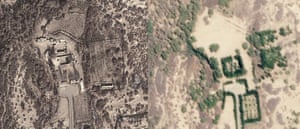
Before and after images of the Imam Asim Shrine. Credit: Digital Globe/ Planet Labs

But this year, the Imam Asim shrine is empty. Its mosque, khaniqah, a place for Sufi rituals, and other buildings have been torn down, leaving only the tomb. The offerings and flags have disappeared. Pilgrims no longer visit.

It is one of more than two dozen Islamic religious sites that have been partly or completely demolished in Xinjiang since 2016, according to an investigation by the Guardian and open-source journalism site Bellingcat that offers new evidence of large-scale mosque razing in the Chinese territory where rights groups say Muslim minorities suffer severe religious repression.

Using satellite imagery, the Guardian and Bellingcat open-source analyst Nick Waters checked the locations of 100 mosques and shrines identified by former residents, researchers, and crowdsourced mapping tools.

Out of 91 sites analysed, 31 mosques and two major shrines, including the Imam Asim complex and another site, suffered significant structural damage between 2016 and 2018.

Of those, 15 mosques and both shrines appear to have been completely or almost completely razed. The rest of the damaged mosques had gatehouses, domes, and minarets removed.

A further nine locations identified by former Xinjiang residents as mosques, but where buildings did not have obvious indicators of being a mosque such as minarets or domes, also appeared to have been destroyed.

Uprooted, broken, desecrated

In the name of containing religious extremism, China has overseen an intensifying state campaign of mass surveillance and policing of Muslim minorities — many of them Uighurs, a Turkic-speaking group that often have more in common with their Central Asian neighbours than their Han Chinese compatriots. Researchers say as many as 1.5 million Uighurs and other Muslims have been involuntarily sent to internment or re-education camps, claims that Beijing rejects.

Campaigners and researchers believe authorities have bulldozed hundreds, possibly thousands of mosques as part of the campaign. But a lack of records of these sites — many are small village mosques and shrines — difficulties police give journalists and researchers traveling independently in Xinjiang, and widespread surveillance of residents have made it difficult to confirm reports of their destruction.

The locations found by the Guardian and Bellingcat corroborate previous reports as well as signal a new escalation in the current security clampdown: the razing of shrines. While closed years ago, major shrines have not been previously reported as demolished. Researchers say the destruction of shrines that were once sites of mass pilgrimages, a key practice for Uighur Muslims, represent a new form of assault on their culture.

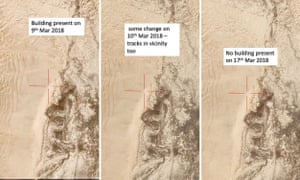
Three-way composite of Jafari Sadiq shrine.
Pinterest
Three-way composite of Jafari Sadiq shrine. Photograph: Planet Labs

“The images of Imam Asim in ruins are quite shocking. For the more devoted pilgrims, they would be heartbreaking,” said Rian Thum, a historian of Islamat the University of Nottingham.

Before the crackdown, pilgrims also trekked 70km into the desert to reach the Jafari Sadiq shrine, honouring Jafari Sadiq, a holy warrior whose spirit was believed to have travelled to Xinjiang to help bring Islam to the region. The tomb, on a precipice in the desert, appears to have been torn down in March 2018. Buildings for housing the pilgrims in a nearby complex are also gone, according to satellite imagery captured this month.

Before and after imagery of the Jafari Sadiq shrine. L-R Dec 10 2013, April 20, 2019.
Pinterest
Before and after imagery of the Jafari Sadiq shrine. L-R Dec 10 2013, April 20, 2019. Photograph: Google Earth/ Planet Labs

“Nothing could say more clearly to the Uighurs that the Chinese state wants to uproot their culture and break their connection to the land than the desecration of their ancestors’ graves, the sacred shrines that are the landmarks of Uighur history,” said Thum.

‘When they grow up, this will be foreign to them’

The Kargilik mosque, at the centre of the old town of Kargilik in southern Xinjiang, was the largest mosque in the area. People from various villages gathered there every week. Visitors remember its tall towers, impressive entryway, and flowers and trees that formed an indoor garden.

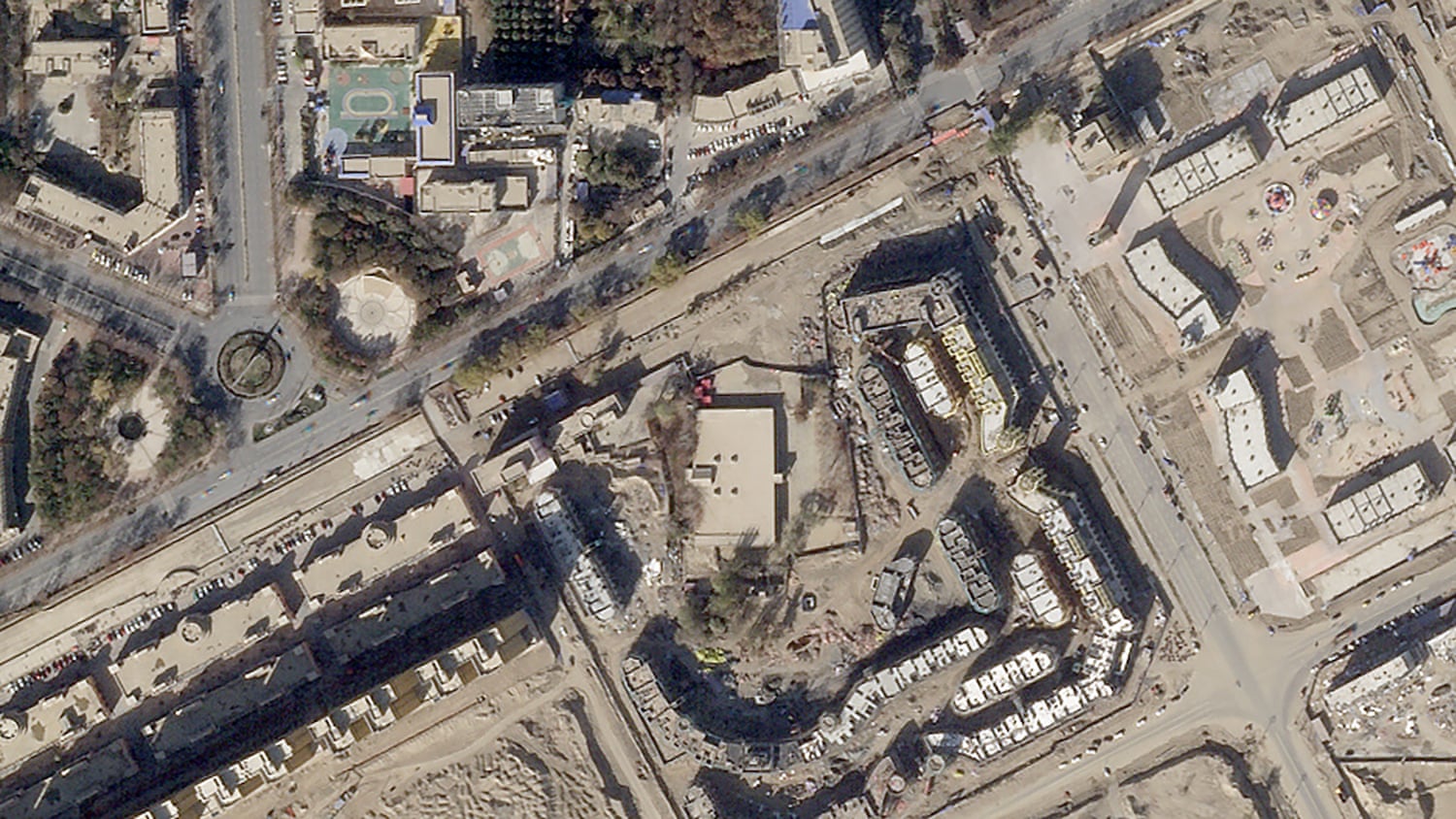
The mosque, previously identified by online activist Shawn Zhang, appears to have been almost completely razed at some point in 2018, with its gatehouse and other buildings removed, according to satellite images analysed by the Guardian and Bellingcat.

Three locals, staff at nearby restaurants and a hotel, told the Guardian that the mosque had been torn down within the last half year. “It is gone. It was the biggest in Kargilik,” one restaurant worker said.

Another major community mosque, the Yutian Aitika mosque near Hotan, appears to have been removed in March of last year. As the largest in its district, locals would gather here on Islamic festivals. The mosque’s history dates back to 1200.

Despite being included on a list of national historical and cultural sites, its gatehouse and other buildings were removed in late 2018, according to satellite images analysed by Zhang and confirmed by Waters. The demolished buildings were likely structures that had been renovated in the 1990s.

Two local residents who worked near the mosque, the owner of a hotel and a restaurant employee, told the Guardian the mosque had been torn down. One resident said she had heard the mosque would be rebuilt but smaller, to make room for new shops.

“Many mosques are gone. In the past, in every village like in Yutian county would have had one,” said a Han Chinese restaurant owner in Yutian, who estimated that as much as 80% had been torn down.

“Before, mosques were places for Muslims to pray, have social gatherings. In recent years, they were all cancelled. It’s not only in Yutian, but the whole Hotan area, It’s all the same … it’s all been corrected,” he said.

Activists say the destruction of these historical sites is a way to assimilate the next generation of Uighurs. According to former residents, most Uighurs in Xinjiang had already stopped going to mosques, which are often equipped with surveillance systems. Most require visitors to register their IDs. Mass shrine festivals like the one at Imam Asim had been stopped for years.

Removing the structures, critics said, would make it harder for young Uighurs growing up in China to remember their distinctive background.

“If the current generation, you take away their parents and on the other hand you destroy the cultural heritage that reminds them of their origin … when they grow up, this will be foreign to them,” said a former resident of Hotan, referring to the number of Uighurs believed detained in camps, many of them separated from their families for months, sometimes years.

“Mosques being torn down is one of the few things we can see physically. What other things are happening that are hidden, that we don’t know about? That is what is scary,” he said.

The ‘sinicisation’ of Islam

China denies allegations it targets Muslim minorities, constrains their religious and cultural practices, or sends them to re-education camps. In response to questions about razed mosques, foreign ministry spokesman Geng Shuang said he was “not aware of the situation mentioned”.

“China practices freedom of religion and firmly opposes and combats religious extremist thought… There are more than 20 million Muslims and more than 35,000 mosques in China. The vast majority of believers can freely engage in religious activities according to the law,” he said in a faxed statement to the Guardian.

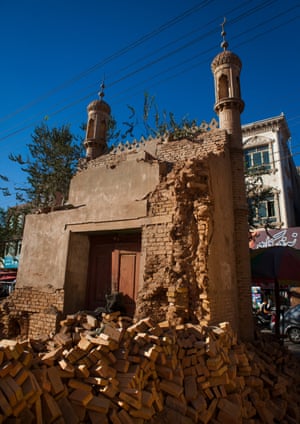
Demolished mosque in the old town of Kashgar, Xinjiang Uyghur Autonomous Region, China.
Pinterest
A demolished mosque in the old town of Kashgar, Xinjiang Uyghur autonomous region, China. Photograph: Eric Lafforgue/Art in All of Us/Corbis via Getty Images

But Beijing is open about its goal of “sinicising” religions like Islam and Christianity to better fit China’s “national conditions”. In January, China passed a five-year plan to “guide Islam to be compatible with socialism”. In a speech in late March, party secretary Chen Quanguo who has overseen the crackdown since 2016 said the government in Xinjiang must “improve the conditions of religious places to guide “religion and socialism to adapt to each other”.

Removing Islamic buildings or features is one way of doing that, according to researchers.

“The Islamic architecture of Xinjiang, closely related to Indian and Central Asian styles, puts on public display the region’s links to the wider Islamic world,” said David Brophy, a historian of Xinjiang at the University of Sydney. “Destroying this architecture serves to smooth the path for efforts to shape a new ‘sinicised’ Uighur Islam.”

Experts say the razing of religious sites marks a return to extreme practices not seen since the Cultural Revolution when mosques and shrines were burned, or in the 1950s when major shrines were turned into museums as a way to desacralise them.

Today, officials describe any changes to mosques as an effort to “improve” them. In Xinjiang, various policies to update the mosques include adding electricity, roads, news broadcasts, radios and televisions, “cultural bookstores,” and toilets. Another includes equipping mosques with computers, air conditioning units, and lockers.

“That is code to allow them to demolish places that they deem to be in the way of progress or unsafe, to progressively yet steadily try to eradicate many of the places of worship for Uighurs and Muslim minorities,” said James Leibold, an associate professor at La Trobe University focusing on ethnic relations.

Critics say authorities are trying to remove even the history of the shrines. Rahile Dawut, a prominent Uighur academic who documented shrines across Xinjiang, disappeared in 2017. Her former colleagues and relatives believe she has been detained because of her work preserving Uighur traditions.

Dawut said in an interview in 2012: “If one were to remove these … shrines, the Uighur people would lose contact with earth. They would no longer have a personal, cultural, and spiritual history. After a few years we would not have a memory of why we live here or where we belong.”

Source: Revealed: new evidence of China’s mission to raze the mosques of Xinjiang

Muslim Australians found to suffer the ‘most disturbing’ experiences in public among all faiths

Not surprising and not unique to Australia:

A four-year study into faith communities in Australia and the UK has found Muslims experience acts of violence on an individual basis like no other religious adherents, leading to calls for better early education in religious awareness.

Key points:

  • The Interfaith Childhoods project has already spoken to 340 people from religious communities in six cities across Australia, Great Britain
  • The lead researcher has found difficulties of religious life in Australia is felt most strongly by Muslim women
  • The study will form the basis of a large-scale public art program discussing social values in relation to different faiths in young children

In the midst of conducting her research, RMIT University’s Professor Anna Hickey-Moody said she was disturbed when she heard the experiences of Muslim Australians, prompting her to lead the call.

“The mosque [where] I spent most of the week in Adelaide has had young men, white men, driving around the mosque in a car with the windows rolled down pretending to shoot it. I mean, that’s terrifying,” she said.

Since 2016, 340 people from religious communities have been interviewed in six cities across Australia and Great Britain for the Interfaith Childhoods project.

They included lower socio-economic communities in Sydney, Adelaide, Canberra, Melbourne, London and Manchester.

Professor Hickey-Moody brought together children and their parents, asking the children to create art about their identities and then interviewing their parents in-depth about their experiences of living in Australia.

Ending in 2020 and funded by the Australian Research Council, it will be the first Australian study to create a large-scale public art program discussing social values in relation to different faiths in young children.

“One child in south-east London drew a globe where he pinned where he began, as in where he was born in Somalia, and then the flight around the world and the different places where he’s been and where he ended up. It was his story of home,” Professor Hickey-Moody said.

But it was when she interviewed the parents, particularly the Muslim women, when she heard the full extent of difficulties of religious life in Australia.

a child painting of a mosque in a city landscape “She was talking about how complicated that is to experience as a mother. She wants her daughter to have a religious life, but she’s also scared to teach her daughter a way of life that might allow her to be vulnerable.

“One story that stuck in my head … [a woman] and her sister were in town in Adelaide and they saw an older woman that was struggling with her walking frame and they went to try and help her because they realised she wasn’t going to make it across the lights.

“When they got to the walking frame to try and help her, she looked at them with this visceral hate and said ‘get your hands of me you bitches, I’m just coming for you, I’m coming to tell you to get back where you came from’.

“Her sister burst into tears because she was so shocked, and she [the older woman] burst into laughter.”

Adelaide seen to be the most unaccepting city

Across all of the cities involved in the project, the researchers found stories from Adelaide to be the most distressing.

“It has a less multicultural community, it’s a less international community, and I think there’s not the kind of cosmopolitan consciousness that requires understanding social difference,” Professor Hickey-Moody said.

One Muslim woman in the Adelaide focus group burst into tears as she recalled the moment another women came right up to her face and yelled at her to “get out of here”.

Source: Muslim Australians found to suffer the ‘most disturbing’ experiences in public among all faiths

Actor’s Canadian citizenship leaves India’s ruling BJP red faced | Article

The irony:

The Hindi film actor Rajiv Hari Om Bhatia, popularly known as Akshay Kumar, and known for his proximity to the ruling Bharatiya Janata Party (BJP), confessed that he is no longer an Indian citizen.

His admission that he holds a Canadian passport comes soon after he conducted a “non-political” interview of prime minister Narendra Modi while general elections were underway. In the interview, questions like whether Modi likes mangoes and how he eats them drew a lot of mirth and derision from social media users.

Kumar is also known for projecting himself as a uber nationalist. One of his recent films, Toilet – Ek Prem Katha, was seen as a vehicle to promote a much-touted scheme of the BJP government.

His earlier films are seen as vehicles of a muscular government ready to take on enemies of the state through assassinations and kidnappings. His films like KesariRustom, Goldand Airlift, among others, focus on themes relating to nationalism.

Meanwhile the ruling Bharatiya Janata Party has stoked nationalism while using the national security plank for its electoral campaign.

Kumar’s citizenship issue has become a big deal because BJP supporters frequently subject people from India’s religious minorities to “loyalty tests.” For instance, Muslims and other government critics are frequently asked to “go to Pakistan.” Kumar’s colleagues in Bollywood, Amir Khan and Naseeruddin Shah, had to face such questions when they stated that they were not feeling safe under the current government. Kumar had snubbed Khan for his comments.

As social media users raised questions over the citizenship of Bollywood’s poster boy for nationalism, the situation got worse as Mumbai went to the polls when Kumar’s wife, Twinkle Khanna, turned up at the polling booth on April 29 but he was not seen voting.

Moreover, the actor chose to ignore and walk away when he was questioned by journalists about not voting in the Lok Sabha elections in Mumbai, the capital of western Indian state Maharashtra. Kumar responded to the question with “Chaliye, chaliye (let’s go, let’s go)” as he walked away. Later, he would state that he is a Canadian citizen. Trolls had a field day on social media.

It was out and out ironical as the actor was recently tagged by PM Modi in a tweet urging him to encourage people to vote. Kumar did so. He tweeted saying: “The true hallmark of a democracy lies in people’s participation in the electoral process. Voting has to be a superhit . . . between our nation and its voters.”

The row over his already controversial citizenship issue started after his recent interview with PM Modi. The prime minister, known for rarely giving interviews to journalists, spoke to the actor in an interview described as “informal and non-political.”

Kumar issued a statement on May 3 on Twitter acknowledging his Canadian citizenship while underlining his Indian patriotism: “I really don’t understand the unwarranted interest and negativity about my citizenship. I have never hidden or denied that I hold a Canadian passport. It is also equally true that I have not visited Canada in the last seven years. I work in India, and pay all my taxes in India. While all these years, I have never needed to prove my love for India to anyone, I find it disappointing that my citizenship issue is constantly dragged into needless controversy, a matter that is personal, legal, non-political, and of no consequence to others.”

Kumar proudly declared that he pays his taxes in India. In fact that is not something he does by choice. It is mandated by law.

India has a residency-based taxation system, not a citizenship-based one. Indian citizens who are persons of Indian origin (PIO), overseas citizens of India (OCI) or foreign citizens and who are residents of India for more than 182 days have to pay tax and file income tax return in India. Furthermore, when someone is a resident in India for income tax purposes, income earned anywhere in the world is taxable in India.

Kumar, who had been at the top position for several years among the highest taxpayers in Bollywood, had paid Rs. 295 million in 2017.

Bhatia’s citizenship controversy is not new. In 2017, in an interview with Times Now, Kumar claimed he was an “honorary citizen” of Canada: “About the Canadian thing. I am an honorary citizen. I have been given an honorary thing. It is a thing that people should be proud of. I have an honorary doctorate as well.”

However, according to a fact-check done by Alt News, The website of Canadian Prime Minister Justin Trudeau lists the people who have been given honorary Canadian citizenship and it names six individuals including Pakistani Nobel Laureate Malala Yousafsai. Kumar’s name does not appear in the list. The report also says that an honorary citizen cannot hold a Canadian passport, as Kumar does.

After Kumar’s statement, actor Anupam Kher came out in his support on Twitter. Kher is known as a vocal supporter of the BJP and his wife, also an actor, Kirron Kher is a BJP lawmaker.

Source: Actor’s Canadian citizenship leaves India’s ruling BJP red faced | Article

Bill 21: Laïcité: Bouchard et Taylor sonnent la charge

From the éminences grises du rapport:

Les audiences publiques qui débutent mardi sur le projet de loi 21 s’annoncent comme le théâtre d’expression de profondes divisions politiques et sociales au Québec. Et les signataires du rapport Bouchard-Taylor seront parmi les premiers à mener la charge contre un projet de loi « nourri par une certaine islamophobie » (de l’avis de Charles Taylor) et qui risque de mener à une sorte de « radicalisation » du Québec (selon Gérard Bouchard)

« La loi aggravera les clivages qui se sont creusés depuis quelques années entre la majorité et les minorités, dressant ces dernières contre la première, écrit le sociologue Bouchard dans un mémoire qu’il présentera mercredi, mais dont Le Devoir a obtenu copie. Elle aura aussi pour effet d’introduire un élément de radicalisation dans notre société », pense-t-il.

La loi aggravera les clivages qui se sont creusés depuis quelques années entre la majorité et les minorités

Le coprésident de la commission Bouchard-Taylor sur les accommodements raisonnables croit qu’à défaut de mettre un terme au débat sur les signes religieux, le projet de loi 21 « va au contraire relancer la controverse ».

Dans sa présentation, Gérard Bouchard s’attarde principalement à la décision du gouvernement Legault d’étendre aux enseignants l’interdiction du port de signes religieux. Le rapport qu’il avait présenté en 2008 excluait cette idée, mais proposait une interdiction pour les employés avec un pouvoir de coercition (ce en quoi il croit toujours).

« Le fait d’interdire à de jeunes professionnels la possibilité de faire carrière dans l’enseignement à cause de leur croyance religieuse ne s’accorde pas avec le sens de l’équité et de la compassion hérité de notre histoire », écrit-il.

Québec fait fausse route en arguant que cet interdit fait partie de l’équation de la séparation de l’État et de l’Église, pense M. Bouchard. « Affirmer que le principe de la séparation institutionnelle entraîne une interdiction de porter des signes religieux [chez les enseignants] me paraît comporter une grande part d’arbitraire. Le droit fondamental d’exercer et de manifester sa religion devrait donc ici prévaloir. »

Le sociologue estime qu’il manque de « données empiriques rigoureuses » prouvant que le port d’un signe religieux chez les enseignants « entrave la démarche pédagogique », « traumatise des élèves » ou « entraîne une forme d’endoctrinement chez les élèves ».

Et si jamais c’était le cas, comment justifier que les écoles privées — notamment celles qui sont religieuses — ne seront pas assujetties à la Loi sur la laïcité, demande-t-il ? C’est pourtant là où « on peut présumer que le port des signes religieux est le plus répandu », note M. Bouchard.

Au-delà des enseignants, Gérard Bouchard se demande aussi « comment se justifie l’interdiction frappant diverses catégories de personnel qui n’exercent pas de pouvoir [de coercition], notamment les arbitres, les shérifs, les greffiers, les avocats et les notaires ? ».

Charles Taylor

Son ex-collègue, Charles Taylor, tentera mardi de dissuader le gouvernement Legault d’adopter ce projet de loi qui, à son avis, s’appuie sur des préjugés. « Le mot musulman n’apparaît peut-être pas, donc ça ne cible pas la religion musulmane, mais c’est très clair que l’opinion majoritaire contre les signes visibles est nourrie par une certaine islamophobie qui a, en quelque sorte, [été] inculquée à la population par toutes sortes de sites Web, a-t-il affirmé. En l’absence de cette islamophobie, les gens seraient moins avides de faire avancer des exclusions comme celle-là. »

M. Taylor soutenait l’interdiction du port de signes religieux pour les employés de l’État en position coercitive comme les policiers et les gardiens de prison lors de la publication du rapport de la commission Bouchard-Taylor. Mais il a fait volte-face après l’attentat commis en 2017 à la grande mosquée de Québec.

L’adoption du projet de loi ne fera qu’attiser les préjugés contre les minorités religieuses, selon lui, et risque de mener à une augmentation importante des incidents haineux. C’est ce qui s’est produit « dans toutes les sociétés où des mesures restrictives semblables à celles de la loi 21 ont été défendues en campagne électorale ou référendaire par un parti majeur — le Front national en France, les partisans du Brexit en Angleterre, les républicains de Trump, et le PQ au Québec en 2014 […] », écrit-il dans le mémoire qu’il présentera avec le philosophe Jocelyn Maclure.

« Au nom de quel intérêt public a-t-on le droit de soumettre une minorité de citoyens récemment arrivés chez nous à de telles épreuves ? », demandent-ils.

M. Taylor a souligné en entrevue que le projet de loi 21 crée un grave précédent, puisqu’il va à l’encontre de la Charte canadienne des droits et libertés et de la Charte des droits et libertés de la personne du Québec. « Ils vont sacrifier des droits et libertés de certains citoyens, et c’est très dangereux, parce que ce genre de charte est en quelque sorte la protection de tout le monde, a-t-il dénoncé en entrevue. Demain, il pourrait y avoir une autre minorité qui soit très impopulaire envers laquelle il y a des préjugés et on va se sentir justifié de supprimer ces droits-là. »

Très attendues, les consultations autour du projet de loi 21 débuteront mardi avec quatre groupes qui soutiennent le projet de loi : Pour les droits des femmes du Québec (PDF), le Collectif citoyen pour l’égalité et la laïcité de Djemila Benhabib, le Mouvement national des Québécois et des Québécoises de même que l’Association québécoise pour les Nord-Africains pour la laïcité.

PDF, pour qui laïcité rime avec égalité homme-femme, veut étendre l’interdiction du port de signes religieux à l’ensemble des employés du milieu scolaire, y compris ceux des services de garde. L’organisme propose en tout 16 recommandations, l’application de sanctions sévères pour les établissements qui contreviendraient à la loi.

Le gouvernement Legault espère faire adopter le projet de loi d’ici la relâche estivale. En tout, 36 groupes et experts témoigneront lors des consultations, qui s’échelonneront sur deux semaines.

In 1980, Black and white Toronto neighbours made about the same income. Not anymore

Dramatic increase in inequality, with similar findings to Hulchanski’s analyses regarding the colour of poverty (Toronto is segregated by race and income. And the numbers are ugly – Toronto Star):

If you were a Black man living in Toronto in 1980, you were probably making about the same income as your white neighbour. But today, it’s a dramatically different story.

Average incomes of racialized people in the Toronto region have stagnated or dropped over the past 35 years while incomes of non-racialized residents have soared, according to alarming new research by United Way Greater Toronto.

The earnings gap was barely noticeable in 1980. But by 2015, for every dollar earned by non-racialized Torontonians, racialized residents made an average of just 52.1 cents, says the agency in a report being released Monday.

“The growth of income inequality is undermining the promise that ‘diversity is our strength’ — and that’s a problem,” says United Way president Daniele Zanotti.

“We know that in a less equal society, circumstances that are beyond your control — like the colour of your skin, the postal code you are growing up in — are now having a greater influence on your outcome,” he adds. “For a region to be great, it needs to be great for everyone.”

The report, based on micro-data from the latest census, reinforces other Canadian research, the agency says. But it shows for the first time how income inequality impacts racialized people in the Toronto region to a much greater degree than in the rest of the country. And the findings are the same regardless of whether they are newcomers, longtime immigrants or Canadian-born.

“There are lots of other reports that say the same thing, but we didn’t really expect to see it … so dramatically,” says Michelynn Laflèche, the United Way’s vice president of research and policy. “This one really shocked me.”

Language and education are often blamed for the disparity, Laflèche notes, but other studies refute that explanation.

“There is something else going on in the labour market that can only come down to discrimination and exclusion,” she says.

The United Way uses Statistics Canada’s definition of “visible minority” to describe racialized people, who in many neighbourhoods in the Toronto area make up the majority of residents. They include people who describe themselves in the census as South Asian, Chinese, Black, Filipino, Latin American, Arab, Southeast Asian, West Asian, Korean or Japanese.

The report, titled “Rebalancing the Opportunity Equation,” is the third instalment in the United Way’s research on how effort and access to opportunity result in varying degrees of success for residents.

Monday’s report, which examines the impact of racial identity, immigration status, age and gender, shows these factors increasingly have become barriers.

Coupled with the United Way’s 2018 report on the growing polarization of the region’s high- and low-income neighbourhoods, the latest report paints a troubling picture, Laflèche says.

“We end up with a segregated society at many levels all coming together in this compounding effect of income, race and immigration status and creating what we called last year ‘segregated islands of wealth and poverty,’” she says.

“What does that mean for us as a society?” she asks. “It’s bad news. It means people no longer have a sense of collective identity. They lose this kind of trust and reciprocity that was so much more common in the past and which are the foundations for a strong, cohesive society.”

While average incomes of immigrants across the country, regardless of their residency in Canada, haven’t improved since 1980, the report shows the divide is worse in the Toronto region, where incomes have dropped in some areas.

“Age, immigration status, gender, racial identity and even postal code increasingly have become barriers to success in Greater Toronto,” Zanotti says.

In Peel Region, for example, average incomes of long-time immigrants dropped to $46,600 in 2015 from the equivalent of $50,100 in 1980, according to the report. Meanwhile, average incomes for Canadian-born residents in that region rose from $52,800 to $61,100 in constant dollars during that time.

The report shows similar income drops among immigrants in York Region and Toronto.

In all three regions, the average income gap between immigrants and Canadian-born residents was most pronounced for people in permanent, full-time jobs. And for racialized and immigrant women, the disparity was even greater, the report found.

“The gap demonstrated here is so extreme and significant, that it demands action and it demands a collective discussion, both across the country and the GTA on multiple strategies to address it,” Zanotti says.

Shaunette Tomlinson, a 34-year-old Etobicoke mother of two who immigrated to Canada from Jamaica at age 16, has struggled to climb out of poverty-level employment for most of her adult life. And that is despite earning two college diplomas.

She contrasts her work experience with that of her father, a truck driver in Jamaica who came to Canada in the 1980s and immediately found work in his field. Within a short time, he was able to buy a home and support a wife and six children on his earnings, Tomlinson says. He currently runs a fleet of four trucks and continues to thrive.

“I look at his life at age 34 and my own and I wonder why it is so hard today,” she says. After more than a decade of part-time and dead-end jobs, Tomlinson has finally landed a career-track position in finance and administration at the Birchmount Bluffs Neighbourhood Centre in Scarborough.

“For the first time in my life I love to get up in the morning and go to work — even though it’s a long commute,” says Tomlinson, whose next goal is to save for a condo.

Gurpreet Malhotra, executive director for Indus Community Services, sees people like Tomlinson every day in his large multi-service agency with branches in Mississauga, Brampton and Oakville.

One of his agency’s biggest challenges is helping people move from “survival jobs” into career-focused employment.

“The large number of temp agencies operating in our area and their need to maintain a temp pool (of workers) isn’t helping people advance,” he says.

Indus is part of the Peel Community Benefits Network, a group of agencies working to ensure the Hurontario LRT transit project hires local talent.

Community benefits agreements are just one way local agencies are trying to address the challenging findings in the United Way report, he adds.

“It really is harder today than it was for me in the 1980s,” adds Malhotra, whose parents moved from India to England where he was born. The family immigrated to Canada when he was 11.

After studying public policy administration at York University, Malhotra landed a job at age 24 as executive director for a small neighbourhood agency, earning almost $60,000 in today’s dollars.

“I’ve been impacted by the colour of my skin and racism … but it was much easier for me than for someone with an accent and who didn’t go to school here,” he says.

Today, many newcomers his agency serves have been in Canada for a decade or more, but still have not mastered English because their communities and workplaces are filled with immigrants like themselves. It puts these workers at a double disadvantage during layoffs, Malhotra says.

Such demographic and geographic inequities lead to an increasingly divided society where different groups of people have distinct life experiences and trajectories, and where many people have little opportunity to meaningfully interact with anyone from outside their group, the report notes.

In Toronto, more than half of people had little or no interaction with friends from a visibly different ethnic group in the last month, while 60 per cent interacted almost exclusively with people who spoke the same mother tongue, according to the report.

These divisions “wear on the foundations of our communities,” it says. “It means the most vulnerable among us are more likely to find themselves socially isolated, with few connections, networks and resources to rely on for support.”

It makes it harder to build trust between different groups and “fuels the seeds of division, driving negative attitudes and stereotypes,” the report says.

The United Way makes 12 recommendations under three broad headings: ensuring everyone can participate in society; enabling people to get ahead; and making life more affordable. And it starts with a national conversation, president Zanotti says.

“Ultimately, unless we address the discriminatory attitudes, like racism and xenophobia, that underlie the opportunity equation, income and social inequality trends … will not improve,” the report says. “Together, we can redefine what it means to be Canadian in this increasingly polarized world.”

The United Way is urging government, unions, community and private sectors to develop “data-informed” strategies to combat systemic discrimination. And it wants to strengthen the community services sector to better meet the growing demand for services that help promote inclusion and level the playing field.

The report suggests targeted investments to help young adults, immigrants, racialized people, and women overcome the multiple barriers they often face in finding secure jobs with a future.

And it recommends improving job quality and security, updating and improving employment standards legislation and Employment Insurance.

The report also calls on the federal government to beef up the Canada Worker Benefit and urges all levels of government to create more affordable housing, public transportation and child care to support all workers, but especially groups whose incomes have stagnated.

“We are at a critical juncture — the policies, practices, and programs that have made us a country and city-region celebrated for its prosperity and inclusion are not the same policies, practices, and programs that will get us to where we need to go now,” says the report. “The future of our city-region depends on the choices we make today.”

Source: In 1980, Black and white Toronto neighbours made about the same income. Not anymore