Chart of the Day: The amazing diversity of languages around the world by language families (2)
2014/07/09 Leave a comment
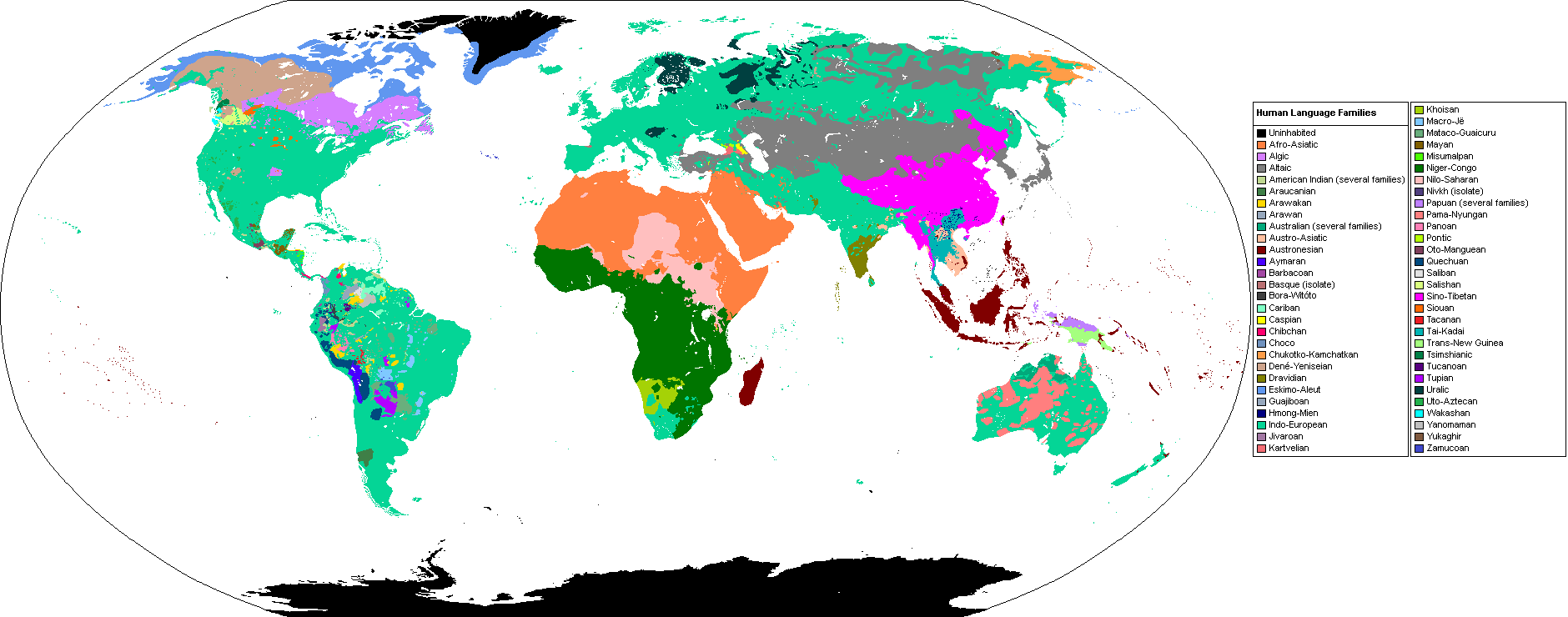
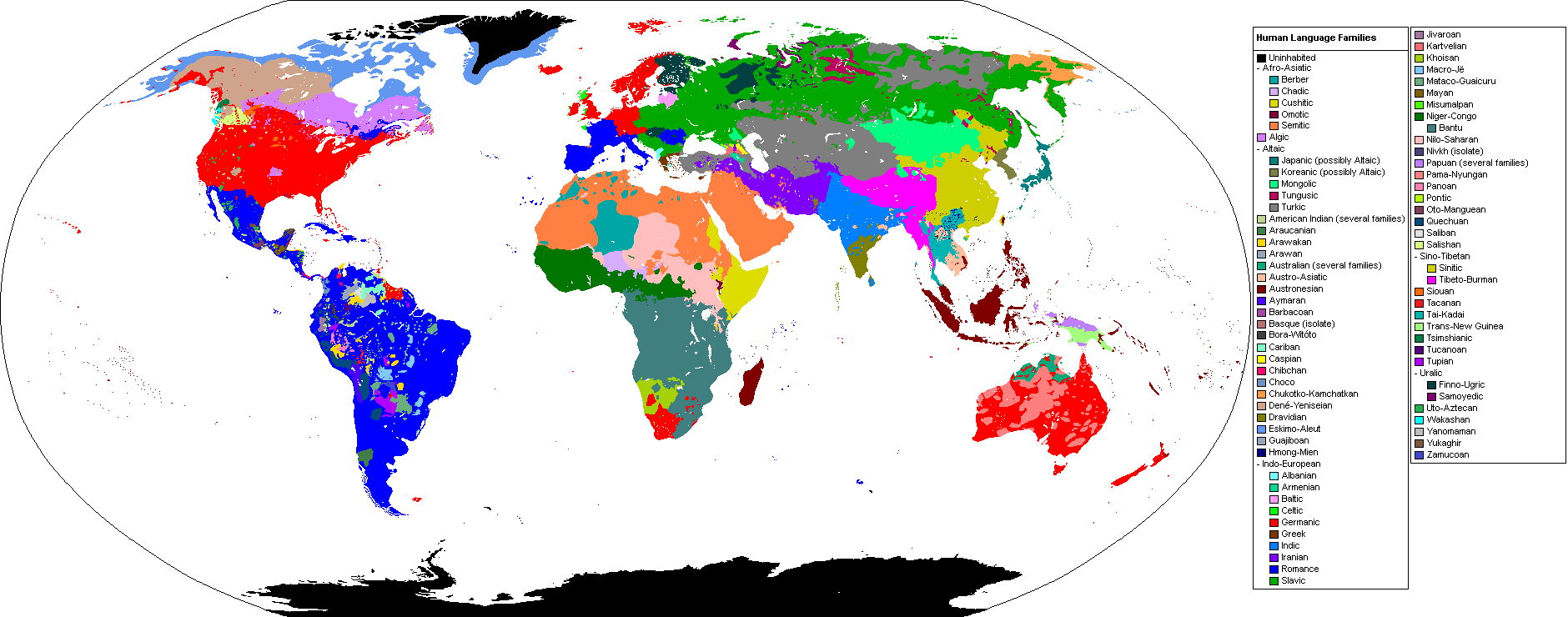
Another thing that’s interesting, though, is the global dominance of Indo-European languages. This category includes Romance languages, Germanic languages like English and German, Indic languages like Hindi, and even Iranian languages like Farsi. When you merge all of the Indo-European sub-families, you see how much of the globe that family represents:
One last note: though the globes linguistic diversity is impressive, its shrinking. In 2011, David Harmon, a scholar who runs the Index of Linguistic Diversity, warned of a potential for linguistic “mass extinction” in the 21st century. Though there were 7,000 spoken languages in 2011, global linguistic diversity has been in decline. Only 80 percent of languages spoken in 1970 still existed by 2005.
The amazing diversity of languages around the world, in one map – Vox.

 Multicultural Meanderings