Grassroots coding, gaming groups tackle tech’s diversity crisis

Striking – but not surprising given Toronto’s (and Canada’s) diversity – the confluence between minority and women diversity:

Hina Mir sees a future for herself in technology. She’s only 16, so it’s not entirely clear what that future will look like. But one thing is almost certain: she’ll be coding.

The Toronto high school student already knows elements of multiple programming languages and has studied with experts working for some of the biggest names in the tech sector.

“With all the things I’ve learned with coding, as well as on the engineering and business sides of technology, there’s so much that I think I could do,” Hina said.

She’s part of an up-and-coming generation of potential programmers, software engineers, developers, designers and entrepreneurs who could help the tech world face down an uncomfortable reality: it is very white and very male.

Companies from across the industry have acknowledged the problems: specifically, that there is both a considerable disparity between the sexes and a troubling lack of diversity in the workforce.

The response from Silicon Valley has been to raise a small army of “diversity consultants” and use more inclusive recruiting and hiring strategies.

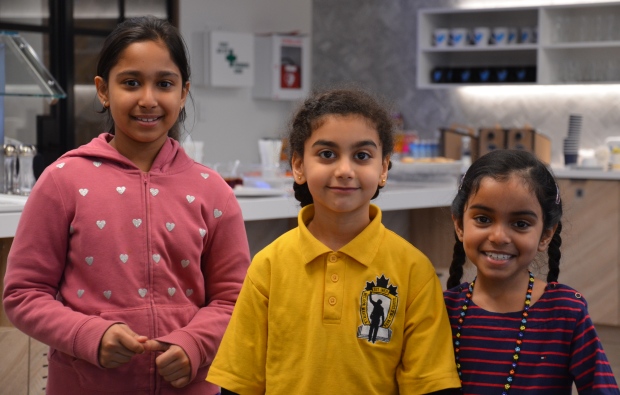
Iqra Alam, Tajmim Ahmed, Mariam Sayed Girls Crack the Code diversity

The group has members as young as six and as old as 16. International studies have found that starting to teach coding as early as kindergarten is the most effective way to ensure young people stick with it. (Lucas Powers/CBC)

“But it’s not enough to rely only on what big companies are doing if we’re going to create a tech world that reflects the society we live in,” said Ashley Jane Lewis.

A tech workforce that reflects society

The 26-year-old is a mentor with Girls Crack the Code, the community organization where Mir got her start in coding.

The Toronto-based group, which is funded by its organizers and the local school board, helps girls and young women of colour get a head start in tech, and not just with coding classes. In the four years it has existed, Girls Crack the Code has grown into an advocacy network that connects members with all kinds of tech-related opportunities, such as scholarships and workshops.

Ashley Jane Lewis, right, is a mentor with Girls Crack the Code. ‘I think in 10 years, when a younger generation looks to the tech world and sees women of colour who learned in communities like this, working in the field, they’ll see a trail that has been blazed for them,’ she said. (Lucas Powers/CBC)

“I’ve already been to Google, Twitter, Salesforce and coding camp, and I’m in a technology program at school,” Hina said.

Critically, Girls Crack the Code works out of Nelson Mandela Park Public School in Regent Park, one of the most diverse neighbourhoods in the city and home to Canada’s largest social housing development. Bengali, Mandarin, Urdu, Somali and Swahili are just some of the languages spoken there.

The neighbourhood is undergoing a billion-dollar “revitalization” ultimately aimed at creating a community with housing for families of different socioeconomic levels.

Khadija was one of about 30 girls who visited Twitter Canada’s headquarters earlier this month. (Lucas Powers/CBC)

In many ways, Girls Crack the Code is trying to build a tech industry informed by all of the voices, perspectives and experiences found in a place like Regent Park.

It’s part of a growing grassroots movement to cultivate talent in places where diversity is woven into the fabric of everyday life.

A ‘powerful’ message

Earlier this month, 30 girls from the group visited Twitter Canada’s trendy downtown office to listen to a talk by Helen Zeng, a 25-year-old software engineer who grew up in Windsor, Ont., and now codes for the tech giant in San Francisco.

Zeng says that while many companies are trying to hire more women and people of colour into tech jobs, there is a “very loud” effort to push back against built-in biases and attitudes that can’t be undone with corporate policy alone.

Immigrants help drive Metro Vancouver’s housing market: study

Dan Hiebert and David Ley continue their insightful work in assessing ethnic concentration and impacts on housing:

Immigrants have a major impact on fast-rising house prices in Metro Vancouver and Toronto, according to the author of a new study.

In a unique research project, UBC geographer Daniel Hiebert discovered that ethnic Chinese and South Asians become homeowners at a much higher rate than other immigrants and the general population.

“There is definitely an impact on the housing market,” said Hiebert, who believes a key factor behind the phenomenon is many new immigrants arrive in Canada’s major cities with a great deal of money.

The veteran researcher’s exclusive cross-tabulation of housing and immigration data, including between 2006 and 2011, found on average that 53 per cent of immigrants to Metro Vancouver during those five years became homeowners in that period.

They bought roughly 100,000 homes in Metro Vancouver during the five years, ranging from suburban condos to ritzy mansions.

“New Chinese immigrants were at the top of all this. Kind of incredibly, their rate of home ownership was 73 per cent,” said Hiebert.

Roughly 52 per cent of newly arrived South Asians, the second largest immigrant group in Metro Vancouver, bought homes in that same five-year period.

Rounding out the five largest recent newcomer groups during that period, the rate of home buying among South Koreans was 51 per cent and among white and Filipino immigrants it was each about 44 per cent.

Hiebert, who has published major studies on immigration, housing and ethnic enclaves, believes immigrants are seriously affecting housing affordability at both the high and low ends of the market.

Prices of Metro Vancouver’s expensive properties, those in the $4-million-plus range, are being dramatically affected by immigrants, Hiebert said. But, at the low end, so are costs for new Syrian refugee families, who need government subsidies to afford a basic place to live.

While some of the new immigrants who end up classified as homeowners might be among the relatively few who arrive on a family reunification program and join an existing household, Hiebert believes most would be buying homes by transferring large financial resources into Canada.

“I think it would be a pretty big stretch for someone to arrive tabula rasa (without a lot of money) in a housing market like Vancouver and within five years be able to purchase a home in this place. That would be really difficult to expect.”

Hiebert’s findings support the conclusions of UBC’s David Ley, holder of the Canada Research Chair in geography and author of Millionaire Migrants. The Oxford-educated professor has found an “unusually decisive” correlation between high immigration to Metro Vancouver and high home prices.

The overall rate of home ownership among all residents in Metro Vancouver is almost 70 per cent — out of a total 1.5 million households, according to Hiebert’s work.

Based solely on visible-minority status, and disregarding immigrant status, ethnic “Chinese have the highest ratio of home ownership, followed by South Asians,” Hiebert said.

“The percentage of home ownership among Chinese is 81 per cent,” accounting for 290,000 Metro households, Hiebert said. “And South Asians are second at 75 per cent,” or roughly 160,000 households.

“Between these two largest groups, you’ve got much of the immigrant picture, which is why the immigrant picture looks better than the other picture (for non-immigrants),” said Hiebert.

Among smaller ethnic groups in Metro Vancouver, 62 per cent of Filipinos own homes, as do 59 per cent of West Asians (mostly Iranians).

Hiebert, who frequently advises the federal government, said his research did not include studying the rate of home ownership among non-immigrants, long-standing residents of Canada, or whites.

Nor does it delve into the specific effects of foreign ownership on Metro Vancouver housing costs.

And even though Hiebert said the high rate of home ownership among immigrants has a “definite” impact on housing, he said more careful analysis of sales is needed to measure it precisely.

He speculated the roughly 100,000 homes bought quickly by immigrants who arrived in Metro Vancouver between 2006 and 2011 would represent a “reasonable fraction” of all houses sold in that period, adding that proportion could be calculated after learning how many homes sell each year in the region.

Craig Munn, spokesman for the Real Estate Board of Greater Vancouver, said in an interview the average number of houses sold between 2006 and 2011 across the region of Metro Vancouver (which contains 21 municipalities from West Vancouver to Langley) was about 44,000 annually.

That adds up 220,000 home sales over that five-year period, which means the proportion bought by immigrants who arrived in that time alone would be about 45 per cent.

Hiebert, basing his work on novel cross-tabulations of the National Household Survey, found “stark differences” in new immigrants’ home ownership rates between Canada’s three largest cities.

While the home ownership rate in Metro Vancouver was 53 per cent and in Toronto 50 per cent among those who arrived between 2006 and 2011, it was just 23 per cent in Montreal.

“The much lower rate of home ownership in Montreal is ironic, because of course housing can be had for (roughly) 40 per cent of the price of Toronto or Vancouver,” he said.

“When housing prices escalate quickly, people feel they have to dive into home ownership. But there’s no sense of urgency in Montreal.”

Source: Immigrants help drive Metro Vancouver’s housing market: study

Toronto’s black history unearthed in excavation of landmark church

Part of our history:

It has been called “one of the most important blocks of black history in Toronto,” a place where African Americans, fleeing slavery, found refuge to live, work and worship.

On this tract of land, just north of Osgoode Hall, a handful of African Methodists built a small wood frame church in 1845. It served as the spiritual and political centre of the city’s growing black community, which was asserting its voice in the abolitionist movement and welcoming an influx of families seeking freedom via the Underground Railroad.

Eventually, the congregation outgrew the tiny church and replaced it with a handsome brick temple. But after more than a century, membership dwindled, the congregation moved and the temple was sold off. In the late 1980s, the building was demolished to make way for a parking lot and, until last fall, the church was largely forgotten.

Now, with that same lot being prepared for the development of a new state-of-the-art provincial courthouse, the rich history of Chestnut St.’s British Methodist Episcopal Church has resurfaced, along with that of the 19th-century neighbourhood surrounding it.

The British Methodist Episcopal church on Chestnut St. as seen in 1953, around the time the dwindling congregation moved to Shaw St.

J.V. SALMON

The British Methodist Episcopal church on Chestnut St. as seen in 1953, around the time the dwindling congregation moved to Shaw St.

Hundreds of thousands of artifacts have been discovered at the 0.65-hectare site — larger than a football field — near University Ave. and Dundas St. Infrastructure Ontario, the government agency overseeing construction, provided the Toronto Star with unique access to the five-month dig, considered one of the most extensive urban archeological projects in North America.

Unearthed ceramics, tools, toys and remnants of clothing are helping to compose a fascinating and largely untold story of the distant origins of Toronto’s diversity.

“Archeology often becomes the voice for the people without history,” says Holly Martelle, the consulting archeologist for the dig.

Rosemary Sadlier, past president of the Ontario Black History Society, visited the site before the excavation wrapped up in December. “It was an incredibly powerful experience,” recalls Sadlier, whose late relative, Rev. Thomas Jackson, served as a preacher at the church in the 1950s. “I was literally walking on ground that had been walked on by my ancestors.”

Karolyn Smardz Frost, a historian who has written extensively about black settlement in Toronto, describes the location as “one of the most important blocks of black history in Toronto.”

Infrastructure Ontario officials say they fully recognize the importance of the church site and its surroundings. Given the uniqueness of the archeological discoveries, the question now facing the provincial government is how will this history be commemorated, and what sort of stewardship will the artifacts require?

Source: Toronto’s black history unearthed in excavation of landmark church | Toronto Star

Young refugees offered pop-up classes while awaiting homes | Toronto Star

Good initiative:

A string of pop-up classrooms arranged to give young refugees a taste of school while they wait for new homes delighted Syrian families Monday at the west-end Toronto Plaza Hotel.

“A-B-C! — happy!” said a beaming 12-year-old Dalaa al Sarji, who, like most Syrian refugee children arriving in Canada, hadn’t been in a classroom in more than two years.

She and her six siblings — from 3-year-old Hussein to 14-year-old twin brothers — were among some 75 children living temporarily at the Plaza who hopped on school buses Monday in an unusual pilot project to give these uprooted children a feel for the routine of school in satellite classrooms, while they wait to find out where their new homes, and permanent schools, will be.

Hussein al Sarji, 3, is the baby of the family.

LUCAS OLENIUK/TORONTO STAR

Hussein al Sarji, 3, is the baby of the family.

“We did reading — and the teacher was so pretty,” reported brother Said through an interpreter. Noted 14-year-old Ahmad: “I like school in Canada so much; everyone makes us welcome.”

Concerned that housing delays were leaving refugee children with no way to start integrating into Canada — the average hotel stay has been about four weeks — Toronto’s public and Catholic school boards scrambled together last week to find empty classrooms and hire supply teachers and Arabic interpreters to run two-hour morning classes for children while they’re living at the hotel. The costs, including buses, will be covered by the province’s newcomer program.

Walaa al Sarji, 6, can’t wait to play football and hockey in school.

“It’s the right thing to do; you can’t promise people a new life and not prepare them for getting an education,” said Karen Falconer, the Toronto District School Board’s executive superintendent of Continuing and International Education.

Some 265 refugee children are living at the hotel at the moment. Only 75 took part in the morning programs Monday, although twice as many have signed up for Tuesday.

Ahmad al Sarji, 14, feels more welcome here compared to the school experiece in Lebanon.

“I understand why many of these parents aren’t comfortable at first with the idea of putting their kids on a school bus and letting them go,” said Falconer. “We have to build trust.”

Source: Young refugees offered pop-up classes while awaiting homes | Toronto Star

How one family is learning to adapt on the first day of school in Canada

Good account of integration in action (Canadian schools score extremely well in the OECD’s comparative PISA education scores for immigrant integration):

At 8 a.m. on a frigid Monday morning, six children of the Al Rassoul family are lined up inside the door of their new Scarborough house, all ready for the first day of school in their adopted country.

The boys shuffle their new winter boots as their mother and two aunts tug on their toques and scarves. Their five-year-old sister, Mariah, the class clown of the group, bounces around in her Minnie Mouse jeans and purple backpack, trading high fives with anyone who will play.

How this morning will go, no one can say for sure. The family arrived in Toronto barely more than two weeks ago. Forced to give up their old life in Homs, Syria, by fighting that raged within a stone’s throw of their house, they spent four years in Lebanon before being offered a chance to come to Canada as refugees. None of the kids got any formal schooling in their exile. None speaks more than a few words of English.

How on earth are they to cope with the new ways of the Canadian school system? How on earth will the schools cope with them?

The answer in both cases: pretty well, considering. Apart from one little drama – an epic tantrum by little Mariah, who makes an impression by hurling a sneaker at the school principal – the kids have a good first day.

Their father, Mahmoud Al Rassoul, and his wife, Isaaf Al Omar, have eight kids in all. One of them, Malek, 15, has to wait for an assessment of his language and academic skills before he gets assigned to a high school. Another, three-year-old Maaly, is too young for school.

That leaves six. Two of the boys go off to middle school, driven there by the family’s well-organized Canadian sponsor group. The four younger kids get a lift to Iroquois Junior Public, a strikingly diverse elementary school of around 270 students near Finch Avenue and McCowan Road.

Iroquois welcomes them with a minimum of fuss, just as it has welcomed countless other new kids from far-flung places. After a few minutes milling around the office, where Mariah admires the aquarium and learns the word “fish,” the kids are dispatched to their various classrooms. That’s how it works at this level. No preliminaries. Straight into the deep end, where the water at least is warm.

In Christina Fan’s kindergarten class, Mariah takes her place on the carpet, learning to sit with her legs crossed like the others. “Good morning, Mariah,” her classmates sing out together, clapping their hands in welcome. When Ms. Fan asks who wants to be Mariah’s friend, hands shoot up.

The numbers for Toronto:

Iroquois is well-used to absorbing newcomers. According to its website, all but 30 or so of its students listed a primary language other than English. Most are from South Asian or East Asian backgrounds. Chinese and Tamil are two of the most common home languages.

Of the quarter of a million kids in the Toronto District School Board, 22 per cent were born outside of Canada. Last year alone, the TDSB took in 5,676 new-immigrant childrenkids. Guidance counsellors, English-as-a-second-language teachers, social workers and special-education instructors are ready to step in if a kid falters.

Source: How one family is learning to adapt on the first day of school in Canada – The Globe and Mail

ICYMI: French new wave: A cultural shift for Toronto as ‘invisible francophones’ settle in

Less under the radar:

Every year roughly 1,000 French-speaking immigrants settle in Toronto, with the occasional spike – after the 2011 earthquake in Haiti, for example. Many more speak some English and French in addition to their own dialects, such as many newcomers from Congo, said Réjean Sirois, director of the Toronto-area French Catholic board.

It wasn’t clear just how many of these polyglots – using the same logic as scores of Canadian-born parents – would want their children to get an edge through fluent bilingualism, he said.

“They come here and they have to learn both languages, but they recognize that if they go in a French school, they will learn French because outside … everything is in English and they will learn it [anyway],” he said.

Nearly 50,000 Quebec residents (both francophone and anglophone) moved to Ontario between 2006 and 2011, according to census data. On top of that are the native-born Franco-Ontarians, whose numbers are difficult to pinpoint precisely.

After moving to Toronto, francophones often expect to live in English, especially if they marry an English speaker, Mr. Sirois said. They may not realize how much things can change when they ask for education in French. In the town of Collingwood, Ont., northwest of Barrie, a group of parents presented trustees of the regional French Catholic board with lists of local francophone families.

“Parents came to the school board and said, ‘Hey, there’s a lot of francophones there,’” Mr. Sirois said. “When you look at the statistics, at Statscan, you didn’t find that there were a lot of French people there.”

Source: French new wave: A cultural shift for Toronto as ‘invisible francophones’ settle in – The Globe and Mail

John Tory, Mark Saunders get cover from Queen’s Park on carding issue: James

Royson James on the Ontario government’s public consultations on carding:

There is little reason to believe that the provincial Liberal government consultations on carding will yield anything more satisfactory than the chaotic farce the Toronto Police Services Board has delivered, led by Mayor John Tory.

To expect meaningful reform from the current initiative, with a stop in Toronto at the reference library Tuesday night, is to be overcome with naiveté borne of willful blindness.

In fact, the evidence points to a provincial government in cahoots with Tory and the Toronto police brass; one whose intervention is designed to offer pap and a public relations show, while preserving the essence of police street checks.

Notwithstanding the lofty statements about the government’s intolerance of discrimination, the impact of any new rules passed will likely be: police will have the ability to stop anyone, anytime, for any reason, stated or unstated, to psychologically, if not expressly detain said person, record personal information from said subject, and record the same in a police database.

And we know who will be targeted most.

And we know — or have been told ad nauseum this past year — the real, psychological, and social costs borne by the black community, particularly young black men.

But carding is a useful tool — according to opening statements on the Ministry of Community Safety and Correctional Services website, announcing the review.

Done properly, the new police chief has said, carding is legal.

Done properly, we wouldn’t be here debating the matter, attempting to tame it, wrestling with the chief to find reasonable constraints on the practice, and advocating for reform.

Done properly, street checks in Toronto would follow the protocol drawn up in April 2014 by a Toronto police board that studied the matter and came up with as good a compromise as possible.

That was before John Tory and (now board chair) Andy Pringle and former chief Bill Blair turned the file into a horrible mess, a political hot potato and a public relations disaster.

Pringle, a member of the board in 2014 and Tory acolyte and Blair’s fishing buddy, convinced Tory that he should back Blair in his refusal to implement the board’s decision. Tory, while condemning carding, destroyed the 2014 policy designed to fix it, brought in new guidelines that created a firestorm of controversy, and was forced to go back to the very 2014 board policy he meddled with.

And this is where the province mysteriously entered the fray.

Why? Few can explain the motivation. How? In a manner that only fosters cynicism. Who would enter this messy situation, with the epicenter in Toronto, and decide to hold consultations in Ottawa and Thunder Bay but not Toronto? Who would set up private sessions with groups familiar with the issue and not include the Black Action Defence Committee (BADC)?

Source: John Tory, Mark Saunders get cover from Queen’s Park on carding issue: James | Toronto Star

Black kids stay longest in care, CAS study shows

Black_kids_stay_longest_in_care__CAS_study_shows___Toronto_StarMore data on children’s aid in Toronto (see earlier article):

Black children in Toronto stay longer in foster care and group homes than any other group of kids.

A survey conducted by the Children’s Aid Society of Toronto found 45 per cent of black children taken from parents in the 2008 fiscal year spent more than 12 months in care.

Only 20 per cent of white children taken during that period spent more than a year in care. For children with Asian parents, the number was 18 per cent.

The study looked only at families who came into contact with children’s aid for the first time. Of those families, 126 of them had children taken into care.

The numbers were part of a Toronto society analysis that also highlights what black parents have been angry about for years: their children are taken into care at rates far higher than white children.

It confirms numbers first reported by the Star in December 2014 — 31 per cent of children in the society’s care are black and a further 11 per cent had one parent who is black. In Toronto, 8.2 per cent of people under 18 are black.

Black kids stay longest in care, CAS study shows | Toronto Star.

Toronto’s culture of harmony stifles debate on race

Interesting study by Jan Doering comparing Chicago and Toronto election messaging:

Comparing Toronto and Chicago offers a fascinating contrast. Although the two are often called “sister cities,” their ethnic and racial politics could not be more different. Toronto is a world-famous model of multiculturalism, while Chicago is one of the most segregated and divided cities in the U.S.

In analyzing printed campaign material — those brochures and flyers that cluttered your mailboxes just a few months ago — the study reveals that candidates in Toronto overwhelmingly emphasized their commitment to ethnic and racial harmony. Their messages encouraged inclusion and participation, but did not highlight the important racial challenges that Toronto faces.

Contentious ethnic or racial messages were practically absent in campaign material in Toronto. Candidates did not invoke ethnic or racial tensions and problems. In Chicago, campaign material was a lot more confrontational. African-American and Latino candidates vigorously attacked school closings in minority neighbourhoods, highlighted racist police abuse, and vowed to increase the share of minority contractors working on city projects. Racial politics in Chicago revolved around exposing racial injustice and exclusion.

The most striking feature of campaign material in Toronto was its focus on multicultural harmony and inclusivity. Candidates reliably portrayed members of visible minority groups in photographs. Additionally, the campaign material was full of passages in a multitude of languages other than English — a message of racial and ethnic unity.

There is much to celebrate about Toronto’s style of ethnic and racial politics. Photographs full of diversity and token statements in immigrant languages may seem hollow, devoid of any political substance. But they have symbolic implications for how we think about Canadian citizenship. Including visible minority groups in this way confirms that politicians regard them as legitimate participants in the democratic process. As Berkeley sociologist Irene Bloemraad has found, such messages effectively encourage immigrants to seek citizenship and to become more involved in politics.

Another upside of Toronto’s harmonious culture is that divisive tactics tend to backfire. Neither racism nor charges of racism bore electoral fruit during the 2014 elections. A smear campaign against Ausma Malik, who successfully ran for TDSB trustee, ignited outrage and, as ugly and hurtful as it was, probably ended up rallying support rather than undermining her campaign. Conversely, mayoral candidate Olivia Chow had to dissociate herself from political consultant Warren Kinsella after he described John Tory’s transit plan as “segregationist” because it ignored neighbourhoods with large black populations.

Nonetheless, this robust culture of harmony runs the risk of stifling debate around the ethnic and racial challenges that do exist. The issue of carding and its racial implications were well known in 2014. Yet I found only one candidate for councillor who explicitly took a stand on this issue in his campaign material (Nick Dominelli, who finished third in Ward 12). John Tory has now resolved to end carding, but an opportunity for political debate on this issue during the election was missed — presumably because candidates considered the issue too divisive. This is very disappointing.

…Toronto’s inclusive and harmonious political culture may actually act to silence legitimate racial and ethnic grievances that we should openly confront through public discourse, even if the debate becomes heated or uncomfortable. Our apparent preference for harmony is something we should keep in mind as the federal election approaches. Electoral campaigning has the crucial democratic function of bringing issues to the attention of the public. Are the people who want to serve as our political representatives gamely addressing the most important public issues — including race and ethnicity, but also many others — or are they dodging them in favour of feel-good politics?

Study would benefit from comparing the ethnic mix, both overall,  between and within neighbourhoods, to see if that also is a factor.

Toronto’s culture of harmony stifles debate on race | Toronto Star.

The beauty of Milliken’s ‘multicultural hodge-podge’

A reminder that it is in neighbourhoods like this one that highlight how multiculturalism in Canada works in practice:

Helen Stratigos’ eyes light up when she talks about her neighbourhood.

For the last 15 years, she’s been living in Milliken – a north Scarborough community on the Markham border that’s a “multicultural hodge-podge” home to mostly first and second-generation immigrants, where only 25 per cent of the population was born in Canada.

“People here are proud to be Canadian – they love to be Canadian – but they retain their cultural identity,” says Stratigos, 43. “And that’s something that’s part of your soul, part of your roots.”

Stratigos, a full-time mom with two daughters aged 6 and 15, comes from a Filipina-Greek background and says most of the Milliken community comes from mainland China, Hong Kong, India, Sri Lanka, and the Philippines.

On this July afternoon, she’s leading the Star on a tour of the neighbourhood, pointing out the community’s lush parkland, authentic Asian cuisine and welcoming atmosphere for newcomers to Canada.

“Every time I step out my door, I’m getting an education in world cultures and world religions,” Stratigos says.

The beauty of Milliken’s ‘multicultural hodge-podge’ | Toronto Star.