Armstrong: A Likely Story: The “Diversity” Myth Consumes the Canadian Literary Scene

Of note:

….I am not calling for contracts, publicity and awards to be given out on a demographically proportional basis. Women buy more books than men, so it’s no surprise if more women want to write and there’s no injustice in the industry catering to women’s interests when it comes to signing and promoting authors. The experience of being in a racial or cultural minority might be more likely to inspire people to become writers – witness the flowering of American Jewish literature in the 20th century. The desire to write and the talent to do it very well make for a rare combination and we can’t expect that combination to show up by quota. Maybe the “disproportionate” results I see are purely innocent, based on the merit of authors and the demands of the marketplace.

Except that they are accompanied by countless indicators of a literary culture that is working to create much more disproportionate results in the future, once all those current beneficiaries of race-based emerging writer awards and mentorships are ready to move into positions of literary leadership. If literary gatekeepers – the publishers, editors, conference organizers and the like behind those exclusionary measures I referred to above – are going to use race-based criteria to bar the majority of the nation’s population from many of their programs and publications, there had better be compelling evidence to justify those measures.

But the success of BIPOC writers over the last two or three decades, and especially in the last five years, suggests that these extraordinary measures are not justified. Remember, books promoted between 2018 and 2020 were written and landed publishing deals before the affirmative action initiatives I listed above, and yet BIPOC writers already managed to be moderately over-represented in Canadian literary circles. (And that some of these measures target women generally because they’ve been excluded from Canadian literature is so preposterous as to be laughable.)

If you look up Canadian writers online, increasingly you find that they define themselves immediately in racial terms, whether they are black or white, Asian or Indigenous or any combination. Often, the writer will include a health diagnosis of some sort, especially in cases where there’s no other potential affirmative action hook.

But far from easing off the affirmative action, the people piloting the good ship CanLit are pushing the throttle harder. Jesse Wente, “chairperson” of the Canada Council, in an interview with the Toronto Star called the institution he headed a “colonial” organization and described his mission as reducing the harm it causes to Indigenous, black and other communities. Given that this is the man who campaigned to destroy the career of author Hal Niedzviecki over an awkwardly worded call for writers to bridge cultures (the so-called Appropriation Prize kerfuffle of 2017), we can guess what this might mean.

In my own province of Manitoba, the government-funded arts council recently announced a new set of “strategic priorities” focused on equity, diversity, reconciliation and projects that “build communities.” The money quote in this document: “Refine program assessment criteria that favour a Eurocentric concept of excellence to instead focus on impact.”

What could possibly be done when so many publishers, agents, editors, academics, prominent authors and funding bodies are pushing harder than ever for identity-based affirmative action? A change in the federal government, which seems likely, might bring in new leadership at Canadian Heritage and the Canada Council that is less sympathetic to race-based program criteria. So the next federal election may put the brakes on some of these measures.

Perhaps more significantly, though, we may be able to count on boredom and frustration among readers and writers who are tiring of literature becoming a mere subsidiary branch of the greater social justice movement. How many Canadian Percival Everetts are there who are just as tired of trauma narratives as the protagonist of American Fiction? And how many book buyers have grown tired of being told again and again that equity and diversity are good and racism is bad?

It will be, admittedly, a steep and long mountain to climb. If you look up Canadian writers online, increasingly you find that they define themselves immediately in racial terms, whether they are black or white, Asian or Indigenous or any combination. Often, the writer will include a health diagnosis of some sort, especially in cases where there’s no other potential affirmative action hook: “Jane Smith is a settler of mixed Finnish and Irish ancestry living with long Covid and bipolar disorder on the unceded lands of the Anishinaabe.” Perhaps a culture that encourages writers to view themselves as individuals first and group members second would be more likely to produce the kind of exciting, unpredictable literature that encourages readers to shell out cash and turn the page.

Bob Armstrong is a Winnipeg-based novelist. His last novel, Prodigies, was published in the United States by Five Star/Gale after Canadian publishers and agents turned it down, going on to win the 2021 Margaret Laurence Award for Fiction. Armstrong previously wrote a weekly book news column for the Winnipeg Free Press for 12 years.

Source: A Likely Story: The “Diversity” Myth Consumes the Canadian Literary Scene

Castel: La dimension géopolitique du cabinet Trudeau

Reasonable analysis:

Les observateurs s’entendent pour dire que le remaniement du Conseil des ministres fédéral par Justin Trudeau a occasionné un bouleversement majeur, l’ensemble de l’opération devant lancer un message économique. Or le plus extraordinaire, c’est de constater que le découpage de la représentativité sociale et géographique des nominations est resté quasi identique.

Nonobstant l’importance des portefeuilles, la question de la parité femmes/hommes ne se pose plus depuis 2015. Avec le remaniement de janvier 2021, on compte désormais cinq femmes parmi les dix ministres au sommet de l’ordre de préséance.

Ledit découpage fait aussi référence à la préoccupation qu’il y a, autant du côté du premier ministre que du côté des premiers intéressés, à ce que les régions se sentent adéquatement représentées. Certains choix comportent une forme de remerciement régional en même temps que des arrière-pensées électorales.

Le nombre de ministres par province est resté inchangé : l’Ontario en a 16 (41 %) ; le Québec, 11 (28 %), les provinces de l’Atlantique, 6 (15 %), la Colombie-Britannique, 4 (10 %) et les provinces des Prairies, 2 (5 %). Ces proportions, les mêmes que celles ayant suivi les élections de 2021, sont d’abord le reflet du poids démographique des provinces, mais elles sont aussi motivées par la préoccupation de solidifier les bases libérales locales dans des régions fragilisées depuis 2019 (Atlantique, Québec rural) tout en envoyant un message attractif aux régions historiquement rébarbatives, comme les Prairies ou le sud de l’Ontario rural.

La force du Parti libéral du Canada (PLC) réside dans les régions urbaines. C’est aussi sa faiblesse, puisque l’accès au gouvernement se gagne moins avec des votes qu’avec des sièges. Treize ministres proviennent de la grande région de Toronto, six de la région de Montréal et quatre de la région de Vancouver. Hormis un ministère torontois supplémentaire, le premier ministre garde le même nombre de ministres urbains, avec trois nominations pouvant être motivées par un souci de solidifier un siège menacé : Arif Virani à Toronto, Soraya Martinez Ferrada à Montréal et Jenna Sudds à Ottawa.

Suivant les élections de 2019, le PLC s’appuie sur une chaîne de quelques petits blocs ruraux et une série de zones urbaines isolées. Plusieurs ministres (Patty Hajdu, Marie-Claude Bibeau, Pascale St-Onge, François-Philippe Champagne) viennent de ces espaces stratégiques.

Depuis lors, une douzaine de francophones font partie du Conseil des ministres. Au Québec, la progression du Bloc québécois renforce l’importance de chaque poste ministériel en dehors de Montréal. Hors Québec, le jeu de chaise musicale est délicat, car chaque perte est souvent mal ressentie. C’était le cas pour Ginette Petitpas Taylor en novembre 2019 et c’est maintenant le cas pour Mona Fortier à Ottawa.

Cela dit, certains coups comptent double, car l’Ouest est représenté, depuis 2021, par Randy Boissonnault, un francophone militant d’Edmonton, et Dan Vandal, un Métis de Winnipeg, appelé au cabinet en 2019.

Sous les gouvernements Trudeau, trois Autochtones ont fait partie du Conseil des ministres. Si 10 des 18 députés autochtones ont été élus sous la bannière libérale, les élections de 2019 on fait du Nouveau Parti démocratique la force montante dans les régions boréales et nordiques ainsi que dans les régions de Winnipeg, d’Edmonton et de Vancouver, où des candidats autochtones se présentent.

La question de la diversité ethnique et religieuse est devenue incontournable, notamment à Toronto. À commencer par la vice-première ministre, on peut avancer qu’une quinzaine de ministres ont une origine ethnique autre que britannique ou française. Onze ministres (28 %) correspondent à l’un des groupes que Statistique Canada associe aux minorités visibles.

L’entrée ou la sortie de chaque personne au cabinet affecte l’ensemble d’un édifice déjà compliqué. Le premier ministre s’est sans doute rendu compte que, vu le nombre de paramètres à considérer, la seule façon de sortir de la quadrature du cercle passait par une augmentation du nombre de ministres. Ainsi les cabinets sont-ils passés de 31 à 37, puis à 39 membres, à chaque lendemain d’élections (2015, 2019, 2021). C’est le remaniement de juillet 2018 qui inaugure cette tendance, avec 35 membres.

De plus, à la fin du premier mandat de Justin Trudeau, le Québec et surtout l’Ontario ont gagné en influence, alors que les Prairies ont perdu des plumes, ce qui ne fut pas favorable aux élections de 2019. En n’allant pas chercher de ministre supplémentaire dans l’Ouest pour plutôt ajouter un ministre de Toronto, tout en faisant des changements stratégiques à Montréal et à Ottawa, le chef du Parti libéral du Canada donne l’impression qu’il pense aux prochaines élections, où il jouera défensif, pour recourir au langage sportif.

Source: La dimension géopolitique du cabinet Trudeau

When it comes to affirmative action, Canada has a long way to go

Would be much stronger, as is often the case, were the commentary include more of a historical perspective on changes, progress and gaps. And normal, albeit frustrating, the time lag between increased diversity and it being fully represented in the various institutions.

While I haven’t yet looked at the relevant 2021 Census data for the education field of study, in 2016, visible minorities formed less than 20 percent of those in education, Blacks less than two percent, highlighting some of the “supply side” issues and barriers:

As a Canadian, you could be forgiven if the recent U.S. Supreme Court decision striking down affirmative action has furthered your sense of moral superiority over our southern neighbours.

After all, in contrast to America, Canada’s constitution explicitly allows “any law, program or activity that has as its object the amelioration of conditions of disadvantaged individuals or groups including those that are disadvantaged because of race, national or ethnic origin, colour, religion, sex, age or mental or physical disability.” But in the four decades since Canada has had constitutionally sanctioned affirmative action, how much progress have we made in addressing racial disparities?

According to the University of Calgary’s Malinda Smith, the primary beneficiaries of these efforts have been white women. Smith argues that “despite four decades of equity policies — corporate boards, the judiciary, and the police continue to be shaped by racial and ethnic segregation, and remain overwhelmingly white and to a lesser extent male, thus maintaining the historic colour-coded ethnic pecking order even across gender and sexual difference.”

Smith has termed this process “diversifying whiteness,” whereby institutions promote their increased diversity (with respect to gender, sexuality, and disability), while comfortably maintaining a predominantly white workforce.

Nowhere is this phenomenon more evident than in our K-12 education systems. It has long been recognized that having school staff that reflect the students and communities they serve can lead to more equitable outcomes.

For example, in a recent report released by the Toronto District School Board’s Centre of Excellence for Black Student Achievement, members of Toronto’s Black communities overwhelmingly state that having more Black teachers, counsellors, and administrators was critical to improving the educational experiences of Black students and their families.

However, the reality is that our schools are largely the domain of white women. An audit of the York Region District School Board found that while racialized people comprise about half of York Region’s population, just under one quarter of school board staff is racialized.

According to data from the Halton District School Board, while half of its students are racialized, racialized people make up only 18 per cent of its staff. Similarly, an investigation into the Peel District School Board found that while 83 per cent of its students were from racialized backgrounds, racialized people comprise only 33 per cent of its staff. In all boards, staff are predominantly white and female.

So how is it that despite decades of constitutionally sanctioned affirmative action, we still have school systems that are mostly white? It is part of an educational trajectory — that starts in elementary and high schools and continues to universities and school boards — where some people are encouraged along certain paths, and others are nudged away. Addressing the racial disparities in our school systems requires disrupting current practices at all points in this trajectory.

This is why the TDSB’s attempts to diversify admissions to its specialty schools is so important. It is also why the Waterloo Region District School Board should be commended for its recent job fair specifically for Indigenous, Black, and racialized individuals. It takes a certain amount of moral fortitude to persist despite the inevitable reactionary backlash that occurs when racial disparities are addressed so explicitly.

Critics have panned both initiatives as divisive and akin to establishing a racial hierarchy. It is as if we do not already have a well-established racial hierarchy, which is what these programs are trying to address.

Opponents of affirmative action programs state that we should just accept the best candidates, irrespective of race. As U.S. Chief Justice John Roberts once wrote, “The way to stop discriminating on the basis of race is to stop discriminating on the basis of race.”

Yet, decades of studies that continue to show that organizations respond to resumes with white-sounding names at much higher rates than identical resumes with racialized names expose the myth that we are all judged on some objective metric of “merit.” Organizations need to stop pretending that it is complicated. The way to have greater racial diversity is to have greater racial diversity.

Sachin Maharaj is an assistant professor of educational leadership, policy and program evaluation at the University of Ottawa.

Source: When it comes to affirmative action, Canada has a long way to go

Ie: Minority representation in the House won’t improve without better data

Interesting idea, having the Library of Parliament collect and present data on visible minorities. But having the Library use the analysis of analysts like Jerome Black, Erin Tolley, myself and others, however tempting, is unlikely to be accepted by MPs.

Self-identification in their parliamentary bios would be a better approach, but again would require MP consent

Not sure, of course, that this would result in any substantive change or more accurate numbers:

One of the fundamental purposes of the House of Commons is to represent the diversity of interests, identities, and values of Canadian society.

In 2021, Canadians elected 53 members of Parliament of racialized-minority background, 15.7 per cent of the House of Commons. These represent the highest number and share for minority representation in Canada’s history, but a significant representational deficit remains. The 2021 census indicates that 26.3 per cent of Canadians were “visible minorities,” the standard Statistics Canada term for “persons, other than Aboriginal persons, who are non-Caucasian in race or non-white in colour.” About 20 per cent of Canadian citizens are of racialized background.

Racialized persons in Canada are not evenly distributed across the country, of course. Ninety-five per cent live in a “census metropolitan area,” urban centres of 100,000 people or more. Indeed, in two of Canada’s largest cities, the white population is the minority: 42 per cent in Vancouver and 41 per cent in Toronto.

Because racialized Canadians are concentrated in urban centres, we will tend to be under-represented. Scholar Jerome Black suggests that, as of 2016, 41 of 338 ridings (about 12 per cent) were “minority-majority,” in which visible minorities constituted more than half of the population. In these ridings, parties have been more and more likely to recruit racialized candidates.

However, 109 ridings are more than 95 per cent white. Thus, even though a record 18.2 per cent of 2021 candidates were visible minority, many were running in ridings where there were multiple minority candidates. In Markham-Unionville, for example, all four major party candidates were of racialized status. Many other ridings in the Toronto region, metro Vancouver, and Calgary had similar slates of all or mostly all minority candidates.

Equitable minority representation in Canada’s House of Commons is about both demonstrating a commitment to fundamental values and substantive representation of the diverse needs and interests of Canadians. However, there are no easy solutions. A truly comprehensive, systemic path to improving minority representation needs to consider the roles of electoral systems, party recruitment practices, and other processes outside the halls of the House of Commons.

For the purposes of this series on parliamentary reform, the question, then, is: can anything be done within the bounds of Parliament and its processes?

One small but important step would be to improve the collection of information about the lack of minority representation in the first place. For instance, the Library of Parliament’s database of parliamentarians, Parlinfo, provides information on all MPs and Senators since Confederation, in 1867, including gender and occupation, but not ethnicity or racialized status.

The Library of Parliament provides research and information to parliamentarians and their staffers. Thus, the absence of information on minority representation in Parlinfo suggests lack of interest on the part of parliamentarians rather than deliberate oversight. Nonetheless, given the relatively small number of visible-minority MPs elected in Canada’s history and the fact that scholars such as Jerome Black have already compiled this information, adding it to Parlinfo should be relatively straightforward. The benefit of demonstrating at least modest institutional recognition of racialized status as an important representational concern would surely outweigh the costs of such an effort.

Unfortunately, Parliament itself has shown little concrete interest in this concern. I searched for the term “minority representation” in both the House of Commons and Senate debates from the 41st Parliament (2011-2015) onwards. I found only 13 mentions of the term in the House. None of them concerned the House’s own role and what it could do better. Rather, the mentions mostly related to arguments about electoral and Senate reform – implications for minority representation of different election processes and changes to the way Senators are chosen.

The story is much the same in Senate debate, and searches of committee proceedings in both chambers produce little further evidence of interest. While not an exhaustive search, what I have seen leads me to conclude that parliamentarians have been largely averse to considering their own role in the problem of minority representation, preferring instead to focus on the possibilities, however implausible, of external systemic fixes.

Some of this lack of interest may be complacency about our incremental progress and self-congratulatory belief in Canada as a welcoming, multicultural mosaic. Another reason could be tied to the fact that the political-intellectual class in Canada – opinion-makers and shapers in academia and the media, for example – are significantly more ethnically homogenous than the Canadian population.

The most recent Canadian Newsroom Diversity Surveyconducted by the Canadian Association of Journalists, for instance, reports that “most newsrooms continue to not be representative of the communities they serve.” Minority persons are concentrated in a few large outlets and are less likely to be in full-time leadership positions.

My investigation of diversity in my own field reveals embarrassingly few racialized scholars studying Canadian politics, with less than four per cent of permanent faculty members in departments of political science across Canada. Astonishingly, some larger departments themselves have more white men than there are racialized Canadian politics scholars in the whole country!

The media and academia do not solely determine what is important to parliamentarians, of course, but they do play significant roles in shaping the agenda and the ideas underlying political debate. The lack of diversity in media and academia means that the interests and lived experiences of racialized Canadians are less visible within our political discourse than they should be. It is unsurprising, then, that Parliament and parliamentarians seem so uninterested.

In 2010, a Canadian parliamentary delegation participated in, and signed onto, an Inter-Parliamentary Union statement called the Chiapas Declaration. The declaration committed consenting parliaments to debate and adopt plans to improve minority participation, among other actions. These plans, the declaration states, should include measures such as requiring all legislation to include impact assessment on minorities, regularly discussing minority issues and mainstreaming such issues into parliamentary work, particularly within committees, and allocating resources to provide dialogue spaces for racialized persons and groups within House processes.

Our House of Commons has not followed up on these commitments in any meaningful way. It has not, for instance, created even a committee with a mandate to focus on issues of racialization and minority exclusion, when such a committee is assumed to exist in the Chiapas Declaration. There has been minimal attention to minority representation in debate or committee: what little there is has been focused on external fixes or representation in civil society or the public service rather than in the House itself.

As the Canadian delegation’s report on the declaration reflects, our position has been one of self-satisfaction that because there are no explicit discriminatory laws in Canada preventing minorities from participating in politics and because of the progress we have made, there is not much more we should be doing.

Yet, as this series on parliamentary reform shows, the representational legitimacy and democratic quality of the House of Commons should not be taken for granted. Equitable minority representation and inclusion must be accepted as a core responsibility of the House rather than being considered someone else’s problem.

Source: Minority representation in the House won’t improve without better data

ICYMI: Is the Art World Entering the Age of ‘Anti-Woke’ Backlash? Here’s …

Of interest, particularly in the context of the National Gallery of Canada controversy:

We are in a backlash period—or, at least, the early stages of it, with new consensus about the “excesses” of the social justice movements of the past few years percolating through the discourse. Whether this backlash will look like previous ones is what I have been asked to comment on in this article.

The nostalgia cycle is about 30 years—long enough for the past to feel fresh again as a new generation ages (hence: That ‘90s Show). There is also an edgier kind of political nostalgia cycle. Contemporary debates about representation in the museum are experienced as a repeat of debates over “multiculturalism” from the 1990s, themselves experienced as a return to the combative confrontations of the 1960s. Indeed, so much of the politics of the present feels like a kind of replay of the ‘90s—alt-right “culture wars” as an even darker reboot of Pat Buchanan’s classic ‘90s version; the debates over “wokeness” replaying early-‘90s panics over “political correctness,” etc.

The Trump administration touched off dramatic debates, changing the texture of the conversation within the U.S. art world. Blue-chip galleries added Black artists to their programs, important overlooked female artists have been rediscovered at a brisk clip, museums shook up their schedules, and biennials reversed polarities so that the once-drastically overrepresented white Euro-American male demographic has been rendered a near non-presence in almost every such recent survey, from New York to New Orleans, and from Arkansas to Italy.
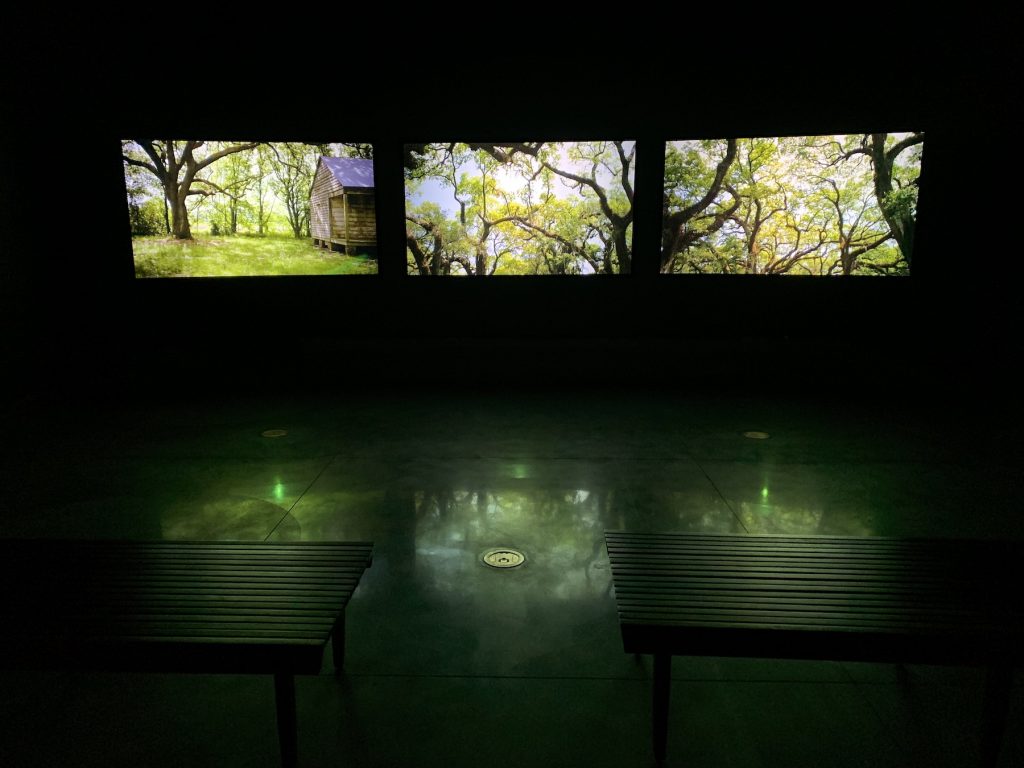
Video by Dawoud Bey at the Historic New Orleans Collection. Photo by Ben Davis.

Video by Dawoud Bey at the Historic New Orleans Collection during Prospect New Orleans. Photo by Ben Davis.

Yet from the beginning, all this has been haunted by an awareness that backlash is incoming. For art observers looking at the intense focus on identity in recent biennials, the obvious reference is the 1993 Whitney Biennial, the so-called “identity politics biennial” (in fact, the recent 2022 Whitney Biennial self-consciously returned to many of the artists from 1993). This event remains a touchstone, having surfaced a large number of non-white, queer, and feminist voices. The ’93 biennial caught the angry zeitgeist of a liberal art world at the end of 12 years of Reaganite rule, in the wake of the most intense period of the AIDS crisis and the ‘92 conflagration in L.A. (VHS footage of Rodney King being beaten by the LAPD was included in the show.)

It was a watershed. But it was also a high-water mark, signaling the inflection point after which backlash officially took the wheel.

The ’93 biennial was panned by critics. Conceptual artist Daniel J. Martinez produced a series of pins given to Whitney visitors that read “I Can’t Imagine Ever Wanting to Be White.” In Who We Be, Jeff Chang’s history of the rise and cooption of multiculturalism, he quotes Martinez on what came next: “’93 was the last shot of the war. We lost right at the moment we thought we were winning.” Coco Fusco, another star of that show, remembered recently the shift that marked the second half of the decade: “In the art world of the late ‘90s and early ‘00s there was a shift away from the moral argument about empowerment and civil rights, which was widespread in the 1980s and early ‘90s, to an emphasis on visual talent and success.”

Daniel Joseph Martinez created these entry badges for the Whitney Museum of American Art's 1993 biennial exhibition.

Daniel Joseph Martinez created these entry badges for the Whitney Museum of American Art’s 1993 biennial exhibition.
Photo courtesy the artist and Simon Preston Gallery, New York.

What can we learn from this moment? How is today different or the same?

An uncomfortable fact is that periods of advance tend to coincide with moments when the kinds of cultural liberals who make up the base of the art world feel that they are in crisis, politically. The spectacle of conservatives in power puts more pressure on culture, as rage at political disempowerment is channeled into gestures of cultural activism and symbolic atonement. The ’90s wave came out of the anger with Reagan and Bush, just as the recent climate grew out of reaction to Trump’s election. (There was some of this vibe under Bush II, but 9/11 and the Iraq War really defined the politics of that period in a different way.)

Conversely, while it flatters the liberal art world to focus on right-wing culture warriors as the driver of regression, it was actually Bill Clinton’s ascent to power in 1992 that was the harbinger of the quietist turn in 1990s cultural discourse. He and the Democratic Leadership Council had made it their mission to represent the Democratic party as pro-business, distancing it from unions and social movements. Toni Morrison may have quipped that Clinton was “the first Black president” in the New Yorker, but during the campaign, Clinton staged his own version of the “culture wars” on Democratic party terrain, deliberately baiting Jesse Jackson into a battle over rapper Sister Souljah and making a big show of condemning “anti-white” rhetoric to prove that he was the safe hand for mainstream (read: white, pro-business, and business-as-usual) America.

As a parallel, more recent talk of a “vibe shift” in culture following the #Resistance moment coincides with the election of Joe Biden, who literally promised on the campaign trail that, were you to elect him, you wouldn’t have to think about politics too much anymore. “The 2010s were such a politicized decade that I think the desire people have to be less constrained by political considerations makes a lot of sense,” Sean Monahan, whose blog 8Ball touched off the “vibe shift” talk, told New York Magazine.
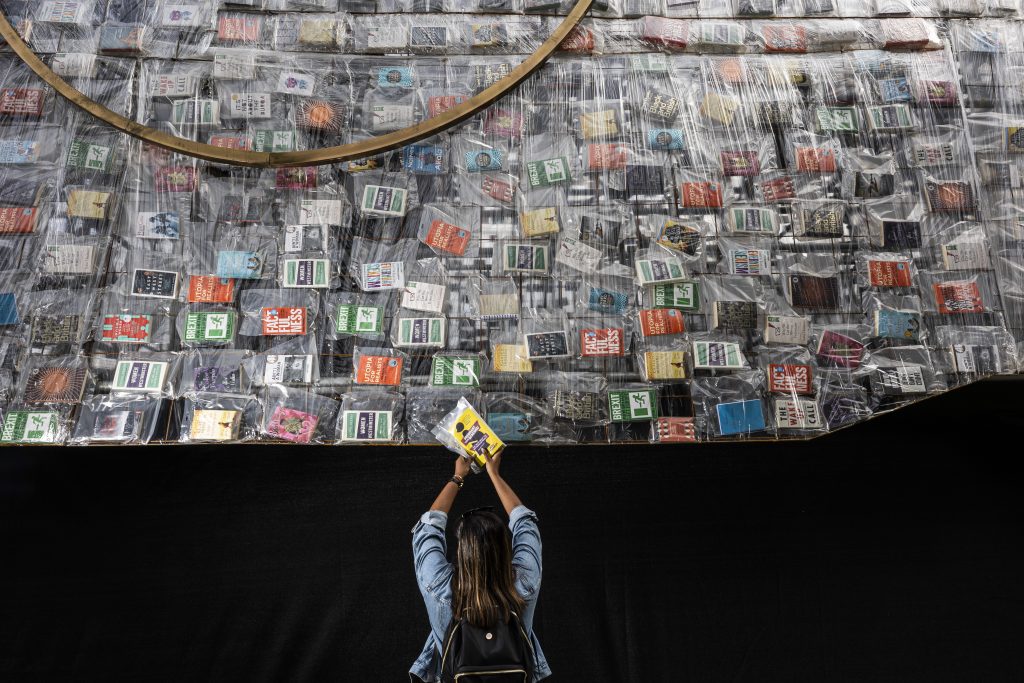
Claire Govender adds the 20,000th book to "Ben Ben Lying Down with Political Books" by Marta Minujin, Photo: Fabio De Paola/PA Wire.

Claire Govender adds the 20,000th book to “Ben Ben Lying Down with Political Books” by Marta Minujin, Photo: Fabio De Paola/PA Wire.

The Burns Halperin Report shows just how vulnerable to rollback recent advances in representation may be. Permanent collections, they show, are not so deeply affected by the social justice zeitgeist—indeed, they are little affected (although contemporary museums seem to be making solid progress towards gender parity in collecting, at least). As one mechanism for this inertia, the report points to the fact that 60 percent of the objects that enter museum collections come from gifts or bequests; these, in turn, presumably form the basis of exhibition programs. Among other things, the blockage thereby represents the embedded malaise and biases of wealth, and its accumulated power (a point theorist Nizan Shaked also argues in her important treatise from this year, Museums and Wealth).

Researching the 1990s backlash, I found this quote from David Lang, the cofounder of the Bang on a Can festival: “If you’re giving an organization $10,000, you can say, ‘In return to that we expect you to have a social face.’ If you’re cutting them from $10,000 to $1,000, you can’t say, ‘Oh by the way for this $1,000 we’d like you to change your organization.’” Lang was speaking about how arts funding cuts took the wind out of the sails of diversification efforts in the mid-‘90s, but the line could also apply to the contemporary challenge of turning arts institutions around despite the considerable reputational and commercial incentives to do so. Compared to the 1990s, even big museums today are actually much more crisis-ridden, symbolized by the last year of protests and strikes over barely livable conditions for ordinary staff.

Without money behind social justice demands, you are left with fleeting gestures and moralistic browbeating, ultimately preparing the ground for cynicism and backlash.

The United States is much less white than it was in 1990s, meaning there is more of a self-interested business case for institutions to change. But on the other hand, inequality is much worse than in the 1990s. Private wealth has today accumulated much more power and is thus even more arrogantly disconnected from the experiences of ordinary people and convinced of its own rightness. How these two dynamics interact is going to shape what the future of what museums look like. My feeling is that they point to an intensified fragmentation of the arts rather than a return to the ideological status quo.

The long-term movement towards a more diverse country is a fact. Even if you are very cynical, it is not impossible to think that bequest patterns will evolve, with a time lag to account for changing generational sensibilities. Since the huge Black Lives Matter protests of 2020, it does feel as if diverse cultural consumption has been firmly established as a virtue for high-status individuals (whether it is embedded remains to be seen).

Last year’s strange, guilt-ridden Sex in the City reboot, And Just Like That…, had the merit of unintentionally underlining this newly mainstream mindset for premium cable consumers. Erstwhile gallery owner Charlotte proves her good ally status—and relieves the anxiety she and her husband Harry feel at a dinner where they are the only white people—when she explains to her friend’s critical mom that the Black artists her daughter collects are truly investment quality (including “an early Derrick Adams!”)

Still, there is a very real limit to guilting patrons into “Doing Better” on voluntaristic moral grounds. It alienates as many would-be patrons as it moves.

Burns and Halperin write, “At the current rate of change, it may be a simpler task to build entirely new museums and market structures than to create the necessary change within the existing systems.” Melissa Smith has reported on one of the most intriguing developments of the past years: Black artists, experiencing an unprecedented market windfall, are putting funds into building up their own alternative institutions, from Titus Kaphar’s NXTHVN to residencies from Derrick Adamsand Mcarthur Binion.

But alternative institution-building is also happening on a much bigger scale—and it is not necessarily progressive. As Georgina Adam writes in her recent book The Rise and Rise of the Private Art Museum, the major trend of the past decade around the world has been stagnation in public museums, and the parallel creation of new personal founder-driven museums (the so-called “ego-seum”), born out of “a distrust of public institutions, and in some cases more problematic aims: self-aggrandizement, hyping the value of their collection, getting better access to desirable art and getting whopping tax breaks.”

Here’s a case study for the limits of the moral appeal to patrons in an age of runaway inequality. Back in 2008, billionaire Eli Broad first backed L.A. MOCA when it needed a bailout, prompting fears, from New York Timescritic Roberta Smith, that he would merge “the museum’s exemplary collection of art with his own, more predictable, market-driven one.” That turned out not to be what happened at all. After debates over the museum’s direction, Broad simply withdrew from supporting L.A. MOCA to build his own glitzy Broad Museum across the street—with free admission and Jeff Koonses galore.
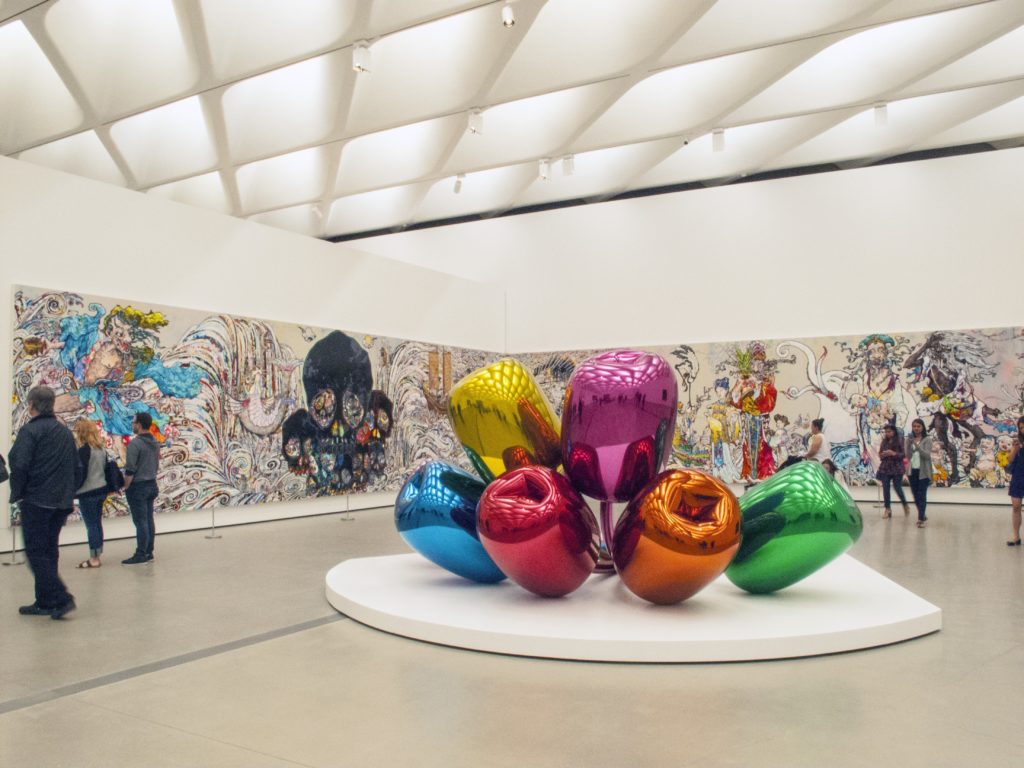
Jeff Koons’s tulips sculpture at the Broad. Photo by Santi Visalli/Getty Images.

The new political demands on culture from one direction are likely to produce new cultural moves that are equally unprecedented in the other. Until very recently, you used to be able to assume that Silicon Valley was a lock for liberals. But the kinds of new tech fortunes that the art industry has been unsuccessfully courting for over a decade—the bulk of new wealth creation, before the recent tech downturn—now seem to be flirting with reaction. In opposition to the Bernie Sanders-style social-democratic wave, Black Lives Matter, and #MeToo, techie libertarianism seems to be mutating into a turbo-charged Nietzschean neo-monarchism, militantly hostile to traditional liberal institutions, creating a new political bloc with the alt-right trolls.

Contemporary cultural backlash may not look like a return to a cozy, oblivious cultural center. It may take its cues more from Elon Musk buying Twitter to “defeat the woke mind virus” or Peter Thiel funding an “anti-woke” downtown film festival out of his pocket change.

When art observers think of backlash in the 1990s, they often think of the 1995 Whitney Biennial. It is often considered a “return to beauty” biennial, where representation snapped back towards the historical norms after the aberration of ‘93. The Guerrilla Girls printed fliers and posters summing up the feeling, declaring ironically, “Traditional Values and Quality Return to the Whitey [sic] Museum.”
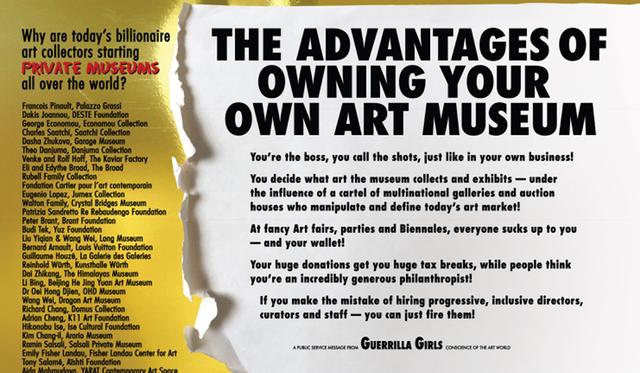
A translation of the Guerrilla Girls’ banner. Photo: Courtesy Guerrilla Girls.

But the more relevant example of culture-wars backlash for today possibly came one year later: the 1996 founding of Fox News. Its boss Roger Ailes had served as a media guru to George H.W. Bush in the period of the infamous, race-baiting Willie Horton ad. He officially ejected himself from politics after Bush’s defeat in the 1992 election. And yet, all that reactionary political energy, instead of being neutralized, deflected into the cultural sphere. In Fox News, Ailes masterminded the creation of a free-standing ideological universe, one that openly challenged the idea that you could assume a mainstream “liberal media bias.” We know what its effects have been.

Given this potential shape of backlash and the structural flaws at the heart of the traditional art system, where to look for hope for real progress? I’ll give the last word to Cornell West. In his 1990 essay on “The New Cultural Politics of Difference,” West described the “double bind” of cultural producers within academia and museums, critical of institutions that they were nevertheless materially dependent on.

I think invoking it here is the opposite of nostalgia—it may be even more apt in the 2020s than it was in 1990s:

Without social movement or political pressure from outside these institutions… transformation degenerates into mere accommodation or sheer stagnation, and the role of the “coopted progressive”—no matter how fervent one’s subversive rhetoric—is rendered more difficult. In this sense there can be no artistic breakthrough or social progress without some form of crisis in civilization—a crisis usually generated by organizations or collectivities that convince ordinary people to put their bodies and lives on the line. There is, of course, no guarantee that such pressure will yield the result one wants, but there is a guarantee that the status quo will remain or regress if no pressure is applied at all.

Source: Is the Art World Entering the Age of ‘Anti-Woke’ Backlash? Here’s …
[Canadian] Military failing to remove barriers to diversifying ranks: ombudsman

Long-standing challenge:

Canada’s military ombudsman is joining the chorus of those accusing the Canadian Armed Forces and Defence Department of failing to address long-standing barriers to recruit and retain more women, visible minorities and Indigenous people.

Gregory Lick says in a new report that the military and department have adopted numerous initiatives over the last 20 years to increase the share of Armed Forces members who come from those underrepresented groups.

The moves followed several human-rights decisions and the passage of employment equity laws, amid a growing disconnect between the makeup of the military, predominantly composed of white males, and the rest of the country’s population.

Yet the ombudsman found those initiatives resulted in little progress on increasing representation from underrepresented groups, with the military consistently falling far short of its own targets.

“I am adamant that in order to not repeat the same mistakes, the Department of National Defence and the Canadian Armed Forces need to do things differently,” Lick said in a statement Monday.

“Fresh and creative thinking is required. Rehashing former initiatives simply will not cut it. Period. We will continue to monitor developments within the defence community in order to inform our own next steps on this matter.”

The ombudsman’s report comes weeks after a panel of retired Armed Forces members released the results of its own review, which took the military to task for not acting on dozens of previous studies and reviews of racism in the organization.

The scathing anti-racism report, which followed a yearlong review ordered by then-defence minister Harjit Sajjan, also accused the military of not doing enough to detect and prevent white supremacists and other extremists from infiltrating its ranks.

Lick’s review, also requested by Sajjan, looked at efforts to increase the share of women, visible minorities and Indigenous people in the Defence Department and military since becoming subject to employment equity laws in 1997 and 2002, respectively.

It specifically noted the military’s failure to make any real progress toward its various targets, which include having 25.1 per cent of all Armed Forces members be women, 11.8 per cent be visible minorities and 3.5 per cent Indigenous people.

“Despite the CAF’s efforts over the past 19 years, the percentage of women members stagnated until 2019, when a one-per-cent increase brought that representation level to 16 per cent of all CAF members,” the report reads.

“The limited increase in Aboriginal peoples (2.8 per cent) and visible minority members (9.6 per cent) has not been sufficient to keep up with Canadian demographics,” it adds.

The report goes on to note that not only has the Armed Forces failed to achieve its targets, but that those targets have been repeatedly criticized by the Canadian Human Rights Commission and others as far too low given the country’s changing composition.

The Defence Department reported more success in terms of diversifying its civilian workforce, but nonetheless faced many of the same challenges.

The ombudsman reported that his office had received 931 complaints relating to recruitment and 879 complaints involving promotions or career advancement since 2010. Another 189 workplace discrimination complaints were received.

“While designated employment equity groups did not submit all these complaints and not all would have been deemed to be unfair, these numbers show that the DND and CAF face challenges to the provision of fair and equitable employment,” he wrote.

The ombudsman noted numerous barriers to the recruitment of Armed Forces members from the designated groups had been reported over the years, including language requirements, security-clearance delays and a lack of representation among recruiters.

The review also noted that because military personnel have to start at the bottom and work their way up, fixing the recruitment process is a critical first step. Concerns were nonetheless also identified around retention and promotions.

Lick emphasized the importance of addressing the problem given what he described as a growing need for a diverse force that reflects Canadian society and is able to operate in new and innovative ways.

“With the CAF currently operating at a deficit of approximately 10,000 to 12,000 regular and reserve force members and thousands of positions unfilled in the civilian ranks, a crisis is slowly emerging,” he said.

“Critical to the ongoing success of the DND and the CAF is ensuring that people of diverse backgrounds consider a career in these organizations and see themselves reflected in their mandates.”

While past reports and reviews have proposed a number of measures to address the problems, Lick echoed the anti-racism panel’s findings about a lack of action, saying: “It is unclear whether the CAF has implemented all these initiatives.”

Although Defence Minister Anita Anand was given four weeks to respond to the ombudsman’s report before its public release, Lick said he had yet to receive a response. The Defence Department did not immediately comment Monday.

Source: Military failing to remove barriers to diversifying ranks: ombudsman

Globe editorial: This is a story about race in Canadian politics. And it’s hopeful

Agree. Recent federal election largely confirms:

This is not a story about race.

But to understand how it isn’t, we have to talk about how, in another, less successful country, it could be.

In 2016, the census found that 31 per cent the residents of the City of Calgary were immigrants. Thirty-six per cent of the population were members of a visible minority, including 9.5 per cent who were South Asian. The picture is almost exactly the same in Edmonton: 30 per cent of residents are immigrants and 37 per cent are visible minorities, including 9.5 per cent who identify as South Asian.

Two weeks ago, the people of Edmonton and Calgary went to the polls and elected new mayors. Both were born outside of Canada. Jyoti Gondek, Calgary’s top magistrate, was born in England to parents of Punjabi descent and came to this country as a child; Edmonton’s Amarjeet Sohi was born in India and immigrated in his teens. On the census, both would be counted among the roughly one in 10 city residents of South Asian descent.

We bring up race not because it was an issue in the elections of Ms. Gondek and Mr. Sohi, but because it was not. And let us give thanks for that.

In many other countries – less happy, less peaceful countries – the story would have been very different. There, race, religion or ethnicity are the basis for politics. Sectarian divides slice through the possibility of shared citizenship, with lives and politics organized along those lines.

That’s how much of the world is. (Ask an immigrant.) In the worst cases, it results in the failed state of Lebanon, or the violently extinguished state of Yugoslavia, or the Rwanda genocide.

But here’s what we believe can safely be said about the mayoral elections in Calgary and Edmonton: The race of the candidates, their religion (or lack thereof), and their status as first-generation Canadians appear to have been irrelevant to most voters. Maybe not all voters, whether pro or con, but surely most.

Consider: Nine out of 10 voters in Calgary and Edmonton are not of South Asian heritage. Yet Ms. Gondek and Mr. Sohi each won 45 per cent of the vote. That means that most of those who voted for them were from “another” community.

And we put the word “another” in quotation marks because, this being Canada in 2021, most voters don’t see it that way. They weren’t marking their ballots through a prism of race. They didn’t see the winning candidates as coming from some other community, but rather as part of their shared community – Calgarian, Edmontonian, Albertan, Canadian – that transcends where you or your parents came from, where you pray or do not pray, and what colour your skin is.

Canadians are not saints, and Canada is not some magic land where racism never existed. It is not some place where no lines have ever been drawn labelling some people as “us” and others as “them.” Canada has a long history of evolving varieties of sectarian divisions.

But Canada also has a long and accelerating history of expanding the definition of “us,” and extending membership in the shared community to people who, in another place or another time, might have been excluded. For example, until 1954, the mayor of Toronto had always been a Protestant from the Orange Order. But that year, the citizens of Toronto ended all that, electing Nathan Phillips. Phillips was Jewish; nearly all of the city’s residents were not. Most were Protestants. It didn’t matter.

It was a similar story half a century later, in the three mayoral elections won by Naheed Nenshi in Calgary. The vast majority of the people of Calgary are not Ismaili Muslims; it didn’t matter. Overwhelming majorities chose Mr. Nenshi as their representative. And though three-quarters of the residents of Brampton, Ont., are visible minorities, in 2018 they elected Patrick Brown as mayor.

This ability to see beyond differences and biology and faith is something that Canada will need ever more of in its future. Canada is on the road to becoming a majority-minority nation, where no ethnic or racial group is the majority. That’s already the situation in Metro Vancouver and Greater Toronto, and the other big cities are not far behind.

The voting in Calgary and Edmonton is a reminder that this future is hopeful, not ominous. If a Canadian is defined by all that we hold in common, in spite of differences, then everybody’s part of the majority.

Source: https://www.theglobeandmail.com/opinion/editorials/article-this-is-a-story-about-race-in-canadian-politics-and-its-hopeful/

Australia: ‘Be less of a white boys’ club’: How to address Parliament’s lack of diversity

Of note (Canadian Parliament and Senate are much more diverse than Australia):

“Stale, pale and male” has become a shorthand for the lack of diversity of all kinds across society’s institutions. Parliament has not escaped its accusations and even federal politicians have levelled the tag at it.

Labor frequently pats itself on the back for achieving near-gender parity in its caucus room but this week it has been beset by criticism it has not done enough to address other types of diversity.

The decision to parachute senator Kristina Keneally into the safe lower house seat of Fowler, in Sydney’s west, at the expense of local, young, Vietnamese lawyer Tu Le has led to calls for diversity quotas and divisions over “token” multiculturalism.

But it’s not only Labor’s politicians who are overwhelmingly white.

Out of the 226 men and women who make up Federal Parliament, 23 were born overseas but only five in non-European countries to parents who weren’t Australian. Another 52 have parents who were born overseas, overwhelmingly in the UK.

Contrast this with the general population. Just under half of all Australians were either born overseas or their parents were. Nearly three times more people in the wider Australian community were born overseas than their parliamentary representatives.

However, Parliament this week hit a milestone of proportionate representation of Indigenous people. There are now seven Indigenous members after the Greens’ newest senator Dorinda Cox, a Yamatji-Noongar woman, replaced Rachel Siewert.

Tim Soutphommasane, a professor at the University of Sydney and a former race discrimination commissioner, says Parliament “fails dismally” on cultural diversity.

“It doesn’t look remotely like today’s multicultural Australia. It might make some uncomfortable, but our political class looks like it’s stuck in the White Australia era,” he says.

“If you don’t have cultural diversity in our politics, you don’t have a politics that’s representative. That’s a pretty basic problem.”

Dr Blair Williams from the Global Institute for Women’s Leadership at ANU says while an exact representation of the community isn’t possible, “it just needs to be a bit more focused on being less of a white boys’ club from a certain background”.

There has been a strong focus for some time now on increasing the number of women elected, but Williams says there also should have been thought put into improving cultural diversity. She’d also like to see more young people, people with disabilities and those from different class backgrounds.

The problem is self-perpetuating, says Race Discrimination Commissioner Chin Tan. If people don’t see anyone like them in Parliament, they’re less likely to get involved in the political process.

“The lack of diverse and inclusive parliaments means certain groups are poorly represented and their interests are not well spoken for,” he says.

“Even aside from the importance of involving diverse voices in the legislative process, Parliament provides a tremendous platform for engaging in public debate. We have often seen that when politicians from diverse backgrounds enter Parliament, they achieve great outcomes by focusing attention on issues that might otherwise be overlooked.”

Soutphommasane points to the agitation in some quarters for abolishing section 18C of the Race Discrimination Act, which protects against hate speech, saying the lack of diversity can contribute to a distorted political debate.

“A monochrome political class will have some blind spots,” he says.

The question of how to fix the problem is not easy, nor will it happen quickly. Those who advocate a quota arrangement point to Labor’s gains in gender diversity.

It has taken the party more than 30 years from its first quota to reach equal representation. Former cabinet minister and deputy leader Jenny Macklin says quotas are still contested and there continues to be male resistance.

Emily’s List, an organisation that backs progressive women running for Parliament, published a paper in 2019 that recommended Labor introduce “tandem quotas” for women and cultural diversity with different targets for safe seats, marginal seats and the party executive.

Williams says these types of tandem quotas benefit culturally diverse women but are less good for “majority men and majority women”. An alternative could be a kind of reverse quota.

“So you only have a certain amount of white men in Parliament and when you hit that number, then you have to diversify,” Williams says.

“If you do look at other styles of quotas, like the tandem quotas … you do run the risk of having, say, 30 per cent of people preselected who are women and culturally diverse, that still means that the other 70 per cent can be white men.”

Labor MP Peter Khalil, whose parents migrated from Egypt to Australia in the 1970s, said this week MPs with diverse backgrounds “should not be token or just be making up the numbers”. Rather, parties had to show a real commitment.

His colleague Anne Aly, who was herself born in Egypt, also called on her party to do more than just pay lip service to multiculturalism.

Other MPs also called for action, with Ed Husic saying Labor had to do a stocktake of its membership and have a serious conversation about how to reflect the community, and senator Jenny McAllister saying it was time for “bold actions”.

But not everyone thinks quotas are the answer.

Osmond Chiu, an ALP member and research fellow at the Per Capita think tank, says the party needs to work out the extent of its problem with diversity before it can address it.

Any talk of quotas to improve cultural diversity or candidates “is putting the cart before the horse” when change throughout the whole party organisation is needed.

“A lot of the focus has been on Fowler because it’s symptomatic, it symbolises this wider systemic problem that exists, that Australia has become a much more diverse country … but our institutions, such as Parliament, haven’t really kept up,” he says.

Liberal MP Dave Sharma says there’s no doubt all parties including his own have to more actively recruit people with different backgrounds instead of continuing the “pretty laissez-faire attitude” they have now.

Since his election – replacing Labor’s Lisa Singh as the only person of Indian heritage in Parliament – he has often heard from people in the Indian Australian community asking how they can become involved in politics.

He doesn’t believe in quotas but points to the work of the Conservatives in the UK to transform from a “very stuffy, traditional party” to the more diverse outfit after the party machinery actively sought “people from outside the usual breeding grounds of politics”.

It is as much as smart politics as the right thing to do.

“People are much more inclined to vote and support for, empathise with or have a connection with people that have a similar life experience,” Sharma says.

“That doesn’t just mean ethnically, it can be religiously, it can be professionally, it can be if you’ve got a disability, all those sorts of things … help your political brand strength.”

Tan says this is why parties must look beyond candidate preselection and make sure there are people from diverse backgrounds welcomed and involved at grassroots and administrative levels too.

“Parties stand to gain from this by broadening their base, widening their gaze, and attracting the additional talents that exist within diverse communities,” he says.

“I think this would in turn lead to more diverse candidates being preselected.”

Changing the face of Parliament will require hard calls from political leaders, Soutphommasane says.

“You can’t conjure up more diversity in your parliamentary ranks simply by saying you like multiculturalism. Or by saying that it’ll come next election.”

Source: ‘Be less of a white boys’ club’: How to address Parliament’s lack of diversity

Public Service Disaggregated Data for Visible Minorities and Indigenous peoples, Citizenship status

Over the past few months, I have been analyzing the various datasets breaking down public service employment and employee survey data by the individual visible minority and Indigenous groups.

The three articles, What new disaggregated data tells us about federal public service diversity (Policy Options, October 2020), What the Public Service Employee Survey breakdowns of visible minority and other groups tell us about diversity and inclusion (The Hill Times, November 2020) and Diversity and Inclusion: Public Service Hirings, Promotions and Separations (The Hill Times, March 2021) allow for a more comprehensive view of visible minority and Indigenous groups in the federal public service. Moreover, recent Public Service Commission studies analyzing recruitment of employment equity groups add an important element to discussions on public service staffing and recruitment practices.

Much of the debate and discussions have understandably focussed on Blacks in the public service. Yet public service data indicates that their situation is not unique in terms of representation, hirings and promotions and the employee satisfaction, with many commonalities with the other groups. A more granular analysis within each occupational group (i.e., comparing representation at each level by occupational group, as some departments are conducting, may very well provide such evidence).

Key findings are:

  • Overall EE analysis shows considerable variation among the different visible minority and Indigenous groups
  • Visible minorities
    • Correlation between lower educational attainment and representation for most groups save Chinese
    • Overall under-representation common to most groups
    • Blacks, West Asian/Arab small over-representation
    • EX: All groups under-represented save Japanese with Filipino, Latin American and Blacks having the largest gaps
    • Hirings: Hirings of visible minorities have increased for all groups in most occupational groups save for technical and administrative support. Hirings at the EX level have increase for Black, Chinese, South Asian/East Indian and West Asian/Arab, with other groups showing no increase.
    • Promotions: While promotions have increased marginally for virtually all groups at the agregate level, promotions by occupational category provide a mixed picture, with most groups and most occupational categories experiencing a marginal decline in promotions.
  • Indigenous peoples
    • First Nations under-represented, Métis and Inuit over-represented
    • Hirings: While hirings at the EX level have increased slightly, this is less the case for the other occupational categories. Hirings of Métis have increased the most in the operational category, hirings of First Nations the most in the technical category, while hirings of Inuit the most at the EX level.
    • Promotions: A marginal decline across all Indigenous groups and occupational
  • Harassment/Discrimination experiences vary
    • Harassment: Japanese report the most as do First Nations and Métis, Chinese and Filipino least satisfied with resolution as is the case with Métis
    • Discrimination; Blacks report the most, but all groups encounter discrimination on the basis of race, ethnic origin or colour. Black, Japanese and Latin American least satisfied with resolution. All Indigenous groups report having been discriminated against, mainly based on race or ethnic origin, with Métis also least satisfied with resolution

The recent PSC Audit of Employment Equity Representation in Recruitment provides some interesting data and analysis of the staffing process and how the different employment equity groups, and visible minority largest sub-groups, fare at each of the five stages in the staffing process: job application, automated screening, organizational screening, assessment and appointment (FY 2016-17 data).

The most significant stages were organizational screening and assessment where most filtering took place as shown in the table below:

The next table breaks down visible minorities by the largest groups:

As noted in the audit, Blacks have the largest decrease in representation at all stages save for appointment, with a non-negligible being screened out by automatic screening. Chinese are screened out more by organizational screening whereas West Asian and South Asian are more likely to be screened in as the assessment stage.

The audit provides the following explanation for visible minority groups. Overall, visible minority women have higher success rates than visible minority men at the organizational screening and assessment stages. Visible minorities screened out at the organizational screening stage due to citizenship status (Canadian citizens are given preference over non-citizens) and experience qualifications. Those with public service work experience were more likely to be screened in at this stage but overall “experienced less success than their counterparts regardless of whether or not they had federal public service experience.”

At the assessment stage, visible minorities were less successful when written tests were used, particularly the case for Black candidates.

A separate PSC report addresses the Citizenship of applicants and external appointments. While Canadian citizens have a hiring preference, the share of non-citizen applicants has risen from 9.4 percent in 2015-16 to 14.5 percent in 2018-19, with the share of hires has increased to 2.5 percent from 1.5 percent over the same period

Non-citizen visible minority applicants account for 22.9 percent of all visible minority applicants, for non-visible minorities, the share is only 12.1 percent.

The table below contrasts applicants and appointments by citizenship status for the past four years. For Canadian citizens, the percentage of applicants and appointments are comparable, for Permanent Residents and others, appointments are significantly greater than applicants suggesting that citizenship may be less of a barrier than commonly believed.

Visible minority Canadian citizens represented 17.2 percent of all applicants and 19.5 percent of all hires (2018-19).

Muslims have visualized Prophet Muhammad in words and calligraphic art for centuries

Of note;

The republication of caricatures depicting the Prophet Muhammad by French satirical magazine Charlie Hebdo in September 2020 led to protests in several Muslim-majority countries. It also resulted in disturbing acts of violence: In the weeks that followed, two people were stabbed near the former headquarters of the magazine and a teacher was beheaded after he showed the cartoons during a classroom lesson.

Visual depiction of Muhammad is a sensitive issue for a number of reasons: Islam’s early stance against idolatry led to a general disapproval for images of living beings throughout Islamic history. Muslims seldom produced or circulated images of Muhammad or other notable early Muslims. The recent caricatures have offended many Muslims around the world.

This focus on the reactions to the images of Muhammad drowns out an important question: How did Muslims imagine him for centuries in the near total absence of icons and images?

Picturing Muhammad without images

In my courses on early Islam and the life of Muhammad, I teach to the amazement of my students that there are few pre-modern historical figures that we know more about than we do about Muhammad.

The respect and devotion that the first generations of Muslims accorded to him led to an abundance of textual materials that provided rich details about every aspect of his life.

The prophet’s earliest surviving biography, written a century after his death, runs into hundreds of pages in English. His final 10 years are so well-documented that some episodes of his life during this period can be tracked day by day.

Even more detailed are books from the early Islamic period dedicated specifically to the description of Muhammad’s body, character and manners. From a very popular ninth-century book on the subject titled “Shama’il al-Muhammadiyya” or The Sublime Qualities of Muhammad, Muslims learned everything from Muhammad’s height and body hair to his sleep habits, clothing preferences and favorite food.

No single piece of information was seen too mundane or irrelevant when it concerned the prophet. The way he walked and sat is recorded in this book alongside the approximate amount of white hair on his temples in old age.

These meticulous textual descriptions have functioned for Muslims throughout centuries as an alternative for visual representations.

Most Muslims pictured Muhammad as described by his cousin and son-in-law Ali in a famous passage contained in the Shama’il al-Muhammadiyya: a broad-shouldered man of medium height, with black, wavy hair and a rosy complexion, walking with a slight downward lean. The second half of the description focused on his character: a humble man that inspired awe and respect in everyone that met him.

Textual portraits of Muhammad

An early image showing Prophet Mohammed appointing his cousin and son-in-law Ali as his successor in an an Islamic miniature from A.D. 1307. The work is attributed to Rashid al-din Fadlallah. Photo by Archiv Gerstenberg/ullstein bild via Getty Images

That said, figurative portrayals of Muhammad were not entirely unheard of in the Islamic world. In fact, manuscripts from the 13th century onward did contain scenes from the prophet’s life, showing him in full figure initially and with a veiled face later on.

The majority of Muslims, however, would not have access to the manuscripts that contained these images of the prophet. For those who wanted to visualize Muhammad, there were nonpictorial, textual alternatives.

There was an artistic tradition that was particularly popular among Turkish- and Persian-speaking Muslims.

Ornamented and gilded edgings on a single page were filled with a masterfully calligraphed text of Muhammad’s description by Ali in the Shama’il. The center of the page featured a famous verse from the Quran: “We only sent you (Muhammad) as a mercy to the worlds.”

The Hilye-i Serif, by Hafiz Osman, 17th century. A calligraphic verbal description of Mohammed. Topkapi Palace Library, Istanbul. Hafiz Osman (1642–1698), via Wikimedia Commons

These textual portraits, called “hilya” in Arabic, were the closest that one would get to an “image” of Muhammad in most of the Muslim world. Some hilyas were strictly without any figural representation, while others contained a drawing of the Kaaba, the holy shrine in Mecca, or a rose that symbolized the beauty of the prophet.

Framed hilyas graced mosques and private houses well into the 20th century. Smaller specimens were carried in bottles or the pockets of those who believed in the spiritual power of the prophet’s description for good health and against evil. Hilyas kept the memory of Muhammad fresh for those who wanted to imagine him from mere words.

Different interpretations

The Islamic legal basis for banning images, including Muhammad’s, is less than straightforward and there are variations across denominations and legal schools.

It appears, for instance, that Shiite communities have been more accepting of visual representations for devotional purposes than Sunni ones. Pictures of Muhammad, Ali and other family members of the prophet have some circulation in the popular religious culture of Shiite-majority countries, such as Iran. Sunni Islam, on the other hand, has largely shunned religious iconography.

Outside the Islamic world, Muhammad was regularly fictionalized in literature and was depicted in images in medieval and early modern Christendom. But this was often in less than sympathetic forms. Dante’s “Inferno,” most famously, had the prophet and Ali suffering in hell, and the scene inspired many drawings.

These depictions, however, hardly ever received any attention from the Muslim world, as they were produced for and consumed within the Christian world.

Offensive caricatures and colonial past

Providing historical precedents for the visual depictions of Muhammad adds much-needed nuance to a complex and potentially incendiary issue, but it helps explain only part of the picture.

Equally important for understanding the reactions to the images of Muhammad are developments from more recent history. Europe now has a large Muslim minority, and fictionalized depictions of Muhammad, visual or otherwise, do not go unnoticed.

With advances in mass communication and social media, the spread of the images is swift, and so is the mobilization for reactions to them.

Most importantly, many Muslims find the caricatures offensive for its Islamophobic content. Some of the caricatures draw a coarse equation of Islam with violence or debauchery through Muhammad’s image, a pervasive theme in the colonial European scholarship on Muhammad.

Anthropologist Saba Mahmood has argued that such depictions can cause “moral injury” for Muslims, an emotional pain due to the special relation that they have with the prophet. Political scientist Andrew March sees the caricatures as “a political act” that could cause harm to the efforts of creating a “public space where Muslims feel safe, valued, and equal.”

Even without images, Muslims have cultivated a vivid mental picture of Muhammad, not just of his appearance but of his entire persona. The crudeness of some of the caricatures of Muhammad is worth a moment of thought.

Source: Muslims have visualized Prophet Muhammad in words and calligraphic art for centuries