When public prejudice can serve the greater good: Saunders

Usual interesting and sensible commentary by Doug Saunders on how the request from an exemption from music classes led to a good result and defence of a neutral and inclusive space where all can live together:

Many religious concessions are uncontroversial. Few Canadians object to cafeterias offering non-pork options for observant Jews and Muslims. After a period of debate, most people have come to accept public officials wearing Christian crosses, Jewish yarmulkes, Islamic head coverings or Sikh turbans while on duty. These things may offend logic and aesthetics, but they do no harm and don’t interfere with anyone else’s life.

But some concessions to the religious aren’t benign or harmless. When spirituality infringes on the working of the legal, educational or medical systems, we have a problem – even if we don’t notice at first.

Most shockingly, Canadian provinces allow religious exemptions to the requirement that children be vaccinated in order to attend school.

These exemptions, generally granted to people who claim to be members of ascetic Christian or Jewish denominations, are far, far more dangerous than a pass from music class.

Mr. Dasu is harming only the minds of his children (and mortifying most Canadians of Muslim faith). But if even 10 per cent of a community’s children escape vaccination, they endanger the lives of every child in their city, including those who are vaccinated. This is not a reasonable accommodation.

Groups of Christians and Muslims in Ontario have spent the past year trying to withdraw or exempt their kids from public schools because they’ve come to believe that the province’s rather anodyne reproductive-health curriculum is contradictory to their faith. As harmful as this is to their kids, the province can do little to complain because in the 1980s it granted Canada’s most extensive religious concession by allowing Roman Catholics to withdraw their children from public school entirely and self-segregate with a fully taxpayer-funded religious school system.

It’s unfortunate that people only began to notice these incursions when Salafi Muslims began requesting them. But it’s one instance where public prejudice can serve the greater good.

We saw a great example of this in Ontario’s 2005 decision on quasi-judicial tribunals. These tribunals, known as “faith-based arbitration,” had been created in the early 1990s to reduce the cost and workload of courts by letting churches and synagogues rule on family-law and property disputes. Their rulings, and rules, were often contradictory to Canadian values and laws. But people only began to notice in 2003, when mosques wanted in on the action: Suddenly, those tribunals, applying nearly identical religious laws became known as “sharia courts.”

Ontario responded wisely, by stripping all faith-based tribunals of legal authority. It was a rare moment when the ugly voices of Islamophobia helped secure a neutral, secular public sphere in which people of all faiths and backgrounds can live together. If we’re lucky, Mr. Dasu’s musical tastes will give us another.

Source: When public prejudice can serve the greater good – The Globe and Mail

ICYMI: Saunders – Why black Canadians are facing U.S.-style problems

Saunders on the similarities between the Black experience in Canada and the USA, and the associated risk of not addressing some of the underlying issues:

So the emergence of the Black Lives Matter campaign against police discrimination in Montreal, Toronto, Calgary and Vancouver is not some copycat echo of a far more violent U.S. crisis; it is a reflection of the lived experiences of many black Canadians, which are measurably different, on average, from those of white and other minority Canadians.

“Although there are certainly some differences in terms of broad historical contours, demographic patterns and patterns of migration, there are some really profound similarities,” between Canada and the U.S., says Barrington Walker, a legal historian at Queen’s University. “I do think that the history of anti-black racism that exists in Canada, that there is a kind of long, institutionalized state memory, the old idea that blacks do not belong as part of the Canadian landscape.”

Dr. Walker’s research has found a consistent pattern in Canadian courts of sharply different treatment of black defendants in trials, judgment and sentencing, and in likelihood of running afoul of the law.

These findings have been confirmed over and over. In 1995, a high-profile Ontario government commission (struck in the wake of the 1992 Yonge Street protests and riots against police discrimination) reported that black and white citizens were treated dramatically differently in policing, charges, court procedures, sentencing and imprisonment. For example, when faced with identical drug-crime charges in similar circumstances, 55 per cent of black defendants but only 36 per cent of white defendants were sentenced to prison – a difference that could not be accounted for fully by non-racial factors. A 2002 Toronto analysis found that black drivers were disproportionately more likely to be pulled over by police without evidence of an offence; they are 24 per cent more likely to be taken to the police station on minor charges and more than twice as likely to be held in jail while awaiting a hearing. (This was strictly a black phenomenon: the data for suspects listed as “brown” was nearly identical to that for whites.) And research in the last two years has shown that random police stops without evidence (“carding”) happens to black Canadians to a hugely disproportionate degree.

What’s the root of this discrimination, which takes place even when officials are racially diverse and liberal-minded? In part, it’s institutional path dependency: Police and judges have always responded to suspects based on traditional patterns (and on patterns learned from the U.S. media and justice system), and it’s hard to break those ugly traditions.

That’s dangerous, because black Canadians are also inordinately excluded from home ownership, neighbourhoods with good public transit and key employment markets. That’s partly due to the timing and economic circumstances of Caribbean immigration, partly due to racism.

Either way, it creates a spiral of discrimination: A group of Canadians who live in fringe rental-only neighbourhoods, with less secure employment and access to resources, who face a more hostile police and justice system, hurting their chances of advancement. It’s not too late to stop this spiral. If we want to be different from our southern neighbours, we need to stop reproducing their most infamous form of inequality.

Source: Why black Canadians are facing U.S.-style problems – The Globe and Mail

ICYMI: Isolationism and the fear of the foreign: Saunders

Saunders largely nails the electoral calculations of political figures:

What caused a complete reversal of positions in 2016? It certainly wasn’t logic or ideological coherence. Rather, it was electoral calculation: In 1975, fear of economic ruin was a potent driver. In 2016, fear of outsiders was equally strong.

Arguments in favour of cutting off trade and political relations have almost always been, at root, election bids based on fear of the foreign. That doesn’t mean that every trade agreement is a good idea, or that policies to protect or bail out national industries are wrong. But exits, prohibitive tariff walls, or complete isolation are never rational or principled.

The original free-trade battles of the 1860s pitted isolationist segregationists and colonialists against movements that linked free trade with peace and anti-slavery campaigns. The 1930s isolationism was tightly linked to the exclusionary nativism of the time. A large part of the opposition to Canada-U.S. free trade in the 1980s was pure anti-Americanism. Donald Trump’s pitch to completely cut off China and Mexico has nothing to do with economic logic, or conservative values, but with a manipulated hatred of the foreign.

The fact that left and right have traded positions so many times shows isolationism for what it is: not ideology or economics, but a reflex appeal to fear.

Source: Isolationism and the fear of the foreign – The Globe and Mail

ICYMI: How my book on immigration became the voice of Germany at the Venice Biennale

Good account by Doug Saunders on how art based upon his book Arrival City helps communicate the issues and challenges:

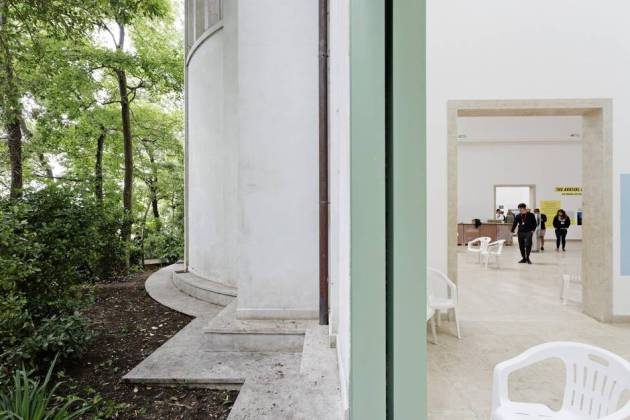
This put us at the centre of Europe’s most urgent and politically challenging crisis. In an architecture biennale that is often given over to the most abstruse and ephemeral of ideas and visions, we had been asked to create the least abstract pavilion of them all.

After all, the 2016 Biennale’s theme, selected by the acclaimed architect Alejandro Aravena, is “Reporting from the Front”: He wanted exhibitions to focus on the architecture of “the margins,” not the pricey mega-structures that tend to dominate architecture fairs.

The stuff in this pavilion is really happening. And there is real money on the table. Germany is in the midst of an enormously controversial and difficult process of settling around a million refugees who’ve fled the conflicts in Syria, Afghanistan and elsewhere – almost half the refugees arriving in Europe – and housing them in dozens of cities.

For the many thousands of people who have passed through our pavilion during the past two weeks, it has been a break from capital-A architecture and a swift plunge into the most turbulent debate in Europe’s modern history. ( Kirsten Bucher)

This has resulted in Berlin’s federal administration spending unprecedented sums on new buildings for this process: Shortly after the committee she sits on chose our “arrival city” exhibition in January, Ms. Hendricks announced that her government will fund the construction of 300,000 to 400,000 new units of social housing each year (for both refugees and established Germans), year after year, for the foreseeable future.

No other government in the Western world is spending this kind of money on housing – and it has been decades since any government has deployed architectural solutions to social problems on this scale. When finished, it will be the equivalent of having created a second Berlin, largely with public funds.

So Europe’s largest demographic and social crisis has suddenly become an architectural and urban-planning crisis: There is an urgent need to learn from the best lessons of the past seven decades of public-housing construction – and, more importantly, to avoid the many design failures of that period, the horrid “projects” and council flats and plattenbau districts, some of which led directly to impoverished and isolated immigrant districts prone to crime and extremism.

A core component of our pavilion is a database, available online, which documents more than 400 refugee-housing projects currently under way in Germany (many are intended to be turned into social or student housing once the refugee emergency abates). Some of them are awful. Some are ingenious. After standing in a room surrounded by these examples, the notion that architectural design has large-scale social consequences becomes far less abstract: These designs, for better or worse, will affect the lives and outcomes of families, communities and cities for generations.

Open to the elements and the passing crowds, the pavilion becomes an informal, improvised place, a teeming marketplace not just of ideas but of real-life things(Kirsten Bucher)

Other rooms, and the pavilion’s main chamber, are devoted to the “eight theses of the arrival city” we developed in a series of meetings in Frankfurt. These, distilled from my research conclusions, are emblazoned on the walls and illustrated with case studies of districts and projects in European cities:

The arrival city is a city within a city. The arrival city is a network of immigrants. The arrival city is affordable. The arrival city is close to business. The arrival city is informal. The arrival city is self-built. The arrival city is on the ground floor. The arrival city needs the best schools.

For the many thousands of people who have passed through our pavilion during the past two weeks, it has been a break from capital-A architecture and a swift plunge into the most turbulent debate in Europe’s modern history. Some, like Italian Prime Minister Matteo Renzi, have lingered to take notes. Some have started arguments, sketched designs or told us they suddenly see their city’s kebab-shop district very differently. Others have just hung out, had a bite and soaked up the simultaneous sense of comfort and unfamiliarity – in the process, experiencing a small version of the sort of place we’re chronicling here.

Source: How my book on immigration became the voice of Germany at the Venice Biennale – The Globe and Mail

ICYMI: Offing the boss: Does killing terrorist leaders make us safer?

Another interesting piece by Doug Saunders:

But does it work?

One reason why Mr. Obama’s Taliban-termination received hardly more attention than his other acts on Monday is because people increasingly feel like it doesn’t. The Taliban appointed another leader, its third. Al-Qaeda has sprung back to life. Some have likened decapitation policies to Whac-a-Mole games: Bash a bad guy, and another one springs up.

Boss-offing is not a mysterious topic: In recent years, an entire science of decapitation analysis has sprung up.

The most influential number-crunching was conducted in 2009 by Jenna Jordan, a researcher at the University of Chicago (she is now at Georgia Tech). She analyzed 298 incidents of “leadership targeting” over six decades and looked at their impact on the organizations whose leaders were the recipients of these abrupt terminations.

Her results were far from encouraging. Her data showed that decapitation, on average, “does not increase the likelihood of organizational collapse beyond a baseline rate of collapse for groups over time.”

In fact, the extremist groups most likely to fall apart (that is, to stop being able to commit attacks and wage war) are actually those whose leaders have not been killed: Hitting the head honcho actually seems to help groups keep fighting longer – perhaps because it rather literally injects some fresh blood into the organization.

More recent analyses have questioned these findings. Certain groups have indeed self-imploded following the untimely demise of their figurehead: Peru’s Shining Path faded into irrelevance after its leader Abimael Guzman was captured; Italy’s Red Brigades did not outlast its founding leaders; the capture of Abdullah Ocalan disempowered Turkey’s Kurdistan Workers’ Party for a decade.

In a big-data study last year, Bryan Price of the U.S. Military Academy analyzed 207 terrorist groups from 1970 to 2008, but instead of looking at their effectiveness, he examined their longevity.

He found that taking out the executives “significantly increases the mortality rate of terrorist groups, even after controlling for other factors” – but it often takes longer than we’d like. Counterterrorism, he concluded, is a long game. He also found that the groups most likely to implode after things blow up in the head office are nationalists. Groups that see themselves as religious, he found, are more tolerant of bloodbaths at the top. Of 53 religious groups, only 19 have ended – 16 of them after their boss was wiped out. But of the 34 such terrorist groups still in existence (including al-Qaeda and the Islamic State), 20 have endured a decapitation strike.

There are other good reasons to knock off the kingpins: Inspiring morale in your troops, hurting jihadi recruitment by looking all-powerful, sowing moments of chaos that can be exploited. But there’s no reason to think they’ll make the fight any easier, or the world less bloody.

Source: Offing the boss: Does killing terrorist leaders make us safer? – The Globe and Mail

Sweden’s rape crisis isn’t what it seems: Saunders

Doug Saunders provides the needed nuancing regarding Sweden and refugees:

But aren’t refugees and immigrants responsible for a greater share of Sweden’s sexual assaults?

In a sense. Statistics show that the foreign-born in Sweden, as in most European countries, do have a higher rate of criminal charges than the native-born, in everything from shoplifting to murder (though not enough to affect the crime rate by more than a tiny margin). The opposite is true in North America, where immigrants have lower-than-average crime rates.

Why the difference? Because people who go to Sweden are poorer, and crime rates are mostly a product not of ethnicity but of class. In a 2013 analysis of 63,000 Swedish residents, Prof. Sarnecki and his colleagues found that 75 per cent of the difference in foreign-born crime is accounted for by income and neighbourhood, both indicators of poverty. Among the Swedish-born children of immigrants, the crime rate falls in half (and is almost entirely concentrated in lesser property crimes) and is 100-per-cent attributable to class – they are no more likely to commit crimes, including rape, than ethnic Swedes of the same family income.

What also stands out is that almost all the victims of these crimes – especially sex crimes – are also foreign-born. But for a handful of headline-grabbing atrocities, it isn’t a case of swarthy men preying on white women, but of Sweden’s system turning refugees into victims of crime.

That is the real Swedish crisis. Refugee shelters are terrible, dangerous places, whoever is in them. When such shelters, then known as displaced persons camps, held millions of Europeans in the 1940s and 1950s, histories show they were at risk of sexual predation and organized attacks against Jewish refugees.

Because otherwise generous Sweden doesn’t allow refugees to seek work until they know the language, tens of thousands of people are stuck in these awful places, in similar conditions, or in welfare-dependent netherworlds.

There they become victims of violent crime, victims of economic exclusion and victims of a grotesque, viral story that portrays them as predators, entirely because of their skin colour.

Source: Sweden’s rape crisis isn’t what it seems – The Globe and Mail

Donald Trump proves racial nationalism is alive and well: Doug Saunders

Doug Saunders on Trumpism and its variants:

In a big survey conducted this month by the think tank PRRI, one thing stands out, and it isn’t economic. When given the statement “It bothers me when I come in contact with immigrants who speak little or no English,” a whopping 64 per cent of Trump supporters agreed. Among backers of other candidates, fewer than half agreed.

As surveys by San Francisco political scientist Jason McDaniel have shown, expressions of “racial resentment” among voters increase with their level of support for Mr. Trump – something that doesn’t happen with other candidates.

This is explained well in the study White Backlash: Immigration, Race and American Politics, by political scientists Marisa Abrajano and Zoltan Hajnal. Their surveys show that racial resentment has displaced class, income inequality, education, income, gender and age as identifying factors among a large part (but not majority) of white Republican voters. The group who came to support Mr. Trump are clearly defined by anger and resentment at having a black president, and a sense that their racial identity is their country’s, and is therefore threatened.

But, as the authors note, this is not an inevitable turn in Republican politics. “The United States faces two radically different futures,” they conclude. “In one scenario, the Republican Party

alters its stance on immigration, it garners more votes from the nation’s expanding racial and ethnic minority population, the worrisome racial divide … shrinks, and wide-ranging racial conflict is averted. In a more ominous scenario, though, the Republican Party continues to fuel a white backlash against immigrants and minorities … the racial divide in U.S. party politics expands to a racial chasm, and the prospects for racial conflict swell.”

The fact that the first scenario offers a clearer path to victory – as conservatives in Canada, Britain and Germany have found – suggests that this last big idea will not become a map of the future.

Source: Donald Trump proves racial nationalism is alive and well – The Globe and Mail

ICYMI: Decoding the new language of racial hierarchy: Doug Saunders

Doug Saunders calls out those who deny the impact of environment on opportunity:

People don’t talk about “inferior races” any more. The new language of racial hierarchy appears, at first, to be discreet and indirect: It looks at black people in the United States and indigenous people in Canada as those who have made “bad life choices,” and who face “broken families” and “community breakdown.”

This sounds reasonable: After all, people with histories of deprivation and marginality tend to live in broken-down communities; their families are often fractured; they can be prone to educational failure, criminality and life paths that lead to despair. These are infamous symptoms.

But these commentators and politicians aren’t calling these symptoms of a larger wrong, but rather root causes: Bad choices have led to marginality, not vice versa.

You learn what this view really means when you ask the obvious next question: If you think personal and family failure are not symptoms but root causes, then why do they occur so much more often among native Canadians, black Americans and other downtrodden groups? What is causing these bad life choices?

This is when the theories of racial inferiority appear. The notion that significant aspects of behaviour, intelligence and aptitude are genetically determined – a notion that still lacks any credible scientific basis – has quietly become gospel in some conservative circles.

A handful of books and articles by notorious racial thinkers, ignored or dismissed elsewhere, have taken on an outsized life: Consider the 1994 book The Bell Curve by right-wing activist Charles Murray and Richard J. Herrnstein (its claims of racial intelligence differences were based on the discredited 1980s racial theories of Canadian psychologist Philippe Rushton); the racial rantings of pioneering geneticist James Watson (which led to him being drummed out of the scientific community); and most recently journalist Nicholas Wade’s book, A Troublesome Inheritance: Genes, Race and Human History. This latter book claims that the successes and failures of the world’s “racial” groups were genetically determined. Its key racial claims have been denounced as false not only by major scientific journals but also by a group of 139 top human-population geneticists, including the ones whose research Mr. Wade drew upon to reach his conclusions.

The notion that success is a product of good genes, rather than surroundings and circumstances, has an obvious ideological appeal to people who would rather not spend public money mending wrongs. So they seize upon crumbs: Yes, some aspects of intelligence have been shown to be passed on to children – but only when parents and children are all more or less middle-class.

Poverty and deprivation have a much larger effect in lowering IQ and other key measures; only when they’re eliminated does any heritability of intelligence appear.

With no support from scientists or their research for theories of racial success and failure, what we are left with are slogans and clichés that justify inaction – exactly how they were used the last time around.

Source: Decoding the new language of racial hierarchy – The Globe and Mail

Cologne assaults revealed hazards of closed borders and vague policy: Saunders

Doug Saunders on the Cologne attacks and European policies that contributed:

There are two key lessons here, ones that European leaders need to learn fast.

The first is that even a large-scale, liberal-minded immigration and refugee system needs to be accompanied by a quick and decisive deportation system. This is both for the sake of the non-accepted migrants themselves, who do not deserve to linger in ambiguity, for the peace of mind of the general population, and, especially, for the genuine refugees and immigrants, who are horrified to find their families subjected to mass demonization and bigotry because a similar-looking group has become a menace.

Deportation is neither cheap nor easy, which is why so many of these guys have stuck around. The European Union’s 28 countries have repeatedly failed to develop a co-ordinated international system of registration and deportation, and existing efforts are hampered by “non-refoulement” laws that prevent many from being returned to their country of origin. But since mass immigration will be part of the continent’s future, a faster, better system is urgently needed.

The second lesson is that this is a result not of Europe’s open internal borders, but of Europe’s closed external borders. Before the late 1990s, such men entered Europe for a few months at a time, on legal short-term visas and with airplane tickets, to do casual labour such as fruit picking, and then returned home, benefiting their communities. After the EU’s Maastricht Treaty led to a closed and policed external border, suddenly these temporary, legal figures became permanent, illegal figures who paid thousands to cross the Mediterranean and did not dare move back home seasonally.

Blocking quick movement – either into the continent or out of it – has created a situation that is bad for these men and their families, bad for legitimate refugees and immigrants, and bad for the safety of European streets.

Source: Cologne assaults revealed hazards of closed borders and vague policy – The Globe and Mail

No surprise here: Canada a turnoff for some refugees – Saunders

Doug Saunders on Canadian smugness:

It was only in the early 20th century, under Wilfrid Laurier’s leadership, that Canada learned to attract and keep people – by spending serious money on agencies and campaigns abroad, and giving people land and cash to come. No period has come close to the Laurier decade for keeping immigrants.

We soon fell back to our exclusionary patterns. With the exception of the 1910s and the 1950s, immigration in the 20th century contributed little to Canada’s population growth: In many decades people didn’t want to come; in others, people arriving barely outnumbered those departing. We spent much of that century turning away refugees and warning each other about the civilizational threats posed by southern and eastern Europeans and Asians. Only after 1999 did immigration, for the first time, overtake childbirth as the main source of population growth.

Still, we spend more money keeping newcomers out, and throwing obstacles in the way of their settlement and citizenship, than we do welcoming them. The mean-spirited politics of the past decade, the policies denying health care to asylum seekers and the cruel temporary-worker rules and family-reunification restrictions are well known overseas, and the best-qualified people would rather go elsewhere. We think we’re a hot date, but we really need to upgrade our Tinder profile.

Even in Britain, Canada has become a turnoff: We are currently the fourth-most-popular country for British emigration, far behind Australia (which receives twice as many people), the United States and Spain. In fact, it’s a net loss: During the past decade, an average of 5,200 British emigrants came here each year, while 8,500 moved the other way. Worse, the British Post Office surveyed British emigrants, and the happiest were those in France, Spain, the United States, Australia and Thailand – Canada didn’t make the list.

We should heed the lesson we learned a few years ago in Ireland: After the country’s economy collapsed in 2008, Ottawa hoped for a migration boom of skilled workers. But only about 1,000 a year came, and they complainedabout unfriendly conditions and unaffordable cities. Only after paying for a big advertising and outreach campaign did that rise to 5,000 – for a year, until things got better in Ireland.

Next time we have a months-long national debate about migrants, maybe it shouldn’t be about them, but about us – why we still seem so cold and unwelcoming, even to those we want.

Source: No surprise here: Canada a turnoff for some refugees – The Globe and Mail