When You Can’t Just ‘Trust the Douthat: Science’ The vaccine debate is the latest example of how our coronavirus choices are inescapably political.

Overall, a good nuanced discussion of where the science largely ends and values and ethnics inform (or not) political choices. The one major weakness in his arguments is that while a focus on seniors primarily means a focus on whites, personal care and healthcare workers tend to be significantly non-white, and so there is less of a contradiction than he assumes:

One of many regrettable features of the Trump era is the way that the president’s lies and conspiracy theories have seemed to vindicate some of his opponents’ most fatuous slogans. I have in mind, in particular, the claim that has echoed through the liberal side of coronavirus-era debates — that the key to sound leadership in a pandemic is just to follow the science, to trust science and scientists, to do what experts suggest instead of letting mere grubby politics determine your response.

Trump made this slogan powerful by conspicuously disdaining expertise and indulging marginal experts who told him what he desired to hear — that the virus isn’t so bad, that life should just go back to normal, usually with dubious statistical analysis to back up that conclusion. And to the extent that trust the science just means that Dr. Anthony Fauci is a better guide to epidemiological trends than someone the president liked on cable news, then it’s a sound and unobjectionable idea.

But for many crucial decisions of the last year, that unobjectionable version of trust the science didn’t get you very far. And when it had more sweeping implications, what the slogan implied was often much more dubious: a deference to the science bureaucracy during a crisis when bureaucratic norms needed to give way; an attempt by para-scientific enterprises to trade on (or trade away) science’s credibility for the sake of political agendas; and an abdication by elected officials of responsibility for decisions that are fundamentally political in nature.

The progress of coronavirus vaccines offers good examples of all these issues. That the vaccines exist at all is an example of science at its purest — a challenge posed, a problem solved, with all the accumulated knowledge of the modern era harnessed to figure out how to defeat a novel pathogen.

But the further you get from the laboratory work, the more complicated and less clearly scientific the key issues become. The timeline on which vaccines have become available, for instance, reflects an attempt to balance the rules of bureaucratic science, their priority on safety and certainty of knowledge, with the urgency of trying something to halt a disease that’s killing thousands of Americans every day. Many scientific factors weigh in that balance, but so do all kinds of extra-scientific variables: moral assumptions about what kinds of vaccine testing we should pursue (one reason we didn’t get the “challenge trials” that might have delivered a vaccine much earlier); legal assumptions about who should be allowed to experiment with unproven treatments; political assumptions about how much bureaucratic hoop-jumping it takes to persuade Americans that a vaccine is safe.

And the closer you get to the finish line, the more notable the bureaucratic and political element becomes. The United States approved its first vaccine after Britain but before the European Union, not because Science says something different in D.C. versus London or Berlin but because the timing was fundamentally political — reflecting different choices by different governing entities on how much to disturb their normal processes, a different calculus about lives lost to delay versus credibility lost if anything goes wrong.

Then there’s the now-pressing question of who actually gets the vaccine first, which has been taken up at the Centers for Disease Control and Prevention in a way that throws the limits of science-trusting into even sharper relief. Last month their Advisory Committee on Immunization Practices produced a working document that’s a masterpiece of para-scientific effort, in which questions that are legitimately medical and scientific (who will the vaccine help the most), questions that are more logistical and sociological (which pattern of distribution will be easier to put in place) and moral questions about who deserves a vaccine are all jumbled up, assessed with a form of pseudo-rigor that resembles someone bluffing the way through a McKinsey job interview and then used to justify the conclusion that we should vaccinate essential workers before seniors … because seniors are more likely to be privileged and white.

As Matthew Yglesias noted, this (provisional, it should be stressed) recommendation is a remarkable example of how a certain kind of progressive moral thinking ignores the actual needs of racial minorities. Because if you vaccinate working-age people before you vaccinate older people, you will actually end up not vaccinating the most vulnerable minority population, African-American seniors — so more minorities might die for the sake of a racial balance in overall vaccination rates.

But even if the recommendation didn’t have that kind of perverse implication, even if all things being equal you were just choosing between more minority deaths and more white deaths in two different vaccination plans, it’s still not the kind of question that the C.D.C.’s Advisory Committee on Immunization Practices has any particular competency to address. If policy X leads to racially disparate death rates but policy Y requires overt racial discrimination, then the choice between the two is moral and political, not medical or scientific — as are other important questions like, “Who is actually an essential worker?” or “Should we focus more on slowing the spread or reducing the death rate?” (Or even, “Should we vaccinate men before women given that men are more likely to die of the disease?”)

These are the kind of questions, in other words, that our elected leaders should be willing to answer without recourse to a self-protective “just following the science” default. But that default is deeply inscribed into our political culture, and especially the culture of liberalism, where even something as obviously moral-political as the decision to let Black Lives Matter protests go forward amid a pandemic was justified by redescribing their motor, antiracism, as a push for better public health.

When we look back over the pandemic era, one of the signal failures will be the inability to acknowledge that many key decisions — from our vaccine policy to our lockdown strategy to our approach to businesses and schools — are fundamentally questions of statesmanship, involving not just the right principles or the right technical understanding of the problem but the prudential balancing of many competing goods.

On the libertarian and populist right, that failure usually involved a recourse to “freedom” as a conversation-stopper, a way to deny that even a deadly disease required any compromises with normal life at all.

But for liberals, especially blue-state politicians and officials, the failure has more often involved invoking capital-S Science to evade their own responsibilities: pretending that a certain kind of scientific knowledge, ideally backed by impeccable credentials, can substitute for prudential and moral judgments that we are all qualified to argue over, and that our elected leaders, not our scientists, have the final responsibility to make.

Source: https://www.nytimes.com/2020/12/19/opinion/sunday/coronavirus-science.html

Concern among Muslims over halal status of COVID-19 vaccine

Sigh over those who interpret these vaccines as being haram compared to the majority consensus:

In October, Indonesian diplomats and Muslim clerics stepped off a plane in China. While the diplomats were there to finalize deals to ensure millions of doses reached Indonesian citizens, the clerics had a much different concern: Whether the COVID-19 vaccine was permissible for use under Islamic law.

As companies race to develop a COVID-19 vaccine and countries scramble to secure doses, questions about the use of pork products — banned by some religious groups — has raised concerns about the possibility of disrupted immunization campaigns.

Pork-derived gelatin has been widely used as a stabilizer to ensure vaccines remain safe and effective during storage and transport. Some companies have worked for years to develop pork-free vaccines: Swiss pharmaceutical company Novartis has produced a pork-free meningitis vaccine, while Saudi- and Malaysia-based AJ Pharma is currently working on one of their own.

But demand, existing supply chains, cost and the shorter shelf life of vaccines not containing porcine gelatin means the ingredient is likely to continue to be used in a majority of vaccines for years, said Dr. Salman Waqar, general secretary of the British Islamic Medical Association.

Spokespeople for Pfizer, Moderna and AstraZeneca have said that pork products are not part of their COVID-19 vaccines. But limited supply and preexisting deals worth millions of dollars with other companies means that some countries with large Muslim populations, such as Indonesia, will receive vaccines that have not yet been certified to be gelatin-free.

This presents a dilemma for religious communities, including Orthodox Jews and Muslims, where the consumption of pork products is deemed religiously unclean, and how the ban is applied to medicine, he said.

“There’s a difference of opinion amongst Islamic scholars as to whether you take something like pork gelatin and make it undergo a rigorous chemical transformation,” Waqar said. “Is that still considered to be religiously impure for you to take?”

The majority consensus from past debates over pork gelatin use in vaccines is that it is permissible under Islamic law, as “greater harm” would occur if the vaccines weren’t used, said Dr. Harunor Rashid, an associate professor at the University of Sydney.

There’s a similar assessment by a broad consensus of religious leaders in the Orthodox Jewish community as well.

“According to the Jewish law, the prohibition on eating pork or using pork is only forbidden when it’s a natural way of eating it,” said Rabbi David Stav, chairman of Tzohar, a rabbinical organization in Israel.

If “it’s injected into the body, not (eaten) through the mouth,” then there is “no prohibition and no problem, especially when we are concerned about sicknesses,” he said.

Yet there have been dissenting opinions on the issue — some with serious health consequences for Indonesia, which has the world’s largest Muslim population, some 225 million.

In 2018, the Indonesian Ulema Council, the Muslim clerical body that issues certifications that a product is halal, or permissible under Islamic law, decreed that the measles and rubella vaccines were “haram,” or unlawful, because of the gelatin. Religious and community leaders began to urge parents to not allow their children to be vaccinated.

“Measles cases subsequently spiked, giving Indonesia the third-highest rate of measles in the world,” said Rachel Howard, director of the health care market research group Research Partnership.

A decree was later issued by the Muslim clerical body saying it was permissible to receive the vaccine, but cultural taboos still led to continued low vaccination rates, Howard said.

“Our studies have found that some Muslims in Indonesia feel uncomfortable with accepting vaccinations containing these ingredients,” even when the Muslim authority issues guidelines saying they are permitted, she said.

Governments have taken steps to address the issue. In Malaysia, where the halal status of vaccines has been identified as the biggest issueamong Muslim parents, stricter laws have been enacted so that parents must vaccinate their children or face fines and jail time. In Pakistan, where there has been waning vaccine confidencefor religious and political reasons, parents have been jailed for refusing to vaccinate their children against polio.

But with rising vaccine hesitancy and misinformation spreading around the globe, including in religious communities, Rashid said community engagement is “absolutely necessary.”

“It could be disastrous,” if there is not strong community engagement from governments and health care workers, he said.

In Indonesia, the government has already said it will include the Muslim clerical body in the COVID-19 vaccine procurement and certification process.

“Public communication regarding the halal status, price, quality and distribution must be well-prepared,” Indonesian President Joko Widodo said in October.

While they were in China in the fall, the Indonesian clerics inspected China’s Sinovac Biotech facilities, and clinical trials involving some 1,620 volunteers are also underway in Indonesia for the company’s vaccine. The government has announced several COVID-19 vaccine procurement deals with the company totaling millions of doses.

Sinovac Biotech, as well as Chinese companies Sinopharm and CanSino Biologics — which all have COVID-19 vaccines in late-stage clinical trials and deals selling millions of doses around the world — did not respond to Associated Press requests for ingredient information.

In China, none of the COVID-19 vaccines has been granted final market approval, but more than 1 million health care workers and others who have been deemed at high risk of infection have received vaccines under emergency use permission. The companies have yet to disclose how effective the vaccines are or possible side effects.

Pakistan is late-stage clinical trials of the CanSino Biologics vaccine. Bangladesh previously had an agreement with Sinovac Biotech to conduct clinical trials in the country, but the trials have been delayed due to a funding dispute. Both countries have some of the largest Muslim populations in the world.

While health care workers on the ground in Indonesia are still largely engaged in efforts to contain the virus as numbers continue to surge, Waqar said government efforts to reassure Indonesians will be key to a successful immunization campaign as COVID-19 vaccines are approved for use.

But, he said, companies producing the vaccines must also be part of such community outreach.

“The more they are transparent, the more they are open and honest about their product, the more likely it is that there are communities that have confidence in the product and will be able to have informed discussions about what it is they want to do,” he said.

“Because, ultimately, it is the choice of individuals.”

Source: Concern among Muslims over halal status of COVID-19 vaccine

We started the South Asian COVID Task Force because Ontario failed to address inequities. In a short time, we’ve seen more people get tested

Good initiative:

Despite the best of intentions, one-size-fits-all public health interventions are ineffective and in fact leave vulnerable communities exposed. To address the spread happening in South Asian communities, like Peel Region in Ontario, the South Asian COVID Task Force has formed as a grassroots initiative to put a spotlight on the specific needs of our communities and the structural barriers in place that are continuing to drive the pandemic.

Now, we’re calling on provincial and local governments to work with us to increase capacity on robust contact tracing, isolation, testing and support for communities that are in need. Time is of the essence.

Yes, the vaccine is here, with the Pfizer vaccine recently being approved for use in Canada, but we are still months away from the vaccine being available to most Ontarians. The early strategy includes giving health-care workers and those living in congregate settings priority, leaving many of the hot spot regions untouched. In addition, introducing the vaccine into areas of uncontrolled outbreak will make it far less effective at preventing death and morbidity.

Unfortunately, despite ample time to prepare and organize, there are countless examples across Canada of reluctance to take urgent action to provide basic public health interventions like contact tracing, mandatory indoor masking, and testing.

Alberta dragged its feet for weeks while its ICUs filled and case positivity soared throughout the entire province. Manitoba has imposed strict restrictions for the holidays, but not before the deaths of 176 residents and more than 1,400 casesplagued its personal care homes and assisted living centres. In Ontario, community spread runs rampant in some racialized communities where testing access has been especially limited.

In a period of just three weeks, the South Asian COVID Task Force has mobilized and grown into an organization that identifies community needs, creates (and disseminates) culturally appropriate educational materials, and advocates for what South Asian communities need on the ground to curb the spread. We serve to shine a light on inequities that might not be obvious in a top-down structure and to build trust with South Asian communities.

Organizations like ours need to exist because public health authorities can only address what they see. Especially since up until recently, Public Health of Ontario was not collecting any COVID-19 race-based data. If you don’t see the problem, you can’t address the problem.

In our short existence, we have aggressively promoted community testing, created social media posts in various South Asian languages that have gone viral, busted myths that are rampant in our communities, and advocated for the creation of an additional pilot testing site in North East Brampton — where in one neighbourhood last month, nearly one in five COVID-19 tests were positive. That’s five times the provincial average.

And we are not alone in our advocacy. Other culture and faith-based groups are mobilizing on the ground to do the same work we are doing in their communities across the country.

As Adalsteinn Brown, the dean of the Dalla Lana School of Public Health in Toronto, said about the prevention gap last week, there “are long-standing structural factors here … that drive these much higher rates of infection.” While “one-size-fits-all” public health interventions are unlikely to help, tailored community action can show some much needed success.

Rightly so, we’ve been called upon to help address the disproportionate impact COVID has had on South Asians. As physicians, health-care workers, business owners and community members, we are working tirelessly off the corners of our desks to make a difference because we know time means lives. We’ve created distribution channels, built trust and identified areas of great need.

But critical to the success of a community, grassroots organization like the South Asian COVID Task Force is the willingness of local authorities to listen and act quickly when we ring the alarm.

One critical example of this is creating testing capacity in Peel Region. Our media push for South Asians to get tested in Brampton has worked, but we’ve created demand that’s outpaced current infrastructure. It takes up to seven days to get an appointment now, with minimal walk-in availability. Multi-generational home dwellers still can’t easily isolate for that long. And the financial pressures to go to work in spite of illness remains a nagging threat to many families.

A great case in point of how things can work collaboratively is with the local health authorities in Peel, who are working with us to increase testing capabilities. Regardless of the lockdown, without more testing capacity, surveillance measures are inadequate. Specifically, we are working together to: extend the hours of existing community sites, acknowledge the barriers of online booking and allow for walk-in appointments to occur, and add staffing who can speak in locally prevalent languages — like Punjabi.

Similarly with vaccine rollout, we have been anticipating the potential challenges in our communities: vaccine hesitancy, religious issues with receiving certain vaccines, prioritizing elderly living in multi-generational homes, and identifying barriers in language and accessibility. Whether it’s building a ride-share program, staffing mobile health units or translating resources into multiple languages and disseminating it, we are here to help address these structural barriers.

We can’t do this alone. We, and organizations like ours, need our governments and public health authorities to work with us, and with the same urgency, drive and motivation to provide the lifesaving public health infrastructure and funding we so badly need at this moment in time.

It’s important to remember that, for some communities in need, the time to act aggressively was yesterday. The pandemic is a multi-front battle and we all need to step up and do our part.

Source: We started the South Asian COVID Task Force because Ontario failed to address inequities. In a short time, we’ve seen more people get tested

#COVID-19: Comparing provinces with other countries 16 December Update

Main news continues to be with respect ongoing sharp spike in infections in most provinces and countries along with consequentdeath rate increases:


Weekly:
 
Infections per million: California ahead of New York, Sweden ahead of Italy (the Swedish model keeps on looking worse by the week)
 
Deaths per million: USA ahead of Quebec, Prairies ahead of Canada less Quebec


And Sun Media’s Brian Lilley painting a slightly more positive picture of Ontario than warranted (Ontario’s relative position within Canada reflects the upsurge in Western Canada):

If you listened to much of the media and the opposition parties, you’d think that Ontario was handling the COVID-19 crisis worse than anywhere in the country — perhaps worse than much of the world.

Despite all the problems that Ontario has faced, and I have written extensively about those, compared to our neighbours and similar jurisdictions, the province continues to perform well in the face of a horrific virus. This thought was brought to mind as I watched the first vaccines being administered. In Ontario, it was a nurse at the University Health Network giving a shot to a personal support worker from a long-term care centre.

Premier Doug Ford was nowhere to be found.

In neighbouring New York State, Gov. Andrew Cuomo actually conducted a live video conference with the nurse getting the first shot, inserting himself into the story in a way that only Cuomo can. The New York governor continues to receive praise for his handling of COVID and recently received an Emmy for his press conferences during the pandemic.

The media and the American establishment love Cuomo and his handling of the pandemic; it’s a shame his record is so abysmal. More on that in a moment.

Listening to opposition leaders here, you would think Ontario was in far worse shape than neighbouring New York.

“Today’s exploding COVID cases should be a wake-up call for Mr. Ford,” NDP Leader Andrea Horwath tweeted.

Ontario Liberal Leader Steven Del Duca said that Ford’s priorities this fall were not looking after the people.

“He was focused on helping his buddies and forgot about the rest of us,” Del Duca said Tuesday.

When it comes to critiquing Ford’s handling of the pandemic, I’ll take a back seat to no one. I’ve been critical of his handling of long-term care, the length and style of his lockdowns and the collateral damage they have wrought, but criticism needs to be based in some kind of reality.

Could Ontario have done better in dealing with long-term care in the first wave? Absolutely. The province though made decisions based on the information before them. After watching emergency rooms be overwhelmed in China, Italy, in New York City, the province put scarce resources into hospitals. COVID-19 hit differently here than elsewhere: the general population was ready, a small portion of our long-term care homes were not.

The majority of homes still have not had an outbreak.

Now, back to that comparison.

On Tuesday, Ontario, with a population of 14.7 million reported 2,275 cases. This was the highest ever, due in part to a change in how cases are counted, but let’s take the number at face value. There were also 921 people in hospital and 20 deaths. New York State, with a population of 19.4 million, reported 10,353 new cases, 5,982 people in hospital and 128 deaths on Tuesday.

Deaths from COVID-19 would be the stat that matters most and while Ontario has 27 deaths per 100,000 of population, New York State has 183 per 100,000.

Within Canada, Quebec is the only province the comes close to Ontario in terms of population, international travel, urban density and other factors. With a population of about 8.5 million, Quebec has recorded 89 deaths per 100,000 of population or 3.3 times the rate of Ontario.

Other neighbours with similar populations fare no better.

Ohio is at 84 per 100,000, Pennsylvania at 98, and Michigan at 113.

In fact, were Ontario an American state, we would be the 45th lowest state in terms of COVID deaths per 100,000 and were we an independent country, we would be below most of the industrialized world. Only Japan would be among the G7 nations that would be lower than Ontario.

The province can always do better, and it must.

That requires targeted and constructive criticisms rather than what the opposition is offering up.

Source: LILLEY: Ontario outperforms much of the world in dealing with COVID

Canada a bright light in a horrible year for refugee resettlement: UN refugee agency


Of note:

The year 2020 will go down as the worst for refugee resettlement in recent history, says the UN refugee agency’s Canadian representative.

With nearly 168 countries implementing border and travel restrictions, millions of displaced people around the globe were stuck, unable to either return to their home countries or move to others.

Canada, however, was one of only a few that did listen to urgent pleas from the United Nations High Commissioner for Refugees, said Rema Jamous Imseis, the UNHCR’s Canadian representative.

Even at the height of the pandemic, when most countries were looking entirely inward, Canada did accept emergency cases and as travel has resumed continues to take in more, she told The Canadian Press in an interview.

“It hasn’t, unfortunately, been at the levels that we had planned for prior to the pandemic, but it still is offering that critical lifeline to people who desperately need it,” she said.

“And we hope that next year actually is going to bring us a very different context and an ability not only to meet those targets, but to perhaps even exceed them.”

Canada had planned to resettle around 30,000 refugees in 2020.

By the end of September, just under 6,000 had arrived, and a spokesman for Immigration Minister Marco Mendicino said the end-of-year figure will be closer to 7,000.

The target for resettlement next year is 35,000, but how realistic that goal is considering the unknowns around the end of the pandemic is unclear.

Mendicino’s spokesman said in an email that the entire resettlement “ecosystem” continues to operate at a reduced capacity, but is slowly spooling back up.

“While our operations have been affected, we’ve come a long way since the onset of the pandemic and are now processing nearly six times as many refugee cases as in a similar period last year,” Alexander Cohen said in an email.

The border closures weren’t the only challenge this year for refugees, said Jamous Imseis.

Many of the world’s displaced people were just scraping by economically before the pandemic hit, but their sources of income completely dried up, she said.

“The ability to sustain themselves and their families has been wiped out,” she said.

“So you saw entire populations going from vulnerable, but with the ability to sustain themselves overnight to becoming really vulnerable.”

There’s also been a massive blow to the ability of children to be in school. A pivot to online learning possible in some developed nations just isn’t applicable elsewhere, she said.

Some studies suggest more than half of refugee girls may never go back to post-secondary education after the pandemic, she said.

“They haven’t been at school this whole time, and they may never go back because life circumstances have changed so dramatically,” she said.

Monday is the UNHCR’s 70th anniversary. It was created to help displaced Europeans after the Second World War and originally was only supposed to exist for a few years.

“But sadly, we’re still here and it signals the failure of the international community to really address long-standing issues, and drivers of displacement globally,” said Jamous Imseis.

“We look forward to the day when our services are no longer needed.”

Source: Canada a bright light in a horrible year for refugee resettlement: UN refugee agency

Stop stigmatizing racialized communities during the pandemic

More on stigmatization without recognizing the underlying socioeconomic circumstances but with little recognition that culture can also play a role:

Pandemics create fear — this is not new. 

The coronavirus disease has highlighted how fear and anxieties have driven racism and xenophobia as countries have dealt with outbreaks. The instinct to blame the unknown or the “outsider” is a pervasive outcome of outbreaks. Unfortunately, the blaming of immigrant communities for the rise in infections is causing more harm.

Anyone can be infected by COVID-19; in this sense the virus does not discriminate. However, it is clear that race and culture are significant factors in who gets scrutinized and who does not. We have seen some political leaders and decision-makers engage in misinformation to escape blame for how they handled the crisis.

Blaming the outsider and “othering” infectious diseases is not a new phenomenon. The “Ebola” virus and the “Spanish” influenza were both named after geographic locations. We even saw the U.S. president unsuccessfully attempt to brand COVID-19 as the “Wuhan virus” or “China virus.” Words from leadership matter — Asian Americans in the United States have reported a surge in racially motivated hate crimes.

The ramifications of villainizing marginalized groups for causing or spreading the infection is significant. Data compiled by a coalition of groups shows over 600 anti-Asian incidents since the pandemic began. A third of these incidents involved assault or physical violence — and so are considered hate crimes. Contrast this with previous StatsCan data from 2016-2018, which show roughly 60 hate incidents annually targeting persons of East and South East Asian backgrounds — the data is clear.

The rise of hate crimes is not the only issue. A study by the World Health Organization noted that the stigmatization is a “hidden burden” of disease and it is costly to patients as well as societies. Studies have shown that the SARS epidemic “generated feelings of extreme vulnerability, uncertainty and threat to life during its initial outbreak phase.” This is why I am so concerned about a recent interview that Alberta Premier Jason Kenney gave where he stated large family gatherings in Calgary’s South Asian community were to blame for the rapid spread of the virus. This type of rhetoric is not helpful, and only instills fear.

Since that interview, South Asians in Calgary have demanded an apology, and brought to light other compounding factors that have increased cases in their community. Many have service jobs and do not have the luxury of working from home. As front-line workers, they are our nurses, taxi drivers, grocery store clerks and warehouse workers.

In contrast to Kenney, when reports were circulating that South Asians in Brampton were holding large gatherings for Diwali and increasing virus case loads, Mayor Patrick Brown — also a Conservative — did not blame the entire South Asian community. Instead, he reminded us that many in the community are in fact our unsung heroes, as essential workers that keeping the local economy going. This is not to discount that some break the rules, but demonizing an entire community is false and harmful.

Our leaders need to be conscious of their impact on public narrative and behaviour, and do better. As we conduct more testing in targeted communities such as Thorncliffe that have a large population of precarious workers, we will see more cases — and we must ensure stigmatization does not occur. In these difficult times it is important to remain vigilant and ensure our leaders do not use their platform to incite hysteria.

How can we do better? Recently the City of Toronto made some recommendations to help address the disparity in COVID-19 cases among racialized and lower-income Torontonians. One of the most important recommendations is to communicate sociodemographic data in non-stigmatizing ways. This needs to be applied by all government officials and health care providers — especially as the city focuses on priority neighbourhoods and potential “hot spots.”

Improving our communication on information and issues related to COVID-19 is vital. As the vaccine is rolled out, we are already seeing misinformation being spread online. By tapping into all forms of communication — including multilingual outreach — and working closely with local community members, we can ensure an inclusive approach in fighting this virus.

Source: https://www.thestar.com/opinion/contributors/2020/12/13/stop-stigmatizing-racialized-communities-during-the-pandemic.html

Triadafilopoulos: Are Canadians really open to more migration in the future?

A useful warning against assuming getting back to normal:

How are we to make sense of Canadian immigration policymaking during the COVID-19 pandemic? On the one hand, the Trudeau government has pledged to increase both its already ambitious admissions target for 2020 and its annual immigration levels in the next three years. The government’s expansive immigration strategy has earned the praise of immigration boosters while generating little in the way of skepticism (let alone criticism) from opposition parties. For the most part, public opinion has also fallen into line. Yet, paradoxically, the Government of Canada’s open approach to migration of all kinds has been marked by unprecedented territorial closure.

The same contradiction is evident among Canadians: their ongoing support of official multiculturalism has also coincided with increases in racist discrimination. A frank appraisal of Canada’s immigration policy must acknowledge the juxtaposition of aspirational openness, on the one hand, and de facto closure and growing hostility, on the other. Doing so makes it clear that any hope of returning to business as usual after the pandemic may be misplaced.

Canada has earned a global reputation for administering an expansive immigration policy. Bucking the global trend toward greater restrictiveness in the years following the global economic crisis of 2008-09, annual admissions rose steadily under Conservative Prime Minister Stephen Harper’s right-of-centre governments from 2008 to 2015. Prime Minister Justin Trudeau’s centre-left Liberal Party governments have introduced even more ambitious targets. These significant increases in immigration levels have been supported by all of Canada’s major political parties. Canadian governments, regardless of their partisan orientation, have also stood firm in their support of Canada’s policy of official multiculturalism, even as leaders of other liberal democracies have cast multiculturalism as a failed and dangerous experiment. Recent efforts to strike a more restrictive stance on immigration, notably by the populist People’s Party of Canada in the 2019 federal election, have come to naught.

Any hope of returning to business as usual after the pandemic may be misplaced

Public support appears to have held, despite the challenges raised by the pandemic. The most recent iteration of the Environics Institute for Survey Research’s long-running “Focus Canada” survey (published in October) revealed that,

[S]trong and increasing majorities of Canadians express comfort with current immigration levels, see immigrants as good for the Canadian economy and not threats to other people’s jobs, and believe that immigration is essential to building the country’s population … By a five-to-one margin, the public believes immigration makes Canada a better country, not a worse one, and they are most likely to say this because it makes for a more diverse multicultural place to live.

In their commentary for this series, the Environics Institute’s Andrew Parkin and Keith Neuman note that this increase in support for immigration “may in part be a counter-intuitive response to the pandemic itself: rather than focusing inward, Canadians are expressing a greater sense of social solidarity in recognition that, in the face of the crisis, ‘we are all in this together’.”

As we move into the second wave of the pandemic, the fragility of this solidarity is clear. Spikes in infections have led to new lockdowns, which, in turn, have slowed the summer economic recovery. Although the national unemployment rate has come down from a high of over 13% in April 2020, it remains stuck at about 9%. Employment growth has stalled and long-term unemployment has increased. Canadians find themselves living through a period of profound economic dislocation, unlike any in recent memory.

Moves aimed at containing the pandemic have also transformed Canada’s approach to migration. Canadians live in a country that has effectively shut itself off from the world. Despite the announcement of ambitious immigration targets, actual admissions shrank by 64% in the second quarter of 2020. The admission of resettled refugees and protected persons declined by 83%. Trips by residents of countries other than the United States to Canada fell by almost 96% from September 2019 to September 2020.

The current status quo is one of extraordinary closure, marked by popular support for strict controls and increased racism

A majority of Canadians appear to support strict border controls. According to a Nanos Research poll, 81% of Canadians “believe the Canada-US border should stay closed for the foreseeable future.” A 29 October 2020 report by the Association for Canadian Studies noted that 52% of Canadians would prefer to maintain currently low levels of immigration over the next twelve months. Only 24% supported “gradually [increasing] immigration levels” over the same period. An August 2020 survey by researchers at McMaster University and Dynata Research arrived at similar results.

Canada’s embrace of territorial closure has coincided with a spike in xenophobia and racism. A July 2020 poll by IPSOS Global Public Affairs revealed that nearly 30% of Canadians reported that they had “personally been a victim of racism, up five points since [2019].” A survey by the Angus Reid Institute noted that 50% of 500 respondents of Chinese descent had been “called names or insulted as a direct result of the COVID-19 outbreak … [A] plurality (43%) further say they [had] been threatened or intimidated.” A Statistics Canada report drawing on responses submitted from “more than 43,000 Canadians … to a crowdsourcing data collection [research project] on the impacts of the COVID-19 pandemic on Canadian’s perceptions of safety” found that

The proportion of visible minority participants (18%) who perceived an increase in the frequency of harassment or attacks based on race, ethnicity or skin colour was three times larger than the proportion among the rest of the population (6%) since the start of the COVID-19 pandemic. This difference was most pronounced among Chinese (30%), Korean (27%), and Southeast Asian (19%) participants.

My fear is that aspirational openness may lead to misplaced confidence in a relatively painless return to business as usual once the pandemic has lifted. This is not to say that the reasoning underlying the decision to expand Canada’s immigration program in the coming years is not compelling. It is to draw our attention to the fact that the current status quo is one of extraordinary closure, marked by popular support for strict controls and increased racism. The pandemic has amplified tendencies that have long been present in Canadians’ opinions on immigration: support for mass immigration has depended on the strict policing of irregular flows; and favorable views on multiculturalism have always included demands that immigrants adopt “Canadian values.” This reality needs to be acknowledged and dealt with if Canada is to successfully resume its immigration program in a post-pandemic world.

COVID-19 Impact on Immigration: October data

The latest October numbers for Permanent Residents, asylum seekers and study permits (international students). Unfortunately, the data tables for temporary residents have not been updated since August, and citizenship not since June.

Permanent residents

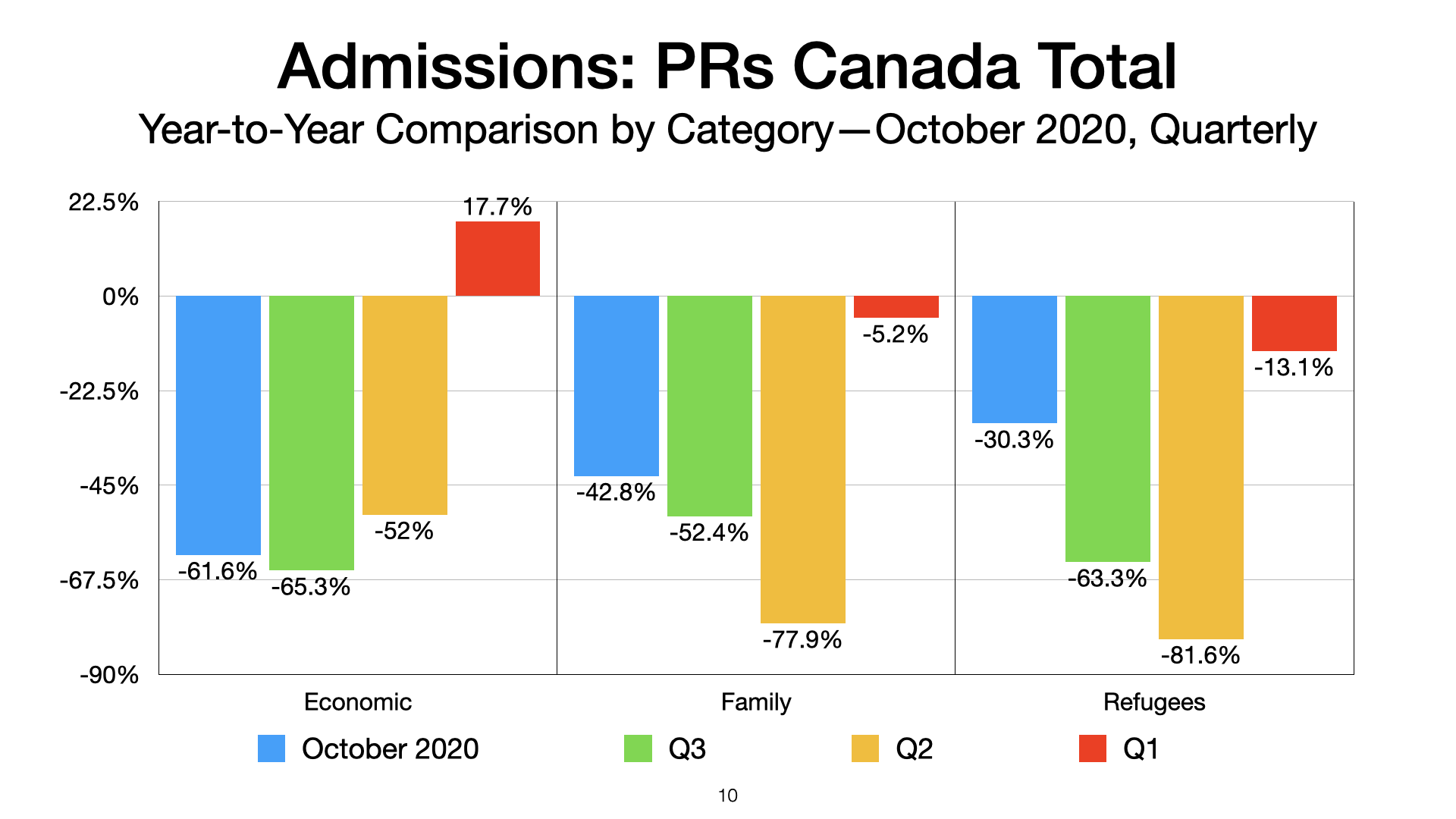
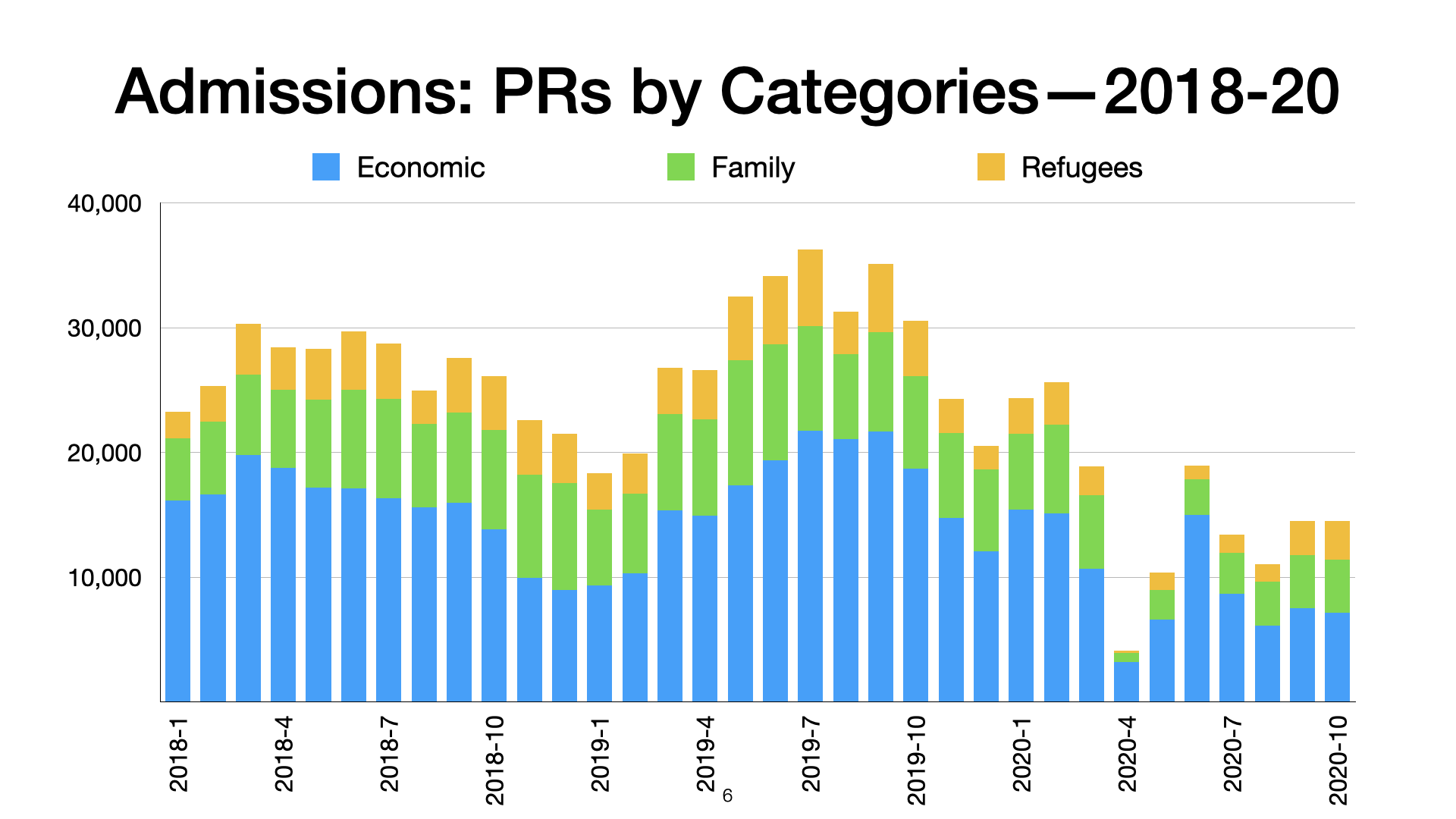
Overall, permanent resident admissions are down by 51.8 percent in October 2020 compared October 2019, and  42.9 percent year to date. Family and refugee categories have declined more than the economic category.

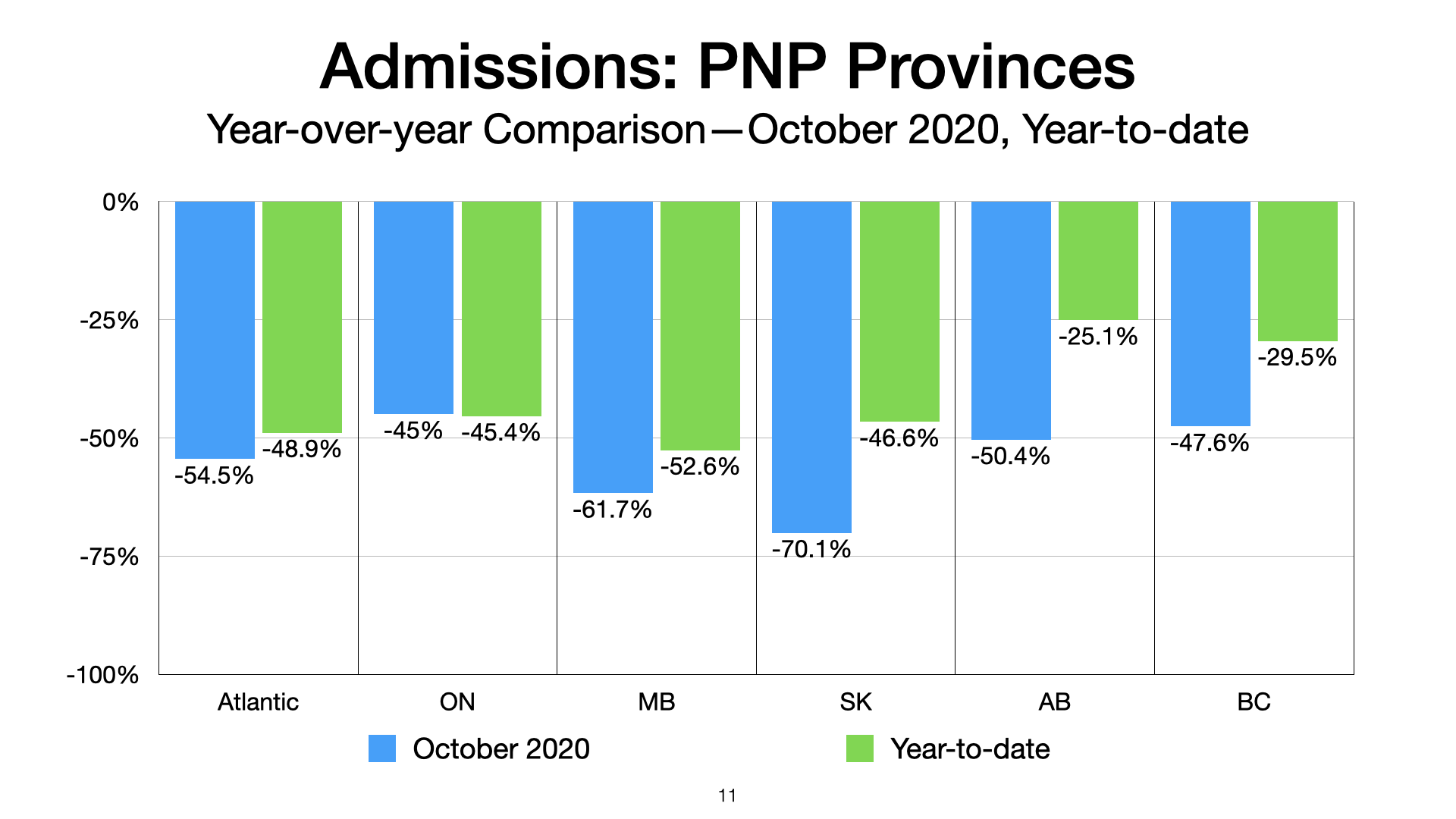
With respect to Provincial Nominee Program, declines have been less in Alberta and British Columbia than other provinces.

Transition from temporary residents to permanent residents account for close to 40 percent of total admissions in 2020 year to date, with the post-graduate work program and the International mobility program being relatively less affected that international students and the temporary foreign worker program (note some double counting between these programs and overlap with the Provincial Nominee Program). 

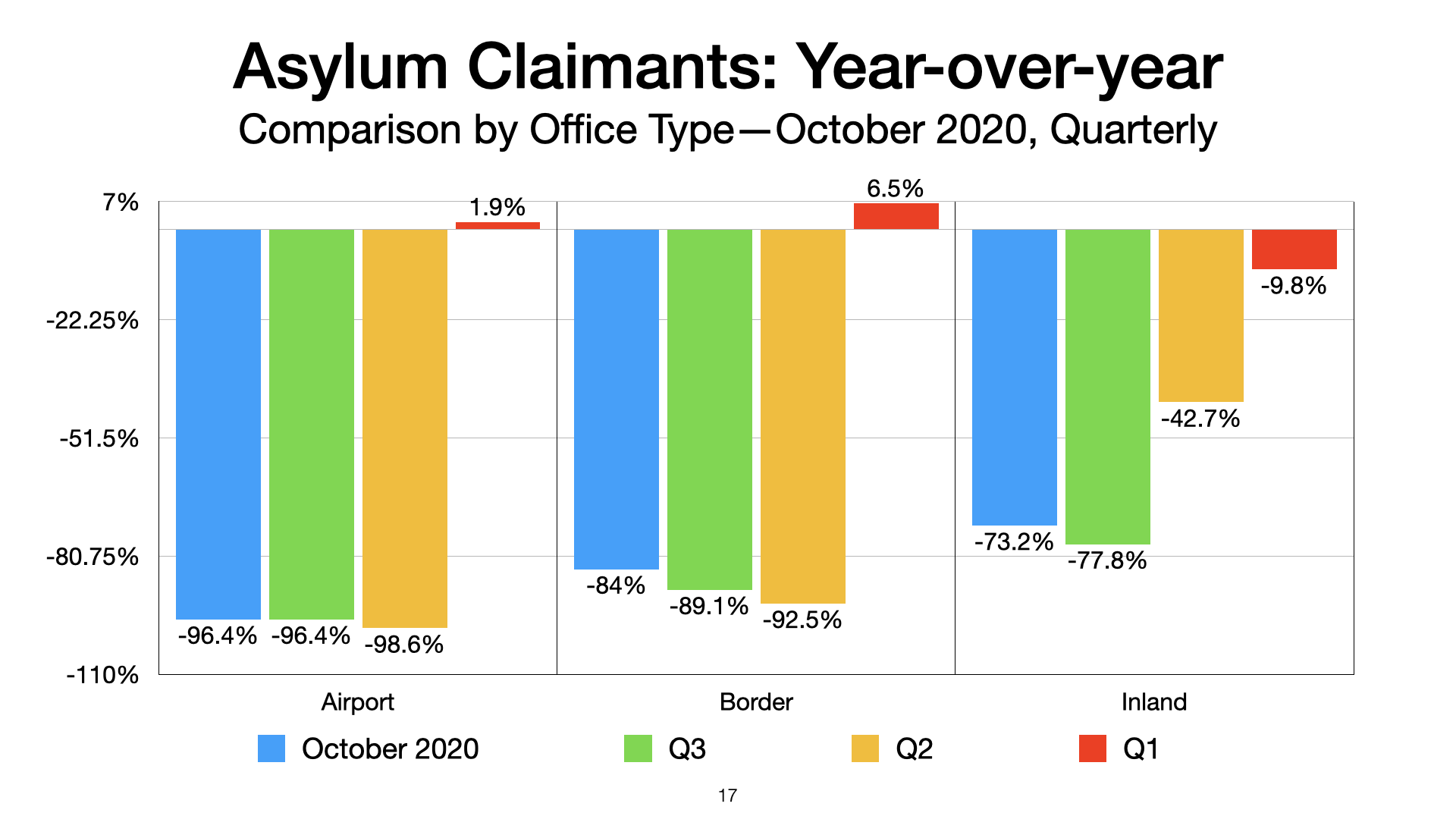
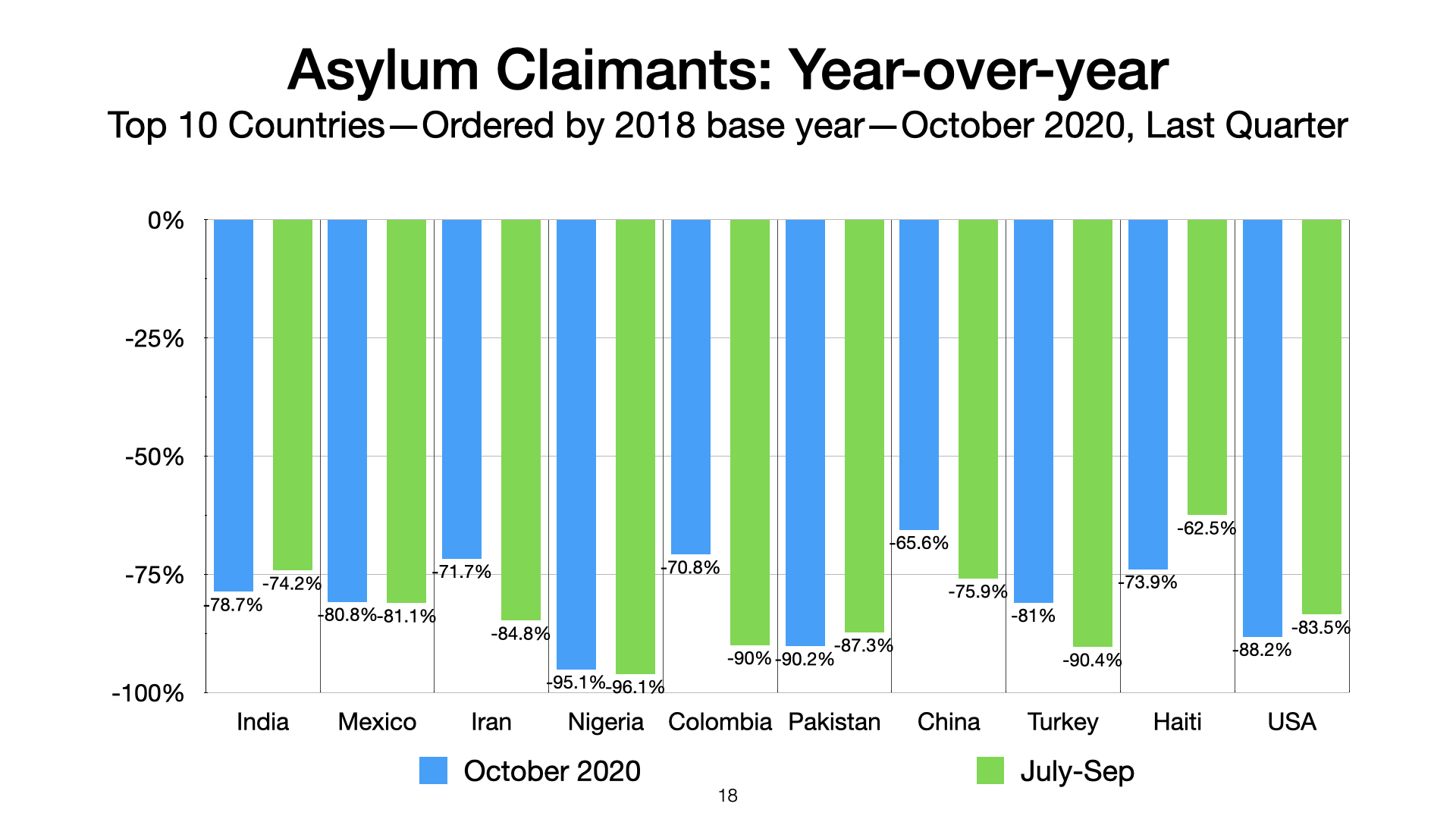
Asylum claimants have declined dramatically given travel and border restrictions (particularly airport arrivals), from an average of over 5,000 a month in 2019 to an average of less than 1,300 April to October 2020. Inland claims accounted for 56 percent of all claims in 2019, and for 81 percent April to October 2020. 

International students (study permit holders have declined from an average of 35,000 per month in 2019 (with summer seasonal peaks) to 27,000 April to October 2020, with some variation among countries of origin (citizenship) year to date as well as by province of destination.

Inequities in COVID-19 Health Outcomes: The Need for Race- and Ethnicity-Based Data (Library of Parliament Research)

Good background note:

For Indigenous peoples, Black Canadians and other racialized groups, race and racism are important social determinants of health.

Social determinants of health may contribute to negative health outcomes or health inequities, which are differences in health outcomes that could reasonably be avoided among groups, such as racial or ethnic groups. Addressing inequities through inclusive policies and legislation relies on the collection and availability of data disaggregated by various identity factors, such as ethnicity. However, collecting race-based health data remains a challenge in Canada.

Canadian health care stakeholders have identified racism as a public health emergency and emphasized its profound negative effects on Indigenous peoples and racialized groups. The Chief Public Health Officer of Canada’s Report, released in October 2020, asserts that COVID-19 has not affected people in Canada equally. The report recognizes Canada’s history of systemic racism and colonization and the role of social determinants of health in existing health inequities among Canadians.

This HillNote examines the role of race and ethnicity in COVID-19 health outcomes in the United States (U.S.) and the United Kingdom (U.K.), countries that systematically collect race-based health data, as well as initiatives to collect these data in Canada.

Health Inequities and COVID-19 in the United States and United Kingdom

Certain health data disaggregated by ethnic group or race have been collected in the U.S. and U.K. for years. Research in the U.S. indicates that, compared to white Americans, racialized groups tend to face disproportionately elevated risks of COVID-19 diagnosis, hospitalization and death. According to age-adjusted data, Indigenous, Black, Latino, Pacific Islander and Asian Americans face elevated risks of COVID-19 death compared to white Americans.

Number of COVID-19 Deaths per 100,000 population in the United States, adjusted for age by Racial or Ethnic Group, 10 November 2020

The bar graph shows the number of COVID-19 deaths per 100,00 deaths in the United States, adjusted for age, by racial or ethnic group. The various racial and ethnic groups are arranged along the vertical axis in order to highest number of deaths to lowest. Indigenous Americans have the highest number of deaths, at 164.7 per 100,000, closely followed by Black Americans with 153.2 deaths per 100,00. White Americans show the lowest number of deaths, with 50.9 deaths per 100,00.

Source: Figure prepared by author using data from APM Research Lab, “The Color of Coronavirus: COVID-19 Deaths by Race and Ethnicity in the U.S.,” 10 November 2020.

Similar trends have been identified in the UK. For example, data from the first wave of COVID-19 show that members of ethnic minority groups in England died at higher rates than expected, based on their demographics, in contrast to the white population.

Excess Deaths (%) during the pandemic in England by Ethnic Group, 28 April 2020

The bar graph shows the percentage of excess deaths based on expected number of deaths and actual number of deaths based on population structure of racial and ethnic groups. Black, Asian, and Minority Ethnic (BAME) population groups all show a positive excess death percentage, with Black background showing 341% excess deaths. The white population group shows a negative excess death percentage, at -13% excess deaths. The graph concludes that the Black background group is dying at higher rates than the white background group.

Source: Figure prepared by author using data from Abdual Razaq, Dominic Harrison, Sakthi Karunanithi et. al,“BAME COVID-19 Deaths – What do we know? Rapid Data & Evidence Review,” Centre for Evidence-Based Medicine University of Oxford, 5 May 2020.
Note: Excess deaths represents the difference in “Observed deaths” and “Expected deaths” for different population groups, based on the size, age and structure of the population.

study analyzing the results of 50 studies published between December 2019 and August 2020 from the U.S. and U.K. exploring the relationship between ethnicity and clinical outcomes in COVID-19 concluded that individuals from Black, Asian and Hispanic ethnic backgrounds had a higher risk of SARS-CoV-2 infection compared to white individuals. The study highlights underlying inequities that may contribute to the elevated risks for some groups, including structural racism, barriers accessing health care, potential for increased transmission in overcrowded housing, and overrepresentation in essential occupations.

Health Inequities and COVID-19 in Canada

In Canada, COVID-19 data disaggregated by race have not been systematically collected. However, certain provinces, such as Ontario and Manitoba have begun collecting data on race, ethnicity, and in some cases Indigenous identity, for COVID-19 cases. In addition, some municipal public health agencies, such as TorontoOttawa and Montreal, have begun collecting and analyzing similar data.

Preliminary data show that in Toronto, while 52% of the population identifies as belonging to a racialized group, as of September 2020, 82% of COVID-19 cases and 71% of hospitalizations were among people belonging to racialized groups. Similarly, data from Ottawa show that members of racialized populations, particularly those who identify as Black, are overrepresented among individuals diagnosed with COVID-19.

Furthermore, during the first wave of the pandemic, Statistics Canada indicated that COVID-19 mortality rates were higher in Canadian neighbourhoods with higher proportions of population groups designated as visible minorities. These analyses suggest that factors such as overcrowded households, “less favourable living conditions,” employment in essential or frontline work, and barriers or discrimination in accessing services, such as those related to health and education, may contribute to the elevated risk for individuals belonging to racialized groups.

Collection of Race, Ethnicity and Indigenous Identity Health Data in Canada

According to health experts, policymakers need disaggregated data to properly understand and meet the needs of specific groups of people. The collection of Canadian health data is a shared responsibility between federal, provincial and territorial governments. Provincial and territorial public health authorities are responsible for reporting data, including COVID-19 case-related data, to the federal government.

At the federal level, the Canadian Institute for Health Information (CIHI) and the Public Health Agency of Canada are responsible for collecting and reporting nationally on health data that have been voluntarily provided by the provinces and territories. Statistics Canada collects various types of socioeconomic survey data that could be used to understand the indirect impacts of COVID-19.

The collection of national race-based health data in Canada is fragmented, with no national approach to date. COVID-19 has reinforced calls for the collection of such data. Some organizations, such as the Canadian Human Rights Commission, have called for a national strategy to improve the collection of Indigeneity and race-based data.

In July 2020, CIHI stated “[t]he lack of race-based data in the health sector in Canada makes it difficult to measure health inequalities and to identify inequities that may stem from racism and discrimination.” In response to the “urgent” need to understand the impact of COVID-19 on racialized communities in Canada, CIHI proposed a pan-Canadian standard in July 2020.

CIHI’s proposed standard, adapted from the Ontario Anti-Racism Directorate’s standards, defines race and ethnicity, and asserts that First Nation, Métis and Inuit people in Canada “have a constitutionally recognized status that is unique” and that Indigenous identity data “merit distinct considerations.” CIHI is currently seeking feedback regarding best practices and approaches to implementing these standards and collecting race-based data.

Racism and discrimination have been identified as significant determinants of health outcomes for racialized groups in general and during the pandemic. The Black Lives Matter movement has drawn global attention to the devastating effects of racism and racial inequality prior to, and during, the pandemic. Experts assert that the collection of race-based health data is integral to the recovery from the COVID-19 pandemic and that this data collection must be followed by action.

Source: https://hillnotes.ca/2020/12/08/inequities-in-covid-19-health-outcomes-the-need-for-race-and-ethnicity-based-data/

#COVID-19: Comparing provinces with other countries 9 December Update

Main news continues to be with respect ongoing sharp spike in infections along with death rate increases:

 
Weekly:
 
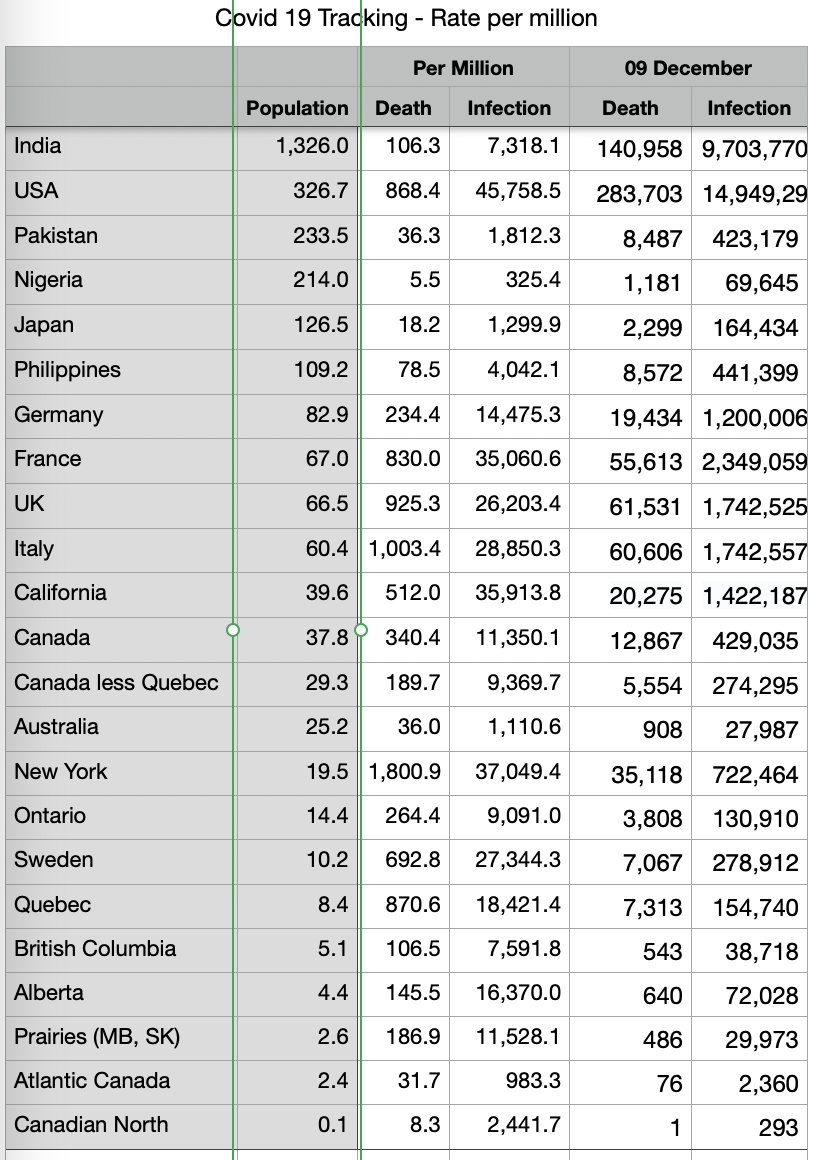
Infections per million: New York and California ahead of France, Sweden ahead of UK, Prairies ahead of Canada, Canada less Quebec ahead of Ontario, British Columbia ahead of India
 
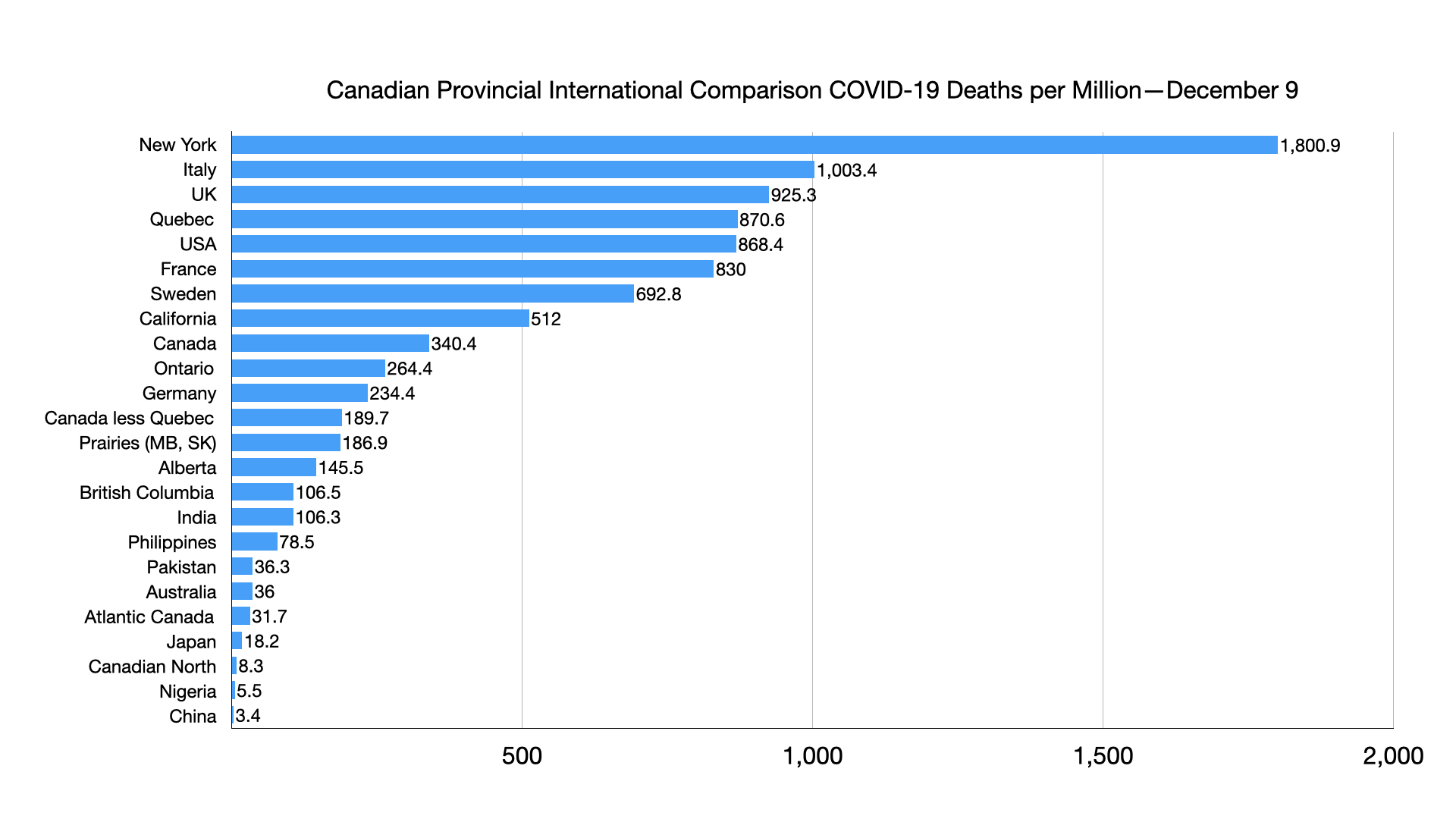
Deaths per million: British Columbia ahead of India, Pakistan ahead of Australia
 
 
COVID Comparison Chart.002COVID Comparison Chart.003

And good commentary on Alberta Premier Kenney’s belated recognition of reality:

After months of pleading with Albertans to take “personal responsibility” to stop the spread of COVID-19, Premier Jason Kenney has finally taken personal responsibility himself.

On Tuesday, he reluctantly announced the kind of sweeping COVID-19 restrictions he had been tersely rejecting for weeks.

He is now ordering everyone to wear a mask in public spaces everywhere in Alberta. And nobody is allowed to hold any social gatherings outside.

You can say “hi” to your neighbour walking the dog but stay two metres apart and don’t dawdle. Starting Sunday, you can only get take-out from restaurants and pubs. No in-person dining. Casinos are closing as are bingo halls, raceways, bowling alleys, pool halls, fitness centres, spas, gym, indoor skating rinks.

Retail stores can stay open but only allow in 15 per cent capacity at a time.

The list goes on. Odds are, if you enjoy doing it, it’s cancelled, postponed or diminished.

As Kenney recited the new restrictions, he must have felt like he was reading the Riot Act to Albertans.

And, in a sense, he was.

As the pandemic grew in the past month from bonfire to wildfire, Kenney had tried to argue his way through the crisis by ignoring pleas from physicians, ridiculing the NDP opposition, and insisting Albertans would bring the crisis under control by taking “personal responsibility.”

In the end he was done in by the might of two factors: freedom-loving Albertans who didn’t take the COVID-19 virus seriously; and the COVID-19 virus that didn’t take freedom-loving Albertans seriously.

Adding those two together gives you the inescapable math of a pandemic.

“The recent surge in COVID-19 hospitalizations will threaten our health-care system and the lives of many vulnerable Albertans unless further action is taken now,” said Kenney.

“With the promise of a vaccine early in 2021, we can see the end of this terrible time. But all Albertans must take this more seriously than ever by staying home whenever possible, and following these new measures.”

Even though Kenney was speaking to all Albertans, he focused particular attention on those who will resent the new measures. They’re more likely to live in rural areas, reject government interference in their lives, and preach self-sufficiency. In other words, United Conservative supporters. By refusing to introduce tougher restrictions for weeks, Kenney was bending over backwards to placate his political base.

But the inexorable math of COVID-19 has forced Kenney to demonstrate he has a spine.

“To many people, these policies, these restrictions seem unjust,” said Kenney. “I’ve made no secret of the fact that Alberta’s government has been reluctant to use extraordinary powers to damage or destroy livelihoods in this way. It is why we have stressed education together with personal and collective responsibility from the very beginning and it’s why we tried to balance the protection of lives and livelihood rather than resorting to damaging measures as a first resort.”

Kenney also announced more money to help small businesses survive the new measures. That is a great idea but it was a great idea when critics suggested it weeks ago, along with the very restrictions Kenney announced Tuesday.

Better late than never?

Understandably, Kenney bristled at questions from journalists about whether he might be responsible for the COVID deaths of Albertans because he didn’t lock down the province sooner. Kenney said it would be a “mistake” to draw simple conclusions during such a complicated time.

But it is a question that will dog him. And NDP MLAs will no doubt be helpfully re-asking the question whenever a microphone or TV camera is within hailing distance.

“The lockdown announced today comes late,” said NDP Leader Rachel Notley after Kenney’s news conference. “We could have acted four weeks ago. Since then, an additional 317 people have died.”

Notley will be wielding this rhetorical knife through the next election.

Kenney might be thinking “better late than never” and while that might be great when talking about filling a pothole or repairing a school roof, it’s not so great when talking about enacting more precautions during a pandemic that’s killing people daily.

Kenney’s new restrictions will last four weeks. That will take us through the Christmas holiday and into the new year.

During Tuesday’s news conference, Doug Schweitzer, the minister of jobs, economy and innovation, happily declared “a vaccine is almost here” as if the pandemic will suddenly end Jan. 5 when Alberta is scheduled to start inoculations against COVID-19.

The reality is that, because of logistics and supply issues, during the first three months of 2021 only about 10 per cent of Albertans will receive vaccinations, mainly health-care workers and the elderly.

The rest of us will have to wait and continue to wear masks, wash our hands, and practise social distancing for many more months. Perhaps by then enough Albertans will know how to practise “personal responsibility” without Kenney having to read us the Riot Act.

Source: https://www.cbc.ca/news/canada/edmonton/opinion-thomson-covid-kenney-blinks-1.5833751?cmp=rss