Grassroots coding, gaming groups tackle tech’s diversity crisis
2016/03/23 Leave a comment
Striking – but not surprising given Toronto’s (and Canada’s) diversity – the confluence between minority and women diversity:
Hina Mir sees a future for herself in technology. She’s only 16, so it’s not entirely clear what that future will look like. But one thing is almost certain: she’ll be coding.
The Toronto high school student already knows elements of multiple programming languages and has studied with experts working for some of the biggest names in the tech sector.
“With all the things I’ve learned with coding, as well as on the engineering and business sides of technology, there’s so much that I think I could do,” Hina said.
She’s part of an up-and-coming generation of potential programmers, software engineers, developers, designers and entrepreneurs who could help the tech world face down an uncomfortable reality: it is very white and very male.
Companies from across the industry have acknowledged the problems: specifically, that there is both a considerable disparity between the sexes and a troubling lack of diversity in the workforce.
The response from Silicon Valley has been to raise a small army of “diversity consultants” and use more inclusive recruiting and hiring strategies.
The group has members as young as six and as old as 16. International studies have found that starting to teach coding as early as kindergarten is the most effective way to ensure young people stick with it. (Lucas Powers/CBC)
“But it’s not enough to rely only on what big companies are doing if we’re going to create a tech world that reflects the society we live in,” said Ashley Jane Lewis.
A tech workforce that reflects society
The 26-year-old is a mentor with Girls Crack the Code, the community organization where Mir got her start in coding.
The Toronto-based group, which is funded by its organizers and the local school board, helps girls and young women of colour get a head start in tech, and not just with coding classes. In the four years it has existed, Girls Crack the Code has grown into an advocacy network that connects members with all kinds of tech-related opportunities, such as scholarships and workshops.
Ashley Jane Lewis, right, is a mentor with Girls Crack the Code. ‘I think in 10 years, when a younger generation looks to the tech world and sees women of colour who learned in communities like this, working in the field, they’ll see a trail that has been blazed for them,’ she said. (Lucas Powers/CBC)“I’ve already been to Google, Twitter, Salesforce and coding camp, and I’m in a technology program at school,” Hina said.
Critically, Girls Crack the Code works out of Nelson Mandela Park Public School in Regent Park, one of the most diverse neighbourhoods in the city and home to Canada’s largest social housing development. Bengali, Mandarin, Urdu, Somali and Swahili are just some of the languages spoken there.
The neighbourhood is undergoing a billion-dollar “revitalization” ultimately aimed at creating a community with housing for families of different socioeconomic levels.
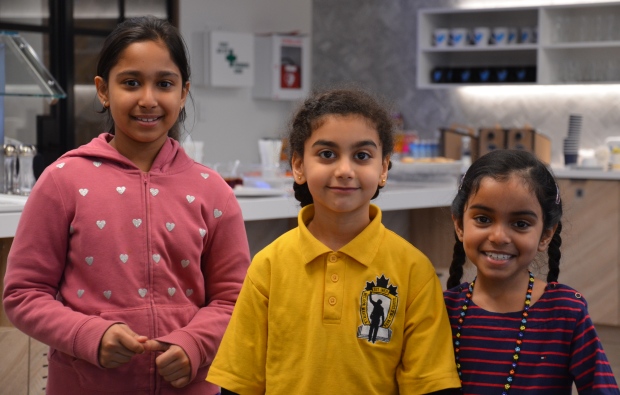
Khadija was one of about 30 girls who visited Twitter Canada’s headquarters earlier this month. (Lucas Powers/CBC)In many ways, Girls Crack the Code is trying to build a tech industry informed by all of the voices, perspectives and experiences found in a place like Regent Park.
It’s part of a growing grassroots movement to cultivate talent in places where diversity is woven into the fabric of everyday life.
A ‘powerful’ message
Earlier this month, 30 girls from the group visited Twitter Canada’s trendy downtown office to listen to a talk by Helen Zeng, a 25-year-old software engineer who grew up in Windsor, Ont., and now codes for the tech giant in San Francisco.
Zeng says that while many companies are trying to hire more women and people of colour into tech jobs, there is a “very loud” effort to push back against built-in biases and attitudes that can’t be undone with corporate policy alone.

 Multicultural Meanderings