Liberal party membership forms distributed at pro-Beijing rally against Hong Kong protests

Look forward to more details emerging:

As speaker after speaker criticized the mass protests in Hong Kong and defended the Chinese government at a Toronto-area rally recently, a different kind of politicking was quietly unfolding.

Several members of the crowd of about 200 passed around and appeared to fill in Liberal membership forms, a striking juxtaposition between Canada’s governing party and backers of China’s Communist regime.

A Liberal spokesman said Thursday the forms looked to be ones that haven’t been used for three years — since the party ended paid memberships — and which would not be accepted today as valid registrations.

And the party had nothing at all to do with the rally, he added.

But critics of the Chinese government say they’re troubled that any kind of Liberal recruiting efforts might have taken place at a pro-Beijing event, calling it more evidence of China’s sway within Canadian politics generally.

“You can see the close connection between the pro-Beijing camp and the Liberal party,” said Gloria Fung of the group Canada-Hong Kong Link. “But … the pro-Beijing camp actually has their people in different federal parties. It’s not only confined to the Liberal party. I can easily name people in the Conservative party who are advocates of the Chinese government’s interests.”

The Aug. 11 rally at King Square shopping centre in Markham featured a number of speakers who portrayed the massive demonstrations in Hong Kong as a dangerous threat to the city’s peace, stability and economy.

The protests have brought as many as a million or more people to the streets for the past 11 weeks, decrying a law that would have allowed extradition to mainland China, calling for the investigation of alleged police brutality and demanding democratic reforms. Some have become violent.

Speakers at the Markham event included Michael Chan, who until last year was an Ontario Liberal cabinet minister.

Chinese-language media reports had said Han Dong, another former MPP who is now running for the federal Liberal nomination in Toronto’s Don Valley North riding, would also attend. One of the event’s moderators mentioned his name, too. But Dong issued a statement latersaying neither he nor any of his campaign team were at the rally. He could not be reached for comment.

Recruiting new members is a timeworn way for would-be candidates to win party nominations.

John Yuen, a Toronto-based supporter of the Hong Kong democracy movement attended the Markham rally to observe, and said he videotaped people passing around forms bearing the Liberal logo.

In the video, posted on Facebook, some of the audience members begin filling out the papers.

Photographs taken by another observer at the rally, who asked to be identified only by his first name, Wilfred, provide a closer look at the form. It appears to be the same as one that was available for download from the Liberal website as recently as Wednesday evening. The National Post asked about the incident Thursday morning, and the download page had been disabled by the afternoon.

The form, which includes payment options, has not been used since 2016, when the federal Liberals decided to make membership in the party free, said spokesman Braeden Caley.

“Those images do not appear to be authentic Liberal registration forms, and they would not be accepted as valid by the party,” he said. “The Liberal Party of Canada was not involved in the event … in any respect.”

Canadians can now join the party without charge by registering online.

Regardless, the presence of partisan political activity at the event raised eyebrows within the Chinese-Canadian community.

“I was very alarmed,” said Fenella Sung of the group Canadian Friends of Hong Kong, who suggested the Liberal party investigate how it happened.

Fung of Canada-Hong Kong Link said she sees the incident as more evidence of Beijing’s attempts to involve itself in Canadian politics, an important issue with an election looming.

“I consider this to be a major threat to our democracy,” she said

Source: Liberal party membership forms distributed at pro-Beijing rally against Hong Kong protests

Former Ontario Liberal cabinet minister headlines pro-Beijing rally near Toronto

Sigh.

If I recall correctly, former Minister Chan was the implicit example of a provincial cabinet minister when former CSIS Director Fadden warned about Canadian politicians being “agents of influence” or “secret supporters.” in 2010:

As protesters continued to surge through the streets of Hong Kong to press for greater freedoms, a former Canadian cabinet member offered a much different viewpoint — just outside Toronto.

Michael Chan, Ontario’s Liberal trade minister until last year, was a keynote speaker as scores of Chinese Canadians rallied in support of Beijing and the largely non-democratic Hong Kong administration.

“Unity is better than violence,” Chan proclaimed. “We support Hong Kong’s police strictly handling unrest, Hong Kong’s government carefully defending the rule of law, China’s government carefully observing Hong Kong,”

The event Chan headlined was part of what appears to be a worldwide effort to rally the Chinese diaspora against the Hong Kong demonstrators, whose prolonged, mass movement has offered a surprising challenge to Beijing.

In downtown Toronto on Saturday, a parade of Ferraris, Lamborghinis and other super cars driven by China supporters waving People’s Republic flags contributed to a noisy — if bizarre — counter protest, as backers of the Hong Kong democracy advocates struggled to be heard.

Similar clashes have occurred in Australia and Vancouver, where on Sunday China loyalists surrounded a church holding a prayer session for the Hong Kong demonstrators.

They come as Chinese President Xi Jinping expands the role of the United Front Work Department, a party offshoot whose mission includes influencing ethnic Chinese and political elites in foreign countries.

There is no direct evidence that Chinese officials are behind the various pro-Beijing activities, but critics of the regime argue their fingerprints are everywhere.

“I definitely, 100 per cent believe these kind of actions are organized by the Chinese communist regime in Beijing,” says Sheng Xue, a prominent Toronto-based journalist and activist.

And the opposing demonstrations indicate the Chinese-Canadian community is far from united in defence of Hong Kong’s China-backed government.

Many of those in the Toronto and Vancouver counter–protests appeared to be visiting mainland Chinese students — one of whom said on social media he was prepared to be deported if necessary — while some at the rally with Chan were paid $100 to attend, according to one community source.

Those supporting the protesters are predominately from Hong Kong, and take to the streets free of any government support, argued Gloria Fung, whose Hong Kong-Canada Link group held the Toronto demonstration.

“We came forward spontaneously, without any vested interest,” she said.

But an organizer of the Toronto counter-protest said he had no backing from the local consulate, and was simply reacting to violence perpetrated by Hong Kong “seditionists.” Excerpts of posts from his group on the Chinese-owned WeChat site were obtained by the National Post.

“Comrades, we have a five thousand year history of honouring our ancestors, pride in our people, unbreakable spirit and I hope everyone can turn out,” said the organizer, calling himself TonY. “We are unlike the Hong Kong seditionists, we don’t have any hidden hand behind us, we have no leaders. All we have are patriotic hearts and patriotic integrity moving us forward.”

In the same WeChat group, a user named Biubiu says before the counter-protest that “We’ve all made preparations to get deported.” Another, called Shele, adds “For country … for party … Always prepared to sacrifice for Communism.”

The protests in Hong Kong have repeatedly seen a million or more people take to the streets over the past 11 weeks. The rallies started as a reaction to a proposed law allowing extradition from the enclave to mainland China, but have expanded to also decry police brutality, and call for democratic reform.

While most of the demonstrations have been peaceful, China and its supporters have seized on those that became violent.

In fact, an unsigned Chinese-language memo circulating on social media offers talking points for people living in foreign countries, said Fung, who believes it is a Communist document. Among other points, the note suggests portraying the protests as a struggle between patriots and separatists, peace and violence and the rule of law and rioting, she said.

Perhaps the strangest manifestation of the pro-China position came on Saturday in Toronto, when several supporters of the Chinese Communist Party showed up in high-priced sports cars, revving their engines as the pro-democracy rally unfolded.

They seemed to be saying “I have money, but I am ‘patriotic. I’m loyal to China,’ ” said Fenella Sung of the group Canadian Friends of Hong Kong. ” ‘We can just roll over you.’ That’s the message.”

According to Chinese-language media reports, the event Chan spoke at on Aug. 12 in Markham, Ont., was partly organized by the Toronto Confederation of Chinese Canadian Organizations, a group that has often worked closely with Beijing’s local consulate.

Coverage of the Aug. 12 event at Markham’s King Square mall includes photographs of a number of Chinese-Canadian organizations, including a purported Tibetan group that Tibetan-community leaders say is essentially a Beijing front.

One source in the Toronto-area Chinese-Canadian community says members of a seniors group were each paid $100 to attend the rally, something the Post could not confirm independently.

Chan’s speech described Hong Kong’s growth from a fishing village to a powerful international business and trade centre, before urging authorities there to take a firm hand with the protests.

Sung said his presence at the event suggests a lack of respect for basic Canadian values of freedom and democracy.

The former Liberal MPP, who resigned before last year’s Ontario election and is now a business adviser for the Miller Thomson law firm, could not be reached for comment.

Reports before the event suggested that Han Dong, another former MPP who is running for the federal Liberal nomination in Don Valley North riding, would also attend. But Dong later issued a statement saying neither he nor anyone on his team was there.

Source: Former Ontario Liberal cabinet minister headlines pro-Beijing rally near Toronto

Daphne Bramham: China’s long reach laid bare by Hong Kong protests

Expect we will continue to see many articles like this:

Beijing’s long reach into the Chinese diaspora and beyond has rarely been as evident as it is now.

On Monday, Twitter suspended 936 accounts, which it described as “the most active” of 200,000 accounts representing “a larger, spammy network.” The accounts originating in China were “deliberately and specifically attempting to sow political discord in Hong Kong, including undermining the legitimacy and political positions of the protest movement on the ground.”

Based on “intensive investigations, Twitter said it has “reliable evidence to support that this is a coordinated state-backed operation. Specifically, we identified large clusters of accounts behaving in a coordinated manner to amplify messages related to the Hong Kong protests.”

Based on Twitter’s findings, Facebook also shut down seven pages, three groups and seven accounts.

Fortunately, this weekend’s march by an estimated 1.7 million Hong Kongers was peaceful after several weeks of violence and alleged police brutality.

But there were rising tensions in several Canadian cities as well as Paris, London, New York City and Sydney where pro-Beijing counter-protests were hastily arranged at sites of rallies held in support of Hong Kong’s protest movement.

The counter-protests were strikingly similar with denunciations of the Hong Kong “rioters” and “traitors” and false accusations of Hong Kongers demanding independence from China. They sang the Chinese national anthem under seemingly fresh-from-the-package Chinese flags and scores of identical placards.

With their own citizens protesting in the streets — many of them of Chinese ancestry — Canada’s Foreign Affairs Minister Crystia Freeland and the European Union’s foreign affairs chief Federica Mogherini were told to mind their own business by China. They had issued a joint statement urging restraint and condemning the “rising number of unacceptable violent incidents” in Hong Kong that might lead to “risks of further violence and instability.”

In Vancouver, Calgary and Toronto, police were busy keeping protesters and counter-protesters separated and safe.

On Saturday, social media chatter among Vancouver-based China’s supporters included boasts about bringing bricks, rocks and knives to hastily organized counter-protests that resulted in a more obvious police presence than at previous events. Whether the threats were legitimate, it’s up to the police to investigate.

Later, scores of counter-protesters gathered outside Nordstrom’s, video posted on Facebook shows one young man marching past the red flags with his arm raised in a pseudo-Nazi salute with Chinese singing in the background. The show of forced convinced the organizers of a nearby pro-Hong Kong event to cancel.

On Sunday, a convoy of flag-draped cars and some landscaping trucks that had blocked the street outside the Chinese consul general’s house on Granville Street during a rally drove to a nearby church.

There, about 80 worshippers met to pray for peace, freedom, human rights and democracy in the former British colony. Police kept the 100 or so flag-waving and red-clad demonstrators away from the church and helped escort the worshippers though the crowd when the prayers ended.

Chris Chiu, one of the prayer meeting’s organizers, called it an assault on religious freedom, freedom of assembly and freedom of expression — something protected in Canada, but absent in China.

“We definitely felt intimidated,” he said. “As far as I know this doesn’t even happen in Hong Kong. Some churches there have opened their space during protests so that people can have a rest, get first aid or some water. They’re like shelters.

“It was definitely outrageous and shocking. It makes me feel very angry and unsafe even in Canada.”

Chiu said members of Vancouver Christians for Love, Peace and Justice will be meeting later this week to talk about their future.

“Are we going to hold any prayer meeting for Hong Kong or any other causes that China doesn’t like? Do we have to think about safety? About contacting police or hiring security guards? We don’t know the answers.”

Bizarrely, there were also by noisy drive-bys of flag-draped luxury cars at protests sites in Vancouver and Toronto.

Ferraris, McLarens, Aston Martins and Porsches revved their engines and honking is intimidation on a whole different scale in cities that have been roiled by a different kind of social unrest from residents who have been priced out of the housing market and who have been rocked by a multi-billion-dollar, money-laundering scandal that’s been linked to China.

The revving of cars that cost more than many people’s homes was another ostentatious reminder of China’s economic power.

Canada and Canadians are already suffering the economic consequences of China’s retribution for cleaving to our own values and upholding the rule of law with regard to Huawei executive Meng Wanzhou.

She’s under house arrest in her multi-million Vancouver home, awaiting an extradition trial, while two Canadians — Michael Spavor and Michael Kovrig — have been jailed without trial in China and two others jailed in China have been condemned to death.

People in Hong Kong are in a life-and-death struggle to retain the vestiges of freedom that have made the city-state so vibrant. They are struggling to retain their own culture and customs and even the Cantonese language, which is increasingly being replaced by Mandarin.

As the Chinese government exerts ever increasing influence over other countries in Asia, Africa and in Canada, Hong Kongers are not alone in thinking that they may just be the canary in the coal mine.

Source: Daphne Bramham: China’s long reach laid bare by Hong Kong protests

The Battle for Hong Kong Is Being Fought in Sydney and Vancouver How Beijing is weaponizing social media in its fight to crush the Hong Kong protests.

Good account:

As the police deploy tear gas against protesters on the streets of Hong Kong, another battle is raging less visibly: the one for narrative control. After weeks of asserting that the unrest had been orchestrated by foreign “black hands,” Chinese officials on Monday accused protesters of showing the first signs of “terrorism.” Such messaging is key to Beijing’s public opinion operation, which has been turned up to full volume.

The weapons of this information war include a flood of social media posts from state-run media, some carrying misinformation. When a woman dispensing first aid was shot in the eye by the Hong Kong police, the state-run CCTV reported on its official social media account that she had been shot by protesters. It also accused her of handing out money to demonstrators. Chinese readers are unlikely to question the veracity of such an authoritative source, and CCTV’s Weibo post, which says the movement is slandering the Hong Kong police by blaming them for the injury, has been liked more than 700,000 times.

Ten weeks ago, when Hong Kongers first took to the streets to protest disputed extradition legislation, Beijing censored all reports of this civil unrest. But in recent days, it has reveled in posting video of protesters purportedly using air guns, slingshots and petrol bombs against the police. The state-run Global Times has described protesters as “nothing more than street thugs who want Hong Kong to ‘go to hell,’” or as people who had “voluntarily stripped themselves of their national identity.” Such descriptions are aimed at delegitimizing the protesters’ cause, especially among educated mainlanders who might otherwise be sympathetic.

Chinese people living or studying overseas are another important audience for Beijing’s messaging. Their primary news diet is largely delivered via WeChat, a Chinese chat app where messages are subject to censorship, so they often still fall within Beijing’s propaganda orbit. Recent pictures of an American diplomat meeting two activists, Joshua Wong and Nathan Law, were used to bolster Beijing’s claims of hostile foreign forces backing the protests. On Tuesday, scenes of a Chinese state media worker being tied up at the airport and beaten by young protesters flooded Chinese social media, bolstering calls for Beijing to intervene militarily in Hong Kong.

Chinese immigration applications to Canada plunge since Meng Wanzhou arrest

Interesting. While to date we have not seen a decline in student visa applications, will see whether this apparent trend will start to extend to students:

Chinese applications for Canadian immigration and visitor visas both fell to their lowest levels in recent years after Huawei executive Meng Wanzhou was arrested in Vancouver and Beijing issued a travel warning to its citizens about “arbitrary detention” in Canada.

The explosive growth rate in Chinese tourism that had seen mainlander arrivals in Canada nearly quadruple since the start of the decade has also plummeted, official figures show, with potential losses of hundreds of millions of dollars in visitor spending.

There were 1,574 mainland Chinese immigration applications in June, the lowest monthly total since March 2015, according to the latest data from Immigration, Refugees and Citizenship Canada (IRCC). And this February’s 1,754 applications had represented a 45-month low at the time.

Jean-Francois Harvey, a Hong Kong-based immigration lawyer, said three mainland Chinese immigration consultants had told him that Meng’s December 1 arrest and the resultant diplomatic chill had had an effect on business, although it was not necessarily a “deal breaker”.

Source: Chinese immigration applications to Canada plunge since Meng Wanzhou arrest

Glavin: While Hong Kong fights for democracy, Canada goes silent

Will be interesting to continue to watch how this issue plays out among Chinese Canadians, mainland and Hong Kong origin, the degree that this is reflected in Chinese language ethnic media and whether this becomes an election issue for Chinese Canadians and party messaging:

All flights out of Hong Kong International Airport were cancelled this afternoon as authorities blamed protesters for disruptions following a brutal police crackdown on street demonstrations over the weekend. In the most dramatic civil disturbances since Hong Kong was turned over to China in 1997, more than 600 people have been arrested in what has been a largely non-violent uprising. It has carried on for 10 straight weeks.

In an ominous escalation of its threats of retaliation, Beijing dispatched a massive convoy of armoured vehicles from the Peoples Armed Police that arrived Saturday at a stadium in Shenzhen, just across the border from the semi-autonomous financial hub. Last Tuesday in Shenzhen, following a general strike that paralyzed much of Hong Kong, more than 12,000 “anti-riot” police engaged in elaborate mock riot-suppression drills. On Sunday, a senior Communist Party official declared that “the first signs of terrorism” are beginning to appear in Hong Kong.

The confrontations over the weekend sent 40 people to hospital, including protesters, volunteer medics, journalists and bystanders. They were injured by baton-swinging police or struck by tear-gas canisters, rubber bullets or bean-bag rounds fired at close range directly into groups of people in crowded metro stations.

The Hong Kong protests have been escalating ever since June 9, when a million people marched in opposition to a now-suspended extradition bill that anticipated the integration of Hong Kong into China’s penal system. The protesters’ demands quickly grew to include the full withdrawal of the proposed law, a retraction of the “riot” classification that put protesters arrested in a series of clashes on June 12 at risk of 10-year prison sentences, amnesty for all arrested protesters, an independent inquiry into police conduct, and perhaps most importantly, the relaunch of a promised electoral reform process—the main objective of the failed 2014 “Umbrella Movement” protests—to establish a system of one person, one vote.

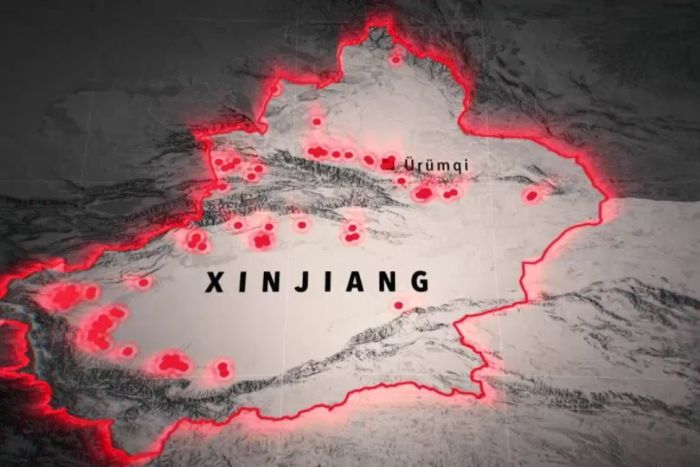
This summer’s protests constitute the most direct challenge to Chinese leader Xi Jinping since he consolidated power seven years ago and embarked on a policy of accelerated internal repression and outward neo-imperialist belligerence. Xi’s reign has been marked by intensive surveillance and ramped-up censorship, the persecution of human rights defenders and the mass incarceration of the Muslim Uighurs of Xinjiang.

His foreign-policy initiatives include the annexation of the South China Sea, the militarization of China’s global “Belt and Road” initiative and a series of outlandishly aggressive moves, not least the “hostage diplomacy” at work in the arbitrary arrests of Canadian citizens Michael Kovrig and Michael Spavor.

The protest leadership, meanwhile, is organic and profoundly democratic, bringing together a diverse cross section of Hong Kong Society that includes separatists, young, disaffected militants, middle-class democrats, the Roman Catholic church and the Hong Kong Law Society. Squared off against Xi’s authoritarian regime in Beijing and his incompetent regional puppet, Hong Kong chief executive Carrie Lam, Hong Kong’s protest movement has tried and largely failed to win support from the world’s liberal democracies.

A recent poll by Hong Kong’s Public Opinion Research Institute found that while 58 per cent of the protesters are animated by their dismal economic prospects, mostly in relation to housing, 84 per cent say they’re protesting on account of their distrust of Lam’s administration, and 87 per cent are taking to the streets for the “pursuit of democracy.”

Natalie Hui, a senior member of the Canadian Friends of Hong Kong organization, says Canadians are not facing up to the dire implications of the Hong Kong crisis, and Prime Minister Justin Trudeau is foolishly wishing it would all just go away. “What we are seeing in Hong Kong is a crystal ball for Canada,” Hui told me.

There are at least 300,000 Canadians in Hong Kong. Canada is home to another 1.5 million ethnic Chinese. Many have family in mainland China, and they fear that their relatives will be harassed if they speak up. The Trudeau government’s policy of business-as-usual trade engagement and otherwise saying nothing to arouse Beijing’s ire will do nothing in the cause of freeing Spavor and Kovrig, who were arrested in retaliation for last December’s detention in Vancouver of Meng Wanzhou. The chief financial officer for the Zhenzhen telecom giant Huawei, Meng was picked up on a U.S. Justice Department extradition warrant on charges of bank fraud and evading U.S. sanctions on Iran.

On the bright side, Hui said Hongkongers are showing that you can fight Beijing, and if you won’t necessarily win you won’t necessarily lose, either. Hongkongers have fought Beijing to a draw, so far, and they’ve managed to stop the extradition bill in its tracks. “Hong Kong is showing that you can push back. They are inside the mouth of the lion, but they still say no to the regime. But we must take action now.”

The Trudeau government, however, has failed to uphold the global values it so loudly claims to cherish. “This is a very critical moment in history. I don’t want to demoralize people but I think the Chinese Communist Party will destroy peoples’ careers and arrest a lot of people. Canada is weak. As a Canadian citizen, I have not seen anything from our government. We have emboldened China’s thuggish behaviours, because we haven’t done anything. It’s just silence.”

Maclean’s reached out to Foreign Affairs Minister Chrystia Freeland’s office for comment, but got no response.

David Mulroney, Canada’s ambassador to China from 2009 to 2012, agrees that silence is the worst policy. “We’ve really, really let down the side. It may be too little, too late now, but I’d like to see clearer statements from the foreign minister and the Prime Minister. Anything is better than silence.”

The horrible predicament that Kovrig and Spavor face is no excuse for Canada’s silence, Mulroney said. “China is hoping they can so intimidate people and cow people in the west that they can achieve their aims with almost no cost to themselves. When Canada is silent, when much of Europe other than the U.K. is silent, it’s easier to get away with what they’re trying to do, to undermine what freedoms Hong Kong still has.

“You’ve got to be honest with China. You’ve got to be direct with China, whether it’s detentions of Canadian citizens or attacks on democracy and autonomy in Hong Kong, we have to speak up whenever we can. I don’t think our silence does anything other than confirm China in its commitment to hostage diplomacy. If they find that by doing this they secure our silence, it makes it even more likely that they’ll do it in the future. It confirms them in their proclivity to take hostages and detain people. So it does nothing to change their behaviour.”

While U.S. President Donald Trump has been worse than useless—Trump has praised Xi for his restraint in dealing with Hongkongers, and has referred to the protests as “riots”—one of Hong Kong’s best hopes at the moment is the bipartisan Hong Kong Human Rights and Democracy bill that’s up for consideration in the U.S. Congress when the summer recess ends after Labour Day. Mulroney has added his name to a letter from a long list of China experts, directed to House Speaker Nancy Pelosi, urging quick adoption of the bill.

Among other things, the bill would potentially remove Hong Kong’s special status in U.S. trade law, a status that has allowed China to evade rules and sanctions by employing Hong Kong as a conduit for inbound and outbound investment since the early 1990s. The bill would also suspend visa restrictions on criminal convictions for individuals convicted for participating in demonstrations, and would sanction Chinese and Hong Kong officials deemed guilty of human rights abuses.

Passage of the bill could put Beijing on notice that if the Hong Kong democracy movement is crushed, Beijing would reap no benefit, but would instead stand to be punished severely in its trade relationships with the United States.

It’s too bad that Canada isn’t contemplating a similar law, Mulroney said. Hui agreed.

“A Canadian law, like that. That is my dream, that we could do that,” she said. “That is my dream.”
Source: While Hong Kong fights for democracy, Canada goes silent

Sign of the times: China’s capital orders Arabic, Muslim symbols taken down

More evidence of Chinese repression of minorities. Another great backdrop for the 2020 International Metropolis Conference in Beijing:

Authorities in the Chinese capital have ordered halal restaurants and food stalls to remove Arabic script and symbols associated with Islam from their signs, part of an expanding national effort to “Sinicize” its Muslim population.

Employees at 11 restaurants and shops in Beijing selling halal products and visited by Reuters in recent days said officials had told them to remove images associated with Islam, such as the crescent moon and the word “halal” written in Arabic, from signs.

Government workers from various offices told one manager of a Beijing noodle shop to cover up the “halal” in Arabic on his shop’s sign, and then watched him do it.

“They said this is foreign culture and you should use more Chinese culture,” said the manager, who, like all restaurant owners and employees who spoke to Reuters, declined to give his name due to the sensitivity of the issue.

The campaign against Arabic script and Islamic images marks a new phase of a drive that has gained momentum since 2016, aimed at ensuring religions conform with mainstream Chinese culture.

The campaign has included the removal of Middle Eastern-style domes on many mosques around the country in favor of Chinese-style pagodas.

China, home to 20 million Muslims, officially guarantees freedom of religion, but the government has campaigned to bring the faithful into line with Communist Party ideology.

It’s not just Muslims who have come under scrutiny. Authorities have shut down many underground Christian churches, and torn down crosses of some churches deemed illegal by the government.

But Muslims have come in for particular attention since a riot in 2009 between mostly Muslim Uighur people and majority Han Chinese in the far western region of Xinjiang, home to the Uighur minority.

Spasms of ethnic violence followed, and some Uighurs, chafing at government controls, carried out knife and crude bomb attacks in public areas and against the police and other authorities.

In response, China launched what it described as a crackdown on terrorism in Xinjiang.

Now, it is facing intense criticism from Western nations and rights groups over its policies, in particular mass detentions and surveillance of Uighurs and other Muslims there.

The government says its actions in Xinjiang are necessary to stamp out religious extremism. Officials have warned about creeping Islamisation, and have extended tighter controls over other Muslim minorities.

‘NEW NORMAL’

Analysts say the ruling Communist Party is concerned that foreign influences can make religious groups difficult to control.

“Arabic is seen as a foreign language and knowledge of it is now seen as something outside of the control of the state,” said Darren Byler, an anthropologist at the University of Washington who studies Xinjiang.

“It is also seen as connected to international forms of piety, or in the eyes of state authorities, religious extremism. They want Islam in China to operate primarily through Chinese language,” he said.

Kelly Hammond, an assistant professor at the University of Arkansas who studies Muslims of the Hui minority in China, said the measures were part of a “drive to create a new normal”.

Beijing is home to at least 1,000 halal shops and restaurants, according to the Meituan Dianping food delivery app, spread across the city’s historic Muslim quarter as well as in other neighborhoods.

It was not clear if every such restaurant in Beijing has been told to cover Arabic script and Muslim symbols. One manager at a restaurant still displaying Arabic said he’d been ordered to remove it but was waiting for his new signs.

Several bigger shops visited by Reuters replaced their signs with the Chinese term for halal – “qing zhen” – while others merely covered up the Arabic and Islamic imagery with tape or stickers.

The Beijing government’s Committee on Ethnicity and Religious affairs declined to comment, saying the order regarding halal restaurants was a national directive.

The National Ethnic Affairs Commission did not respond to a faxed request for comment.

While most shopkeepers interviewed by Reuters said they did not mind replacing their signs, some said it confused their customers and an employee at a halal butcher shop accused authorities of “erasing” Muslim culture.

“They are always talking about national unity, they’re always talking about China being international. Is this national unity?”

Source: Sign of the times: China’s capital orders Arabic, Muslim symbols taken down

Hong Kong tensions reach B.C’s Simon Fraser University as notes, posters supporting protests partly torn down

Suspect we will see more of these tensions:

Tensions from protests in Hong Kong appear to be spilling over onto campuses around the world, including a university in British Columbia, where a student-organized campaign supporting Hong Kong demonstrators was disrupted.

Last week at Simon Fraser University’s Burnaby campus, Hong Kong international students and peers who have ties to the territory put up a “Lennon Wall” – a message board full of posters and colourful sticky notes that mainly express solidarity with Hong Kong’s demonstrators. According to some students, these notes, bearing messages such as “Stay with Hong Kong” and “Fight for Hong Kong,” were partly torn down three nights in a row.

There also was unrest at a university in Australia last week, where disagreements on the Hong Kong political turmoil turned violent. As seen in footage circulated on social media, punches were exchanged at the University of Queensland between pro-Beijing students and those who back the Hong Kong protesters, who began marching to oppose China’s proposal to extradite criminal suspects to the mainland.

Some SFU students from Hong Kong said they were disappointed to see those notes being ripped off.

“When the wall got destroyed, [I was] not surprised, but I am just disappointed, really disappointed,” said Michael Chan, president of SFU Hong Kong Society, who is familiar with the incident even though his group didn’t start the wall.

Mr. Chan said damaging the wall infringes on freedom of speech, and he calls on the university to protect such rights on campus.

Taylor Cheng, who left a note on the wall, said she hopes the vandals would express their opposition in a more respectful way. “I thought everyone could communicate in a civilized, well-mannered way,” she said, adding the incident has been reported to the university.

SFU spokesperson Adam Brayford said on Sunday the Campus Public Safety is looking into the vandalism reports.

Rummana Khan Hemani, SFU’s vice-provost and associate vice-president of students and international pro-tem, said the university expects students to express their views in a lawful and respectful manner. “We do not know if these specific posters were approved to be posted. However, the removal of approved posters or unapproved posters in a disrespectful manner is not acceptable,” she said in a statement.

So far, it is not clear who damaged the wall. Both Mr. Chan and Ms. Cheng have seen screenshots from a large SFU student group chat on WeChat that some students are critical of such campaigns and condemned Hong Kong separatism.

The incident has left Mr. Chan and Ms. Cheng with concerns that if tensions escalate on their campus, there may be violence similar to what happened in Queensland. “I don’t want SFU to become the second University of Queensland incident,” Ms. Cheng said.

Mr. Chan said he is worried that some messages on the wall may irritate some students from mainland China who may hold different views on the issue. “They may be angry. … I am worried this kind of [violent] situation may happen,” he said.

William Chen, a third-year student at SFU who is from mainland China, said the Lennon Wall campaign generates “a barrier” between him and some of his Hong Kong friends.

“My first reaction was sad rather than angry,” he said. “The conflicts in Hong Kong happened because some Hong Kong people are unsatisfied with some policies set by China. [But I wonder] who spread the anger to here.”

He said the campaign does not represent the views of all students from Hong Kong and may increase the tension between students from the territory and mainland. He further added that some mainland Chinese students may think these messages encourage Hong Kong independence.

Jia Tiancheng, a student from Douglas College in the Vancouver area, said if the posted notes are purely showing support for the protesters, then they’re acceptable. But if some contain radical political opinion, then it’s just “expressing rage.”

Mr. Jia, who is from Harbin, a city in northern China, said since the extradition bill has been suspended, Hong Kong protesters should have achieved their goal. But the continuing protests that demand the resignation of the city’s leader, Carrie Lam, and the complete withdrawal of the bill doesn’t benefit the city.

Students from Hong Kong and mainland China all expressed their longing for more understanding and communication.

“Hong Kong students are fighting against the extradition law, and is not trying to fight for Hong Kong to become an autonomous country, nor are we attacking Chinese people, “Ms. Cheng said.

“Hong Kong students welcome dialogue and discussion. We are not going against the fact that there will be different political stakes on the issue.”

Mr. Chen said many students from mainland China usually do not care about political issues, however, in this case, he agrees that some mainland Chinese students believe Hong Kong people are using protests to promote Hong Kong independence.

“They find it surprising: why Hong Kong wants independence,” he said.

“There has to be a good communication between students from Hong Kong and China, otherwise, the conflicts are inevitable.”

Source:     Hong Kong tensions reach B.C’s Simon Fraser University as notes, posters supporting protests partly torn down Xiao Xu July 29, 2019     

Muslim nations are defending China as it cracks down on Muslims, shattering any myths of Islamic solidarity

All too true. Will be even harder to take their representations on anti-Muslim hate and Islamophobia seriously:

Last week, 22 mostly Western countries launched the world’s first major collective challenge to China’s crackdown on Uyghur Muslims and other minorities.

In a joint statement to the High Commissioner of the United Nations’ Human Rights Council, the nations criticized Beijing for what they described as “disturbing reports of large-scale arbitrary detentions” and “widespread surveillance and restrictions.”
A day later, 37 other countries jumped to Beijing’s defense, with their own letter praising China’s human rights record, and dismissing the reported detention of up to two million Muslims in western China’s Xinjiang region. Nearly half of the signatories were Muslim-majority nations, including Pakistan, Qatar, Syria, the United Arab Emirates, and Saudi Arabia, according to the Chinese government.
“Faced with the grave challenge of terrorism and extremism, China has undertaken a series of counter-terrorism and deradicalization measures in Xinjiang, including setting up vocational education and training centers,” the letter said, according to Reuters, which saw a copy of the letter. The letter went on to say that there had been no terrorist attacks in the past three years in the region, and that the people there were happy, fulfilled and secure.
The language in the letter echoed previous claims made by China, which has denied allegations of torture or forced political indoctrination in Xinjiang and said that the camps were “vocational training centers” designed to fight terrorism and combat Islamic extremism.
But reports of China’s abuse of Muslims in the Xinjiang region are rampant. Many Uyghurs and other Muslim ethnic minorities are believed to have been hauled into conditions that activists call re-education camps. Accounts given to CNN by former detainees describe being forced into the camps under the threat of violence. Detainees who have since fled China say they were forced to renounce Islam while pledging loyalty to China’s ruling Communist party, according to a report by the Council of Foreign Relations.
So why are some Muslim-majority countries coming to Beijing’s defense?
“I was surprised that (Muslim countries) would put it in writing and put their names on it and sign a document to actually praise China,” Azeem Ibrahim, a director at the DC-based Center for Global Policy, told CNN. “It’s one thing to keep quiet and abstain. It’s another thing to overtly support (the policies) when there was no need for them to do so.”
“I think that’s indicative of the influence and power that China has,” he said.

Source: Muslim nations are defending China as it cracks down on Muslims, shattering any myths of Islamic solidarity

Xinjiang’s Uyghurs were enslaved and forced to convert to Islam, Chinese white paper claims

Sigh…. Rewriting and reinterpreting history (and yes, Islam dates from the 7th century, spread by conquest and conversion, but to question its legitimacy 1,400 years later?)

Perhaps the 2020 International Metropolis Conference in Beijing will have this or other tendentious presentations justifying this approach to integration:

Uyghurs in Xinjiang were forced to become Muslim and have been an integral part of China for thousands of years, Beijing said in a new report, in an attempt to justify its controversial crackdown against the ethnic minority in the far-western region.

Key points:

  • China has sought to justify treatment of Uyghurs that Western countries have condemned as “cultural genocide”
  • Beijing’s report hits back at “double standards” of critics and defends “anti-terrorism” efforts
  • Experts say the white paper is a classic case of China’s ongoing information warfare

A white paper released yesterday by China’s State Council Information Office — the Government’s propaganda arm — presents the ruling Communist Party’s interpretation of history, claiming “Islam is neither an indigenous nor the sole belief system of the Uyghur people”.

The report also said that Islam spread into Xinjiang by “the Arab Empire” and that the Turkic Uyghur people “endured slavery” at the hands of “the Turks”.

“Conversion to Islam was not a voluntary choice made by the common people, but a result of religious wars and imposition by the ruling class,” it said, declaring that the Government nevertheless respects “the Muslims’ right to their beliefs”.

More than a million Uyghurs, Kazakhs and other Muslim ethnic minorities are thought to be detainedin what the Communist Party calls vocational education centres, referred to by the UN as “re-education camps”.

Those living outside the camps are also subject to mass surveillance, with Beijing declaring it wants to “Sinicise Islam” — a hardline policy increasingly referred to by observers as “cultural genocide”against the Turkic minority group.

The report was published as part of Beijing’s broader campaign to deflect international criticism of its crackdown against the Uyghurs, and reiterates its stance that repressive measures in Xinjiang are “counter-terrorism” tactics against Uyghur separatists and Islamic extremists.

“I don’t think anybody outside China who follows what happens in Xinjiang is fooled by this white paper,” Elaine Pearson, Australia director at Human Rights Watch, told the ABC.

James Leibold, a La Trobe University expert on Uyghurs and other Chinese ethnic minorities, said the white paper is a “classic case of China’s ongoing information warfare.”

“Like any piece of propaganda, it’s filled with partial truths,” he said.

But state-run English-language newspaper the Global Times applauded the report, claiming that with the paper, “kind-hearted people can distinguish between right and wrong.”

“It is hoped malicious agitators will zip their lip,” it said.

Beijing claims Turkic Uyghurs have always been Chinese

The Uyghurs are a mostly Turkic-speaking minority who share more in common linguistically and culturally with Turks than they do with China’s ethnic Han majority.

Historians believe parts of the Xinjiang region have been referred to as Turkestan since the medieval era.

According to China’s white paper, however, the region has “long been an inseparable part of Chinese territory” and has never been East Turkestan — a term it claims is used only by separatists in their “clamour for independence”.

Mr Leibold said this claim was “frankly not true”.

Beijing’s report claims that “from the very beginning”, Uyghur culture “reflected elements of Chinese culture” and was an integral part of Chinese civilisation.

“It’s foolish to speak about the existence of a unified Chinese nation 5,000 or even 3,000 years ago to include what is today Xinjiang and the Uyghur people,” Mr Leibold said, adding that claims about religious freedom in Xinjiang were “laughable”.

“Xinjiang always upholds equality for all religions,” the white paper said.

But the Communist Party’s crackdowns against Muslims and other faith communities including Christians and the Falun Gong are well documented.

A report from Amnesty International in 2018 claimed that public expressions of faith in Xinjiang were now deemed “extremist” by authorities, including growing a beard, praying or fasting during the Islamic holy month of Ramadan.

“We have seen many ways in which Uyghur identity has been suppressed in recent years,” Ms Pearson said, noting that China has also banned names deemed too Islamic.

Mass incarceration criticised by Western countries

Australia has expressed criticism of China’s treatment of Uyghurs, recently joining 21 other countries at the UN Human Rights Council including the UK, Canada and Germany in calling upon China to end its detention of ethnic Uyghurs.

Earlier this month, US Secretary of State Mike Pompeo referred to China’s treatment of Muslims in Xinjiang as “one of the worst human rights crises of our time” and “the stain of the century”.

China’s white paper criticised unnamed countries it said “apply double standards to terrorism and human rights and have issued unjustified criticism of Xinjiang’s effort.”

“This kind of criticism betrays the basic conscience and justice of humanity, and will be repudiated by all genuine champions of justice and progress,” it added.

Thirty-five countries including Saudi Arabia, Russia, and North Korea recently accused the West of “politicising human rights” over the Uyghurs and commended what it called China’s “remarkable achievements” in human rights.

Dozens of Australian citizens have been caught by the dragnet of China’s crackdown against Muslims in Xinjiang, many of whom have family members detained in the province.

An investigation by the ABC’s Four Corners revealed last week the extent of China’s attempts at cultural genocide against Uyghurs, including a forced labour scheme to produce cotton bought by Western clothing manufacturers.

It also found that several Australian universities were linked to surveillance technologies used against Uyghur Muslims.

Source: Xinjiang’s Uyghurs were enslaved and forced to convert to Islam, Chinese white paper claims