Canada’s international student boom changed Brampton forever. As the program scales back dramatically, a strained community tries to adapt

Interesting deep dive regarding international students living in Brampton:

…Santos said the city first noticed the number of international students “growing significantly” in 2021 during the pandemic, mostly through reports of an increased number of illegal basement apartments and exponential use of food banks in the community.

At the time, the city helped organize an international student roundtable, summit and charter to discuss the challenges facing international solutions and bring together community leaders — and commit to finding solutions.

Local colleges have been supportive of the efforts, but she said the bigger issue has been all the students who live in Brampton but study elsewhere.

“One of the things we have advocated for is that student visas should be tied to their place of residence, not just their place of study,” said Santos, as it’s the local municipality that has to bear the cost of providing services for the residents, not the place where they might attend school.

The councillor has also asked the province increase the “heads and beds” levy, which sees the province pay municipalities $75 per person annually for those attending colleges and universities in lieu of property taxes to compensate for the cost of services like transit, roads, sewers, parks and recreation. Santos, in line with other municipal groups, has pushed for a doubling of that rate, and also asked that that the money be paid to the municipality where students live as opposed to where they are registered to study.

In Kaur’s case, for example, Toronto would receive the levy — even though she lives in Brampton. 

The city has also launched a residential rental licensing pilot program, aimed at targeting landlords who rent out rooms that are unsafe to students. The program allows bylaw officers to issue fines, but some landlords and critics say the licensing has made it more difficult for students to find any housing at all.

More recently, Santos said she has heard of dozens of cases of sex trafficking among students who have been forced to work as prostitutes in exchange for a place to live. But she said the data on the issue is scarce as most students are too scared to speak up, out of shame and the fear of having their student visas cancelled.

Fears of an ‘underclass’

In November, Brampton council passed a motion asking the federal and provincial governments for more support for students.

The motion asks to expand funding eligibility to allow international students to access existing regional supports, to increase the number of hours they can work in a week to 40 (from the federally mandated 24 hours a week), so students can access legal work from employers. It also asks for money to support a three-year pilot project that offers culturally responsive support around settlement, housing, employment and mental health.

Gurpreet Malhotra, the CEO of Indus Community Service, a settlement agency that supports Indo-Canadians, said the organization is working on the pilot project, and sent a proposal to federal immigration minister Marc Miller at a meeting in November. The two parties met this week.

“Our goal is to advocate with higher levels of government to ensure a better experience for these international students so they can settle and become unscarred and productive members of our community,” said Malhotra.

He said he fears it will lead to the “creation of an underclass,” if things continue as is.  

“When you are working under the table, and living under the table and don’t have access to social services, you have a built-in vulnerability to criminal and other negative activities,” he said.

Brown said while the federal and provincial governments have started to change policy in reaction to a growing backlash across the country, few are talking about how to support those who are already here.

“The question is, are those international students going to try to become permanent residents or are those students going to try to return home, and I don’t think we have clarity on that yet,” he said.

That’s why some local officials say the impact of the federal policies — particularly student caps — will be felt less in Brampton.

“Brampton will be the last place where the number of international students will go down,” said Toor, adding that many students have ties to the community and will opt to stay here.

But he’s unsure of how the city will manage in the long run. “This is not something we can absorb, as a city,” said Toor. “Just the scale of the population increase is immense for the city to handle it all — without planning for it.”

Source: Canada’s international student boom changed Brampton forever. As the program scales back dramatically, a strained community tries to adapt

LILLEY: Canada now a land of ethic and religious fighting

Overwrought and exaggerated, but yes, these are worrying signs:

We are the country we claim not to be. Canada is now a country of religious and ethnic tensions, bigotry and violence.

We saw this over the weekend in Brampton when a Hindu temple was attacked. People beaten with bats; video shows people carrying Khalistani flags hitting temple goers with the flag poles.

We even have a Peel Regional Police officer suspended for taking part in the protest which turned violent. Sergeant Harinder Sohi, an 18-year veteran of the force, is now suspended after being identified as a participant.

He’s apparently now receiving death threats for participating.

The outbreak of a Sikh-Hindu religious war isn’t the only problem facing our country on this front. For a year, we have seen hate marches rise up across the country in support of terrorist organizations.

In the weeks after the Oct. 7, 2023 terror attacks by Hamas against Israel, we heard countless politicians say, “This isn’t who we are.” They said this in response to synagogues being attacked, Jewish schools being shot at, and Jewish community centres being firebombed.

Well, apparently this is who we are because these incidents have not stopped.

Last week, Eylon Levy, a man I’ve interviewed multiple times — with whom I met with in Israel last January and who was an Israeli government spokesperson for a time — was on a speaking tour in Canada. While at the University of Calgary to give a talk, Levy was met with cries of “Allahu akbar!” and claims that he was personally responsible for genocide and killing babies.

“That crosses the line from any sort of political protest into a full-on Jihadi war cry,” Levy told my Toronto Sun colleague Bryan Passifiume.

This is Prime Minister Justin Trudeau’s new Canada, full-on ethnic and religious wars on our streets and nothing more from our leadership than a tweet.

“The acts of violence at the Hindu Sabha Mandir in Brampton today are unacceptable. Every Canadian has the right to practice their faith freely and safely,” Trudeau said in a social media post.

It’s too bad that Trudeau has been part of what has encouraged these protests. Just like Trudeau has failed to deal with anti-Semitism and the attacks on Jewish institutions for political gain, he’s used tensions in India to win favour with some groups.

For years, Trudeau has decided to bring the tensions of India’s domestic politics into Canadian politics. He inserted himself into a dispute between the Indian government and farmers in 2020 in a way that would have caused great consternation had a foreign government done the same during our trucker’s protest.

He has campaigned in Canada against the government of Indian Prime Minister Narendra Modi in an attempt to win votes in Canada’s Sikh community. Immigration to Canada, in both the Sikh and Hindu communities, dates back more than 100 years.

For most of that time, there has been some form of peaceful co-existence. Tensions yes, but not an all-out religious war which is where we appear to be heading with no help from Trudeau and his politicking.

Meanwhile, India is set to take a harsher stand against Canada, even considering calling Canada a state sponsor of terrorism, according to some reports. The fact that we went from decades long ally of India to a pariah can only be laid at Trudeau’s feet.

It’s the same with Israel.

Canada voted for the creation of the State of Israel at the United Nations in 1948 and for the past several years has done everything possible to undermine that state. The Liberal Party has also taken policy positions that put ethno-religious politics above principle.

Foreign Minister Melanie Joly is openly courting the votes of people who back Hamas and Hezbollah. Yet, we are supposed to be shocked when an Israeli speaker is shut down at the University of Calgary and needs to be escorted out by security.

Add that to the schools being shot at, the synagogues attacked, the temples being swarmed, this is Justin Trudeau’s new Canada. The PM, who says he’s against divisiveness, sure has created a lot of it.

Source: LILLEY: Canada now a land of ethic and religious fighting

In Brampton, federal campaign pledges to boost immigration are creating friction among classes and generations

Good longish read, capturing some of the dynamics and different perspectives, highlighting that there is no monolithic ethnic or immigrant vote. New Canadians as well debate immigration levels, integration and the like:

There’s no better place to observe a cross-section of immigration than in a Tim Hortons in Brampton East.

Elderly women in shalwar kameezes who have been in the city for four decades order double-doubles in Punjabi from the international students, some of whom only landed in Canada months ago. Impatient construction workers, lawyers and realtors, almost all of whom are South Asian, idle in the drive-thru, some with Hindi slang on their vanity licence plates, on their way to and from work. Some came on student visas, others as permanent residents. Some were sponsored by family members, others were Canadian-born.

With such diversity, it’s easy to understand how meaningless the label of “immigrant voter” has become.

Ever since Pierre Trudeau’s Liberal government overhauled immigration policy in the mid 1970s, ushering in waves of newcomers, parties at election time have worked to capture the support of this population. And for more than a decade, they’ve taken particular interest in Brampton East and a collection of other suburban ridings near Toronto that are home to large immigrant populations. They’ve been crucial election battlegrounds, where party leaders have chosen to make major campaign announcements. Snapping up votes in the region – which has swung both Conservative and Liberal in the past – has become key to winning an election.

As Brampton East has grown into the federal riding with the largest proportion of South Asians (66 per cent), the diversity within its boundaries has grown too, along class, religious, ethnic and generational lines. There are vastly differing opinions in the riding among voters of South Asian origin on housing, jobs and – perhaps most divisive of all – immigration. Securing the so-called “immigrant vote” has become an outdated goal.

“We use these really big macro categories to talk about Canadians like ‘immigrants’ or ‘racialized’ or ‘Indigenous’ and we don’t have a lot of nuance in terms of the different priorities or preferences of the people within those,” says Erin Tolley, a political scientist at Carleton University and the Canada Research Chair in Gender, Race and Inclusive Politics. “I think the [federal] parties are a bit hamstrung when it comes to really understanding these nuances between immigrants from different backgrounds [and] immigrant streams.”


Within Jaskaran Dhillon’s household, the political divide when it comes to immigration strategy is stark. Mr. Dhillon, 22, is the Canadian-born son of parents who grew up in North India and lived in Bermuda before coming to Canada in 1997. He lives with his parents and his grandparents in a house in Brampton East, in a subdivision largely populated by Indians who immigrated in the nineties and aughts. He says he’s had “low-level debates” with family and community members about a hot-button issue throughout the riding: whether or not the high rates of immigration should be curtailed.

Since the Liberals under Justin Trudeau’s leadership came to power in the fall of 2015, winning back every Brampton riding from the Conservatives, Canada has accepted more than 330,000 permanent residents from India – and Brampton has absorbed a disproportionate number of them. Policy makers have promoted high immigration targets as the solution to Canada’s declining birth rate and labour shortage and those newcomers have come here to work in warehouses, restaurants and to drive trucks. This year, the target is landing 401,000 permanent residents, a goal immigration minister Marco Mendicino told the Globe in July his government would “make good on.” But some Indo-Canadians who came in previous waves of immigration, like Mr. Dhillon’s family, ask if this influx of immigrants – including those from India, the top source country – has been too fast.

“Immigrants when they come here kind of want to shut the door behind them,” Mr. Dhillon said of his parents’ generation. When they speak of themselves as the last great generation of immigrants, the ones who properly integrated into Canadian society, he believes they are seeking “validation from white people.”

Coming to Canada from India on a student visa is widely regarded as one of the easiest paths to permanent residency, and in the decade between the 2008-09 school year and 2018-19, the population of international students in Canada more than tripled, with India serving as the top source country for the past few years.

But Binder Singh, who immigrated to Canada in 1975 as a child, says allowing more younger arrivals on student visas or temporary work permits has brought out tensions in Brampton East. International students in particular are frequently the subject of conversation in local WhatsApp and Facebook discussion groups – blamed for the surge in COVID-19 cases in the second and third waves of the pandemic; for adding pressure to the wildly overheated housing market; even for the city’s famously high auto insurance rates.

Mr. Singh draws a distinction between immigrants who arrived in the city during his time and those who have settled in the country over the past few years. Mr. Singh says he believes there is far less integration happening now.

It’s a phenomenon that Victoria Esses, an immigration policy researcher and professor of psychology at the University of Western Ontario, has observed in many immigrant communities.

“The more established immigrants come to see themselves as prototypical Canadians,” Prof. Esses said. “These new guys who are coming in, they’re just reminding [the earlier immigrants] that they’re not that far away from them.”

Some of the established immigrants are hostile to any campaigning that might seem as though it’s targeting immigrants or even specifically their own ethnic community “if they think that immigrants aren’t being treated as well as Canadians,” she said. “So they want to dissociate [from the new immigrants].”

Catering to voters who would like to see the flow of immigration slowed could come at the cost of alienating others if it’s construed as racist or xenophobic. Prof. Esses points to the 2015 election, when Conservatives ran a campaign based on so-called “Canadian values” and proposed a tip line to report on “barbaric cultural practices.” Pundits point to this as one of the reasons why Conservatives lost every one of their 11 seats in Brampton and Mississauga that year.

In a paper published this year in the American Review of Canadian Studies, Western University political scientist Zack Taylor argued that the country’s reliance on international immigration for population growth has made it difficult for political parties “to ignore the electoral heft of ethno-cultural communities, which … are concentrated in the Greater Toronto region.”

Since the 1960s, Canadians who are foreign-born have been more likely than those who are Canadian-born to vote for the Liberal Party, but that allegiance began to erode in 2008, after major efforts by the Conservative Party to appeal to racialized immigrant voters.

Jason Kenney, the current Alberta premier who was then minister for citizenship, immigration and multiculturalism in Mr. Harper’s cabinet, was largely credited with helping the Conservatives win every seat in Brampton in 2011 by logging countless hours at gurdwaras, temples and community gatherings in the city, as well as giving interviews to media outlets run by South Asian immigrants.

The party had a strong appeal to the more established immigrants who had climbed their way into the middle class and felt they were paying more in taxes than they were benefiting.

Then came Justin Trudeau in 2015, a fresh new leader for Liberals whose charisma and platform appealed to a large swath of voters. Knowing how key the city was, Mr. Trudeau held his biggest rally of the campaign in Brampton – 5,000 people at the Powerade Centre – and with the Canada Child Benefit and a middle-income tax cut, won back the same middle-class, family-oriented voters the Conservatives had pulled in in 2011.

Mr. Singh said the importance of the individual candidates in Brampton East and surrounding ridings has greatly declined over the past few elections, and the focus is almost entirely on the party leader and platform.

In the 2021 election, the race in Brampton East is between Liberal incumbent Maninder Sidhu; Conservative Naval Bajaj (who ran an unsuccessful campaign in 2015); and the NDP’s Gail Bannister-Clarke. There are more campaign signs up for NDP Leader Jagmeet Singh – who represented this area as an Ontario MPP from 2011 to 2017 – than there are for Ms. Bannister-Clarke. On Wednesday night, in the final stretch of his campaign, Mr. Singh made a stop in Brampton.

Darshan Maharaja, a local political blogger who grew up in the Indian state of Gujarat then lived in Dubai before moving to Brampton in 2004, said many Punjabi Sikhs in Brampton see Mr. Singh (and his brother, who represents Brampton East in the provincial legislature) as one of “their own.”

“Jagmeet is their boy; he became the leader of the party so it’s vital pride for them,” Mr. Maharaja said.

Housing is another critical issue for many residents of Brampton East. When the subdivision of Castlemore was built in the 1990s, there were nothing but fields around it. Homes were still cheap in 2005, when Mr. Dhillon’s parents bought a house in the neighbourhood, but now he and his Canadian-born peers are contemplating leaving Brampton because it’s become so unaffordable.

From 2001 to 2016, the latest year for which data are available, the population in Brampton grew by 82 per cent, compared with 17 per cent for Canada as a whole, and that influx of people has driven up home prices dramatically. In July, the average price for a house or condominium in Brampton was just more than $1-million, the same as in Toronto.

The Liberals, Conservatives and NDP have all promised to increase the supply of housing in Canada through more construction, but also to help young people enter the market. In Brampton, the growing – but often invisible – population of renters wonders how those levers will do anything to improve their situation.

Most of the rental stock for newcomers is made up of apartments carved out of single-family homes – the cheapest options in an overheated market. International students and young workers often crowd into basement units. Fire inspectors have found as many as 20 occupants in a single dwelling, some sleeping on mattresses laid out on kitchen floors.

When Harjot Sarwara first arrived in Canada two years ago on a student visa from Punjab, he lived in Montreal with his wife and their daughter. He was completing a program at a career college, but the French-language barrier made it difficult for his wife to get steady work. So when it came time for Mr. Sarwara to begin his co-op, he and his wife set their sights on the city where so many people from back home had settled: Brampton. But finding a home for their family of three that wasn’t shared accommodation in a basement proved difficult.

“Every time when we ask anybody to rent a house or show a house, they asked what your status is. I said, ‘Yeah, I’m a student.’ They said, ‘No, we will not be giving a home to a student,’” he recounted.

“Due to some of the people from my community who do bad things or they don’t have a good relation with the owner, the whole community is blamed and people like me suffer,” he said.

After two months, Mr. Sarwara was able to find a three-bedroom rental for $2,350 a month. When he and his family moved in, construction was already well under way to convert the basement into a separate apartment.

In the 2019 election, the NDP improved on its previous showing and finished second behind the Liberals in Brampton East, its rise tied to Mr. Singh’s star power and a growing consciousness around worker rights among more recent arrivals and the children of established immigrants.

L6P, a neighbourhood in Brampton East that The Globe and Mail has written extensively about since the spring (the name refers to postal codes in the area), recorded the highest per capita rate of COVID-19 infections in Ontario during the second and third waves of the pandemic, much of that driven by its work force. The same essential workers who were staffing poorly ventilated warehouses and taking crowded transit to work were bringing COVID-19 home in record numbers. Some delayed seeking proper treatment or getting vaccinated because they couldn’t take time off to do so, or were unsure if they qualified, given their immigration status.

Kiran Gill, the daughter of Indian immigrants and a resident of L6P, saw first-hand the desperation of those workers, many of whom were newcomers from India.

During a job at a temp agency that staffs warehouses, Ms. Gill encountered individuals on student visas from India who spoke only Hindi or Punjabi – their English was barely functional – and some boldly asked if they could book hours beyond the 20 they were legally able to work each week, offering to receive their pay under the table.

Working at the agency helped Ms. Gill see how little opportunity there was for even the highly trained professionals who came to Canada with dreams of prosperity.

“I would see people with work permits and [permanent residents] who had great experience from other countries and couldn’t find work so they’d have to go through agencies to at least get warehousing work to make ends meet,” she said.

COVID-related job losses in the city were substantial, with 20 per cent of residents claiming the Canadian Emergency Response Benefit in 2020.

Ms. Gill said the government has to build systems that ensure these workers don’t struggle and add further strains on housing and health care.

Sparsh Sharma, a digital marketer who owns a townhouse in L6P and came to Canada as a permanent resident in 2017, says he often plays down where he lives out of concern for the stigma and stereotypes associated with Brampton and linked to the large population of newcomers. With a labour market made up mostly of low-wage, essential-services jobs, Brampton needs better employment opportunities that will attract and retain individuals like him, he says, who have professional degrees, international work experience and high scores on language proficiency exams.

At the same time, he says the students and those on temporary work permits “are the ones doing the heavy lifting” and are the biggest source of labour in the city. “We enjoy this sort of lifestyle [of greater prosperity ] because they are working behind the scenes for us.”

On Tuesday evening, in the final stretch of campaigning, the Liberal campaign bus pulled up to the Speranza Banquet Hall in Brampton East, where Mr. Trudeau and former prime minister Jean Chrétien spoke. Mr. Sidhu, the incumbent seeking re-election, warmed up the crowd of more than 400 supporters, most of them South Asian.

Though he’s been an MP for two years, Mr. Sidhu spoke little of his record, instead focusing his introduction on his identity – an attempt to connect with as many in the crowd as possible.

He referenced his parents’ backgrounds as Indian immigrants who arrived in the early eighties, toiled at warehouses for 18 hours a day to create a better life for him and his brother.

“This is not just my story, this is the story of so many in this room,” he said.

Source: https://www.theglobeandmail.com/canada/article-for-brampton-voters-campaign-pledges-to-boost-immigration-raise-hard/?utm_medium=email&utm_source=Morning%20Update&utm_content=2021-9-16_7&utm_term=Morning%20Update:%20Inflation%20hits%2018-year%20high,%20fuelled%20by%20pandemic%20factors&utm_campaign=newsletter&cu_id=%2BTx9qGuxCF9REU6kNldjGJtpVUGIVB3Y

Vaccine hesitancy raises alarms as COVID-19′s highly contagious Delta variant arrives in Brampton

Good ongoing focus on the challenges in Brampton and the L6P postal code:

Half the members of Sunidhi Sharma’s social circle have been vaccinated but it’s them, rather than the unvaccinated, who are keeping her from getting the jab.

None of the 22-year-old restaurant cashier’s friends or colleagues have had the novel coronavirus, so hearing friends’ accounts of developing fever and body aches after receiving their first dose has worried her more than COVID-19itself.

“It feels a bit scarier, so I’m not sure whether I should go for it or not,” said Ms. Sharma, who immigrated from India in 2019 and now lives in L6P, a postal code in northeast Brampton, Ont., that has logged the highest per capita cases of COVID-19 in the province.

She’s part of the 27 per cent of adults in Peel Region, west of Toronto, who have still not received their first dose of the vaccine, despite being eligible for more than a month.

Concerns about the highly contagious Delta variant, which now makes up one-quarter of COVID-19 cases in Peel, have prompted political and health leaders to call for an accelerated rollout of second doses of the vaccine in the area. A British-based study found that the variant reduced effectiveness of the Pfizer and AstraZeneca vaccines to just 33.5 per cent after one dose, but that two doses are nearly as effective against Delta as they are against Alpha (the variant first associated with Britain).

But there is a worry that people like Ms. Sharma, and others who haven’t yet rolled up their sleeves because of logistical barriers, vaccine shopping or hesitancy, may be left behind.

Despite being the hardest-hit city in Ontario, Brampton’s vaccination campaign got off to a slow start. Relatively few Brampton pharmacies offered shots early, and community pop-ups and workplace clinics took weeks longer to come online than they did in Toronto.

In L6P, overall coverage is still slightly below the provincial average, despite the area receiving extra vaccines, and Peel being the first public-health unit to open vaccines to everyone over 18. Seniors, in particular, are being left behind in L6P, with 69 per cent of people over 80 covered, compared with a provincial average of 83 per cent, according to the non-profit Institute for Clinical Evaluative Sciences.

This month, a team of researchers launched the COVID CommUNITY-South Asian study, a federally funded project that will investigate both vaccine effectiveness and hesitancy in South Asian communities. In Peel, 55 per cent of infections have been among South Asians, though they make up 32 per cent of the population. The team hopes to recruit 1,500 vaccinated and 1,500 unvaccinated participants in the Vancouver and Toronto areas – including Brampton.

“If health care workers from the South Asian community were hesitant to get the vaccine, they could have a very significant negative ripple effect in the community around them,” said principal investigator Sonia Anand, a professor of medicine and epidemiology at McMaster University in Hamilton. “Because if you say, ‘Well, if this ICU nurse is not getting the vaccine, then I’m not getting it, because she must know something I don’t.’ ”

On an evening in late May, just days after the Embassy Grand vaccine clinic in L6P had opened, the lineup snaked around the parking lot out front. The queue was filled with young teens, accompanied by parents and other relatives. The province had just dropped the age of eligibility for a first shot to 12.

But in that queue were many who had been eligible for weeks or even months.

Nancy Chandhi, a 31-year-old international student who moved to Brampton from the Indian state of Punjab in April to study business management at Conestoga College, came to the Embassy Grand for a shot with her six housemates.

A week earlier, they had walked away from their appointments at the Brampton Soccer Centre, one of Peel’s mass vaccination sites, because the site was administering the Moderna vaccine. The Pfizer-BioNTech and Moderna shots, which both use mRNA technology, performed nearly identically in clinical trials and real-world studies.

Ms. Chandhi hadn’t heard anything particularly bad about the Moderna product, but so many friends had recommended Pfizer-BioNTech that a sense of “brand loyalty” had developed in her circle.

At Peel Public Health’s fixed clinics, where about 40 per cent of all doses have been administered, 6 per cent of booked appointments last week were no-shows. But the no-show rate at pop-up clinics and hospitals has been much higher, said Priya Suppal, a Brampton family doctor who has worked at several of the vaccination sites in the city, including the Embassy Grand, where she is one of the medical directors.

After the initial surge of teens when it first opened on May 17, the site has seen a daily no-show rate of about 15 per cent to 20 per cent. Some clinics have reduced their hours or closed. One day last week, a clinic in Brampton had capacity to administer 600 daily doses and only did 50, Dr. Suppal said.

With cases of the Delta variant rising, she said the government should immediately move to opening up second-dose vaccinations to everyone over 18 in COVID-19 hot spots such as Brampton – but the variant is also good reason to keep pushing those first doses, she said.

With so few appointments booked in recent weeks at her clinic, her team has had time to canvass local gurdwaras, temples and supermarkets to draw people in, and they’ve learned why so many are still without first doses. There are the long-haul truckers who are only at home one day a week and have had difficulty finding an appointment, there are home-bound seniors who are unable to drive themselves to a clinic, there are warehouse workers whose schedules are too unpredictable to book an appointment weeks ahead of time, there are international students who mistakenly believe they must pay to get a vaccine.

“I think we have to sort of go full steam ahead with second doses, but really continue our efforts on [first doses],” Dr. Suppal said. “We don’t want to have all these mutations out and about and people getting sick all over again.”

For Muntaz Alli, the president of the Brampton Islamic Centre, vaccinating locals who are on the fence requires buy-in from trusted community leaders and institutions. In April, the city asked the mosque to hold a pop-up vaccination clinic. It ran from April 30 to May 11 and administered 6,200 first doses. A team of volunteers engaged with community members on social media and WhatsApp – a major source of local news and information – to encourage residents to come to the pop-up clinic.

“When community members heard about the [mosque’s] pop-up, their worries went away because it was their local community holding the vaccination clinic,” Mr. Alli said.

Leaders in Brampton’s Black, African and Caribbean communities followed that model when they launched a four-week pop-up clinic at the Bramalea Civic Centre in the L6T postal code, which has the lowest vaccination rate – 54 per cent – in the region.

They dispatched community ambassadors into apartment buildings and grocery stores to spread the word about the clinic and found Black doctors, nurses, staff and volunteers to work there. But the battle against vaccine hesitancy has been formidable.

Angela Carter, executive director of the Brampton non-profit Roots Community Services, said there is a well-founded mistrust of a health care system that has not always treated Black people well.

Some tell her “the government is inflating the numbers” of COVID-19 infections. Or explain, “I am not going anywhere, so I don’t need to get the vaccine.” Others say, “I don’t know what’s in the vaccine. I don’t know how it’s going to affect my body.”

The weekend soft launch of the clinic in mid-May was busy and celebratory, but a few days later, appointment bookings dropped and organizers pivoted to allowing anyone who qualified to walk in and get a shot.

Marsha Brown, the manager of community programs and services for WellFort Community Health Services, said even as the government’s focus shifts to second doses, the work to ensure residents get their first doses must continue long after the Bramalea Civic Centre pop-up closes on Friday.

“Knowing the mistrust, the hesitancy and the resistance that’s there, if we didn’t carve out a space and focus on our community, they could very easily just fall through the cracks and get forgotten,” she said.

Source: https://www.theglobeandmail.com/canada/article-vaccine-hesitancy-raises-alarms-as-covid-19s-highly-contagious-delta/?utm_medium=email&utm_source=Morning%20Update&utm_content=2021-6-7_6&utm_term=Morning%20Update:%20Pope%20Francis%20appeals%20for%20reconciliation,%20but%20offers%20no%20apology%20over%20residential%20school%20deaths%20&utm_campaign=newsletter&cu_id=%2BTx9qGuxCF9REU6kNldjGJtpVUGIVB3Y

After Arab countries, now Canada punishes Indian origin man for Islamophobia; terminated from job and removed from school body as probe continues

Of note:

Days after several Indian expats were removed from their jobs in the Arab countries for displaying Islamophobia using their social media pages, Canada has cracked the whip on an Islamophobe by removing him from a school body and terminating his contract with one of the leading real estate companies in the North American country. Ravi Hooda has now made his Twitter account private after politicians and civil society members in Canada reacted with outrage on his brazen Islamophobia.

This all started with several Toronto-area municipalities granting local mosques permission to broadcast the Azaan or call to prayer using loudspeakers during Iftaar (breaking of fast) every day during Ramadan. The move was widely hailed since Muslims could not gather in mosques due to the global coronavirus pandemic.

Brampton too followed suit and decided to allow Muslims in its region to use loudspeakers for the sunset Azaan. This did not go down well with a local Islamophobe, identified as Ravi Hooda, who launched a tirade mocking Muslims and their faith. He wrote, “What’s next? Separate lanes for camel & goat riders, allowing slaughter of animals at home in the name of sacrifice, bylaw requiring all women to cover themselves from head to toe in tents to appease the piece fools for votes.”

Hooda’s tweet sent shockwaves across Canada, which is globally renowned for its liberal values. Peel District School Board in Brampton announced that it had removed Hooda as ‘School Council Chair’ and investigation was underway against him. Its tweet read, “The Principal has begun an investigation. The individual is being removed from their role as School Council Chair and won’t be able to participate on council in any other capacity. Islamophobia is not acceptable and a clear violation of our Safe and Accepting Schools Policy.”

ReMax Canada, which is one of Canada’s top real estate marketing websites, too informed that it had terminated Hooda’s contract. It tweeted, “We do not share nor support the views of Mr. Hooda. We can confirm he has been terminated and is no longer affiliated with RE/MAX. Multiculturalism & diversity are some of the best qualities in our communities, and we are committed to upholding these values in all that we do.”

Brampton Mayor Patrick Brown too said that Islamophobia will not be tolerated in Canada. He wrote, “Our noise by law originally passed in 1984 only included an exemption for Church bells. It will now include all faiths within the permitted hours & decibel levels. The Muslim community can proceed with the sunset azan because it’s 2020 & we treat all faiths equally. #Ramadan.”

Curiously, Hooda is also a registered certified immigration consultant. It remains to be soon if the government will consider revoking his licence in light of his Islamophobic views.

Source: After Arab countries, now Canada punishes Indian origin man for Islamophobia; terminated from job and removed from school body as probe continues

‘Ground zero for multiculturalism’: Brampton mayor blasts Quebec’s ‘religious symbols’ bill

Not surprising, given the demographics of Brampton:

Brampton Mayor Patrick Brown [former Ontario PC leader] is speaking out against the Quebec provincial government’s Bill 21, which prohibits government employees from wearing religious symbols, and is tabling a motion at council’s next meeting to make the position official.

On Friday (June 21), Brown issued a statement strongly condemning Quebec Premier Francois Legault’s provincial government for passing the controversial Bill 21 into law on June 16.

“Bill 21, of course, is the law that will ban Jews, Muslims, Sikhs and others who wear symbols of their faith from pursuing careers in numerous public sector jobs,” said Brown in his statement.

Brown, once leader of the Progressive Conservative (PC) Party on Ontario before winning the mayor’s chain last October, also sits on the Peel Police Services Board. He seconded a motion at Friday’s board meeting approving a campaign to recruit Quebec residents interested in a career in policing affected by the new law in that province.

The police board motion also directs Peel police to “place select advertising within Quebec promoting a career at the Peel Regional Police.”

“I was pleased to second the motion at today’s Peel Police Services Board encouraging those Quebec residents interested in a career in policing to apply to Peel Regional Police. We are ground zero for multiculturalism,” added Brown in his statement.

The mayor’s statement included a pair of council motions he said he intends to table at Brampton council’s June 26 special meeting. The first would add the City of Brampton to an ongoing legal challenge.

The second follows the Peel police board motion’s lead inviting those affected by the new laws in Quebec interested in a career in firefighting to apply in Brampton, while also placing select advertising in that province to that end.

Council will debate both motions at its June 26 meeting at city hall from 9:30 a.m. to 5:30 p.m.

“We need to join the legal challenge initiated by the Canadian Civil Liberties Association and the National Council of Canadian Muslims to protect religious freedom. If we don’t stand up for religious freedom in Brampton which is the most culturally and religiously diverse city in Canada than who will?” said Brown.

Source: ‘Ground zero for multiculturalism’: Brampton mayor blasts Quebec’s ‘religious symbols’ bill

Why hard-fought election at North America’s largest Sikh temple could be bad news for Liberals in next federal vote

We will know in October, but of course other factors will also be at play. And the sensitivity regarding the mention of Sikh extremism in a Public Safety report is also noteworthy:

When North America’s largest Sikh temple elects a new board of directors, it doesn’t fool around.

Candidates have campaign managers, cold-call voters and go door-knocking in the race for leadership of the Ontario Khalsa Darbar (OKD), a Toronto-area institution that functions as a place of worship, a community centre — and a nexus of political influence.

The Liberals have long been linked to the OKD, and arguably benefited from its status among the province’s Sikhs. But the election that wrapped up there early Monday morning may not bode well for the party.

A Grit-associated slate promoted by the fathers of Navdeep Bains, a star in Prime Minister Justin Trudeau’s cabinet, and MP Ruby Sahota was roundly defeated, and a controversial government report that suggested Sikh terrorism still poses a threat here may have played a role, say observers and campaign organizers.

That could have ramifications for Liberal support in several swing seats in and around Brampton, Ont., most of which flipped to the party from the Conservatives in the 2015 election.

“These local ridings will be affected by it,” said Balraj Deol, a Punjabi-language journalist in the area. “That is an advantage for Conservatives, and the NDP also. It’s a loss for the Liberals and it will be a gain for the other two.”

“This may be a sign,” said Jaspal Bal, campaign manager for the victorious side.

Even Trudeau was dragged into the race, with the winning group alleging his visit to the area last week was designed to bolster support for the other side.

But not everyone sees broader implications in the temple vote, no matter how intense the campaign became. Avtar Badyal, the losing presidential candidate, said Trudeau’s visit and Liberal policies had nothing to do with his team’s loss. The election was simply about which group voters believed could best manage an important spiritual institution, he said.

“This is not a political thing, it’s a religious thing,” said Badyal. “I don’t know why they are making this into something that it’s not.”

Another local journalist said he also doubts that broader politics played a role in the temple election, or will be affected by its outcome.

“Not at all,” said Yudhvir Jaswal, who hosts popular radio and TV shows on the local Y-Channel. “I think they are oversimplifying things.”

Regardless, when the ballots were all counted at about 3:30 a.m. Monday, the entire “Panthak Alliance” slate backed by the fathers of MPs Bains and Sahota had been defeated, every one of their 11 opponents elected by healthy margins.

To the winners goes control of a temple — or gurdwara — that boasts 3,700 members and a sprawling, 70-acre site near Toronto’s Pearson airport.

Underscoring the high stakes in such elections, a court battle between directors that began in 2006 forced a nine-year delay in voting and reportedly generated $5 million in legal bills.

Sikh temples are community focal points as well as religious institutions, and OKD includes 15 halls that are booked solid with weddings.

It also provides a potential platform for politicians eager to reach the region’s powerful Sikh voting bloc, said Deol, hosting gatherings that can attract tens of thousands of people.

“That gurdwara is the prime hub for everything,” said an organizer on the winning side, who asked not to be named. “It’s very influential.”

Liberals like Bains, the economic development minister, used to have ready access to the OKD stage, the person said. “That’s not going to happen any more, so that’s a big blow to them.”

Bains was among several Liberals of Sikh background who captured Brampton and Mississauga ridings in 2015, a key part of the Greater Toronto Area battleground that is itself crucial to winning federal elections.

But the community’s support for the party took a serious hit with the release in December of a Public Safety Canada report on terrorism that suggested “Sikh (Khalistani) extremism” remained a threat.

Sikh groups reacted with outrage, saying that using violence to support Punjabi independence was rejected long ago in Canada. The so-called Khalistani movement is entirely peaceful today, they argue.

Local MPs are expected to face a grilling this Sunday at a town-hall meeting about the report.

Many of the temple members who voted for the winning slate in Sunday’s gurdwara election did so to express their opposition to the terrorism statement, equating the other slate with the government, said Bal.

In fact, when a candidate on the opposing side promised to honour the four Sikh-Canadian ministers in the Trudeau cabinet at the gurdwara, the eventual winning slate gained more support, he said.

“People put aside their bickering and differences and said this is one of the issues that is uniting us to support these 11,” said Bal. “Because they have said they will not sit idle and wait with a garland to welcome the leaders who have declared us a terrorist threat.”

Source: Why hard-fought election at North America’s largest Sikh temple could be bad news for Liberals in next federal vote

Mississauga’s population is 57% visible minorities. So why does its city council look like this?

In general, diversity is significantly greater at the federal and provincial levels than municipal.

I look forward to comparing the results of the upcoming Toronto election: thanks to the (disruptive) change to electoral boundaries, it will be possible to compare federal, provincial and municipal results given identical boundaries:

According to the 2016 census, 57 per cent of Mississauga, Ont., residents identified as visible minorities. However, not one of them was elected to the city’s 11 council seats in 2014. (Mississauga)

As a rookie politician taking on an incumbent city councillor, Safeeya Faruqui is already staring down long odds in the upcoming Mississauga, Ont., municipal election.

But if the 24-year-old succeeds in her bid for Ward 4 on Oct. 22, she’ll have made history too — becoming the first woman of colour elected to city council in the mostly suburban city west of Toronto.

“That would be another glass ceiling broken,” Faruqui told CBC Toronto at her campaign office. “We need to make sure that all voices are being heard to create the best society that we can.”

Faruqui’s campaign is bringing new attention to the glaring disparity between the general population in southern Ontario’s Peel Region and the makeup of its city councils.

According to the 2016 census, 57 per cent of Mississauga residents identified as visible minorities. However, not one of them was elected to the city’s 11 council seats in 2014.

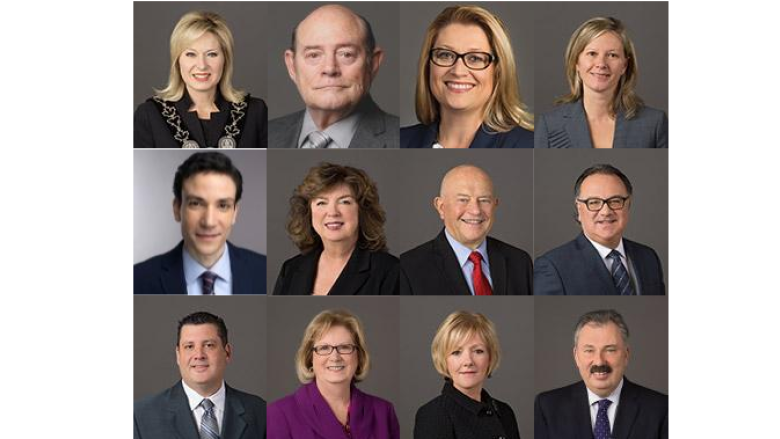
In neighbouring Brampton, where 73 per cent of residents identify as visible minorities, just one of the city’s 10 councillors is a person of colour.

Neither city has ever had a non-white mayor.

Why it matters

Faruqui says lack of diversity on council has resulted in some policy decisions that don’t fully account for the city’s diverse population.

“The decisions aren’t reflecting everybody,” she said.

Gurpreet Singh Dhillon, the lone visible minority on Brampton’s council, points to an ongoing struggle in the city to build a shade shelter for seniors to explain why diversity can be helpful.

He said older residents in his community have been seeking to recreate the tradition of gathering and socializing under a large willow tree, which began in India, with an artificial shade as a replacement.

Singh, 38, said the project has been stalled because some elected officials and city staff did not understand the request, since they were not familiar with the tradition.

“It’s really important that we have people in our staffing, and our council who understand,” he said. After serving one term as a city councillor, Singh is now running as the regional councillor for Wards 9 and 10.

“It’s even more important going forward that we do have a council that does reflect the community,” he added.

There are also concerns that the lack of accurate representation has also stalled civic engagement and created distrust in local governments among visible minority communities.

“Our community has not been doing a good enough job to remedy that,” said Faruqui, who added that “real, frank, open discussions” are needed to restore faith in local politics.

If elected, Dhillon says he will advocate for the creation of a diversity officer at Brampton city hall, who would review everything passed by city council to ensure no minority communities — whether by ethnicity, gender, age or sexual orientation — are negatively affected.

He said similar initiatives have been successful in other cities around the world.

‘Overwhelming but… exciting’

During her first term in office, Mississauga Mayor Bonnie Crombie, who is running for re-election, helped introduce a diversity and inclusion advisory committee. The group provides strategic advice to council in an effort to better serve the city’s diverse population.

Still, Crombie said she would welcome more variety among the city’s elected officials.

“It would be wonderful if we could have a very diverse council that reflects the diversity that is our city,” Crombie told CBC Toronto.

As to why so few visible minorities have been elected, Crombie pointed to a slew of long-serving incumbent councillors, who are notoriously difficult to unseat in municipal elections.

“Some of them have been in office a long period of time,” she said. “And the city has changed over the years.”

Due to a death and a retirement, two of the city’s council seats will be open races this election. She said that has opened up an opportunity for a number of “wonderful diverse candidates” running this fall.​

Faruqui, however, is competing against incumbent John Kovac.

“Going through this for the first time, not really having any role models who look like me doing this, it’s something that is overwhelming but also very exciting,” she said.

Source: Mississauga’s population is 57% visible minorities. So why does its city council look like this?

‘Everybody fits in’: inside the Canadian cities where minorities are the majority – The Guardian

Nice long read and balanced profile of Markham and Brampton, two suburban communities near Toronto where visible minorities are the majority:

The Foody Mart in Markham, a sprawling city near Toronto, is found in a typical North American suburban plaza, sprinkled with fast-food chains, nail salons and a small legal firm. But look closely and you will notice the mall’s parking signs are in Chinese and the bank serves customers in Cantonese and Mandarin.

Inside the Foody Mart, there are shelves of salted duck eggs, air-shipped mangosteen and durian. Staff hand out samples of fish balls and regulars drink bubble tea alongside young families enjoying hot meals from the takeaway counter, as Shanghai pop plays over the speakers.

This is just one of many large grocers that serve the Chinese population in Canada’s most diverse city. With a population of 330,000, Markham is one of a handful of “majority-minority” cities, where visible minorities – the official term used in Canada for anyone who is not white or indigenous – make up 78% of the city’s population, according to the 2016 census.

Stores such as the Foody Mart did not exist when Jennifer Chin first moved to Markham in 1991. Born in Jamaica, Chin, 53, is ethnically Chinese, as is her husband. They raised three children while running a business manufacturing Jamaican patties, often described as a quintessentially Torontonian snack.

When she arrived, the city’s population was less than half what it is today, and just 14% was Chinese. She witnessed the city transform with waves of immigrants: Cantonese-speaking Chinese from Hong Kong, Indians, Sri Lankans, then Mandarin speakers from mainland China. Today, just 22% of the city’s residents are of European origin; 46% are Chinese, 18% are south Asian and the rest are from a variety of other backgrounds such as Iranian, Italian and Filipino.

One of the most notable characteristics of Markham’s rise has been thriving pockets of businesses – groceries, clothing stores, spas, tea shops – to serve those groups, particularly in Chinese and south Asian malls.

“It’s good and bad,” Chin says. “I love the diversity. I love that we have different kinds of foods: Sri Lankan, Indian-Chinese, even different types of Chinese food. However, sometimes you feel people aren’t encouraged as much to adapt.”

Ethnicity and religion are strong ties that bring people together

Along with several other majority-minority cities on the outskirts of Toronto, Markham represents a remarkable outcome of Canada’s official policy of multiculturalism, enacted in the 1970s under the then prime minister, Pierre Trudeau. It states that other cultures are valuable as long as newcomers are willing to integrate into “mainstream” Canadian culture – typically understood as the country’s English and French colonial roots. But what does mainstream look like in cities where the primary culture is neither English nor French? And, as Canada’s population is projected to be nearly 30% foreign-born by 2036, what does integration in these cities mean?

Cultural change

Ethnic ties have long attracted newcomers to the suburbs of Toronto, transforming what were once bedroom – or commuter – communities into thriving cities in their own right. Markham’s biggest mall now features high-end shops that rival the shopping centres in Toronto. The city has its own Whole Foods store, as well as chic mid-rise condos to complement the earlier sprawling developments of large single-family homes.

As cities get bigger, it’s only natural to be attracted to those who are similar to you, says Mohammad Qadeer, a professor of urban planning at Queen’s University, Ontario. “You usually hang out and interact with people you share interests with,” he says. “Ethnicity and religion are strong ties that bring people together.”

But majority-minority cities also serve as a reminder that diverse populations do not necessarily generate utopian post-racial societies. White flight and hate crimes still occur, as do coded fights over issues that disproportionately affect immigrants – for instance, blowback against multi-generational housing, where several generations live under one roof.

And just because a city has a high proportion of foreign-born residents does not mean its population is always open to other newcomers. Punches were thrown at a recent protest in Markham, where groups of mostly Chinese-Canadians clashed over a proposal to temporarily house asylum seekers in the city, to ease the pressure on Toronto’s shelter system. The majority (81%) of asylum seekers in the city’s shelter system are from Nigeria.

Markham has nevertheless come a long way since 1995, when the then deputy mayor, Carole Bell, expressed hostility towards Chinese malls, claiming they were driving people out of the city and that residents did not want “signage in a language we can’t read”. Not only does that signage remain, the city’s official website now translates its content into more than 80 languages, using a Google widget. In the last municipal election, some candidates participated in debates in Cantonese and Mandarin.

There remains ongoing debate, however, on how much cultural change can be adopted into mainstream society, and how quickly. For instance, statutory holidays, which are mostly aligned with Christian holidays, are days off for workers in Canada. But in 2011, some Chinese grocers in Markham (including the Foody Mart) stayed open in defiance of the law.

City councillor Joe Li heard both sides of the debate: that grocers were being discriminated against for not being able to stay open, and that Chinese businesses were trying to impose their culture on the city. Ultimately, Li decided in favour of the grocers, arguing that consumers should have the option to shop on holidays. The move proved so popular that York Region, in which Markham sits, voted that from 2018 any business could stay open 364 days a year.

Li asked for something in return: to hire more diversely. “Now you’re starting to see it,” he says. “You walk in and see south Asian people in the store, you see halal meat in the store.”

The expression of the incredible diversity of the community doesn’t really manifest itself on the ground
Easy access to halal meat, south Asian groceries and a mosque are all things Rameeka Khan appreciates about living in Markham. The 33-year-old pharmacist of Pakistani descent was born in Canada and has lived in the city nearly her whole life, choosing to settle here with her husband. She is glad they bought a house in 2010 – her family would be priced out today.

“It would be difficult for a younger couple to afford Markham,” Khan says. “People I know are moving [further east]. If they do decide to live in Markham, it’s more likely they are living with family, like their parents.”

At the end of 2016, seven of the 10 neighbourhoods with the most rapid increase in property values in the Toronto area were in Markham – some properties saw their value jump as much as 90% in just three years. As in Vancouver, conversations about the Markham property boom sometimes have racially tinged accusations about foreign ownership driving up prices. Local media reported that one developer said: “There is no way a Caucasian would pay $2.1m for a bungalow.”

“In general, people know who you are talking about – it must be the Chinese,” Li told a recent council meeting. “I don’t want that kind of impression.”

White flight

Brampton is another majority-minority suburb, west of Toronto. The city’s population – now more than half a million – exploded in a similar fashion to Markham’s. It is now 73% visible minority, with its largest ethnic group Indian, particularly Sikhs from Punjab, earning the city the nicknames “Bramladesh” and “Browntown”. There are also significant populations from the Philippines, Sri Lanka and the Caribbean.

But with its rapidly increasing diversity has come another development: not just a decreasing proportion of white residents, but also a shrinking number. According to numbers cited by the Toronto Star, the white population fell from 192,400 in 2001 to 169,230 in 2011, and now hovers around 151,000.

Rebecca Bromley, 37, says some of her white friends have left for a variety of reasons. “There’s a lot of tension [because of growth], so when people leave I’m not going to assume it’s white flight – especially if they want to buy a place they want to afford,” she says. She points to the city’s many growing pains, including traffic, construction and, for Bromley, more challenges in her work as a teacher.

Bromley attended the same Catholic high school where she now teaches and says the city’s demographic makeup has changed hugely. She sees troubling trends, such as African-Caribbean students being streamed into less-academic courses while Indian students face high expectations to excel. Bromley also sees students trying to bridge the linguistic and cultural gap between schools and their parents, and others who struggle with language themselves.

“You might get a kid who presents like they are struggling with the language, but actually they have a learning disability, or you might have a kid who has no conversational ability but they can write just fine.” Bromley feels ill-equipped to help students with such different needs because they have to be dealt with on a case-by-case basis, she says, and the English language learners programme doesn’t help her navigate these individual problems.

Gurpreet Malhotra is familiar with such institutional gaps. He is the CEO of Indus Community Services, an organisation that serves newcomers in Brampton. In his experience, businesses have caught on that integration is a two-way street – whether they are clothing shops hiring staff who speak Punjabi or grocers stocking Indian cooking staples – but government-funded institutions have not. Political power, he says, does not reflect Brampton’s population. “We have to dislodge the well-entrenched powers,” Malhotra says of the city council.

On the federal and provincial level, the Punjabi community is well represented in Brampton. The first non-white federal party leader, Jagmeet Singh, has a strong political base in the city, where he held a seat as a provincial politician. But Brampton has only one non-white city councillor, Gurpreet Dhillon, who is Punjabi.

In the last municipal election, Bromley recalls watching a Punjabi candidate on television arguing that the mayoral office should reflect Brampton’s ethnic makeup. “I had a moment where I felt, ‘Now I’m really going to be a minority,’” she says. “To be brutally honest, it felt like I was being pushed out.”

The moment passed. She remembered she had a stable job, in an ideal neighbourhood to raise her five-year-old twins. But she struggles with how to integrate into what Brampton is becoming. She feels lucky to teach students with whom she can have “honest, unfiltered conversations”, but does not feel she can approach, for example, the group of older Indian men hanging out at the park, or busy mums at her skating rink.

Finding common ground

“Intercultural interaction is a matter of common ground and increased opportunity for encountering each other,” says Qadeer. In cities such as Markham and Brampton, where suburban sprawl reigns and most people travel by car, those opportunities outside school and work can be hard to come by.

Brampton is trying to address this as part of its long-term vision for 2040. “The expression of the incredible diversity of the community doesn’t really manifest itself on the ground,” says Larry Beasley, a Vancouver-based planner who spearheaded the project.

To ensure people across cultures can better interact, Beasley says the city needs to create places for them to meet. After taking more than 11,000 residents’ comments into account, the plan proposes five city centres – walkable communities that mimic Brampton’s downtown area – to facilitate those interactions.

These new hubs would aim to reduce isolation by bringing together parks, government services, retail outlets and restaurants. The centres would also try and bring employment closer to home: 60% of Bramptonians commute to places outside the city. Beasley hopes to convince the city to adopt the plan by arguing that smarter urban design could help swap commuting time for community time.

Creating a place for communities to converge was also Jael Richardson’s intent when she founded the Festival for Literary Diversity, which brings together writers from a variety of backgrounds. “I wanted to start a festival that gave diverse writers – anyone who’s not typically represented – a space to be the expert,” says Richardson. “We consider having the event in Brampton part of the diversity mandate in and of itself.”

The festival was initially met with scepticism – Richardson says Toronto writers frequently told her the event would do better in Toronto – but her tenacity appears to be paying off. This year it secured a multi-year sponsorship from Audible – the digital audiobook producer – and publisher Penguin Random House sent a sizeable contingent of staff.

Richardson is creating space for writers in a city where diversity isn’t aspirational – it’s a fact. While it is true that changing demographics here have disturbed the mainstream sensibility, Canada’s majority-minority cities also appear to be changing what mainstream means. For some residents of Markham, such as Chin, the question isn’t whether newcomers can assimilate into the city, but whether both can adapt together.

“I don’t think you need to fit in,” Chin says of her majority-minority city. “Everybody fits in.”
Source: https://www.theguardian.com/cities/2018/sep/04/canadian-cities-where-minorities-are-the-majority-markham-brampton?CMP=Share_iOSApp_Other

Freeland criticizes Indian diplomats for interfering in Ontario cultural festival

Interesting intervention in the context of the recent India trip (even though this intervention happened before):

Foreign Affairs Minister Chrystia Freeland’s office says it was “inappropriate” for Indian diplomats to interfere in a cultural festival outside of Toronto.

The allegations stem from a controversy last summer in which Indian consular officials reportedly tried to dissuade the annual Carabram festival in Brampton, Ont. – a city west of Toronto with a large Indian population – from having separate Punjab and India pavilions. Punjab is the only state in India with a Sikh majority.

“Interference in domestic affairs by foreign representatives in Canada is inappropriate,” Ms. Freeland’s spokesman, Adam Austen, wrote in an e-mail to The Globe and Mail.

“The federal government has no role in planning Carabram, but supports the right of its organizers to do so however they see fit.”

Brampton Mayor Linda Jeffrey first raised concerns about “unwarranted and unwelcome interference” by the Consulate General of India in a letter to Ms. Freeland on Aug. 18, 2017.

In the letter, which has never been made public but was obtained by The Globe and Mail, Ms. Jeffrey said her office learned in July, 2017, that officials with the Consulate General in Toronto approached organizers of Carabram to cancel the Punjab pavilion, or merge it with the India pavilion. She also alleges that consular officials tried to pressure organizers to change the name to the Punjabi cultural pavilion. In the end, the Punjab pavilion went ahead.

“This type of unwarranted interference by Indian officials in a local cultural festival in Brampton was shocking,” Ms. Jeffrey wrote in the letter, which asks Ms. Freeland to look into the matter.

Ms. Jeffrey said it is her understanding that consular officials threatened to “go to the highest office in the country and cancel this festival.”

The allegations of improper interference come at a time of heightened tensions between Canada and the Indian government.

Prime Minister Justin Trudeau continues to face pressure from Opposition MPs to allow his national security adviser, Daniel Jean, to testify in public at committee about the Prime inister’s recent trip to India.

Mr. Trudeau caused a diplomatic stir last month after Jaspal Atwal, who was convicted of attempting to murder a visiting Indian politician on Vancouver Island in 1986, was invited to official events. Mr. Jean suggested to reporters during a background briefing that Mr. Atwal’s presence may have been engineered by factions in India that want to prevent Prime Minister Narenda Modi from getting too close to a foreign government they believe is not committed to a united India. The Indian government has denied the claim.

NDP leader Jagmeet Singh also found himself on the defensive over recent revelations that he spoke at a Sikh separatist rally in 2015 and participated in a panel discussion in 2016 where speakers endorsed political violence as part of an effort to create a Sikh homeland separate from India. Mr. Singh says he has always opposed acts of terrorism or violence.

Officials at the Consulate General in Toronto and the High Commission of India in Ottawa did not respond to requests for comment.

Ms. Jeffrey’s spokesman, Jaskaran Singh Sandhu, said the mayor stood by her letter but wouldn’t comment further. Mr. Sandhu said Ms. Freeland’s office never replied to the letter.

Carabram is an annual festival in Brampton, first started in 1982, where non-profit groups representing different cultures set up pavilions that offer food and entertainment.

Prithpal Chagger, president of the Punjab pavilion, said he believes his pavilion was singled out because of concerns that it would be used to advocate for an independent Sikh state, known as Khalistan. Mr. Chagger’s brother is the grandfather of Liberal House Leader Bardish Chagger, who told The Globe she was unaware of the situation and had not spoken with Mr. Chagger about it.

“The only objection from the Indian government is they don’t want anybody who is talking about Khalistan,” Mr. Chagger said. “But they label everybody and say they are Khalistani if they wear a turban.”

Angela Johnson, president of Carabram, said she was surprised that the Indian consulate would try to pressure them to shut down the Punjab pavilion.

She said that it’s up to the non-profit groups in charge of pavilions to determine how they would celebrate. “It was their choice and we saw no reason to object to it,” she said. Ms. Johnson confirmed the Punjab pavilion will be part of this year’s Carabram.

Dr. Maher Hussain, one of the organizers of the India pavilion, said it “would be ideal” if Punjab was part of the India pavilion. “If we have a Punjab pavilion, that means the Carabram people are supporting separate Punjab, separatism,” he said, adding he was willing to participate in the festival either way.

Sanjeev Malik, president of Uttar Pradeshies in Canada, which represents a state in northern India, said his group approached the Consulate General’s office to try to merge the Punjab pavilion with the Indian pavilion.

“There are some separatists here in Canada. They want Punjab to be separate from India. And that’s the reason they want their separate pavilion,” Mr. Malik said. “If somebody said that they want a separate Quebec, being a Canadian citizen, I’m going to oppose that.”

via Freeland criticizes Indian diplomats for interfering in Ontario cultural festival – The Globe and Mail