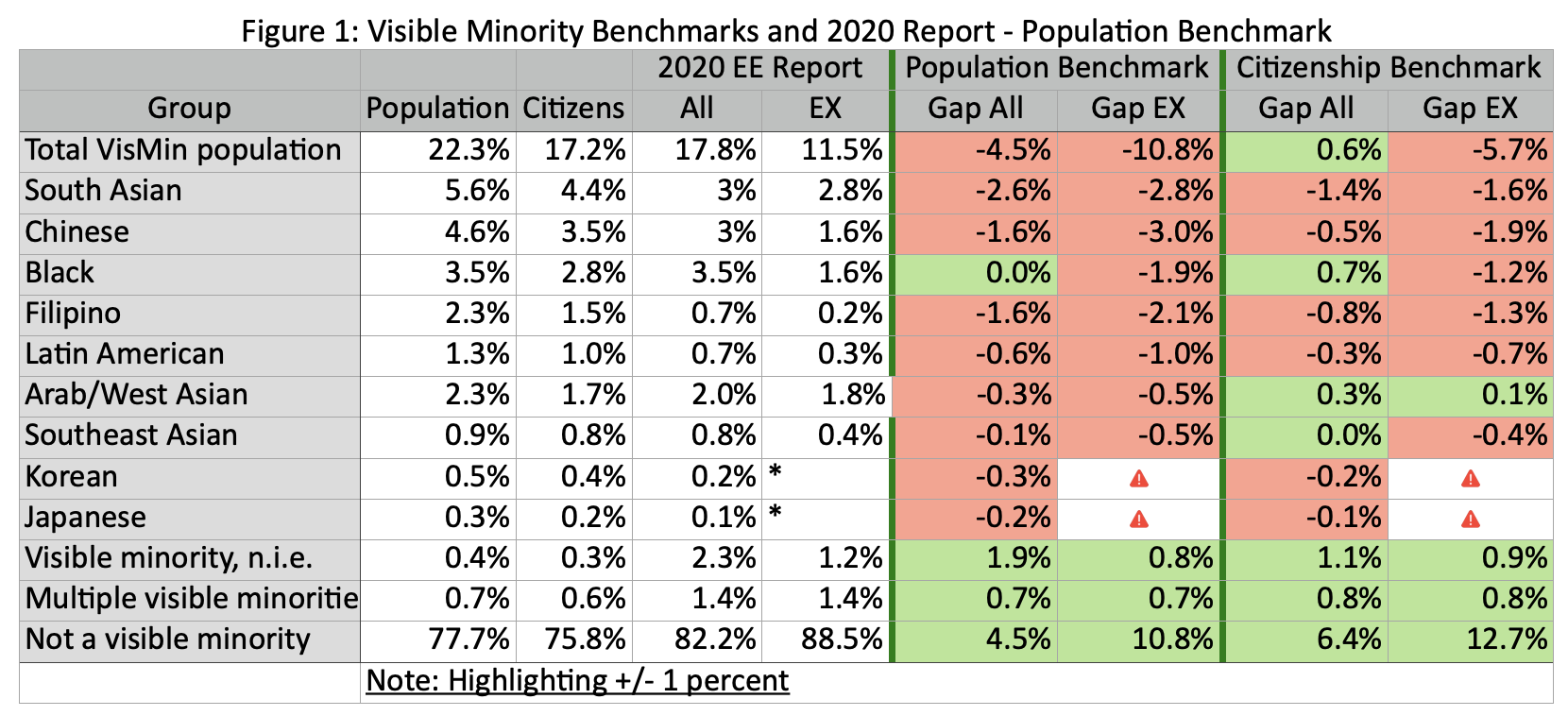
The disaggregated data that we have for the past three years (employment equity reports including hiring and promotion data, public service employee survey) along with PSC analysis of staffing process stages on employment equity results is not supportive of the proposed suit.
More than 520 current and former Black federal public servants are now part of a $900-million class-action lawsuit that is alleging decades-long government discrimination, lack of advancement opportunities, and harassment. Three months ago, there were 12 representative plaintiffs.
After three months of waiting to hear from Ottawa, the suit’s leading lawyer says the government has decided to enlist a Bay Street law firm to fight the action despite the fact that Prime Minister Justin Trudeau (Papineau, Que.) has publicly admitted that racism and discrimination exists across public-sector institutions.
Courtney Betty, the lawyer leading the class action, has called his experience over the last three months and the steady influx of new plaintiffs “an incredible journey and nothing that I had expected.”
“I think that every day, we’re having new plaintiffs register and new individuals calling in asking how they can become class members,” said Mr. Betty, a former Crown attorney at the Department of Justice.
The class action started receiving a “flood” of call from elderly individuals who have retired from government departments and agencies, something which Mr. Betty called a “game-changer.”
“When we started getting people that were 74, 78 years old, it was like an atomic explosion, because it really brought to the forefront so many things that we had not been aware of,” said Mr. Betty. “It’s like unearthing this tremendous pool of pain and trauma.”
Filed on Dec. 2, 2020, the class proceeding includes plaintiffs from a wide range of government departments and agencies, including the Canada Revenue Agency, Employment and Social Development Canada, Corrections Canada, the Department of National Defence, and the RCMP.
Many of the experiences of members delineated in the class action centre on their lack of promotions within the federal public service after many years on the job, with the suit alleging that the Employment Equity Act has “failed in its goals and mandate to Black employees,” as it “fails to break down the category of visible minorities and thus ignores the unique, invisible and systemic racism faced by Black employees relative to other disadvantaged groups that are covered by the categories established by the Act.”
The class proceeding has now been filed, is before the court, and the government has been served, according to Mr. Betty.
“We wanted the government to have 90 days to come to the table, accept our offer, to meet with Black employee representatives, to meet with the union representatives, and figure out if there is a way of taking this to mediation and arbitration,” said Mr. Betty. “It just seemed like the natural thing to do.”
At the eleventh hour, the government informed the legal team that it had retained a Bay Street law firm, sending a signal they were intending to fight the litigation, said Mr. Betty.
“We’re now getting geared up on the premise that the government is prepared to have these individuals relive their horror, and tell their stories,” said Mr. Betty. “It’s a game changer for us in terms of how we approach it, and so we’re definitely now in a a position where we’re going to aggressively put forward our case.”
Mr. Betty said he’s “the guy who has spent my entire life waving the Canadian flag, I’m the guy who loves this country more than most Canadians do.”
“And now I’m in a situation where I recognize the government has been committing behaviour, that in many ways, [with] the pain and suffering that these individuals are feeling, is a form of atrocity that’s been committed against them,” said Mr. Betty. “And I know that’s a strong word.”
In a Dec. 4, 2020 press release, the Public Service Alliance of Canada (PSAC), Canada’s largest federal public service union, indicated its support for the legal action, with union president Chris Aylward telling The Hill Times that “Canada’s public service presents itself as a ‘merit-based, representative and non-partisan organization that serves all Canadians.’”
“While laudable as a principle, many Canadians, particularly Black Canadians, have experienced a different reality. The government must do what is necessary to right these wrongs and ensure that these injustices do not continue,” wrote Mr. Aylward.
According to a joint response from the Department of Justice and the Treasury Board of Canada Secretariat, the proposed class-action brought on behalf of Black employees in the Public Service of Canada was issued by the Federal Court on Dec. 2, 2020. The statement of claim was received by Canada and the proposed class-action is not certified.
“As part of the class-action process, the parties may proceed to schedule a motion for the court to determine whether to certify the action,” according to the statement. “No motion has yet been scheduled. “
Counsel for the Attorney General of Canada was in communication with counsel for the proposed class and advised Mr. Betty that outside counsel would be appointed, according to the statement.
“Counsel from Fasken Martineau DuMoulin LLP reached out to plaintiffs’ counsel in February to indicate that they will be representing the government’s interests in the two class proceedings and to discuss next steps,” according to the statement. “No schedule has been set for the government to set out its position on the lawsuit.”
According to the government, counsel for Canada has not received a request from counsel for the proposed class to enter into mediation with respect to this class action.
“Any future request would be given consideration,” according to the government. “As this complex proposed class action is in its early stages, it is otherwise premature to comment on the litigation at this point.”
The joint statement added that “systemic racism and discrimination is a painful lived reality for Black Canadians, racialized Canadians and Indigenous people,” that the government has taken steps to address anti-Black racism, systemic discrimination and injustice across the country, and that $12-million over three years has been committed towards a dedicated Centre on Diversity and Inclusion in the Federal Public Service.
“In September, the Speech from the Throne announced an action plan to increase representation and leadership development within the public service,” according to the statement. “Early in its mandate, the government also reflected its commitment in mandate letters, in the establishment of an Anti-Racism Strategy and Secretariat, in the appointment of a Minister of Diversity and Inclusion and Youth, and in the creation of the Office for Public Service Accessibility.”
“As this matter is currently before the courts, the Treasury Board Secretariat cannot comment on this suit at this time.”
NDP MP Matthew Green (Hamilton Centre, Ont.) told The Hill Times that he believes the government has retained a law firm in an attempt to “use the infinite resources of the government to ensure Black workers in the public sector never have a fair day in court.”
“They’re going to lawyer up, they’re going to drag it out, and they’re going to try to bleed the class action support dry,” said Mr. Green last week.
Mr. Green said he believes this government does an actuarial risk assessment “both politically and financially.”
“I think on one side, you have a scenario in which they know they’re wrong, that many in the processes they claim to put in place around equity, diversity and inclusion under the guise of [Gender Based Analysis Plus], the language that the government uses, actually does not have the outcomes in which they purport to have.”
“We’ve now had decades of anti-Black racism, which will be in the most contemporary terms, validated in these toxic workplace cultures that have essentially left out a sub-segment of their workers in ways that they can point to as being quantifiable,” said Mr. Green.
Any worker, more especially marginalized workers, deserve to have basic workplace fairness, said Mr. Green.
“You could imagine working somewhere for 20 or 30 years and only ever being promoted one or two pay grades above your entry level while seeing your co-workers go on to become senior management and fully pensioned,” said Mr. Green. “The opportunity cost lost for these Black workers is immense, so on one hand you have a government that knows that and recognizes the burden of their financial obligation, while simultaneously doing the risk analysis politically on whether or not stifling these workers is going to result in votes lost for their future political gains.”
Mr. Green said that when this government felt it most politically expedient to take up the cause of the Black Lives Matter movement, it politicized it for their own partisan gain and for the branding exercise of Prime Minister Justin Trudeau (Papineau, Que.) to take a knee in that moment, alluding to the June 5 “No Peace Until Justice” march on Parliament Hill to protest racism, police brutality, and systemic discrimination in Canada and around the world.
“[To] not stand for the thousands of Black workers who are past and present impacted by anti-Black racism within the public sector says everything you need to know about this government,” said Mr. Green. “They’re all about identity politics, without any commitment to justice, and that is a very cynical way to treat people.”
“I won’t mince words—it’s performative, and when push comes to shove, Justin Trudeau and this Liberal government are nowhere to be found in tackling things that are well within their power,” said Mr. Green.
“We’re not asking them to solve racism in Canada, we’re telling them they have a responsibility to Black workers within the public service that they are ignoring and in fact, in this case, continuing to uphold in perpetuity, that they are upholding anti-Blackness by not mediating with this group in good faith,” said Mr. Green.
‘37 years stuck at one level’
Caroline Layne, one of hundreds of plaintiffs now part of the class-action lawsuit, said she started as a temporary employee as a telecommunications clerk with the RCMP in 1982, and spent 37 years with the RCMP before retiring in 2009. Ms. Layne said she spent 37 years stuck at one level and was never promoted.
“People say to me, ‘You worked with the government, you must have a good pension,’” said Ms. Layne in an interview with The Hill Times.
“But I don’t, because I was never able to move up the ladder,” said Ms. Layne. “The thing is, for an honest day’s work, you should get an honest day’s pay.”
Outlining some of her experiences during her many years with the RCMP, including acts of both indirect and overt racism from co-workers, members of the public and sometimes from superiors, Ms. Layne said there was never anyone to turn to or to relate her story.
“Everybody turned a deaf ear,” said Ms. Layne.
“People would come to the front desk and almost want to throw me out, and I would just have to take it on the chin,” said Ms. Layne. “I had to take it and just smile.”
When a police officer takes on a post, they should take it on “because of who they are, because they are there for society, and there to help each individual, Black, brown or white,” said Ms. Layne. “When I went to the RCMP, I took an oath as a public servant.”
Another plaintiff in the class action, Carol Sip, spent 26 years in the federal public service, starting in the Department of National Defence in 1974 before retiring in 2000.
“There was not much room for promotion, so I decided to apply elsewhere,” said Ms. Sip at the beginning of an emotional interview with The Hill Times.
Looking for a permanent position, Ms. Sip applied to the now defunct Canada Customs and Revenue Agency (known today as the Canada Border Services Agency), as well as to Gateway postal services, alluding to the Canada Post facility in Mississauga.
“I chose Customs, thinking I’ll have a better chance of promotion there,” said Ms. Sip. “But I was wrong.”
The former federal public servant, who would end up spending the vast majority of her career with the agency, said she joined the class-action lawsuit because the lack of opportunities for promotion throughout her career affected her mental health and well-being, and found herself looking for part-time work to subsidize her income, ending up working very difficult hours.
“Now, instead of the government taking responsibility, protecting me, and addressing the matter, they hire a Bay Street law firm to inflict more pain and suffering,” said Ms. Sip. “The victims always suffer.”
Ms. Sip said she initially didn’t want to come forward with her story.
“But then I think about the younger generation and if this would make a difference,” said Ms. Sip.
Erica Ifill, a policy analyst at Innovation, Science, and Economic Development Canada (ISED) who has been with the department since Feb. 2019 and is currently on sick leave, recently penned a piece for The Hill Times in her regular column called “An open letter to federal Black employees,” where she outlined her experience being “harassed, bullied and surveilled for most of my time at the department” where she was “denied development opportunities and promotions.”
Ms. Ifill also wrote that when she tried to seek redress through the internal processes, “again I was refused any meaningful action.”
When asked if she believed the emergence of this lawsuit and the continued growth of the number of plaintiffs involved will send a strong message to the federal public service in a follow-up interview with The Hill Times last week, Ms. Ifill was not optimistic.
“[The public service] exists on a plane that is divorced from reality,” said Ms. Ifill. “Their ability to assess risk is very skewed—they get to where they are by badly assessing risk.”
“I don’t have any faith in them, I think they’re going to have to be forced to do the right thing,” said Ms. Ifill, who is also a member of the Federal Black Employee Caucus.
Although not yet a part of the class-action suit, Ms. Ifill said she’s considering it and that she’s currently in talks with representatives.
Riyadh Nazerally, a spokesperson with ISED, said “the public service has long made diversity and inclusion in its workforce a core value, and there has been steady progress over the past decade, but many gaps remain,” in an emailed statement to The Hill Times. “In particular, the lack of diversity in leadership roles across the public service has been persistent and must be addressed.”
“At ISED, we have started a dialogue and we are listening. We are learning from lived experience through ongoing employee consultation and safe space discussions,” added Mr. Nazerally, who also pointed to the creation of a Diversity and Inclusion Taskforce focused on identifying and implementing specific diversity and inclusion measures.
“We are actively consulting with employees on a plan to identify meaningful actions in order to build a more diversified workforce. One of our objectives is to remove biases and systemic barriers. We are committed to addressing and dismantling structural and systemic racism and discrimination, while also ensuring that our workplace is free of harassment.”
“For privacy reasons, we cannot comment or discuss specific employee matters,” wrote Mr. Nazerally.
‘Persistent threat to our national security’
Huda Mukbil, a former senior intelligence officer with the Canadian Security Intelligence Service (CSIS) and a national security expert, is not a plaintiff in the Black class-action lawsuit, but she told The Hill Times that she is helping the team and hoping to become more involved in the future.
“The reason I feel passionate about this, is because I feel that it is a persistent threat to our national security,” said Ms. Mukbil, who began her career at CSIS in 2001 and was the first Arab woman and one of very few black women at the agency.
“I was well received for a very long time, about three years, and then what can I say—I encountered systemic issues,” said Ms. Mukbil, who went on to outline discrimination she would face throughout her career.
“The biggest problem is that it’s left up to individuals to fight the discrimination and the harassment and the microaggressions and the lack of career progression—the whole thing is left up to an individual,” said Ms. Mukbil. “There’s a risk obviously—you’re looking at one individual trying to take on a system.”
What’s coming out as a function of this lawsuit is “really the tip of the iceberg,” said Ms. Mukbil.
“There is so much going on, there’s so much damage that’s happening to so many people’s lives, and what we’re seeing now is just horrible,” said Ms. Mukbil.
‘This lawsuit will force the public service to look deeply inside its structure’
Although former senator Don Oliver was unavailable for an interview last week, he has spent decades fighting against systemic racism within the public service, and told The Hill Times in December 2020 that he was supportive of the lawsuit and the effect it would have on structures within the bureaucracy.
“The lawsuit will force the public service to look deeply inside its structure and systems to find ways to eradicate white privilege in performance evaluations and all other known forms of systemic black racism,” wrote the retired Senator in a message to The Hill Times shortly after the lawsuit was first launched. “It must start with some profound personal soul searching that will require all white managers to learn to accept some uncomfortable truths.”
And as the establishment of any new government department is ultimately directed by the PMO, according to the former Senator, the clerk of the Privy Council and all deputy ministers in the public service would have to fall in line.
In a piece that ran in The Globe and Mail on March 1 following Black History Month, Sen. Oliver wrote that deputy ministers in government “can speed up the internal cleansing and make meaningful change” by, among other practices, ensuring that no barriers exist to prevent Black employees from advancing, implementing or expanding unconscious bias and anti-racism education, sharing best—and unsuccessful—practices, working with members of the Black community, and creating the conditions for success.
“The defining test of systemic racism in Canada is when I no longer have to somehow prove that I, as a Black Canadian, am worthy to participate in and enjoy all the fruits, benefits and perks of daily living that have been bestowed on the white majority by virtue of their privilege,” wrote the former Senator, who served in the Red Chamber from 1990 to 2003.
When asked for comment, the Prime Minister’s Office referred The Hill Times back to the Treasury Board.



 Multicultural Meanderings