Inside Trump’s Extraordinary Turnaround on Immigration Raids

Another TACO moment, forced by reality and resulting political pressure by the base:

On Wednesday morning, President Trump took a call from Brooke Rollins, his secretary of agriculture, who relayed a growing sense of alarm from the heartland.

Farmers and agriculture groups, she said, were increasingly uneasy about his immigration crackdown. Federal agents had begun to aggressively target work sites in recent weeks, with the goal of sharply bolstering the number of arrests and deportations of undocumented immigrants.

Farmers rely on immigrants to work long hours, Ms. Rollins said. She told the president that farm groups had been warning her that their employees would stop showing up to work out of fear, potentially crippling the agricultural industry.

She wasn’t the first person to try to get this message through to the president, nor was it the first time she had spoken to him about it. But the president was persuaded.

The next morning, he posted a message on his social media platform, Truth Social, that took an uncharacteristically softer tone toward the very immigrants he has spent much of his political career demonizing. Immigrants in the farming and hospitality industries are “very good, long time workers,” he said. “Changes are coming.”

Some influential Trump donors who learned about the post began reaching out to people in the White House, urging Mr. Trump to include the restaurant sector in any directive to spare undocumented workers from enforcement.

Inside the West Wing, top White House officials were caught off guard — and furious at Ms. Rollins. Many of Mr. Trump’s top aides, particularly Stephen Miller, his deputy chief of staff, have urged a hard-line approach, targeting all immigrants without legal status to fulfill the president’s promise of the biggest deportation campaign in American history.

But the decision had been made. Later on Thursday, a senior official with Immigration and Customs Enforcement, Tatum King, sent an email to regional leaders at the agency informing them of new guidance. Agents were to “hold on all work site enforcement investigations/operations on agriculture (including aquaculture and meat packing plants), restaurants and operating hotels.”…

Source: Inside Trump’s Extraordinary Turnaround on Immigration Raids

‘There Won’t Be Anyone to Harvest the Crops.’ Coronavirus Travel Bans Squeeze Migrant Labor

Written from a US industry perspective. Assume US and Canada will provide waivers or exemptions given the economic and food security impacts:

Across the globe, governments are imposing travel limits in a bid to stem the spread of coronavirus. The unintended consequence is a squeeze on migrant labor that’s a cornerstone of food production.

American produce growers preparing to harvest crops are warning of a devastating impact on fruit and vegetables after the U.S. Embassy in Mexico announced a halt to visa interviews for seasonal farm workers. Slaughterhouses also may face labor shortages.

In Australia, growers say the country may face shortages of some fruits and vegetables because of travel curbs, with the nation traditionally using overseas workers for one third of seasonal farming jobs. Kiwifruit pickers are in short supply in New Zealand. And in Canada, travel limits threaten meat processors that rely on temporary foreign workers to fill chronic labor shortages.

“There won’t be anyone to harvest the crops,” said Robert Guenther, senior vice president for public policy for the United Fresh Produce Association, which represents U.S. growers, distributors, wholesalers and retailers. “It will be devastating to growers and ultimately to the supply chain and consumers. They won’t have the food.”

Vulnerable supply chains

Expectations for a labor crunch reveal how interconnected the world of global agriculture has become, and expose the strains of production and areas of vulnerability to the supply chain. In many key food-making nations, the industry relies heavily on migrant and immigrant workers to fill jobs that middle-class citizens shun. Think of the back-breaking work of tomato pickers, the dangerous conditions at slaughter houses and what many would consider the unpalatable environment of large livestock-feed operations.

The timing for the disruptions in some ways couldn’t be worse. In the Northern Hemisphere, farmers are gearing up for their peak spring and summer growing seasons. Ranchers also tend to sell more animals to slaughter at this time of year.

While large grain and oilseed operations in the U.S. don’t rely as much on seasonal workers, many fruit and vegetable operators do. Leafy greens, berries and cucumbers are likely to be hit first by the loss of seasonal workers, Guenther said. Tree fruit such as peaches, plums, nectarines and citrus would be affected heading into May and June, he said.

The U.S. Embassy in Mexico posted a notice on its website announcing it was indefinitely halting visa interviews needed to process applications to come to the U.S., including for seasonal farm workers under the H-2A visa program.

The U.S. Department of Agriculture “is directly engaged with the State Department and working diligently to ensure minimal disruption in H2A visa applications during these uncertain times,” the agency said in an emailed response. “This Administration is doing everything possible to maintain continuity of this critically important program.”

Possible waivers

U.S. Agriculture Secretary Sonny Perdue told farm representatives in a conference call Tuesday that the State Department will process visa applications from returning farm workers who are eligible for interview waivers, said Dave Puglia, president of Western Growers Association, which represents 2,500 businesses in California, Arizona, New Mexico and Colorado. The USDA didn’t immediately respond to a request to confirm his account of the call.

The U.S. State Department didn’t respond to requests for comment on the visa interview halt.

Zippy Duvall, president of the American Farm Bureau Federation, the nation’s largest general farm organization, said the restrictions would still impede the harvest.

“Under the new restrictions, American farmers will not have access to all of the skilled immigrant labor needed at a critical time in the planting season,” Duvall said. “This threatens our ability to put food on Americans’ tables.”

In Canada, the restrictions may hold up visas for people who had jobs lined up at the nation’s protein plants from places such as Central America or the Philippines, said Chris White, president of the Ottawa-based Canadian Meat Council. The workers are “critical” to the nation’s meat production.

In Australia, the government on Monday imposed a two-week self-isolation period for anyone coming into the country. That restricts the agriculture industry’s access to a key source of seasonal labor.

The small coastal town of Bowen, in northern Queensland, is now readying for its winter vegetable harvest and is an example of an area that could be affected, said Richard Shannon, policy and advocacy manager at the state’s horticulture industry group Growcom.

“They supply during winter 90% of our tomatoes and capsicums, so that small town grows exponentially during harvest season and relies heavily on folks coming from interstate and overseas,” Shannon said.

Source: ‘There Won’t Be Anyone to Harvest the Crops.’ Coronavirus Travel Bans Squeeze Migrant Labor

Immigrants new to U.S. are farming its lands with old ways

Interesting. Wonder if any of this is happening in Canada (apart from the Canadian Sikhs in British Columbia):

It was pitch-black in the early morning after the Washington region’s first snowfall, when the Nigerian farmer went to check on his crops. Olaniyi Balogun pushed open the fence, took two steps, then stamped his boot against the soil. He bent over the rows of kale and gently touched the underside of a palm-size, sprouting leaf.

“Hmm,” he grunted, frowning. Just like he thought — frozen.

Most farmers in the Maryland suburbs stop growing their crops by mid-January, but Balogun wants to stretch out the season as far as he can. His wife says it’s because he’s a workaholic; he disagrees. In the rural towns outside Akure, the city in southwestern Nigeria where he was born, people farm year-round.

“For me, this is the only thing I know how to do,” said Balogun, 53, a stocky man with a deep, steady voice. Every time he steps out onto his farm, he said, he remembers himself as a boy, leaping off a crowded pickup truck into the cornfields, slingshot in hand.

“This is what makes me happy.”

Agriculture was once the driving economic force of Montgomery County, now a booming suburb of 1 million people. But after World War II, rapid industrialization drew residents and resources away from the land, leaving just several hundred farmers in what is now the county’s protected 93,000-acre agricultural reserve.

As the county’s demographics change, another shift is underway. Immigrants, many of whom grew up farming in their home countries, are taking over small pockets of the land — part of what advocates say is a national trend that is most pronounced in West Coast states such as California and Washington.

In the United States, farmers have been — and are — predominantly white and male. A third of them are over 65, and as they march toward retirement, many struggle to find successors, contributing to a crisis within the industry that has seen rises in bankruptcies, loan delinquencies and suicides.

From New York’s Hudson Valley to California’s Central Coast, public and private organizations are trying to connect immigrants with the resources they need to start their own farms or cultivate land owned by others, hoping to infuse the industry with new energy and traditions.

The U.S. agriculture census does not track farmers based on national origin, but judging by its data on race, the growth of immigrant farmers seems likely, experts say. From 2007 to 2017 (the most recent year the census was conducted), the number of farms with Hispanic producers grew about 30%, from 66,000 to 86,000. Those who study the census note that since many land-leasing contracts happen informally, these figures may undercount the number of foreign-born farmers who are bringing their agricultural traditions to U.S. shores.

In her recent book “The New American Farmer,” Syracuse University professor Laura-Anne Minkoff-Zern says immigrant farmers often introduce new crops and their own, more sustainable farming practices — complementing a growing U.S. “food movement” that urges consumers to take back control of what they eat.

Some immigrant farmers in Maryland have become their neighborhood’s local producers, reviving fading relationships among buyers, farmers and landowners.

“These farmers, their heart and soul are in the land,” said Caroline Taylor, a Maryland farmer and the head of the nonprofit Montgomery Countryside Alliance. “It’s something people miss.”

A love match service: land + farmer

The alliance runs a program, called Land Link, that matches potential farmers with landowners who don’t want to farm but want to keep their land active. The goal, Taylor said, is to revitalize the agricultural reserve and in turn fend off developers hungry for the land.

Since it started in 2011, the Land Link program has helped to lease out nearly 500 acres. It has gained more momentum in recent years, Taylor said, in part because of increasing demand from immigrant and minority farmers, who constitute the majority of applicants. Alliance staff members receive a growing number of inquiries each week on the program, Taylor added, some from people not even in the country yet.

Before he moved to the United States, Balogun ran his own farm in Nigeria that spanned more than 120 acres. In 2016, he married Tope Fajingbesi, a self-described “city girl” who left Lagos in the early 2000s to study, and later settle in College Park as a lecturer at the University of Maryland. They agreed that he would join her if — and only if — he could farm. But in wealthy Montgomery, buying land, even renting, seemed impossible.

“I said to him, ‘Yes, of course we will do it,’ but inside, I thought, ‘Oh my God, there’s no way,’ ” Fajingbesi, 42, recalled. “What was the plan? I don’t know. We had no plan.”

When Land Link first matched them with landowners Dorothy and Brad Leissa, Fajingbesi crunched the numbers. “$500 a month,” she told her husband. That’s all they could shell out. At an introductory meeting, the Nigerian couple nervously asked the Leissas how much it would cost to rent the acre of land around the their 19th-century farmhouse. When the landlords asked for a dollar, Fajingbesi thought she had misheard. One dollar, the Leissas repeated.

“We’re happy to share,” said Dorothy, a soft-spoken schoolteacher. “Really, we’re happy to let them use it.”

Slowly, Balogun began to build up Dodo Farms, spending 11 — sometimes 12 — hours at the site each day. When he harvested his first tomatoes, he brought a bag to the Leissas’ farmhouse at the top of the hill. At Thanksgiving, he turned up at their door with a 25-pound turkey.
Last year, the couple brought him a gift: a wooden sign for the dim-lit shed where he does his administrative work. On it, the words “OFIISI NIYI” — Yoruba for “Niyi’s office.”

They wanted to show Balogun that he belonged on the farm, Dorothy said.

And that it belonged to him.

What’s old is new again

Minkoff-Zern, the Syracuse professor, interviewed 70 immigrant Latino farmers for her book. Nearly all showed a preference for a specific farming style, she wrote, “one where they are able to regain control over their daily labor and reproduce a specific agrarian way of life.”

They limit use of chemicals, opting for natural alternatives that were used in family farms in their home countries. They go out of their ways to ensure that the crops are safe and healthy. As one Mexican farmer in New York told Minkoff-Zern: “We were organic [in Mexico], we just didn’t know we were.”

Balogun is similar: Instead of commercial fertilizer, he uses cow manure, which he gets free from a nearby cattle rancher. He avoids pesticides, picking out weeds and insects by hand.

“These farmers are working with natural systems, using quote-unquote old school conservation techniques,” Taylor said. “These are folks that have things to teach us.”

Immigrant farmers also offer different crops. In the summer, Balogun grows a type of spinach often used in Nigerian stews but not easily found in this country. Another Land Link farmer, Tanya Doka-Spandhla, 54, almost exclusively grows crops native to South and West Africa — vegetables that grew in the backyard of her childhood home in Harare, Zimbabwe.

Doka-Spandhla, who came to the U.S. two decades ago, said she started her farm in 2015 because she missed food from home. She wanted the mustard greens, “tsunga,” that are sautéed with peanut butter sauce, and the pumpkin leaves, “mubura,” that are boiled and eaten with porridge. She craved the jelly-meat of the bright yellow horned melon, called “kiwano.”

On summer weekends, her three-acre farm in Gaithersburg is a buzzing hub for Montgomery’s expanding West African population.

“It just makes sense,” Taylor said. “We have a million people in the county now. They aren’t all people who want to eat baked potatoes.”

Dodo Farms, too, has earned a loyal following — and not just among immigrants. Among the more enthusiastic fans is Alexa Bely, a 50-year-old biology professor who not only gets most of her household’s produce from Balogun but has persuaded her neighbors in College Park to do the same.

For those who cannot make it to the College Park farmers market, where Balogun sells produce on the weekends, Bely picks up their vegetables and delivers them herself.

“I’ve become a bit of a nut about this,” she admitted, laughing. “But he’s doing something that I really believe in.”

“And,” she added, “his carrots are the best I’ve ever tasted.”

Source: Immigrants new to U.S. are farming its lands with old ways

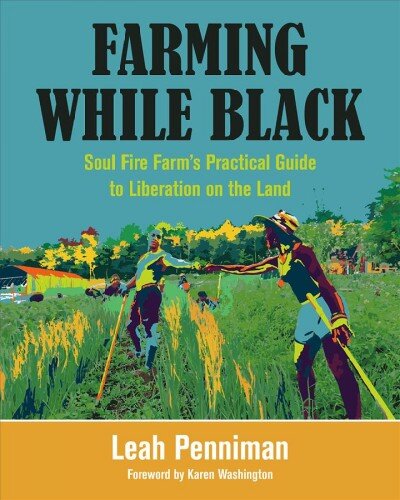
‘Farming While Black’: A Guide To Finding Power And Dignity Through Food

Interesting:

Leah Penniman was told she wasn’t welcome, from her first day in a conservative, almost all-white kindergarten.

“I remember this one girl teasing me and saying brownies aren’t allowed in this school … and that really continued, that type of teasing,” she recalls. “Every time I walked into an honors classroom, they would ask me if I was in the right room,” she says.

She enjoyed learning and did well, but she also found solace in the natural world.

“No one taught me what African traditional religion was when I was little, but my sister and I intuited it and so we would spend a lot of time in the forest giving reverence to mother nature as we called to her in the trees.”

Penniman later got a summer job farming in Boston, and she was hooked. She learned about sustainable agriculture and the African roots of those practices, but she also moved to Albany, N.Y., to a neighborhood classified as a food desert. To get fresh groceries from a farm share, she walked more than two miles with a newborn baby in a backpack and a toddler in the stroller, then walked back with the groceries resting on top of and around the sleeping toddler.

She made it her goal to start a farm for her neighbors, and to provide fresh food to refugees, immigrants and people affected by mass incarceration. She calls the lack of access to fresh food “food apartheid” because it’s a human-created system of segregation.

Penniman and her staff at Soul Fire Farm, located about 25 miles northeast of Albany, train black and Latinx farmers in growing techniques and management practices from the African diaspora, so they can play a part in addressing food access, health disparities, and other social issues. Penniman’s new book, Farming While Black: Soul Fire Farm’s Practical Guide to Liberation on the Land, details her experiences as a farmer and activist, how she found “real power and dignity” through food, and how people with zero experience in gardening and farming can do the same.

Back when Penniman was a beginner at various farms in the Northeast, she realized she was in a field where almost all people were white, and that the sustainable and organic farmers were using African techniques, without knowing where those came from.

For example, farmers grow marigolds and other beneficial flowers next to crops because those attract insects like ladybugs to do natural pest control. That’s called polyculture now, but it’s a practice that came from Nigerian and Ghanaian farmers, and Penniman’s book traces techniques like that back to their historic roots.

Farming While Black“A lot of the folks in the sustainable farming world get a lot of information through these conferences and sort of assume that … it’s either ahistorical or originated in a European community, which is an injustice and a tragedy,” Penniman says.

There are other instances of African contributions to farming technology that are not widely known.

Edda Fields-Black, an associate professor of history at Carnegie Mellon University, studies the history of West African rice farmers. She says the rice industry in South Carolina and Georgia would not have been possible without West African techniques of irrigation so that the rice fields have a good balance of salt water and fresh water to stop weeds from growing and keep the rice alive.

“We don’t always understand enough about all of the things that enslaved people built in the U.S. It’s not just brute labor, it’s not just brawn. This is technology, this is ingenuity, this is engineering, this is hydraulics. It’s all rooted in west Africa,” says Fields-Black.

She cites a 2018 report from the Southern Poverty Law Centerdetailing the “dismal” results of how little high school seniors know about the history of slavery, and says her work is about celebrating African technology, and “recovering the humanity of the enslaved.” That’s something she and Penniman have in common, she adds.

Penniman also writes that she would like her experience to help African-Americans heal from the trauma associated with farming. She details how black visitors to her farm almost all say they associate farming with slavery and plantations. One black farmer I interviewed in the past said that when he decided to quit a job in the tech industry to start a farm, part of his family thought he had lost his mind and was “going back to the plantation.”

That’s the universal experience … of being black in this country,” says Chris Bolden-Newsome, a farmer and educator at Sankofa Community Farm in Philadelphia, whom Penniman interviewed for her book.

Therefore, learning about Penniman’s book was “like a breath of fresh air,” Bolden-Newsome says. “High time that something like this be written to lift up the stories, the lived experiences and lived stories of black farmers and their descendants who are the powerhouse in America.”

Penniman and her coworkers at her farm also try to address social issues more directly. For example, she has a sliding scale of prices, where a third of her customers make more money and pay more, and that subsidizes prices for another third of her customers, who struggle to make ends meet. She has written a manual for how to develop such a system, and says that she knows of at least two farms in New York state with similar programs for low-income customers.

She says that just as her African ancestors braided seeds into their hair before boarding transatlantic slave ships, she hopes her book will inspire more people toward “picking up those seeds and carrying on that legacy about not forgetting where we come from and who we are.”

Her farm also started a youth justice program in 2013, which let young people from Albany County courts work on the farm for 50 hours in exchange for prison time.

“What was really powerful about it was these young folks said things like, ‘I’ve never been welcomed into someone’s home before, or this is the first time I’ve seen folks who look like me running their own businesses and following their dreams and owning their land,'” says Penniman.

“There’s a lot of crying that happens on our farm,” she adds.

Source: ‘Farming While Black’: A Guide To Finding Power And Dignity Through Food

Guest column: Canada’s migrant worker program a model for the world | Windsor Star

Ken Enns, owner of Enns Plant Farm, on the need for Temporary Foreign Workers in the agriculture sector:

Our workers are here on eight-month contracts, can leave and go home at any time they want, must be paid minimum wage plus whatever bonus is negotiated, full health care coverage when they step off the plane, full workman’s compensation, free weekly transport to town for shopping and supplied living accommodations.

They go home after eight months with a very large amount of money to put their children through university, they support their families, send home generators, tools to start machine shops, home appliances and all the things they cannot get at home.

We have many workers who have applied to return now for 25 and 30 years in a row. They continually ask if they can bring more of their family members for the next year — hardly the request from a person who is a “slave,” as described in the article.

We have the finest labour program in the world and we should be holding it up as a model for the world to follow. This is how you treat and protect your migrant workers.

Instead of trashing the program, we should be increasing it. Instead of giving foreign aid to impoverished nations, we should have their people come here and we could get some benefit for all that aid.

Our industry is one of a very few that can compete with and do better than the Americans. Our labour program is one of the reasons.

Guest column: Canada’s migrant worker program a model for the world | Windsor Star.