Has been discussed for some time but with climate change accelerating, will likely see more pressures:
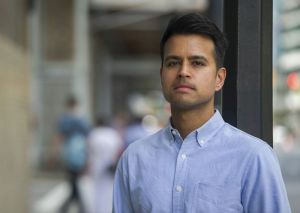
Amita Kettner’s mother was killed when a mudslide wiped out the family home in North Vancouver.
The Green party candidate for Burnaby North was 14 when the sudden burst of extreme weather struck in 2005, sweeping Eliza Wing Mun Kettner and her house down an embankment.
The tragic family history adds to why Kettner, along with the Green party of Canada, is impassioned about the party’s out-of-the-ordinary election promise to advocate for making “environmental refugee” a new immigration category in Canada.
“We, as a country, have a certain amount of prosperity and comfort, and we can prepare to have climate refugees. That is not something that everywhere else can do,” says Kettner, who recently obtained a PhD in astrophysics from the University of California, Santa Clara.
Soon many regions of the globe are “likely to be on fire, or underwater or having crop failures,” said Kettner.
“We might not have to take refugees that come overland (entering Canada from the U.S.), but it’s possible we might see mass migration from the equatorial band. I think we should be ready to accept people from everywhere and anywhere.”
The Green party knows it faces an uphill battle on the issue, since the United Nations refugee agency, which currently defines refugees as people escaping war and persecution, has failed to come up with a definition of environmental refugee, citing legal and political complications.
Nevertheless, the party’s 2019 platform declares it intends to “lead a national discussion to define the term ‘environmental refugee,’ advocate for its inclusion as a refugee category in Canada, and accept an appropriate share of the world’s environmental refugees into Canada.”
With tens of thousands of Canadians joining climate-change protests on Friday and the environment ranking as leading election issue, projections about the potential scale of the climate crisis still vary. One widely cited study, from the United Nations University, suggests there will be 200 million environmental migrants by 2050.
Experts are also concerned that only the wealthy will have a chance to emigrate from the world’s increasingly hot spots, which could be devastated by water shortages, crop failure and extreme weather. This year, for instance, severe drought hit East Africa, unusual typhoons battered the Philippines, and crops withered in Honduras.
Sanjay Jeram.GERRY KAHRMANN / PNG
Simon Fraser University political scientist Sanjay Jeram says the Canadian Greens’ enthusiasm for broadening the refugee category “comes at an interesting time when, across the Western world, we have seen parties — on the left and right — express hesitation about their state’s capacity to take in refugees.”
Even people sympathetic to the plight of refugees are timid about reopening the definition used by the United Nations convention, Jeram said. They fear some nation-states will use it as an opportunity to withdraw from current commitments to take in people escaping war and persecution, of which there are more than 22 million.
Nevertheless, Sanjay pointed to New Zealand as a potential example for Canada to follow, since some of its politicians have been exploring how to make climate change a legitimate ground for an asylum claim.
Last year New Zealand Prime Minister Jacinda Ardern planned to create a special visa for Pacific Islanders forced to relocate because of rising sea levels. She hoped her nation, as a precedent, could offer 100 visas each year. Ardern’s plan, however, has run into legal barriers.
Like many environmental specialists, Kuttner, who wouldn’t speculate about how many environmental refugees Canada might accept, is concerned that rich and educated people will be most likely to escape climate-change calamity in their regions, including through migration to countries like Canada, which are somewhat less vulnerable.
“There’s a definite sense that some people, if they have enough capital, will be able to hide themselves from climate disaster,” Kuttner said.
“It’s definitely true that the more money people have the easier it is to handle large climate changes. But even for the well-off it’s still a gamble.”
Andy Yan.NICK PROCAYLO/ PNG
Andy Yan, director of the city program at Simon Fraser University, says it’s possible some people around the world who can afford it are trying to find a haven from climate change by migrating to Metro Vancouver and other parts of North America.
“That would probably be a factor. It goes into the idea of Metro Vancouver as a ‘hedge city.’ It’s not only about looking to create financial and political stability, it’s increasingly about searching for climate stability.”
That said, Yan is among those warning Metro Vancouver and Canada will not be immune from climate-change problems. He cites a recent study by University of Victoria scientists projecting that Vancouver could be warmer than San Diego by 2050, causing nearby forest fires and water shortages.
While it’s important to have discussions about our humanitarian responsibilities to the world’s migrants, however defined, Yan said the value of facing up to the potential for a mass movement of environmental refugees is that it reminds us to first take decisive action against climate change itself.
“How about having government policies that prevent the situation to begin with?”
This weekend, while idling in the Mediterranean Sea between Malta and Italy, the bright red and white Ocean Viking humanitarian ship suddenly set off in a strong, clear course toward the southern-most Italian island of Lampedusa.
The ship had just received permission from Italy to sail to Lampedusa, setting off a wave of relief for the 82 rescued people onboard. It also marked the first tangible evidence of a sweeping change in course to Italy’s — and possibly Europe’s — approach to the controversial issue of immigration.
Italy’s newly formed ruling coalition of the populist Five Star movement and left-leaning Democratic Party has decided to once again allow humanitarian rescue ships to dock here after more than a year of blocking ships under Matteo Salvini, the former minister of the interior. And it has made a swift deal with several EU countries to share the migrants aboard the Ocean Viking.
“Basically Italy is saying to Europe, we’re breaking with the past policy,” says Annalisa Camilli, immigration expert and author of La Legge del Mare – The Law of The Sea. “It’s a big message that Italy has chosen to come back in line with Germany, France and Spain instead of aligning with [anti-migrant] countries such as Hungary and Poland under the former far-right interior minister Matteo Salvini.”
The change comes with the government’s replacement of Salvini with the southern Italian lawyer Luciana Lamorgese. She’s the first woman to hold the job and, says Camilli, could not be more different in style and substance than Salvini.
Lamorgese has a deep and nuanced understanding of immigration policy with more 30 years experience in the Interior Ministry that deals with immigration. She’s the only so-called ‘technocrat’ in the cabinet, with no political allegiances. And she has worked mostly under the radar.
Not on Twitter or Facebook
“Lamorgese has no social profile. She’s not on Twitter or Facebook,” says Emiliana De Blasio, a political expert with Rome’s Luiss University. “She’s super partes and has worked with both rightist and leftist governments. She’s an institutional woman, not a politician, and because of that, Salvini has never attacked her and will find it more difficult to now.”
Until earlier this month when, in a political miscalculation, Salvini ousted himself from government, the far-right leader dominated the discourse on migration in Italy. In his near daily rants posted on social media, he amplified unproven conspiracy theories that humanitarian rescuers colluded with human traffickers; cultivated fears of a migrant invasion even as arrivals dropped by 80 per cent due to EU deals with African countries to try to stop migrants from entering Libya; and lashed out against the EU, while shutting down dialogue with its neighbours.
His refusal to allow migrant rescue ships to dock triggered some two dozen standoffs between Italy and rescuers — NGO, commercial and even Italy’s own naval ships — forcing migrant-crammed vessels to remain stranded at sea for up to three weeks. He also passed two so-called security decrees that cancelled special humanitarian assistance for asylum seekers and criminalized the NGO rescuers.
But if the choice of Lamorgese to replace Salvini signals a radical departure, the move is more political jujitsu than a counterstrike.
“They have seen that politicizing migration has divided the society, and basically they want to overcome this polarized vision of reality by defusing it,” Camilli said.
Lamorgese will do that by quietly getting to work, she added.
Talking with Europe about refugees
Already negotiations with Europe to share migrants and financially penalize countries that don’t are underway, as well as discussions about relaunching an EU naval patrol in the Mediterranean.
Members of the Democratic Party are pushing for Italy to reprise a lead role in setting up a German- and France-backed EU investment scheme in African countries to stem the flow of migrants and forging bilateral accords with those same countries to take back people who don’t qualify as refugees.
And here in Italy, reforming the country’s antiquated 16-year-old law on immigration is a top priority.
“I think we’re going to be hearing less about the invasion of migrants from the sea and more about how to grant long-term legal status to the 600,000 immigrants who have been living and working as agricultural workers and caregivers in Italy for years,” said Camilli.
Still, the issue of migrant flows across the Mediterranean from Africa is hardly going away. Even with the number of arrivals to Italy under 6,000 so far this year, more than 50,000 migrants crossed to Spain and Greece.
And how European countries deal with the sea crossings will remain contentious and of urgent concern to human rights observers.
NGOs watching how she handles human rights
In Italy, migrant rescue NGOs will be watching closely to see how Lamorgese deals with protecting the human rights of migrants in Libya where they are held captive in overcrowded barracks, tortured and extorted.
Under the previous Democratic Party interior minister Marco Minniti, Lamorgese worked to back a plan that funded the Libyan militias who ran their coast guard to intercept migrant-crammed dinghies and send the people back to captivity. Experts say the move merely fuelled human trafficking. Many migrants whose dinghies later made it past the Libyan patrols reported being trapped in a vicious cycle: Having to pay traffickers to board the rubber boats, being caught by the Libyan coast guard and brought back to the traffickers, only to have to pay them again for another attempt to escape.
“Italian ports will be open to humanitarian rescue ships, but at the same time they’ll fund extra-European countries such as Turkey, Libya, Tunisia and Sudan to block the immigration flows before they reach EU borders,” said Camilli.
Remaining as low-profile as she has been throughout her career, Lamorgese has not made any public statements about her new role as interior minister or given interviews about her plans.
But Democratic Party members of Italy’s new coalition government insist that the country is on a new course.
“Our approach is completely different from Salvini. We’re not trying to stop immigration, but manage it,” says Democratic head Senator Andrea Marcucci. “We must care about human beings and human rights. We must also see the Mediterranean as our future and as a place that provides opportunities and not only a terrible place that links us to Africa over immigration.”
It’s a promise that’s been made by previous governments, Marcucci admits.
But, say observers, if this new government lasts, Lamorgese has as good a chance as any at making inroads.
Germans are broadly positive towards immigration and think it benefits the country, a survey showed, suggesting the often extreme reactions triggered by the arrival of a million-plus refugees there in 2015 have given way to a calmer view.
A long-standing split between attitudes in the more welcoming western Germany and more sceptical former Communist east has also become less marked, Thursday’s Bertelsmann Foundation study revealed – though judged purely on economic factors the differences between the two parts remain acute.
Overall, almost two thirds of Germans believe immigration is good for the economy and 67% that it makes life more interesting, with young people the most positive.
“Germany has passed the stress test of the 2015 immigration wave and has stabilised itself as a pragmatic immigrant country,” foundation board member Joerg Draeger said.
“The population sees the challenges, but also the opportunities it brings for an ageing society.”
Four years ago, Chancellor Angela Merkel chose to leave Germany’s borders open as an unprecedented wave of migrants, many of them fleeing war in Syria, headed for Europe.
While many greeted Merkel’s decision with initial euphoria, a backlash followed, with a jump in support for anti-immigration parties across Europe, one of which, the Alternative for Germany (AfD), entered parliament in 2017 for the first time.
While a sense of unease remains, the intensity of feeling has diminished. Some 49% still think Germany is overburdened with refugees, but that has declined from 54% since 2017.
Some of the divisions between east and west have also narrowed.
A total of 59% of western Germans said refugees were welcome, down from 65% in 2017, while the comparable figure in the poorer east rose to 42% from 33%, the survey showed.
However, as many as 83% in the east – where the AfD is expected to do well in two regional elections on Sunday – still feel immigration is a burden on the welfare state and just a slender majority think it good for the economy.
Significant. Keeps on getting harder to justify the Safe Third Country Agreement:
The Trump administration implemented a policy change Monday to enable the head of immigration courts to overrule judges on cases, causing an uproar among career employees who said their independence will now be usurped by a political appointee.
Currently, the attorney general has the authority to override decisions issued by career immigration judges in the Justice Department’s Executive Office for Immigration Review after they are appealed to a central board. An interim rule, which the department issued on Friday and took effect Monday, will delegate that responsibility to the EOIR director. The director, who is appointed by the president but not confirmed by the Senate, can now issue decisions on cases pending before the appeals board that “have not been timely resolved in order to allow more practical flexibility in efficiently deciding appeals.” The rule also formalized a recently created Office of Policy and placed it under the director’s authority.
Court stakeholders, including the judges themselves, were quick to condemn the change, saying it would undermine the entire court system.
“The impact of this regulation is to substitute the policy directives of a single political appointee over the legal analysis of non-political, independent adjudicators,” said Ashley Tabaddor, a California-based judge and president of the National Association of Immigration Judges. She added that turning the EOIR director into a “mini-attorney general” would tear down the current barriers between the Justice Department’s obligations as a law enforcement entity and its “adjudicatory responsibilities.”
“By collapsing the policymaking role with the adjudication role into a single individual, the director of EOIR, an unconfirmed political appointee, the immigration court system has effectively been dismantled,” Tabaddor said.
Kate Voigt, associate director of government relations at the American Immigration Lawyers Association, said the addition to the EOIR director’s portfolio is problematic and “far outside the position’s current duties.”
“Because the director of EOIR reports to the attorney general, the director is likely to feel more beholden to the attorney general’s political whims than to making sound, just legal decisions,” Voigt said. “I am deeply concerned that allowing the director of EOIR to decide appeals cases directly will further undermine the independence of our judges and politicize our courts.”
The Justice Department said the rule was simply resolving discrepancies between existing policies limiting the EOIR director’s power and newer rules that have expanded it. It added the attorney general is generally too busy to weigh in on cases in which EOIR’s appeals board does not meet its deadlines.
“Due to his numerous other responsibilities and obligations, the attorney general is not in a position to adjudicate any [Board of Immigration Appeals] appeal simply because it has exceeded its time limit for adjudication,” the department said in its rule. Because the EOIR director already oversees the appeals board’s chairman, Justice added, the director “is in a better position to address cases that cannot be completed in a timely fashion by the BIA.”
The move follows the department’s action earlier this month to decertify the immigration judge’s union. Justice suggested the judges were management officials and therefore ineligible for collective bargaining, an argument the department unsuccessfully pursued in 2000. The judges and the Trump administration have frequentlyclashed, and the union has for years pushed for independence from the Justice Department altogether.
Both Attorney General William Barr and his predecessor Jeff Sessions—as well as attorneys general in previous administrations—have issued precedent-setting rulings that amounted to new immigration policies. While the new rule has already taken effect, the department will take public comments through Oct. 25.
Interesting article and of course, we have our examples (e.g., Ensaf Haidar, wife of jailed Saudi blogger Raif Badawi):
At first glance, it may not seem as though Saudi university students, disgruntled princes, Islamists, and teenage girls have much in common. But members of all these groups are leaving Saudi Arabia and seeking asylum in the United States, Canada, and Europe. Their numbers may be modest compared with those of the refugees who have fled Afghanistan, Iraq, and Syria in the past two decades, but these asylum seekers are a political problem for the kingdom—one that its supposedly modernizing young crown prince, Mohammed bin Salman (MBS), can no longer ignore.
According to the United Nations High Commissioner for Refugees, 815 Saudi citizens applied for asylum in 2017, a 318 percent increase from 2012. And that’s not counting the unofficial asylum seekers—those living abroad in a state of self-exile, delaying their return to the country for fear of repression. The murdered journalist Jamal Khashoggi was one of them.
This new, outspoken Saudi diaspora poses several problems for the kingdom. For one, Saudi Arabia spends millions of dollars on scholarships in order to lessen its dependency on foreign labor; it cannot then afford to lose its highly educated young citizens to exile abroad. The diaspora is also creating an image issue: behind every asylum seeker is a story of injustice and repression that punctures the official narrative about the new, modern Saudi Arabia, flush with economic opportunity. For this reason among others, asylum seekers strain Saudi Arabia’s relationships with their host governments, who are all allies and partners of the regime in Riyadh.
THE RUNAWAYS
MBS has trained particular resources and attention on young Saudis, promoting artistic and entrepreneurial initiatives designed to open the economy and reward youth creativity and talent. He even started an initiative, the Misk Foundation, dedicated to empowering youth to participate in the Saudi economy. But the very demographic MBS courts produces the majority of asylum seekers leaving the country. These newer exiles join the many students who obtained government scholarships to study in Europe and the United States during King Abdullah’s reign from 2005 to 2015 and failed to return to build the “new Saudi Arabia” afterward. By the time MBS had consolidated his power and become the new face of Saudi Arabia in 2017, many of those students were inclined to be skeptical of the crown prince’s promises of creativity, opportunity, and prosperity. They feared repression if they returned to Saudi Arabia—especially if they had taken advantage of freedoms abroad to criticize the regime and expose its shortcomings.
Their fears were well-grounded, as the Saudi regime isn’t hard to provoke. A tweet, a WhatsApp message, or participation in an academic or policy event deemed hostile to the regime is all it might take to wind up on a suspect list in MBS’ Saudi Arabia. The regime maintains tight control over its citizens abroad, watching their every move with developed surveillance technology. The scandal of pervasive surveillance was exposed after the Khashoggi murder, when it became public knowledge that the regime had hacked the phone of a young activist, Omar al-Zahrani, in Canada and recorded his communication with the slain journalist.
Young, educated asylum seekers undermine Saudi propaganda about the new opportunities on offer in the kingdom. And exiled princes challenge the myth of solidarity and cohesion in the royal family. The latter image has eroded since the purge of November 2017, when MBS detained high-ranking princes, including Alwaleed bin Talal and Mutaib bin Abdullah, at the Ritz-Carlton hotel in Riyadh. The flight of a handful of princes who have taken up residence in Europe underlines the fact that under the new crown prince, the regime has changed its strategy from buying off problematic princes to threatening them with humiliating detention.
Young, educated asylum seekers undermine Saudi propaganda about the new opportunities on offer in the kingdom.
Prince Khalid bin Farhan al-Saud is one example of a dissident prince who has eroded the regime’s power from afar. From exile in Germany, Prince Khalid announced his defection in 2013 and started a media campaign to undermine MBS. In interviews with the BBC and other news organizations that the regime considers hostile, Prince Khalid accused the royal family of hypocrisy for enjoying prohibited pleasures such as drinking alcohol and partying while denying them to ordinary citizens, and he characterized King Salman as a “Machiavellian monarch.” After the Khashoggi murder, Prince Khalid announced that he had escaped from a kidnapping attempt in Germany, allegedly ordered by the crown prince.
Exiled princes tend not to come from the core House of Saud lineage that has ruled the kingdom since 1933. But in a family dynasty in which the king is supposed to be primus inter pares, the first among equals, even the defection of a minor prince fractures the foundation of dynastic rule. Now that it is clear that MBS is willing to punish, kidnap, and humiliate defectors, exile has become the only solution for disgruntled princes. Prince Khalid was lucky. Other princes, such as Saif al-Islam al-Saud and Sultan ibn Turki al-Saud, were kidnapped from Europe and returned to Saudi Arabia and have not been seen since.
The newest emerging category of Saudi exiles are the so-called runaway girls. More than 1,000 girls between the ages of 18 and 25 have left Saudi Arabia under MBS, fleeing the strict control—and in some cases, physical and sexual abuse—their guardians impose on them. Their difficult journeys risk bringing even more restrictions and punishments upon them if they are forced to go back to Saudi Arabia.
A recent high-profile case has drawn international attention to the runaway girls. On January 5, 2019, 18-year-old Rahaf al-Qunun was detained at the Bangkok airport while on her way to seek asylum in Australia. Qunun spent several days in a hotel room at the airport before Canada granted her asylum. Without the support of many Saudi and non-Saudi activists, she might have shared the fate of other, less fortunate runaway girls: repatriation to the kingdom against her will. The regime now acknowledges this problem to the extent that it allowed the airing of debates on the issue in state-sponsored media after Qunun fled the country. Public discussion of the problem may imply that the government is starting to take it seriously; it may also be a way for the government to deflect the crisis and shift the blame to the girls’ parents or guardians.
A UNITED FRONT
Saudi exiles are extremely diverse in their political orientations but united in their grievances against the kingdom under MBS: restricted speech, corruption, the marginalization of women and minorities, and abuses of human rights. The latter concern dominated an opposition conference, hosted by the new forum Diwan London, in December 2018. Among the participants were the Washington-based activist Hala al-Dosari, now Jamal Khashoggi fellow at The Washington Post; the feminist activists Amani al-Ahmadi and Amani al-Issa; the newly exiled Islamists Sultan al-Abdali, Muhammad al-Omari, Ahmad bin Rashid al-Said, and Mohammed al-Qahtani; and the Shiite activist Fuad Ibrahim. They were joined by exiles who had fled the kingdom in the 1990s, such as the physics professor Muhammad al-Massari. All presented their visions for a different Saudi Arabia. Some advocated practical measures to stop repression and detentions; others called for the overthrow of the regime.
The regime’s worst nightmare is a critical mass of dissidents abroad—especially high-profile, articulate ones.
So far, neither Saudi Arabia nor the host governments have taken asylum seekers seriously as a political force. But as their numbers grow and they begin to form a united front, these exiles will become an increasing embarrassment to the regime and its allies. Many are now regular commentators for the global news media, analyzing Saudi affairs in ways that are bound to shift public opinion against the regime. For example, the detained Saudi activist Loujain al-Hathloul has a brother, Walid, in the United States and a sister, Alya, in Belgium, both of whom campaign for her release and regularly inform the news media about the abuse and torture to which she is subjected. Vigorous reporting by human rights organizations, UN agencies, and the global news media makes it harder for host countries to deny these Saudis asylum.
In the past, Saudi Arabia depended on its allies to deport its exiles. It considers granting them asylum an act of betrayal. Take Canada, for example, whose diplomatic relations with Saudi Arabia suffered owing to its criticisms of the regime’s human rights abuses and its hosting of outspoken exiles such as Ensaf Haidar, the wife of Raif Badawi, who was sentenced to 1,000 lashes and several years in prison for setting up a liberal Internet forum. Zahrani is also in Canada, together with almost 200 other young asylum seekers. The regime fears that exiles who gain asylum will encourage others to flee. Its worst nightmare is a critical mass of dissidents abroad—especially high-profile, articulate ones. Khashoggi’s murder attests to the policy of zero tolerance for such critical voices abroad: they are treated not as nuisances but as national security threats. The more exiles arrive in the lands of the crown prince’s best allies and supporters, the more Riyadh will pressure the host governments to play down their numbers and deny them refuge.
Even after the global outrage following the murder of Khashoggi, Saudi repression remains fierce, and MBS continues to make enemies. He will not be able to buy off, intimidate, or eliminate all of them, and the diaspora will continue to grow. But he may try to stem the exodus, for example, by banning activists and dissidents from travel—keeping his friends close and his enemies closer.
Of note. Not without potential longer-term implications:
Il y a maintenant plus de 1000 personnes [ayant des liens avec le mouvement Gülen] au Canada. Les gens sont venus de Turquie, mais aussi d’ailleurs dans le monde », a confirmé à La Presse Halil, de l’Institut du dialogue interculturel de Toronto, organisation liée au mouvement Gülen. Pour des raisons de sécurité, il nous a demandé de taire son nom de famille.
Les statistiques de la Commission de l’immigration et du statut de réfugié (CISR) confirment ses dires. Si, avant 2016, le Canada accordait en moyenne l’asile à moins de 500 personnes originaires de Turquie par année, leur nombre a bondi depuis le coup d’État raté de 2016.
En 2017, sur quelque 13 500 demandes d’asile qui ont été accueillies favorablement par le Canada, 1247 ont été accordées à des individus fuyant la Turquie. Ce chiffre a grimpé à 1407 en 2018 et atteignait 852 au cours des premiers mois de l’année 2019.
La Fondation Horizon, mise sur pied par des supporteurs du mouvement Gülen, vient en aide aux nouveaux réfugiés issus de la confrérie musulmane.
M. Salimoglu, qui a des liens avec le mouvement Gülen depuis les années 80, a lui-même obtenu l’asile en 2017 (voir l’onglet suivant). « À Montréal, il y a de 30 à 40 familles qui sont venues depuis le coup d’État. Il y a plus de gens en Ontario, notamment à Toronto et à Kitchener », précise-t-il.
La Turquie au premier rang
Au cours des trois dernières années, la Turquie est ainsi passée au premier rang pour le nombre de demandeurs d’asile qui obtiennent le statut de réfugié au Canada, se hissant devant l’Afghanistan et la Syrie.
Actuellement, les personnes ayant des liens avec le mouvement Gülen qui se présentent devant la CISR font l’objet d’une procédure accélérée. En vertu de cette procédure, les commissaires évaluent les demandes d’asile à partir de dossiers écrits et n’ont pas nécessairement à convoquer les demandeurs en audience, apprend-on dans les documents de la Commission de l’immigration et du statut de réfugié (CISR). Les Syriens, les Irakiens, les Afghans, les Coptes d’Égypte, les opposants politiques du Venezuela et du Soudan, notamment, sont aussi visés par cette procédure rapide.
Quand on l’interroge sur les raisons ayant mené à cette décision, la CISR se borne à fournir un lien internet décrivant la procédure accélérée, mais n’explique pas pourquoi la confrérie musulmane a été mise sur la liste. Au bureau du ministre de l’Immigration, même discrétion. On renvoie les journalistes aux communications de la CISR.
Interrogé par La Presse, l’ambassadeur de Turquie à Ottawa, Kerim Uras, estime que le Canada fait fausse route.
« Le mouvement Gülen est un mouvement très organisé qui sait utiliser les failles du système. La politique canadienne est malavisée. Un jour, le Canada pourrait la regretter. »
– Kerim Uras, ambassadeur de Turquie à Ottawa
Un mouvement décimé
Depuis le coup raté qui a eu lieu dans la nuit du 15 au 16 juillet en Turquie, le mouvement Gülen est l’ennemi juré du président Recep Tayyip Erdoğan. Ce grand réseau, qui comptait au début de la décennie près de 2 millions de membres actifs et 10 millions de sympathisants en Turquie, est disséminé à travers le monde.
Selon les experts, le mouvement Gülen peut être comparé à une franc-maçonnerie musulmane, très présente dans le milieu de l’éducation, des affaires et des médias. Pendant plus d’une décennie, ce réseau tentaculaire qui disposait de nombreux médias, d’institutions bancaires, de milliers d’écoles et de représentants à l’étranger était un allié du gouvernement islamo-conservateur de M. Erdoğan, mais les choses se sont gâtées en 2013.
Soupçonnés d’avoir fomenté le putsch contre le gouvernement turc, au cours duquel le parlement d’Ankara et le palais présidentiel ont été attaqués, des militaires associés au mouvement Gülen ont été arrêtés au lendemain du coup raté et accusés de terrorisme par la justice turque. Fethullah Gülen, le prédicateur et leader spirituel du mouvement, a affirmé à partir de la Pennsylvanie, où il vit en exil depuis 20 ans, que ses sympathisants n’avaient rien à voir avec le coup d’État.
Auteur d’un livre sur le mouvement Gülen et experte des études islamiques de l’Université de Chester en Grande-Bretagne, Caroline Tee ne partage pas le point de vue du leader musulman. « Il est pas mal clair, à partir des preuves journalistiques mises de l’avant en Turquie, que des sympathisants du mouvement Gülen ont participé au coup d’État », dit-elle.
Trois ans après les événements, il reste cependant beaucoup de zones d’ombre entourant l’événement, ajoute-t-elle. « C’est vraiment étrange qu’il y ait aussi peu d’informations rendues publiques sur les résultats des enquêtes policières », dit Mme Tee.
Rafles massives
Ces zones d’ombre n’ont cependant pas empêché le gouvernement Erdoğan d’arrêter des dizaines de milliers de citoyens – militaires, professeurs, journalistes, gens d’affaires – dans les semaines et les mois qui ont suivi le putsch avorté. Selon Human Rights Watch, plus de 77 000 personnes ont été arrêtées en lien avec le coup d’État de 2016. De ce nombre, plus de 45 000 l’ont été pour leur lien avec le mouvement Gülen, rebaptisé FETO par le gouvernement, soit l’« organisation terroriste de Fethullah ».
Au cours des trois dernières années, les organisations Human Rights Watch et Amnistie internationale ont dénoncé maintes fois l’aspect arbitraire des arrestations massives et des accusations de terrorisme qui touchent les membres du mouvement Gülen, mais aussi des Kurdes, des opposants politiques et des journalistes. « Il est normal que le gouvernement turc arrête et traduise en justice les organisateurs de la tentative de coup d’État qui a fait beaucoup de morts et de blessés dans la population civile, mais comment peut-on accuser de terrorisme des dizaines de milliers de personnes ? », a dit à La Presse Emma Sinclair-Webb, directrice de HRW en Turquie.
Fuyant cette répression tous azimuts de l’État, des dizaines de milliers de sympathisants du mouvement Gülen ont fui le pays. Le Canada n’est pas le seul pays à les accueillir. La France, l’Allemagne, les Pays-Bas, le Royaume-Uni ont notamment ouvert leurs portes aux membres de la confrérie musulmane.
Réfugiés ou menaces ?
Professeur d’économie à Harvard connu pour son blogue sur la politique turque, Dani Rodrik est convaincu que la majorité des membres du mouvement Gülen qui trouvent refuge à l’étranger ont de bonnes raisons de le faire. « Ça ne fait aucun doute : les gülenistes sont persécutés par le gouvernement turc, qu’ils aient pris part ou non à certaines des activités illégales du réseau. Je crois que la majorité des gülenistes sont des citoyens honnêtes qui n’avaient rien à voir avec les activités clandestines de certains membres du mouvement », dit M. Rodrik.
Selon l’expert de Harvard, les gouvernements qui accueillent des gülenistes doivent rester vigilants puisque les visées politiques du groupe restent obscures. « Je m’assurerais que mes services secrets gardent un oeil sur les activités des gülenistes. Sans l’ombre d’un doute », fait valoir le professeur.
…..
Une présence montréalaise
Le mouvement Gülen est présent à Montréal depuis plus d’une décennie et organise fréquemment des événements publics. Au début de la décennie, l’Institut du dialogue interculturel, lié au mouvement, organisait chaque année des soupers auxquels étaient conviés politiciens, professeurs d’université, journalistes et représentants des forces de l’ordre. Des membres des cercles de pouvoir québécois ont aussi participé à des voyages en Turquie financés par le mouvement Gülen.
Depuis le coup d’État, le mouvement s’est fait beaucoup plus discret, mais n’a pas cessé ses activités. En public, le mouvement prône la tolérance, le service à la communauté et le dialogue interreligieux, mais dans ses rangs, il impose un mode de vie très strict à ses membres – pas d’alcool, pas de tabac, pas de sexe avant le mariage.
« En Turquie, les gens sont très sceptiques à l’égard de ce groupe entouré de secret, dit Caroline Tee, professeure à l’Université de Chester, qui a passé de longues années à étudier ce mouvement. Par contre, en Occident, le mouvement est bien reçu. Les gens veulent croire que c’est un mouvement musulman modéré. »
The Trump administration has announced new immigration rules ending asylum protections for almost all migrants who arrive at the US-Mexico border, in violation of both US and international law.
According to the new rules, any asylum seekers who pass through another country before arriving at the southern border – including children traveling on their own – will not be eligible for asylum if they failed to apply first in their country of transit. They would only be eligible for US asylum if their application was turned down elsewhere.
The change would affect the vast majority of migrants arriving through Mexico. Most of those currently come from Guatemala, Honduras and El Salvador, but an increasing number are from Haiti, Cuba and countries further afield in Africa and Asia.
The new rules were placed on the federal register on Monday and due to take effect on Tuesday, though they will be immediately challenged in court for contraventions of the US refugee act and the UN refugee convention guaranteeing the right to seek asylum to those fleeing persecution from around the world.
Filippo Grandi, the UN high commissioner for refugees, said he was deeply concerned by the move. “It will put vulnerable families at risk. It will undermine efforts by countries across the region to devise the coherent, collective responses that are needed. This measure is severe and is not the best way forward,” he said.
The American Civil Liberties Unionsaid the rules were “patently unlawful” and said it would sue the administration to block them taking effect.
In a joint statement, the Departments of Homeland Security and Justice said the rules “add a new bar to eligibility for asylum” for migrants arriving at the southern border “who did not apply for protection from persecution or torture where it was available in at least one third country outside the alien’s country of citizenship, nationality or last lawful habitual residence”.
The attorney general, William Barr, said: “This rule will decrease forum shopping by economic migrants and those who seek to exploit our asylum system to obtain entry to the United States, while ensuring that no one is removed from the United States who is more likely than not to be tortured or persecuted on account of a protected ground.”
The US Refugee Act of 1980 limits the right of asylum if the applicant can be sent back to a “safe third country”, but human rights advocates have pointed out that neither Mexico nor any Central American countries come close to meeting the act’s standards of a safe third country, “where the alien’s life or freedom would not be threatened”… “and where the alien would have access to a full an fair procedure for determining a claim to asylum”.
Furthermore, for a country to be considered “safe”, it would have to enter into a formal agreement with the US. In recent months, the US has sought to conclude safe third country agreements with Mexico and Guatemala, but Mexico rejected the initiative and the agreement in Guatemala was blocked on Sunday by that country’s constitutional court. The new rules published on Monday simply ignore the safe third country standard.
Mexico continued to express muted support for asylum seekers, even as the country cracks down on migrants crossing its southern border.
The foreign minister, Marcelo Ebrard, said that the new rules would not apply to Mexicans or turn Mexico into a safe third country. “Mexico doesn’t agree with measures that limits people seeking asylum or refuge,” he said.
The move represents the latest in a series of steps the Trump administration has taken to cut off the flow of migrants through the US-Mexico border. Under the “migrant protection protocols”, the US has required migrants to wait in Mexico while their cases are decided in US immigration courts.
“The Trump administration is yet again attempting to rewrite and violate laws passed by Congress to protect refugees from return to persecution,” said Eleanor Acer, the director of refugee protection at Human Rights First. “This new rule is dangerous, disgraceful and blatantly illegal.”
“This rule will be challenged because it is contrary to the asylum statute and to US obligations to refugees under international law,” Keren Zwick, a litigator at the National Immigrant Justice Centre.
An Amnesty International assessment of the Mexican asylum system found it was “underfunded, absolutely beyond its capacity and inadequate in identifying even valued asylum claims” according to the organisation’s advocacy director for the Americas, Charanya Krishnaswami. The study found that Mexico sent a quarter of applicants back to the countries they were fleeing without due process.
“Those dangers make clear that Mexico would not be a safe place for the many thousands who are seeking protection at the US border,” Krishnaswami said.
The Canada Border Services Agency has ramped up deportations of failed refugee claimants and other foreign nationals and permanent residents who have lost the right to stay in Canada, amid concerns about the ability of Canada’s asylum system to respond quickly to spikes in refugee claims.
Removals from Canada have dropped significantly in the last several years, from more than 19,000 people in 2012-13 to around 8,000 in recent years. But that number climbed to roughly 9,500 people in 2018-19, following an internal effort to speed up the pace of deportations.
Despite the overall increase, the numbers remain low for removals of failed irregular asylum seekers — those who enter Canada from the U.S. between official border crossings, but who are unsuccessful in claiming refugee status — even though Ottawa has said it is prioritizing their removal.
A spokesperson for Border Security Minister Bill Blair told the National Post that anyone to be deported from Canada is given due process. “But once legal avenues have been exhausted, individuals are expected to respect our laws and leave Canada, or as per our commitments, be removed,” said Marie-Emmanuelle Cadieux in an email. “We are re-investing in the agency to ensure that processing continues to happen in a manner that is fair, fast and final.”
Last fall, the CBSA confirmed it had set a target of 10,000 removals for the 2018-19 fiscal year, a notable increase over the previous three years, when removals ranged from 7,900 to 8,600. At the time, Public Safety Minister Ralph Goodale said the agency needed to “pick up the pace” of removals, and pointed to $7.5 million in funding allocated to the CBSA in Budget 2018. “We’ve provided some extra resources for CBSA to do the work that’s necessary,” Goodale said. The agency has now confirmed it removed a total of 9,584 people last year.
Backlogs in Canada’s immigration system have been the subject of increased scrutiny since an influx of asylum seekers began crossing the Canada-U.S. border between official ports of entry after the 2016 election of U.S. President Donald Trump. Since January 2017, about 45,000 people have entered Canada in this way, using a loophole in the Canada-U.S. Safe Third Country Agreement that generally requires asylum seekers to make a refugee claim in whichever country they get to first.
In May, the auditor general found that Canada’s asylum system is unable to cope with such surges, with refugee claimants waiting two years for decisions on their claims. The backlog of asylum seekers numbered about 75,000 at the time and will likely continue to grow. However, the number of people entering Canada illegally has dropped considerably, and is currently only half what it was at this time last year.
The government is taking steps to speed up the entire system, from claim hearings to removals. Budget 2019 earmarked $1.18 billion over five years for border security and processing of asylum claims.
The CBSA also says it is now prioritizing the removal of irregular asylum seekers whose claims have been denied, as it does people who are deemed threats to national security or who are involved in organized crime, crimes against humanity or other types of criminal activity. However, Canada has still deported only a small minority of the tens of thousands of irregular asylum seekers who’ve entered the country in the last two years. According to figures the CBSA provided to the Post, the agency removed just 723 irregular migrants with failed refugee claims between April 1, 2017 and June 21, 2019.
This is largely because asylum seekers must exhaust all legal avenues of appeal before they can be removed, which takes time. The agency also pointed to a number of other factors that can delay removals, including the fact that Canada temporarily halts removals to countries in armed conflict or experiencing environmental disasters — such measures are currently in place for Afghanistan, the Democratic Republic of Congo and Iraq. A lack of valid travel documents and medical issues can also delay removals.
“The CBSA is firmly committed to meeting its mandate under the Immigration and Refugee Protection Act to conduct removals as soon as possible,” a spokesperson told the Post in an email, adding that the agency has increased staffing levels and improved co-ordination with other branches of the immigration system to speed up removals. The agency said there are currently just under 3,000 people with an “actionable removal order” in Canada, meaning with no barrier to deportation.
Still, Janet Dench, executive director of the Canadian Council for Refugees, said setting quotas for deportations like the CBSA’s target of 10,000 removals can be problematic. “One of the concerns is who ends up being a priority for removal,” she said. When border officers are given targets they need to meet, there’s an incentive to prioritize families over criminals because officials can remove a number of people at once, often with less effort, she said.
Dench said the removal process can often feel arbitrary, with some people getting calls from the CBSA almost immediately, while others wait years before being asked to leave.
Other longer-term polling shows less dramatic shift (i.e., Focus Canada):
A pre-election survey conducted for CBC News suggests Canadians are divided on immigration, with clear limits on the kind of migration they find acceptable.
The government groups immigrants into three categories: economic, which are skilled workers and businesspeople, along with their partners and dependants; family reunification; and refugees or those admitted under humanitarian or compassionate grounds.
More than three-quarters (76 per cent) of respondents to a survey by Public Square Research and Maru/Blue agreed that Canada should do more to encourage skilled labourers to immigrate to the country, while 57 per cent said Canada should not be accepting more refugees.
The results come as no surprise to immigration experts and advocates, who point to a negative shift in tone on migration around the world, especially when it comes to refugees. They say that trend is stoked by media coverage in Canada of asylum seekers crossing the country’s border with the U.S.
….
Christina Clark-Kazak, a University of Ottawa professor who specializes in refugees and immigration, said the survey results reflect a long-standing tradition of Canadian immigration policy being centred around labour market needs. Under both Conservative and Liberal governments over the past decade, economic immigrants have made up between 53 and 63 per cent of immigrants each year, according to Immigration, Refugees and Citizenship Canada (IRCC) data.
“The problem with a lot of the immigration policy is we think about individuals in isolation and we think about them only as economic actors,” she said. Refugees, she added, are often seen as a “nice-to-have” by policy-makers but not a priority.
The survey polled 4,500 adults online from among those who registered with the Maru Voice panel. Other findings include:
64 per cent of respondents said illegal immigration is becoming a serious problem.
56 per cent said that accepting too many immigrants will change Canada.
24 per cent of respondents said too many immigrants are visible minorities.
“I think it is reflective that there is this sort of thin veneer of tolerance, but underneath there is a lot of racism that still exists in Canada,” said Clark-Kazak.
She said the Canadian context is also influenced by language coming out of the U.S., from a president she sees as anti-refugee, anti-immigration and anti-Islam. That discourse, she said, is seeping into both the political sphere and everyday life.
Other experts say Canada is not immune to this trend.
“Canada is not unique,” said Mireille Paquet, a political science professor at Concordia University and research chair on the politics of immigration. “Canada might have been more protected from some of the trends we see in Europe or in the United States, for example, but recent events show that Canadians also react the same way to this kind of growing politicization of immigration.”
With a federal election looming later this year, Paquet says the issue could become further polarized.
“There is the chance that some parties will try to get some traction out of activating those fears and out of presenting themselves as being more able to respond to that, for example, by being tougher at the border,” said Paquet.
Experts say the results also reflect ongoing confusion around the legality of migrants crossing Canada’s border outside of ports of entry, a problem they say has been exacerbated by heightened media attention.
Entering the country outside of a port of entry is illegal under Canada’s Customs Act, but asylum seekers who do so to claim refugee status are protected from prosecution while their cases are reviewed, under the Immigration and Refugee Protection Act. The UN Convention on Refugees also notes that legitimate asylum seekers in this situation should not be prosecuted.
Approximately 55,030 people claimed asylum in Canada last year, according to IRCC.
Immigration targets call for boost in numbers
The overall number of permanent residents that were admitted to Canada in 2018 was 321,045.
And the federal government is hoping to boost immigration numbers further. In targets laid out in last year’s annual report to Parliament on immigration, the government calls for 330,800 admissions this year, a number that is set to increase to 350,000 in 2021.
“Immigration has been, and continues to be, good for Canada,” said Ahmed Hussen, Canada’s Minister of Immigration, Refugees and Citizenship. “We are an aging society. We have a growing economy that needs a lot of new workers.”
During a pre-election speech on immigration policy in May, Conservative Leader Andrew Scheer said his party would look at immigration levels annually, with an emphasis on economic immigration. The NDP’s election platform also states that its immigration policies and levels would address labour force needs, and that it would fix the “backlog” in the refugee system. The Green Party says it would also address labour shortages but would make substantial changes to the immigration system, including adding a category for “environmental refugees” and slowing down the deportation process.
Public sentiment on asylum seekers has shifted, and Labor must use the looming parliamentary term to “give Australia’s hopeful side a fair chance to prevail over the politics of fear, and division” according to the shadow minister for multicultural affairs, Andrew Giles.
Giles will use a speech to Australian Fabians on Wednesday to argue the recent community debate around the medical evacuations bill, and the tone of the federal election, suggests Australians are over the toxic politics of border protection, and are fatigued by the “false binaries and unnecessary aggression” from the home affairs minister, Peter Dutton.
The Victorian leftwinger will say it was notable that border protection, and the “demonisation of asylum seekers” did not feature front and centre in the 2019 federal election, which is unusual compared with previous federal contests. “I’m not sure if we can quite characterise this as something to celebrate, but it is a significant development – something to build upon.”
Giles says the “noise” of the hyper-partisan conflict over border protection policy that has raged in Australia since the Tampa standoff “has crowded out both a reasoned and reasonable exchange of ideas, and the voices of those whose lives are directly affected by the policy choices we make”.
“We have to change this. We have to give Australia’s hopeful side a fair chance to prevail over the politics of fear, and division.”
“Australians are rightly proud of our immigration story, and should be concerned at how this government has been undermining its foundations,” Giles says. “It’s our job to call out the dog-whistling rhetoric, and to expose what lies beneath it.”
He will point to the devaluing of immigration and settlement functions within the home affairs structure and “extraordinary delays” in visa processing and citizenship applications. “They don’t just frustrate the affected individuals, they affect our society at large.”
Giles says Labor will continue to oppose a controversial planned privatisation of visa processing and call out instances where particular communities are singled out for abuse.
“Governments should seek to bring people together, that’s been the modern story of settlement in Australia, and of our commitment to multiculturalism,” he will say.
“But there’s an unease which is easy to appreciate, as some communities feel under pressure and under supported.
Giles, who has been a vocal advocate within Labor for more humane policies on asylum, moved a motion against boat turnbacks at Labor’s 2015 national conference. But the Victorian has subsequently argued he supports interceptions where it is safe to do so.
He references that shift implicitly in the speech. “As the facts have changed, so have some of my views, but not my values, nor my determination to make a difference for the world’s most vulnerable people”.


 Multicultural Meanderings