Hatred of women, not Islam, fuels Pakistan’s honour killings

Two takes on the horrific stoning in Pakistan of  Farzana Parveen, another example of all too frequent “honour killings,” or as CCMW names them, “femicide.” Starting with Omar Aziz in the Globe:

What are we afraid of? Can we, for one second, acknowledge that there is a cultural problem here, or will we continue to sanctimoniously blame all of this on ‘those other men over there?’ Within five kilometers of my home, I can think of at least two cases of such extreme, impenitent misogyny. In one case, a Pakistani father beat his daughter after he discovered her long-distance relationship. In another, the case of Aqsa Parvez, her brother strangled her to death with the father’s consent because she objected to wearing the hijab. Everywhere there is an honour killing – a human sacrifice – there is a woman breaking off the chains of tradition. There is a woman demanding the right to live as she wishes, and in her way is a man demanding she get in line.

These women are the real freedom fighters in the Pakistani and wider South Asian and Middle Eastern community, not the cowardly males who use their physical advantage to assault women in the name of some illusory honour, or their supporters in the West and throughout South Asia who rationalize their decisions. One crime too many has been committed against women by the insecure, ignorant, hate-filled mob that is their own family. It is time that we be honest about the causes of such barbarity and begin seriously combatting it, or Farzana Parveen’s name may soon be forgotten like the many women who were sacrificed before her.

Hatred of women, not Islam, fuels Pakistan’s honour killings – The Globe and Mail.

And, via Farzana Hassan, this piece by Matthew Syed in The National Secular Society:

Turn your mind away from the brutality of honour killings and focus, for a moment, on the psychology. Consider the corrupting power of a religious ideology that can animate a father to perpetrate the most intimate and barbaric of assaults on his own daughter, a brother on his own sister, an uncle on his own niece.

“I killed my daughter as she had insulted all of our family by marrying a man without our consent, and I have no regret over it,” the police investigator quoted the father of the murdered woman in Lahore as saying. Her crime, in case you were wondering, was to fall in love with the wrong man.

You cannot win against this kind of barbarism by being nice. You can’t win by beating a strategic retreat, as Sotheby’s plans to do by withdrawing nudes from arts sales because they are terrified of offending Middle Eastern clients. Fundamentalism is too fierce, too implacable, it takes too deep a hold on those who are infected by it, to reach any kind of compromise. Trying to find an accommodation with fanaticism is like trying to cuddle a virus.

A woman is stoned. We politely look away

Younger Canadians hold more negative views about religious groups – CRRF

Further to an earlier release of the CRRF and ACS Survey on Religion, Racism and Intergroup Relations in Canada Shows Differences in Attitudes Among Anglophones, Francophones and Other Groups, a further release pertaining to attitudes to religious diversity by age group. Remarkably consistent across religions, except for Muslims:

Table 1: Negative attitudes towards certain groups, according to age groups
 Negative Opinion

Total

18-24

25-34

35-44

45-54

55-64

 Muslims 44% 43% 45% 40% 43% 40%
 Jews 19% 24% 25% 20% 15% 15%
 Protestants 15% 24% 23% 14% 15% 8%
 Catholics 19% 25% 25% 22% 18% 13%
 Atheists/Agnostics 21% 14% 18% 21% 21% 22%
 Religious 31% 36% 33% 31% 31% 27%
 Immigrants 24% 24% 27% 24% 30% 16%
 Aboriginals 26% 26% 26% 25% 29% 22%

Younger Canadians hold more negative views about religious groups

Whereas on diversity in general, young people are more supportive than older age groups, as another relatively recent study by ACS shows:

Do you have a very positive, somewhat positive, somewhat negative or very negative opinion of Canadian Multicultural Policy
Total 18-24 25-34 35-44 45-54 55-64 65 + French English Other
TOTAL positive 58% 74% 61% 61% 56% 54% 47% 48% 60% 67%
Very positive 15% 34% 18% 15% 10% 12% 8% 8% 14% 26%
Somewhat positive 43% 40% 43% 46% 46% 42% 39% 40% 46% 41%
TOTAL negative 35% 14% 29% 33% 35% 39% 50% 45% 32% 28%
Somewhat negative 23% 7% 19% 24% 25% 25% 33% 29% 22% 18%
Very negative 12% 8% 10% 9% 11% 14% 17% 16% 10% 11%
I prefer not answering 7% 11% 10% 6% 9% 7% 3% 7% 8% 5%

Younger Canadians Believe Multiculturalism Works; Older Canadians, Not So Sure 

I expect a further breakdown by region (urban vs rural, QC vs ROC), cross-referenced to more broad-based attitude polling, may cast more light, or it may simply reflect that younger people, in general, may be less religious.

No surprise, and consistent with other surveys, distrust of Muslims is higher than other religions (they did not ask about Sikhs which generally “rate” between Muslims and other religions). There may be a link between the categories “religious” and Muslims, given perceptions of more religious fundamentalism or conservatism.

Like all polling, one question leads to another …

Christie Blatchford: Evangelical Christianity and aboriginal healing come together to battle transparency and accountability | National Post

Christie Blatchford on Makayla and her family’s decision to stop conventional treatment. I have sympathy with their situation; chemo and related treatments are brutal, and treatment success is generally measured only by 5 year remission rates. However, putting one’s faith in prayer and non-traditional treatments will most likely condemn Makayla to death:

The issues that ought to have been central to the correctness of those decisions — was this little girl capable of making her own decision, and she may well have been, and if not, were her parents acting in her best interests? – were never fully explored.

The authorities effectively looked away. As the result, Makayla is both receiving treatment from aboriginal healers at Six Nations, a reserve near her own, and counting on Jesus – the efficacy of both much in doubt except to fervent believers.

Indeed, if it’s difficult to reconstruct from public reports which came first in the little girl’s story – her religiosity or her aboriginal culture – it’s less tricky to establish which had the greater impact.

Christie Blatchford: Evangelical Christianity and aboriginal healing come together to battle transparency and accountability | National Post.

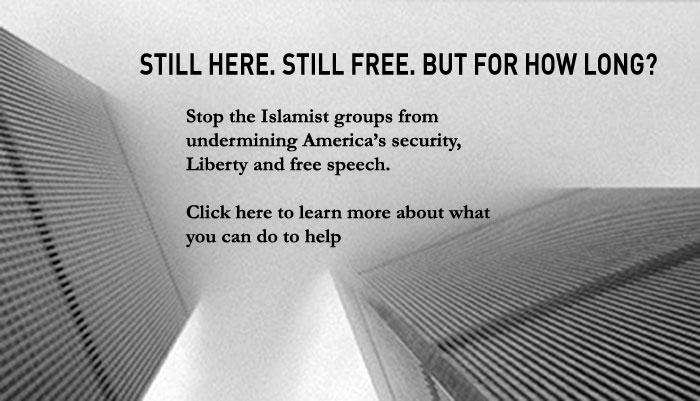
New York Times publishes Islamophobic ad by anti-Islam group

Contrasting high-brow Islamophobia in the NY Times for The Investigative Report on Terrorism and low-brow on Washington DC buses for Pamela Geller:

NYT Islamophobia


Geller Bus ads

The group also purchased a full-page display ad in Wednesday’s print edition New York Times. The all-text ad opened by “commemorating today’s official opening of the National September 11 Memorial Museum.” It went on to warn at great length that mainstream Muslim-American groups such as the Council on American-Islamic Relations were in fact part of a clandestine “radical Islamist” vanguard of a “holy war” that supports terrorism and wishes to continue the efforts of the September 11 attacks. “This is the new form of the jihadist threat we face,” the ad reads.

The Investigative Project on Terrorism has long been criticized as Islamophobic for its campaign against what it describes as a clandestine effort by “radical Muslims” — which they allege includes mainstream rights groups — to infiltrate and destroy the United States from within. The group was founded in 1995 by Steven Emerson, whose 2002 book is titled “American Jihad: The Terrorists Living Among Us.”

Just imagine, a similar ad stating:

Jewish Muslim Hatred: It’s in the Torah. $3 billion in US aid goes to Israel. Stop racism. End all aid to Israel.

New York Times publishes Islamophobic ad by anti-Islam group – Vox.

5 Things Bill Maher Got Wrong In Latest Islam Rant | Omar Baddar

More on the Bill Maher controversy. I think Omar Baddar has it about right:

Ultimately, this isn’t about scoring points against Maher or his panel; this is about making this world a better place. The Muslim world is incredibly diverse, and can by no means be reduced to a single cohesive unit. From Eastern Europe to the horn of Africa, and from Lebanon to Indonesia, we are talking about fundamentally different societies and cultures. Some of these societies are more socially progressive than others; but in all of these societies, there are Muslims who are fighting for women’s rights and against extremism and violence, and they deserve our support against their reactionary opponents. To lump them all together under an ugly stereotype that’s defined by the Muslim world’s worst elements only alienates our progressive allies in Muslim societies and makes their causes all the more difficult to advance.

Bill Maher attempted to cite an Egypt poll, saying it showed that 80-90% of people in the country approved of death as a punishment for leaving Islam. The actual number is 64%, which is still horrifyingly high, and I am alarmed by it. An Israeli or a Palestinian may also be alarmed by the poll that found the majority of Israelis favor discrimination against their non-Jewish neighbors. But how we express these concerns also matters. If some random city in America had a high crime rate in the African American community, and one public official said “I’m concerned about this problem” and another public official said “the blacks are a problem,” which of these two would we all (probably including Bill Maher) condemn as a racist? When concern for certain problems within societies turns into hostility towards inexcusably large groups of people who have little in common beyond some random demographic factor (in this case, religion), then that is a paradigmatic example of bigotry. And this type of bigotry puts entire communities under attack from the outside, thus distracting from their fight to advance and tackle problems within. If Bill Maher wants to take his progressivism seriously, he should really let go of reckless rhetoric and join the real fight to advance progressive causes within and without Muslim societies.

5 Things Bill Maher Got Wrong In Latest Islam Rant | Omar Baddar.

When Culture Robs Girls of Role Models

Good commentary by Amira Elghawaby on the need, within Muslim communities,  to provide more role models and visibility for women in both institutions and in popular culture:

Just take a look at most North American Muslim conferences.  How many women are on stage? From Chicago to Toronto to Ottawa, the answer is, very few. This is not for a lack of successful women leaders in our communities. We have Canadian Muslim women who are doctors, scientists, academics, educators, lawyers, engineers, filmmakers, authors, journalists, activists, editors, entrepreneurs, etc. But for some reason, our community seems unwilling to showcase their talents. Just last year, after praising the success of the Reviving the Islamic Spirit conference which attracts over 20,000 people annually, the well-known American academic, author, and consultant, Dalia Mogahed, nevertheless lamented the dearth of female speakers. Mogahed is one of just over a handful of women who have ever spoken at this immense gathering, now in its 13th year.

What is behind this? Surely, young women and girls deserve to hear from women who are paving the way forward. And, certainly, women were not invisible in Islam’s earliest days as a pioneering faith that recognized gender rights and women’s agency. Why then are our communities today so reluctant in acknowledging and spotlighting female achievements?

There seems to be a disconnect, or, more specifically, confusion around the role of Muslim women in society. There is a deep and ingrained cultural fear about intermingling. That fear is so strong that it has essentially led to the erasure of the female presence from many community institutions.  Take the barriers that have popped up at mosques across North America over the past few decades, making many women feel unwelcome and apart, as chronicled in the 2005 Canadian film Me And the Mosque. While some Muslim women themselves have internalized concerns over intermingling, so much that they cling to the barriers, the fact is that these barriers have come to represent an unwillingness to model respectful interactions between the genders. This emerges out of misplaced concepts of modesty and piety and is perhaps the attitude that led a York University student to famously ask to be exempted from working with female peers.

When Culture Robs Girls of Role Models – New Canadian Media – NCM.

More Thoughts on Multicultural Church: 3 Things to Consider About Multiculturalism

A Christian view of multiculturalism:

For example, a church in Brooklyn may be made up of 100 white-skinned people. On the surface, such a church looks rather homogenous. It is not until you learn that those 100 people are made up of people from the United States, South Africa, Germany, Spain, and a number of other countries that you realize diversity exists despite similar skin tones. The same example works with lots of different ethnicities and cultures.

A multicultural church is not simply about skin tone, but about the intentional, effective engagement of cultures. Racially diverse churches may be as culturally homogeneous as churches that lack racial diversity.

A multicultural church is not one that simply engages a variety of people from different parts of Asia. A multicultural church is one that not only engages with a variety of Asian peoples, but also a variety of Asian cultures.

More Thoughts on Multicultural Church: 3 Things to Consider About Multiculturalism | The Exchange | A Blog by Ed Stetzer.

Survey on Religion, Racism and Intergroup Relations in Canada Shows Differences in Attitudes Among Anglophones, Francophones and Other Groups

January 2014 survey on religious diversity, racism and intergroup relations by ACS and Canadian Race Relations Foundation. Not much surprising, communities tend to focus on their issues (and socialize more from within) and Québec attitudes towards religious diversity more negative. Racism highlights below:

Almost two in three Canadians (62%) report they are “worried” about a rise in racism. Concerns about racism and discrimination against particular groups such as Muslims, Aboriginal Peoples, immigrants and Jews vary greatly from one group to another.  Members of a particular group appear more concerned about a rise in racism and discrimination directed against their own group. Jews show a relatively high level of concern about racism directed against other groups as well. Francophones also show a higher level of concern except as it relates to anti-Aboriginal sentiment.

Survey on Religion, Racism and Intergroup Relations in Canada Shows Differences in Attitudes Among Anglophones, Francophones and Other Groups – Press Release – Digital Journal.

Farzana Hassan: Islamic Reform – Daunting But Needed

Interesting interview with Farzana Hassan, by the Clarion Project (see Sheema Khan: We can end honour killings, but not with films by anti-Muslim zealots and Film wages ‘interfaith campaign’ against abuse of Muslim women for more information on Clarion):

I see little clerical support for an “Islamic Reformation.” Even educated Muslims believe that Islam is perfect and therefore needs no reformation. Reformist Muslims, on the other hand, repudiate sharia provisions and attempt to understand Islamic belief and practice mainly as metaphor. Traditionalists see them as constituting the fringes of Muslim society, even as heretics.  Few heed their call for an Islamic reformation.

From my experience in dealing with Muslims of various stripes and persuasions, I have come to the conclusion that while there is movement toward and away from Islam, the main body of Muslims has remained largely orthodox due to recognizable inertia in Islamic theology. Muslims who challenge traditional interpretations often end up repudiating Islam, at least intellectually. New converts to Islam, on the other hand, embrace the orthodox view simply because it is the entrenched view. The result is stasis within the community of Muslims across the world.

An Islamic reformation is therefore a daunting task. Mullahs and clerics would have to abandon the literalist approach to Islam in favor of its broad principles, especially when there is a blatant contradiction between the two.

I think there is more diversity within the Muslim community, particularly in North America, than Farzana, and other religions (e.g., Catholicism) have some analogous challenges, but this interview gives her more space and nuance than the limitations of a short op-ed.

Farzana Hassan: Islamic Reform — Daunting But Needed | Clarion Project.

Ethnic Origin, Age and Religious Views (US)

Interesting analysis by Emma Green cross-referencing ethnic origin, age, and religious views in the US:

Blacks, hispanics, and people of mixed race are all more likely to be religious progressives than conservatives; these groups are also among the fastest-growing demographics in the United States. Similarly, Millennials are more than twice as likely to be religious progressives than religious conservatives; in fact, people older than 50 make up more than 60 percent of those who are considered to be religious conservatives. Although it’s impossible to talk to an 18-year-old about her views on culture and predict what she’ll think in two decades, these demographic trends suggest that the religious right is about to start shrinking.

But the question of influence is a little fuzzier. Although more than a third of Millennials are considered religious progressives, roughly 40 percent don’t have any faith at all: A growing number of young people don’t identify with a particular religion. That, along with the fact that an overwhelming majority of religious progressives don’t see religion as “the most important thing in their life,” suggests that faith is losing its overall influence over how people think about social and cultural issues.

Chart Of The Day « The Dish.