For one Liberal MP the refugee backlash cuts close to home: Tim Harper

Arif Virani, newly elected MP for Parkdale-High Park, on his life story and reactions to intolerance:

There was a backlash in 1972, as there is now, and it surfaced sporadically over the years. It happened again during the campaign, where a handful of voters told Virani they would never vote for a Muslim.

That stings as much today as it did 23 years ago when a guy in a North Bay bar called him a “Paki,’’ or 10 years earlier when the same label was affixed to his mother in a Toronto grocery store.

“You know, I’m a fairly level-headed guy, I like the sound of my own voice,’’ Virani said Thursday.

“I’m a litigator and I can talk and I can usually deal with issues and I’m well-versed in responding at the door.’’

He could handle himself when people objected to the Liberal position on trade, or CBC funding, or anti-terror legislation, but that ease melted away when he faced intolerance.

“Whether you are 3 or 43, when somebody volleys an intolerant, bigoted sentiment to you, it stupefies you for a moment. You want to say, ‘Who the hell do you think you are?’ But you can’t say that, because you always want to be respectful.

“I was tongue-tied. I would pause. I would say I’m sorry you felt that way, that’s not the type of Canada I believe in, have a nice day.

“It’s very demeaning and dehumanizing when you get attacked on something because of your skin colour or your religion or your place of origin.’’

So, he agonizes over the mosque-burning in Peterborough, the vandalism of a Kitchener temple, and the assault of a Muslim woman in his old Flemingdon Park stomping ground. The woman was picking up her son at Grenoble Public School, where Virani’s sister used to attend, when she was assaulted in what Toronto police called a hate crime.

Two Muslim women were accosted and verbally assaulted on a subway at Sherbourne Station on Wednesday. A Muslim woman in Ottawa found a threatening note in her mailbox.

Virani believes the Rob Ford regime at Toronto City Hall, then the injection of the niqab in the Stephen Harper campaign, emboldened those who had kept such thoughts to themselves, ripping the filter off those who silently harboured racist views.

“It gave people an issue to latch on to and something to go on the attack about,’’ he said.

But he takes heart in the response to the backlash. The Peterborough mosque raised more money than its goal after it was torched. There was a similar outpouring of revulsion over the Flemingdon Park assault.

That shows progress, he thinks, but adds: “To be blunt, there will always be an element in Canada that is resistant to change and . . . are somewhat intolerant. They fear the unknown.’’

Source: For one Liberal MP the refugee backlash cuts close to home: Tim Harper | Toronto Star

The Disproportionate Risks of Driving While Black – The New York Times

Black drivers stopped

Black Drivers ContrabandGood in-depth article and analysis:

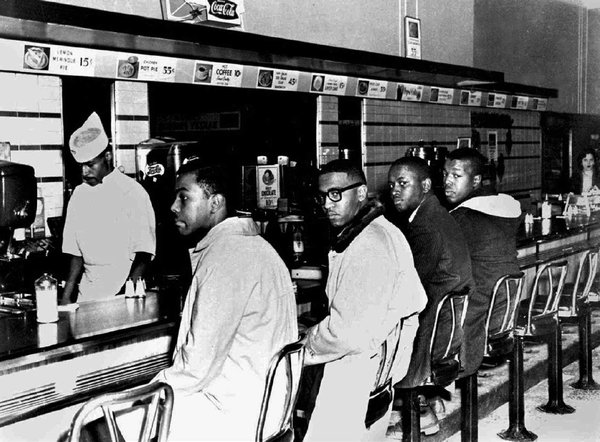
Greensboro has long cherished its reputation as a Southern progressive standout. This was the first Southern city to pledge to integrate its schools after the Supreme Court’s 1954 decision in Brown v. Board of Education, although it was among the last to actually do so. And when four black freshmen from North Carolina A&T State University occupied the orange and green stools at Woolworth’s whites-only lunch counter in 1960, Greensboro midwifed a sit-in movement that spread through the South.

Photo

North Carolina A&T State University students at the whites-only lunch counter at Woolworth’s in Greensboro in 1960. They were, from left, Joseph McNeil, Franklin McCain, Billy Smith and Clarence Henderson.CreditJack Moebes/Greensboro News & Record, via Corbis 

But this is also where hundreds of National Guardsmen suppressed black student protesters in 1969 and where, a decade later, five protesters were murdered at an anti-Ku Klux Klan rally conspicuously devoid of police protection.

And it was here, in 2009, that 39 minority police officers accused their own department of racial bias in a lawsuit that the city spent nearly $1.3 million fighting before agreeing to settle for $500,000. In a city that is 48 percent white, 75 percent of Greensboro’s force of 684 sworn officers remains white.

The Rev. Nelson Johnson, a civil rights leader here since the 1960s, contends that like Greensboro as a whole, the Police Department “has a liberal veneer but a reactionary underbelly.” An activist group he heads recently established a citizens’ board to hear complaints about the police, arguing that official investigations too often are shams.

“This is not about one officer,” Mr. Johnson said at a recent meeting about police behavior at the Beloved Community Center. “This is about a culture, a deeply saturated culture that reflects itself in double standards.”

The Times analyzed tens of thousands of traffic stops made by hundreds of officers since 2010. Although blacks made up 39 percent of Greensboro’s driving-age population, they constituted 54 percent of the drivers pulled over.

While factors like out-of-town drivers can alter the racial composition of a city’s motorists, “if the difference is that big, it does give you pause,” Dr. McDevitt of Northeastern University said.

Most black Greensboro drivers were stopped for regulatory or equipment violations, infractions that officers have the discretion to ignore. And black motorists who were stopped were let go with no police action — not even a warning — more often than were whites. Criminal justice experts say that raises questions about why they were pulled over at all and can indicate racial profiling.

In the past decade, officers reported using force during traffic stops only about once a month. The vast majority of the subjects were black, and most had put up resistance. Still, if a motorist was black, the odds were greater that officers would use force even in cases in which they did not first encounter resistance. Police officials suggested that could be because more black motorists tried to flee.

In an interview, Chief Scott said that overall, the statistics reflected sound crime-fighting strategies, not bias. They have produced record-low burglary rates, and most citizens welcome the effort, he said.

Deborah Lamm Weisel, an assistant professor of criminal justice at North Carolina Central University in Durham, said the best policing practices “involve officers making proactive contacts with citizens, and traffic stops are the main way they do that.”

But many criminal justice experts contend that the racial consequences of that strategy far outweigh its benefits — if, indeed, there are any.

“This is what people have been complaining about across the nation,” said Delores Jones-Brown, a professor at the John Jay College of Criminal Justice in New York. “It means whites are ‘getting away’ with very low-level offenses, while people who are poor or people of color are suffering consequences.”

“It amounts to harassment,” she said. “And police cannot demonstrate that it is creating better public safety.” To the contrary, she added, it makes minority citizens less likely to help the police prevent and solve crimes.

Source: The Disproportionate Risks of Driving While Black – The New York Times

What Kathleen Wynne can do about anti-black racism

Anthony Morgan, a research lawyer at the African Canadian Legal Clinic, proposes the creation of an anti-racism secretariat to undertake research and public education to reduce racism.

Not really sure the extent to which this will be effective, compared to the Ontario Human Rights Commission as well as other activities, governmental and non-governmental, with the comparable objectives:

Peel recently joined Toronto, Ottawa, Hamilton and London as Ontario jurisdictions where black people are the primary targets of the humiliating, human rights violating police practice of street checks and carding. Peel Police Chief Jennifer Evans has even decided to join the line of other Ontario chiefs who are defiantly committed to continuing this practice despite evidence of its discriminatory impact on black people.

In the realm of child welfare, black children are grossly overrepresented in every Ontario region where there is a sizable black population. After initially being caught flat-footed, the Ontario government has responded by supporting two separate province-wide consultations to address the systemic anti-black racism chronically plaguing Ontario’s policing and child welfare institutions.

It’s likely only a matter of time before similar province-wide government consultations have to be launched to remedy the over representation of blacks in school dropout rates, suspensions and expulsions, Ontario prisons, mental health committals and incidents of police use of deadly force, among others.

Though not as prominent on the public radar as it should be, anti-black hate crime also remains a pressing problem in Ontario. According to annual reports by the Toronto police and Statistics Canada, for the last few years blacks have been the principal target of racist hate-crimes in not only Toronto but across Canada.

Recently in Ottawa, a Black Lives Matter mural was defaced with the following threat: “ALL LIVES MATTER, NO DOUBLE STANDARD, YOU HAVE BEEN WARNED.” This was the third Black Lives Matter mural to be defaced in Ottawa over the last few months. In another jarring incident in April, a black assembly plant worker in Windsor faced repeated incidents of nooses being tied and mysteriously placed in and around his working space.

The above incidents are not small, isolated and unconnected mishaps enacted by a fringe few. They collectively form part of the continually creeping culture of anti-black racism embedded in the public consciousness, conventions and institutions of Ontario. This culture is critically implicated in constructing a context for black life in which chronic crime, violence, unemployment and poverty too commonly compromise the health and well-being of Ontario’s black population.

None of the above is to suggest that the Ontario government and its institutions are not leading and/or supporting some important work to directly or indirectly address anti-black racism. It is to point out that what is being done is simply not enough.

There remains a powerfully promising institutional response to anti-black racism and other forms of race-based discrimination that the Ontario government is yet to deploy: the Anti-Racism Secretariat. Since 2006, Ontario’s Human Rights Code has provided for the creation of this secretariat mandated to undertake research and public education programming designed to prevent and eliminate racism in Ontario.

For reasons that are unclear, the secretariat has never been established. In the chasm of the Ontario government’s silent inaction, it is tempting to speculate that black people being the primary targets of racism in Ontario is the reason for this.

Source: What Kathleen Wynne can do about anti-black racism | Toronto Star

L’Assemblée nationale dénonce l’islamophobie

Think this is a first in Canada, and striking that it is happening during the federal election and the Conservative use of the niqab for wedge politics, not to mention the bill before the Quebec legislature banning the niqab for giving or receiving public services:

Les 100 députés présents au Salon bleu se sont prononcés en faveur de l’initiative de la députée de Québec solidaire, Françoise David. Aucun ne s’y est opposé.

Le texte appelle les élus à s’inquiéter de la prolifération de matériel «à caractère islamophobe et raciste» sur les réseaux sociaux ces dernières semaines. Il enjoint aussi l’Assemblée nationale à affirmer que «les Québécois de confession musulmane sont des citoyens à part entière et que cette Assemblée condamne sans réserve les appels à la haine et à la violence contre tous les citoyens du Québec».

Le vote survient alors que la question du niqab dans les cérémonies de citoyenneté est devenue un thème central de la campagne fédérale. Il arrive quelques jours après que deux adolescents aient fait chuter une musulmane enceinte en lui arrachant son hijab à Anjou.

Dans ce contexte, Françoise David tenait mordicus à inclure le mot «islamophobe» dans le texte.

«Les incidents qui se multiplient depuis quelques semaines sont des incidents qui touchent particulièrement les musulmans du Québec», a-t-elle indiqué.

Réserves

Sauf que les tractations en coulisse et le débat qui a précédé le vote ont mis en relief une hésitation des partis à dénoncer l’«islamophobie». Le Parti libéral, le Parti québécois et la Coalition avenir Québec ont tous plaidé pour qu’on élargisse le texte de la motion afin de dénoncer tous les actes d’intolérance, et non seulement ceux à l’égard des musulmans.

«Je comprends la députée et la formation de Québec solidaire de vouloir mettre l’accent sur l’islamophobie, mais, nous aussi, on avait souhaité une portée plus large parce qu’en fait, lorsqu’on a fait la consultation sur la politique publique, il y a beaucoup de gens qui sont victimes d’intolérance», a affirmé la ministre de l’Immigration, Kathleen Weil.

Le député péquiste Maka Kotto souhaitait aussi amender la motion de Mme David pour «lui donner une note plus universelle, y intégrer en fait toutes les discriminations possibles, toutes les victimes potentielles de racisme».

Dans les rangs péquistes, on souhaitait éviter que l’appui à la motion soit perçu comme une condamnation du débat sur le niqabLe parti considère qu’il est légitime de s’opposer au port de ce voile intégral et de le considérer comme un instrument d’oppression des femmes.

En entrevue, M. Kotto a noté que les musulmans sont victimes de préjugés depuis les attentats du 11 septembre 2001, une tendance lourde qui dépasse les événements des dernières semaines.

Alors pourquoi cette réserve face au mot «islamophobe»?

«Parce que nous avons conscience du fait que le regard nourri de préjugés n’est pas le monopole de la seule société québécoise dans sa sphère de natifs», a-t-il répondu.

La CAQ a elle aussi plaidé pour qu’on retire les références à l’islamophobie du texte de la motion.

«”Islamophobe” veut aussi dire avoir peur de l’islam, a expliqué la députée caquiste Nathalie Roy. Les citoyens du Québec n’ont pas peur des religions. Cependant, si cette Assemblée nationale avait vraiment du courage, elle défendrait les oppressés, certes, c’est ce que nous disons, mais aussi elle dénoncerait les oppresseurs, elle dénoncerait l’islamisme radical.»

Subtle racism is the real threat: Cole

Desmond Cole on subtle racism, following UofT’s ‘White Student Union’ controversy:

The SFWC [Students For Western Civilization] website also features an interview with University of New Brunswick professor Ricardo Duchesne, who claims that “there is a real bias in university against white students, against white history.” Duchesne is the founder of the Council of European Canadians, whose mission statement proclaims that “Canada should remain majority, not exclusively, European in its ethnic composition and cultural character.”

For the moment, these messages of blatant white supremacy, and resentment for racialized people and movements, are thankfully unwelcome in mainstream Canadian conversation. That could change, of course, which is why it is important to challenge and oppose Duchesne, SFWC and their sympathizers. But we must also recognize them as merely the leading edge of a racist undercurrent in Canada, a mainstream fear that insists white people are under attack, but skilfully avoids examining what whiteness is or where it originated.

Race is a social construct, a false classification of humanity with no basis in science. However, thanks to our human history of European colonialism, slavery, and appropriation, whiteness has been established in Canada as an unscrutinized norm, a blank standard against which all other races are measured.

In Canada, white people are rarely named as a definitive group of people with a common identity or culture, a collective existence or set of values. Instead, whiteness stands invisible behind the camera and the microphone, examining the actions of others and demanding an explanation without acknowledging its role in framing nearly all mainstream conversions.

This is why, for example, a Canadian national newspaper can publish the headline, “We can’t keep tiptoeing around black-on-black violence,” as if the public is consumed with some other form of intra-racial violence, or would even validate that, say, white-on-white violence, exists or is a problem. It is why I, as a well-known black Canadian, am routinely asked my opinion about the actions of alleged black criminals, when it is the opinions of our white-dominated media that truly guide that narrative.

Most political observers and even casual news watchers remember city councillor and former mayor Rob Ford’s statement that “Oriental people work like dogs.” That kind of shameless racism gnaws at our Canadian sensibilities. But few people remember that Ford, whose heritage is hardly indigenous to North America, also said that East Asian people are “slowly taking over.”

Ford didn’t have to say what “Orientals” were taking over or, more importantly, from whom they were taking over. Similarly, when Conservative politician Larry Miller recently said that Muslim women in Canada who cover their faces should “stay the hell where you came from,” he did so without irony despite the fact that his own ancestry is not indigenous to Canada.

We can all recognize overt racism, and we should all condemn it, but our bigger problem is the subtle, unexamined sort. While we may reject uncomfortable notions of white student groups and organizations that promote European “cultural character,” most of us are more accepting of the equally racist notion of a dominant “Western civilization” they employ as a substitute for talking openly about whiteness.

Our unacknowledged assumptions, and our language about human diversity are better indicators of racism and discrimination than the impolite outbursts we seem so prone to recognizing. The clumsy expressions of hatred on local university campuses this week are like weeds — we can tear out the unsightly offshoots that pop up, but ultimately we have to address the problem at its root.

Racism Vs. Whites? You’re Kidding Me – The Daily Beast

Interesting and disturbing polling and related commentary by Barrett Holmes Pitner:

[Tom] Edsall pointed to a study conducted last fall by the Public Religion Research Institute (PRRI) that found that 52 percent of white respondents agreed with the following statement: “Today discrimination against whites has become as big a problem as discrimination against blacks and other minorities.”

Among subsets of respondents, 76 percent of those affiliated with the Tea Party agreed with the statement. Another 61 percent of Republicans, and 53 percent of independents. A majority of whites over age 50 also agreed with the statement, and 58 percent of working-class whites agreed. Evangelical Protestants (63 percent) and Catholics (56 percent) also agreed.

62 percent of white Democrats disagreed, and 61 percent of those with a college education. White Americans under 50 also disagreed, even though it was close. Only 48 percent of whites between the ages of 18-29 agreed, and 49 percent of them disagreed. Of whites 30-49, 46 percent agreed and 52 percent disagreed.

Upon seeing these figures I immediately wondered about what exactly white Americans perceive racism to be, and how the supposed racism they receive has become equal to that of African Americans and other minority groups.

Did a leading American presidential candidate refer to large swaths of the white American population as “rapists” and “murderers”?

Have countless white Americans taken to the streets to express their frustrations with a criminal justice system that disproportionately harms and negatively impacts the lives of white Americans?

Are white Americans campaigning against profound levels of income inequality that negatively impact the white community far worse than other racial and ethnic groups in America?

When I look around America I do not see white voices making these complaints. Instead I see large amounts of white Americans expressing their frustration that some traditional white American values are being questioned, or are “under attack,” as some might say.

Source: Racism Vs. Whites? You’re Kidding Me – The Daily Beast

Reaction to Calgary cab video shows progress in fighting racism, says immigration lawyer

Raj Sharma on how Calgary is changing, using the example of a taxi driver who filed a complaint over the racist rant of a passenger:

One way to measure how this city has changed is the public response to a dash-cam video that recently surfaced, which has been seen and shared by many. It shows an enraged drunk inundating Sardar Qayyum — a meek, deferential, Pakistani émigré and Canadian citizen — with a racist diatribe.

Unlike those who preceded him, Qayyum felt that he could go to our law enforcement agencies. He didn’t necessarily have to turn the other cheek.

…The perpetrator in this case has been identified, shamed and has lost his job. Having run the gauntlet of the internet, he and his family will move on after the mob finds their next target.

The public reaction to the video has shown his behaviour is not condoned, it is condemned. That’s a good sign and the support that Qayyum has received is heart-warming.

Racism appears to have progressed. You no longer commonly hear the generic slur of “Paki” being smeared over all South Asians. Unfortunately, racist attacks and tirades against Muslims appear to be increasing. A network of women’s centres is reporting an alarming rise in intolerance, racism and violence against Muslim women in Quebec tied to the proposed Charter of Quebec values, which thankfully remained inchoate.

Violence against Muslim women on the rise, group says

The rant against Qayyum centred around his religion; this incident is merely a symptom of the overall disease wherein the vast majority of Muslims are being tarred and feathered for the actions of a tiny minority. Muslims are “terrorists” or “sympathizers,” but since 2001 nearly twice as many people in the United States have been killed by white supremacists, antigovernment fanatics and other non-Muslim extremists than radical Muslims. Racists, by their very nature, rarely let the facts get in the way.

As a result, it’s been a chilly few years for ordinary Muslims living in the West, including Canada. However, “ordinary” Canadians with their condemnation of one man’s unacceptable actions have spoken loudly. This should be celebrated in moderation for the concerns expressed above.

I am optimistic that, while it may well be chilly right now for Canadian Muslims, the beauty is that in Calgary, the next chinook is already on its way.

Reaction to Calgary cab video shows progress in fighting racism, says immigration lawyer | CBCNews.ca Mobile.

Quebec considering removing N-word from 11 place names

Hard to justify retaining the names, just as hard as it is justifying flying the Confederate flag:

A stretch of the Gatineau River that has officially been called Nigger Rapids for decades could be renamed — along with 10 other sites in Quebec whose names include the racial slur.

But the provincial body that manages Quebec’s place names says there has been little public pressure to rename the sites.

The rapids are located in the municipality of Bouchette about 120 kilometres north of Ottawa. They were named in memory of a black couple who drowned there in the early 1900s, said Jean-Pierre LeBlanc, spokesman for the Quebec Toponymy Commission.

After decades of being known by their informal name by the locals, the commission officially recognized the name in 1983.

“It was meant to describe the people who died,” LeBlanc said. “There was no pejorative connotation then as there is now.”

LeBlanc said that no formal request by residents has been made to change the name of the rapids but that the commission is considering whether it should rename all 11 sites that include the racial slur.

Claire Hamel, who lives near the rapids, said the official name is not a source of controversy among locals.

“Nobody talks about this,” she said. “It’s the name, that’s it. Like Bouchette, like Maniwaki, like Ottawa.”

Bouchette Mayor Réjean Major told Radio-Canada he has no intention of asking the commission to change the name of the rapids.

Changing an official name is a lengthy process that requires public consultation, LeBlanc said.

“These are names that date back a long time,” he said.

“Some people want to keep the names. They say that it’s a witness of the past. It shows the history of black people in Quebec and how it was at that time. Others say the names are no longer fit.”

The commission has recognized six place names that include the N-word in English and five that include the word nègre, which in French can mean both Negro and the N-word.

Quebec considering removing N-word from 11 place names – Ottawa – CBC News.

New US Poll Shows Half of Blacks Have Been Unfairly Treated by Police

Not surprising, likely reinforced by ongoing instances of police wrong-doing:

The AP-NORC poll shows that just a third of black Americans say they can always or often trust police to do what is right for their communities, while a large majority of whites say that. Nearly half of blacks trust the police just sometimes, and 2 in 10 trust them rarely or never.

Eight in 10 black Americans say police are too quick to use deadly force, and 7 in 10 say police officers who cause injury or death are usually treated too leniently by the criminal justice system. Just a third of whites say either of those things.

More than 8 in 10 blacks say police sometimes treat minority groups more roughly. A similar proportion says that police are more likely to use deadly force against a black person than against a white person. Most whites think race does not affect police use of deadly force.

Fifty percent of blacks, compared with just 3 percent of whites, say that they personally have felt treated unfairly by a police officer because of race. Another 15 percent of blacks and 5 percent of whites say unfair treatment by police has happened to a family member.

New Poll Shows Half of Blacks Have Been Unfairly Treated by Police | TIME.

So You Flunked A Racism Test. Now What?

More on the inbuilt biases and prejudices that we all have:

You’re probably at least a little bit racist and sexist and homophobic. Most of us are.

Before you get all indignant, try taking one of the popular implicit-association tests. Created by sociologists at Harvard, the University of Washington, and the University of Virginia, they measure people’s unconscious prejudice by testing how easy — or difficult — it is for the test-takers to associate words like “good” and “bad” with images of black people versus white people, or “scientist” and “lab” with men versus women.

These tests find that — regardless of how many Pride parades they attend or how many “This is what a feminist looks like” T-shirts they own — most people trust men over women, white people over minorities, and straight people over queer people. These trends can hold true regardless of the gender, race or sexuality of the test-taker. I’m from India, and the test found that I’m biased against Asian-Americans.

There is research indicating that these types of implicit prejudices may help explain why cops are more likely to shoot unarmed black men than to shoot unarmed white men, and why employers are more likely to hire white candidates than equally qualified black candidates.

….Perhaps more important than the lasting effects of this particular approach, Paller’s findings are proof that our implicit attitudes are malleable — and maybe, just maybe, it is possible for people to let go of prejudice for good, if they want to. But it won’t be easy.

“Adults have had years and years of exposure to stereotypes,” Paller says. And biases take hold early — studies have found that kids as young as 4 and 5 show racial and gender bias. “It can take a lot of effort to reverse that.”

Paller stresses that this is very preliminary research. To confirm the results, a lot more people have to be tested. “Plus, we still don’t know if changing people’s results on the implicit-bias test translates to them acting differently toward minorities in the real world,” he notes.

The bottom line: There’s no silver bullet, says Anthony Greenwald, a social psychologist at the University of Washington who helped develop the implicit-association test. At least not yet. “But I’m open-minded,” says Greenwald, who wasn’t involved in Paller’s study. “It will be interesting to see if these results can be reproduced.”

Greenwald, who perhaps understands more about bias than just about anyone, has taken the implicit-association test himself. His results haven’t budged over the years. He’s still biased along racial and gender lines, he says, “even though I really don’t like having these biases.”

And while it may be hard to correct such inbuilt bias, it starts with being more mindful of such associations and automatic thinking.

So You Flunked A Racism Test. Now What? : Code Switch : NPR.