Asian Canadians launch letter campaign to address racism in their own communities

A reminder that racism is not just a white/black issue but that it exists among many groups.

One of the stronger legacies of former Minister Jason Kenney was his broadening the integration focus of multiculturalism to include such tensions between and among visible minority groups, not just between the “mainstream” and visible minorities.

Good initiative:

A group that represents young Asian Canadians is taking an anti-black racism education program to their parents, grannies, uncles and aunties to help break down longstanding tensions between the two minority groups.

In light of the backlash against Black Lives Matter, the aftermath of Toronto’s Pride parade and recent police gun violence in the U.S., hundreds of Asian Canadians plan to launch a letter campaign this week reaching out to elders in their own communities.

The campaign, which follows a similar effort in the United States, aims to create a space for “open and honest conversations” about racial justice, police violence and anti-blackness in Canada’s Asian diasporas.

“The letter is meant to help Asians start having conversations within their own communities about anti-black racism, and specifically, about the anti-black racism that Asians are complicit in,” said Ren Ito, a Japanese Canadian from Toronto and one of the organizers of the Canadian campaign.

“The reality, though, is that different Asian communities are shaped by race and racism in different ways. And this means that different communities have different needs when it comes to starting conversations about anti-black racism or even about racism in general.”

A similar letter effort by Asian Americans was spurred by the recent killings of Alton Sterling in Louisiana and Philando Castile in Minnesota.

“For some of us in Canada and in Toronto in particular, the timing was also apt because we’ve had to deal with controversy and racist backlash against Black Lives Matter-Toronto for their actions during the Pride parade to hold Pride Toronto accountable for its marginalization of queer and trans people of colour,” said Ito, 28, who came here with his family from Japan at age 2 and is a PhD student at the University of Toronto.

The letters are being translated into Japanese, Korean, Tagalog, Vietnamese, Chinese, Hindi, Farsi, Punjabi, Tamil, Urdu, Spanish and Arabic to help supporters from these communities reach out to their peers and their own ethnic media, said Anita Ragunathan, another campaign organizer.

“I began the conversation about anti-black racism within our community with my parents following the murder of Trayvon Martin in Florida (in 2012). It’s an ongoing conversation, and I am hopeful that this letter will help them understand why this is so important to me and others in our generation,” said Ragunathan, 27, who was born in Toronto to Tamil immigrant parents.

“To refuse to speak against racism is to be complicit in allowing it to happen.”

Another organizer, Sun, an artist and educator who has gone by one name for about 10 years, said anti-blackness is almost a given in many Asian communities.

“Many of our communities conform and internalize these ideas in very deep and unconscious ways. This is problematic, and we need to work towards unlearning these oppressive ideas so we can build healthier communities,” said Sun, who came to Canada from Korea when she was 5.

“The media is complicit in perpetuating these biases. Our parents turn on their televisions and see images of black men as ‘thugs’ and ‘criminals.’ Victims of police brutality are not treated as such. Instead of their humanity being the focus, we hear about their records alongside photos that are meant to make them look menacing. We are brainwashed to forget that these men and women are fathers, mothers, brothers and sisters.”

Sun had first-hand exposure to her community’s anti-black sentiment when her father disowned her six years ago because she had a black partner.

Source: Asian Canadians launch letter campaign to address racism in their own communities | Toronto Star

ICYMI: Saunders – Why black Canadians are facing U.S.-style problems

Saunders on the similarities between the Black experience in Canada and the USA, and the associated risk of not addressing some of the underlying issues:

So the emergence of the Black Lives Matter campaign against police discrimination in Montreal, Toronto, Calgary and Vancouver is not some copycat echo of a far more violent U.S. crisis; it is a reflection of the lived experiences of many black Canadians, which are measurably different, on average, from those of white and other minority Canadians.

“Although there are certainly some differences in terms of broad historical contours, demographic patterns and patterns of migration, there are some really profound similarities,” between Canada and the U.S., says Barrington Walker, a legal historian at Queen’s University. “I do think that the history of anti-black racism that exists in Canada, that there is a kind of long, institutionalized state memory, the old idea that blacks do not belong as part of the Canadian landscape.”

Dr. Walker’s research has found a consistent pattern in Canadian courts of sharply different treatment of black defendants in trials, judgment and sentencing, and in likelihood of running afoul of the law.

These findings have been confirmed over and over. In 1995, a high-profile Ontario government commission (struck in the wake of the 1992 Yonge Street protests and riots against police discrimination) reported that black and white citizens were treated dramatically differently in policing, charges, court procedures, sentencing and imprisonment. For example, when faced with identical drug-crime charges in similar circumstances, 55 per cent of black defendants but only 36 per cent of white defendants were sentenced to prison – a difference that could not be accounted for fully by non-racial factors. A 2002 Toronto analysis found that black drivers were disproportionately more likely to be pulled over by police without evidence of an offence; they are 24 per cent more likely to be taken to the police station on minor charges and more than twice as likely to be held in jail while awaiting a hearing. (This was strictly a black phenomenon: the data for suspects listed as “brown” was nearly identical to that for whites.) And research in the last two years has shown that random police stops without evidence (“carding”) happens to black Canadians to a hugely disproportionate degree.

What’s the root of this discrimination, which takes place even when officials are racially diverse and liberal-minded? In part, it’s institutional path dependency: Police and judges have always responded to suspects based on traditional patterns (and on patterns learned from the U.S. media and justice system), and it’s hard to break those ugly traditions.

That’s dangerous, because black Canadians are also inordinately excluded from home ownership, neighbourhoods with good public transit and key employment markets. That’s partly due to the timing and economic circumstances of Caribbean immigration, partly due to racism.

Either way, it creates a spiral of discrimination: A group of Canadians who live in fringe rental-only neighbourhoods, with less secure employment and access to resources, who face a more hostile police and justice system, hurting their chances of advancement. It’s not too late to stop this spiral. If we want to be different from our southern neighbours, we need to stop reproducing their most infamous form of inequality.

Source: Why black Canadians are facing U.S.-style problems – The Globe and Mail

Surprising New Evidence Shows Bias in Police Use of Force but Not in Shootings – The New York Times

Surprising_New_Evidence_Shows_Bias_in_Police_Use_of_Force_but_Not_in_Shootings_-_The_New_York_TimesUnderlying bias and discrimination remains of concern, but useful nuance to current debates:

new study confirms that black men and women are treated differently in the hands of law enforcement. They are more likely to be touched, handcuffed, pushed to the ground or pepper-sprayed by a police officer, even after accounting for how, where and when they encounter the police.

But when it comes to the most lethal form of force — police shootings — the study finds no racial bias.

“It is the most surprising result of my career,” said Roland G. Fryer Jr., the author of the study and a professor of economics at Harvard. The study examined more than 1,000 shootings in 10 major police departments, in Texas, Florida and California.

The result contradicts the image of police shootings that many Americans hold after the killings (some captured on video) of Michael Brown in Ferguson, Mo.; Tamir Rice in Cleveland; Walter Scott in South Carolina; Alton Sterling in Baton Rouge, La.; and Philando Castile in Minnesota.

The study did not say whether the most egregious examples — those at the heart of the nation’s debate on police shootings — are free of racial bias. Instead, it examined a larger pool of shootings, including nonfatal ones.

The counterintuitive results provoked debate after the study was posted on Monday, mostly about the volume of police encounters and the scope of the data. Mr. Fryer emphasizes that the work is not the definitive analysis of police shootings, and that more data would be needed to understand the country as a whole. This work focused only on what happens once the police have stopped civilians, not on the risk of being stopped at all. Other research has shown that blacks are more likely to be stopped by the police.

Photo

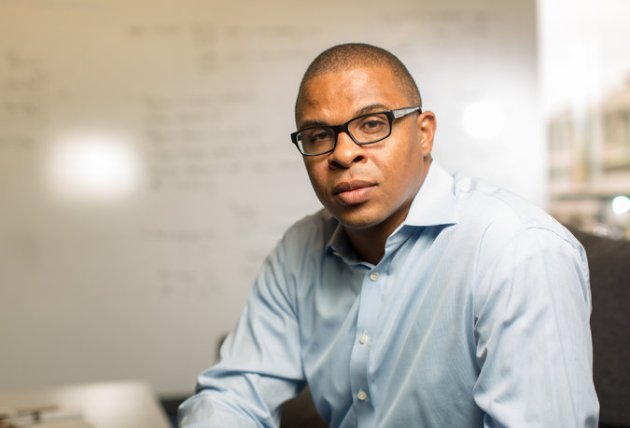
Roland G. Fryer Jr., a professor of economics at Harvard. CreditErik Jacobs for The New York Times 

Mr. Fryer, the youngest African-American to receive tenure at Harvard and the first to win a John Bates Clark medal, a prize given to the most promising American economist under 40, said anger after the deaths of Michael Brown, Freddie Gray and others drove him to study the issue. “You know, protesting is not my thing,” he said. “But data is my thing. So I decided that I was going to collect a bunch of data and try to understand what really is going on when it comes to racial differences in police use of force.”

Source: Surprising New Evidence Shows Bias in Police Use of Force but Not in Shootings – The New York Times

Christie Blatchford: We need light, not heat as violence by and toward police grows

One of her better columns:

As Martin Luther King, Jr. said in the very first speech that brought him to wide American attention, “There comes a time when people get tired.”

Well then, let’s hope we are all there now — the frightened and furious young black men whose brothers are shot and killed by U.S. police in staggering numbers and in sometimes galling circumstances, the scared and beleaguered police, and yes, the mass media and social media with our giddy group embrace of violence in all its forms.

As the CNN commentator Van Jones said Friday, if you bleed for Alton Sterling and Philando Castile (the black men killed by police this week in Baton Rouge, La., and near Minneapolis, Minn.) but not for the five dead Dallas police officers murdered during a Black Lives Matter protest Thursday night, “you need a heart check.” If you bleed for the slain police but not for Sterling and Castile, Jones said, “You need a heart check.”

It is, in other words, time for empathy, that great saving human ability to feel the pain of another without having to have walked in his actual shoes.

The great American civil rights leader made his speech on Dec. 5, 1955.

It was long ago and far away.

King was in Montgomery, Ala., about 585 kilometres from Baton Rouge, where Sterling was killed, and almost twice that to Falcon Heights, Minn., where Castile was shot to death.

But what he said, in part, to a thousand black Americans crowded into the Holt Street Baptist Church that night was this: “We are here this evening to say to those who have mistreated us so long that we are tired — tired of being segregated and humiliated; tired of being kicked about by the brutal feet of oppression.

“There comes a time my friends when people get tired of being plunged across the abyss of humiliation, when they experience the bleakness of nagging despair.”

Segregation ended, though it was another nine years before the Civil Rights Act of 1964 put an official end to it, and while much has changed, does that language not sound an awful lot like the same general bone weariness heard in recent weeks from black residents in U.S. city after U.S. city and even in Toronto? It does.

This week, former Canada AM news anchor and co-host Marci Ien was a guest host on The Live Drive, a Newstalk 1010 radio show.

Conflict-of-interest declaration, I do a bit on the show, but listened afterwards as Ien spoke with tremendous eloquence of her experiences as a smart young black woman growing up in Toronto.

In her quiet voice, she said, “There isn’t a man in my life, from my father who’s in his 70s to my husband to my brothers-in-law, who hasn’t been stopped by police (in effect, for driving while black) at some point.”

Born and raised in Scarborough, Ont., and proud of it, Ien had a girl seven years before she learned her second child was a boy. “My heart skipped a beat,” she said, “when I realized I was having a son. I was worried. No mother should ever feel that.”

Now, as her little boy grows up, Ien said, she is braced for the conversation she will have to have with him — about the clothes she wonders if he can wear (“Can he wear a hoodie? Low-slung jeans?”) and how he’s to behave if he’s stopped by police. “The utmost respect should be there anyway,” she said, meaning she and her husband would teach that as a matter of course, but their son will be told to ramp it up.

“These are the conversations black families have with their sons and the young men they care about,” she said. If this great woman has to have this sort of discussion with her son, that’s something the rest of us, including the police, have to accept.

Ien was commenting on Tuesday, after Sterling’s death, but before Castile’s and before the shocking Dallas mass murder.

The officers — seven others were wounded — were slain by what the FBI says now was a lone sniper, 25-year-old Micah Xavier Johnson, a former U.S. Army reserve veteran.

Dallas Police Chief David Brown said that before he was essentially blown apart by a bomb-laden robot the police force dispatched, Johnson told hostage negotiators “he was upset about Black Lives Matter. He said he was upset about the recent police shootings. The suspect said he was upset about white people. The suspect stated he wanted to kill white people, especially white officers.”

Armed to the teeth, better equipped than the unsuspecting police watching over the protest, Johnson did just that.

The ambush came everywhere as a terrible shock to police officers, who, as Chief Brown said drily at one point, “aren’t very accustomed to hearing thank you, sometimes from the citizens who most need our help.” That’s putting it kindly; even at peaceful protests, even in Canadian cities, police are routinely faced with people spitting at them, cursing them and trying to provoke them.

Yet few of them would have predicted what happened in Dallas.

It was Newstalk host Jay Michaels who suggested Friday that just as hateful ISIL propaganda and violent beheading videos on the web have served to radicalize unhappy young men in the West and turn them into homegrown terrorists, so perhaps the constant inflamed rhetoric about police violence in the press and the ghastly cellphone videos of police shootings may have inspired Johnson.

It feels as though we’re on a precipice. We need to be accountable for what we collectively have sown: the bad and racist police officers and the forces that employ them, the empty violent rhetoric of the mob, and the media and web airing of every grievance anywhere in the world and making it local.

What we need is light, not heat, and we need to do Van Jones’ heart check.

Source: Christie Blatchford: We need light, not heat as violence by and toward police grows | National Post

Racist incidents spark worry Brexit vote emboldening extremists

Anecdotal but not surprising after such an ugly, divisive campaign:

A spate of racist incidents in the U.K. in the wake of Thursday’s vote to leave the European Union have Britons concerned the result is emboldening extremist elements in society.

Police are investigating a report of “racially-motivated” damage at the Polish Social and Cultural Association, a community centre in west London, a spokesman for the Metropolitan Police said on Sunday. Twitter users described graffiti that read “Go Home” daubed on walls and windows. In Cambridgeshire, police are investigating flyers left outside a primary school that said “Leave the EU, no more Polish vermin,” the Evening Standard reported.

After a bruising referendum campaign in which supporters of leaving the EU were accused of stoking xenophobia, these and other incidents will intensify worries about whether a generally tolerant country is becoming less so. While politicians on both sides of the vote have urged calm and said the result does not reflect prejudice toward migrants from Europe or elsewhere, some aren’t so sure.

“There is no question the U.K. is shifting to a more racist atmosphere and policies. This is a rhetoric that’s showing up in the lives of schoolchildren,” said Adam Posen, a former member of the Bank of England’s Monetary Policy Committee who now leads the Peterson Institute for International Economics.

British politics are in chaos after the vote in favour of a so-called Brexit prompted the resignation of Prime Minister David Cameron, spurred a rebellion against Labour Party leader Jeremy Corbyn, and opened the door to a second referendum on Scottish independence. On Sunday several senior Labour Party members resigned from Corbyn’s shadow cabinet to protest what they said was his lacklustre advocacy for staying in the EU.

The Leave campaign’s message was centred on reducing immigration, including by raising the spectre of Turkish EU membership — a prospect diplomats say is remote at best. A week before the referendum, U.K. Independence Party leader Nigel Farage unveiled a billboard showing a column of hundreds of refugees walking on a road, under the heading “Breaking Point.” A day later, Labour member of parliament Jo Cox, an outspoken advocate for Syrian refugees, was murdered in her Yorkshire constituency.

Some incidents are occurring in the heart of the U.K.’s cosmopolitan capital. Sebastien, a 26-year-old Frenchman, was walking in the Kensington district on Friday with a friend and her mother, who was visiting from Paris. Hearing them speaking French, a man walking his dog began shouting at them to “Leave, Leave!” said Sebastien, who declined to provide his surname for fear of retaliation.

The tone of some campaign discourse has “legitimized racist rhetoric,” said Jasvir Singh, a London lawyer and Labour Party activist. “There is now a vocal minority who feel emboldened to use the result of the referendum as a reason to spout their hatred.”

Schoolchildren were racially abused in a west London district this week, Seema Malhotra, one of Labour’s team of Treasury spokespeople, said on Saturday. “Someone shouted: ‘Why are there only 10 white faces in this class? Why aren’t we educating the English?’” she said, citing a letter from a teacher in her constituency about an incident on Wednesday. “Another went close up to the children and said: ‘You lot are taking all our jobs. You’re the problem.’ ”

Speaking to the BBC on Sunday, former Prime Minister Tony Blair said political leaders “have a big responsibility to help our country get through what’s going to be an agonizing process.” After a vote that largely pitted London, Scotland and a few other enclaves in favour of staying in the EU against the bulk of England and Wales, “we have a divided country but there is the possibility of bringing people back together if we are sensible about it.”

Britons have taken to Facebook and Twitter to report other racist incidents. One user, Fiona Anderson, described “an older woman on the 134 bus gleefully telling a young Polish woman and her baby to get off and get packing.” A professor at Coventry University, Heaven Crawley, said on Twitter on Friday that “This evening my daughter left work in Birmingham and saw group of lads corner a Muslim girl shouting ‘Get out, we voted leave’.”

Source: Racist incidents spark worry Brexit vote emboldening extremists | Toronto Star

Understanding where I’m coming from on Toronto’s race relations: Paradkar

Shree Paradkar on the City of Toronto/OCASI poster (see Toronto campaign against Islamophobia an insult: Fatah). Merit in her idea to have a series of posters that cycle through various groups. One of the more positive legacy of former Minister Jason Kenney was his broadening of integration and multiculturalism discussions to include inter-group relations, not just the white/visible minority dichotomy:

“Where are you from?” is a common enough question in multiracial Toronto.

“Where are you really from?” is the common enough subtext directed at minorities. As a relatively recent immigrant, this doesn’t offend me. I did come from somewhere else. This country is a beloved home as is my country of origin. For second-generation and older minority immigrants, however, I can see why that can be offensive.

“Go back to where you’ve come from” is the other insult directed at minorities that drives home the flawed idea that the default Canadian is Anglo-Saxon. It supposes that everybody else, including our First Nations, is the unwelcome “other” who doesn’t have modern Canada’s best interests at heart.

And so a recent Toronto city-sponsored anti-racism ad takes this statement head on. In a poster a young white man says that to a hijabi, to which she retorts, “Where. To North York?”

It’s an accurate depiction of a frequent occurrence but it doesn’t tell the whole story.

The Toronto ad was made in partnership with OCASI, an agency that helps immigrants. About 150 ads were placed on bus shelters last week and the campaign will run until July 10. Perhaps they will depict more races and more examples. If they don’t, they could simply be polarizing.

Anti-racists erroneously assume everyone understands why — at the moment at least — any talk on racism predominantly challenges the white mindset.

In reality, if you fed that poster to a program that cycled through various racial or ethno-religious backgrounds for both people, and came up with, say, an Asian on the left and a black person, or a Hindu on the left and a Muslim, or an immigrant of 20 years on the left and a new immigrant of the same country, the “Go back to where you’ve come from” sentiment would still be accurate.

 So why focus on whites? While racism, xenophobia, homophobia and sexism exist in all cultures, they are most harmful when they come from a dominant group or a “ruling class,” which in Canada is obviously white and male.

These are the people who construct systems and govern institutions that determine equality and social justice. They create organizational structures and offer jobs. These are the interpreters of the law. If they are themselves afflicted by the “otherness” syndrome, then their views translate into severe injustices in a diverse society.

Eventually, though, if we get the diverse leadership in political and corporate governance we talk so much about, then narrow-minded attitudes in any leader — not just a white male — would be just as harmful.

In the U.S., I see conversations on racism reduced to a binary — white vs. black. That creates divisions; non-black minorities feel marginalized, blacks feel their legitimate historical and contemporary grievances need to be dealt with first, and many whites feel anti-racism is just politically correct hocus-pocus.

Canada has to champion a more nuanced conversation on discrimination.

A poster like this would speak volumes to the people affected by xenophobia. I can’t imagine it would change people who say things such as, “Go back to where you came from.” It could also estrange younger white men who might feel they’re not even given a chance to be fair. These are people in their intellectually formative years who are also exposed to the aggressive rhetoric of the aggrieved far-right. who sees themselves as victimized.

Reservations against this alienation are not about catering to white desire for, and comfort with, the status quo. It’s about reaching out to people who don’t experience racism and therefore don’t think of it as real or harmful.

“The overarching long-term goal is to create a Toronto that says ‘No’ to all forms of discrimination and racism,” the OCASI says in its media release.

Saying no is the easy part.

Bullheaded bigots may be unreachable, but making meaningful strides will mean making the regular white Joe and Jane see from the non-white perspective how their circumstance, whatever it is, still benefited from a privilege not available to others. That won’t happen when divided camps are left talking within themselves.

Source: Understanding where I’m coming from on Toronto’s race relations | Toronto Star

Status and race in the Stanford rape case: Why Brock Turner’s mug shot matters

Valid observations and commentary:

The fact that it took authorities 16 months and much prodding to release a booking photo from the Stanford sexual assault case – even after Turner was convicted – is enough to raise questions on its own given the seriousness of his crimes.

In a country where racial and socioeconomic disparity are so well-documented and pervasive, particularly within the criminal justice system, Turner’s case got many citizens wondering: Would the ex-Stanford swimmer’s sentence have been different if he wasn’t white?

A report submitted to the United Nations Human Rights Committee by The Sentencing Project in 2013 showed that African-American males are six times more likely to be incarcerated than white males in the U.S., and 2.5 times more likely than Hispanic males.

In California, where Turner was sentenced, the ratio of black people to white people in prison was 8.8 to 1 as of 2014.

While every criminal case is different, there are plenty of rulings involving black students to contrast Turner’s against – like the case of Corey Batey, a 19-year-old Vanderbilt University football star who was also convicted on three felony counts of sexual assault.

15 to 25 years for black offender

In April, a Tennessee judge ordered Batey to serve minimum sentence of 15 to 25 years in prison – “3,000 per cent longer than what Brock Turner was given for a comparable crime,” Shaun King noted in The New York Daily News.

The parallels between these cases in the wake of Turner’s sentencing hasn’t gone unnoticed. Nearly 200,000 people have now shared the Facebook image contrasting these felons below:

https://www.facebook.com/plugins/post.php?href=https%3A%2F%2Fwww.facebook.com%2FOfficialMiseeHarris%2Fposts%2F1066565476745237%3A0&width=460&show_text=true&appId=857270271060031&height=480

Many writers and academics are now saying that, at best, the fact Turner’s mug shot was withheld is illustrative of the racial disparities within America’s criminal justice system.

At worst, choosing to show images of him swimming, smiling and looking every bit the all-American athlete could influence public perception to the point that his conviction is called into question.

Source: Status and race in the Stanford rape case: Why Brock Turner’s mug shot matters – Trending – CBC News

Muslims Are Just The Latest In History Of Scapegoats, Author Says

All too true, similar to Canadian experience. Good interesting interview with Ardalan Iftikhar, author of Scapegoat:

IFTIKHAR: Generally speaking, islamophobia has come to mean a hatred of anything related to Islam and Muslims. And it’s important to keep in mind that if you look at the civil rights history of the United States, every minority group in America has been scapegoats. And tomorrow, it’ll be somebody else. And so that’s the key thing here, is that, you know, when you look at the presidential campaign of Donald Trump, it’s not only the Muslim ban that he’s called for. He’s called for building a wall against Latinos and said disparaging remarks against African-Americans.

The point here is that we as Americans need to focus on the things that bring us together as Americans and not things that separate us. And I feel like – as though we have always had scapegoats in the past. We have scapegoats currently. And I believe that Islam and Muslims are the current scapegoats in America today.

MARTIN: Well, in fact, in the book you write about Germans during World War I who were targets of harassment. You said at the time that they were actually the largest minority group in the United States – that German-language newspapers were shut down, German-American religious services were disrupted. You write that a German immigrant in Illinois was actually lynched after having been accused of stealing dynamite. And then of course, during World War II, the internment of the Japanese, which is something that a lot of people are familiar with. Why do you think that is?

IFTIKHAR: Well, I think that as an American society, we’ve always needed a proverbial bogeyman. I think politicians have used bogeymen to further their own political agendas, whether it’s Catholics that were coming across the pond at the turn of the 20th century to German-Americans to Japanese-Americans to anti-Semitism to Jim Crow and African-American – the African-American civil rights movement. And I think that now, in the post-9/11 civil rights era that we live in, I believe that Islam and Muslims are being used as a scapegoat. And I think that many politicians are trying to score cheap political points, and I think that Donald Trump is a perfect example of that.

MARTIN: Now I want to talk about the second part of the title of the book, though, which is that it helps our enemies and threatens our freedoms. That’s what you say islamophobia does. I mean, the premise of your book is that there is a broader, corrosive effect on the society if that mentality is maintained. Tell me why you think that.

IFTIKHAR: Well, because as I look at American history, right? Because even though the fill-in-the-blanks is Muslims today, tomorrow it could be anyone else. I mean, when the USA Patriot Act came out in 2001, you know, this was a 348-page document that trumped 50 federal laws. And it wasn’t just targeted at brown Muslims who were suspected of terrorism. This allows the federal government to come in and, without a warrant, get all of your information without even notifying you, going to college registrars, getting all their information. I mean, it affects everybody.

You know, political rhetoric leads to laws. And that’s important to keep in mind, is that again, you know, the internment camps of World War II didn’t come out of a vacuum. You had people – President Roosevelt’s general, who was the head of Pacific Command, James DeWitt, was quoted in Congress as saying once a Jap, always a Jap. I mean, this sort of anti-Japanese rhetoric was actually what led to the internment camps.

And that’s the thing, is that, you know, we can’t just see this as, you know, ha ha, this is just kind of silly political rhetoric that’s coming out. This could – you know, if somebody – if Donald Trump comes out tomorrow and says, you know, we should put Muslims in internment camps – well, you know, we’ve had them in the past. Who’s to say that we can’t have them again in the future?

Source: Muslims Are Just The Latest In History Of Scapegoats, Author Says : NPR

A New ‘Roots’ for a New American Era – The Daily Beast

Good piece on ‘Roots’ and how a reboot needs to reflect the current era:

As the great literary and cultural critic Leslie Fiedler noted time and again, Americans only valorize the Other when we know he or she is thoroughly vanquished; The Last of the Mohicans could only be written after the Indians were thoroughly contained in or effectively banished from upstate New York. At the same time that white ethnics were transforming their downscale heritages into sources of pride (Polish Power, anyone?), black Americans in the post-Civil Rights era were doing the same thing: finding a source of cultural power in a history of exclusion and oppression.

Prior to Roots, Haley was best-known as the amanuensis of Malcolm X, compiling an “autobiography” based on interviews conducted between 1963 and Malcolm’s assassination in 1965. In What Was Literature?: Class Culture and Mass Society (1982), Fiedler writes that Roots was for Haley a natural extension of The Autobiography of Malcolm X, which combined elements of Booker T. Washington’s gospel of segregationist self-sufficiency and the confrontational politics of the Black Power movement into a message of militant uplift.

Yet Fiedler notes that Roots, despite Haley’s attempt to write a “final Happy Ending” in which African Americans become professors and government functionaries and world-famous authors, replicates the same irresolvable racial tensions that fueled earlier novels such as Uncle Tom’s Cabin, Thomas Dixon’s The Clansman (which became the basis on D.W. Griffith’s execrable The Birth of a Nation), and Gone With The Wind. “Scenes of rape and flagellation are as essential to [Haley’s] vision as to that of Mrs. Stowe or Thomas Dixon, or Margaret Mitchell, though his victims are, of course, always black,” writes Fiedler.

Though the brutalization of his ancestors, especially at the hands of slave owners, means that Haley is himself part white, he cannot acknowledge that part of his ancestry. Try as he might, Fiedler argues, Haley doesn’t offer a way out of an unbridgeable gap between the races. Instead, he describes the lurid, racist fantasies from the victims’ point of view.

Roots 2016

History Channel

That of course is no small accomplishment and the fact that Roots—the book and the miniseries—made black history visible to white America en masse explains its success. White ethnics especially, who often clashed with blacks in the restricted neighborhoods to which both were remanded by zoning and custom, could understand a far deeper and long-suffering oppression lived out in the golden streets of America.

So here we are now, in the 21st century, eight years into the presidency of a mixed-race president, in a country where the percentage of foreign-born residents is rapidly approaching figures last seen in the 1910s and ’20s. On a profound level, we are more at peace with one another than ever before. For 20 years, the Census has included a “multiracial” category to accommodate  basic reality and support for interracial marriage approaches 100 percent (even same-sex marriage, unthinkable even just a generation ago, pulls 60 percent or more approval, with the number bumping each year).

Yet in a commencement speech at Howard University, Barack Obama observed that even as things have markedly improved for African Americans since he himself graduated college, his “election did not create a post-racial society.” To be sure, there is much work to be done. Black men are six times as likely to be incarcerated as their white counterparts and the unemployment rate for blacks is twice that for whites. The rise of Donald Trump is fueled in no small part by grievances among poor whites who are the one group in America whose lifespans are actually shrinking. Black protestors, especially on college campuses, are at times more inflamed than the Black Panthers ever were — despite objectively better conditions compared to 45 years ago in terms of opportunities.

We have stuck in a dialectical conversation where the horrors of our racial past have been represented poignantly and memorably. What we need now is work that shows how most Americans—black, white, and every other type—have moved beyond to a world that, while replete with problems, allows us to be kinder and better to one another.

Source: A New ‘Roots’ for a New American Era – The Daily Beast

I was vilified for telling the truth about racism in Toronto: Yusra Khogali 

In her own words:

As the movement gained traction, I became increasingly visible and increasingly the target of those who oppose our cause. Jerry Agar, a Toronto Sun columnist with a long, well-documented record of enmity to our anti-racist goals, attempted to use my visibility to discredit me. A day after the conclusion of #BLMTOtentcity, he cited the aforementioned tweet in an attempt to delegitimize an entire movement, and to position my community as undeserving of justice.

I am not a public official. I am not a police officer. The state does not entrust me with violent weaponry. I have never contributed to the mass targeting of a community. All I have done is used a turn of phrase, a rhetorical flourish, to voice my frustration and dared to be a person calling for justice.

To date, I have directly received many disturbing death threats from white supremacists across the country. Somehow a tweet I wrote out of anger months before our protest began has become a bigger media story than our protest’s many and profound accomplishments. The noise surrounding this tweet has also drowned out the discussion we sought to spark about the black lives of those who have died at the guns of police in this country. Journalists have incessantly harassed me, desperate to get a comment on the tweet. Where were they during the entire two weeks of #BLMTOtentcity? The media is part and parcel of how anti-black racism works. Too often black people are ignored or vilified when we speak the truth about our condition.

To be black in Toronto is to have been or know somebody who has been brutalized, violated or battered by the Toronto police. Our lives are plagued by institutional and individual anti-black racism that compromises our access to safety, economic freedom, proper health care, food, housing, employment, education and culturally restorative support services. To be black in this city is to fight to survive.

Mayor John Tory responded to reports of my tweet less than 24 hours after they emerged. Yet for the more than two weeks black people fought for our humanity in protest outside of police headquarters, he ignored us. That is something everyone in this city should be concerned about. Despite all the violence we endure when we resist, we can never lose sight of the issues; we must continue to seek justice and accountability for our community. We only have more work to do, and this is only the beginning. Black lives matter, here as everywhere, and they always will.

Words and turns of phrase matter. Being in the political arena and pushing for change means greater care in language in order to gain support in the broader community.
A better approach would have been a simple apology for her words, rather than politician-style avoidance, to allow discussion to move on to valid substantive issues she raises.

Source: I was vilified for telling the truth about racism in Toronto | Toronto Star