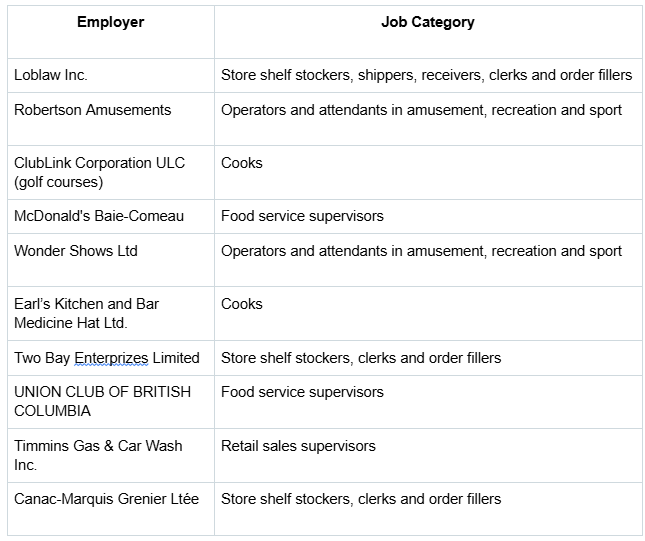
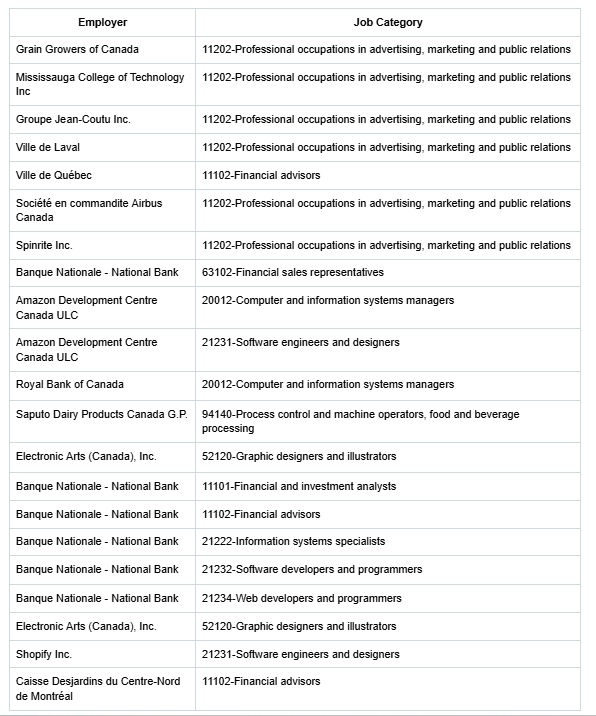
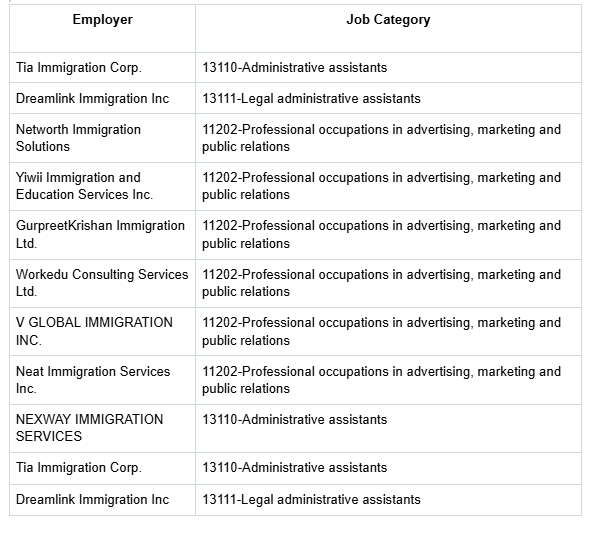
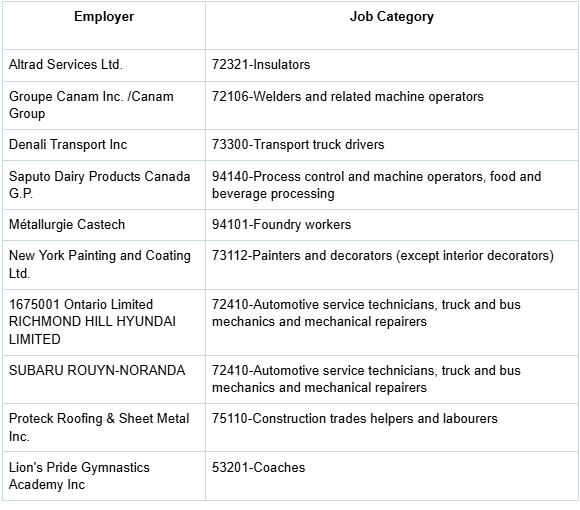
Alors que Québec instaurait déjà des resserrements à l’immigration temporaire, le même gouvernement a continué à dépenser des millions pour embaucher à l’étranger lors des Journées Québec. Des mesures de recrutement existent toujours dans d’autres ministères, pendant que l’avenir de ces missions du ministère de l’Immigration, de la Francisation et de l’Intégration (MIFI) fait encore l’objet d’une étude.
Québec et Ottawa ont tour à tour gelé les embauches de travailleurs temporaires à bas salaire il y a près d’un an. Le ministre québécois de l’Immigration, Jean-François Roberge, a annoncé en novembre que les missions de recrutement seraient mises sur pause aux fins de « cohéren[ce] avec [les] objectifs de réduction des résidents non permanents », indique aujourd’hui son cabinet.
Encore essentielles pour certains, « du gaspillage » pour d’autres, les missions gouvernementales à l’étranger n’ont finalement été suspendues qu’en janvier 2025. L’an dernier, elles auront coûté plus de 5 millions de dollars pour recruter 762 travailleurs, dont près de 1 million au sein du MIFI.
De toutes les embauches, le MIFI ne sait dire combien de personnes ont réellement atterri au Québec et occupent les emplois visés.
« Ce qu’on faisait et qu’on continue à faire, c’est du travail chirurgical pour répondre à des besoins précis pour des travailleurs qualifiés », explique Stéphane Paquet, président-directeur général de Montréal International, « pas pour aller chercher du cheap labor ». La région de Montréal et de Laval a beau être soumise à un gel de l’embauche à bas salaire, ces besoins « n’ont pas disparu, au contraire » : de tous les postes vacants au Québec, trois sur cinq se trouvent dans l’agglomération montréalaise, rappelle-t-il.
La situation de la Capitale-Nationale et de Chaudière-Appalaches « reste particulière », avec des taux de chômage plus bas que la moyenne provinciale, ce qui crée des « tensions sur l’emploi », ajoute Carl Viel, président-directeur général de Québec International.
Les deux organisations et Drummond économique ont vu leur financement gouvernemental, d’un total d’environ 4,3 millions de dollars, prendre fin le 31 mars dernier. Ils ont alors dû remercier plus d’une dizaine de personnes.
« Le besoin existe malgré les restrictions de nature parfois politique », soutient aussi Anthony Chiasson-Leblanc, consultant réglementé en immigration et cofondateur d’Equinox World. Il dénonce toutefois que le MIFI « se soit improvisé recruteur » et « prenne la place du privé » dans un marché où l’expérience sur le terrain est cruciale.
Il croit que ce n’est pas aux « deniers publics » à payer pour le recrutement, ou du moins pas dans cette formule des Journées Québec, « où il y a beaucoup de pertes d’efficacité », dit-il. M. Chiasson-Leblanc mentionne à ce titre des publicités mal ciblées et des rencontres tenues dans des endroits éloignés des bassins réels de recrutement, par exemple.
Ce n’est pas la première fois que ce recrutement est perçu comme un « double discours », selon ses mots. Ou en tout cas comme un « paradoxe », comme mentionné par le Conseil du patronat en 2023 quand Le Devoir a révélé que Québec investissait des dizaines de millions de dollars pour trouver des travailleurs à l’étranger.
Fluctuations importantes
Le succès de telles journées semble aussi à géométrie variable. Au Mexique, en mai 2024, l’opération aura coûté 5359 $ par embauche ; d’autres missions, respectivement en Colombie et au Maroc, n’ont dépensé que 80 $ ou 225 $ en moyenne par travailleur recruté, apprend-on dans le Cahier explicatif des crédits 2024-2025.
Certains événements de recrutement se sont tenus exclusivement en ligne, notamment en Europe, où 139 435 $ ont été dépensés en frais de promotion pour quatre jours. Ces frais « comprennent les honoraires de l’agence de publicité et les dépenses liées aux achats médias », précise par courriel le MIFI.
Aux yeux de certains recruteurs privés, cette publicité est un coup d’épée dans l’eau. « La meilleure façon de trouver est à travers un réseau de contacts établis et avec des recruteurs locaux », poursuit M. Chiasson-Leblanc.
« Oui, c’est sûr que le chiffre d’embauches a de l’importance, mais les employeurs ne cherchent pas tous le même type de candidats ou de niveau d’expertise », souligne Stéphane Paquet, qui veut décourager toute comparaison des missions.
Les démarches étant parfois longues, certaines embauches pourraient ne pas être comptabilisées dans les statistiques « à la fermeture des livres », répond le MIFI.
Québec International parle aussi d’une « planification sur plusieurs années », qui permettait par exemple à des candidats à l’excellent profil professionnel d’améliorer leur français d’une année à l’autre.
Confiance
Les trois organisations assurent que les fonds publics étaient utilisés à bon escient. « Ce n’est pas le gouvernement qui recrute, ce sont les entreprises. On restait un service d’accompagnement », fait valoir le p.-d.g. de Montréal International. L’organisme recrute à l’étranger depuis 2010, et l’appui du MIFI lui permettait d’avoir « une meilleure vitesse de croisière » et de coûter moins cher aux entreprises elles-mêmes.
Ces trois agences de promotion économique ont par ailleurs prévu des missions du même genre que les Journées Québec, notamment à Paris en novembre prochain, mais, cette fois, sans appui financier du MIFI.
« C’est important pour nous de maintenir les liens avec les différentes autorités sur les territoires », note Carl Viel, comme le Pôle emploi en France.
Le sceau gouvernemental donnait aussi l’assurance de faire affaire avec « des tiers de confiance », poursuit-il.
Anthony Chiasson-Leblanc rejette l’argument, rappelant que des campagnes frauduleuses utilisant les noms « Journées Québec » ou « Recrutement Santé Québec » ont même été orchestrées. À ses yeux, la confiance se bâtit dans un processus à plusieurs au moyen d’entrevues préalables et, le cas échéant, d’un test de compétence effectué « directement sur la machinerie » une fois la personne sur place.
Le gouvernement de François Legault demande au fédéral de réduire de 50 % le plafond de certaines catégories de résidents non permanents. Le ministre Roberge a récemment demandé à son homologue fédérale d’appliquer une « clause de type grand-père » aux compagnies en région, une revendication de longue date des associations d’affaires.
La décision sur l’avenir des Journées Québec « sera prise en temps et lieu » après les consultations de l’automne prochain sur la planification pluriannuelle, nous signale le cabinet du ministre de l’Immigration.
Les changements successifs et rapides en matière d’immigration, dont les restrictions de l’immigration permanente, commencent à ternir la réputation du Québec à l’étranger, croit Stéphane Paquet. « Plusieurs grandes sociétés vont décider de faire venir les travailleurs ailleurs qu’ici, comme à Toronto ou dans une autre ville de l’Amérique du Nord. »…
While Quebec was already introducing tightening of temporary immigration, the same government continued to spend millions to hire abroad during the Quebec Days. Recruitment measures still exist in other ministries, while the future of these missions of the Ministry of Immigration, Francisation and Integration (MIFI) is still under study.
Quebec City and Ottawa have in turn frozen the hiring of low-wage temporary workers almost a year ago. Quebec’s Minister of Immigration, Jean-François Roberge, announced in November that recruitment missions would be paused for the purpose of “coherence with [the] objectives of reducing non-permanent residents,” his office said today.
Still essential for some, “waste” for others, government missions abroad were finally suspended only in January 2025. Last year, they will have cost more than $5 million to recruit 762 workers, including nearly 1 million within the MIFI.
Of all the hirings, MIFI cannot say how many people have actually landed in Quebec and occupy the targeted jobs.
“What we did and continue to do is surgical work to meet specific needs for skilled workers,” explains Stéphane Paquet, President and CEO of Montreal International, “not to get cheap labor.” The Montreal and Laval region may be subject to a freeze of low-wage hiring, but these needs “have not disappeared, on the contrary”: of all the vacancies in Quebec, three out of five are in the Montreal agglomeration, he recalls.
The situation in the Capitale-Nationale and Chaudière-Appalaches “remains particular”, with unemployment rates lower than the provincial average, which creates “tensions on employment,” adds Carl Viel, President and CEO of Quebec International.
The two organizations and Drummond économique saw their government funding, totalling about $4.3 million, ended on March 31. They then had to thank more than a dozen people.
“The need exists despite sometimes political restrictions,” also says Anthony Chiasson-Leblanc, regulated immigration consultant and co-founder of Equinox World. However, he denounces that MIFI “has improvised as a recruiter” and “takes the place of the private sector” in a market where field experience is crucial.
He believes that it is not up to “public money” to pay for recruitment, or at least not in this formula of Quebec Days, “where there are many losses in efficiency,” he says. Chiasson-Leblanc mentions poorly targeted advertisements and meetings held in places far from the actual recruitment pools, for example.
This is not the first time that this recruitment has been perceived as a “double speech”, in his words. Or at least as a “paradox”, as mentioned by the Employers’ Council in 2023 when Le Devoir revealed that Quebec was investing tens of millions of dollars to find workers abroad.
Significant fluctuations
The success of such days also seems to be of variable geometry. In Mexico, in May 2024, the operation will have cost $5359 per hiring; other missions, respectively in Colombia and Morocco, spent only $80 or $225 on average per recruited worker, we learn in the 2024-2025 Explanatory Book of Credits.
Some recruitment events were held exclusively online, especially in Europe, where $139,435 was spent on promotional fees for four days. These fees “include the fees of the advertising agency and expenses related to media purchases,” says the MIFI by email.
In the eyes of some private recruiters, this advertisement is a stroke of the sword in the water. “The best way to find is through a network of established contacts and with local recruiters,” continues Mr. Chiasson-Leblanc
“Yes, it is certain that the number of hirings is important, but employers are not all looking for the same type of candidates or level of expertise,” says Stéphane Paquet, who wants to discourage any comparison of missions.
As the procedures are sometimes long, some hirings may not be counted in the statistics “at the closing of the books”, answers the MIFI.
Québec International also speaks of “multi-year planning”, which allowed, for example, candidates with an excellent professional profile to improve their French from one year to the next.
Trust
The three organizations assure that the public funds were used wisely. “It’s not the government that recruits, it’s the companies. We remained a support service, “says the CO of Montreal International. The organization has been recruiting abroad since 2010, and the support of MIFI allowed it to have “a better cruising speed” and to cost less to the companies themselves.
These three economic promotion agencies have also planned missions of the same kind as the Quebec Days, especially in Paris next November, but this time without financial support from MIFI.
“It is important for us to maintain links with the various authorities in the territories,” notes Carl Viel, like the Pôle emploi in France.
The government seal also gave the assurance of doing business with “trusted third parties,” he continues.
Anthony Chiasson-Leblanc rejects the argument, recalling that fraudulent campaigns using the names “Journées Québec” or “Recruitment Santé Québec” have even been orchestrated. In his view, trust is built in a multi-personal process through prior interviews and, if necessary, a proficiency test carried out “directly on the machinery” once the person is on site.
François Legault’s government is asking the federal government to reduce the ceiling for certain categories of non-permanent residents by 50%. Minister Roberge recently asked his federal counterpart to apply a “grandfather-like clause” to companies in the region, a long-standing demand of business associations.
The decision on the future of the Quebec Days “will be taken in due course” after next fall’s consultations on multi-year planning, the Office of the Minister of Immigration tells us.
Successive and rapid changes in immigration, including restrictions on permanent immigration, are beginning to tarnish Quebec’s reputation abroad, believes Stéphane Paquet. “Several large companies will decide to bring workers elsewhere than here, such as in Toronto or another city in North America. “…