Saudi citizenship granted to selection of researchers, innovators, and specialists

Of note:

Saudi citizenship has been granted to a number of scientists, doctors, researchers, innovators, entrepreneurs, and people who have unique capabilities, expertise, and specializations, Saudi Press Agency reported on Thursday.

The granting of citizenship was issued as part of a royal order granting Saudi citizenship to people with distinguished legal, medical, scientific, cultural, sports and technical expertise for the benefit of the nation in various fields.

It is also in line with Saudi Vision 2030, which aims to create an appealing environment that attracts, invests in, and retains exceptional creative minds.

A number of specialists, whose expertise in the economic, health, cultural, sports and innovation fields was considered distinguished, were previously awarded citizenship in 2021.

Source: Saudi citizenship granted to selection of researchers, innovators, and specialists

German Authorities Overwhelmed With Citizenship Requests Following Law Changes

Not surprising given likely pent up demand:

  • Germany Implemented new Citizenship Law in June 2024, offering an accelerated process of obtaining citizenship.
  • Following the new changes, Germany is experiencing an increase in requests for information for the citizenship process from internationals.
  • In some parts of Germany, all consultation appointments for those wishing to acquire citizenship are already booked up for the following eight months

Source: German Authorities Overwhelmed With Citizenship Requests Following Law Changes

Finland to Apply Stricter Rules for Acquiring Citizenship From October 1

Of note:

  • Finland will apply stricter rules for acquiring citizenship, starting from October 1, 2024.
  • The Parliament of Finland approved a bill to extend the period of residence required for Finnish citizenship from five to eight years.
  • Through the new changes, only periods of residence with a residence permit would be considered when it comes to determining an applicant’s period of residence.

Source: Finland to Apply Stricter Rules for Acquiring Citizenship From October 1

Statement by Minister Miller on Canada Day

Quite a good statement and video IMO. Curious to hear views of others:

“On Canada Day, we celebrate our freedoms and reflect on our rights and responsibilities as Canadian citizens. We remember and honour the shared history, symbols and values that define us as Canadians. A critical part of being Canadian is understanding the histories and realities of Indigenous Peoples, who have been caretakers of this land since time immemorial, and recognizing their integral role in this country’s past, present and future.

“Every Canadian has a responsibility to advance reconciliation with Indigenous Peoples. It is important that we all understand the rights and significant contributions of First Nations, Inuit and Métis. As part of our ongoing commitment to advance reconciliation, Immigration, Refugees and Citizenship worked with Indigenous creators to share the voices and experiences of Indigenous Peoples directly with new Canadians. I am pleased to share that the video ‘Welcome, there is room’is now being used at every citizenship ceremony across the country.

“This morning, I am honoured to attend a special citizenship ceremony being held at the Rogers Centre before the Toronto Blue Jays annual Canada Day game. This is one of the many citizenship ceremonies taking place across Canada today. The moment when newcomers take their oath of citizenship is a very meaningful and moving experience for everyone involved. I consider this to be one of the best parts of my job! If you wish to experience the sense of pride in being Canadian, I encourage you to participate in an upcoming citizenship ceremony in your area.

“To learn more about Canada Day celebrations near you, you can also visit the Canadian Heritage website.

“I hope today’s celebrations renew your pride in being Canadian and inspire you to give back to your community, to learn more about Indigenous Peoples and cultures and to welcome those who have chosen Canada as their home. Our diversity, equity, inclusivity and multiculturalism are what sets Canada apart.

“Whether you’ve recently chosen to work, study or build your life here—or you’ve always called this country home—today is about celebrating what unites us: our love and respect for Canada.

“Happy Canada Day!”

Source: Statement by Minister Miller on Canada Day

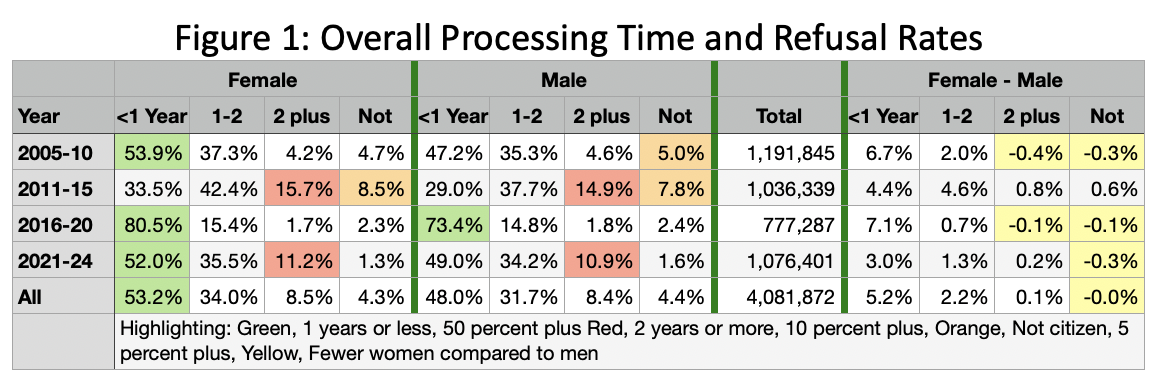
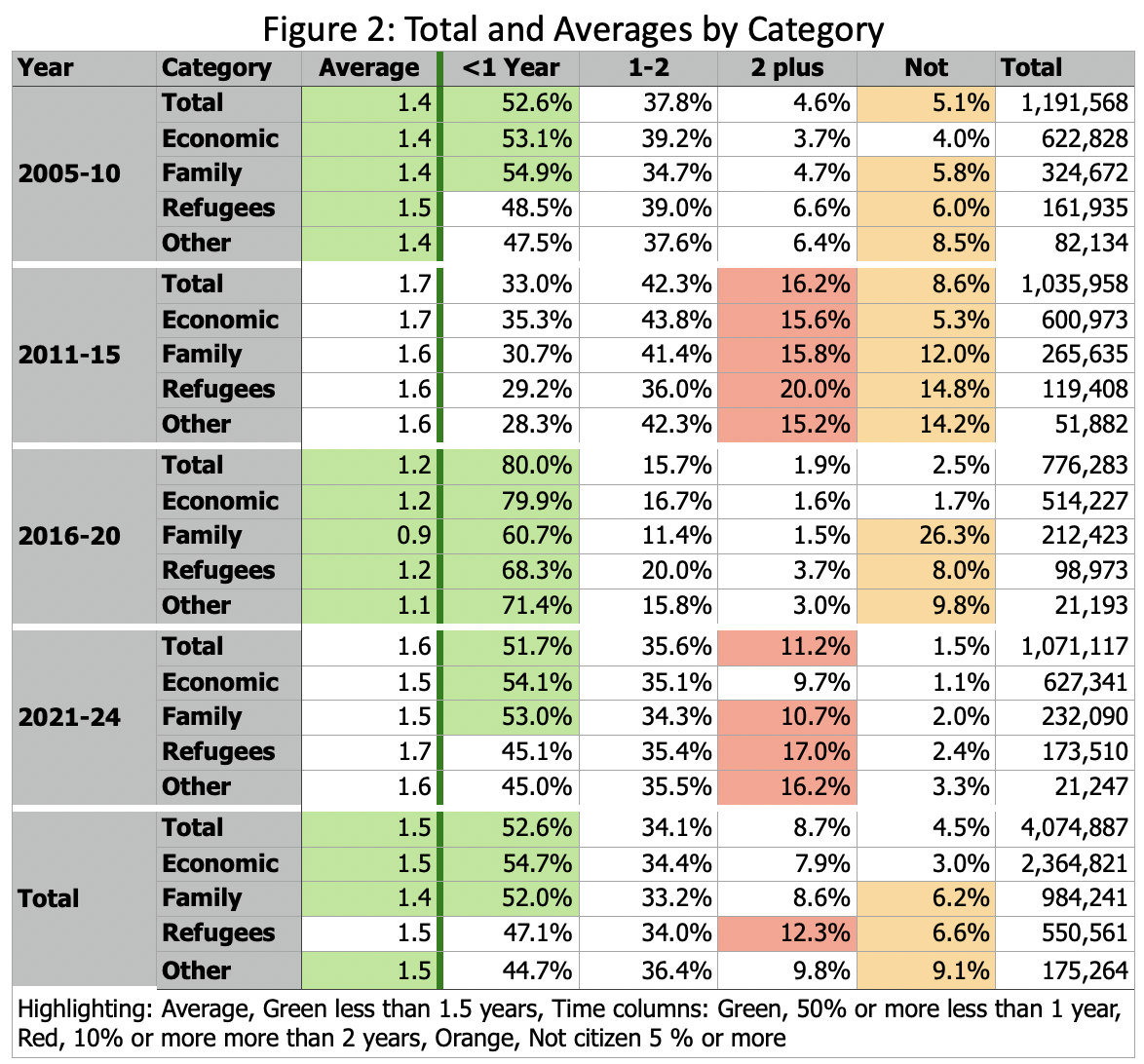
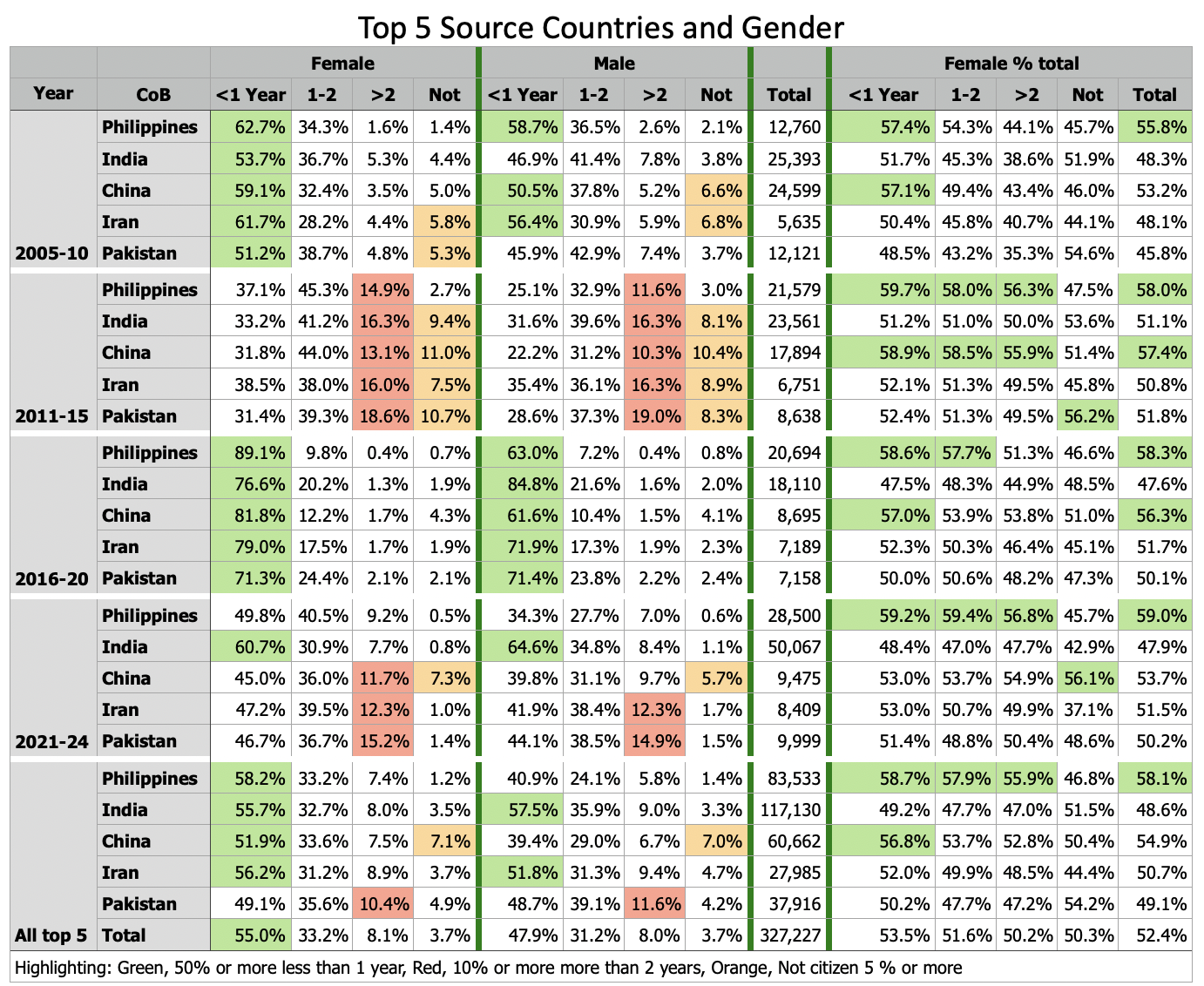
ICC: Naturalization visualized, looking at citizenship data in detail

Was happy to be part of this and had fun pouring through and analyzing the data:

Continuing its focus on understanding the causes and potential responses to the decline in citizenship uptake, today the Institute for Canadian Citizenship is publishing an in-depth analysis by expert researcher Andrew Griffith of demographic and socioeconomic data from Census 2016 and 2021 of naturalized and non-naturalized immigrants. 

Click here to view the report

Highlights from the report

1. Citizenship is declining across all major demographic variables

Citizenship rates have declined across all major source countries, education levels, and provinces of residence. Notably, citizenship uptake is lowest among university-educated immigrants, who represent a growing proportion of recent immigrants. Despite higher immigration levels, Ontario, British Columbia and Alberta experienced the largest declines in naturalization.

2. Family class immigrants have the lowest naturalization rates, refugees the highest

Immigrants who arrive under the family category have the lowest naturalization rates in both census periods, but also experienced the largest decline – 17 percent – between the two periods. Naturalization is higher for economic class and refugee immigrants, but these categories also experienced declines of 10 percent and 5 percent respectively across the two periods analyzed.

3. Naturalized citizens generally have higher incomes than non-citizens, non-citizen women lag behind in most labour force measures

Among immigrants with a bachelors degree, median after-tax income of non-citizens is only 43 percent of the median after-tax incomes of citizens across all census periods. The gap in unemployment levels between non-citizen and citizen women increased from less than 1 percent in Census 2016 to 2.3 percent in Census 2021 – a 155 percent increase.

4. Government can act to reverse the trend

Government should expand funding to programs that educate, encourage and prepare immigrants for citizenship, and also adopt a meaningful performance target focused on the naturalization rates of recent immigrants – those who arrived within 5-9 years. It should avoid diminishing the value of citizenship by making it a more visible and celebrated part of the immigration journey.

USA: Newly naturalized citizens could theoretically swing the election: Report

Tends to assume that new voters are potentially monolithic in their voting intentions:

The number of foreign nationals in the U.S. currently eligible for naturalization outnumbers the 2020 presidential margin of victory in five battleground states.

A report released by the American Immigration Council (AIC) on Thursday concluded that if some or all of the country’s 7.4 million not-yet-naturalized-but-eligible residents got their citizenship before November, they could swing the 2024 election.

That’s unlikely to happen, as the naturalization process for eligible foreign nationals takes roughly eight months from application to receiving a certificate of citizenship.

But the report highlights the disconnect between the size of immigrant communities, their economic impact and their political power.

It says immigrants make up 13.8 percent of the U.S. population, but only 10 percent of eligible voters.

And potential citizens could in theory sway both battleground states and a couple of key red ones.

The researchers found that 574,800 immigrants in Florida are likely eligible to naturalize, while former President Trump’s margin of victory there was 371,686 votes.

In Texas, the naturalization-eligible population is estimated at 789,500, and the 2020 presidential margin of victory was 631,221.

The margin of victory in some battleground states pales in comparison to the number of potential new voters.

In Arizona, 164,000 people can apply for citizenship, and the vote difference was 10,457, about a 16-to-1 ratio; in Georgia, the ratio is about 13-to-1.

Pennsylvania, Nevada, North Carolina and Wisconsin all show up on the list, with naturalization-eligible resident to 2020 victory margin ratios of around 8-to-1, 3-to-1, 2-to-1, and 5-to-2, respectively.

The report also found that immigrants paid 16.2 percent of all taxes paid by U.S. households in 2022, despite having less political representation.

Source: Newly naturalized citizens could theoretically swing the election: Report

COVID-19 Immigration Effects – April 2024 update

Highlights

Permanent Residents increased as did percentage of TR2PR to 62 percent of all Permanent Residents. 

Asylum claimants stable at about 16,000 per month.

Study permit applications flat following last month’s drop due to announced caps. Study permit web interests has also been declining on a year-over-year basis. 

While IMP numbers have declined, TFWP numbers have increased reflecting seasonal agriculture workers and those under LMIAs.

Slide 3 has the overall numbers and change.

https://www.slideshare.net/slideshow/canadian-immigration-tracker-key-slides-april-2024pdf/269927425

Big majority of Canadian Gen Z, millennials support values-testing immigrants: poll

No easy approaches to value testing, ranging from defining the values, managing, implementing, monitoring and enforcing them. The valid general interest in common values generally breaks down when specifics are discussed beyond the general respect for the rule of law, the constitutional order and respect for others. And terminology becomes an issue: “barbaric cultural practices” versus stating which practices like FGM are against the law; one inflames, the other informs.:

Gen Z and millennials are split on whether Canada’s aggressive immigration targets are good for the country, and 70 per cent say the government should be ensuring new arrivals “share common Canadian values,” such as respect for minority groups, according to a new Postmedia-Leger poll.

Since 2021, Canada has been aiming for an intake of 500,000 new Canadians each year and the government plans to keep this steady until 2026. But only 11 per cent of Canadians aged 18 to 39 say this is overall a good thing, while 34 per cent say it is generally good for the country but has also created some problems.

Twenty per cent say it has created more problems than benefits, while 19 per cent say it is overall a bad thing. Atlantic Canadians are more likely to be skeptical of the higher immigration levels, while people in B.C., and the Prairies are more likely to favour it.

“The attitudes are shifting a little bit with respect to immigration. I think it’s actually becoming a little easier for people to start to raise the concern about immigration, because it’s not necessarily about the people coming into the country, but it’s the country’s ability to support the people coming in,” said Leger vice-president Andrew Enns.

Women are more likely to say the current immigration levels are generally good for Canada, at 38 per cent, compared to 31 per cent for men. Men are more likely to say it has created more problems than benefits, at 24 per cent, compared to 17 per cent for women.

Canadians are seeing the effects of the government’s intentional increase of permanent residents, but also a largely unanticipated cohort of millions of temporary immigrants who arrived through student visas and the temporary worker program, said Mikal Skuterud, a labour economist at the University of Waterloo.

“I think most Canadians understand that the absorptive capacity may be pushed a bit. We might be pushing up against it too much in the past couple of years. And there’s concerns around that,” said Skuterud….

Source: Big majority of Canadian Gen Z, millennials support values-testing immigrants: poll

Canada reportedly preparing to evacuate 45,000 citizens from Lebanon amid war fears

Echoes of 2006. Will be interesting how a possible (likely?) evacuation would affect consideration of C-71 given likely numbers of perceived “Canadians of convenience” that provoked, under the Conservative government, the first generation limit:

Canada is preparing a massive evacuation of its citizens from Lebanon should a full-scale war break out between Israel and Hezbollah, Channel 12 reports.

The report quotes from a conversation held Friday between Foreign Minister Israel Katz and his Canadian counterpart Mélanie Joly.

The report says the conversation was tense and that Joly told Katz that the Canadian military was drawing up plans to evacuate 45,000 people from Lebanon.

Katz reportedly urged Ottawa to put pressure on Hezbollah’s Iranian backers to reign in the terror group.

There was no official read out of the conversation.

However, Katz later posted on X: “Israel cannot allow the Hezbollah terror organization to continue attacking its territory and citizens, and soon we will make the necessary decisions. The free world must unconditionally stand with Israel in its war against the axis of evil led by Iran and extremist Islam.”

Source: Canada reportedly preparing to evacuate 45,000 citizens from Lebanon amid war fears

Court grants Trudeau government extension to fix ‘lost Canadians’ citizenship rules — with a catch (3 slightly different reports)

Appears that Justice Akbarali is being activist, not only in her interpretation citizenship rights but also with respect to setting an unreasonably short timeline for compliance.

She certainly would know that developing, passing and implementing legislation takes longer than six months and a month extension, over the summer months when Parliament sitting, is meaningless. Given the possibly large numbers involved and the policy and operational implications (judges tend to underestimate the latter), thorough review will be needed.

The numbers we have are provided that the advocates indicate a likely upper limit of 1.5 million, not negligible in terms of impacts. It is striking that IRCC has not yet provided its estimates of the number of persons affected, including those of women first-generation born abroad of child bearing age (estimates of the total number of expatriates are imprecise with StatsCan settling on 4 million).

Of course, like so many of these initiatives, there is an assumption than many, if not most, “lost Canadians” want to be “found.” Whenever the government makes a change to address “lost Canadians” or expand voting rights to expatriates, the actual numbers are relatively small as seen through citizenship proofs and expatriate voting rights.

More to come over coming months:

Starting with The Star:

The federal government has been given a last-minute reprieve to roll out a new law to restore the citizenship rights of “lost Canadians” born outside Canada.

That’s despite its failure to have a proper plan in place to address urgent cases affected by the delay.

Six months ago, Ottawa was ordered by an Ontario court to repeal what’s known as the “second-generation cut-off” rule and amend the current Citizenship Act by June 20, after a judge ruled it’s unconstitutional for Canada to deny automatic citizenship to children born abroad because their parents also happened to be born overseas.

On Wednesday, at the eleventh hour, the government pleaded for a six-month extension of the deadline, arguing that it had already introduced an amendment bill, C-71, in May to confer citizenship to those affected by the current law and address the legislative gaps to ensure others won’t fall through the cracks in the future.

Officials contended that the legislative process takes time and it is a “complex undertaking” that would involve preparing training materials for immigration staff, forms, website pages and co-ordination, among other things.

However, Judge Jasmine Akbarali only agreed to grant the government seven weeks’ relief, until she can reassess the progress made to create an interim plan to handle urgent citizenship requests by lost Canadians and to push for the passage of Bill C-71 by Dec. 19.

In reaching her decision, the judge said she had to balance the government’s need to properly fix the problems and the hardship affected Canadians will continue to suffer as a result of the delay.

“While it has been working on the legislation, the respondent has not proceeded with any sense of urgency to rectify the unconstitutional aspects of the legislation,” Akbarali in her decision released Wednesday evening. 

“It does not propose an effective mechanism to address the hardship that a further six-month suspension will cause to people whose constitutional rights are being violated day after day.”

An estimated 170,000 women in the first generation born abroad, who are in the age range at which people often choose to start families, are still being affected by the current law when making those important life decisions, the judge noted.

In chiding the government for its tardiness, the court referred to a couple of other bills that officials successfully pushed through recently, including Bill C-62, an Act respecting medical assistance in dying, which went from first reading to royal assent within the month of February.

“There is no explanation as to why this bill is languishing since May 23, 2024, when the government was aware of the date on which the suspended declaration of invalidity was set to expire,” said Akbarali.

“The unconstitutional law remains on the books, and continues to interfere with the Charter rights of Canadians to make important decisions about where to live, and where and when to have children, all of which have implications for the financial, physical and emotional health of the people involved.”

She said it’s insufficient for the government to grant citizenship to lost Canadians at the immigration minister’s discretion, as proposed, during the interim before the amended bill is enacted, supposedly by Dec. 19, because that process is “ineffective, and also poorly communicated.”

Toronto lawyer Sujit Choudhry, who represented the six lost Canadian families in the constitutional challenge, said his clients are pleased with the court decision, which also included granting three of the families the sought-after citizenship and $35,064.47 in partial indemnity costs.

“They now have the full benefit of the court’s judgment,” Choudhry said in an interview. “They are not second-class citizens anymore. It was very important for them that there be accountability. They led this fight not just for themselves, but for everyone like them.”

The parties are to reconvene on Aug. 1 to hear the government’s updates on its interim plan to deal with pending citizenship applications of lost Canadians and steps to pass Bill C-71 by the proposed extended deadline. The court will then make a final decision on the full extension to Dec. 19.

The “second generation” cut-off against Canadians born abroad was first introduced by the then Conservative government, which also removed the so-called “connection test” for these descendants to reclaim citizenship based on their ties to Canada. Despite several amendments to the act, there remain many lost Canadians.

Source: Court grants Trudeau government extension to fix ‘lost Canadians’ citizenship rules — with a catch

CBC:

So-called “lost Canadians” will have to wait longer to obtain their right to citizenship now that a court has granted the federal government more time to fix legislation it ruled was unconstitutional.

The courts initially gave the federal government until today to replace legislation that prevents Canadians born abroad from passing on their citizenship to children also born abroad.

In May, the Liberals introduced Bill C-71, which introduced sweeping changes to Canada’s citizenship laws. The government says the legislation addresses the concerns of the court.

But the Liberals did not get the bill through the House of Commons before it rose for the summer on Wednesday. MPs will not return to the Commons until mid-September.

In handing down the extension to Aug. 9 on Wednesday, Ontario Superior Court Justice Jasmine Akbarali slammed the pace of the legislation’s passage through the House. She noted that other pieces of government legislation moved swiftly to the Senate, while a citizenship bill responding to the violation of a legal right still remains in its early stages.

“I am troubled by the fact that, after taking over five months to introduce Bill C-71, in the almost-month that has passed since then, the bill has not reached second reading,” Akbarali said.

“There is no explanation as to why this bill has been languishing since May 23, 2024, when the government was aware of the date on which the suspended declaration of invalidity was set to expire.”

In the meantime, Akbarali added, Canadians’ rights are being violated.

“The unconstitutional law remains on the books and continues to interfere with the Charter rights of Canadians to make important decisions about where to live, and where and when to have children, all of which have implications for the financial, physical and emotional health of the people involved,” the justice wrote.

Akbarali said these are not “theoretical or minor constitutional violations” but ones that could lead to “children being stateless.”

“They can lead to women having to make choices between their financial health and independence on one hand, and their physical health on the other. They can separate families,” Akbarali said in her decision.

“They can force children to stay in places that are unsafe for them. They can interfere with some of the deepest and most profound connections that human beings both enjoy and need.”

In a previous ruling, Akbarali said the current law forces women in their reproductive years to choose between travel, study and career opportunities abroad, and passing citizenship on to their children.

Thousands of so-called “Lost Canadians” have lost their citizenship, and in some cases been deported, due to a complicated section of the Citizenship Act. Now, the federal government is trying to pass new legislation to prevent people from falling through the cracks.

In December, Ontario’s Superior Court struck down Canada’s old citizenship law, Bill C-37, which prevented parents born outside Canada from passing on their citizenship to children also born abroad. The court ruled that it violated their rights under the Canadian Charter of Rights and Freedoms. It gave the government six months to enact Charter-compliant legislation.

The Liberal government said in May its legislation to respond to the judgment, Bill C-71, would fix those problems and automatically confer citizenship rights on children born since 2009 once enacted.

In granting the extension, Justice Akbarali said the government would only have until Aug. 1 to present arguments on why she should consider another extension until Dec. 19. The judge ordered the government to file a plan to address the hardship experienced by parents under the existing law during the extended period and “ideally” file a report on the steps required to get the bill passed before mid-December.

Sujit Choudhry, the lawyer who fought the constitutional case for the families, called for these conditions. Choudhry estimates that the current law violates the rights of at least 1.48 million Canadians at home and living abroad.

Source: Court grants government another extension to fix unconstitutional citizenship law

CTV:

An unknown number of young people born abroad to Canadian parents could wait until at least December to be eligible for citizenship.

Last year, the Ontario Superior Court ordered Ottawa to reverse restrictions imposed by the previous Conservative government in 2009, which limited citizenship by descent to children born in Canada if their Canadian parents were born outside the country.

The court declared the 2009 change unconstitutional for creating two classes of citizens and gave Ottawa until June 19 to implement a solution. On Wednesday, the court granted the government’s request to extend that deadline to Aug. 9.

In a statement to CTVNews.ca, an Immigration, Refugees and Citizenship Canada (IRCC) spokesperson explained there were conditions attached to the new Aug. 9 deadline.

“The Judge also ordered a hearing on August 1, 2024 to determine if an extension to December 2024 would be appropriate,” the IRCC spokesperson told CTVNews.ca. “She has asked to be presented prior to the hearing with a report explaining the progress made on Bill C-71 since May 23, 2024 ‘and ideally, intended next steps to pass the bill by December 19, 2024.'”

Bill C-71(opens in a new tab), An Act to Amend the Citizenship Act, was introduced in late May(opens in a new tab). If passed, citizenship would automatically be granted to anyone affected by the 2009 change. Going forward, Canadian citizens who were born abroad will also have to spend at least three years in the country before a foreign birth or adoption to be able to pass on citizenship rights to their children.

“There’s no doubt that Canadian citizenship is highly valued and recognized around the world,” Immigration Minister Marc Miller previously said. “We want citizenship to be fair, accessible, with clear and transparent rules.”

With the House of Commons adjourning for the summer on Wednesday(opens in a new tab), the bill is expected to remain on hold until members of Parliament resume legislative business in mid-September, likely necessitating another court extension.

“Many individuals who considered themselves Canadian were excluded from citizenship simply due to their place of birth,” Toronto-based immigration consultant Al Parsai told CTVNews.ca. “By declaring it unconstitutional, the court recognized the adverse impact on Canadian families and their ties to their heritage.”

The government has no idea how many so-called “Lost Canadians” are impacted. All are aged 15 and younger.

NDP immigration critic Jenny Kwan helped draft the bill alongside the Liberals. She attempted to push it through by asking for unanimous consent from MPs, but Conservatives voted against it twice.

“I’ve talked to family members who’ve been separated from their loved ones because of this unjust law that Conservatives brought in 15 years ago,” the Vancouver East NDP MP said last month(opens in a new tab). “I’ve talked to family members where their children are deemed stateless, lost in the system, because of this unjust, punitive, unconstitutional law.”

If the federal government is not given another court extension before Bill C-71 passes, it may be up to the immigration minister himself to decide individual citizenship cases.

“If it doesn’t come through we’re sort of in no man’s land,” Miller said before Wednesday’s court extension. “Basically, it’s my discretion deciding who’s Canadian or not. Obviously, that shouldn’t be up to the discretion of a minister.”

If the bill does pass, anyone affected by the 2009 change would be able to apply online for a Canadian citizenship certificate(opens in a new tab). The government also has a digital tool that can help you find out if you are Canadian(opens in a new tab).

Parsai expects to see a surge in citizenship applications, which could strain government resources.

“The Ontario Superior Court’s ruling in 2023 was a pivotal moment, acknowledging the unfairness of the 2009 policy,” Parsai said. “This change will be immensely positive for Canadians and their families, restoring their sense of belonging and legal recognition.”

Source: Canada’s new citizenship rules for kids born abroad delayed