Citizenship rule changes ensnare Ontario family

A reminder that the variety of peoples’ lives and the desire for simple rules (limiting passing on citizenship to the first generation born abroad) can result in cases like this (most countries that have similar limits, if memory serves me correctly, have more flexibility than the Canadian approach):

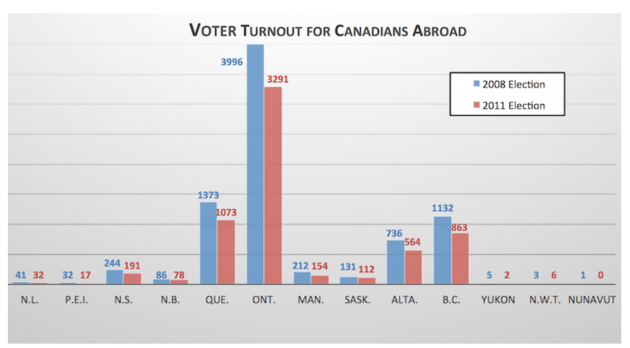
At the root of their problems is the fact that Compton was born in Scotland, where his parents were living while in university. He was brought to Canada when he was five months old and lived in the country until his early 30s.

A teacher by profession, Compton then got a job at an international school and moved to Lima, where he met his Peruvian wife, Paola Moscoso Castillo de Compton.

His first son was born in Peru and automatically became a Canadian citizen. However, his second son, was born just months after the new rules came into effect. The changes mean Mateo, 5, is not a Canadian, even though his older brother Stephanoe, 8, is.

The new rules were part of legislation that solved the problems of thousands whose citizenship had been taken away by outdated legal provisions.’

However, at the same time the government said they were protecting the value of Canadian statehood by ensuring citizenship couldn’t be passed on from generation to generation of those living outside Canada.

The changes made Compton feel like a second-class Canadian. He didn’t even find out about the new rules until he tried to apply for a Canadian passport for his son in 2010 and was denied.

“This is an injustice,” he said. “This could happen to any Canadian.”

The situation has only worsened over time. After trying to deal with the matter from Peru, Compton returned to Ontario with his family in February last year.

He and his older son entered the country as Canadians, but Mateo, for whom he had to obtain a Peruvian passport, and Compton’s wife came in on visitor visas.

via Citizenship rule changes ensnare Ontario family – Toronto – CBC News.

Policy Arrogance or Innocent Bias: Review in Canadian Ethnic Studies

For those interested, Policy Arrogance or Innocent Bias: Resetting Citizenship and Multiculturalism continues to attract interest, most recently in this review by Nelson Wiseman of UofT in the most recent issue of Canadian Ethnic Studies.

Canadian Ethnic Studies Review 2015

Contemporary Directions in Canadian Citizenship and Multiculturalism – Toronto Event

Will be in Toronto today talking about the general political/public service issues as well as citizenship.

York U Event

Citizenship Take-Up Rates and the Citizenship Test – The Current – 27 March

My interview with David Common of The Current, CBC Radio One: http://www.cbc.ca/radio/thecurrent/the-current-for-march-27-2015-1.3011795/canadian-citizenship-test-too-difficult-failing-visible-minorities-1.3011806

Canada faces dramatic drop in citizenship, prompting concerns about disengaged immigrants

Canadian Multiculturalism: Evidence and Anecdote Deck - Images.039Further to yesterday’s post regarding my forthcoming book (Multiculturalism in Canada: Evidence and Anecdote) and the deck summarizing some of the high level results, the Toronto Star article focussing on my findings regarding citizenship take-up and the impact of the 2010 changes (the chart above shows the impact of the citizenship test changes on different ethnic groups):

“In the past, citizenship was viewed as a stepping stone to immigrant integration, and it should be done earlier on,” said Griffith, who will present Multiculturalism in Canada at a three-day national immigration and settlement conference in Vancouver that starts Thursday.

“These changes have made it harder and prohibitive for some to acquire citizenship, turning Canada into a country where an increasing percentage of immigrants are likely to remain non-citizens, without the ability to engage in the Canadian political process.”

Based on latest government data, Griffith found that the ratio of permanent residents who eventually become citizens has been in decline since 2000, and has dropped most rapidly in recent years.

Only 26 per cent of permanent residents who settled in Canada in 2008 have acquired Canadian citizenship, compared with 44 per cent for the wave of immigrants settling in 2007, and 79 per cent of those who arrived in 2000.

Griffith said the government data used in his analysis was selected to reflect the fact that it takes immigrants an average six years to acquire Canadian citizenship. The 2008 cohort best indicates the early impact of reforms implemented by the Conservative government.

The permanent-resident-to-citizen conversion rate does generally rise the longer immigrants have been in Canada. But an 18 per cent decrease between the 2008 and 2007 cohorts is alarming, Griffith said.

Citizenship and Immigration Canada spokesperson Johanne Nadeau said Canada has one of the highest naturalization rates in the world, “as 86 per cent of eligible permanent residents for Canadian citizenship decide to acquire it.”

She suggested the Griffith is misinterpreting the data because “he is not taking into account those (permanent residents) who are not yet eligible to become citizens because they haven’t met all of the requirements needed to begin the citizenship process.”

Citizens are protected by the Charter of Rights and Freedoms, can vote in elections and are entitled to Canadian passports. Not only do permanent residents not have those privileges, they are also vulnerable to revocation of their status and removals from Canada.

“I understand the rationale behind these government changes,” said Griffith, who worked for the government as the reforms were developed and rolled out, and retired in 2013.

“But I’m on the side of inclusion rather than exclusion. We need to make sure those who apply for citizenship take it seriously, but we don’t want to inadvertently create excessive barriers and shift the relationship of some of the communities with the country.”

… “When you make it more difficult for some communities to become citizens, you are going to create issues with their engagement, attachment and identity of Canada,” said Griffith.

“The question is how we balance between ensuring the rigours of the (citizenship) process and yet making it fair and reasonable.”

Canada faces dramatic drop in citizenship, prompting concerns about disengaged immigrants

Larry Miller and the case against the niqab – Wherry

Aaron Wherry’s two questions:

First, if the government wishes to see the niqab banned, why doesn’t it change the regulations to reflect that? I asked the office of Minister Chris Alexander that question and a spokesman responded, “We are not going to speculate on hypotheticals and we are going to make our arguments in court.” (In an op-ed published today, law professor Richard Moon suggests the government amend the regulations, though Moon notes that would trigger a Charter challenge, which the government would lose.)

Second, and more crucial, it seems to me, if the government adamantly believes the niqab should be banned during the oath, why did the government apparently tell the court that the directive was not mandatory, but optional? Here, again, are the first three sentences of paragraph 30 of Justice Boswell’s ruling:

The Respondent argues that this application is premature. In its view, the Policy is not mandatory and citizenship judges are free not to apply it. As such, there is no way to know what would have happened had the Applicant attended the ceremony and refused to uncover her face.

So it would seem that while the government is publicly declaring that wearing the niqab during the oath is unequivocally not something that should be allowed, it has otherwise defended the policy as quite open to equivocation. Beyond the legal arguments here, that seems to my untrained eye like a serious complication for the government’s political argument.

Whatever Larry Miller’s views of where the hell one should situate oneself, the government’s basic argument would seem to amount to this: that a citizenship ceremony is of a particular nature that the government should be able to impose a standard of dress for it, regardless of an individual’s claim to religious freedom, so far as the niqab is concerned. In light of all else—and, I might add, the Supreme Court’s ruling on when a niqab should be removed during a trial—it remains a weak and uninspiring argument. It is a principle without a practical basis that would have the government dismiss a fundamental right. It is to presume that the state can, without substantial cause, dictate attire and place a limit on one’s religious freedom.

Larry Miller and the case against the niqab – Macleans.ca.

Banning the niqab harms an open society. So does wearing it: Omer Aziz

Omer Azis on the niqab debate:

Assuming it is genuine modesty and not an ostentatious display of conservative religiosity that motivates a woman to wear a black veil sequestering her from the rest of society, a cultural practice that demands of one sex to cover up is inherently misogynistic. If anyone should be required to cover their faces, it is the men who torture and kill their daughters and sisters for marrying of their own free will. Let us not mince words here: Women are certainly ‘free’ to wear the niqab, in the same sense as they are ‘free’ to enter the mosque from the side and ‘free’ to stand behind the men while praying. This is a blinkered idea of freedom, but liberalism requires tolerating and legally protecting illiberal attitudes.

The main problem with the niqab, though, is that it diminishes liberal democracy. What separates liberal societies from dictatorships is that the former are open, allow for face-to-face consultation, encourage dissent, and recognize individuals as equals. Liberal societies must allow one citizen to see another citizen’s face when in conversation or contact. When only one party’s face is visible, the informalities of open conversation disappear, body language is eliminated, the natural empathy we humans feel when looking at our fellow human’s face is extinguished. A veil over the face of one citizen permanently alters the terms of the discussion, which is why niqabs have no place in classrooms and other institutions where free discourse is designed to flourish. Imagine a society where all women covered their faces, as some of the more totalitarian Islamists would impose. Call this society what you like, but it would be the farthest thing from liberal democracy.

The enemy of the open society, the late Czech playwright-president Vaclav Havel once wrote, ‘is a person with a fiercely serious countenance and burning eyes.’ Both the politician who seeks to ban what a woman may wear, and the patriarch who seeks to dictate what a woman must wear, are not friends of the open society.

Neither, however, is the niqab.

One of the most articulate commentary yet.

Banning the niqab harms an open society. So does wearing it – The Globe and Mail.

Michael Den Tandt: Conservatives would be wise to call a truce in the culture wars

Minister Kenney’s attempt to explain more coherently the reasons for the ban on niqabs at citizenship ceremony and tone down some of the government rhetoric, led by the PM with an assist by Minister Alexander, among others:

Mr. Kenney then ventured a Q&A with Macleans‘ John Geddes, in which he provided the first thoughtful defence, that I am aware of, of his banning the niqab from citizenship ceremonies.

“Something politically correct Liberals don’t understand, which I do rather profoundly,” Mr. Kenney told Macleans, “is that the vast majority of new Canadians, including new Canadians of the Muslim faith, believe that there are certain important hallmarks of integration. They don’t believe that multiculturalism should be misconstrued as cultural relativism. They believe that multiculturalism should mean a positive regard for what’s best about people’s cultural and religious antecedents. But it should not mean a completely unquestioning acceptance of every cultural practice, especially those of an abhorrent nature.”

Mr. Kenney continued: “I can tell you that the vast majority of Muslims that I’ve spoken with strongly supported my decision in 2010 to state what I thought was axiomatic that a public citizenship ceremony had to be performed publicly.”

So there you have it; the crux, about which reasonable people may disagree. Absent from Mr. Kenney’s construction was the overreach — whether it be Prime Minister Stephen Harper thundering that Islamic culture is “anti-women,” to Immigration Minister Chris Alexander’s earlier conflation of the niqab and the hijab or headscarf — that have opened the Conservatives up anew to the hoary old charge that they are anti-immigrant.

Michael Den Tandt: Conservatives would be wise to call a truce in the culture wars

Niqab debate important for Canadians, religious freedoms ambassador says

More on the incoherent messaging from the Government; showing openness and inclusion on the one side, playing wedge and identity politics on the other:

Bennett, who was appointed Canada’s ambassador for religious freedoms in 2013, said balancing equality rights against religious freedoms is always a challenge.

“Freedom of religion necessarily intersects with equality between men and women and freedom of expression, freedom of association,” he said.

“So we have to ensure that one right does not trump another right, and I think we always have to be aware — as the prime minister has articulated — about the rights of women in society and we have to be careful to defend those rights.”

….The scramble to clarify came amid a social media backlash to Harper’s comments and escalating opposition charges that the Conservatives are deliberately stoking prejudice against Muslim Canadians in their bid to ramp up fear about radical Islamist terrorism.

Clement argued that Liberal Leader Justin Trudeau, who gave a major speech Monday denouncing what he dubbed Harper’s “politics of fear,” is the one expanding the issue beyond just niqabs at citizenship ceremonies.

But Conservative party talking points issued Wednesday suggest the issue is tied to the party’s broader goal of making terrorism an key issue in the coming election. After offering several lines about Trudeau being out of step with public support for banning the niqab during citizenship ceremonies, the final point says: “Unlike Justin Trudeau, we are not afraid to call the growing threat of jihadi terrorism exactly that — jihadi terrorism.”

For a Government that is normally so disciplined in its messaging, interesting to observe.

Niqab debate important for Canadians, religious freedoms ambassador says – The Globe and Mail.

National Post View: Sneaking in new ‘Canadian values’

National Post editorial on the mixed messages from the Government on the niqab:

In an interview with iPolitics on Tuesday, Treasury Board President Tony Clement rolled out the red carpet for niqab-wearing women who wish to work in the public service. Indeed, he asserted they “are frequently worn” by civil servants. “If you are in your place of work or privately in your home or in your private life, what you wear is of no concern to the state,” he said, with the reasonable proviso that the garment presents no safety concerns.

In an interview with Maclean’s the same day, Minister for Multiculturalism (among other portfolios) Jason Kenney made similar noises. Though he defended his government’s stance against niqabs at citizenship ceremonies on grounds that it involves “an interaction between the individual and the state,” and what’s more “a public declaration,” he drew a firm line there. “I’ve said consistently … that I think the state has no business regulating what people wear,” he said.

Meanwhile in the House of Commons, Stephen Harper was taking a very different line. Responding to a question, he stood up and doubled down against the niqab: “Why would Canadians, contrary to our own values embrace a practice [at citizenship ceremonies] that is not transparent, that is not open, and frankly is rooted in a culture that is anti-women? That is unacceptable to Canadians and unacceptable to Canadian women.” (Our italics.)

In the past we’ve argued that no one in government has yet made the case for uncovered faces as an obligation of citizenship, albeit one that applies only at the moment of its ceremonial confirmation. That remains true today. Mr. Kenney speaks of “interaction between the individual and the state” as the threshold at which people must show their faces, which at least has a certain logical coherence. The Quebec Liberals, for example, have committed to banning the niqab in the provincial public service on the same grounds. But in Ottawa, we have the Prime Minister denouncing niqabs as misogynist symbols contrary to Canadian values, while two of his senior ministers mildly declare that what people wear is none of their business.

And still, no one has managed to articulate why niqabs should be banned at citizenship ceremonies — or just as confusingly, why they aren’t actually banned. The regulations governing citizenship judges advise them to afford “the greatest possible freedom in the religious solemnization or solemn affirmation” of the oath. The “ban” is merely a ministerial directive — one that could hardly contradict those regulations more blatantly. In fact, government lawyers defended the policy on just those grounds. “In the respondent’s view, the policy is not mandatory and citizenship judges are free not to apply it,” Justice Boswell of the Federal Court wrote, in striking the policy down.

If this cynical sleight of hand was an effort to keep the issue out of court, it has failed miserably. If it’s as essential to “Canadian values” as Mr. Harper says that citizenship oaths be taken with uncovered faces, then surely it belongs in the regulations. That he seems more inclined instead to bluster and spend public money appealing the Federal Court ruling, while his ministers try not to let the anti-niqab fire get too hot, speaks volumes.

Politicians trying to sneak new “Canadian values” in through the service entrance are not to be trusted. The Conservatives need to let this bugbear die.

National Post View: Sneaking in new ‘Canadian values’