The 14th Amendment, which declared that African-Americans were citizens, turned 150 earlier this month. But even as it was being commemorated as one of the signal achievements of post-Civil War Reconstruction, its bedrock provisions were colliding with the furious 21st-century debate over immigration.
In June, President Trump tweeted that undocumented immigrants should be sent home “immediately, with no Judges or Court Cases”— a direct contravention, legal scholars pointed out, of repeated Supreme Court rulings saying that the amendment’s guarantee of due process applies to all people in the United States, whatever their status.
This week, Michael Anton, a former national security official in the Trump administration, wrote an Op-Ed article in The Washington Post saying that birthright citizenship — the longstanding principle that anyone born in the United States is a citizen — rests on a “deliberate misreading” of the 14th Amendment.
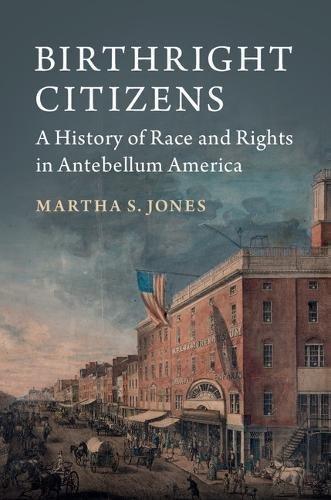
We talked with Dr. Jones about how the idea of birthright citizenship was created, and how it connects with the current debate about who belongs in America. The interview has been edited and condensed.
The idea of “jus soli,” the right of the soil, goes back to English common law. Where does the American idea of birthright citizenship enter our political tradition?
In the United States, it is the African-American community that first begins to articulate the claim to birthright citizenship. They do it because they need it. Other folks do not.
By the 1830s, African-Americans in what we call the Colored Conventions Movement are crafting an argument that will help defend them against colonization schemes that involve trying to get them to leave the country, and also trying to resist state “black laws” that regulate where they can travel or gather in public, whether they can go to school, own guns and so on.
They look at the Constitution, which doesn’t really define who is a citizen, but does have this clause saying that the president must be a natural-born citizen. They ask, if the president is a natural-born citizen, why aren’t we? The Naturalization Act of 1790 says that only white people can be naturalized. But there is no color line in the Constitution.
We tend to think of the 1857 Dred Scott decision — which declared that back people could never be citizens — as definitively slamming the door shut, until the 14th Amendment came along. How much resistance was there to the decision?
Roger Taney [the chief justice, who wrote the decision] was very aware of the history of African-Americans’ efforts to claim citizenship. And after the decision, we see African-Americans continue to resist, to critique Taney’s decision from the podium, in newspapers. At the same time, lower courts are narrowing the scope of the decision, or refusing to defer to his reasoning.
And African-Americans are not retreating to their homes, or living quiet lives in response to Dred Scott. In Taney’s home state, Maryland, there are about 75,000 to 80,000 free blacks. When the state legislature proposes a new set of draconian black laws that would either remove them or re-enslave them, people organize, gather petitions, go to Annapolis, the capital, as part of an effort that ultimately defeats the legislation.
Black voting rights, which were guaranteed in the 15th Amendment, came under sustained attack for more than a century. Were there similar efforts to roll back birthright citizenship itself?
After 1868, African-Americans are citizens, if they are born in the United States. Now they have a tool that protects them from any effort to remove them from the country. With citizenship, there really is a there there, even as the struggle over civil rights continued, arguably into our own moment.
Possible expansion of the Australian dual citizenship problems for elected state-level politicians, but narrower in its application:
It has been widely assumed that any dual citizenship problems are confined to the federal parliament. But that may need a rethink.
Over the past year, 15 federal parliamentarians have left the Australian parliament because of dual citizenship.
Under Section 44(i) of the Australian Constitution – which has been given a strict interpretation by the High Court of Australia in recent cases – a person is not eligible to nominate for, or be elected to, the federal parliament if they are a dual citizen. The removal of such a large number of parliamentarians in such a short space of time is unprecedented.
Throughout this controversy, it has been assumed that any dual citizenship problems are confined to the federal parliament. Certainly, it is widely acknowledged that state constitutions do not contain the same general prohibition of dual citizenship and that dual citizens are at least initially eligible to be elected to state parliaments.
Unfortunately, the analysis generally stops at this point. There has been little consideration given to the important follow-up question of whether there are any other disqualification provisions that might affect any dual citizens sitting in our state parliaments.
An examination of state constitutions (and relevant electoral laws) reveals that while a dual citizen is eligible to be elected, this citizenship status may subsequently put them at risk of disqualification if they engage with that foreign citizenship while serving in the parliament.
In particular, in New South Wales, Queensland, Western Australia and Tasmania, the state constitutions, or relevant electoral laws, provide that a parliamentary seat will become vacant if a member commits any act that acknowledges allegiance to any foreign power.
This disqualification does not apply in Victoria, the ACT or the Northern Territory, and in South Australia it has been expressly limited to make it clear it doesn’t apply in particular circumstances.
Clearly, these state provisions are substantially different from the dual citizenship prohibition at the national level. A dual citizen is eligible to be elected as a state member of parliament, and will only be disqualified if there is a positive action taken by them that acknowledges a foreign allegiance.
And that’s the pertinent question: what exactly constitutes an “acknowledgement of allegiance”?
A plain reading of this phrase would seem to suggest that any positive act that seeks to exercise any right arising from citizenship would be disqualifying. In essence, a person who seeks to rely on their foreign citizenship in some way (however trivial) is making an acknowledgement of that foreign allegiance. Some obvious examples would be travelling on a foreign passport, or even renewing a foreign passport.
If a state MP from NSW, Queensland, WA or Tasmania did either of these things, they would appear to be in breach of the state constitutional requirements, resulting in their disqualification from parliament.
This issue has been flagged as a potential problem in the past. For example, leading constitutional expert Professor Gerard Carney suggested almost 20 years ago that if an elected state member subsequently acts to affirm the foreign citizenship, such as by renewing or applying for a foreign passport, disqualification will be incurred.
The question was also considered by the NSW Parliamentary Joint Committee on the ICAC, which recommended repealing this grounds for disqualification back in 1998.
This broad interpretation is further reinforced by the fact that South Australia saw a need back in 1994 to insert a qualifying provision into its state constitution to provide that members would not be disqualified simply because they acquired or used a foreign passport.
The fact that such a qualification was thought necessary highlights that acquiring or using a foreign passport will ordinarily fall into the category of being an “acknowledgement of allegiance”.
It is important to note these issues have never been tested before the state courts, and there is no particular evidence to suggest any current state parliamentarians are in breach.
It is also worth noting that some jurisdictions – notably Queensland – have provisions that allow parliament to resolve to disregard a “trivial” disqualifying event.
Interesting angle to the citizenship-by-investment schemes:
While some people take pride in their stamp collection, some high-net-worth individuals bask in the glory of a different type of collection: passports.
Through Citizenship by Investment Programs (CIPs), wealthy individuals are investing in a country in exchange for citizenship. Once they have citizenship, they then have the basic rights of any other citizen of that country — like owning a passport, Nuri Katz, president of international financial firm Apex Capital Partners, told Business Insider.
Common types of investments include real estate, an enterprise project, or significant donations to a country’s fund — and they don’t come cheap. While the six-figure cost of a CIP can vary, it’s usually around $200,000, Business Insider previously reported.
But those who are racking up citizenships and passports aren’t the “ultra rich,” Katz said. Most have a net worth of $1 million to $10 million, he said.
To them, a second passport buys much more than a travel document — it also buys them status.
Passports offer status, freedom, and for some, a good investment
“It’s a status symbol — it shows friends you can afford it,” Katz said. “I call it the black American Express syndrome.”
Becoming a global citizen has become a status symbol for the world’s elite, Armand Arton, president of Arton Capital, a global financial advisory firm that specializes in investor programs for residence and citizenship, told Business Insider.
But there are physical advantages to owning more than one passport beyond external perception. According to Arton, investors primarily seek increased global mobility, better security and education, diversified business opportunities and tax planning strategies, and an overall improved quality of life.
“People who are investing in citizenships are people who come from countries with limited visa-free travel abilities, such as someone from Pakistan, India, or China,” Katz said. “It provides a certain freedom that some citizens of some countries don’t have; it’s a freedom of movement.”
But, that doesn’t mean that wealthy Americans don’t find their own advantages in these programs. While they represent a smaller share, Arton says, Americans are enticed by beneficial tax conditions the host country might offer, which they can take advantage of if they renounce their American citizenship.
“Americans are giving up their citizenship and taking on other citizenships for all sorts of personal reasons, including wanting to live abroad, retire abroad, and not wanting to have to deal with the American government if they are not living there,” Katz said. “Also surprisingly, citizens of Grenada, for example, have visa-free travel to China and Americans still do need a visa to travel there.”
The costs and advantages vary from country to country
Obtaining a CIP isn’t an easy process — it’s not just a matter of investing; it also involves going through a vetting system. “You need to go through a due diligence process, including showing sources of your sums and biography — they go deep into your life to make sure you’re an upstanding person,” Katz said.
Each country also has different investing requirements and costs. For example, investing in a citizenship in St. Lucia requires a donation of at least $100,000 to the St. Lucia National Economic Fund (depending on the number of dependents), an investment of at least $300,000 in an approved real estate development, or an investment of $3.5 million in an approved enterprise project, Katz previously told Business Insider.
Meanwhile, to obtain a citizenship in Canada, investors must state their intention to settle in Quebec and sign an agreement to invest $800,000, Katz said. They must have a legally-obtained net worth of at least $1.6 million CAD, reside in the country for three years within a four-year timeframe, and have at least three years of experience in planning, finance, human resources, or general management.
Cost and the return on investment can make some countries more appealing than others.
“Some countries offer no income or inheritance tax, so for those looking to purchase for financial purposes [that’s advantageous],” Katz said. “The CIP program in Dominica is the most financially advantageous of its kind which also attracts potential buyers. In general, the Caribbean programs are less expensive than those in places like Cyprus or Malta.”
In fact, Cyprus has the most expensive CIP, with citizenship starting at €2 million ($2.34 million), according to Arton Captial.
Arton explains that more countries are in need for foreign direct investments, and are thus leveraging citizenship as a means to raise funds. More choice often drives price down and lowers entry level to a wider range of investors.
“The Caribbean islands of Antigua & Barbuda, St. Kitts & Nevis, and Saint Lucia are very much in demand due their relatively low cost to benefit ratio,” Katz said. “Meanwhile, Europe, Cyprus, and Portugal win the trust of most investors due to the significant exposure to real estate investments, whereby they can potentially make interesting return on their investment along with their newly acquired residency or citizenship.”
Undoing one of the legacies of the previous conservative home secretaries:
The government has halted its “hostile environment” policy for anyone over 30 to prevent more people being “wrongly and erroneously impacted” by the measures, following the Windrushscandal, the home secretary has said.
Sajid Javid said data sharing between the Home Office and other government departments, such as HMRC and the Department for Work and Pensions – as well as banks and building societies – has been suspended for three months for people of all nationalities aged over 30.
In a letter to the Home Affairs Select Committee, Mr Javid said the department was also looking at the best ways of evaluating the effectiveness of the policy – which he has renamed the “compliant” environment – to ensure there is “no adverse impact on individuals who have a right to be here and to access those services”.
The Home Office has so far issued documentation confirming a right to live in the UK to 2,125 people who contacted the Windrush hotline. Of these, 1,014 were born in Jamaica, 207 in Barbados, 93 in India, 88 in Grenada, 85 in Trinidad and Tobago and 638 were from other countries.
Some 584 people have so far been granted citizenship through the Windrush scheme.
The department is only in touch with 14 people who were wrongly deported, and no details have been given about their nationalities or whether any of them had been allowed to return to the UK. Contact has not been made with the majority of those wrongly deported or removed, the Home Office has said.
Labour MP Yvette Cooper, chair of the Home Affairs Select Committee, said she was disappointed there was still no clarity about the number of people wrongly detained, and that the Home Office had “still not managed to make contact with the majority of those who were wrongfully deported or removed”.
“The committee is awaiting more information from the Home Office, which is expected by the end of this week, and will be asking further questions to follow up the information in the Home Secretary’s letter,” she said.
Mr Javid said officials were also reviewing cases where the Home Office has ordered other departments to deny or revoke services, or taken action to penalise a third party for employing or housing an unlawful migrant.
A final figure of those affected will not be available until the review is complete, he said.
The news comes after a damning report by the Home Affairs Select Committee said unless the Home Office was overhauled, the scandal “will happen again, for another group of people”.
The committee expressed concern for the children of EU citizens, saying the government should ensure they are not “locked out of living a lawful life, as we have seen happen to members of the Windrush generation”.
The MPs also said recent attempts by the government to rebrand its “hostile environment” policy the “compliant environment”, were “meaningless”.
Entry level price keeps on getting lower (Euro 100k):
LONDON–(BUSINESS WIRE)–Jul 12, 2018–Henley & Partners, a leading global investment migration firm, has won the public tender to design, implement, and promote the much-anticipated Moldova Citizenship-by-Investment (MCBI) program. The firm submitted its application for the public tender — issued by the Ministry of Economy and Infrastructure of the Republic of Moldova — at the end of May.
The MCBI program, set to launch within the next few months, will become the third such program in Europe — after Malta and Cyprus —and the most affordable, giving individuals the opportunity to acquire alternative citizenship by making a EUR 100,000 contribution to Moldova’s Public Investment Fund.
Henley & Partners has accumulated over 20 years of experience working with governments in North America, the Caribbean, Europe, and Asia on the design, set-up, operation, and promotion of some of the world’s most successful residence and citizenship programs, raising more than USD 7 billion in foreign direct investment (FDI).
The firm applied for the mandate as part of a consortium together with MIC Holding LLC (Moldovan Investment Company), a company based in Dubai, UAE and founded to focus on strategic FDI initiatives. In addition, an agreement has been signed with the Boston Consulting Group (BCG), a leading global management consulting firm with 90 offices in 50 countries, to provide advice on best-in-class FDI strategy and implementation.
“The program is poised for success on account of its competitive pricing structure and strong value proposition,” says Marco Gantenbein, Executive Committee member at Henley & Partners. “Moldova offers its citizens visa-free access to 121 destinations, including the countries in Europe’s Schengen Area as well as Russia and Turkey. It has entered into an association agreement with the EU and is aiming to become a candidate country for EU membership.”
Moldova’s Minister of Economy and Infrastructure, Chiril Gaburici, says his government’s primary objective is to create long-lasting societal value for the Moldovan people. “The MCBI program will provide our economy with valuable FDI that will enhance the daily lives of all Moldovans. Uncompromising due diligence standards and compliance procedures will guarantee the credibility, competitiveness, and long-term sustainability of the program. In this regard, we are delighted to be working with Henley & Partners, whose good governance systems are industry-leading.”
Well argued. Fully legitimate to strip citizenship from those whose applications were either fraudulent or misrepresented their situation, but distinctions need to be made between material fraud (e.g., war crimes) and non-material (e.g., getting some dates slightly wrong).
Given the overall Trump administration approach, unlikely that any such distinctions will be made:
In June, US Citizenship and Immigration Services (USCIS) announced that a newly established office would investigate naturalized Americans suspected of lying on their citizenship applications. USCIS director L. Francis Cissna said the probes would target “a few thousand” people, with the aim of revoking citizenship from those who did, in fact, lie. This news stoked fears that President Trump’s already-restrictive immigration rules were taking an authoritarian turn.
This week, an early target emerged: According to the Miami Herald, the Department of Justice is suing to strip citizenship from a grandmother in Miami because she did not disclose her minor role in a financial crime in her naturalization application. She immigrated legally, suffers from a rare kidney disease, and even cooperated with the FBI when they investigated the crime. Still, after living and working for decades in the United States, she is facing deportation.
There is no denying that the Trump administration’s policies are often racist, cruel, and politically motivated. But investigating fraud isn’t the same thing as expelling entire groups, like when the Nazis denaturalized German Jews en masse in the early 1930s. Nor can this initiative be solely attributed to Trump: An earlier version of the program known as Operation Janus began during the Obama administration, and identified many of the cases the current program will examine.
Still, there is something decidedly unsettling about the timing of the new announcement. Why did the government choose, in the middle of a nationwide outcry over family separations at the border, to declare its interest in a trivial amount of naturalization fraud?
To understand what might be going on, we need to put aside the Nazi references and turn to America’s own history. Denaturalization—the legal procedure for revoking and nullifying citizenship—was for decades a relatively common practice in the United States. Unlike totalitarian versions of this policy, which were politically and ethnically defined, denaturalization in America hinged on legal interpretations of fraud: From the use of naturalization as a tool to rig election turnout in the late 19th century, to the current interest in the use of fake names and other falsehoods on citizenship applications.
Denaturalization first became a legal possibility in the United States with the passage of the 1906 Nationalization Act. Section 15 of this piece of legislation gave US attorneys the authority to initiate proceedings “for the purpose of setting aside and canceling the certificate of citizenship on the ground of fraud or on the ground that such certificate of citizenship was illegally procured.” The original purpose of the denaturalization clause was to clean up a naturalization process that had been wildly inconsistent across state and federal courts. Once introduced, though, it quickly opened the gates for the interpretation of fraud to support exclusionary and often racist investigations.
The 1907 Expatriation Act used the denaturalization clause to rid the populace of certain unwanted individuals who were targeted for their ethnic background, their gender, and their political views. Between 1907 and 1931, the clause was used to strip citizenship from American women who married foreigners. It was also used by the government to target individuals on the basis of their political opinions, which is what happened, most notably, to the anarchist Emma Goldman: Her US citizenship was deemed invalid because her ex-husband, who sponsored her, had not met the full residence requirement before naturalizing himself. Further, the government even used the clause to allow the denaturalization of “un-American” races, specifically Asians.
This history, which historian Patrick Weil eloquently narrates in his 2012 book,The Sovereign Citizen, shows us that denaturalization fraud was for decades at the center of racist and xenophobic immigration policy in the United States. However, in the early 1940s, the Supreme Court began to issue decisions to protect naturalized citizens, culminating in a landmark 1967 decision, Afroyim v. Rusk, that ruled that all American citizens, whether native-born or naturalized, could not be deprived of their citizenship involuntarily.
This decision does not mean that today naturalized citizens can neverlose their citizenship. A naturalized citizen of the United States can be denaturalized on the grounds that they falsify or conceal relevant facts, refuse to testify before Congress, are proven a member of subversive organization (such as the Nazi Party or Al Qaeda), or because of a dishonorable discharge. As recently as last year, an Indian immigrant named Baljinder Singh was stripped of his US citizenship because he used a false name to apply for naturalization while he was wanted for deportation. And though litigation is pending, the Associated Press just reported the discharge of approximately 40 immigrants from the army—dismissals that could affect their attempts to become citizens down the line.
It remains to be seen to what extent the government will be able to substantially expand what counts as naturalization fraud, and how the courts will handle the issue. Last June, in Maslenjak v. The United States, the Supreme Court heard the case of an ethnic Serbian woman who fled Bosnia for the United States during the Balkan wars in 1998. The government argued that Maslenjak could be denaturalized because she lied on her citizenship application about her husband’s involvement in the Bosnian army; Maslenjak countered that she had indeed lied, but that the lie was immaterial and had no bearing on the decision related to her naturalization.
In a 9-0 decision, the Court supported her argument, sending the case back down for resolution in a lower federal court. “Under the Government’s reading,” wrote Justice Elena Kagan, “a lie told in the naturalization process—even out of embarrassment, fear, or a desire for privacy—would always provide a basis for rescinding citizenship. The Government could thus take away on one day what it was required to give the day before.”
In our unsettled times, Americans are right to instinctively worry about the government’s task force on denaturalization fraud. For now, though, the law is on the side of the immigrants, so the government is unlikely to win denaturalization cases in the courts; even a more conservative Supreme Court, after the replacement of Justice Kennedy, is unlikely to change this calculus.
What we should worry about immediately is what sort of message the government is sending. Even if USCIS’s new office closes up shop after handling a few thousand cases of clear-cut lying, cheating, and fraud, the threat of denaturalization now hangs over the heads of America’s immigrant population, and its effects will be far-reaching and long-standing. This is precisely why the government made its announcement in the middle of a public outcry over immigration policy: to ratchet up fear as an indirect means of border control.
Fear, unlike a border wall or the travel ban, is inexpensive, and does not have to be passed through Congress or the courts. Fear also threads through people fast, and spreads quickly, especially online. After the immigration agency’s announcement, many naturalized citizens were left questioning the validity of an immigration status they assumed would always be safe. Many others, afraid of being targeted or tripped up in a lie, may now never pursue naturalization at all, even if they are eligible.
This is why comparisons to the Third Reich fall short. Not only do they belie America’s own history with denaturalization, they also let fear control the behavior of naturalized Americans—and future citizens, too. Americans, regardless of where they were born, should remember that their citizenship cannot be revoked on a dime. The real lie is that they were ever made to feel otherwise.
Interesting data, although it appears that in percentage terms, no significant change. As one would expect, lack of official language more prevalent among seniors, women, and low-income.
Will be including this data in my upcoming riding-based analysis:
One in 20 Torontonians can’t speak English or French and the language barrier has greatly impeded their ability to find a job, be active in the community and enjoy a decent life, says a new study.
More than 132,700 Toronto residents are unable to have a conversation in either official language and they account for 20.5 per cent of the 648,970 non-English and non-French-speaking population across Canada, according to the Social Planning Toronto report which is believed to be the first ever to profile this cohort.
Census data collected between 1996 and 2016 found the number of people without knowledge of either official language has increased by more than 175,000 in Canada over the two decades, though it fluctuated only slightly as a percentage of the total population. In Toronto, the number of people who don’t speak English or French shrank by 10,000 in the same period.
In the GTA, Toronto’s percentage of non-English and non-French speakers ranks second to York Region (5.6 per cent) and is followed by Peel (4 per cent), Hamilton (1.8 per cent) and Durham (0.8 per cent).
Within the city, this population mostly resides in the west end of North York, throughout the former city of York, in the old city of Toronto and in northwestern Scarborough, which alone is home to more than 30,000 residents with no English or French.
The report found a total of 43.5 per cent of Toronto residents who do not speak an official language reported a Chinese language as their mother tongue, followed by Portuguese, Italian, Spanish, Tamil, Vietnamese, Korean, Persian, Russian and Arabic. These residents also tend to live in areas where their mother tongue is common, it said.
“There is a range of diversity within the group, but we have an overrepresentation of seniors and women who don’t speak English or French,” said Peter Clutterbuck, interim executive director of Social Planning Toronto, a non-profit group that works to improve equity, social justice and quality of life. “You can’t get employment without some capacity of an official language or access services if you are unable to communicate with others. It limits your ability to be active in the community and to feel connected.”
The report, titled Talking Access & Equity, said women and girls make up almost 60 per cent of Toronto residents who speak neither official language, though they only account for 51.9 per cent of the city’s population.
While only 15.6 per cent of Toronto residents are 65 and above, 44.6 per cent of the city’s non-English, non-French-speaking population belong to this age group.
The report said both women and seniors are more likely to come to Canada as dependants and hence may lack the same official-language skills required of the principal applicants or sponsors.
Fahmeeda Qureshi was sponsored by her husband to Canada from Pakistan in 1972 when she was 18, and never attended English classes because she was busy caring for her three children, parents and in-laws.
“I was too busy to learn English because I had to look after everyone else,” said the now 66-year-old, who spoke little English when she arrived and later picked up the language informally from her husband and children. “It is very important to learn English so you can communicate and do anything you want and be independent.”
Robert Koil, who came to Canada in 1992 and later founded a Tamil seniors group in Rexdale, said older immigrants without English proficiency are forced to rely on their children in their day-to-day lives as they’re often isolated from the world outside of their family.
“They don’t know other people and need help for mobility issues and health issues,” said Koil, 88, whose group organizes monthly seminars and meetings at Rexdale Women’s Centre for non-English-speaking Tamil seniors about health, diet and well-being.
“They speak in their mother tongue at home, stay with their children and are afraid to speak English because they are embarrassed by their English,” added Koil, who unlike many of the people he helps, spoke flawless English when he arrived in Canada.
Jenny Huang moved to Canada from China in 2009 with her daughter and husband.
“I only started learning English in junior high (in China) and knew just a few English words when I came,” Huang said in Cantonese. “I go to English classes but it’s hard to learn a new language as an adult. I can understand better than I speak.”
With limited English, Huang said she also has limited job opportunities and gets by working in restaurants and garment factories.
The report found 35.7 per cent of Torontonians with no English or French had a household income below the poverty line compared to 20.2 per cent of residents overall. The unemployment rate for residents without official-language ability was three percentage points higher than the Toronto average.
Good statement, even if the HRC is fundamentally dysfunctional:
E. Tendayi Achiume, Special Rapporteur on racism, focused on the issue of ethno-nationalism in her first report to the Human Rights Council in Geneva, whose current session ends on Friday.
In it, she highlighted the plight of millions of stateless people worldwide—often members of minority groups—who are victims of long-standing discrimination which sees them as “foreign”, even though they have been resident in a country for generations or even centuries.
Meanwhile, several countries continue to enforce “patriarchal laws” which make it impossible for women to pass down citizenship status to their children or foreign-born spouse.
In some cases, women are even stripped of their nationality upon marrying a foreigner and cannot regain it if the marriage ends.
“This is gender-based discrimination often deployed by States to preserve notions of national, ethnic and racial ‘purity,’” she said.
Ms. Achiume believes prejudice rooted in ethno-nationalism is behind racial discrimination, whether in citizenship or immigration laws.
She recalled that in the past, European colonial powers used the ideology to exclude local populations within colonies from gaining citizenship, while Jews and Roma were targeted on the same grounds, in the 19th and 20th centuries.
Today, she said, migrants are the target of political hate speech and intolerance, again often under the pretext of ethnic purity and religious, cultural or linguistic preservation.
“Countries that have long celebrated immigration as central to their national identity have taken steps to vilify and undermine immigration, with a disproportionate effect on certain racial, religious and national groups,” Ms. Achiume pointed out.
“Islamophobic or anti-Semitic ethno-nationalism undermines the rights of Muslims and Jews irrespective of citizenship status…the case of the Rohingya Muslims offers a chilling example.”
The Rohingya are a mostly Muslim minority in Myanmar, which is a predominantly Buddhist nation.
Though resident there for centuries, Ms. Achiume said many Rohingya have been rendered stateless following a 1982 nationality law that discriminates on the basis of ethnicity.
Waves of violence and discrimination have driven scores of Rohingya to neighbouring Bangladesh. More than 700,000 have arrived in the past year alone in the wake of a violent military crackdown that began in late August.
Ironically, Canada was inspired by the US in 2014’s C-24 citizenship legislation to provide a comparable path, one maintained by the current government:
The military is booting out immigrant reservists and recruits who enlisted with the promise of a path to citizenship, according to a AP report. Some said they are being discharged with little warning or explanation, and the Army and Pentagon said they could not comment due to pending litigation.
Last week Lucas Calixto, a Brazilian reservist who came to the U.S. when he was 12, filed a lawsuit against the Army, alleging that he was offered no reason for his discharge aside from “personnel security,” and given no chance to defend himself.
Immigration attorneys told the AP they know of around 40 other people who have been discharged under similar circumstances, or whose status is now questionable.
Immigrants have served in the U.S. military since the Revolutionary War, and there are roughly 10,000 serving currently. The immigrants facing discharge all enrolled in recent years as part of the Military Accessions Vital to the National Interest program, or MAVNI. The recruiting program, which was started under the George W. Bush administration, offered expedited naturalization to immigrants with much needed skills, including military specialists and people fluent in certain languages.
MAVNI came under attack from conservatives when President Obama made DACA recipients eligible, so the military added additional security clearances for recruits. The Trump administration added even more requirements, creating a screening backlog at the Defense Department. Last fall the Pentagon abruptly canceled the contracts of hundreds of immigrants still in the recruitment process, and a few months later the program was suspended.
GOP Congressman Andy Harris, who backed legislation to limit the program, said it should have been established by Congress, not via executive order. “Our military must prioritize enlisting American citizens, and restore the MAVNI program to its specialized, limited scope,” he said.
Immigrants must have legal status to enroll in the military, but now some fear that in addition to losing their military career they could lose their immigration status. An Iranian citizen with a graduate degree in engineering, who was recently discharged, told the AP that he was proud he was “pursuing everything legally and living an honorable life.”
“It’s terrible because I put my life in the line for this country, but I feel like I’m being treated like trash,” he said. “If I am not eligible to become a U.S. citizen, I am really scared to return to my country.”
Interesting read and analysis on shift from jus soli to jussanguinis:
Citizens of India’s north-eastern states have been protesting vigorouslyagainst a proposed new citizenship regime that they claim will “destroy their culture” in the region. The protests have been diverse and dramatic – petitions, hunger strikes, effigy-burning, a rebel militant group threatening to end talks with the Indian state.
The source of their anger is the Citizenship Amendment Bill, first tabled in the lower house of the Indian Parliament in 2016. It is set to change the Citizenship Act of 1955, which has formed the basis of India’s citizenship regime since it gained independence from the British Empire in 1947. The amendment seeks to allow select “persecuted minorities” (Hindus, Christians, Parsis, Sikhs, Buddhist and Jains) from the neighbouring countries of Bangladesh, Pakistan and Afghanistan citizenship status in India after six years of residency. Other groups must wait 11 years to become naturalised citizens.
In the north-eastern states, the fear is that this amendment would legitimise migration of Hindus from neighbouring Bangladesh in particular, potentially affecting the demographic make-up of the region.
When the bill’s parliamentary committee began touring the north-east in May, protests grew steadily larger, stronger and more widespread. As almost 99% of their boundaries are international borders, the citizens of these states have been quick to point out that they would be the first “victims” of the new amendment if it makes it easier for minority immigrants to travel across the border, settle in and become full citizens. The complaints are loudest in the state of Assam, which has waged a four decade struggle against the Indian state to prevent what some there call“unchecked infiltration” from neighbouring Bangladesh.
The committee’s decision to visit the north-east – and the media coverage of the protests – have framed this as a north-eastern issue, not a national concern. But in fact, the Citizenship Amendment Bill will change the character of citizenship not just for this region, but for India as a whole.
Birthright and blood
When India achieved independence, its citizenship regime was established on the basis of jus soli (birth within a territory), meaning that people were members of the political community regardless of their religion or ethnicity. While mistrust of Muslims has persisted into present-day India, particularly in recent years with growing Hindu right-wing populism, the law has so far upheld the secular, non-religious character of the Indian state. The Citizenship Amendment Bill would fundamentally alter this basic tenet, shifting the basis of citizenship towards jus sanguinis (by right of blood).
But, as historians such as Joya Chatterjiand Ornit Shani have documented, there have been frequent challenges to the principle of citizenship by birth – especially in the period immediately after the partition of India and Pakistan in 1947.
In contrast to Muslims, Hindus were from the start considered “natural citizens” of India. Muslim citizens of pre-independence India were ostensibly given a choice between the two countries, but in practice they were subjected to arbitrary processes to “prove” their loyalty to the Indian state. Similar demands were not made of Hindu citizens crossing the border from the newly-formed Pakistan back into India.
Regardless of which states or regions would be most affected by a sizeable influx of migrants, the bill changes the character of Indian citizenship and the basis on which it is granted, moving from secular to overtly favouring specific groups – particularly Hindus. It opens the door for the creation of second-class citizenship for non-Hindus and most of all Muslims – not just in the extra-legal practices of discrimination and violence that exist today, but in the law.
Slipping away
Given that India repeatedly fails its own minorities, perhaps it’s not surprising that it is only prepared to offer refuge and asylum on the basis of ethnicity, not humanitarian need. It’s no coincidence that this amendment was introduced by the ruling Bhartiya Janta Party (BJP), led by the prime minister, Narendra Modi, which has an abysmal track record in protecting India’s minorities, whether they are Muslims, Christians or Dalits. Nor has it shown any inclination to help rehabilitate South Asia’s largest persecuted minority, the Rohingya.
Furthermore, the bill also leaves out Muslim minorities in Pakistan, such as Shias and Ahmadis. There is also speculation about whether the bill is a means to appease India’s Hindu diaspora abroad – an important funding base for the ruling party.
Even the relatively hardline BJP is not immune to public resistance. The protests in the north-east prompted India’s government to backtrack and table discussions to address what it euphemistically referred to as “people’s concerns”. But by framing the amendment as a regional issue, the government has managed to confine public opposition to the people of the north-east. Because the region is already marginalised in Indian politics, the rest of the country is often apathetic about its concerns, which rarely become pan-Indian ones.
Still, that the citizens of the north-east are protesting so vehemently – whatever their precise grievances – is currently the only sign of dissent. Unless it feels the heat of visible and vocal public outrage, the Indian state is likely to continue its slide towards becoming a very different, less inclusive, and increasingly more unjust country.

 Multicultural Meanderings