Toronto Sun Editorial: Birth tourism in Canada needs to be addressed

Doing some further work, based upon more accurate (and higher) numbers than those collected by StatCan and the vital statistics agencies, that will form the basis of an upcoming article in the next month or so.

As the previous government learned during its efforts to qualify birthright citizenship (What the previous government learned about birth tourism), not as simple to address as it may appear:

Canadians on social media recently clued in to a curious blog from Nigeria that encourages the practice of birth tourism.

“Top Tips for Having Your Baby in Canada from Nigeria” is the name of an actual blog post on the popular Nigerian travel site, Naija Nomads, that encourages people to give birth while on a trip to Canada to secure Canadian citizenship for their child.

The author discusses her own experiences giving birth in Canada and why she did it. “Canada offers more benefits for its citizens (immigration policies are better, free health care + college education is cheaper)” and that “Canada is cheaper to have your baby.”

The author offers detailed advice ranging from visa applications to where in the country to plan the birth. “Ontario is where most people have their babies but who knows, Quebec or Nova Scotia might be better for you.”

The blog posted a series of tweets further discussing the issue, but appears to have deleted them after Sun columnist Anthony Furey drew attention to them.

But this incident brings renewed focus on an issue that has become increasingly concerning in Canada.

A Postmedia report from June revealed that the number of babies born at Richmond Hospital in British Columbia now account for about 20% of all deliveries.

“We are reaching a tipping point,” said Liberal MP Joe Peschisolido, who represents the riding of Steveston – Richmond East. “Nurses have told me that this is displacing folks from giving birth in Richmond.”

Peschisolido created an e-petition to back his efforts to get his government’s cabinet to clamp down on the issue.

“In response to birth tourism, Australia and New Zealand changed their laws, granting citizenship to babies only when at least one parent is a citizen or a legal resident,” Postmedia reported.

Canada ought to consider something similar. It’s difficult to blame people like the Nigerian blogger for taking advantage of something that is allowed by law.

The Conservatives recently voted in favour of a policy resolution put forth at their annual convention to end birth tourism.

It was a tight vote and a controversial one. But the integrity of our immigration system matters.

If the issue is also straining our resources, as reports suggest, then that too must be addressed.

Source: EDITORIAL: Birth tourism in Canada needs to be addressed

Birthplace doesn’t necessarily guarantee citizenship, feds argue at Supreme Court

Have been engaging on Twitter on this case and striking that this press report seemed to miss the focus of the government’s brief: whether the children of spies not working out of a diplomatic mission should be entitled or not to birthright citizenship.

As the factum notes:

98. The Registrar’s interpretation is also consistent with the interpretive principle of avoiding absurdity. The result of the majority’s interpretation is that the children of foreign intelligence agents posted to an embassy and benefiting from diplomatic privileges and immunities (e.g. by posing as “economic development officers”) are caught by s. 3(2)(a), while the children of undercover intelligence agents engaged in surreptitious espionage are not. Justice Bell recognized this absurdity on judicial review,147 but the majority dismissed it on appeal as a policy choice – despite the presumption against absurdity being a well-established principle of statutory interpretation.148

99. Indeed, the policy preference that the majority cited is itself somewhat illogical and results in anomalous outcomes. Here, Vavilova and Bezrukov’s purpose for being in Canada was the same as the other categories of persons in s. 3(2)(a) of the Act, namely, to serve their home government, in their case through their undercover work as long term Illegals for Russia’s Foreign Intelligence Service. Like the other persons listed in s. 3(2)(a), their presence and employment in Canada was intended to advance their state’s interests.

100. As the majority indicates, its preferred interpretive policy choice for s. 3(2)(a) of the Act tries to avoid visiting “the sins of the parents” upon Vavilov, whose parents were undercover Russian spies, but has no difficulty in visiting those same “sins” on the children of accredited diplomats or foreign spies merely because they operate out of an embassy. In any event, this is not a case about the “sins” of Vavilov’s parents, but rather their employment as Russian spies and their duty and service to Russia at the time of his birth in Canada. When considered in this way, the provision provides for the same outcome for both of these categories of persons in Canada in the service of a foreign government. In both cases, the children’s citizenship status is a result of their parents’ chosen employment. By contrast, the majority’s interpretation results in a more favourable outcome for the children of those whose employment is surreptitious and undertaken by fraudulent means.

The CP artilce:

International law does not require Canada to give citizenship to babies born on its soil, the federal government is telling the Supreme Court — an argument that could inadvertently bolster a recent Conservative party resolution aimed at stemming so-called birth tourism.

Canada is one of fewer than three dozen countries that follow the practice of citizenship based on birthplace and some — including Australia and Britain — have modified or ended automatic birthright in recent years, the government says in a case that will determine whether the Toronto-born sons of Russian spies are Canadian citizens.

“Indeed, no European countries, for example, grant an unqualified automatic citizenship by birth and they have no obligation to do so,” the federal submission says.

“Only 34 countries grant the automatic acquisition of citizenship through birthplace regardless of parents’ nationality or status. This practice is not consistent and uniform enough to ground a rule of customary international law.”

Federal lawyers are playing down the concept of automatic citizenship in laying out the reasons the government believes Alexander and Timothy Vavilov — the offspring of Russian intelligence agents — should not be recognized as Canadian citizens, even though they were born in Ontario.

The federal Liberals adopted a decidedly different tone recently after the Conservatives passed a policy resolution calling on the government to enact legislation to end birthright citizenship “unless one of the parents of the child born in Canada is a Canadian citizen or permanent resident of Canada.”

Conservative Leader Andrew Scheer says one of the goals is to end the practice of women coming to Canada simply to give birth to a child that will automatically attain Canadian citizenship.

Refugee and human rights advocates have objected, saying there is no evidence of a birth tourism problem to solve and that the Conservative policy would open the door to stateless children being born in Canada.

Birthright isn’t set in stone

Following passage of the resolution, Mathieu Genest, a spokesperson for Immigration Minister Ahmed Hussen, said it’s a “shame to see the Conservatives going back down the path established by the Harper government, which seeks to strip away the citizenship of people who have only ever known Canada as a home.”

Justin Trudeau’s principal secretary, Gerald Butts, called the Conservative policy “a deeply wrong and disturbing idea.”

However, the federal submission to the Supreme Court strongly suggests the legal notion of automatic birthright is not carved in stone.

It notes even those states that have chosen to grant citizenship to children born on their soil are not prohibited from applying exceptions. “A review of citizenship entitlements in various countries reveals a multitude of variations and restrictions on automatic citizenship by birth.”

The Supreme Court will hear oral arguments in December in the case of the Vavilov brothers.

“In short, nothing in international law requires Canada to bestow citizenship on the basis of birth, much less to give citizenship to children born to parents in the service of a foreign government,” the written federal submission says.

Two years ago, the government took a rosier view of the concept in a formal response to a petition against birthright citizenship sponsored by Conservative MP Alice Wong.

John McCallum, immigration minister at the time, pointed out that the United States and Mexico, as well as a number of other countries in the Americas, such as Brazil and Argentina, provide citizenship based on birthplace.

“While there may be instances of expectant mothers who are foreign nationals who travel to Canada to give birth, requiring that a parent be a citizen or permanent resident in order for their child to acquire citizenship through birth in Canada would represent a significant change to how Canadian citizenship is acquired,” McCallum added.

Source: Birthplace doesn’t necessarily guarantee citizenship, feds argue at Supreme Court

Birthright citizenship, past and present

Nice profile of the history and 1898 case that resulted in birthright citizenship in the USA:

Who’s American?

The Trump administration’s troubling attack against immigrants and the children of immigrants continues. The State Department is denying or slowing passport applications from people with official U.S. birth certificates in states along the southern border; there have been repeated requests for additional documentation.

The government is alleging that some midwives and doctors provided fraudulent certificates over the decades, in a crackdown that’s swept up U.S. military veterans and those with certificates originating hundreds of miles from the border.

The move comes in the wake of the administration’s plans to make it harder for legal permanent residents with green cards to become citizens.

As the American-born daughter of Chinese immigrants, I’m outraged by this onslaught.

Birthright citizenship is vital to this country, making it possible for immigrant families to integrate and build a life here.

Eliminating or curtailing birthright citizenship wouldn’t fix our broken immigration system. These racist, xenophobic efforts to block paths to citizenship, whether through naturalization or at birth, could disenfranchise millions of people and generations of families.

The question of who has a right to be an American has been debated throughout our country’s history. Following the Civil War, the 14th Amendment in 1868 granted citizenship and equal rights to African American slaves who had been emancipated, to all those “born or naturalized” (the decision rectified the Dred Scott case, in which an enslaved man sued for his freedom, and lost).

Three decades later, Wong Kim Ark, the son of Chinese immigrants — born at 751 Sacramento St. in San Francisco — challenged the government’s refusal to recognize his citizenship.

In those days, under the harsh terms of the Chinese Exclusion Act, in order to travel outside of the United States, people of Chinese descent had to get a signed affidavit by white witnesses who could vouch for them and their citizenship.

To me, this bureaucratic obstruction is a parallel to the government’s additional requests for documentation from certain passport applicants.

Though Wong had the required paperwork, customs barred him from landing after his trip to China, by claiming that he was not a U.S. citizen.

He had made the round trip as a teenager, and had been allowed to return. With the support of the Chinese Six Companies — a Chinatown benevolent organization — the cook fought his case to the Supreme Court. In 1898, the court ruled in Wong’s favor, upholding that a child born in the U.S. automatically became a citizen.

To exclude Wong would have denied citizenship to those of English, Scottish, Irish or other European parentage who had always been considered and treated as citizens, Justice Horace Gray wrote in the majority opinion.

The fascinating 2014 documentary “14: Dred Scott, Wong Kim Ark and Vanessa Lopez” — about the history of the 14th Amendment and the debate over birthright citizenship that rages on — includes interviews with Wong’s great-granddaughter, Sandra, a native of San Francisco.

“You can only imagine what he might have felt. If you talked to him, what would he have had to say about these experiences … having to do it over and over again,” Sandra Wong says in the documentary, contemplating his years of legal battles.

“My ancestor stood up and took on the challenge,” she says. “He was brave enough to do it. He was just a regular guy; it wasn’t like he wanted to be a hero. He wanted to fight for his right, and so you do what you have to do.”

How terrifying, how daunting it must have been, to fight the powers that be.

Although I don’t remember learning about Wong’s case among the landmark Supreme Court cases that we studied as schoolchildren, he deserves a place among those whose cases changed the fates of the generations who followed him.

My family owes thanks to him, and so do other children of immigrants, and everyone in this country who has benefited from contributions of those who hailed from elsewhere but embraced the United States as a home and a haven.

Yet Wong’s story doesn’t end with the court case, with him living happily ever after in the Bay Area. Eventually, he returned to China, quite possibly because of the rampant discrimination Chinese and Chinese Americans faced at that time. To his family, he spoke little about what had happened.

Yet his descendants later returned to America, in search of the same opportunity and freedom that has drawn immigrants from the beginning, and draws them still — and that we must strive to protect now.

Source: Birthright citizenship, past and present

What the previous government learned about birth tourism: My article in Policy Options

Excerpt are my concluding observations:

All this being said, the number of births by foreign mothers should be monitored. Statistics Canada numbers may not present an accurate picture. The number of births to foreign women in Richmond was reported as 394 in 2016-17, greater than the 313 that Statistics Canada reported for the whole country for 2016 (see table above). The Richmond numbers showed a steady increase from 2010, compared with the flatter trend in national numbers. Statistics Canada and IRCC need to work with provincial health ministries to ensure more reliable and consistent data.

More focused measures need to be considered to reduce or contain birth tourism. Options include making it more expensive by increasing the deposit that mothers pay hospitals; making suspected birth tourism grounds for visa refusal; and banning or regulating “birth tourism hotels,” places catering to pregnant foreign women and the consultants who help make the related arrangements.

These concrete actions would be a more proportionate response to the concerns raised by politicians and their constituents, and one that should be pursued by any government to improve the integrity of the citizenship program and address public concerns about fraud and abuse.

It is also important that the motivation behind discussion and debates on birthright citizenship not be labelled as racist, xenophobic or anti-immigrant. The fundamental issue remains fraud and misrepresentation, not discrimination.

What the previous government learned about birth tourism

Richmond Hospital reports more “non-resident, self-pay” births than the provincial government reports “non-resident” births, due to birth registration discrepancy

An older article from June 29 this year that was brought to my attention following the CBC article thanks to Ian Young of the SCMP that helps explain the discrepancy between the vital statistics data collected by Statistics Canada and local reports:

The frequency by which birth tourism may be occurring in B.C. and across Canada is significantly underreported, however health officials in this province are near to closing a glaring reporting loophole.

For instance, a discrepancy between how births by non-residents are reported at Richmond Hospital and how they are reported to the B.C. Ministry of Health could soon be rectified by provincial health officials, according to a ministry spokesperson.

“In the past, the Ministry of Health has tracked non-resident births by the address listed by parents on a baby’s birth registration, which could be local or international. Hospitals will typically go by whether or not patients are paying out-of-pocket for services to determine if someone is a resident of British Columbia,” stated spokesperson Laura Heinze, via email last week, to the Richmond News.

“We are currently in the process of aligning these reporting methods in order to get a more accurate picture of non-resident births across British Columbia,” Heinze added.

The existing reporting system can create significant discrepencies in tracking because many of the non-resident women who give birth at the Richmond Hospital list their address as the “birth house” where they may be living at the time.

In Richmond, Chinese nationals are known to stay at such houses, of which there are dozens identified by the provincial government and numerous advertised online both in China and Canada. As part of advertised month-to-month accommodation packages, birth house operators typically assist women with anything from tour guides, passport applications, doctor appointments, some pre- and post-natal care as well as hospital registration.

And so, should the birth house operator list the address of their home business at the hospital’s registration desk, the ministry would not count the baby as a non-resident. Only when the true address of the mother is registered, does the birth become a non-resident in the eyes of Vital Statistics B.C., noted Heinze.

Whereas Richmond Hospital reported 299 “self-pay” births from non-resident mothers in the 2015-16 fiscal year and 379 in the 2016-2017 fiscal year, Statistics Canada only reported 99 births in B.C. in 2016 where the “Place of residence of [the] mother [is] outside Canada.”

Across Canada there were only 313 such births reported in 2016.

Statistics Canada told the News the Canadian Vital Statistics Birth Database collects demographic data annually from all provincial and territorial vital statistics registries on all live births in Canada.

“To the best of our knowledge, there is currently no government department or agency tasked with identifying and collecting data on births to non-resident mothers,” noted Statistics Canada spokesperson France Gagne.

From 2004 to 2010 the hospital helped birth, on average, 18 new Canadians per year from non-resident mothers. Numbers rose dramatically in 2014 and have risen steadily since, to the point where one in five births in Richmond are to foreign nationals.

While immigration lawyer Richard Kurland notes not all non-resident births are necessarily a result of birth tourism, Richmond may be at the epicentre of a burgeoning, and legal, birth tourism industry, whereby visiting foreign nationals seek to have “anchor babies,” who automatically become Canadian citizens under Canada’s citizenship laws.

Kurland said the key to good data is determining immigration/visitor status of the mom.

A national, public petition penned by Richmond resident Kerry Starchuk and sponsored by Steveston-Richmond East Liberal MP Joe Peschisolido aims to officially condemn birth tourism and study remedies to what Peschisolido describes as an abuse of the immigration system.

“Underground and unregulated ‘for profit’ businesses have developed both in Canada and ‘countries of origin’ to facilitate the practice of ‘Birth Tourism’; and the instances of ‘Birth Tourism’ are increasing in multiple cities across Canada,” the petition notes online.

Peschisolido disagrees with Conservative counterparts who have called for an end to birthright citizenship.

It’s fraudulent’: Former immigration official says action needed on ‘passport babies’

This CBC story, for which I did an interview, provides a good overview. Interesting to see just how much attention this story has and continues to receive (The National did a short report in which I was interviewed among others: The National Version):
A resolution passed during the Conservatives’ weekend policy convention calls for a future Tory government to end the practice of granting citizenship to babies born in Canada to non-resident parents. (Tom Hanson/Canadian Press)

One of Canada’s former top immigration officials says so-called passport babies are a genuine problem in some Canadian locales and closing a loophole being exploited by pregnant foreign tourists is required to curtail the fraudulent practice.

But Andrew Griffith, a former director general at Citizenship and Immigration, said that a policy resolution passed by Conservatives this weekend to end the practice of giving citizenship to anyone born in the country may be akin to “using a hammer to squash a fly.”

Delegates at the Conservatives’ policy convention in Halifax endorsed a resolution to end the policy of birthright citizenship, with backers contending too many foreigners are travelling to Canada solely to give birth to secure status for their children.

Party members voted to call for a key section of Canada’s nationality law to be rewritten, endorsing a policy that would remove citizenship rights for children born in Canada to non-Canadian (or non-permanent resident) parents. The resolution is, however, non-binding on a future government.

“It’s basically using fraud to get citizenship for a child. People are coming on a visa under false pretences and just coming for the opportunity to provide citizenship for their kid. I can understand the motivation, but it’s really not what the policy was designed for and it’s a form of fraud and misrepresentation,” said Griffith in an interview with CBC News.

Proponents of the change, introduced by delegates from Newfoundland and Labrador, said such a move is necessary to crack down on foreigners travelling here for the sole purpose of securing perks and privileges for their children that come with being Canadian.

The change would upend a section of Canadian law that has been largely intact since the advent of a distinct Canadian citizenship decades ago.

Conflicting statistics

Canada — along with some other nations in the Americas, including the U.S. — is among a few developed countries that grant citizenship to any child born on its soil, regardless of the immigration status of their parents.

There are a few exceptions, notably the children of foreign diplomats are excluded, but generally the principle of jus soli, Latin for “right of the soil,” is applied.

The Conservative party’s resolution on birthright citizenship, as adopted by a majority of delegates on Saturday. (Conservative Party of Canada)

Some have suggested this is a solution looking for a problem as, according to Statistics Canada, just 313 babies were born in this country in 2016 to non-Canadian mothers, out of the 383,315 children born here that year.

But other data suggests the phenomenon is more common. Richmond Hospital in Richmond, B.C., a city near Vancouver, recorded 383 births to non-resident mothers in 2016-17 — representing 17.2 per cent of all births at the hospital.

Last year, the number rose to 469, or 22.2 per cent of all births — according to statistics provided by the Vancouver Coastal Health Authority to CBC News. The authority said the majority were to Chinese nationals.

“It’s arguably crowding out [hospital] space and facilities for residents of Canada. So, there’s a real issue there in Richmond, B.C. and other localities,” said Griffith.

But Griffith questioned whether the Conservative solution is workable, noting former Conservative citizenship minister Jason Kenney pursued a policy change while in governmentonly to find the numbers relatively small and the cost to provinces — which issue birth certificates — prohibitive.

“I don’t want to see [birth tourism] happen, but on the practical side as to what you do about it, abolishing birthright citizenship is using a hammer to squash a fly, because if the numbers are small … do you really want to inconvenience literally millions of Canadians to address a relatively small problem? Are there other ways one can address the issue?”

Griffith suggested hospitals could require higher deposits from non-residents to cover medical expenses, or there could be changes to how visas are granted to pregnant women to allow border officials to refuse entry if they suspect a person is travelling to Canada to give birth.

He also said the clear discrepancy between StatsCan data and information supplied by just one B.C. hospital suggests the government needs to “get its act together … to get a real handle on what exactly the numbers are.”

B.C. ‘birthing houses’

The South China Morning Post, Hong Kong’s newspaper of record, has also documented a rise in the number of “birthing houses” in B.C. that host pregnant tourists looking to give birth to a Canadian baby.

That paper found dozens of such houses catering to pregnant foreign women who come to B.C. specifically to give birth to Canadian citizens.

“Can’t we do some regulation around these birthing houses? Or ban them?

“It is an abuse of the system, it’s an abuse of the policy but I think the measures need to be more focused and targeted rather than just wholesale change,” Griffith said.

Conservative B.C. MP Alice Wong, who has introduced a petition in Parliament on the issue, railed against the current policy, saying “passport babies take away the resources from our system.”

“It is dangerous to the mother and the child themselves. The Liberals support it. They do not support a fair citizenship system — we should fight for our own babies,” she told the convention Saturday.

Conservative Leader Andrew Scheer walks off stage after speaking to delegates at the Conservative national convention in Halifax Saturday. Scheer defended the party’s resolution on birthright citizenship Monday.(Darren Calabrese/Canadian Press)

Another delegate said citizenship should only be inherited from a Canadian parent.

“Justin Trudeau would tell you that Canada has no nationality and I think everybody here would disagree with that. I think our nationality runs in our culture, our land, our blood from Juno Beach to Vimy Ridge. We have a culture, we have a nationality, there’s no reason to arbitrarily hand out citizenship to whoever happens to be on vacation here,” the delegate said.

Liberal officials were quick to pounce on the Conservative resolution, suggesting it could allow future governments to strip immigrants of their status.

Stripping citizenship?

Gerald Butts, the prime minister’s principal secretary, said it was “remarkable … they committed to give the government the power to strip people born in Canada of Canadian citizenship,” while linking to a series of tweets from a Somali refugee who was born stateless.

NDP Leader Jagmeet Singh went even further, “unequivocally” condemning the “division and hate being peddled by @AndrewScheer & the Conservative Party of Canada.”

Conservative Alberta MP Deepak Obhrai also spoke out against the change, suggesting a birthright ban could be open to abuse.

“Any person who is born in Canada by law is entitled to be a Canadian; we cannot choose who is going to be a Canadian and who is not going to be a Canadian,” he said at the convention. “This is a fundamental question of equality.”

Conservative Leader Andrew Scheer defended the adoption of the resolution Monday.

“Conservatives recognize there are many Canadians who have been born in Canada by parents who have come here to stay and have contributed greatly to our country. I will not end the core policy that facilitates this. Unlike Justin Trudeau, I will safeguard it against abuse. A Conservative government will restore order, fairness, and compassion to Canada’s immigration system,” he said in a statement.

Howard Anglin, a top legal adviser and deputy chief of staff to former prime minister Stephen Harper, said the Liberals were whipping up fear among immigrants for political purposes.

“Here we see openly the beginning of a plan to mischaracterize another policy proposal, which would align us with virtually all our peer countries and allies (and which, of course, is not yet in an election platform) to stoke fear and alienation in ethnic communities,” he tweeted.

“No one will be stripped of citizenship, which is what [Butts’s] tweet said. It’s not retroactive. The proposal is that children of tourists, visitors, & others temporarily in the country or here illegally, will no longer automatically become citizens (just like in our peer countries).”

But Janet Dench, executive director of Canadian Council for Refugees, said Monday there is no meaningful data to suggest “birth tourism” is an actual problem and that if the measure came into force, “the vast majority of people affected would not at all be people who come for birth tourism reasons.”

Dench told The Canadian Press it would impact many women who give birth in Canada while they are waiting for permanent residency status, refugee claimants and others in limbo.

USA: The History Behind the Birthright Citizenship Battle

Important historical background:

The 14th Amendment, which declared that African-Americans were citizens, turned 150 earlier this month. But even as it was being commemorated as one of the signal achievements of post-Civil War Reconstruction, its bedrock provisions were colliding with the furious 21st-century debate over immigration.

In June, President Trump tweeted that undocumented immigrants should be sent home “immediately, with no Judges or Court Cases”— a direct contravention, legal scholars pointed out, of repeated Supreme Court rulings saying that the amendment’s guarantee of due process applies to all people in the United States, whatever their status.

This week, Michael Anton, a former national security official in the Trump administration, wrote an Op-Ed article in The Washington Post saying that birthright citizenship — the longstanding principle that anyone born in the United States is a citizen — rests on a “deliberate misreading” of the 14th Amendment.

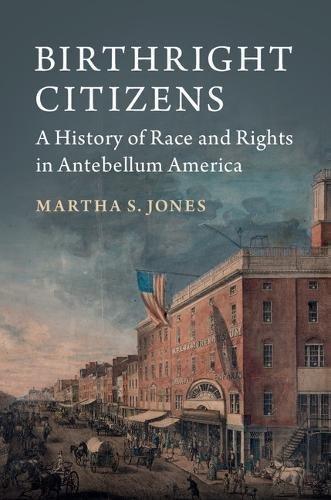
The article drew furious responses from scholars on social media and elsewhere. Among those weighing in was Martha S. Jones, a historian at Johns Hopkins University, and the author of the new book “Birthright Citizens: A History of Race and Rights in Antebellum America.”

We talked with Dr. Jones about how the idea of birthright citizenship was created, and how it connects with the current debate about who belongs in America. The interview has been edited and condensed.

The idea of “jus soli,” the right of the soil, goes back to English common law. Where does the American idea of birthright citizenship enter our political tradition?

In the United States, it is the African-American community that first begins to articulate the claim to birthright citizenship. They do it because they need it. Other folks do not.

By the 1830s, African-Americans in what we call the Colored Conventions Movement are crafting an argument that will help defend them against colonization schemes that involve trying to get them to leave the country, and also trying to resist state “black laws” that regulate where they can travel or gather in public, whether they can go to school, own guns and so on.

They look at the Constitution, which doesn’t really define who is a citizen, but does have this clause saying that the president must be a natural-born citizen. They ask, if the president is a natural-born citizen, why aren’t we? The Naturalization Act of 1790 says that only white people can be naturalized. But there is no color line in the Constitution.

We tend to think of the 1857 Dred Scott decision — which declared that back people could never be citizens — as definitively slamming the door shut, until the 14th Amendment came along. How much resistance was there to the decision?

Roger Taney [the chief justice, who wrote the decision] was very aware of the history of African-Americans’ efforts to claim citizenship. And after the decision, we see African-Americans continue to resist, to critique Taney’s decision from the podium, in newspapers. At the same time, lower courts are narrowing the scope of the decision, or refusing to defer to his reasoning.

And African-Americans are not retreating to their homes, or living quiet lives in response to Dred Scott. In Taney’s home state, Maryland, there are about 75,000 to 80,000 free blacks. When the state legislature proposes a new set of draconian black laws that would either remove them or re-enslave them, people organize, gather petitions, go to Annapolis, the capital, as part of an effort that ultimately defeats the legislation.

Black voting rights, which were guaranteed in the 15th Amendment, came under sustained attack for more than a century. Were there similar efforts to roll back birthright citizenship itself?

After 1868, African-Americans are citizens, if they are born in the United States. Now they have a tool that protects them from any effort to remove them from the country. With citizenship, there really is a there there, even as the struggle over civil rights continued, arguably into our own moment.

Why India’s new citizenship law is so controversial – and why some regions are angrier than others

Interesting read and analysis on shift from jus soli to jus sanguinis:

Citizens of India’s north-eastern states have been protesting vigorouslyagainst a proposed new citizenship regime that they claim will “destroy their culture” in the region. The protests have been diverse and dramatic – petitions, hunger strikes, effigy-burning, a rebel militant group threatening to end talks with the Indian state.

The source of their anger is the Citizenship Amendment Bill, first tabled in the lower house of the Indian Parliament in 2016. It is set to change the Citizenship Act of 1955, which has formed the basis of India’s citizenship regime since it gained independence from the British Empire in 1947. The amendment seeks to allow select “persecuted minorities” (Hindus, Christians, Parsis, Sikhs, Buddhist and Jains) from the neighbouring countries of Bangladesh, Pakistan and Afghanistan citizenship status in India after six years of residency. Other groups must wait 11 years to become naturalised citizens.

In the north-eastern states, the fear is that this amendment would legitimise migration of Hindus from neighbouring Bangladesh in particular, potentially affecting the demographic make-up of the region.

When the bill’s parliamentary committee began touring the north-east in May, protests grew steadily larger, stronger and more widespread. As almost 99% of their boundaries are international borders, the citizens of these states have been quick to point out that they would be the first “victims” of the new amendment if it makes it easier for minority immigrants to travel across the border, settle in and become full citizens. The complaints are loudest in the state of Assam, which has waged a four decade struggle against the Indian state to prevent what some there call“unchecked infiltration” from neighbouring Bangladesh.

The committee’s decision to visit the north-east – and the media coverage of the protests – have framed this as a north-eastern issue, not a national concern. But in fact, the Citizenship Amendment Bill will change the character of citizenship not just for this region, but for India as a whole.

Birthright and blood

When India achieved independence, its citizenship regime was established on the basis of jus soli (birth within a territory), meaning that people were members of the political community regardless of their religion or ethnicity. While mistrust of Muslims has persisted into present-day India, particularly in recent years with growing Hindu right-wing populism, the law has so far upheld the secular, non-religious character of the Indian state. The Citizenship Amendment Bill would fundamentally alter this basic tenet, shifting the basis of citizenship towards jus sanguinis (by right of blood).

But, as historians such as Joya Chatterjiand Ornit Shani have documented, there have been frequent challenges to the principle of citizenship by birth – especially in the period immediately after the partition of India and Pakistan in 1947.

In contrast to Muslims, Hindus were from the start considered “natural citizens” of India. Muslim citizens of pre-independence India were ostensibly given a choice between the two countries, but in practice they were subjected to arbitrary processes to “prove” their loyalty to the Indian state. Similar demands were not made of Hindu citizens crossing the border from the newly-formed Pakistan back into India.

Regardless of which states or regions would be most affected by a sizeable influx of migrants, the bill changes the character of Indian citizenship and the basis on which it is granted, moving from secular to overtly favouring specific groups – particularly Hindus. It opens the door for the creation of second-class citizenship for non-Hindus and most of all Muslims – not just in the extra-legal practices of discrimination and violence that exist today, but in the law.

Slipping away

Given that India repeatedly fails its own minorities, perhaps it’s not surprising that it is only prepared to offer refuge and asylum on the basis of ethnicity, not humanitarian need. It’s no coincidence that this amendment was introduced by the ruling Bhartiya Janta Party (BJP), led by the prime minister, Narendra Modi, which has an abysmal track record in protecting India’s minorities, whether they are Muslims, Christians or Dalits. Nor has it shown any inclination to help rehabilitate South Asia’s largest persecuted minority, the Rohingya.

Furthermore, the bill also leaves out Muslim minorities in Pakistan, such as Shias and Ahmadis. There is also speculation about whether the bill is a means to appease India’s Hindu diaspora abroad – an important funding base for the ruling party.

Even the relatively hardline BJP is not immune to public resistance. The protests in the north-east prompted India’s government to backtrack and table discussions to address what it euphemistically referred to as “people’s concerns”. But by framing the amendment as a regional issue, the government has managed to confine public opposition to the people of the north-east. Because the region is already marginalised in Indian politics, the rest of the country is often apathetic about its concerns, which rarely become pan-Indian ones.

Still, that the citizens of the north-east are protesting so vehemently – whatever their precise grievances – is currently the only sign of dissent. Unless it feels the heat of visible and vocal public outrage, the Indian state is likely to continue its slide towards becoming a very different, less inclusive, and increasingly more unjust country.

Source: Why India’s new citizenship law is so controversial – and why some regions are angrier than others

Pressure builds to close ‘birth tourism’ loophole for getting citizenship

Interesting coming from a Liberal MP:

Liberal MP Joe Peschisolido is optimistic that he can persuade federal ministers to curb so-called birth tourism, as pressure for action mounts in B.C.

“We are reaching a tipping point,” he said. “Nurses have told me that this is displacing folks from giving birth in Richmond.”

The number of babies born to foreign nationals at Richmond Hospital rose to 384 last year from just 18 in 2010 and now accounts for about 20 per cent of all deliveries, according to Vancouver Coastal Health. Under Canadian law, babies born here get Canadian citizenship regardless of their parents’ citizenship.

An entire industry of citizenship brokers and maternity tourism businesses are profiting from this “illegitimate business model,” said Peschisolido, who represents Steveston-Richmond East. “A whole slew of folks are complicit in this.”

Peschisolido plans to present a parliamentary e-petition — which calls for an end to this “abusive and exploitative practice” and “concrete measures” to eliminate the birth tourism —  to federal Immigration Minister Ahmed Hussen and Public Safety Minister Ralph Goodale.

In response to birth tourism, Australia and New Zealand changed their laws, granting citizenship to babies only when at least one parent is a citizen or a legal resident.

“Birth tourism is wrong and it undermines our immigration system and our health care system,” said Peschisolido. “The reason there are more than 8,000 signatures is that it violates people’s sense of fairness.”

Non-resident births account for two per cent of the 44,000 babies born in B.C. each year.

Non-residents are required to pay the costs associated with their care and the vast majority of these patients pay these fees without issue, said Laura Heinze, who speaks for the B.C. Health Ministry.

“The ministry in no way endorses or supports the marketing of maternity tourism,” she said. “Matters relating to immigration are the responsibility of the federal government.”

Pregnant women who come to Canada specifically to have a child with Canadian citizenship are not breaking the law, but they could be misleading immigration officials about their reasons for visiting Canada.

“If a person, including an expectant mother travelling to Canada, provides false information or documents, IRCC will refuse their application and that person could also be inadmissible to Canada for five years,” according to the federal Immigration, Refugees and Citizenship department.

This is the second time that the petition’s author, Kerry Starchuk, has tried to get the attention of the federal authorities. Her first petition launched in 2016 also gathered more than 8,000 signatures.

A report by Canadian immigration officials recommended changes to citizenship law to then-immigration minister Jason Kenney in 2014.

No action was taken by that Conservative government, but the number of foreign citizens coming to B.C. to give birth in order to secure Canadian citizenship for their child has risen dramatically since then.

People have until July 17 to sign the current petition.

Starchuk became concerned about growth of birth tourism after trying to greet new neighbours with cookies and came to realize the house was being used as accommodation for women from abroad who were about to give birth.

“I’ve done my part being a good neighbour, but this is exploiting the system,” she said. “They are not here to be my neighbours and I’m not OK with that.”

A Vancouver Sun investigation in 2016 found more than two dozen so-called baby houses were providing services and accommodation to birth tourists in B.C.

“These people are jumping the queue when people are waiting to immigrate,” she said. “I don’t see how being born here like this justifies citizenship.”

Petition supporter Gary Liu said the practice of birth tourism is generally “despised” in the immigrant community.

“People who have worked hard to learn the language and raise their families — and everyone has their own struggles and stories — they feel like this is a quick pass for some people,” said Liu, who has lived in Canada for more than 20 years.

Liu believes more rigorous application of existing rules by Canada Border Services Agency and enforcement of zoning bylaws against baby houses would minimize the practice.

Canada and the United States are the only G-7 nations that grant automatic citizenship for babies born in-country to foreign nationals. Critics complain that so-called “anchor babies” become a legal foothold in Canada to gain immigration access for the rest of their families.

Source: Pressure builds to close ‘birth tourism’ loophole for getting citizenship

As birth tourism climbs in B.C., health authority files $312,595 lawsuit over one unpaid childbirth bill

Although the overall number of birth tourists is low compared to the total number of births in Canada (see What happened to Kenney’s cracking down on birth tourism? Feds couldn’t do it alone | hilltimes.com), appropriate to ensure that any unpaid bills are collected. “Birth houses” at a minimum need to be regulated if not banned given this is clearly an abuse, even if relatively small, of our immigration and health systems:

Record numbers of  so-called birth tourists, mainly from China, are expected at Richmond Hospital this year. Yet the Vancouver Coastal Health Authority has no plans to deter women from having their babies at the hospital to give them Canadian citizenship, despite suing a woman for nonpayment of $313,000 for her delivery.

The lawsuit filed in April relates to a birth in 2012 that involved complications and kept the lawsuit defendant, Yan Xia, and her infant, in the hospital for an extended time. Xia has not yet filed a statement of defence.

Although the hospital reserves the right to add interest charges of two per cent a month to unpaid bills, a spokeswoman said that is not the plan at this point. If such interest were to be added, the bill would exceed $1 million.

There has been a steady increase in the number of babies born to non-resident mothers at Richmond Hospital, to 384 in 2016-17 from 18 in 2010. Halfway through the 2017-18 fiscal year, there were 189 non-resident births, according to VCH spokeswoman Carrie Stefanson.

While all pregnant women are asked to register well in advance of giving birth so that hospital resources can be planned, there have been no measures taken by the hospital to deter birth tourism, which now accounts for 20 per cent of its deliveries. That is believed to be the highest proportion in the province, if not Canada. B.C. Women’s Hospital discourages birth tourism through various policies and practices. At times, Richmond Hospital has to send local women in labour to other hospitals when it is too busy.

The birth tourism phenomenon is tied to several factors, including Richmond’s demographics, a preponderance of “birth houses” for pregnant Chinese women in the city, the large number of doctors and nurses who speak Cantonese or Mandarin, and an industry fuelled by brokers who charge high fees to make the arrangements for women wanting to have so-called “anchor” babies in Canada.

Stefanson said she believes the Xia case is the only maternity lawsuit over $100,000 so far. Typically, the health authority uses other means to collect unpaid bills.

“VCH has invoiced non-residents for approximately $43 million in (all kinds of medical) services in the past year, and has collected about 80 per cent of that amount,” she said.

In the Xia case, such efforts have been unsuccessful, and with a six-year deadline for legal action approaching, the health authority decided it was time to take that action. Xia’s whereabouts are unknown.

Stefanson said the hospital exists to provide health care and will never deny urgent hospital care to anyone based on their ability to pay or where they are from.

She said the health authority expects foreigners will have travel insurance or some other means of paying. Non-resident pregnant women who go to any hospital in B.C. are expected to pay a deposit of $8,200 for a vaginal birth and $13,300 for a caesarean delivery. If they stay in the hospital for at least a night, there may be additional charges. In the past year, VCH has invoiced non-resident maternity clients $6.2 million, and 82 per cent of that amount has been recovered.

An article posted on the “Hongcouver” blog in the South China Morning Post says Richmond is at the centre of the birth tourism phenomenon. It highlighted one “birth house” called the Baoma Inn and its Instagram account showing photos of smiling expectant or post-delivery Chinese mothers enjoying touristy outings around Vancouver. Also pictured are newborns asleep, next to their new Canadian passports. In addition to pre- and post-partum accommodation, the inn is said to be able to arrange birth certificate and passport services plus getting newborns enrolled in the B.C. Medical Services Plan so they can receive publicly funded health care after they’ve resided in the province for three months.

The Baoma Inn is one of the dozens of so-called birth houses in Richmond. It is not known what birth house the defendant in the VCH case used, or even if she stayed in one.

The South China Morning Post article pointed out that Canada is one of a few countries (including the U.S.) that offers citizenship to babies born in the country, regardless of the nationality of parents. By contrast, in China, nationality is acquired upon birth only if one parent is a Chinese national, similar to policies in Australia and Britain.

David Georgetti, the Mandarin-speaking lawyer retained by VCH to litigate the case, could not be reached for comment.

Source: As birth tourism climbs in B.C., health authority files $312,595 lawsuit over one unpaid childbirth bill