Immigration ‘very difficult’ for applicants once they turn 40

By design for economic immigrants, given aging demographics:

Canada is credited for having one of the world’s most immigrant-friendly policies, ranking fourth internationally in the Migrant Integration Policy Index. But the criteria used to prioritize applicants based on age leaves many at a disadvantage, even though they might have the qualifications Canada is looking for.

With immigration backlogs and several technical glitches on the Immigration, Refugees and Citizenship Canada (IRCC) online portal during the pandemic, many have become ineligible for certain programs that consider age as a criterion.

When Pedro Carvalho arrived with his wife in 2017 from Brazil, the couple was in their 30s.

But after missing the Express Entry (EE) draw this year because of a technical glitch, Carvalho was skeptical about meeting the CRS cut-off score due to his age.

After the resumption of EE draws in July 2022, the Comprehensive Ranking System (CRS) score has been on the higher end (above 500 points) in comparison to pre-pandemic levels, touching 557 on July 6th.

With high cut-off scores at the time, many like Carvalho were pessimistic and switched to another program called temporary resident to permanent resident program (TR to PR) to ensure they can stay in Canada as permanent residents.

“Now I turned 40, so I lost points. To be honest I don’t know what else I can say,” Carvalho said in an email to CTVNews.ca in August.

Rick Lamanna, director at Fragomen Canada, an immigration services provider, told CTVNews.ca in a phone interview that it can be frustrating for certain applicants waiting in the pool.

“They see themselves losing points every year because of these delays. They may have fewer points than they did a couple of years ago or even a year ago,” he said.

At first glance, age is not highlighted as a major criterion by Immigration, Refugees and Citizenship Canada (IRCC).

But for certain programs—such as the Federal Skilled Worker Program (FSWP) or Canadian Experience Class (CEC)— the importance of being young becomes quite explicit, especially for applicants touching the 40s threshold.

A DEEPER LOOK AT THE POINT-BASED SYSTEM

Programs under EE include the FSWP, Federal Skilled Trades Program (FSTP), CEC, and a portion of the Provincial Nominee Program (PNP). An applicant needs to be eligible for one of the above to enter the EE pool of candidates.

Canadian employers typically rely on EE designed to attract highly skilled foreign workers through its programs that lead to permanent residency (PR) and among these, FSWP, and the CEC are popular—both of which consider age as one of the core/human capital factors.

Lamanna says, while age can drop the score of a CEC or FSWP candidate, other factors can help raise CRS scores.

“However,” he said, “It is very difficult. Because applicants in their 40s lose a lot of points on age relative to people in their 20s or 30s.”

CRS is a points-based system that scores a profile to rank applicants in the Express Entry pool. To get an invitation to apply (ITA), the candidate should meet a score above the CRS score.

The maximum score in CRS is 1200 and this evaluation is based on several characteristics such as level of education, English/French skills, and work experience. If an applicant doesn’t meet the CRS score in a specific draw, he/she has to upload their profile again to be considered for the next pool.

By design for economic immigrants given aging demographics:

Canada is credited for having one of the world’s most immigrant-friendly policies, ranking fourth internationally in the Migrant Integration Policy Index. But the criteria used to prioritize applicants based on age leaves many at a disadvantage, even though they might have the qualifications Canada is looking for.

With immigration backlogs and several technical glitches on the Immigration, Refugees and Citizenship Canada (IRCC) online portal during the pandemic, many have become ineligible for certain programs that consider age as a criterion.

When Pedro Carvalho arrived with his wife in 2017 from Brazil, the couple was in their 30s.

But after missing the Express Entry (EE) draw this year because of a technical glitch, Carvalho was skeptical about meeting the CRS cut-off score due to his age.

After the resumption of EE draws in July 2022, the Comprehensive Ranking System (CRS) score has been on the higher end (above 500 points) in comparison to pre-pandemic levels, touching 557 on July 6th.

With high cut-off scores at the time, many like Carvalho were pessimistic and switched to another program called temporary resident to permanent resident program (TR to PR) to ensure they can stay in Canada as permanent residents.

“Now I turned 40, so I lost points. To be honest I don’t know what else I can say,” Carvalho said in an email to CTVNews.ca in August.

Rick Lamanna, director at Fragomen Canada, an immigration services provider, told CTVNews.ca in a phone interview that it can be frustrating for certain applicants waiting in the pool.

“They see themselves losing points every year because of these delays. They may have fewer points than they did a couple of years ago or even a year ago,” he said.

At first glance, age is not highlighted as a major criterion by Immigration, Refugees and Citizenship Canada (IRCC).

But for certain programs—such as the Federal Skilled Worker Program (FSWP) or Canadian Experience Class (CEC)— the importance of being young becomes quite explicit, especially for applicants touching the 40s threshold.

A DEEPER LOOK AT THE POINT-BASED SYSTEM

Programs under EE include the FSWP, Federal Skilled Trades Program (FSTP), CEC, and a portion of the Provincial Nominee Program (PNP). An applicant needs to be eligible for one of the above to enter the EE pool of candidates.

Canadian employers typically rely on EE designed to attract highly skilled foreign workers through its programs that lead to permanent residency (PR) and among these, FSWP, and the CEC are popular—both of which consider age as one of the core/human capital factors.

Lamanna says, while age can drop the score of a CEC or FSWP candidate, other factors can help raise CRS scores.

“However,” he said, “It is very difficult. Because applicants in their 40s lose a lot of points on age relative to people in their 20s or 30s.”

CRS is a points-based system that scores a profile to rank applicants in the Express Entry pool. To get an invitation to apply (ITA), the candidate should meet a score above the CRS score.

The maximum score in CRS is 1200 and this evaluation is based on several characteristics such as level of education, English/French skills, and work experience. If an applicant doesn’t meet the CRS score in a specific draw, he/she has to upload their profile again to be considered for the next pool.

POINT DROP FOR OLDER APPLICANTS

Under the CRS score, candidates can get a higher score if they are single and fall under the Express Entry category. However, the score falls dramatically for those above the age of 44. Canada’s comprehensive ranking system gives no points to those above 45 years of age.
Not only that, starting from the age of 40, the points reduce by 10 versus 5 before the age of 40. While a 29-year-old can get a maximum of 110 CRS points for age, an applicant of a similar caliber approaching their 30th birthday may see a sharp decline. By the time they reach 39, just 55 points are available, and by the time they reach 45, there are no points.

Under FSWP, the applicant’s age is worth 12 per cent of the overall selection criteria on the selection grid. The FAQ section makes it clear that someone over the age of 47 will not get any points under the Age factor of the CRS, but may get points on other factors such as job offer, skills, and language abilities.

DOES CANADA NEED YOUNG WORKERS?

Immigration has played a critical role in Canada’s economy, providing a relatively young stream of workers. More than 80% of the immigrants admitted in recent years have been under 45 years old.

According to a report by the Organisation for Economic Co-operation and Development (OECD), young immigrants are generally much more educated than immigrants nearing retirement and this is true for those entering the labour force.

With an aging native-born labour force and low fertility rates (roughly 1.4 births per woman in 2020), an inflow of immigrants has become increasingly important for Canada. The country suffers a shortage of skilled workers despite attempts to attract immigrants. According to the data from Statistics Canada, immigrants account for a little over one-quarter of Canadian workers.

Recent census data from 2021 shows that people nearing retirement outnumber those who are too old to enter the labour market in Canada. Additionally, rural populations are also aging faster than those in urban areas – partially due to the lower influx of immigrants.

The Canadian population is seeing a big shift, with baby boomers getting older, according to a report by Statistics Canada. The shift will have significant consequences on the labour market, services to seniors, and the consumption of goods and services.

A recent Census report by Statistics Canada shows that young immigrants are helping boost numbers in Canada’s population growth. Millennials (born between 1981 and 1996) were between 25 and 40 years old in 2021, and are already the fastest-growing generation. In Canada, their numbers rose 8.6 per cent between 2016 and 2021 due to immigration, according to the StatsCan report.

But when it comes to the age factor in economic immigration, Canada is not alone.

Australia has age as one of the selection criteria for permanent residency and the age of the applicant should be below 45 years to apply for a PR visa. Germany recently introduced its version of the “green card” (known as Chancenkarte) to meet the country’s growing labour shortage. Three of the four criteria to be considered for the program include that applicant is below the age of 35.

BUT TARGETED DRAWS IN 2023 COULD BE A GAMECHANGER

Lamanna says as 2023 approaches, applicants need to brace themselves for specified targeted draws, which are designed to address the labour shortage that Canada currently faces in certain sectors.

The recently passed Bill C-19 allows invitations to those applicants under Express Entry that support the regional economic needs. The training, education, experience, and responsibilities (TEER) system would allow IRCC to invite applicants based on occupation, language or education rather than the traditional CRS score.

“While the issue of age is currently important, a bigger issue will be what happens when targeted draws occur,” he said. If someone is not in the pool of that specific occupation type, then applicants may be left in limbo and these could include those with higher CRS scores.

Lamanna said provinces have more autonomy in selecting people in certain occupations to help employers in certain jurisdictions. There is a risk-reward to targeted draws. It helps meet the labour shortage in specific industries such as health care, manufacturing and construction.

“The risk is there are people in the queue who know that at some point, they will be selected as long as they meet the CRS score. But if a minister shifts to occupation-based selective selection process, then people may be left wondering when their turn will come next,” Lamanna said.

Source: Immigration ‘very difficult’ for applicants once they turn 40
Liz Truss plans more immigration in effort to fill vacancies and drive growth

Of note. More post-Brexit policy incoherence:

Liz Truss is preparing to increase immigration to fill job vacancies and boost economic growth in a move that will anger some of her ministers and MPs.

The prime minister plans to raise the number of workers allowed to enter the UK, government sources have confirmed.

Reports claim the government will lift the cap on seasonal agricultural workers and broadband engineers, and make other changes to the shortage occupations list, which will allow key sectors to recruit more overseas staff.

Truss is said to be keen to recruit broadband engineers to complete a pledge to make full-fibre broadband available to 85% of UK homes by 2025. It has also been suggested that she could ease the English-language requirement in some sectors to enable more foreign workers to qualify for visas.

The proposals faces resistance from cabinet Brexiters including the home secretary, Suella Braverman, and the trade secretary, Kemi Badenoch, according to the Sunday Times.

One Conservative MP said that many new Conservative voters in “red wall” seats will be baffled by any softening of immigration rules.

“The government is going to have to explain to those people who thought we were a pro-Brexit government and want to curb immigration why we seem to be changing tack,” the MP said.

Ministers are also discussing whether to allow in more highly educated workers from across the globe. This includes proposals for a new visa for workers who have graduated from one of the top 50 or top 100 global universities.

Two million UK job vacancies were advertised last month, with the social care sector trying to fill 105,000 posts. There is also a shortfall of 40,000 nurses and 100,000 HGV drivers, and the farming industry has called for an extra 30,000 visas for seasonal workers.

The Sunday Times said the Cabinet Office minister, Nadhim Zahawi, had chaired a meeting last week about the proposed changes. He is understood to be in favour of updating the shortage occupations list. The environment secretary, Ranil Jayawardena, is believed to be backing the plan to boost the number of seasonal farm workers.

Badenoch is opposing proposals for a “freedom of movement” agreement with the Indian government as part of a trade deal she is negotiating, it was reported.

The chancellor, Kwasi Kwarteng, announced on Friday that a new plan would be published in the coming weeks “to ensure the immigration system supports growth while maintaining control”.

Asked on Sunday if the government was prepared to relax immigration rules, he said Braverman would make an announcement soon.

“The home secretary would be making an update on immigration policy … she will be making that in the next few weeks,” he told BBC One’s Sunday with Laura Kuenssberg.

The government pledged that a new immigration system would be introduced after leaving the EU, with ministers saying it would bring down overall levels.

There are almost 1.8 million non-EU nationals working in Britain, 302,000 more than a year ago, according to the Office for National Statistics. Home Office figures show the number of visas given to all workers, students and their relatives, both EU and non-EU, has risen by more than 80% in a year to more than 1.1m, the largest number on record.

Meanwhile, more than 30,000 people seeking refuge in the UK have crossed the Channel in small boats, government figures show.

Source: Liz Truss plans more immigration in effort to fill vacancies and drive growth

Can new legislation help ‘Lost Canadians’ be found again?

Disappointing article on S-245 and “lost Canadians” that essentially uncritically take the position of Don Chapman and his assertion that “thousands” have lost their citizenship when the data does not support that and that the vast majority of cases were addressed in previous legislation.

S-245 addresses a gap: “Bill C-37 of 2008, which repealed the age-28 provision and grandfathered all those Canadians who had not yet turned 28 to be included in the policy change, left out a small group of Canadians who had already turned 28, specifically those born in the 50-month window between February 15, 1977, to April 16, 1981. This small cohort of lost Canadians is the group for whom this bill was brought forward in this Parliament once again.”

At a minimum, the CBC should have noted this rather than just taking Chapman’s statement at face value. CBC could also have asked CBC for data on the special procedures for persons caught in this situation (the data that I have seen on requests for proofs of citizenship indicates that the numbers of persons for which this is an issue has been consistently overstated).

There is, of course, the broader issue of the first generation cut-off where again, CBC should have provided more context for that decision (e.g., Lebanese Cdn evacuation of 2006 and the number of evacuees who had minimal to no connection to Canada).

Future stories on S-245 should address this imbalance by including outside experts, whether legal, academic or former citizenship officials, and ensure a diversity of views.

And articles need to be more data and evidence-driven, rather than relying on personal stories and advocates, a tendency that CBC appears to be increasingly relying upon (have provided these comments to CBC and will see if any substantive reaction):

When Pete Giesbrecht was summoned to his local police station on Halloween 2015, he had no idea he was 30 days away from being deported.

His crime? He had not reaffirmed his Canadian citizenship before the age of 28 under a complicated, confusing and not well publicized section of the Citizenship Act.

“They said, ‘No, actually, you have 30 days to leave the country. And if you do not leave willingly, we will fly you out with bracelets and all,’ ” Giesbrecht recalled recently from his home in southern Manitoba.

He’s one of thousands of so-called “Lost Canadians” — people who, because of where and when they were born, are caught up in confusing sections of the Citizenship Act. It can result in a loss of citizenship that forces them to leave Canada for countries they’ve never really known. Others become stateless.

The House of Commons will vote on new legislation this fall meant to solve the problem faced by Giesbrecht, although it doesn’t address a different issue affecting second-generation Canadians born abroad.

Cut off from Canada at age 28

Giesbrecht hopes the changes are passed — he and his family felt a mix of disbelief and anger over his impending deportation.

“I had carried a citizenship for 29 years. So now to find out that that was done didn’t mean anything. That was a bit of a shock,” he said.

At the time, Giesbrecht was a commercial truck driver living near Winkler, Man. He crossed the border more than 100 times a year for work.

He had a Canadian passport, which he received before turning 28, but let it lapse because he had a FAST card, which certified he’d been pre-cleared to cross the U.S.-Canada border.

His case was flagged when he re-applied for the card in August 2015.

Since 1977, second-generation Canadians born abroad had an automatic right to citizenship, but those children had to meet certain conditions and apply to retain their citizenship by the time they turned 28. If they didn’t, they automatically and unknowingly lost citizenship.

Legislative amendments in 2009 were supposed to fix that, but the changes didn’t apply to everyone and created new problems for others.

Bill C-37 introduced a rule limiting citizenship by descent to the first generation born abroad. People born abroad in subsequent generations now have to become immigrants, or in some cases they can apply for a grant of citizenship, which can take years, and there’s no guarantee they’ll be accepted.

The changes only affected people who had not yet turned 28 and didn’t help anyone who’d already lost citizenship.

That’s where Giesbrecht got caught — he was born on Aug. 11, 1979, in Mexico. His parents were Canadian, but they were born in Mexico to Mennonites who had moved there to have less government interference in their lives. However, when he was seven, his family moved back to Manitoba near where his Canadian grandparents were born.

Don Chapman, head of the Lost Canadians Society in B.C., says the problem was compounded because those affected weren’t told about the retention requirement.

“Here’s the problem: He got a citizenship certificate. There was no mention on that citizenship certificate that he had to reaffirm,” Chapman said.

New legislation aims to fix age-28 rule

New legislation coming before Parliament this fall is meant to reinstate those affected by the age-28 rule who weren’t covered by Bill C-37.

Bill S-245 has already passed in the Senate and passed first reading in the House of Commons before it recessed for the summer. If it becomes law, it will eliminate the requirement for people to reaffirm their citizenship by age 28. Those affected would be considered Canadian back to their dates of birth.

“These are individuals who were born to Canadian parents and who only know Canada as their country,” said Sen. Yonah Martin, who represents British Columbia and is currently the deputy leader of the opposition in the Senate. She introduced Bill S-245.

“They’re taxpayers. They had lived their lives as Canadians until this age-28 rule caught up to them because it wasn’t clearly communicated.”

Giesbrecht’s Canadian-born wife started the process to sponsor him for citizenship. As a permanent resident, he had to prove a long-time connection to Canada. He’d spent thousands on lawyers when he heard about Chapman and the Lost Canadians Society from other Mennonites going through the same process.

Chapman started advocating on his behalf and on Oct. 17, 2017, Giesbrecht received his Canadian citizenship — for a second time.

“It means security. It means a future. It means hope for the children and a place that we are free,” he said.

Pete Giesbrecht was told he had 30 days to leave the country after he unknowingly lost his Canadian citizenship due to a problem with the Citizenship Act.

Giesbrecht knows of others he says are afraid to come forward, worried they’ll be deported and lose everything.

“They have a life. They also have families. They have work. They have to give that all up,” he said. “That’s a very risky, very difficult thing to do.”

Chapman says many Lost Canadians don’t find out about their status until they apply for a passport, move provinces and apply for health benefits or a driver’s licence, or are convicted of a crime.

“Pete, he’s one of the lucky ones,” Chapman said.

“There are thousands of people, actually many thousands of people in Canada, that are affected and might still not know it. And this [legislation] will make it so they are whole, as though they never lost their citizenship.”

New rule created new Lost Canadians

But, there’s another category of Lost Canadians the new legislation won’t address.

The “second-generation cut-off” is a rule under Bill C-37 that permanently denies the first generation born abroad the ability to automatically pass on citizenship to their children if they are also born outside Canada.

It also eliminated the ability to gain citizenship by showing a “substantial connection” to Canada. Now, those second-generation children have to be sponsored by their parents to come to Canada as permanent residents, then apply for citizenship like any other immigrant.

Critics say it has created two classes of Canadian citizenship — one for Canadians born in Canada and one for those born abroad.

“What’s discriminatory about the Citizenship Act is that there is no way that people can rid themselves of this second class status no matter how close and deep their ties to Canada are,” said Sujit Choudhry, a constitutional lawyer in Toronto representing seven families living in Canada, Dubai, Hong Kong, Japan and the United States, who are all affected by this rule.

Choudhry filed a constitutional challenge in December 2021, asking that his clients’ children be granted citizenship and that this section of the Citizenship Act be struck down. The case will be before court in April 2023.

‘I’m not Canadian enough’

Victoria Maruyama is angry about the way her family has been treated because of where she and her children were born.

“I grew up [in Canada] like everybody else. Why am I being treated this way? Why are you treating my children this way? And why can’t we just come home like everybody else?” Maruyama, one of Choudhary’s clients, asked in a recent interview from her home in Nagoya, Japan.

Maruyama was born in Hong Kong and received Canadian citizenship through her father, who had previously immigrated from Vietnam. When she was a toddler, the family returned to Edmonton, where she attended school. She later got a degree at the University of British Columbia.

When she was 22, she moved to Japan temporarily to teach English and met her husband, a Japanese national. They married in 2007.

She was seven months pregnant with their first child when Bill C-37 took away her right to pass on citizenship to her children unless they were born in Canada.

“The shock of it, like, ‘Oh my God, I’m not Canadian enough,’ ” Maruyama said.

Their second child was also born in Japan two years later. The family has moved back to Edmonton from Japan several times so she could apply for citizenship for her children and sponsor them as immigrants.

All of those applications have been denied.

“Their grandparents helped build the stupid railroad … It makes me angry. Really angry.– Victoria Maruyama, whose children aren’t considered Canadian because they, and Maruyama, were born abroad”

A 2018 letter from Immigration, Refugees and Citizenship Canada said the children were rejected because “they are not stateless, will not face special and unusual hardship if you are not granted Canadian citizenship and you have not provided services of exceptional value to Canada.”

They returned to Japan in July 2019 because her husband had a job offer, but she says the family would like to live in a more multicultural and accepting society and be closer to her aging parents.

The children are “very aware that Canada is rejecting them,” Maruyama said. “[But] they feel Canadian. It’s just part of their identity.”

“Their grandparents helped build the stupid railroad … It makes me angry. Really angry.”

Stateless babies

In an even more extreme case, if a Canadian born abroad has a baby in a country that doesn’t provide citizenship at birth, that child is stateless.

This means no country is responsible for their legal protection and they can’t get a passport. They have no right to vote and they often lack access to education, employment, health care, registration of birth, marriage or death and property rights.

That’s the situation for Gregory Burgess, who was born in the U.S. to an American father and Canadian mother. He got citizenship through his mother, grew up and went to school in Alberta where his ancestors settled after fleeing what is now Ukraine many generations ago.

“It’s basically bureaucratic terrorism … I believe Canada is better than this.– Gregory Burgess, on the various applications needed to get his infant son Canadian citizenship”

He and his wife, a Russian citizen, are on work visas in Hong Kong. Their son was born there last October. Since neither parent is a citizen or permanent resident of Hong Kong, their son has no status.

“The children are the victims,” Burgess said recently.

Burgess says because he was born outside Canada — and can’t automatically give his child Canadian citizenship — he was told by an IRCC agent that his wife should apply for Russian citizenship for the baby. If that is rejected, he can then go through the process with Canada. However, there are no guarantees it would be successful.

However, Burgess doesn’t want his son to have Russian citizenship; he wants him to be Canadian.

“It’s basically bureaucratic terrorism. It’s horrible. It’s adversarial,” he said of the various applications he’s already made on behalf of both his son and his wife. “I believe Canada is better than this.”

Burgess is one of Choudhry’s clients and part of the constitutional challenge. The lawyer says Canada could fix the family’s situation if it would add back the ability for a second-generation child born abroad to prove a “substantial connection” to the country.

“This law creates hierarchies of Canadians based on where they were born,” Choudhry said.

In the meantime, he said Citizenship and Immigration Minister Sean Fraser could grant Burgess’s son citizenship by acknowledging the “special and unusual hardship” the family is facing.

CBC requested an interview with Fraser several times, but a spokesperson said he was unavailable.

However, in a statement, his department said there is a “discretionary mechanism” for anyone who doesn’t qualify for citizenship, including a special process if someone is stateless. The department said those cases are assessed individually.

Source: Can new legislation help ‘Lost Canadians’ be found again?

PEN Canada standing up for Salman Rushdie 30 years after ambitious plan to condemn Iran’s state-sanctioned act of terror against him

Good reminder of just how courageous Canadian political leaders, particularly Bob Rae then Premier of Ontario, were. British PM Thatcher was equally principle in providing Rushdie with protection despite his harsh criticism of her policies and reference to her as Mrs. Torture in Satanic Verses.

As noted before, I was posted to Tehran when the fatwa was issued and we were concerned that the Toronto event might impact our safety but fortunately it didn’t.

Proud of the Canadian leaders who stood up for free speech when many did not. Sharp contrast to some of the shallow and tendentious invocations of freedom and free speech that are all too common today:

Thirty years ago, PEN Canada, a non-partisan organization that supports freedom of expression in Canada and writers endangered around the world, staged an extraordinary coup in Toronto. Held in support of award-winning English novelist Salman Rushdie, it went on to have international ramifications – with this country at the root of it.

In 1992, Rushdie was in his fourth year of hiding, under constant police protection for fear of his life. Three years earlier, Ayatollah Khomeini of Iran had issued a fatwa calling for his murder, and the murder of those associated with his novel, The Satanic Verses. Khomeini claimed the novel insulted Islam, though his son admitted later that he never read it.

Internationally, political will to stand up to such an astonishing public threat against a private citizen of another country was sadly lacking. But no country was willing to act alone. Louise Dennys, then president of PEN Canada, told the head of the International Salman Rushdie Defence Committee that she believed Canada could break the impasse.

A handful of PEN members – Louise, with Ric Young, John Ralston Saul, Adrienne Clarkson, Marian Botsford-Fraser and Clayton Ruby – hatched an ambitious plan to persuade the Canadian government to condemn Iran’s state-sanctioned act of terrorism against Rushdie. The strategy: to use the annual PEN Canada Benefit to showcase public support for Rushdie in the country and galvanize the government in Ottawa to take the issue to the United Nations. They needed to bring Rushdie to Canada and draw intense media coverage.

This was no easy matter. It required absolute secrecy, the support of MI6 in Britain alongside CSIS and the RCMP in Canada, and a frantic last-minute search for means – ultimately, a private jet offered by an anonymous donor – to bring Rushdie across the Atlantic when the initial flight plan fell through.

Miraculously, they managed it. On Dec. 7, 1992, Rushdie appeared as a surprise guest on stage at the Winter Garden Theatre before an astonished audience of a thousand people. There was a collective gasp as the crowd rose to its feet in applause, even as they suddenly became aware of the 60-some security personnel present in the theatre, talking into their sleeves.

And then Bob Rae, premier of Ontario at the time, came on stage and embraced Rushdie, the first head of government anywhere to publicly stand with him. Rae called upon all governments to “do the right thing.”

It did not end there. The small delegation flew straight to Ottawa. Overnight, a morning press conference was convened. A few hours later, Barbara McDougall became the first secretary of state of any country to meet with Rushdie. Jean Chrétien, then the leader of the Official Opposition, walked him over to the House of Commons where he testified before the Parliamentary Sub-Committee on Development and Human Rights.

The result was electrifying. Within 48 hours, Canada became the first country in the world to pass a unanimous, all-party resolution condemning the Iranian government for its shameful record on human rights, demanding the withdrawal of the fatwa. Three months later, at the instigation of the Canadian government, the United Nations Commission on Human Rights in Geneva passed a resolution condemning Iran’s actions and calling for sanctions.

Remarkably – and sadly, given the cause – a full generation after the epochal 1992 benefit, the organization is again holding an event to stand with Rushdie after the horrific attack on him in August at the Chautauqua Institute, in upper New York State. Together with the Toronto International Festival of Authors, Penguin Random House Canada and the Writers Trust, PEN Canada will hold a reading of Rushdie’s works on Sept. 27.

Thirty years ago, PEN Canada, a non-partisan organization that supports freedom of expression in Canada and writers endangered around the world, staged an extraordinary coup in Toronto. Held in support of award-winning English novelist Salman Rushdie, it went on to have international ramifications – with this country at the root of it.

In 1992, Rushdie was in his fourth year of hiding, under constant police protection for fear of his life. Three years earlier, Ayatollah Khomeini of Iran had issued a fatwa calling for his murder, and the murder of those associated with his novel, The Satanic Verses. Khomeini claimed the novel insulted Islam, though his son admitted later that he never read it.

Internationally, political will to stand up to such an astonishing public threat against a private citizen of another country was sadly lacking. But no country was willing to act alone. Louise Dennys, then president of PEN Canada, told the head of the International Salman Rushdie Defence Committee that she believed Canada could break the impasse.

A handful of PEN members – Louise, with Ric Young, John Ralston Saul, Adrienne Clarkson, Marian Botsford-Fraser and Clayton Ruby – hatched an ambitious plan to persuade the Canadian government to condemn Iran’s state-sanctioned act of terrorism against Rushdie. The strategy: to use the annual PEN Canada Benefit to showcase public support for Rushdie in the country and galvanize the government in Ottawa to take the issue to the United Nations. They needed to bring Rushdie to Canada and draw intense media coverage.

This was no easy matter. It required absolute secrecy, the support of MI6 in Britain alongside CSIS and the RCMP in Canada, and a frantic last-minute search for means – ultimately, a private jet offered by an anonymous donor – to bring Rushdie across the Atlantic when the initial flight plan fell through.

Miraculously, they managed it. On Dec. 7, 1992, Rushdie appeared as a surprise guest on stage at the Winter Garden Theatre before an astonished audience of a thousand people. There was a collective gasp as the crowd rose to its feet in applause, even as they suddenly became aware of the 60-some security personnel present in the theatre, talking into their sleeves.

And then Bob Rae, premier of Ontario at the time, came on stage and embraced Rushdie, the first head of government anywhere to publicly stand with him. Rae called upon all governments to “do the right thing.”

It did not end there. The small delegation flew straight to Ottawa. Overnight, a morning press conference was convened. A few hours later, Barbara McDougall became the first secretary of state of any country to meet with Rushdie. Jean Chrétien, then the leader of the Official Opposition, walked him over to the House of Commons where he testified before the Parliamentary Sub-Committee on Development and Human Rights.

The result was electrifying. Within 48 hours, Canada became the first country in the world to pass a unanimous, all-party resolution condemning the Iranian government for its shameful record on human rights, demanding the withdrawal of the fatwa. Three months later, at the instigation of the Canadian government, the United Nations Commission on Human Rights in Geneva passed a resolution condemning Iran’s actions and calling for sanctions.

Remarkably – and sadly, given the cause – a full generation after the epochal 1992 benefit, the organization is again holding an event to stand with Rushdie after the horrific attack on him in August at the Chautauqua Institute, in upper New York State. Together with the Toronto International Festival of Authors, Penguin Random House Canada and the Writers Trust, PEN Canada will hold a reading of Rushdie’s works on Sept. 27.

Source: PEN Canada standing up for Salman Rushdie 30 years after ambitious plan to condemn Iran’s state-sanctioned act of terror against him

Toronto celebrates 50 years of Ismaili Muslim community in the city

One of the more successful communities in Canada, integrated while preserving their culture and identity:

She has been a lawyer, a manager of philanthropic foundations and a diplomat in Afghanistan, but Sheherazade Hirji has not forgotten that late afternoon nearly 50 years ago when she was a teenager with her family, making their way through menacing military checkpoints.

“There were lots of checkpoints and people were robbed and they would look into people’s bodies, women’s bodies under their saris, they would look everywhere,” she recalled.

Ms. Hirji and her family were heading for the airport in Kampala, Uganda’s capital. They were among the last to leave, part of the 80,000 residents of South Asian descent in the African country who were suddenly expelled in 1972 by the dictator Idi Amin.

More than 6,000 of them, members of the Ismaili Shia Muslim community, were able to resettle quickly in Canada, after their spiritual leader, the Aga Khan, called on his friend, then-prime minister Pierre Trudeau, to provide them with a haven.

Half a century later, standing by the landscaped lawn of Toronto’s Ismaili Centre, Ms. Hirji could contemplate the journey that led her community to become one of Canada’s great refugee success stories.

In the early days, she said, having few possessions and no place to practise their faith, newly arrived Ismailis in Canada would gather in basements, bringing sheets, so they could pray together. Later, they were able to rent school halls.

And now, on Sunday, prominent members of the community had been invited to a bright, spacious atrium at the Ismaili Centre, to hear Mayor John Tory announce that he had bestowed a Key to the City to the Aga Khan and renamed the street outside after the Ismaili imam.

The Ismailis, the mayor said, were part of a lineage of newcomers who had successfully built a new life in Canada, such as the Vietnamese, the Tamils and more recently Ukrainian refugees.

The honours for the Ismaili imam was “the least we could do,” Mr. Tory told the gathering, citing the extensive charities, schools and other philanthropic endeavours supported by the Aga Khan. He said he had been travelling in Pakistan in the wake of the 2013 earthquake and found that the Aga Khan’s humanitarian organizations were helping in the most remote villages.

The appreciation for the Aga Khan mirrored the goodwill accrued by the diligent, hard-working way the Ismailis had integrated into Canadian society. In 1972, the message from the imam to his faithfuls was to “make Canada your home and enrich Canada for the benefit of all Canadians,” Karim Thomas, vice-president of the Ismaili Council for Canada, said in an interview.

“We’ve been received by Canada and by Canadians with extraordinary warmth and with openness. … We’re very grateful for the opportunities that Canada has given us.

Behind the success story of the Ismaili refugees lay also the pain of their sudden expropriation and expulsion in Uganda, said Mahmoud Eboo, the Aga Khan Development Network representative to Canada.

“What people don’t appreciate is the shock and trauma that one undergoes when you suddenly hear overnight that all your possessions are gone. The businesses that you may have worked all your life for your family and your children are taken, your home that you’ve lived in is gone. … You have absolutely no idea what tomorrow will bring for you.”

South Asians had settled in Uganda and other British colonies in Africa since the 19th century. Ms. Hirji’s grandparents had moved from India, so she and her parents were born in Uganda. “I was the second generation born in Africa and so for us Uganda had always been home. It was the only home I ever knew.”

But the community’s prosperity also made it a scapegoat after Idi Amin took power in a coup d’état and ordered their expulsion.

Bringing only what they could carry in a suitcase, Ms. Hirji’s family landed first in Britain. They moved to social housing in Newcastle and her mother took a job in a factory manufacturing silverware.

She and her husband eventually settled in Canada, appreciating the country’s attitude toward diversity.

Canada’s diversity remains a crucial quality in the current circumstances, said Prince Amyn Aga Khan, the Ismaili’s leader’s younger brother, who represented the imam at the ceremony.

“His highness has looked at Canada as a model of pluralism,” he said, “one that is ever more critically, more urgently needed in our increasingly divisive and fragmented world.”

Source: Toronto celebrates 50 years of Ismaili Muslim community in the city

‘Be an ally’: Black public servants facing ‘trauma’ amid class action, says organizer

Thompson is an effective communicator and advocate.

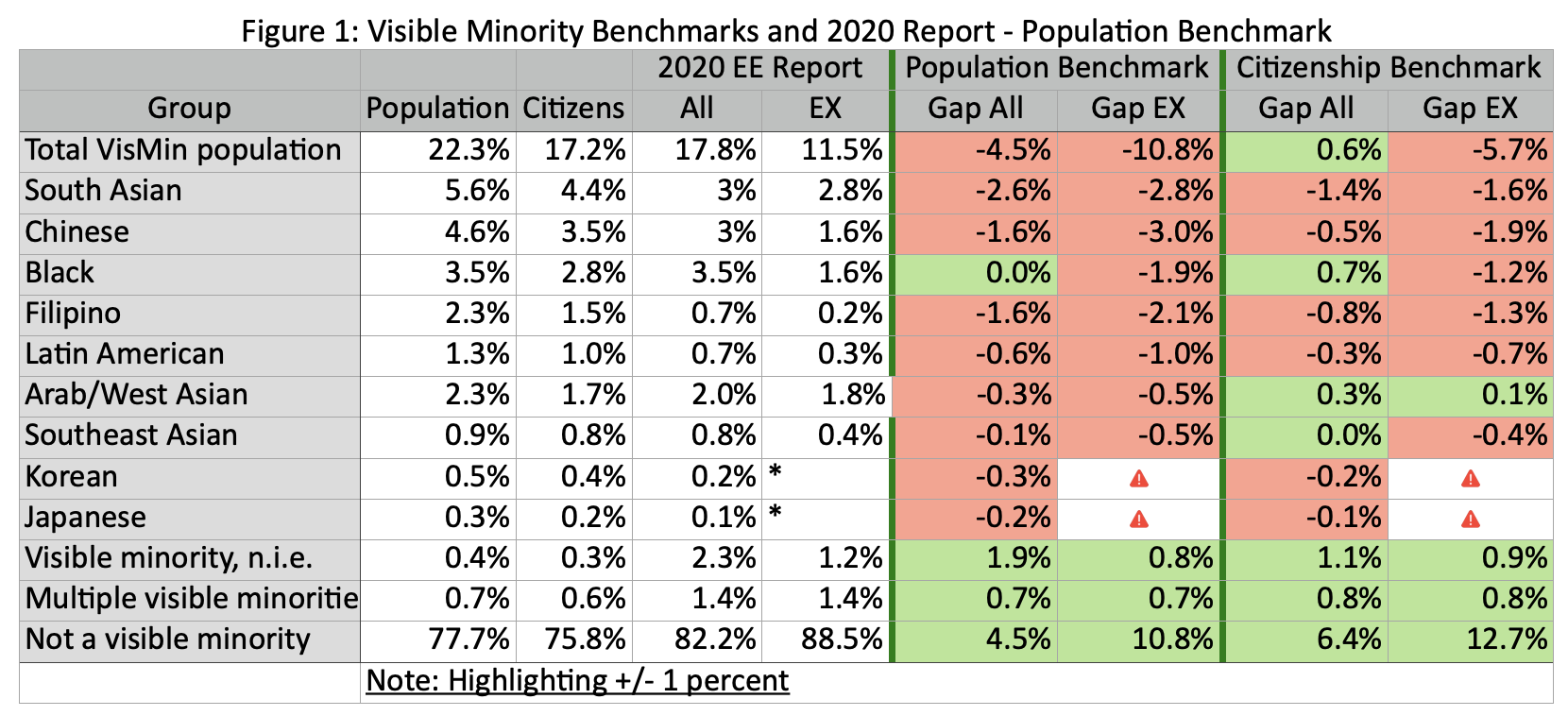
Unfortunately, the employment equity data for the public service does not indicate that Black public servants representation are disproportionately under-represented at the EX and other levels compared  to other visible minorities for the most part.

However, the public service employee survey does show higher perceptions of discrimination than most other visible minority groups.

One of the organizers behind the class action lawsuit filed against the federal government by Black public servants says he wants Canadians learning about the experiences of claimants in the case to “be an ally” amid a process that is causing “trauma” for those involved.

In an interview with The West Block‘s Mercedes Stephenson, Nicholas Marcus Thompson said the government is “speaking from both sides of its mouth” when it comes to squaring the treatment of claimants in the lawsuit in court with the comments officials make publicly about dismantling racism.

“They’re saying one thing publicly and they’re fighting Black workers in court,” he said, adding federal lawyers keep bringing forward motions “to delay the case.”

“The government has fully acknowledged that this issue exists in all of its institutions and that the pain and damage that it causes is real. And then it shows up in court fighting Black workers, forcing Black workers to recount the trauma that they’ve endured at the hands of the government for decades.”

The class action lawsuit filed last year alleges systemic discrimination by the government when it comes to hiring and promotional decisions in the federal public service, dating back decades.

Plaintiffs in the case are seeking $2.5 billion in compensation for lost income, opportunities, and lost pension values as a result of systemic discrimination that prevented qualified Black public servants from being promoted into higher paying and more senior jobs.

Federal public service pensions are calculated based on the averages of an individual’s highest earning years, meaning those who get paid less throughout their careers get smaller pensions when they retire.

“There has been a de facto practice of Black employee exclusion from hiring and promotion throughout the Public Service because of the permeation of systemic discrimination through Canada’s institutional structures,” the statement of claim says.

The statement of claim also says that equity measures taken to date have “merely masked the increasing disparity, exclusion and marginalization of Black Canadians” from equal opportunities in the public service, and that there remains a “pernicious” underrepresentation in the upper ranks.

Thompson said he wants to see the government come to the table and commit to working towards the solutions that plaintiffs say would help fix the problem, and to make legislative changes to the Employment Equity Act as well.

“We’re seeking to create a separate and distinct category for Black workers under the legislation to ensure that Black workers are not left behind when it comes to hiring and promotional opportunities,” he said. Thompson also added there needs to be a commission formed to track concrete progress on preventing future discrimination.

“Black people want to fully participate and they’re being denied that opportunity at the highest level and the largest employer in Canada,” he said.

“So listen to us. Be an ally and let’s work together because we want to make Canada a better place and to fully participate in Canada.”

Source: ‘Be an ally’: Black public servants facing ‘trauma’ amid class action, says organizer

COVID-19 Immigration Effects – July 2022 update

A few changes to the standard deck of note. Monthly update delayed slightly given citizenship data delays.

I have removed the separate slide on Provincial Nominee Program admissions given that the admissions chart separates the economic class by federal and Provincial Nominee Program (can send those interested the data tables).

Given the large numbers of temporary residents, I have added charts (slides 27 and 30) comparing the changes by province for both IMP and TFWP, year-over-year, 2022 compared to 2020, and 2021 compared to 2018. With respect to the 2021 compared to 2018, the most notable increases have been in Atlantic Canada and Ontario for IMP, and Quebec and Atlantic Canada for TFWP.

These numbers are in the context of remaining high levels of processing backlogs for the vast majority of IRCC programs although some progress is being made.

July Permanent Residents admissions continue at over 40,000 per month with the greatest year-over-year increases for Provincial Nominee Program and refugees.

TR2PR transitions declined slightly compared to June, roughly accounting for 40 percent of all admissions (some double counting).

The greatest increase since 2020 for TRs/IMP continues to be with respect to Canadian Interests for for TRs/TFWP with respect to permits requiring a LMIA.

While International student permits have largely returned to seasonal patterns, the number of applications has increased the most compared to 2020.

The number of new citizens slightly declined to less than 30,000.

The number of visitor visas declined with once again, Ukrainians forming one-third of visas issued. 

Block: A huge upside to recognizing rights for migrants living in Canada

More advocacy than balanced analysis on the pros and cons.

The argument that this will increase Canadian productivity is more wishful thinking as no studies that I am aware of demonstrate that (nor for the overall large and increasing numbers of immigrants):

“Papers, please.”

In Hollywood movies, these two words never fail to inject fear, tension and high stakes into any scene. A character whose documents are not “in order” faces serious consequences, from job loss to family separation to arrest to deportation.

For some 500,000 people in Canada, this scenario is no movie scene — it’s real life. For various reasons, they have no legal status in this country. Another 1.2 million people are here on permits that allow them to work or study, for now, but with no right to stay permanently. They have limited access to the benefits most citizens take for granted.

For these residents, this lack of status is a source of constant worry. Life without status means life without health care. It means working without the workplace protections that all workers deserve. It means no rights to minimum standards like the minimum wage, or overtime pay, or statutory holiday pay.

Undocumented workers are more likely to face wage theft, injury and sexual exploitation.

Further, the existence of a large pool of workers with few rights gives employers a ready source of cheap labour — one that is unlikely to complain for fear of job loss or worse. There are no minimum standards for workers without rights. This has a negative impact on the labour market as a whole, dragging down wages and working conditions for low-wage workers generally.

So it is good news that the federal government is looking at ways to “regularize” more migrants and undocumented workers to bring them into the mainstream of Canadian society. It is hard to overestimate the benefits of doing so.

The humanitarian benefits to individuals, families, and communities are obvious. The economic benefits to the country as a whole should not be overlooked.

First of all, Canada needs workers: we are currently facing a historic labour shortage. The number of job vacancies hit a record 997,000 in the second quarter of 2022, with significant worker shortages in health care, construction, manufacturing, retail, and other sectors. We need to increase the productive capacity of our economy, and there is no time to waste.

Canada’s population was aging long before COVID-19 came along, and if we do not take action the number of unfilled jobs can only increase as the share of the population over age 65 continues to grow. We need to increase the current and future working-age population, including the number of children and youth. A tidal wave of retirements is coming — indeed, it has already begun. As our nurses, teachers, construction workers and others leave the workforce, we need people to replace them.

Without an increase in the working age population, we will see a sharp drop-off in the productive capacity of our economy. While regularization alone will not solve this problem, it can be part of the solution.

Regularization holds the potential to provide a rapid upgrade to overall skill levels in the Canadian workforce and a corresponding boost in overall productivity. That’s because undocumented workers often have no choice but to work in jobs that use only a fraction of their skills, knowledge and abilities.

Without the threat of deportation hanging over them, undocumented workers will have the capacity to work more, to work more productively, and to participate more fully in the labour market and economy. This can only be good for all of us.

Regularization will also benefit the public purse. Undocumented workers already pay various taxes (sales taxes, for example), but with regularization they will contribute more, and so will their employers. More money for public services and infrastructure will be essential if we hope to meet current and future challenges.

Our country faces many urgent problems these days, but having too many people is not one of them. Regularization of the rights of migrants is a win for them and a win for Canada.

Let’s make sure everyone’s papers are in order.

Source: A huge upside to recognizing rights for migrants living in Canada

Le Devoir editorial: Impasse fédérale en immigration

Of interest, Le Devoir’s take on the positions of Quebec parties on immigration, ending with the understandable (and traditional) concern that Quebec will have less demographic weight in Canada given its more restrictive policies.

While the Liberal government has embraced increasing immigration, rightly or wrongly there is a general consensus among the major federal parties and provinces other than Quebec in favour of increased immigration:

Pour la plus grande partie de la campagne électorale, le débat sur l’immigration s’est limité à une affaire de seuils dans l’accueil des nouveaux arrivants. Les propos malencontreux du chef caquiste, François Legault, qui a présenté l’immigration comme une menace à la paix sociale, avant de s’excuser, ont inutilement teinté les discussions.

Pour le premier ministre sortant, il aurait été si simple de s’élever au-dessus de la mêlée et de rappeler, sans sacrifier la protection de la nation québécoise, que le Québec est une terre d’accueil riche de sa diversité et de ses métissages culturels. Ses maladresses font en sorte que les positions raisonnées et les réalisations de la Coalition avenir Québec (CAQ) en matière d’immigration attirent la suspicion.

La CAQ propose entre autres d’accueillir 50 000 immigrants par année et d’exiger qu’une plus grande proportion de ceux-ci parlent déjà le français à leur arrivée. M. Legault en fait une condition essentielle pour assurer l’avenir du français au Québec, car il y a des limites à la vélocité de l’intégration des immigrants au tissu et à la culture francophones. Son gouvernement a doublé les budgets alloués à la francisation pour les faire passer à 168 millions de dollars par année, une excellente initiative qui souffre des inégalités dans la qualité et l’accessibilité de la formation. L’État québécois ne sait même pas combien d’entreprises participent aux cours de francisation. Les incohérences sont nombreuses, comme en témoigne le cas récent du programme de francisation exemplaire de Peerless, dont le financement a été retiré, puis reconduit à la suite d’un reportage du Devoir.

Il est à souhaiter que la création de Francisation Québec puisse servir à améliorer le bilan. Le Québec peut et doit faire mieux en matière d’intégration et de francisation si nous souhaitons aborder le débat sur l’immigration au-delà de l’insécurité linguistique.

Le Parti québécois (PQ) envisage aussi les seuils d’immigration à l’enseigne de la pérennité du fait français. Son chef, Paul St-Pierre Plamondonramène la cible à 35 000 immigrants par année et exige une connaissance du français de tous les immigrants économiques avant leur arrivée. Il est le seul, avec François Legault, à lier immigration et pérennité du français sans passer par le raccourci illusoire de la pénurie de main-d’oeuvre.

Le Parti conservateur du Québec (PCQ) rejoint le PQ sur les affres du multiculturalisme, mais il le dépasse par la droite en proposant de sélectionner les immigrants en fonction d’une « compatibilité civilisationnelle » (adhésion aux valeurs occidentales et capacité d’intégration). Cette nostalgie pour une cohésion sociale fantasmée est enrobée dans un épouvantable déterminisme qui fait fi des capacités d’intégration et d’adaptation de l’être humain.

À l’autre extrémité du spectre, Québec solidaire(QS) fixe la cible maximale à 80 000 immigrants par année, sans trop s’inquiéter des conséquences. Le co-porte-parole de QS, Gabriel Nadeau-Dubois, a l’heureuse idée de proposer une bonification additionnelle des budgets de francisation (à 230 millions par année) et de vouloir faire découvrir la culture québécoise aux nouveaux arrivants par un « billet culture » de 200 $ par année. La mesure peut sembler anodine, mais elle a le mérite d’offrir une main tendue.

Le Parti libéral du Québec (PLQ) mise sur son habituelle approche débonnaire en matière d’immigration, dans le prolongement de son positionnement historique en faveur des droits des minorités. Dominique Anglade ne souffre d’aucune insécurité linguistique. Son invitation à « arrêter de diviser » et de présenter l’immigration comme « un problème et une menace » est apaisante en comparaison des amalgames douteux de M. Legault. Elle fait toutefois l’impasse sur les solutions nécessaires pour faciliter le transfert linguistique des nouveaux arrivants vers le français. Elle évoque sans trop de conviction la francisation et la régionalisation de l’immigration, qu’elle présente comme une solution à la pénurie de main-d’oeuvre (tout comme Québec solidaire). Cette relation de causalité entre immigration et emploi ne fait pas l’unanimité.

À force de traiter de la question de l’immigration à partir des capacités d’accueil du Québec, nous avons tendance à oublier que le réel problème se situe à Ottawa, où loge un premier ministre postnational qui embrasse un projet de croissance démographique basé sur l’apport migratoire. Les libéraux de Justin Trudeau ne respectent pas l’entente Canada-Québec sur l’immigration. Le processus migratoire fédéral désavantage les francophones, notamment chez les étudiants étrangers. Toutes les actions du fédéral en matière d’immigration nous portent à conclure qu’il ne se soucie pas du déclin du poids démographique des francophones au Québec et au Canada.

Le rapatriement des pleins pouvoirs en immigration est la mesure qui compte le plus, mais aucune des formations ne sera en position de réussir ce tour de force. Tel est notre véritable drame en matière d’immigration.

Source: Impasse fédérale en immigration


The Super-Rich Are Already Plotting Their Escape From Trumpism – Mother Jones

Numbers are very small but an interesting increase nevertheless:

This is not a time of optimism in America. People are reeling from inflation, gun violence, partisan rancor, race-baiting, a ruthlessly divisive Supreme Court decision, the long tail of a pandemic, and the very real prospect of political violence. A significant majority of the public, polls suggest, thinks the nation is headed in a bad direction. Nearly three-quarters of the people NBC News polled in August said as much, and more than a thirdpredicted that things would get worse over the next five years.

Our societal dysfunction has progressed to the point where many well-heeled Americans are looking for an escape hatch. And David Lesperance’s phone is ringing off the hook.

Lesperance, whom I profiled for Mother Jones in 2017, is a Canada-born lawyer who has specialized in arranging foreign citizenships for extraordinarily wealthy people, from athletes and celebrities to founders, investors, and corporate bigwigs with assets ranging from about $25 million to $20 billion. He calls them “golden geese” because they pay an awful lot in taxes. (They manage to avoid an awful lot, too.)

Over the years, Lesperance—who now lives in Gdynia, Poland—has helped hundreds of ultra-high-net-worth Americans relinquish their US citizenship, usually in order to escape the long arm of the IRS. (The United States is the only country besides Somalia that imposes taxes based on citizenship, not residency.) Other US clients just want a contingency plan—a legal “go bag” containing an extra passport or two—that a family might deploy if the taxman ever gets too aggressive.

But the Trump years were pretty good for America’s richest,and expatriation is expensive. The government charges a steep exit tax: a one-time capital-gains levy of 23.8 percent on the combined net value of a person’s assets. If that’s $1 billion, you’ll have a $238 million tax bill, plus legal fees.

Lesperance and his frequent collaborator, Massachusetts-based attorney Melvin Warshaw, saw interest in their IRS-avoidance services surge in November 2020, after Joe Biden, who pledged to make America’s wealthiest families “finally pay their fair share,” defeated Donald Trump. They saw another spike in January 2021, when Democrats took the Senate, and again in March 2021, when Elizabeth Warren rolled out her Ultra-Millionaire Tax Act.

Also good for their business was Biden’s Build Back Better plan, which aimed to boost taxes on capital gains and corporate income, end the carried interest tax loophole, and kill GRATs—sneaky legal entities that half of America’s richest families now rely upon to pass huge tax-free fortunes to their heirs. That failed Democratic effort was followed by Sen. Ron Wyden’s (similarly doomed) billionaire tax plan and Biden’s short-lived encore—both nixed by Sen. Joe Manchin. Mega-wealth crisis averted!

But the two lawyers more recently began seeing a new trend, Lesperance says. Namely, “clients engaging us not for tax reasons, but rather to have an alternative should the US turn into MAGA America.”

Unlike their tax-obsessed clients, Warshaw explains, the new crowd isn’t looking for a permanent exit: “They’re saying, ‘I want options. I don’t mind paying high income tax, it’s just things are getting real hot in the kitchen and I want the ability to bug out—to go somewhere else for a while, because I don’t know what’s going to happen in the 2022 election. And I have little kids. I want a safe place for them.’”

Recent developments, particularly the Supreme Court’s reversal of Roe v. Wade, have fueled demand for dual citizenship even among the non-wealthy. But securing one is pricey if you don’t have a relative who is a citizen elsewhere. Lesperance’s new “client zero,” he says, dates to early this year, when the Atlantic ran an essay titled, “Trump’s Next Coup Has Already Begun.

Technically, the next attempt to overthrow a national election may not qualify as a coup,” staff writer Barton Gellman began, ominously:

“It will rely on subversion more than violence, although each will have its place. If the plot succeeds, the ballots cast by American voters will not decide the presidency in 2024. Thousands of votes will be thrown away, or millions, to produce the required effect. The winner will be declared the loser. The loser will be certified president-elect.

The prospect of this democratic collapse is not remote. People with the motive to make it happen are manufacturing the means. Given the opportunity, they will act. They are acting already.”

Gellman hit a nerve. Three would-be clients cited the essay in a span of two days, Lesperance says: “There’s a significant fear there. They look at the daily news, they see, ‘Okay, [Supreme Court Justice Samuel] Alito said this [Dobbs decision] only deals with abortion, and [Clarence] Thomas goes on in his dissent to say, no, we’re winding up for this, we’re throwing it back to the states.’ And then they see politicians talking about a nationwide ban on abortion. They see a very legal search done on Mar-a-Lago,” and all of a sudden people are talking about civil war.

When Warshaw returned to work from vacation the week after a draft of the Dobbs decision leaked, nine new inquiries awaited him—one or two per week was the previous norm—from clients sufficiently alarmed to drop $500 on an initial telephone consultation. “That at least showed me that they were ready to put some money on the line,” he says.

“I did three of them today. And two yesterday,” Lesperance adds. For every client interested in expatriating for tax purposes, he estimates, “we now see 10 looking for a bug-out.” Securing a dual citizenship is an unfamiliar experience for most Americans, “so there’s a very big learning curve. The last call I had, the guy kind of panicked and had laid out money for like five different things—of which he only needed one.”

Since June 24, the date of the official Dobbs ruling, he and Warshaw have signed on 23 new clients—of whom only a handful were tax-motivated. Another 36 have completed consultations and received engagement letters, and 14 more are awaiting their consultations. In addition to super-rich clients, the new crop includes some professionals in the $5 million to $10 million range.

They are concerned, roughly in this order, Lesperance says, about the state of American democracy (voter suppression, rejection of election outcomes, MAGA subversion), the outlawing of abortion and what the court may do next, and the specter of domestic terrorism and mass shooting events.They aren’t necessarily liberal. One client, a billionaire hedge-funder who would call himself a Reagan Republican, Lesperance says, just didn’t want his little kids to have to deal with the trauma of active shooter drills at school. He knew they probably wouldn’t ever be victims of a mass shooting, “but he knows that they’re going to be thinking about it every time they go to soccer practice or McDonald’s or SpongeBob’s new movie.” So he’s arranging for his wife and kids to live in a less trigger-happy country, and he’ll fly back and forth to be with them.

The new clients also include “a bunch” of former high-level government officials who served under Presidents Barack Obama and George W. Bush—“remember, to a MAGA you’re a RINO if you served for W,” Lesperance says. They “really got freaked out, not only by Dobbs but also by Trump’s announcement that he’s gonna get rid of the civil service and replace it with loyal flunkies.”

One would hope people who believe in good governance might stay around and fight the good fight. It’s not as though they are giving up, Lesperance says. “They’re sitting there saying, ‘I have a giant target on my back. So, yes, I’m gonna vote. Yes, I’m gonna join organizations and fund organizations to get voter registration. I’ll call that fire prevention,’” he says. “‘But I’m also gonna get fire insurance. And you know, depending on the outcome in the midterms, and what outcome comes in the general, I want to be able to bug out, and I want to take my family.’”

Source: The Super-Rich Are Already Plotting Their Escape From Trumpism – Mother Jones