US Immigration Policy Has Always Been About Exclusion

Good long read with similarities to Canada’s past with increased divergence since the 80s:

When david dorado romo was a boy growing up in El Paso, Texas, his great-aunt Adela told him about the day the U.S. Border Patrol melted her favorite shoes. Romo’s aunt was Mexican and had a visa that allowed her to commute into South Texas for her job as a maid. Every week she had to report to a Border Patrol station, in accordance with a program that ran from 1917 into the 1930s requiring most Mexican immigrants to bathe in government offices before entering the United States. She would dress up in her nicest clothing, because those who looked dirty or were thought to have lice were bathed in a mixture of kerosene and vinegar. Years later, when Romo visited the National Archives outside Washington, D.C., he found photos and records of gas chambers where the belongings of the Mexican workers had been disinfected with the chemical Zyklon B, as well as a large steam dryer of the sort that had melted his aunt’s shoes. He discovered that a German scientist had taken note of the procedures being carried out at the American border and advocated for them to be implemented in Nazi concentration camps. Eventually, the Nazis increased the potency of Zyklon B in their gas chambers, and began using it on human beings.

Romo also learned that just as the bathing and gas-dousing program was winding down, the American government began using a different dangerous chemical to delouse Mexican immigrants: From the 1930s through the 1960s, border agents sprayed DDT onto the faces of more than 3 million guest workers as they crossed the southern border.

Romo was shocked that he hadn’t learned this earlier. He became a historian dedicated to exposing truths that have been buried along the borders. “We have deep amnesia in this country,” he told me when I spoke with him recently. “There’s a psychological process involved in forgetting that is shame from both sides—from both the perpetrator and the victim.”

This forgetting has allowed the racism woven into America’s immigration policies to stay submerged beneath the more idealistic vision of the country as “a nation of immigrants.” That vision has a basis in truth: We are a multiethnic, multiracial nation where millions of people have found safety, economic opportunity, and freedoms they may not have otherwise had. Yet racial stereotypes, rooted in eugenics, that portray people with dark skin and foreign passports as being inclined toward crime, poverty, and disease have been part of our immigration policies for so long that we mostly fail to see them. “It’s in our DNA,” Romo says. “It’s ingrained in the culture and in the laws that are produced by that culture.”

The first American immigration laws were written in order to keep the country white, a goal that was explicit in their text for more than 150 years. (Over time, the understanding of “whiteness” changed and expanded. Well into the 20th century, only those of Northern and Western European descent were considered white; Italians and Jews, for instance, were not.) Even after the laws were finally changed, allowing large numbers of immigrants from Latin America, Asia, and Africa into the country starting in the 1960s, the eugenic ideas that supported earlier versions of them remained embedded in our society, and still provide the basis of many modern restrictions.

President Joe Biden’s immigration plan would make citizenship available to millions of unauthorized immigrants. Democratic members of Congress rallying behind it have said it would establish a more inherently American system, arguing implicitly that the Trump administration’s often overtly stated preference for white immigrants, or no immigrants at all, was an aberration from the past. “To fix our broken immigration system, we must pass reforms that reflect America’s values,” Senator Amy Klobuchar of Minnesota, a co-sponsor of the proposed legislation, said in a statement introducing the bill. “For too long, our immigration system has failed to live up to the ideals and principles our nation was founded on,” said Senator Alex Padilla of California, another co-sponsor. But Donald Trump’s immigration agenda was executed without a single change to laws already passed by Congress, and his rhetoric and policies were consistent with most of American history. “The Trump era magnified the problem, but the template was there,” Rose Cuison-Villazor, a scholar of immigration law at Rutgers University, told me.

As the country moves forward from the past four years of harsh immigration policies, it must reckon with a history that stretches back much further, and that conflicts with one of the most frequently repeated American myths.

“This idea that somehow immigration was based on the principles stated on the Statue of Liberty? That never happened,” Romo said. “There has never been a color-blind immigration system. It’s always been about exclusion.”

Most american children are taught in school that the United States’ immigration policies help make the country special and, yes, great. A haven for outcasts who faced persecution in their home countries, the nation was founded, the story goes, on the principle of welcoming others who were treated similarly in their own homelands, with the idea that granting them individual rights and freedoms would allow distinct cultures and traditions to thrive together. This tale resonated in my own Central California school district, where I sat alongside classmates whose parents had come from Mexico, India, Laos, Vietnam.

But the cracks in that story began to show as soon as we hit the schoolyard, where kids of different backgrounds played together, but also hurled insults that stung because they had the weight of centuries of American law and rhetoric behind them.

When the Pilgrims crossed the ocean to settle in the New World, they brought with them ideas that would evolve into “manifest destiny,” which held that the United States was a land that had been bestowed by God on Anglo-Saxon white people. In 1790, the first American Congress made citizenship available only to any “free white person” who had been in the country for at least two years. In 1882, the Chinese Exclusion Act blocked Chinese immigrants—and in 1917, it was expanded to block most Asians living between Afghanistan and the Pacific. These laws were upheld numerous times by federal courts, including in a seminal Supreme Court case from 1922, in which the government prevailed by arguing that citizenship should be granted as the Founders intended: “only to those whom they knew and regarded as worthy to share it with them, men of their own type, white men.”

In the early 20th century, the term progressive became synonymous with preserving or improving the racial “stock” of the country—and that meant keeping it white. Harry Laughlin, whose work would provide a model for Nazi Germany’s sterilization laws, served as the House Committee on Immigration and Naturalization’s “expert eugenics agent.” In 1922, he presented evidence of the “hereditary feeble-mindedness” of nonwhite immigrants. Laughlin categorized the subjects of his research into overlapping subgroups that included “the criminalistic,” “the diseased,” and “the dependent.” Two years later, Congress passed the “progressive” Johnson-Reed Act, which established immigration quotas based on national origin. Adolf Hitler hailed the law as a model to emulate. “Compared to old Europe, which had lost an infinite amount of its best blood through war and emigration, the American nation appears as a young, racially select people,” he wrote.

Beginning during World War II, geopolitical and economic interests became important factors in the development of new immigration laws, but protecting the nation’s whiteness remained a priority.

The historic Immigration and Nationality Act of 1965 did away with the quotas based on national origin and instead allowed citizens of the United States to petition for family members to join them. But the overtly race-blind language in the new system belied its intent. For his book Dividing Lines, Daniel Tichenor, a scholar at the University of Oregon, scrutinized the Congressional Record and found that legislators designed the system the way they did because they believed that people of European origin, who made up the majority of the population at the time, would also make up the majority of those petitioning to bring in new immigrants. In the 1980s, the so-called diversity-visa program was created to help the thousands of Irish immigrants who were coming into the country illegally each year enter instead as legal residents.

However, since 1965 the flow of immigrants from Latin America, Asia, and Africa has, as ever, outpaced expectations—to the point where America is on track to become a majority-minority nation sometime in the next few decades. Various attempts have been made to acknowledge the enduring presence of immigrants of color by granting them legal status: In 1986, President Ronald Reagan ushered in an amnesty policy that allowed nearly 3 million undocumented immigrants, most of them Mexican, to become citizens. And in 1990, President George H. W. Bush amplified the demographic effects of the 1965 law by increasing the visa caps it had established. But by the time these efforts were made, racial tropes that had once painted Irish, Italians, and Chinese as unassimilable and prone to crime, poverty, and disease were already embedded in the nation’s culture, as well as in its laws.

As a reporter covering these issues for the past several years, I have seen how discrimination against immigrants of color has been meted out not just in the ways the laws are written but in the ways they are enforced, sometimes as a consequence of policies not explicitly tied to race. For example, Immigration and Customs Enforcement agents, under pressure to carry out more deportations, have at times prioritized Mexicans over other groups of unauthorized immigrants, in part because Mexico doesn’t generally require American authorities to obtain travel documents for deportees before they can be returned. Mexicans are “easy to find, easy to remove,” Jim Rielly, a retired officer from the agency’s Chicago field office, told me. Rielly and several of his colleagues told me that the direction they would get from their superiors was “No OTMs”—the ICE acronym for “other than Mexicans.” They told me they knew of Chicago workplaces where ICE could have easily picked up large numbers of undocumented Irish or Polish immigrants, but none of them could recall that ever happening.

Previous iterations of racialized enforcement practices were more explicit, putting the power of government behind stereotypes. At various points, immigrant groups were associated with specific illnesses, resulting in enhanced screenings by American authorities that were degrading and unnecessary. “Even germs were ethnicized,” David Dorado Romo told me. “Middle Easterners were said to have this terribly frightening disease that was trachoma, which made you blind. The Jews were seen as people that carried tuberculosis; the Chinese had cholera.”

Well into the mid-20th century, while Mexicans were being bathed in kerosene, sprayed with DDT, and subjected to Jim Crow laws in the American South, Northern and Western European immigrants were being given periodic opportunities to legalize their immigration status. One such program, called pre-examination, allowed tens of thousands of Europeans to gain residency. Their descendants could then claim that their families had entered the United States the “right way,” as a means to argue for the exclusion of others who could not make the same case.

Mexicans were ultimately not eligible for these programs. Instead, their communities were policed with increasing ferocity. Mae Ngai, a historian at Columbia University, notes that in the 1920s, the earliest Border Patrol agents were instructed to act with civility toward white immigrants only. Within a decade or so of the agency’s establishment, its officers were apprehending nearly five times more people along the Mexican border than along the Canadian border. By the 1980s, when Mexicans made up just over half of the undocumented population, they accounted for nine out of 10 immigration arrests.

This overpolicing of Latinos and other nonwhite immigrants by federal authorities continues to the present day as a result of policies implemented by prior administrations—both Republican and Democratic. Collaboration between police and immigration authorities, which began under Bill Clinton and was expanded under Barack Obama, compounded the racial biases of each. Sheriffs began to campaign on platforms arguing that keeping communities safe meant ridding them of immigrants. The supposed relationship between immigrant and crime has become implanted in the national psyche, even though evidence consistently shows that U.S. residents born outside the country commit fewer crimes than the native-born.

Several of Jim Rielly’s colleagues told me that Latinos were more likely to be questioned and arrested for being in the wrong place at the wrong time, such as during a workplace raid or street enforcement operation, whereas European immigrants were typically picked up only if they came onto the agency’s radar because of a serious criminal conviction. One former officer, Lorenzo Rivera, who was born in Mexico and worked in immigration for 30 years starting in 1986, told me he would often be asked to join in ICE’s workplace raids to help identify who was undocumented and who was not; he could distinguish among different groups of Latinos in ways that his white colleagues could not. He chafed, sometimes publicly, at what he called the “unwritten rule” that Mexicans should be singled out while European immigrants were effectively ignored. “I used to tell my supervisor, ‘You know, you’re basically profiling here.’ And he goes, ‘These are orders from Washington.’ ” Rivera suspected that the disparities he witnessed at work were due to more than just a difference in policy: “Most of the special agents were of European descent, and of course to them, going after one of their own—it was unheard of.”

the use of the phrase a nation of immigrants to describe America first appeared in the late 1890s, in the Congressional Record, according to Donna Gabaccia, a scholar at the University of Toronto. It was used only sparingly until the 1950s, when it was popularized during the movement to broaden the label of white to include a more diverse group of Europeans. Mae Ngai notes that in 1958 John F. Kennedy, himself the descendant of Irish immigrants, published a book called A Nation of Immigrants that included only two paragraphs on Asian and Latino immigration.

To call America a nation of immigrants is not wrong, either as a factual statement or an evocation of American myth. But that fact coexists with this one: Over the past century, the United States has deported more immigrants than it has allowed in. Since 1882, it has deported more than 57 million people, most of them Latino, according to Adam Goodman, a historian at the University of Illinois at Chicago. No other country has carried out this many deportations. This “challenges that simplistic notion of a long tradition where the United States has welcomed immigrants,” Goodman told me.

Moreover, though the United States accepts more immigrants each year than any other country, the percentage of its population that is foreign-born is lower than in countries like Norway, Gabon, Sweden, Switzerland, and the United Arab Emirates—none of which considers itself “a nation of immigrants.”

There are legitimate debates to be had about how to balance economic, geopolitical, and humanitarian concerns in formulating immigration policy. But too often, such concerns have been invoked as euphemisms to disguise arguments that are really about race.

One of the most insidious consequences of stereotypes about immigrants is that they have been used to justify punishments that outweigh their transgressions. Undesirable immigrants were a “double debit” against society, Harry Laughlin, the eugenicist, told Congress in 1922. “Not only do the inadequates not pull their own weight in the boat but they require, for their care, the services of normal and socially valuable persons who could well be employed in more constructive work.” In the 1920s the label LPC—“liable to become a public charge”—was “shaken on deportation cases as though with a large pepper shaker,” a political scientist wrote at the time, in order to rationalize deporting people who had committed only minor criminal offenses or perceived moral transgressions, such as having a baby out of wedlock. For years before President Trump came along, tens of thousands of people without criminal records were being deported every year—many of them leaving behind children who were U.S. citizens—after they were caught living in the country without legal status, which is a civil infraction. During Trump’s term, more than 5,000 children were taken from their parents, many of whom had committed only the misdemeanor offense of crossing the border without documentation a single time.pastedGraphic.png

In describing its own immigration plan as a racial-equity initiative, the Biden administration is nodding at a more complex view of our history. But opposition to the proposal, predictably, has echoed the past. Senator Tom Cotton of Arkansas called it “a disaster” that “does nothing to secure our borders, yet grants mass amnesty, welfare benefits … to over 11 million people.” On Fox News, Laura Ingraham said that Democrats pushing for the plan were “enticing illegals to bust through our borders, exploit our resources, and commit crimes.”

Once you begin to notice examples of how the past is still present, they become difficult to ignore. Trump enacted the most stringent border closure of his administration by citing the threat of disease, even though COVID‑19 outbreaks were far worse inside the United States than just outside its borders (in fact, Americans were actively deporting the virus abroad). His persistent blaming of the Chinese for outbreaks in the U.S. helped incite violence against Asian Americans that continues today, mirroring similar attacks from centuries past.

In moving toward the more inclusive system that some elected officials now say they want, the country would be not returning to traditional American values, but establishing new ones.

Source: US Immigration Policy Has Always Been About Exclusion
China Poised to Top US Economy Without More Immigration, FWD.us Says

Similar to Canadian calls by the Century Initiative, Business Council of Canada and others, highlighting that if most immigration destination countries pursue the same policies, the net relative effect among countries will likely be minimal. The Canadian dependency ratio of seniors is expected to increase to 42.7 per 100 in 2065 compared to 27.4 currently:

The U.S. risks losing its status as the world’s largest economy to China by the end of the decade if it doesn’t increase legal immigration, according to a study released Wednesday by a tech group [fwd.us] that favors admitting more foreign workers.

The report projects that the American economy will be three-quarters the size of China’s by 2050 under current U.S. population trends and immigration levels. FWD.us, an immigration advocacy group founded by tech industry leaders, conducted the study in conjunction with George Mason University.

The situation at the border has also emboldened those who support cutting immigration levels. They argue that allowing more migrants could displace American-born workers as the U.S. economy recovers from the pandemic.

“Immigration has basically become the fulcrum of nativist and nationalist politics, which is really about a concern for putting America first,” said Justin Gest, the study’s co-author and associate professor at George Mason University. “If you look at the numbers here, the best way that we can put America first is by welcoming newcomers.”

The report argues that without more immigrants, the U.S. population will become older in the coming years as the number of elderly rises at a faster rate than working-age adults. The expense of entitlements for those older Americans, such as Social Security and Medicare, risks outpacing taxes paid by younger workers, the report argues.

The report says that while higher levels of immigration alone would not ensure solvency for the Social Security trust fund, it would help delay its depletion, now anticipated in 2034, by a year or more depending on how many more visas are issued annually.

If legal immigration levels were doubled, an estimated 31 seniors would live in the U.S. in 2050 for every 100 working-age people compared to 37 under current immigration levels, the study shows. Under that scenario, U.S. gross domestic product is projected to rise to $46.8 trillion in 2050 compared to $49.9 trillion for China. China’s economy wouldn’t overtake the U.S. until closer to 2035.

Biden’s plan isn’t that expansive. It would raise the annual number of green cards the U.S. issues by about 35%.

The report says that increasing immigration while keeping the current mix of visas, which are mostly family-based, would result in a larger GDP increase than if the U.S. allowed in most immigrants through work visas. That’s because immigrants who come to reunite with spouses or relatives are more likely to put down roots in the U.S. than those who come for work.

Groups that favor lower levels of immigration argue that granting a pathway to citizenship to immigrants already here illegally, as Biden’s plan does, would strain programs like Social Security and Medicare by making those immigrants eligible for benefits.

President Joe Biden is pushing to overhaul the nation’s immigration laws to make them more “humane.” A proposal he sent to Congress would increase the number of people allowed to gain legal permanent residence each year by almost 375,000, according to a separate study by the immigration services group Boundless Immigration Inc.

Republicans have rejected Biden’s approach and have blamed a recent spike in irregular migration at the U.S. southwest border on the president’s rhetoric and policies.

Source: China Poised to Top US Economy Without More Immigration, FWD.us Says

LILLEY: Feds’ anti-racism training deals with political agendas, nothing else

While not a great fan of Lilley’s commentary, I do give him credit for bringing this GAC/Foreign Service Institute guide to public attention.

While his criticism is overstated, some of the guide is overly simplistic, woke or splitting hairs (e.g., that reverse racism against white people doesn’t exist because of power dynamics, racism in Canada is the same as USA while there are both commonalities and differences) and doesn’t acknowledge some of the progress, albeit imperfect, that has taken place over the last few generations. Government training material should be more balanced in its treatment:

Wearing blackface is an act of white supremacy but so is seeking to be objective. These are some of the things you will learn if you happen to work for the federal government and are taking their latest anti-racism course.

Documents obtained under access to information show a real stretch on the definition of racism.

Source: LILLEY: Feds’ anti-racism training deals with political agendas, nothing else

Ryerson University releases report card on student diversity. Which faculties pass, which receive a failing grade and how the school plans to improve

Kudos to Ryerson for collecting and presenting this data with an impressive response rate.

Reading this article, made me question whether and when Ryerson may have to broaden its diversity efforts not only in cases where women, visible minorities and Indigenous peoples are under-represented but also in programs where non-visible minorities are under-represented (e.g., arts, communications, community service, management):

Ryerson University graded its programs on student diversity and most faculties are skating by with Cs.

At a glance, some of the most under-represented groups in the school’s total population were Indigenous students, students with disabilities and racialized graduate students. 

And a further report-card-style breakdown of individual programs and faculties shows just how these equity groups are spread out across the university. 

Ryerson University graded its programs on student diversity and most faculties are skating by with Cs.

At a glance, some of the most under-represented groups in the school’s total population were Indigenous students, students with disabilities and racialized graduate students. 

And a further report-card-style breakdown of individual programs and faculties shows just how these equity groups are spread out across the university. SKIP

The school’s first ever breakdown of student identities, “The Student Diversity Self-ID Report” compares student representation from 2019 with the makeup of the GTA and Ontario across five equity groups: women, racialized people, Indigenous peoples, people with disabilities and LGBTQ people.

Ryerson is one of few Canadian universities that has collected and published this sort of information. Students and advocates have called for disaggregated data to better address equity gaps on campus for years. 

For undergraduate programs, the faculties’ average diversity scores were between 54 and just over 72 per cent. Graduate programs scored between 40 to 75 per cent.

The faculty averages give an overview, but the breakdown by programs reveals a detailed look at the exact programs where certain groups are severely under-represented.

For instance, Black students are 7 per cent of the undergraduate population in total, which is close to the GTA population. But some programs like accounting and finance, interior design, nutrition and most engineering programs scored Ds for Black student representation. 

And while women are 55 per cent of the overall student population, they are under-represented in business, computer science and engineering programs. 

“It provides a snapshot from 2019, to let us know where we are and where we need to go,” said Denise O’Neil Green, Ryerson’s vice-president of equity and community inclusion.

Green said the school’s long-term goal is “to see greater alignment with the community representation by 2030.”

How the report works

Students were able to share via an online questionnaire whether they identify with any of Ryerson’s five equity groups: women, racialized students, Indigenous students, students with disabilities and LGBTQ students.

The survey had a 96 per cent response rate with more than 40,000 students participating. 

Each program was then awarded a report-card-like letter grade for each equity group category with the racialized category further broken down to Black, Chinese and South Asian. 

Programs were awarded an A+ if the proportion of the students met or was greater than its population in the GTA or Ontario — although that grade won’t stop the university from continuing efforts to improve. The grades A to D+ show how much improvement is needed for the equity groups to be representative of the rest of the population. 

Based on the data, each program and faculty received an average percentage rating of its overall diversity across equity groups.

“The report is there to help inform our community and to help drive decision making and to help develop strategies, so that we can make education more inclusive for everyone,” Green told the Star.

There are more details in the report taking a detailed look at the Black student experience, the role financial barriers play in accessing education and how to measure the experiences and graduation rate of these students. 

It also outlines plans to create working groups to assess what supports, like scholarships and mentoring programs can be put in place to create more pathways for students. 

The need for disaggregated data

Disaggregated data collection has been long desired by students and equity advocates, but schools have been slow to move. 

In 2019, Universities Canada surveyed schools across the country about their equity, diversity and inclusion practices.When it came to student data collection, schools were more likely to collect data on age, gender and Indigeneity, but less likely to collect statistics on sexuality, ability or race more widely. 

In 2017, the CBC conducted an investigation where it asked Canadian universities if they collected data on how their students identify racially — 63 out of 73 did not, Ryerson included. 

Universities have been more likely to keep data on faculty and staff, in order to meet legislative requirements, like the Ontario Human Rights Code and Federal Contractors Program. 

But without a clear picture of what the student body looks like, it is less likely that schools will make structural changes to make post-secondary schools more accessible and inclusive once these students arrive.

Carl James, a York University professor and senior equity adviser, said he finds it ironic that most universities, which are research institutions, had not been using this sort of student data to inform their programs and policies.

Data collection, he said, is a useful advocacy tool, keeps institutions accountable and allows them to keep track of change from year to year. But the most important part he said is how it is used and interpreted. 

“Keep taking data for data sake,” without using it to bring about the necessary change “that’s not a good use of data,” he said. “How are you going to use it in the interest of the people?” 

James also points out that students had been advocating for disaggregated data collection for years.

In 2015, Black students at the University of Toronto and Ryerson University formed Black Liberation Collectives in solidarity with U.S. students at University of Missouri. One of many demands they made of administration was to collect race-based data on students, which U of T agreed to begin in 2016.

Elsewhere in the GTA, University of Toronto created a survey in November 2020 to collect data for a student diversity census.York University listed intentions to do so in a June 2020statement addressing anti-Black racism. These initiatives came after George Floyd’s death sparked a widespread reckoning on anti-Black racism. 

For schools collecting this data, James’ question is: “Now that you know, what are you going to do about it?”

Source: https://www.thestar.com/news/gta/2021/04/07/ryerson-university-releases-report-card-on-student-diversity-which-faculties-pass-which-receive-a-failing-grade-and-how-the-school-plans-to-improve.html

A Novel Effort to See How Poverty Affects Young Brains

Interesting study and experiment:

New monthly payments in the pandemic relief package have the potential to lift millions of American children out of poverty. Some scientists believe the payments could change children’s lives even more fundamentally — via their brains.

It’s well established that growing up in poverty correlates with disparities in educational achievement, health and employment. But an emerging branch of neuroscience asks how poverty affects the developing brain.

Over the past 15 years, dozens of studies have found that children raised in meager circumstances have subtle brain differences compared with children from families of higher means. On average, the surface area of the brain’s outer layer of cells is smaller, especially in areas relating to language and impulse control, as is the volume of a structure called the hippocampus, which is responsible for learning and memory.

These differences don’t reflect inherited or inborn traits, research suggests, but rather the circumstances in which the children grew up. Researchers have speculated that specific aspects of poverty — subpar nutrition, elevated stress levels, low-quality education — might influence brain and cognitive development. But almost all the work to date is correlational. And although those factors may be at play to various degrees for different families, poverty is their common root. A continuing study called Baby’s First Years, started in 2018, aims to determine whether reducing poverty can itself promote healthy brain development.

“None of us thinks income is the only answer,” said Dr. Kimberly Noble, a neuroscientist and pediatrician at Columbia University who is co-leading the work. “But with Baby’s First Years, we are moving past correlation to test whether reducing poverty directly causes changes in children’s cognitive, emotional and brain development.”

Dr. Noble and her collaborators are examining the effects of giving poor families cash payments in amounts that wound up being comparable to those the Biden administration will distribute as part of an expanded child tax credit.

The researchers randomly assigned 1,000 mothers with newborns living in poverty in New York City, New Orleans, the Twin Cities and Omaha to receive a debit card every month holding either $20 or $333 that the families could use as they wished. (The Biden plan will provide $300 monthly per child up to age 6, and $250 for children 6 through 17.) The study tracks cognitive development and brain activity in children over several years using a noninvasive tool called mobile EEG, which measures brain wave patterns using a wearable cap of 20 electrodes.

The study also tracks the mothers’ financial and employment status, maternal health measures such as stress hormone levels, and child care use. In qualitative interviews, the researchers probe how the money affects the family, and with the mothers’ consent, they follow how they spend it.

The study aimed to collect brain activity data from children at age 1 and age 3 in home visits, and researchers managed to obtain the first set of data for around two-thirds of the children before the pandemic struck. Because home visits are still untenable, they extended the study to age 4 and will be collecting the second set of brain data next year instead of this year.

The pandemic, as well as the two stimulus payments most Americans received this past year, undoubtedly affected participating families in different ways, as will this year’s stimulus checks and the new monthly payments. But because the study is randomized, the researchers nonetheless expect to be able to assess the impact of the cash gift, Dr. Noble said.

Baby’s First Years is seen as an audacious effort to prove, through a randomized trial, a causal link between poverty reduction and brain development. “It is definitely one of the first, if not the first” study in this developing field to have direct policy implications, said Martha Farah, a cognitive neuroscientist at the University of Pennsylvania and director of the Center for Neuroscience and Society who studies poverty and the brain.

Professor Farah concedes, however, that social scientists and policymakers often discount the relevance of brain data. “Are there actionable insights we get by bringing neuroscience to bear, or are people just being snowed by pretty brain images and impressive-sounding words from neuroscience? It’s an important question,” she said.

Skeptics abound. James Heckman, a Nobel Prize-winning economist at the University of Chicago who studies inequality and social mobility, said he didn’t see “even a hint that a policy would come out of it, other than to say, yes, there’s an imprint of a better economic life.”

“And it still remains a question what the actual mechanism is” through which giving parents cash helps children’s brains, he said, adding that targeting such a mechanism directly might be both cheaper and more effective.

Samuel Hammond, director of poverty and welfare policy at the Niskanen Center, who worked on a child allowance proposal by Senator Mitt Romney, agrees that tracking the source of any observed cognitive benefits is tricky. “I have trouble disentangling the interventions that actually help the most,” he said. For example, policy experts debate whether certain child care programs directly benefit a child’s brain or simply free up her caregiver to get a job and increase the family’s income, he said.

Yet that is exactly why providing disadvantaged families with cash might be the most potent way to test the link to brain development, Dr. Noble said. “It’s quite possible that the particular pathways to children’s outcomes differ across families,” she said. “So by empowering families to use the money as they see fit, it doesn’t presuppose a particular pathway or mechanism that leads to differences in child development.”

Neuroscience has a track record for transforming societal thinking and influencing policy. Research showing that the brain continues to mature past adolescence and into a person’s mid-20s has reshaped policies relating to juvenile justice.

In another example, research on brain and cognitive development in children who grew up in Romanian orphanages from the mid-1960s into the 1990s changed policy on institutionalization and foster care, in Romania and worldwide, said Charles Nelson, a neuroscientist at Harvard and Boston Children’s Hospital who co-led that work.

Those studies demonstrated that deprivation and neglect diminish IQ and hinder psychological development in children who remain institutionalized past age 2, and that institutionalization profoundly affects brain development, dampening electrical activity andreducing brain size.

But that work also underscores how consumers of research, policymakers among them, are prone to give more weight to brain data than to other findings, as other studies show. When Professor Nelson presents these findings to government or development agency officials, “I think they find it the strongest ammunition to implement policy changes,” he said. “It is a very powerful visual, more so than if we said, well, they have lower IQs, or their attachment isn’t as strong.” (He is an adviser for Baby’s First Years.)

The vividness of such data isn’t necessarily bad, Dr. Noble said. “If we find differences and the brain data make those differences more compelling to stakeholders, then that’s important to include,” she said. Moreover, brain data provides valuable information in its own right, particularly in infants and young children, for whom behavioral tests of cognition are often inaccurate or impossible to conduct, she said. Brain differences also tend to be detectable earlier than behavioral ones, she said.

The field may simply be too young to clock its contributions to policy, Professor Farah said. But increasing understanding of how specific brain circuits are affected by poverty, along with better tools for gauging such circuits, may yield science-based interventions that get taken up at a policy level, she said.

Meanwhile, Baby’s First Years hopes to address a broader question that is already relevant at the policy level: whether cash aid to parents helps their children’s brains develop in a way that helps them for a lifetime.

Claims of Uyghur genocide in China are ‘lies,’ adviser to B.C. premier says

Sigh. Needs to go:

A member of a committee that advises B.C. Premier John Horgan is under fire for referring to accusations of Uyghur genocide in China as “lies.”

Bill Yee, a retired provincial court judge and a member of B.C.’s Chinese-Canadian Advisory Committee, made the comments during an interview on the Toronto-based Chinese-language radio station A-1.

Those statements have a Canadian organization that advocates for democracy in Hong Kong calling on Horgan to dismiss Yee from his advisory role.

During the March 31 interview, Yee dismissed allegations that a genocide is being conducted against Uyghurs by the Chinese government.

“They use these lies, and those politicians, but what kind of legal basis do they have to prove China has committed genocide?” he said. “That doesn’t make sense.”

In the past year, the Chinese government has faced accusations of genocide from think tanks, non-governmental organizations and journalists who have documented human rights abuses in the country’s Xinjiang Uyghur Autonomous Region. Those stories include allegations of systematic rape, forced birth control, forced labour and internment camps targeting Muslim Uyghurs and other Turkic minorities.

On Feb. 22 Canada’s House of Commons passed a motion to formally recognize that a genocide is taking place in the region. The motion passed by a vote of 266-0, with most members of Prime Minister Justin Trudeau’s cabinet abstaining.

Last summer, witnesses who included victims of human rights abuses in the region testified before the House foreign affairs subcommittee on international human rights. The subcommittee subsequently declared that a genocide is happening in the region, and was recently sanctioned by the Chinese government, along with MP Michael Chong.

Pressed during the radio interview by host Andrea Chun, Yee said the allegations about events in Xinjiang are “made up” and “lies.”

Yee, who is a past president of the Chinese Benevolent Association in Vancouver, accused Canadian politicians of having “ulterior motives,” according to a translation of the interview done by the Star.

“The so-called evidence from some people, does that mean they’re fact? It needs to be objective,” Yee said. “Many people have ulterior motives, so have you thought about that?”

The Star requested an interview with Yee through Horgan’s director of communications, as well as through the Chinese Canadian Museum, which lists him as a member of its board of directors, and was told the messages would be passed on to him.

He did not reply to the requests.

The radio interview did not mark the first time Yee has made controversial comments about China’s human rights record.

In 1993, the Vancouver Sun reported that Yee had said there may be another “perspective” to the Tiananmen Square massacre, and that Vancouver’s pro-democracy activists may have a “hidden agenda” regarding the 1989 event.

“It’s very clear that this man is repeating the same talking points that the Chinese Communist Party has been broadcasting,” said Cherie Wong, executive director of the pro-democracy group Alliance Canada Hong Kong. “What’s worrisome is this is happening on a provincial level of politics.”

She said Yee should be dismissed from the committee, calling it a “choice John Horgan must make.”

The Star reached out to Horgan’s office about Yee’s comments last week and received a response back from Minister of State for Trade George Chow’s office that said Yee had been expressing “personal opinions” during the radio interview.

“The mandate of the advisory committee was set up to provide inputs to the government on domestic community issues and does not include foreign affairs,” the statement from Chow’s office said. “Therefore, Mr. Bill Yee has been asked to not identify himself as a member of the advisory committee when expressing personal opinions.”

The statement also said the B.C. government supports Ottawa’s stance on the issue.

But Wong said the response isn’t good enough.

“Why is it that the B.C. NDP party has an adviser who is blatantly not only echoing propaganda but also actively dismissing the lived experience of Uyghur Canadians?” Wong said. “He is not representative of what Chinese Canadians in Canada are asking for.”

She said it’s “ridiculous” to even discuss whether Yee still has a place on the committee.

Douglas Chiang, a past president of the Canadian Taiwanese Association, said he’s concerned Yee serves Horgan in an advisory role, given his comments on Xinjiang.

“It is not good news for Taiwanese people, not good news for Canadian people” he said. “I don’t know why he is an adviser for the premier.”

Chiang said all Canadian leaders should be concerned about human rights and freedoms.

Source: Claims of Uyghur genocide in China are ‘lies,’ adviser to B.C. premier says

US weighs joint approach to Beijing Olympics with allies

Of note and needed. Hopefully, enough countries will have the sense to boycott and not provide a propaganda triumph for the Chinese regime:

The State Department said Tuesday the Biden administration is consulting with allies about a joint approach to China and its human rights record, including how to handle the upcoming Beijing Winter Olympics.

The department initially suggested that an Olympic boycott to protest China’s rights abuses was among the possibilities but a senior official said later that a boycott has not yet been discussed.

The official said the U.S. position on the 2022 Games had not changed but that the administration is in frequent contact with allies and partners about their common concerns about China. Department spokesman Ned Price said earlier the consultations were being held in order to present a united front.

“Part of our review of those Olympics and our thinking will involve close consultations with partners and allies around the world,” Price told reporters.

Human rights groups are protesting China’s hosting of the Games, which are set to start in February 2022. They have urged a diplomatic or straight-up boycott of the event to call attention to alleged Chinese abuses against Uyghurs, Tibetans, and residents of Hong Kong.

Price declined to say when a decision pm the Olympics might be made, but noted there is still almost a year until the Games are set to begin.

“These Games remain some time away. I wouldn’t want to put a timeframe on it, but these discussions are underway,” he said. “It is something that we certainly wish to discuss and it is certainly something that we understand that a approach will be not only in our interest, but also in the interest of our allies and partners. So this is one of the issues that is on the agenda, both now and going forward.”

The Beijing Winter Olympics open on Feb. 4, 2022 and China has denied all charges of human rights abuses. It says “political motives” underlie the boycott effort.

Rights groups have met with the International Olympic Committee and have been told the Olympic body must stay politically “neutral.” They have been told by the IOC that China has given “assurances” about human rights conditions.

Both the IOC and the U.S. Olympic and Paralympic Committee have said in the past they oppose boycotts.

In March, IOC president Thomas Bach said history shows that boycotts never achieve anything. “It also has no logic,” he said. “Why would you punish the athletes from your own country if you have a dispute with a government from another country? This just makes no real sense.”

The USOPC has questioned the effectiveness of boycotts. “We oppose Games boycotts because they have been shown to negatively impact athletes while not effectively addressing global issues,” it said. “We believe the more effective course of action is for the governments of the world and China to engage directly on human rights and geopolitical issues.”

Source: US weighs joint approach to Beijing Olympics with allies

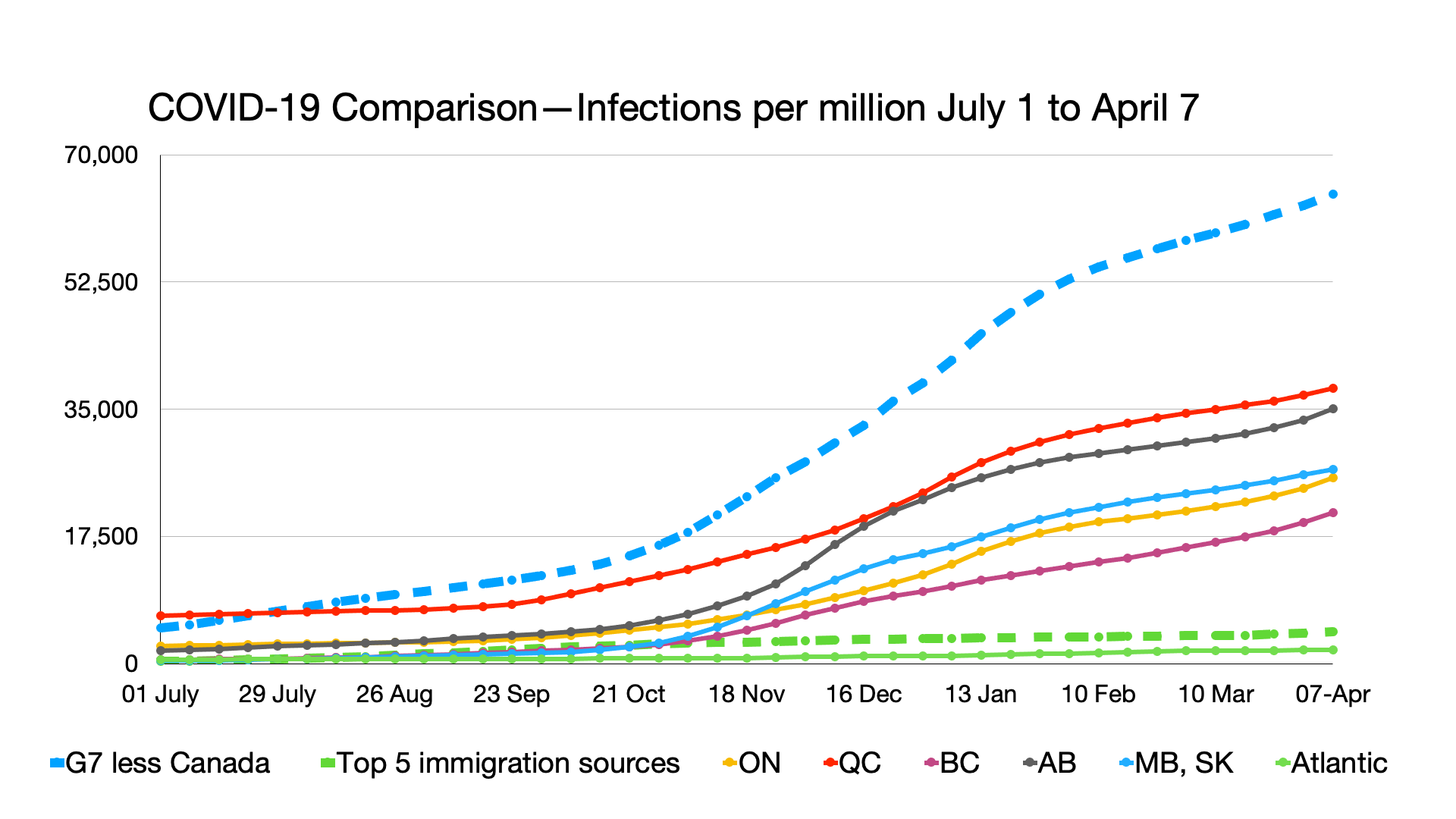
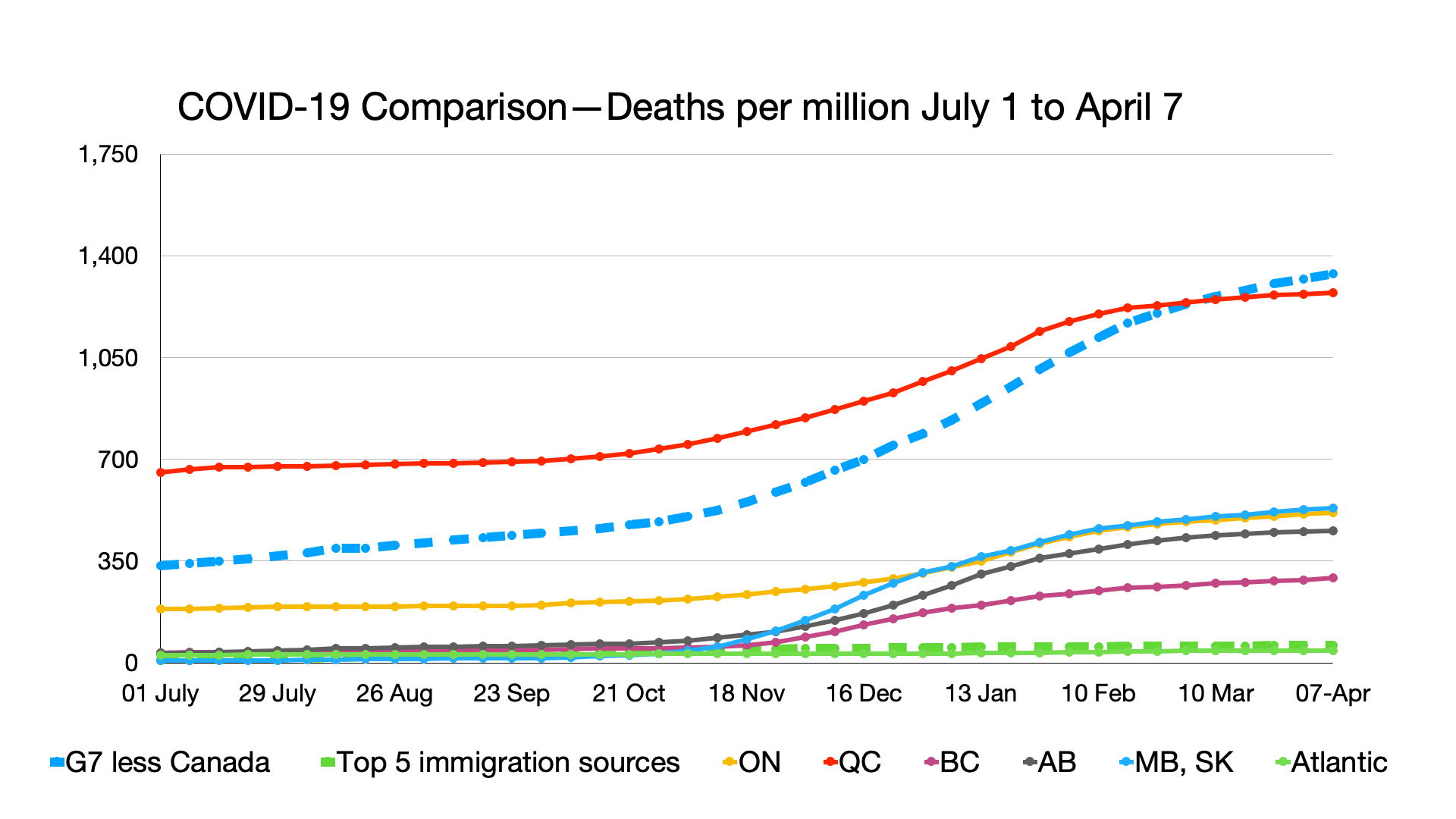
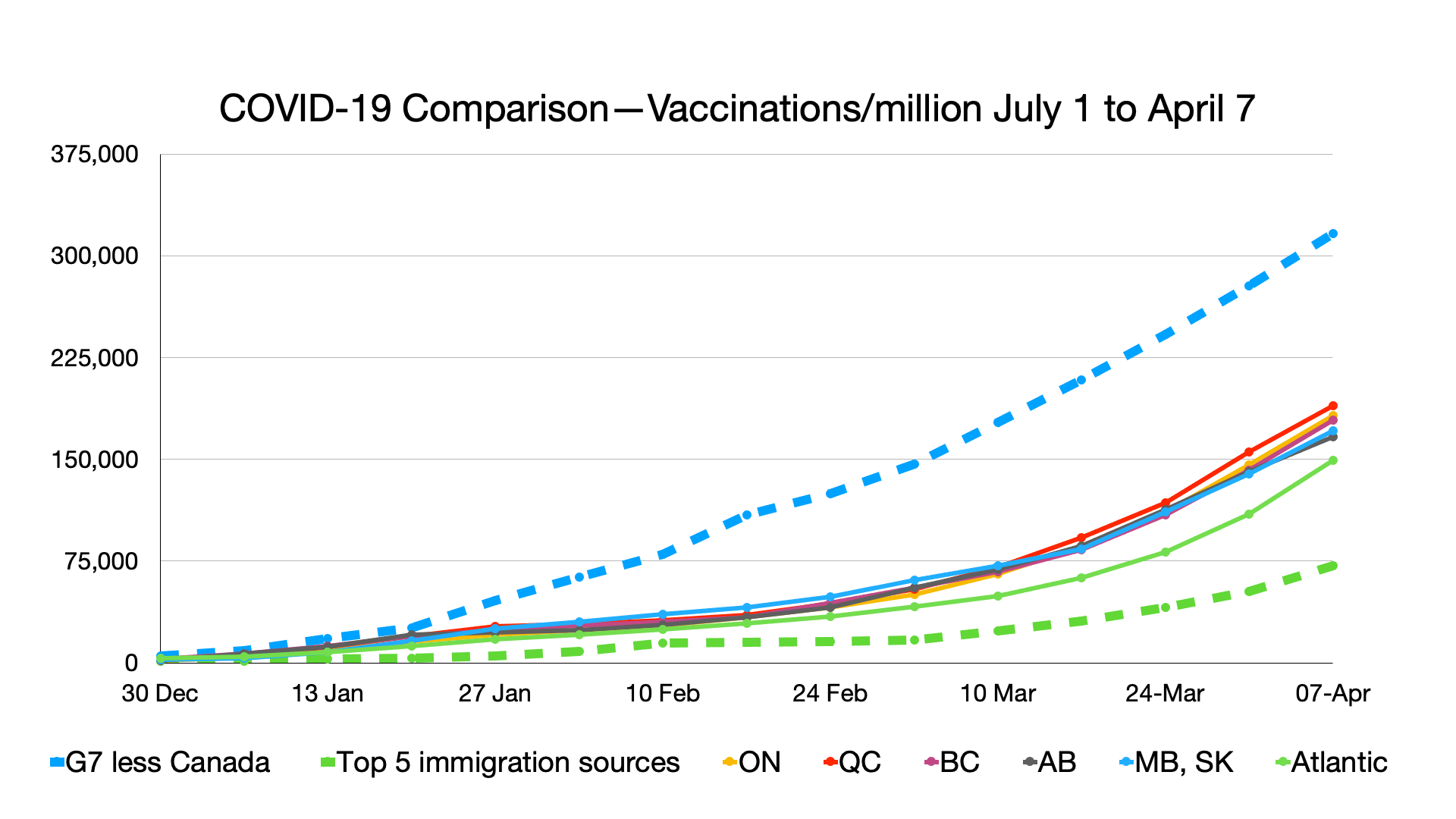
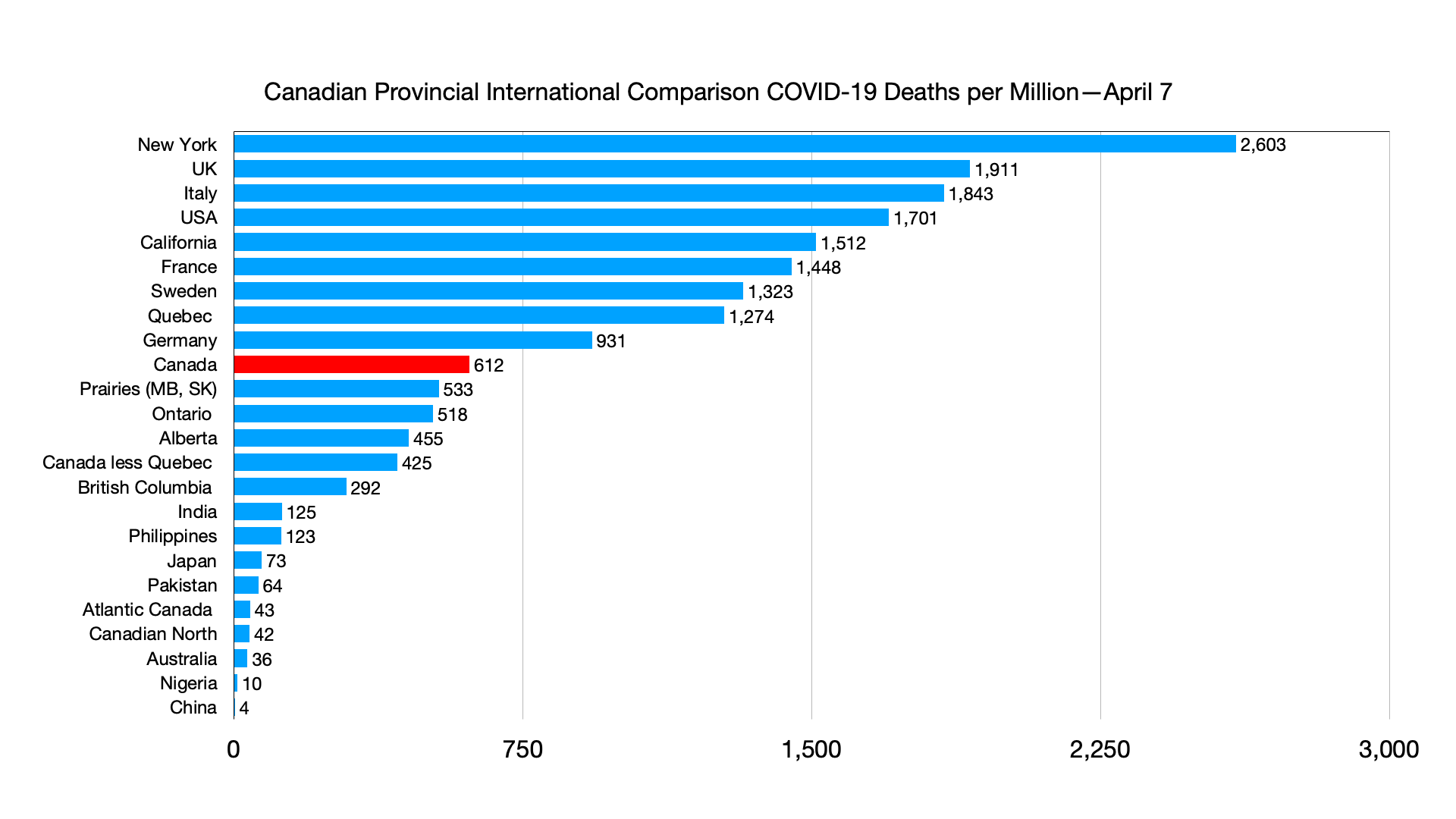
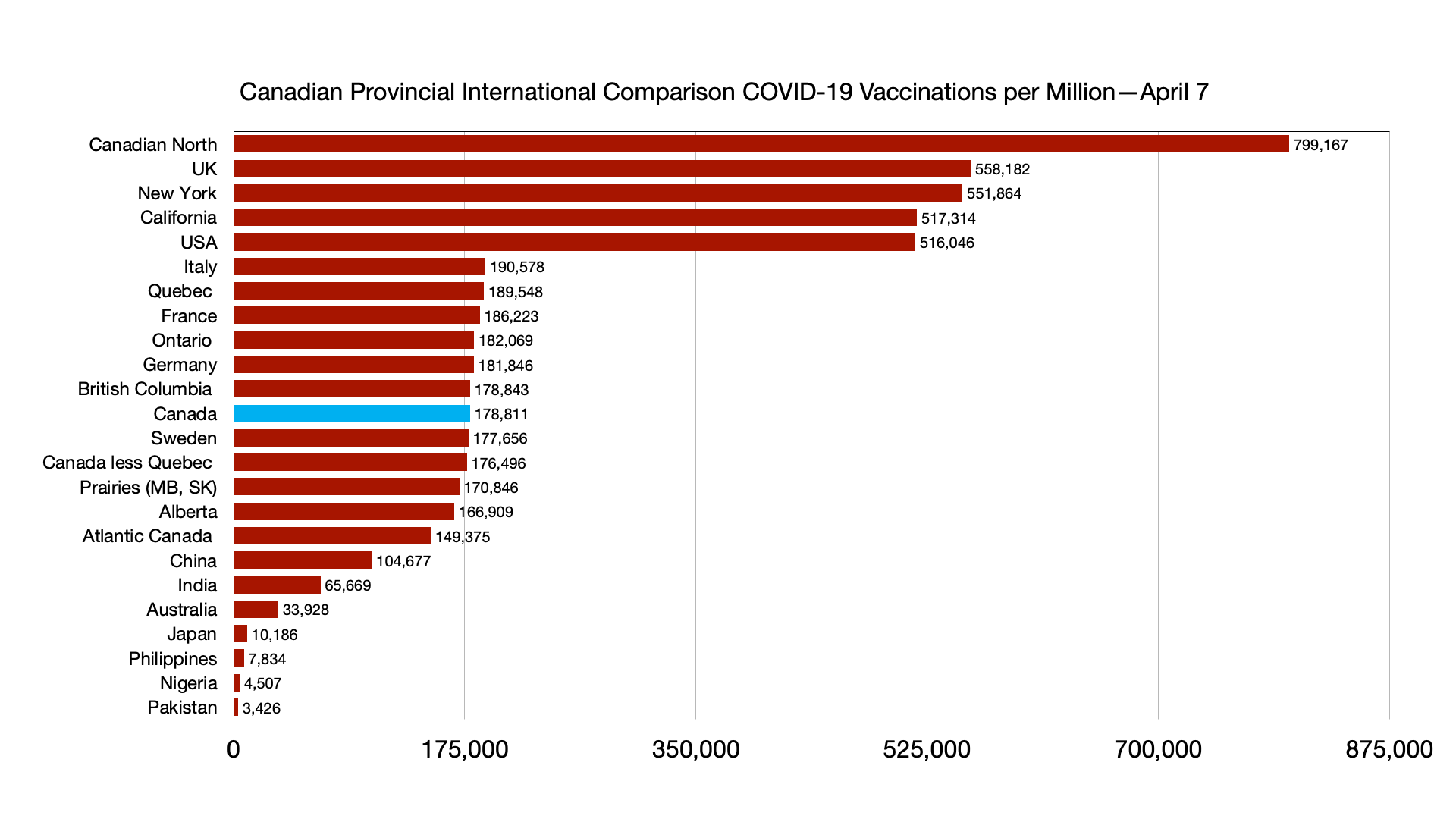
#COVID-19: Comparing provinces with other countries 31 March Update

The latest charts, compiled 7 April as the third wave has started.

Vaccinations: Change from last week: Some Canadian provinces doing slightly better than EU countries. Quebec ahead of France, Ontario ahead of Germany, British Columbia and Canada ahead of Sweden,  Prairies ahead of Alberta.

Trendline charts

Infections per million: Overall steady increase of infections in most provinces but better than G7 less Canada.

Deaths per million: No major changes.

Vaccinations per million: While the gap between G7 and Canada remains, the rate has largely approached other G7 countries. Of note is the increase in vaccination rates of immigration source countries (China and India).

Weekly

Infections per million: Some minor shifts: Alberta ahead of Germany, Canada ahead of Prairies.

Deaths per million: No relative change.

Input from public sector leaders needed in shaping a post COVID future

Reasonable call and consultation. However, I would hope that the focus would not just be at the deputy and ADM level, but executives and others closer to the front-line.

We have recently seen the disconnect between top levels and greater expertise in PHAC decisions and for such a survey to be more useful, it needs to draw on the deeper policy and subject expertise than in senior leaders who understandably have to focus more on policy management:

In a time of tremendous uncertainty, information overload and misinformation, Canadians are getting reams of advice and opinion on everything from how to manage the pandemic to the Supreme Court decision on climate change. The commentary comes from pundits, political actors, academics and interest groups, all important contributors to democratic debate. Some of it is informed, some of it is not.

Canadians are not hearing from those who, on a daily basis, are managing the challenges, developing the policies, implementing the programs and responding to the ever-changing political, legal and public opinion winds blowing on any given issue.

We are referring to senior, respected, professional public service executives who support elected municipal, provincial and federal representatives on complex challenges each and every day.

Who are these individuals?  Public sector executives and their organisations who are responsible for nearly 40 per cent of Canada’s GDP and an estimated 20 per cent of the country’s workforce.  They are distinguished by a ‘calling to serve’ and have a sense of duty to the community and a responsibility to help make things better.  They put collective interest over personal interest. While reasonably compensated it is often lower than the market compensation of their private sector counterparts.  And that’s okay.  These committed leaders are tireless in their pursuit of service and often burn the midnight oil through weekends and family events to help decision-makers make the best choices with the best advice.

These professional public servants wield tremendous influence on the quality of life we enjoy by advising, delivering services and providing effective stewardship of public resources to serve the priorities of democratically elected leadership.

Public sector leaders today are both driving and being driven by change. Facing paradigm shifts of seismic proportions, these experts and informed leaders are on the front line, supporting democratic institutions and governments, battling the pandemic, climate change and social polarization.  Public service executives are having to adapt, innovate and transform government organizations and services at top speed.

As we begin to consider what life will be like after the pandemic, and at a time when Canadian society is becoming increasingly polarized and diverse, and conflicts between different interest groups – including racialized tensions – are on the rise, the weight placed on the shoulders of this cadre of professional executives is unprecedented.  The pandemic and the difficult economic times are further straining public trust and governments will need to develop and enact policies and programs that address ongoing complex issues in a way that fosters better confidence in public institutions.

The chief administrative officer of a large metropolitan city or the deputy minister of a provincial or federal department has tremendous responsibility, knowledge and expertise.  They are impacted by changes to Canadian society, declining trust in government and concerned about whether or not their respective public institutions are equipped to deal with new, yet-to-be defined modern public administration practices.

Canadians need to hear from this informed cadre of dedicated experts. As vanguards of the public interest, they possess a unique knowledge, perspectives, and insights to the forces shaping society.  There is a need to give voice to, and share learnings from, the experience of public sector leaders regarding today’s issues and future challenges.

The Institute on Governance, with the support of the Mulroney Institute of Government, will be interviewing influential public sector leaders across the country and at all levels of government to collect their insights, learnings and assessments of the challenges and opportunities on the near and far horizons.  Knowing what is top of mind of this class of executives will offer an informed perspective to the important debates over Canada’s future and the role of governments in getting us there.

Toby Fyfe is the president of the Institute on Governance.  Stephen Van Dine is the senior vice president of public governance at the Institute on Governance.

Source: Input from public sector leaders needed in shaping a post COVID future

USA: African Immigrant Health Groups Battle A Transatlantic Tide Of Vaccine Disinformation

Of note:

Switching between Swahili and English, Dr. Frank Minja asked the African immigrants on the Zoom call if they had any questions about the COVID-19 vaccine.

Minja, who is originally from Tanzania, was asked how to get the vaccine, how it works, whether it’s safe.

Then one person asked him about a video promoting the conspiracy theory that the vaccine is part of a plot to reduce the Black race.

“That’s the realm of nonsense and misinformation,” he said.

Minja’s Q & A was hosted by the organization, African Family Holistic Health Organization (AFHHO), in Portland, Oregon. It’s one of a number of grassrootsorganizations across the country that are helping Africans in the U.S. get vaccinated.

In the United States, skepticism about the vaccine can be found in all segments of the population, including African Americans. However, efforts to address hesitancy among Black people often overlook African immigrants, who get much of their information from their countries of origin.

Minja has been paying close attention to threads of COVID-19 disinformation coming from Africa.

“We’ve seen the whole gamut of misinformation that basically started with the fact that Africans and people of African ancestry are not susceptible to COVID,” he said in an interview following the Zoom session.

Minja said many African immigrants do not rely on American media as trusted sources of information. Some do not speak English well enough yet. Others are used to getting information from friends and family back home through social media platforms, such as WhatsApp.

Chioma Nnaji, a health worker and community organizer for African immigrants and the wider Black community in Massachusetts, said it’s important to take into account that “certain communities live and operate in two spaces.”

“This is usually applicable to immigrants and refugees where they still have connections to their home countries while they are resettling in a new country,” she added.

A lot of what they hear from back home is helpful, she said. For example, traditional herbal remedies are popular. Minja said those can be useful for treating symptoms of non-severe forms of COVID-19.

However, there’s also quite a bit of misleading information about the vaccine that is spread through these channels, Minja said.

“And a lot of it is really about just planting the seeds of distrust,” he said.

For African immigrants, the distrust is partly rooted in the memory of being exploited by western countries, said Dr. Ifeanyi Nsofor. He’s a global health expert from Nigeria, who has also been battling vaccine misinformation on the continent.

“It’s almost like anything that you say is coming from the white man, people look at it with lots of suspicion, based on that experience of colonialism,” he said.

And that experience did not end with independence. Over the years, global health advocates have accused multinational pharmaceutical firms of using African countries as living laboratories for clinical trials of experimental drugs. In 1996, 11 children died and dozens were left disabled in Nigeria after being given an experimental anti-meningitis drug created by Pfizer — the developer of one of the COVID vaccines.

A year later, the U.S. government was accused sponsoring studies that gave pregnant women in developing countries a placebo during tests of the effectiveness of an antiviral drug for HIV.

And in April 2020, two French doctors sparked outrage when they suggested that a potential treatment for COVID-19 should be tested in Africa. The director of the World Health Organization, Tedros Adhanom Ghebreyesus, condemned the suggestion as a “hangover from a colonial mentality.”

“All this fear comes from a history,” said Haika Mushi, a health worker at AFHHO. She is also originally from Tanzania and moved to the U.S. 12 years ago. She has been helping organize the group’s Zoom calls since the pandemic began.

When the vaccine became available, AFHHO started helping people sign up for appointments. At first, it brought in a white doctor to answer questions, and people were still skeptical. She says the group had more success when it brought in Minja and a doctor from Zimbabwe. They also have translators speaking French, Swahili and Tigrinya.

“It makes sense to hear from our own,” she said.

Another type of disinformation that is being spread, according to Nnaji, is that immigration status affects a person’s ability to get the vaccine. She says that is why community-based organizations who can help people sign up for vaccinations, such as AFHHO, are so important.

AFHHO hopes that its sessions will also help curb disinformation in the countries of origin, too.

“We feel like if the people here are well enough educated about the vaccine, they will be able to educate our families back home — our friends, neighbors back home,” Mushi said.

Source: African Immigrant Health Groups Battle A Transatlantic Tide Of Vaccine Disinformation