USA ICE: How Immigration Enforcement Lowered Birth Weights

Having watched Immigration Nation, understandable:

Since 2002, counties across the U.S. have entered into agreements with Immigrations and Custom Enforcement to deputize local police officers to perform a range of ICE duties.

New research shows that in one county in North Carolina, the program negatively affected birth outcomes, including lowering average birth weights and decreasing the use of prenatal services by parents.

“Regardless of how you feel about immigration policies, it’s important to realize that there may be other effects that perhaps weren’t intended, but nevertheless have real consequences,” says Christina Gibson-Davis, a professor of public policy at Duke University and one of the authors of the peer-reviewed study. “Health at birth has real downstream effects — it’s related to lower earnings and worse health for adults.”

Immigration has historically been under the purview of the federal government, but in the last few decades, enforcement responsibilities have increasingly been delegated to local police and sheriff’s offices. Some local governments, loosely called “sanctuary cities,” refuse to participate in a number of ways. Others, let’s call them “anti-sanctuary cities,” jump at the chance to prove their tough-on-immigration bonafides. One way they do this is through what are known as 287g agreements.

Mecklenburg County pioneered the use of this program in 2006 to cast a wide net for undocumented immigrants under then-sheriff Jim Pendergraph, who later went on to join ICE’s ranks.

Gibson-Davis, who studies the effect of public policy on low-income families, wanted to test how this county’s 287g agreement might impact birth outcomes, given that social and economic disadvantages of parents are often visible in the health of their newborns.

She and her colleagues compiled data from state birth certificates between 2004 and 2006 and compared birth outcomes before and after the introduction of the policy in Mecklenburg County, where the city of Charlotte is based. They also compared the findings with other North Carolina regions that did not enter into 287g agreements.

After controlling for other factors through a statistical analysis, the researchers found that babies in Mecklenburg County weighed 58.54 grams (a little more than two ounces)less on average than before the policy change. This effect corresponded with an increase in the share of children who were small for their gestational age at birth and a decrease in prenatal care utilization by parents.

“We feel pretty confident that we’ve identified … what we call the ‘causal impact,’” Gibson-Davis says. The effect “wasn’t because of changes in the population necessarily, or some other factor that might have been happening at the same time.”

The researchers didn’t test the reasons for this outcome, but they can make some educated guesses.

“There is a large [body of] literature that suggests that stress can have negative effects on the fetus when it’s in utero, so though we can’t identify the exact cause, stress may be one reason for our findings,” Gibson-Davis says. As to the decrease in prenatal care, Gibson-Davis says those who feared the attention of ICE authorities may be less likely to risk going to a doctor.

The researchers also found that the effects were more pronounced for foreign-born mothers with a lower level of education, which they believe signals a couple of things: One, this group may be more likely to be undocumented; and two, it may include parents who have “fewer resources with which to buffer stress,” Gibson-Davis says. (Data on citizenship status was not included in the study.)

The findings add to a body of research on the adverse health effects of aggressive local immigration enforcement. Other studies have found that Latina and Hispanic pregnant women tend to seek less prenatal care because they lack trust in authorities, and that Latino immigrants report lower mental well-being.

The rationale from Trump-era officials for 287g agreements — a version of which continues to be up on the ICE web page about the program — is that they enhance “the safety and security of communities by creating partnerships with state and local law enforcement agencies.” But other research has called this goal into question. Studies have found that 287g agreements don’t reduce crimes and can actually deter immigrants from reporting crime. They can also lead to racial profiling complaints and cause a “chilling effect,” prompting immigrants fearful of increased enforcement in their communities to withdraw from public life, including by frequenting businesses or seeking education services that they need. All of this could play a role in the health outcomes Gibson-Davis studied in her research.

The number of 287(g) agreements multiplied exponentially during the Trump administration. From 2017 to 2018, they doubled from 35 to more than 70. By the time Trump left office, the number of these agreements had jumped to 150. A new Governmental Accountability Office report found that the program’s rapid expansion under Trump took place without adequate oversight, tracking or training.
More racially diverse areas reported much higher numbers of COVID-19 deaths: StatsCan

Confirmation of what we have seen in other studies with respect to minorities being more affected given many are employed in healthcare and other front line occupations:

The most racially diverse neighbourhoods in Canada reported COVID-19 mortality rates more than twice as high as those reported by districts that are overwhelmingly white, according to new data released Wednesday by Statistics Canada.

The report, titled Year in Review, lays bare the uneven effects of this pandemic on Canadians of different racial backgrounds.

The data affirms what some Canadians have reported anecdotally for months: Black people in particular have been far more likely to succumb to the virus than members of other groups.

Source: More racially diverse areas reported much higher numbers of COVID-19 deaths: StatsCan

StatCan report: https://www150.statcan.gc.ca/n1/pub/11-631-x/11-631-x2021001-eng.htm

How Australia stripped alleged Isis fighter of citizenship without evaluating her case

Complete lack of due process:

New Zealand authorities are still refusing to comment publicly on the likely deportation from Turkey of Suhayra Aden, the former Australian-New Zealand dual citizen alleged by Turkish authorities to be an Islamic State terrorist.

But according to one report, it is likely New Zealand officials will eventually escort her from Turkey, along with her two children, aged two and five.

Aden was arrested in mid-February trying to enter Turkey from Syria. Her detention triggered a diplomatic row when it emerged that Australia had stripped the 26-year-old of her Australian citizenship, leaving New Zealand to deal with her predicament.

Born in New Zealand but having lived in Australia since she was six, Aden travelled to Syria on an Australian passport in 2014. Alleged to be involved with Isis, her Australian passport was cancelled in 2020. The timing of her actual loss of citizenship is less clear.

Media coverage has largely centred on New Zealand prime minister Jacinda Ardern’s accusation that, in stripping Aden of her citizenship, Australia has “abdicated its responsibilities”.

Ardern was right. But what has been less well covered is how the Australian government disabled itself from making a decision – let alone an informed one – on that loss of citizenship.

Aden lost her citizenship automatically under a now-repealed law. That law deprived her of her citizenship without any Australian official evaluating her circumstances.

An automatic rule

Introduced under Tony Abbott’s prime ministership, the powers of citizenship deprivation were enacted in December 2015, early in the Malcolm Turnbull government. Automatic loss of Australian citizenship could occur if:

  • The person was aged over 14
  • They would not be rendered stateless (Aden’s New Zealand co-citizenship ensured this)
  • They had either fought for a declared terrorist organisation or engaged in “disallegient” conduct (defined with reference to various terrorist offences, though not incorporating key elements of those offences)

A person lost their Australian citizenship the instant the statutory conditions were met, irrespective of any official knowing this had occurred. Of course, officials could only act when they found out the relevant conditions had been met – but that might be years later, if ever.

Source: How Australia stripped alleged Isis fighter of citizenship without evaluating her case

Mahboubi, Skuterud – An Economic Reality Check on Canadian Immigration (Part I), Part II link

Good and needed critical thinking regarding the limitations and weaknesses of the government’s immigration plan and approach:

COVID-19 travel restrictions hobbled Canada’s immigrant admissions in 2020. In response last fall, the federal government revised its 2021 targets upwards, saying it was necessary for our economic recovery.

Showing its commitment to the ambitious target, on February 13 the government issued invitations to a record-breaking 27,332 applicants in its Canadian Experience Class (CEC) program, which targets applicants with Canadian work experience, and are therefore more likely to be living in Canada.

But to issue so many invitations, it was forced to drop its Comprehensive Ranking System cut-off score in its Express Entry system to an all-time low of 75, far below the previous record of 413. This strategy is analogous to a university doing away with entry standards to significantly boost enrolment. If history is an indicator, there is good reason for concern.

The primary objective of Canada’s economic-class immigration programs is to leverage immigration policy to boost the economic well-being of Canadians. To do that, we need immigration inflows to raise GDP per capita, not simply increase the population.

To assess if we are achieving this objective, Canadian researchers examine earnings of new immigrants. Since workers’ earnings comprise roughly two-thirds of GDP, we need new immigrants to earn more than the national average if we are to raise GDP per capita.

Unfortunately, the evidence is that Canada has historically struggled to achieve this objective, and continues to struggle. The hard reality is that we saw a substantial deterioration in the earnings of subsequent cohorts of new immigrants and an increase in their relative poverty rates from the early 80s to the early 2000s.  

This prompted numerous reforms of skilled immigration policies since 2005, primarily directed at improving immigrant selection, including introducing pre-migration mandatory English/French language testing and education credential assessments. A key piece of the policy reform was the 2015 introduction of the Express Entry system.

Rather than admit applicants who have met the minimum requirements of one of Canada’s economic-class programs on a first-come, first-served basis, the Express Entry system skims the cream of the applicant pool on a regular basis using a tool known as the Comprehensive Ranking System (CRS). The CRS assigns each applicant a score between zero and 1,200 using a set of criteria, including age, education, and work experience. The factors and their relative weightings were determined by a statistical analysis predicting immigrants’ earnings during their first 10 years in Canada.

While there is evidence that these reforms have helped curtail the deterioration in immigrants’ earnings, they continue to experience significant economic integration challenges. For example, a recent Statistics Canada study shows that international students who graduated in 2010-2012 earned considerably less than domestic graduates in their first five years after graduation.

Shortfalls of former international students are also evident when their earnings are compared to domestic graduates with similar degrees in similar fields of study.

The economic challenges of Canadian university-educated immigrants are, in fact, exceptional. Whereas university-educated immigrants from India who settle in the United States outperform their US-born counterparts with similar education, the average earnings of Indian-born university-educated immigrants in Canada fall significantly below their Canadian-born counterparts. This reflects the continuing truth that US universities and salary premiums attract the world’s best and brightest while Canada’s relatively generous welfare state attracts migrants less sure of their talents.

Examining the 2016 earnings of recent immigrants admitted under an economic-class program, we find that CEC principal applicants had higher average earnings than the non-immigrant population. When we also include their spouses and dependants, their combined average earnings were only slightly lower than prime-age non-immigrants (Figure 1). This small difference reveals both the success of Canada’s CEC program, but also the risk of forgoing CRS standards to reach immigration targets.

Immigration, Refugees and Citizenship Canada (IRCC) has held 170 Express Entry draws since January 2015. The median CRS cut-off score in past draws was 461 and has never dropped below 413. Lowering the standard to 75 means admitting immigrants who will experience more significant economic-integration challenges. Doing so during an economic crisis with high levels of joblessness seems ill advised.

In the government’s defence, all 27,332 CEC applicants who received invitations in February’s draw have at least one year of Canadian experience, and it is likely that a high percentage are currently employed, and in all likelihood many close to the front line during the pandemic. There are unquestionably compelling ethical reasons for providing these workers and their families with pathways to permanent residency.

But there is a risk in using economic-class programs to achieve humanitarian objectives; it compromises the ability of the Express Entry system to achieve its economic objectives.

The Tinbergen Rule says that for every policy target there should be at least one policy instrument. When there are fewer instruments than targets, the ability of policy to achieve its targets is compromised. Let us make sure that all our immigration programs do at least one thing well, instead of everything badly.

Tomorrow, we examine the potential consequences of increasing immigration during the crisis.

Source: https://www.cdhowe.org/intelligence-memos/mahboubi-skuterud-–-economic-reality-check-canadian-immigration-part-i

Part II: https://www.cdhowe.org/intelligence-memos/mahboubi-skuterud-–-economic-reality-check-canadian-immigration-part-ii

Stephens: California’s Ethnic Studies Follies: A proposed curriculum magnifies differences, encourages tribal loyalties and advances ideological group think.

Some exaggeration regarding divisiveness but valid points regarding over-reach and the risks in not using ethnic studies to look at both the commonalities and differences:

The first time California’s Department of Education published a draft of an ethnic studies “model curriculum” for high school students, in 2019, it managed the neat trick of omitting anti-Semitism while committing it.

More than a million Jews live in California. They are also among the state’s leading victims of hate crimes.

Yet in a lengthy draft otherwise rich with references to various forms of bigotry, there was no mention of bigotry toward Jews. There was, however, an endorsement of the Boycott, Divest and Sanction movement, which essentially calls for the elimination of the Jewish state. There was also an approving mention of a Palestinian singer rapping that Israelis “use the press so they can manufacture” — the old refrain that lying Jews control the media.

The draft outraged many Jews. And they were joined by Armenian, Assyrian, Hellenic, Hindu and Korean civic groups in a statementurging the California Department of Education to “completely redraft the curriculum.” In its original form, they said, the document was “replete with mischaracterizations and omissions of major California ethnoreligious groups.”

Last September, Gov. Gavin Newsom vetoed a bill that would mandate ethnic studies as a graduation requirement in California’s high schools, pending further review of the model curriculum. While some maintained that a critical ethnic studies curriculum was a mistake, and not just for Jews, others took the view that, when it came to those revisions, it was better to be at the table than on it. Progressive Jews helped redraft a curriculum that included two sample lessons on the Jewish-American experience, along with testimonials about Jewishness from the likes of Ruth Bader Ginsburg and Dianne Feinstein.

A victory? One can still quarrel with the curriculum’s tendentiously racialized view of the American-Jewish experience. But at least the anti-Semitic and anti-Zionist dog whistles have been taken out and the history of anti-Semitism has been put in.

Yet as the Board of Education is set to vote on the new curriculum this month, it is likelier than before to enthrone ethnic studies, an older relative to critical race theory, into the largest public school system in the United States. This is a big deal in America’s ongoing culture wars. And it’s a bad deal for California’s students, at least for those whose school districts decide to make the curriculum their own.

What is “ethnic studies”? Contrary to first impressions, it is not multiculturalism. It is not a way of exploring, much less celebrating, America’s pluralistic society. It is an assault on it. “A multiculturalist framework that views our people through a colonialist lens is what literally led to the need for ethnic studies,” Sharif Zakout of the Arab Resource and Organizing Center told a state Education Department panel last year.

Ethnic studies is less an academic discipline than it is the recruiting arm of a radical ideological movement masquerading as mainstream pedagogy. From the opening pages of the model curriculum, students are expected not just to “challenge racist, bigoted, discriminatory, imperialist/colonial beliefs,” but to “critique empire-building in history” and “connect ourselves to past and contemporary social movements that struggle for social justice.”

That would be fine if it appeared in the pages of, say, The Nation. It would be fine, too, if students were exposed to critical race theory the way they might be exposed to Marxist philosophy or some other ideology — as a subject to be examined, not a lens through which to do the examining. The former is education. The latter is indoctrination. The ethnic studies curriculum conceals the difference.

It also does so in a uniquely lopsided way. “Ethnic studies is for all students,” the curriculum announces. Actually, not so much. Irish-Americans have faced a long history of discrimination in the U.S. and are famously proud of their heritage. But the word “Irish” hardly appears anywhere in the model curriculum, and nowhere in its sample lessons. Russians, Italians, Poles and others rate only the briefest mentions.

Perhaps this is because all of them, like most Jews, have a new identity, known in the jargon of ethnic studies as “conditional whiteness,” which simultaneously erases their past and racializes their present. Leave aside the ignorance this fosters regarding the long history of differences, struggles and achievements by various European ethnic groups in America. It’s also the mirror image of longstanding prejudices regarding “Asians” or “Hispanics” as ethnically undifferentiated masses of mainly identical people.

When the main thing left-wing progressives see about America is its allegedly oppressive systems of ethnicity or color, they aren’t seeing America at all. Nor should they be surprised when right-wing reactionaries adopt a perverse version of their views. To treat “whiteness” — conditional or otherwise — not as an accident of pigmentation but as an ethnicity unto itself is what the David Dukes of the world have always wanted.

It shouldn’t be like this. Public education is supposed to create a sense of common citizenship while cultivating the habits of independent thinking. This is a curriculum that magnifies differences, encourages tribal loyalties and advances ideological groupthink.

Source: https://www.nytimes.com/2021/03/09/opinion/californias-ethnic-studies.html

Illegal Immigration In America Has Continued To Decline

Useful context:

In a report that could provide context to most immigration news stories, new research reveals that the number of unauthorized immigrants has continued to decline in the United States. The unauthorized immigrant population fell to 10,350,000 in 2019, a decline of 12% since 2010. The approximately 10.4 million unauthorized immigrants represent about 3% of the total U.S. population. A majority have lived in the U.S. for more than a decade.

While Donald Trump railed against illegal immigration from Mexico, it turns out demographics and economic conditions in Mexico had already addressed the issue. “The undocumented population from Mexico declined so much in the past decade that its share dropped to less than half of the total population,” according to new research from Robert Warren, a demographer and senior visiting fellow at the Center for Migration Studies. “From 2010 to 2019, the undocumented population from Mexico declined by about 1.9 million, and the undocumented population from the rest of the world increased by about 500,000.”

Among the key findings in Warren’s report:

–        “The undocumented population continued to decline in 2019, falling by 215,000 compared to 2018; this population has declined by 1.4 million, or 12%, since 2010.”

–        “Return migration of undocumented residents to Mexico was principally responsible for the decline of almost 1.9 million in the total undocumented population from 2010 to 2019.”

–        “The undocumented populations from Central America and Asia increased at the same rate from 2010 to 2016. After 2016, the population from Asia stopped growing, and the population from Central America increased by about 200,000.”

–        “Since 2010, the undocumented population from Mexico has fallen from 6.6 million to 4.8 million, or by 28%.”

–        “In 2019, 42 states and Washington, DC, had fewer undocumented residents from Mexico than they had in 2010. The states with increases in undocumented persons from Mexico had small undocumented populations.” Between 2010 and 2019, the number of unauthorized immigrants from Mexico declined by 35% in California, 13% in Texas, 23% in Arizona, 41% in Illinois, 37% in Georgia and 27% in Florida.

However, news and politics are often dominated by the short-term, including what is happening at any moment on the U.S.-Mexico border.

Ali Noorani, president and CEO of the National Immigration Forum, believes a combination of people today are crossing the U.S.-Mexico border. “My sense is that we are talking about unaccompanied minors (UACs) presenting themselves for protection, families who were in Migrant Protection Protocols (MPP) in Mexico and are re-entering through the UNHCR (United Nations High Commissioner for Refugees) process, families with young children who Mexico will not take back (in particular those in south Texas) and the population of single adults by and large from Mexico who are entering, apprehended, expelled and who then try to enter again,” he said in an interview.

“Nothing at the border right now is a surprise,” said Noorani on Twitter. “Therefore, it should not escalate to a crisis. The Biden administration needs to put in place the infrastructure, logistics and processes to manage the border. A crisis is when Trump expelled thousands of migrant children back to Mexico, strong-armed/bribed unsafe countries to pretend to be safe countries, and forced thousands of families to wait in Mexico while eviscerating the immigration system.”

The current situation at the border could affect bills to legalize Dreamers and others in the United States, although Robert Warren found no evidence that Congress considering legalization affects migrant decisions to come to America.

“An important finding is that the comprehensive immigration reform bill, S. 744, passed by the U.S. Senate in June 2013, did not cause an increase in undocumented immigration from Mexico,” writes Warren. “Instead, return migration fell by about half during the period that the bill was under active consideration. The finding that proposed legalization programs do not increase undocumented migration provides support for legalization proposals forthcoming from the Biden administration.”

A letter (February 2, 2021) from legal, religious and humanitarian organizations urged President Biden to stop using the authority invoked by the Trump administration to expel people at the border without due process. “We write to urge your administration to immediately end the misuse of Title 42 public health authority to illegally and inhumanely expel asylum seekers and migrants at the border,” according to the letter from Human Rights First, America’s Voice, American Immigration Lawyers Association, Anti-Defamation League, Kids in Need of Defense (KIND) and other groups.

“Since March 2020, the Department of Homeland Security (DHS) has blocked and turned away people at the southern border, including asylum seekers and children, without access to the U.S. asylum system or preliminary protection screenings, sending them to persecution, torture and other serious danger in violation of U.S. refugee and anti-trafficking laws and treaty obligations. The Trump administration, for instance, expelled prominent Nicaraguan dissidents who had attempted to seek asylum in the United States, returning them to Nicaragua where authorities had detained and beaten them for their political activism. Your administration continues to block and expel people, including families with children, under the same policy.

“These expulsions are being carried out under orders that Trump Administration officials pressured the Centers for Disease Control and Prevention (CDC) to issue despite objections by senior CDCmedical experts. . . . During the presidential campaign, you committed to end inhumane Trump administration border policies, uphold U.S. laws and treaty obligations to protect refugees and immigrant children, and adopt COVID-19 measures based in science. For your actions to reflect those promises, your administration must end the misuse of Title 42 public health authority at the border, stop blocking and expelling people seeking U.S. humanitarian protections, ensure appropriate infrastructure and support for shelters and other border groups to assist asylum seekers, and allow these families, children and adults to pursue their requests while in safety, inside the United States.”

In addition to addressing humanitarian concerns, the solution to preventing most future illegal entry is to make it possible for individuals to apply to work legally in the United States at the types of jobs many would otherwise fill as unauthorized immigrants.

Fernando Castillo picks “oranges and other crops for Elkhorn Packing, a company that provides labor through H-2A visas . . . He heard about the program through his job back in Tamaulipas, Mexico. It’s a good way to make more money, he says.”

“‘Because here the salary is a bit more than over there, and to help the bosses,’ he says,” according to National Public Radio. “The bosses he’s referring to are his parents. The 29-year-old sends money to them and his siblings. ‘To buy food to buy whatever they need in Mexico. Because in that country the salary is not enough to do certain stuff,’ he says. ‘And the American money over there gives people better benefits.’”

Contrast Fernando Castillo, who had a legal work visa and happily sends money to his family, with the fate of Yesenia Magali Melendrez from Guatemala.

“Yesenia Magali Melendrez Cardona told her father she wanted to follow in his footsteps,” reported the Los Angeles Times. “He had made the trek from Guatemala to the U.S. 15 years earlier in search of a new life. In February, she left a job and her studies behind and headed north. Chiquimulilla, the town where she had spent her 23 years, had been ravaged by the pandemic. Unemployment was rising. The population was desperate. The streets were too dangerous to walk at night.

“On Tuesday, Yesenia found herself in a situation just as perilous as the one she had fled. A maroon Ford Expedition bore a suspected smuggler and 24 people racing toward what they hoped would be safety. Yesenia and her mother, Verlyn Cardona, were wedged in the back when it drove through a breach in the fence separating Mexico from California.

“It was broadsided in the Imperial County town of Holtville by a semi hauling two empty trailers. It came to a stop, windshield shattered, at the intersection of Highway 115 and Norrish Road.

“Seventeen passengers were ejected from the SUV. When Verlyn regained consciousness in the back of the crumpled vehicle, her daughter was sprawled across her legs. Dead.”

Many potential asylum seekers from Central America would welcome the security of a work visa.

“The best solution, as ever, is to reduce the incentive for people to come illegally by creating more ways to work legally in America,” wrote the Wall Street Journal in a December 2018 editorial. “Most migrants come to work, and at the current moment there are plenty of unfilled jobs for them. A guest-worker program would let migrants move back and forth legally, ebbing and flowing based on employer needs, while reducing the ability of gangs and smuggler ‘coyotes’ to exploit vulnerable migrants.”

Research from the National Foundation for American Policy found increasing the legal admission of farmworkers during the 1950s under the Bracero Program significantly reduced unlawful entry to America. Based on apprehensions at the border, illegal entry to the United States fell by 95% between 1953 and 1959, as farmworkers entered legally in larger numbers. Today, a greater ability to work in jobs in other sectors, particularly year-round, would be welcomed by migrants and employers.

Making it easier to work and apply for protection lawfully will save lives and address illegal immigration. The unauthorized immigrant population in the United States has declined by 12% since 2010. It’s a statistic that should crawl across the screen whenever immigration is discussed on TV—or in Congress.

Source: Illegal Immigration In America Has Continued To Decline

Moving for work? No thanks. Foreign talent increasingly chooses remote work over relocating amid COVID-19

Requires some thinking regarding implications for immigration policy with respect to those highly skilled who can largely work remotely. Virtual immigration should not be conflated with immigration and integration. Remote workers are highly unlikely to use Canadian government services or pay Canadian taxes:

With more opportunities emerging to work remotely in these uncertain times, fewer people appear willing to move abroad for work, according to a global survey that also found Canada is overtaking the U.S. as the world’s top destination for foreign workers.

Overall, only 50.4 per cent of the 209,000 respondents from 190 countries said they would move to another country to work, citing the COVID-19 pandemic as a key reason, according to the survey by Boston Consulting Group and The Network.

The report on global workforce trends shows a gradual decline in people’s interest in working abroad, from 57 per cent in 2018 and 64 per cent in 2014, when the surveys were previously conducted.

“These findings reflect several new factors that have penetrated the world’s consciousness and changed the workplace. The factors — the fallout from a difficult-to-control pandemic and a sharp rise in nationalism — have altered people’s thinking,” said the report released this month.

“Businesses and governments must understand these new attitudes and make adjustments of their own in order to ensure they’ll have the future workforce they need.”

Almost a quarter of respondents picked Canada as their first choice to relocate, four percentage point ahead of the United States, which, along with Australia, ranked second.

Canada is the No. 1 destination for many of the types of people that “countries prize,” including those with master’s or PhD degrees, those with digital training or expertise, and those younger than 30, said the report.

Almost all of the countries that moved up in the Top 10 rankings have a relatively low incidence of COVID-19 cases. That includes Canada (up two spots from last survey); Australia (up one place); and Japan (up to No. 6 from 10th place).

Two Asia-Pacific countries that were recognized for their public health response — Singapore and New Zealand — also appear on the Top 10 list for the first time. Many previously popular destinations, such as Germany and France, saw their ranking suffered.

“The travel restrictions that have come and gone during the pandemic have clearly had an impact on people’s attitudes,” said the report. “Relocation willingness has also been affected by the trend toward remote work.”

No physical presence needed

Fifty-seven per cent of respondents said they were willing to work remotely for a foreign employer that doesn’t have a physical presence in their home country. About one-quarter said they aren’t sure but would consider it. Few rejected the idea outright.

The overall openness to virtual work is especially high among people in the information technology and digital fields, with 71 per cent of people with digital or analytics backgrounds saying they would be willing to work for a company with no physical presence in their own country. Among those with postgraduate degrees, 62 per cent would say yes.

“Hiring people from other countries is not a new practice for employers,” said report co-author Pierre Antebi, a co-managing director of The Network, which is a global leader in online recruitment, serving more than 2,000 international corporations.

“But the trend of remote working makes it possible to do it on a broader scale and expand the available talent pool. There’s also an upside for workers, who can advance their careers without uprooting their lives.”

As a destination for international remote employment, the U.S. ranked first and was the choice of 25 per cent of respondents, followed by Canada and Australia, both getting 22 per cent of the votes.

A global and remote talent pool

That virtual mobility allows multinational companies to tap into talent without having to pay to relocate people or set up offices in foreign countries, said the report.

“An embrace of virtual mobility could mean a reversal of some of the skills shortages that countries face,” it noted.

However, the report pointed out, companies and governments must first navigate complex taxes, labour laws and work regulations. There are also other logistical challenges, such as cultural integration of remote employees and time-zone problems that need to be considered.

Seventeen governments in Europe and the Caribbean have already introduced visas that simplify the recruitment of foreign digital workers. Some of the countries offer tax exemptions to the foreign employees they need the most.

“If you’re a company or government that hasn’t previously considered international remote employment as a way to address your skills shortages, it may sound like a very complicated thing to do,” said the report. “In fact, you’re probably more ready than you think.”

Source: Moving for work? No thanks. Foreign talent increasingly chooses remote work over relocating amid COVID-19

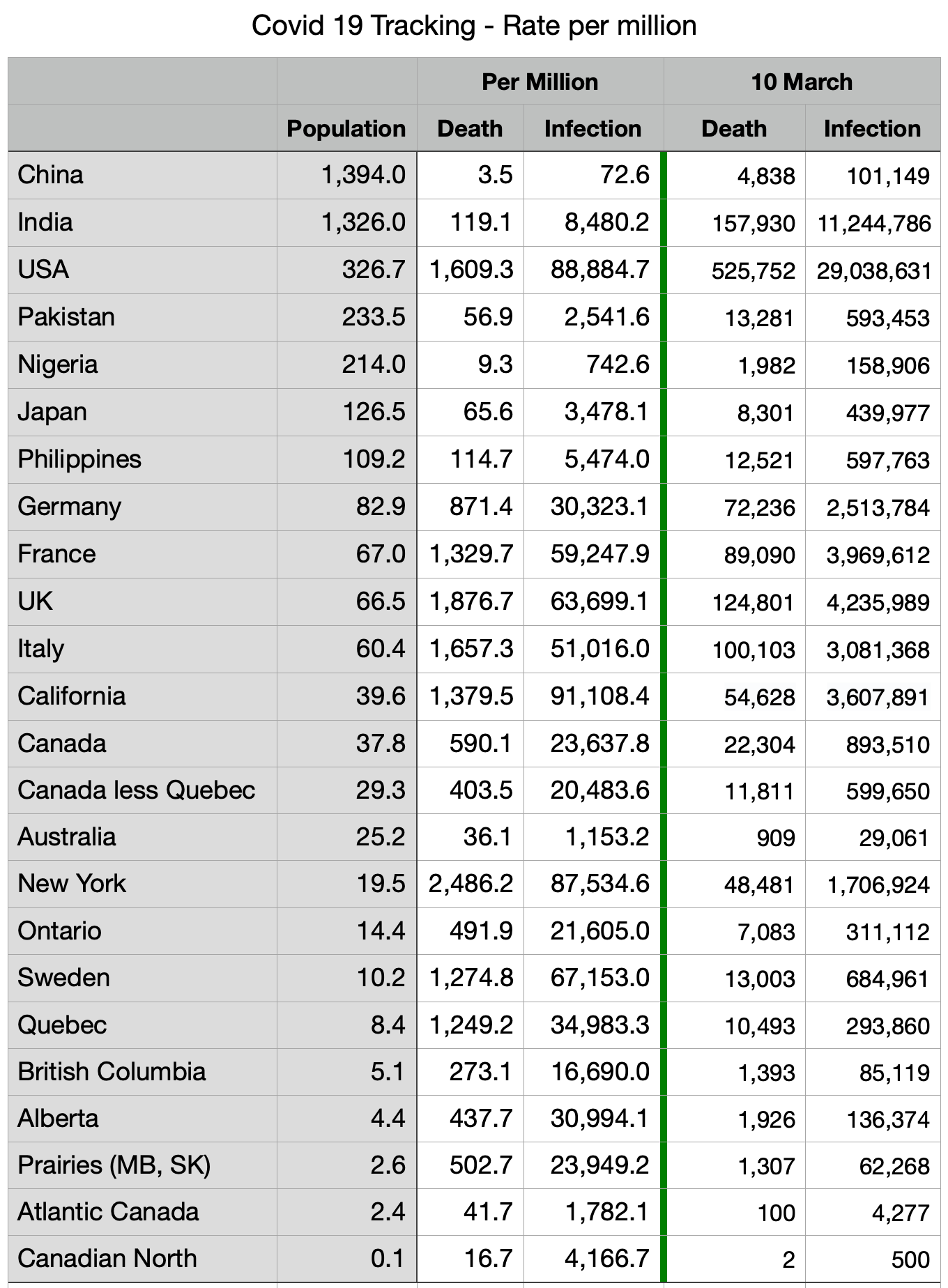
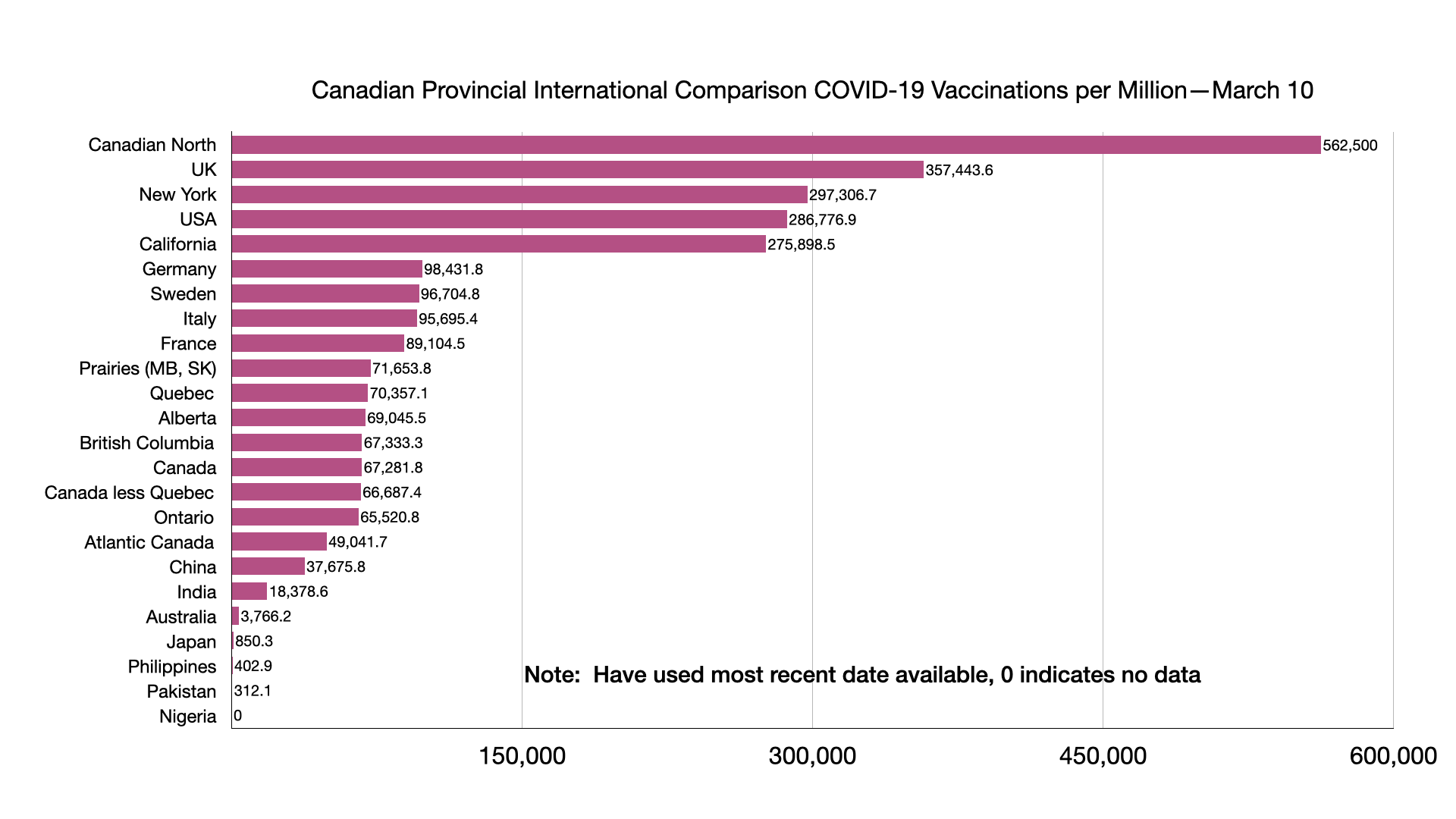
#COVID-19: Comparing provinces with other countries 10 March Update

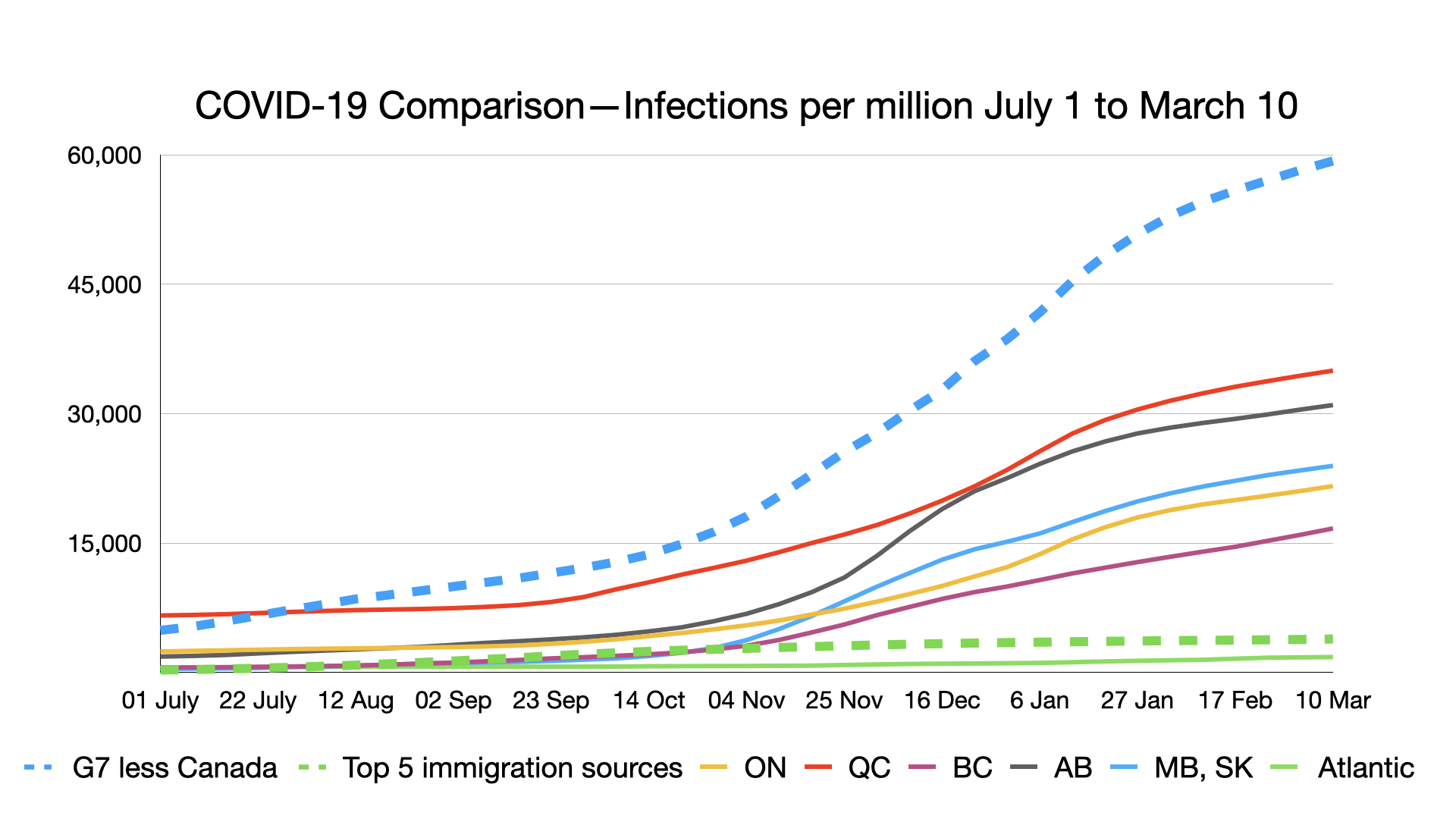
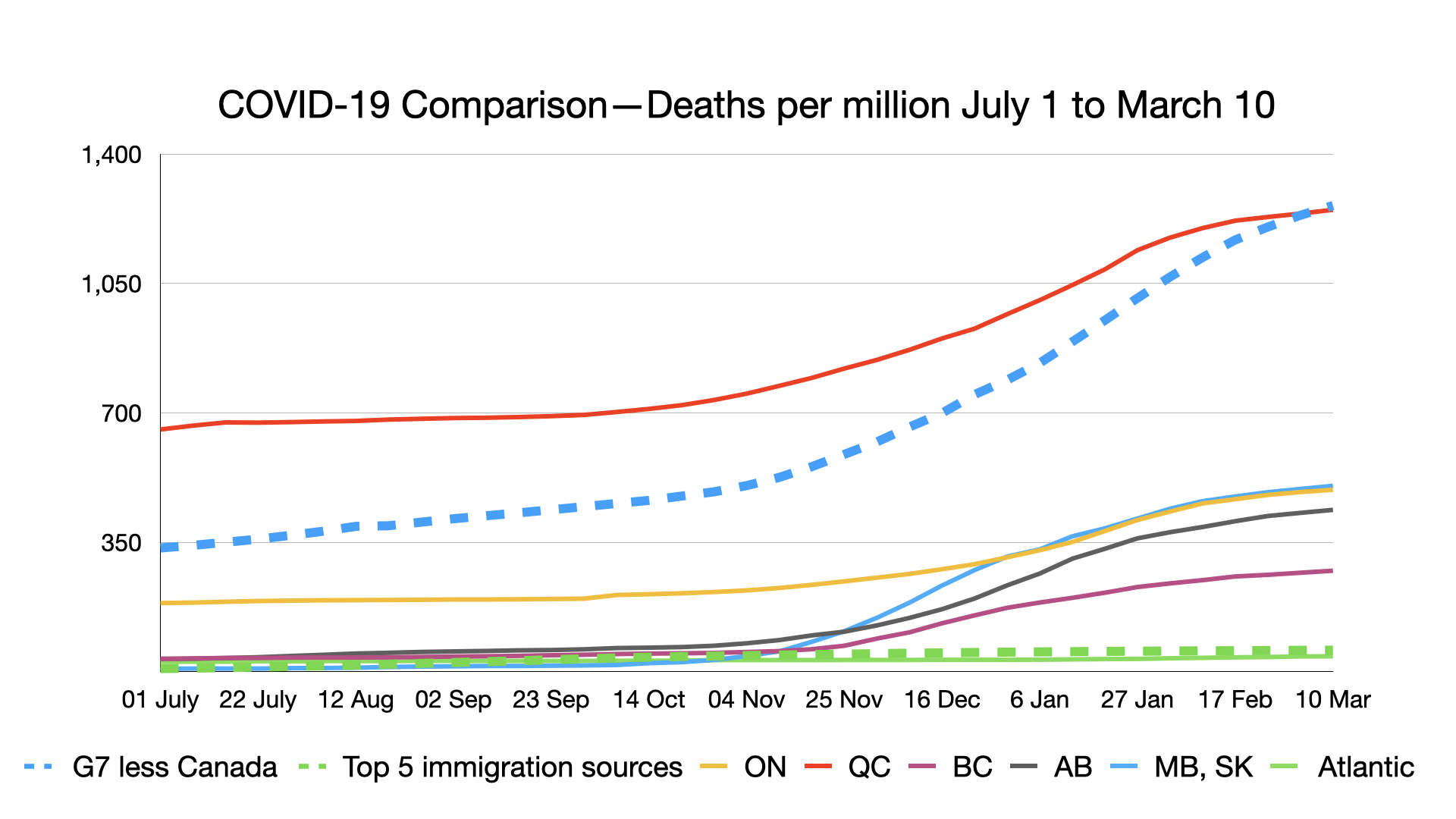
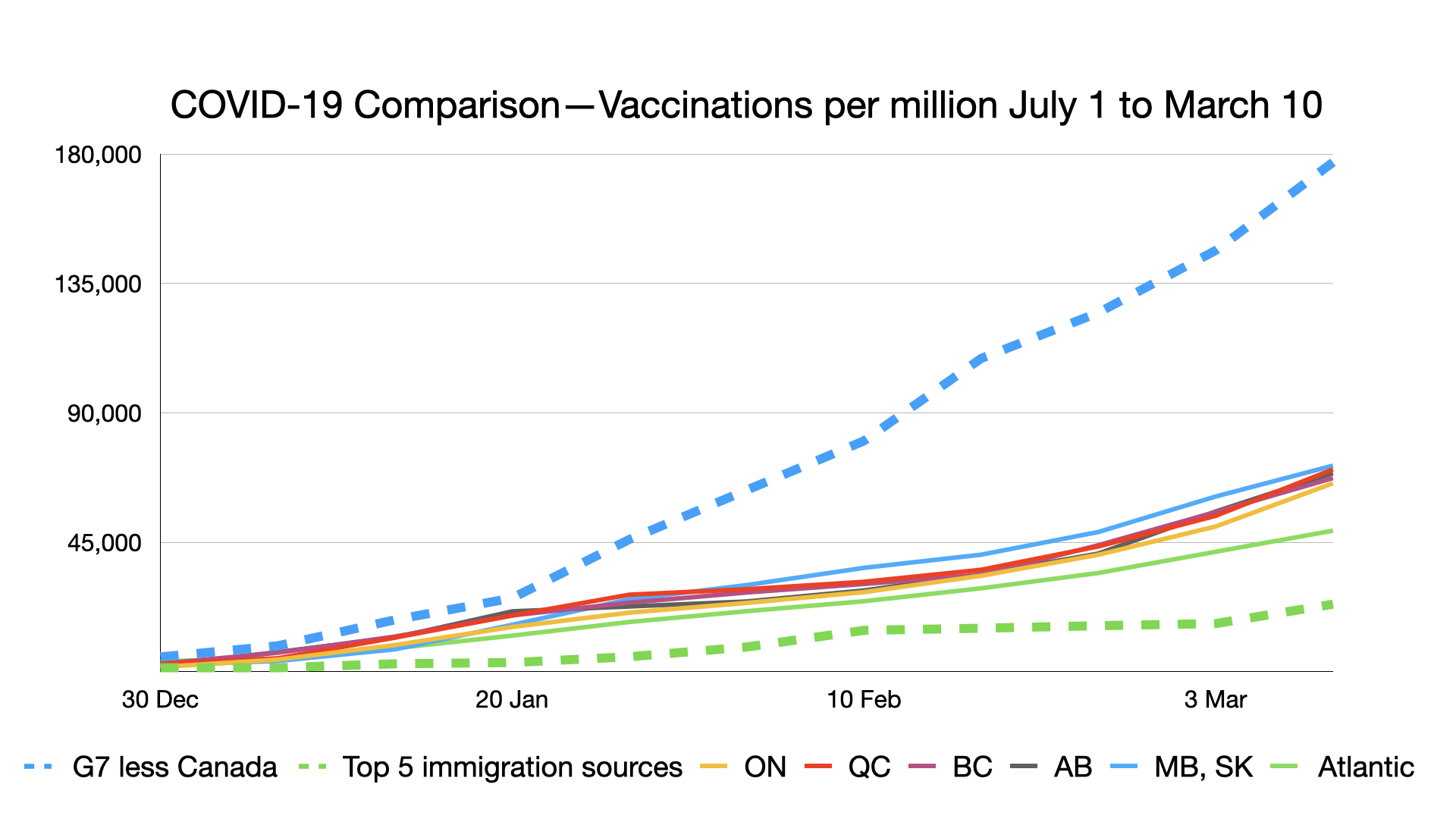
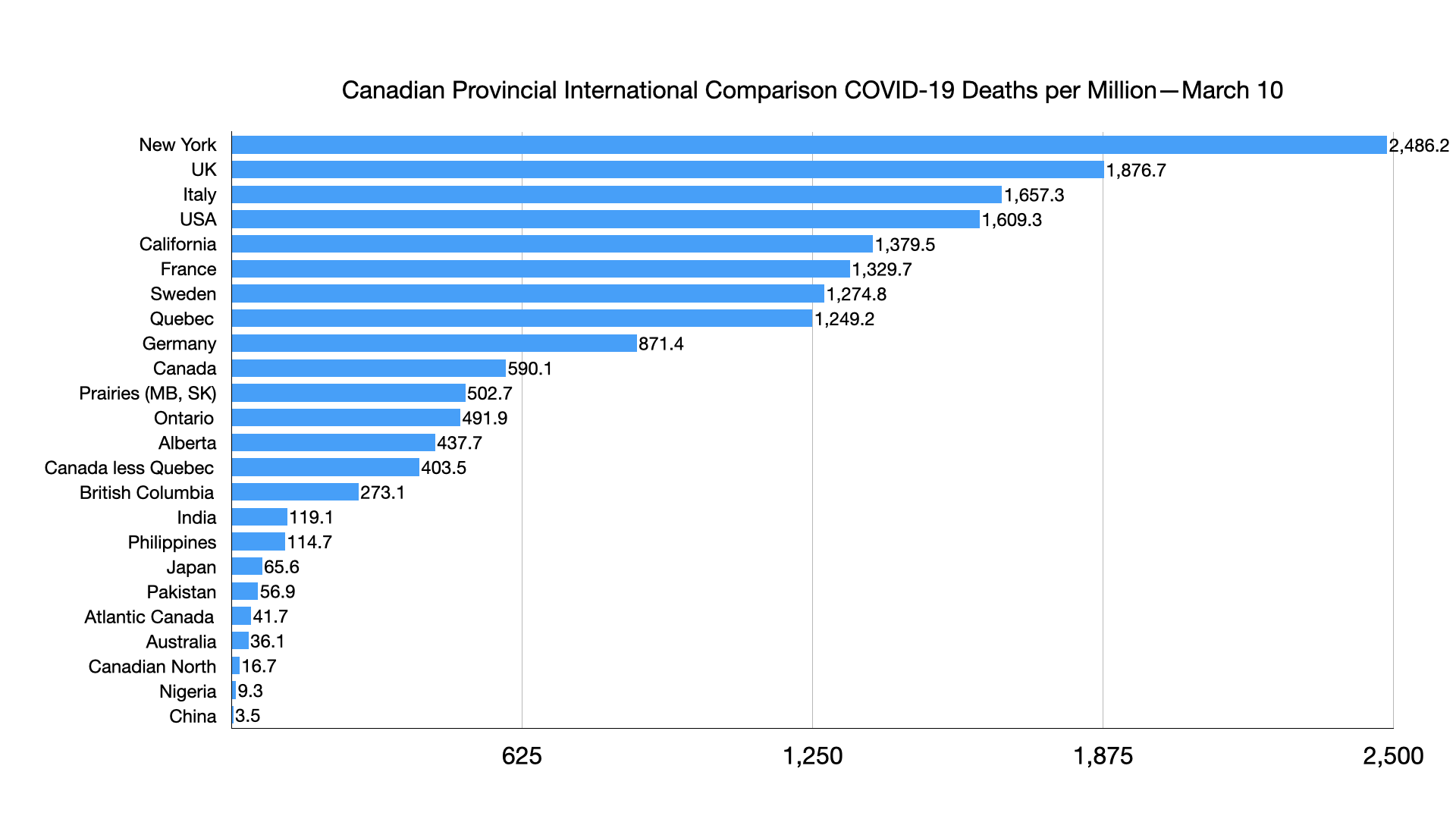
The latest charts, compiled 10 March (note international vaccination data is latest available). One year after the start of Canadian lockdowns.

Vaccinations: The gap between all G7 countries save Japan continues to grow, all European countries slightly ahead of Canada with no narrowing yet of the gap.

Trendline charts

Infections per million: The overall trend of a flattening curve is seen in G7 countries with limited flattening in Canada.

Deaths per million: Most Canadian provinces continue to flatten the curve, Quebec most dramatically. Overall G7 death rate surpassing Quebec.

Vaccinations per million: Gap between G7 and Canada continues to grow despite the arrival of more vaccines.

Weekly

Infections per million: No relative change.

Deaths per million: No relative change 

Laurentian Bank CEO says diversity targets part of financial package for bank leaders

Money talks:

Laurentian Bank of Canada chief executive Rania Llewellyn says that early in her career, she was told by a manager that he was looking for a man to fill a job she was vying for.

“I remember, there was a vacant job. I was ready to go for it. I was trained,” said Llewellyn at a webcast event on Monday at The Empire Club of Canada, in a celebration of International Women’s Day.

“And he said, ‘I’m looking for a man and I’m looking for someone who’s older.’ And this was going to be my new boss. Right? So, I would say there’s lots of those little stories across along the way.”

Llewellyn’s speech came on the heels of a report from DBRS Morningstar, which found that the six largest Canadian banks score better than the Australian and U.S. bank averages on attracting, retaining and developing women into senior leadership positions.

But DBRS Morningstar also says BMO, Scotiabank, CIBC, National Bank, RBC and TD are on average falling behind the three large Australian banks on the issue of gender pay equity.

Llewellyn, who in October became the first woman to lead a major Canadian bank, said diversity and inclusion targets should be written into the financial packages that go to the board, just as there are financial targets for leaders at the bank.

Llewellyn said companies setting such targets should focus not only on recruiting diverse talent, but also on retaining women as they move up the ranks.

“That’s one thing I introduced at Laurentian. All of my leaders have targets on their scorecards, in terms of diversity targets. But more importantly, I’ve actually included in our financial package that goes to the board,” Llewellyn said.

Linda Seymour, chief executive at HSBC Bank Canada, also said on Monday that International Women’s Day had her “reflecting on what it took to get here.”

“I was recently asked if I had to fight to break through the glass ceiling. It wasn’t that I had to fight harder than my male colleagues,” Seymour wrote in a LinkedIn post. “It was that I had to navigate harder – to make sure I was heard, to constantly network, to demonstrate when I was not only as qualified, but more qualified than my male colleagues.”

Seymour wrote that she sees having a gender-balanced board and executive committee at HSBC Bank Canada as a business advantage, but called on leaders to generally be more open to being challenged by employees on diversity and inclusion progress.

The report from DBRS Morningstar said that the gender wage gap has been consistent for about 20 years for workers between 25 to 54 in finance, insurance, real estate, rental and leasing. But the report said that disruptions to the labour force caused by the COVID-19 pandemic may be behind a slight widening of the gap recently. Indeed, across industries, the female participation rate in Canada’s labour force fell during the pandemic, the report said.

Llewellyn said child-care infrastructure, flexible work arrangements in terms of time and hours, upskilling programs and early childhood financial literacy programs will be key to helping women recover from the effects of the pandemic.

“I think it’s systemic throughout our culture as well. I have a daughter and it starts very early on, in terms of some of these systemic biases in the system,” she said. “Words matter and how people behave and how we model is absolutely important.”

Source: Laurentian Bank CEO says diversity targets part of financial package for bank leaders

Immigrant Minorities in Canada at Higher Risk for PTSD

Of note:

Immigrant minority groups had higher rates of PTSD than both Canada-born minorities and white immigrants. Socioeconomic status, health, and nutrition also played a role according to a study published in Social Psychiatry and Psychiatric Epidemiology.

The researchers used data from the Canadian Longitudinal Study on Aging (CLSA), which includes Canadians age 45-85. A random selection of participants were invited to participate. More than 30,000 adults participated. Researchers assessed PTSD, ethnicity, immigration status, demographic information, health status, and nutrition information.

PTSD prevalence among minority immigrants (7.5%) was more than double that of white immigrants (3.6%, p < 0.001), and about 50% higher than Canada-born whites (5.6%, p = 0.008). Prevalence did not differ significantly between immigrant and Canada-born minority members (4.9%, p = 0.19). Researchers attribute this to the small sample size of the latter.

Looking at demographic and socioeconomic variables, adults age 45-55, those who earned less than C$100,000 per year, and those who were widowed, divorced, or separated had higher odds of PTSD. Participants who reported at least 2 health conditions, who had chronic pain, who smoked, and who had a low waist-to-height ratio had higher odds of PTSD.

Adults who consumed fiber-rich foods less than 3 times a day had lower rates of PTSD than adults who consumed only 1 source of fiber. Adults who ate a lot of pastries and chocolate also had higher rates of PTSD than their non-sweets-eating counterparts.

The study was limited by a sample size restricted to those aged 55 and over and cross-sectional data. Information about traumatic experiences which may have caused PTSD was not available.

“This investigation provides important insights for policy and program development to mitigate PTSD among mid-age and older adults, particularly for marginalized groups such as visible minority immigrants,” the researchers concluded. “Future investigations that use estimate models such as these as well as longitudinal analyses may better inform mental health practice and policies to both prevent and treat PTSD.”

Reference

Davison KM, Hyland CE, West ML, et al. Post-traumatic stress disorder (PTSD) in mid-age and older adults differs by immigrant status and ethnicity, nutrition, and other determinants of health in the Canadian Longitudinal Study on Aging (CLSA). Soc Psychiatry Psychiatr Epidemiol. Published online February 3, 2021. doi:10.1007/s00127-020-02003-7

Source: Immigrant Minorities in Canada at Higher Risk for PTSD