Sheema Khan: We must listen to women’s warnings about the Middle East

More good commentary:

In 2000, the UN Security Council unanimously recognized that the key to peace and security lies in the equal participation of women in civil society. UN Resolution 1325 reaffirmed the important role of women in the prevention and resolution of conflicts, peace negotiations, peacebuilding, peacekeeping, humanitarian response and post-conflict reconstruction. Canada is one of 79 member states with a national action plan to achieve these goals. Last June, the government went one step further by appointing Jacqueline O’Neill as its first ambassador for women, peace and security.

And yet, the full participation of women in civil society is fraught with danger in countries where women’s rights are lacking – especially when demanding basic human rights and speaking truth to power. For their efforts, many have been beaten, sexually abused, imprisoned or killed in an attempt to silence their call for human dignity. Now, the pandemic has multiplied the challenges faced by these courageous activists.

In late April, the Nobel Women’s Initiative launched an ambitious online campaign to highlight the work of seven extraordinary women striving for human rights in the Middle East. This took place in lieu of a one-day conference originally planned for April in Ottawa, during which Nobel peace laureates Tawakkol Karman, Jody Williams and Shirin Ebadi were to address delegates.

A number of common themes emerge from this campaign.

Foremost is the worry that with countries focused on domestic initiatives regarding the pandemic, less attention will be paid to human-rights abuses elsewhere. Omaima Al Najjar, an exiled Saudi human-rights activist, believes the Saudi government will further violate rights “because the world is busy with COVID-19.”

Many of these activists are pleading with us to remember the vulnerable – especially in conflict zones where many of the NGOs that had been working on peacebuilding are now also helping with the COVID-19 response with very limited resources. Muna Luqman, a Yemeni peacebuilder, points out that despite the recent ceasefire, women human rights defenders (WHRDs) are now “more isolated to face the threats of warring parties on their own,” given the decreased oversight of ceasefire violations. She also reminds us that the basic act of hand-washing is a challenge for many Yemenis lacking access to clean water. She fears the spread of COVID-19 through her war-ravaged country.

There is also deep concern that prisons in the Middle East will become COVID-19 hot spots – perhaps by design.

Fahima Hashim of Sudan has devoted her life to women’s equality and rights. Years ago, she led a successful campaign to reform rape laws. She warns that female prisoners in Sudan “are at great risk for the spread of COVID-19” due to poor living conditions, overcrowding and lack of access to health care.

Mozn Hassan, a prominent Egyptian feminist human-rights defender, has been under a travel ban and asset freeze because of her work. She reminds the world that “when priorities shift, we need not to forget WHRDs who have been jailed because of their legitimate activism. We need to call for their release.”

While a number of countries have released prisoners to ease overcrowding, COVID-19 is being used to endanger the lives of political prisoners who remain incarcerated. Reem Al-Ksiri, a Syrian women’s human-rights lawyer and expert on torture, leads research at the Syrian Centre for Legal Studies and Research. She has raised the alarm: “Women in prison, especially those imprisoned with children and those imprisoned for political reasons, are at present in a catastrophically dangerous situation due to the COVID-19 pandemic.” She is calling for the release of all political and pre-trial detention prisoners.

Similarly, Maryam Shafipour is an Iranian human-rights activist who spent time in Evin Prison for her political views. She advocates for the release of female Iranian political prisoners, observing that “COVID-19 has become a tool in the hands of the Iranian authorities to do more harm to political prisoners” and accusing authorities of using COVID-19 to “kill political prisoners.”

Finally, the spectre of increased domestic violence is on the mind of Yanar Mohammed, a prominent Iraqi feminist who heads an organization that runs underground shelters for women fleeing honour killings, sex trafficking and domestic violence. COVID-19 is a ”double jeopardy,” she believes, since authorities are ”threatening us and trying to shut us down” while ”at the same time COVID-19 has locked us in our homes.” Please spare a thought for these brave women who, at great personal risk, are demanding basic rights that we often take for granted.

Source: We must listen to women’s warnings about the Middle East: Sheema Khan
Calls grow for asylum seekers working on COVID-19 front lines to be allowed to stay in Canada

No surprise at the calls and reasonable for government to be non-committal at this stage:

The COVID-19 pandemic has shone a light on the crucial role asylum seekers and others with precarious status play in Quebec’s economy.

They work long hours in meat-packing plants and warehouses, or tending to elderly people in long-term care homes — low-paying jobs that are difficult to fill.

But they may not be able to stay in Canada when deportations, which have nearly ground to a halt during the COVID-19 crisis, resume.

There are growing calls, however, from community organizers, advocates and opposition politicians in both Quebec and Ottawa for that to change.”What we realize more and more is that those failed claimants are working in essential services most of the time,” said Guillaume Cliche-Rivard, the president of Quebec’s association of immigration lawyers.

About 30,000 asylum seekers who crossed into Canada between 2017 and December 2019 are still waiting for their refugee claims to be heard, according to the latest figures from the Immigration and Refugee Board of Canada.

Others whose claims have been rejected have applied for permanent residency on humanitarian grounds.

That process takes an average of 30 months, Cliche-Rivard said.

In the meantime, they are working.

While the province says it has no record of the total number of asylum seekers doing work in, for example, long-term care homes, Marjorie Villefranche, executive director of Maison d’Haiti, estimates that about 1,200 of the 5,000 Haitian asylum seekers the organization has helped since 2017 have become orderlies.Cliche-Rivard said the federal government should set up a program that speeds up the application process for permanent residency, and formally takes into account the contributions claimants have made to fast-track their application.

Doing so would offer “clear recognition of what those people have been doing for the province and for the country,” he said.

NDP wants a ‘special program’

The federal NDP is also calling on Prime Minister Justin Trudeau to create a special program granting permanent residency to those working on the front lines.

“They are risking their lives to support others in the face of the pandemic,” said Jenny Kwan, the party’s immigration critic and the MP for Vancouver East.

Her party has tabled a petition on behalf of a Montreal community group that calls on Trudeau to, “show leadership by implementing a special program to regularize the status of asylum seekers working to fight COVID-19, and therefore supporting the health and safety of all Canadians, for humanitarian reasons.”

Federal Immigration Minister Marco Mendicino has given no indication the government plans to change the way it processes applications or make any exceptions.

But he said in a statement that, “all eligible asylum claimants receive a full and fair hearing on the individual merits of their claim.”

“Asylum claimants are allowed to work or study and receive basic health-care coverage.”

Legault’s party votes down proposal

Peter Kent, the federal Conservative immigration critic, suggested that Quebec, which has jurisdiction over immigration when it comes to economic applicants, “could move to accept these people as permanent residents” given the “extraordinary circumstances.”

It’s not clear if Quebec would have the power to do that — or if Premier François Legault’s government, which cut immigration levels in its first year in office, would be willing to if it could.

Last week, on the National Assembly’s first day back in session, independent MNA Catherine Fournier tabled a motion to recognize the contribution of “hundreds of asylum seekers, mostly of Haitian origin,” working in long-term care homes.

She said the province should ask Ottawa to, “quickly regularize their status, in order to recognize the work accomplished during the current health crisis.”Quebec’s three opposition parties — the Liberals, Québec Solidaire and the Parti Québécois — voted in favour of the motion, but Legault’s majority Coalition Avenir Québec voted it down.

When asked why, Legault avoided answering directly, saying instead he didn’t want the border to reopen to asylum seekers any time soon.

“That doesn’t mean that asylum seekers, including members of the Haitian community — that there aren’t good people who work in our long-term care homes,” Legault said Friday.

Frantz Benjamin, the Liberal MNA for Viau, which includes Montréal-Nord, said Legault’s response was shocking.

“It was not based on the question asked by the journalist,” Benjamin, who was born in Haiti, said Tuesday.

“Those people that we call ‘guardian angels,’ we need them. We have to recognize the work of those people, most of them women.”

‘Let’s walk together’

Over the weekend, a group of activists, artists and social entrepreneurs released a video paying tribute to asylum seekers in essential jobs.

The video came out Monday, on Haiti’s National Flag Day, which fell on the same day as Journée des Patriotes in Quebec this year.

“Both celebrations are about liberation movements,” said Fabrice Vil, a Montrealer of Haitian background and the founder of Pour3Points, an organization that trains sports coaches to help support kids struggling at school and at home.

He helped produce the video, called Je me souviendrai – Marchons Unis — a play on Quebec’s official motto, “I remember,” followed by, “Let’s walk together.”

The song in the video is set to the melody of La Dessalinienne, Haiti’s national anthem.

“The current pandemic is really showing that we all depend on each other — and that there are people that sometimes we don’t see as being relevant to our own lives who are currently sacrificing their own lives to support the collectivity,” Vil said.

Source: Calls grow for asylum seekers working on COVID-19 front lines to be allowed to stay in Canada

Concern about pandemic differs across gender and race lines

Some interesting public opinion research (check the article for the charts):

A common thread that connects all Canadians these days is worry. We worry about our senior relatives, children home from school struggling with online lessons, sky-rocketing unemployment, the safety of essential workers and working from home instead of well-equipped offices.

The current pandemic has most Canadians worried as COVID-19 touches every corner of the society and people valiantly try to do their part to slow the spread of the disease. In a recent survey by the Consortium on Electoral Democracy (C-Dem), we found that most Canadians are at least a little worried about how COVID-19 will affect their household.  As Figure 1 indicates, fears that someone in their household could contract the disease posed the biggest worry, with the economic impact also raising concerns. Fewer Canadians  worried about access to basic goods.

Yet, while everyone might be worried, we cannot ignore an important truth: the disease itself, and its vast societal consequences, are not affecting all Canadians equally. The current coronavirus crisis has highlighted the considerable care-taking roles of women in the home and in the labour force – in health care, long-term care, personal support work and essential service sectors. Women are on the front-lines helping to keep Canadians healthy and supplied with necessities.

At the same time, women have also been the hardest hit by pandemic-related job losses, as Statistics Canada’s March jobs report first revealed. Cutting across this gender difference, racialized and immigrant workers are particularly affected given their employment in industries with high COVID-19 infection rates, such as meat-packing plants and long-term care homes. Immigrant women, especially Filipino women, are concentrated in nursing and caregiving professions. Visible minorities make up nearly a majority of peopleworking as personal support workers in Ontario, of whom 96 percent are women.

Beyond the economics, COVID-19 also has differential infection rates in Canada. Early evidence from other countries provided little evidence of sex-differentiated COVID-19 infection rates, but reported higher fatality rates for men.

Canadian data seem to tell a different story. As of mid-May, women account for 55 per cent of confirmed COVID-19 cases and 53 per cent of deaths in Canada, though the trend varies across the country. Some provinces, including the two largest (Quebec and Ontario), report women-skewed infection rates, but some others (for example Alberta and BC) report essentially no difference.

Part of the story could be who is able to get tested – as more women work in health and long-term care settings, they have priority. And we do not yet have good data on racialized gaps in infection rates because provincial and federal authorities in Canada have not collected race-disaggregated data throughout the pandemic.  However, several provincial and municipal health authorities have started or are developing processes for this (for example, Ontario, Manitoba, Quebec, and the City of Toronto’s public health unit).

Preliminary evidence suggests that infection rates are higher in Canada among black and immigrant communities and a recent study suggests that neighborhoods with higher ethnic density had less testing but higher infection rates.

Because we know that people are being affected differently in material ways by the pandemic, does this extend to the mental burden of general worries as well? Are certain subgroups of society more concerned about the illness and the economic upheaval than others?

In our survey, women generally expressed more worry than men about contracting the disease and the economic impact on their families and follow-up analyses determined that this could not be attributed to parental status. Mothers were not distinguishable from fathers, or from women without children, once controls were added to our models. That said, gender-role norms that women are more maternal or caring than men could still drive the gender gap in worry, whether respondents have children or not.

In Figure 2, we explore these gender gaps in more detail by exploring how concerns varied by immigration and visible minority status. It shows the predicted levels of worry after controlling for a host of demographic factors. In other words, after controlling for differences among these groups in socio-economic status, age, etc., do we still see significant differences?

The most dramatic gender gap appears, as Figure 2 shows, with immigrant women, who show the highest levels of concern Still, visible minority immigrants that are men are almost equally as concerned across our measures of worry. The heightened level of worry is consistent with the observation that the front line of the pandemic response is gendered and racialized.

Academic studies argue that the workforce in long-term care homes is not well researched or understood. What is clear is that care aides perform the majority of direct care to clients in these facilities, and that this occupational group is predominantly female and in some cases half of them are immigrant workers.

Current figures place long-term care homes at the centre of the pandemic, with reports that they are connected to 79 per cent of COVID-19 deaths in Canada. In this context, it is not surprising that immigrant women are significantly more worried and concerned about their chances or their family’s likelihood of contracting the virus.

The messaging of the COVID-19 crisis so far has been important and effective. Government leaders and public health authorities have emphasized the importance of physical distancing, while maintaining solidarity and connection. The mantra has been that we are “in this together.”

Our data suggest an important corollary. Attention needs to be paid – now and after the pandemic has ended – to how worries and risks differ across social groups. We know that mental health risks are just as real as physical health risk during the pandemic, so paying attention to who is bearing the burden of worry is extremely important. Looking at the data this way not only documents differences and inequalities, but encourages empathy – and perhaps crucial policy responsiveness and accountability as society recovers.

Source: Concern about pandemic differs across gender and race lines

Data linking race and health predicts new COVID-19 hotspots

While more of the same in terms of argumentation, some better data analysis than other commentary although the researchers should have made more explicit the correlation with lower socioeconomic outcomes which is largely the main driver:

Anecdotal stories about the COVID-19 pandemic suggest that Black, racialized and immigrant people in Canada have been disproportionately affected by COVID-19. This narrative tells the story of immigrants and racialized people pushed to the front lines of the economy, working in settings with greater exposure to the COVID-19 virus.

It tells the story of immigrant groups clustered in city neighbourhoods with high population densities who cannot practise physical distancing. It tells the story of temporary migrants who live in tightly packed communal quarters.

Reports have shown that Black and immigrant communities in the U.S. have been disproportionately affected by COVID-19. But many believe that Canada is different.

After all, Canada has universal health insurance coverage; the U.S. does not. Canada adopted a multiculturalism policy decades ago and racial discrimination is frequently — though wrongly — believed to be absent in Canada.

Under this narrative, many government officials in Canada have not seen a need to collect COVID-19 data on race. They have also excluded racial minorities and immigrants from their list of populations vulnerable to COVID-19.

Which of the two narratives reflect the realities of racial minorities and immigrants in Canada during the COVID-19 pandemic?

Until recently, there was no data to address this question. By making creative use of health and census data, we now know that Black and immigrant communities in Canada are disproportionately affected by COVID-19.

Combining COVID-19 and census data

Our research team based at the department of sociology at Western University tested these competing narratives by creatively combining existing data. We used COVID-19 data released by the Public Health Agency of Canada and census data about the racial and socioeconomic composition of health regions, units set up by provinces in Canada to administer health care.

Using these data, we assessed how racial and socioeconomic factors have shaped COVID-19 infection and death rates. Our findings paint a picture closer to the anecdotal stories

The COVID-19 pandemic is not the “great equalizer.” Black and immigrant communities in Canada are disproportionately affected by COVID-19.

Our findings showed COVID-19 infection rates are significantly higher in health regions with a higher percentage of Black residents. A one percentage point increase in the share of Black residents in a health region is associated with the doubling of coronavirus infection rates. We also found that a one percentage point increase in the share of foreign-born residents is associated with a three-per-cent rise in COVID-19 infection rates.

This may explain why Montréal, where Black residents make up 6.8 per cent of the population, has emerged as one of Canada’s COVID-19 epicentres. The same is also true of other cities with high immigrant and Black populations, like Toronto and Vancouver.

We also found the number of COVID-19 deaths tend to be higher in communities with higher shares of residents who are 65 and older. Many studies have shown COVID-19 is more lethal in older adults and we have seen the tragically high COVID-19 death rates in long-term care facilities.

COVID-19 hotspots

Health regions are large administrative units responsible for the health care of roughly 420,000 residents. They are too large geographically and too socially heterogeneous to adequately tell a story about local communities. So for our study, we subdivided health regions into smaller areas and predicted the spread of COVID-19 in local communities based on their racial, demographic and economic profile. This approach helped us identify several potential COVID-19 hot spots.

Black and immigrant communities like Hamilton, Vancouver and Montréal were particularly vulnerable. Also, other localized communities may be more vulnerable than originally thought.

For example, the oilsands in northeast Alberta, where the petroleum industry hired large numbers of temporary migrant workers who reside in crowded living quarters, may be a potential COVID-19 hotspot. Similarly, another potential COVID-19 hotspot may be found in western Québec, which includes mining sites that employ large numbers of temporary migrant workers.

Public health workers may have overlooked the higher infection rates in Ontario’s towns bordering Michigan, partly reflecting their geographic proximity to U.S. cities like Detroit.

Who is the most vulnerable?

Communities are home to different types of people. With the existing data, we cannot address questions like: are white residents who live in Black communities less vulnerable to COVID-19 than their Black neighbours?

Our study highlights the importance of collecting individual data about COVID-19 patients as well as for smaller geographic units. Having individual data is essential for determining how to direct scarce resources and how to contain the spread of the virus.

With our study, we underscore the importance of acknowledging the challenges of Black and immigrant communities in Canada, including their vulnerability to COVID-19. Without this acknowledgement, we risk exacerbating inequality between them and other groups.

For example, Blacks and immigrant groups were not classified as “vulnerable populations” in the Ontario government’s COVID-19 Action Plan for Vulnerable People. They were excluded even though their risks of infection and death are significantly higher than those of some groups identified as vulnerable under this plan.

Policies aimed at mitigating the consequences of COVID-19 target individuals as well as communities. If we do not address this oversight, the future health disadvantages of Black and immigrants groups may become more pronounced.

Closing one’s eyes to inequality along racial lines will not eliminate disparities. It just eliminates ways to address it.

Source: New COVID-19 hotspots predicted by data linking race and health

2016 report warned about public health data reporting problems Canada is facing with COVID-19

Apparently, an ongoing issue, and hard to see any rationale for not having consistent national data across all provinces (Quebec will always be difficult in this regard given the health jurisdiction arguments and jurisdictional issues cannot be tossed aside). And of course, more desegregated data, including ethnic and racial backgrounds, is needed:

A clear picture of the fight against COVID-19 is being hampered by lack of consistent data about the virus across the country, Canada’s Chief Public Health Officer Theresa Tam said Wednesday.

But the problem of sharing such data among provinces was flagged four years ago in a report commissioned by the nation’s top public health officers.

Failure to put in place a mechanism for data surveillance across the country would have negative consequences for people’s health, said the 2016 report.

Despite that report inadequate data sharing information has been a problem during the COVID-19 crisis, Tam admitted Wednesday.

“Data is extremely important obviously to any outbreak,” she said. “There’s obviously some gaps particularly in reporting to the national level that we do have to address.”

The 2016 report was commissioned by the Pan Canadian Public Health Care Network, a group designed to coordinate the work of the nation’s top public health officers. It flagged that Canada’s public health surveillance system was inadequate, with inconsistent data sharing between provinces, a lack of common standards and gaps that could hamper a response to a virus like COVID-19.

The network’s report was a blueprint for how to create a more unified system for public health, one where all provinces looked for similar problems and collected data in a similar way. It found provinces collected data differently and didn’t have consistent standards when it came to monitoring for disease outbreaks.

“The lack of a mechanism to align surveillance standards across Canada is a missing pillar of surveillance infrastructure that holds the potential to delay the early detection of outbreaks and is a barrier to better understanding chronic diseases and injuries, resulting in negative consequences for the health of Canadians,” reads the report.

Since the outbreak began, not only have Canadian provinces counted their COVID-19 data in different ways, they have also switched their methodologies during the outbreak.

While some provinces use fully electronic systems to report new cases and trace the contacts of people who are infected, it has been revealed that others still use fax machines to report the information.

The network’s report found data sharing was done on an ad hoc basis with informal agreements, but no consistent rules. Tam said that has been a barrier during this crisis and policy makers at all levels are trying to address it.

Before the pandemic, the network aimed to bring together public health agencies across the country into a common set of standards by 2022. Health care is a provincial jurisdiction and provinces have consistently resisted any efforts for the federal government to regulate any part of their systems.

Tam said some of the issues around information sharing have been addressed, food-borne illnesses as an example are well tracked with good information sharing between provinces. In the case of COVID-19, a respiratory illness, she said there are still barriers.

“It is absolutely recognized also at the first ministers level that this is another chance for us to improve on what we are doing,” she said. “Capitalizing on the crisis that we have, we need to give it another good go for the next piece.”

She said the data on COVID-19 now comes from a wide-array of sources.

“It’s the complexity of the Canadian landscape of data, some data has to come from hospitals, some comes from labs, some comes from local public health units.”

The network’s report noted that the European Union had managed to pull together a more uniform surveillance system over a five year span, creating the European Centre for Disease Control, despite having to merge 27 countries and 23 official languages into one system.

A report into the SARS crisis in 2003 made similar recommendations about sharing information, arguing that a disease outbreak required a federal response and it should have all the necessary data to make decisions.

It called for a stand-alone public health agency with the authority to gather data from the provinces, which led to the creation of the Public Health Agency of Canada.

Testifying at the House of Commons health committee on Wednesday, Amir Attaran, a law professor at the University of Ottawa, said this jurisdictional issue should be tossed aside.

“It is good for the federal government to let provinces run their show, and that’s normally how it should work,” he said. “ But I’ll suggest that a pandemic is not normal times, and there comes a point where the federal government must step in — the point where provincial actions are killing Canadians.”

Attaran said the federal government has the power to step in and demand sharing of data and it could also use that authority to demand better testing from the provinces. He said both these steps should be taken despite the jurisdictional challenges because lives are at risk.

“If our country cannot show that once-in-a-century flexibility, then, yes, we are turning the Canadian Constitution into a suicide pact.”

Tam said where good data is most needed, the local level, it is available and accessible to decision makers. Local public health officials are able to track the virus in their communities and use it to do contact tracing and make other decisions.

She said what is missing is the bigger picture on how the virus is spreading across the country.

“It is important to get the national picture and to be able to provide that to policymakers as well.”

She said they need a deeper level of data than what is currently available to get a better picture of how vulnerable groups are being hit by the disease.

“We have the basic information, but I think what people need, and are asking for now is for what we call this aggregation, more in depth analysis,” she said. “Those are the kinds of things that we need to work on.”

Source: 2016 report warned about public health data reporting problems Canada is facing with COVID-19

Australian #citizenship approvals up by 56 per cent but waiting period shoots up

More on Australian citizenship numbers and processing delays:

Highlights:

  • 170,819 people have been conferred Australian citizenship in 2019-20
  • 15,000 people have received citizenship online during the pandemic
  • 117,958 applicants still in the queue for citizenship

“The Government has moved to online citizenship ceremonies during the COVID-19 pandemic. More than 750 online ceremonies are being conducted each day, and to 20 May 2020, more than 15,000 people have received citizenship this way during the pandemic,” a spokesperson from the Department of Home Affairs told SBS Hindi.

“In 2019-20 to 15 May 2020, 170,819 people have been conferred Australian citizenship. This is up 56 per cent on the same period last year,” the spokesperson said.

However, those who have applied for citizenship and are awaiting the outcome of their Australian citizenship application will have to wait longer.

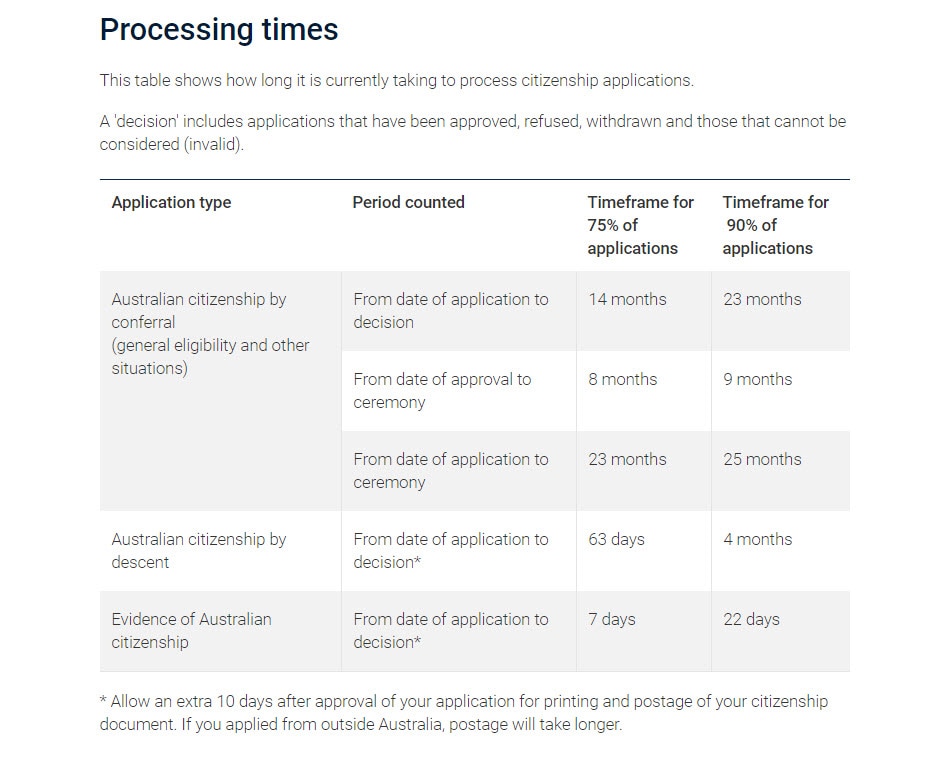
The latest processing times released by the Department of Home Affairs indicates the waiting period for Australian citizenship has shot up.

Compared to waiting period of 16 months, from date of application to ceremony, in June 2019, the average waiting period for 75 per cent of applicants has shot up to 23 months from date of application to ceremony in April 2020.

Australian Citizenship PRocessing times April 2020

The latest processing times released by the Department of Home Affairs indicates the waiting period for Australian citizenship has shot up.
Department of Home Affairs

“Due to the health risks, all face-to-face citizenship appointments, such as interviews and citizenship tests, have been placed on hold. This has meant an increase in overall processing times,” the spokesperson said.

“The Department will recommence in-person interviews and citizenship tests when it is safe to do so.

“New applications for Australian citizenship are still able to be accepted during this period.

“Processing continues for applications that do not require a face-to-face appointment. Processing also continues for lodged applications up to the point where an appointment is required so that the applicant will be able to undertake an appointment when it is safe to do so.”

Last month, as COVID-19 pandemic forced citizenship ceremonies to move online, Acting Minister for Immigration, Citizenship, Migrant Services and Multicultural Affairs, Alan Tudge said additional resources will be deployed once it is possible to resume tests and interviews.

‘Additional resources will be deployed to conduct testing and interviews as soon as social distancing measures to prevent the spread of COVID-19 ease,’ he said.

As of April 30, 2020, 117,958* applicants were still awaiting the outcome of their citizenship application.

India top source of Australian citizenship

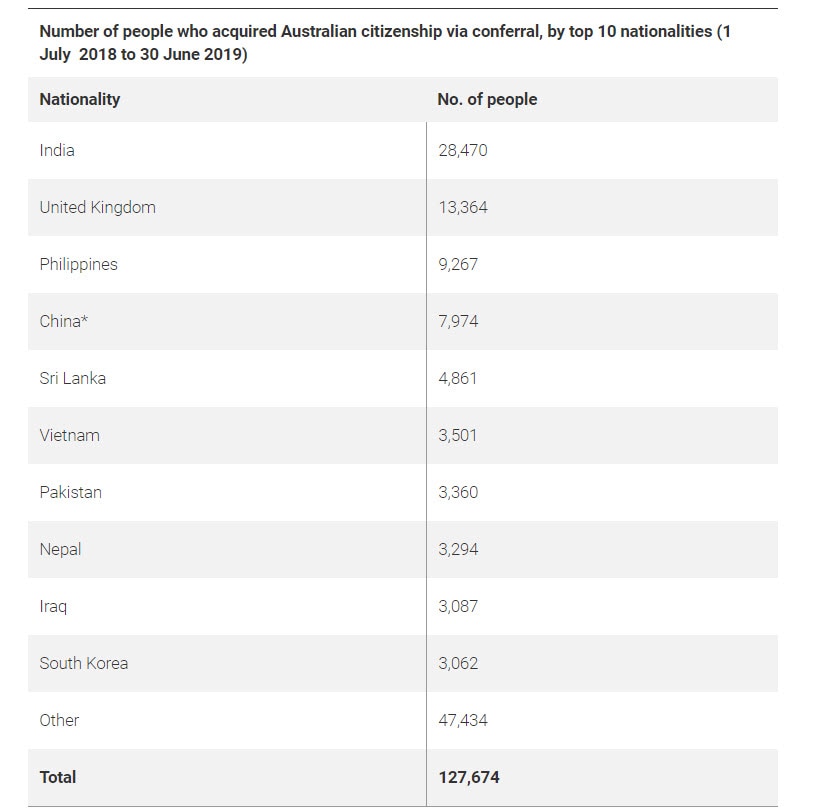
India has been the top source of Australian citizenship for the last two years, with over 28,000 Indian nationals becoming Australian citizens in 2018-19.

Source of Australian Citizenship 2018-19

Source of Australian Citizenship 2018-19
Department of Home Affairs

Indian-born applicants also top the list of visa recipients by country under Australia’s annual permanent immigration program.

Source: Australian citizenship approvals up by 56 per cent but waiting period shoots up

Canada’s COVID-19 blind spots on race, immigration and labour

Yet another article on racial and economic disparities and COVID-19. Nothing new here and perhaps a sign that governments just need to get on with collecting the data. Should be a role for CIHI in this:

The low-paid and precarious positions in industries that are considered essential during the COVID-19 pandemic (sanitation, health care, and those in the food supply chain) are filled with women, recent immigrants, and racialized Canadians. Many of these workplaces are notoriously plagued with exploitative labour practices that, in many ways, contributed to the spread of the virus in the first place. Recent immigrants and racialized Canadians, notably Filipinos and Sudanese Dinka, who work in these industries, for example, meat-packing plants in Brooks, High River and Balzac, Alberta, are at great risk of negative health outcomes during this pandemic.

And, yet, we do not collect the necessary data in Canada on the social determinants of health for racialized minorities. Stories from across the country paint a bleak picture. In April, a 40-year-old Haitian asylum seeker contracted COVID-19 while working as a personal support worker. He died in his home after having been denied refugee status. In Toronto, researchers have recently connected positive COVID tests to neighbourhoods characterized by a higher proportion of visible minorities and recent immigrants, poor housing and low income.

There have been numerous calls to gather disaggregated data on COVID-19, health and race. After initial reluctance, the federal government and some provincial jurisdictions are now considering collecting more demographic data. We join our voices to the call and argue that Canadian governments need data not only on race and health, but also on immigration status during this COVID-19 crisis and beyond.

While collecting data on race will show that people of colour are disproportionately affected by COVID-19, we know that not all racialized Canadians are equally vulnerable to being exposed to this disease. From our work in community health, and gender and politics, we know that despite the best intentions of epidemiological approaches to the pandemic, marginalized groups face barriers to accessing and benefiting from public services. In fact, recent research by the University of Lethbridge’s Eunice Anteh shows that in places like Brooks, newcomers’ health profiles will vary based on numerous factors, including gender, race, language barriers, and the health and social infrastructures in their settlement locations.

We need longitudinal data that intersects the usual factors – gender, age, education, income, for example – with race and immigration profiles to enable policymakers to better understand the pathways and structures that create hierarchies of vulnerabilities within racialized and newcomer communities. This will enable public health officials to work with other stakeholders in eliminating the institutional barriers to health equity for all within our borders.

Intersecting reasons why some are more vulnerable to COVID-19

In Quebec, disparities in COVID-19 infection rates are shaped by the intersection of race, gender, immigration, labour, and public health. Health care workers account for 20 percent of infections, and in the hard-hit Greater Montreal area, up to 80 percent of the aides in long term care facilities are racialized women, mostly Black and Maghrebi. Industries of care are feminized and undervalued despite being critical to preserving the health and safety of the population.

For years workers have complained about these institutions’ chronic understaffing, high patient-to-aide ratios, and unsafe working conditions. As occurred in other provinces, the government subcontracted public services to private entities, with limited public oversight, enabling these institutions to avoid paying employment benefits by privileging part-time over full-time work. This left many health care aides with no other choice but to work at multiple sites to make ends meet. These are the conditions that upended Quebec’s response to COVID-19.

In Alberta, the links between race, immigration, labour, and public health manifested themselves in the food supply chain. Over 1200 COVID-19 cases were linked to the Cargill meat plant. Seventy percent of employees are of Filipino descent, most of whom work as general labourers amongst the lowest-paid employees, and some who have spouses working as health-care aides in Calgary. Public health officials named carpooling and crowded living arrangements as contributing factors to the rapid spread of the virus but overlooked labour practices and socioeconomic conditions that lead to shared living and transportation arrangements in the first place.

The second-largest meat packaging plant in Canada, JBS, is also facing an outbreak. It is the main employer in the city of Brooks, Alberta. A third of the population there are visible minorities, mostly from East Africa, South Asia, and Latin America. Today, JBS employees account for approximately 26 percent of Alberta’s active cases, and over 6 percent of Brooks’ population, one of the highest rates across Canadian municipalities. These outbreaks revealed mistakes and oversight linked to concerns around the food supply chain and showed the price that racialized and marginalized workers pay due to neglect and prioritization of profit over safety.

Temporary foreign workers are also at risk

As the agricultural season enters in full swing and concerns grow about Canada’s food supply chain, we must take stock of employment inequities in how we treat temporary foreign workers (TFWs) and the implications for overall community health and wellbeing. For decades TFWs from the Caribbean and Latin America have taken on work that Canadian often refuse to do, generally because of long working hours, unsanitary bunkhouses, and low wages. Many of these workers are reluctant to speak out about their work conditions given the precariousness of their employment and residency status, which are both tied to their employers.

These conditions, like those of personal service workers or meat plant employees, are not new or even unique to Canada. Across the world, industrialized countries depend on temporary migrant workers to sustain their basic infrastructures. Around the world and in Canada, it is clear that the temporary migration of racialized individuals serves as the backbone of essential services in Canada. From the West Indian Domestic Scheme (1955) and the Caribbean Seasonal Agricultural Workers Program (1966) to our modern TFW program, the utilitarian approach to immigration and the neglect of these populations have resulted in systematic and deep-rooted inequities that weaken health and safety institutions.

A lack of political will to address neglect

Why do Canadians tolerate these types of working conditions that can become public health issues during a crisis like COVID-19? Is it because of who is overrepresented in these fields: female, racialized, and immigrant workers who struggle to get substantive political representation? Some in the broader society rationalize these challenges by saying that newcomers are better off here than where they came from. Others turn a blind eye altogether to these conditions.

In reality, we ignored the working conditions of racialized and immigrant workers who help sustain our health and food supply infrastructures, and way of life.

Yes, we need to gather COVID-19 related data on race and immigration to better address the needs of vulnerable communities that also tend to work in essential sectors. But going forward, we also need long-term changes to what we consider to be health-relevant demographic data.

Provincial healthcare professionals need to pay as much attention to collecting data on race and immigration profiles as they do in collecting data on gender, education, and income. This data needs to feed into national environmental population surveys that will allow public health officers to tie specific demographic markers to health status over time. It will paint a clearer picture of social, economic, and health disparities between various communities and point to needed improvements and progress. This will also enable provincial health officials to identify variations and gaps between federal and provincial jurisdictions. For example, while refugees are resettled and supported by the federal government, their access to health services is the responsibility of the provinces.

Finally, this data should then be the starting point for engagement between public health officers, immigration and labour policy-makers, and relevant stakeholders from relevant industries. Together, they can help develop more robust social and labour protection for racial minorities, newcomers and migrants. We need to be invested in the health and work conditions of racialized and immigrant populations in Canada, not only because, as COVID-19 has demonstrated, safety for them means safety for all, but most importantly because this is what this country says it stands for.

Source: Canada’s COVID-19 blind spots on race, immigration and labour

Desmond Cole’s book sparked deep conversations among teachers about racism. Where is the introspection in media?

I expect part of the reason has to do with the shrinking newsrooms and employment insecurity compared to the stable number of teachers and job security that provide more time for these discussions:

If there’s one thing The Skin We’re In by Desmond Cole makes clear, it is how integral racism is to Canadian life. It winds its way through the justice system, military decisions, child welfare, the education system and of course, the media, and leaves in its wake a trail of destruction for many, but particularly cruelly for Black, First Nations, Inuit and Métis people.

The burden of educating society always falls on those with the least — not just the least amount of wealth but the least social capital, too. The people society is accustomed to ignoring have to make themselves heard, be taken seriously and then force a change in behaviour. This is gargantuan cross-generational work, and Cole’s national bestseller, much like Robyn Maynard’s Policing Black Lives, is also an ode to that resistance.

One example of that resistance, the work of influencing change, that The Skin We’re In inspired, was a series of conversations among Ontario teachers.

Colinda Clyne, an Anishinaabe woman and curriculum lead at the Upper Grand District School Board, had read the book and appreciated how Cole wove together colonial history and anti-Indigenous racism with anti-Black racism. “There are many great resources to support one or the other, but not often together, and rarely with the Canadian context,” she said. Late in March, she sent out feelers to see if fellow teachers would be interested in a discussion based on this book, expecting a discussion involving about 10 people.

Instead, she ended up hosting a weekly panel titled “Anti-Racist Educator Reads” on VoicEd Radio, an educational broadcast/podcast site, with more than 500 listeners on the fifth and final week, May 13, that featured Cole himself. (For those who missed the discussions, the episodes are online.)

The people tuning in, Clyne said, were “mostly white educators with thoughtful reflections on the learning and unlearning they were doing with the book and our conversations, and the actions they were willing to commit to. It gave me a boost of hope for this anti-racism work in a way that I have not felt in a long time.”

The discussions ran deep, including the impact of police presence in schools, how Canada’s “humble colonialism” plays out in society and schools, what ignorance on racism looks like and the easily dismissed but vital role of anger to bring about change.

A sketch note by educator Debbie Donksy of a panel discussion of Anti-Racist Educator Reads that aired April 22 on VoicEd Radio in which curriculum lead Colinda Clyne hosted Camille Logan, a superintendent of education, and Kevin Rambally, a social worker and former chair of Pride Toronto.

I listened with envy to these conversations between Clyne and other leaders in anti-racism education from various Ontario school boards such as Debbie Donsky, Pamala Agawa, Melissa Wilson, Tisha Nelson and Camille Logan.

The education system is nowhere near where it should be in terms of nurturing all students with care. But teachers are at least engaging in these critical and uncomfortable reflections. Clyne also seeks an action that teachers can commit to. While I’m not one to pat people for being at the “at least it’s a start!” stage, I raise it to make the point that other sectors are not even there.

A case in point is my own industry. Journalists are duty bound to demand accountability — but this is rarely focused inward. Race and attendant issues are an extra or an “inclusion” issue, maybe even as a new-fangled lens of discussion that could bring in new audiences. It’s why solutions look like hiring a journalist of colour or two, using images of racialized people to suggest representation or speaking to a few sources of colour.

As a journalist, Cole makes extensive references to media in his book. Of course, he mentions his fallout with the Toronto Star. His blunt reporting on CBC and CTV reporters’ rude — and chiefly arrogant — questioning of Indigenous elders and activists at a 2017 press conference on the inquiry into Missing and Murdered Indigenous Women and Girls in Canada (MMIWG), should at least make every journalist squirm.

But I don’t hear of critical inquiry-based collective reflections in newsrooms based on that or on Cole’s highly contextualized reporting of Black Lives Matter shutting down the Pride Parade in 2016. For instance, “What role did white supremacy play in guiding our coverage on it?”

Or, “Did media, with our overwhelming whiteness, have the authority or even a balanced perspective in declaring the MMIWG inquiry’s conclusion of genocide as wrong?” Or, “Whose voices did we privilege in the Wet’suwet’en pipeline protests?”

No, journalists are supposed to be a bunch of eye-rolling cynics, the know-it-alls above self-reflection. There are, after all, “real” crises to be dealt with every day. Discussions on racism are usually held among journalists of colour, on the sidelines to the main business of journalism. In newsroom after newsroom, these journalists tell me, they struggle to be heard.

That explains why it’s taken weeks after Canada was hit by the global pandemic for media to start waking up to who was most badly hit — Indigenous and racialized people — and that too after relentless advocacy by rights groups and by the bravery of those risking everything to tell their stories.

In education, too, one of the issues raised through the VoicEd Radio episodes, “are the barriers constantly put in place in our systems, a big one being denial of white supremacy and that folks ‘aren’t ready’ to have the conversations and do the work of anti-racism,” Clyne said.

It’s worth reflecting, across sectors, on who these folks who aren’t ready are, and why, when lives are at stake, we feel compelled to wait for them at all.

Source: Shree ParadkarDesmond Cole’s book sparked deep conversations among teachers about racism. Where is the introspection in media?

Advocate warns new agri-food pilot is inaccessible for many critical migrant workers

I would reserve judgement until we see how the program works or doesn’t work in practice. As a pilot, it allows the government to test the approach and adjust as necessary, as it did with The Atlantic Immigration Pilot (now no longer a pilot)”

The federal government’s new agri-food pilot program gives too much power to employers and won’t be accessible for labourers hoping to gain permanent residence status, migrants workers’ advocates say.

Applications for the long-awaited pilot opened on Friday, after being delayed for some months amid the COVID-19 pandemic. Syed Hussan, the executive director of the Migrant Workers Alliance for Change, said the pilot is a “slap in the face” to migrant workers who have been deemed essential during the coronavirus shutdowns, and now can’t access a pathway to citizenship due to the program’s stringent requirements.

“By and large, it’s not a program that’s designed to work for the people,” Hussan said in an interview with iPolitics. “It’s an employer-driven program that the vast majority of workers won’t be able to access.”

The three-year pilot was presented by Immigration, Refugees and Citizenship Canada as a way to help employers in meat processing, mushroom and greenhouse production, as well as livestock-raising, by providing a pathway to permanent residence for temporary foreign workers who are already in Canada. The department said a total of 2,750 applications will be accepted annually throughout the pilot.

But Hussan pointed to the education and language testing requirements for the program, which he believes that migrant workers won’t be able to access.

The program requires applicants to have either a Canadian high school diploma or an educational credential assessment report, from a designated organization or professional body, that shows they’ve completed a foreign credential at the secondary school level or above. The workers must also meet minimum language requirements: a level four in the Canadian Language Benchmarks of reading, writing, speaking, and listening. The test must be considered approved, and no older than two years.

Keith Currie, vice-president of the Canadian Federation of Agriculture, acknowledged the language and education requirements may need to be adjusted as the pilot is studied. Unlike the Temporary Foreign Workers program, which is another avenue for migrant workers to access employment in Canada, he noted that the pilot requires the same language and education testing necessary for those seeking full citizenship.

“We just want to make sure that things, rules aren’t too stringent to make it viable for workers to stay,” he said.

Applicants also must prove they have enough money to settle in Canada, eligible work experience, a minimum of 1,560 hours of non-seasonal, full-time work in the past three years, and a job offer letter.

Hussan told iPolitics that many migrant workers come in and out of Canada, and therefore may not be able to meet the hours requirement, which are to be counter over a total period of at least 12 months. As well, he said the job offer requirement will exacerbate employers’ power, claiming that the measure hasn’t been used in federal immigration programs before. Such criteria exists in some provincial regulations though, he said, adding that they’ve proven problematic in some instances.

“We’ve seen multiple examples of employers use these job offers to stop workers from speaking out,” he said.

Currie said he hadn’t heard any complaints about the requirement to have a job offer letter, and said it made sense that the federal government would want to ensure applicants had employment waiting for them. Agriculture producers, he said, were welcoming the program and had advocated for its introduction. Many seasonal workers returned year after year, he said, or sent their children or grandchildren.

“They’re beginning to almost be like family to some of these operations,” he said.

Currie also said the program will help shore up the agriculture sector’s labour needs, where tens of thousands of labour jobs go unfulfilled each year.

In June, the Senate committee on agriculture and forestry released a report forecasting a worsening of farmers’ difficulties with finding workers.  The report referenced testimony from the Canadian Agricultural Human Resource Council in saying the country’s agriculture sector was short 59,000 workers in 2019 — a figure that could reach 114,000 by 2025.

Minister of Immigration, Refugees and Citizenship Marco Mendicino said in a release that the pilot aimed to attract applicants who could establish themselves in Canada, while supporting the labour needs of farmers and processors.

“It’s very important that we support our farmers and food processors to make sure they have the workers they need to help strengthen Canada’s food security,” he said.

But Hussan stressed that migrants who make up a critical part of Canada’s agricultural workforce should be valued for the contribution they made to the sector — and claimed the government had skipped over migrant advocates’ organizations in their consultations and assessments within the agricultural realm.

“Canada clearly needs these workers,” Hussan said. “The program should be designed with them in mind.”

Source: Advocate warns new agri-food pilot is inaccessible for many critical migrant workers

Saudi Arabia is buying shares of Alberta’s oil sands companies. The ‘ethical oil’ argument is dead.

As I worked with a number of those mentioned in the article, couldn’t resist reposting this. Alykhan Velshi, a really bright guy, has of course in a further irony, ended up shilling for Huawei despite the overall Conservative suspicion of China:

When Norway’s massive pension fund announced that it had sold its positions in major Canadian energy companies like Suncor and Canadian Natural Resources, Alberta’s premier came out swinging. “To be blunt,” Kenney told reporters last week, “I find that incredibly hypocritical.” After all, he said, Norway continues to develop its own oil and gas resources, including the 2.7 billion barrels that are contained in the new Johan Sverdrup field that is already producing 430,000 barrels of oil per day.

For those of a less pugilistic orientation, Norway’s decision might be seen as a prudent act of financial diversification; one that Alberta could easily emulate if it wanted to. If Norway is already producing oil and benefitting from the tax revenue and jobs it creates, there’s no need for them to double down by also investing their one-trillion-dollar nest egg in companies that also depend on the price of oil. This isn’t a philosophy that’s particularly popular in Alberta, mind you, given Alberta Investment Management Corporation’s well-documented history of being more heavily exposed to the energy sector than other pension funds.

But while Kenney was quick to call out Norway’s alleged hypocrisy in selling their shares of oil sands companies, he has so far remained silent about the news that Saudi Arabia’s Public Investment Fund was busy buying them. As Bloomberg reported last week, it now owns 2.6 per cent of Canadian Natural Resources, and two per cent of Suncor, which makes it the eighth and 14th largest shareholder in the two companies respectively. Ironically, it also added to its position in Equinor, the Norwegian company that’s developing the Johan Sverdrup field.

As Premier, Kenney has been at the forefront of recent efforts to paint Canadian oil and gas as more “ethical” and therefore more worthy of investment. This narrative, which was first advanced by Ezra Levant, has been deployed most visibly in the conversation about the Energy East pipeline and the decision by New Brunswick’s Irving Refinery to buy its oil from Saudi Arabia rather than Canada. But Kenney’s affiliation with it goes back much further than that. It was his former director of communications and parliamentary affairs, Alykhan Velshi, who created the “Ethical Oil Institute” in July 2011, and his former executive assistant, Jamie Ellerton, served as its executive director between January 2012 and April 2013.

Kenney is hardly alone in his fondness for Levant’s narrative, though. Its core tenets—namely, that Canada’s legal, environmental and regulatory standards make our oil more inherently virtuous—are practically articles of faith in the oil and gas industry. In an interview with the Calgary Herald, Nancy Southern, the CEO of Atco and a founding member of the Business Council of Alberta, was quick to invoke it: “I think it is time for people to stand up and demonstrate true moral leadership about the fact that the world is better because of petroleum products,” she said.

But if Saudi Arabia’s oil is a conduit for its anti-democratic and values, as ethical oilers like to argue, then what about its money? That money comes from the sale of its own ethically-challenged oil. Suncor and Canadian Natural Resources can’t prevent Mohammed bin Salman or the Saudi Public Investment Fund from buying their shares, but those who have been more than happy to bang the drum about Saudi Arabia’s moral and ethical failings could speak up here.

So far, though, they’ve been conspicuously silent. Take Eric Nuttall, a fund manager with Ninepoint Investments and a frequent purveyor of the ethical oil narrative. In a recent tweet, he sounded positively delighted by the development, and made no mention of the ethical dimensions of Saudi Arabia’s money. “So much for Canadian oil companies not being attractive to foreign investors!” He wrote. “We are 100 per cent invested in Canada given highly attractive valuations and improving takeaway capacity and it’s interesting that Saudi Arabia agrees with us.”

In fairness to the industry, it’s hardly alone in speaking out of both sides of its mouth about Saudi Arabia. The federal government recently renegotiated a $14 billion deal that will allow the sale of Canadian-made light-armoured vehicles to the kingdom (a deal that was originally struck by the Harper government back in 2014). And MBS hasn’t been shy about using Saudi Arabia’s wealth to buy its way into companies and communities throughout the west, including a recent bid to buy the English Premier League’s Newcastle United football club.

But if Canadian oil and gas companies are going to accept Saudi Arabia’s money, it’s probably time for their proxies to retire arguments about the immorality of their oil. After all, as Jason Kenney will tell you, nobody likes a hypocrite.

Source: Saudi Arabia is buying shares of Alberta’s oil sands companies. The ‘ethical oil’ argument is dead.