Scheer says he would continue Liberals’ $45M anti-racism strategy

Unfortunately, behind the paywall but nevertheless interesting.

Of course, if we judge by the previous Conservative government, which drastically reduced the resources dedicated to multiculturalism and anti-racism programming (The Conservative legacy on multiculturalism: more cohesion, less inclusion):

The Liberal government’s $45-million anti-racism strategy isn’t going anywhere under a Scheer government, the Conservative leader says.

Asked by a reporter in Thorold, Ont., on Tuesday whether he supports the anti-racism plan put forward by the Trudeau government this year, and the approach it is taking, Andrew Scheer said he would continue to back such programs.

Source: Scheer says he would continue Liberals’ $45M anti-racism strategy

Terry Glavin: Apparently blind spots extend to supporters of Syrian mass murderers

Full credit to Terry for having provided Syrian Canadians with a voice that forced government to reverse its decision:

Well, that’s done then.

That creepy fella who’s been driving around the streets of Montreal in a gigantic bright red Humvee with a 1Syria custom licence plate and a portrait of Syrian mass murderer Bashar al-Assad on a side window has finally fallen out of favour with the Liberal Party of Canada.

Waseem Ramli is now expunged from the party’s digital fundraising rolodexes. Banned from further photo opportunities with the dashing Justin Trudeau, and struck from the first-class invitation lists maintained by the embarrassed staffers who toil for Marc Miller, Liberal MP for Ville-Marie—Le Sud-Ouest—Île-des-Sœurs.

And thanks to the exasperated last-minute interventions of Foreign Affairs Minister Chrystia Freeland — who is ordinarily smart enough not to get caught up in this kind of thing — the Baathist fanboy proprietor of the Cocktail Hawaii restaurant over on Rue Maisonneuve will not be entrusted, after all, with the delicate and confidential consular affairs of tens of thousands of Syrian immigrants and refugees who have fled Assad’s bloody nightmare state and ended up refugees, something like 60,000 of them, in Canada.

Waseem Ramli is now expunged from the party’s digital fundraising rolodexes

Blindsided badly by the Office of Protocol in her own Global Affairs bureaucracy, Freeland was furious with the revelation (yes that was me, I confess) in Maclean’s magazine on Monday that the colourful Mr. Ramli, Montreal’s notorious advocate of the world’s most thoroughly blood-soaked pariah state, had been greenlighted, duly authorized and credentialed by her own department to serve as honorary consul of the Syrian Arab Republic in Montreal.

Might it have been the poster-style photograph of Ramli and Trudeau that had been making the rounds after first appearing on Ramli’s Facebook page a few weeks ago? Was it the photograph of Ramli with Marc Miller from that same June 17 Liberal party “armchair conversation” fundraising event in Montreal? Is it not just possible that the Global Affairs’ authorization of Ramli was the result of a certain poor schmuck in the Office of Protocol who thought, “hey, he must be a good guy, a made guy, right?” Or maybe, “hey, I better just stamp this guy’s papers, because if I don’t, I’ll have the Prime Minister’s Office breathing down my neck, right?”

Everybody makes mistakes. I make mistakes. Sometimes I file so late past my deadline I wonder why my editors still put up with me. I’ve never put on a woolly black wig and painted my face and hands and arms and legs black and jumped around with my tongue wagging out of my head, mind you. But to be fair to Trudeau, there is one explanation he’s offered for the serial blackface and brownface spectacle he’s made of himself over the years, which we are only now learning about, that makes some sense, in this particular context.

It’s this one: “I have always acknowledged that I come from a place of privilege, but I now need to acknowledge that comes with a massive blind spot,” he said.

Maybe he’s got some sort of blind spot, which similarly afflicts his old friend and fellow Montrealer Marc Miller, when it comes to people whose faces are vaguely brown. Maybe that would explain why Miller has had several friendly encounters with the generous Waseem Ramli over the years and yet somehow remained blissfully unaware of the eccentric restaurateur’s unseemly affiliations and the dread he instilled in Montreal’s Syrian refugee community.

Ramli tells me he’s not a Liberal party member. He was content to shell out several hundred dollars to attend that June 17 fundraiser and photo session with Trudeau, and he declined to tell me how much he’s contributed to the Liberal party, or to Miller’s war chest, over the years. As is his perfect right. And maybe it doesn’t have a damn thing to do with money. Marc Miller is not a bad man. He’s a genuinely decent guy. Maybe it’s just about votes, and the blind spot here is the thing some politicians imagine about votes coming in distinct colours. There certainly is a pattern, anyway. Sometimes it’s like déjà vu.

In the lead-up to the past federal election, some strange sort of blind spot afflicting the soft-palmed and the posh, or people with “privilege” as they now classify themselves, may well have been at work in the way nobody in the Liberal party noticed anything untoward about the affiliations of the party’s own national director of outreach, who went on to become a greenlighted contender for the Liberal candidacy in Nepean.

Foreign Minister Chrystia Freeland… has overturned the approval of Montreal businessman Waseem Ramli, a supporter of Syrian President Bashar al-Assad, as Syria’s honorary consul in Montreal. Sebastien St.-Jean/AFP/Getty Images

Nour El Kadri, it turned out, was so intimately associated with the Syrian Social Nationalist Party that the SSNP’s cadre and literature had consistently and invariably described Kadri as one of the SSNP’s central leaders in Canada. And the SSNP, it fell to me to point out back then, was at the time a component of Bashar Assad’s ruling coalition, and its death squads were terrorizing the city of Homs and the suburbs of Damascus. You’d think a party with its own stylized swastika and an anthem sung to the tune of Deutschland, Deutschland Uber Alles might have been a giveaway.

But there’s that blind spot again.

And so those poor, banished children of Eve, the Syrians trudging the roads of the world in their millions, among whom some paltry few thousand have been permitted to settle in Canada, and it is their place to tell us how lovely we are for allowing them in, and this is the sort of thing they see. A Humvee, of exactly the kind that the Shabiha drive around Damascus, at night, and the horror stories of kids who never made it through their checkpoints, and now here in Canada a bright red one, with a portrait of Bashar on the side, in the streets of Montreal. And it becomes unbearable, and they make a telephone call to some journalist they know. And they ask whether something might be done about their dread, and they fear they would be seen as insufficiently appreciative of the handsome and dashing prime minister who built his reputation on being so kind to them, the man who so generously allowed them to come, if they complained too loudly. And they ask, please, don’t use my name, because they are afraid of the man in the Humvee.

Hell of a blind spot to fail to see the shame and the disgrace in that.

Source: Terry Glavin: Apparently blind spots extend to supporters of Syrian mass murderers

‘Afraid We Will Become The Next Xinjiang’: China’s Hui Muslims Face Crackdown

More on Chinese repression of religious minorities:

Gold-domed mosques and gleaming minarets once broke the monotony of the Ningxia region’s vast scrubland every few miles. This countryside here is home to some of China’s 10.5 million Hui Muslims, who have practiced Sunni or Sufi forms of Islam within tight-knit communities for centuries, mainly in the northwest and central plains. Concentrated in the Ningxia region, the Hui are China’s third-largest ethnic minority.

Now, though, virtually every mosque in Ningxia’s countryside has been denuded of its domes, part of a sweeping crackdown on China’s Muslim minorities that has reached Hui strongholds in Ningxia, in central China, and as far inland as Henan province in the east. (Up to now, Gansu province in central China has been able to keep most of its mosques intact.)

The crackdown on Muslims has been most extreme in the northwestern region of Xinjiang, where scholars estimate that up to 1.5 million Muslim Uighurs, a Turkic-speaking group, and other ethnic minorities have been detained since 2016, in one of the most sophisticated surveillance states in the world.

The same restrictions that preceded the Xinjiang crackdown on Uighur Muslims are now appearing in Hui-dominated regions. NPR has learned that since April 2018, Hui mosques have been forcibly renovated or shuttered, schools demolished and religious community leaders imprisoned. Hui who have traveled internationally are increasingly detained or sent to reeducation facilities in Xinjiang.

In August 2018, in Ningxia’s Tongxin county, authorities attempted to demolish the Weizhou Grand Mosque, claiming it lacked the right building permits. Hundreds of furious residents staged a sit-in, sharing videos of their protest through popular Chinese social media platforms like WeChat and Kuaishou, a live-streaming app, faster than censors could take them down.

Taken aback, officials called off the demolition. But the victory was short-lived. In November, local government work units began visiting every household in Weizhou, pressuring residents to sign letters stating their acquiescence to “renovate” the mosque by removing its main dome and domed minarets. In some cases, Weizhou officials threatened to fire state employees if they did not sign the letter, according to multiple residents.

This month, NPR drove through Weizhou, which is now guarded by checkpoints on the only road leading in and out of town. The mosque is closed, its main dome and minarets replaced with tiled Buddhist-style pagodas, and its entrances blocked by scaffolding.

“Of course we are afraid we will become the next Xinjiang,” one Hui man told NPR. He did not provide his name for fear that authorities in Xinjiang would find him. Three years ago, he abandoned his family’s property in Xinjiang in order to transfer his residency to Tongxin county. “But what can an individual do? We can only take it year by year.”

“We say what we have to say”

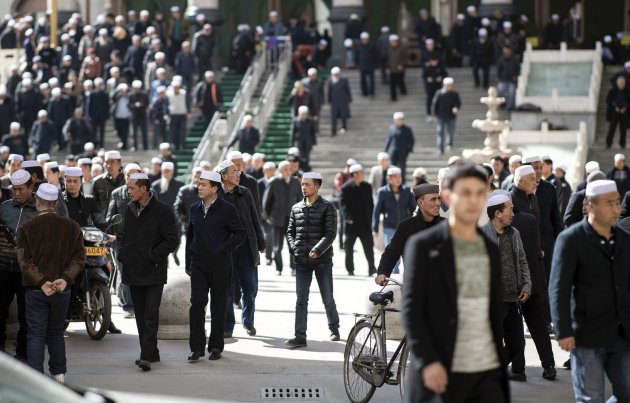
Descendants of Arab traders who entered China some 1,500 years ago, the Hui pride themselves on having thoroughly assimilated into Chinese society. Unlike the Uighurs, the Hui have no distinct language, speaking Mandarin and often some Arabic. Save for the occasional white cap customarily worn by Hui men or hair coverings among women, they are often visually indistinguishable from China’s ethnic majority, the Han.

Their exemption from the harshest of religious restrictions changed in April 2018, when the Chinese Communist Party’s United Front Work Department formally took control of the State Bureau of Religious Affairs — meaning that the party now directly oversees policy for religious affairs, not the government.

“The day-to-day responsibility for managing religious activities and organizations shifted to the UFWD, and its atheist party apparatchiks, whose overarching mission is the protection of party power,” James Leibold, an associate professor at Australia’s La Trobe University and an expert on China’s ethnic minority policy, tells NPR via email.

That same April, a mass dome-removal campaign began in Zhengzhou, the capital of Henan province in central China, and resumed in Ningxia as part of the official effort known as chu shahua, fan ah’hua, to “combat Saudi and Arabic influence.”

All Hui-run nursery schools, child care centers and religious schools were forcibly closed in Ningxia and across Yunnan and Henan provinces, which are also home to a large number of Hui Muslims.

The United Front’s new control over Chinese ethnic and religious policy marks a substantial change, says Leibold. While the State Bureau of Religious Affairs was sometimes restrictive, it at least “saw the protection, if not promotion, of ‘normal religious activities’ as part of their mission and mandate, and many of its officials were religious practitioners themselves,” he says in his email to NPR.

Abroad, the United Front is the party body that liaises with international nonstate individuals and organizations. Domestically, the United Front has emerged as one of the most aggressive proponents of stripping away foreign influences within religious practices and bringing them under state control — making them more Chinese, a process known as “Sinification.”

“Sinification of religion in China is an important discourse of Party General Secretary Xi Jinping on the problem of religion and religious work,” Ma Jin, a United Front official, told the Islamic Association of China, a state-backed organization, in January.

“This recent crackdown on the Muslim activities is really a part of a national campaign of China today to correct what they believe are the excesses in permitting Arab-style mosques … and influence by the Middle East. The Salafi and Wahhabi groups have been pouring money in China,” says Dru Gladney, an anthropologist at Pomona College and an expert on Hui Muslims. “These restrictions through UFWD are part and parcel of government efforts to control Islamic practices, to make them more Chinese.”

In Xinjiang, Uighur-language books and films have been expunged, Uighur intellectuals imprisoned, and Uighur children sent to state-run schools to be taughtMandarin Chinese and culture.

For the Hui across China, mosques have become the major vehicle for Sinification. In April 2018, authorities began revoking the state-issued licenses given to imams who have residency outside the province in which they practice and from those who have studied abroad. In Ningxia, smaller mosques without licensed imams have been closed outright.

Ningxia sent senior leadership delegations to visit Xinjiang’s detention camps last November and signed a counterterrorism cooperation agreement with Xinjiang a month later.

Like many mosques, the Huarenjie mosque in downtown Zhengzhou, Henan, is now monitored around the clock through a network of surveillance cameras installed last year by the local public security bureau.

Emily Feng/NPR

Imams in Henan and Ningxia must now attend monthly training sessions that can last for days. There, imams told NPR, they are taught Communist ideology and state ethnic policy and discuss Xi Jinping’s speeches. Imams must then pass an exam testing their ideological knowledge in order to renew their license each year, mirroring how the government issues licenses to imams in the Xinjiang region.

“We go along with it. We say what we have to say, because it is just words, and it lets us continue to work in the mosque,” said one of the few imams still based in Henan, requesting his name be kept anonymous because of fears of political reprisal.

Fears of Saudi influence

Mosque employees say orders to demolish mosque domes and minarets are transmitted orally from local officials citing the United Front, with no written notice. The demolitions are swiftly executed at night, to avoid protests and video documentation.

“We ourselves do not even have the documents. [The United Front] takes them back at the end of each meeting,” a local Henan official says in a recording NPR listened to of a meeting between local officials and employees at a mosque whose domes were removed after the meeting.

“Party organs like the UFWD work outside the state legal system and thus have far greater power than the state bureaucracy and are not required to report back to the State Council,” the equivalent of China’s cabinet, says Leibold.

Others say officials are looking to avoid the attention that mass mosque demolitions and detentions of Muslims in Xinjiang have attracted.

“Local officials learned from Xinjiang. They know that by aggressively restricting people in obvious ways, like constructing detention centers and leaving written evidence, they might create resistance,” Tianfang, the pen name of a prominent blogger critical of China’s religious policies, told NPR.

The crackdown on China’s Hui Muslims is in part driven by the government’s fears that fundamentalist strains of Islam like Salafism and Wahhabism are filtering into China by way of Hui students who study in Saudi Arabia and Pakistan and through private religious foundations on the Arabian Peninsula that have funded some Hui social enterprises and mosques.

Signs of Saudi influence, including Arabic script, are being removed across China. Hui women in Henan and Ningxia provinces say they are no longer allowed to wear the head-to-toe black abaya customary to Saudi women, and Hui shops say they no longer stock Saudi-style clothes for men or women.

Imams suspected of preaching Salafism are also promptly removed. One of them, Han Daoliang, was the imam at Huarenjie Mosque in Zhengzhou, Henan province’s capital, according to mosque attendees. Han raised his hands three times during prayer instead of just once, they said, marking him to Zhengzhou officials as a Salafi adherent.

Hui tombstones inscribed in Arabic outside Xiaomagou Mosque in Zhengzhou, Henan.

Emily Feng/NPR

Forced by local officials to resign this year, Han is now living in Malaysia, according to acquaintances. His former mosque has been given a state-appointed imam. According to a new plaque and mosque employees, the house of worship is now run by a new committee appointed by the state, with a board including two non-Muslim government officials.

“Sweep away the black and root out evil”

The crackdown on Hui Muslims is backed by a national anti-corruption effort launched by the government in 2018 to “sweep away the black and root out evil.” Posters exhorting residents to “sweep away the black” are now ubiquitous in Chinese cities and such slogans have been scrawled in graffiti on village walls.

Among the crimes the campaign targets is using “religious connections at villages and townships to form mobs,” according to implementation guidelines published late last year. State media reports say 6,885 “black and evil” criminal organizations were taken down under the campaign as of January.

The “sweep away the black” campaign has also decimated power bases outside the Communist Party structure, including among religious communities. Hui communities are now told that unauthorized religious events or proselytizing are considered gatherings of “black” forces or “underworld forces.”

Those unauthorized gatherings include Islamic schools run by Hui mosques, nearly all of which have been closed across China, particularly in Henan and Ningxia, according to residents in Henan, Ningxia, Yunnan and Gansu provinces. NPR visited multiple former Islamic schools in September, several of which looked as if they had been cleared in a hurry — with dusty bedding piled on dormitory beds and chipped dishes and other kitchenware stacked haphazardly in corners.

All taught Arabic language and some Islamic doctrine, but some are run more like vocational schools or social welfare schools for students who might be otherwise ineligible or unable to afford an education.

“We barely taught any Islamic doctrine. It was about making sure these children were educated and would not become criminals or radicalized,” said a former teacher surnamed Ma, who did not want her full name used for fear of political reprisal.

She had taught at an Islamic school in China’s southwestern Yunnan province, which closed last April. The school had stayed open despite orders in 2014 to expel all non-local students, particularly those having residency status in Xinjiang.

Ma was interrogated by police about the school’s curriculum and whether the school was distributing drugs. A common stereotype about ethnic minorities in China is that they sell drugs. One of her colleagues was held incommunicado for three days and subjected to “thought work,” or ideological training, Ma says.

Rewards for reporting suspicious behavior

In Ningxia’s Tongxin county, a rare female-only Islamic school once renowned across China’s northwest is being readied for demolition after it was shut down last April to make way for residential development.

“It is the government’s policies. Who knows if they will change and when?” one of the school employees told NPR in hushed tones. She withheld her name because of the sensitivity of the matter.

Hui residents of Tongxin say local officials are now offering rewards between $700 and $2,820 to those who report suspicious religious behavior, such as proselytizing Islam or secretly teaching Islamic texts. Some male mosque attendees have begun wearing cloth masks covering the lower half of their faces when attending daily prayers to avoid identification.

Hui who have performed the Hajj, the Islamic pilgrimage to Mecca, fall under particular suspicion. Last year, a group of about 20 pilgrims was detained in Saudi Arabia for having the wrong visas before being sent back to China, according to two people with friends in the group. Two Hui pilgrims with residency in Xinjiang were promptly sent to low-security Xinjiang detention facilities, according to the two people with friends in the group.

“Unbearable” pressure

NPR found evidence of significant pushback from Hui seeking to delay or avoid implementing religious restrictions. Hui say they drag out orders to demolish mosque domes, and some students continue to secretly attend religious classes, despite shuttered schools.

In Henan, NPR came across one mosque in the process of “renovating” its dome by building a cover to shield it from view, a compromise between local officials who demanded its removal and nearby Hui residents who refused to do so. Mosque employees were also installing translucent plastic Arabic calligraphic inscriptions on the mosque walls – nearly invisible to all but true believers – to satisfy demands that they remove all Islamic symbols and Arabic script.

Hui Muslim men leave the Laohuasi mosque after Friday prayers in Linxia, Gansu province, in March 2018. Gansu so far has been able to keep most of its mosques intact while domes and minarets of mosques in other provinces have been altered or removed.

Johannes Eisele/AFP/Getty Images

“The Hui people have been through one storm after another, and this is a storm that will pass,” the mosque’s imam told NPR. “Who knows how the political environment may change? We do not want to spend money to tear our dome down, only to have to pay to build it up again next year.”

Fearing the worst, some younger Hui Muslims are looking to leave China and have emigrated to Malaysia and Dubai in the past few years.

“The pressure on not just one’s religious behavior, but how one lives one’s daily life, is unbearable,” said a young Hui man from Ningxia surnamed Tian, who did not want to use his full name for fear of being punished for talking to a foreign journalist. “It weighs on your chest.”

Ma Ju, a leader in a Sufi sect of Hui Muslims, left China for the United Arab Emirates in 2009 because of his outspoken criticism of religious restrictions in Xinjiang. This year, he fled to the United States, because the UAE has an extradition agreement with China.

“The oppression I saw inflicted on Tibetans 20 years ago and the Uighurs 10 years ago, has finally reached my people,” he says.

Ma Ju worries for his community back in China, especially now that technological tools like facial recognition make evading restrictions in China nearly impossible.

“You have legs, but you can’t run away,” he says. “You have money, but it’s of no use. You have a heart, but you cannot lift yourself up. This is a new kind of repression.”

Source: ‘Afraid We Will Become The Next Xinjiang’: China’s Hui Muslims Face Crackdown

The test said they were good enough to get in, but they were failing in class. How Niagara College tackled an international student crisis

Second part of the Star’s series on international students. Hard not to see this as an exploitative business model:

The view from the Niagara Falls motel is hardly the slice of Canadiana the students expected.

They travelled from their homes in India, anticipating the Canada portrayed in Niagara College marketing materials, complete with a roaring falls and vibrant green vineyards — the perfect setting to lay the foundation for a better life.

Instead, these Niagara College students, living in cramped rooms, look out on a pool, in the centre of the motel parking lot, and a little wedding chapel. The only roar is from the steady rumble of traffic along Lundy’s Lane, not far from the bric-a-brac of the Niagara Falls tourist district.

The Rockwell Resort is far from a holiday haven, but it is cheap — about $300 a month per student, sharing with one to three others.

Money is tight. International students attending Niagara College pay at least $13,000 a year in tuition, compared to an average of $4,400 for domestic students. Some Rockwell residents say they subsist on as little as a piece of fruit and a cup of tea for breakfast before heading off to the Welland campus, a 20-minute bus ride away.

“I tell you, for the first four or five months here, I cried almost every day,” says Nikhil Desai, a 21-year-old second-year international business student from India’s Gujarat state, who has lived at the Rockwell for more than a year.

“Everything I was told about Canada, about being here, about living here, turned out to be the opposite. Completely opposite. But I can’t go back. There is no going back for us.”

Last year, Desai was part of the largest cohort of international students ever enrolled at Niagara College — 4,100 students out of a total of over 11,000.

More than 2,900 of those students were from India, and hundreds of them couldn’t cope academically in English. The sheer volume of struggling students triggered a crisis on campus, raising doubts about the credibility of international English-language admission tests. In response, the school’s administration ordered hundreds of students here and overseas to be re-evaluated for language proficiency and shifted its admission policies, including drastically reducing the number of new students from India. Other colleges have reacted by retesting their own international students.

A months-long joint investigation by The St. Catharines Standard and the Toronto Star found international enrolment in Ontario colleges has risen dramatically in the past five years, and that unprecedented growth has left students feeling overwhelmed and educators frustrated. In the case of Niagara College, these challenges manifested themselves in a situation one teacher described as a “nightmare.”

College president Dan Patterson says in an interview it was a “bump in the road” the school is managing.

“One of the things we pride ourselves on is the fact that if something goes off the tracks, we work very hard to correct it,” Patterson says. “Niagara College has been at this for 25 years, we’ve got support systems and invest in a lot to ensure the experience is good. And when it isn’t, we are going to find out what we can do to help. That is part of our DNA.”

After more than 400 students from India were re-evaluated for language proficiency, Niagara offered an English course to more than 200 Indian students who scored poorly, but most declined and opted to stay in their programs. Many stopped coming to class, according to six college teachers who spoke on condition of anonymity because they fear reprisals from the school’s administration.

One teacher says in the fall of 2018, there were about 50 students in a class, the vast majority from India. Most scored less than 10 per cent in their final grades, the teacher says. When the second semester began, only a handful of students were left in that course.

Despite absences, the Indian students remained enrolled, with some having moved on to the second year of their program, according to Steven Hudson, Niagara College’s vice-president of academics.

“As teachers, we want to see our students succeed,” says Ravi Ramkissoonsingh, president of OPSEU Local 242, which represents Niagara College faculty. “But there seemed to be very little chance of these students succeeding. And if they don’t, what becomes of them?”

The crisis at Niagara College came four years after changes to Canada’s immigration policies made a Canadian education more attractive to international students. As part of Ottawa’s strategy, students who graduated from an officially recognized Canadian school would earn points toward achieving permanent residence status.

Demand for admissions exploded in India, feeding a significant expansion of coaching centres designed to teach students how to pass critical English-language tests and fuelling a rise in agents who, students allege, were willing to provide passing grades for a price.

The number of Indian students in Canada surged dramatically. By 2018, India became the top exporter of international students to Canadian colleges. According to Immigration, Refugees and Citizenship Canada, 55,265 students from India enrolled in Ontario colleges that year alone.

Students say they see Canadian schools as a way to escape crushing poverty in India.

“The economic reality of living in India is not good,” says 25-year-old Niagara College nursing student Jajdeep Kavi, who shares a room at the Rockwell with another student.

She transferred to Niagara from Seneca last year. Her husband works in Brampton, where he lives with the couple’s daughter and his mother. Kavi says she doesn’t get much time with her family. The Rockwell had no vacancies earlier this month, so recent visits provided them with little privacy.

“This is not what I expected, but the opportunity is better,” Kavi says.

About 150 Indian students — many of them Punjabi speakers from the poorer, largely rural communities of Punjab — live in the Rockwell Resort. Some have bunk beds, others use cots, leaving just enough room for a beer fridge, a dresser and a small stove.

Rent is half of what they were told to expect to pay for housing in Niagara — a boon for students whose families have sold property and possessions to send their children to Canada.

Before they arrive, the Canadian government requires students from India to post a guaranteed investment certificate (GIC) of $10,000, more than half a million Indian rupees. That money covers only a portion of the $30,000 it costs to attend a year of classes, including travel, tuition, housing, admission testing and supplies.

“It’s very difficult because you have to make money to survive. Everything is expensive. But (according to the immigration department’s student permit rules) you cannot work more than 20 hours a week as a student,” says Desai, who works as a dishwasher in Niagara College’s Benchmark restaurant. “If you work 25 hours, you get deported.”

Desai lives with two other students. Their three beds — two cots and an inflatable mattress — dominate their 22-square-metre living space. They have learned to keep it tidy and find little ways — like having two fish tanks — to make it feel homey.

Motel owner Steve Rockwell say he advertises in India, but many students find him by word of mouth. He bought the place in May 2018, but says Indian students were already renting rooms under previous ownership. He tries to limit occupancy to two to a room when he can, but says there’s high demand from students.

“This motel is a Little India,” says Rockwell, who notes the motel is within walking distance of a Sikh temple, a Hindu temple and a mosque. “What I provide is an affordable living space that is clean and secure and, importantly, a place where they can be with people from their own culture and speak their language.”


For many prospective students in India, the road to Canada starts at an educational fair, where official college representatives promote their schools. These introductions to Ontario colleges open a possible pathway from poverty to permanent residency in Canada.

Canada’s higher standard of living is an undeniable siren song for young people in India, where the average annual income in 2018 was about $26,500, according to the World Bank, and opportunities are often scarce. Ontario colleges are taking advantage of this desire for a better life, says Alex Usher, president of Higher Education Strategy Associates, an education policy consultation firm in Toronto.

Canada is the lure, Usher says, not any particular college. “You’ve got to understand the way that international students think about this is the poorer the country they’re from, the less likely they are to care about which institution they get into.”

Varunpreet Singh, a 27-year-old from India who graduated from George Brown College, says life in Canada is a key recruitment pitch.

“They sell you the dream of coming to Canada, a dream of having a better life,” says Singh, who now organizes international students through the Migrant Workers Alliance for Change.

That dream is so potent, students and their families are willing to sell their property and possessions, acquire high-interest loans and risk putting themselves deep in debt to cross the ocean and get to a Canadian college.

“I spent around 1.4 million rupees (around $28,000 Cdn),” says Harman Singh, a 20-year-old Humber College student from India. To raise the money to come to Canada — including the GIC, tests, medical exams and insurance — he had to use his mother’s savings and sell his late father’s car.

“It was the last thing I had of his,” Singh says.

Raising money is just one step on the road to Canada. To be accepted into an Ontario college, international students have to achieve a minimum score on a standardized English-language test conducted in their home country. The International English Language Testing System (IELTS), used by many post-secondary institutions and the immigration department, is a three-hour exam that assesses reading, writing and listening skills.

Since passing the language test is critical, some students turn to private education agents — not employed by the colleges — to shepherd them through the testing and applications.

Interviews with 11 international students from India — most at Niagara College — reveal a labyrinthine and costly process. The students say taking the English-language test costs about $300. Most had to do it more than once, paying the fee each time.

“I tried to do it on my own at first, but when I failed the first time, I hired an agent,” says Desai, the Rockwell resident, who passed on his second attempt.

The agents are not official representatives of the colleges, but act as an access point for students into Canada’s education and immigration systems.

Students interviewed for this story say agents handle everything from arranging training courses and exams, to filing paperwork with the Canadian government and college admission departments.

All but one Indian student interviewed for this story took a training course for the IELTS, which costs between $150 to $300 and takes about two months. The course is not about learning English, but rather provides strategies on how to pass the test.

Hudson, Niagara College’s vice-president of academics, says like many standardized admissions tests, the IELTS is structured in such a way that the method of answering a question can be found in the questions themselves. It’s why domestic students will train for months to take exams like the Law School Admissions Test or police college entrance exams.

As a consequence, students who otherwise do not have academic-level English skills can still manage a passing score.

For those who cannot, there is another option. While none of the students interviewed for this story say they bought a passing score, they all say they’ve heard of it being done. One student at the Rockwell, speaking on condition of anonymity because he did not want to jeopardize his standing at Niagara College, says he took the IELTS three times, paying $300 for each try. During the process, he was told by an agent he could buy a passing score for $1,000.

Reports of unscrupulous agents and fake test scores have made headlines in recent years, with the Times of India and India Tribune documenting high-profile arrests.

In 2016, an undercover investigation by SBS Punjabi radio journalist Shamsher Kainth found education agents selling English-language test scores for as much as $18,000.

SBS Punjabi recorded an agent claiming to have bribed IELTS staff in the city of Muktsar. His method, he said, was to buy two seats on testing day, one for the student and another for a person who writes and passes the test. This allowed the fake student to get around ID checks by exam staff before the test began. The fraudulent test was then submitted under the student’s name.


Niagara College says it received more than 14,000 applications from India for the 2018 school year. That fall, a record number of Indian students were admitted — part of the largest class of international students the school had ever accepted and contributing to substantial revenue and a multimillion-dollar surplus for the college.

Within weeks, teachers noticed an unusually high number of students, predominantly those from India, could not function academically in English.

According to the accounts of 10 Niagara College teachers, there had been warning signs the previous academic year, albeit on a slightly smaller scale.

“I’ve taught many international students, and it is not uncommon for them to have some difficulty in English. It’s usually their second, even their third language,” a former communications teacher recalls. “But these students really could not handle the work. We could not even talk to each other. Out of a class of 35 students, 30 were Punjabi-speaking students. I would go home some nights and just cry because I didn’t know what to do.”

The teacher shared with a reporter some of the course work students submitted in 2017. Simple essays based on an article the students were assigned to read are filled with grammatical errors, spelling mistakes and misused words. Homework assignments are better written than in-class assignments, but show signs of plagiarism. Verbatim passages, including errors, can be seen in the work of several students.

Teachers raised concerns with the college in 2017. Hudson says initially the college believed the issue to be a cultural, rather than a linguistic problem, and didn’t realize it was specific to students from the same country.

Administrators tried to organize sessions for instructors to learn “best practices for teaching international students,” with a focus on cultural sensitivities. But in emails obtained by The Standard, teachers were incredulous: “If the students cannot communicate in English, no strategy session or best practices is going to solve it,” wrote one.

Ramkissoonsingh, who teaches psychology, says teachers told the college administration that Punjabi-speaking students, in particular, were struggling, but felt their concerns were not taken seriously.

“Our members warned them,” he says. “There was obviously something wrong (with the English testing) in 2017, but the college didn’t listen. And we saw what happened.”

When the 2018 school year got underway, the problem was amplified by the record enrolment from India. Some international students were moved by the college — in some cases into language-centric courses like journalism, public relations and marketing — because their preferred classes were full, says Hudson.

In emails written to college administrators early in the semester and obtained for this story, Niagara College teachers said some of the students — who had passing IELTS scores — could not read, write or converse in English.

Plagiarism and cheating — which teachers say are also issues with domestic students — were, again, a problem. Several teachers say their international students used vocal cues and pen clicks to exchange answers during multiple-choice exams. The same wrong answers appeared on multiple students’ tests.

Teachers acknowledged the students were under pressure to survive in circumstances in which they had no reasonable chance of success.

“As a group, we need to be concerned with the students. Many have been placed in a position that must be devastating,” wrote one teacher in an email response to a director of student services who called for a meeting to come up with teaching strategies in September 2018. “To be in a class, not understand the language and have assignments given to them that they cannot even attempt. This forces them into a unwinnable situation. As teachers we feel for these students. They are not numbers or issues. They are individuals that we are responsible for.”

Hudson and Patterson say Niagara College had supports in place, including a handful of student leaders who speak Punjabi.

In late 2018, the college retested more than 400 of the international students already at the school, and ordered new IELTS tests for 400 set to arrive in the next semester.

Of the students already at the college who were given an in-house English test instead of another IELTS exam, more than 200 scored so low they were at risk of failing their classes. Teachers who were interviewed believe more than the 400 students tested were at risk of failing, but acknowledge this is an anecdotal assessment based on classroom experience.

The college offered to transfer struggling students from their programs of study into an English-language course. While the course might improve their comprehension and speaking skills, it could potentially jeopardize their path to permanent residency. International students need to graduate from a program recognized by Canada’s immigration department — and the language course isn’t one of them. To return to their core program of study would mean more time and additional tuition to graduate.

In the wake of the tests, Indian students clogged Niagara College’s international student centre on its Welland campus and pleaded with teachers in the hallways not to be removed from their programs. They would work harder, they said.

Only 10 per cent of the students who were offered the English classes agreed to take them, according to Hudson. Most opted to remain in their programs, despite the risk of failure.

In the meantime, 10 per cent of the prospective students still in India who were retested failed and were required to take an English night class once they arrived in Niagara in January 2019.


Federal Immigration Minister Ahmed Hussen, himself an immigrant, sees international students as vital to the national interest. The country needs immigrants, he says, and bringing them in through education is a way to build a work-ready population of new Canadians.

But if you don’t have the skills or the cash, “coming to Canada may not be the best option for you,” he says.

“International education in Canada is not for everybody. You are expected to pay your own way. You have to be really careful and do your due diligence on who you rely on for advice,” says Hussen.

He says Ottawa is aware of issues with educational agents in India, and the government has launched an advertising campaign aimed at promoting reliable sources of information for students who want to come to Canada.

Niagara College administrators defend their handling of the situation in 2018 and stand by the credibility of IELTS exams.

“We have not seen signs or indications of significant corruption or cheating in the results we have seen,” says Hudson. “It’s important we accept the validity of the IELTS tests. The IELTS are an international standard that are accepted by post-secondary institutions around the world.”

A spokesman for IELTS did not answer questions about the situation in India. In an emailed statement, Ashton Debono said the tests have “multi-layer security and score marking processes to ensure the validity of each individual test.”

Hudson says the college has no means to independently check the legitimacy of test results conducted in another country. College staff did not interview the thousands of Punjabi students who applied in 2018, a task the college says it is not equipped to do.

“In the end, we are relying on the work done by (the Canadian consulate in India) and others in the country who are focused on whether or not the tests themselves are being run inappropriately,” says Hudson.

And although Niagara College used an in-house exam to retest students rather than IELTS, Patterson and Hudson cautioned against overstating the extent of the problem.

Patterson defended the college’s track record of international student education, citing a 93 per cent graduation rate leading up to last year in 2018, and questioned the accounts of teachers interviewed for this story, saying they did not speak to him.

“How do I process between, is this their feelings or is it fact?” says Patterson, who believes teachers have to adapt their teaching methods to the needs of an increasingly diverse international student population.

On Sept. 3, 2019, just as this semester began, the college sent an update to staff saying it has hired a new educational consultant who will “explore” inclusive and culturally responsive teaching practices” with Niagara College teachers.

Ramkissoonsingh says the college has not gone far enough and has enough cash to improve services for international students.

According to the college’s budget documents, international tuition represents 38 per cent of total revenue this year compared to 16 per cent for domestic students. The college had a budget surplus of $13.9 million in 2017-18 and projects a $26.1 million surplus for the 2018-19 academic year.

The fallout from Niagara College has had ripple effects across the province, prompting other colleges to retest their own international students, including those from countries beyond India.

Durham College president Don Lovisa says the school did its own “due diligence” to ensure the problem at Niagara wasn’t happening on his campus, including investigating agents working with the college overseas.

Northern College, based in Timmins, retested the language skills of its international students this fall, as did St. Clair College in Windsor-Chatham.

While the Niagara situation caused some institutions to take notice, other colleges have provided a level of language support for international students for years, including Centennial College, which has offered English language classes, tutoring and workshops at all its campuses.

This fall, Niagara College also raised the minimum IELTS score it would accept for admission and pointedly reduced the number of admissions it is accepting from India. This year, the college has 2,476 Indian students enrolled, down from 2,914 the previous year.

The number of students from India now comprises 40 per cent of the first-year student body, compared to 60 per cent last year, according to a September bulletin from the college.

Hudson says this is not being done because of the 2018 situation, but to increase diversity on campus.

“The intent of our diversity strategy from the outset was to bring a broad diversity of students to the college,” he says, adding the college attracts students from 92 countries. “We could fill the college with Punjabi students, but don’t want to see admissions to programs dominated by a group from a single country.”

The college has implemented new online “pre-departure” programs to help prepare international students. And according to the September update “also introduced a new initiative over the summer to provide intensive two-week academic preparedness programs to over 650 incoming NC students in locations across India.”

Housing issues are also being reviewed. After Niagara College was questioned about students living in motels, Patterson says a consultant was hired to look into the living conditions of students. He says while students are free to select their own accommodation — including campus residence — the college has ensured the students are aware of support services at the school, as well as local food banks and other programs that can help them should they need it.

Over at the Rockwell Resort, Desai — who passed the 2018 Niagara College retests, which he said were “simple” — remains focused on becoming a Canadian citizen.

“There is a lot of pressure,” he says. “But the future here is better than in India.”

Source: The test said they were good enough to get in, but they were failing in class. How Niagara College tackled an international student crisis

The outliers of Canadian media

Similar to other commentary but would benefit from an overall discussion of the media financial situation and shrinking employment, enrolment in j-schools (appears to be about 20 percent visible minorities), and the replication of much mainstream focussing on the words, not the record.

And if one cites the percentage of the population that is visible minority, use the 2016 number, not the 2011 one:

Last week, after the trifecta of images were released of Trudeau in blackface and brownface, a group of journalists of colour—Tanya Talaga, Manisha Krishnan and Anita Li—discussed the lack of diversity in Canadian newsrooms on CBC’s The Current.

Due to the lack of visible-minority voices reporting on Trudeau’s blackface, they all agreed, the story, which was really about systemic racism in Canada, was reduced to plain outrage. Rather than giving readers the context they needed to understand the prejudices that people of colour have faced historically and continue to face now, what the public got instead, was a political spin on Trudeau’s actions.

In other words, How would Trudeau’s blackface affect him in the upcoming election? 

For Krishnan, a senior writer for Vice, the questions directed to Trudeau at the media scrum post-blackface were the most frustrating. “There was really no one asking him, ‘Okay, you didn’t think it was racist, what were you thinking? Walk us through your thought process. Why would you think this was an appropriate thing to do?’” she said.

It’s largely about how the Canadian media covers race, Li added, explaining that one of the reasons she relocated stateside was because U.S. media has more of a willingness to publish stories that unpack the nuances of race. It is part lived experience, and part education, she explained.

The stats on newsroom diversity are grossly out-dated, and uncomfortable to examine: In 2006, only 3.4 per cent of people in newsrooms were people of colour. The fact that there’s been no concerted effort to publish current statistics on diversity trends in media signals an even greater concern—while newsroom diversity is abysmal, we’re idle, and simply too embarrassed to address it.

So what does it take for a person of colour, from an under-privileged home, to make it into a national newsroom? A lot. It’s a combination of both what you did and where you were—personal motivation and external circumstances. The handful—if that—of coloured faces in each newsroom you see are outliers. Don’t believe anyone who tells you otherwise.

I grew up in Thorncliffe Park, an area in Toronto’s East York, wedged between the Danforth and the more wealthy Leaside neighbourhood. Thorncliffe Park is a cul-de-sac of apartment buildings where, in the early 90s, an influx of Filipino immigrants settled. My cousins lived in the buildings across from me. Our church—St. Edith Stein—was majority Filipino. My dad and my uncles sat inside East York Town Centre on Saturday mornings, sipping coffee and telling stories in Tagalog.

The cul-de-sac was split in half: if you lived on one side, you attended school on the Danforth, if you lived on the other, you went to school in Leaside. Our building fed into Leaside. At St. Anselm, the student population was about 40 per cent Filipino, 60 per cent white.

There, I was schooled on the opportunities afforded to white people. My white classmates, most of whom had fathers who were doctors, lawyers, business owners and mothers who stayed at home, operated with a sense of unconscious certainty. Their upbringings provided them a firm sense of place in Canadian society. This even trickled into the way teachers and parents addressed the kids—you were either a “Leasider,” or not.

I’m no Malcolm Gladwell, but I don’t think it’s unreasonable to assume that—for a child who is 10 years old—having an awareness of economic opportunity by way of your parents correlates with job success later in life. And that’s the inherent advantage white people have in journalism. It’s a career that’s foreseeable in their worldview. Meanwhile, journalism for first-generation immigrant children is like one of those secrets you want to keep from your parents; it’s not part of the conversation at home, nor do you want to bring it up.

It was during my time at St. Anselm that I became acquainted with the term “white-washed”—people of colour who speak, dress and act like they’re white. I first recall my own intuitive white-washing when I spent the time in the homes of friends in Leaside. Inside their carefully decorated houses, I did everything not to highlight how I was different, and instead sought to prove that I was just like them.

The white-washing I subjected myself to as a child, is akin to the way in which I operated at the start of my career in media—showcasing my degrees rather than my personal perspective, listing off my bylines rather than the subject matter I’m passionate about (one being immigrant issues), and dumbing down the core reason why we need more people like me in journalism: If I don’t give the 850,000 Filipinos across Canada—the third-largest Asian-Canadian group in the country—a voice, who will?

In June, CBC and Radio-Canada’s broadcasting division announced a new commitment to diversity across their broadcasting arm. By 2025, they wrote in a press release, the company aims to have at least one key creative—producer, director, showrunner and lead performer—from a diverse background in all its programs. I’d argue that more must be done to radicalize diversity targets across all media.

This starts with having internship programs where at least 50 per cent of interns are people of colour. When it comes to securing a full-time gig in journalism, landing an entry-level role like an internship, is the first of many barriers to entry. By diversifying these jobs, we can ensure an ongoing funnel of young, visible-minority journalists making their way into national newsrooms.

Another idea is to have at least one key decision-making position at large news organizations be filled by a person of colour—and ideally, they’d have hiring authority. It’s one way to tackle what we know as the ‘similarity bias,’ which in the case of journalism and media, is the revolving door of white reporters hired by a majority-white management.

At Maclean’s, while our writers come from a number of backgrounds, the number of ethnic minorities on staff falls below 19.1 per cent,[note: 2016 census number is 22.3 percent] the percentage of people in Canada who identify as a member of a visible minority group, according to Statistics Canada. So instead of hiding from stats, shouldn’t we give these numbers a hard look and ask ourselves: Is Canada truly represented here?

Source: The outliers of Canadian media

‘I’ve given up everything.’ Explosive growth in international students comes at a steep cost

Good long read on how attracting international students keeps on becoming more of a business for community colleges and viewed as a possible path to residency.

Issues raised include concerns on weak academic standards given business pressures, the appropriate levels and mix of international students among others, and that attendance and performance of many students given part-time work and financial needs:

Hyungee Bae is putting it all on the line — every ounce of energy and every cent — to study at Centennial College’s state-of-the-art aerospace and aviation campus. She’s banking on it landing her a job in Canada and, hopefully, one day, citizenship.

“My parents say, ‘I don’t know if you’re brave or a fool,’ because I’ve given up everything,” says Bae, 28, who left South Korea where she taught English and lived in the comfort of her parents’ home.

This fall, she is among the biggest cohort of international students ever in Canada. There are more than 572,000 here, a 73 per cent hike since 2014, when immigration policy changes made it easier for students who study at publicly funded institutions to work and apply for permanent residency.

Canadian education has become so lucrative that international students pumped $21.6 billion last year into campuses, communities and the economy nationwide.

Growth has been particularly explosive in the college sector. International students, heartened by Canada’s safe and welcoming reputation, have been drawn to the college system’s focus on job skills and training. In fact, enrolment of international students in colleges surpassed universities for the first time in 2018, with students choosing college as a cheaper and potentially faster route to post-graduate work and immigration.

A joint project by the Toronto Star and the St. Catharines Standard surveyed all 22 of Ontario’s publicly funded English colleges and found international student enrolment rose 155 per cent over the past five years to more than 86,000 out of about 300,000 students. And while many international students seem satisfied with their educational experience, this unprecedented growth has brought significant challenges: Reporting found students struggling with English proficiency and insufficient support; and teachers feeling stressed and overwhelmed.

The influx has resulted in governments, recruiters, academic institutions and employers directly, and indirectly, profiting from international students, who are willing to pay hefty tuition fees and, in some cases, put up with abuse and exploitation, for the dream of making a life in Canada.

“International education is not an education program anymore, it is an immigration program,” says Earl Blaney, a London, Ont., immigration consultant who doubles as an education agent in the Philippines. “(Most students) are studying for permanent residence. It has nothing to do with learning.

‘It’s Canada’s gold rush and everyone is in this game.”


Bae sits in the lobby of Centennial’s Downsview Campus Centre for Aerospace and Aviation, overlooking a hangar filled with aircraft.

The $72-million campus, which includes a drone lab, was funded by federal and provincial government grants and the college’s own cash surplus generated by international enrolment. It opened earlier this year, creating instruction space for about 1,000 students, tripling the size of the program.

Bae, whose tuition this year is $20,400 for the aviation technician-aircraft maintenance program, compared with $5,300 for domestic students, looks admiringly at the “high-tech” surroundings.

“I spent this much money and if the facilities aren’t good I’d be disappointed,” says Bae, who chose college over university because fees are considerably less and programs shorter. “I know all the money we pay goes to the campus. It’s like a business for the college.”

Virginia Macchiavello is a driving force behind the growth at Centennial, which boasts the highest number of international students at any Ontario college. They make up half of the college’s 28,000 student population.

“(I’ve been) accused of being an entrepreneur — not in a good way,” says Macchiavello, associate vice-president, international education, business development. “But we really do believe in education.”

Revenue from international students has allowed the college to make capital investments, expanding and updating campus facilities. Just last year, Centennial generated $210 million in revenue from tuition of international students, and the college ended the 2018-19 fiscal year with a budget surplus of $59.6 million. It also has a $33 million endowment fund — created in part by using 1 per cent of international revenue — to pay for scholarships and academic programming overseas.

A dozen years ago, when Linda Franklin became president and CEO of Colleges Ontario — an advocacy group representing the province’s public colleges — campus facilities were far from the gleaming, light-filled structures they are today.

“A lot of these colleges had very sad buildings,” she says, recalling 50-year-old portables. “That was their reality. And I remember at the time one president saying to me, ‘We’ve got to fix this because a post-secondary student has to feel when they walk in the doors that they’re walking into some place that matters.’ ”

This transformation is, in part, being financed by international students in a province where domestic enrolment is declining. Ontario college revenue is largely made up of tuition and government grants, which on a per-student basis are the lowest in the country and not keeping up with rising costs of the system. To supplement their income, colleges have turned to international students, whose education is not subsidized by taxpayers and who typically pay up to four times more in tuition than their domestic counterparts.

At St. Clair College in Windsor-Chatham, the 2019-20 budget shows for the first time that international student tuition is the largest source of revenue, with a projected $71.8 million. By comparison, operating grants are $41.3 million, and tuition for its budgeted 7,600 domestic students is about $24.3 million. This fall, the college, which has seen its population of international students grow from just about 500 in 2014 to 4,200, increased tuition for new international students by 15 per cent.

Ross Romano, minister of training, colleges and universities, says the province wants schools to be entrepreneurial, adding, “The more revenue they generate, the better the institutions they can be.” He welcomes the growth in international students and hopes they consider staying in Ontario, noting, “We have an economy that’s booming.

“(International students) know they are going into a place where they are going to get a quality education, a world-class education, and they know there’s an opportunity for a great job at the end of that education,” he says. “When people are working, everybody wins.”

John Tibbits, president of Conestoga College in Kitchener, says local labour market demands have been a driving force in the college’s outreach to international students. And college surveys show about 80 per cent of Conestoga students have consistently indicated they plan to stay in Canada.

The revenue they generate has been a lifeline, given the drop in domestic enrolment across much of the sector because of a declining birth rate and high school students choosing university over college. Administrators point out international students aren’t taking seats from domestic students — they’re sitting in seats that would otherwise be empty.

“We would have faced significant downsizing … if we hadn’t gone to the international market,” says Tibbits. “We’re filling a lot of programs that we would have probably had to cancel.”

Increased enrolment from international students has allowed the college to deliver more programming, also benefiting domestic students. For instance, in 2018, Conestoga expanded its Waterloo campus, and in Brantford it purchased three buildings, and leased two, allowing it to grow enrolment there from 100 students to more than 1,000 this fall. And in a record year, Conestoga hired about 90 full-time faculty and staff, mostly front-line workers delivering student services.

Enrico De Francesco, who teaches hospitality at Ottawa’s Algonquin College, says when he started there in 1989, all his students were domestic. Now, about 90 per cent of his first-year students are international.

“A lot of colleges saw this international opportunity as the goose that lays the golden egg,” says De Francesco, who represents the college’s school of hospitality and tourism for Ontario Public Service Employees Union Local 415.

“It’s a business, right? Schools run based on the funding and money they can make. If there’s no funding, they have to find their money somewhere — and international students are a good draw.”


At the end of the first week of school, Bae is exhausted. She wakes at 6:30 a.m. to head to campus, and she waitresses late into the night at a Korean restaurant to cover tuition and rent. She’s also mentally spent, having to concentrate extra hard in class since English isn’t her first language.

“(If) there are words I don’t understand I have to look it up, so it takes more time than domestic students.”

Bae is determined to succeed. After all, she uprooted her life in Seoul, where she got an architecture degree and taught English to children after school. She has chosen a program she hopes will lead to good job offers and eventually permanent status, since graduating here garners extra points on a residency application.

But to get into the workforce, she first needs a diploma — without it she can’t apply for a post-graduate work permit.

That’s a big reason international students graduate at much higher rates when compared with domestic students. According to the Star’s analysis of colleges, 89 per cent of international students graduated in 2018, compared with 69 per cent of domestic.

Franklin of Colleges Ontario believes the difference is largely because domestic students can quit school to work — something international students can’t legally do.

“The single biggest factor, particularly in an economy like this that’s pretty hot — and we have it in spades in the trades — is that these (domestic students) get poached by companies that are desperate for trained labour,” she says. “There’s no need to finish the program because some company is going to hire you. And in some cases, they’re hiring you at a great salary, so you can get a house and a mortgage and a snowmobile and a car. And, so why would you go back (to school)? We constantly face that challenge.”

Tibbits of Conestoga suggests higher grad rates are also because many international students already have post-secondary experience. In fact, according to a 2016 report by the non-profit Canadian Bureau for International Education, the number of international students enrolled in Toronto colleges who had a university degree was 50 per cent, compared with 18 per cent of domestic students.

Ama Osaze-Uzzi, 29, graduated in the spring from George Brown College’s social service worker program. She already has an undergraduate degree in banking and finance from the University of Abuja in her native Nigeria and a master’s degree in management and international business from Birmingham City University in the United Kingdom. With poor job prospects in the U.K. and Nigeria, she started over in Canada, where she hopes to become a permanent resident.

“The (program) has been fantastic,” says Osaze-Uzzi, a week before graduation day. “It’s given me a different perspective on how to support people.”

Standards

But graduation rates don’t reveal the whole picture — some of the students are really struggling. Many are just squeaking by to get their diploma.

Teachers say there’s a push from administrators to boost marks for students to get them over the line so that they pass.

“There is enormous pressure for all parties to keep (all) students moving through as a result of chronic provincial underfunding,” says RM Kennedy, chair of the college faculty division at OPSEU, which represents more than 40,000 faculty and staff at colleges. Kennedy, who also teaches at Centennial, says colleges’ financial needs are “trumping” standards.

“Grade inflation is very much part of the system,” says Ravi Ramkissoonsingh, a psychology teacher at Niagara College, who’s also president of OPSEU Local 242, which represents faculty there.

A Niagara College spokesperson said it was not aware of this happening. And a Centennial College spokesperson said it “would never direct faculty to unethically inflate students’ grades under any circumstances.” Franklin, of Colleges Ontario, doubts teachers mark international students more leniently: “I think that would go to the integrity of the program.”

Last year, Niagara teachers raised the alarm when an unusually high number of international students seemed to be performing far below expectations, despite having passed mandatory pre-admission English-language testing. The college ordered those students be re-evaluated for language proficiency and offered them support. Other colleges have since retested their incoming students.

Language

Algonquin’s De Francesco believes the problem lies with language testing done overseas, far from the oversight of Canadian officials. His international students have told him you can pay others to write the test or pay off exam proctors.

“If you saw the level of English that I’m dealing with you’d be saying to yourself, ‘How is this person in post-secondary?’ They can barely express themselves.”

He says essays contain paragraphs that are one long sentence, lack punctuation and are peppered with misused words because students run text through online translators.

Comprehension is also a problem. He recalls an incident at a student-run restaurant that’s part of the hospitality program in which a customer requested a dish and warned of a shellfish allergy. The student nodded, as though fully understanding — then served up a dish with shellfish.

“It’s frustrating to see these young people fail,” says De Francesco, adding some families make big sacrifices so they can afford to send their children here. “Financially, the college needs them. But at the same time, we have to be ethical. We can’t just start accepting every Tom and Jane into the program because they’ve got the tuition to come and they’ll get their visa.

“We want all our students to be successful and knowing that these students don’t have the communications ability … They’ve got a losing hand.”

Given the language barrier, De Francesco says many domestic students balk at the idea of group work, so he’s removed it from his law class. He used to team up international and domestic students, but the domestic kids would end up doing all the work. And if he let groups assemble on their own, domestic students would stick together and the international students would end up submitting something subpar.

If I had a dollar for every domestic student that’s come up to me and said, ‘No group work. I do not want to do group work’ … I wouldn’t have to teach.”

He also says faculty spend more time supporting and meeting with international students after class, and are so busy trying to keep them afloat, they don’t have enough time for domestic students: “That frustrates us … We want our domestic students to be successful, too.”

Algonquin, like other colleges, runs workshops for teachers on how to help international students succeed, which he welcomes and would like to see expand.

Romano, who became minister in June and recently met with all of the province’s college and university presidents, says he has not heard any concerns about students struggling with language proficiency, or about teachers feeling inadequately supported.

But Kennedy of OPSEU says the exponential growth of international students in Ontario colleges is one of the biggest issues for its members.

“Our members have talked about the stress and impacts of the influx of students,” says Kennedy. “We are not prepared for this. There are not enough front-end services to support these students with housing and counselling in their transition.”

Missing class

Teachers say some international students don’t even show up regularly to class because they’re so busy working, often graveyard shifts, at places such as coffee shops, convenience stores, fast-food joints and hotels. International students in publicly funded, post-secondary institutions are legally allowed to work 20 hours a week during the school year.

Conestoga, like all colleges, monitors attendance as required by Immigration, Refugees and Citizenship Canada.

“I don’t want to sound like we’re an elementary school, but if people miss class we follow up,” says Tibbits. “We don’t want people to come here and then sit around, hoping they’ll get Canadian citizenship even if they don’t attend class.”

Absences can also be an early indicator of physical illness, mental health issues, financial woes, housing problems and academic struggles.

“Some (students) are overwhelmed,” says Tibbits. “They’re in a foreign country, with a lot of different rules and they’re under a lot of pressure … If they’re making an effort and struggling, then we’ve got to find every which way to help them.”

Without family nearby, international students tend to spend a lot of time on campus, so the college has, for instance, ramped up food services, and extended library hours.

For Jessica Urdangarin, the supports at Seneca College weren’t enough. A few years ago, she and her husband bought into the dream of immigrating here from Brazil after hearing on the news and at education fairs that Canada was flush with jobs. They saved money, sold their car and packed up their belongings. She applied to Seneca and got a student visa, which allowed her husband to accompany her on an open work permit.

When they arrived in 2017, she says the college provided little support in finding housing off-campus, and the $1,200 she was told to budget for rent was less than what landlords were asking. The couple eventually found a unit, after door-knocking, for $1,800.

Urdangarin, who already had a communications degree, entered a two-year social service worker program that cost about $30,000. Her husband, who has a degree in business administration, got a “survival job” in a warehouse. But it wasn’t enough for them to survive. So, Urdangarin took a job restocking store shelves, from 5 a.m. to 9 a.m., before heading bleary-eyed to school. The juggling act took its toll, and after three months she quit working.

“It was really overwhelming. By the end of the second semester I had a real anxiety crisis,” she recalls, adding failure was not an option. “I left my home country, sold everything and I need to succeed.”

Urdangarin says some teachers didn’t understand that the language barrier meant it could take three times as long to complete assignments. And basic questions to college staff about post-graduation work permits and scholarships were met by “misinformation.” She says she was never told that her bachelor’s degree could earned her transfer credits, which would have saved her money. Nor that she didn’t have to pay for private health insurance because she was covered by her husband’s OHIP.

A Seneca spokesperson says the college doesn’t comment on individual cases. But it is sorry to hear about Urdangarin’s complaints, noting its goal is to ensure all students have a positive experience. “Moving to Canada from another country can be a difficult and challenging time,” says Amar Shah. “We take every measure to make the transition as smooth as possible for international students.”

Information about services are online and employees are ready to help with questions on such topics as studying English, housing, visas and scholarships, says Shah. He notes that all students are told about transfer credits in their admissions package.

Alex Usher, president of consulting firm Higher Education Strategy Associates, doesn’t think international students are getting great value for their money. He says there aren’t enough services for them on campus, and doesn’t think teachers are sufficiently trained to deal with culturally diverse classes where students have various learning styles.

“We’re throwing them in the deep end,” he says. “We’re scraping the easy money too often and not investing in the services that make it good for them, which means, I suspect, in a couple of years those sources may dry up because those students talk … Word of mouth matters.”

For now, Randine Fogarthy is spreading the good word about Canada, even though her early days were difficult and she’s still without a job in her chosen field. She came from Jamaica to attend Centennial’s community development program, which she graduated from in the spring. During her first months here she slept on a friend’s couch, felt homesick and slumped into depression.

“It was painful,” recalls the 24 year-old. “It was just an adjustment, overall, to this whole new country … I’m not used to seeing other people that don’t look like me.”

Fogarthy begged her mom to let her return home, but was encouraged to stick it out. She eventually made friends. She immersed herself in campus life, joining the student union. And she became an international student ambassador, showing newcomers the ropes, such as how to take the TTC, and where to look for jobs.

“I wanted to be that person that could help them along — the way I wanted to be helped when I first came.”


In a bustling office at Centennial College’s Scarborough campus, staff are busy promoting the college to the world. At the helm is Macchiavello, leading a recruitment team of 80 in Canada and 80 abroad, who work out of 12 foreign offices.

When she started at Centennial in 2007, studying in Canada wasn’t a pathway to residency. Back then, students were coming to Canada’s career-focused colleges to learn skills to meet the labour needs of their own countries.

Today, they’re coming here to meet our labour needs, spurred by the 2014 federal strategy that treats students as prospective immigrants: Students are given a visa and allowed to work for one to three years after graduation. Further policy tweaks in 2016 reward them with bonus points when they apply for permanent residency. Since then, immigration applications from international students have skyrocketed, and the number accepted has risen from 30,000 in 2016 to 54,000 in 2018.

Federal Immigration Minister Ahmed Hussen says there’s no cap on the number of international students allowed into Canada — it boils down to demand and the capacity of schools to accommodate them. But not every study visa application gets accepted.

“We are confident in the fact that this is a demand-driven system,” he says, adding he expects schools are providing “good-quality education for both Canadian and international students.

“We are fortunate to be increasingly the destination of choice for international students who want to come and spend their dollars here, who want to add to our institutions, who want to add to our classrooms — some of whom stay.”

Those who arrived in late August at Toronto’s Pearson International Airport were greeted by Destination Ontario kiosks set up by post-secondary schools and municipalities to provide guidance.

Exhausted from a 20-hour flight from India, Dhwani Bhatt, 27, was delighted to see the welcoming ambassadors as she cleared customs. She already has a master’s degree in electronic and communication engineering. But she’s come for a one-year cybersecurity program at Centennial that costs $17,000.

“Cybersecurity is a booming field and Centennial College has a top-notch program,” she says. “I’m so excited to be in Canada. It’s my dream to visit this country. I look forward to a new start in Canada.”

Students left the airport in all directions. And while most headed to GTA colleges, there has been a greater pull to far-flung communities.

Just last year, for instance, international student enrolment at colleges such as St. Clair in Windsor-Chatham, Cambrian in Sudbury and Canadore in North Bay basically doubled over the previous year.

At Northern College in Timmins, attracting international students is crucial for a region where population decline is accelerated by young people moving away. There, international student growth has skyrocketed — in 2011 there were none, while this year they comprise about 42 per cent of the college’s 1,600 students.

“We’re very invested in ensuring they stay,” says Audrey Penner, vice-president academic and student success at Northern, “that they settle in the north, take up work or begin a business.”

It’s a sentiment Immigration Minister Hussen has heard across the country: “Their ability to help the local communities, to fill unfilled jobs, contribute to local economies, is one of overwhelming success and the feeling of the community is, ‘We want more.’ ”

Still, there have been challenges. In Windsor, for instance, the influx of international students at St. Clair led to complaints from residents worried areas were turning into student ghettos, with homes bursting at the seams with too many occupants. Parking and transit were also becoming issues.

“There were growing pains,” says Ron Seguin, the college’s vice-president, international relations, campus development and student services. “International education is a market and the market is not totally predictable.”

The college is building a second residence with 512 beds and has expanded housing services. It has also worked with the transit authority to add more buses.

Student mix and diversification

Durham College in Oshawa has capped international students at 15 per cent of total population to give it time to build up capacity and supports.

At Centennial, and elsewhere, there’s a push to diversify the pool of international students. The first reason, says Macchiavello, is to ensure a global experience for all students and enrich the classroom experience. Secondly, hosting students from one region is risky, since various factors — think geopolitics, economics, conflict and natural disaster — could impact the flow of students.

A few years ago, when the Ebola crisis hit Africa, St. Clair suddenly lost 100 international students because they couldn’t get through the visa process due to health concerns. That’s why the college is setting aside revenue to mitigate future risk in case of a similar event.

Centennial is reducing the number of students from India. Two years ago, 57 per cent of all international students were from there, last year it was 43 per cent and the goal is to get that figure down to 33 per cent by 2022. Meanwhile, it’s boosting the number of students from countries including Vietnam, Brazil and China.

“Geopolitics is big,” says Macchiavello, noting the diplomatic dispute between Canada and China over the arrest of an executive of telecom giant Huawei. “Some of the colleges would be in big trouble right now if China closed its doors because of Huawei.”

Uncertainty in the U.K. over Brexit and the perception that the Trump administration is unwelcoming have also prompted students to choose Canada.

Back on Centennial’s Downsview campus, Bae says she didn’t consider any other country. Canada was her number one pick. She knows studying here with the goal of attaining residency is a gamble — there’s no guarantee. But it’s a chance she had to take.

“I might regret it if I don’t get permanent residency or if I have to go back to Korea,” she says. “But I would regret it if I never started this.”

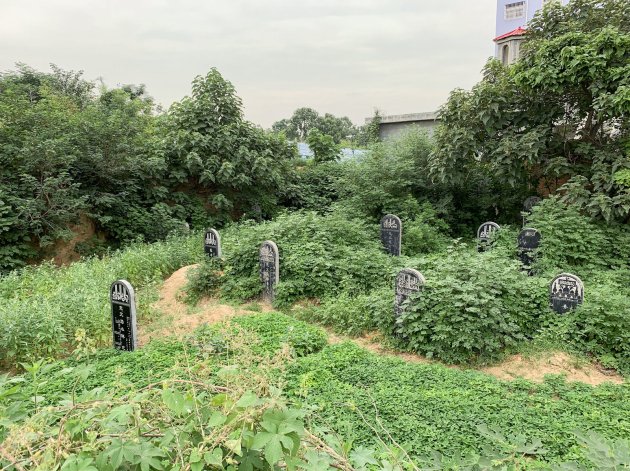
Source: ‘I’ve given up everything.’ Explosive growth in international students comes at a steep cost

Andrew Cohen: Many bigoted leaders have championed minorities once in office

Perspective and looking at the record:

A year ago, the United States Senate was divided over the nomination of Brett Kavanaugh to the Supreme Court, tainted by allegations of sexual misconduct when Kavanaugh was in high school and college. The Republicans limited – and rushed – the FBI investigation into Kavanaugh. It never even interviewed some of his critical old classmates. But the Republicans called the whole affair a smear campaign and confirmed him.

Now there are more allegations. Leading Democrats say he should be removed from the court. If they regain control of both houses of Congress in next year’s election, they could try.

Before that, they should consider the dangers of holding a public figure accountable today for the thoughts or actions of a youthful yesterday. Senate Democrats in Indiana, Missouri, Florida and North Dakota who opposed Kavanaugh lost their seats last year. Joe Manchin of West Virginia, who supported Kavanaugh, won.

The suspicion: Democrats in red states (which Donald Trump won in 2016) were punished for their votes on Kavanaugh, suggesting there’s a penalty for this kind of politics. Rather than celebrating their courage, skeptics suggest that voters either didn’t think that Kavanaugh was guilty – or that if he was, it was long ago and didn’t emerge in his career as a jurist.

This is the question raised by Justin Trudeau and blackface, which has generated much sanctimonious comment in the United States. Trudeau has his defenders, though. Conservative writer and columnist Andrew Sullivan, for example, says pillorying someone for their former self is absurd.

In Trudeau’s case, wearing blackface was cavalier, crude and ignorant. But he isn’t a racist. And even if he were in his deepest thoughts two decades ago, would it matter?

Judging public figures by their private behaviour is complicated. Can we really hold people to account for what they said or did before they were fully formed? And can we judge them by their views (or acts) in the face of their public record? In Trudeau’s case, wearing blackface was cavalier, crude and ignorant. But he isn’t a racist. And even if he were in his deepest thoughts two decades ago, would it matter?

In its composition and its policies, Trudeau’s government is diverse and progressive. His cabinet comes from both sexes, many faiths and colours. His immigration and refugee policies are relatively generous. For those who dislike Trudeau, his fondness for shoe polish will only reinforce their antipathy. But there is nothing racist about his government. Nothing. And that’s why the reaction of the élites may be harsher than that of the people.

All prominent people have misjudgments in their past. A young Pierre Trudeau flirted intellectually with fascism and the anti-Semitism that shaped the conversation in Quebec in the 1940s. Did it matter? Trudeau as an adult was defined by his commitment to personal freedom. Patriating the British North America Act and entrenching the Charter of Rights was the single greatest act of statesmanship in our history.

Lyndon Johnson was a racist. He blithely used “n—–” in private conversations, even as president. It was earthy and offensive to blacks in his circle. The same Johnson drove the passage of the Civil Rights Act of 1964 and the Voting Rights Act of 1965. No president since Abraham Lincoln was as important on race.

Harry Truman also used “n—–” privately but it didn’t stop him from integrating the military. Richard Nixon was an anti-Semite who saved the State of Israel when he sent it planeloads of arms during the Yom Kippur War.

For each, did racism, anti-Semitism or bigotry, matter? Not if you believe that their public deeds negated their private thoughts.

Kavanaugh is more complicated. He should remain accountable for what many conclude was sexual assault. One reason is that as a high court judge, he is one of America’s nine moral arbiters, appointed for life; many judges beyond suspicion could fill the job. Another is that he apologized for nothing and was intemperate in his hearing, unbecoming of a judge.

But had Kavanaugh simply disliked (not accosted) women, as those presidents disliked blacks or Jews, why should we care what’s in the human heart – and in the past – if that is where it stays?

Source: Cohen: Many bigoted leaders have championed minorities once in office

Surviving the era of ‘tantrum style’ politics

John Geddes draws on Northrop Frye in this interesting column:

Anyone clinging to sanity deserves a mechanism for coping with the latest Donald Trump outrage. The socially sanctioned default response—I couldn’t imagine him going any lower, but he’s done it again—is too benumbed to feel nearly adequate. My own defensive twitch is to mutter the words “tantrum style” at the iPhone screen when news appears of the inevitable worst-yet presidential utterance, which draws some looks on the bus, but at least I’m not left entirely speechless.

I lifted the phrase from a lecture series Northrop Frye delivered in 1961, which was preserved in a slim book called The Well-Tempered Critic. Midway through a virtuosic explication of the sort of language deployed by the Trumps of this world, the late Canadian literary theorist described the basic transaction: “A mob always implies some object of resentment, and political leaders who speak for the mob aspect of their society develop a special kind of tantrum style, a style constructed almost entirely out of unexamined clichés.”

Frye was at his best in precisely cataloguing the topics covered in the clichés spouted by the tantrum-throwing ego. “It can express,” he said, “only the generic: food, sex, possessions, gossip, aggressiveness and resentments.” Doesn’t that satisfyingly sum up Trump’s constricted range? He’s aggressive and resentful, of course, and a vicious gossip, and obsessed with possessions. But don’t pass over the seemingly quotidian first item on Frye’s list: food. Trump was never more Trumpian than when—in recounting how he told Xi Jinping over dinner at Mar-a-Lago about a U.S. missile strike on Syria—he gloated that they were, at that moment, eating “the most beautiful piece of chocolate cake, and President Xi was enjoying it.”

It’s not the usual line of attack to parse Trump closely enough to grasp how his fixation on the menu fits with all the rest. His racism, his nativism, his populism—these are all aspects of the era’s dominant figure that lend themselves to analysis by writers who come at him through political conviction or even political philosophy. The spate of books and essays that might be gathered under the heading Trump vs. the Enlightenment are almost touching in the earnestness of the authors as they extol values handed down from the 18th-century, like respect for democratic institutions and regard for science, now banished from the White House.

But these approaches can only remind us of what Trump and the rest of the right-wing populists are undermining, not how they’re doing it. In other words, the political thinkers who can help us get clear on what’s worth defending aren’t much help in figuring out what’s put us on the defensive. For that, we don’t need philosophy, but we might be able to make use of a literary critic’s insights in order to fathom how Trump’s crude rhetoric can possibly be working.

He’s a voice, after all, not a mind. If stray scraps of ideology cling to his blather, they don’t add up to much—certainly nothing coherent enough to make any clear-headed listener doubt the basic tenets of democratic liberalism. But he sure knows how to string together clichés—or, as they say on Twitter, make a thread of them—and the world evidently can’t or won’t block him. Frye left us a guide to understanding his tantrum style, and, even better, a way to start thinking again about fostering a culture that hears how empty it really is.

Born in 1912, Frye’s concerns were rooted in his reaction to the totalitarianism that was on the march as he came of age in the 1930s, when he was studying at University of Toronto and Oxford. Hitler’s raving never quite stopped echoing for him, right through to his last big book, 1990’s Words With Power, published the year before he died, in which he describes how the most debased political rhetoric comes down to a “shrieking head” ranting until the “steady battering of consciousness becomes hypnotic, as the metaphor of ‘swaying’ an audience suggests.”

Frye was never swayed by the pull fascism exerted on, to stick to his literary field, Eliot and Pound. As for any tug from the left, well, he once reportedly dismissed rival critic Terry Eagleton as a “Marxist goof.” Frye proposed arming citizens against ideological assaults with educated imaginations, so they would know a verbal bludgeoning when they heard one. “Literary education should lead not merely to the admiration of great literature, but to some possession of its power of utterance,” he wrote in The Well-Tempered Critic. “The ultimate aim is an ethical and participating aim, not an aesthetic or contemplative one, even though the latter may be the means of achieving the former.”

The notion of literary appreciation underpinning participatory citizenship might well land as naïvely bookish. Yet it would be a mistake to assume Frye was out of touch. Despite his tweeds and rimless spectacles—not to mention the intimidating reputation draped over him after his daunting masterpiece, Anatomy of Criticism, appeared in 1957—he never really retreated into his Blake, his Shakespeare, and his King James Bible.

For instance, he dutifully watched countless hours of miscellaneous TV for the Canadian Radio-television Commission in the early 1970s. From the notes he jotted down, which were published much later, we know he was astute enough about popular culture to see football was the medium’s ideal sport (its “discontinuous and intensely localized rhythm seems to me the rhythm of television”) and to greatly enjoy a segment of a CBC comedy special co-created by Lorne Michaels (soon to break big with “Saturday Night Live”).

He grappled more systematically with his times in a 1967 lecture series published as The Modern Century. Frye spoke of how the liberal ideal of social progress had devolved, at the individual level, to the progress of time ticking toward death. When life feels so pointless, so alienating, many individuals shield themselves by adopting a  “deliberately frivolous” attitude, he observed, ignoring news other than tabloid “human interest” pieces. (Imagine if Frye had lived to witness the rise of reality TV.)

At the same time, he detected in advertising and propaganda—and especially their new hybrid progeny, PR—the ascendant forms of language. Decades before the Internet emerged as an all-encompassing digital counter-reality—ushering in a presidency that’s only fully itself only on Twitter—Frye sensed something like it coming. “The triumph of communication is the death of communication: where communication forms a total environment, there is nothing to be communicated,” he wrote.

He was never easy to label. Frye insisted that literary criticism must not be an adjunct of any ideology, whether feminism or Marxism or, back in his day, Freudianism. His resistance to isms in his core work was known to sow confusion about where to peg him on the left-right spectrum. On one hand, the RCMP kept a secret file on him, their interest reportedly prompted by his involvement with a “teach-in” on China at University of Toronto in 1966; he also opposed the Vietnam war and apartheid in South Africa. On the other hand, he scoffed at the student radicals of the ’60s, who sounded to him, as a former student of the ‘30s, to be repeating the “formulas of the ignorant and stupid of a generation ago.”

In other words, he was more or less a centrist liberal, which frustrated his detractors during his lifetime. How could such a formidable genius be so politically bland? I think this largely explains why he’s fallen so far out of intellectual fashion. Yet today—with the best parts of the postwar status quo we used to take for granted under siege by the forces of raw stupidity—Frye’s critical preoccupation with cultivating what he called democracy’s “shaping and controlling vision” takes on an unforeseen urgency.

In the roiling spring of 1969, when he was accepting an honorary degree at Acadia University, Frye pleaded for a return to a “revolutionary belief in democracy and equality,” arguing that, at least for Americans and Canadians, “the dynamic of democracy is an inclusive one, and it moves toward dissolving the barriers against excluded or depressed groups.” He acknowledged where North American society was falling short, but believed the solutions had to be found in its own myths. “The old middle-class and white-ascendancy stereotypes are no longer strong enough to hold society together, and of course they were never good enough,” he said that day. “But the recovery of its own democratic tradition is the key to the present identity crisis on this continent.”

What might be impeding the recovery of that tradition? More than 50 years ago, Frye warned that the comfortably prosperous democracies are vulnerable to an insidious internal blight more dangerous than any overt ideological challenge. “The most permanent kind of mob rule,” he wrote in The Modern Century, “is not anarchy, nor is it the dictatorship that regularizes anarchy, nor even the imposed police state depicted by Orwell. It is rather the self-policing state incapable of formulating an articulate criticism of itself and developing a will to act in its light.”

Sensing that their state is paralyzed in this way, citizens grow susceptible to the empty calls to action bellowed by Trump, or the Brexiters, or any number of subsidiary blowhards. When well-intentioned politicians can’t come to grips with climate change or shrink income inequality, reform immigration or fix health care, why keep voting them in? Supposedly enlightened leaders who haven’t been able to muster plausible critiques, or summon the will to act on them, won’t put populism back in its place until they regain their mobility.

Along with recovering the capacity to move on what matters, they’ll need to find the language to regain the respect of distracted voters. Frye wasn’t against healthy rhetoric. In Words With Power, he cited the most redoubtable of classics—Lincoln’s Gettysburg address and Churchill’s 1940 speeches—as examples of “how an ideology maintains itself in a historical crisis.”

Lincoln and Churchill, he wrote, didn’t appeal so much to reason, as to a shared understanding that respect for the rational is integral to an even deeper social bond. “The principle invoked is that we belong to something before we are anything, that our loyalties and sense of solidarity are prior to intelligence,” Frye said. “The sense of solidarity is not simply emotional any more than it is simply intellectual: it might better be called existential.”

And that solidarity was, for Frye, reliant on the vision that makes a society more than a mob. By vision, he meant everything we lump together, in a post-religious era, as culture. He placed the utmost importance on schools and universities doing the work of keeping genuine culture alive in students’ imaginations. That job, however, cannot be reduced to some sort of ideological indoctrination. At its heart, it must be about instilling a familiarity with and a taste for great stories—the sensibility most likely to carry with it a strong distaste for insults and lies.

What goes on in the classroom takes on real urgency where liberty is most threatened, and thus most valued. In Hong Kong, the high-school level liberal studies curriculum is being blamed by the Beijing regime and its apologists for creating a generation of pro-democracy activists. Frye would have been fascinated, and even more intrigued by reports that link recent efforts to enhance liberal-arts education at Hong Kong’s universities to the cause of bolstering liberal-democratic values there.

But that’s in a city under severe duress. In complacent North America, skeptics will doubt public education is up to a task as existential as reinvigorating democracy through the teaching of the humanities. Think about it this way, though. Let’s say the question is, “What is needed to keep liberal democracy healthy?” and your answer does not include, “The schools will have to do more heavy lifting.” In that case, the alternative answer escapes me. We need to teach the basic mechanisms of democracy (what we call “civics”) and the literature and art that bind us together as a democratic society (what Frye called “culture”).

Near the end of The Well-Tempered Critic, he described what culture accomplishes at its best, on the broadest, most democratic level. “It does not amuse,” Frye wrote, “it educates, hence it acts as an informing principle in ordinary life, dissolving the inequalities or class structure and the dismal and illiberal ways of life that arise when society as a whole does not have enough vision.” If that sounds utopian, will anything less suffice when dystopia commands a beachhead in the most powerful office in the world?

Source: Surviving the era of ‘tantrum style’ politics

Incarceration of Christians and Han Chinese in Xinjiang shows broad reach of forced indoctrination campaign

One has to wonder what the International Metropolis Conference board members were thinking by planning to hold the immigration and integrationconference in Beijing in 2020. Or not thinking:

Chinese authorities are sending Christian Uyghurs and even members of the Han Chinese majority to internment camps in China’s northwestern Xinjiang region, an indication that the regime’s indoctrination strategy is broader than previously understood.

Most of the hundreds of thousands of people – perhaps more than a million – sent to a sprawling network of centres for political indoctrination and vocational training are Muslims, members of minority groups such as Uyghurs and Kazakhs, according to former detainees and instructors. Beijing has said the centres are being used to stamp out extremism.

But six accounts from people who have recently lived in the region or have family there – three Christian Westerners, a lawyer, a Chinese petitioner and a Uyghur family living in France – reveal that others are also being incarcerated.

‘I felt like a slave:’ Inside China’s complex system of incarceration and control of minorities

Some are Uyghurs who have converted to Christianity. Others are Han Chinese – the ethnic group that comprises more than 90 per cent of China’s population – who have challenged local authorities by petitioning for official redress, as well as people considered politically unreliable.

The reports indicate that Beijing’s campaign in the region goes beyond the stated goal, published in an August white paper on Xinjiang, of countering “the breeding and spread of terrorism and religious extremism.” The strategy claimed to be focused on quelling Islamic radicalization rather than a unique cultural group inside China.

But “all signs point to cultural assimilation” as the chief goal of the Chinese campaign, said Timothy Grose, a scholar at Terre Haute, Ind.’s Rose-Hulman Institute of Technology who studies Uyghur culture and is the author of an upcoming book about Uyghurs who study elsewhere in China. What is taking place in Xinjiang is an “accelerated, comprehensive and violent program to jettison meaningful markers of Uyghur identity, such as language, Islam and tangible connections to Central Asia, and replace them with elements of a Han-centric Chinese culture.”

Indeed, “even secular, atheist and Christian Uyghurs are being targeted, I believe, because their milieu has still been largely shaped by Central Asian and Islamic norms.”

Over the past year, Uyghurs living outside China have documented the incarceration of dozens of scholars, artists, musicians and other cultural leaders who have been taken to facilities that China calls vocational skills and training centres but which foreign critics call re-education camps.

In a July white paper, Chinese authorities directly linked Islamic belief with the spread of separatist ideology by what it called “anti-China forces attempting to split China.”

But the incarceration of Christians on extremism grounds underpins an argument that Chinese authorities have used extremism as a cover to conduct a broader campaign of sinification, irrespective of religion.

“We know of at least 14 Christians” who have been taken away by authorities in Xinjiang, said Robert Paix, a Christian businessman who has lived and worked in the region, in part to share his faith. “Islam is just one of the matrix of problems the Chinese government has with Uyghur people,” he said.

In Xinjiang, “any ideology which really captures someone’s conscience that is other than the [Communist] Party is a threat,” Mr. Paix said. “So in essence, it doesn’t matter what religion it is – or even if it was a non-religious ideology.”

Xinjiang is home to an estimated 11 million Uyghurs, a people whose customs, language, architecture and art are among the most distinct of the country’s 55 official minorities.

One Westerner who lived in the regional capital, Urumqi, with his family described the case of a Christian Uyghur woman who lived with a Han Chinese roommate. The Uyghur woman spoke Mandarin and ran a business teaching English. But in December, 2017, police took her from her apartment, put her in a prison uniform and handed her clothes, glasses and national identification card back to her roommate, said the source, a Christian whose identity The Globe and Mail is not disclosing out of concern for the safety of the person’s friends in Xinjiang.

Police said they had found questionable content on her computer, according to the source.

“The sentencing basically was very quick. From what we could understand, it was just ‘You are a terrorist,’ and there was a document that she had to sign – basically like a confession.”

Christian Uyghurs likely number only in the thousands, according to foreigners who have lived in the region. Most Uyghurs are practising Muslims or maintain cultural ties to that faith.

But from what the Westerner could see, the incarceration of Uyghurs “did not seem religious in nature. It seemed just from our experience there that the religious extremist angle was being used to really just suppress the entire people group and culture.”

Another Christian, Gulbahar Haitiwaji was incarcerated for two years, her family said. “She converted to Christianity several years ago and eschews violence,” her husband, Kerim Haitiwaji, told religious liberty magazine Bitter Winter early this year. “There is no reason to imprison her. She is not a danger to China.” The family has declined further public statements since Ms. Hatiwaji was released, and she is now with her husband and daughter in France.

Any responsible government must “remove the malignant tumour of terrorism and extremism” and ensure its people “enjoy a peaceful and harmonious social environment,” the State Council Information Office wrote in an August white paper. It defended Xinjiang’s indoctrination and training apparatus as a “deradicalization” project in line with international principles, providing free education to trainees who “have fallen under the influence and control of religious extremism.”

At the same time, the construction of a system of internment centres has provided local authorities new options for punishment outside the formal legal system – even for people who are ethnic Chinese.

Authorities can send people to the centres for making statements deemed contrary to government dictates; for spreading politically unwelcome thoughts among colleagues; and for posting politically incorrect views to Chinese social-media platform WeChat, according to a lawyer who has travelled in the region and whose identity is not being disclosed because describing the camps could lead to his own incarceration.

The Globe reviewed documents collected by a Chinese human-rights activist that described the case of a Chinese man in Xinjiang who spent years fighting embezzlement charges that dated back to 2004. He disappeared last year but reappeared this spring.

“I studied for seven months,” he said in a recorded interview with an activist reviewed by The Globe. “Studying” is a common word to describe time in indoctrination facilities. “There are Han people” in such centres, he added.

Gulzira Auelhan, an ethnic Kazakh and former detainee, told The Globe this year that she had seen four ethnic Chinese people in the centre where she was held.

Political enforcement has been employed against Uyghurs, too. One Uyghur woman who recently left Xinjiang described how her father-in-law had been sentenced to eight years in prison for “distributing incorrect political views.” The charges were rooted in an incident that, authorities said, occurred more than two decades earlier, when he was working at a government office and complained that ethnic Chinese farmers were receiving a larger allocation of water than ethnic Uyghurs. He was held for 10 months before being tried and sentenced in a single day of court proceedings, the woman said.

The woman’s identity is not being revealed because she fears retribution against members of her family still in Xinjiang. The Globe verified elements of her account with a Canadian family member and with a Western embassy that helped her leave China.

She spoke out, she said, because “I want the world to know how insane it is” for Uyghurs in Xinjiang.

Source: Incarceration of Christians and Han Chinese in Xinjiang shows broad reach of forced indoctrination campaign

China Wants the World to Stay Silent on Muslim Camps. It’s Succeeding.

Those who remain silent are complicit:

When Turkey’s leader, Recep Tayyip Erdogan, visited Beijing this summer, he hailed a new Silk Road bridging Asia and Europe. He welcomed big Chinese investments for his beleaguered economy. He gushed about China’s sovereignty.

But Mr. Erdogan, who has stridently promoted Islamic values in his overwhelmingly Muslim country, was largely silent on the incarceration of more than one million Turkic Muslims in China’s western region of Xinjiang, and the forced assimilation of millions more. It was an about-face from a decade ago, when he said the Uighurs there suffered from, “simply put, genocide” at the hands of the Chinese government.

Like Mr. Erdogan, the world has been noticeably quiet about Xinjiang, where China has built a vast network of detention camps and systematic surveillance over the past two years in a state-led operation to convert Uighurs into loyal, secular supporters of the Communist Party. Even when diplomats have witnessed the problems firsthand and privately condemned them, they have been reluctant to go public, unable to garner broad support or unwilling to risk financial ties with China.

Backed by its diplomatic and economic might, China has largely succeeded in quashing criticism. Chinese officials have convinced countries to support Beijing publicly on the issue, most notably Muslim ones in Africa, Asia and the Middle East. They have played to the discord within the West over China. And they have waged an aggressive campaign to prevent discussion of Xinjiang at the United Nations.

At a special event ahead of the General Assembly this week on protecting religious freedom, President Trump, the host of the event, did not mention the Uighurs. Vice President Mike Pence gave a nod to the Uighurs, after mentioning the persecution of Christians in China.

China contends that its state-mandated detention camps, surrounded by high walls and watchtowers, are central to its fight against Islamist extremism. Beijing has called them boarding schools, explaining detainees are there voluntarily. China said recently that it has reduced the numbers in the camps, although doubts persist about the claim.

“There has not been a single case of violent terrorism in the past three years,” Wang Yi, state councilor and foreign minister of China, said at an event on the sidelines of the United Nations summit. “The education and training centers are schools that help the people free themselves from terrorism and extremism and acquire useful skills.”

As countries weigh their options over Xinjiang, China’s economic heft looms large.

Officials in the Trump administration have been among the most vocal critics. Secretary of State Mike Pompeo has denounced the treatment of the Uighurs as the “stain of the century.” One of his deputies, John Sullivan, who convened a panel Tuesday on the sidelines of the United Nations meeting with several other countries to condemn Beijing’s policies, said China has carried out a “horrific campaign of repression.”

While the National Security Council has pushed economic sanctions over the issue, the Treasury has the power to punish China in that way. So far, the trade talks have taken precedence. And Mr. Trump has largely ignored the issue, essentially giving China a pass.

The administration’s limited action probably affects the global calculus. If the United States does not take a leadership role on the issue, other countries do not feel the pressure to act, either.

Some governments tiptoe around China for economic reasons. When New Zealand’s prime minister, Jacinda Ardern, visited Beijing shortly after the massacre of 51 Muslims in Christchurch, she said she had discussed Xinjiang privately with Mr. Xi. She didn’t do much more. New Zealand sells much of its main exports, such as milk, meat and wine, to China.

Last year, China helped Turkey secure a $3.6 billion loan for energy and transportation. Since then, the Turkish economy has further faltered. And during Mr. Erdogan’s visit to Beijing in July, Mr. Xi praised him for supporting what he called China’s core interests, including Xinjiang.

“Many, many governments are looking the other way and self-censoring on the issue of Xinjiang,” said Daniel R. Russel, the Obama administration’s assistant secretary of state for East Asian and Pacific affairs. “Beijing is notoriously prickly about its self-declared ‘core interests,’ and few countries are willing to put the economic benefits of good relations with China at risk — let alone find themselves on the receiving end of Chinese retaliation.”

When countries do criticize China, they tend to do so in a group, seemingly as a way to diffuse and lessen possible retribution.

In Geneva this summer, nearly two dozen, mostly Western, countries, along with Japan, banded together at the United Nations Human Rights Council to call on China to close the camps. No one country was willing to be the organizer. Instead, the statement’s signers relied on a rarely used procedure that allowed it to be circulated without a principal leader.

Not to be outmaneuvered by the critics, China quickly prepared a counter-roster of 37 friendly nations praising its “contribution to the international human rights cause.” Among the cheerleaders were members of the Organization of Islamic Cooperation that unanimously endorsed China’s Xinjiang policies in April.

How China Turned a City Into a Prison

Children are interrogated. Neighbors become informants. Mosques are monitored. Cameras are everywhere.

China is carefully shaping its image of Xinjiang in the diplomatic world. Over the past nine months, Beijing has invited select visitors on circumscribed tours of the detention camps to garner positive publicity.

China has generally handpicked the visitors, including journalists from friendly countries. They are then often quoted in the state-run Chinese news media offering flattering comments. “I saw genuine smiles on the faces of trainees I interviewed,” Abdul Aziz Raddad A. Alrabie of the Saudi newspaper Okaz said in China Daily, a newspaper of the Communist Party.

The trips do not always go as planned. Two reports — one by a Malaysian diplomat and another by European Union officials — were highly critical after their visits.

The private account by the Malaysian diplomat, reviewed by The New York Times, contradicted China’s contention that the Uighurs were voluntarily attending the re-education centers.

“Delegates could actually sense fear and frustration from the students,” the Malaysian wrote after his December visit with a dozen other diplomats from mostly Muslim nations. “China may have legitimate reasons to implement policies intended to eliminate the threat of terrorism, especially in Xinjiang. However, judging by its approach, it is addressing the issue wrongly and illegitimately, e.g. preventing Muslim minors from learning the Quran.”

The diplomat referred to two cities in Xinjiang — once-bustling Kashgar and Hotan — as “zombie towns,” saying the streets were virtually empty and that China was probably “using the threat of terrorism as an excuse to ‘sanitize’ Uighur Muslims until they become acceptable Chinese citizens.”

The report was never made public. At the time, Malaysia was working hard to repair relations with China over a troubled infrastructure deal. It has also become increasingly dependent on China for purchases of palm oil, its biggest export.

“The $100 billion in annual bilateral trade is enough to focus the minds of Malaysian policymakers,” said Shahriman Lockman, a senior analyst at the Institute of Strategic and International Studies in Kuala Lumpur. “China is too big a market to lose.”

Three diplomats from the European Union visited Xinjiang’s capital, Urumqi, this year in what one of the participants said turned out to be a “Potemkin village tour.” The officials were shown a hastily built display of weapons that the Chinese guides said Uighurs had used in terrorist attacks; a mosque where there was no sign of religious observance; and a kindergarten where the children sang songs praising the party.

At one camp, the class sang the Communist Party anthem. As they did, one Uighur man caught the eye of a diplomat and held up his wrists as if clamped together by handcuffs.

Afterward, the European Union circulated an internal document saying that the visit “does not invalidate the E.U.’s profound concerns about human rights in Xinjiang, including in relation to mass detention, political re-education, religious freedom and Sinicization policies, as well as concerns that similar measures could be applied in other regions of China with notable Muslim minorities.”

Rifts within the European Union on how to deal with China prevent a common front. Leaders in France and Germany are publicly silent on Xinjiang, while several Eastern European countries are supporters of China.

At the United Nations, China has made Xinjiang its main cause.

The Human Rights Council in Geneva is often considered a diplomatic backwater. The United States is no longer a member, with the Trump administration withdrawing last year in protest over policies toward Israel. As authoritarian governments gain power around the world, human rights are less of a front-and-center issue, leaving the council with less sway.

But China regards the council as a serious arena where it can outmaneuver its opponents, pursue its diplomatic agenda and score points.

A long-scheduled review of China’s human rights record was on the council’s schedule last November just as the Uighurs’ incarceration was gaining attention.

China prepared meticulously. About 60 Chinese diplomats flew to Switzerland from Beijing, a delegation headed by the influential vice foreign minister, Le Yucheng.

He was backed by 40 more members of Chinese government organizations. Such a large entourage of nondiplomats was almost unheard-of at the council, according to diplomats. They acted as cheerleaders, clapping at key moments.

One goal of the performance was to limit backing for an inspection of Xinjiang by Michelle Bachelet, the United Nations’ human rights chief.

“If you’re really serious about a fact-finding mission, please go check the southern border, Guantánamo, the Mediterranean to see if there have been fact-finding missions,” one of the Chinese advocates said, according to a recording by the International Service for Human Rights.

At the end of China’s presentation, more than 120 countries gave a positive review of its human rights record. Fewer than three dozen countries expressed real concern. Ms. Bachelet has not visited Xinjiang.

At the United Nations in New York, China has assiduously worked many angles. At one Security Council meeting last year that was set to discuss human rights violations in Syria, China intervened. It was concerned that the discussion would veer into one on Xinjiang.

The United Nations’ high commissioner of human rights at the time, Zeid Ra’ad al-Hussein, traveled to New York to address the session.

Suddenly, as the diplomats were about to convene, Ivory Coast withdrew support for the discussion on Syria. Since there was no longer a quorum for the session, it was canceled.

Ivory Coast’s ambassador explained that his president had received a call from Beijing instructing him to ensure the session did not happen.

“If you can’t get a discussion on Syria after all these seven years of brutality, of course you can block a discussion on Xinjiang,” Mr. al-Hussein said.