A fear of others in Australia’s ethnically diverse neighbourhoods is affecting mental health

While not captured in the study, suspect that some of the anti-immigrant rhetoric among some Australian politicians may be a contributing factor to lack of trust:

We’re often told to ‘love thy neighbour’ in order to build a more harmonious society, but when it comes to multicultural communities, it seems concerns about ‘others’ are rife – and it’s impacting peoples’ mental health.

A new report by RMIT University has found higher levels of neighbourhood ethnic diversity are associated with poorer mental health outcomes for people living there.

And it appears it’s because they don’t trust each other.

The study, Neighbourhood Ethnic Diversity and Mental Health in Australia, is the first of its kind to empirically examine the effects of ethnic diversity in an area on mental health. It was published this month in the journal Health Economics.

Based on 16 years of data from the Household, Income and Labour Dynamics in Australia (HILDA) survey, up to 2016, it found a lack of trust in ‘others’ is having a negative impact.

Respondents to the HILDA surveys were asked how often they felt “nervous”, “down”, and “so down in the dumps that nothing could cheer them up”.

Dr Sefa Churchill, a senior research fellow at RMIT who led the study, said coping with difference tends to brings a greater mental load, which “not everyone finds easy or wants to make work”.

“In communities that are quite diverse we tend to see people that are a bit different in different ways, because we do not know them,” he told SBS News.

“It raises some sort of natural anxiety and suspicion about what they are doing because they are ‘different’.

“And that level of anxiety and unsettledness that is associated with this lower levels of trust, tends to hinder mental health.”

That lack of trust was the key factor behind poorer mental health outcomes in diverse communities, he said.

Dr Churchill said it is a natural compulsion to be wary of strangers, and the research shows it is not diversity itself that is the problem, but more likely the lack of trust that often accompanies it.

“If you do not know someone, if someone is different from you, you will not go be willing to go all in, in terms of trust, so from a fundamental perspective as part of nature, trust comes the more you get familiar with someone.”

“Trust is the glue that binds social networks, and social networks and feelings of inclusion are important predictors for mental health and wellbeing.”

But it’s not all bad news for those living in Australia’s ethnic melting pots.

When comparing diverse and homogeneous neighbourhoods which both had similar levels of trust, people living in diverse communities had better mental health outcomes.

“Our analysis considered potential scenarios where we have diverse communities and homogeneous communities both with high levels of trust, and the results actually did suggest if you are in a diverse community with higher levels of trust you tend to have better mental health than insular, homogeneous communities,” Dr Churchill said.

Australia is often touted as one of the most diverse countries in the world, with more than a quarter of residents born overseas.

Mohammad Al-Khafaji, CEO of the Federation of Ethnic Communities Councils of Australia (FECCA) told SBS News: “As in all parts of our society, mental health is a major issue in ethnically diverse communities that desperately needs greater attention”.

“What this study also demonstrates is that programs that promote cultural awareness and understanding make our communities happier and safer.

FECCA has partnered with Mental Health Australia and the National Ethnic Disability Alliance to deliver The Embrace Project – a platform raising awareness of mental health and suicide prevention and providing resources and services for those from culturally and linguistic diverse (CALD) backgrounds.

Mental Health Australia CEO Frank Quinlan told SBS News the project “recognises social isolation and stigma surrounding mental health in culturally and linguistically diverse communities can negatively impact mental health.

It “aims to engage people in CALD communities in a conversation and provide information about what comprises good mental health and where to seek support if needed,” he said.

Dr Churchill says the results of the study show the need for more policies that foster social inclusion and promote awareness of the benefits of diversity. That should help to build trust and reduce the negative effect of diversity on mental health, he said.

“We need to, at the local level, organise programs and events that bring us together, allow us to communicate, allow us to talk, allow us to know each other and go beyond the differences.”

“The fact that you do not know someone and all that, this will build that level of trust.”

Source: A fear of others in Australia’s ethnically diverse neighbourhoods is affecting mental health

FUREY: What they’re not telling you about Canada’s hate crime stats

While there are limitations in the annual police reported hate crimes, by and large they provide a reasonable albeit imperfect indicator. The threshold of reporting to the police is higher than reporting to community organizations, particularly for communities that have lower levels of trust in police (e.g., Blacks).

While it would be nice to have data on charges laid and convictions, unlikely that such data would indicate large numbers of fraudulent claims that Furey intimates. StatCan in fact did such an analysis in its Police-reported hate crime in Canada, 2017, showing this not to be a major issue.

As to his critique of the Canadian Anti-Hate Network’s call for an annual survey, I agree that this should not replace the police-reported reports, again given the higher threshold.

And we do get some data from the General Social Survey on discrimination and dealing with the police, depicted below:

StatCan did a useful analysis of the 2017 and earlier report (Police-reported hate crime in Canada, 2017) that provided a breakdown of violent vs non-violent hate crimes by group, showing, for example, a greater proportion of violent hate crimes against Muslims (40 percent) than Jews (15 percent):

Hate crimes targeting the Black population and religion more often non-violent

Non-violent crimes accounted for 62% of crimes targeting the Black population from 2010 to 2017. A significant portion (53%) of these non-violent crimes were mischief. Non-violent crimes most often occurred in a single-family home (18% of incidents), in schools outside of school hours (14%), and on the street (14%). Of the 38% of hate crime targeting the Black population that were violent crimes, common assault was the most common type (14%). One quarter of violent hate crimes targeting the Black population took place on the street, 16% in a single-family home and 12% in a dwelling unit.

During the same period, 60% of crimes against the Muslim population were non-violent while the other 40% were violent. The most common violent hate crimes were uttering threats (18%) and common assault (8%) (see note 20). The most frequent locations of violent incidents were the street (19%) or at a single-family home (17%). The most frequent non-violent crimes were mischief (35%) and public incitement of hatred (9%). Non-violent crimes targeting the Muslim population occurred most often at religious institutions (17%).

From 2010 to 2017, 85% of hate crimes against the Jewish population were non-violent. The majority of these hate crimes were mischief (70%). The second and third most frequent offences against this population were uttering threats (6%) and hate-motivated mischief relating to property primarily used for religious worship or by an identifiable group (5%). While a notable proportion of non-violent hate crimes targeting the Jewish population occurred at a single-family home (18%), on the street (13%), or in schools outside of school hours (11%). Violent crimes most often occurred in a single family home (21%), businesses (17%), or on the street (15%).

Hopefully, StatCan will do an update of this analysis for 2018, including a data table:

It’s that time of the year again, when Canada’s annual hate crimes statistics are released and advocacy groups send out their press releases and take to the airwaves to break down what it all means.

While there’s often an alarming tone to the occasion, this year’s conversation will likely be more muted than in previous years because the latest numbers have gone down by 13%, from 2,073 in 2017 to 1,798 in 2018.

That said, as StatsCan explains: “Even with this decline, the number of hate crimes remains higher (with the exception of 2017) than any other year since 2009, and aligns with the upward trend observed since 2014.”

When broken down by identifiable group, Monday’s release means a 50% drop in hate crimes targeting Muslims, 15% fewer targeting sexual orientation, 12% fewer against black individuals and a 4% drop in incidents against Jews.

But this time around, before we take these numbers and try to craft a narrative around them, let’s take a step back and look at how they’re put together in the first place. Because there’s a lot StatsCan isn’t telling you in their release that doesn’t make its way into the basic reporting.

For starters, an overview of hate crimes will cover broad terrain – from graffiti that harms no one to violent incidents like the Quebec mosque massacre. They’re both bad and it’s right to have a zero-tolerance attitude to all categories, but obviously, the first one is cause for much less concern than the second one.

The numbers have always shown that, thankfully, the more severe forms of hate crimes are much rarer. Out of the 1,798 number, there were 138 incidents in 2018 that involved bodily harm to an individual and only 2 of those resulted in deaths. Compare that to “mischief/mischief to religious property”, which had 782 incidents. Threats alone made up for 251 incidents.

There’s another problem with all of this data though, one that calls into question not just how we talk about specifics, but the validity of the entire conversation itself.

The StatsCan release on Monday added some interesting context: “Police data on hate-motivated crimes include only those incidents that come to the attention of police services.” In other words, there could be more hate crimes happening that the police never heard about.

That’s a fair point. But they don’t offer the flip side of the coin, and they should. Which is that these stats aren’t “hate crimes” full stop. They’re “police-reported hate crimes”.

What does that mean? It means what it sounds like. Someone calls the cops and says a hate crime occurred.

It doesn’t mean these are all cases where someone was found guilty of perpetrating a hate crime. It doesn’t have to even mean the police properly investigated the incident. For many of these cases, it just means someone said something happened and the police jotted it down.

When I made a media request to Statistics Canada last year to ask for the number of actual charges, convictions and acquittals related to hate crimes I learned that they don’t compile these figures. This means they don’t tally the proven cases – they count when everything is still at the potential stage.

Prior to the release of this year’s data, the Canadian Anti-Hate Network – our version of the controversial left-leaning Southern Poverty Law Center – called on Statistics Canada to revise their methodology. They recommend that instead of using police-reported data, StatsCan does an annual survey that “asks Canadians if they’ve been the victim of a hate crime and takes a believe-the-victims approach”.

Is this a wise idea? Wouldn’t that only further muddy the waters? The facts tell us that alleged victims can and do lie.

A special prosecutor is currently being assigned to investigate the Jussie Smollett case. A Winnipeg couple has been charged for allegedly staging an anti-Semitic attack against their own cafe. And everyone remembers the hijab hoax case in Toronto that saw none other than Prime Minister Justin Trudeau weigh in on an assault that never happened.

One expert on the issue recommends Canadians ask critical questions of these statistics. “What’s the rate of hoax? That’s a blunt question but it’s extremely useful,” says Wilfred Reilly, a professor of political science at Kentucky State University, in an interview with the Sun.

Reilly studied American hate crime statistics in-depth, resulting in the publication of his new book Hate Crime Hoax: How the Left is Selling a Fake Race War.

“I would put the confirmed hoax rate at about 15% – cases that definitely unraveled and were provably debunked,” explains Reilly. “5% result in convictions and the rest are ambiguous.” He suggests the Canadian figures could likely be similar.

If we’re going to have a national conversation about hate crimes every year, we’re going to have to get better data. Or, at the very least, let Canadians know the facts behind the numbers we’re discussing so they can determine their usefulness.

Could the real number of hate crimes happening be significantly higher? Certainly. Or could we be overrun with hoaxes? That’s also possible. Given what we’re working with, we just don’t know.

Source: FUREY: What they’re not telling you about Canada’s hate crime stats

ANDREW COYNE: It’s time for old-school conservatism and liberalism to defend their common values

Good column:

Why would anyone describe himself as a conservative? While we’re at it, why describe yourself as a liberal? Or socialist? Or libertarian? The point is not that there is anything wrong with any of these — only that there is something right with all of them. Each of the traditions, that is, has something to teach us. Why limit yourself to just one?

Still, people do. The desire to belong to a tribe – or perhaps, to quarrel with another – is one of the deepest urges of humanity. But tribalism, ideological or other, is not just self-blinding. On occasion it leads to madness. Consider the present state of conservatism, a tribe that has, as the past week has illuminated, lost its way, if not its mind.

If it were just a matter of Donald Trump’s racist attacks on four racial-minority congresswomen – the latest in a long series, but arguably the worst — it might be put down to his own personal depravity. If it were just the chants (“send her home’’) of the people at his rally in Greenville, N.C., it might be written off as the ravings of a lunatic fringe.

But Trump, it is abundantly clear, stands atop a vast infrastructure: the Republican leaders who shrug off his abuses for the sake of party unity; the commentators who look the other way so long as he champions their pet causes; the base who are content with whatever he does so long as it annoys the liberal media; and underpinning all, a set of beliefs – superstitions, prejudices, call them what you will – that predate Trump, but which he has helped to make the credo of the conservative movement.

It was convenient that in the same week as Trump was issuing such crude appeals to hatred and bigotry, a group of academics, journalists and politicians were meeting at a hotel in Washington in an attempt to give a veneer of intellectual credibility to Trumpism. The “National Conservatism” conference underlined how completely conservatism, at least in the United States, has been turned on its head.

The conservatism of the post-war decades, a sometimes uneasy coalition of social conservatives, free marketers and hawkish internationalists, has been replaced by a populist-nationalist conservatism marked by hatred of “globalist” elites, hostility to immigration and fear of foreign trade, and by its enthusiasm for whichever strongman will protect America from these.

Where conservatives were traditionally advocates of limited government, wary of government intervention and worried about deficits, today’s conservatives embrace many of the same limitless-government approaches as the left – “collectivism rebranded for the right,” as the Republican-turned-independent Congressman Justin Amash calls it.

Where conservatives were skeptics of change, pragmatists seeking to reconcile the necessity of reform with the wisdom of tradition, the Trumpians are as reckless as they are reactionary, heedless to the social and institutional harm they have caused in the name of Making America Great Again.

And as the conference highlighted, the civic nationalism that American conservatives used to cherish – the nation to which anyone could belong so long as they subscribed to the basic ideals of the American political system, not least its reverence for the equality of every individual under the Constitution – has been replaced by a more culturally-specific, if not ethnic definition, majoritarian and monocultural rather than liberal and pluralist, that is not easily distinguished from xenophobia or indeed racism: identity politics for white people.

Canadians will be familiar with this from, for example, the Bill 21 debate. Still, few in this country would go so far as the University of Pennsylvania law professor who told the conference that, as people from certain cultures were more likely to fit into a “modern advanced society” like the United States, and as those people came mostly from Europe and the First World, and as those societies are “mostly white for now,” it followed that “our country will be better off with more whites and fewer nonwhites.” But not, you know, in a racist way.

This is, as The Economist put it in a recent issue, “not an evolution of conservatism, but a repudiation of it.” The conservatism I grew up with was basically a species of liberalism, part of the same Western liberal inheritance but more alert to liberalism’s potential for overreach. Its mission was, if you like, to save liberalism from the liberals. As such it represented a continuous tradition that, even as it changed with the times, represented certain enduring ideals. How can the very opposite set of ideas also be called conservatism without doing violence to the language?

Perhaps, as others have suggested, this is naive. Maybe there are no permanent or defining principles of conservatism, independent of its practitioners. Perhaps conservatism is whatever self-described conservatives happen to believe at the time. Trump enjoys the approval of 90 per cent of Republicans; even in Canada, according to a recent Abacus Data poll, 46 per cent of Canadian Conservatives have either a positive or neutral impression of him. Maybe it’s time to concede the point.

If so, then perhaps it is time for a more fundamental political realignment. If conservatism is now to mean its opposite, perhaps it is time for conservatives of the old school to make their peace with liberalism – for the two estranged children of the Enlightenment to reunite in defence of its values. The differences between them that once seemed so great look trivial now, compared to what they have in common, and in light of what they both oppose.

Source: ANDREW COYNE: It’s time for old-school conservatism and liberalism …https://www.thechronicleherald.ca/…/andrew-coyne-its-time-for-old-school-conservati…

Alberta teachers lack resources, support to address racism in the classroom: study

Suspect any study, in any Canadian province, would show similar results. Any one know of any comparative provincial studies?

Many Alberta teachers say racism is present in their classrooms — but don’t feel they have the support to teach multiculturalism or anti-racism.

A study by the Canadian Cultural Mosaic Foundation (CCMF) surveyed 150 teachers of kindergarten to Grade 12 students from rural and urban schools about a variety of topics, including whether they thought racism was happening in their school.

Fifty-two per cent of respondents said students engage in racism at their school, and respondents from urban schools were more likely to say racism is an issue at their school.

This can mean anything from students demonstrating preconceived notions about other cultures or ethnicities to discrimination on the playground.

Iman Bukhari, CEO of the foundation and an author on the study, said the findings confirmed what she and others already knew anecdotally.

“We’ve done so many presentations and programs within schools across Alberta, whether it’s rural or urban schools, and we had heard a lot from the teachers as well as the students,” she said. “This was really just a way to validate our concerns that we had already been hearing.”

Many respondents said they weren’t sure whether racism was happening at their school. Bukhari said this shows many teachers don’t have the time or experience to notice incidents of racism, especially if they aren’t racialized themselves.

“If you don’t experience racism yourself, it’s harder for you to recognize it,” she said, adding, “It’s so incredibly important to have teachers from diverse backgrounds, whether it’s ethnic, religious, cultural.”

The majority of respondents listed limited time and resources as barriers to teaching about multiculturalism. Twenty-two per cent said they felt they had limited knowledge to teach the subject, while 21 per cent selected their identity as a major limitation to teaching multiculturalism. Some said they felt the community they work in doesn’t value education about multiculturalism.

Many teachers identified systemic challenges, notably a Eurocentric curriculum, as well as a lack of policy or funding for teaching multiculturalism.

Bukhari said the curriculum is a “big issue,” and that teachers need not just an updated curriculum, but more training to help them tackle multiculturalism and racism in a classroom setting.

The report recommends two anti-racism campaigns, one held for teachers with opportunities for progress reporting and evaluation, and another for students, ideally led by youth. It also recommends that schools have strict no-tolerance policies when it comes to racism.

Bukhari said the CCMF is also planning to create a resource hub for teachers to equip them with the tools to talk to their students about multiculturalism and racism.

Adam Quraishi, an elementary teacher in Calgary, says he has often seen children get asked where they are from and he finds there are two reasons why they get asked this question.

“There is a curious question and then there is the, ‘Once I know that you are from somewhere else, I can treat you a certain way,’” he said. “I find that the racism that students go through is more about henpecking people.”

Get more of today’s top stories in your inbox
Start your morning with everything that matters in Calgary with our Morning Headlines newsletter.

Quraishi, whose mother is Irish and father East Indian, said his own daughter has gone through similar experiences in her junior high school despite the school’s reputation for its multiculturalism.

“She said that she wasn’t white enough for the white kids and she wasn’t brown enough for the brown kids,” he said.

Quraishi believes at the elementary level, schools are doing a good job teaching about racism, but in his experience, “teachers are not necessarily of the same mindset of what they teach.”

“It’s one thing to say to the kids that we embrace everybody, but it’s another thing to have those subtle little messages that are from a time long past,” he said.

Barb Silva, communications director for advocacy group Support Our Students, said the results of the study weren’t surprising to her either. In fact, she said she suspects incidences of racism in schools may be higher than reported in the study, but that many teachers aren’t aware of them.

“We fail to recognize the systemic and institutional barriers for people living on the margins,” she said, adding that in many schools, especially rural ones, teachers don’t necessarily represent their diverse student populations.

She said the outdated curriculum only serves to further alienate students who may be experiencing racism.

Silva said the fact that 21 per cent of respondents said they felt their own identity was a barrier to teaching about multiculturalism shows a lack of resources and support. While many teachers may be aware of their own lack of understanding, Silva said more resources are needed to help them feel comfortable addressing multiculturalism and racism in the classroom.

Silva said it’s important that school policies don’t shy away from calling racism what it is. She said terms like “diversity” and “inclusion” often don’t do enough to point out the reality of what some children face.

“Call it what it is. It’s racism,” she said.

Source: Alberta teachers lack resources, support to address racism in the classroom: study

4 B.C. sisters victorious in court after parents left them tiny share of $9M estate

Interesting case where traditional and Canadian values collide, resolved in favour of the latter. Also of interest is that the male heirs did not contest the fundamental injustice of the original will, although they argued that they still should have a greater share:

When they died three years ago, Nahar and Nihal Litt left behind an estate valued at more than $9 million. They willed 93 per cent of that to their two sons, leaving their four daughters to split what was left.

That’s despite the fact that the daughters, now in their 50s and 60s, took on most of the work of caring for their aging parents in the years before they died, according to a B.C. Supreme Court judgment. They also helped build their parents’ fortune, working on family-owned farms beginning when they were children.

And so the sisters decided to contest their parents’ will in court, arguing that their parents discriminated against them based on outdated traditional values, the judgment says.

“One of the reasons that they wanted to pursue the claim was not just out of self-interest, but so other South Asian women in the same position would also have the courage to do so,” their lawyer, Trevor Todd, told CBC News.

This week, Justice Elaine Adair agreed to redistribute the Litt estate, granting about $1.35 million to each of the sisters: Jasbinder Kaur Grewal, Mohinder Kaur Litt-Grewal, Amarjit Kaur Gottenbos and Inderjit Kaur Sidhu.

That adds up to 60 per cent of the family fortune, much higher than the $150,000 each they were initially promised.

Their two brothers, Terry Mukhtiar Singh Litt and Kasar Singh Litt, will split the remaining 40 per cent, or about $1.8 million each.

The brothers both agreed that their parents had failed to meet their “moral obligations” to their daughters, though they argued in court for larger inheritances for themselves. Terry Litt testified that he had tried to convince his mother and father that the wills were unfair, but he was unable to persuade them to make changes.

‘The hurts were deep’

Adair’s judgment lays out more than five decades of history in an immigrant family whose frugal lifestyle and hard work helped build a multi-million-dollar legacy. It reveals a network of complicated family relationships touched by resentment that led one daughter to become estranged from her parents for 20 years.

The Litts arrived in B.C. from India in 1964, when their children were between the ages of three and 14 years old, according to the judgment.

Dad Nahar found a job at a sawmill, and the family gradually began acquiring real estate, including a number of farms.

“As soon as they were old enough, the siblings were expected to work during the summers alongside their mother, picking fruit and vegetable crops,” Adair wrote.

The difference, according to the daughters, is that they were expected to take care of household chores, while their brothers were not. They testified that, as girls, they were treated as less valuable.

“There is little doubt that Nihal, over her lifetime and without justification, treated her daughters very cruelly. Jasbinder and Mohinder, the two oldest, were particular targets,” Adair wrote.

“The hurts were deep and are still keenly felt.”

Despite that cruelty, the two eldest daughters took on most of the work caring for their ailing parents in the years before they both died in the span of two months in early 2016.

‘They consider it a victory’

Today, the siblings all have their own families and are financially independent. Even before they receive their inheritance, some of them have assets valued in the millions of dollars.

But Adair wrote that the parents’ wills were not adequate to support their daughters.

B.C.’s Wills, Estates and Succession Act gives judges wide leeway to make drastic changes to a will to make sure there’s a “just and equitable” distribution to someone’s surviving spouse and children. At the same time, they’re expected to consider the “testamentary autonomy” of the dead person — in other words, a person’s right to decide who gets their money.

Todd said he believes the judge did a good job of balancing those two concerns.

“The clients are very happy with the result. They consider it a victory,” he said.

Source: 4 B.C. sisters victorious in court after parents left them tiny share of $9M estate

How a misleading YouTube video is stoking fears about Shariah law before the federal election

Expect we will see more of this in the lead up to the election:

A short, grainy YouTube video circulating on social media purports to show evidence of an imam claiming that if Prime Minister Justin Trudeau is re-elected, he will institute Shariah law, the legal code of Islam, based on the Qur’an.

But the video was taken out of context, according to the man featured in it, and it was created by Sandra Solomon, known for her anti-Islam views.

The video has about 50,000 views on YouTube, a middling amount, but it has been posted on at least three different Facebook groups that are critical of Trudeau. Altogether, the groups have more than 185,000 likes, and posts of the video were shared more than 7,000 times.

The three pages get high engagement in terms of reactions, comments and shares, and they are in some of the most popular groups spreading memes and disinformation online. These groups equal or often exceed many traditional media outlets for engagement on Facebook.

The video itself includes a short section from a speech about Islam delivered by Mufti Aasim Rashid in Kamloops, B.C., in October 2017. It also features a picture of Justin Trudeau praying at a mosque and ends on a clip of Trudeau championing diversity, which is then covered up by a photo illustration of a small child wearing a “Make Canada Great Again” hat.

What’s in the video

In the full-length recording of Rashid’s speech posted to YouTube, he is critical of fears over Shariah, saying it is a principle that underpins Islam, and there is no conspiracy among Muslims to bring Shariah to Canada.

Nowhere in the video does Rashid mention Trudeau or the 2019 federal election. In fact, during the portion of the speech used in the misleading video, Rashid said he was actually referring to the former Stephen Harper Conservative government.

Taken out of context, the section that Solomon excerpted appears to show that Rashid believes the Canadian government wants Shariah law.

“The Canadian government wanted the Muslims to be able to regulate their own issues of marriage and divorce and set up systems of mediation and arbitration to solve their problems amongst themselves through Shariah law so that it’s not a burden on the court system, which is already so bogged down,” he said.

“The Canadian government wanted people like myself to sign off on custody cases, where there was an allegation of parental abduction,” he said in the video, specifying it relates to Muslim countries who might seek the approval of Muslim clerics in such cases.

Reached by phone, Rashid was surprised to find that a clip of his speech was circulating.

“I had no idea that someone would use that clip in that way,” he said.

Rashid told CBC News that his comments on arbitration referred to the Ontario government, which had allowed religious-based arbitration from 1991 until Premier Dalton McGuinty said in 2005 that “there will be no Shariah law in Ontario, there will be no religious arbitration.” The Liberals then passed an amendment to the province’s arbitration act.

Rashid said his second comment concerned the Stephen Harper government, and that representatives of the government had approached Muslim leaders in 2015 to help regarding custody cases where one parent in a couple has taken a child or children to a country whose legal system uses Islamic law. He specified that many countries with Islamic law haven’t signed on to the Hague convention on international child abduction, so according to Rashid, the federal government was meeting with Muslim organizations to see if they could offer endorsements or rulings that would be accepted by those countries, affirming whether a parent had permission to take their child.

Rashid said he was the director of religion for the B.C. Muslim Association when they were approached by the government.

A Senate committee in 2015 did look at the issue of cross-border child abduction, and did focus on the issue of working with countries whose legal systems are based in Islamic law.

Shariah law fears unfounded

Disinformation about the government and Shariah isn’t new — and some of it can be traced to fears around the federal government’s motion to condemn Islamophobia, religious discrimination and systemic racism in 2017.

This year, posters claiming the government wants Shariah were on display at a yellow vest protest in Alberta. Yellow vest protesters often espouse anti-immigration views, and the City of Hamilton is currently investigating the legal ramifications of banning yellow vest protests in front of city hall over safety concerns.

Just this week, People’s Party of Canada Leader Maxime Bernier accused Trudeau in a tweet of having room in his party for people who want to institute Shariah law. In another tweet this week, Bernier accused both Trudeau and Conservative Leader Andrew Scheer of pandering to people who “promote sharia law.”

Trudeau has been clear on several occasions this year that Canada doesn’t have Shariah law and he is not seeking to implement it.

At a town hall in Ste-Hyacinthe, Que., in January, Trudeau said when asked about Shariah lawthat “Canada doesn’t have it and will not have it.”

The Prime Minister’s Office also referred CBC News to another town hall in Regina the same month, when Trudeau said that “misinformation” was circulating about his position on Shariah law.

“You should be looking into what the facts are, you should be a responsible consumer of information,” he told a woman who claimed to have read a report indicating Trudeau had said Shariah law was compatible with Canadian values.

“I am pleased to be able to tell you that that also is not something that I ever said,” he told her.

A longer clip from Rashid’s speech circulated on anti-Muslim websites last year, but got little traction. Even Solomon’s video, a minute-long clip of his hour-long speech, didn’t get much attention when it was posted on her YouTube page in November 2018. It wasn’t until April this year that it first appeared on a Facebook page called United Conservative Movement of Canada. Then it appeared on two more pages in June and July and began to circulate more widely on Twitter.

Who’s behind the video

Sandra Solomon was investigated by Peel Police in March of 2018 for ripping out pages of a Qur’an and placing them on the windshields of cars parked outside an Islamic centre in Mississauga, Ont.

At the time, police investigated the behaviour as possibly “hate-motivated” but they did not lay charges in the case because “it was determined that no criminal offence has taken place,” a Peel Police spokesperson said.

CBC News reached out to Solomon by phone and email. She did not return emails, and a person who answered a phone number listed on her website said it was a wrong number.

Evan Balgord, the executive director of the Canadian Anti-Hate Network, said the video plays into two primary fears pushed by anti-Trudeau and far-right groups online.

“That there is a secret Muslim conspiracy to take over Canada is like, their No. 1 thing, and their No. 2 thing is that Trudeau is a secret Muslim,” he said.

Balgord said the video hit on those two points, and since the comments were made by a Muslim man, it has all necessary conditions to be shared widely in outrage.

Source: How a misleading YouTube video is stoking fears about Shariah law before the federal election

Xinjiang’s Uyghurs were enslaved and forced to convert to Islam, Chinese white paper claims

Sigh…. Rewriting and reinterpreting history (and yes, Islam dates from the 7th century, spread by conquest and conversion, but to question its legitimacy 1,400 years later?)

Perhaps the 2020 International Metropolis Conference in Beijing will have this or other tendentious presentations justifying this approach to integration:

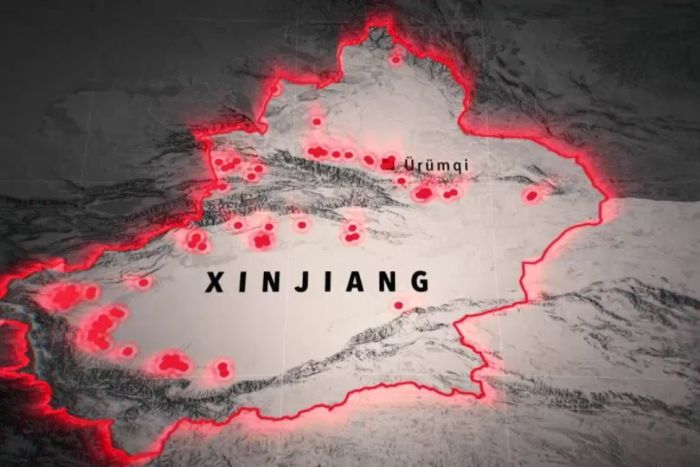
Uyghurs in Xinjiang were forced to become Muslim and have been an integral part of China for thousands of years, Beijing said in a new report, in an attempt to justify its controversial crackdown against the ethnic minority in the far-western region.

Key points:

  • China has sought to justify treatment of Uyghurs that Western countries have condemned as “cultural genocide”
  • Beijing’s report hits back at “double standards” of critics and defends “anti-terrorism” efforts
  • Experts say the white paper is a classic case of China’s ongoing information warfare

A white paper released yesterday by China’s State Council Information Office — the Government’s propaganda arm — presents the ruling Communist Party’s interpretation of history, claiming “Islam is neither an indigenous nor the sole belief system of the Uyghur people”.

The report also said that Islam spread into Xinjiang by “the Arab Empire” and that the Turkic Uyghur people “endured slavery” at the hands of “the Turks”.

“Conversion to Islam was not a voluntary choice made by the common people, but a result of religious wars and imposition by the ruling class,” it said, declaring that the Government nevertheless respects “the Muslims’ right to their beliefs”.

More than a million Uyghurs, Kazakhs and other Muslim ethnic minorities are thought to be detainedin what the Communist Party calls vocational education centres, referred to by the UN as “re-education camps”.

Those living outside the camps are also subject to mass surveillance, with Beijing declaring it wants to “Sinicise Islam” — a hardline policy increasingly referred to by observers as “cultural genocide”against the Turkic minority group.

The report was published as part of Beijing’s broader campaign to deflect international criticism of its crackdown against the Uyghurs, and reiterates its stance that repressive measures in Xinjiang are “counter-terrorism” tactics against Uyghur separatists and Islamic extremists.

“I don’t think anybody outside China who follows what happens in Xinjiang is fooled by this white paper,” Elaine Pearson, Australia director at Human Rights Watch, told the ABC.

James Leibold, a La Trobe University expert on Uyghurs and other Chinese ethnic minorities, said the white paper is a “classic case of China’s ongoing information warfare.”

“Like any piece of propaganda, it’s filled with partial truths,” he said.

But state-run English-language newspaper the Global Times applauded the report, claiming that with the paper, “kind-hearted people can distinguish between right and wrong.”

“It is hoped malicious agitators will zip their lip,” it said.

Beijing claims Turkic Uyghurs have always been Chinese

The Uyghurs are a mostly Turkic-speaking minority who share more in common linguistically and culturally with Turks than they do with China’s ethnic Han majority.

Historians believe parts of the Xinjiang region have been referred to as Turkestan since the medieval era.

According to China’s white paper, however, the region has “long been an inseparable part of Chinese territory” and has never been East Turkestan — a term it claims is used only by separatists in their “clamour for independence”.

Mr Leibold said this claim was “frankly not true”.

Beijing’s report claims that “from the very beginning”, Uyghur culture “reflected elements of Chinese culture” and was an integral part of Chinese civilisation.

“It’s foolish to speak about the existence of a unified Chinese nation 5,000 or even 3,000 years ago to include what is today Xinjiang and the Uyghur people,” Mr Leibold said, adding that claims about religious freedom in Xinjiang were “laughable”.

“Xinjiang always upholds equality for all religions,” the white paper said.

But the Communist Party’s crackdowns against Muslims and other faith communities including Christians and the Falun Gong are well documented.

A report from Amnesty International in 2018 claimed that public expressions of faith in Xinjiang were now deemed “extremist” by authorities, including growing a beard, praying or fasting during the Islamic holy month of Ramadan.

“We have seen many ways in which Uyghur identity has been suppressed in recent years,” Ms Pearson said, noting that China has also banned names deemed too Islamic.

Mass incarceration criticised by Western countries

Australia has expressed criticism of China’s treatment of Uyghurs, recently joining 21 other countries at the UN Human Rights Council including the UK, Canada and Germany in calling upon China to end its detention of ethnic Uyghurs.

Earlier this month, US Secretary of State Mike Pompeo referred to China’s treatment of Muslims in Xinjiang as “one of the worst human rights crises of our time” and “the stain of the century”.

China’s white paper criticised unnamed countries it said “apply double standards to terrorism and human rights and have issued unjustified criticism of Xinjiang’s effort.”

“This kind of criticism betrays the basic conscience and justice of humanity, and will be repudiated by all genuine champions of justice and progress,” it added.

Thirty-five countries including Saudi Arabia, Russia, and North Korea recently accused the West of “politicising human rights” over the Uyghurs and commended what it called China’s “remarkable achievements” in human rights.

Dozens of Australian citizens have been caught by the dragnet of China’s crackdown against Muslims in Xinjiang, many of whom have family members detained in the province.

An investigation by the ABC’s Four Corners revealed last week the extent of China’s attempts at cultural genocide against Uyghurs, including a forced labour scheme to produce cotton bought by Western clothing manufacturers.

It also found that several Australian universities were linked to surveillance technologies used against Uyghur Muslims.

Source: Xinjiang’s Uyghurs were enslaved and forced to convert to Islam, Chinese white paper claims

We must talk about Palestine – without being antisemitic

Worth noting:

It’s hard to write or talk about antisemitism and the Labour party’s handling of it without descending into deep despair, and not just at the mirror the sorry tale is holding up to the whole of our society, which seems to be becoming less tolerant, more racist and less safe for minorities. This is having greater consequences than the Labour leadership can imagine. In particular, it is stifling the ability of commentators and decision-makers to talk sensibly about the real issues in Palestine.

My mother is Palestinian. These issues are deeply personal; we still have family in the West Bank. I am very worried that, at this critical juncture in the history of the region, activists, parliamentarians and journalists feel that they cannot speak out for fear of being branded as antisemitic. My plea is that we must speak more about Palestine, not less, and in this current climate it is something members of both houses of parliament have confided that they are more fearful than ever to do.

Source: We must talk about Palestine – without being antisemitic

Barbarism at the Border Is Just as Shocking as the First Concentration Camps

On the risks of silence and acquiescence:

Behind a razor wire fence at the Border Patrol detention center in Clint, Texas, hundreds of children were held in cells. Scabies, shingles and chicken pox, thriving in the insanitary conditions, were spreading. The odor of the unwashed was so virulent that it attached to the clothes of the border agents themselves.

Following the discovery of this and other outrages at the southern border, Rep. Alexandria Ocasio-Cortez talked of “concentration camps”—a false equivalence that inevitably brought wrath upon her.

Did she not understand that Auschwitz was the ultimate concentration camp? It was a gift for the Republicans. It was a short step from that for them to falsely infer that she is an anti-Semite because she so grotesquely under-valued the Holocaust.

Message to all: Be careful with historical analogies. They can backfire.

That also goes for Senator Lindsey Graham, Trump’s most abject lackey. He called AOC and three of her freshmen colleagues “communists”—suggesting a gross level of ignorance and paranoia as toxic as McCarthyism.

Seeking for equivalence is often meaningless when dealing with moral outrages. Each outrage has its own design. The southern border situation reaches the standard of a humanitarian atrocity by any measure of a civilized and decent society.

The over-arching moral challenge is trying to understand how these atrocities are possible in the first place, the kind of people who design them, and the ease with which they can become institutionalized.

Adolf Hitler did not invent the concentration camp. They first appeared in 1896 in Cuba, when the Spanish overlords of the island launched the policy of reconcentración, forcing rural Cubans into camps inside fortified towns. Over 400,000 of them died. A few years later the same idea was adopted by Field Marshal Horatio Herbert Kitchener, one of the worst military commanders in British history, and certainly among the most callous.

Kitchener commanded the British army in the Boer War, in which the British fought for control of southern Africa against the Boers, the Afrikaans-speaking descendants of original Dutch settlers.

When the war broke out in October 1899 Kitchener confidently predicted it would be over by Christmas that year. It did not end until May 1902.

The Boers proved skillful in fighting a larger and more ponderous enemy. They deployed small forces of guerrillas, men who knew the country well enough to harass the British and keep them off-balance.

Tiring of this, in 1901 Kitchener initiated a scorched earth policy, clearing the land of anything that could sustain the guerrillas—horses, cattle, sheep, crops.

Boer women and children and men who had surrendered were rounded up and concentrated in 24 camps, known as laagers. The camps were run by the military and the detainees were housed in tents and fed on reduced military rations. Each camp had one superintendent, one doctor and a few nurses.

Throughout the war poor hygiene and sanitation had decimated the British forces—of the 23,000 British troops who died far more succumbed to preventable diseases like typhoid and dysentery than bullets.

The camps, with their minimal resources and over-crowding, were even more lethal. As the term “concentration camp” took hold it began to acquire a horror that cast the British as the instigators of a new kind of war crime. Cartoons were published in France showing women and children withered into little more than skeletons. The French government accused the British of mass murder.

Kitchener was indifferent to the suffering and dismissed concerns from London about the harm being done to Britain’s reputation.

This trait in Kitchener of regarding people as expendable in the cause of military victory had shown itself first in the Sudan where he defeated the Dervish forces led by Muhammad Ahmad, the Mahdi. The British deployed machine guns against sword-wielding tribesmen. In one battle 10,000 Dervish died, against 48 British deaths.

After that victory Kitchener became Baron Kitchener of Khartoum.

One of his officers in the Sudan wrote, “He was always inclined to bully his own entourage, as some men are rude to their wives. He was inclined to let off his spleen to those around him. He was often morose and silent for hours together. He was even morbidly afraid of showing any feeling or enthusiasm, and he preferred to be misunderstood rather than be suspected of human feeling.”

But in southern Africa Kitchener’s methods were under closer scrutiny than in the remote Sudan. The concentration camps were discovered by Emily Hobhouse, a 41-year-old single woman and early human welfare campaigner.

In London she was given permission to visit southern Africa to distribute funds raised to help Boer families. At that point she knew of only one camp but after she arrived she discovered the true scale of the operation. Once the army commanders realized that Hobhouse was taking detailed notes they branded her as a “screamer,” a term used against opponents of the war, and banned others from seeing the camps.

But it was too late. Hobhouse returned to London aflame with outrage at what she had seen. “One would hope,” she said, “that the good sense, if not the mercy, of the English people, will cry out against the further development of this cruel system which falls with crushing effect upon the old, the weak and the children.”

In person Hobhouse, a prematurely matronly figure, was normally reserved and (after a failed love affair) somewhat sad. But her public speeches were passionate and she found herself at the head of what became a moral crusade.

She briefed the leader of the opposition Liberal Party, Sir Henry Campbell-Bannerman. He was appalled and uttered a phrase that became a common cry against Kitchener and his camps: “Methods of barbarism.”

When the Tory government was asked how many people were in the camps they did not know. When they did get the figures they were stunning: more than 43,000.

“By 1939 there were still far fewer people being held in Nazi concentration camps than had been in Kitchener’s hell holes.”

Hobhouse knew from what she had seen that a high death rate was inevitable. The conditions in the camps, insanitary and overcrowded, were like a self-sustaining death machine. Families were denied fresh drinking water because “the price was prohibitive.”

Asked how many had died, the official response was “several hundred.” Eventually the official figures were “between 18,000 and 28,000” but no final number was ever established. In addition to the appalling death rate the Boer survivors returned home to find that most of their cattle, sheep and horses had been killed or stolen.

Kitchener, rather than winding up the war when it should have been possible, was bent on sustaining it with increased brutality. Captured guerrillas were deliberately executed in public.

Trying to counter the effect of Hobhouse, the government sent an all-woman special commission to inspect 33 of the camps, all of them hand-picked supporters of the war. This boomeranged: The women confirmed Hobhouse’s story and demanded a number of steps to be taken immediately alleviate the conditions in the camps, including putting medically qualified matrons in charge of every camp, sending out scores of nurses to assist them, and new steps to combat typhoid. Within months of these measures being taken the death rate in the camps had fallen to 2 percent.

At the same time, Kitchener reversed policy and ordered his troops not to round up any more women and children and send them to the camps. It may have seemed that he had suddenly renounced barbarism, but the decision was more cynical than that: by leaving the families with the guerrillas they were encumbered and far less mobile.

The Boers surrendered in 1902 and their territories were incorporated into the Union of South Africa and the British Empire in 1910.

Kitchener’s policies, a combination of inept military campaigns and cruel retaliation, had created the most expensive war since the campaigns against Napoleon in the early 19th century: in today’s money equal to around $350 billion.

The idea of concentration camps on such a scale for non-combatants went into abeyance for a while, totally discredited in Europe until, on March 9, 1933, some disused huts in a gravel pit at Dachau, near Munich, became the first Nazi concentration camp.

The first people sent there were Germans picked out for being critics of the new regime. Jews were among them, but they were there primarily because of their political beliefs, often because they were communists. Gay men were treated more harshly, targeted for “preventive custody” and ruled as a “threat to the people’s community.”

Late in 1937 David Glick, a Pittsburgh lawyer, negotiated with the Gestapo for the release of 120 of the 300 Jews in Dachau, and the British, who ruled Palestine, granted them visas to settle in Palestine. Later Glick arranged for the release of a further 3,000 Jews from other camps and they were sent to Bolivia.

By 1939 there were still far fewer people being held in Nazi concentration camps than had been in Kitchener’s hellholes—in fact fewer than all those who died in his camps, a total of 21,000 in six concentration camps, now purpose-built, at Dachau, Sachsenhausen, Buchenwald, Flossenburg, Mauthausen and Ravensbruck.

The ultimate evolution of the camps into industrialized killing machines was initiated at the secret Wannsee Conference in January, 1942.

Reinhard Heydrich, Hitler’s chosen agent for the Holocaust, outlined his “final solution” aimed at 11 million Jews throughout Europe, reaching as far east as Ukraine and Russia.

Of the roughly half a million Jews who lived in Germany in 1933 only 164,000 remained at the end of 1941. They were destined for extermination at the death camps of the Holocaust, along with millions of others, a level of barbarism that had been previously unimaginable.

It is striking that the “methods of barbarism” exposed by Hobhouse aroused widespread public disgust and outrage in Edwardian Britain. Even at the height of the British imperium this was seen as an intolerable aberration. There was no such reaction in Nazi Germany. The Nazis demanded, and achieved, the assent of silence.

That same assent of silence now envelops the Republican Party, cowed into submission by a racist demagogue. But the silent should understand that they are collaborators and will ultimately have to answer for it. They are as complicit in the barbarism on display at the border as Stephen Miller, the enforcer in the White House behind the so-called “zero tolerance” regime—just as in Kitchener’s regime, a task delegated to people and a system never designed to execute it and deliberately left to face the consequences.

Source: Barbarism at the Border Is Just as Shocking as the First Concentration Camps

Hate-motivated crimes down after peaking in 2017, but still higher than in 2016

The latest numbers from StatCan:

Following a 47% increase in 2017, the number of police-reported hate crimes in Canada was down 13% in 2018, from 2,073 incidents to 1,798. Even with this decline, the number of hate crimes remains higher (with the exception of 2017) than any other year since 2009, and aligns with the upward trend observed since 2014.

The year-over-year decrease was almost entirely a result of declines in Ontario. Nationally, the number of hate crimes targeting the Muslim population fell 50% after spiking in 2017 because of large increases in Ontario and Quebec. In 2018, there were also fewer police-reported hate crimes targeting Blacks (-12%) and fewer targeting sexual orientation (-15%). Hate crimes targeting the Jewish population accounted for 19% of hate crimes in 2018, down 4% from 2017. In 2018, non-violent hate crimes (-23%) declined more than violent hate crimes (-7%).

Police data on hate-motivated crimes include only those incidents that come to the attention of police services. These data also depend on police services’ level of expertise in identifying crimes motivated by hate.

For more information on hate crime, see data tables 35-10-0066-01, 35-10-0067-01 and 35-10-0191-01.