Is unleashing Jason Kenney on Ontario a good idea for the Tories?

More commentary on Alberta Premier Kenney’s plans to campaign in the 905 and other immigrant and visible minority rich ridings:

A premier spending days campaigning in a different province for an election of a different order of government: in most cases, it would be political catnip for the opposition back in his province. Alberta in 2019, I cannot say enough, is not most cases. Premier Jason Kenney could gain popularity at home if he ditches Edmonton this fall to hold fundraisers in Markham, Brampton and Mississauga, in service of flipping the federal election away from Justin Trudeau’s Liberals. A typical opposition argument would condemn the premier for wooing Ontarians while a litany of Alberta issues demand attention. But in the minds of many frustrated Albertans, ousting Trudeau is one of the province’s most pressing issues.

This clears Kenney to decamp to Toronto’s populous suburbs for a few brief stretches this fall to stump for Andrew Scheer and Conservative candidates, as the Globe and Mail reports he will. It’s a reprise of the campaign outreach Stephen Harper’s former minister did in immigrant communities in the 905 area and elsewhere in past federal elections. While Albertans will likely stomach their premier’s extra-curricular activities, it’s more of an open question what the net benefit of this would be to Scheer’s Conservatives, whose electoral fortunes could be determined in the roughly two dozen seats that ring Toronto. Will the positives outweigh the negatives?

There’s no clear successor in Scheer’s current caucus to Kenney, the longtime immigration minister and tireless ethnic outreach king who in one weekend would hopscotch from a Chinese banquet hall to a Sikh gurdwara to a Philippine picnic to a Coptic temple, collecting fistfuls of donations, volunteer signups and vote pledges along the way. Plainly, it’s not normal for the Conservatives to have a Jason Kenney, capable of politicking effectively in nearly every shard of Canada’s cultural mosaic and shake loose the Liberals’ traditional grip on new Canadians’ votes; it would likely take a team of outreach workers to accomplish what he did. Kenney has maintained and tended to his contact lists since shifting to Alberta, and retains at least some of his support base out there: members of Toronto’s Chinese community hosted a reception in his honour in March 2018, when Kenney came east to speak at the Ontario Progressive Conservative leadership convention.

It took Kenney several years to hone his outreach methods and to persuade communities to abandon the Liberals in favour of Stephen Harper’s Conservatives. Now both of the leaders who wooed minorities in the 905, Harper and Kenney, are off the federal ballot, having alienated those communities in the last election with policies like the barbaric cultural practices” snitch line and bans on face-coverings at citizenship ceremonies. Scheer is an unknown commodity to many; a visiting Kenney would have to reassure voters that the new leader brings the sort of political chops and immigration system improvements they liked in 2008 and 2011, without the warts of 2015—and that Scheer is certainly not the kingpin of a motley band of racists and xenophobes that Trudeau’s Liberals contend they are. It’s no stretch to assume that if Kenney campaigns federally in Ontario, he’ll also hold fundraisers in Lower Mainland B.C. and the Montreal area—both parts of his old familiar ethnic campaign trail.

Kenney seems intent to make time-zone-hopping almost as regular an activity as premier as it was in his federal career, with his lecture and lobbying circuit in favour of Alberta oil and pipelines. On Friday, he was in Toronto to meet Mayor John Tory and speak to the C.D. Howe institute. The scoresheet, four weeks into Kenney’s premiership: two speeches in Hogtown, zero in his native Cowtown.

Will he be viewed now differently within communities he cultivated in years past? And perhaps more importantly, by voters who aren’t the target of his private fundraisers and events, and might be rankled by his fly-in work?

When he was a federal minister, it was much easier for Kenney to tell Ontarians and British Columbians that he was striving for the best results for all parts of Canada. Now, he’s premier of just one part, an Alberta-firster by design. He professes interest in bringing all Canadians the spin-off jobs and redistributed wealth from Alberta oil development, yet campaigned on a jarring proposal to rejig federal health and social transfers in a way that would substantially favour his province to the detriment of others.

Ontarians will reasonably be suspicious as to whether he has their best interests at heart. The extent to which climate change becomes a major issue in this election may influence how warmly the petro-province leader’s insertion into Ontario riding contests is received. If concerns about a warming planet and extreme weather are chief in voters’ minds, the amount of money and support Kenney raises in Brampton may be outweighed by the scorn his policies and carbon-tax opposition attracts in the rest of the province.

Some developments back in Alberta also make Kenney’s travels more of a dubious proposition. The RCMP continues to investigate alleged voter fraud perpetrated by Kenney’s 2017 campaign for the United Conservative Party leadership, and much of the scrutiny concerns Indo-Canadians in Calgary and Edmonton whose information may have been fraudulently used to obtain online voter identities. Should the investigation bear fruit—no charges have yet been laid—it would reveal the most cynical and craven version of ethnic politics in Canada, and a willingness by Kenney to embrace such dark moves. Why would a Sikh business group or a Polish Catholic Church welcome a politician who abuses his entrée into their community?

To be sure, Kenney and the federal Tories have left themselves an escape hatch: his camp says he won’t stump if it’s seen as a political liability, and the Conservatives are currently leading in the polls. But a party that can use help in a part of the country that tends to swing elections—and has no obvious candidate to provide it—Kenney’s walk down Memory Lane (that’s in Richmond Hill, right?) no doubt seems a gamble worth taking.

Source: Is unleashing Jason Kenney on Ontario a good idea for the Tories?
Danish Prime Minister’s Son’s Girlfriend Causes Immigration Debate

Examples such as this, particularly with respect to Europeans, Americans and others of European ancestry, illustrate that policies targeted to visible minority immigrants and citizens, also impact on those not deemed to be a “problem:”

The son of Danish Prime Minister Lars Lokke Rasmussen has been tripped up by the country’s strict immigration laws, which will force his Harvard-educated American girlfriend to leave Denmark by the end of this month.

The development thrusts immigration policy into the spotlight as Danes prepare to vote in national elections on June 5. Rasmussen, 55, leads a center-right minority coalition that rules with the support of the anti-immigration Danish People’s Party. Last week, he stunned the country’s political establishment by announcing he would rather abandon some of his traditional supporters on the far right than let their “extreme opinions” influence his politics.

In a debate broadcast by TV2 on Sunday evening, Rasmussen said that his 29-year-old son, Bergur, is being forced to split temporarily with his girlfriend, because she’s too young to seek residence under Danish immigration laws.

The young woman, whose name and precise age weren’t revealed, is under 24 and therefore not eligible to remain in Denmark following the 2002 passage of a law that was intended to stop residents, particularly from non-Western countries, from bringing in child brides. It’s since become a key plank in the country’s broader efforts to stem immigration. A student at Harvard University, she’s been in Denmark as part of her studies, Rasmussen said.

In response, Mette Frederiksen, head of the opposition Social Democrats, said the rule carries “a price” and rejected efforts to soften it. Most polls show Frederiksen, who has embraced tough immigration policies since taking over her party, will win next month’s election.

Meanwhile, the prime minister said he backs a revision of the Schengen agreement, so that the current arrangement enabling passport-free travel across Europe is tightened. Rasmussen told TV2 that Denmark “needs to look after our borders, and that’s why we need to develop a new Schengen regime that gives us more political autonomy over our own borders.”

After 2015, when the Syrian refugee crisis hit, Denmark introduced a series of temporary border controls. Rasmussen’s Liberal Party now wants Europe to consider allowing member states to make such controls permanent.

Source: Danish Prime Minister’s Son’s Girlfriend Causes Immigration Debate

Huawei Temporarily Suspends Israeli Employees With US Citizenship

More fall-out expected:

The US boycott of Huawei is creating shockwaves in Israel as well. On Sunday, one of the company’s Israeli employees was turned away from the company’s local research and development subsidiary, after being told he was temporarily being barred due to his American citizenship, according to one person familiar with the matter who spoke to Calcalist on condition of anonymity. The employee in question is one of several Israeli employees with US citizenship, and all were temporarily suspended with pay while the Chinese telecom giant consulted legal sources on whether they could continue their employment.

By Monday, all were back at work.

According to information obtained by Calcalist, the policy was not Israel-specific but was implemented by Huawei globally wherever it has employees of American nationality.

On Thursday, the US stepped up its campaign against Huawei when the US Department of Commerce added the company to a list of companies considered a threat to national security. The new classification means Huawei will now need permission to acquire any US-made technology. Soon after, Google and chipmakers Intel, Qualcomm, and Broadcom announced they would stop providing services and selling products to Huawei.

Amid a wave of hot and dry weather, nine fires were caused in southern Israel on Wednesday by incendiary devices launched…

The move will prevent Huawei from providing security updates for its Android devices, and from selling devices with access to Google’s app store in the future. It will also limit Huawei’s ability to purchase processors and chips for its devices.

The US boycott, however, will affect more than just the Chinese telecom. Huawei is one of the three largest smartphone manufacturers in the world, and the only one of the three seeing accelerated growth. Losing Huawei as a customer will mean losing revenues of hundreds of millions of dollars a year. While it might be a temporary loss — as long as the American boycott lasts — it could turn permanent if Huawei manages to create alternative supply avenues.

Huawei has two separate operations in Israel. The first, under the name Toga Networks, is a research and development outpost operational since 2009. While the company has been reported to be a Huawei subsidiary since 2012, it ignored media reports and only admitted to its Chinese connections in 2016. Toga currently employs several dozen people, down from 200 at its peak, and develops telecom products such as switches and routers and also various applications for cloud-based databases.

Huawei also has a local marketing subsidiary under the name Huawei Israel, set up over the last year. The company previously operated via a local franchisee.

Source: Huawei Temporarily Suspends Israeli Employees With US Citizenship

If you think less immigration will solve Australia’s problems, you’re wrong; but neither will more

Similar analysis could apply to Canada and interesting approach to benchmark against the UN agreed Sustainable Development Goals:

Are we letting too many or too few migrants into Australia?

For 2019-20 the Australian government has cut the annual net migrant intake from 190,000 to 160,000. It’s a political decision, balancing the concerns of those who want much lower or higher immigration levels for a mix of social, environmental and economic reasons.

It’s an unsatisfactory and ad-hoc balancing act. Could there be more “science” in these decisions?

We’ve sought to come up with an evidence-based method to gauge the effects of migration. To do so we’ve used the internationally accepted framework for development planning, the Sustainable Development Goals. The goals cover major aspects of economic, social and environmental well-being, from decent jobs and quality education to good health and clean water.

We investigated three population scenarios: one similar to Australia’s recent annual level of net migration (about 200,000 a year); one much lower (about 70,000 a year); and one much higher (about 300,000 a year).

What our results show, perhaps surprisingly, and more by luck than design, is that recent levels of immigration seem to be in a “goldilocks zone” that balances economic, social and environmental objectives.

Our results also suggest migration is neither the problem nor solution in many areas where Australia is off-track, from government debt to environmental action.

Balancing competing agendas

Immigration policy is Australia’s de facto population policy. With the birthrate just keeping up with deaths, it’s migration that drivespopulation growth. It’s why in 2018 the population passed 25 million, years earlier than previously predicted.

Annual migration intake is set as part of the the annual budget cycle. The government treats it primarily as a short-term economic issue. But population growth has long-term impacts on many sectors, from health and education to infrastructure and housing. Population growth, particularly through urban expansion, increases pressures on the natural environment.

Ideally, therefore, decisions about migration numbers and population growth should synch with long-term planning at the state and local levels to avoid service shortages, urban sprawl, vehicle congestion and infrastructure shortfalls.

The question remains about how to make evidence-based policy that balances deeply divided views. Some strongly support high net migration due to the important role population growth plays in managing an ageing population. Others argue equally forcefully for reducing migration because it places a burden on infrastructure, services and the environment.

Using the sustainable development goals

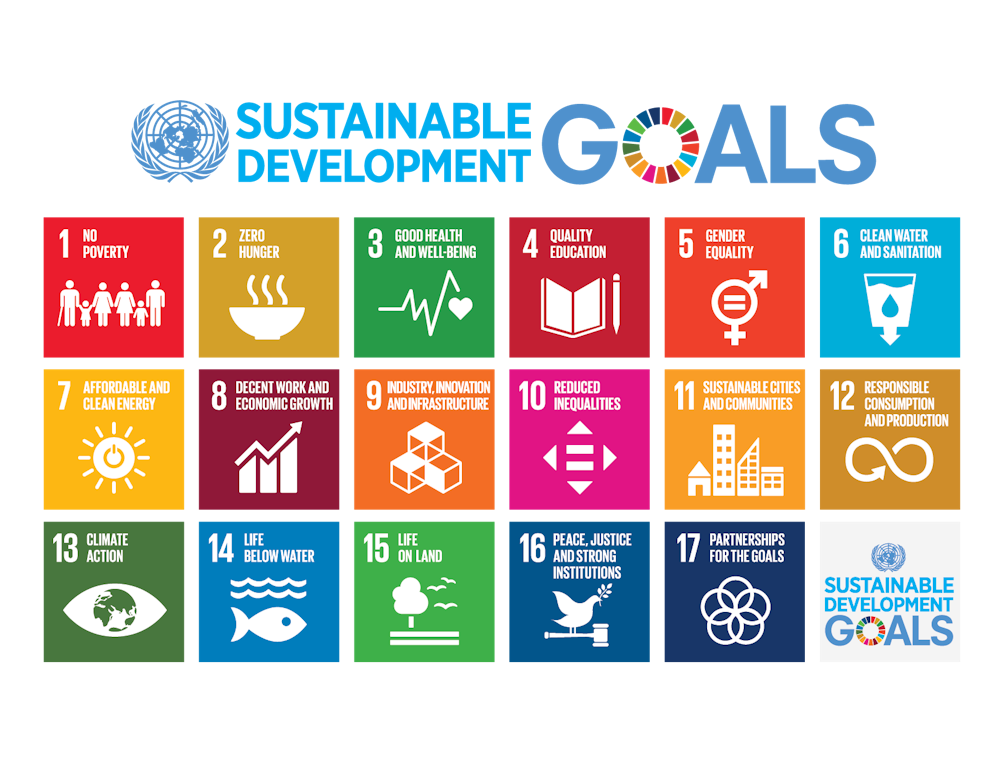
To negotiate these differences, we chose the UN Sustainable Development Goals (SDGs). The goals cover long-term targets in 17 major areas of economic prosperity, social justice and environmental sustainability. All member states of the UN, including Australia, have agreed to them as a shared blueprint to achieve by 2030.


The 17 Sustainable Development Goals. United Nations

Each goal area includes multiple specific targets – 169 in all. For example, Goal 11 (“Make cities and human settlements inclusive, safe, resilient and sustainable”) includes the targets of adequate, safe and affordable housing and affordable, accessible and sustainable transport systems.

Countries are not required to adopt all targets, but focus on those appropriate. We chose 52 targets relevant to Australia, covering all 17 goals and ensuring a reasonable balance of economic, social and environmental priorities.


Using advanced modelling capabilities, we tested how achieving the targets by 2030 might be affected by different population sizes.

Overall, not a huge difference

The following chart shows our results in a single graphic. For our low-migration scenario, Australia’s population in 2030 is 27.3 million; for the moderate, 28.9 million; and for the high, 30.6 million.


How low, moderate and high population scenarios affect Australian’s performance on the Sustainable Development Goals.The authors

Only in two goal areas – education, clean water and sanitation – do our results show Australia doing better than 85% achievement by 2030 under all three scenarios. Only in another three – health, gender equality and energy – do we do better than 50%.

All scenarios had equal effect on eliminating poverty (Goal 1). However, the low-migration scenario did better for achieving food security and improving nutrition (Goal 2).

Perhaps surprisingly, for decent work and economic growth (Goal 8), the middle scenario scored the best.

In the centre of the chart are the overall scores of each scenario.

The high-migration scenario (39.4% progress towards all targets) is the lowest , but not by much. There is almost no difference between maintaining recent migration levels (40.5%) and significanly slashing the migration intake (40.6%).

This suggests that, on an equal balance across a broad set of competing objectives, recent historic levels may be about right.

However, these results brush over the range of trade-offs between different targets – some of which may be considered more important than others.

Compared against the low scenario, for example, the high scenario results in an estimated 1.7 million extra vehicles on the roads, increased water consumption (~600 million m3), greater urban sprawl (~60,000 ha), and higher greenhouse gas emissions (~15 million tons CO2-equivalent).

Poor performance in many areas

What is perhaps most striking is that, regardless of the population scenario, Australia isn’t tracking well on most measures of sustainable development. Other studies have concluded the same.

As already noted, Australia is doing well on health, education and water quality. But it’s performing poorly on climate action (Goal 13) and responsible consumption (Goal 12), to name just two.

Broadly accepted frameworks to measure progress and weigh policy decisions in contested areas is something we lack across the policy board.

Finding new drivers of job creation, addressing infrastructure needs, and tackling climate change are just some of the complex challenges Australia faces.

Ad-hoc, short-term approaches to addressing them are unlikely to often deliver optimal outcomes. Combining clear targets, a long-term perspective and advances in modelling might help.

Source: If you think less immigration will solve Australia’s problems, you’re wrong; but neither will more

New Details And Problems Emerge With Trump Immigration Plan

More commentary:

News coverage of the Trump administration’s immigration plan has focused on the introduction of a point system to the U.S. legal immigration system. However, a closer look and new details from the White House reveal major immigration policy changes many have overlooked. Most important is a set of policies that will not change at all, despite the plan’s focus on “high-skilled” immigrants.

On May 16, 2019, Donald Trump discussed his proposal for a new legal immigration system in a White House speech. The plan, which has yet to be turned into legislation, would replace all current family and employment-based immigration preference categories with a system that awards points based primarily on age and education.

Under current law, a U.S. citizen may sponsor for immigration a spouse, parent, minor or adult child or a sibling. Lawful permanent residents (green card holders) can sponsor a spouse, minor child or unmarried adult child. Employers can sponsor individual employees for immigration, often after undergoing labor certification (i.e., showing no U.S. workers were available for the position). Certain individuals may qualify to self-petition in the employment-based preferences without an employer sponsor. Most employer-sponsored immigrants are already working in the United States in H-1B temporary status.

The Trump speech and an additional document from the White House reveal and confirm four important policies.

The Administration Intends To Eliminate the Applications of More Than 4 Million People Waiting in the Current Family and Employment Backlogs. (See article here.) “Immigrants in the green card backlog would lose their place in line and would need to apply under the new point-based system,” according to an analysis from Berry Appleman & Leiden. “The White House has said people who are currently waiting for green cards will receive additional points, but no specifics have been released.” Donald Trump confirmed this in his May 16, 2019, speech, stating, “We will replace the existing green card categories with a new visa, the Build America visa.”

Individuals whose applications are eliminated must compete with each other and anyone else in the world who wants to apply in a given year for a green card in the United States, as discussed here. If 2 million or 3 million people apply in a year under the point system, those whose applications would be eliminated may not garner enough “points” to receive permanent residence under the new law, if the plan is approved by Congress. Needless to say, it is controversial to tell millions of people who have waited years in immigration backlogs that they have wasted their time.

Individuals Must Pass English Language and Civics Exams BeforeBecoming Permanent Residents. Under Section 312 of the Immigration and Nationality Act, to become a U.S. citizen, after living as a permanent resident for at least five years (three years for spouses of U.S. citizens), a person must demonstrate “1) an understanding of the English language, including an ability to read, write and speak words in ordinary usage . . . [and] 2) a knowledge and understanding of the fundamentals of the history, and of the principles and form of government, of the United States.”

The administration’s proposal takes a different approach. A documentreleased after the Trump speech states, “Before being able to apply, green card applicants must pass a U.S. civics exam and to demonstrate English proficiency.”

This new requirement would throw a wild card into the immigration process and, critics would note, seems designed to favor people from English-speaking countries at the expense of people from Latin America. And there may be other objections. “This proposal cheapens the value of citizenship,” said attorney Greg Siskind, a founding partner of Siskind Susser, in an interview. “If you require the English/civics knowledge just to get a green card and all you have left for citizenship is proving you’re not a criminal and have been in the U.S. for enough years, achieving that status is no longer really special.” Siskind thinks the requirement is a method to admit fewer immigrants to the United States. It remains unclear whether spouses of the principal applicants will need to pass an English and civics test as well.

From a practical business perspective, this new requirement would likely make it much more difficult to recruit someone who exhibits great talent and promise in a field but currently has weak English language skills. The requirement would remove from employers the ability to judge whether English language ability is important for the job. But the entire proposal could be read as indifferent to the needs of employers, since the plan ends employer sponsorship and companies are unlikely to know when the bill passes which, if any, current or future employees will gain enough points to remain with a business long-term in the United States.

A Lawful Permanent Resident Would No Longer Be Allowed To Sponsor a Spouse. Given that workers are human beings with emotions and personal lives, eliminating the ability of lawful permanent residents to sponsor a spouse (and not allowing U.S. citizens to sponsor their parents, under the proposal) would seem to many cruel and short-sighted. Under the administration’s plan if a single person gains permanent residence and then gets married, he or she cannot sponsor a spouse for immigration until after becoming a U.S. citizen. That could mean a couple being separated for 5 to 7 years, a major disincentive for highly skilled people to immigrate to or remain in the United States.

The Administration’s Crackdown on High-Skilled Immigration, Particularly H-1B Visa Holders and International Students, Will Continue. It seems ironic for the president to announce a proposal to attract more high-skilled foreign nationals to America when the focus of U.S. Citizenship and Immigration Services under the Trump administration has been to admit as few highly skilled people as possible. “Denial rates for new H-1B petitions have increased significantly, rising from 6% in FY 2015 to 32% in the first quarter of FY 2019” under the Trump administration, according to a National Foundation for American Policy (NFAP) analysis.

During his May 16, 2019, speech, Donald Trump said, “Companies are moving offices to other countries because our immigration rules prevent them from retaining highly skilled and even, if I might, totally brilliant people.” But the reason companies are moving to other countries is the Trump administration’s restrictive policies on H-1B temporary visas, which the president did not disavow in his speech. Adding more employment-based green cards and eliminating the per-country limit would help but it is primarily the low annual level of H-1B visas and administration policies that are driving more companies to Canada and elsewhere.

In its just announced Spring 2019 regulatory agenda, the administration stated it would soon propose to eliminate the ability of the spouses of H-1B visa holders to work and tighten the rules still further on who qualifies for an H-1B visa. The administration also plans to propose regulations to make it more difficult for international students to stay in the United States and complete their programs. Higher fees for international students and employers of H-1B visa holders are also coming. If given a choice, rather than a new legislative plan, companies would prefer the administration simply stop doing what it has been doing on business immigration.

The White House immigration plan proposes to continue preventing many high-skilled foreign nationals from working in the United States on H-1B visas, eliminate the immigration applications of more than 4 million people waiting in family and employment backlogs, introduce extraneous green card requirements for workers and tell professionals who gain permanent residence they may need to wait 5 to 7 years before their spouse can live with them in America.

The White House argues, “A random unfair entry process hurts everyone.” Some may look at the president’s plan and agree.

Source: New Details And Problems Emerge With Trump Immigration Plan

Japanese firms resist hiring foreign workers under new immigration law – poll

Significant culture change:

Only one in four Japanese companies plan to actively employ foreign workers under a new government immigration scheme, a Reuters poll found, complicating Prime Minister Shinzo Abe’s efforts to ease the country’s tightest job market in decades.

And the bulk of the firms that may hire these immigrants do not plan to support them in securing housing, learning Japanese language skills or getting information on living in Japan, the Reuters Corporate Survey showed.

The survey results underscore the challenge for Japan to cope with its dwindling and ageing population that has put pressure on the government to relax tight foreign labour controls. Immigration has long been taboo here as many Japanese prize ethnic homogeneity.

The lack of language ability, cultural gap, costs of training, mismatches in skills and the fact that many foreign workers cannot stay permanently in Japan under the new system were among factors behind corporate wariness about hiring foreign workers, the Reuters poll showed.

The law, which took effect in April, creates two new categories of visas for blue-collar workers in 14 sectors such as construction and nursing care, which face a labour crunch. It is meant to attract up to 345,000 blue-collar workers to Japan over five years.

But the survey suggests the government may struggle to get the workers it needs to ease the country’s labour shortage where there are now 1.63 jobs available for every job seeker, the most since the beginning of 1974.

“Taking education costs, quality risks and yields into account, costs will go up” by hiring foreign workers, wrote a manager at a rubber-making company, who said the firm has no plans to hire foreign workers.

“We have failed in the past by employing foreign workers who could not blend in with a different culture,” a manager of a metal-products maker wrote.

Some 41% of firms are not considering hiring foreigners at all, 34% are not planning to hire many and 26% intend to hire such foreign workers, the survey conducted from May 8-17 showed.

Of those considering hiring foreign workers, a majority said they have no plans to support them in areas such as housing, Japanese language study and information on living in the country, it showed.

The survey, conducted monthly for Reuters by Nikkei Research, polled 477 large- and mid-size firms, with managers responding on condition of anonymity. Around 220 answered the questions on foreign workers.

Under the new law, a category of “specified skilled workers” can stay for up to five years but cannot bring family members. The other category is for more skilled foreigners who can bring relatives and be eligible to stay longer.

While foreign workers are generally viewed as cheap labour in Japan, 77% of firms see no change in wage levels at Japan Inc as a whole, when hiring specified skilled workers. Some 16% expect wages to decline and just 6 percent see wages rising.

Foreign workers “will help ease the labour crunch, bringing down overall wages,” a steelmaker manager wrote in the survey.

Abe, whose conservative base fears a rise in crime and a threat to the country’s social fabric, has insisted that the new law does not constitute an “immigration policy.”

Japan has about 1.28 million foreign workers – more than double the figure a decade ago but still just 2% of the workforce. Some 260,000 of them are trainees from countries such as Vietnam and China who can stay three to five years.

Source: Japanese firms resist hiring foreign workers under new immigration law – poll

How The Fight For Religious Freedom Has Fallen Victim To The Culture Wars

Yet another effect of increased polarization, even if issues related to the balance of religious freedom and other rights is often not straighforward:

The promotion of religious freedom in America, a cause that not long ago had near unanimous support on Capitol Hill, has fallen victim to the culture wars.

A high point came in 1993, when Congress overwhelmingly passed the Religious Freedom Restoration Act, meant to overturn a Supreme Court decision that limited Americans’ right to exercise their religion freely.

Those days are gone. The consensus surrounding religious freedom issues has been weakened by deep disputes over whether Americans should be free to exercise a religious objection to same sex marriage or artificial contraception and whether the U.S. Constitution mandates strict church-state separation.

“It is more difficult to get a broad coalition on religious freedom efforts now,” says Holly Hollman, general counsel at the Baptist Joint Committee for Religious Liberty. “People have a bad taste in their mouth about what they think the other side thinks of religious freedom.”

“It’s a divisive issue,” says Todd McFarland, associate general counsel at the General Conference of Seventh-day Adventists, a denomination historically known for its advocacy of religious freedom. “For a long time in the country we kept it down to a dull roar. When that’s no longer possible, it’s a problem.”

The religious freedom question could arise again in the months ahead, as the U.S. Supreme Court considers whether to take new cases that involve the limits on Americans’ religious rights.

In theory, the commitment to religious freedom is straightforward. The First Amendment to the U.S. Constitution bars Congress from making any law “respecting an establishment of religion or prohibiting the free exercise thereof.”

Most of the attention, especially in recent decades, has focused on the “free exercise” clause. An important case involved Adele Sherbet, a Seventh-day Adventist, who was fired for refusing to work on Saturdays and then denied unemployment benefits. In a 1963 decision, the U.S. Supreme Court ruled that Sherbet’s free exercise right had been violated.

In a 1990 decision, however, the Court significantly narrowed the Sherbet precedent, ruling against a Native American man, Alfred Smith, who was dismissed from his job because he had illegally ingested peyote as part of a religious ritual.

The Court’s Smith ruling met with bipartisan outrage in the U.S. Congress and led to passage of the RFRA legislation. Among the sponsors was a first-term liberal Democrat from New York, Jerrold Nadler.

“Unless the Smith decision is overturned,” Nadler argued on the House floor, “the fundamental right of all Americans to keep the Sabbath, observe religious dietary laws, to worship as their consciences dictate, will remain threatened.” The bill passed the House unanimously and was approved in the Senate by a vote of 97-3.

Religious freedom politicized

In the years since, however, the religious freedom cause has been politicized, with conservatives claiming it for their purposes and liberals shying away from it for reasons of their own.

When liberals started pushing for expanded protections for the LGBT population, conservatives grew alarmed, arguing that practices such as same-sex weddings go against biblical teaching. They’ve argued that religious freedom should mean they can’t be forced to accommodate something they don’t believe in. Liberals portrayed that stance simply as discriminatory and argued it should be illegal.

Sen. Ted Cruz, R-Texas, made the issue a major theme of his campaign when he ran for the 2016 Republican presidential nomination.

“We’re a nation that was founded on religious liberty,” Cruz told an interviewer, “and the liberal intolerance we see trying to persecute those who as a matter of faith follow a biblical definition of marriage is fundamentally wrong.”

When the conservative Heritage Foundation celebrated the 25th anniversary of the RFRA passage earlier this year, the organization’s president, Kay Cole James, blamed “the left” for the erosion of the original consensus.

“I wish we could get that kind of bipartisan support today,” she said. “The political left has actively worked to undercut our freedoms.”

Religious freedom and discrimination

As conservatives focused the religious freedom debate narrowly around issues of sexuality and marriage, progressives doubled down on the promotion of LGBT rights. The Democrat-controlled House this month approved the “Equality Act,” which would prohibit virtually all discrimination based on sexual orientation or gender identity. One provision actually singles out the RFRA law, prohibiting its use as a defense against discrimination allegations.

Rep. Nadler, having originally been a RFRA backer, co-sponsored the new “Equality” legislation as chairman of the House Judiciary Committee.

“Religion is no excuse for discrimination in the public sphere, as we have long recognized when it comes to race, color, sex, and national origin,” Nadler argued in a committee markup hearing, “and it should not be an excuse when it comes to sexual orientation or gender identity.”

When the bill came up on the House floor, another co-sponsor, Democrat Bobby Scott of Virginia, explained why it may seem that progressives have turned cool on the Religious Freedom act.

“RFRA was originally enacted to serve as a safeguard for religious freedom,” he said, “but recently it’s been used a sword, to cut down the civil rights of too many individuals.”

Some traditional advocates of religious freedom issues are dismayed by how the debate has evolved among both conservatives and liberals.

“When you [tell people] you work for the Baptist Joint Committee for Religious Liberty, they want to know, ‘What kind of religious liberty?'” says Hollman. She is evenhanded in her assessment of responsibility for the breakdown of bipartisan sentiment around the issue.

“It is unfortunate that some on the right will use religious freedom in order to advance a particular partisan issue,” she says. “I think it is problematic on the left to cede arguments about religious freedom, to just say, ‘Oh, people will use that now to advance an anti-LGBT perspective.’ These are tough issues to work on, and religious freedom should not take the fall.”

Fired for observing the Sabbath

One current religious freedom case, in fact, is similar to those that led to the court fights of the last century. In 2005, a Seventh-day Adventist named Darrell Patterson interviewed for a trainer job at Walgreens in Orlando, Fla.

“I was completely up front with them that I observed the Sabbath and that the Sabbath was important to me,” Patterson told NPR.

He got the job, and six years passed without a problem. But one Friday afternoon he was told to report to work the next morning.

“The Sabbath is a beautiful, beautiful day,” Patterson said, explaining why working Saturdays is for him unthinkable. “If you were to come to my house on the Sabbath, you would find that our house is in order. There is a peaceful, serene atmosphere. My wife and my family spend time in prayer. We sing hymns together.”

Patterson skipped work that Saturday. When he went in the following Monday, he was called into a supervisor’s office and told that he was fired.

He sued.

In a statement to NPR, Walgreens says it is “committed to respecting and accommodating the religious practices of its employees” and “reasonably accommodated” Patterson’s requested scheduling, but that doing more would have imposed “an undue hardship on our business.” The Eleventh Circuit court ruled in favor of Walgreens, but Patterson is appealing.

The U.S. Supreme Court is considering whether to hear the case and revisit, yet again, the question of what religious freedom means.

McFarland from the General Conference of Seventh-day Adventists is tracking the case closely. He expects Patterson to be broadly supported, but he also recognizes that the politics around religious freedom issues have shifted in recent decades.

“One of the most unfortunate things is that religious liberty has become the issue of one party,” he says. “For Democrats, it’s viewed as a divisive issue, especially in a primary context. [They say] ‘how is this going to help me?’ They used to feel that being on the right side of religious liberty was an important value, and they don’t anymore.”

Like the Baptist Joint Committee, however, the Seventh-day Adventists fault Republicans and Democrats alike for the politicization of religious freedom issues in recent years. The Adventists are bothered by the apparent reluctance of Republicans to embrace the “establishment’ clause in the First Amendment, barring government from endorsing a religion. Conservatives have pushed for prayer and Bible readings in public schools and government funding for some religious institutions. Some have even suggested the United States be identified as a Christian nation.

“We have a strong interest in having a vigorous establishment clause,” McFarland says. “That’s something evangelicals and other conservative churches historically have not been as interested in. We are not trying to see the U.S. government impose any type of ideology. We have concerns about that. We have long believed that government and church need to stay in their separate spheres.”

The Adventists’ support for the establishment clause has allied them on various occasions with the American Civil Liberties Union, an unlikely partnership for other conservative Christian denominations.

The two parts of the freedom of religion provision in the First Amendment are sometimes seen as conflicting: Is the government in favor of religion or against it? But traditional American religious freedom advocates say the two clauses can also be read as complementary: The free exercise of religion is guaranteed only if it applies to all faiths. That can happen only if government does not take sides.

In Orlando, Fla., Darrell Patterson went back to school after being fired from Walgreens. He is now working as a mental health therapist. His campaign for the right to rest on the Sabbath, now possibly headed to the U.S. Supreme Court, no longer has to do with his own work situation.

“It’s about other people that are going to come after me,” Patterson says “that deserve to be able to practice their religious faith and conviction without putting their livelihoods in jeopardy.”

Source: How The Fight For Religious Freedom Has Fallen Victim To The Culture Wars

Étude sur l’immigration: à la recherche d’un seuil… inexistant

Good and interesting study, using scenarios to capture some of the nuances in relation to choices over immigration levels. And the sensible recommendation to move towards a multi-year plan, with annual adjustments as needed, as was introduced by the federal government a few years back:

Les chefs de parti en ont débattu pendant toute la campagne électorale. Les économistes le cherchent partout. La vérité, c’est que le seuil magique du nombre d’immigrants à accueillir au Québec, à couler dans le béton pour qu’on n’en parle plus, eh bien, il n’existe pas, concluent les auteurs de l’étude Seuils d’immigration au Québec : analyse des incidences démographiques et économiques.

Pour en finir avec le débat dogmatique

En fait, les pénuries de main-d’oeuvre changent à ce point la donne – et améliorent tellement l’intégration en emploi des immigrants ces dernières années – qu’on erre complètement si on essaie sérieusement d’y aller de prédictions de seuils optimaux qui tiendraient la route pendant plusieurs années, résume en entrevue Mia Homsy, directrice générale de l’Institut du Québec.

« On se retrouve devant une question tout en nuances qui ne peut pas se régler par un débat dogmatique de chiffres », insiste-t-elle.

Selon l’étude, « le gouvernement devra avoir l’ouverture de revoir les seuils d’immigration à la hausse sans tergiverser », si les immigrants continuent de s’intégrer au marché du travail comme ils le font ces années-ci.

Les scénarios étudiés

Ce n’est pas que les chercheurs de l’Institut du Québec n’ont pas essayé de le trouver eux aussi, ce fameux chiffre. Ils ont étudié quatre scénarios : d’abord, à des fins de comparaison, celui d’un Québec sans immigration, qui fermerait ses portes ; ensuite, celui du seuil de 40 000 immigrants en 2019 (et de 54 000 en 2040) ; troisième scénario, celui d’un seuil de 53 000 immigrants en 2019 et de 71 000 en 2040 ; enfin, celui d’un Québec très ouvert, qui accueillerait 103 000 immigrants en 2040*.

Ils ont ensuite étudié l’impact de chaque seuil sur la démographie, puis sur l’économie (le PIB réel, la croissance du PIB réel par habitant et la proportion des dépenses en soins de santé par rapport aux recettes fiscales).

Il leur est arrivé ce qui déplaît souvent aux chercheurs (et aux journalistes) : un résultat mi-figue, mi-raisin.

« Ce qui nous a étonnés, c’est qu’il n’y avait pas beaucoup de différences entre les divers scénarios », dit Mia Homsy, directrice générale de l’Institut du Québec

La pénurie qui change tout

Aux fins de leur étude, les chercheurs se sont basés sur des hypothèses du Conference Board du Canada. Elles sont notamment fondées, écrivent les auteurs, sur des tendances selon lesquelles, par exemple, les nouveaux arrivants du Québec rencontreraient les mêmes obstacles sur le marché du travail que les cohortes d’immigrants précédentes.

Ainsi, en se basant sur ces modèles, les chercheurs en sont arrivés à la conclusion qu’un plus grand nombre d’immigrants plombe le PIB par habitant. C’est même avec le scénario d’un Québec sans aucun immigrant que la croissance annuelle du PIB réel par habitant serait la plus élevée, soit de 1,4 % pour la période allant de 2019 à 2040.

Le hic, constatent les auteurs après avoir calculé le tout, c’est que les modèles traditionnels ne tiennent plus. La discrimination traditionnelle dont les immigrants étaient victimes et qui minait le PIB par habitant est de moins en moins présente. La personne au nom étranger, qui n’était jamais appelée en entrevue il y a à peine quelques années, a soudainement pris beaucoup de valeur.

Un chiffre entre tous, cité dans l’étude, en témoigne tout particulièrement, dit Mme Homsy.

Chez les immigrants arrivés il y a de 5 à 10 ans, « le taux de chômage a chuté, passant de 12,7 % en 2009 à 6,7 % en 2018 ».

Les vraies conclusions à tirer

Que faire, alors ? Déterminer le fameux seuil d’immigrants à accueillir « en fonction de notre capacité à les intégrer sur le marché du travail », peut-on lire dans l’étude.

« Plus l’intégration sera rapide et efficace, plus la contribution à l’économie et à la qualité de vie des habitants sera importante. Les seuils annuels d’immigration devraient donc être fortement liés à la capacité d’intégration des nouveaux arrivants au marché du travail québécois et être fréquemment ajustés. »

Autrement dit, insiste Mme Homsy, va pour le plan triennal que veut mettre en place le gouvernement, « mais tous les ans, il faudrait réévaluer ce seuil à la lumière de l’intégration réelle et ponctuelle des immigrants en emploi ».

Les correctifs à apporter

« Le gouvernement doit mettre les bouchées doubles pour pallier aux faiblesses du système actuel comme les délais et la lourdeur du processus de sélection des immigrants, les difficultés de la reconnaissance des qualifications et de l’expérience étrangères et les succès mitigés de la francisation », peut-on lire dans l’étude.

Alors que la population vieillit et que la main-d’oeuvre se fait rare, « il faut plus que jamais tout mettre en oeuvre pour que les progrès récemment observés se poursuivent et permettent enfin à l’immigration de déployer son plein potentiel ».

* Les chiffres ont été choisis en se basant sur différentes proportions d’immigrants (0 %, 12 %, 15 % et 23 %) que le Québec accueillerait par rapport à l’ensemble du Canada.

Source: Étude sur l’immigration: à la recherche d’un seuil… inexistant

An English summary can be found here: Should Quebec reduce immigration to 40,000 newcomers per year?

UN human rights observers warn Quebec about secularism bill

While I agree with the concerns, not sure how credible it will appear given the significant UN members who do not respect religious freedoms and have rigid dress codes that apply to women in particular:

High-ranking human rights monitors with the United Nations are concerned the Quebec government will violate fundamental freedoms if it moves ahead with legislation to limit where religious symbols can be worn.

Three UN legal experts, known as rapporteurs, signed and sent a letter written in French last week to the Canadian mission in Geneva. They asked the diplomats to share the letter with Quebec’s Legislature.

The letter says the province’s so-called secularism bill, which the Coalition Avenir Québec government is rushing to pass by next month, threatens freedoms protected by the International Covenant on Civil and Political Rights.

“We are particularly concerned … about consequences for those people susceptible to being disadvantaged or excluded from a job or public position because of the potential effects of the proposed law,” the letter reads.

Tabled in March, Bill 21 will bar public teachers, government lawyers and police officers from wearing religious symbols at work. It will also require government services to be received without religious garments covering the face.)

The bill has already attracted widespread criticism from minority groups and anti-racism advocates in Quebec, who fear it will, among other things, significantly limit work opportunities for Muslim women.

The Quebec government maintains the legislation is moderate and represents the desires of a majority in the province.

But according to the UN observers, if passed, the bill could violate rights to freedom of conscience and religion, as well as a number of equality guarantees contained in the covenant.

‘Extremely inappropriate’

The letter also notes the bill doesn’t define what a religious symbol is, adding that it would be “extremely inappropriate” for a government to decide whether a symbol is religious or not.

Critics of the bill, including several teachers unions, highlighted this point repeatedly during the six days of legislative hearings that wrapped up last week.

It is unclear, for instance, whether the Star of David is a religious or political symbol.)

The letter goes on to take issue with the requirement that government services be received with an uncovered face, a measure that singles out Muslim women who wear the niqab.

“The bill constitutes a restriction, or limitation, of the freedom to express religion or belief,” the letter reads.

At multiple points, the letter reminds the Canadian government that it is bound by various human rights instruments, including the covenant on civil and political rights, which it signed in 1976. Quebec is also bound by these agreements.

The letter is signed by the rapporteur for minority relations, Fernand de Varennes; the rapporteur for racism, E. Tendayi Achiume; and the rapporteur for religious freedom, Ahmed Shaheed.

It closes with a series of questions about how minority rights will be protected once the legislation is passed. The rapporteur also wants to know how minority groups will be consulted in the legislative process.

Of the 36 groups and individuals who were invited by the Quebec government to take part in the legislative hearings for the bill, only two represented religious communities in the province.

Rules broken, lawyer says

Pearl Eliadis, a Montreal human rights lawyer with extensive experience working with the UN, said it is noteworthy the letter was written in French.

“The United Nations is signalling … that majority will is constrained or bound by or limited by rules about how you treat minorities,” she told CBC News after consulting the letter.

“And those rules have been broken in this case. They have manifestly been broken in this case.”)

Quebec Immigration Minister Simon Jolin-Barrette, the bill’s sponsor, has received the letter and is “analyzing it in detail,” a spokesperson for the minister said in a brief written statement Tuesday.

“The government of Quebec is proud of Bill 21,” the statement said. “It is pragmatic, applicable and moderate. It reflects the consensus of the majority of Quebecers.”

But Hélène David, the provincial Liberal critic for secularism issues, says the UN letter “underscores once again the attack on fundamental rights and the lack of justification for such a measure.”

In an emailed statement, a spokesperson for Canadian Heritage and Multiculturalism Minister Pablo Rodriguez did not comment on the UN letter but said the federal government’s position is clear: “It’s not up to politicians to tell people what to wear or what not to wear. Canada is a secular and neutral state, and that is reflected in our institutions.”

“The Quebec government’s bill has raised numerous questions. We will continue to follow it very closely.”

While Prime Minister Justin Trudeau has criticized the bill (as have the federal NDP and Conservatives), he hasn’t indicated whether the federal government will intervene if it is passed.

The letter itself carries no legal weight. But it could provide ammunition to groups who will seek to challenge the law before the UN’s Human Rights Committee, Eliadis said.

Such challenges can take several years before the committee offers a decision (known as a “view”). When they are delivered, though, the federal government comes under considerable pressure to comply.

But beyond its possible legal ramifications, the UN letter indicates that what is at stake with Bill 21 is Quebec’s reputation as a tolerant society, Eliadis said.

“I think the average person should care,” she added.

“I think many people in Quebec do care because they understand that what the Quebec government is setting aside are our most fundamental values as a nation.”

Source: UN human rights observers warn Quebec about secularism bill

Kenney will campaign in Ontario during federal election as Tories look to win back immigrant voters

As noted, these ridings can flip back and forth (and Doug Ford’s PCs largely won the same 905 ridings that the Liberals had won back federally).

I have considerable discomfort with such a partisan role for provincial premiers in a federal election and vice-versa whatever the party.

It will nevertheless be interesting to see how effective this strategy works with one premier who knows the issues and related limits, and one who appears largely oblivious. And obviously, Kenney will be capitalizing on the close relations he developed with many of the communities he actively courted in the past.

And the obvious question is why premiers are campaigning when they should be governing:

Alberta Premier Jason Kenney will campaign in Ontario during this fall’s general election in an effort to convince new Canadians living in suburban ridings that Andrew Scheer’s Conservatives are a safe choice for their votes.

Mr. Kenney’s journey to the Ontario heartland is a remarkable intervention by a premier in a federal campaign, a move targeted at defeating Justin Trudeau’s Liberal government.

Premiers have involved themselves in federal elections in the past. Danny Williams, when he was Progressive Conservative premier of Newfoundland and Labrador, waged an Anything But Conservative campaign against Stephen Harper’s federal Conservatives during the 2008 election in a dispute over equalization formulas.

Liberal Kathleen Wynne, then-premier of Ontario, worked actively in 2015 to defeat Mr. Harper and to make Mr. Trudeau prime minister, going so far as to throw her party’s provincial machine into local fights to defeat both Conservative and New Democrat candidates.

But Mr. Kenney is taking a very different approach, according to a source close to the United Conservative Party Premier; The Globe and Mail granted them anonymity because they were not authorized to speak on the Premier’s behalf. Mr. Kenney will be inserting himself into what is known as the 905: the large swath of seats outside Toronto, named after its area code, whose millions of voters often determine the outcome of federal elections.

In many of those ridings, immigrant Canadians make up a majority or a large minority of voters. As immigration minister in the Harper government from 2008 to 2013, Mr. Kenney worked tirelessly and successfully to convince immigrant voters, many of whom are socially and economically conservative in outlook, that the federal Conservative Party best reflected their values.

A swing by 905 voters away from the Liberals delivered a strong minority government for the Conservatives in the 2008 election and a majority in 2011. But many of those same voters abandoned Mr. Harper for Mr. Trudeau in 2015, helping to deliver a majority government for the Liberals.

In a statement to The Globe on Wednesday, Mr. Kenney reiterated his hope that the Liberals would modify their positions on pipeline approvals and carbon taxes. However, if the Liberals do not reverse these policies, he said, “I will openly and vocally campaign here in Alberta and wherever I can make a difference across Canada to elect a Conservative government that will stand up for Alberta and for Canada.

“As I said many times during the recent [provincial] election campaign, if the Trudeau government continues with the destructive policies that undermine Alberta’s vital economic interests and put Albertans out of work, the impact on our province will be disastrous,” he said. “If Trudeau’s policies don’t change, then the federal government needs to.”

The new Alberta Premier has many bones to pick with Mr. Trudeau’s Liberals. In the Throne Speech delivered by Lieutenant-Governor Lois Mitchell Wednesday, the new government vowed to immediately scrap the carbon tax enacted by the previous NDP government of Rachel Notley. The Liberals have imposed a federal tax on any province that does not put a price on carbon. The tax is one reason Ontario Progressive Conservative Premier Doug Ford will also be campaigning to unseat Liberals in the next general election.

Mr. Kenney is also incensed by Bill C-69, which would impose stricter environmental conditions on proposed infrastructure-projects, including new pipelines, and Bill C-48, which would ban tanker traffic along British Columbia’s north coast. Both bills have been passed by the House of Commons and are currently before the Senate.

The federal Liberals have accused the federal Conservatives of catering to nativist voters, pointing to a pro-pipeline rally that Mr. Scheer attended at which far-right-wing activist Faith Goldy was also present, along with “yellow vest” protesters, many of whom oppose Canada’s open-door immigration policies.

The Conservatives have fought back against these accusations. “There is no home in the Conservative Party of Canada for anti-immigrant or racist sentiment,” Conservative immigration critic Michelle Rempel said earlier this month. “Anyone who harbours those beliefs does not have a political home in our movement.”

But Mr. Kenney’s appeal to immigrant voters may carry special weight. As immigration minister, he was indefatigable in his efforts to woo visible-minority voters, earning the nickname “minister for curry in a hurry.”

The source close to Mr. Kenney said the Premier will only campaign in Ontario if his participation is welcomed by the federal Conservatives. Some observers might speculate that looking to Mr. Ford and Mr. Kenney for help only illustrates the weakness of Mr. Scheer in the key battleground of Ontario.

But Mr. Kenney’s supporters will say that the more allies Mr. Scheer has during the campaign, the better.

At press time, Mr. Scheer’s office had not responded to a request for comment.

Liberal supporters will assert that having Mr. Kenney and Mr. Ford campaign in support of the federal Conservatives will strengthen Mr. Trudeau’s claim that only he can be counted on to fight global warming, which threatens the environment and human habitations.

But Conservatives at all levels believe that voters will join them in opposing carbon taxes as a tool to fight climate change. The outcome of the next election could hinge on which side suburban voters in Ontario choose.

Source: John Ibbitson writes