IRCC Departmental Plan 2018-19: Citizenship
2018/06/08 2 Comments
The new framing of citizenship places citizenship outside of integration in the 2018-19 Departmental plan, viewing citizenship as more operational in nature rather than key to integration.
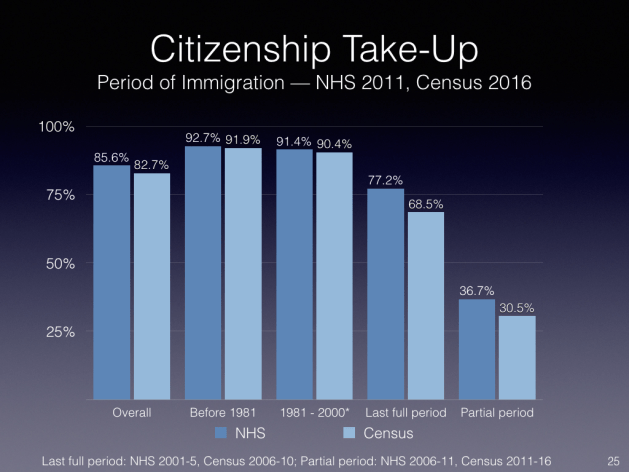
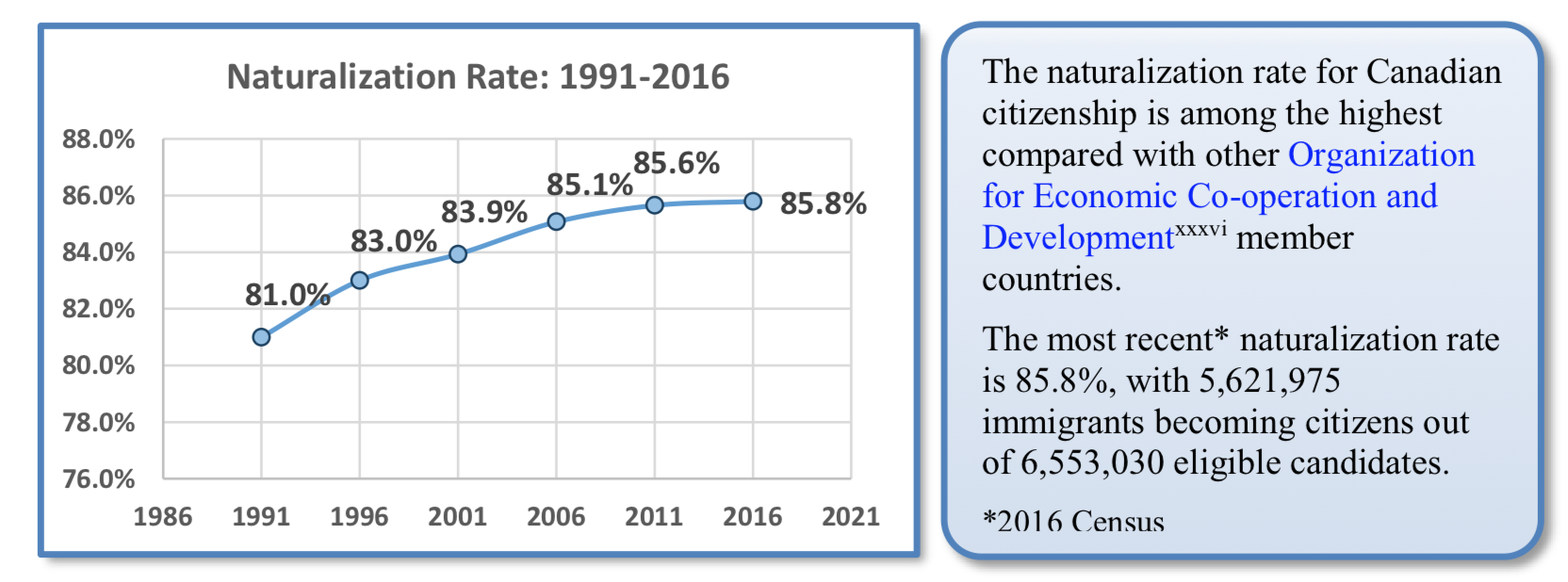
Moreover, the plan includes an incorrect naturalization rate of 85.8 percent for the 2016 Census rather than a more accurate rate of 30.5 percent, given their methodology using the four-year residency requirement for the full 2011-16 period without accounting for the fact that the three-year residency requirement was in effect until May 28, 2015 (my detailed analysis in my article, What the census tells us about citizenship).
This will likely come back to haunt IRCC and StatsCan in 2021 as using the same methodology would mean assuming a three-year residency period for the entire 2016-20 period, despite the four-year period being in effect for 649 days, or about 35 percent of the time.
And of course by overstating naturalization rate now, and understating in 2021 (assuming they are consistent in their methodology), the decline will appear larger.
I look forward to doing the analysis then!
Summary chart below:
Core Responsibility 3: Citizenship and Passports
IRCC promotes the rights and responsibilities of Canadian citizenship, and issues secure and internationally recognized Canadian citizenship and travel documents so that Canadians can participate fully in civic society and so that travel is facilitated across borders while contributing to international and domestic security.
The Department is consulting with Indigenous organizations and Crown-Indigenous Relations and Northern Affairs Canada to update in 2018–2019, through a legislative amendment, the Oath of Citizenship to include reference to respecting treaties with Canada’s Indigenouspeoples. This is also in response to the Truth and Reconciliation Commission’s Calls to Action.
To improve the client experience, the Department is also working in collaboration with the Canadian Digital Service to improve flexibility in accessing citizenship tests and ceremonies. Furthermore, the Department is considering additional enhancements in 2018–2019 which could allow more electronic accessibility options.
Planned result: Eligible permanent residents become Canadian citizens
|
Departmental Result Indicators |
Targets |
Date to achieve targets |
2014–15 Actual results |
2015–16 Actual results |
2016–17 Actual results |
|
Percentage of permanent residents who become Canadian citizens |
≥ 85% |
2021 (every five years) |
85.6% (2011) |
85.6% (2011) |
85.8% (2016) |
|
Percentage of citizenship applications that are processed within service standards18 |
≥ 80% |
End of each FY |
N/A |
N/A |
90% |
|
Percentage of citizenship applicants who report they were satisfied overall with the services they received19 |
≥ 90% |
End of each CY |
 About Andrew
 Multicultural Meanderings
Andrew
What is the name, title and postal address of the Head of the IRCC department?
Kenneth Griffiths
18 Scrivener Street O’Connor ACT 2602 Australia
+61-2-6262-6554
Here is the weblink with contact information. Not clear from your message whether you want the political head (Minister) or senior official (Deputy Minister).