HASSAN: Enough with the feminists who stay silent on Islam

Some valid points (e.g., on polygamy, FGM), less so with respect to the hijab:

The usual gusto accompanied International Women’s Day on March 8, with enlightened people of both sexes commending the strides we have made. Women debated our roles in this day and age, and how our lot can be further improved.

Needless to say, even after decades of public conversations on women’s rights, their plight in undeveloped nations has not changed much. In fact, in this politically correct era there are some nominal Western feminists who say too little about the suffering of third world women.

As always, developed countries have fared better. The biggest news is the #MeToo movement, which has prompted public conversations on sexual harassment faced by women in various settings, but especially the workplace. Actions bring reactions, however; while the movement has raised awareness on these issues, some employers may now fear to hire women because they anticipate sexual allegations.

There were already issues specific to Canadian women, such as workplace discrimination and lack of comparable wages — an issue our prime minister addressed at Davos. Accounting for missing and murdered aboriginal women is an enduring problem, as are violence and abuse in these communities.

Radical ideologies also turn many Muslim women into victims, even in Canada. This is most offensive to me, as a Muslim woman. Feminist groups, who usually expound a leftist worldview, have often defended discriminatory practices in the name of a “new feminism.”

An opinion piece by Nakita Valerio on the CBC website states that “New feminism is based on the understanding that there is nothing inherently liberating about one expression over another. Rather, the liberation is in a woman’s choice and part of modern gender equality rests on the acceptance of diverse womanhood on her own terms, regardless of one’s background.”

Really? So, by extension, there is nothing inherently constraining in any expression of womanhood. Therefore, a woman who is self-assured, economically independent and capable of making career choices is no more liberated than one who lives her entire life according to the whims of her husband? A woman who “chooses” to let her husband take a second wife because her religion permits it, and then suffers all the consequences of a polygamous union, is as liberated as one who rejects such an arrangement as repugnant?

Let’s extend this argument. Submission to the requirements of one brand of Islam has convinced some women to support the heinous practice of female genital mutilation. Their understanding of religion has brainwashed them into considering this beneficial. Such a procedure subjects them or their daughters to pain and poor health. Are they more liberated because they have defined their femininity in these terms?

Clothing matters less than mutilation. The niqab and hijab may be “mere” pieces of cloth, but the expectation that women will wear them remains an important issue. The requirement is rooted in patriarchy, and it is hard to accept that any woman who “chooses” to wear these garments has somehow defined her womanhood in a liberated way.

The new feminists have regressed if they do not call out such practices with the fervour of #MeToo. Their silence endorses a way of thinking which keeps countless women in permanent submission.

Next International Women’s Day it would be encouraging if the women’s movement redefined some of its goals as universal rather than relative. Culture can never be an excuse.

via HASSAN: Enough with the feminists who stay silent on Islam | Toronto Sun
Les « Métis » du Québec misent sur le G7

The complexities of Métis identity:

Des Québécois qui réclament le statut de Métis et revendiquent des droits ancestraux sur un territoire qui inclut La Malbaie veulent profiter du passage du G7 dans Charlevoix pour faire valoir leur cause devant les caméras du monde entier.

« Ce n’est pas impossible qu’on aille porter notre message d’une façon ou d’une autre. Quelle forme ça prendra, on ne sait pas encore. Mais le G7 est un gros forum, il y aura beaucoup de caméras », explique leur porte-parole, René Tremblay, en entrevue avec La Presse.

La cause de ces Québécois qui réclament le statut de Métis est actuellement devant les tribunaux. Elle est à la fois complexe et importante, car elle pourrait avoir des répercussions majeures.

L’organisation de M. Tremblay, la Communauté métisse du Domaine du Roy et de la Seigneurie de Mingan (CMDRSM), compte 5000 membres. Mais ce sont jusqu’à 20 000 personnes qui, selon lui, pourraient aspirer au statut de Métis dans la région du Saguenay-Lac-Saint-Jean seulement.

M. Tremblay et les siens cherchent à obtenir une reconnaissance, comme les Métis de l’Ouest canadien. Ils clament être les descendants d’unions mixtes entre Blancs et autochtones, et revendiquent un territoire ancestral qui va de la Baie-James à la Côte-Nord. La Malbaie, où les leaders du G7 vont se rencontrer les 7 et 8 juin, fait partie de ce territoire.

Mais La Malbaie est reconnue comme un territoire ancestral des Hurons-Wendats ; des Innus affirment également que Charlevoix fait partie du leur. Les prétentions des « Métis » du Québec sont d’ailleurs accueillies froidement par plusieurs autochtones, tout comme de nombreux experts en droit.

« Depuis 40 ans, pas mal toutes les Nations ont dû aller devant les tribunaux et, avec le temps, on a réussi à se bâtir une jurisprudence acceptable. C’est naïf de leur part de croire que du jour au lendemain, en claquant des doigts, ils deviennent les bénéficiaires de tous les droits des Indiens », laisse entendre Konrad Sioui, grand chef de la Nation huronne-wendat.

« Le Ralliement national des Métis, c’est les enfants de Louis Riel, c’est la rivière Rouge dans l’Ouest. En Ontario, il y a eu un jugement en faveur des Métis, mais très étroit. Les critères établis par la Cour suprême pour se faire reconnaître Métis sont très étroits et difficiles à remplir au Québec », ajoute le grand chef.

DEVANT LES TRIBUNAUX

La cause des Métis du Québec devant les tribunaux commence avec une histoire de chasse. Stéphane Corneau, un Saguenéen, occupait un camp illégal sur les terres publiques. Contestant la décision du gouvernement de le détruire, il affirme être Métis et bénéficier de droits ancestraux sur la forêt, dont celui de pratiquer des activités traditionnelles, comme la chasse.

M. Corneau affirme être descendant de Christine Kichera, une Innue qui s’était mariée à un Canadien français en 1805.

Dans un jugement de février 2015, la Cour supérieure a débouté M. Corneau. Le juge Roger Banford a écrit : « La conception de l’identité métisse, selon le défendeur, se limite à son lien de sang et son intérêt développé pour les activités de chasse et de pêche, ce qui ne le distingue guère d’une grande partie de la population saguenéenne. »

La cause a été portée en appel et a été entendue en mai 2017. Les Métis du Québec attendent le jugement avec impatience. Mais selon l’expert en droit autochtone et professeur titulaire à la faculté de droit de l’Université de Montréal, Jean Leclair, la jurisprudence joue en leur défaveur.

« La Constitution reconnaît des droits collectifs à des communautés métisses historiques qui ont perduré dans le temps. Il ne suffit pas d’avoir du sang blanc et autochtone. C’est plus compliqué que ça. »

Alors que les communautés métisses de l’Ouest, descendantes de Louis Riel, ont démontré leur présence historique, la réalité est tout autre au Québec, rappelle M. Leclair. En 2003, avec l’arrêt Powley, la Cour suprême a défini clairement les conditions pour être considéré comme Métis.

« Ils doivent démontrer qu’il y avait historiquement une communauté avec un mode de vie particulier, une spécificité culturelle donnée. C’est là que les revendicateurs d’un statut métis ont tous échoué en cour. Il n’y a pas juste l’affaire Corneau : je pourrais vous envoyer 10 décisions similaires. »

« Ça ne prend pas un juriste pour comprendre que si la Cour suprême avait dit : “Est un Métis toute personne avec une descendance indienne”, il y aurait eu des milliers de Canadiens qui auraient pu revendiquer des droits ancestraux, ajoute Jean Leclair. C’est sûr que la Cour suprême allait donner une interprétation restrictive au mot “métis” figurant dans la Constitution de 1982. »

Les Métis du Québec font quant à eux valoir qu’il existait des communautés métisses au Québec au moment de la colonisation vers 1850, même si elles étaient petites. « Le juge de première instance a cherché un village métis quasiment avec un panneau à l’entrée, qui dit “Métis”. Comme il ne l’a pas trouvé, il a déclaré qu’il n’y avait pas de communauté métisse ici », affirme René Tremblay.

L’affaire est loin d’être terminée : M. Tremblay pense que peu importe la décision de la Cour d’appel, il y aura appel de son groupe ou du gouvernement. « Le jugement que les trois juges préparent, ils l’écrivent pour la Cour suprême. Parce que peu importe la décision, ça risque de se rendre là. »

via Les « Métis » du Québec misent sur le G7 | Gabriel Béland | National

Is It So Hard to Denounce Louis Farrakhan’s Anti-Semitism?

Good question:

Two weeks ago, during a Saviours’ Day event to commemorate the life of Nation of Islam founder Master Fard Muhammad, Louis Farrakhan had some things to say about Jews. The “powerful Jews,” he told the audience inside Wintrust Arena in Chicago, “are my enemy.” The Jews are also “responsible for all of this filth and degenerate behavior that Hollywood is putting out turning men into women and women into men” — that is, for the existence of transgender people, which Farrakhan apparently views as a pressing moral concern. He issued a warning to a subset of the Jewish community — “Farrakhan has pulled the cover off the eyes of the Satanic Jew and I’m here to say your time is up, your world is through. You good Jews better separate because the satanic ones will take you to hell with them because that’s where they are headed.”

Under normal circumstances, sadly, none of this would come as a surprise. As the Anti-Defamation League and plenty of other organizations have amply documented, Farrakhan has been a hardened anti-Semite — not to mention a committed enemy of LGBT rights — for a long time, and the broader Nation of Islam movement has a longstanding problem with anti-Semitism (as the ADL noted, Farrakhan was not the only speaker to make wildly offensive remarks about Jews that day). This is a man who has described Adolf Hitler as a “very great man.”

What made this address different was one of the attendees: Tamika D. Mallory, co-president of the successful Women’s March organization that has served as an important part of the anti-Trump resistance movement ever since it was formed. During the portion of his speech not dedicated to recycling ages-old anti-Semitic conspiracy theories, Farrakhan explicitly praised both the March and Mallory herself. Mallory posted an Instagram video of herself at the event, and previously had posted a photo of herself with Farrakhan describing him as the “GOAT,” or “greatest of all time.”

Once Mallory’s attendance at the event was revealed, she was repeatedly asked to denounce Farrakhan’s rhetoric, and she declined to do so. When she addressed the controversy, she did so vaguely. In one tweet, she did denounce anti-Semitism and transphobia without explicitly mentioning Farrakhan; in another, she made the dispute out to be some sort of thorny moral dilemma entailing “nuance & complexities.”

The Women’s March followed a similar tack: not really addressing the controversy head-on at all. Yesterday, a full nine days after the controversy broke out, it finally posted a statement:

The phrasing is strikingly milquetoast: “Minister Farrakhan’s statements about Jewish, queer, and trans people are not aligned with the Women’s March Unity Principles, which were created by women of color leaders and are grounded in Kingian Nonviolence.” Also striking is the group’s explanation for why it took a week and a half for it to issue a statement: “Our external silence has been because we are holding these conversations and are trying to intentionally break the cycles that pit our communities against each other. We have work to do, as individuals, as an organization, as a movement, and as a nation.”

Who is being pitted against whom here? The only question is whether or not viciously anti-Semitic claims — claims that have historically led to the murders of millions of Jews — should be swiftly denounced. And there is no version of “social justice,” whatever one’s conception of that might be, where the answer isn’t obvious. There is nothing to discuss here.

But more than one member of the Women’s March has described Farrakhan’s rank anti-Semitism in exactly these terms: not as a decades-long pattern of bigotry to be denounced, but as a political maneuver (presumably from the right) that requires a deft, careful response. In January, for example, Women’s March co-chair Carmen Perez told Refinery29: “In regards to Minister Farrakhan, I think that is a distraction.” She continued: “People need to understand the significant contributions that these individuals have made to Black and Brown people… There are no perfect leaders. We follow the legacy of Dr. King, which is Kingian non-violence. We say we have to attack the forces of evil, not the people doing evil. We never attack people.” The view that this is a “distraction” slots neatly into Mallory’s desire not to “redraw the lines of division”:

To be fair, there are definitely situations in which nuance is required to evaluated complicated, flawed figures, particularly when it comes to the leaders of bygone eras where different social mores reigned. But in this case, the subject at hand is a man who, in 2018, continues to spout murderous propaganda against a group that was, in his lifetime, almost entirely removed, via gas and bullet and starvation, from the European continent. If you’re a Jew, it’s absolutely baffling and infuriating for anyone to meet this sort of rhetoric with “Look, it’s complicated,” or “But what if our political enemies use this divide against us?”

More broadly, it’s simply difficult to think of any other situation in the left-of-center universe where the response to hate speech would be anything like this, where the act of responding aggressively to that hate speech would be seen as a “distraction” or a political trap to be avoided. The Women’s March, throughout this whole controversy, just hasn’t come across as taking anti-Semitism very seriously.

via Is It So Hard to Denounce Louis Farrakhan’s Anti-Semitism?

Women Of Color Are Severely Underrepresented In Newsrooms, Study Says

Long overdue for a comparable study in Canada:

People of color make nearly 40 percent of the U.S. population, and women make up more than half. But you couldn’t guess that by looking at American journalists, according to a new report by the Women’s Media Center.

Women of color represent just 7.95 percent of U.S. print newsroom staff, 6.2 percent of local radio staff and 12.6 percent of local TV news staff, according to this year’s Status of Women in the U.S. Media study, the organization’s annual audit of diverse media voices.

“Women are just 32 percent of newsrooms, but the percentage of women of color is even more dire,” Cristal Williams Chancellor, director of communications at the Women’s Media Center, told NPR. “We wanted this year’s report to take a closer look at that segment.”

The report analyzed news organizations’ responses to “professional association queries” and included dozens of interviews with female journalists of color who shared their obstacles and triumphs.

Along with American newsrooms’ low representations of female journalists of color, the report also found that compared with in previous years, newspapers’ count of minority female employees stagnated or fell and radio hired fewer minority women.

Williams Chancellor said these findings weren’t shocking, given the enormous challenges that women of color continue to face in American newsrooms. Especially troublesome, she said, are the media’s methods of recruiting, hiring and promotion. “Part of the challenges come from the plagues that have been part of society for decades, such as racism and sexism, and the old boy’s network,” she told NPR.

Amanda Terkel, Washington bureau chief at the Huffington Post, discussed the nuances of landing a prestigious job in journalism. “So much of hiring in journalism is poaching from other news outlets, which is often a great way to get talent. But when you do that, you’re often dipping from the same pool of people rather than bringing in new voices,” she said in the report.

The Women’s Media Center recommends that media organizations conduct an audit of their employees, decision-makers and candidates for promotion and that they “staff with intention.” The organization also recommended that outlets diversify their news sources.

NPR’s Soraya Sarhaddi Nelson was featured in the report and recalled the difficulties she faced as a woman of color during the beginning of her 30-year career as an international reporter. ” ‘We want to hire this woman with this foreign-sounding name? How will that work?’ ” she remembers hearing. “Even sources seemed hesitant to call me back, at times. Could they pronounce my name? ‘Are you Asian, Middle Eastern? What exactly?’ ”

NPR’s 377-person news staff is 75.1 percent white, 8.8 percent black, 7.7 percent Asian, 6.1 percent Latino, 2.1 percent multiracial and 0.3 percent American Indian, according to the company’s latest report on the racial, ethnic and gender diversity of its newsroom. NPR Ombudsman Elizabeth Jensen called the numbers a “disappointing showing.” The newsroom is 56.2 percent female — the highest number in five years.

Last year’s Status of Women in the U.S. Media noted that “white men were 71 percent of NPR’s regular commentators in 2015. By comparison, in 2003, the rate was 60 percent.” NPR uses the term commentator for its opinion contributors.

The Women’s Media Center hopes that reporting on stagnating hires of female journalists of color will serve as a “wake-up call” to the media and its consumers. Featuring “diverse voices means that we have a more credible media, and a more democratic society,” said Williams Chancellor. “We need a media that’s more representative and inclusive, and looks like America.”

Italy’s first black senator: my election shows far right is not anti-immigration – The Guardian

Ethnicity doesn’t necessary determine attitudes and perspectives. All groups have political diversity. But given the almost virulent anti-immigration messaging of the league, still surprising:

Italy’s first black senator has said his election for the League has proved that the far-right party, whose anti-immigrant rhetoric helped it to its best ever result on Sunday, has no problem with legal migration.

Campaigning under the party slogan “stop the invasion”, Toni Iwobi, a 62-year-old businessman originally from Nigeria, won his seat in Spirano, a small town in the Lombardy province of Bergamo, as the party took almost 18% of the vote nationwide.

“It’s an incredible honour for me to be Italy’s first black senator,” he told the Guardian.

He shared success in the region with his party colleague Attilio Fontana, the new governor of Lombardy, who at the start of the election campaign said Italy’s migrant influx threatened to wipe out “our white race”.

Iwobi, who owns an IT company, came to Italy in the late 1970s to study in Perugia. He later moved to Spirano, where he said he found the two loves of his life: his Italian wife and the League, then known as the Northern League. He became a councillor for the party in 1995.

Iwobi, a Catholic, argues that people should travel to Italy legally, just like he did. “I came on a student visa,” he said. “During that period over 40 years ago, coming here meant needing a visa. My party is fighting to restore legal immigration.”

The League was the strongest force within a three-party rightwing coalition that won most of the votes in the elections but fell short of the 40% majority required to govern. Horse-trading between parties is now under way to come up with a coalition government.

Iwobi has played an instrumental role in driving the League’s success, having helped to create some of the party’s key policies since being appointed by its leader, Matteo Salvini, as head of its immigration and security committee in 2015.

Party goals include making it easier to deport migrants deemed to be in the country illegally, refusing to accept those without documents arriving on charity rescue ships, and developing EU-wide economic aid projects with countries of origin to stop people coming.

“Salvini appointing me as the head of immigration shows that he knows exactly what he is doing,” he said.

Like Salvini, who has called for a “mass cleaning” to rid Italy of people in the country illegally, Iwobi takes aim at the 600,000 people who have landed on its southern shores within the last four years. The highest number of asylum requests in Italy come from Nigerians.

“Anybody running away from a country because of conflict and war has to be hosted,” said Iwobi. “But anybody leaving their country for the wrong reason and travelling to others in the wrong way has to be stopped. Immigration shouldn’t cost thousands of lives at sea and neither should it cost a cent to the host country,” he said.

“I want to stress that the League isn’t against immigration as such – nobody in this world can stop people moving, it’s in the human DNA. But we are against illegal immigration.”

Iwobi’s views contradict those of Cécile Kyenge, who became Italy’s first black minister in the chamber of deputies, the lower house of parliament, in 2013 and later served as integration minister in Enrico Letta’s government.

Kyenge suffered high-profile racist attacks during the brief tenure, including having bananas thrown at her and being likened to an orangutan by a League senator, Roberto Calderoli. Iwobi criticised her policies on migrant reception, saying at the time that “we should help them at home”. He also opposed a law drafted by Kyenge that would have granted an earlier path to citizenship for children born in Italy to foreign parents.

But he insisted the party was not racist and urged foreigners worried about the recent spate of racist attacks to “stay calm”.

“Our policies are intended to bring peace and order to the nation,” he said.

via Italy’s first black senator: my election shows far right is not anti-immigration | World news | The Guardian

x

The Trump Appointee Behind the Move to Add a Citizenship Question to the Census

Not surprising, someone involved in redistricting (i.e., competitive advantage):

In December, the Department of Justice requested that the Census Bureau add a question to the 2020 survey that would ask respondents to reveal whether or not they are U.S. citizens. Since ProPublica first reportedthe DOJ’s letter, civil rights groups and congressional Democrats have announced their opposition, arguing that in the midst of President Donald Trump’s immigration crackdown, the question will lead many people to opt out of the census, resulting in an inaccurate population count.

A lot is at stake. The once-a-decade population count determines how House seats are distributed and helps determine where hundreds of billions of federal dollars are spent.

But one question regarding the December letter remained unclear. The letter was signed by a career staffer in a division of the DOJ whose main function is handling budget and procurement matters. Who, observers wondered, was actually driving the policy change?

Emails obtained by ProPublica in response to a Freedom of Information Act request provide an answer: The letter was drafted by a Trump political appointee who is best known for his work defending Republican redistricting efforts around the country.

John Gore, who since last summer has been the acting head of the DOJ’s Civil Rights Division, drafted the original letter to the Census Bureau, the emails show. In one email, Arthur Gary, the career official who signed the letter, noted that it was sent “at the request of leadership, working with John.”

Gore came to the Trump administration from the law firm Jones Day, where he was an appellate specialist best known for defending a range of Republican state redistricting plans that were attacked as racial gerrymandering by opponents. Gore, for example, helped defend a Virginia redistricting that was ultimately thrown out by a court which ruled that the legislators had focused too much on race.

The emails show Gore sending a draft of the census letter to Gary in early November under the subject line, “Close Hold: Draft Letter.” Gary signed and sent the letter the next month and then emailed a note to Gore confirming it was being mailed.

It’s not clear why Gore, who did not respond to a request for comment, didn’t sign the letter himself. The Justice Department press office also did not respond to requests for comment.

ProPublica previously reported that Gore wrote a filing changing the department’s position in litigation challenging Texas’ voter ID law. The Obama-era DOJ had pursued litigation claiming that the Texas statute intentionally discriminated against minority voters; the Trump administration then withdrew the claim. Gore wrote the filing largely by himself but asked career attorneys who’d long been involved in the case to sign it.

A decision on adding a citizenship question to the 2020 census is expected by the end of the month and will be made by Secretary of Commerce Wilbur Ross. The Census Bureau is part of the Commerce Department.

Separately, the Trump administration has taken a second step that suggests a philosophical commitment to including citizenship questions as part of the census. It selected as its first political appointee at the Census Bureau a longtime legislative aide to former Sen. David Vitter. The Louisiana Republican made headlines for years by repeatedly introducing controversial proposals for the census to ask about citizenship and immigration status.

Christopher Stanley, who left his job on Capitol Hill late last year, will take one of the Census Bureau’s three politically appointed positions, as the chief of congressional affairs. It’s not clear when Stanley will begin but a spokesman for the Commerce Department confirmed the selection to ProPublica. The position does not require confirmation by the Senate.

Stanley does not appear to have made public statements about the census. But he was Vitter’s legislative aide when the senator introduced a series of measures to change the census that elicited fierce opposition. Stanley worked as an aide to Vitter, first in the House and then in the Senate, for over 15 years, ultimately rising to be the senator’s legislative director.

Before the last census in 2010, Vitter led a legislative effort to get the bureau to add a question about citizenship. It failed. At the time Vitter criticized the system of congressional apportionment for being based on the count of all residents, not just U.S. citizens. “States that have large populations of illegals would be rewarded for that. Other states, including my home state of Louisiana, would be penalized,” he said at the time. The proposal was attacked by civil rights groups.

Vitter tried again in 2014. And in 2016, he introduced another amendment that would have required the census to ask about both citizenship and immigration status.

Since the U.S. Constitution was adopted, the full, once-a-decade census has always inquired about U.S. residents — or “free persons” as the original language put it — rather than citizens. At times in the past, the census inquired about citizenship, but last did so in 1950. The Census Bureau currently asks about citizenship on a much longer survey that goes to a small percentage of U.S. households.

Stanley did not return requests for comment.

Asked if Stanley’s selection signaled anything about the administration’s policy on the census, Department of Commerce spokesman James Rockas said: “We value Mr. Stanley’s many years of Capitol Hill experience. Legislative affairs aides implement policy, they do not decide it.”

Vitter’s stated reason for adding a citizenship question — to change congressional apportionment — contrasts with the December letter from the Department of Justice to the Census Bureau. That letter argues that more data on U.S. citizens is needed to better enforce the Voting Rights Act.

Source: The Trump Appointee Behind the Move to Add a Citizenship Question to the Census

Maxime Bernier rejects Liberal MP’s apology over ‘check your privilege’ Twitter row

Lost opportunity for dialogue.

Bernier, the son of a former MP, who represents Beauce, a rural riding with only 1.1 percent visible minorities and overwhelmingly francophone, and Caesar-Chavannes, who represents Whitby, an urban riding with 25.3 percent visible minorities, would each benefit from sharing their life experiences and perspectives, and being more careful with tweets that shut down rather than engage conversations:

Conservative MP Maxime Bernier is rejecting an olive branch from Liberal counterpart Celina Caesar-Chavannes after the pair exchanged barbs on Twitter over issues of race and identity politics.

Bernier, Caesar-Chavannes and Liberal Immigration Minister Ahmed Hussen were going at each other over funding in the budget that Hussen described as historic for racialized Canadians.

The budget included money for a national anti-racism plan, mental health supports for at-risk black youth and funding to collect better data on race, gender and inclusion in Canada.

Bernier says targeting specific Canadians by race is divisive and contrary to the idea of being “colour-blind,” prompting Hussen and Caesar-Chavannes — both visible minorities — to accuse him of ignoring the fact that minorities are treated differently.

In a tweet today, Caesar-Chavannes apologized to Bernier for telling him to “check your privilege and be quiet,” suggesting they meet in person so they can try to resolve their differences on an important issue.

Bernier replied by saying he isn’t interested in a meeting because the two share no common ground, and says Conservatives should support treating everyone individually without any labels at all.

Source: Maxime Bernier rejects Liberal MP’s apology over ‘check your privilege’ Twitter row

Predictably, Anthony Furey of SunMedia picks up on this without understanding or acknowledging that systemic discrimination exists, it is not only about individuals:

Bernier, a former Conservative leadership candidate and well-known free-market advocate, was initially responding to comments posted by Immigration Minister Ahmed Hussen, who himself celebrated the budget as “a historic budget for racialized Canadians.” Hussen went on to applaud budget additions that included $19 million for black youth and mental health and $31.8 million for racialized newcomer women.

“I thought the ultimate goal of fighting discrimination was to create a colour-blind society where everyone is treated the same,” wrote Bernier. “Not to set some Canadians as being ‘racialized.’ What’s the purpose of this awful jargon? To create more division for the Liberals to exploit?”

It was these remarks that set Caesar-Chavannes off and veered the exchange into toxic territory. She called on Bernier to “do some research, or a Google search, as to why stating colour blindness as a defence actually contributes to racism. Please check your privilege and be quiet.”

She then linked to a column on race issues from The Guardian, a U.K. publication routinely mocked by critics for it’s divisive far-left editorials.

Bernier didn’t take kindly to being told to pipe down, responding on Twitter to say: “You are aware we live in a democracy with free speech as one of its building blocks, right?”

Clearly feeling the heat online, Caesar-Chavannes offered something of an apology, posting early Tuesday morning: “I am not too big to admit when I am wrong. Limiting discussion on this issue by telling you to be quiet was not cool. If you are willing, let’s chat when back in Ottawa. We are miles apart on this important issue and it is possible to come a little closer.”

Some apology. It seems she’s apologizing for telling him to shut it but not for hurling the privilege accusation, then sanctimoniously implying that she’d be willing to educate him out of his ignorant ways “if you are willing.”

It’s unclear which alleged privilege she was specifically referring to, but Bernier is a Caucasian male.

Caesar-Chavannes generated headlines in December when she complained that working in the House of Commons was like “death by a thousand cuts” due to the constant racist “microaggressions” she routinely faces as a black woman. One example she cited is how a woman in the washroom jokingly told her not to steal her purse, a comment Caesar-Chavannes took to be racially motivated.

For Bernier’s part, he wasn’t too charmed by her non-apology.

“Thank you for recognizing my right to air an opinion. I don’t think we can find much common ground beyond that however. You and Min Hussen implied I’m a racist because I want to live in a society where everyone is treated equally and not defined by race.”

He went on to say it’s important to address injustices but not in a way that divides people along racial lines.

That’s what you get when you throw a low blow at someone, as Caesar-Chavannes did. It’s difficult to come together after such a wall has been tossed up. It needlessly divides.


Source: FUREY: Toxic ‘privilege’ debate rears its head on Parliament Hill


Christie Blatchford: Depiction of nude on a prayer mat too provocative for Ontario art school

Over reaction by the students and administration:

The “safe space” people have struck again at another Ontario university campus.

Monday night, an untitled, anonymous piece of art hanging in a student show at the Ontario College of Art and Design University in downtown Toronto was quietly removed.

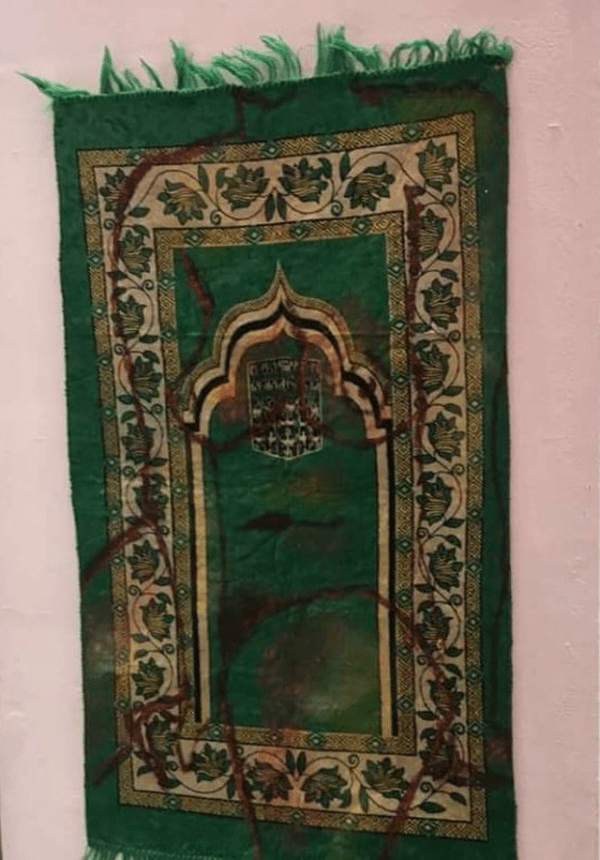
It was a green Islamic prayer mat with the black outline of a nude woman on it.

In its place is a notice, apparently from the curators and jurors of the show, saying that absent knowing “the intent of the work that was previously hanging in this space,” they had decided to “remove it temporarily … until a statement from the artist can accompany it.”

The notice referred to “the concerns of a number of OCAD University student groups” and offered a one-two apology if either the original inclusion of the piece or its removal “has caused anyone harm.”

The formal complaint came from the Muslim Student Association at the school, which over the weekend issued a statement with several demands — the immediate removal of the piece, an investigation into how it was approved and “whether this was done out of ignorance or not” and an official apology from the university “that this piece was approved for display.”

The controversial piece.

“As a Muslim community,” the statement said, “we feel greatly offended, concerned and disappointed.

“This has already provoked Muslims and has caused very upsetting reactions, and several students’ responses and behaviour towards this is extremely alarming and is starting to make some students feel unsafe at OCAD.

“This is serious and we do not take it lightly.”

In a private, members-only Facebook group for OCAD students, the piece was immediately a lightning rod for controversy after the show, titled Festival of the Body, opened last Friday.

It sparked a spirited debate, sharp rebukes (and much apparent after-the-fact deletion of controversial posts) from the group moderators, one of whom snapped at one point, “This group was doing fine until these recently violent posts by some of you.”

Members of the group say dozens upon dozens of comments were arbitrarily deleted if they weren’t supportive of the decision to remove the piece.

Of those that remain, only one could be remotely described as violent, and it comes from a supporter of removing the prayer mat artwork.

He is a student who works part-time as a cab driver and who asked, “why does someone need to disrespect a whole religion and the way of life of billions of people?” He said the “intent” of the artist didn’t matter.

“… The intent does not change the blatant disrespect to our Islamic faith and the objects, places and symbols we hold dear to our heart.

“Picking up customers in my taxi that swear I hate them and want to kill them simply because I am Muslim or having my mother or my sisters followed and abused for wearing the hijab makes me live a certain anxious and protective lifestyle.”

In a phone interview Tuesday, OCAD professor Natalie Majaba Waldburger, a co-curator of the show, appeared to try to distance the university from the short notice that now sits in place of the art.

She said the artist, whom she identified as a Muslim woman and “we understood she was speaking from within her own cultural practices and experiences,” originally had her name by the piece, but then removed it over the weekend.

Several other pieces — the show includes at least one full-frontal nude, of a male — had no artist statement.

“We didn’t feel we could put up the work without any information,” Waldburger told the National Post.

She said the artist wants to provide an artist’s statement — such statements can range from the direct to the hopelessly oblique — and that “we’ve been working with her the last couple of days. We’ve been in discussion.” Waldburger said she hopes it can be re-installed.

Some sort of authorship, whether the artist’s name or statement, is required, she said. “So for her, no name and no statement means the work has to come down.”

Waldburger said she’s aware of the controversy raging around the work, but “that doesn’t mean we’re shutting the dialogue down. The university supports the right to artistic expression.”

Christine Crosbie, OCAD’s media and communications manager, said the school is aware that freedom of speech issues are controversial on campus at the moment.

“We respect the Muslim Student Association has their opinions, and this is an important dialogue around this piece. It’s a matter of looking at both sides.”

Interestingly, one of the mandatory art history courses at the school covers an infamous piece of art called Immersion (Piss Christ).

A 1987 photograph by American photographer Andres Serrano, Piss Christ is a photo of a plastic crucifix submerged in a tank of Serrano’s own urine.

Just about every time it has been exhibited over the past three decades, Christians have denounced, vandalized or threatened the photograph or photographer.

After the Charlie Hebdo attacks in Paris three years ago, sparked by the satirical magazine republishing the Danish cartoons of the Prophet Muhammad, the Associated Press removed an image of Piss Christ from its editorial archives.

Serrano wrote at that time, “We’ve seen the same impulse for self-censorship in the West before … Given the seriousness of the violence, such self-censorship is understandable; it’s also a step backward at a time when we need to reassert the importance of free expression by artists, activists, journalists and editors alike.”

Amin, as they say in Arabic.

Source: Christie Blatchford: Depiction of nude on a prayer mat too provocative for Ontario art school

What Oscar-winner Frances McDormand can teach corporate Canada | Jennifer Wells

Good linkage with the failure to strengthen diversity in corporations in C-25 Canada Business Corporations Act:

“I have two words for you: inclusion rider.”

If there was a single indelible moment at the 90th Academy Awards celebration Sunday, it was the fierce Frances McDormand wrapping up her winning best actor speech with a call to arms to A-list entertainers with the power to effect change.

There was a great deal of clapping and cheering and, according to Twitter, a great many people wondering: what’s an inclusion rider?

It’s worth viewing Stacy Smith’s TED talk for the answer. Smith is a social scientist who teaches in the communication and journalism school at the University of Southern California. In a clear and swift 15 minutes she takes her audience through a set list of really dispiriting data. In what she deems the “inclusion crisis in Hollywood,” Smith’s statistics include this fact: not quite a third of movie roles go to women. (To qualify for inclusion in the data set, the actor needs to speak but a single word through the entire script.) Surprised? No, of course not. But Smith extrapolates this data to conclude that much has not changed in a half century.

How about power? Auditing 800 films between 2007 and 2015, Smith and her researchers found only 4.1 per cent were directed by women. A total of three films were directed by black or African-American women. One lone film was directed by an Asian woman. The traits of leadership (commanding a crew, being a “visionary”) are seen to be male in nature, industry insiders confided. Hence the results, as Smith said in her talk, “pull male.” Left alone to its own devices, Hollywood does not change.

What does this remind us of?

That’s right, corporate Canada. As it happens, the Academy Awards came just days after the Senate voted down a proposed amendment to Bill C-25, that is, the Act to amend the Canada Business Corporations Act (and that of co-operatives and not-for-profits, too). That sounds like multiple acts and multiple amendments. The point to glean is this: in hauling the Act into the modern era a group of senators supported the view that publicly traded corporations be compelled to set internal targets to boost diversity, the very ethos of the governing Liberals. The Senate voted against the amendment, 37 to 30, in third reading last Wednesday.

Let’s think about this. Corporations would not be compelled to reach targets by a set date. Corporations would be free to establish for themselves time-lines for the increase of four under-represented groups: women, Indigenous peoples, persons with disabilities and visible minorities. This is a step beyond the “comply-or-explain” declarations of diversity policy. As Senator Paul Massicotte pointed out in tabling the amendment, even with the comply-or-explain rule introduced by the Ontario Securities Commission, the progress of women in leadership roles has been unsatisfactory, budging modestly in board representation, and even more modestly in senior management positions.

Phrased another way, asking nicely doesn’t work.

The result: just as Stacy Smith’s work shows that Hollywood does not reflect the real world, so too corporate Canada.

In supporting the amendment Senator Ratna Omidvar made the case clearly: “This amendment does not ask anyone to climb Mount Everest. It asks for targets, the targets are voluntary, the corporations can set these according to their own history, their own context, their own region and their own industry. This is common business practice.”

The non-partisan bill nevertheless placed Massicotte’s supporters in one corner, and bill sponsor Howard Wetston in the opposing corner. Wetston, readers may recall, is the past chair of the Ontario Securities Commission.

Citing in part Canada’s fragmented securities landscape (can’t we fix that already?), Wetston supported the comply-or-explain model as a “legitimate choice to address diversity at the board and executive level in Canada.” Government can do more within that model, Wetston said in addressing the chamber last week. “They can provide guidelines. They can get the director of corporations candidate to do more. There can be more outreach. Basically, these categories allow for a great deal of opportunity by the government to do more within this model if it so chooses.”

In an interview, Omidvar wonders if part of the failure lies in a lack of clarity. “The lesson I take out of this is that we must do much better at explaining our point of view and making it extremely clear to people that our amendment would not have forced corporations to have quotas,” she says. “Our amendment was simply moving them toward a mature approach to developing strategies. We were told these business corporations have so much work, they can’t do this. That’s not true. Any business corporation that comes under this act is big enough to have people and departments who are devoted to human resources, change management, long-term planning.”

The distinction between the two positions is clear: a soft tap on the shoulder (Omidvar’s description of C-25 as written) and a firm nudge. It goes without saying that the senator is disappointed by the outcome, especially given the aspirations — the brand — of the government of the day.

Stacy Smith had a few suggestions to redress the historic and intractable imbalance in Hollywood. “Just Add Five,” was one, in which scriptwriters would up the presence of roles for women, five at a time. That strategy, Smith concluded, could achieve gender parity in casting in three years. So, goal setting. But remember, a “role” is defined as a single spoken word.

More powerfully, A-list actors could insist on inclusion riders in their contracts, and start to dictate directly how to fix the diversity gap.

That’s what Frances McDormand was advocating.

In corporate environments, this could be a call to arms. Does any incoming A-list CEO have the nerve to insist upon a diversity rider? Now that would be progressive. Ground-breaking, even.

In the meantime, the amendment-sponsoring senators will be stuck monitoring what progress is made as a result of C-25. I’m not holding my breath.

via What Oscar-winner Frances McDormand can teach corporate Canada | Toronto Star

In the age of #MeToo, Muslim women are final­ly break­ing the chains of si­lence: Sheema Khan

Another good column by Sheema Khan:

As the #MeToo move­ment rico­chets through many parts of the world, it has yet to achieve high visi­bil­ity in Muslim cul­tures.

None­the­less, there have been a few laud­able ef­forts to bring sex­ual abuse to the fore­front.

Re­cent­ly, Mona Eltahawy lent her in­flu­en­tial voice to the dis­turbing oc­cur­rence of sex­ual ha­rass­ment at the Kaa­ba, (in Mecca), Islam’s hol­i­est site, through the hashtag #MosqueMeToo. One of the rit­uals of pil­grim­age (both the hajj and umrah) re­quires circ­ling the Kaa­ba sev­en times, while in sol­emn re­mem­brance of God. At times, it can get very crowded. Many women have ex­peri­enced hu­mili­a­tion by men who use the situ­a­tion to grope, poke and fon­dle. Ms. Eltahawy shared her awful ex­peri­ence, when at the age of 15, a guard at the Kaa­ba grabbed her breast. She wrote in sup­port of Sabica Khan, who dis­closed her re­cent hu­mili­a­tion at the Kaa­ba — and en­dured back­lash on so­cial media. Since then, many women have shared their own har­rowing en­coun­ters – for­cing the issue out into the open.

In Pak­istan, fol­lowing the grue­some rape and mur­der of 7-year-old Zainab An­sari, many women came for­ward to tell of their own stor­ies of sex­ual abuse as chil­dren. 73-year-old fash­ion de­sign­er Maheen Khan – a Pak­istani icon – tweeted about sex­ual im­pro­pri­ety by her Koran teach­er her when she was six. A nas­cent #MeToo move­ment is be­gin­ning to make in­roads in con­serv­a­tive Pak­istan, as cour­age­ous women break the chains of shame and si­lence.

There are a num­ber of chal­len­ges fa­cing Muslim women who seek to speak out. These in­clude cul­tur­al and in­sti­tu­tion­al bar­riers (with­in com­mun­ities), and anti-Muslim senti­ment.

Cul­tur­al­ly, pub­lic dis­cus­sion of sex is ta­boo. Yet this is at odds with scrip­tur­al foun­da­tions of the faith. For ex­ample, the Proph­et Mohammed em­pha­sized the right of women to ex­peri­ence sex­ual pleas­ure. In these sources, one finds dis­cus­sion about wet dreams, cli­max and for­bid­dance of inter­course dur­ing men­stru­a­tion and anal sex (at all times). The dis­course is not sal­acious, but in­stead pro­vides guid­ance to the faith­ful. It also builds a frame­work in which sex­ual re­la­tions are seen as nat­ural and a means to cul­ti­vate mercy, love and tranquility be­tween spouses.

Family and clergy are two power­ful in­sti­tu­tions that si­lence women. Rath­er than put­ting shame and re­spon­sibil­ity on sex­ual abus­ers, the onus is placed on the vic­tims to keep quiet, so that the fam­ily’s honour re­mains in­tact. In com­mun­ities in which inter­action be­tween gen­ders is pri­mar­i­ly with­in ex­tended fam­ilies, there are ample op­por­tun­ities for abuse by male rela­tives. When I used to give lec­tures about “women in Islam,” it was de­press­ing­ly com­mon to have a young woman ap­proach me after­ward to con­fide her pain­ful abuse by a cous­in or an uncle dur­ing child­hood. I stopped giv­ing these lec­tures after one young woman broke down about her own fath­er’s in­ces­tu­ous behaviour.

Muslim clergy, schol­ars and Koran teachers gar­ner rev­er­ence for their com­mit­ment to the faith. There­fore, im­pugning sex­ual im­pro­pri­ety against this group is met with stiff re­sist­ance, de­nial and back­lash. Yet, with­out mean­ing­ful ac­count­abil­ity, abuse does hap­pen. Now, women are speak­ing out. In 2016, a prom­in­ent Chicago-based schol­ar, Moham­med Sa­leem, pleaded guilty to sex­ual­ly abus­ing a for­mer stu­dent and an em­ploy­ee at the school he founded. More civil suits are pend­ing. Last year, re­nowned Ko­ran­ic schol­ar Nouman Ali Khan was found to have com­mit­ted spirit­ual abuse and un­ethical behaviour to­ward a num­ber of young women. Last month, Ox­ford University Pro­fes­sor Ta­riq Rama­dan was placed under ar­rest in France, and is awaiting trial against rape char­ges by two women. He de­nies any wrong­doing.

In addi­tion to fa­cing com­mun­ity back­lash for speak­ing out, Muslim women must also con­tend with haters who use their pain to ma­lign an en­tire com­mun­ity.

These hur­dles are not in­sur­mount­able. The time has come to ad­dress sex­ual im­pro­pri­ety head-on.

In Canada, se­cond “se­cret” mar­riages are oc­cur­ring, in which a man takes on a se­cond wife, often un­be­knownst to either wife. This is noth­ing but san­i­ti­za­tion of an extra­mari­tal af­fair. It is a sham, and needs to be called out by the Can­ad­ian Council of Imams.

Last fall, the group Fa­cing Abuse in Community En­viron­ments was launched to hold ac­count­able imams, schol­ars and lead­ers for un­ethical and/or crim­in­al behaviour. A num­ber of in­ves­ti­ga­tions are under way, with ser­ious cases re­ferred to law en­force­ment for pros­ecu­tion.

In the end, we need to em­pow­er women to come forth with­out shame, and put the spot­light on men to take re­spon­sibil­ity for their behaviour.

via In the age of #MeToo, Muslim women are final­ly break­ing the chains of si­lence – The Globe and Mail