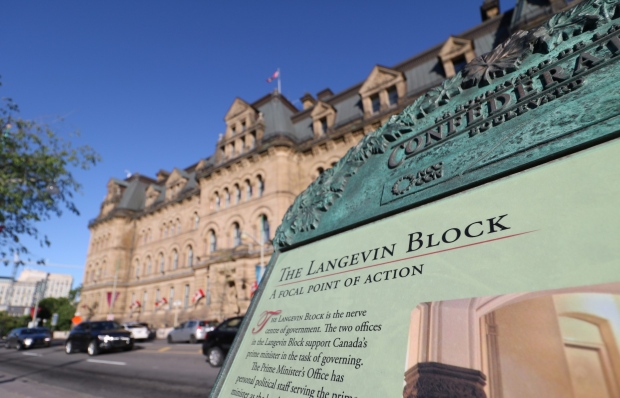
How we can build resilience against hatred in Canada

Good thoughtful advice (if Vancouver was the positive example of challenging hatred, Quebec city was the negative one given the violence of left-wing activists):

Some of Canada’s most urban centres were flooded with protesters Saturday and Sunday, from what President Trump would describe as “both sides” – those who were promoting racist, anti-immigration sentiment, and those who were opposing such hateful and intolerant rhetoric.

In Vancouver, for example, thousands of anti-racism supporters showed up Saturday to counter a rally that was planned by anti-immigrant demonstrators, essentially thwarting all efforts that were made by those who were promoting intolerance.

Protests were spawned from the disturbing events that unfolded in Charlottesville, Va. the previous weekend, where a so-called Unite the Right rally quickly turned violent when white-power demonstrators clashed with counter-demonstrators. Dozens of protesters were injured, and three people died, including 32-year-old Heather Heyer, when a vehicle was intentionally driven into a group of anti-racist counter-demonstrators.

Canadians watched in dismay as the hate-inspired violence unfolded south of the border, perhaps naïve to assume that such divisive ideologies do not – and cannot – exist in our multicultural nation. The truth of the matter is that Canada is not immune to violence inspired by bigotry and hatred.

In 2015, Professor Barbara Perry and I conducted a three-year study for Public Safety Canada on the state of the right-wing extremist movement in Canada, interviewing law-enforcement officials, community activists, and current and former right-wing extremists across the country, paired with open-source intelligence. Results from our research was shocking to many Canadians.

In short, we found that Canada’s right-wing extremist movement was alive and well: we identified over 100 active groups and well over 100 incidents of right-wing extremist violence over the last 30 years in the country. We also uncovered that the threat of the extreme right had been overlooked and even trivialized by a number of key stakeholders, thus hindering their ability to effectively respond to the radical right in Canada.

In turn, we proposed evidence-based strategies that we saw as effective in responding to right-wing extremism in Canada, suggesting that a multi-sectoral approach was needed to address hate and ensure that extremists have minimal impact on communities. This included the integration and utilization of an array of experts, such as police officers, policy makers, victim service providers, community organizations and the media.

In the two years since our Public Safety report was released, I’ve been watching very closely as hate-inspired events have unfolded across Canada and how key stakeholders have responded to such events. I’ve noticed that some of our key recommendations are being put to practice – the counter-demonstration in Vancouver is but one example. This is an encouraging sign.

We are seeing community groups ban together to spread messages of tolerance, and local, provincial and federal politicians are taking a public stance against hatred, making it clear that such sentiment does not represent Canadian beliefs and will not be tolerated. Reporters and journalists have also dedicated an increasing amount of time and energy to shed light on right-wing extremism in Canada, highlighting its complexities and prevalence. Stakeholders are now including their voices in the discussions about how we can build resiliency against hatred, which starts by raising awareness of the problem and mobilizing the public.

Some, though, are calling for the outright filtering of those who subscribe to extreme-right beliefs. Do not let them have an outlet for their negative views, the argument goes. This would mean not allowing them to hold a rally or have a website. This approach is counteractive, and perhaps irresponsible. This is a Band-aid solution – the views will still be there, and will only get stronger, solidifying radical right-wing ideologies. Right-wing extremists generally believe that the mainstream media and the broader public are systematically attempting to suppress their radical views, so prohibiting them from expressing their views will further reinforce their hateful beliefs.

We must not stay home when hatemongers are protesting in the streets. Adherents should never be able to promote hatred. At the same time, we cannot assume that silencing them is the solution.

Instead, Canadians must continue to attend their demonstrations, challenge ideas and not people specifically, and in a peaceful manner – like we saw in Vancouver this past weekend. Stand up against racism, xenophobia and bigotry by challenging adherents’ views, but do not engage with them. Most are easy to provoke, and most want to be provoked. Don’t give them the satisfaction.

Source: How we can build resilience against hatred in Canada – The Globe and Mail

Women in Ismaili Muslim sect say they have had FGM in Canada

More about FGM and the Dawoodi Bohras in The Star (see earlier Ottawa says female genital mutilation is ‘abhorrent,’ but offers no commitment on tracking cases):

Women from a small sect of Ismaili Muslims called the Dawoodi Bohras have reported that female genital mutilation has been performed on them in Canada, a study given to the federal government reveals.

The first research of its kind to probe the practice within this tightly knit South Asian community, the study found that 80 per cent of Bohra women surveyed have undergone FGM and two of the study’s 18 Canadian participants said it happened within Canada’s borders.

In Canada, FGM was added to the Criminal Code under aggravated assault in 1997. The study does not provide additional information on the two cases it uncovered.

Most commonly associated with communities in sub-Saharan Africa, FGM is also practised among members of this Muslim sect who trace their roots to Yemen in the 11th century and who migrated to Gujarat, India, in the 1500s.

Authored by Sahiyo, an organization of anti-FGM activists and members of the Dawoodi Bohra community, the study was completed in February. Preliminary results went to officials from Canada’s Foreign Affairs Department in June 2016. The federal government says it is looking into the issue.

The researcher’s findings show that more than 80 per cent of the 385 Dawoodi Bohra women surveyed — including all 18 Canadian participants — want the practice to end and would not do it to their daughters.

…Khatna is the South Asian term for genital cutting and, according to the study, the sect’s practice of removing a woman’s clitoris is done for reasons including “religious purposes,” to curb sexual arousal, for cleanliness and to maintain customs and traditions.

“The findings (of the study) demonstrate that FGC (female genital cutting) is deeply rooted in the community’s culture,” the authors write. Sahiyo means “friends” in Gujarati.

“Understanding the complex social norms and cultural values systems that shape the meaning and significance of the practice within this community is critical work of anti-FGC advocates.”

…A continuing Star investigation has revealed that Canadian girls have been taken overseas to have the procedure and that thousands more could be at risk of being sent abroad to be subjected to FGM.

Practitioners who perform FGM are “almost certainly entering Canada” to engage in the practice, says an internal report from Canada Border Services Agency, as reported by Global News in July.

FGM is a cultural practice dating back hundreds of years, and organizations including the United Nations say that although it is often perceived as being connected to some Islamic groups, it also occurs in other religious communities, including Christians, Ethiopian Jews and certain traditional African religions.

In Ontario, some women have asked their doctors to reverse the most severe type of FGM. Provincial records show that in the past seven years, Ontario has performed 308 “repairs of infibulations,” a surgery that creates a vaginal opening where it has been sewn mostly shut. There are currently no known procedures in Canada that replace tissue.

Canada has recently given $350,000 to a small Quebec organization to fight FGM in at-risk communities, but critics say little has been done to understand the problem’s scope and that Canada is lagging far behind other developed countries in prevention. Experts say there is a lack of support services available for women living with the physical and psychological effects of FGM, regardless of when and where it happened to them.

An email exchange between federal Foreign Affairs officials in Canada and India discussing the report said it will be “helpful” as the government is “in the midst of examining how Canada can engage on this file internationally. One government lawyer, the emails state, is “looking at the domestic implications of this practice.”

Considered progressive in some areas, Dawoodi Bohras have a “high level of education and wealth,” according to the federal emails, and the community has “political and cultural influence that exceeds its size.” The emails — correspondence between government officials over the past two years — were released to the Star through an access to information request. They reference cases the government is aware of in which Canadian girls have undergone or are alleged to have undergone cutting abroad, in addition to the report about the Dawoodi Bohras.

The emails say officials learned from the report how over the past two decades there has been a regression of gender equality in the Dawoodi Bohra community worldwide and there is “significant hidden violence against women.” There are roughly 20,000 to 40,000 Dawoodi Bohras in Canada, according to the federal emails.

Titled “Understanding Female Genital Cutting in the Dawoodi Bohra Community,” the Sahiyo study surveyed 385 Dawoodi Bohra women across the globe, including women in Canada, the U.S., Australia and the United Kingdom, in an attempt to shed light where “little or no data” exists. It aims to inform policy makers and health professionals in order to “end the practice,” the study said, that has left most of its participants with emotional scars — anger, haunting memories and frustration in their sexual lives.

“I feel robbed and cheated of my sexuality,” one respondent told the study’s researchers.

Shaheeda Tavawalla-Kirtane, Sahiyo’s Canadian co-founder, who works in India to raise awareness about FGM, said she has been tweeting to Canadian ministers because Canada should be aware this “crime” is happening on its soil. The Sahiyo study suggests creating a hotline for at-risk girls and education about FGM for front-line workers, such as teachers.

Some of the study’s participants reported that, typically at the age of 7, they were told they were having the procedure to remove a “worm” and that khatna was part of the religion.

The religious justification for this practice may come from passages in the Da’aim al-Islam, a sacred Islamic text that informs the tenets and traditions of the Dawoodi Bohras. According to The Pillars of Islam, a respected translation of the text, cutting will lead to “greater purity.”

Though most study participants said they do not want the practice to continue, breaking the cycle is a challenge because women are afraid of the backlash they’ll face if they don’t keep up with the social norm, Tavawalla-Kirtane said.

Worldwide, there are an estimated 1.5 to two million Dawoodi Bohras, living mainly on the west coast of Gujarat and Maharashtra states in India, and in Pakistan.

The sect’s India-based spiritual leader, referred to as the Sayedna, enjoys centralized power and access to the properties and assets of his communities around the world, the federal emails state.

As Dawoodi Bohras settled in the GTA, the Sayedna in the early 1990s notably tried — but failed — to incorporate himself in Canada as a “corporation sole,” a company of one person. The designation may have given the Sayedna decision-making power over the resources, land and money, of the Dawoodi Bohra communities in Canada.

A local member of the Bohra community, writing to a Canadian senator about the issue at the time, said the Canadian Dawoodi Bohras had questionable practices, including “actively enforcing” female genital cutting. The writer alleged that “a lady with medical background or qualifications visits Ontario regularly to conduct these procedures on little girls of the community.”

In April 2016, a sermon leaked to the media shows the current Sayedna talking about khatna and, according to the federal documents, reportedly saying: “The act has to happen. If it is a man (male circumcision), then it is right, it can be openly done, but if it is a woman then it must be done discreetly, but then the act has to be done.”

Two months later, as described in the federal emails, the Sayedna released a further statement saying that “male and female circumcision … are religious rites that have been practiced by Dawoodi Bohras throughout history” and religious texts, “written over a thousand years ago, specify the requirements for both males and females as acts of religious purity.” But he noted that Bohras must abide “by the laws of the countries in which they reside.”

Faizan Ali, a member of the Mississauga congregation who said he is overseeing the construction of the community’s new 50,000-square-foot mosque, said local Dawoodi Bohras don’t practise FGM in Canada because it is against the law.

As far as he knows, khatna is not practised in the GTA, he said, but “if someone is going at their own discretion, obviously we cannot control it.”

Ali said he does not agree with pushing the practice on a child. But if an adult woman who is 18 or older consents, he said, it is “fine.”

Unlike in other cultures that celebrate FGM, throwing parties and lavishing money and gifts onto young girls as part of the procedure, the Dawoodi Bohra practice has traditionally been done clandestinely, said Dilshad Tavawalla, a lawyer and anti-FGM activist in Toronto whose daughter is the Sahiyo co-founder.

Tavawalla, who underwent the procedure in Mumbai when she was 7, calls it “a women’s secret” even though today it is being “medicalized” and sometimes done overseas by health professionals in clinics and hospitals.

Women who openly oppose the practice are perceived as attacking the community and culture, Tavawalla said, and could face consequences such as being socially ostracized. Friends and family members cut ties — a fate that feels catastrophic in this small, loyal and closely knit religious sect, sources have told the Star.

Source: Women in Ismaili Muslim sect say they have had FGM in Canada | Toronto Star

Federal appointee to race relations board (@CRRF) under scrutiny for writings on Islam | nanaimonewsNOW

One of the more ideological choices of the previous government. Understandable under review:

A board member with the Canadian Race Relations Foundation, an arms-length federal government agency with a mandate to combat racial discrimination, is in jeopardy of losing her post over her writings on the controversial website Jihad Watch.

Christine Douglass-Williams has been writing for the site almost since she was appointed to the foundation’s board in 2012. But multiple sources have told The Canadian Press that the government is reviewing that appointment in the wake of an essay that appeared on the site in May.

The post, entitled, “Christine Williams: My personal warning to Icelanders,” was based on a visit Douglass-Williams paid to the country alongside Jihad Watch founder and U.S. academic Robert Spencer earlier this year.

In it, Douglass-Williams warns that Icelanders are being duped by seemingly moderate Muslims who deceive people into believing they are harmless, and writes that if Muslims truly had nothing to hide, they’d allow police to conduct surveillance in their mosques.

“Islamic supremacists will smile at you, invite you to their gatherings, make you feel loved and welcome, but they do it to deceive you and to overtake you, your land and your freedoms,” she writes.

“They intentionally make you feel guilty for questioning their torturous deeds toward humanity — toward women, Christians, gays, Jews, apostates, infidels and anyone who dares to oppose these deeds.”

With concerns about the post circulating among her fellow board members, it came to the attention of Heritage Minister Melanie Joly, whose department is responsible for the foundation.

Specifically, there are concerns that Douglass-Williams’s views are a hindrance to her work with the foundation and an affront to its legally defined mandate, which is to help eliminate racism and racial discrimination in Canada.

In a statement to The Canadian Press, Douglass-Williams said it is not racist to oppose “the jihadist-Islamist” agenda, and that her writings are entirely in keeping with the work of the board.

“Any efforts currently against me in my private work are an unjust, agenda-driven and cruel attempt to intimidate me for my distaste for all supremacist agendas,” she wrote. She pointed to her recent book, “The Challenges of Modernizing Islam,” as proof that she’s pro-Muslim and pro-human rights.

“My book differentiates between Islamists and human rights-respecting Muslims who thrive to live peaceably and equally among Westerners,” Douglass-Williams wrote.

“They ask for no special favors and advocate for the separation of mosque and state; they condemn Islamism, and stand against human rights abuses committed in the name of their religion, sometimes at great personal risk.”

Pierre-Olivier Herbert, a spokesperson for Joly, said the foundation needs a board that recognizes the importance of diversity and inclusion.

“While we cannot comment on specific cases, with respect to Governor in Council (GIC) appointees, it is expected that appointees’ conduct not be at odds with an organization’s mandate, otherwise the GIC will consider whether action should be taken,” Herbert said.

The foundation was launched in 1997 as part of the settlement the federal government at the time reached with Japanese Canadians over their internment in Canada during the Second World War.

It holds workshops and roundtables across the country on combating racism, and also funds research into Canadian attitudes towards multiculturalism, immigration and other issues.

Board member and foundation spokesman Rubin Friedman said allegations that Douglass-Williams was Islamophobic had been brought to the attention of the board.

“We discussed those allegations and we looked at our mandate, and our policy, and we decided that we don’t make comment on what our part time board members do outside of our organization.”

The board has no control over its membership, Friedman said, and whatever might happen next is up to the government. Douglass-Williams’s current term expires in 2018.

Spencer, who launched Jihad Watch in 2003, has expressed frustration with the view that the perpetrators of the 9/11 terrorist attacks did not represent the true peaceful nature of Islam. He believes it must be made clear that the attacks were rooted in Islam — not to demonize Muslims, but to prove there’s a problem within the religion.

Spencer has gone on to deny the existence of Islamophobia, calling it a term deployed in order to “intimidate non-Muslims away from criticizing or resisting the jihad and Islamic supremacism.”

Douglass-Williams picked up on similar themes in a March 2017 post about a controversial House of Commons motion that called “on the government of Canada to condemn Islamophobia in Canada and all forms of systemic racism and religious discrimination.”

Douglass-Williams accused the Liberal MP who sponsored the motion of being part of a broader plot when she insisted on including the word Islamophobia in the text, as opposed to other suggested phrases like “anti-Muslim bigotry.”

In a statement, the National Council of Canadian Muslims said anyone with such views has no place on the foundation’s board.

“For a federal appointee to be writing for hateful websites, denying the existence of Islamophobia and calling for the violation of fundamental rights and freedoms of a minority community is contrary to everything the Canada Race Relations Foundation stands for and to the values enshrined in the charter,” Amira Elghawaby said in a statement.

“We are confident that the federal government will take appropriate action with respect to this matter.”

Source: Federal appointee to race relations board under scrutiny for writings on Islam | nanaimonewsNOW

Migrants with no status in the U.S. battle anxiety as they await Trump’s next move

Good analysis of potential future waves of border crossers – current measures and resources likely inadequate:

In the U.S. immigration debate, it’s called “twilight status,” and for many who hold it, the light is flickering and fading.

Unlike Canada or Mexico, which both routinely deport almost anyone without a valid visa, the U.S. government allows otherwise-illegal immigrants to remain without legal status — sheltered under various forms of government sufferance.

About 59,000 Haitians received Temporary Protected Status (TPS), a U.S. government waiver exempting them from deportation to their devastated homeland, after a catastrophic earthquake struck near Port-au-Prince in 2010.

That waiver was renewed several times by the Obama administration, which judged that Haiti was not ready to absorb returnees.

Then this summer, Secretary of Homeland Security John Kelly (now White House chief of staff) signed off on a very short renewal — six months — letting it be known that there would probably be no more extensions.

“This six-month extension should allow Haitian TPS recipients living in the United States time to attain travel documents and make other necessary arrangements for their ultimate departure from the United States,” he said.

Fuelled by rumours Canada would be more sympathetic, many Haitians headed north — crossing to Hemmingford, Que., at a rate of about 250 people a day.

The Haitians are just one group among many that could soon be shown the door in the U.S., and might then show up on Canada’s doorstep.

On Sunday, Prime Justin Trudeau spoke about the “situation at the border at Saint-Bernard-de-Lacolle,” saying “entering Canada irregularly is not an advantage,” and that rules will be enforced to safeguard against security risks.

The Government of Canada is planning outreach efforts with Haitian communities in both Canada and the U.S., said Nancy Chan, a spokesperson for Citizens and Immigration Canada (CIC).

“We are taking a number of proactive measures to counter misinformation regarding Canada’s asylum system, including using social media,” said Chan.

Living on a waiver

Life on a deportation waiver is not easy.

First of all, the waivers are not free. Haitians were asked to pay $495 US for their six-month extension if they wanted the right to work. That’s one reason many chose to invest the money in a ticket to Canada. (Some did renew their waivers, and Canada may see a second wave of Haitians arrive when their final deadline of January 22 approaches).

The waivers also do not provide a pathway to permanent legal residency. The Haitians who fled into Quebec have always known they were living on borrowed time.

‘The countries that are facing the end of their grant under TPS are the ones who feel most under the gun’– Julia Gelatt, senior policy analyst at the Migration Policy Institute

Citizens of ten countries currently hold TPS in the U.S.: El Salvador, Haiti, Honduras, Nepal, Nicaragua, Somalia, Sudan, South Sudan, Syria and Yemen.

Nicaraguans and Hondurans received protected status in 1999 as a result of Hurricane Mitch, but it applies only to people already in the U.S. when the hurricane struck.

All of those 10 waivers come up for renewal at some point in the next 13 months, and the Trump administration seems likely to allow at least some of them to die.

But Chan did not answer a question about how the Canadian government would deal with other groups: “We will not speculate on future scenarios.”

Cancelling waivers sending people north

An estimated 317,000 people live on TPS waivers. More than half of them are Salvadorans granted TPS following the earthquake of 2001; they are facing a renewal decision by March next year. The remainder are mostly Hondurans and Haitians, who both face a renewal decision in January.

But TPS is not the only kind of twilight status, says Julia Gelatt, senior policy analyst at the Migration Policy Institute in Washington.

“There are a number of other categories you could also put in there. There are people who are applying for different kinds of visas, such as a U visa for crime victims or a T visa for victims of trafficking.”

“A lot of people who are in these categories are pretty confident their visa is coming, as opposed to people in TPS whose programs are being reconsidered, and cancellation is a more imminent concern.”

Also in March next year, a different waiver program called Deferred Enforced Departure will come to an end leaving about 14,000 Liberians (most of whom fled their country’s civil war years ago) with a tough decision to make.

“The countries that are facing the end of their grant under TPS are the ones who feel most under the gun,” says Gelatt. “There’s this looming deadline.”

If those migrants suddenly lose their legal status in the U.S., they could head for Canada.

The ‘Dreamers’

These groups, however, are dwarfed by a class of people referred to as “Dreamers,” named for the oft-introduced but never-approved DREAM Act.

The Development, Relief, and Education for Alien Minors Act (DREAM), was crafted to help those brought to the U.S. as children by allowing them to live in the country where they grew up providing they graduate from school and have no criminal record. About 65,000 kids in this category graduate from U.S. high schools annually.

The DREAM Act has been struggling to become law since 2001, and has often seemed close to bipartisan success. But in recent years more Republicans have turned against it.

In the meantime, the Dreamers must get by with a less secure status called Deferred Action for Childhood Arrivals (DACA) — a temporary reprieve, renewable every two years (at a fee), with no path to citizenship.

There are about 840,000 young people living on DACA waivers in the US.

U.S. President Donald Trump repeatedly said during the campaign that he would end the DACA program, and since his inauguration a handful of Dreamers have been arrested and held in detention, despite having paperwork that says they are enrolled.

Most threatening of all for the Dreamers, though, is the lawsuit threatened by Texas and nine other states. They have given the Trump administration a deadline of September 5 to shelve the program or face a court challenge for executive overreach. (In over three-quarters of cases, Dreamers were brought to the U.S. from Mexico.)

If Trump keeps his campaign promise, and ends the DACA program, all of the people currently covered by DACA would lose their status over the next two years.

It is not difficult to imagine that many Dreamers, who typically speak English as their first language, might prefer to try their luck in Canada than face deportation to a homeland they can hardly remember.

Source: Migrants with no status in the U.S. battle anxiety as they await Trump’s next move – Politics – CBC News

International adoptions decline dramatically in Canada

An under-looked issue – the decline in the number of international options.

The previous government passed legislation granting citizenship to those adopted internationally (rather than through permanent residency) given considerable advocacy at the time by parents of internationally adopted children:

The number of international adoptions has declined dramatically in Canada in the last five years due to tighter country controls, exorbitant costs and alternative routes to parenthood.

Last year, there were only 793 international adoptions in Canada, according to data from Immigration, Refugees and Citizenship Canada (IRCC). That’s the lowest number in decades, and nearly half the total from 2012, when there were 1,379 inter-country adoptions.

Deborah Brennan, chair of the Adoption Council of Canada, points to a number of factors driving the downward trend. These include hefty costs (an international adoption can cost up to $50,000) and an increasingly onerous administrative process that can take anywhere from 18 months to several years.

A growing number of countries have imposed restrictions or all-out bans on international adoptions, and many have developed stronger systems to encourage more adoptions within their own borders.

“I think they are paying more attention to making sure they create an infrastructure within their own country where they can take care of their children themselves,” Brennan said.

She sees the trend as potentially positive for adoptee children, because remaining in their countries of origin helps ensure their family connections, culture and ethnicity are not lost.

International adoptions in Canada

“Our preference is that kids do stay … in their own countries of origin because it is risky for kids to come here and lose that. Many parents who adopt internationally, in my opinion, can sometimes do not a great job of maintaining those ties and those roots,” she said.

More domestic adoptions?

While Canadians are increasingly using other ways to have a family, including surrogacy and in vitro fertilization, Brennan hopes fewer international adoptions will mean more domestic adoptions in Canada.

Right now, more than 30,000 children are available for adoption around the country.

Many of them are over six years old, are in sibling groups or are have visible special needs. Brennan said a big part of the problem with matching parents with children is a lack of social workers and a huge gap in the inter-provincial adoption system.

In 1993, the Hague Convention on the Protection of Children and Co-operation in Respect of Intercountry Adoption imposed strict safeguards to make sure all adoptions were in the best interests of the child. It also adopted new measures to crack down on the abduction, sale and trafficking of children.

Some provincial and territorial authorities have imposed suspensions on certain countries of origin including:

  • Cambodia.
  • Georgia.
  • Guatemala.
  • Liberia.
  • Nepal.

Data shows that the number of international adoptions to Canada remained high in the aftermath of the Hague convention, with moderate fluctuations between 1999 and 2009 that ranged from 1,535 to 2,127.

Source: International adoptions decline dramatically in Canada – Politics – CBC News

Andrew MacDougall: Conservatives of all stripes must pass the Charlottesville Test 

Solid advice:

After taking two days to condemn the race-baiters in Charlottesville, President Trump reverted to form the very next day, when he drew an angry equivalency between the alt-right and what he termed the “alt-left.”

Trump’s obstinance in the face of such disgusting bigotry forces conservative politicians — many of whom owe their election to Trump’s coalition — into a choice.

Call it the Charlottesville Test: Would I be proud to march with my brothers and sisters in the harsh light of day with the world watching?

If the answer is “no”, the barge poles must be deployed. There isn’t enough distance they can put between themselves and their president.

Or, to put it in terms conservatives will better understand: The neo-Nazis are ISIL, Trump is their elite apologist, and you are the Muslim community. It’s time for you to denounce and expel the cancer in your midst, as you would ask moderate Muslims to do in the wake of a similar terrorist attack.

Canadians Conservatives are certainly wasting no time in condemning Charlottesville, such is the power of events to taint all of conservatism. Andrew Scheer, Michelle Rempel, Patrick Brown and others are making clear they have no desire to trade on the hatred Trump and others are all too willing to ignore.

They needn’t be applauded for doing what is right and obvious, but had they not done so the Liberals would have tried to hang Charlottesville’s goat horns on the party and the movement.

The true test, however, comes when the media spotlight fades and electoral needs still have to be met. Will conservative politicians continue to shun the significant demographics behind the alt-right movement?

Courting these segments of the electorate wasn’t, until recently, worth the effort (to say nothing of the opprobrium). But the internet has taken what used to be a silent super-minority in any room, and linked them together into a potent online force.

It’s the force that delivered crucial oxygen and votes to Donald Trump in the early days of the Republican nomination, along with millions of clicks to a slew of new websites trumpeting the “alt-right.”

History will record that Trump met these “deplorables” more than halfway in his run to the presidency. Their hatred of Hillary Clinton (“lock her up”) and the establishment (“drain the swamp”), and Trump’s willingness to embrace it, was what made the “politically incorrect” real-estate mogul their choice. Trump’s embrace is what emboldened racists and supremacists to speak out and hold marches like that in Charlottesville.

In Canada, alt-right me-tooism led to the rise of Rebel Media, whose kingpin Ezra Levant regularly features leading U.S. and U.K. alt-right figures such as Paul Joseph Watson, Gavin McInnes, Jack Posobiec, Laura Southern and Tommy Robinson.

This obviously doesn’t make all supporters of Donald Trump — or contributors and viewers of the Rebel, Breitbart and Infowars — neo-Nazis; it does make them guilty of poor judgment. In Levant’s case, the poor judgment was deliberate in the search for audience and revenue.

It’s precisely these growing audiences for the Rebel and its counterparts that makes them attractive to conservative politicians. It’s why Conservative candidates gave interviews to Levant’s crew during this spring’s leadership race, and why Trump hoisted Breitbart’s Steve Bannon into his campaign, then into the White House.

But a few bad apples really do spoil the whole bunch, as Levant found out this week when two of his more mainstream apples — Brian Lilley and Barbara Kay — quit rather than continue on in the wake of Charlottesville.

The lesson for Canadian Conservatives is straightforward: avoid click-merchants and work harder to promote true conservative principles.

Anyone can preach to the converted. Only the weak exploit a grievance and make it deeper. These are the marks of political cowardice, not shrewd electoral strategy.

It takes courage to take on those with extreme views in your own coalition and patience to engage with those who don’t share your political views at all.

Conservatives should speak to people, not whistle past them.

Source: MacDougall: Conservatives of all stripes must pass the Charlottesville Test | Ottawa Citizen

New national council to issue progressive rulings for Britain’s Muslims | The Guardian

Worth noting:

Britain’s most senior Muslim clerics are to set up their first national council to issue progressive religious rulings that “embed Islam in a 21st-century British context”.

Qari Asim, one of Britain’s most prominent imams, said the central religious authority would promote an interpretation of Islam that was in line with British values.

Asim, the chief imam of Makkah mosque in Leeds, said the British Muslim community was crying out for an authoritative and credible voice that could speak out on issues as diverse as terrorism, obesity, organ donation and Islamophobia.

“People are proud and confident of their religious identity as well as their national identity, but at times they’re not getting enough theological or doctrinal guidance on some of their daily issues,” he said.

The national body, to consist of senior imams who will consult experts on issues, would be the first central religious authority for British Muslims. It would deliver religious rulings on topics that attract diverse views across the Muslim community, with the aim of providing clarity to young British Muslims, Asim said.

“This is about providing clarity on some of the sociopolitical issues, whether it be forced marriages, [female genital mutilation], honour killing,” he said. “These practices are not sanctioned by the faith Islam but they are cultural practices that have penetrated the Muslim community of particular backgrounds.

“The attempt is to embed Islam in a 21st-century British context. It’s about contextualising Islam in Britain.”

Asim, 39, was recognised in the Queen’s birthday honours list in 2012 for working to build bridges between communities in Leeds since the 7 July 2005 terror attack. He is an adviser to a commons inquiry into sharia councils and has campaigned against forced marriages and domestic violence. The imam is seen as a leading progressive figure in the British Muslim community.

Unlike the Church of England, there is no hierarchical structure to Islam in Britain, with most mosques operating independently. Asim said the new body would make rulings in a similar way to national religious bodies in many Sunni Muslim countries, although here it would be independent of government.

“It would lose credibility if it was state-backed or state-influenced,” Asim said. “The intention isn’t to have a mouthpiece for the government: it’s about providing a credible, authoritative voice for Muslims.”

Asim said: “We see the need for this as Muslims are continually being asked to speak on behalf of other Muslims. It’s a council that will be able to speak on behalf of other Muslims and also challenge the establishment where needed.

“We want to protect our young people from the extremist narrative [of those] who are brainwashing and recruiting them, but at the same time we want them to feel comfortable and confident in their national heritage and uphold the values of democracy, rule of law, justice and compassion.”

Asim, who described Thursday’s terror attack in Spain as depraved, said there would be diverse views on issues including abortion, organ donation or climate change, but that organisation would seek to come to a formal position by a unanimous or majority vote and after hearing expert opinion on those topics.

“There are going to inevitably be diverse views on different issues, but the point is that we have a dialogue and debate about them and reach some form of consensus, whether it be unanimous or a majority, where there is clarity for young British Muslims,” he said.

The Women Behind The ‘Alt-Right’ : NPR

Interesting account of women drawn into the alt-right:

Many of these women came into the alt-right initially as anti-feminists.

“They were people who felt that the feminist progressive agenda was not serving them — in some cases they felt like it was actively disregarding them because they wanted more traditional things: home, family, etc.,” she says. “And they came into the movement through that channel and then ultimately adopted more pro-white and white nationalist views.”

One of those women was Lana Lokteff, a Russian-American from Oregon who co-runs Red Ice, an alt-right media company, with her Swedish husband, Henrik Palmgren.

The couple decided to make this their cause around 2012, Darby says, when they say they saw a lot of “anti-white sentiment.” Around the time of several high-profile police shootings of young, black men, Lokteff “felt that Black Lives Matter and these other reactive forces were being unfair to white people and that then sort of spun into a conspiracy about how the establishment, so to speak, is out to oppress, minimize and silence white people.”

Lokteff, who promotes alt-right ideologies on the couple’s YouTube channel, has been persistently trolled by the men of the movement. Darby wanted to understand what attracts women to a movement that is often hostile to them.

In her piece, she quotes Andrew Anglin, who runs the (now blacklisted) neo-Nazi website the Daily Stormer as saying the white woman’s womb “belongs to the males of society.” And alt-right pioneer Richard Spencer, who acknowledges that women make up a small percentage of the movement, believes women are not suited for some roles in government, reports Mother Jones: “Women should never be allowed to make foreign policy,” he tweeted during the first presidential debate. “It’s not that they’re ‘weak.’ To the contrary, their vindictiveness knows no bounds.”

According to Lokteff and other alt-right women allies she spoke to, Darby says, “It’s not that men who support the alt-right don’t like women, it’s that they see women as fundamentally different than men,” with equally important roles, which are “to perpetuate white bloodlines, to nurture family units, to inculcate those families with pro-white beliefs.”

But the growing contradiction, as Darby points out, “is that people like Lana Lockteff and other women that I spoke to are outspoken.”

She adds, “They sort of see themselves as straddling a line between the male and female norms, because they think that at this point in their movement, the more people they can bring in, the more people they can convince that they are on the right side of history, the better, and that includes appealing to more women.”

To recruit women to the movement, Darby says, the key is to stoke fear.

Asked how she would pitch the alt-right to conservative white women who voted for Trump, but are also wary of being labeled a white supremacist, Lokteff told her, “we have a joke in the alt-right: How do you red-pill someone? (“Red-pill” is their word for converting someone to the cause.) And the punch line was: Have them live in a diverse neighborhood for a while,” Darby says. “She also said that when she is talking to women she reminds them that white women are under threat from black men, brown men, emigrants, and really uses this concept of a rape scourge to bring them in.”

And while there are schisms in the aims of alt-right activists, and how best to get there, she adds, “There are some people — Lana Lokteff being one of them, Richard Spencer of the National Policy Institute — who are really trying to find some semblance of civic legitimacy.”

Source: The Women Behind The ‘Alt-Right’ : NPR

Don Macpherson: The Couillard government’s anti-niqab bill gets worse 

Good pointed commentary:

Batman will not sit in the Quebec National Assembly.

This would be the effect of one of the amendments to the Couillard government’s proposed anti-niqab legislation announced this week. Bill 62, targeting Muslim women who wear facial veils, would ban giving or receiving public services with the face concealed. The amendment would extend the ban to MNAs, municipal councillors and school commissioners.

That Quebecers would choose a masked candidate to represent them is almost as hypothetical as the fictional cowled crusader leaving Gotham City for this province, acquiring citizenship, and running for office here on his record as a crimefighter. But then so was the possibility of a niqabi seeking employment in a public service.

Still, one can’t be too careful. That appears to be the thinking of the “bare-face” bill’s sponsor, Justice Minister Stéphanie Vallée, to the extent she has thought about the bill at all.

Another of her proposed amendments would extend the original ban from the provincial public services to municipal ones, and to public transit. When a reporter asked Vallée the reasonable question of whether this would stop a woman wearing a veil from taking the bus, the minister was unwilling, or perhaps unable, to answer.

Her amendments would make what was already a bad bill even worse.

Bill 62 stigmatizes the tiny number of Muslim women in Quebec who wear facial veils. It encourages their persecution, like the harassment of women wearing Muslim head scarves during the debate on the former Parti Québécois government’s ill-fated “charter of values.”

It would enshrine in legislation the hypocrisy of Quebec’s “Catho-laïcité,” or Catho-secularism. One of Vallée’s amendments pretends that Quebec’s public institutions are founded on the separation of church and state, while the bill would preserve the crucifix placed in the Assembly to symbolize an alliance between the two.

The government pretends that the ban on face coverings in general does not discriminate on religious grounds. But its intent is given away by the fact that the ban is contained in a bill to restrict religious accommodations.

And the bill is useless, not only because it addresses imaginary problems, but also because its guidelines for handling accommodation requests are so general.

Not only is the bill bad policy, it’s bad politics, another demonstration of the sheer political stupidity of the Couillard Liberals.

It won’t achieve its political objective of settling the accommodations issue once and for all before the general election due by October 2018. The Liberals’ relatively feeble entry in the competition to defend the majority against the undesirables in their midst doesn’t go nearly far enough to satisfy the nationalist opposition parties.

It is nevertheless useful to them. Since it was presented by Quebec’s most diverse and least nationalist party, it gives political legitimacy to the restriction of minority rights.

Bill 62 is the Couillard government’s version of Bill 22, adopted in 1974 by Robert Bourassa’s Liberal government. As the first Quebec legislation restricting minority language rights, Bill 22 enabled the succeeding PQ government’s more draconian Bill 101.

Originally, Premier Philippe Couillard intended to get the accommodations debate over with at the beginning of his term. Instead, his government squandered its time, and begins the pre-election year fighting on ground favouring its adversaries.

Couillard continues to entrust that fight to a minister who has already shown she’s not up to it. Listening to Vallée’s poorly prepared news conference on her amendments this week was like watching somebody juggling blindfolded with running chainsaws.

The PQ and the Coalition Avenir Québec party, vying for position as the leading alternative to the Liberals in the election, can be expected to prolong the debate on the bill in the Assembly as much as possible.

And on his other side, Couillard was forced to back Vallée against Montreal Mayor Denis Coderre, who indicated the province’s metropolis will defy her legislation.

Source: Don Macpherson: The Couillard government’s anti-niqab bill gets worse | Montreal Gazette

Historians say removal not the only way to deal with racist relics

Thoughtful commentary by Granatstein, Stagg and Blackstock on Canadian monuments on alternatives to removal.

Not convinced that moving controversial monuments to museums, as Gabaccia suggests, is preferred approach as it removes and isolates history, rather than exposing history to the broader public:

The trend to remove those memorials — many of which are displayed in prominent public places featuring figures in heroic poses, such as riding on horseback — has provoked strong emotions and violent clashes.

But leading historian and author Jack Granatstein said that rather than allowing these sites to become flashpoints for racial divisions, they should be displayed with contextual information to help people understand, interpret and learn from the past.

“It’s probably inflaming the situation,” Granatstein said of the push to eliminate memorials. “I think we need to remember that history happened, and you don’t simply change it by taking a name off a building or taking down a statue.

“I think what is better than that is to have an explanation for why someone is being honoured for what he or she did in that time, and that explanation can go in to context of what they did.”

Granatstein said taking down monuments allows the wrong people to seize control over the interpretation of history, referring to those who have staged demonstrations protesting their removal, including white supremacists.

“In the American context and to some extent the Canadian context, you give an opportunity to people whose views we don’t particularly enjoy: fascists, Nazis, racists,” he said. “I don’t want them pretending to defend history. The history they are trying to create is not the history I would prefer to see memorialized, or honoured or understood by the public.”

String of controversies

White nationalists protesting the planned removal of a statue memorializing Robert E. Lee, a Confederate top general, clashed violently with counter-demonstrators in Charlottesville, Va., last weekend. One woman was killed and another 20 people were injured.

It was the latest in a growing number of controversies that have erupted over plans to take down Confederate symbols in the U.S. and to change names of sites offensive to Indigenous people in Canada.

With a growing push to remove historical memorials and monikers, Granatstein asked where it would stop.

He noted that in Canada, CBC listeners called Tommy Douglas the greatest Canadian of all time, yet in the 1930s the former premier of Saskatchewan and father of medicare held a then popular belief in eugenics and wanted to sterilize people with mental impairments.

“Attitudes change, and it seems to me that one of the tasks of historians and politicians is to remind people that today’s values are different than past values, and the future’s values will probably be different than ours,” Granatstein said.

Trump emboldens protesters

Ron Stagg, a history professor at Toronto’s Ryerson University, said removing statues of Confederate heroes, which are now interpreted as symbols of slavery and oppression, draws the ire of a certain segment of the white population who see it as an erosion of their rights. Provocative statements from U.S. President Donald Trump have served to embolden these people, who may not have spoken out in the past.

Stagg sees the situation unfolding in the U.S. as different from that in Canada, where most disputes are not fraught with such deep divisions and “intense feelings” on both sides.

Halifax Cornwallis Statue 20151213

A statue of Edward Cornwallis stands facing England – with his back to Halifax – in Cornwallis Park. (Canadian Press)

In Canada, most of the controversies have been around Indigenous people in the context of reconciliation.

Conflict recently erupted in Nova Scotia over a plan to take down a statue of Edward Cornwallis, a British military officer and one of the founders of Halifax, who in his day had offered a bounty for the scalps of Mi’kmaq.

The federal government also recently removed the name of Hector Langevin from a government building, after Indigenous groups complained that it paid tribute to a man who played a role in the residential schools program.

Stagg called that name removal a “token” gesture by Prime Minister Justin Trudeau, and said it may open the floodgates to other requests for change.

langevin block ottawa parliament hill june 21 2017

The Langevin Block in Ottawa is seen on June 21, 2017 — the same day that Prime Minister Justin Trudeau announced it would be renamed because Hector-Louis Langevin, a father of Confederation, proposed the creation of the residential school system. (Trevor Pritchard/CBC)

“I think we’re going to try and be politically correct in terms of trying to erase aspects of the past that we find offensive,” he said. “I think that’s wrong in the broad sense. I think it’s going to continue to happen and there’s going to be a backlash just as there has been in the States.”

Indigenous child welfare advocate Cindy Blackstock has successfully fought for revised wording on plaques commemorating certain people who had a role in the residential schools program. She said while in some cases symbols such as swastikas must be eliminated, she said most memorials should remain up in order to teach visitors about the past, provided they tell the full story.

“By erasing the monument you can erase the historical lessons, contributing even more to the rampant historical amnesia that feeds discrimination and immorality,” said Blackstock, who is also a professor of social work at McGill University.

Museums as mediators

Donna Gabaccia, a history professor at the University of Toronto who organized a weekend demonstration in Toronto to protest white nationalism and the violence in Charlottesville, said memorials could be taken down and moved to museums where they could be understood in proper context.

“I see museums as important mediators of cultural controversies, where many voices can be and must be heard if the controversies are to be resolved,” she said. “Monuments become controversial when public opinion and historical context changes around them, which is inevitable. Contestation over the meaning of museums can only be resolved when all sides begin to understand the differences between the past that created the monuments and the present that inevitably seeks new meaning in them.”

Granatstein said context about the people being memorialized — including polarizing figures deemed by some to have been heroes in their day — is critical to understanding history.

“Every country has its heroes and most of those heroes have feet of clay or maybe a toe or two of clay. A country without heroes is a country without a past. I’d prefer to have heroes and a past,” he said.

Source: Historians say removal not the only way to deal with racist relics – Politics – CBC News