Black Muslims in Ottawa upset over lack of diversity at Muslim conference

Diversity within diversity, and under-representation:

Some black Muslims in Ottawa are upset there are no people from their community speaking at a Muslim conference in the capital on Saturday.

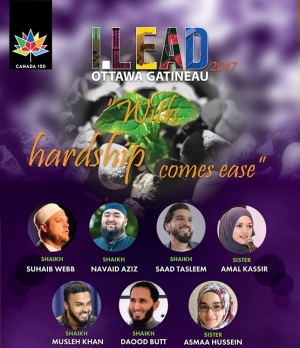
I.Lead is an annual conference put together with the help of various mosques in Ottawa. This year, there are seven speakers — five men and two women — who will address the conference’s theme “With hardship comes ease.”

However, none of them are black.

Jalil Marhnouj, who helped organize the conference, said several black Muslims were approached to speak but were unavailable.

“Every year, we invite speakers from different backgrounds … and they have attended and sometimes they can’t. And this year, some of them couldn’t,” he said.

Lots of experts to choose from

Chelby Daigle, editor of Muslim Link and the author of a recent report on anti-black racism in Ottawa, said part of the issue is the premise that there are only so many qualified black people available.

“People don’t realize that that is a form of discrimination,” she said. “It’s not intentional, but it shows a lack of understanding of the complexity of the Muslim experience in the city.”

Daigle believes there are all types of experts that could have been invited to speak from Ottawa’s large Black Muslim community and from across the country.

Ottawa’s poet laureate is a black Muslim. The poet laureate right now for Edmonton is a black Muslim. We have Ginella Massa, who’s an anchor and who’s also a black Muslim. We have CBC journalist Eman Bare who we profiled on Muslim Link, who’s an award-winning journalist who also writes for Teen Vogue and helps to run Muslim Girl,” said Daigle.

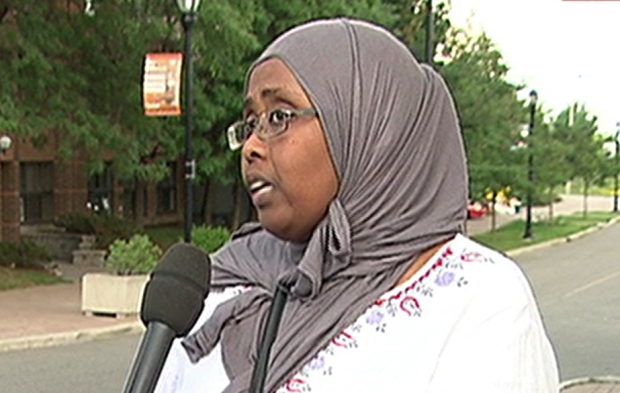
Amran Ali, a Somali-Canadian Muslim woman living in Ottawa, said she was also disappointed at the lack of diversity among speakers.

I.Lead roster

Although Ottawa has a large black Muslim population there are no black speakers at this year’s I.Lead conference. (Facebook)

“I wasn’t expecting to see such a limited list,” she said.

“Ottawa’s Muslim community is diverse. It’s made up of different ethnic backgrounds and different socioeconomic backgrounds,” said Ali.

“Any event that purports to be an event for the large Muslim community — and in particular Muslim youth — must be a reflection.”

Marhnouj said conference organizers are open to hearing suggestions and the conference will be a chance for people to voice their concerns.

“We will listen to them and we will take that into consideration, whatever they come up with, we will act accordingly,” he said.

“We work so hard to bring unity to our community and to bring knowledge,” he said. “And in the end it’s always a human effort and with human efforts there will always be shortcomings.”

The intersection of identities

Chelby Daigle thinks having greater diversity at conferences like I.Lead is important because intersecting identities shape people’s experiences differently and that needs to be reflected.

“I’m still more likely to face a hate crime because I’m black,” said Daigle.

According to Statistics Canada, in 2015 hate crimes targeting blacks declined but they still made up the largest percentage of the total number reported. Meanwhile, the number of police-reported hate crimes against Muslims jumped by 60 per cent.

“If you’re experiencing both anti-black racism and Islamophobia as a young person, that’s probably having a serious impact on your mental health, your concept of identity [and] where you feel welcomed,” said Daigle.

I.Lead isn’t the first Muslim-centred conference in Canada that’s received criticism from black Muslims.

​At the Reviving the Islamic Spirit conference in Toronto in December 2016, American Islamic scholar and president of Zaytuna College, Hamza Yusuf, made comments many participants found dismissed the struggles and work of anti-black racism advocates.

In particular, when asked if Muslim communities should be more supportive of movements like Black Lives Matter, Yusuf said “There are twice as many whites being shot by police but nobody ever shows those videos. It’s the assumption the police are racist and it’s not always the case.”

Amran Ali Canadian Somali Mothers Association Ottawa Abdirahman Abdi July 25 2016

Amran Ali says she was disappointed at the lack of diversity at this year’s I.Lead conference. (CBC)

Yusuf later apologized for his comments.

Promoting greater diversity and inclusion

Amran Ali believes the key ensuring greater diversity is reaching out to a broad range of people.

“Because it’s about Islam it means it has to be a big umbrella event where all Muslims — those who look like me, those who look like the organizers, those who look like Caucasian folk, Indigenous folks — should see themselves reflected,” she said.

“If we’re not reflected on the stage where people are talking or lecturing or teaching or inspiring and motivating, then frankly it feels isolating. It makes you feel you don’t belong, It makes you feel that you are less than.”
Source: Black Muslims in Ottawa upset over lack of diversity at Muslim conference – Ottawa – CBC News

High Alzheimer’s Rates Among African-Americans May Be Tied To Poverty : NPR

Social factors matter:

Harsh life experiences appear to leave African-Americans vulnerable to Alzheimer’s and other forms of dementia, researchers reported Sunday at the Alzheimer’s Association International Conference in London.

Several teams presented evidence that poverty, disadvantage and stressful life events are strongly associated with cognitive problems in middle age and dementia later in life among African-Americans.

The findings could help explain why African-Americans are twice as likely as white Americans to develop dementia. And the research suggests genetic factors are not a major contributor.

“The increased risk seems to be a matter of experience rather than ancestry,” says Megan Zuelsdorff, a postdoctoral fellow in the Health Disparities Research Scholars Program at the University of Wisconsin-Madison.

Scientists have struggled to understand why African-Americans are so likely to develop dementia. They are more likely to have conditions like high blood pressure and diabetes, which can affect the brain. And previous research has found some evidence that African-Americans are more likely to carry genes that raise the risk.

But more recent studies suggest those explanations are incomplete, says Rachel Whitmer, an epidemiologist with Kaiser Permanente’s Division of Research in Northern California.

Whitmer has been involved in several studies that accounted for genetic and disease risks when comparing dementia in white and black Americans. “And we still saw these [racial] differences,” she says. “So there is still something there that we are trying to get at.”

The research presented at the Alzheimer’s conference suggests the missing factors involve adverse life experiences beginning in childhood. These experiences have already been linked to a range of diseases, including heart disease and cancer.

“We’re starting to understand how early life stress and early life deprivation can increase your risk of a number of health outcomes in late life,” Whitmer says. “And the latest thing is understanding how and why that might affect the brain.”

Whitmer was part of a team that presented results of a study of more than 6,000 Kaiser Permanente health plan members, most born in the 1920s.

The team wanted to know whether people who grew up in harsher conditions were more likely to develop dementia. So they looked at people who’d been born in states with high infant mortality rates — an indicator of social problems like poverty and limited access to medical care.

White people’s risk of dementia wasn’t affected by their place of birth. But black people were 40 percent more likely to develop dementia if they’d been born in a state with high infant mortality.

“These people left the state and subsequently moved to northern California, yet there was still this very robust association between being born in a state with high infant mortality and increased risk of dementia,” Whitmer says.

Scientists from the University of Wisconsin presented results of a study of the link between stressful life events and mental function in middle age. They studied more than 1,300 people in their 50s and 60s, including 82 African-Americans.

Stressful experiences included having a parent with a drinking problem, financial insecurity, legal issues, divorce, being fired from a job, and the death of a child.

African-Americans reported 60 percent more of these stressful events than white Americans. But that was only part of the difference, Zuelsdorff says.

“The impact of these stressful events was stronger in African-Americans than it was in non-Hispanic white participants,” she says.

The researchers discovered this by administering tests that reveal the brain’s speed and flexibility in doing certain tasks. These abilities normally decline with age. So the team looked for evidence that stressful events were accelerating this decline.

And they found that in white participants, each stressful event added about a year and a half to normal brain aging. But in African-Americans, each event aged the brain an extra four years.

The next challenge for researchers is to figure out precisely how adverse life experiences are changing the brain, Zuelsdorff says. That will mean looking at the effects of stress hormones and seeing whether stress leads to inflammation in the brain, something that has been associated with Alzheimer’s.

Source: High Alzheimer’s Rates Among African-Americans May Be Tied To Poverty : Shots – Health News : NPR

AGO show humanizes the enslaved, Yorkville store tramples on tragedy: Paradkar

Nice piece contrasting awareness and obliviousness:

Two-and-a-half kilometres. That’s the distance between the gallery in Toronto where artworks utilize fashion to tell the stories of the oppressed and the alley where a store turns to fashion to trample on their tragedies.

One is a series called WANTED at the Art Gallery of Ontario where two Toronto artists have used fashion photography to cast light on the hushed-up history of slavery in Canada. The other is a camouflage jacket, on sale at a men’s store named Uncle Otis in Yorkville, that was worn by Belgian soldiers in the aftermath of an especially brutal and bloody colonization of what is now the Democratic Republic of Congo during which they killed more than 10 million people.

From the WANTED series, you’ll see on a billboard splashed up at Yonge-Dundas Square, an image of Tracy Moore, the host of Cityline.

In the photo, though, she is unnamed. She is wearing red, carrying weights. “Black gown and red callimanco petticoat” say the words on the image, describing her clothing. Next to the photo, another board that says “Not for sale.”

The inspiration for that “ad” and about nine others displayed at the AGO came from advertisements in newspapers such as Upper Canada Gazette and Quebec Gazette in the 1700s posted by Canadian slave owners after the people they had enslaved had run away. In the ads were descriptions of what the enslaved people were last seen wearing.

That detail motivated artists Camille Turner and Camal Pirbhai to transform those fugitive slave ads into artworks that look like contemporary fashion ads.

“Black gown and red callimanco petticoat” was the description that appeared in a newspaper ad in August 1766. “Whoever apprehends said Negro Girl, and brings her back to said WERDEN, or to Mrs. Mary Wiggans, at Montreal, shall have ONE PISTOLE Reward, and all necessary Charges, paid by I. WERDEN,” it read.

“We are not honouring slaves,” Turner told me by email.” We are honouring people who thought of themselves as free and took action to liberate themselves.”

“We wanted to restore their humanity. We don’t have access to the words of enslaved people but through these ads we know their actions. They took matters into their own hands, stealthily running away despite the risks and consequences of recapture.”

“None of my Canadian schooling had taught me about this reality (of slavery in Canada),” Pirbhai said.

“I immediately related this to the obliviousness we seem to show towards the current day slave trade existing in the fashion industry. Fashion ads were the perfect conduit to parallel the injustices of the past and the issues of today.”

Issues of today at a micro level include instances like at Uncle Otis that sells the camouflage jacket under the U.K. based label Maharishi.

This M65 Belgian Congo smock jacket is on sale at a Yorkville boutique.

One problem is the appropriation of the word Maharishi for a line of surplus military clothing. In Sanskrit, maha means great, rishi means sage. What a great sage has to do with military jackets beats me.

“The camouflage pattern, especially in the context of defence-budget-subsidised clothing, offers itself as a perfect canvas for customised, anti-military statements of peace and freedom,” says the Maharishi website.

This leaves me none the wiser.

Still, fashion is ripe with appropriation of “exotic” words from other languages — and in this case is likely used to add an aura of mysticism.

What about the choice of jacket? How is it any different from Nazi-era military gear?

Nobody responded to my repeated email requests for comment on the choice of label and the jacket from Maharishi and Uncle Otis; a manager at the store refused comment when I went there. I tried for two weeks. That was ample time to respond or quietly take down an offensive jacket after they were informed what it stood for.

The jacket itself selling for a hefty $590 (slashed, almost half price! from the original $950) is described thus: “This beautiful pick is of the M65 Belgian Smock Jacket used in the Congo. Maharishi reclaims it with handpainted tigerstripe came, repaired wear-and-tear holes and replaced missing buttons.”

Belgian Congo was rich in rubber, ivory, gold and other minerals, and Belgium extracted billions of dollars of wealth on the backs of local labour, committing atrocities and a genocide that decimated half the population of the land.

A more apt description of what this jacket symbolizes, then, would be: “It has the smell of the blood of the Congolese still. All the perfumes of Arabia will not sweeten this little smock jacket, neither will attempts to cover it with tiger stripes or repair the wear-and-tear brought about by kidnapping, beating, starving, mutilating, torturing, and murdering Congolese people for Europe’s economic gain. Wear it — to our economic gain.”

This isn’t art, this isn’t fashion. This is continuing to profit from exploitation.

Art has purpose.

“For us, art is about provoking critical thinking and prompting conversations,” said Turner. “We feel it is our responsibility to speak to future generations about our history.”

Over to you, Maharishi.

Source: AGO show humanizes the enslaved, Yorkville store tramples on tragedy: Paradkar | Toronto Star

Federal government to downsize failing Canada.ca project

Another failing IT project.

As someone who regularly accesses government information, never found Canada.ca terribly user friendly or easy to find the info I was looking for. The old departmental websites were more efficient from my user perspective (although that may reflect my comfort and familiarity with them or the more policy information that I was looking for).

And a bit disappointed the IRCC is one of the sites that will remain as it is one of the sites I consult with the most.

As with the other major IT failures – Shared Services Canada, Phoenix – one has to question the competence of the senior officials who made and prepared the case along with the Ministers who provided oversight and approval:

The federal government is substantially curtailing the multimillion-dollar Canada.ca project, acknowledging that its plan to merge 1,500 departmental and agency websites into a single website is sputtering.

Instead of migrating all departments and agencies to a single platform, the $11.8 million earmarked for the project will be used government wide, with a focus on four of the largest departments offering services most used by Canadians: health, environment, Canada Revenue Agency, and immigration.

Those departments will have until the end of this year to migrate their content to the new platform.

“The 2012 plan to migrate all government web content to the Canada.ca platform under delivered from the beginning in part due to poor project management, planning and underfunding from the outset by the previous Conservative government,” said Jean-Luc Ferland, press secretary to Scott Brison, president of the Treasury Board.

“We are refocusing project funds where they can make the biggest impact to improve Canadians’ online experiences.”

Most telling about the government’s flagging support for the initiative is that remaining departments and agencies will not be compelled to continue.

“Other departments will continue to have the option of migrating content to Canada.ca as resources and technology advances allow,” said Ferland.

Over budget and behind schedule

The Canada.ca initiative was launched with the goal of making it easier for people to find and use government information online. A $1.54-million contract for a new content management system, where all government websites would be moved, was awarded to Adobe in 2015.

But as CBC reported at the end of last year, the project is more than 10 times over budget and more than a year behind schedule, making it yet another failing government IT project, not unlike the Phoenix pay system or the email transformation initiative. It’s also another project the Liberal government is blaming on its predecessor.

A government source not authorized to speak on the record said the decision to pare down the Canada.ca initiative, yet allow it to limp along, was making the best of a bad situation.

“It’s like we walked into the kitchen where the meal is poorly planned and off to a rough start. Some dishes were forgotten, grill is overstuffed … your herbs are wilting on the counter. You don’t freak out and throw everything out. The responsible thing to do is to focus on your guests and make the most of everything you have.”

Tens of millions spent so far

In response to inquiries from CBC, the Treasury Board conceded that as of June, only 230,542 pages were hosted on Canada.ca, up from the 10,000 tabulated six months ago, but still an incredibly slow rate of movement over to the new portal.

There are more than 17 million government of Canada web pages in total.

As well, the Adobe contract has ballooned to more than $14.9 million, according to government figures. That does not include the tens of millions spent by departments and agencies that are responsible themselves for the actual migration of the websites, using existing budgets and staffing.

Since 2015, eight of the largest departments have spent or budgeted nearly $32 million on the project. Those departments include:

  • Employment and Social Development Canada.
  • Immigration, Refugees and Citizenship.
  • Health.
  • Environment.
  • Canada Revenue Agency.
  • National Defence.
  • Fisheries and Oceans.
  • Global Affairs.

A slow migration

“This is great news from a taxpayer’s perspective,” said Joel Brockbank, chief technology officer at OpenPlus, a content archictecture company that had submitted a bid to create the new content management system for Canada.ca

“These large IT renewals have a lot of momentum and it’s difficult to change course if it’s not going as planned. It’s amazing they are not doubling down and putting a lot more money into something that will ultimately fail.”

Experts who have warned against unmanageable, large, one-size-fits-all government IT projects agree.

“To focus the money on key sites which Canadians use most is the right decision,” said Timothy Lethbridge who teaches software engineering and computer science at the University of Ottawa.

The December deadline for the four big departments is probably still unrealistic, according to Lethbridge, but the idea of letting other departments off the hook is smart.

“To slowly migrate, as time permits, is more cost effective than a forced death march to get to an artificial deadline,” he said.

A time to cut losses

A government source with first-hand knowledge of the Canada.ca project, and who was speaking on condition of anonymity, said IT government workers have been told that none of the government’s arm’s-length agencies have been moving their material over to the new site for some time.

“In fact we are not even talking about Canada.ca anymore,” said the source, adding “the vast majority of the content on government sites is not being migrated at all.

“It probably just won’t happen.”

Source: Federal government to downsize failing Canada.ca project – Politics – CBC News

Australian senator quits over New Zealand dual citizenship – BBC News

May explain in part relatively low levels of diversity among Australian politicians although I suspect other factors more important:

An Australian senator has resigned after realising he holds dual citizenship, meaning his nine-year parliamentary career most likely breached the nation’s constitution.

Scott Ludlam, from the minor Greens party, said he only learned of his New Zealand citizenship last week.

Under Australia’s constitution, a person cannot run for federal office if they hold dual or plural citizenship.

Mr Ludlam had been told his eligibility would be challenged in court.

The senator, who was also Greens co-deputy leader, apologised for what he called an “avoidable oversight”.

Source: Australian senator quits over New Zealand dual citizenship – BBC News

CSIS faces $35-million harassment, discrimination lawsuit

Of the three – CSIS, Canadian Forces and RCMP – CSIS has the best visible minority  numbers:

Canada’s spy agency is being sued by five employees who are looking for upwards of $35 million in damages over allegations of years of harassment and discrimination based on their religion, race, ethnicity, gender and sexual orientation.

A statement of claim filed in Federal Court alleges that harassment, bullying and “abuse of authority” is rife within the Canadian Security Intelligence Service and that managers condone such behaviour.

The allegations are based on the experiences of five employees, none of whom can be legally identified within the document.

They allege that the harassment they have faced over years has caused them embarrassment, depression, anxiety and loss of income. They also allege that their complaints were ignored or dismissed by senior managers, some of whom suggested they should keep quiet out of fear of reprisal.

None of the allegations in the 54-page document have been tested in court.

In a statement, CSIS director David Vigneault says the agency does not tolerate harassment under any circumstance, which is reflected in the employee code of conduct.

Any allegations of inappropriate behaviour are taken seriously, he says.

Public Safety Minister Ralph Goodale have yet to respond to a request for comment.

Source: CSIS faces $35-million harassment, discrimination lawsuit – The Globe and Mail

Young Islamists have ′very scant′ knowledge of Islam, study finds | DW | 11.07.2017

Interesting analysis of texts among young radicalized Muslims:

Young Muslims who become radicalized often invent a patchwork, imagined version of Islam that has little or nothing to do with the Koran. That’s the conclusion drawn by scholars at the universities of Bielefeld and Osnabrück. They’ve just published a book analyzing 5,757 messages from a WhatsApp group of 12 young men ahead of a spring 2016 terrorist attack.

The messages came from a mobile phone, seized by police, that had belonged to one of the young men involved in the attack. The researchers say that the chat offers unique insights into the radicalization process and mindset of Islamists in Germany.

The messages also illustrate the enormous differences between Islamism and Islam. Many of the self-styled “true Muslims,” the experts found, themselves have little valid knowledge of the Koran or the rest of their religion.

“The result is a kind of ‘Lego Islam’ that can be continually adapted to new requirements and in practice has nothing to do with the forms of traditional Islam practiced by the majority of mosque communities in Germany,” write co-authors Becem Dziri and Michael Kiefer.

The authors omitted the names of those involved in the chat and didn’t specify the attack, although the time reference strongly suggests that it was the bombing of a Sikh temple in Essen in April 2016. At the time it was reported that the young people involved in that attack were radicalized via social media, and three of them, all teenagers, were later convicted of attempted murder and conspiracy to murder.

Deutschland Anschlag auf Sikh Tempel in Essen (picture-alliance/AP Photo/M. Kusch)Luckily no one was killed in the temple bombing

Budding Islamists mix jihad and genies

The conversations leading up to that act of violence suggest that the youths were willing to kill for a faith of which they had only a rudimentary understanding.

“The religious education within the group is very scant,” writes co-author Rauf Ceylan. “Often they didn’t even know the simplest Islamic theological basics. The members of the group are laymen and autodidacts who pick and choose information from the internet and communicate it to the rest of the group.”

Excerpts from the chats often seem like comedy sketches sprinkled with sometimes misused Arabic words and phrases and English slang. In one, a participant responds to a self-appointed leader’s call for a meeting to discuss the jama’a (group) by saying he didn’t have any Islamic clothing. The leader responds: “You can also were sweatpants or something like that. If you want I can loan you something for the day.”

Another message reveals that the author doesn’t even own a copy of Islam’s main religious text.

“I need a Koran,” he writes. “I’ll get one soon from lies [a Salafist group that gives away Korans on the street in Germany]. If I see abu nagi, I’ll tell him he’s a kafir [infidel] because he thinks erdogan [sic] is a Muslim.”

When asked what the most absurd detail of the chats was, Ceylan told DW that participants interwove the belief in magical genies in their pseudo-theology.

“Over the course of the chat protocol, you can see how a religious world gets invented in which supernatural beings can have real effects on the young men,” Ceylan said. “They take fragments of the Koran and cobble them together. That’s why we call it ‘Lego Islam.'”

Salafisten verteilen Korane (picture-alliance/dpa/B.Roessler)Salafists pass out free Korans on German streets

Careers as ‘pop preachers’

Scholars also say that the chat illustrates the process by which young Muslims get radicalized. Key is the role of the “amir,” the self-appointed leader, who “instructed” the others despite lacking any theological credentials himself.

“He’s an alpha male like you have in school,” Ceylan told Deutsche Welle. “The people who act as Salafist preachers aren’t theologians. They’re people who have sometimes failed in life, but if they have a gift for being alpha males, they can become superstars overnight. This shouldn’t be underestimated. You can make a whole career of being a pop preacher.”

The second ingredient in the making of a radical Islamist, the scholars explain, is a young person with the right biography. Emancipation from parents – becoming an adult – gets conflated with emancipation from the mainstream community as one of the “chosen ones.” Ceylan cites the example of a young man who became radical after discovering that his father was having an affair and telling his mother, which led to a divorce.

“These are fundamentally young people who are trying to overcome a crisis in their lives or a biological ruptures,” said Ceylan. “The timing is crucial. Who do I meet in this phase?”

Social media platforms often play a role in radicalizing young people

The importance of language

Ceylan says that although bogus theology is part of the problem, religious instruction is not enough to combat radicalization. He calls for more money for German language imams, psychological therapists in prisons, where many young people get radicalized, and interventions in schools.

“These young people don’t get radicalized secretly, as the chat protocols show,” Ceylan said. “Their teachers see that something’s not right. A kid grows his beard out or starts saying more and more radical things. And the parents see it before everyone else.”

Above all, Ceylan says, those who do intervene with young people susceptible to Islamism need to speak the right language.

“The characteristics of the charismatic ‘self-made’ preachers…are that they speak German, use young people’s slang, make a theatrical impression, display street credibility and present themselves cleverly. That, together with the simplicity of what they teach, makes them attractive to young people.”

Source: Young Islamists have ′very scant′ knowledge of Islam, study finds | TOP STORIES | DW | 11.07.2017

Federal Court voids Canadian citizenship revocation for 312 people

A second decision that reflects poorly on the Conservative government’s C-24 expedited revocation provisions (and that implements the earlier Federal Court decision – Canada can’t strip your citizenship without a trial, court rules – VICE News). It is, of course, part of a pattern where their policies and legislation were routinely ruled against by the courts.

One would hope that the policy and legal advice given to the government at the time highlighted the likely risk of adverse rulings.

Given the Conservative track record, their assertions regarding contesting the Khadr lawsuit should be taken with a grain of salt:

The Federal Court has nullified government attempts to strip Canadian citizenship from more than 300 people after an earlier judgment struck down key provisions of the Citizenship Act introduced by the former Conservative government under Stephen Harper.

The earlier ruling, in May, declared those provisions inoperative because they were an expedited process that deprived individuals of the right to an oral hearing and did not take into account humanitarian and compassionate considerations.

As a result, in a decision on Monday, Justice Russel Zinn voided the citizenship revocation of 312 individuals who had turned to the court after they were targeted in a sweep against people who had obtained their Canadian nationality through fraud.

Another 14 similar court requests, which had not been filed in a timely manner, can apply for a deadline extension, Justice Zinn ruled.

“It’s another judicial loss for the policies of the previous government,” Montreal lawyer Vincent Valaï, who represented some of the people in the case, said in an interview.

He noted that the Conservative government liked to say that obtaining Canadian citizenship is a privilege, not a right. However, the ruling in May said that once acquired, citizenship is a right.

“And because it is a right, you have to respect procedure fairness before revoking citizenship. That means the right to a hearing before an impartial judge,” Mr. Valaï said.

Another lawyer involved in the case, Matthew Jeffery, called the provisions in the law a “deeply flawed process.”

The government could start the revocation process against those people all over again but it would first have to rewrite the law to conform with the court rulings, Mr. Jeffery said.

The number of revocation cases began ballooning when Jason Kenney, who was immigration and citizenship minister in the Harper government, announced in 2012 that his department would cancel the citizenship of more than 3,000 people, in a crackdown against those who had faked the amount of time they have spent in Canada.

In February, 2014, the Harper government amended the Citizenship Act to fast-track the revocation process in what it called “non-complex” cases. It meant eliminating the right to a hearing for individuals when their citizenship had been obtained by fraud.

Several of the cases involved clients of Nizar Zakka, a Montreal immigration consultant who created a system to hide the fact that the clients were not residing in Canada for the required two-year minimum within a five-year span.

Faced with hundreds of applicants challenging their citizenship revocation, the Federal Court started with a review of eight lead cases while the other cases were held in suspension.

Last May, Justice Jocelyne Gagné ruled on the eight lead cases, striking down the new provisions for an expedited revocation process.

“They deprive the applicants of the right to a fair hearing in accordance with the principles of fundamental justice,” Justice Gagné wrote.

In one case that she highlighted, the government tried to revoke the citizenship of Fiji-born Thomas Gucake, who had come to Canada as a child and later served three tours in Afghanistan with the Princess Patricia’s Canadian Light Infantry regiment.

In 2015, Mr. Gucake received a notice of citizenship revocation because his father had failed to disclose a minor criminal conviction in Australia.

The current government has since amended the Act so that, by next year, the Federal Court would be the decision-maker in citizenship revocation cases.

Source: Federal Court voids Canadian citizenship revocation for 312 people – The Globe and Mail

Kiff: Disproportionate funding goes to media linked to Falun Gong | Ottawa Citize

Interesting analysis and valid questions. Given that Kiff is a principle of a lobbying firm (Solstice), this may not be a completely altruistic commentary which does not detract from the evidence presented:

While most of Canada’s conventional media have endured shrinking audiences and revenues in recent years, segments of the ethnic media have seen significant growth thanks to a constant influx of immigrants from all over the world.

In the Greater Toronto Area alone, there are about 120 ethnic media channels targeting various audiences. The number of Chinese daily newspapers has grown from about five in the 1990s to more than 50 in 2015.

According to Statistics Canada, in 2011, 13 ethnic communities had populations of more than one million, and others had sizeable and growing populations. Demographic projections indicate that by 2031, nearly half (46 per cent) of Canadians aged 15 and older could be foreign-born, or could have at least one foreign-born parent, up from 39 per cent in 2006.

With those numbers, the ethnic media sector in Canada is bound to keep on expanding.

The Canada Media Fund (CMF) helps to support this growth. It was created by the Department of Canadian Heritage back in 2010 with a mandate to foster, promote and finance the production of Canadian content and relevant applications for all audiovisual media platforms. Various CMF programs support productions reflecting Canadian diversity.

A closer look at the projects backed by the Canada Media Fund reveals some surprising funding patterns going back to 2010. Several production companies affiliated with New Tang Dynasty TV (NTDTV) have received close to $18 million in funding over six years compared to the combined total of about $13 million for other ethnic media outlets.

Studios with ties to NTDTV have received 43 per cent of the funding allocated through the Diverse Languages Program and have produced the near totality of funded projects in the Mandarin and Cantonese languages.

According to Wikipedia, NTDTV is a television broadcaster based in New York City with correspondents in more than 70 cities worldwide. The station was founded in 2001 as a Chinese-language broadcaster by practitioners of Falun Gong, a spiritual practice banned by the Chinese Communist Party.

NTDTV’s Canadian operation, with offices in North York, officially launched on March 28, 2012 on Shaw Cable. It is also available on Novus Entertainment in Vancouver and on Bell Fibe TV and Rogers Cable in Eastern Canada. It is unclear how many viewers NTDTV reaches in Canada.

So why does this relatively unknown broadcaster outside of the Chinese community, and its affiliated production companies, get what seems to be a disproportionate amount of funding compared to other ethnic broadcasters? Why are almost all funded Chinese-language projects produced for this broadcaster?

And what is known about the content of the material produced for a broadcaster with clear ties to a religious sect? Why, for example, are at least three funded projects linked to Shen Yun, the huge performing arts arm of Falun Gong that tours extensively throughout the world? Many critics have noted that this production’s overtly political content and proselytizing supersede its artistic merit.

When I spoke to the Canada Media Fund to confirm these figures, they pointed out that CMF is an independent non-partisan body and that CMF does not intervene in the subject-matter of funded projects, recognizing each production’s creative value and freedom of speech.

That is fine, as far as it goes. But, in this case an unexpected result is occurring.

Canada takes pride in its pluralistic and nonsectarian society. In spite of the CMF’s explanations, it seems odd and most un-Canadian that so much public funding is being allocated to a fringe religious group.

It is time for a bit more sunshine on what is occurring here.

Source: Kiff: Disproportionate funding goes to media linked to Falun Gong | Ottawa Citizen

U.S. Refugee Admissions Pass Trump Administration Cap Of 50,000 : The Two-Way : NPR

By way of comparison, the Canadian 2017 levels plans has a target of 40,000 (about 0.1 percent of the population), the US cap of 50,000 is about 0.02 percent of their population). However, the US has a much higher number of undocumented immigrants/refugees, estimated at 11 million or  about three percent of the population:

The U.S. refugee program surpassed the Trump Administration’s 50,000-person cap on Wednesday, meaning that many refugees will now be denied entry into the country.

The cap is expected to affect thousands of refugees. Last fiscal year, the U.S. admitted just under 85,000 refugees, and former President Barack Obama had aimed to resettle 110,000 refugees this fiscal year. But President Trump lowered the cap dramatically in his “travel ban” executive orders, and the cap went into effect on June 29.

“The State Department initially told resettlement agencies it expected to hit that threshold by July 6,” NPR’s Jackie Northam reports. “But that date came and went and the number of refugees entering the country wasn’t reached. So the date was extended to July 12.”

The total number of admitted refugees reached 50,086 by Wednesday afternoon. A State Department official tells NPR that the department decided to set the cutoff at the end of the day, instead of at the exact number 50,000, to keep the process “orderly.”

That number of admitted refugees could still rise by several thousand, as refugees with close family members already in the U.S. will continue to be allowed to enter the country, under the terms of a recent Supreme Court order.

You may recall that Trump established the 50,000-person cap in his initial and revised “travel ban” executive orders. For months, those orders were blocked from implementation. But in June, the Supreme Court announced it would consider the merits of the ban and that in the meantime, portions of the second executive order could go forward — as long as they didn’t block people who had a “bona fide relationship” with the U.S.

The administration later defined “bona fide” ties as including parents, children and siblings in the U.S., but not grandparents or more extended family members. Bona fide ties also include job offers in the U.S.

Refugees who do not have such ties will no longer be admitted this fiscal year, even if they have completed the two-year vetting process to enter the refugee program. The next fiscal year begins in October.

Last month, NPR’s Michele Kelemen explained what’s at stake:

“[R]efugees have arrived in the U.S. this fiscal year from all over the world — from Syria, of course, but also Myanmar, the Democratic Republic of Congo, Afghanistan. It’s really a global humanitarian program. …

“I’m told thousands could be affected by [the cap]. One refugee resettlement agency told me today that they usually book people about three weeks ahead of time. … It’s not just airline tickets. Refugees have to go through medical screenings. And those clearances don’t last forever. If they rebook for later, they might have to redo all of that medical screening and security checks.”

The Lutheran Immigration and Refugee Service, which resettles refugees in the U.s., said in a statement that the cap “will mean that vulnerable refugees, including those with severe medical needs, torture survivors, unaccompanied refugee children, and persecuted religious minorities will continue to be in harm’s way.”

The pause on refugee admissions “will have an immediate effect on our ability to conduct the lifesaving work of providing safety and protection,” Kay Bellor, a vice president at LIRS, said in the statement.

Trump’s executive order proclaims that admitting more than 50,000 refugees “would be detrimental to the interests of the United States.” It allows for individual refugees to be admitted on a “case-by-case basis,” based on the joint judgment of the secretary of state and secretary of Homeland Security.

Source: U.S. Refugee Admissions Pass Trump Administration Cap Of 50,000 : The Two-Way : NPR