Government appointments and diversity – Policy Options

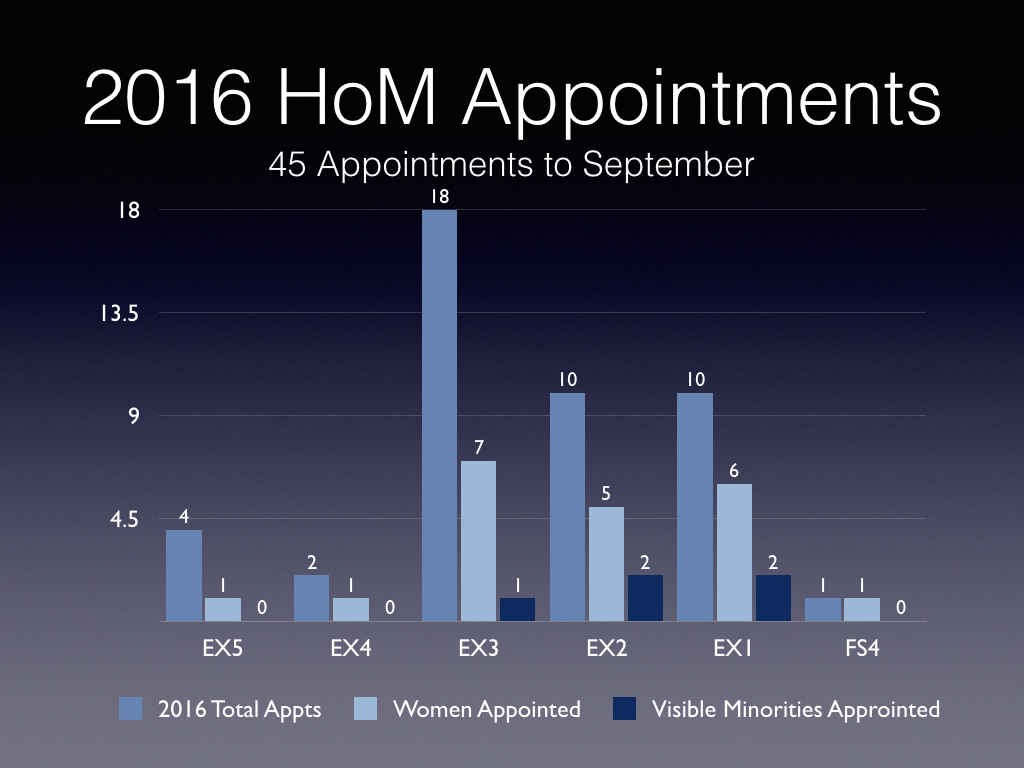
election-2015-and-beyond-implementation-diversity-and-inclusion-042My latest piece in Policy Options, reporting on the Liberal government’s commitment on increasing diversity in government appointments (political, deputy minister, judges and heads of mission) – spoiler alert, it largely has.

Source: Government appointments and diversity – Policy Options

USA: Most say immigrants strengthen the country – Pew Research

The latest numbers from Pew Research, both surprising in terms of overall support and less so given the sharp contrast between Democrats and Republicans:

About six-in-ten Americans (63%) now say immigrants strengthen the United States because of their hard work and talents, while 27% say immigrants are a burden on the country because they take jobs, housing and health care. The share of Americans who see immigrants as more of a strength than a burden is now at its highest level in more than twenty years of Pew Research Center surveys.

The stark partisan differences in opinion on how immigrants impact the nation are little changed over the course of the last year. Today, an overwhelming share of Democrats and leaners (82%) think immigrants strengthen the country with their hard work and talents, while just 13% say they are a burden. By contrast, Republicans are more divided: Roughly as many (44%) say immigrants are more of a burden on the country because they take jobs, housing and health care as say they strengthen the country because of their hard work and talents (39%).

There are key demographic differences within the Republican Party, however. About half of Republicans under the age of 50 say immigrants strength the country (51%), while fewer say they are a burden (35%). For older Republicans, the balance of opinion is the reverse: More say immigrants burden the country (52%) than say they strengthen it (29%).

Similarly, Republicans with a college education are more likely to say immigrants strengthen the country than say they burden the U.S. (51% vs. 34%). By contrast, Republicans without a college degree are more likely to say immigrants burden the country because they take jobs, housing and health care (47% vs. 36%).

There are only modest demographic differences among Democrats; wide majorities across age and education groups say immigrants strengthen the country because of their hard work and talents.

Source: 3. Political values: Government regulation, environment, immigration, race, views of Islam | Pew Research Center

‘Frustrating’ backlog of refugee applications will likely get longer as federal targets drop

Not terribly surprising, both the year-to-(exceptional)-year decline and the resulting frustration:

Spurred on by this year’s fast-tracking of displaced Syrians, nearly 30,000 more people are in line to come to Canada as refugees — but they may be in for a wait as the total number of refugees to be resettled in the coming year is much lower than this year’s target.

According to Immigration, Refugee and Citizenship Canada there are 4,264 Syrians with approved applications who are waiting to fly to Canada.

Another 25,756 applications are pending final processing.

Chris Friesen, director of settlement services with the Immigrant Services Society of B.C. (ISSBC) calls the 2016 push to resettle tens of thousands of Syrians displaced by a bloody conflict a “bold humanitarian mission.”

“It captured the world’s attention, and, of course, captured Syrian’s interest in the region.”

But with reduced numbers for the refugees to be resettled next year, and the large inventory of applications already being processed by Canada’s immigration offices, Syrian families hoping to come here could be waiting for years.

“It’s something that we need to look at — there is a lot of pent up interest,” Friesen says. Based on current processing times and the already-existing backlog, Friesen says “it could take the government three years to address the private sponsorship applications on file.”

The federal government says 2017 numbers will be lower compared to what it calls the “extraordinary target” in 2016. In 2016, the target for refugees and protected persons was 55,800. In 2017, that number drops to 40,000. But that is for all refugees from across the world, not only from Syria.

As telling, the target number of government assisted refugees (GARS) drops to 7,500 next year, from more than 18,000 over the last 12 months.

….Some patterns emerged when ISSBC surveyed 300 Syrian households who arrived in B.C.

Roughly 17 per cent of the people surveyed say they have found part-time or full-time work. English classes have been popular, with 75 per cent of the respondents saying they had signed up.

Fifteen per cent of the people surveyed reflect symptoms of untreated trauma, ISSBC says.

And three quarters of the newly arrived refugees have family members left in the Middle East who want to come to Canada.

Canada’s immigration department said it’s in the process of finalizing a broad report called “Rapid Impact Evaluation” that will look at how the 26,000 refugees who came by March 2016 are adjusting in Canada but the department would not yet reveal its findings.
Census still vulnerable to political meddling, says former chief

More on Statistics Canada and the proposed changes to make it more independent but according to Wayne Smith, the former Chief Statistician, not fully.

Unlikely that any government would give StatsCan full independence and I remember a lively Cabinet discussion on some aspects of the 2001 Census:

The federal government’s bid to protect Statistics Canada from political interference has a significant oversight that exposes the census to the possibility of government meddling, says Canada’s former chief statistician.

Wayne Smith, who resigned abruptly from the agency in September, said newly introduced legislation doesn’t change the parts of the Statistics Act that give cabinet control over the content of the questionnaire.

That leaves the census – used by governments to plan infrastructure and services – vulnerable to the sorts of changes the Conservatives imposed in 2011 by turning the long-form census into a voluntary survey, Smith said.

“That’s a major flaw in this bill,” he said. “The government brought this bill in because of the census, but it’s failing to deal with the census.”

Smith described the bill as a first step towards broadening the agency’s authority over how information on all types of subjects is collected, analyzed and disseminated, shifting that authority away from the minister.

Innovation Minister Navdeep Bains, the minister responsible for Statistics Canada, would retain the right to decide what information Statistics Canada collects, including directing the agency to collect data on emerging areas like renewable energy. The bill also gives cabinet the ability to make methodological changes, such as making mandatory surveys voluntary as the Conservatives did with the 2011 census.

Source: Census still vulnerable to political meddling, says former chief

Switzerland: Do strict citizenship laws help or hurt integration? – swissinfo.ch

On how Switzerland makes it particularly hard to participate and integrate:

Since permit and citizenship laws have become tied to social aid money, both Müller and Chukwunyere have worked with people who try to avoid taking such payments because they know the consequences.

“They would definitely be eligible for social aid and are considered working poor. But they don’t want the support anymore – and what does that mean for their children?” Chukwunyere wonders.

Müller mostly sees the laws affecting young immigrants who have no choice but to take social aid money when they become adults because their families depended on it throughout their childhood.

Usually, those young people aren’t after citizenship – at least not right away – but they do want to get a residence permit that gives them a better chance on the job market in Switzerland. To get a better permit, they also have to prove they’re not getting social aid and pay it back in some cases – nearly impossible for young people just starting out on their own.

“Those with certain types of permits aren’t eligible for scholarships, so they’re forced to take social aid money at age 18,” Müller explains. “Unless they don’t do an apprenticeship and look for a job right away, but that’s not what’s generally encouraged in Switzerland.”

“It is a big goal for young immigrants to get another type of permit,” Müller says. “And you’re taking some hope away from them if you tell them that it will be more difficult to get that permit if they take social aid money.”

More laws

Although Elif and Emre feel discouraged that they will have to wait nearly another decade to become Swiss, they say they’ll wait it out and fight for the law to be repealed in the meantime.

But political winds may be blowing against them, with similar laws being debated or in place in other cantons such as Uri, Basel City and Aargau. And the new national citizenship law, which will come into force in 2018, will have a similar effect because it requires applicants for naturalisation to have a permanent residence permit, generally only obtainable for those who pay off their social aid debts.

Meanwhile, the number of citizenship applications in canton Bern have increased again after having fallen off considerably following the approval of Hess’s law.

“I’m sure there would have been even more applications without the law,” Hess said of the rebound in Bern’s Der Bund newspaper, adding that his party advocates for quality and not quantity when it comes to citizenship and that today’s citizens are better integrated as a result.

But Chukwunyere wonders where that leaves the quarter of the Swiss population without a passport.

“Research shows that a person only feels at home when they can participate,” Chukwunyere points out. “Here you can only fully participate if you are Swiss. But if you hang the fruit so high that everyone knows they can’t reach it, then you’re achieving the opposite of integration.”

Source: Do strict citizenship laws help or hurt integration? – SWI swissinfo.ch

Citizenship Applications: Third Quarter Continues to Show Decline

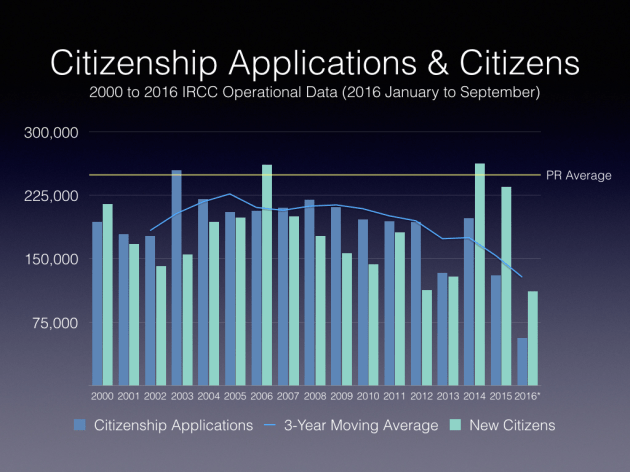
citizenship-data-slides-010Further to my earlier analysis of the half-year numbers showing a dramatic decline (The impact of citizenship fees on naturalization – Policy Options), the third quarter numbers issued this week confirm the overall trend: only some 56,000 applications were received, compared to 112,000 for the same period in 2015, just about half.

This quarter is the first quarter one year after minimum residency requirements were changed to four years from three and so one might have expected some increase. Indeed, the July-September numbers show an increase for the quarter from 12,000 in 2015 to 20,000 in 2016. But this does not change the overall picture: the total number of applications this year is likely to be around 75,000 compared to 130,000 in 2015, a drop of over 40 percent.

Nor does it change my overall argument that the likely major factor responsible for this decline was the steep increase in adult citizenship processing fees in 2015 to $530.

Of course, the one bright spot in this decline is that the backlog has been reduced: the current inventory is just over 55,000 compared to about 250,000 at the beginning of 2015. Processing time has also declined, from 21 months for the same period in 2015 to 16 months currently.

The most recent approval rate is 91 percent, slightly down from 93 percent.

But reducing the backlog and reducing processing times by reducing demand for citizenship through higher fees and other barriers runs against the government’s overall diversity and inclusion agenda.


‘We can’t abandon them’: Senators urge more language, mental health supports for Syrian refugees

Sensible set of recommendations:

One year after the first wave of Syrian refugees arrived in Canada, the Senate’s committee on human rights is urging the federal government to boost language training, mental health services and financial supports to ease the next phase of the resettlement process.

Releasing a report called “Finding Refuge in Canada: A Syrian Resettlement Story,” committee chair Jim Munson said while the program has been a Canadian success story, the government and citizens must not be complacent.

“We can’t abandon them. We can’t let indifference set in. We need to do more to help them in their next resettlement steps,” he said during a news conference in Ottawa Tuesday.

The report recommends:

  • The minister of immigration, refugees and citizenship set and meet specific standards for processing times.

  • Improving the flow of information to refugees on the status of applications.

  • Connecting refugees with networks of supportive individuals in their communities.

  • Ensuring the Canada Revenue Agency (CRA) maintain timely processing for disbursement of the Canada Child Benefit.

  • Replacing immigration loans for transportation expenses with a grant.

  • Increasing funds for language training, and providing accompanying child care to improve access for women.

  • Working with provinces, territories and community groups to enhance programming for youth.

  • Improving culturally appropriate mental health programs.

  • Identifying possible changes to facilitate timely family reunification.

Source: ‘We can’t abandon them’: Senators urge more language, mental health supports for Syrian refugees – Politics – CBC News

And The Globe has a good profile of how some schools are integrating Syrian refugee kids:

 Finding sanctuary: Why education is challenging but crucial for Syrian refugees 

Battle against religious persecution ‘diminished’ under Liberal government: ex-ambassador

Bennett’s comments are not surprising, as the intent of the merger into the human rights division was to encourage a more integrated approach to all rights, which ultimately means a lower profile for religious freedom than provided by a separate office.

Same thing happened when multiculturalism moved from Canadian Heritage to IRCC in 2008 under then Minister Kenney, where it withered away in terms of personnel, funding and importance, and has yet to recover despite its move back to Canadian Heritage:

I agree fully with his call for greater religious literacy among officials (not just diplomats), given the place that religion plays in many peoples lives:

Canada’s former ambassador for religious freedom launched thinly veiled criticisms at the new Office of Human Rights, Freedoms and Inclusion on Wednesday.

Speaking to the Senate’s human rights committee, Andrew Bennett, now a senior fellow with Christian think-tank Cardus, said the “ill-defined and thoroughly vague” concept of “inclusion” could muddy the water and distract from specific religious persecution issues faced by minorities abroad.

Bennett implied the Liberal government’s new office, which replaced his Office of Religious Freedom earlier this year, has a vaguer mandate less focused on specific issues of religious persecution than it did under the Conservatives.

He said more training is needed because there is a “relative ignorance” of religion in the public-service ranks and a “false understanding of separation of church and state” still seems prevalent. To ignore the fact that religion plays a role in public life is “out of step,” “historically inaccurate” and a “very serious diplomatic blind spot,” he said.

“Allies are wondering why there has been a diminishment in focus on religious freedom,” Bennett added, arguing that religious freedom is fundamental and that to prioritize it does not deny attention to other human rights.

“Certain human rights need to be brought to the floor and actively and persuasively championed when they’re most being challenged,” he said. His office could have been louder, Bennett noted, when it came to specific issues, such as the treatment of Falun Gong practitioners and Tibetan Buddhists in China, of Christians in Saudi Arabia and of Shia Muslims in Pakistan.

Bennett said he worked with the new office as part of a transition process, including extending his own network of contacts, until June. But, in the context of a question about the transition period, he said, “unfortunately I was never afforded the opportunity to brief the minister on the work of the Office of Religious Freedom.”

Foreign Affairs Minister Stéphane Dion’s press secretary, Chantal Gagnon, said however that the two had met earlier, on Feb. 10, when they “discussed the work of the office.”

In an emailed follow-up statement to the National Post, Bennett said the meeting was held with “no more than two hours’ notice” and that Dion requested “advice on the political sensitivities of the non-renewal of the office” and his relationship with the office’s External Advisory Committee. “But that was not a structured, formal briefing on the office itself.”

Angela Merkel faces party row over calls to scrap dual citizenship for children of immigrants 

Tough balancing act in overall European political context:

Angela Merkel was plunged into a new row over immigration on Wednesday when delegates at her party conference voted to end dual citizenship for the children of immigrants.

The German chancellor quickly disowned the decision by her Christian Democratic Union party (CDU), as her coalition partners said they would block it from becoming government policy.

The dispute, a day after Mrs Merkel was re-elected party leader and given an 11-minute standing ovation, threatened to mar the start of her campaign to win a historic fourth term as chancellor.

“There will be no change in the law in this parliament,” she said after the vote, in a clear rebuke to delegates. “I do not believe we should campaign on dual citizenship in the elections as we did in the past.”

In her speech to the conference on Tuesday, Mrs Merkel made a clear play for the party base who had been alienated by her “open-door” refugee policy, vowing never to repeat it and calling for a burka ban.

But the row over dual citizenship was a sign she may struggle to contain the demand for an anti-immigrant line on the party’s emboldened Right wing.

Dual citizenship is an incendiary issue in Germany, where it was not allowed until recent years, and even now is only available to citizens of other EU countries and the children of immigrants.

By a narrow majority of just over 51 per cent, CDU delegates voted to scrap laws introduced in 2014 under which the children of immigrants born in Germany are allowed to retain dual citizens as adults.

Source: Angela Merkel faces party row over calls to scrap dual citizenship for children of immigrants 

Le cours d’éthique et de culture religieuse jugé sexiste | Le Devoir

Should have seen this coming – the challenge of how to improve awareness of different religions and their beliefs, a desirable goal in a diverse society, while placing these in the context of gender and other rights:

Le Conseil du statut de la femme (CSF) reproche au cours d’éthique et de culture religieuse d’enseigner les religions sans critiquer leur contenu sexiste. Dans un nouvel avis, il recommande que l’enseignement des religions soit séparé de celui de l’éthique, et joint au cours d’histoire.

Le cours ne « remet pas en question les pratiques sexistes au sein des religions » et se contente de décrire les récits religieux sans offrir de mise en contexte critique, déplore le CSF.

On donne l’exemple du récit d’Abraham dans l’Ancien Testament et de ses rapports avec son épouse Sarah et la servante de qui il aura un enfant (Ismaël). Certains manuels, note le Conseil, rendent Sarah « responsable du viol » de la servante et« euphémisent » la violence sexuelle subie par cette dernière.
Les textes sur l’institution du mariage catholique posent le même problème, selon le CSF. On expliquera par exemple aux enfants que les interdits et les rites visent à mettre les femmes « au service de la communauté » en favorisant notamment la « stabilité de la famille ». Or, à nouveau, c’est décrit sans regard critique, plaide-t-on.
Même chose pour la pratique du « gèt » (acte de divorce) dans la religion juive qui est réservée aux hommes, ou des règles régissant l’habillement des femmes dans les religions musulmane ou hindoue.
« Aucun élément de contenu ne permet aux élèves de comprendre que les religions sont des institutions sociales certes significatives pour un grand nombre de personnes, mais qui ont été et demeurent responsables d’un grand nombre de violences envers les femmes, ainsi que du maintien de pratiques et de représentations inégalitaires. »
Le CSF propose donc que la religion soit enseignée dans le cadre du cours d’histoire plutôt que dans celui du cours d’éthique. L’éducation à l’égalité, à la citoyenneté et à la sexualité devrait quant à elle s’insérer dans le cours d’éthique durant tout le parcours primaire et secondaire.

L’avis s’en prend en outre au cours d’histoire, qui explique mal ou peu les luttes menées par les femmes. Ainsi, dans un manuel traitant de l’obtention du droit de vote en 1940, on écrit qu’Adélard Godbout leur a « accordé » sans expliquer qu’elles ont « lutté des années pour l’obtenir ». Certains efforts sont toutefois soulignés, tel l’ajout de personnages historiques féminins dans les manuels.

Des biais sexistes

L’organisme s’inquiète en outre de la persistance de certains biais sexistes chez les enseignants. On constate que ces derniers donnent trop de place aux stéréotypes selon lesquels les garçons sont meilleurs en mathématiques, plus physiques et ont plus besoin de bouger que les filles, alors que ces dernières seraient plus à l’aise dans le monde des sentiments, des émotions et de l’aide au prochain.
« Si le corps enseignant peut tenir compte de ces différences — dues à la socialisation différenciée des garçons et des filles —, il ne devrait pas les consolider, écrit le CSF. Au contraire, l’école devrait contribuer à contrecarrer les effets de la socialisation de genre en évitant de réserver certaines approches pédagogiques ou certaines activités aux filles et aux garçons. »
Pour l’affirmer, l’organisme s’appuie notamment sur un questionnaire mené auprès de 393 enseignants. Parmi les répondants, 80 % ont soutenu que les garçons avaient besoin de méthodes éducatives plus « dynamiques et actives ». Une enseignante du primaire citée dans l’avis raconte « qu’il y a des exemples qui parlent plus aux garçons (mise en situation parlant de hockey) et d’autres qui intéressent plus les filles (décoration pour traiter de l’aire par exemple). »

Cela pousse le Conseil à faire une série de recommandations, dont l’ajout à la formation des maîtres d’un cours obligatoire sur le thème des inégalités de sexe. Or, le milieu semble réticent. Mercredi, lors du dévoilement de l’avis à l’Université Laval, la vice-doyenne à la recherche Annie Pilote a expliqué qu’il n’y avait « pas de marge de manoeuvre » pour un tel ajout dans le programme et qu’il faudrait plutôt que cela s’insère dans la formation continue.