Not totally surprising that the CAQ would play identity politics but still disturbing given its predecessor, the ADQ, did so:
It was Legault who opened himself up to the attacks when, arriving for a two-day meeting of his caucus, raised the issue when asked if he still has confidence in his caucus chairperson, Nathalie Roy.
Roy said last week she wanted the burkini — a piece of clothing which covers the entire body and head leaving only the face, hands and feet visible — banned. It is the same clothing which sparked a furor on the beaches of France this summer.
Photos of police officers who intervened on the beaches because of Muslim women wearing burkinis were seen around the world.
After saying he has the same “malaise,” as Roy when it comes to the burkini, Legault said it explains why the CAQ — should it form a government — is proposing to create a values test for newcomers.
It would be CAQ policy to require new immigrants to pass a test on Quebec’s language, and cultural values, after a three-year probationary period. If they don’t pass after two tries, they would be asked to return to their country of origin or to another province in Canada.
Legault ventured that immigrants in favour of the burkini would likely fail those tests and could be refused citizenship because a burkini runs against the principle of equality between men and women.
“There are big questions to be asked on such a piece of clothing,” Legault said. “Does it respect the fundamental values we have in Quebec on the equality of men and women?”
Asked by a reporter what would happen to a person who had moved to Quebec and insisted that the burkini was part of their faith, Legault was clear:
The idea has become a commonplace: that Saudi Arabia’s export of the rigid, bigoted, patriarchal, fundamentalist strain of Islam known as Wahhabism has fueled global extremism and contributed to terrorism. As the Islamic State projects its menacing calls for violence into the West, directing or inspiring terrorist attacks in country after country, an old debate over Saudi influence on Islam has taken on new relevance.
Is the world today a more divided, dangerous and violent place because of the cumulative effect of five decades of oil-financed proselytizing from the historical heart of the Muslim world? Or is Saudi Arabia, which has often supported Western-friendly autocrats over Islamists, merely a convenient scapegoat for extremism and terrorism with many complex causes — the United States’s own actions among them?
Those questions are deeply contentious, partly because of the contradictory impulses of the Saudi state.
In the realm of extremist Islam, the Saudis are “both the arsonists and the firefighters,” said William McCants, a Brookings Institution scholar. “They promote a very toxic form of Islam that draws sharp lines between a small number of true believers and everyone else, Muslim and non-Muslim,” he said, providing ideological fodder for violent jihadists.
Yet at the same time, “they’re our partners in counterterrorism,” said Mr. McCants, one of three dozen academics, government officials and experts on Islam from multiple countries interviewed for this article.
Conflicting Goals
Saudi leaders seek good relations with the West and see jihadist violence as a menace that could endanger their rule, especially now that the Islamic State is staging attacks in the kingdom — 25 in the last eight months, by the government’s count. But they are also driven by their rivalry with Iran, and they depend for legitimacy on a clerical establishment dedicated to a reactionary set of beliefs. Those conflicting goals can play out in a bafflingly inconsistent manner.
Thomas Hegghammer, a Norwegian terrorism expert who has advised the United States government, said the most important effect of Saudi proselytizing might have been to slow the evolution of Islam, blocking its natural accommodation to a diverse and globalized world. “If there was going to be an Islamic reformation in the 20th century, the Saudis probably prevented it by pumping out literalism,” he said.
Photo
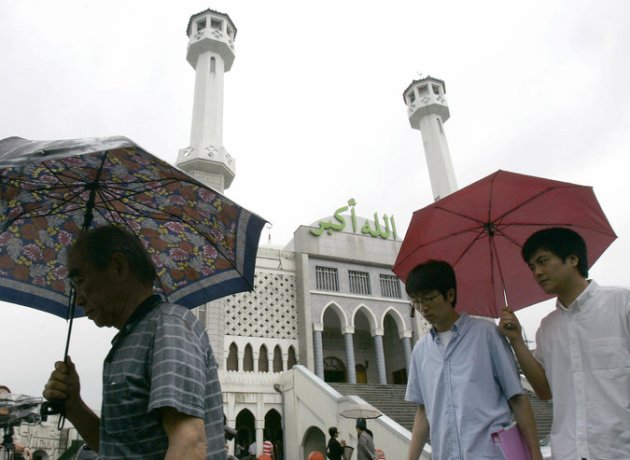
The Seoul Central Mosque in South Korea, one of hundreds of mosques around the world built using Saudi donations.CreditChoi Won-Suk/Agence France-Presse — Getty Images
The reach of the Saudis has been stunning, touching nearly every country with a Muslim population, from the Gothenburg Mosque in Sweden to the King Faisal Mosque in Chad, from the King Fahad Mosque in Los Angeles to the Seoul Central Mosque in South Korea. Support has come from the Saudi government; the royal family; Saudi charities; and Saudi-sponsored organizations including the World Muslim League, the World Assembly of Muslim Youth and the International Islamic Relief Organization, providing the hardware of impressive edifices and the software of preaching and teaching.
There is a broad consensus that the Saudi ideological juggernaut has disrupted local Islamic traditions in dozens of countries — the result of lavish spending on religious outreach for half a century, estimated in the tens of billions of dollars. The result has been amplified by guest workers, many from South Asia, who spend years in Saudi Arabia and bring Saudi ways home with them. In many countries, Wahhabist preaching has encouraged a harshly judgmental religion, contributing to majority supportin some polls in Egypt, Pakistan and other countries for stoning for adultery and execution for anyone trying to leave Islam.
Limits of Influence
But exactly how Saudi influence plays out seems to depend greatly on local conditions. In parts of Africa and Southeast Asia, for instance, Saudi teachings have shifted the religious culture in a markedly conservative direction, most visibly in the decision of more women to cover their hair or of men to grow beards. Among Muslim immigrant communities in Europe, the Saudi influence seems to be just one factor driving radicalization, and not the most significant. In divided countries like Pakistan and Nigeria, the flood of Saudi money, and the ideology it promotes, have exacerbated divisions over religion that regularly prove lethal.
And for a small minority in many countries, the exclusionary Saudi version of Sunni Islam, with its denigration of Jews and Christians, as well as of Muslims of Shiite, Sufi and other traditions, may have made some people vulnerable to the lure of Al Qaeda, the Islamic State and other violent jihadist groups. “There’s only so much dehumanizing of the other that you can be exposed to — and exposed to as the word of God — without becoming susceptible to recruitment,” said David Andrew Weinberg, a senior fellow at the Foundation for Defense of Democracies in Washington who tracks Saudi influence.
Exhibit A may be Saudi Arabia itself, which produced not only Osama bin Laden, but also 15 of the 19 hijackers of Sept. 11, 2001; sent more suicide bombers than any other country to Iraq after the 2003 invasion; and has supplied more foreign fighters to the Islamic State, 2,500, than any country other than Tunisia.
Mehmet Gormez, the senior Islamic cleric in Turkey, said that while he was meeting with Saudi clerics in Riyadh in January, the Saudi authorities had executed 47 people in a single day on terrorism charges, 45 of them Saudi citizens. “I said: ‘These people studied Islam for 10 or 15 years in your country. Is there a problem with the educational system?’ ” Mr. Gormez said in an interview. He argued that Wahhabi teaching was undermining the pluralism, tolerance and openness to science and learning that had long characterized Islam. “Sadly,” he said, the changes have taken place “in almost all of the Islamic world.”
In a huge embarrassment to the Saudi authorities, the Islamic State adopted official Saudi textbooks for its schools until the extremist group could publish its own books in 2015. Out of 12 works by Muslim scholars republished by the Islamic State, seven are by Muhammad ibn Abd al-Wahhab, the 18th-century founder of the Saudi school of Islam, said Jacob Olidort, a scholar at the Washington Institute for Near East Policy. A former imam of the Grand Mosque in Mecca, Sheikh Adil al-Kalbani declared with regret in a television interview in January that the Islamic State leaders “draw their ideas from what is written in our own books, our own principles.”
Small details of Saudi practice can cause outsize trouble. For at least two decades, the kingdom has distributed an English translation of the Quran that in the first surah, or chapter, adds parenthetical references to Jews and Christians in addressing Allah: “those who earned Your Anger (such as the Jews), nor of those who went astray (such as the Christians).” Seyyed Hossein Nasr, a professor of Islamic studies at George Washington University and the editor in chief of the new Study Quran, an annotated English version, said the additions were “a complete heresy, with no basis in Islamic tradition.”
Accordingly, many American officials who have worked to counter extremism and terrorism have formed a dark view of the Saudi effect — even if, given the sensitivity of the relationship, they are often loath to discuss it publicly. The United States’ reliance on Saudi counterterrorism cooperation in recent years — for instance, the Saudi tip that foiled a 2010 Qaeda plot to blow up two American cargo planes — has often taken precedence over concerns about radical influence. And generous Saudi funding for professorships and research centers at American universities, including the most elite institutions, has deterred criticism and discouraged research on the effects of Wahhabi proselytizing, according to Mr. McCants — who is working on a book about the Saudi impact on global Islam — and other scholars.
One American former official who has begun to speak out is Ms. Pandith, the State Department’s first special representative to Muslim communities worldwide. From 2009 to 2014, she visited Muslims in 80 countries and concluded that Saudi influence was pernicious and universal. “In each place I visited, the Wahhabi influence was an insidious presence,” she wrote in The New York Times last year. She said the United States should “disrupt the training of extremist imams,” “reject free Saudi textbooks and translations that are filled with hate,” and “prevent the Saudis from demolishing local Muslim religious and cultural sites that are evidence of the diversity of Islam.”
The burkini is, in fact, a sad symbol of Islam today going backward on gender issues. France’s ban on it is a sad symbol of liberalism today going backward in reply.
Classical liberals of any religion or none would do well to remember that this does not have to be a zero-sum game. It is possible to oppose the French ban on burkinis while also challenging the mindset of those who support burkas and burkinis.
As a reforming secular liberal Muslim, I do not endorse the gender-discriminatory body-shaming and moralizing of burkas. I recoil, too, at the silly idea of a burkini. But I also believe that France’s ban on them is ridiculous, illiberal, and incredibly petty. It is also cynical.
As for liberalism going backward, when Mohamed Lahouaiej-Bouhlel drove a truck through the crowd in Nice on July 14, he sought to deepen division, and to further the ISIS aim of a global civil war. Strategically, he chose the right location.
The French Riviera is a traditional stronghold of French reactionaries. The area sees consistently high poll results for the far right. Last year, National Front leader Marine Le Pen’s niece, Marion Maréchal-Le Pen, ran a high-profile campaign there and succeeded in making huge gains. The region is now rapidly turning into a polarized hotbed of tension, pitching far-right sympathizers against Islamist extremists.
In this respect, the burkini ban is nothing but a product of political opportunism. With the proximity of elections looming, shortsighted politicking is the only consideration that matters. Local petty political chieftains would rather provoke national turbulence merely to win a local council seat than do what is in their country’s national interest.
As the 2017 French presidential and legislative elections approach, the country’s politicians are desperate to prove who can do the most—or anything at all—against the pernicious effect of jihadist terrorism. They have only a few months left. Sadly, grand gestures such as bans on symbolic pieces of cloth carry political currency in this game of mass-hysteria identity politics.
This is how our most valued asset, source of strength and global envy—liberalism—is capitulating to identity-based communalism, short-term electoral gain, populist appeasement, and a clamor to just do something.
Perpetual identity-based civil war, rather than war between countries, suits those who wish to build a new world order—a caliphate—carved out of existing states. Equal treatment on a citizenship basis means nothing to jihadists.
There is no better way to kickstart dividing people along exclusively religious lines than by committing atrocities in the name of Islam. Their hope is that everyone else also begins to identify Sunni Muslims primarily by their religious identities, in reaction to the atrocities. In this way, religious identity has won and citizenship becomes redundant.
But the backward trajectory of contemporary liberalism is matched by a backward trajectory within Islam today.
In modern Muslim-majority contexts and up until the 1970s, the female body was not shamed out of public view. As one Egyptian feminist asserts, this was mainly due to the social dominance of the relatively liberal, middle-class elite in urban centers.
But throughout the ’80s, theocratic Islamism began replacing Arab socialism as the ideology of resistance against “the West.” As is always the case with misogynist dogma, the war against the “other” necessitated defining what is “ours” and what is “theirs”—and our women, of course, were deemed “ours.”
Suddenly, women’s bodies became the red line in a cultural war against the West started by theocratic Islamism. A Not Muslim Enough charade was used to identity “true” Muslims against “Western” stooges. Religious dress codes became a crucial marker in these cultural purity stakes. Only the fanatic can ever win in this Not Muslim Enough game. Any uncovered woman was now deemed loose, decadent, and attention seeking.
In short, too Western.
Many Islamists advocate total segregation between the sexes, and in fact they would reject the burkini. The full-body swimwear would certainly not be allowed in today’s Saudi Arabia: still too revelaing!
In that sense, it is actually a step forward from Islamism’s peak in the ’90s. But it is still a step backward from before theocratic Islamism took hold among Muslims. The more women succumb to this Not Muslim Enough charade, the more theocrats demand of them. Is it any wonder, then, that some of the most abusive, oppressive societies for women happen also to be the most religiously conservative?
When writing recently in defense of her burkini invention, Aheda Zanetti equated concealing the female form with “modesty” no less than three times.
She confessed to not participating in sports when young “because we chose to be modest.”
But the assumption that “modesty” equates to covering up is a subtle form of bigotry against the female form. It goes without saying that harassment on Western beaches, where the female form is more normalized, occurs less than in conservative societies, even though it is still present. But in too many instances across Muslim-majority contexts this “modesty theology” has led to slut-shaming of women who do not cover.
In the worst of cases, misogyny disguised as modesty has led to mass sexual harassment on the streets, most recently by gangs of Muslim migrants in Cologne. In Egypt, it has even given rise to a mass public rape phenomenon. As Muslim feminists note, violating Muslim cultural “honor codes” (‘irdh) and modesty theology (hayaa’) can lead to heinous legal and societal reprimand and the gross fetishization of a woman’s body.
Just like any other practice rooted in religiously inspired misogyny, the burkini cannot be detached from the body-shaming tied to its origins. Aheda Zanetti continued to insist that her product is “about not being judged” as a Muslim woman, yet she is wedded to a practice that inextricably judges the female form as being “immodest,” as she, too, did in her own piece.
“I don’t think any man should worry about how women are dressing,” she argued.
OK. But it has only ever been conservative-religious Muslim men telling Muslim women how to dress.
Over the course of my years immersed in Islamic theology and Arabic, I remain unaware of any medieval female Muslim exegete used as authority by Muslim women for the “duty” of wearing a hijab. It is only ever male exegetes of the Quran who are cited preaching for the duty of female “modesty.”
And it is simply an undeniable fact that most Muslim women judged and attacked around the world for how they dress are attacked by other Islamist and fundamentalist Muslims, not by non-Muslims. These are religious fanatics playing the Not Muslim Enough game.
I am a liberal. The headscarf is a choice. Let Muslim women wear bikinis or burkinis. Liberal societies have no business in legally interfering with the dress choices women make. I have consistently opposed the ban on face veils in France, just as I oppose their enforced use in Iran and Saudi Arabia.
Outside of this legal debate, though, and as a reforming secular liberal Muslim, I reserve the right to question my own communities’ cultural traditions and taboos.
As a liberal, I reserve the right to question religious-conservative dogma generally, just as most Western progressives already do with Christianity. Yet with Muslims, Western liberals seem perennially confused between possessing a right to do something, and being right when doing it.
Of course American Christian fundamentalists of the Bible Belt have a right to speak, but liberals routinely—and rightly—challenge their views on abortion, sexuality, and marriage. To do so is not to question their right to speak, but to challenge their belief that they are right when they speak. I ask only that secular liberal Muslims are also supported in challenging our very own “Quran Belt” emerging in Europe.
This is the real struggle. It is intellectual and it is cultural, more than it is legal.
The Trudeau government is reinvesting in public opinion research after it was virtually abandoned in the final years of the last Conservative government, though spending remains far below historical averages, according to veteran pollster Frank Graves.
“They’ve committed to doing more and more work…but it’s certainly nowhere near the levels it was historically both with the early stages of the Conservative government, certainly the Liberal government before that, and the Mulroney government before that,” he told The Hill Times.
Mr. Graves, founder and president of Ekos Research, said in an interview that the federal government has contracted more public opinion research work from his company since the election last fall. He linked this to the Liberals’ push to what they see as a return to evidence-based decision-making.
It pales in comparison, however, to what was seen in even the early stages of the Conservative government, he said.
The Harper government spent $31.2 million polling Canadians in the 2006-07 fiscal year before cutting back to $4.9-million in 2013-14, The Hill Times reported.
This stretch of scarce funding represented a “very unusual period,” Mr. Graves said, with the government conducting “virtually no research” of any significance during this span.
A 2003 auditor general’s report clocks in federal spending on public opinion research in 2002-03, under a previous Liberal government, at $23.7 million and $26.2 million the year before.
Mr. Graves partly attributed lagging “rust” in the bureaucratic channels in preventing the Liberals from revving up polling efforts back to previous levels.
“[It’s] going to take awhile for the bureaucracy to catch up and for the resource envelope [to expand] to do this in levels which would be more commensurate with the need and demand and express priority provided to this approach,” Mr. Graves said, noting that civil servants would also need to catch up with technological advancements in the field.
When reached, the Treasury Board Secretariat said it did not have up-to-date figures on spending on public opinion research or consultations specifically.
….Pollsters optimistic after lean decade
Stephen Kiar, CEO and founder of Ottawa-based public opinion and market research firm Phoenix SPI, said his company has also started to see an increase in public opinion research work in the last month or so.
After the election, the Liberals proceeded “cautiously and deliberately,” as new ministers learned their departments, relevant issues, mandates, and staff, among other considerations, he said.
As a result, Phoenix didn’t see any increase in work before the government’s fiscal year ended on March 31, though things picked up afterwards, Mr. Kiar said, as departments began putting together their research plans for the coming year, and seeking the necessary approvals.
“It appears that many departments have finished that planning process and are starting to engage research firms like ours for their projects,” he explained.
Mr. Kiar said it’s too early to compare spending to the previous Conservative government, which he argued “savaged” the public opinion research budget, while dramatically increasing the media monitoring budget.
Under the Trudeau Liberals, mandate letters to cabinet ministers noted a need for Canadians to see the government’s “willingness to listen” and for the government’s work to “be informed by performance measurement, evidence, and feedback from Canadians.”
Mr. Graves framed the period under the Conservatives that saw a “real paucity” of public opinion research as an “anomaly,” and partly blamed the scarcity of polling on what he saw as the government’s indifferent, sometimes “hostile” approach to empirical research.
Critics accused the Harper government of gutting funding for research and muzzling federal scientists. The Conservatives axed the mandatory long-form census in 2011, drawing strong criticism from a wide range of groups worried about the consequences the decision would have on the reliability on the vital data gleaned from the sweeping survey of Canadians.
The Liberals reinstated the long-form census as mandatory shortly after assuming office last November.
Kara Mitchelmore, CEO of the Marketing Research and Intelligence Association, an industry advocacy group, says numbers on polling activity for 2016 won’t be known until the end of the year, though she cited the re-establishment of the mandatory long-form census as leading to an increase in work.
“I can say anecdotally that with the re-instalment of the long form census, which MRIA strongly supports, there is an obvious noticeable increase in data collection roles,” she said in an emailed statement, noting that this will “trickle down” into more analyst roles, which is “great news” for the industry.
Mr. Graves said he expects funding for polling to eventually be restored to previous heights, though predicted it would only reach a quarter of the historic average this year.
That’s still “a lot better” than what we saw in the late stages of the previous government, he noted.

 Multicultural Meanderings