Ontario human rights chief calls for race-based stats for kids in care

More on the need for a diversity lens:

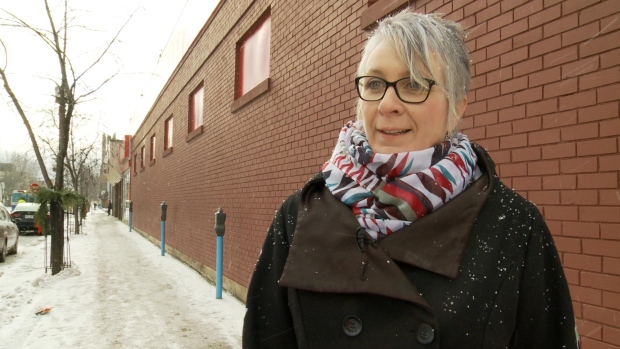
“Systemic and persistent discrimination” is likely involved in a disproportionate number of aboriginal and black children being taken from their families and placed into care, Ontario’s Chief Human Rights Commissioner says.

Ending the trend, Renu Mandhane added, begins with the provincial government collecting race-based data to gauge the full extent of the problem — something it does not currently do.

How can the government and children’s aid societies understand the needs of the children and families they serve — and the discrimination they might be facing — if they don’t know the race and culture of those families, Mandhane asked in an interview with the Star.

“We wouldn’t get involved unless we thought there were elements of systemic and persistent discrimination at play,” Mandhane said, describing her commission’s decision to examine the over-representation of aboriginal and black children in foster homes or group homes.

The human rights commission is the latest in a long list of agencies and community groups to call on the Ministry of Children and Youth Services to collect and make public race-based data. The Children’s Aid Society of Toronto took the step in the summer of 2015 after the Toronto Star revealed that 41.8 per cent of children in its care are black. The city’s under-18 black population, meanwhile, is 8.2 per cent.

Source: Ontario human rights chief calls for race-based stats for kids in care | Toronto Star

Canada ‘like heaven’ for Tibetan refugee

Good example of refugee integration:

Yangzom moved to Canada in fall 2011, volunteering and working for a while before leaving to do a master’s degree at the Central European University in Hungary. She returned in 2013 to Canada — the country that had finally given her a home and permanent status.

She chose Canada because it is a “country with a golden heart,” she explains. “It’s a country that has a strong tradition of being compassionate; a strong tradition of providing humanitarian assistance to refugees — and not just refugees, but helping immigrants as well.

“I heard great things about Canada — also about the health care and the education system, and that if you work really hard you can do things in Canada.”

Her sense of purpose is rooted deeply in her identity as a Tibetan and the fact she grew up without a homeland, she says. From the moment she arrived in Canada, “I volunteered right away because it was the fastest way for me to integrate into society and the community in order to have a smooth transition,” she says.

Within weeks, she was at Parkdale Legal Services, helping with interpretation and family reunification. Then she got a job at St. Christopher House as a newcomer co-ordinator.

“Even though I was born and raised as a refugee, I always live my life with hope,” she explains. “I push myself each day to do better.”

The only member of her family to attend college, Yangzom remains grateful for all the opportunities she has had.

“Canada, which is multicultural and respects other people’s rights and … other cultures as well — it’s like heaven for me. The fact I’m in Canada, I’m really thankful.”

Source: Canada ‘like heaven’ for Tibetan refugee | Toronto Star

Immigrants need a home, Atlantic Canada needs people: McKenna

Atlantic Canada unemployment ratesFormer New Brunswick Premier McKenna advocates for an Atlantic specific immigration program. Not sure that immigration is a panacea for Atlantic Canada’s demographic problem, and retention may also be an issue as immigrants will follow opportunities.

The above table compares unemployment rates between visible minorities and non-visible minorities in the Atlantic provides (2011 NHS):

We do not need more federal programs or federal money. We need people! But the status quo immigration system won’t get the job done.

Immigrants generally go where immigrants are. More than 70 per cent of new Canadians settle in Toronto, Montreal and Vancouver. Atlantic Canada receives only about 2.5 per cent of immigrants. Without a larger base, it’s impossible to attract an immigrant population. It’s a continually reinforcing negative cycle.

The Provincial Nominee Program has had some uptake; yet, it has not moved the dial for Atlantic Canada. Again, immigrants go where immigrants are.

We need a new program dedicated to the needs of Atlantic Canada.

We do not have to reinvent the wheel. As far back as 2002, the immigration minister, Denis Coderre, floated the idea of a “social contract” whereby immigrants would be required to live in a community specified by the government for a period of at least three years, as part of the conditions for citizenship.

Allowing immigrants to convert a temporary visa into permanent status, once all conditions have been fulfilled, could pre-empt any legal arguments related to the mobility rights of individuals.

Critics will question why we should bring people to areas of high unemployment. But that is precisely where immigrants are needed. We need their entrepreneurship, their worldliness, their drive, their consumption and even their desperation. All of these attributes would be highly additive to the small communities across our region.

This model is not complicated or expensive. Ottawa could easily design a program unique for Atlantic Canada that could become a pilot for other regions depending on its success. It would be incumbent on provinces and communities to put together programs that would retain immigrants after they arrive.

Atlantic Canada is a warm and welcoming place to live. I’m confident that large numbers of immigrants would stay, refreshing our population base and providing a new energy to our economy.

My hope is the government of Canada understands it is facing a major collapse in the Atlantic region. If not this idea, what else might work? As for the Atlantic premiers, they need to make population growth their number-one priority and work together to create a new demographic destiny for Atlantic Canada.

Source: Immigrants need a home, Atlantic Canada needs people – The Globe and Mail

First Nations student deaths in Thunder Bay inquest raise questions about racism: Minister Hajdu

Change in language and acknowledge of issues:

A “swirling storm” of racism and discrimination is killing indigenous people in Thunder Bay, Ont., says Patty Hajdu, an MP for the northwestern Ontario city and minister for the status of women.

Hajdu said her experience running a homeless shelter in Thunder Bay, before becoming a Liberal cabinet minister last year, showed her the deadly consequences of racism.

Patty Hajdu

Thunder Bay Superior-North MP Patty Hajdu says ‘institutional racism’ sends the message to citizens that it’s OK to be racist. (Martine Laberge/Radio-Canada)

Speaking outside the inquest into the deaths of seven First Nations students in the city, Hajdu said racism is a sad reality of life, and death, for indigenous people in the city.

“There’s a swirling storm of racism and discrimination against people who use substances and people who are in poverty, and it all comes together in a perfect storm where people are actually dying, because they can’t access the services they need,” she said.

Several friends and classmates of the students who died have testified at the inquest about experiences of racism in Thunder Bay after they moved from their remote First Nations to attend high school in the city.

Source: First Nations student deaths in Thunder Bay inquest raise questions about racism – Thunder Bay – CBC News

‘The Cosmopolites: The Coming of the Global Citizen,’ by Atossa Araxia Abrahamian – The New York Times

Richard Bellamy’s review of The Cosmopolites and his valid  commentary regarding the nature of citizenship:

The Canadian philosopher Joseph Carens has characterized national citizenship as “the modern equivalent of feudal class privilege.’’ That seems all too accurate a description of the citizenship of the absolute monarchies of the U.A.E., where only 15 percent of the population enjoy the privileges of citizens. These benefits are paid for largely by the unearned windfall of oil and gas revenues and they involve almost no civic duties or political rights. The multiple citizenships of the U.H.N.W.I. are similarly free of responsibility and lacking in political commitment — that is their point. They are commercial transactions conducted for profit. Neither of these types of citizenship corresponds to the hard-won forms of citizenship found within democratic states.

Herein lies the weakness of Abrahamian’s analysis. The political and social rights of genuine, state-based citizenship derive from the contribution members make to sustaining the public life of the community, be it through participation in the economy as workers and consumers, caring for children and the elderly or simply recognizing and abiding by its laws. All who contribute in these ways should be entitled to citizenship. By contrast, global citizens belong nowhere and anywhere. Yet both the injustice of denying citizenship to the bidoon and those like them and the unfairness of granting it as a commercial transaction to the super-rich stem from the same cause — a failure to link the rights of citizens to those civic duties that arise from active membership in a political community.

Source: ‘The Cosmopolites: The Coming of the Global Citizen,’ by Atossa Araxia Abrahamian – The New York Times

Metropolis 2016 – Areas of Focus

Metropolis 2016.001With the draft program for Metropolis out (here), I took some time to analyze the areas of focus for the academics, settlement organizations and other NGOs, and government officials who have organized plenaries, workshops and roundtables.

The conference themes are: selection, governance, settlement and access to services, and identities and migration history.

With the exception of the plenaries – determined largely by the Association of Canadian Studies which organizes the conference – the focus reflects the response to these themes from participants, and thus gives a sense of what individuals and organizations involved in immigration-related issues are working on.

The chart above is my admittedly somewhat subjective take (not always clear, and in some cases, sessions cover more than one area).

Not surprisingly, integration and settlement are the most active areas, followed by multiculturalism, immigration and refugees.

Citizenship is largely absent (and was not mentioned specifically in the sub-theme of identities and migration history)), surprising given the magnitude of the 2014 and earlier changes to citizenship under the Conservative government, and the effect these are having on the immigrant-to-citizen model.

Federal government organized sessions involve two departments (Immigration, Refugees and Citizenship, StatsCan), and are largely integration, refugee and research focussed.

This is another illustration of IRC’s relative neglect of citizenship and longer-term integration issues, given that these are outside its ‘centre of gravity’ and focus.

Given the transition of multiculturalism back to Canadian Heritage, there are no government-organized sessions on multiculturalism (but academics and others are heavily engaged given the identities theme).

Only Saskatchewan, PEI and Ontario are organizers or panelists in  some sessions, although settlement organizations in most provinces are heavily involved.

I have organized two sessions: From the ‘Big Shift’ to the ‘Big Return’? Election 2015 Mainstreaming of Ethnic Votes and Citizenship: Finding the Balance to address some of the gaps.

While a ‘market-driven’ approach to conference themes responds to those active in the field, it can also result in neglecting significant policy areas, as the lack of attention to citizenship attests.

That being said, Metropolis provides one of the few opportunities for academics and practitioners to exchange findings and knowledge.

Douglas Todd: Iranian-Canadians find road to integration is a rocky one

While largely anecdotal in nature, interesting piece on Iranian Canadians by Douglas Todd, focussing on Vancouver but including Toronto.

My sense is that most Iranians integrate reasonably well. NHS 2011 data shows 55 percent of working age adults (25-64) are university-educated, 77 participate in the workforce, although unemployment is higher at 9.7 percent than non-visible minorities. Median employment income is about $50,000, comparable to those of Canadian ethnic origin. 73 percent have Canadian citizenship.

Like other groups, of course, Iranian Canadians tend to concentrate in a number of neighbourhoods, as any drive in North Vancouver or north of Steeles on Yonge St in Toronto will attest:

“There is little or no incentive for some recent immigrants to integrate into mainstream Canadian society,” says Ahmadian.

“Immigrants who do not want to get a university degree (in Canada) have little or no incentive to learn English fluently. For recent immigrants from Iran, there are Iranian brokers, Iranian financial advisers, Iranian salespeople and Iranian physicians.”

This creates something that sociologists refer to as an ethnic economy. “Iranian immigrants who do not know the rules and regulations in Canada have no choice but to trust the service providers. And when there is no need to master the English language, some people take the easy route of staying in their ‘own community’,” said Ahmadian.

The social pressure among Iranians to communicate mainly in Farsi has recently been on display among the thousands of Iranians in Metro who attend events devoted to the poetry of the Persian mystic, Jalaladin Rumi. An outcry recently ensued when some Iranians suggested the city’s Rumi events occasionally be switched from Farsi to English.

Language barriers are most noticeable among immigrants who arrive in late adulthood, says Karimaei, a building developer who is also founder of The Iranian Calligraphers Association of North America, which is centred in the North Shore cultural centre.

“They have nothing to do,” Karimaei said. “They say they are not good over here. They don’t want to integrate. They’re just involved in the Persian events.”

Despite inevitable difficulties learning English as a second language, Esmaeilpour said it is the responsibility of new Iranian immigrants to do so.

“If you are a guest in a house, the first thing you should do is learn their language. That is out of respect for the host.”

Religion’ role

While Iran is often portrayed in the Western media as a country full of rigorous Shia Muslims, many Iranian-Canadians say they have gone a different path.

“You don’t even need to go to the mosque to be spiritual,” says Esmaeilpour.

Although some among the most recent wave of immigrants are devout Shia Muslims, Karimaei estimated only 15 per cent of Iranians in British Columbia regularly go to mosque.

Rohani, a member of the Baha’i faith that has been persecuted in Iran, believes only a tiny portion of Iranian-Canadians are religious hardliners.

Indeed, Rohani said many Iranians are like most other Canadians; open to secularism and alternative spiritualities.

That’s why, he says, evangelicals on the North Shore and elsewhere have recently had success in starting Christian congregations specifically designed for Iranians.

Source: Douglas Todd: Iranian-Canadians find road to integration is a rocky one

Ralph Goodale says Canada must be ‘world leader’ in tackling radicalization

Strong messaging on the softer aspects of that strategy.

Will be interesting to see how the precise mandate and implementation of the Office of the Community Outreach and Counter-radicalization Co-ordinator:

Canada must become a “world leader” in stamping out radicalization, because our open, tolerant society is at stake, says Public Safety Minister Ralph Goodale.

In a wide-ranging interview with CBC News Network’s Power & Politics, Goodale said Canada must become the “best in the world” at community outreach, engagement and counter-radicalization to avert a fundamental threat to Canadian values.

“We’re an open society, we’re one of the most plural societies in the world; the most inclusive, the most tolerant. In order to preserve that nature of our country, we need to be among the best in the world at identifying radicalization and the techniques for countering radicalization and working with all other Canadians to make sure that’s effective,” he told host Rosemary Barton.

Goodale could not provide the current number of individuals considered home-grown militants or “foreign fighters.”

But he said the government will make a “vigorous” effort to stamp out radicalization. The minister’s mandate letter includes an order to create an Office of the Community Outreach and Counter-radicalization Co-ordinator.

More money for the RCMP

Goodale also promised the Mounties would have the necessary resources to keep up the fight. Last year, RCMP Commissioner Bob Paulson said he was forced to divert 600 officers from white-collar crime and fraud files to focus on national security investigations.

“We cannot have a situation where your national police force has got to rob Peter to pay Paul,” he said. “When we call upon them to perform serious functions in the name of national security, crime prevention, law enforcement and all the other important things that they do, they need to have the physical resources, including budget, to do that well.”

Source: Ralph Goodale says Canada must be ‘world leader’ in tackling radicalization – Politics – CBC News

All Pearson, no Pierre: Inside Trudeau’s inner circle – The Globe and Mail

Good series of articles and profiles of the 12 in PM Trudeau’s inner circle.

Applying the usual diversity measures, two-thirds are male, and one is visible minority (13 percent).

Will be interesting, once staffing is complete in PMO and Ministerial offices, to analyze the full picture, as staffers are one of the recruiting pools for future candidates (and the Liberals had recruited more visible minority candidates than other parties (16 percent compared to 13 percent for the CPC and NDP).

Source: All Pearson, no Pierre: Inside Trudeau’s inner circle – The Globe and Mail

Canada, the country that nationalism side-swiped: Salutin | Toronto Star

Salutin on the perverse, counter-intuitive nature of Canadian nationalism:

Here’s where it starts to get paradoxical. Stephen Harper, during his reign, tried to become the voice of Canadian nationalism in the traditional, exclusivist sense. He promoted militarism, including symbols like the Highway of Heroes, and shopworn imperial imagery like the Royal Family. He promoted undercurrents of xenophobia, nativism and racism in his policies toward immigrants and especially refugees, who were despicably treated. These became overcurrents during the election, with his attacks on Muslim headgear, the “barbaric cultural practices” snitch line and revocable citizenship.

What’s fascinating is that Justin Trudeau didn’t oppose him by declaring he was anti-nationalist, as you’d have to in, say, Serbia or Hungary. He fought back as a Canadian nationalist, defining it in terms of tolerance or even, the glory of diversity — a sharp rebuttal to most contemporary nationalism. It also had weird echoes. Justin’s dad, Pierre, rejected Quebec nationalism as parochial but embraced Canadian nationalism as a way to fight it. When he ran against Tory leader Joe Clark in 1979, Trudeau père scorned Clark’s notion that Canada was just a “community of communities,” for being wishy-washy and contentless.

Yet that’s essentially what his son endorsed. Now picture Harper: beaten not only by the son of his most reviled Canadian predecessor; but by the son’s embrace of the vision of Harper’s most loathed Conservative antecedent, Joe Clark. It’s beyond Shakespearean. Who says we don’t have a colourful history?

If we’d been more successful in creating a robust, conventional Canadian nationalism, who knows — the country mightn’t have as handily beaten back the nasty nativism cultivated by Harper. It could have provided unintended grist for his mill. So the real strength of Canadian nationalism might turn out to be its relative weakness. We’re the land that nationalism side-swiped. Lucky us.

In his book, Benedict Anderson quoted Walter Benjamin’s passage on the angel of history — based on a Paul Klee print. The angel stands looking backward sadly as history’s failures and disasters pile up at his feet. So, as history’s wind blows him into the future, he can’t see, behind him, the progress that may be about to arrive. You could call it, back to the future, in a literal sense.